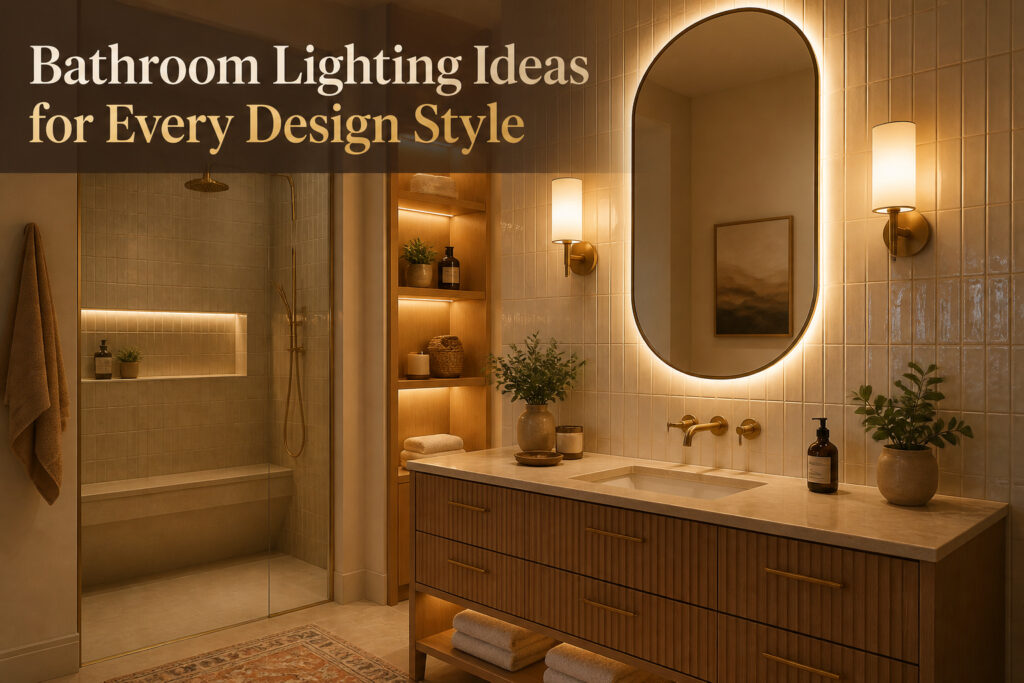
The right bathroom lighting idea depends on whether you own the space or rent it. Hardwired backlit mirrors and recessed cans need an electrician, while peel-and-stick LED channels with aluminum diffusers or battery-powered sconces come out clean at move-out. Either way, the fixture’s CRI number matters more than its style: anything below 90 makes skin look washed out or slightly seasick under artificial light, and that gap costs more than the mirror saved once you step outside.
1. LED Light Strips for a Contemporary Glow
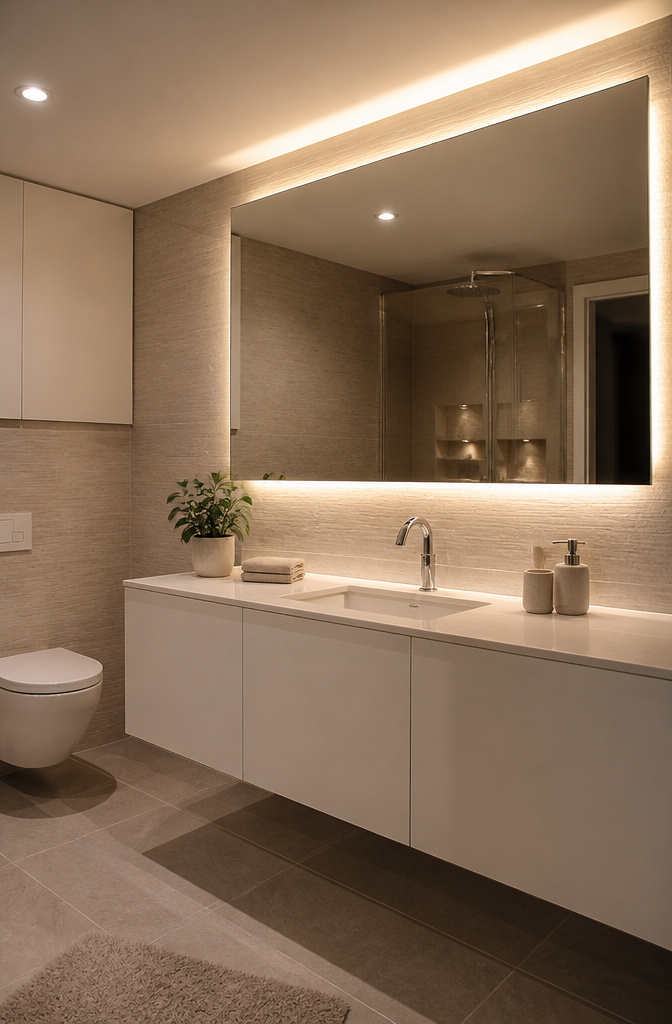
Raw LED dots behind a mirror look cheap the instant you flip the switch. The light comes through as pinpricks, not glow, and your reflection picks up every hard edge. An aluminum channel with a diffuser fixes this completely: the strip sits in a slim metal housing, the plastic cover spreads the light into one continuous ribbon, and what hits the wall is ambient backlighting that flattens shadows without flattening you.
I mounted mine about two inches from the mirror’s edge so the halo had room to bloom. The 3000K to 4000K range is where skin looks like skin, not office fluorescent or candlelit nostalgia. For renters, peel-and-stick battery-powered strips or smart-plug versions mean you can pull this off without touching a wire. The channel itself is the part most people skip, and it’s the difference between a bathroom that glows and one that glares.

Front & Backlit LED Bathroom Mirror with Independent Contro: LED bathroom mirror with front and backlit lighting that can be controlled separately use front light for tasks, backlight for ambiance, or both for full brightness. Waterproof LED strips with 50,000+ hour lifespan ensure reliable performance.

Stylish Classic Backlit Design - LED bathroom mirror design is inspired by perfect fusion of rectangle-shaped design,backlit ambient lighting makes your bathroom more artistic and brings a wonderful feeling to the user.You can use the lowest setting as a nightlight, which is extremely convenient.the mirror looks modern, functions perfectly, and adds both style and practicality to the space,it would definitely recommend!

Front & Backlit LED Bathroom Mirror with Independent Contro: LED bathroom mirror with front and backlit lighting that can be controlled separately use front light for tasks, backlight for ambiance, or both for full brightness. Waterproof LED strips with 50,000+ hour lifespan ensure reliable performance.
2. Backlit Mirror Panels for a Dramatic Effect
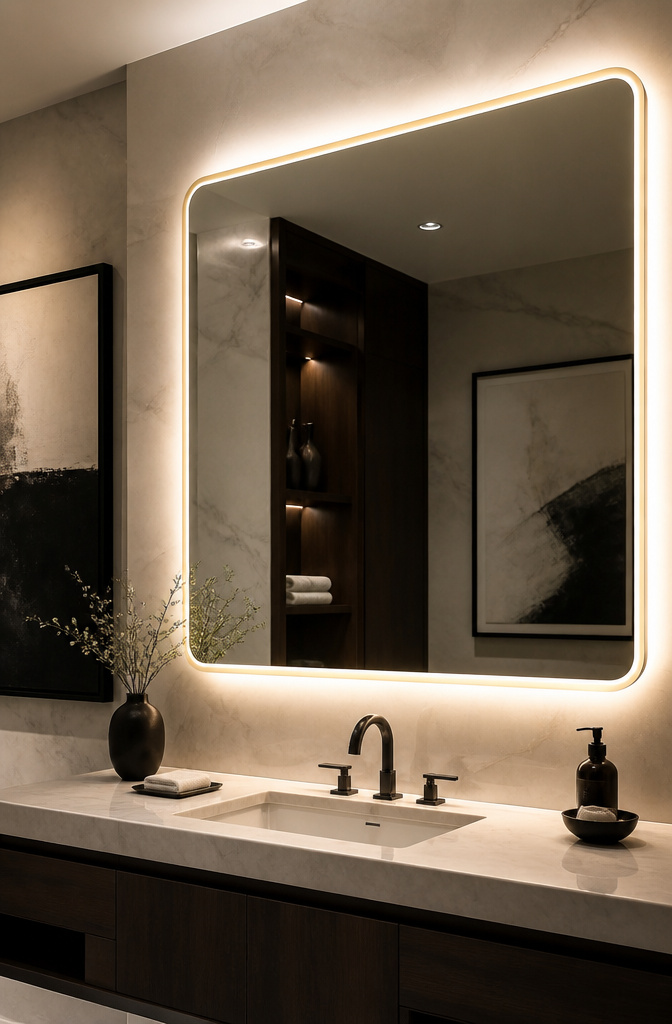
Backlit mirror panels look dramatic in photos, but the light quality underneath matters more than the glow itself. The spec that separates useful ones from decorative-only is CRI, or Color Rendering Index. It measures how faithfully a light source shows true colors compared to midday sun. A CRI above 90 means skin tones read naturally, which matters when you’re blending foundation or checking whether a beard is evenly trimmed.
Cheaper LED mirrors often run in the 70s or low 80s. That gap shows up as a faint blue or green cast that makes you look washed out or slightly seasick. You might not notice the tint at first, but after stepping into daylight and seeing your actual face, the mismatch is clear. For grooming, that inaccuracy costs more than the mirror saved.
Installation varies by model. Some panels hardwire into a wall switch; others plug into a GFCI outlet. The hardwired route looks cleaner but usually needs an electrician, which pushes the project past a single weekend. Plug-in units work for renters and leave no trace at move-out, though the cord needs hiding. Either way, check the CRI number before buying. The box or listing should state it plainly, and if it doesn’t, that omission is usually the answer.
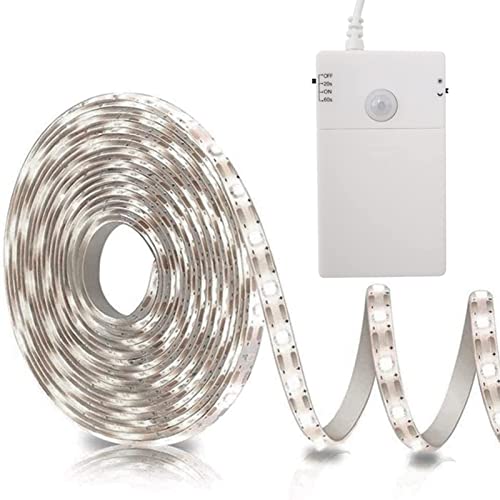
Motion Sensor Strip Lights: The motion sensor range is 120°, sensor distance is 10ft (3m) , Manual delay, you can manually set the delay 20s/60s or steady on(ON), Super saving energy (Note: There is a mark 20s/60s/ON on the battery box)

When using the string lights, align the arrow on the connector with the arrow on the battery compartment connector (positive “+” symbol), and remove the insulating plastic tab from the bottom of the remote control.
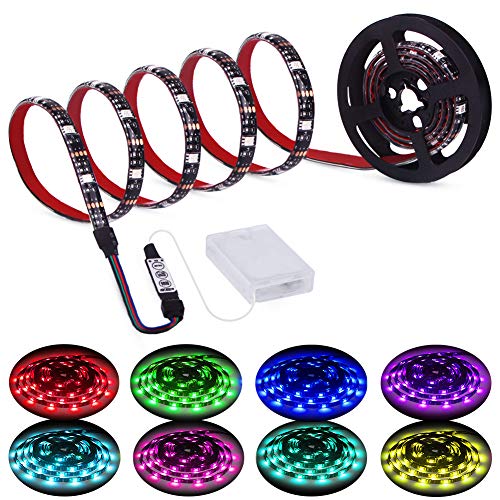
Easy to install and use:Led strip lights battery powered have special design with battery box, powered by 3 AA batteries(not included) with easy installation .Come with super adhesive tape,suitable for most surface,please clean the surface before you stick on.
3. Wall Sconces for Soft, Ambient Lighting
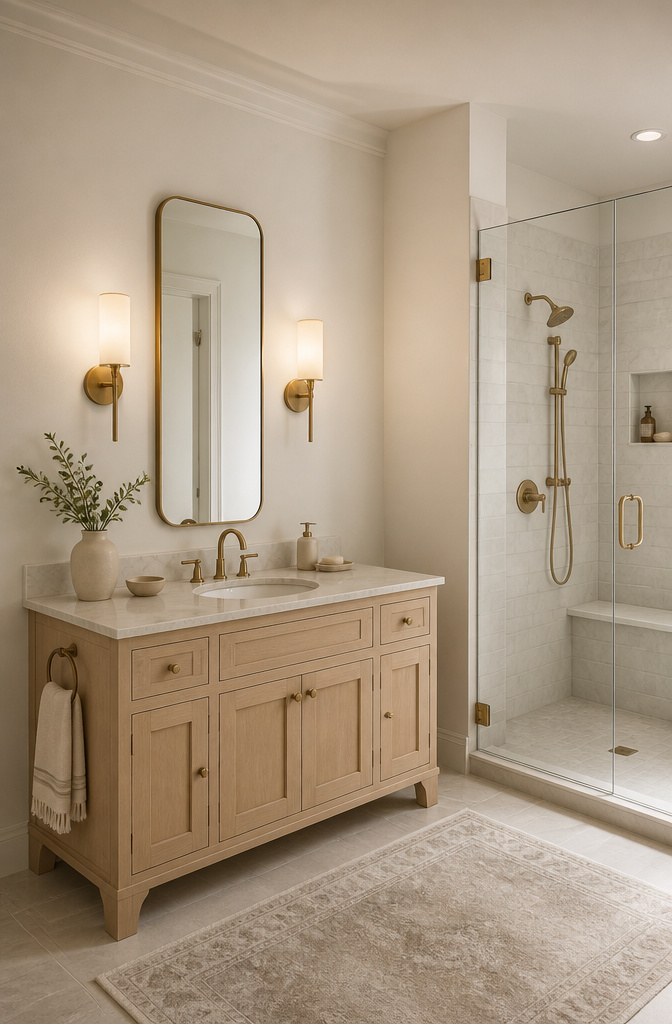
Wall sconces on either side of a mirror cast light from two directions, which smooths out the shadows that a single overhead fixture leaves under your eyes and chin. The center of each sconce should sit 60–66 inches from the floor, roughly at eye level for most adults. Hit that mark and the light washes evenly across your face; miss it and you get the problem of a too-high sconce throwing downward shadows that age you, or a too-low one lighting your neck while your eyes stay dim.
I learned this the hard way in my last rental, where the previous owner had mounted a pair at about chest height. They looked dramatic in photos but turned my morning shave into a guessing game about which patches I’d missed.
Space them so the light meets at the mirror’s surface without leaving a dark stripe down the middle. For a single sink with a narrow mirror, two slim vertical sconces fill the wall without crowding it. Wider vanities or double sinks need more width or more fixtures to keep the light even across both stations. Frosted glass or a fabric shade softens the glare, especially in tight powder rooms where you stand close to the wall.

Classic Style - U1SW is a regular LED strip channel with 0.5" inner width and 0.25" height. It fits most light strips with width less than 12mm, such as 3528, 5050, 5630, 2835, etc. Silver channel with milky white cover has an elegant look and slim design, providing a neat and high-end lighting effect

Mounting Clips: Includes 3 mounting clips for 1 channel and 2 corner connectors for 10 channels

PACKING INCLUDING: Pack of Ten(10) 2m/6.6ft long segments with Cover. Includes 48pcs end caps(24pcs without hole and 24pcs with hole), 50pcs mounting clips, and 100pcs screws(50pcs for woodiness ,50pcs for ceiling) for easy installation. The channels can be cut down to any length. Please search B07886RKNV If need extra mounting clips and end caps. LED strips not including.
4. Vanity Light Bars for Even Illumination
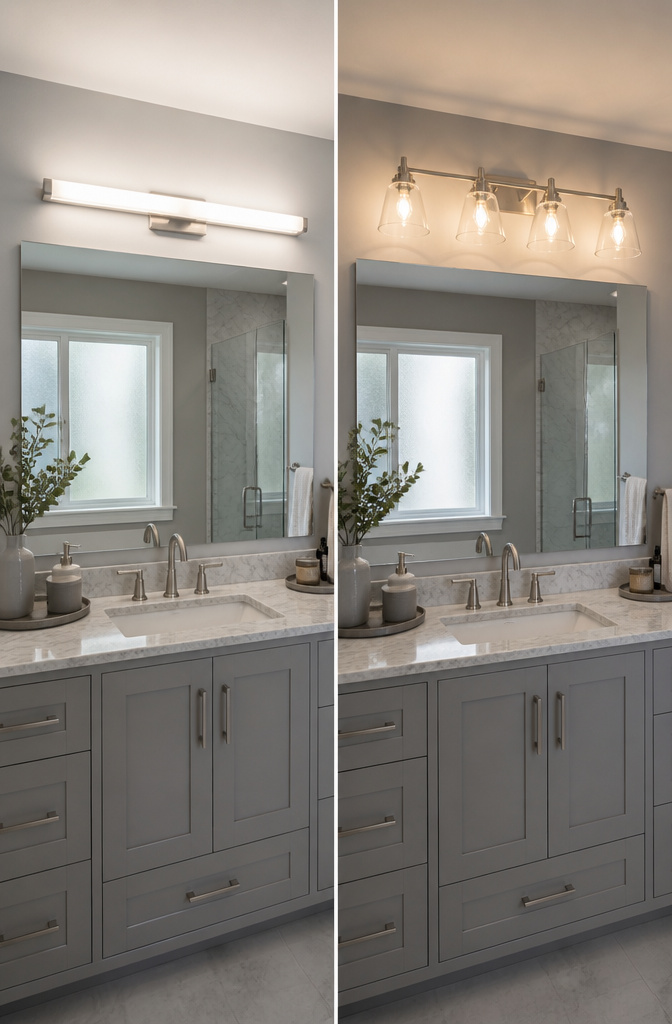
The first vanity light bar I installed was too short for the mirror, and the shadows under my eyes made me look like I’d slept through three alarms. Width fixes this more than wattage ever will. A bar that covers at least three-quarters of the mirror’s width casts light from enough angles to cancel the hollows that a narrow fixture leaves behind. The raccoon effect isn’t about brightness; it’s about direction.
Mount the bar 6–8 inches above the mirror’s top edge, centered for even distribution. Too high and the light plunges downward in a harsh cone; too low and the fixture stares back at you in the glass. I used to think a dimmer was optional until I tried shaving at 6 a.m. under full 4000K output. Now I pair every bar with one. For color temperature, 3000K–4000K flatters skin without the funeral-parlor chill of higher Kelvin numbers or the jaundice of going warmer.

Clean and Adaptable Design - Perfect for various spaces, our wall sconces set of two feature black and gold finish lamp bodies and thick clear glass shades. With its clean and adaptable Design, this wall lighting seamlessly integrates with various decor styles, making it an ideal choice to enhance your home lighting

【Farmhouse Dual-Mount Design】Featuring double clear glass shades, these vanity wall lights blend contemporary and classic farmhouse aesthetics, supporting upward and downward mounting to seamlessly match various interior decor styles and space layouts.
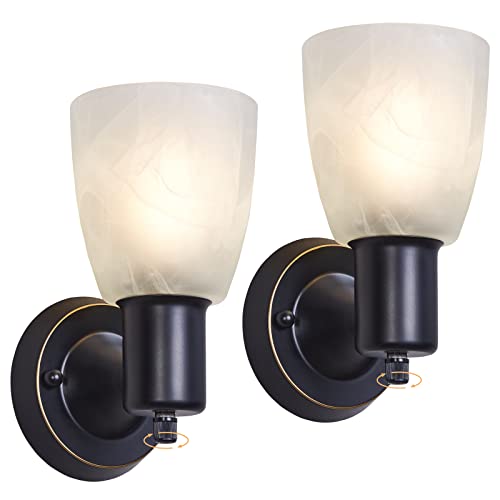
Morden Design & Durable Quality: Built with durable metal and frosted glass design, This modern and stylish design is a perfect upgrade to traditional and modern houses.equipped with a clear glass lampshade, allowing your bulb to emit bright lighting to create a wonderful atmosphere for your place. EJIAXIN Wall Light Sconces give your home variety of styles: Industrial, Farmhouse, Vintage, Rustic, Classic and Modern.(Designed by EJIAXIN, Patent No. D1075113)
5. Recessed Lighting Above the Mirror for a Seamless Look
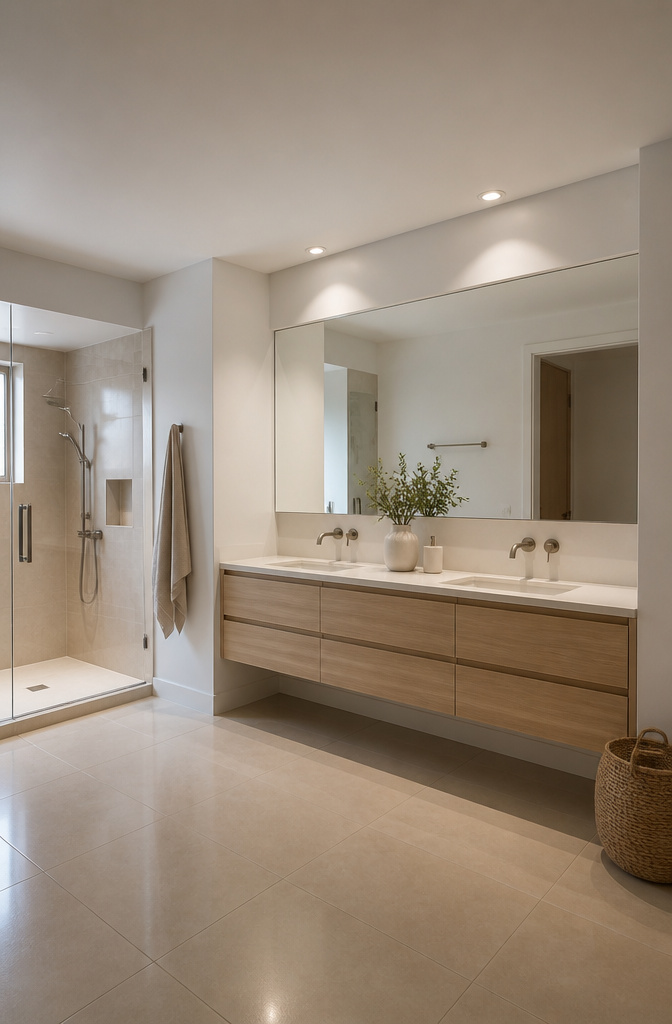
Recessed cans directly above the mirror seem like the cleanest choice for a small bathroom, but a single downlight lands hard shadows under your brows and nose. The light comes from one steep angle, so your face becomes topography. Two fixtures fix this: position them 12 to 18 inches out from the wall and angle the housings toward your face, not straight down. The beam crosses instead of colliding, and the shadows flatten out.
Adjustable housings matter more than trim style here. Fixed downlights limit where the light falls, and in a tight ceiling you do not get second chances. Narrow beam spreads keep the light on the task instead of spilling across the whole room, which helps a low ceiling feel intentional rather than crowded.
Even then, recessed lighting alone reads clinical. It is task lighting, not atmosphere. In my own reading, the bathrooms that pull this off layer in a wall fixture at the vanity, something with diffusion that warms the face after the cans do their job. The ceiling stays clean, the mirror stays useful, and the room stops feeling like a doctor’s office.

Artistic-Can be a frame or decoration for all backspalsh tiles and the edge.
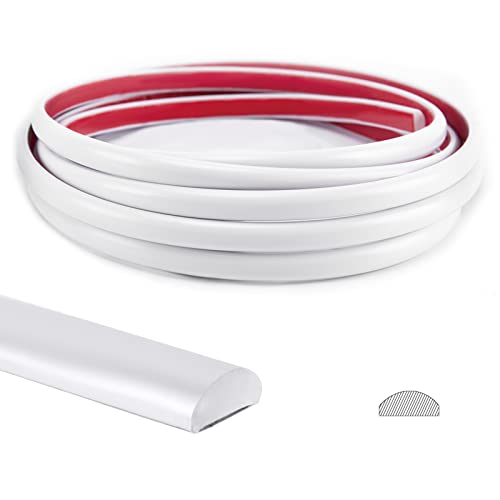
Specially Designed - The specification is designed perfectly for all kinds of backsplash tile trimming
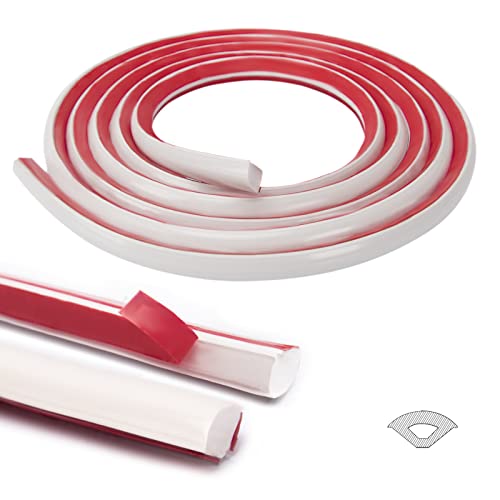
Specially Designed - The specification is designed perfectly be a frame or decoration for all backspalsh tiles.
6. Statement Pendant Lights for a Bold Accent
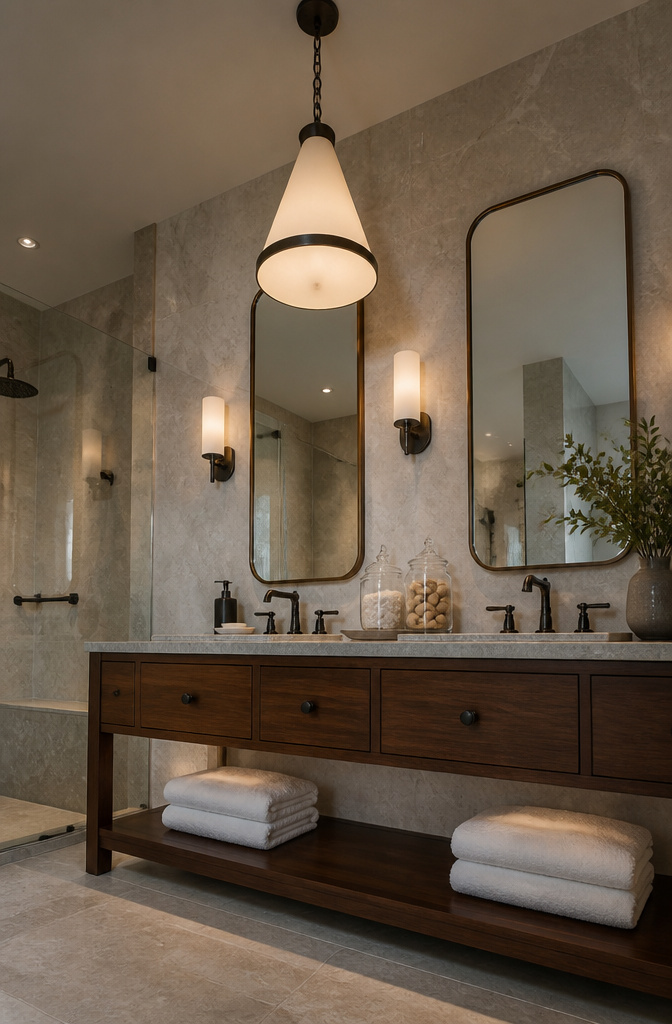
Pendants work in bathrooms where you want one vertical moment to pull the eye upward, especially in spaces with higher ceilings that feel blank overhead. The bottom of the fixture needs to sit roughly 30 to 36 inches above the countertop to keep headroom comfortable while still casting light directly onto your face. Over a tub, the same logic applies: hang it high enough that no one stands up into the shade, low enough that it actually does something besides look pretty.
One pendant over a single vanity mirror becomes the room’s focal point without fighting the task lighting you still need for shaving or makeup. A pair spaced evenly across a double vanity keeps the symmetry clean. The sculptural presence is the point, so the fixture itself should carry some weight in shape or material, but the shade matters too. Diffused or frosted glass keeps glare from bouncing around tight walls, and a dimmable bulb lets the same fixture read as crisp morning light or something warmer after dark.
The Renity 11" Pendant, with its rounded opal glass and tapered silhouette, is the kind of piece that manages this balance. It reads as functional sculpture against wood vanities or stone counters, and the warm, even glow it throws works for daily routines without demanding a second layer of ambient light to soften it.

Lighted Bathroom Mirror with Dual Illumination: Backlight and frontlight LED technology. This lighted bathroom mirror features high-quality, CRI>90 light strips that deliver even, stable illumination and render colors with exceptional accuracy—ideal for precise makeup application, shaving, and skincare routines. The dual light sources can be controlled independently, giving you ultimate flexibility to create your perfect lighting setup.
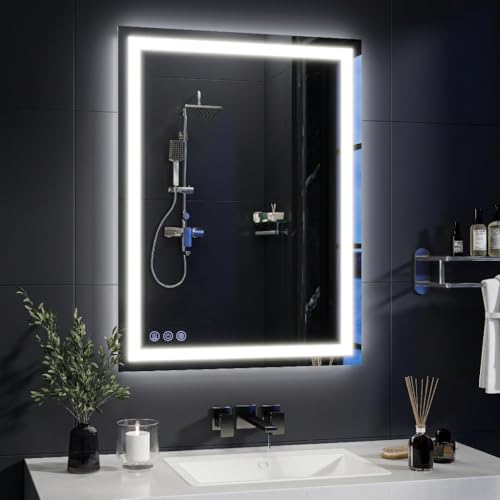
Customizable LED Lighting: This 24×36-inch LED bathroom mirror features 3 color modes (warm, natural, cool) and dimmable brightness to match any lighting need. Ideal for makeup, shaving, and daily grooming, the smart memory function saves your last setting for effortless use every day.

Front & Backlit LED Bathroom Mirror with Independent Contro: LED bathroom mirror with front and backlit lighting that can be controlled separately use front light for tasks, backlight for ambiance, or both for full brightness. Waterproof LED strips with 50,000+ hour lifespan ensure reliable performance.
7. Smart Lighting Solutions for Custom Ambiance
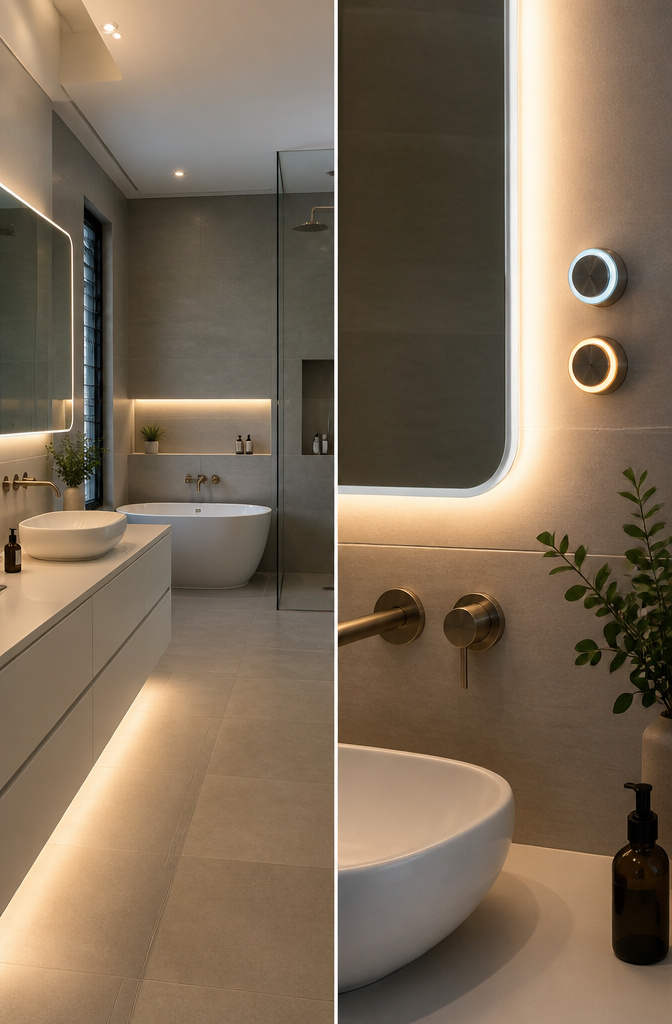
Smart bulbs let a bathroom shift between cool 3500K–5000K light for morning grooming and warm 2700K–3000K for evening baths, which matters more than I expected before I started reading into how color temperature actually works on skin. That 6 AM shave needs the cooler end, something that reads as daylight and shows stubble you would miss under a warm bulb pretending to be candlelight. By 10 PM the same cool light feels clinical, almost intrusive; dial it down to 2700K and the room softens into something that lets a bath actually relax you.
The features worth paying for are scheduling and dimming, not voice control you will use twice and forget. Motion activation for middle-of-the-night trips saves fumbling for a switch, but app-only bulbs where you have to unlock your phone to turn on the light get old fast. I would skip anything that promises "scenes" or color cycling unless you already use them elsewhere; in a bathroom they are novelty, not utility. Cordless sconces like the Hulton 17" matter if you are renting and cannot run wire, though hardwired fixtures stay the better long-term choice where you can manage them.

AUTO/MANUAL MODES: There is a "ON/OFF" button on the top and "Man/Auto" switch on the side. When in "Auto" mode, the light is controlled by the PIR motion sensor, auto-on within 3-5M, auto-off after 15-20 seconds of no motion detected. But in "Man" mode ,it can only be controlled by the "ON/OFF" button manually.

Upgraded Motion Sensor Under Cabinet Lights: Setting the under cabinet lights on motion sensor mode, they auto-on when human motion is detected within 120°and 10ft in a dark or low light environment, and auto-off after about 20 seconds of no motion detected. No longer have to worry about tripping on the step in the dark trying to turn on the switch

🔋 Battery-Powered & Portable No wires needed! Runs on 4x AA batteries (not included) for hassle-free setup. USB backup option – Plug into any USB port (TV, laptop, power bank) for extended use. Safe & Low Heat – Kid-friendly, cool-touch design.
Why Proper Lighting Matters for Daily Routines
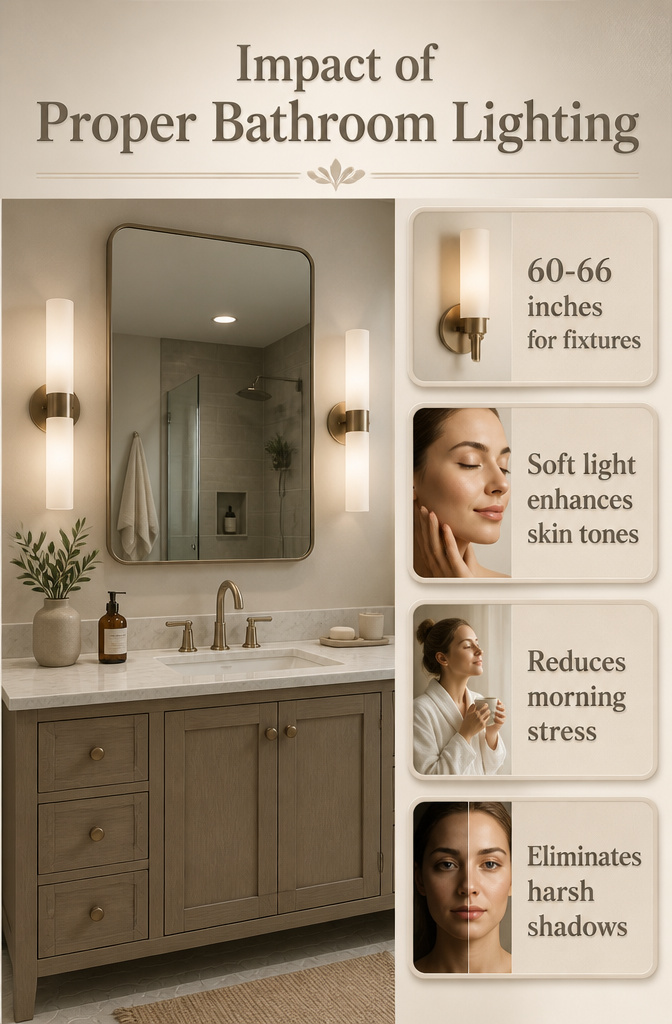
A single overhead light in the bathroom does more than waste electricity. It flattens every feature, throws deep shadows under the eyes and chin, and turns skin tone gray in the mirror. Most mornings start there, and starting them feeling dreary is a fixable mistake.
Side lighting changes the whole equation. Fixtures placed at roughly 60 to 66 inches from the floor, with the center at eye level, cast light across the face from both directions instead of one harsh angle above. The shadows disappear, depth and tone come back, and grooming stops being guesswork. Frosted bulbs or shades keep that light from glaring back at close quarters.
The mood piece matters too. A bathroom that buzzes or blinds wires you for stress before the day begins. Softer, well-placed light works with morning rhythm rather than against it, and the same setup winds down better at night. The seven ideas ahead all start from this problem: light that makes the room work for the person in the mirror, not against them.

【Excellent Compatibility】This recessed LED channel is compatible with flexible/rigid LED strips 1-12mm wide, suitable for most LED strips on the market Features a 12mm slot and built-in diffuser. For seamless lighting, we recommend using high-density 120 LEDs/m strips (LED strips sold separately)

Classic Style: U1SW is a regular led strip channel with 0.5" inner width and 0.25” height. It fits most light strips with width less than 12mm. This silver channel with milky white cover not only increases lighting visibility, but also creates softer, smoother, desirable lighting effects. It is slim designed, providing a clean, neat and high-end look to your house

Classic Style: U1SW is a regular led strip channel with 0.5" inner width and 0.25” height. It fits most light strips with width less than 12mm. This silver channel with milky white cover not only increases lighting visibility, but also creates softer, smoother, desirable lighting effects. It is slim designed, providing a clean, neat and high-end look to your house
Color Temperature for Flattering Skin Tones
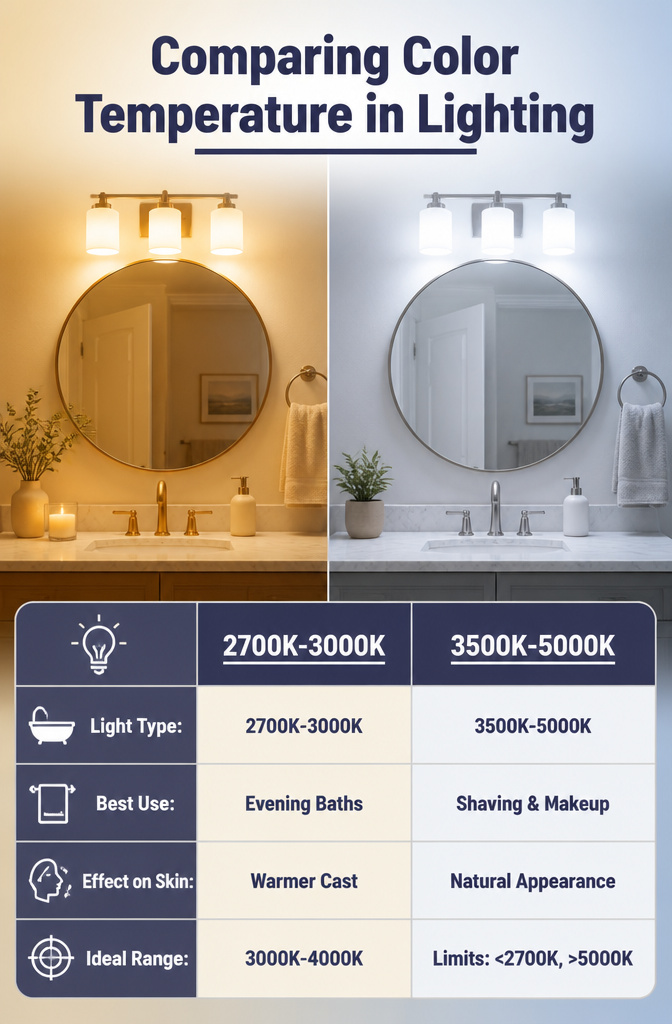
The Kelvin number on a bulb package tells you how warm or cool the light looks, and anything outside the middle range will fight you in a bathroom. 2700K to 3000K gives skin a softer, warmer cast that works well for evening baths or winding down. For shaving, makeup, or anything where you need to see what you’re actually doing, 3500K to 5000K reads closer to daylight and shows color more honestly.
I landed on 3000K to 4000K as the everyday compromise for most bathrooms, with dimmable fixtures or layered switches to reach both moods. Go below 2700K and everything turns orange and muddy; above 5000K, the light goes cold and clinical, and the mirror starts showing every pore in unflattering detail. The sources agree that extremes fail because skin tones need that middle ground, not a laboratory or a candlelit cave.

【Stylish & Classic Wall Light Fixtures】These wall sconces showcase a sleek design that blends industrial charm with modern minimalism. It features a matte black metal back plate and arm for sturdy support, while a clear cylindrical glass shade adds an elegant touch. The clean lines and the combination of black metal and transparent glass create a minimalist yet sophisticated appearance, making it a versatile choice that complements various decor styles, from modern to industrial.

【Eye-catching & Modern Design】- Advanced brushed gold texture coupled (high quality metal, anti-rust and won't fade) with transparent glass retro shade, showing a refined and modern style. It is suitable for wet places such as bathroom lights over mirror, laundry rooms, dining room, living room, corridor, cafe, basement, bar, club, office, library, and bedroom.

【Morden Design Wall Sconces】Not battery operated, Hardwire design! Our black vanity wall light fixture is UL approval, high quality matte black finish, builted with sturdy metal lamp base with transparent glass shades, showing a refined and modern style. The sconces wall lighting not only can be installed downwards but also upwards, face up to cast more light, and face down to make the light on the bathroom cabinet more pleasing.
Mistakes That Waste Money and Time
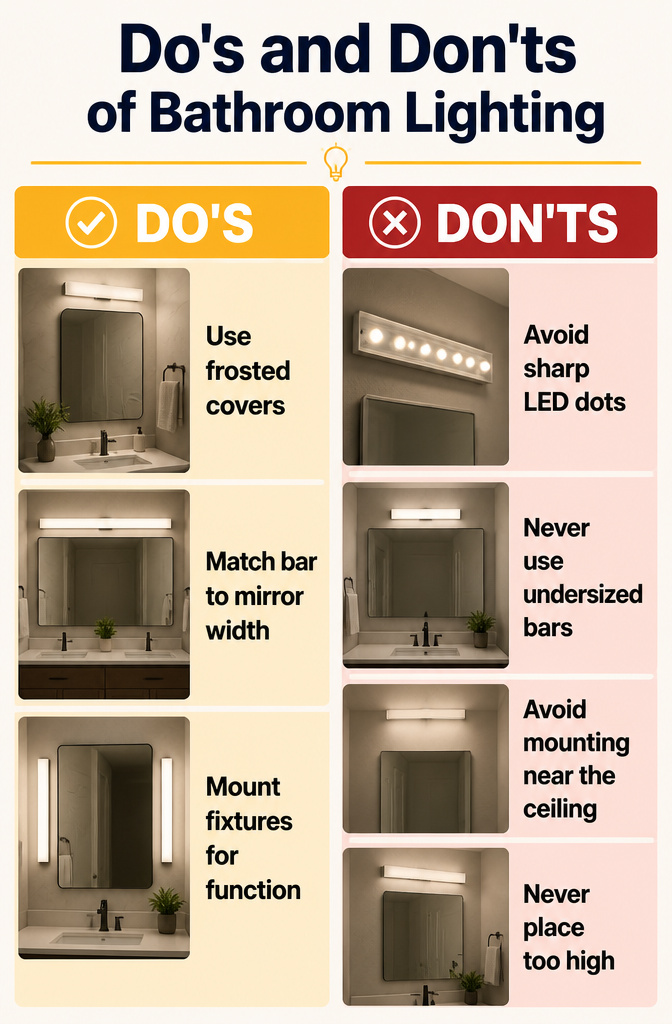
Raw LED dots without diffusers were the first mistake I made in my own bathroom redo. The strip looked sleek in the package, but once mounted it threw sharp lines across my face that made shaving feel like a geometry problem. Frosted or opaque covers fix this; they soften the light into something you can actually use.
Undersized light bars over wide mirrors create the same uneven shadow problem. A narrow bar over a broad vanity leaves the edges dark and the center harsh. The rule is to match the bar proportionally to the mirror width, not pick what looks minimal.
Placement for looks instead of function wastes the fixture entirely. Bars mounted near the ceiling throw light downward in a harsh pattern; lights centered above or below the mirror’s midpoint distort the face. The useful range sits 60–66 inches from the floor, close to the mirror’s edge. I learned this after installing one too high and wondering why my reflection looked tired every morning.

Integrated LED Channel Design: Each package includes 24 pieces of pre cut crown molding lighting with built in LED light channels, totaling 94.5 ft / 29.41 m; perfect for ceiling LED baseboard lighting, baseboard LED trim, or modern indirect lighting setups

Super Bright new model Rextin 2 LED 2835 Module Wide angle 160° ,

High Quality Super Bright Rextin 2835 3 LED Module,can print your local if you have good quantity
Frequently Asked Questions
What color temperature works best in bathrooms?
3000K to 4000K hits the sweet spot for everyday use, with cooler 3500K–5000K light for morning grooming and warmer 2700K–3000K for evening baths. Dimmable fixtures or layered switches let you reach both moods from one setup. Go below 2700K and skin turns orange and muddy; above 5000K, the light goes cold and clinical and every pore shows.
How high should wall sconces be?
The center of each sconce should sit 60–66 inches from the floor, roughly at eye level for most adults. Hit that mark and light washes evenly across your face; miss it and you get downward shadows that age you or light that stays on your neck while your eyes stay dim. Frosted glass or fabric shades keep glare down, especially in tight powder rooms where you stand close to the wall.
How do I light a small bathroom without clutter?
Choose space-saving fixtures such as compact sconces, flush or semi-flush mounts, and integrated LED mirrors. Reflective finishes, light wall colors, and strategically placed mirrors maximize brightness without adding bulky fixtures that crowd the space. For renters, peel-and-stick battery-powered LED strips or plug-in backlit mirrors leave no trace at move-out.