
The right basement bedroom idea depends on whether you are hiding the architecture or working with it.
Ceiling-mounted curtain tracks and painted ductwork both solve the same low-ceiling problem, but one costs an afternoon and the other costs nothing beyond a gallon of paint.
The detail that separates the two is your tolerance for exposed structure: black rafters read deliberate, drapery reads soft, and either beats a drop ceiling that eats your budget and your headroom.
1. Curtains or Drapery Panels
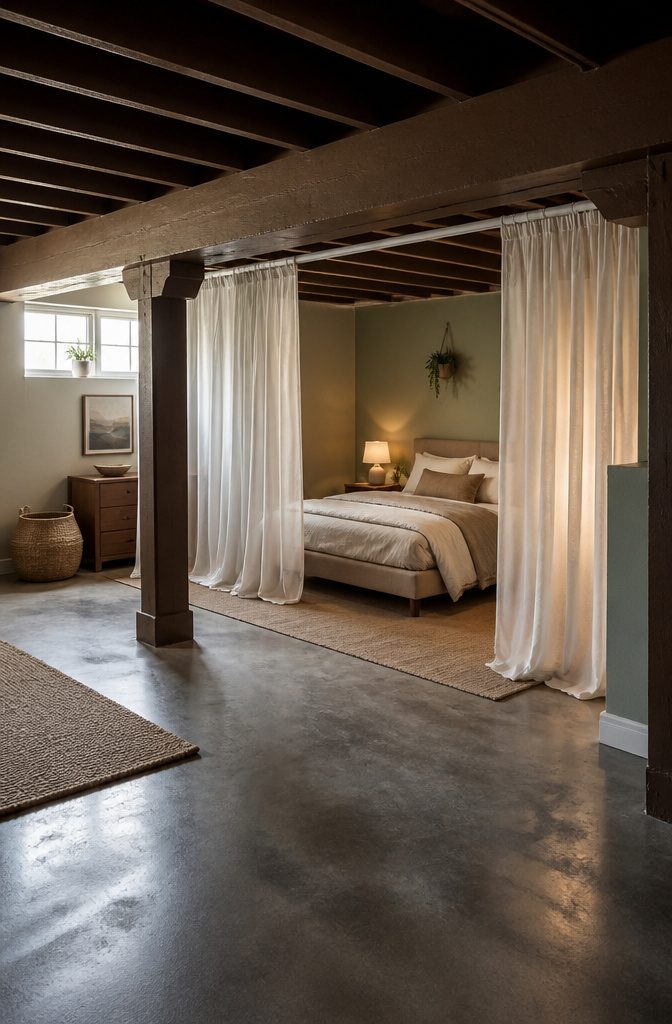
Basement walls rarely cooperate. Where drywall would mean weeks of mudding around uneven concrete or exposed ductwork, ceiling-mounted curtain tracks give you a false wall in an afternoon.
I like that the hardware stays put with tension or a few drilled brackets, and the fabric itself does the rest: hiding utility areas, softening the cold geometry of support beams, and adding the kind of warmth paint alone never manages.
Floor-to-ceiling panels work even where there is no window behind them.
The vertical line draws the eye up, which matters in a room that tends low, and lightweight fabric keeps what little natural light you have from fighting its way through heavy folds.
For actual sleeping, a blackout shade layered behind the drapery handles darkness without turning the wall into a cave during the day.
Fabric also quiets the space. Basements amplify every hum and footfall, and drapery panels absorb enough of that to make the room feel less like a bunker and more like a bedroom.
The acoustic benefit is real, though no one hangs curtains for it alone; it is the kind of side effect you notice once you live with it.

Flexible Ceiling Curtain Track System: Includes a 9.8 ft (3 m) flexible curtain track, 30 smooth rollers, 30 metal hooks, 9 ceiling brackets, 9 drywall anchors, 9 screws, 2...
2. Paint with the Right LRV
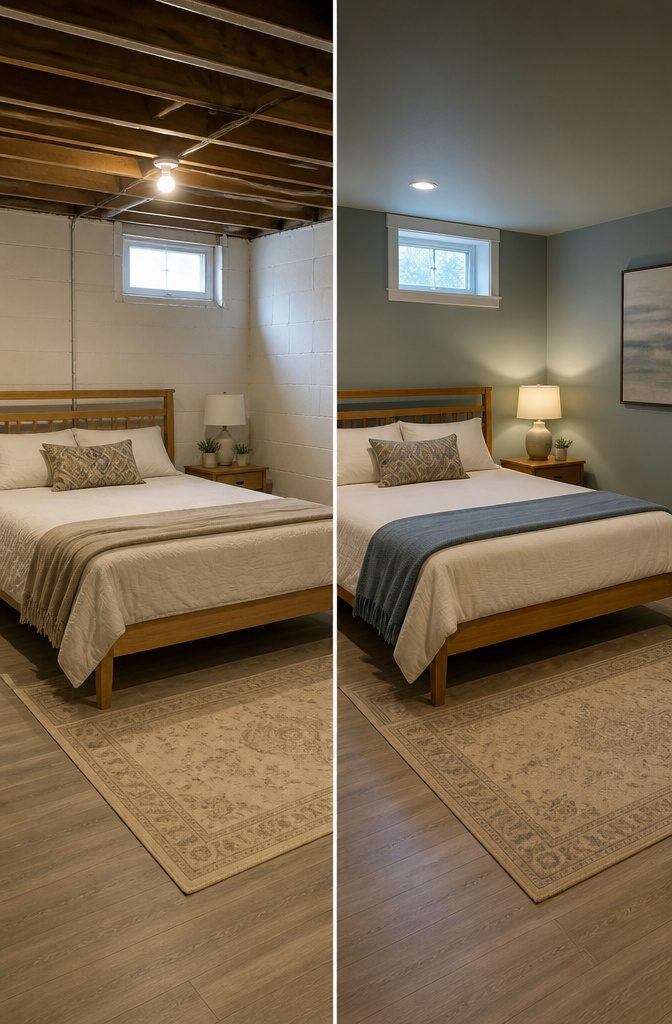
Light Reflective Value, or LRV, is the percentage of light a paint color bounces back into the room.
In a basement bedroom with little to no natural light, that number matters more than the color itself. Higher LRV means more light gets reflected around the space, which keeps things from feeling closed in.
White seems like the obvious move, but in a basement it often reads flat and sterile. Soft gray, sage green, or warm cream tones carry enough LRV to brighten the room without that harshness.
Sherwin-Williams EvenTide is one that keeps coming up for this exact situation; it shifts between blue-gray and green depending on the light, and it pairs well with typical basement flooring without fighting the room.
Painting the walls, trim, and ceiling the same shade removes the visual breaks that make low ceilings feel lower. The sources call this color drenching, and it costs nothing extra beyond the paint you already bought.

Size & Quantity: Each pack contains 2 pieces blackout panels for behind curtains, each 50" wide and 80" long. Each panel with 8 tabs, total 16 tabs. 18 pieces binder rings included(inner diameter 1.5inch).

✅EASY INSTALLATION : CLEAN THE GLASS and MOIST the suction cup,then stick the curtain on windows or any smooth surface in minnutes with suction cups;❤Warm Tips:1, Clean the window glass dust,2, Moist the suction cups with little water,we supply the spare suction cups for replacement.

LIGHT BLOCKING – Eclipse Thermaliner panels paired with your existing curtains block over 99% of outside light and harmful UV rays to ensure upmost privacy, protection, and helps reduce furniture fading. Perfect for living room, bedroom, or kid’s room
3. Adequate Storage
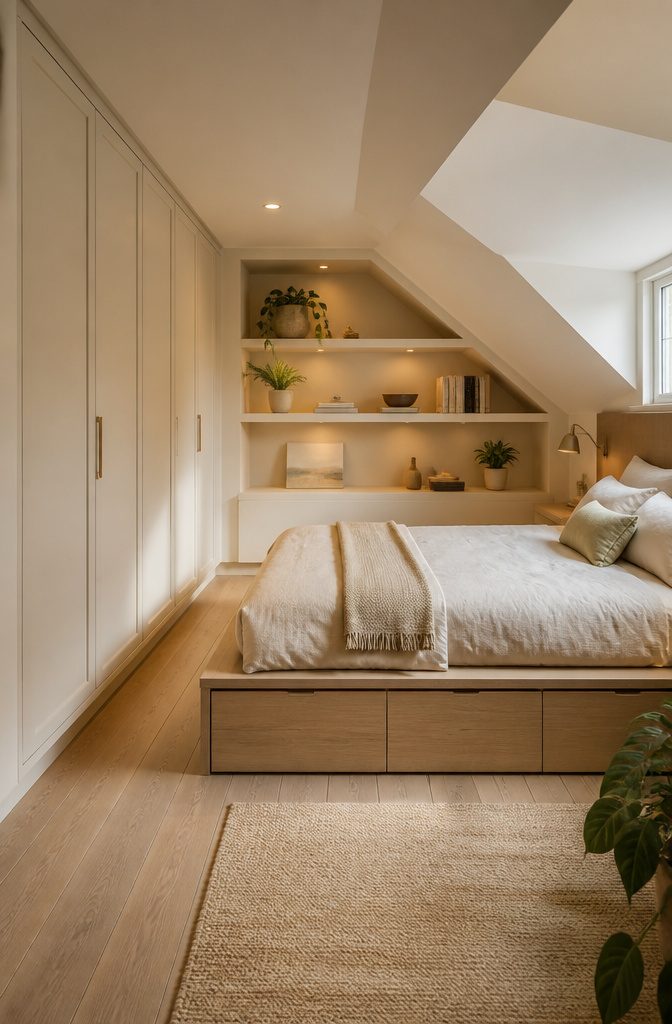
Basement bedrooms rarely offer the regular walls and square corners that standard furniture expects, which is exactly why built-in storage wins over freestanding pieces when every inch counts.
A dresser and a wardrobe and a bookshelf, dropped into the same tight footprint, start to feel like an obstacle course by the second week.
The alternative is to use the walls themselves: recessed shelves where the foundation allows, cabinets tucked under a bulkhead, or a single run of floor-to-ceiling wardrobe along one wall painted the same color as the room so it reads as architecture instead of furniture.
Under-bed drawers serve the same purpose without touching the wall at all.
A low platform bed with pull-out storage underneath keeps linens or off-season clothes accessible but off the floor, which matters more in a basement than upstairs because the floor itself is already working hard to convince you the room is a bedroom and not a storage pit.
Multi-functional furniture closes the gap when built-ins are not an option.
A daybed that stores bedding inside, a bench at the foot of the bed with a hinged lid, or a wall-mounted desk that folds flat keeps the center of the room clear.
The goal is to leave the floor as open as possible; clutter reads doubly cramped where the ceiling is already low and the light is coming from small windows.

Durable Acrylic Formula: Resists hot tire pickup, scuffing, cracking, peeling, and fading. SENVEN 1 Part Floor Paint delivers long-lasting protection and a satin finish that looks great on concrete surfaces. COVERAGE: Professional-grade floor coating covers up to 120 square feet per gallon with excellent durability and scratch resistance

Includes 30 featured and newest released color card. Sprayed on color to see our colors in your homes lighting for more accurate color choices.

ENAMEL FLOOR PAINT: Provide your floors with an extremely durable and long-lasting finish using California Paint ALLFLOR Porch, Patio and Floor Enamel Paint.
4. Disguised Basement Architecture
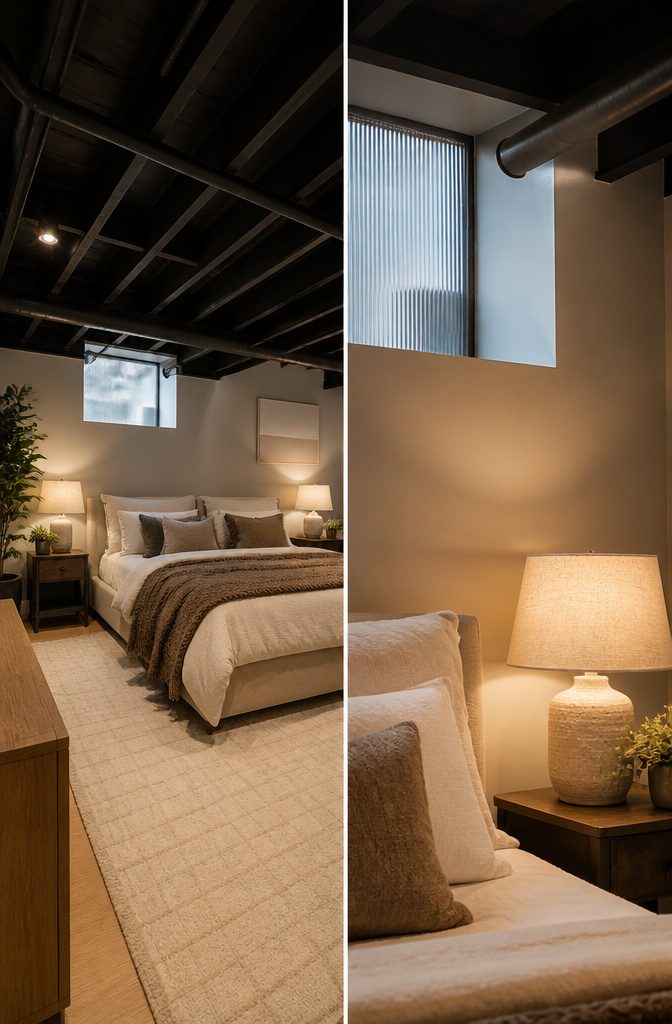
The first thing that reads "basement" in most bedrooms is the ceiling, and fighting it with a full drop ceiling eats the budget fast.
Painting exposed ductwork the same color as the ceiling or walls lets the eye glide past it instead of stopping on every run.
I have seen this work with black rafters too, though that choice turns the ceiling into a deliberate feature rather than hiding anything.
Dark beams draw the eye upward and add depth, which helps when the height is uneven across the room.
Bulkheads and support posts are harder. The staged rooms that pull this off use symmetry and warm lighting to make the space feel intentional rather than improvised, matching nightstands and soft textiles softening the hard lines.
A faux reeded glass treatment on an ugly window well turns an egress requirement into something that looks almost intentional. The real savings come from leaving what exists and editing it, not from building a second ceiling inside the first.

100% Blackout & Privacy: With a dual-layer, heavy-duty design, these curtains block 100% of sunlight and UV rays, providing complete darkness and privacy. Ideal for bedrooms, nurseries, and home offices that need a peaceful, undisturbed environment

SOUND ABSORBING WALL ART - BETTER PRINT QUALITY: Our upgraded UV-Print technology adds color managment which ensures you more vibrant pictures and emulational texture. While the soundproofing panels absorb external noise, the pictures bring you relaxing visual experience, transform any space into a peaceful yet vibrant environment

100% Blackout & Privacy: With a dual-layer, heavy-duty design, these curtains block 100% of sunlight and UV rays, providing complete darkness and privacy. Ideal for bedrooms, nurseries, and home offices that need a peaceful, undisturbed environment
5. Layered Lighting
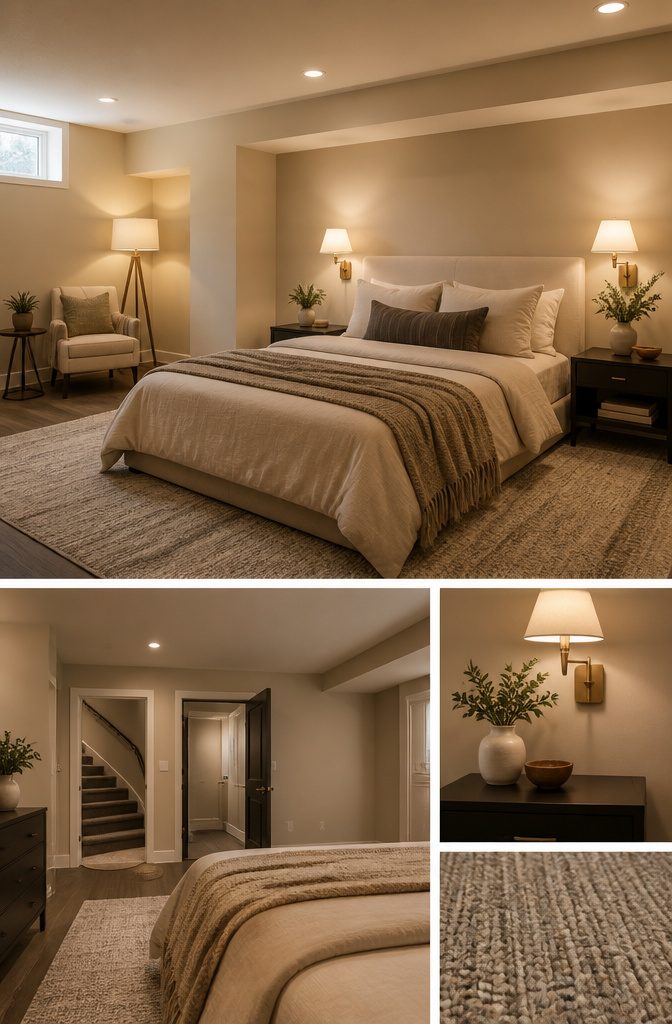
Lighting is what separates a basement bedroom that feels like a retreat from one that feels like a storage room with a mattress.
A single overhead fixture will leave the space flat and gloomy, especially when the windows are already smaller than what you’d find upstairs.
The ceiling washes everything in the same dull tone, and once you’re lying in bed trying to read or wind down, that one bright source does nothing for you.
The better move is three layers working together.
Recessed lights in the ceiling handle general brightness without dropping down into already-low headroom. Wall sconces beside the bed free up nightstand space, which matters in a basement where every square foot counts.
Table lamps on those nightstands or a floor lamp tucked into a dark corner let you control small zones of light rather than flooding the whole room.
If the ceiling is particularly low, skip any flush-mount fixture entirely; the recessed and wall-mounted options keep the visual height you have.
Dimmers matter more here than in an upstairs bedroom. Bright light helps when you’re making the bed or finding a dropped sock, but at night you want the option to pull everything down to something softer.
Warm bulbs help too, they push back against the cool, subterranean feel that basements default to.
I spent a while reading through how people actually use these rooms, and the ones that feel finished almost always got the lighting plan right before anything else.

【No Cutting Required & Easy Installation】This aluminum curtain track requires no cutting, making installation faster and easier without extra tools or modifications. The ceiling mount curtain rail comes with roller hooks, allowing you to quickly create a functional curtain solution for your space.

Ceiling curtain track: metal heavy-duty curtain track, silent, smooth, anti-corrosion, will not bend and deform, can carry more weight, can be freely cut size, aluminum alloy material using high standard aluminum, smooth surface. If the ceiling is drywall, professional expansion plugs and extension screws are required.

✅ Ceiling curtain track: metal heavy-duty curtain track, silent, smooth, anti-corrosion, will not bend and deform, can carry more weight, can be freely cut size, aluminum alloy material using high standard aluminum, smooth surface. If the ceiling is drywall, professional expansion plugs and extension screws are required.
6. Textural and Cozy Textiles
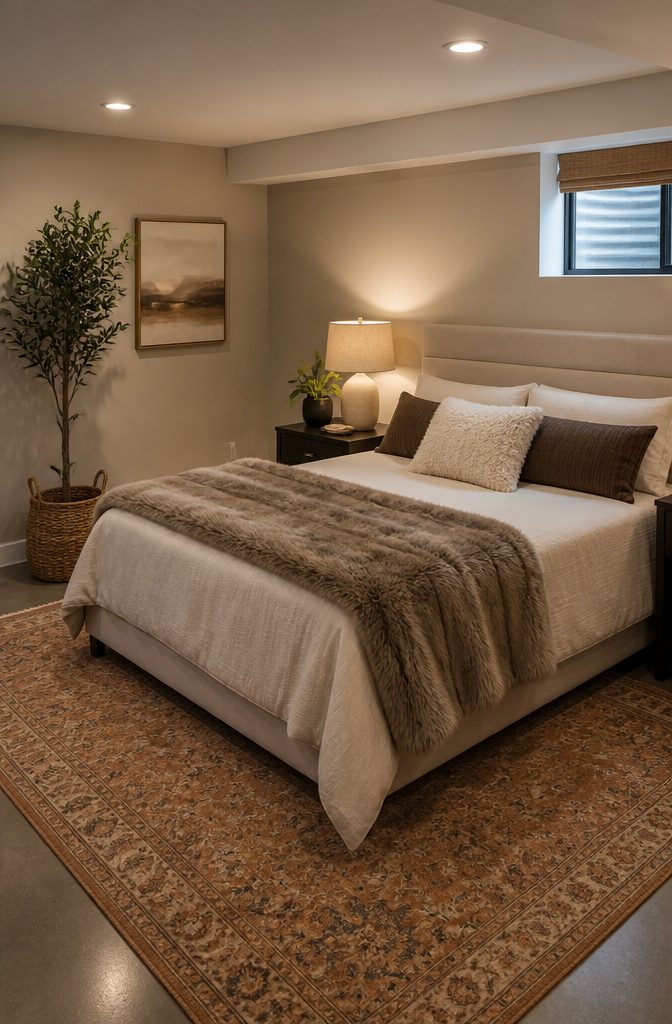
Basement walls and floors read flat and cold no matter what color you paint them. Texture is what fixes that, and the right textiles do more than color ever could.
I keep three materials on rotation for lower-level rooms. Faux fur throws drape over the foot of the bed where they catch the eye first and invite a hand.
Bouclé works better bunched on a pillow or chair, its nubby surface breaking up the smooth planes of drywall and concrete.
Waffle weave blankets belong within arm’s reach, maybe folded at the bedside, because their grid pattern reads as structure rather than fluff and keeps the room from feeling overloaded.
The placement matters more than the quantity. One faux fur piece and one bouclé cushion do the work of a pile of mismatched softness.
I skip the upholstered bench or extra ottoman in a basement bedroom; floor space is usually tight, and a second soft surface starts to look like clutter against the hard architecture.
Instead, a single large area rug under the bed handles the floor, and the textiles stay vertical, on the bed, the one chair, or hung ceiling to floor as curtains even when the window is small.
That vertical softness draws the eye up, which helps when the ceiling is low and the walls are blank.

Sold as 2 Panels: Each Package contains 2 pieces: 36"Wide x 80"Long curtain Liners. Each blackout Liners for behind curtains has 6 back tabs, back tabs 12 totally, 14 drapery Rings included(2 for backup) .The rings inner diameter 1.5 inch, easy to install.

LIGHT BLOCKING – Eclipse Thermaliner panels paired with your existing curtains block over 99% of outside light and harmful UV rays to ensure upmost privacy, protection, and helps reduce furniture fading. Perfect for living room, bedroom, or kid’s room

CORDLESS SHADE: The Exclusive Home Acadia Total Blackout Roman Shade has a sophisticated, linen look. It's cordless with a foam back and a handle for pulling up and down. Set includes 1 shade, 1 rail, 2 brackets, 4 screws, 4 anchors.
7. Statement Artwork
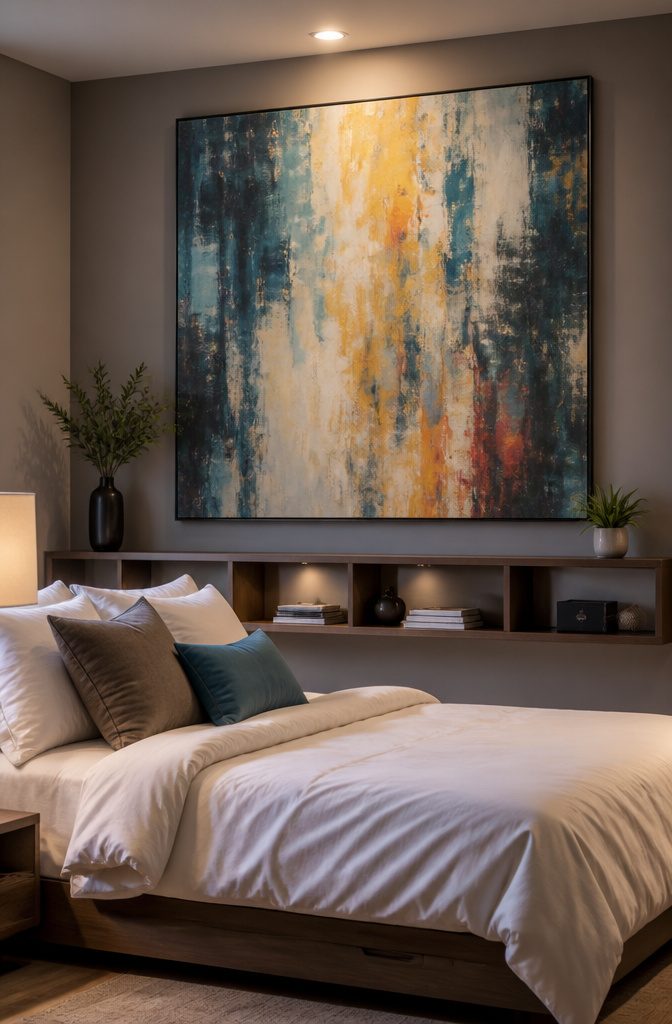
Low ceilings make gallery walls feel crowded, so one oversized piece pulls the eye upward without the visual noise of a dozen small frames.
In my own basement bedroom, two large central station studies mounted above the bed did more for the room than any paint color could have, turning a utilitarian box into something that felt intentional.
A single statement artwork also costs less than building out a full gallery wall.
Thrift stores, estate sales, and university print shops often sell oversized pieces for under a hundred dollars, and many cities have rental programs where you can borrow large-scale work for a few months to test the scale.
The key is keeping the frame simple so the art itself carries the weight, not ornate molding that competes in an already tight space.

Includes 30 featured and newest released color card. Sprayed on color to see our colors in your homes lighting for more accurate color choices.

All-in-One Formula: This furniture paint includes a built-in primer and top coat, providing seamless application on wood, metal, laminate, and more surfaces for a hassle-free painting experience.

Durable Acrylic Formula: Resists hot tire pickup, scuffing, cracking, peeling, and fading. SENVEN 1 Part Floor Paint delivers long-lasting protection and a satin finish that looks great on concrete surfaces. COVERAGE: Professional-grade floor coating covers up to 120 square feet per gallon with excellent durability and scratch resistance
8. Soft Area Rug
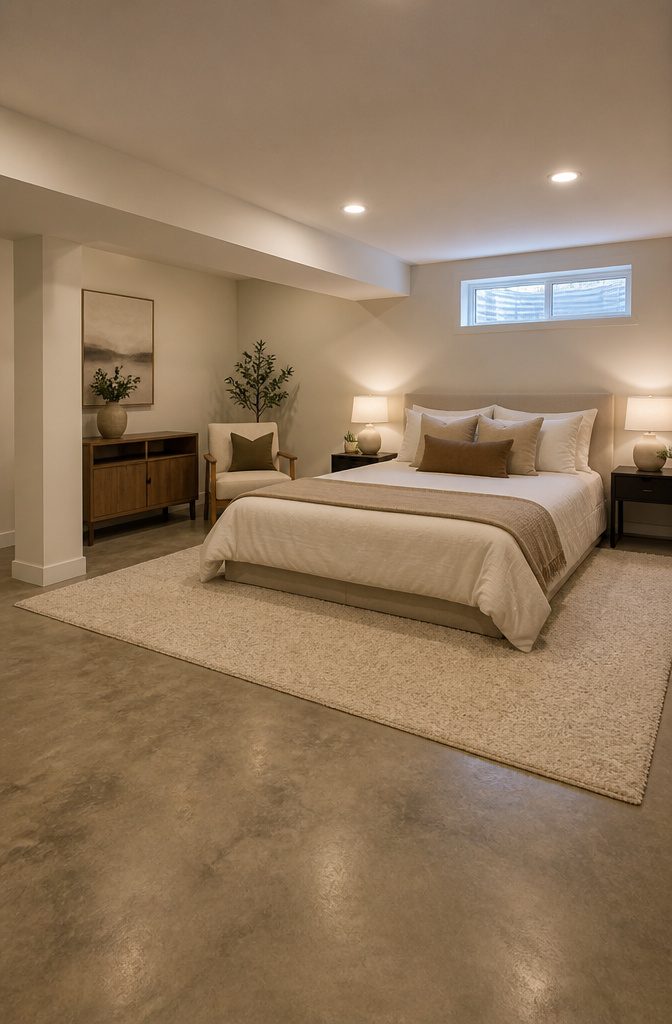
Concrete or laminate basement subflooring stays cold year-round, and a rug large enough for both feet to land on when you step out of bed fixes that immediately.
In my own reading through basement setups, the sizing detail gets skipped too often. A rug that stops short of the bedside leaves you hopping onto tile at 6 a.m.
The right piece also draws a border around the sleeping zone in a space that might otherwise hold storage bins, a desk, or laundry equipment.
Plush rugs, sheepskins, and vintage finds all work here, layered for warmth and texture against the hard surfaces common below grade.
What convinced me, reading through a dozen of these basement tours, was how often the rug did the job of a wall: it carved out a bedroom where the architecture offered none.

100% Blackout & Privacy: With a dual-layer, heavy-duty design, these curtains block 100% of sunlight and UV rays, providing complete darkness and privacy. Ideal for bedrooms, nurseries, and home offices that need a peaceful, undisturbed environment
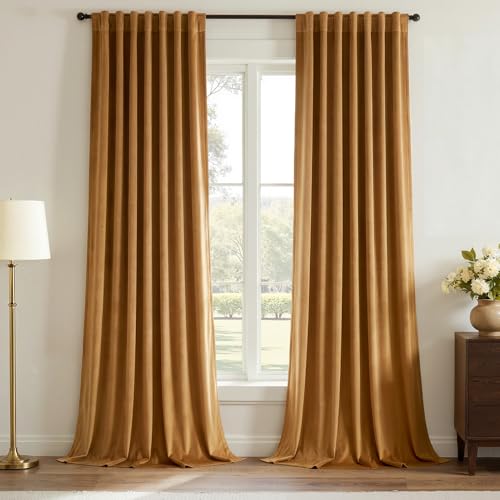
HIGH-QUALITY VELVET MATERIAL: Made from 300 GSM high-density velvet fabric, these curtains offer luxurious softness and durable quality. The plush texture and heavy weight enhance the elegance of your home, while fade-resistant and dirt-repellent properties ensure long-lasting beauty

100% Blackout & Privacy: With a dual-layer, heavy-duty design, these curtains block 100% of sunlight and UV rays, providing complete darkness and privacy. Ideal for bedrooms, nurseries, and home offices that need a peaceful, undisturbed environment
9. Layered Bedding

Bedding is the fastest way to warm up a basement bedroom without touching a wall.
In my own stack, I start with a fitted sheet and flat sheet, add a light cotton blanket, then finish with a heavier duvet or quilt on top.
The sleeper can pull that top layer up when the concrete walls drop the temperature after midnight, or push it off if the space overheats once the HVAC kicks in.
That flexibility matters because basement rooms swing ten or fifteen degrees between 2 a.m. and morning more often than upstairs bedrooms do.
A matelassé coverlet or down duvet insert you can peel back in layers handles those swings without a thermostat battle.
Throw blankets at the foot of the bed add color and texture, but the real work is that ordered stack: each piece has a job, and you build it so the heaviest layer is the last one on, not the first.

High Quality: Made of premium aluminum alloy, this ceiling curtain track is solid and strong, built with a weight capacity of up to 60 lbs. The electrophoretic coating and refined manufacturing process deliver consistent performance in a variety of environments—from living rooms to bathrooms, kitchens, and beyond.

【CEILING CURTAIN TRACK】Made of aluminum alloy, this ceiling curtain track has solid, strong and weather resistant structure, Our sliding curtain track design allows for easy separation, blending in with any style.
Ceiling curtain track: metal heavy-duty curtain track, silent, smooth, anti-corrosion, will not bend and deform, can carry more weight, can be freely cut size, aluminum alloy material using high standard aluminum, smooth surface. If the ceiling is drywall, professional expansion plugs and extension screws are required.
10. Warm Wood Tones
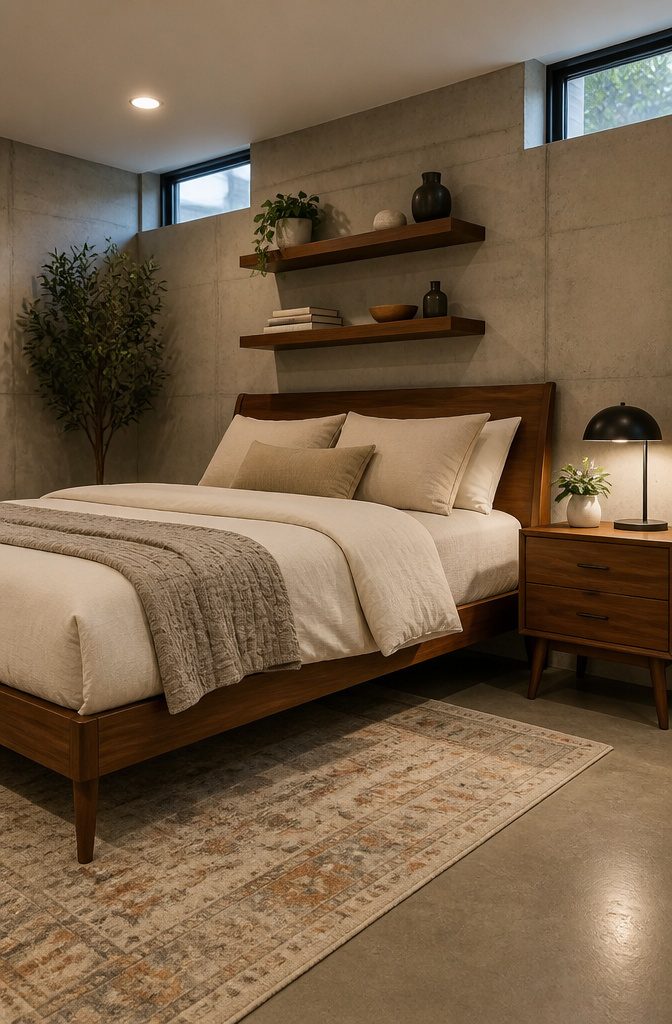
Most basement bedrooms start with gray concrete, gray drywall, and gray carpet that reads cool even under warm bulbs.
Wood is the simplest counterweight, and it does not have to mean solid hardwood. In a space below grade, engineered or veneered pieces handle humidity better than wide-plank oak, which can cup or gap as seasons shift.
A vintage bed frame in a mid-tone walnut or ash does more than a fresh coat of paint to push back that subterranean chill.
Nightstands in the same register, or floating shelves with visible grain, carry the warmth upward and around without turning the room into a cabin.
The sources I read kept returning to this pairing: one or two wood pieces against neutral walls, never a full wrap.
Oak reads lighter and more casual; walnut goes moodier. Either works if the tone is warm rather than ashy.
I would skip wood flooring in a basement bedroom unless it is specifically rated for below-grade install.
A wood bed frame and a simple shelf unit give you the same visual heat with none of the swelling or mold risk. The money you save on fussy flooring buys better bedding, which matters more for actual warmth anyway.

[Superior Blackout Fabric]: G-WACK portable blackout curtains, made of high-quality polyester fabric with TPU silver coating, can block 100% of sunlight,UV rays and create a cozy vibe for deep sleep. No burrs and waterproof, our blackout window cover is easy to clean with damp cloth.

CORDLESS SHADE: The Exclusive Home Acadia Total Blackout Roman Shade has a sophisticated, linen look. It's cordless with a foam back and a handle for pulling up and down. Set includes 1 shade, 1 rail, 2 brackets, 4 screws, 4 anchors.

CORDLESS SHADE: The Exclusive Home Acadia Total Blackout Roman Shade has a sophisticated, linen look. It's cordless with a foam back and a handle for pulling up and down. Set includes 1 shade, 1 rail, 2 brackets, 4 screws, 4 anchors.
11. Warm Flooring Material
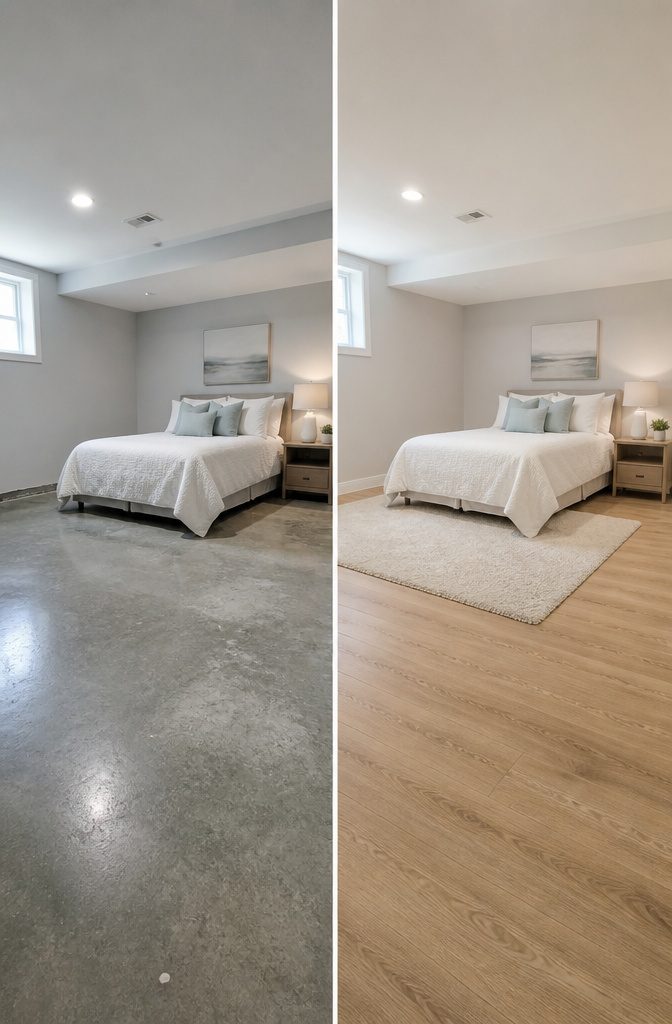
Concrete basement slabs pull heat out of a room faster than almost anything else, so the flooring decision matters more down here than it would upstairs. Three materials stand out for different reasons.
Luxury vinyl plank is the practical baseline. It handles moisture better than anything wood-based, installs over most existing floors, and the newer planks look convincingly real.
Honey Butter Oak is one color that keeps coming up in basement bedrooms; it carries a light-to-mid tone that bounces light around without reading as yellow.
Sources mention it specifically as a vinyl plank, not engineered hardwood, and that distinction matters for warranty reasons in below-grade spaces.
Engineered hardwood splits the difference.
Real wood veneer over plywood, warmer underfoot than vinyl, but still risky where humidity swings wide. Most manufacturers void the warranty below grade, so read the fine print before ordering.
Carpet wins on warmth and loses on moisture. A thick underlay helps, and the coziness is hard to replicate with rugs alone.
The catch is spring thaw: concrete wicks water, and wet carpet stays wet. If the basement runs damp at all, vinyl plus a large area rug under the bed anchors the room without trapping water.
For my money, vinyl plank with a sheepskin or woven rug beside the bed covers both problems. The rug lifts when you need to dry things out, and the plank underneath does not care.
12. Cozy Upholstery
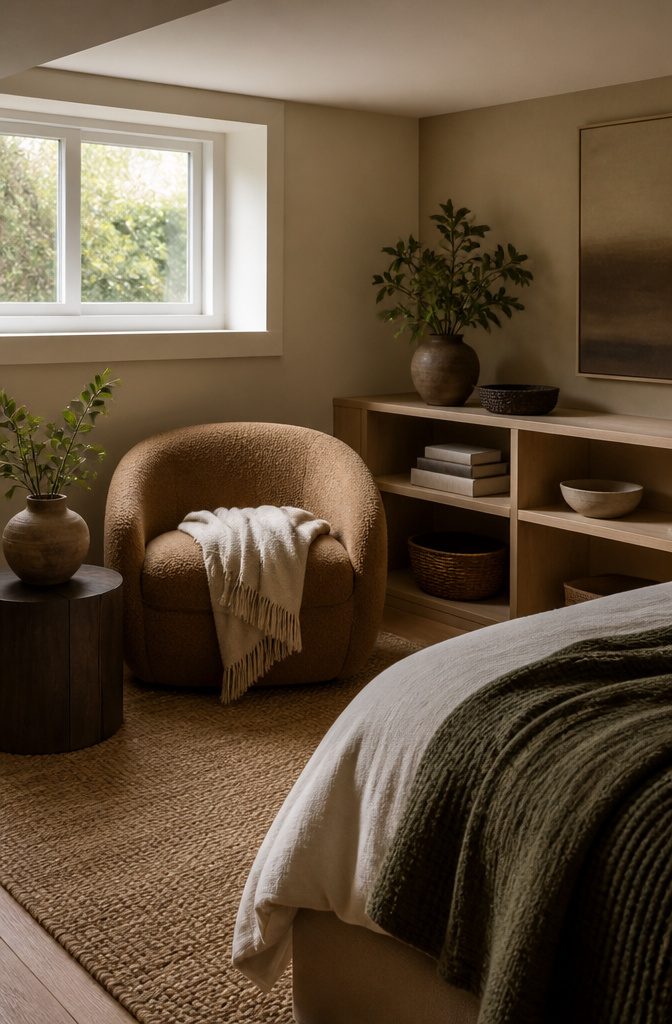
A reading chair in a basement bedroom should look like somewhere you actually want to sit, not like furniture that got reassigned from a waiting room.
The difference is almost always the fabric. Bouclé or a soft waffle weave reads warm at a glance, and the texture catches low basement light in a way flat weave never will.
I have learned to run my hand across the bolt before I commit; if it feels cool or slick under fluorescent store lighting, it will feel like a dentist’s chair at 10 p.m. with no windows.
Performance fabrics worth the upgrade if your basement runs humid.
A treated synthetic or a high-polyester blend resists the mustiness that cotton can pick up in below-grade air, and you can usually find one in a warm tone that does not scream "outdoor patio."
The budget play is secondhand upholstery in a shape you like, then re-covering in something with a bit of fuzz to it.
I watch estate sales and Facebook Marketplace for small settees with good bones; a local shop near me charges less than a new mid-range chair to strip and redo one.
13. Maximized Natural Light
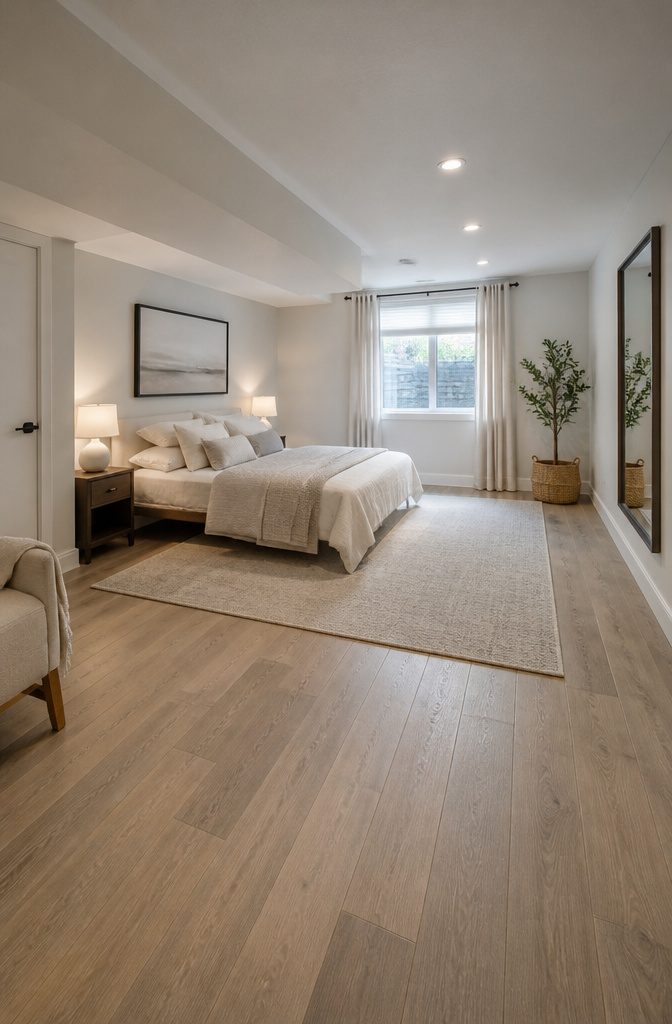
A basement bedroom lives or dies by how much daylight you can steal back from the ground outside. The first move is keeping the window area completely clear: no headboard shoved underneath, no tall dresser blocking the glass.
In older basements the window often sits high on the wall or measures smaller than you’d like, so that open zone around it becomes even more valuable.
Mirrors do the heavy lifting after that.
One large mirror placed opposite the window bounces what light there is deep into the room. Mirrored wardrobe doors work when wall space is tight, though a single framed piece beats scattering small mirrors around like decoration.
The wall color matters more down here than upstairs. Light tones on the wall that catches the window light will push it further into the space than a dark accent ever could.
The legal minimum for an egress window is 5.7 square feet, with a 20-inch minimum opening width and the sill no higher than 44 inches off the floor.
That window has to open directly to the outdoors, not to a window well with a ladder. If your basement was finished decades ago, you may be looking at a window that falls short on height, width, or both.
Retrofitting one in means excavation outside and cutting concrete, so budget for that before you plan the room around a bed that legally cannot go there.
14. Thoughtful Styling
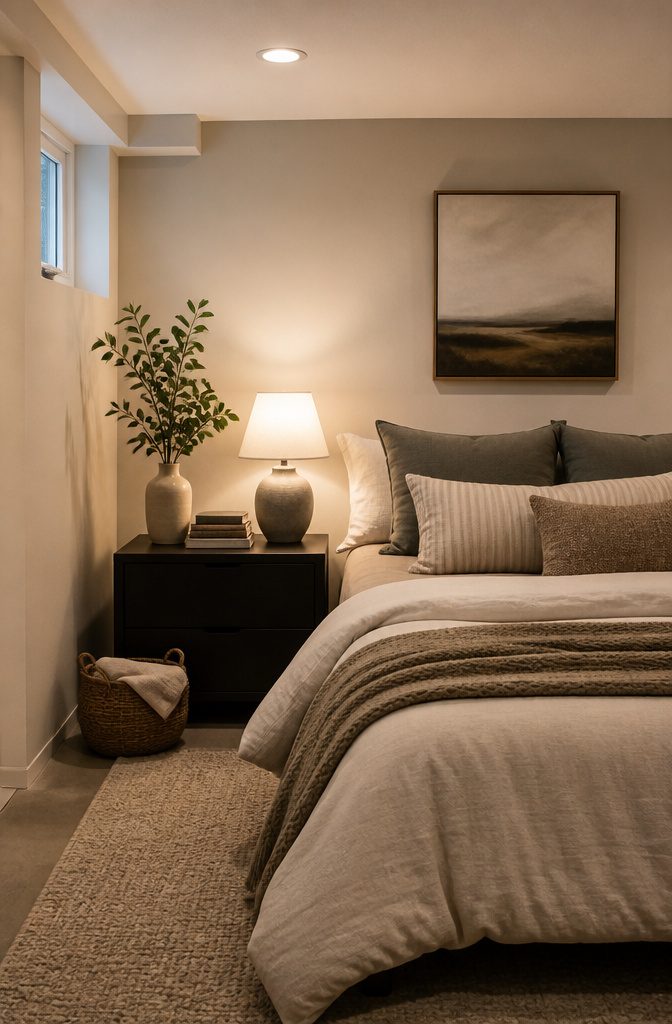
A basement bedroom only feels finished when it stops looking like a storage unit with a bed in it.
The leftover-furniture trap is real: the dresser that didn’t fit upstairs, the lamp from the old apartment, the rug rolled up in the garage. Those pieces can work, but only if they talk to each other.
A neutral backdrop helps low-ceiling rooms breathe, so build from there and pull in color through the things you touch every day: bedding, a ceramic vase, the stack of books on the nightstand.
A proper bedside table and lamp do more for the room than almost anything else.
They signal that someone actually sleeps here, not just crashes. The table doesn’t need to match the bed frame; it needs to sit at a height where you can reach your water glass without sitting up.
The lamp should cast light downward for reading, not glare off the ceiling. Add one thing that has a story: a framed map, a thrifted dish for loose change, a plant that survived the move downstairs.
Those details are what make a basement bedroom feel like part of the house instead of an annex for it.
15. Painted Millwork
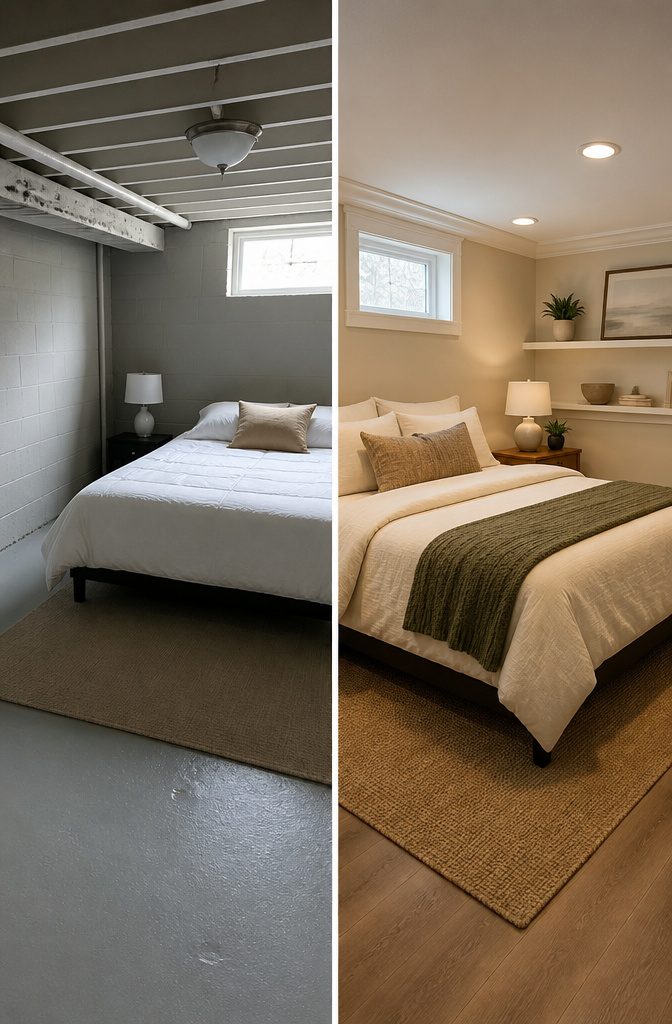
Painting trim, doors, and any existing woodwork the same color as the walls removes the horizontal lines that chop up a low basement ceiling.
The eye travels one continuous surface upward instead of stopping at each white doorframe. A single shade from baseboard to crown can add several inches of perceived height without touching the actual structure.
This is the move I recommend for renters stuck with dated trim they cannot remove.
Matching the wall color turns bulky colonial casing or yellowed varnish into quiet architecture that recedes. You keep the millwork, you just stop arguing with it.
Sources suggest soft grays, sage greens, or warm creams with a higher Light Reflective Value rather than stark white, which reads flat where natural light is scarce.
The same principle holds for the ceiling itself: carried through in a similar tone, it completes the unbroken vertical plane.
A gallon of paint and a weekend of taping beats a landlord dispute over prying off trim that was nailed in the 1970s.
16. Candles for Ambiance
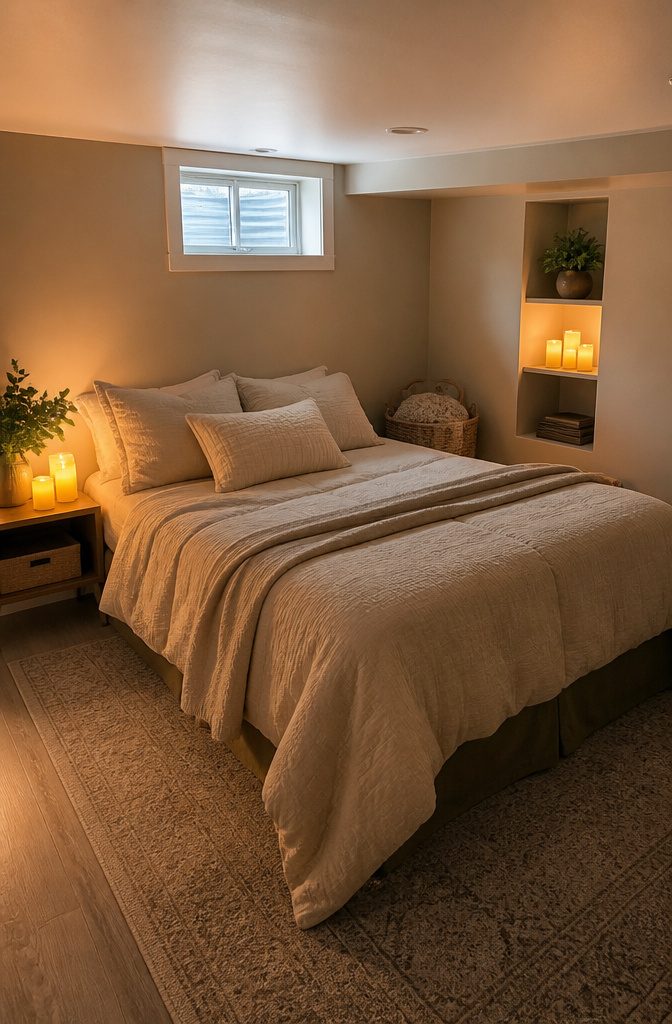
Candles do more for a basement bedroom than most fixtures costing ten times as much, because small light at eye level flatters where overhead light flattens.
The ceiling is already low; a bulb overhead leaves the room feeling like a storage unit, but a few candles on a nightstand or dresser draw the eye sideways and make the walls feel farther apart.
Battery-operated candles are the safer bet in a basement with limited ventilation. Real candles need airflow you may not have, and one reader who finished a basement bedroom noted she would avoid them unless there was a large egress.
The battery kind has improved enough that the flicker reads as real from across the room, and you can leave them on a timer without the damp-basement worry of an open flame.
If you do use real candles, keep them to a single votive on a stable dish and treat it like cooking: never leave the room while it is lit.
For ten dollars and the time it takes to walk the aisle at Target, you get evening warmth that installs in seconds and moves when you rearrange furniture.
That flexibility matters in a rental, where hardwired solutions belong to the landlord.
17. Vintage Furniture or Decor
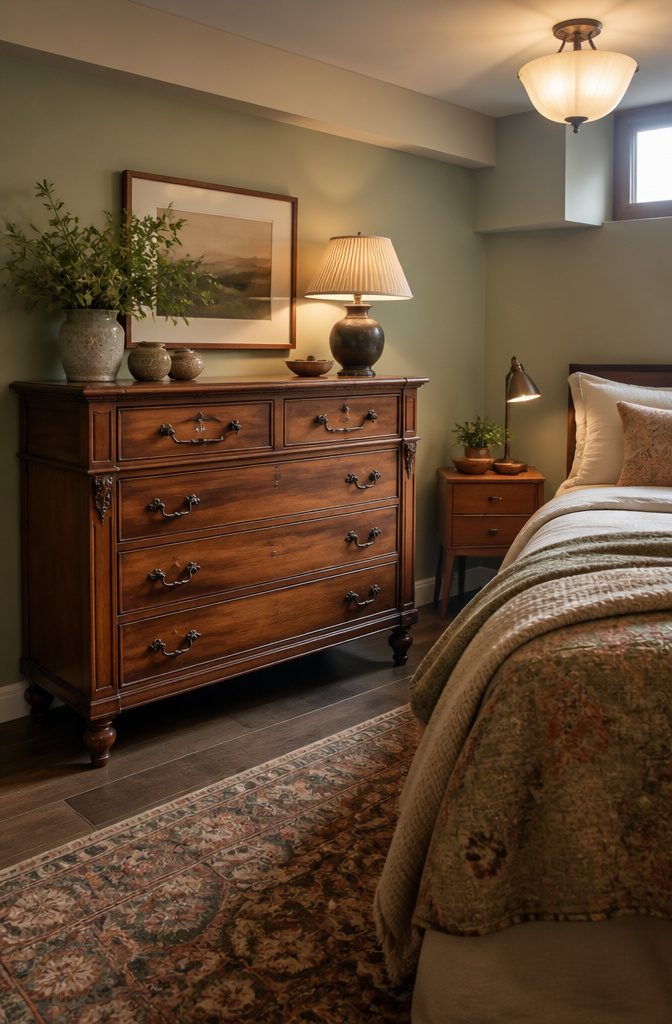
New budget furniture tends to look the same in every basement bedroom I scroll through.
Older pieces carry the marks of actual use, and that character costs less than you’d expect. I watch Facebook Marketplace for antique beds and side tables; sellers often list them separately, so patience matters.
Solid wood vintage pieces handle basement humidity far better than particleboard, which swells and softens the first damp season. That structural honesty doubles as the practical win you need underground.
A thrifted dresser or a handmade vase does the styling work without crowding a small footprint, and leaving the ceiling rafters exposed (painted black if you want the industrial note) keeps the room from feeling stuffed.
I stack books where a shelf won’t fit, though I accept the dusting that follows.
18. Practical Appliances
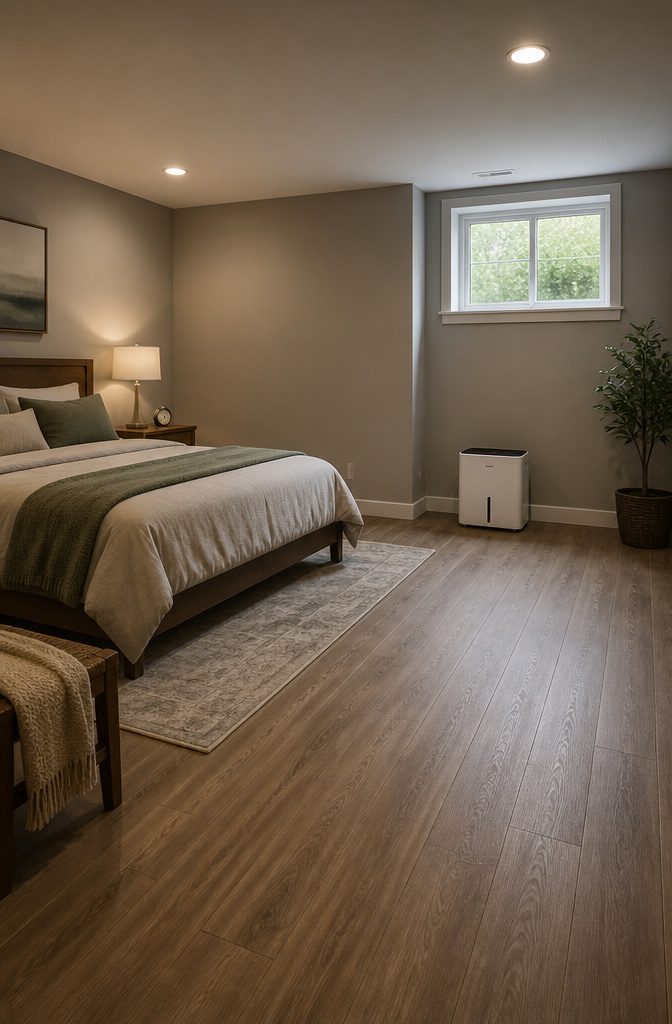
A basement bedroom that smells musty in July undoes every cozy choice you made.
The dehumidifier belongs on the far side of the room from the bed, ideally near the damp wall or corner where moisture collects, with the exhaust angled away from where you sleep.
Most units run around 50 decibels, roughly a quiet conversation; three feet of distance and a closed closet door between it and your pillow turns that hum into something you stop noticing by the second night.
Skip the mini-fridge or microwave unless the basement functions as a separate apartment. Those appliances read as clutter in a standard bedroom and draw power you do not need for occasional use.
The exception is a guest suite with no kitchen access upstairs, where a small fridge earns its outlet. Even then, tuck it behind a cabinet panel or in the closet so it does not become the room’s visual focus.
19. Florals or Greenery
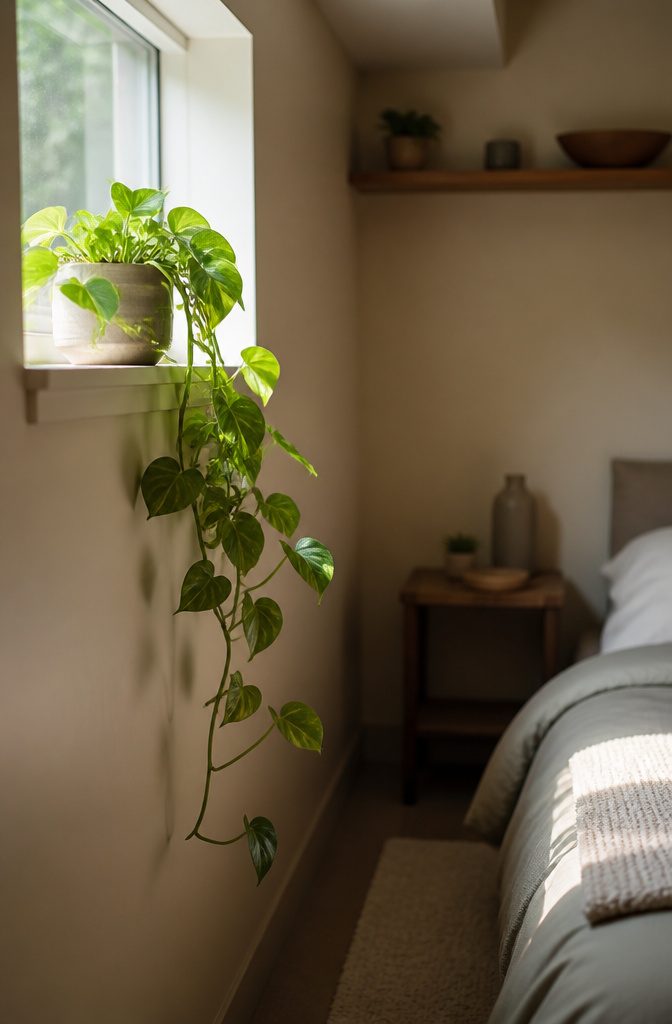
A basement bedroom can feel cut off from the outside world, and that is exactly where a single plant changes the whole mood.
Pothos and snake plants survive the low light and higher humidity that comes with below-grade rooms, and both ask for almost nothing in return.
I water mine when the soil actually dries, which in a basement means less often than upstairs, and the trailing vines soften the edge of a dresser that would otherwise sit there like furniture in a storage unit.
If the window is a narrow egress well or the room has no natural light at all, a live plant becomes a slow death sentence no matter how hardy the variety.
Faux greenery has improved to the point where a good artificial pothos hung in a dark corner reads as living from across the room, and it never drops a yellow leaf to remind you of your failure.
I keep one real plant where the light reaches and one fake where it does not; the combination covers the visual need without the guilt.
20. Cozy Comforts for Guests
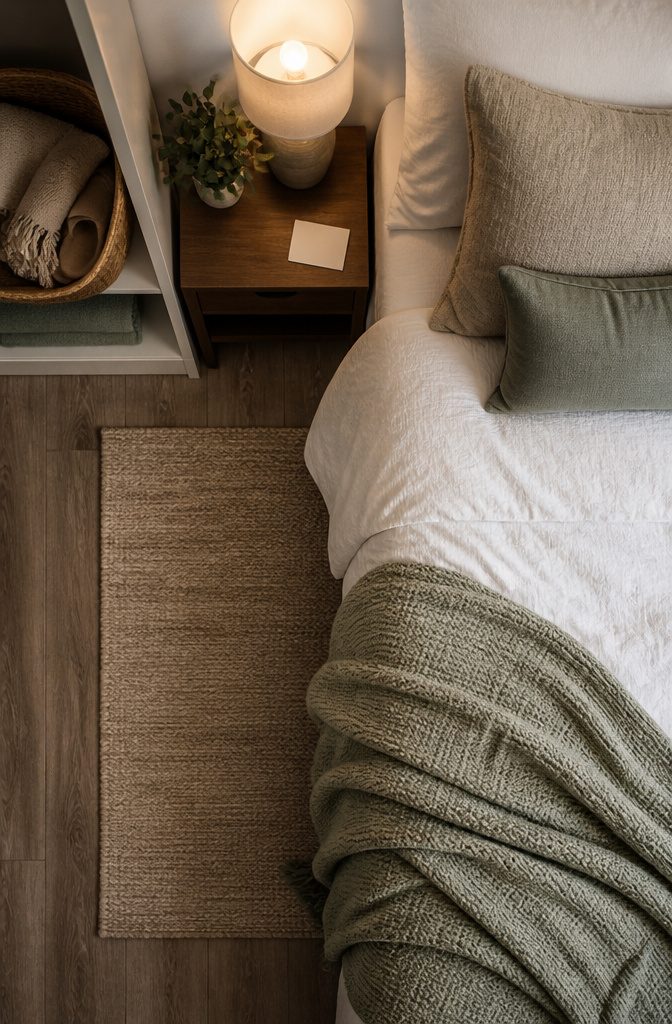
A basement guest room can feel like exile if you leave your visitor to guess where things are. The temperature control is usually hidden, the light switches are unmarked, and the nearest bathroom is a flight of stairs away.
I put a small card on the nightstand with two lines: which switch does the overhead, which does the lamp, and how to nudge the thermostat up or down without waking the whole house.
The basket on the closet shelf holds a heated blanket and a spare robe. A carafe and glass sit on the dresser so no one has to climb for water at midnight.
I used to skip the reading material, but a paperback or two left on the nightstand signals that someone expected a person to be there.
Small signals of care matter more in a basement because the space itself already says forgotten.
Slippers in the closet, a space heater behind the curtain for backup, a note that the Wi-Fi password is the same as upstairs: these are the details that turn a subterranean sleepover into a stay someone would repeat.
Frequently Asked Questions
How do you make a small basement bedroom feel bright and airy?
Keep the window area completely clear of furniture, then place one large mirror opposite the glass to bounce daylight deep into the room.
Light wall colors with a higher Light Reflective Value push that light further than dark accents ever could. Recessed ceiling lights and wall sconces add layers of brightness without dropping into already-low headroom.
What flooring is best for a basement bedroom?
Luxury vinyl plank is the safest baseline because it handles moisture and installs over most existing floors. Honey Butter Oak is one tone that keeps coming up for basement bedrooms; it reflects light without reading yellow.
If you want real wood warmth, engineered hardwood works but most manufacturers void the warranty below grade, so check the fine print before ordering.
Do basement bedrooms need an egress window?
Yes, and the legal minimum is 5.7 square feet with a 20-inch minimum opening width and the sill no higher than 44 inches off the floor. That window must open directly to the outdoors, not to a window well with a ladder.
Older finished basements often fall short on height or width, and retrofitting means excavation outside plus cutting concrete, so budget for that before placing the bed.
How can I reduce moisture in a basement bedroom?
Run a dehumidifier on the far side of the room from the bed, near the wall or corner where moisture collects, with the exhaust angled away from your pillow.
Most units hum at about 50 decibels, roughly a quiet conversation; three feet of distance and a closed closet door between it and where you sleep turns that into background noise by the second night.
Skip the mini-fridge or microwave unless the basement functions as a separate apartment, since those appliances add heat and read as visual clutter.
How do you style a basement bedroom?
Treat it like any other bedroom rather than a storage annex.
A neutral backdrop lets low ceilings breathe, so build from there and pull color through the things you touch daily: bedding, a ceramic vase, the stack of books on the nightstand.
A proper bedside table and lamp do more than almost anything else to signal someone actually sleeps here; the table should sit at a height where you can reach your water glass without sitting up, and the lamp should cast light downward for reading instead of glaring off the ceiling.