Paint, mulch and divided perennials cost almost nothing, while pallet pergolas, a wicker couch and a fire pit ring sit at the other end for lumber, blocks and cushions.
What you rent or own decides where to start: renters can stake solar border lights and hang baskets from a freestanding stand without screwing into the siding, and owners can anchor a trellis or build a raised cedar bed.
Pick the one patch of yard you actually use, then spend there first.
1. Bird Bath
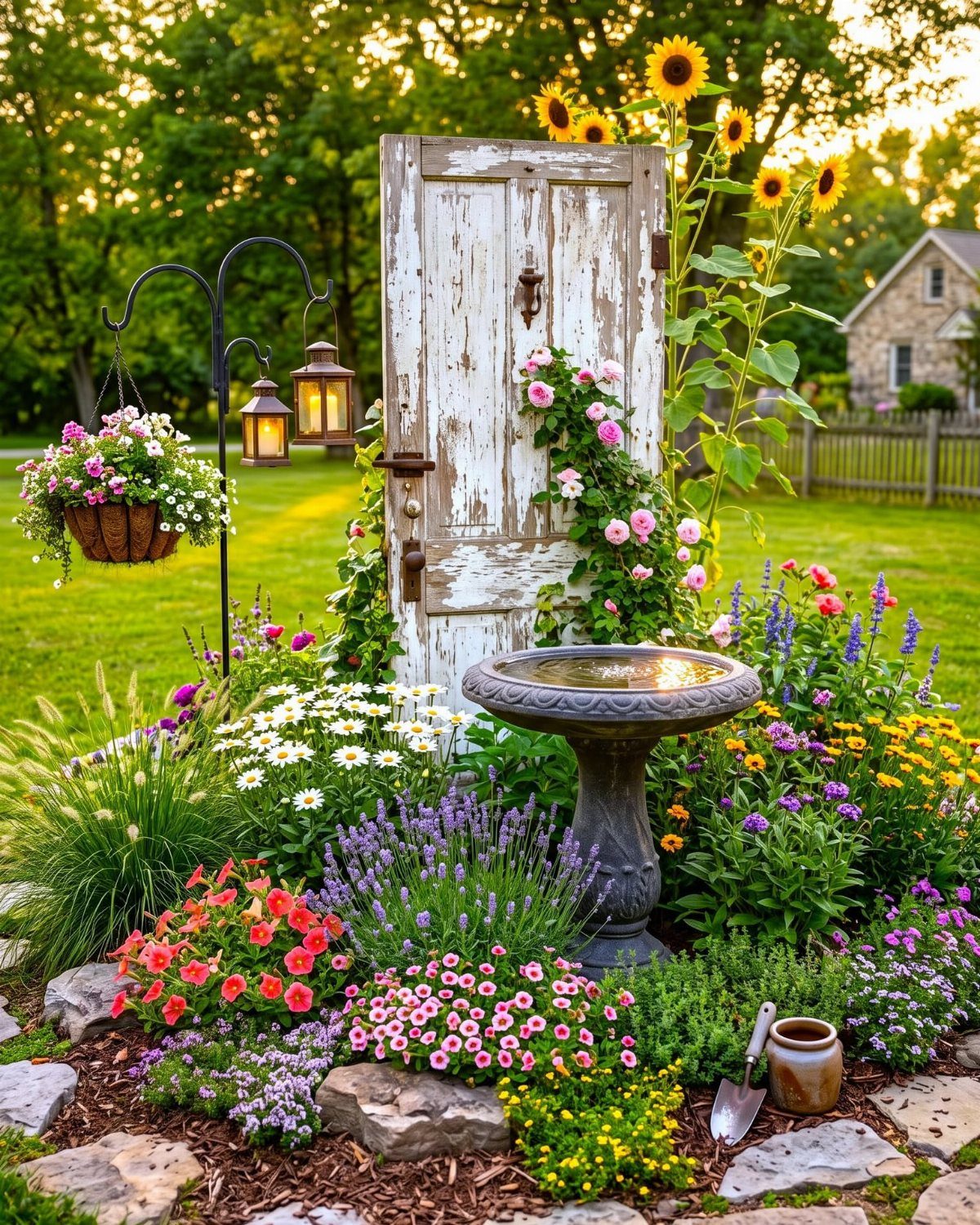
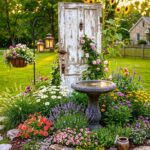
A stone bird bath works as a focal point because it gives the eye one place to land. Set against a weathered white door and a crowd of flowers, it anchors the corner without taking much room.
Put it where you can see it from a window or a seat.
A shallow basin is easier for small birds, and a bath costs far less than a pond or fountain, which are the bigger versions of the same idea.
Refill it often so the water stays fresh.
2. DIY Planters
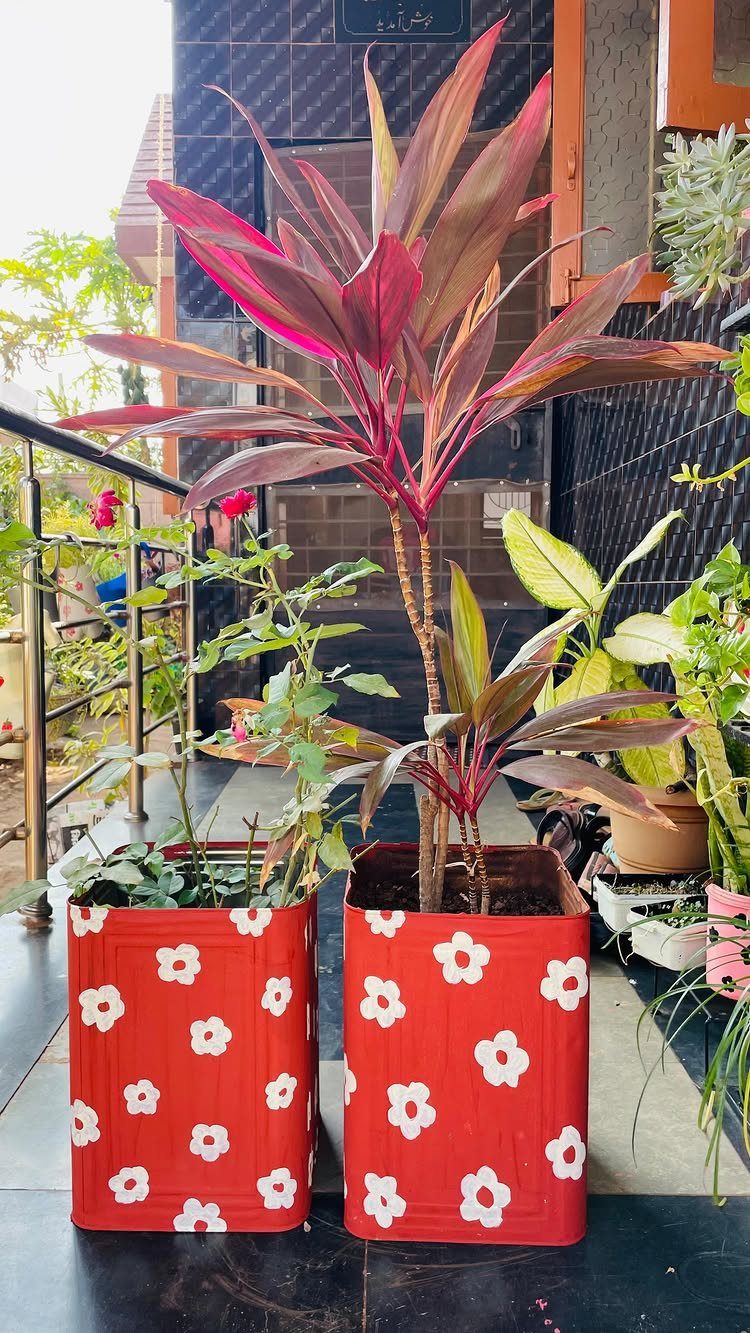
Painted planters are the cheapest way to give a bare porch or balcony a color scheme.
Terra cotta pots painted a bold red with a simple white flower pattern stand out against a dark wall, and the whole job takes a brush, a few pots and outdoor acrylic paint.
Start with plain terracotta or plastic pots you already own.
Wipe them clean, paint 2 coats, and let them dry fully before planting. Sketch the pattern lightly first so the flowers land evenly.
Stick to one base color across the set; the pattern can vary.
3. Outdoor Lighting
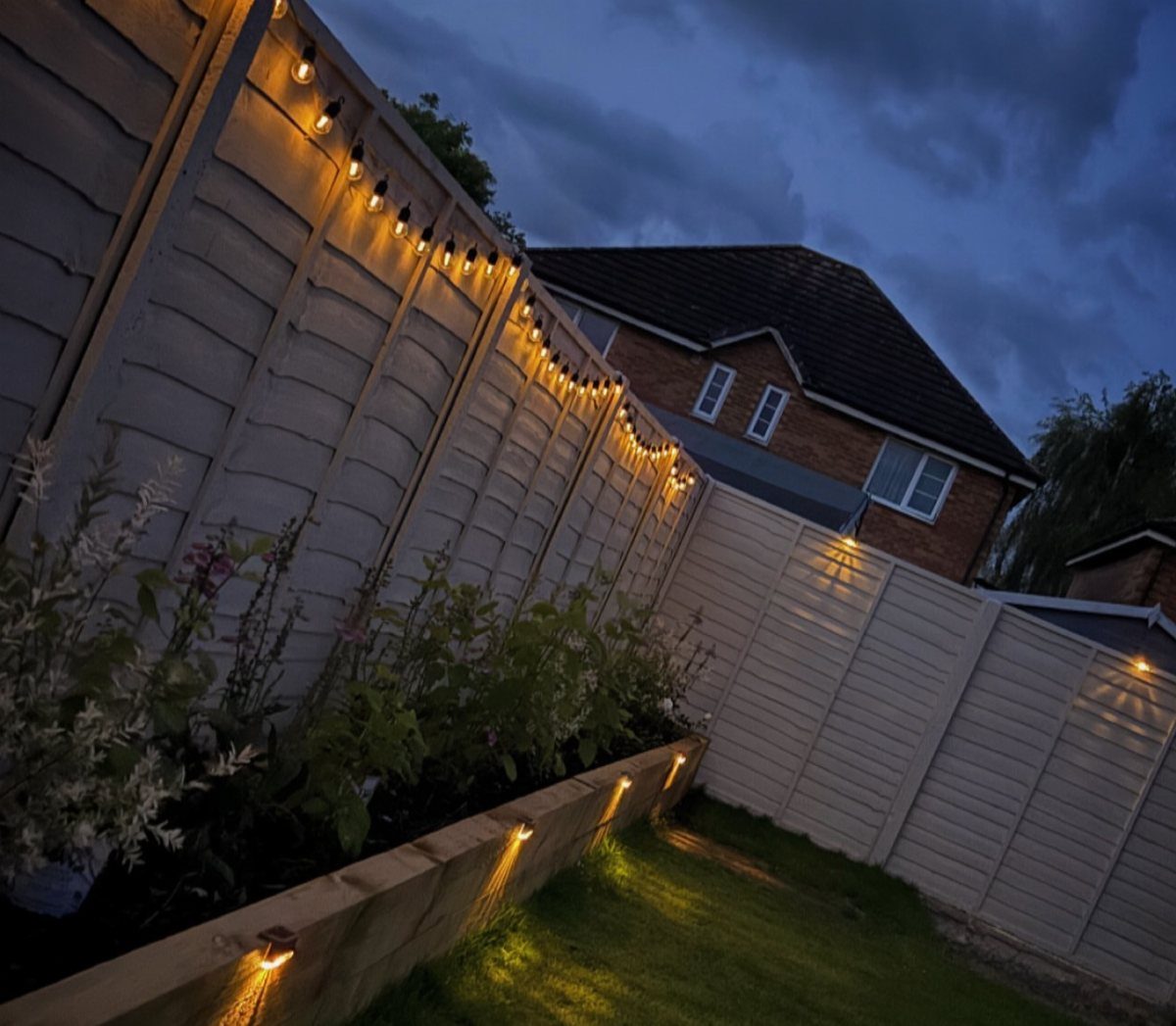
String lights along a wooden fence and small solar lights edging a garden bed make a yard usable after dark for very little money.
Two kinds of light do two jobs: the strings give a soft glow overhead, while the border lights mark where the bed ends.
Solar border lights need no wiring, so a renter can stake them in an afternoon. Place them where they get direct sun during the day.
Hang the strings in straight, slightly sagging runs rather than tight lines.
4. Bark Mulch
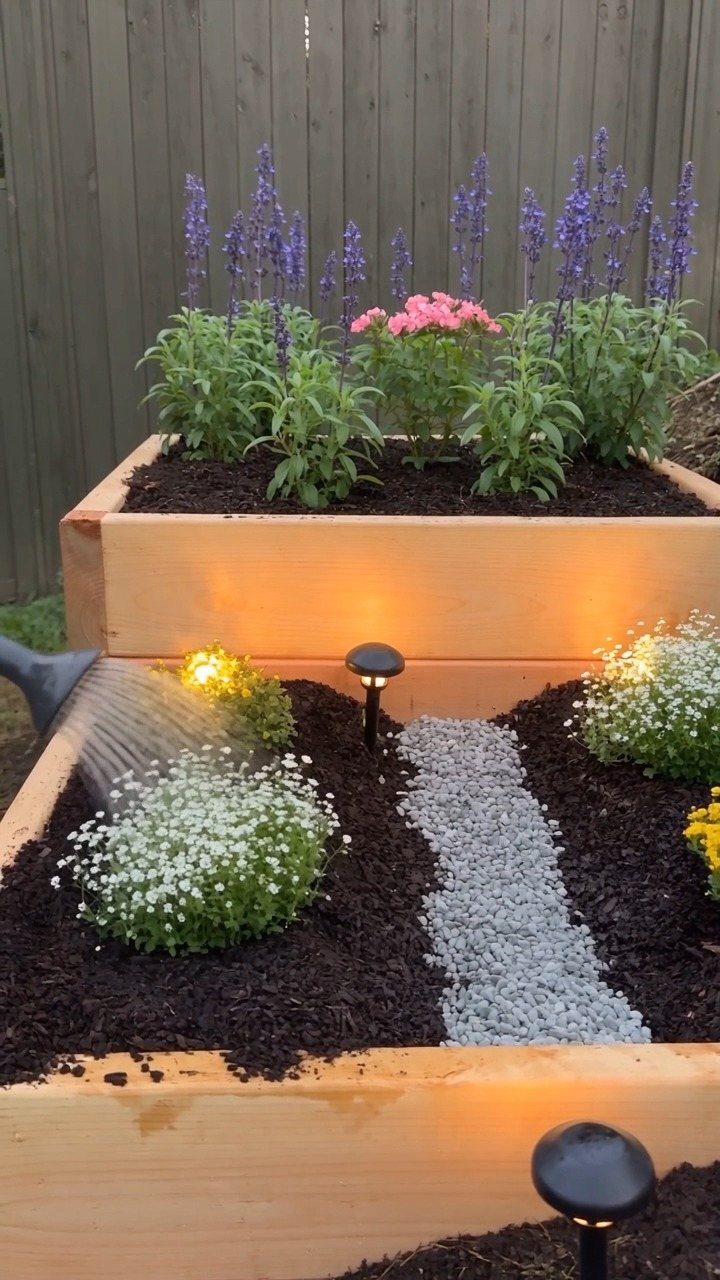
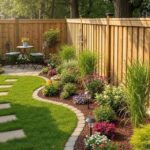
Dark bark mulch makes flowers look brighter and gives a bed a clean, finished edge. Here it fills two stepped cedar beds beside a gravel path, and the contrast between the three materials is what makes it look planned.
Spread it over the soil after planting, and keep it a little back from the stems so they can breathe. Bagged bark is the budget route for small beds; buying by the load only makes sense for large areas.
Water the bed after spreading so the mulch settles.
5. Flower Beds
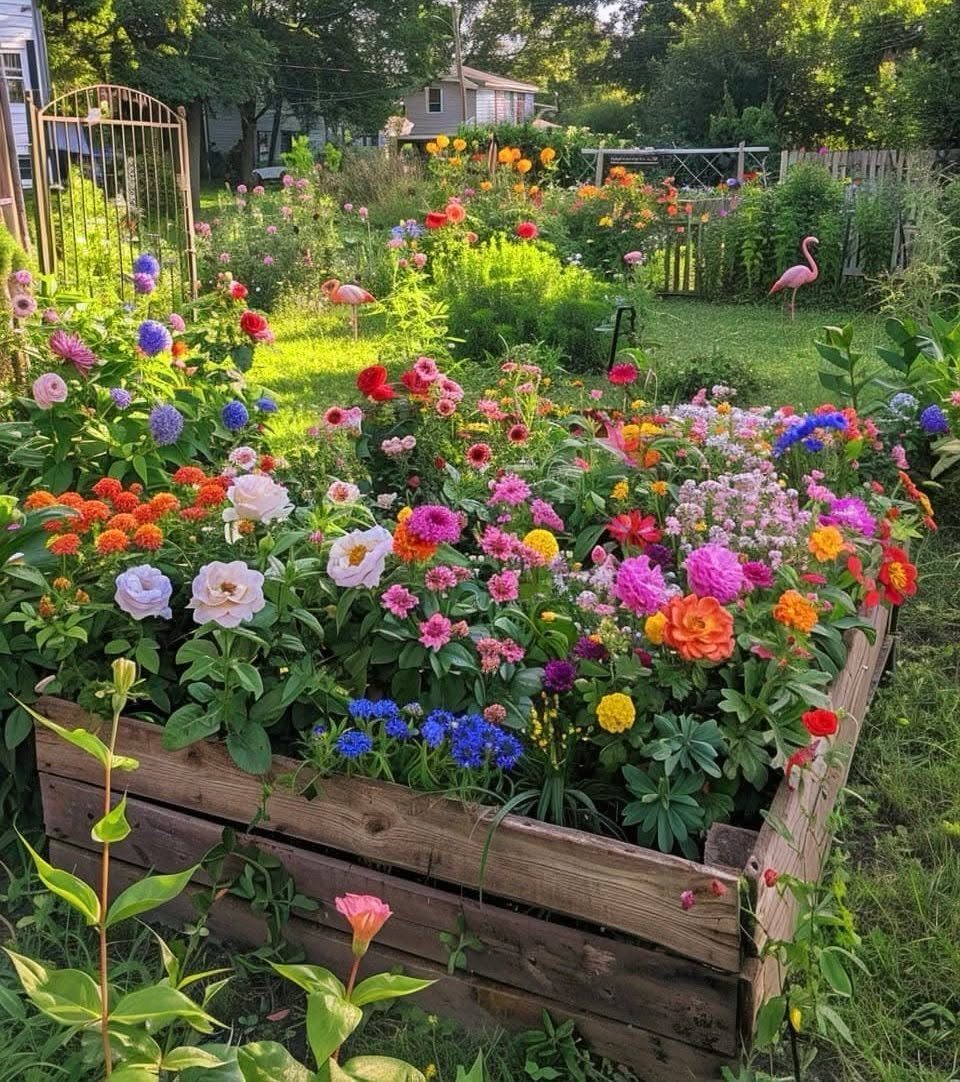
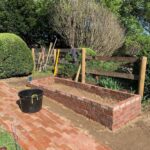
A raised wooden bed packed with dahlias gives a flat yard height and a single block of color. Building the box from basic lumber costs less than most ready-made kits, and the raised sides keep the planting neat.
Choose a sunny spot, since flowers this full need light. Fill the bed with good soil, then plant close so the blooms hide the soil.
I would pick one type of flower in mixed colors over a scattered mix; it looks fuller and calmer.
6. Pallet Furniture
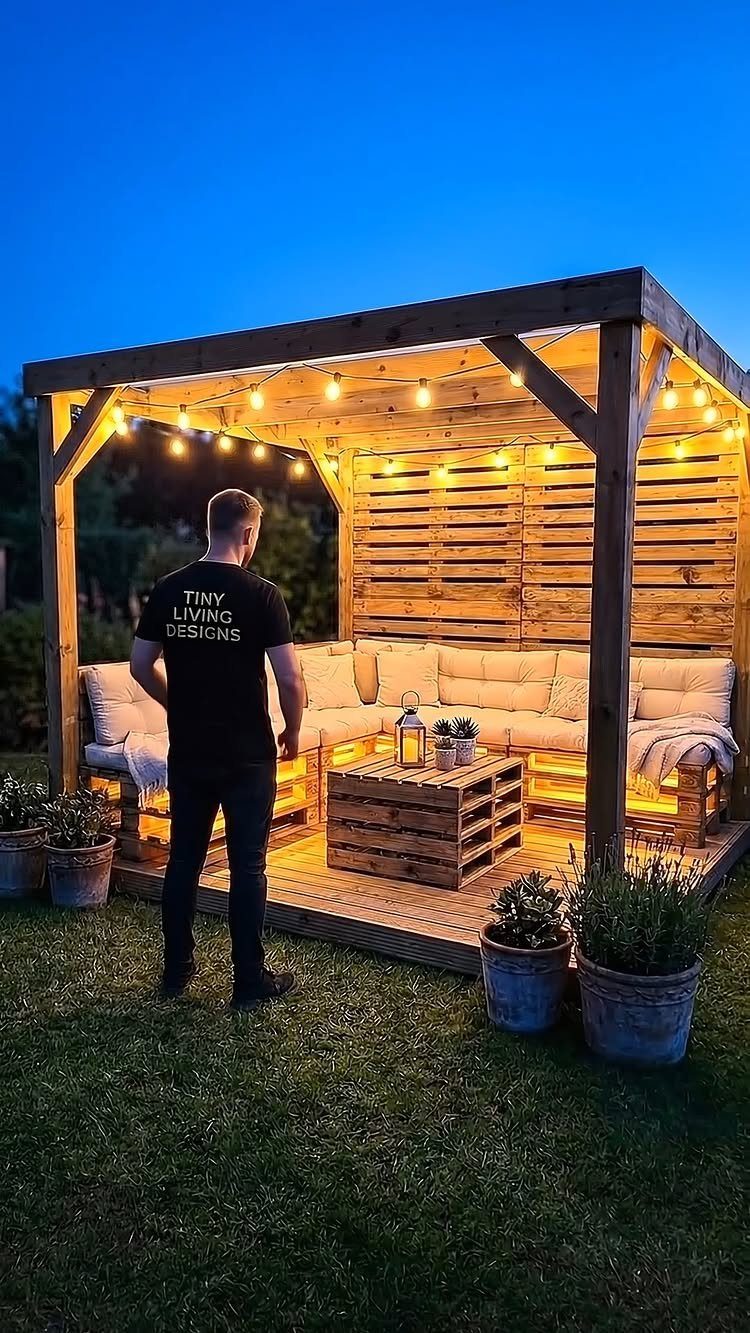
Free pallet lumber can go a long way: a pergola frame, a sectional sofa base and a coffee table can all come from the same stack if you sand it and seal it against weather.
The frame defines the seating area, and string lights overhead make it feel like a room.
Pallets cost little or nothing, but they take sanding and sealing before anyone sits on them. Check for splinters and loose nails, and pull any you find.
Start with one piece, such as a bench or table, before committing to a full set. The pergola is the biggest job on the list, so save it for last.
7. Fire Pit
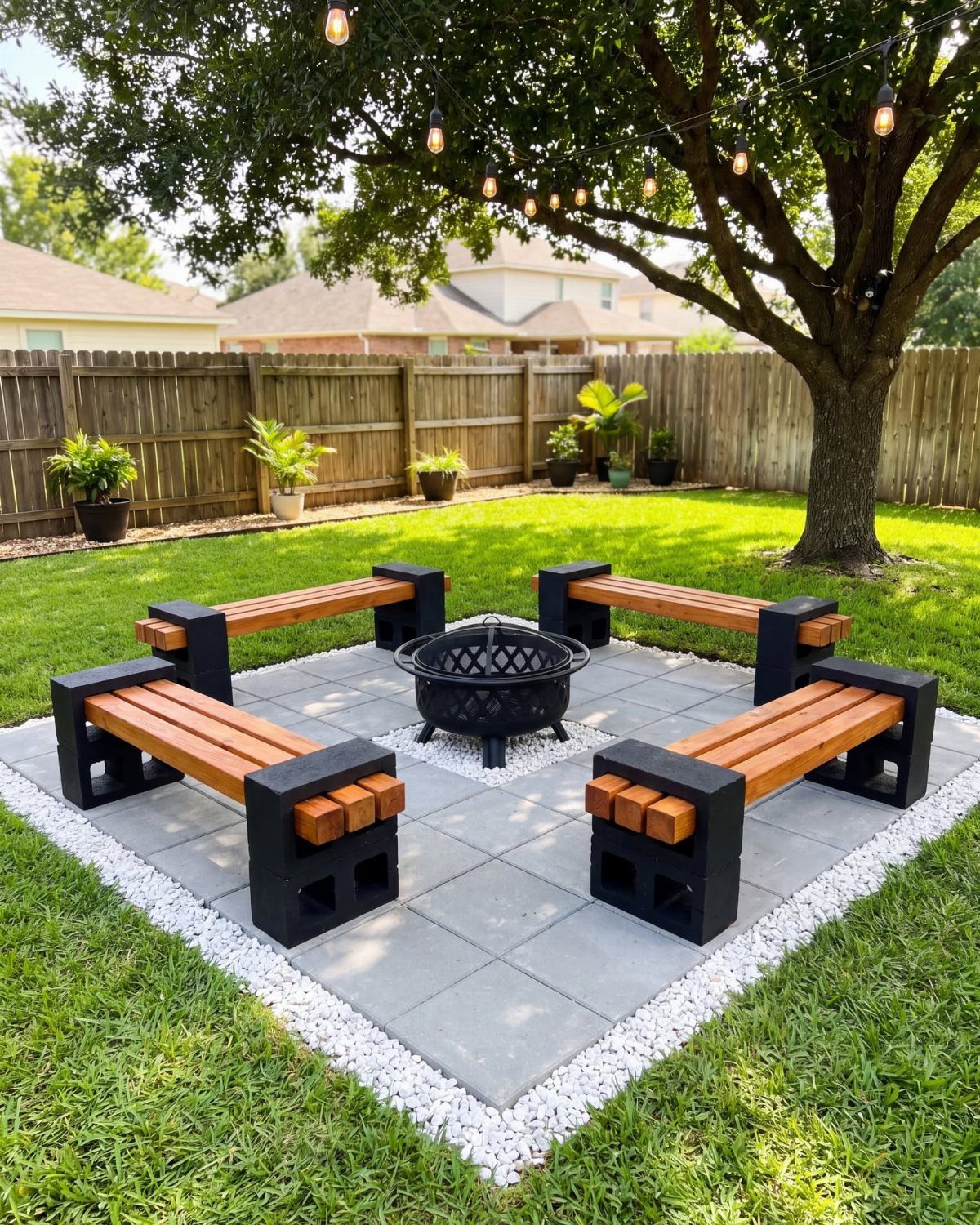
Cinder blocks topped with wood planks make a fire pit seating ring for the price of lumber and a few blocks.
4 benches around a black metal pit give each side its own seat, and the blocks keep the wood off the ground.
Leave enough room between the benches and the pit that nobody sits right against the heat. Set the whole ring on a paved or gravel patio rather than bare lawn.
Check local rules on open fires before buying anything, especially in a rental.
8. Build a Trellis
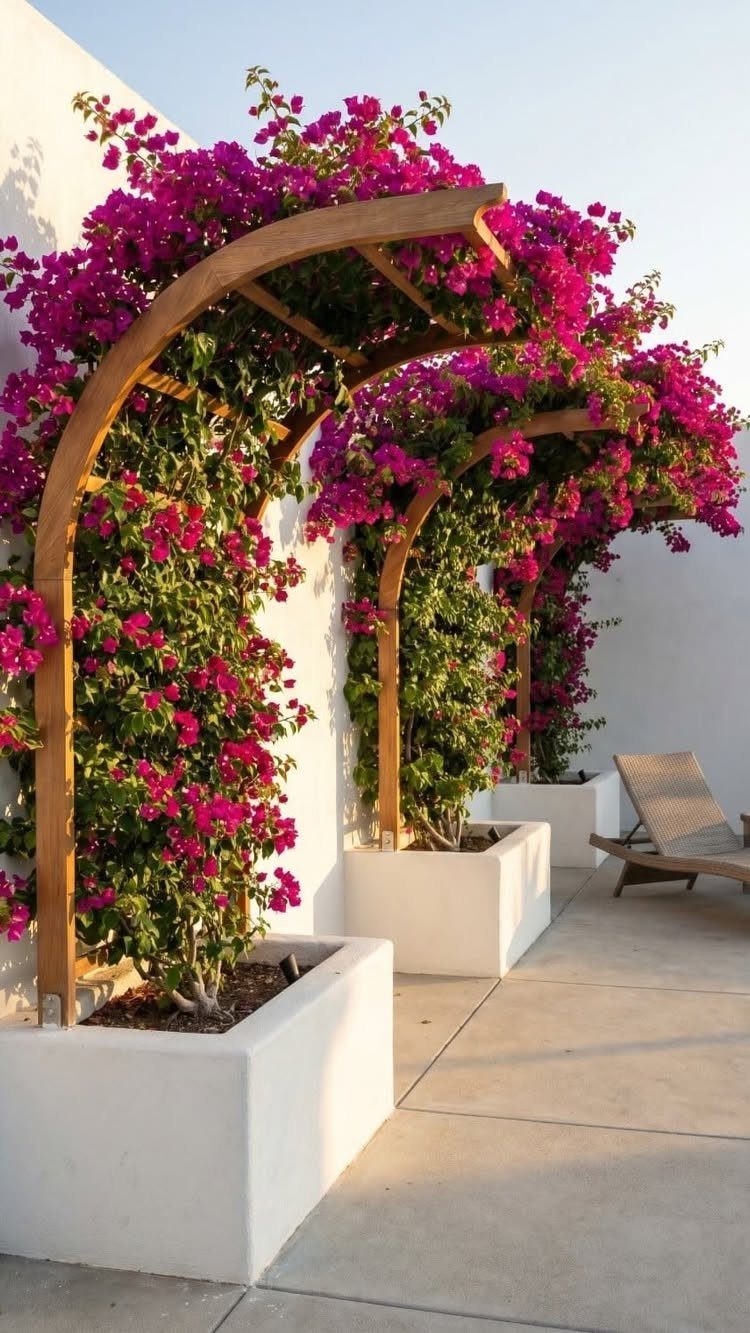
Arched wooden trellises set behind planters give a flat wall a row of climbing color. Plants like bougainvillea can then grow up instead of out, which suits a patio with little ground to spare.
Build the frame from basic lumber and anchor it firmly, since a flowering vine gets heavy. Fix each trellis in or right beside its planter so the roots and the support stay together.
I like the curved top; it softens a straight wall better than a square frame.
9. Paint Garden Boundaries
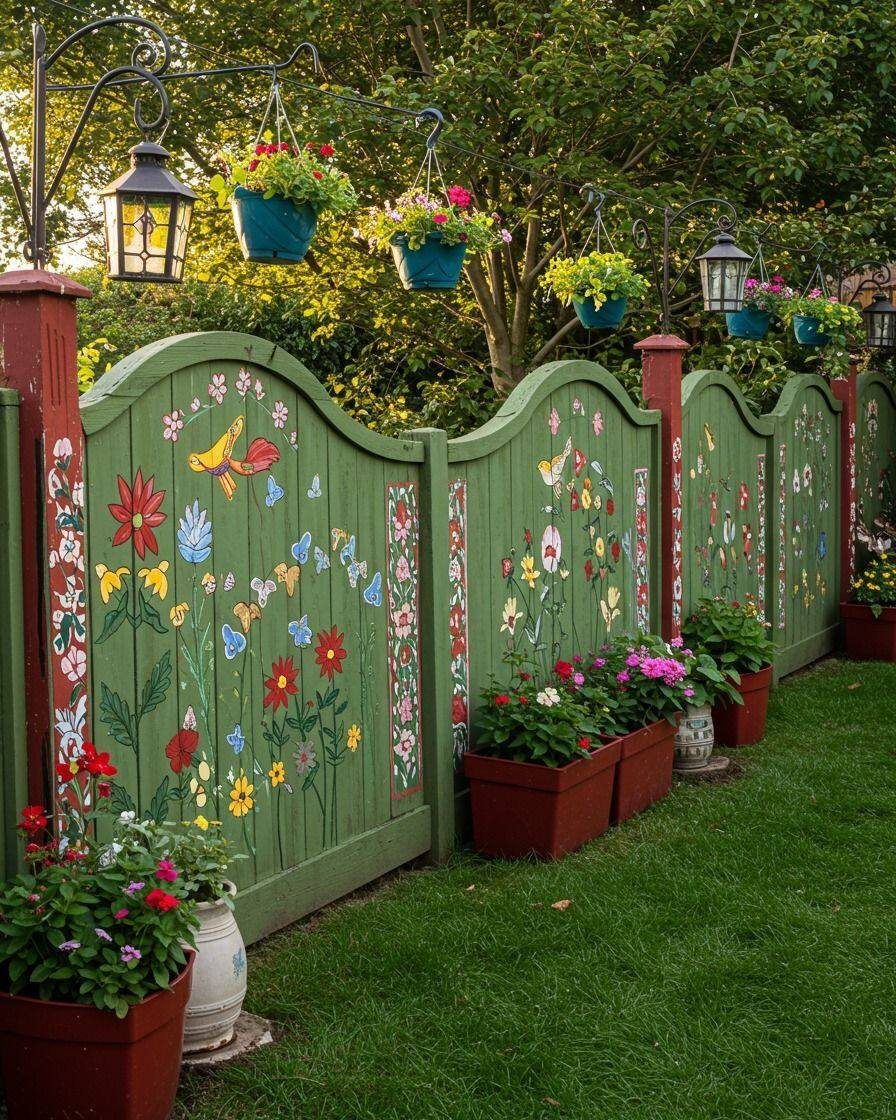
Painting a fence is far cheaper than replacing it, and a painted scene can hide a tired surface.
A green base with flowers and birds added on top turns a plain boundary into the backdrop for everything planted in front of it.
Clean the boards first, then roll the base coat before painting any details. Use outdoor paint so the colors hold up in weather.
Keep the base color calm. Pots, baskets and lanterns in front add plenty of busyness already.
10. Create a Rock Garden
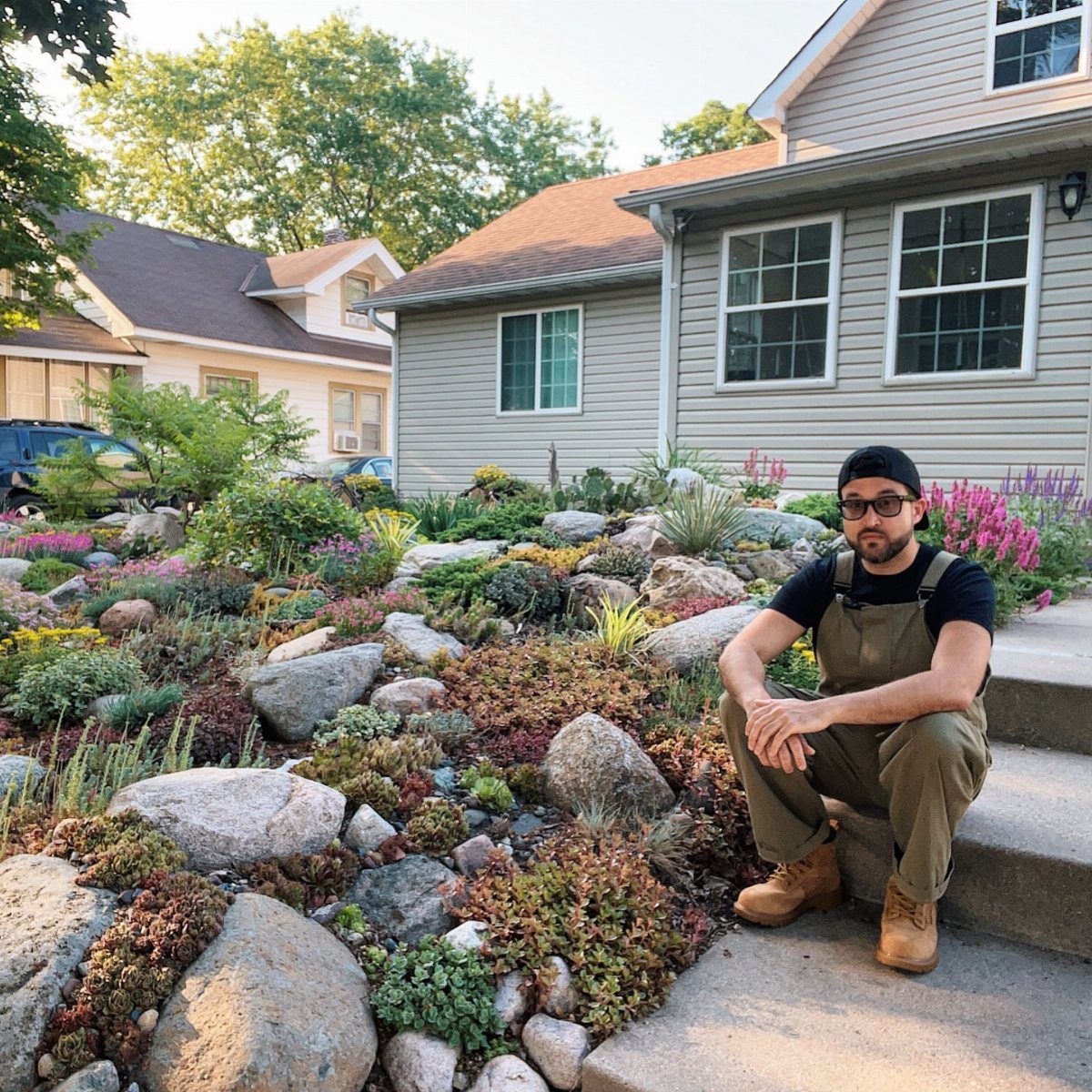
A rock garden gets its depth from stone placement. Large stones set first, with smaller plants such as succulents tucked in around them, give texture without the weekly mowing or watering a lawn needs.
Place the biggest stones before anything else, and vary their sizes so the bed looks natural. Group plants in small clusters rather than lining them up.
Sourcing stone is the main cost, so a small bed near the steps is a sensible place to start.
11. Paint Garden Furniture
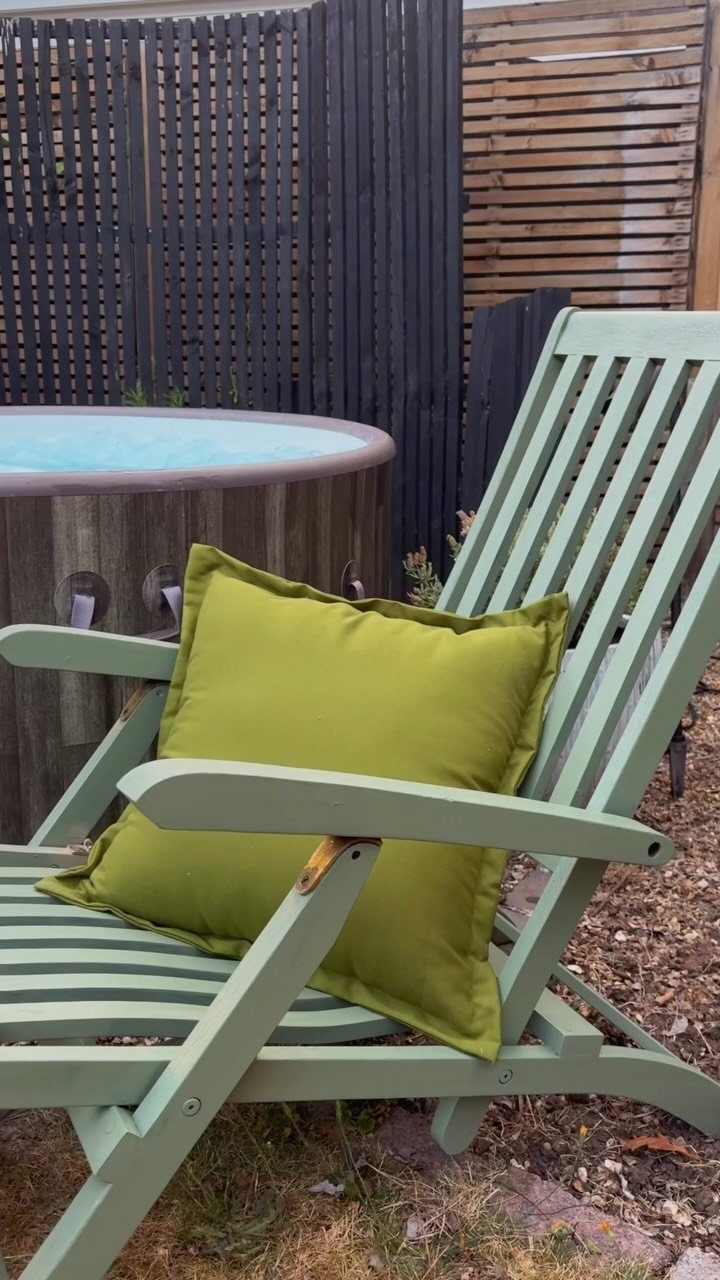
A can of outdoor paint can rescue a wooden chair you would otherwise replace. Light green on the frame, paired with a brighter lime cushion, reads as a deliberate color choice against dark fencing.
Sand the old finish lightly, wipe off the dust, and apply thin coats rather than one thick one. Let each coat dry fully before sitting down.
I would paint the frame and swap only the cushion if the old one is worn; that keeps the cost low.
12. Use Hanging Baskets
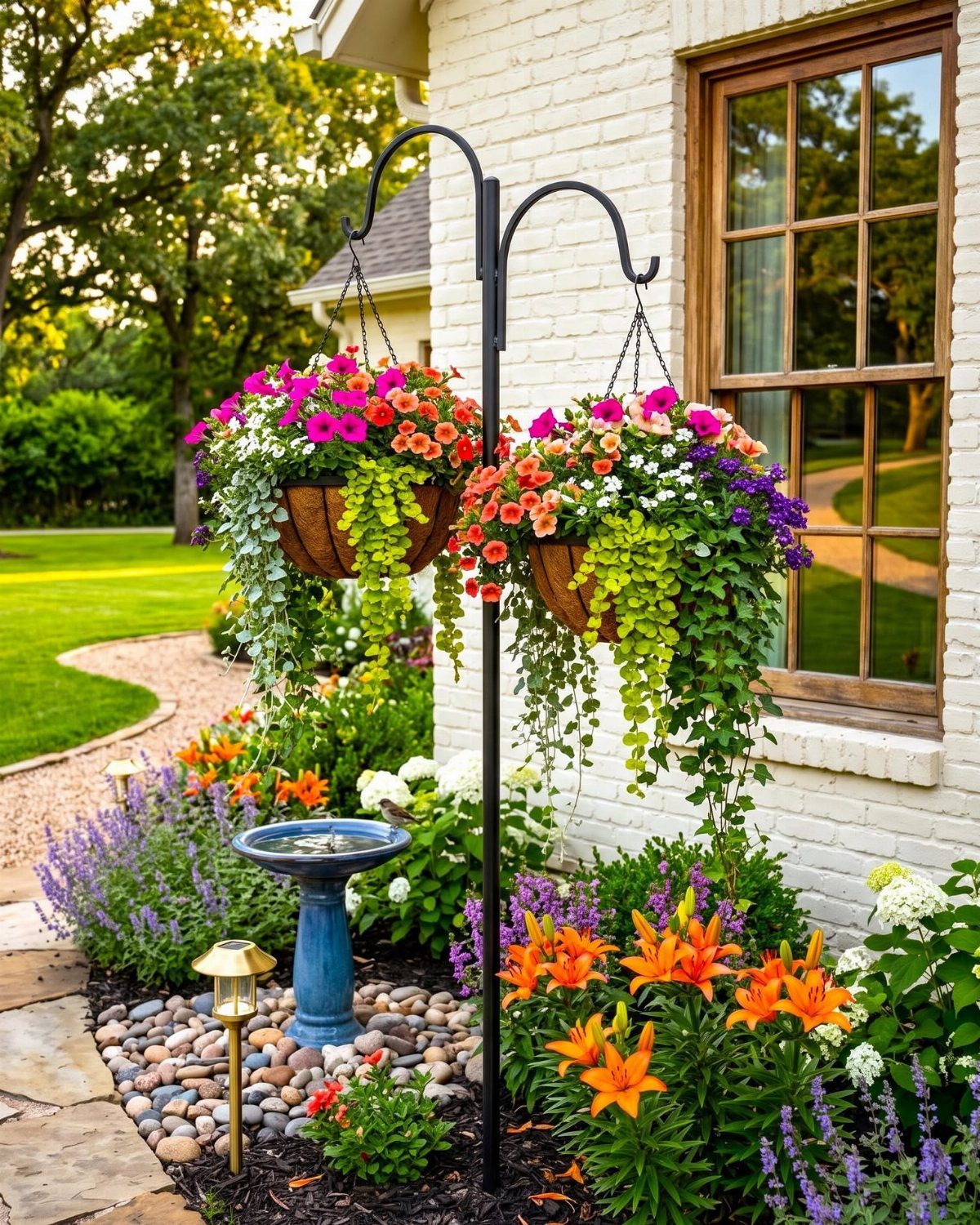
Hanging baskets lift flowers to eye level, so a garden with little bed space still gets color. 2 baskets on a black metal stand fill the gap beside a house wall without any digging.
A freestanding stand suits renters, since nothing gets screwed into the siding. Mix sizes and colors between baskets, but keep each basket to a similar palette.
Water them often; baskets dry out faster than beds.
13. Outdoor Couch
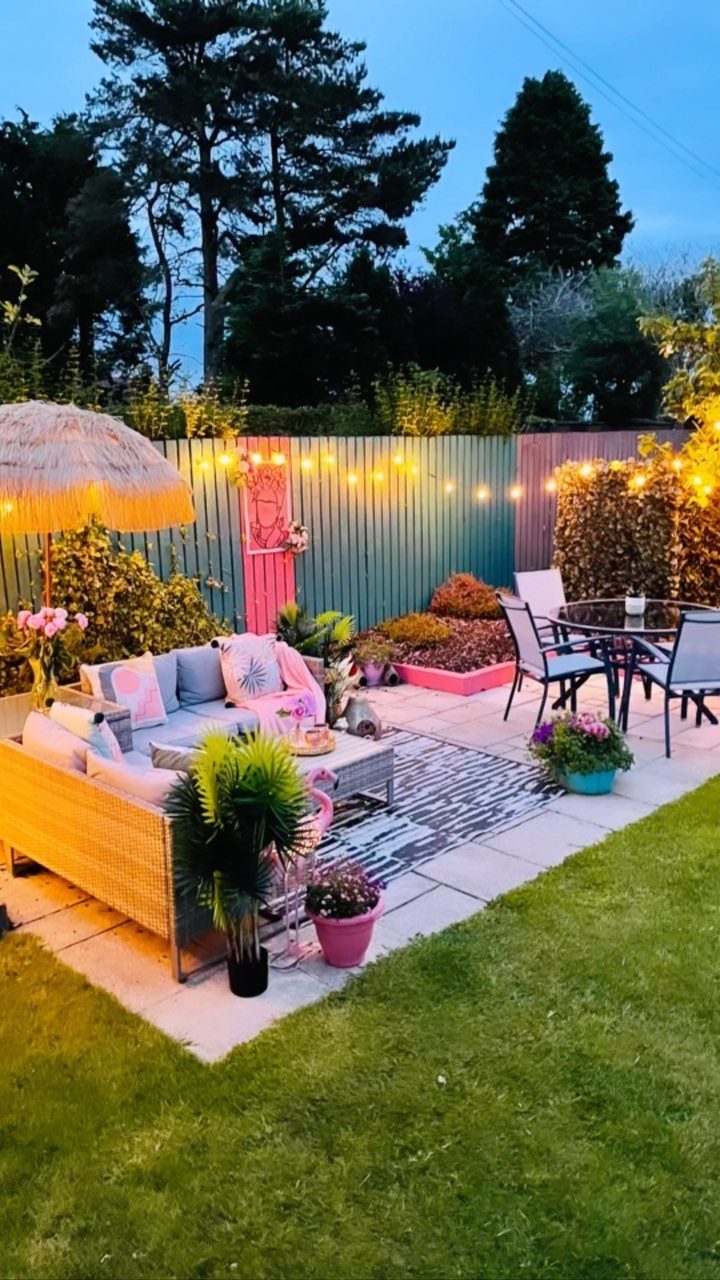
A wicker couch with grey cushions turns a patio corner into a living room, and a rug underneath is what makes the seating read as a room. Grey cushions stay neutral, so the colorful fence behind can carry the color.
Outdoor seating is usually the priciest piece of a garden makeover, so shop secondhand first. A sofa frame in decent shape with new cushions costs less than a new set.
Leave a walkway between the couch and the dining table so neither feels crowded. Add string lights overhead and the space works after dark too.
14. Create a Garden Display Wall
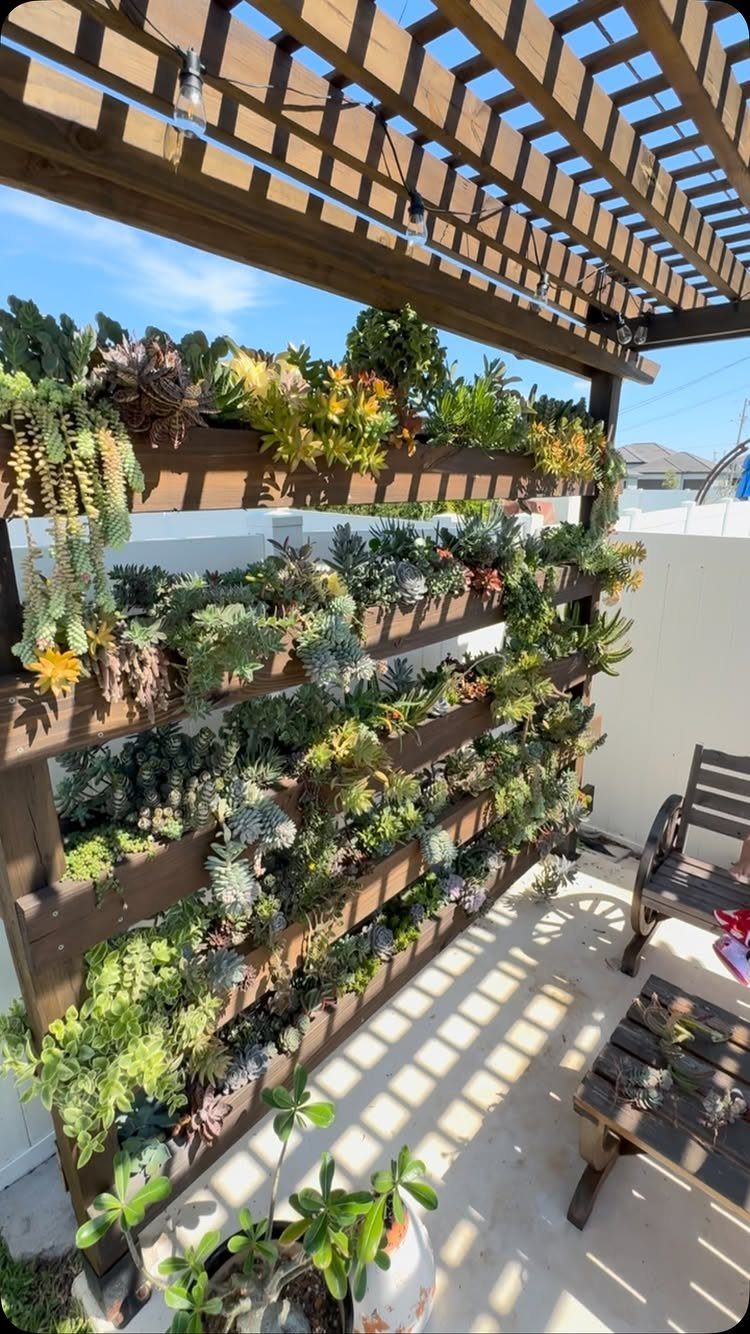
Succulents packed into a wooden pallet and stood upright give a patio a living wall with almost no floor space used. Tucked under a pergola, it gets shelter and a place to sit beside it.
Shelves are the simpler version: a few boards on brackets hold pots and small ornaments, and you can rearrange them any time. For the pallet, fill the slats with soil and press the plants in snugly.
I would mix a few rosette shapes and sizes so the wall looks layered. Start with one small section before filling the whole frame.
Plan and Prioritize Work
Start with a rough sketch of the yard and mark which spots you actually use. Seating, planting and walking routes each need different materials, and the pricey ones only belong where they earn their cost.
A smaller patio in one corner costs much less than paving a huge space. Lawn, bark chippings, gravel paths and plain flower beds cost the least per square foot, so they can cover whatever space is left.
The same logic applies to a fancy privacy fence. Install it only around the zones that gain the most from the added privacy, not the whole perimeter.
Spend first on the changes people notice most.
Paint is the cheapest big change in a yard: one coat on a fence, shed or set of planters freshens everything around it, and a new bed or seating area edged in bark or gravel looks different the same day.
Lanterns and extra planters can wait until the budget recovers.
I would rather finish one zone well than start four. Patience keeps the total down.
Reduce Planting Costs
Plants are where budgets leak, and the cheapest ones are already in your yard.
Hostas and ornamental grasses are perennials that split easily, so I would buy one healthy clump and divide it into several plants. Replanting cuttings from existing plants works the same way.
Ask neighbors and friends too. Seeds, seedlings and clippings are often free for the asking.
Timing helps. Fall is the best planting window on a budget, since mild air is easier on you and the plants, and roots get time to settle in before summer heat arrives.
Before planting anything, check how much light the spot gets and whether the plant suits your climate. A free plant in the wrong place still dies, and that wastes the savings.
Choose for Lower Upkeep
Choose plants that return. Native plants and perennials come back each year and generally need less water than annuals, which cuts both replanting costs and the hose time.
Mulch earns its place twice: it holds moisture in the soil and suppresses weeds. A layer over bare ground saves hours of weeding.
For paths and open ground, gravel and bark cost less than paving.
A mown grass path is cheaper still, since it needs only a mower you may already own. It suits wilder, meadow-style patches best.
I would match the surface to the traffic: gravel or bark where people walk daily, grass where they only wander now and then.
Frequently Asked Questions
What are some DIY garden ideas?
A $4 brush, a small tub of outdoor acrylic and a stack of old terra cotta pots are enough to give a porch or balcony one clear color scheme.
A pallet planter filled with succulents, or a fire pit seating ring built from cinder blocks and wood planks, also costs little. Wooden crates, painted rocks and upcycled pieces add personality for almost nothing.
What can I put down instead of slabs?
Gravel is the easiest swap for slabs, and bark works too; both cost far less per square foot than paving.
Slate chippings and compacted crushed stone also cover large areas cheaply, and crushed stone can hide tired concrete and be paved over later.
What is the average cost of a backyard makeover?
A full backyard remodel usually runs $1,000 to $10,000, depending on how much hardscape you add.
Small jobs, like mowing, trimming and tucking in a few plants, often cost under $1,000. Doing the big tasks yourself cuts the bill, since you skip professional labor.
How do I do a backyard renovation on a budget?
Spend first on the changes people notice most, and paint is the cheapest big one: a single coat on a fence, shed or planters freshens everything near it.
Pick one zone and finish it before starting another. Cheap materials like lawn, bark and gravel can cover the rest, and a small patio costs far less than paving a huge one.
What is a reasonable budget for landscaping?
A common guideline is to spend 5–10% of your home’s value on landscaping. Yard size, materials, plant choices, location and labor all move that number.
How can I cut the cost of plants for a cheap garden makeover?
Divide what you already have.
Neighbors and friends often give away seeds, seedlings and clippings, and fall planting lets roots settle before summer heat. Match each plant to your sun and climate zone before planting, because even a free division dies in the wrong spot.