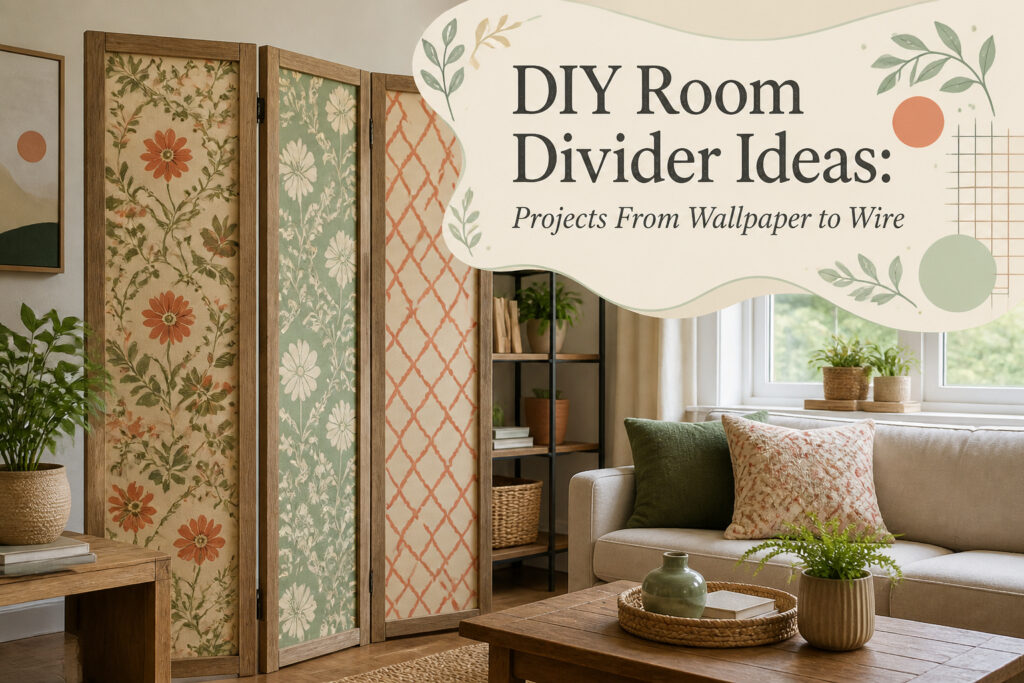
A diy room divider can run anywhere from free scrap cardboard to nearly $300 in quality wallpaper and MDF, and the single factor that sorts them is whether you need privacy or just a visual boundary. The builds that block sightlines, like duck cloth stretched over a pipe frame or canvas fitted into IKEA Expedit cubes, demand more material and planning than open slats or chicken wire that still let daylight and conversation pass through. That tradeoff, not cost alone, is what makes one of these projects yours.
1. Wallpapered MDF Screen
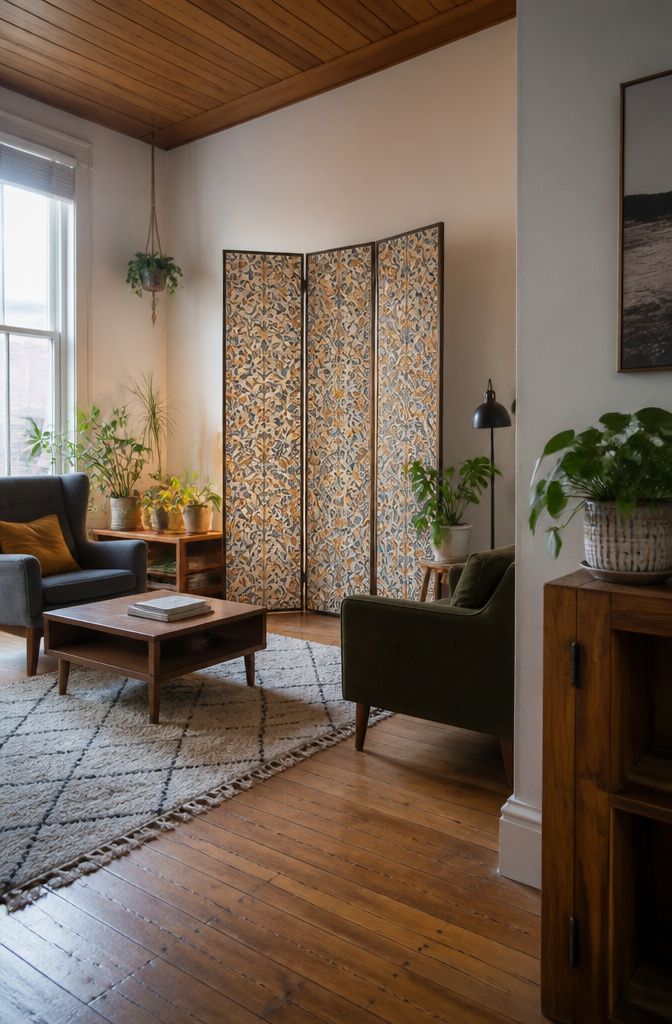
MDF gives you the flat, even face wallpaper needs to look expensive instead of bumpy. Plywood’s grain telegraphing through would have ruined the pattern match on the seam, so the extra weight of 3/4 inch MDF was worth carrying up the stairs. The panels came cut to size from the store, which saved renting a saw for a one-off job.
The wallpaper ran 61.5 inches wide by 118 inches tall across three rolls. Lining up the repeat at the panel joints took patience; I worked in foot-long sections, adhesive then paper, smoothing each strip before the glue skinned over. The black semigloss on the edges and back side let the screen read as finished furniture from every angle.
Eight hinges connected the panels, and felt pads underneath kept the 3/4 inch boards from chewing the floor. The whole build ran $287, with the wallpaper at $167 and the MDF at $98.
Two 3/4" MDF panels, purchased and cut by staff at The Home Depot: $98
That store cut is the move that keeps this project weekend-sized instead of spilling into a second Saturday.

Move and Store Freely:This office room divider is lightweight, so it's easy to store without taking up much space. Also it is flexible, and you can change or move it freely.

☀【Flexible panel & easy to storage】Our room divider is made up of six panels of the same size, which can move the shape of your space or block the part of your room as needed. Completely folded up for storage.
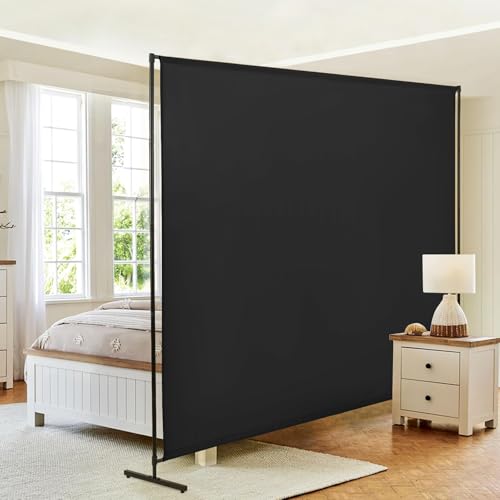
Adjustable Height for Custom Privacy: You can easily modify the height of this room divider to suit your needs, whether you're creating a cozy bedroom nook, partitioning a shared living space, or setting up a temporary dressing area. The flexible design ensures a perfect fit for any room layout
2. Hanging Screen from Vinyl LPs
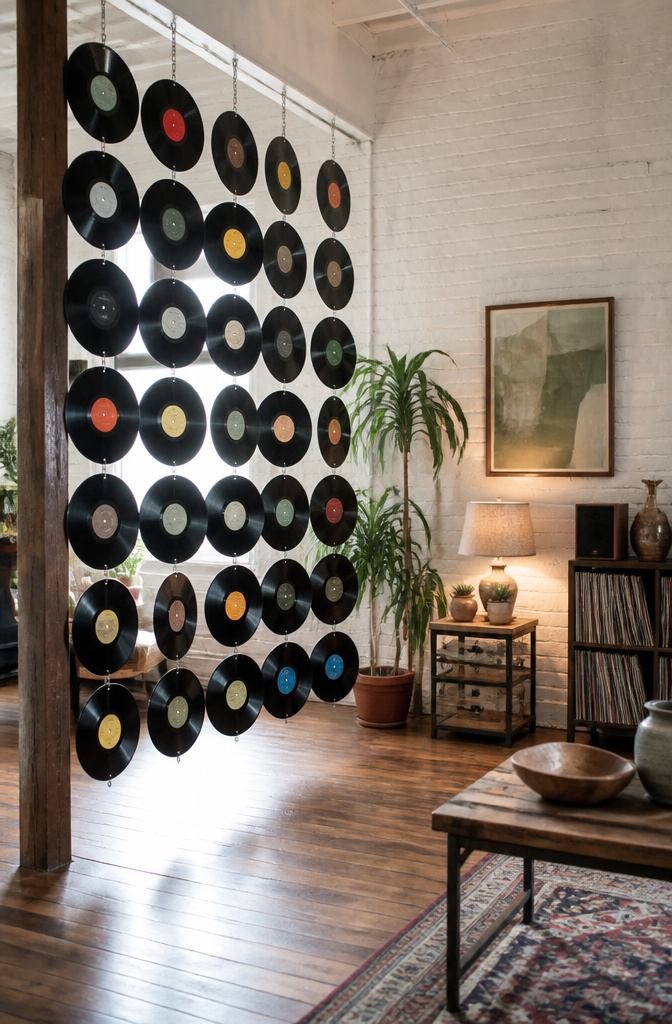
Old vinyl records turn up cheap at garage sales, estate clearances, and thrift bins where the scratched disco compilations nobody wants sit for a dollar or two each. A twelve-inch LP weighs about four and a half ounces, which sounds harmless until you string thirty of them in five vertical rows. The total load climbs past forty pounds fast, so ceiling hooks need to go into a joist, not just drywall.
Drilling takes patience. A standard twist bit grabs the edge and cracks the brittle vinyl before you feel resistance. A brad-point bit or a step drill with light pressure works better. Clamp the record to scrap wood underneath so the back lip stays supported, and let the bit do the cutting. No forcing.
Three inches of gap between records keeps them from clacking when someone walks past or the HVAC kicks on. Thread them on monofilament or light chain, knotting each one in place so the row stays fixed. The sound of a whole screen swaying and tapping together gets old in about ten minutes if the spacing is tighter.

Strong Material - Built with natural pine wood and high-density MDF board to possess good hardness and high strength, this pegboard stand durable and stable to use for a long time

🌞Create Private Space :This room divider can play a very good role in dividing the area, it can divide the public area into several parts, providing private space and protecting privacy.

PROVIDE PRIVATE SPACE:Partition room dividers consists of 4 polyester fibre panels with high confidentiality,anti-wrinkle,wear-resistant,waterproof,daily maintenance of the room screen divider only need to be wiped with a damp cloth to create a private corner in the open space to avoid embarrassment
3. Free-standing Divider Wall
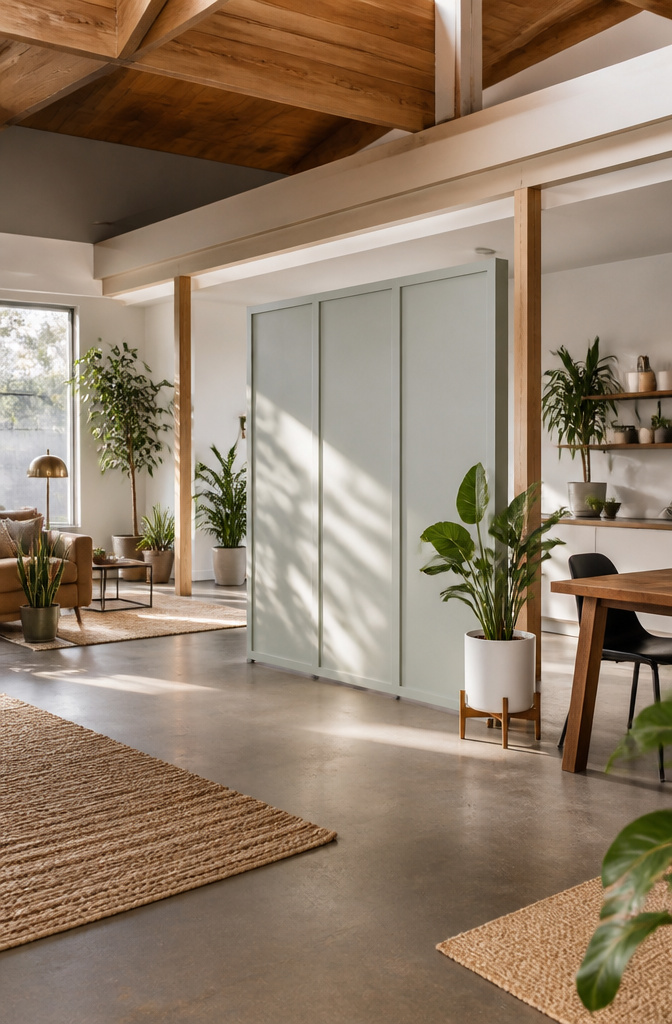
A free-standing divider wall lives or dies by its footprint. The wider the base, the taller you can push the frame before it starts to sway when someone brushes past. A six-foot wall wants at least an eighteen-inch foot on each side, and anything over seven feet starts asking for two feet or more. That sounds like a lot of floor space until you remember the alternative: drilling into a ceiling you do not own.
The build that keeps coming up is a 2×4 frame skinned with quarter-inch plywood on both faces. It sounds rougher than it ends up. The trick is building the frame flat, checking every corner with a carpenter’s square while the glue is still wet, then running a router with a flush-trim bit around the edges once the plywood is on. The bit follows the frame and leaves you with one clean rectangle, no overhang to sand by hand. Paint it matte and the seams disappear; stain it and they read as shadow lines, which some people prefer.
I would skip casters unless the divider is under five feet. The height multiplies any wobble, and a locking caster still shifts a fraction before it catches. A fixed base with felt pads on the bottom corners is less exciting but stays where you put it.

Perfect Fit for 12-Inch Records: Specifically designed for 12-inch vinyl records, these dividers keep your collection organized and easily accessible.

Complete Set for Collectors: 30 dividers + A-Z stickers, a full set to organize your 12-inch vinyl collection systematically.

Comprehensive Organization: enhance your album storage with 26 black vinyl record dividers, each measuring 12.69 x 13.06 inches; Nice for sorting vinyl records and books, these dividers offer easy and clear access to your entire collection, making the task of organizing a breeze, please note: label on Double Side
4. Pipe Divider with Fabric Screen
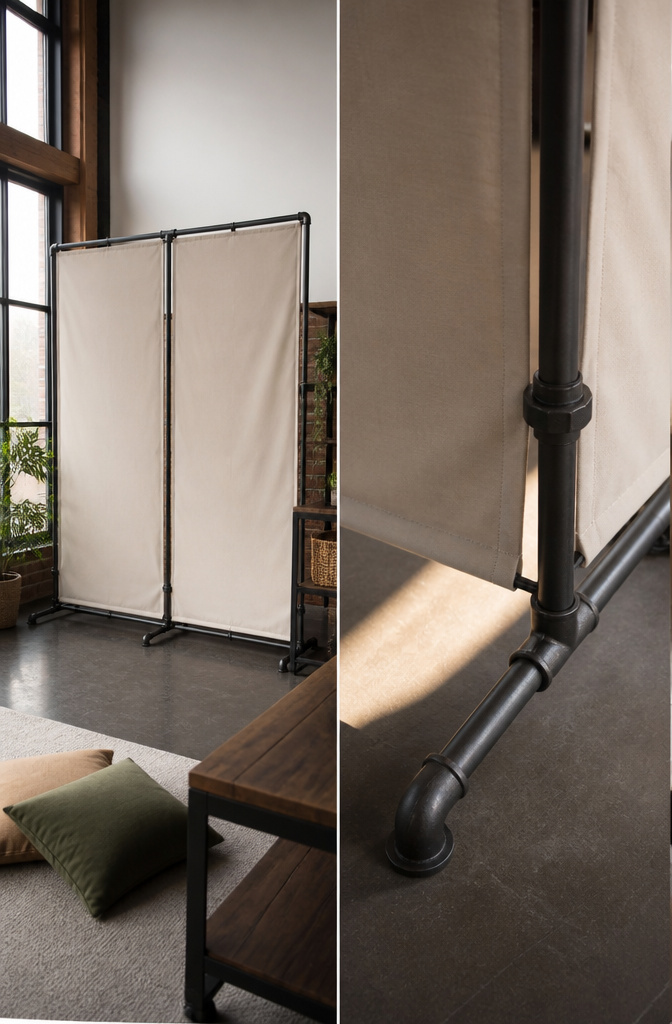
Pipe fittings with threaded unions at every corner let you break the frame down flat when it is time to move; without them, you are wrestling a rigid rectangle through a doorway that always measures two inches too narrow. The first time I planned one of these I skimped on unions and learned that lesson with a hex key and a lot of swearing.
For the panels, duck cloth wins over bedsheets for the simple reason that it does not go transparent when the afternoon sun hits it from behind. A bedsheet turns into a backlit silhouette show; duck cloth stays opaque enough to actually divide the room. It is stiff enough to tension flat without sagging, too, which matters more after six months than it does in the first hour of hanging it.
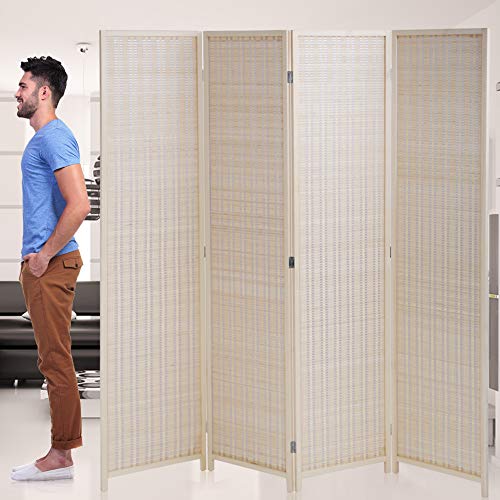
👏【PROTECTING PRIVACY】:Our 4-panel room divider is specifically designed to divide the room into different areas and create a private space, and add more decorating options to your space. while adding a touch of modern design style. Tightly woven wicker strips block nearly all light—ideal for creating sleep or study spaces. Room divider wooden privacy screen partition wall.


Artful Two-Tier Design: Featuring an intricate carved leaf cutout on the upper section and classic louvered slats on the bottom, this decorative room divider seamlessly blends artistic flair with functionality. The top pattern gracefully diffuses light while the lower slatted design ensures optimal privacy and air circulation.
5. Crate Shelf Divider
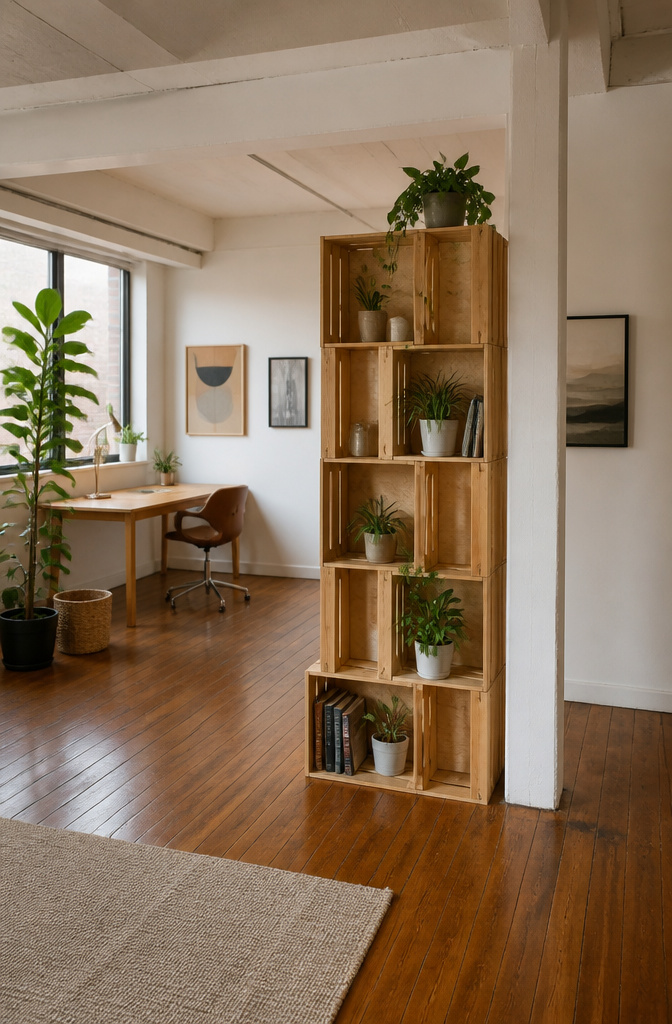
Stacked wooden crates divide a room and hold books, plants, or baskets all at once. The problem is the wobble. Empty crates rack sideways the moment something leans on them, and even full ones shift if the floor is not dead flat. A back panel of lauan plywood, screwed to the rear slats, turns the whole stack into a rigid column and stops the seesaw motion. The same panel blocks sightlines, so the divider actually separates spaces instead of just framing clutter on both sides. Crates run cheap at hardware stores or estate sales, and the plywood sheet is a single cut with a circular saw. Paint the crates before assembly if you want color; lauan takes primer well and disappears behind whatever you load the shelves with. Two people make the stacking faster, one to hold square while the other drives screws through the sides where crates meet. Leave the front open for access, or hinge a pair of crates at the end for a door that swings open. Either way, the back panel is what makes this more than a shaky tower of boxes.
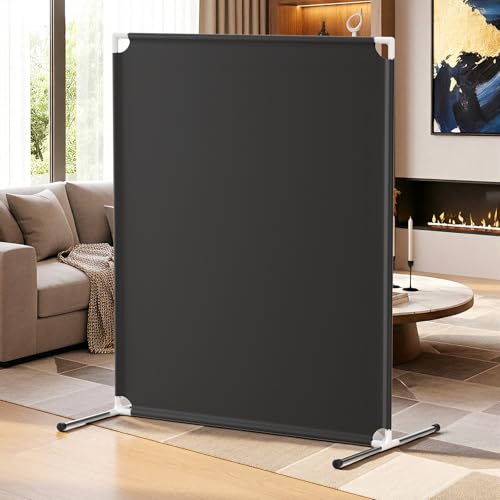
PRIVACY & ELEGANCE IN ONE: This room divider panel offers solid privacy with minimalist styling. Spacious for adults, this black room divider blends into home decor. The room divider screen acts as a stylish wall divider for room separation.

Instantly Create Your Functional Zones: Without drilling or tools,Room divider screen quickly divide your room for sleeping, working, studying, or relaxing. Perfect for bedrooms, living rooms,shared apartments, home offices, or video calls.

Japanese-inspired room divider for creating privacy in small spaces, lightweight but stable frame made of wood with black finish
6. Hanging Hardwood Divider
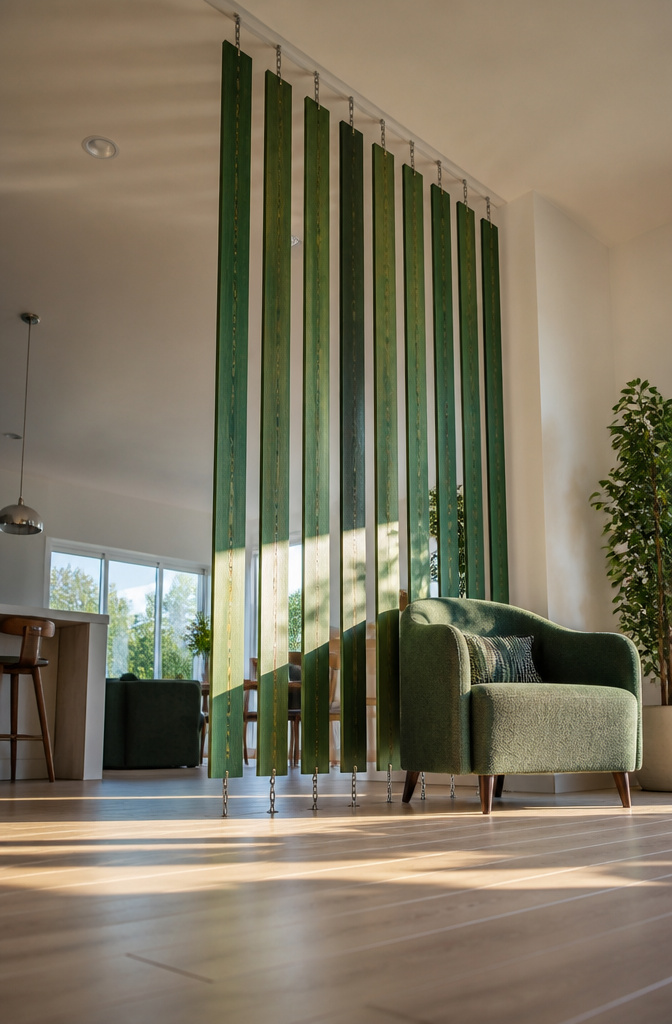
Maple flooring scraps from a job last spring became the slats for this hanging divider, cut to 36 inches and painted in three muted greens that read as one color from across the room. Each piece hangs from two lengths of chain, and the chain needs to be roughly 2.5 times the desired spacing between slats: ten inches of visible gap calls for twenty-five inches of chain per side, measured eye to eye. I spaced mine eight inches apart, so twenty-inch chains, ceiling hook to first hole. The math matters because chain sold by the foot leaves no room for guessing once you are standing on the ladder.
Ceiling hooks go into joists, not drywall, and the whole row needs to run true or the slats wander. I used S-hooks between lengths to level individual pieces after the fact, which saved me from re-drilling when my first line sagged an inch over six feet. The maple was free scrap, dense enough not to knock around in a breeze, and the slight variation in thickness from piece to piece gave the finished wall a rhythm new stock would have looked too perfect to match.
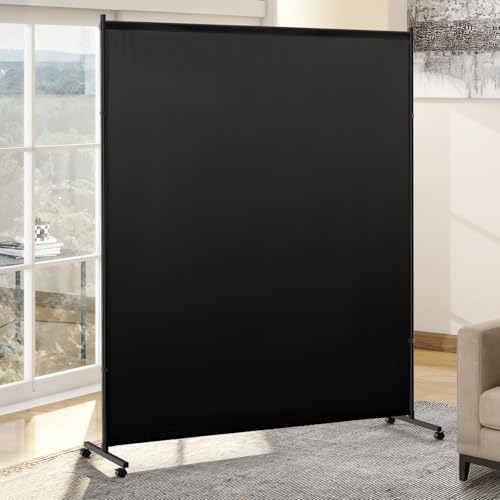
Unmatched Mobility and Stability: The integrated caster wheels with individual locking brakes are a standout feature. This allows you to effortlessly reposition the 5x6 foot panel to any area of a room, then secure it firmly in place to prevent unwanted movement, making it ideal for dynamic spaces

Move and Store Freely:This office room divider is lightweight, so it's easy to store without taking up much space. Also it is flexible, and you can change or move it freely.
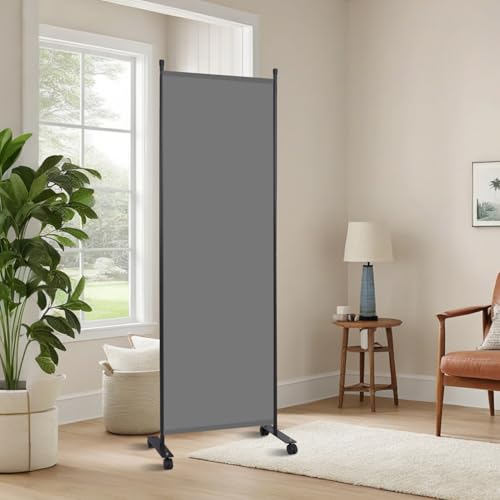
Easy to Move with Locking Wheels: The room dividers are equipped with silent PE material pulleys, realizing almost silent when moving the Portable wall, reducing friction on the floor and protecting your home or office environment. In addition,the locking pulley design easily locks the position of the partition room dividers to prevent it from wobbling. The wall divider can be moved and positioned quickly with a simple push or pull when in use
7. Chalkboard Divider
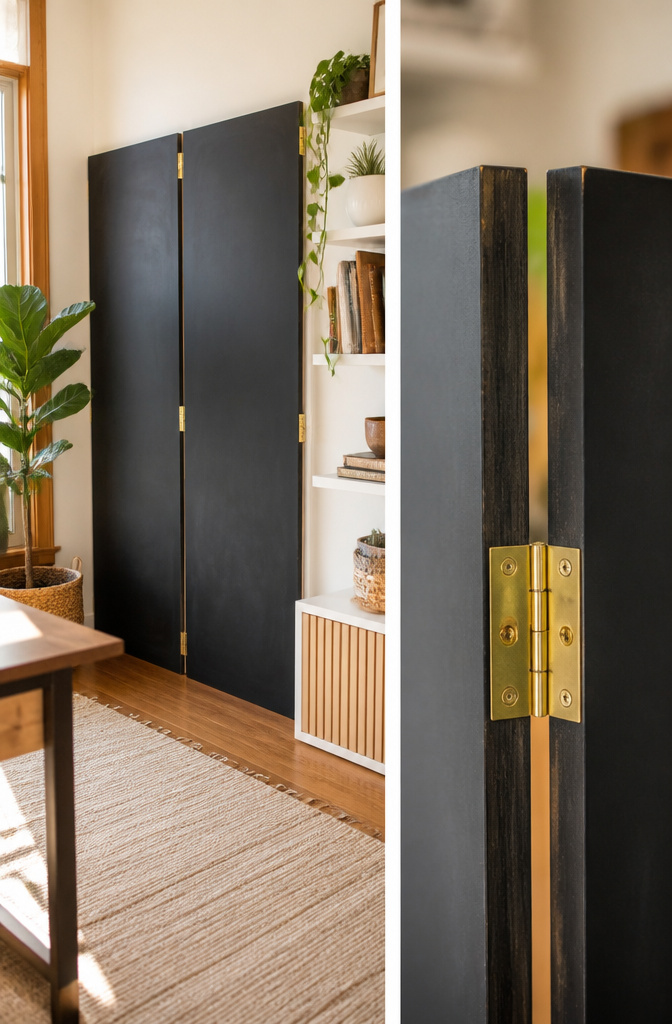
Chalk dust on a floor is the detail that turns a chalkboard divider from charming to chore. Hinged MDF panels solve this by folding flat against a wall when the room opens up for a gathering, which matters more than you might think until you have twelve people over and nowhere to stack a fixed partition. The panels themselves are standard half-inch or three-quarter MDF cut to whatever height clears your ceiling track lighting, hinged with simple brass piano hinges from the hardware store, and painted with two coats of chalkboard paint. The chalk dust settles on the floor, not the panel, so a foldable design lets you carry the whole unit outside to clap clean rather than sweeping your living room for days. Storage is the other win: standing the folded stack in a closet takes six inches of depth, less than a vacuum cleaner. I would skip the fancy colored chalkboard paints and stick with flat black; the pigments in the trendy greens and navies seem to hold more dust somehow, or maybe they just show it worse.

NOTICE: If the fabric of the screen you receive has stains, please leave the screen in a well-ventilated area. The stains should fade over time.

Stable Structure: Our Room Partitions and Dividers is made of strong steel frame with powder coating, which is not easy to scratch and rust, extending the service life. Extra Longer and Wider Feet pads fits more easily to the ground and improve the stability of the room divider and not easy to shake and fall

A Perfect Private Space: Our room divider is made of 180 g polyester fabric with PA coating. It provides privacy protection, is waterproof, and blocks the sun. It creates a comfortable private space for you and is durable for long-term use.
8. Chicken Wire Screen
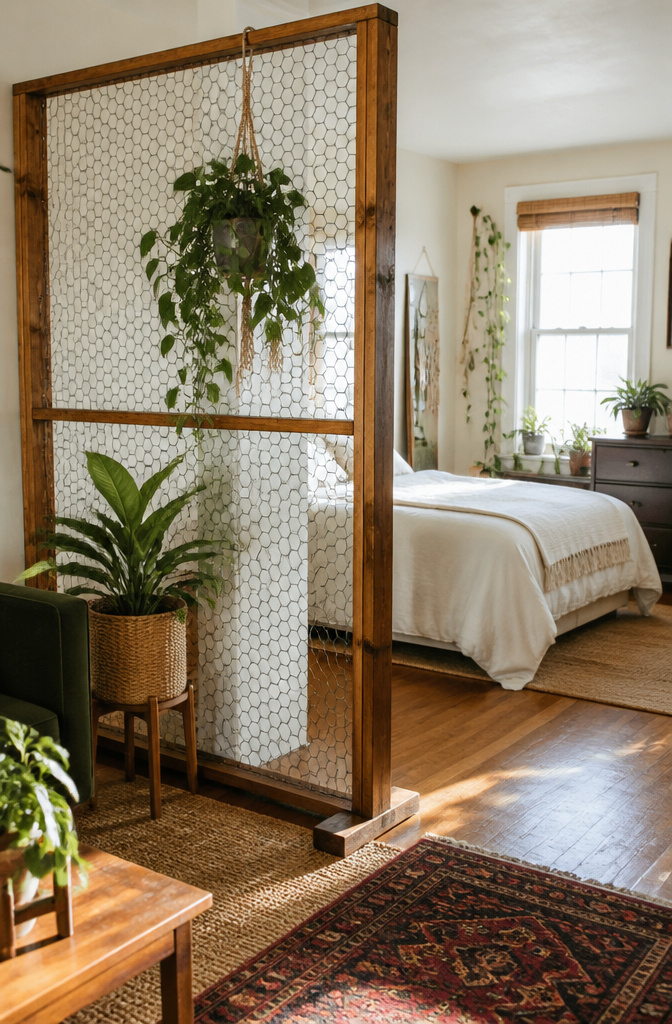
A chicken wire screen gives you the visual break of a wall without the heaviness. Light still moves through, voices still carry, and a small space keeps its openness while gaining a sense of rooms.
The wire itself is cheap and easy to find. The trick is in how you mount it. Stretch it tight across a simple wooden frame, then staple every two inches along each stretcher bar, not just at the corners. Skip that frequency and the wire bows outward between fasteners, sagging within weeks until the whole panel looks handmade in the wrong way.
I built one of these for a studio apartment where the sleeping area needed some dignity. The frame was pine, nothing special, stained dark so the wire read as texture rather than farm fencing. It sat about six feet tall, light enough to move when the space needed to open up for guests.
What surprised me was how little it blocked. From across the room the bed disappeared; from five feet away it was clearly still there. That is the honest trade. If you need real privacy, add a curtain panel behind the wire, or pick a different project entirely. For marking a zone while keeping daylight and conversation alive, this is about as simple as dividers get.

Quality Material: Our vinyl record dividers are made of pp material, waterproof wear-resistant and fade-resistant, easy to clean and can be stored for a long time

🗂️[Premium Quality] Our vinyl record dividers are crafted from high-quality solid wood, ensuring durability and longevity. Featuring laser-engraved designs and a vintage style, they are the perfect complement to your cherished vinyl records.

Contains 5 dividers
9. Chevron Room Divider
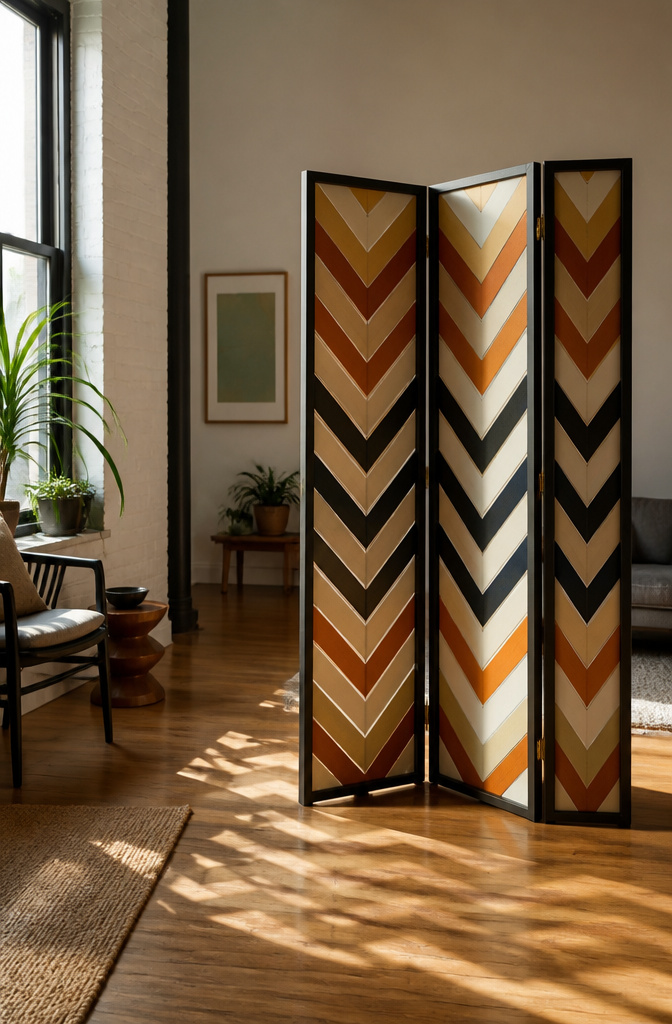
A folding frame with fabric panels in a chevron pattern reads differently from each side, and that asymmetry is the whole point. The angle of the zigzag needs to be shallow enough, around 30 to 45 degrees, that the eye reads it as movement rather than a busy jumble when you walk past. Steeper angles flatten into stripes from oblique views, which defeats the purpose of choosing a chevron at all.
The real headache is keeping fabric tension even across three or four panels. Each panel sits in its own frame, and any sag at the hinge line shows immediately because the chevron points draw the eye straight to the low spot. What worked for me was stretching each panel over the frame dry, pinning it at the center of each edge first, then working outward toward the corners in small increments. Leave the fabric slightly oversized and trim after the glue sets, because pulling it taut shrinks the usable width more than you would expect, and a panel that ends an eighth inch short of the frame edge ruins the clean line the chevron needs.
The back side of the divider will show the reverse of the pattern, so pick a fabric that reads well as a mirror image or accept that one side is the front. Most people place the divider so the intended face gets the traffic, but in a studio apartment both sides matter, and a solid-color backing hides the reversed chevron entirely.

Move and Store Freely:This 3 panels office room divider is lightweight and foldable, so it's easy to store without taking up much space. Also it is flexible, and you can change or move it freely. Single room partition size:71"(H)×34"(W),wall divider maximum size:102" W x 20" D x 71" H.
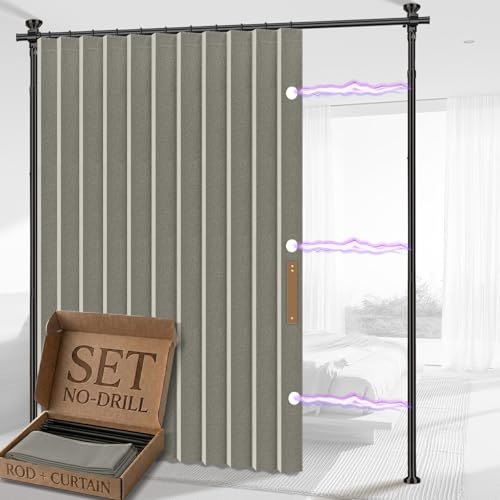
Privacy & Blackout: AJAZZ room divider curtain 100 % blackout curtains, studio or office into an instant private zone without drilling walls.
10. Vintage Door Screen
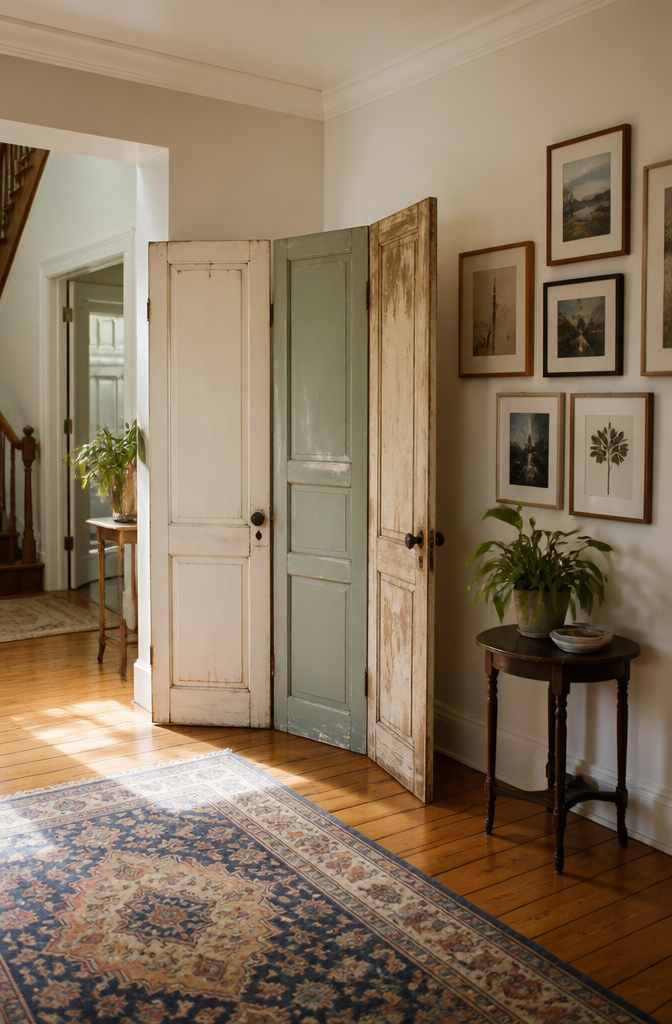
Three old doors, piano-hinged together, make a screen that folds flat to the wall when you need the floor back. The trick is finding doors within about an inch of each other in height. Architectural salvage yards usually sort by era, so a batch of 1950s closet doors or 1970s hollow-cores tends to match. If the heights vary, a hand plane on the bottom rail fixes the shorter ones in ten minutes. You are removing wood, not adding shims, so the tallest door sets the line.
For hardware, three full-mortise piano hinges run the full height and let the screen fold both ways. Two standard hinges bind up; the long hinge distributes the weight so the doors do not rack. Mount them flush to the face that will show when folded, and the screen sits almost flat against the wall, maybe six inches of depth at the hinge knuckles. A small rubber bumper on the outer edge keeps the paint from knocking.

More privacy: This elegant room divider is 6 ft. tall by 16" wide for each panel. Portable room dividers isolate space, conceal unsightly areas (think: electric panels, weight sets, litter boxes, etc.), and add privacy where you need it most.

【CREATE A PRIVACY SPACE】- This screen room divider can section off space into separate areas as a temporary wall. Max expanded size is 80"W X 17.7"D x 72"H. Regular use width is 60"~70" depending on the angles kept.

Hanging screen panel feature - Simple,Fashion,Beauty and Individual,Multifunctional and Environmentally.
11. Shoji Screen
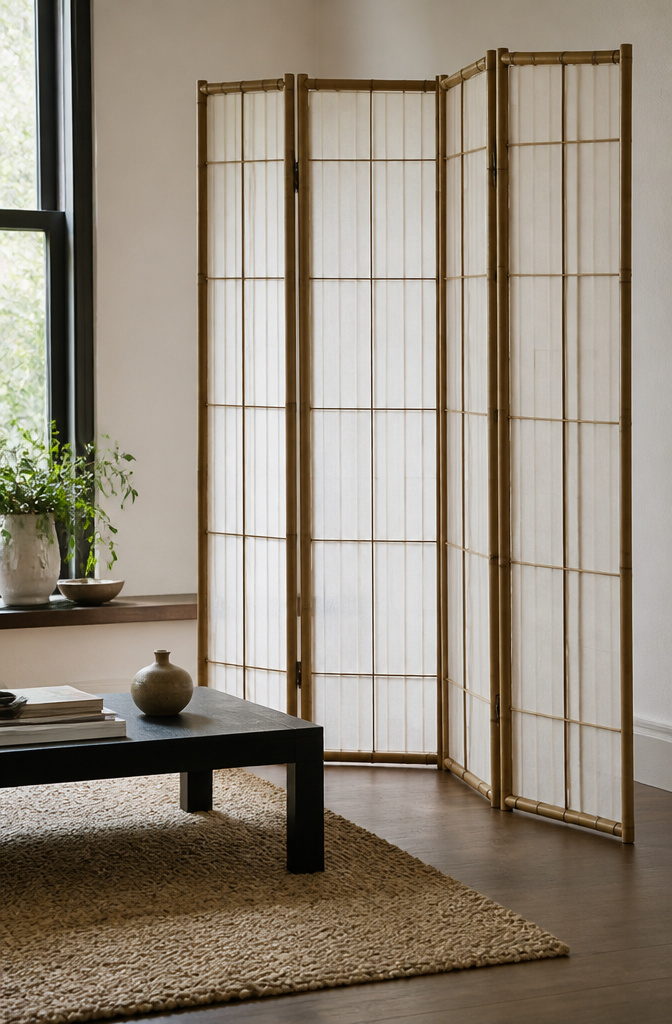
Corrugated cardboard tubes run circles around flat stock for a shoji-style frame. The ribs give the tube stiffness without weight, and a hollow wall lets you pin rice paper in place with a dab of glue instead of wrestling with tape that eventually peels. Solid cardboard warps the second humidity touches it, and a warped grid throws off the whole screen.
Rice paper is the only paper that belongs here if your bathroom runs steamy or your kitchen sits nearby. Copy paper sucks moisture from the air, buckles, and tears at the corners where it is tensioned. Rice paper fibers swell and relax without ripping, which is why it has hung in actual Japanese screens for centuries. It costs more than a ream from the office store, but you replace a copy-paper screen twice before rice paper needs attention.
Building the grid is the slow part. Cut tubes to length with a sharp blade, square the joints with a speed square, and lash with cotton cord or thin wire. Paint the frame before you stretch paper; flat black or soft white both work, but raw cardboard stains the paper over time.
12. Louvered Bi-fold Door Divider
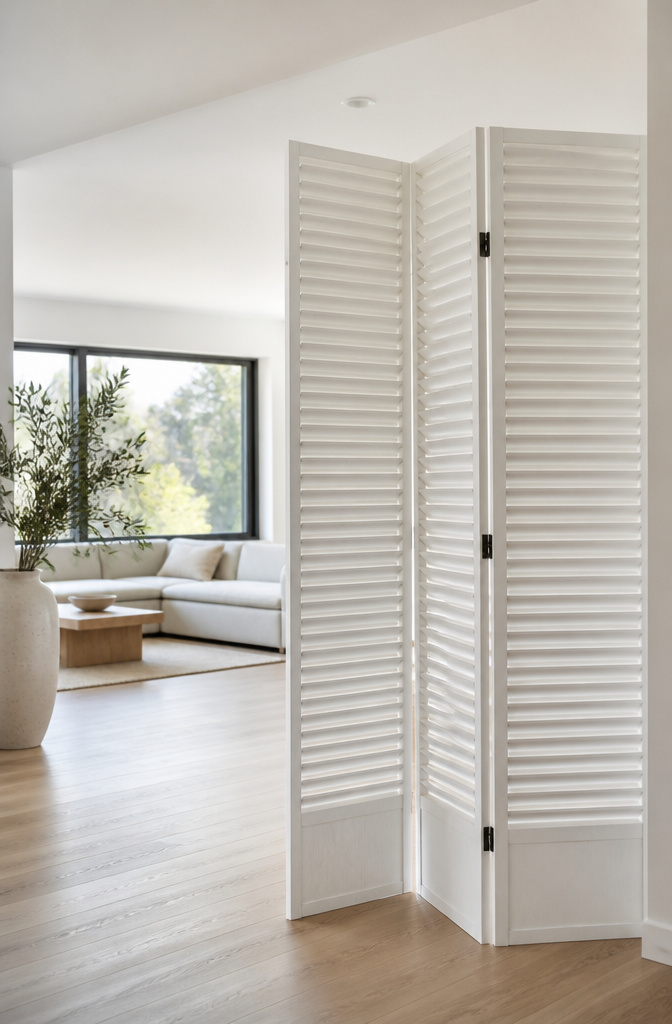
Salvaged louvered bi-fold doors already carry their own hinge pattern, and that pattern decides whether your screen zigzags flat or stands in a steady accordion. The original middle hinges fold one way; if you want the panels to snake back toward themselves, you flip every other door end-for-end before you attach new hinges at the edges. Getting that wrong means the screen either won’t close or won’t stand on its own, so lay the doors on the floor and walk the fold before you drill anything.
The sanding is what eats your Saturday. Each louver is a narrow blade with two faces and two edges, and the gaps between them are just wide enough for a folded piece of sandpaper and two knuckles. A chemical stripper lifts the old finish from the flat rails and stiles, but the louvers need mechanical work: wrapped around a thin dowel or a specialized sanding sponge, paper worked between each slat removes the residue that would clot fresh paint or stain. Count on two to three hours of this for a standard four-panel set, more if the previous owner layered latex over oil. The rest of the build, hinges and feet included, takes under an hour.
13. Cardboard Room Divider
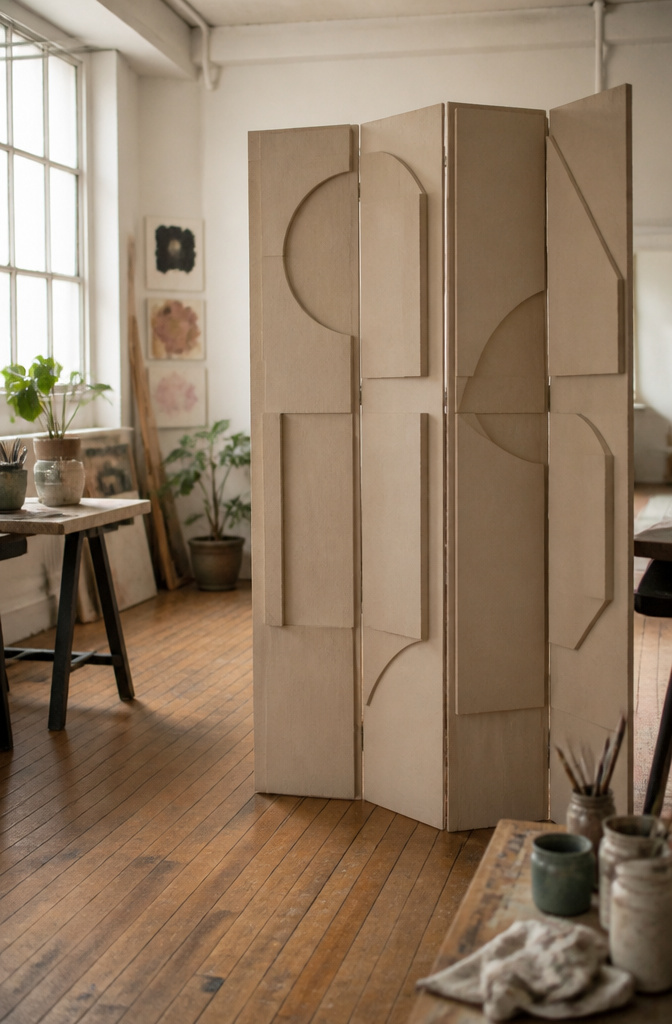
Layered cardboard builds a surprisingly rigid divider once you stop treating it like temporary material. The trick is the adhesive: white glue thinned with water bonds cardboard to cardboard far better than hot glue, which hardens into a brittle ridge and pops loose the first time the panel shifts. Diluted white glue soaks slightly into both faces and dries into a flexible, fibrous weld. For the geometric texture, stack strips or triangles in repeating patterns, letting each layer set before the next goes on.
The raw edge snags sleeves and collects dust. A final wash of that same diluted glue, brushed across the finished face and left to dry, skins the surface into something that reads closer to raw plaster than to shipping box. Two coats handle light contact; three if the divider sits where people brush past daily. The whole build stays light enough to move with one hand, which matters more than it sounds the first time you need to vacuum behind it.
14. IKEA Expedit Divider
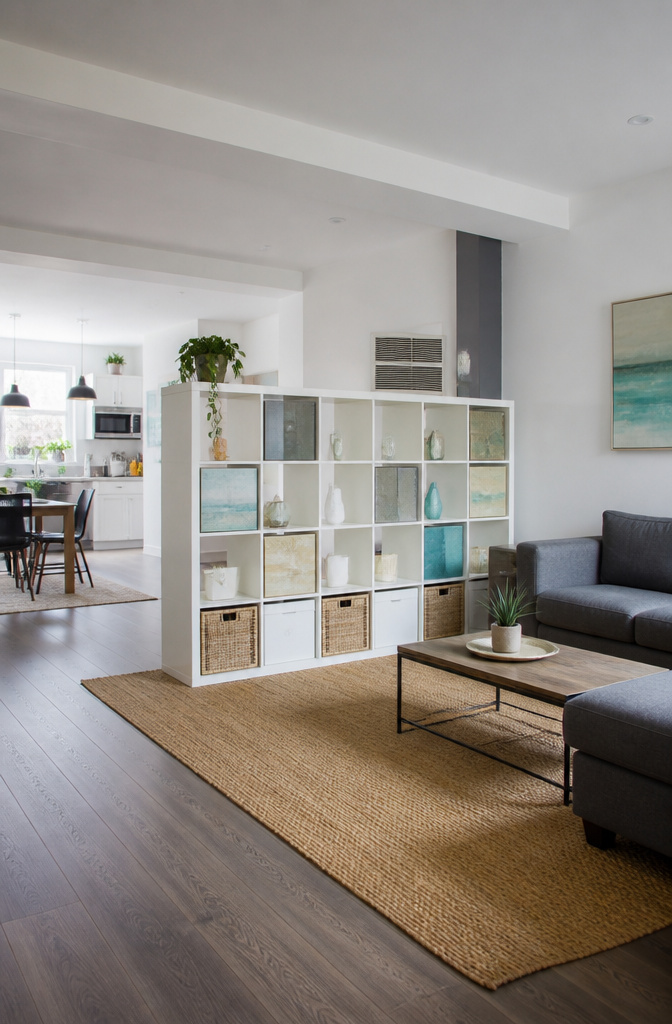
The IKEA Expedit shelving unit, discontinued but still floating through secondhand listings and inherited apartments, already has the bones of a solid room divider. Its cube grid breaks sightlines without killing light entirely, which matters in a studio where you want separation, not a cave. The problem is the open back: every cube shows through to the other side, so your bedroom area reads as storage spillover from the living room.
Painted canvas tension-fitted into each cube fixes this cleanly. A standard stretched canvas at 13 by 13 inches slides in with a slight friction hold, no hardware, no holes in the landlord’s walls. You paint the outward face in whatever tone you need, matte so it does not glare under overhead lighting, and the back stays raw or gets a second color if you want to flip the divider later.
This works best for renters who already own the unit because the cost is just the canvases and a quart of paint, maybe forty dollars total if you catch sales. Moving day, you pull the inserts out, stack them flat, and the Expedit returns to open shelving in the next place. The weight stays manageable, too; a full MDF backing panel would turn the thing into furniture you dread hauling up stairs.
What These Builds Cost
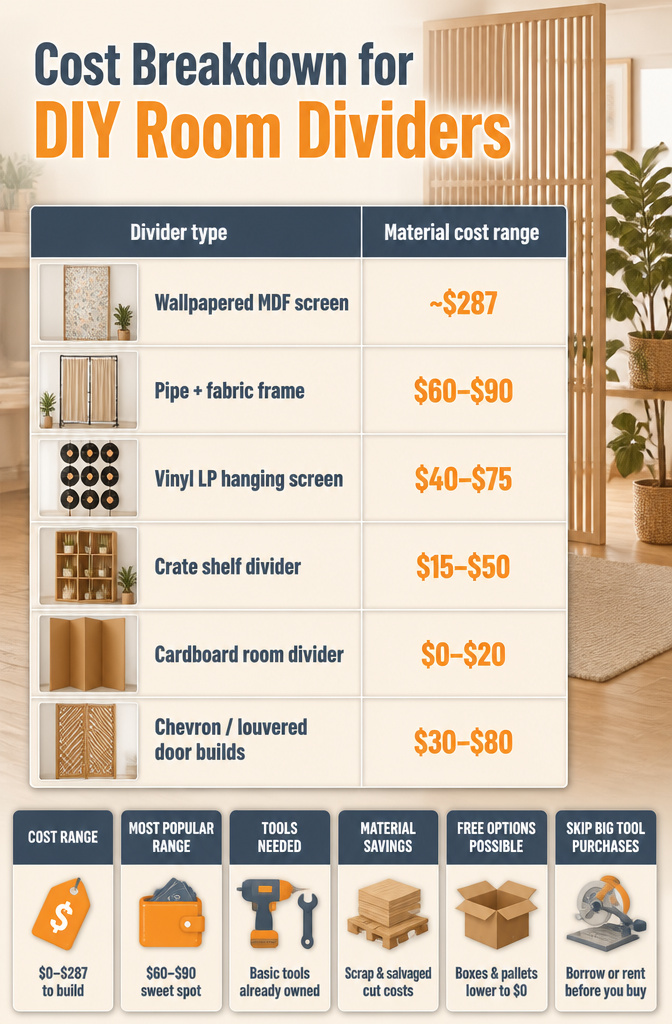
Most of these builds land between the cost of a takeout dinner and a monthly car payment, with a few that barely register if you already save scrap material. The wallpapered MDF screen sits at the high end around $287, mostly in the panel stock and a quality roll of paper. Pipe-and-fabric frames and vinyl LP hanging screens run closer to $60–$90, assuming you own a drill and a basic wrench set. The cardboard option and some crate shelf builds drop toward zero if you have boxes from a recent move or a pallet source.
| Divider type | Material cost range | Assumed tools already owned |
|---|---|---|
| Wallpapered MDF screen | ~$287 | Drill, sander, staple gun |
| Pipe + fabric frame | $60–$90 | Drill, wrenches |
| Vinyl LP hanging screen | $40–$75 | Drill, level |
| Crate shelf divider | $15–$50 | Drill, sandpaper |
| Cardboard room divider | $0–$20 | Utility knife, straightedge |
| Chevron / louvered door builds | $30–$80 | Circular saw, nail gun or hammer |
Salvaged doors, leftover flooring, or scrap plywood flip the math on several of these. A vintage door screen costs whatever the hinges run you if the door came from a curb pile. The IKEA Expedit divider assumes you already bought the unit for storage; the divider function is a free side effect. I would skip buying a full tool kit just for one weekend build. Borrow or rent before you spend $80 on a miter saw you use twice.
Tools That Show Up Again
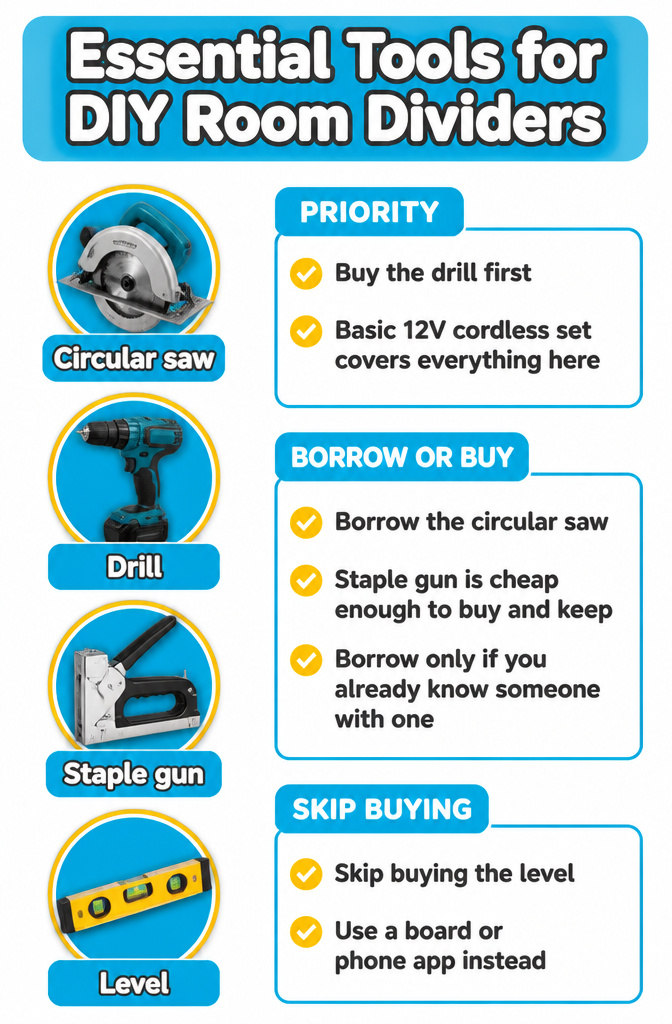
Four tools keep showing up across these builds. A circular saw, a drill, a staple gun, and a level. If you own nothing, buy the drill first; cordless models that handle both drilling and driving save the most steps on every project here. The level you can skip: a long straight board pressed against a wall, or a free phone app, gets dividers straight enough for a room that already has crooked floors.
- Circular saw: Borrow this if you can. Most builds only need a few straight cuts, and a home center will make them for a couple of dollars per cut. A jigsaw works slower but handles every cut in these projects if you already own one.
- Drill: The one tool worth owning outright. You will use it for pilot holes, driving screws, and attaching hardware. A basic 12V cordless set covers everything here.
- Staple gun: An electric or pneumatic stapler is faster, but a manual heavy-duty stapler from any hardware store works fine for attaching fabric or wire to frames. Borrow only if you already know someone with one; it is cheap enough to buy and keep.
- Level: Skip buying this. A board with a known straight edge, or the bubble level built into your phone, checks plumb well enough for a room divider that does not need to hold weight or seal a gap.
When a Divider Needs to Do More Than Divide
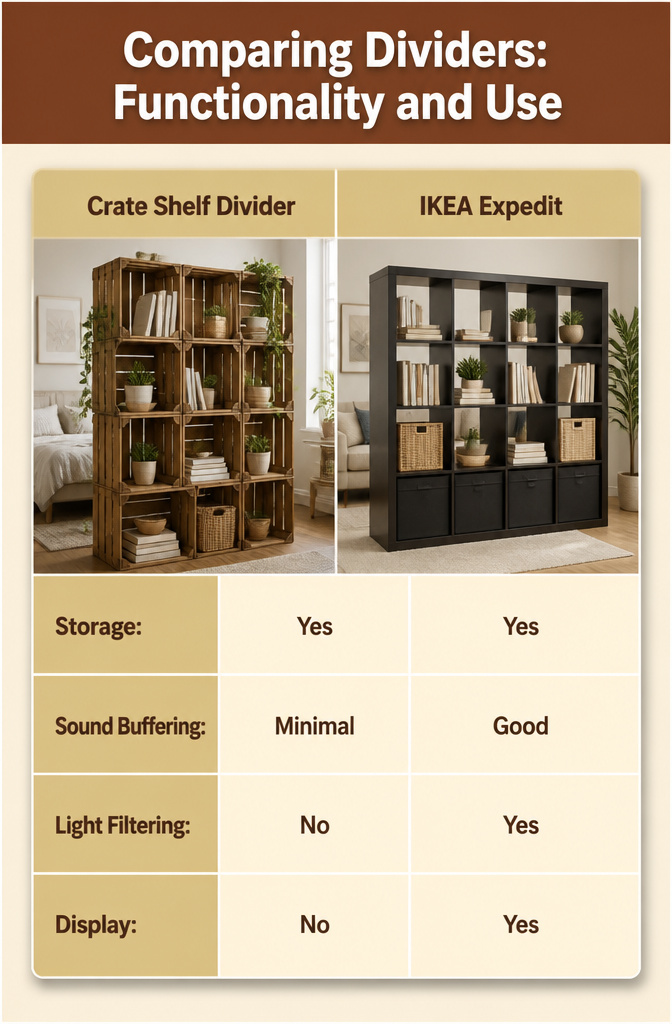
A divider that only splits space is a missed opportunity in a small apartment. Eight of the builds in this list solve a second problem while they carve out zones.
Storage is the obvious one. The crate shelf divider and the IKEA Expedit build both hold books, baskets, or the clutter you do not have closet space for. I would put the Expedit on a renter’s short list because it stands solid without wall anchors, and when you move, it moves too.
Sound buffering matters more than people expect until they are trying to sleep while someone watches TV ten feet away. The free-standing divider wall with its fabric panels and the shoji screen both knock down echo and muffle voices better than an open screen ever will. If your roommate works nights, fabric over frame beats slatted wood.
Light filtering is the reason I keep coming back to the hanging hardwood divider. The gaps between boards let morning light through to the main window but break up the glare that hits a desk or a screen. The louvered bi-fold door divider does the same with a twist: angle the slats and you control how much passes through at what hour.
Display is where the vinyl LP screen and the vintage door screen earn their floor space. They are not privacy tools; they are backdrops. The LP screen turns a record collection into color blocking. The vintage door screen works best when you lean art against it rather than hanging on walls you cannot drill into.
Match the build to the problem you actually have. Pretty is easy. Useful is what keeps a divider standing after the novelty wears off.
Frequently Asked Questions
What are some creative DIY room divider ideas?
Fourteen projects range from a wallpapered MDF screen and a hanging vinyl LP curtain to a crate shelf divider, a chalkboard panel, and an IKEA Expedit unit fitted with painted canvases. Other builds use pipe and fabric, chicken wire, vintage doors, cardboard layers, and hardwood slats hung on chain. Each solves a second problem, like storage or light filtering, while it splits the room.
How do you make a room divider?
Most builds start with a frame or flat panels cut to size, then add a skin, fabric, or hanging material that blocks sightlines. The wallpapered screen, for example, uses store-cut MDF panels, adhesive wallpaper applied in foot-long sections, and piano hinges; a crate divider stacks boxes and screws a lauan plywood back panel to stop racking. Assembly order matters for hinges, and every build benefits from checking square before fasteners set.
What materials do I need to build a DIY room divider?
Common materials include 3/4 inch MDF panels, wallpaper with adhesive, wooden crates, lauan plywood, pipe fittings with threaded unions, duck cloth, vinyl records, chain and ceiling hooks, chalkboard paint, chicken wire and pine framing, or corrugated cardboard tubes and rice paper. Tools that show up across projects are a drill, circular saw, staple gun, and level, though a drill is the one most worth owning outright.