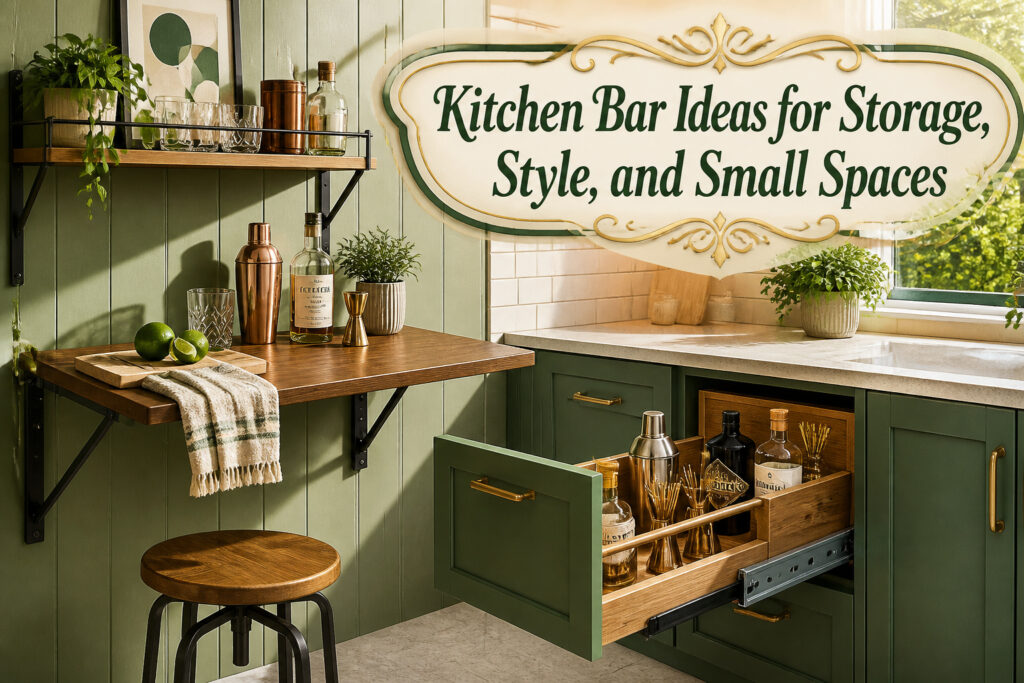
The right kitchen bar idea depends on whether you own the cabinetry or rent the walls. A peninsula that extends from existing cabinets works only for homeowners who can modify structure, while a pull-out bar on drawer slides or a fold-down bracket mounted to studs demands less square footage but sacrifices storage inside the cabinet itself. The heavy-duty 250–500-pound slide hardware matters more than the countertop thickness if you plan to load that pull-out with a mixer or bottles, and in a galley kitchen barely thirty-six inches across, even that slim ledge may trap the cook between stove and wood when the oven door swings.
1. Built-in Bar with Storage
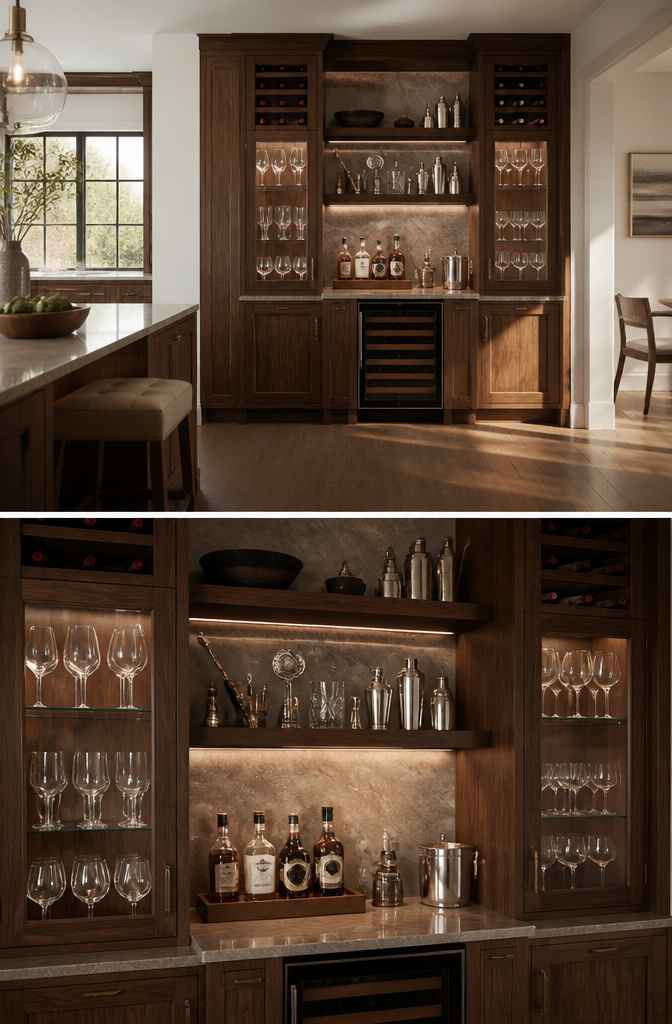
A built-in bar works best when the storage does more than fill space. The unit underneath can hold a wine cooler and shelving, which turns an awkward alcove into a zone that actually earns its footprint. I like the idea of matching the existing kitchen cabinets so the bar reads as intentional, not afterthought.
For anyone building a collection, the integrated wine bar route makes sense: built-in wine racks, a mini-fridge, and glass-front cabinets for stemware. The dual-zone coolers are the detail that matters. Red wine stores at 12°C–19°C, white at 8°C–12°C, and champagne at 5°C–8°C — a single-zone unit forces you to pick which bottles suffer. Dark wood or black cabinetry gives the setup a finished look, but the hardware and finishes should tie back to what is already in the kitchen or it starts to look like a separate piece wandered in.
Open shelving keeps cocktail tools within reach; closed storage hides the backup bottles and the clutter that comes with them. In a small kitchen, that mix is what keeps the bar from swallowing the room.

Secure Charging Hub: With 2 AC outlets, our bakers rack powers your microwave, toaster, and more simultaneously, eliminating the need to search for outlets. The built-in switch adds an extra layer of safety, making your cooking convenient and safe

Matching Fridge Included: This bar cabinet comes with a perfectly matched refrigerator. Designed with a unified framed door, it achieves a true built-in look—unlike simply placing a mini-fridge inside.

【Fluted Sliding Door Design】: Featuring elegant fluted detailing and smooth sliding doors, this wine bar cabinet combines modern style with space-saving functionality. Unlike traditional swing doors that need extra clearance to open, the sliding doors roll up smoothly without taking up front space, making this coffee bar cabinet easier to use in dining rooms, kitchens, apartments, or narrow walkways
2. Outdoor Kitchen Bar
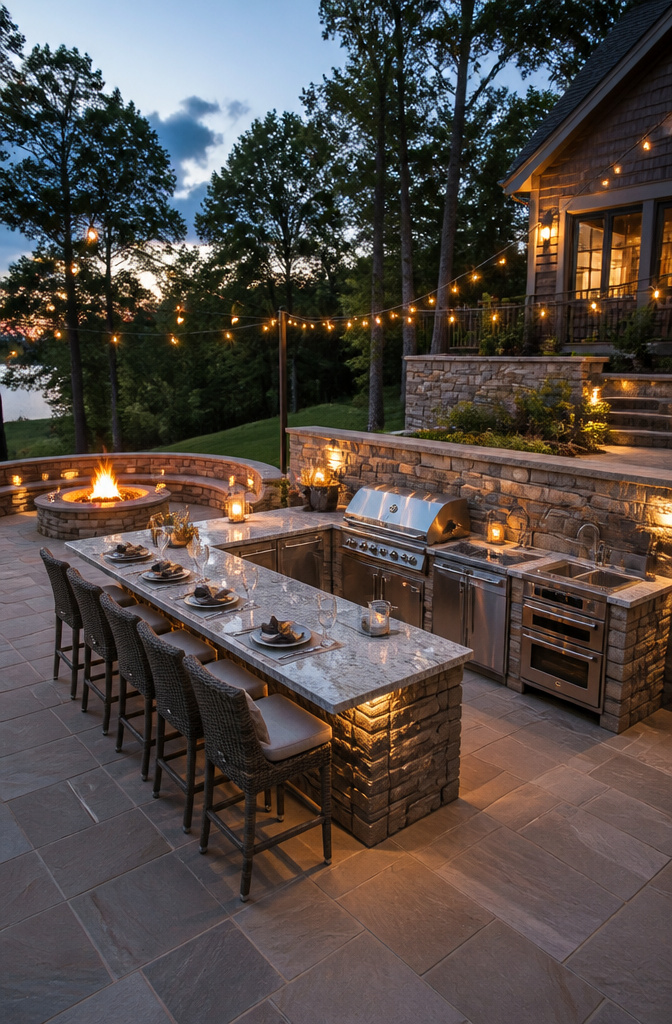
Stone or stainless steel hold up against rain and temperature swings better than anything coated or painted, which is why the outdoor kitchen bars that last start with those two materials. A setup with a stovetop, double oven, dual sinks, and counter space for six to eight guests sounds excessive until you realize it replaces the indoor kitchen entirely for three seasons. The double oven matters more outside than in, because one runs dinner while the other warms plates or proofs dough in a breeze that cools everything faster. Dual sinks let you prep fish at one and rinse glasses at the other without cross-contamination.
The real shift happens in how people move. Guests who used to cluster in a hallway while you finished at the indoor stove now stand at the bar with a drink, watching the last sear happen in front of them. String lights or a fire pit extend that past sunset, though I’d put money on the fire pit for actual warmth and the lights for finding your fork. Weather-resistant stone counters with a marine-grade stainless grill box keep the replacement cycle to every fifteen years instead of every five with powder-coated frames.

LYNK PROFESSIONAL, THERE IS NO SUBSTITUTE! TURN BINS OF YOUR CHOICE INTO EASY ACCESS SLIDE OUT ORGANIZERS for kitchen, pantry, bathroom, and laundry room cabinets

Important Notes (Please Read Carefully): Before purchasing, make sure to measure your cabinets. The product dimensions are 21" D x (12"-20") x 2.8" H. Your cabinet width must exceed 13" and depth must exceed 22". This product is ONLY suitable for frameless cabinets and will NOT work with cabinets that have door frames. Please double-check to ensure compatibility!

【Instantly Tame Deep Cabinet Chaos & Maximize Hidden Space】Tired of losing pots, pans, and cutting boards in the dark abyss of your lower cabinets? This 2-pack expandable slide-out organizer stretches to fit cabinets up to 15.3 inches deep, creating instant, customized storage for everything from heavy baking sheets to bulky pot lids. The adjustable dividers let you configure the perfect slot for each item. Finally, a place for every pan and lid—no more stacking, scratching, or crawling on your knees to reach the back. IMPORTANT: Please measure your cabinet's interior depth and width (15.3"D x 11.2"W x 3.1"H) and ensure there are no lip overhangs before ordering.
3. Rustic Wood Bar
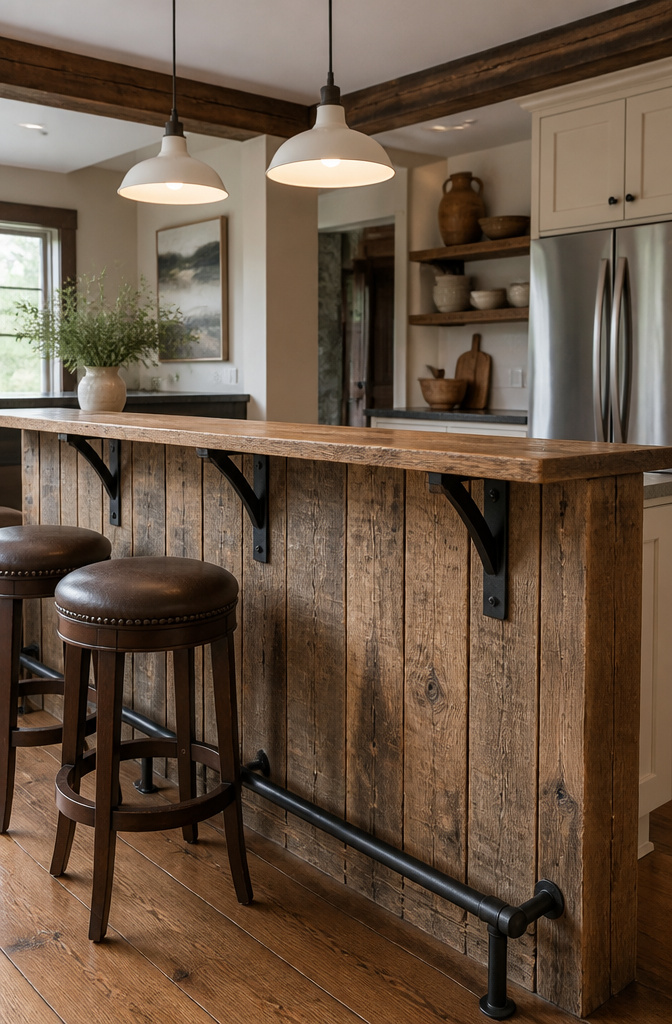
Reclaimed wood brings a warmth to a kitchen bar that laminate never quite manages. The grain, the nail holes, the slight unevenness where a board sat outside for years: all of that becomes texture you feel every time you lean against it. For a farmhouse-style space, this is the material that anchors everything else.
Sourcing it takes patience. Salvage yards, barn teardowns, and some lumber retailers now carry reclaimed stock, though you will pay more per board foot than for new pine. The real work starts once you get it home. Kitchen bars need a food-safe seal, and raw reclaimed lumber is porous. A penetrating finish like food-grade mineral oil works for surfaces that see cutting or direct contact, while a harder film finish suits areas that stay dry. Either way, seal every surface, not just the top. Spills travel.
The contrast is what finishes the look. Warm wood against cold metal or stone keeps the bar from feeling like a cabin set piece. Black iron brackets, a steel foot rail, or even just matte black bar stools underneath give the eye somewhere to rest. White pendant fixtures overhead do the same job from above. The pairing matters more than any single material; too much wood and the room goes flat, too much metal and the warmth you paid for disappears.

Maximize Your Space – Secure the hin at 90 degrees to create a cact Work ideal for small areas. t for Home Offices, Craft Rooms, or Worhops, this versatile solut enhances productivi without cromising on sle. and easy to use, it’s the t addit to your Fur collect for efficient nizat and functali.
Maximize Your Space – Secure the hin at 90 degrees to create a cact Work ideal for small areas. t for Home Offices, Craft Rooms, or Worhops, this versatile solut enhances productivi without cromising on sle. and easy to use, it’s the t addit to your Fur collect for efficient nizat and functali.
Maximize Your Space – Secure the hin at 90 degrees to create a cact Work ideal for small areas. t for Home Offices, Craft Rooms, or Worhops, this versatile solut enhances productivi without cromising on sle. and easy to use, it’s the t addit to your Fur collect for efficient nizat and functali.
4. Coastal-Inspired Bar
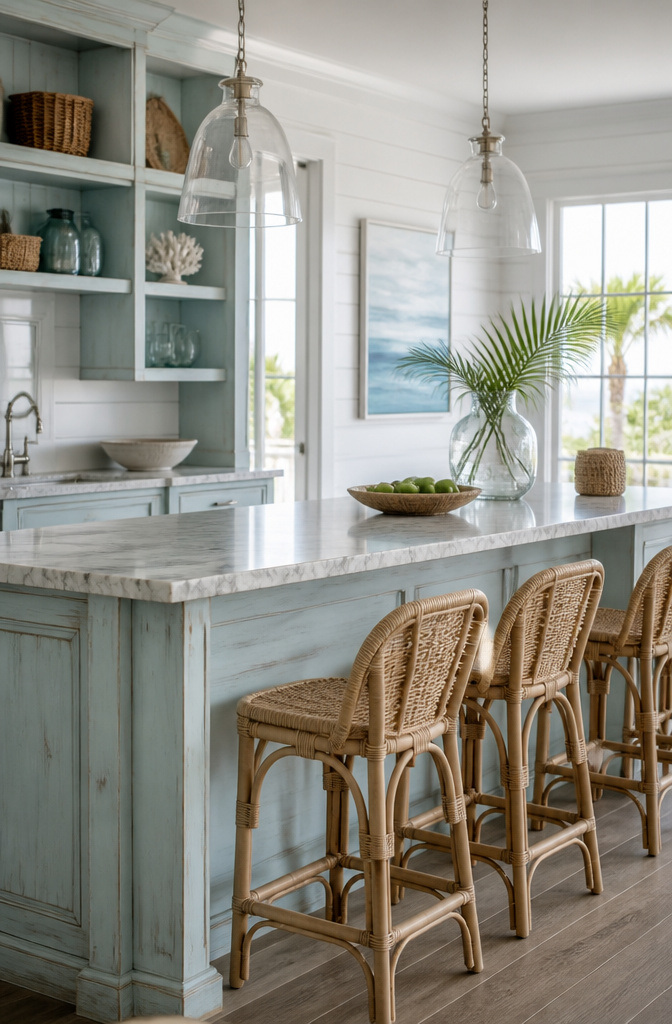
Light colors do more than look beachy; they bounce daylight around a small kitchen so the walls feel farther apart than they are. White or pale blue cabinetry with shiplap paneling keeps the visual weight low, and a veined marble countertop adds texture without clutter. Rattan or wicker barstools bring in the natural texture that keeps the style from reading as sterile, while glass pendant lights keep sightlines open overhead.
The coastal look works best when it avoids kitsch. Driftwood accents or a rope-wrapped stool base give the nod to beach house style without turning the kitchen into a souvenir shop. Weathered finishes help here too; a slightly worn paint job on the bar base hides the scuffs that come from actually living in the space.
For tiny kitchens, a slim window ledge bar in this palette is one of the better moves. The natural light does the heavy lifting, and the pale tones keep the area from blocking movement. I have seen setups where the ledge barely projects eight inches past the trim yet still seats two for a quick lunch, the sunlight doing more for the mood than any fixture could.

【Miraculous Physical Reaction】You may ask how a stone-like thing works. Let me tell you, this is the principle of physical decomposition and deodorization. When the stainless steel alloy comes into contact with air and water molecules at the same time, rub away bar stainless steel odor absorber will have an effect and The molecular structure of the odor is decomposed and reduced to an odorless state. Stainless steel soap bar is really amazing!

This Soft Cleanser delivers the same power as the Bar Keepers Friend Classic Cleanser & Polish, but in a premixed formulation for a quick, consistent clean.

Excellent Structure : Premium 304 Stainless Steel Construction with superior strength and durability, 16GA stainless steel construction and brushed nicked finished for corrosion, stains, scratch and dents resistance.
5. Breakfast Bar with Functional Seating
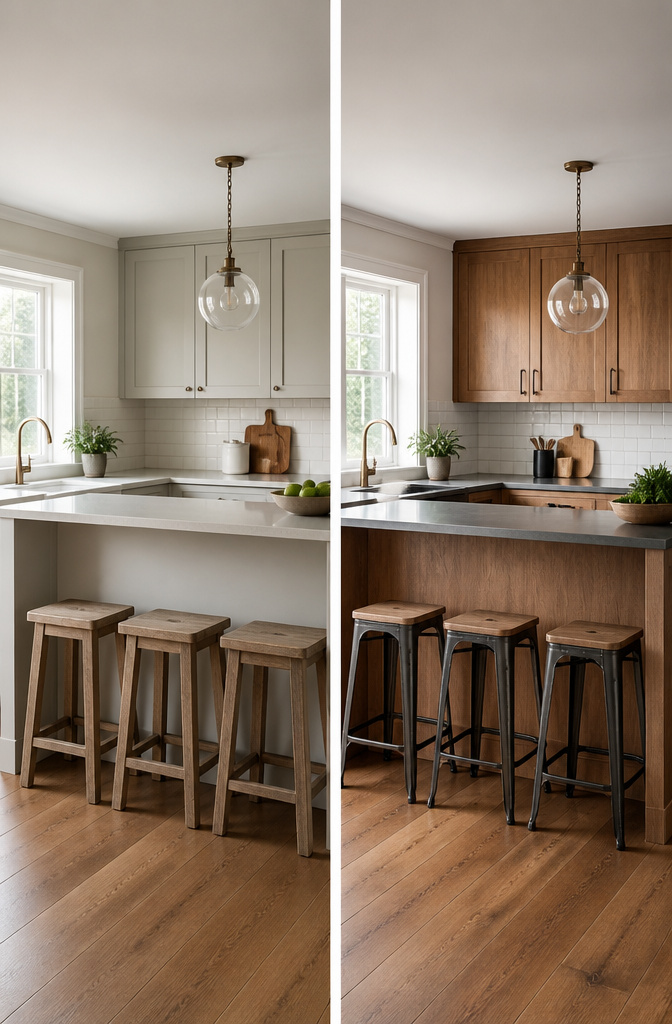
Backless stools that tuck all the way under the counter buy back walkway space you didn’t know you had. In a tight kitchen, that two or three inches of breathing room matters every time you sidestep around the corner with a hot mug.
The overhang depth is what determines whether anyone actually sits there long enough to finish breakfast. About 12 inches of knee clearance keeps thighs from pressing the counter edge; less than that, and the bar becomes a leaning spot, not a dining one. Backed stools encourage lingering, but their legs and backrests fight for the same footprint. In my own setup, switching to backless stools turned a cramped pass-through into something I used for actual meals because I wasn’t bumping shins on rungs every time I turned.
A pull-out bar paired with portable stools takes this further for renters who can’t modify cabinets. Slide it out for pancakes, stow it for prep space. The seating you choose, portable or fixed, backless or backed, sets whether that bar collects mail or becomes the place you eat.

Dual Temperature Control: This wine cooler features two independently controlled temperature zones, optimizing preservation for red and white wines, champagnes, beers, and sodas with adjustable settings from 41-64F

RELIABLE DUAL ZONE COOLING FROM 37°F–66°F – Two independently controlled temperature zones keep beverages crisp and wine properly conditioned. The upper zone cools drinks from 37–50°F while the lower zone stores wine from 50–66°F, delivering stable, consistent cooling that protects flavor, carbonation, and long-term quality.

🍷【Dual Zone Precision – 41°F to 72°F】 Keep red and white wines at their ideal serving temperatures with independent upper and lower zones. The digital control panel adjusts in 1°F increments, and the clear display makes it easy to monitor at a glance.
6. Fold-Down Bar Table
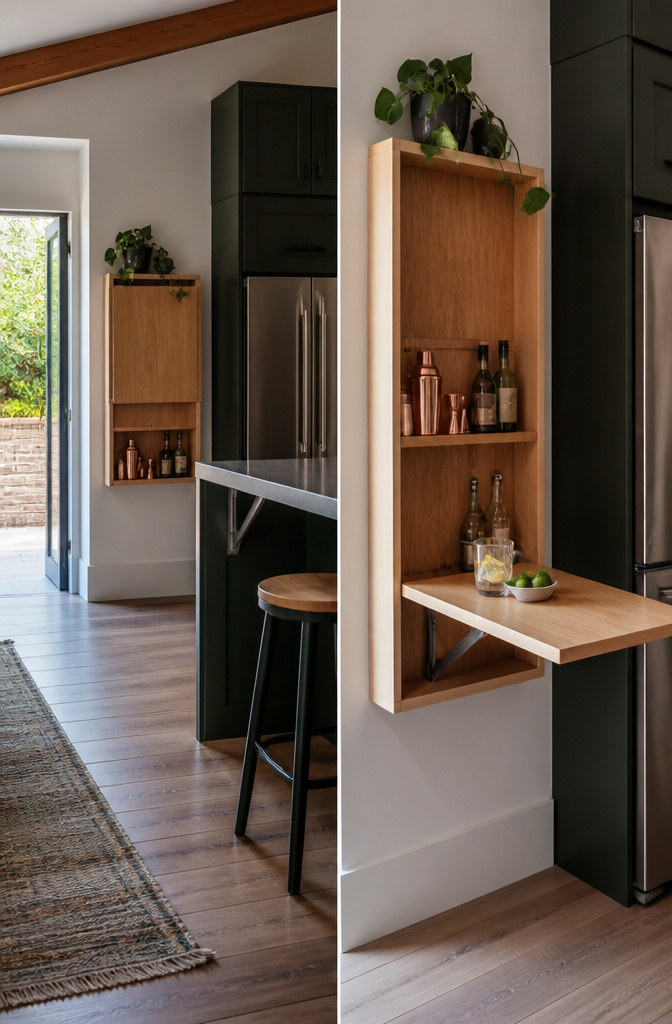
Wall-mounted fold-down bars solve the problem of needing a surface that disappears the rest of the day. The bracket choice determines how the table behaves in use. A piano hinge running the full width keeps the leaf from sagging over time; two or three smaller butt hinges work for lighter loads but eventually torque the screws loose if you lean on the bar regularly.
Stud anchoring is non-negotiable for anything you plan to set a drink on. Toggle bolts through drywall alone will hold the folded table flush to the wall, but the open position puts all the load on those same anchors with leverage working against them. If the stud spacing lands wrong for your planned width, a plywood backer screwed across two studs gives you a solid mounting surface anywhere along the span.
Depth matters more than most people account for. Folded, the table should sit within two inches of the wall so it reads as trim rather than furniture. Open, anything under twelve inches deep works for a laptop and coffee; sixteen inches or more lets two people actually eat shoulder-to-shoulder. The bracket arms determine that reach, so measure your folded profile against your open need before buying hardware.
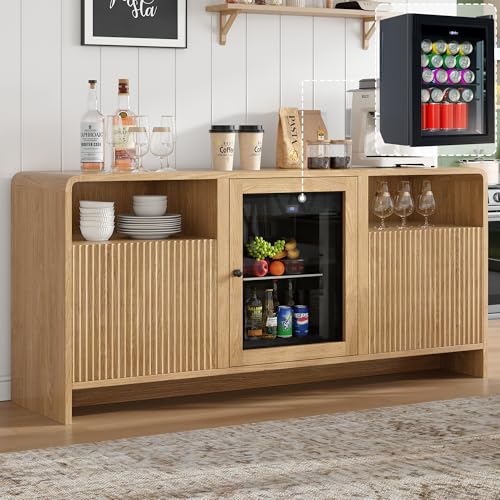
Matching Fridge Included: This bar cabinet comes with a perfectly matched refrigerator. Designed with a unified framed door, it achieves a true built-in look-unlike simply placing a mini-fridge inside

Built-In Beverage Fridge: Fridge and bar cabinet doors open as one for a seamless, built-in feel. Touch controls, energy-efficiency whisper-quiet, 24-can capacity, adjustable 41°F to 68°F temperature control cooling make it ideal for chills drinks, wine, preserves fruits.

【Built-In Charging Hub & Smart Mood Lighting】 Power and illuminate your space conveniently! The integrated charging station includes 2 AC outlets and 3 USB ports, ideal for plugging in your mini fridge, coffee maker or other devices. Enhance ambiance and task lighting with the brightness-adjustable LED light bar, offering multiple colors and fun lighting modes to set the perfect mood for any occasion.
7. Window Bar
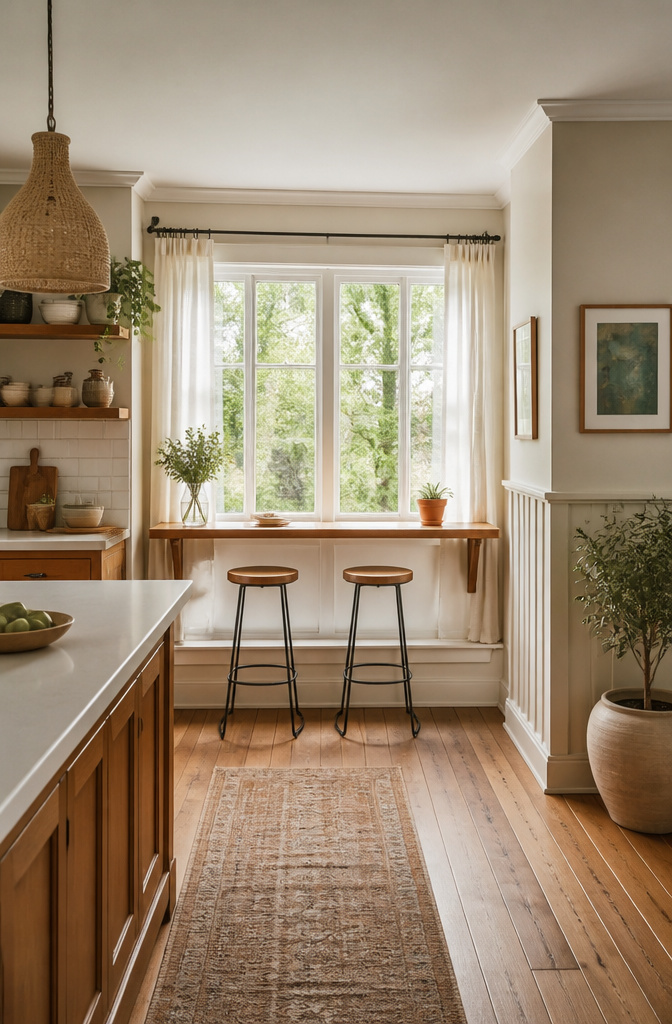
A window ledge already sits at the right height for perching with a stool, and the natural light turns even a quick lunch into something that feels intentional. In my own small rental, the deep interior sill was the only spare surface that did not block the walkway, so I used it as-is rather than building anything new.
The real advantage is the view framing. A bar placed here draws the eye outward instead of closing the kitchen in, and the daylight cuts the need for a pendant or sconce you might not have wiring for anyway. If the sill is too shallow, a simple shelf bracketed beneath the frame gains you the overhang you need for knees.
Baseboard heat sits exactly where your legs want to go. One fix: leave the stool area open and run the bar surface only where the wall is clear above. Deep sills work in your favor here, since they push the seating forward of the radiator line. A pass-through window to another room plays the same trick with more function, adding that slim oak overhang to pass plates through while guests hover on the far side.
The portability matters in a rental. Fold the shelf up, store the stools, and the window goes back to being a window when you need the floor space.

✔️EFFORTLESS APPLIANCE MOVEMENT: The ANBOXIT Appliance Slider features a premium gliding system that allows you to move your coffee maker or air fryer smoothly and quietly. Easily pull appliances out from under cabinets for refilling or daily use, while protecting cabinets from steam damage. A must-have kitchen organizer for a tidier countertop and effortless access to frequently used appliances.

Drawer Size & Total Width: The pull out cabinet drawer body measures 14" W × 21" D × 3.2" H,Including 2 slide rails,The total installed width is 15".

Pull-Out Storage Rack: This pull out cabinet organizer maximizes tight cabinet space for expanded storage. It can hold cookware, spice jars, food, cleaning supplies, and more
8. Peninsula Bar
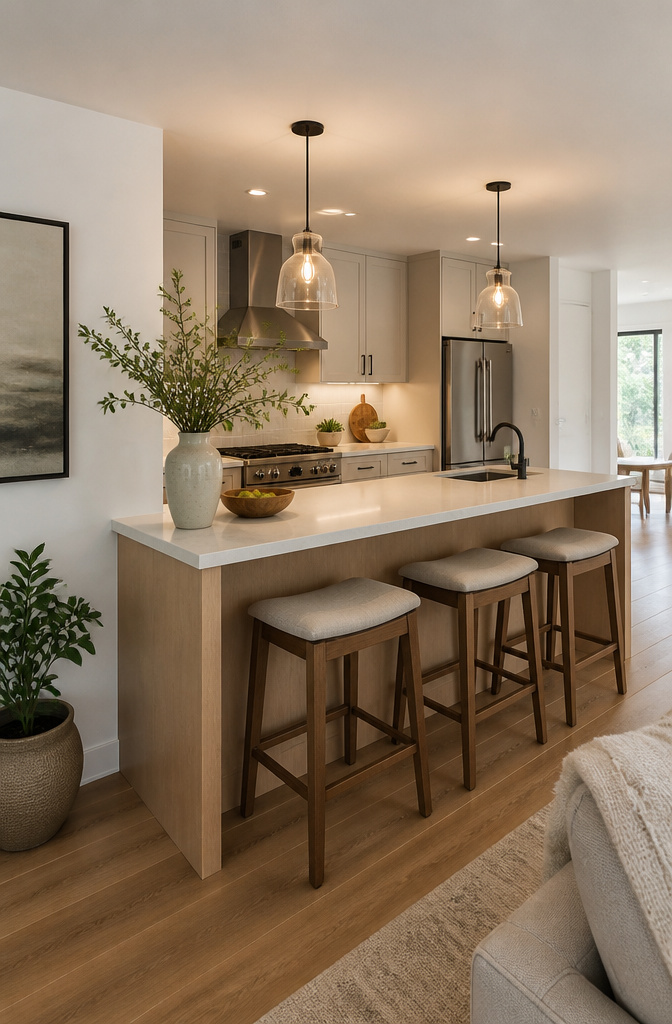
A peninsula bar extends from your existing cabinetry on one side, so you get the workspace and seating of an island without the full cost of plumbing, electrical, and a freestanding structure. In an open plan, it does something an island cannot: it creates a natural separation between kitchen and living area while keeping sightlines open.
The two-sided layout is what makes it work. Face the countertop toward the kitchen for prep, and add bar stools on the living-room side for eating or keeping someone company while you cook. One source described that outer edge as a "cozy perch for snacks at night," which gets the mood right. It is less about entertaining a crowd and more about having a built-in spot to land with a laptop or a glass of wine while dinner finishes.
Storage depends on what your base cabinets already hold, but the counter extension itself is the gain. A slim peninsula defines the kitchen without adding walls, and that definition matters in a rental or a first home where you cannot move the kitchen door. The footprint is fixed to one wall, so you keep floor space for traffic paths that a full island would block.
Maximize Your Space – Secure the hin at 90 degrees to create a cact Work ideal for small areas. t for Home Offices, Craft Rooms, or Worhops, this versatile solut enhances...
9. Small Corner Bar
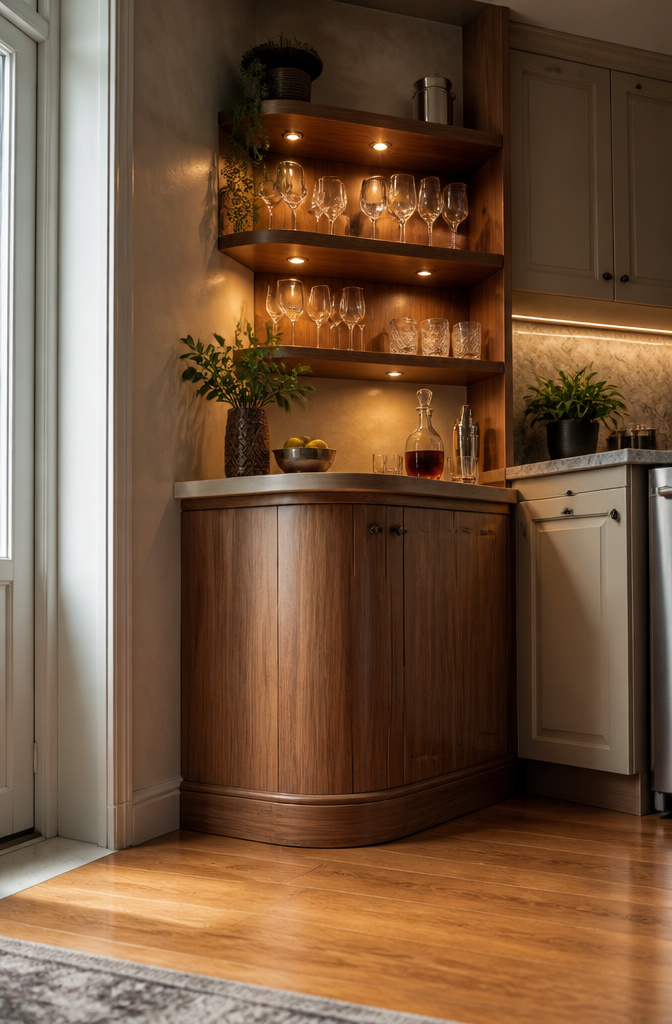
Corners collect the things you never meant to keep: the blender base with a broken lid, a stack of mail, eventually nothing at all. The geometry fights you. A triangular or curved counter turns that dead angle into the most natural place to pause with a drink.
The trick is letting the shape read as intentional. I once watched a contractor force a standard rectangular bar into a ninety-degree turn; the result looked like a piece of furniture that had given up. A proper corner unit either mirrors the angle with a mitered front or bows outward in a gentle curve that softens the room. The curved version costs more, but in a galley kitchen it is the difference between a bar you use and a bar you bump past.
Storage inside these angles demands a specific solution. Standard cabinet doors block each other; a lazy Susan or a diagonal drawer pulls deep contents into reach without the crawl-and-reach routine of a blind corner. The passages note open shelving above for glassware, and the combination works: closed storage below for the clutter, floating shelves at eye level for the things you want to see. Mirrors or glass shelves behind the bar bounce light back into the room, which matters when the corner itself is what made the space feel dim to begin with.
What convinced me, reading through the advice on this, is that the bar does not need to match the kitchen exactly. Matching reads as built-in; a slight shift in material or color makes the corner feel discovered rather than installed. One approach keeps the same worktop but changes the cabinet finish underneath. Another uses the same finish but steps the counter height down by six inches for a visual break. Either way, the corner stops being where the kitchen ends and becomes where someone actually wants to stand.

Premium Quality: Crafted from premium 16 gauge SUS304 stainless steel, its sink body is reinforced with an extra-thick 3 mm edge. The brushed nickel finish enhances its resistance to wear, heat and corrosion

Lucky Elephant Design - Features an adorable elephant figure crafted from natural stone paired with a warm walnut wood base. Symbolizing good luck, strength, and prosperity — the perfect blend of art and positive energy.

PREMIUM MATERIAL: This 15 inch small kitchen sink is crafted from 16 gauge premium stainless steel with a brushed finish. The brushed surface delivers refined metallic aesthetics while offering exceptional corrosion resistance and Scratch-proof performance
10. Pull-Out Kitchen Bar
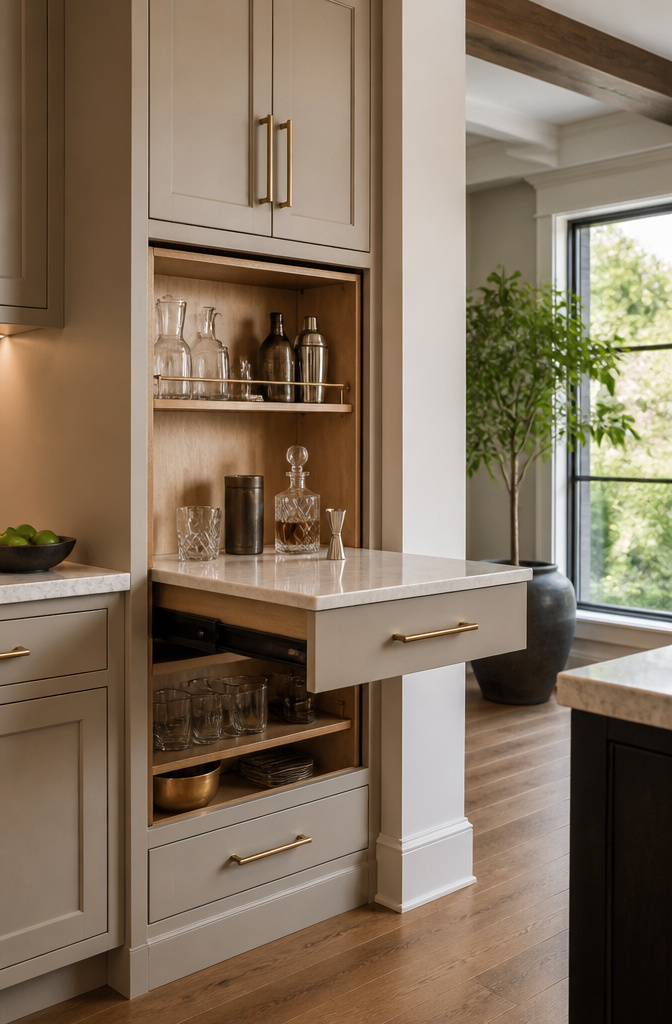
A pull-out kitchen bar hides inside a cabinet until you need it, which makes it the cleanest-looking option if your space doubles as a dining area or walkway. The whole surface rides on drawer slides, and the slide rating matters more than the countertop thickness. Standard 100-pound slides work for a narrow drink ledge, but if you are stacking a mixer or bottles, you want heavy-duty 250–500-pound hardware or the frame will sag over time.
Installation is more involved than a fold-down wall bracket because you are cutting into existing cabinetry and reinforcing the box so it does not rack when the slide extends. You also need clearance inside for the bar to retract fully, which means sacrificing that cabinet’s storage. In daily use, though, the motion is simpler: one pull versus unfolding legs, locking hinges, and checking that the wall mount holds. The trade is front-end labor for back-end convenience.
Weight limits drop once the bar is extended, so plan for the load to sit near the cabinet face, not out at the edge. That is the mistake that warps the slides first.

Dual Zone Storage: Two separately controlled compartments hold up to 6 standard 750 mL Bordeaux bottles each, helping organize red, white, rosé, sparkling, and dessert wines.

【Independent Cooling Zone for Wine and Beverage 】Velieta 30 inch wine beverage fridge has independently dual cooling zones. You can control the dual cooling zones independently. Left beverage zone -35°F-50°F for all kinds of beverages. Right wine zone 41°F--64°F for your treasured wine. Chill your wines and drinks at their most suitable temperature and enjoy their best flavors.
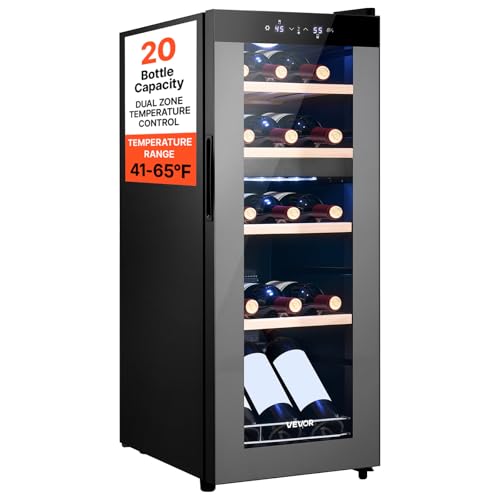
Large Storage: No more worries about limited wine storage space — keep every bottle clearly visible with no need to search. The natural beech wood shelves are sturdy, pressure-bearing, and durable, providing gentle support for every bottle
What Bar Style Fits Your Space
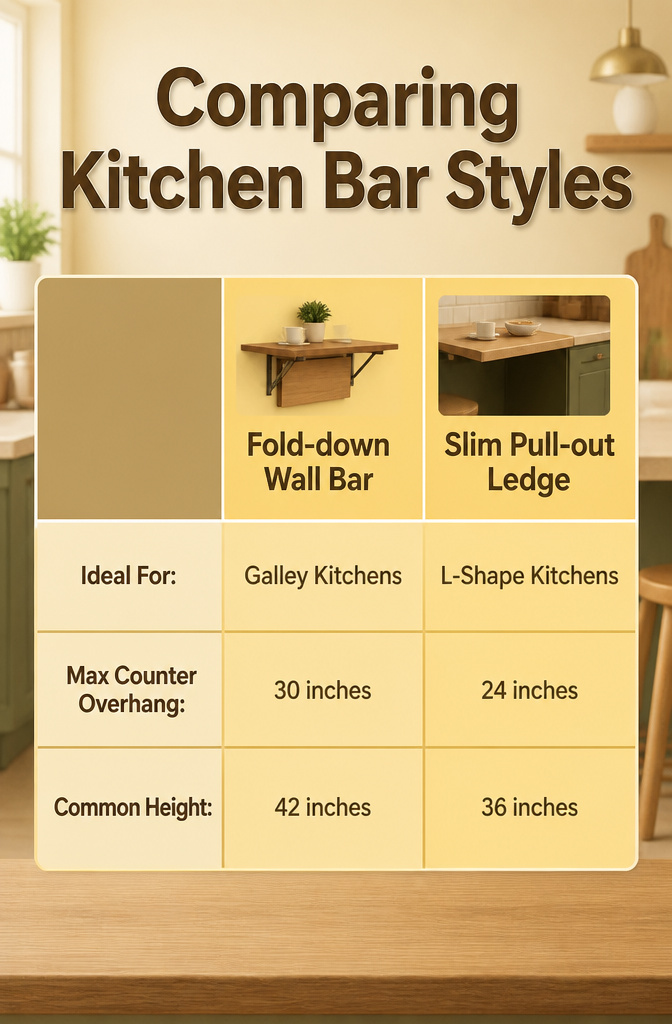
Galley kitchens run on one straight wall, and that narrow corridor either kills a bar idea or makes it the only thing that works. I learned this the hard way after measuring a friend’s 36-inch-wide galley and realizing a peninsula would trap the cook between the stove and a slab of wood. In that layout, a fold-down wall bar or a slim pull-out ledge tucks back when the oven door swings open, which matters more than the extra inches of counter you thought you wanted.
L-shapes give you the corner, and that corner is where most people waste space with a diagonal cabinet nobody can reach. A small corner bar or a window bar along the shorter leg turns dead footage into a morning coffee spot without stealing the main prep zone. U-shapes are the opposite problem: three walls of counter already, so adding a bar usually means floating a peninsula off one open end or accepting that the room is full and skipping the bar entirely.
Single-wall kitchens in studios or older rentals have no choice but to build outward. A freestanding bar table or a console behind the sofa line, if the kitchen opens to the living room, defines the boundary without a single screw into a landlord’s drywall. The layout decides whether the bar faces the room for guests or faces the wall for the person cooking; most weekend projects get that backwards and end up with a ledge nobody wants to stand at.
How I Measure Before Cutting
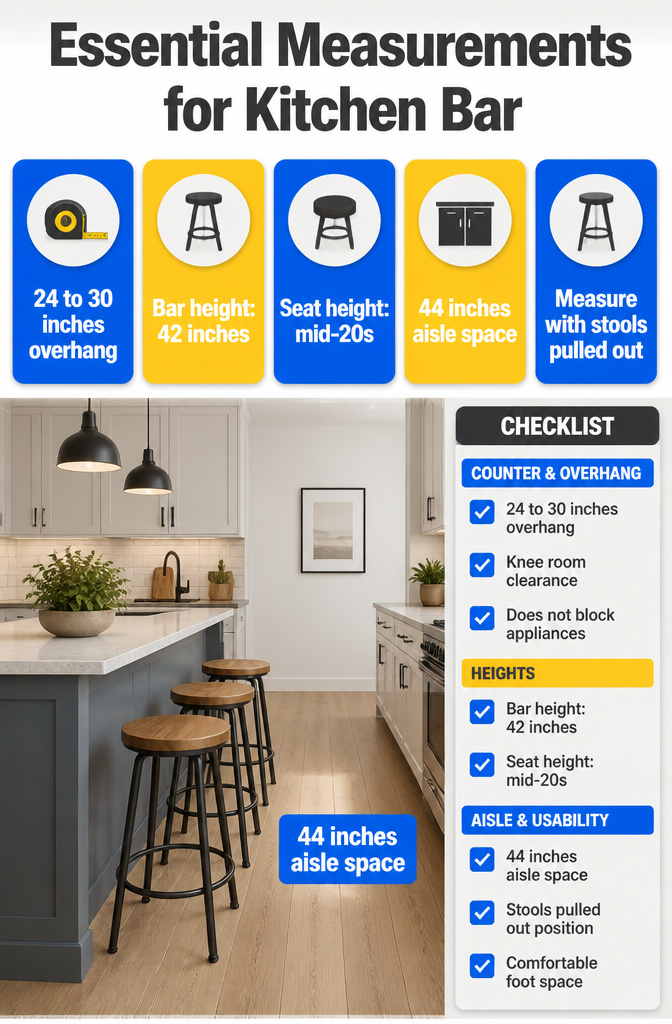
A kitchen bar that looks right on paper can still eat your walkway alive once the stools slide out. 24 to 30 inches of counter overhang is the usual range for knee room, but that overhang does nothing if the aisle behind the stools shrinks to nothing when someone sits down. Measure with stools pulled out, not tucked in, because that is the position they live in during use.
Bar-height counters typically run 42 inches to the top. Seat bottom lands somewhere in the mid-20s from the floor, which leaves most adults with their thighs pitched slightly downward and their feet reaching for a rail or the floor. I have seen 36-inch counters sold as "bar height" in apartment listings, and they are not; that is counter height, and standard bar stools will leave you hunched.
These numbers are starting points. My own galley kitchen would not give up 30 inches of overhang without blocking the dishwasher swing, so I stopped at 26 and picked backless stools that push in tight. The measurement that mattered most was the 44 inches left between the pulled-out stool and the opposite cabinet, not the overhang itself.
Function Over Form
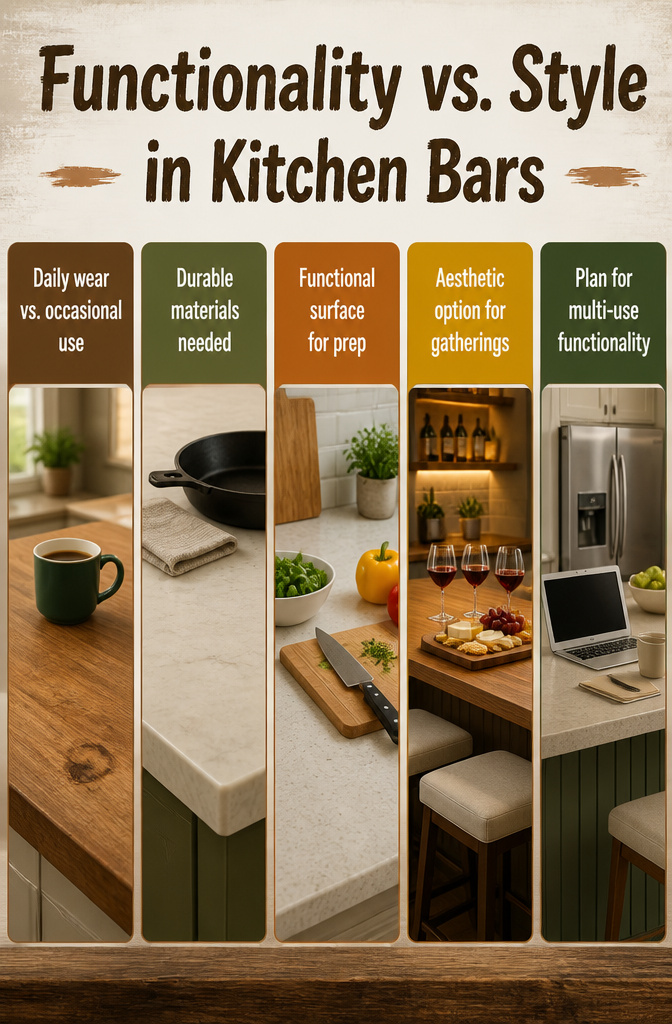
The bar gets used before it gets styled. A surface that sees daily meal prep needs a finish that survives knife slips and hot pans, while one that mostly holds wine glasses can afford to be more delicate. That difference in daily wear versus occasional use shapes every choice from material to height to whether you need a sink nearby.
I learned this the hard way with a butcher-block top I installed for weekend entertaining. Six months of actual cooking left it ringed with water stains and a small burn where a hot pot sat too long. The surface was beautiful but wrong for the workload. Swapping to a quartz remnant with a softer edge profile solved the problem without losing the look.
A kitchen bar that works pulls triple duty whether you planned it or not. Morning coffee, afternoon laptop space, evening gathering spot. The ones that last account for all three from the start: a lip on the back to keep crumbs from hitting the floor, enough overhang for knees when someone sits down to eat, and a landing zone near the fridge so the cook isn’t circling the room with a cutting board. Skip any one of those and the bar becomes a bottleneck instead of a tool.
Frequently Asked Questions
What are some small kitchen bar ideas?
Fold-down wall bars, window ledge perches, small corner bars with curved or mitered fronts, pull-out ledges hidden inside cabinets, and slim peninsulas that extend from existing cabinetry all work in tight footprints. Backless stools that tuck flush and pale coastal palettes help keep the space from feeling crowded.
How can I create a bar in a small kitchen?
Use surfaces you already have: extend a counter with 12 inches of knee clearance for a breakfast bar, bracket a shelf beneath a deep window sill, or install a fold-down table on stud-anchored hardware. Renters can try a pull-out bar on heavy-duty drawer slides or a portable console that stows away.
What is the best way to design a kitchen bar?
Start with how you will actually use it daily, not how it photographs. A surface for meal prep needs a durable finish and enough overhang for knees; one for occasional drinks can afford to be more delicate. Match the bar’s height to its stools, 42 inches for standard bar height, and measure with those stools pulled out so you do not block walkways.