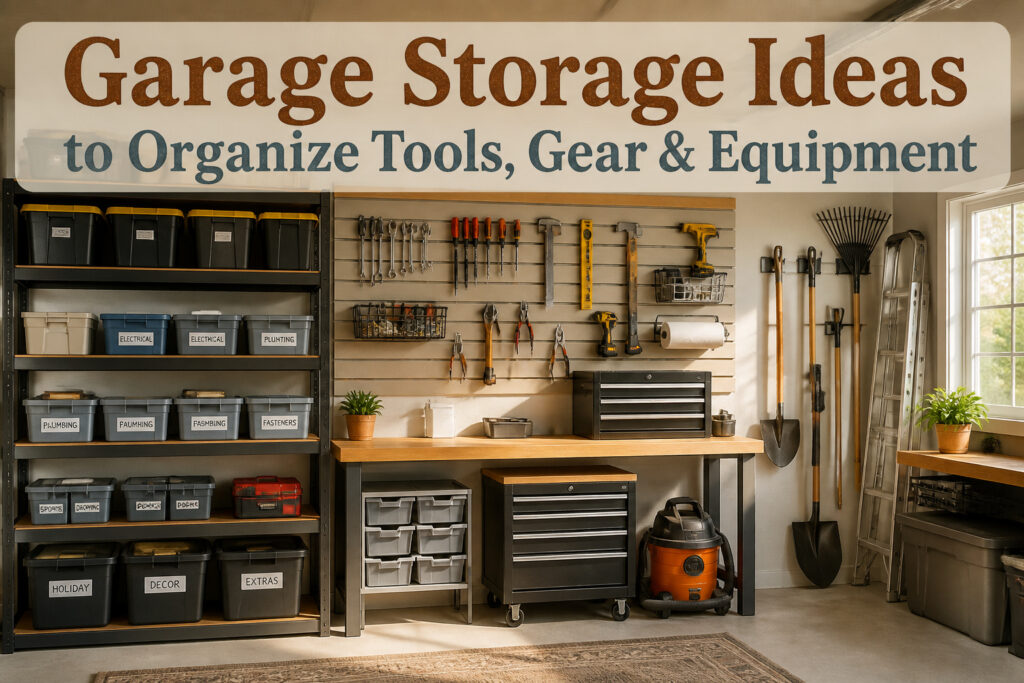
Garage storage ideas range from a six-dollar roll of tape to wall systems that run past ninety dollars, and the deciding factor is rarely price alone. What separates the setups that last from the ones that collapse into a pile of drywall dust is whether you checked your stud spacing before you drilled. I learned that with an IKEA bracket spinning freely in 1950s plaster, a Saturday afternoon gone wrong because I assumed sixteen inches on center.
1. Wall-Mounted Shelving Systems
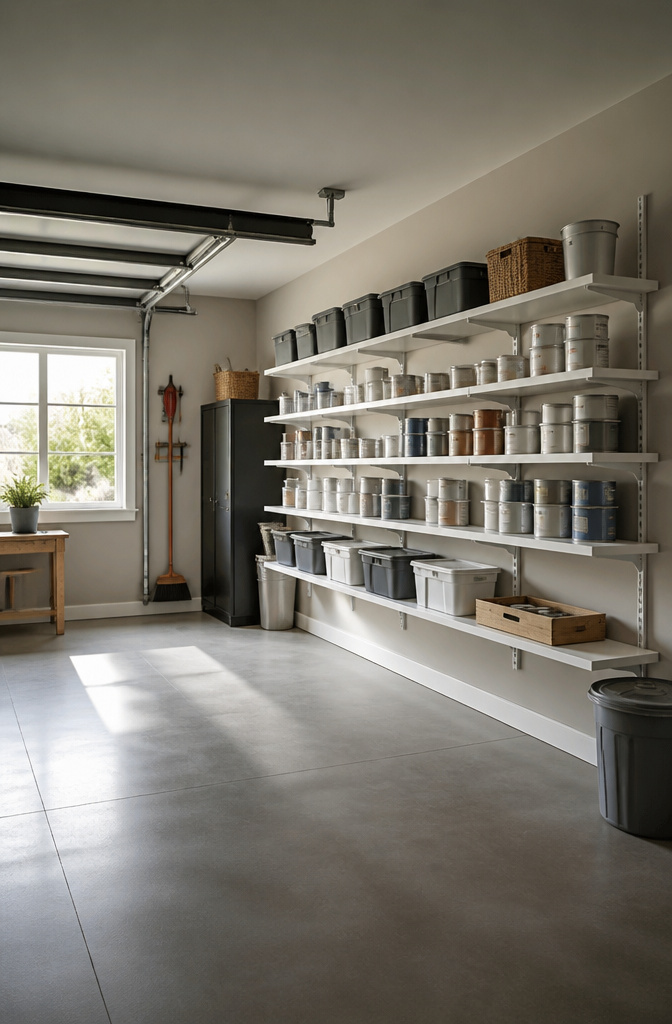
Wall-mounted shelving turns the empty vertical space above workbenches and between doors into usable storage without eating floor area. Standard units run 12–16 inches deep and 24–48 inches long, which sounds generous until you try to park a full cooler or stack two storage bins and find the front lip hanging into thin air. Measure your wall studs before you buy anything. I learned this the hard way on a Saturday afternoon with what I thought was a straightforward IKEA ALGOT install; the system is now called BOAXEL, but the brackets still need to hit solid backing, and I assumed the studs in my 1950s garage were the modern 16 inches on center. They were not. Two brackets spun freely in plaster with no bite, and the whole frame sat crooked until I located the actual stud spacing with a long finish nail and patience. The newer BOAXEL line keeps the same shallow depth options, so if you are storing paint cans or bulk cleaning supplies, the 15-inch depth is the only one that keeps the contents from jutting past the bracket.

【Heavy Duty Garage Shelving】Our wall shelves hold up to 900lbs and are built with heavy duty steel and thickened square tube supports, designed for organizing tools, tires, garden supplies, and heavy equipment with a sturdy, durable structure.

Heavy-Duty Load Capacity: Constructed from thick, powder-coated steel, this garage wall storage rack supports a total weight capacity of 600 lbs (200 lbs per tier), delivering reliable strength and long-lasting durability for heavy tools and equipment

600 lbs Total Capacity: Built to handle demanding storage needs, each shelf in this garage wall shelving system holds up to 300 lbs, offering dependable strength and stability for tools, bins, garden supplies, and heavy-duty equipment
2. Track Systems for Awkward Items
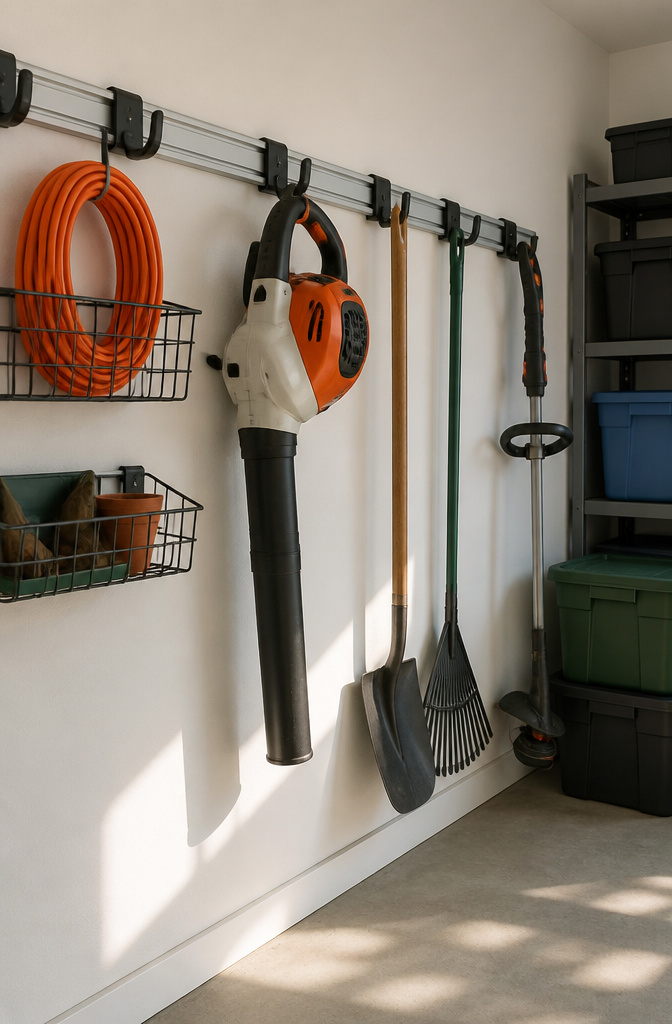
Some tools simply refuse to sit on a shelf. Rakes, shovels, extension cords, they all need a different approach, and Gladiator’s track system is built exactly for that problem. The horizontal rail mounts to the wall once, and after that, hooks and baskets snap in and slide wherever you need them. I bought a starter kit for about $90 that included two four-foot tracks and an assortment of six hooks and two baskets. The pieces clicked together without much fuss, and rearranging them takes seconds rather than a drill and new holes. What sold me was watching the same rail hold a coiled extension cord one month and a leaf blower the next, just by swapping a basket for a heavy hook. The system costs more than pegboard upfront, but the flexibility pays off when you realize your storage needs shift every season.

THE FAST WAY TO ORGANIZE: Equipped with rails, hooks, shelves and cabinets it’s an easy storage solution that can grow as life changes.

Mounts to CRAFTSMAN versa track track wall without tools or hardware

EXTREMELY STURDILY MATERIAL: The garage hooks is made of premium heavy-duty solid steel and the plate are reinforced with three layers, providing superior load capacity, the utility hooks are great for ladders, sports equipment, lawn trimmers, gardening equipment and other bulky items!
3. Hooks for Bulky Items
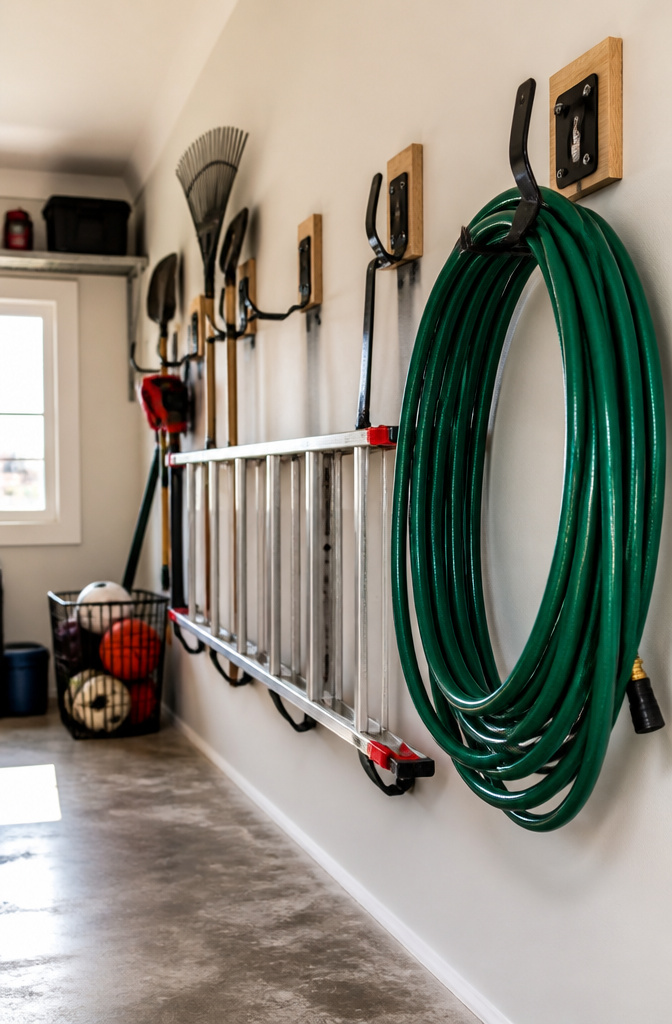
Wall hooks are the fastest way to reclaim floor space from the bulky items that eat up a garage. A ladder hung flat against studs takes up zero footprint. A coiled hose on a single hook stops the tangle. The real payoff comes from the items you do not want inside the house: garden gloves stiff with mud, hockey helmets, shin guards. A few hooks near the garage door let that gear air out between uses instead of souring in a bin.
For anything heavy, the mounting matters more than the hook itself. I look for 50–75 lb ratings on bicycle hooks and always drive them into a stud or a solid backing board. The cheap hollow-wall hooks I tried once pulled clean out of drywall after a few weeks of holding a single adult bike. The wall tore, the bike dropped, and I spent an afternoon patching instead of organizing. Stud-mounted hooks cost a few dollars more and stay put.

Versatile Storage Options: Our garage storage holders is perfect for hanging ladders, bicycles, folded chairs, tools, garden hoses, wire, sports equipment and other bulky items.
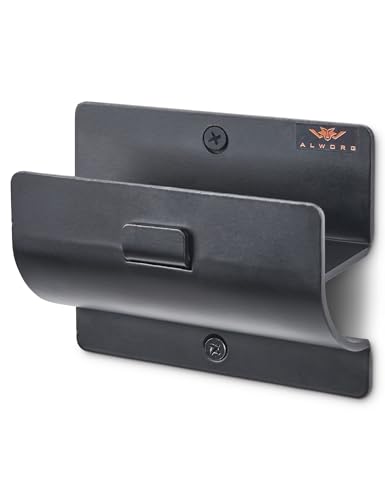
Crafted From The Premium Materials: This ladder hook is made from a premium, higher-grade metal compared to others in the market. The superior and thicker carbon steel is extremely sturdy and durable, for a long-lasting result. Size: 5"(L) × 3.87"(H) × 2.20"(W)

Heavy Duty Steel Construction: Made from reinforced steel, these wall mount ladder hooks provide strong and stable support for hanging ladders, folding chairs, and patio furniture. Built for long-lasting garage storage and organization.
4. Metal Shelving Units
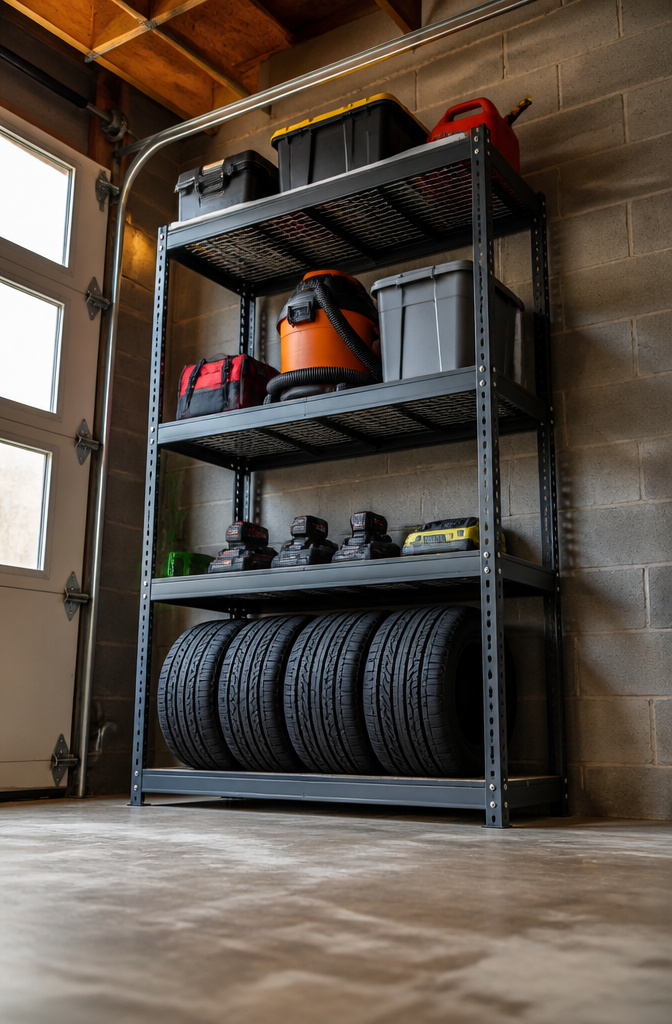
Concrete block walls or a lease that ends in a year make wall-mounted shelving a non-starter, which is where a freestanding metal unit earns its keep. Gladiator metal shelving runs heavier and pricier than wire or plastic racks, but the tradeoff is real load capacity. I have watched particleboard shelves bow under a single bin of paint cans; these do not. A four-tier unit I found on sale now holds a shop vac, two battery chargers, and a full set of winter tires without complaint. In a standard garage bay, a 48-inch wide by 72-inch tall footprint leaves walking room on either side and tucks neatly against the back wall without blocking the door swing.

METAL NAILBOARD: Our peg board panels are made of high quality steel with a powder coated finish that is strong, scratch resistant and easy to clean. Each small pegboard has a weight capacity of up to 50 lbs. This is a favorite product for tool organizers, DIY enthusiasts, store owners and office workers.

METAL NAILBOARD: Our peg board panels are made of high quality steel with a powder coated finish that is strong, scratch resistant and easy to clean. Each small pegboard has a weight capacity of up to 50 lbs. This is a favorite product for tool organizers, DIY enthusiasts, store owners and office workers.

Heavy-Duty Pegboard: Made of premium steel, the garage pegboard features thick, durable panels for superior strength and load capacity. It resists bending or warping over time, ensuring safe and reliable storage for your tools and equipment
5. Tool Organization Kits
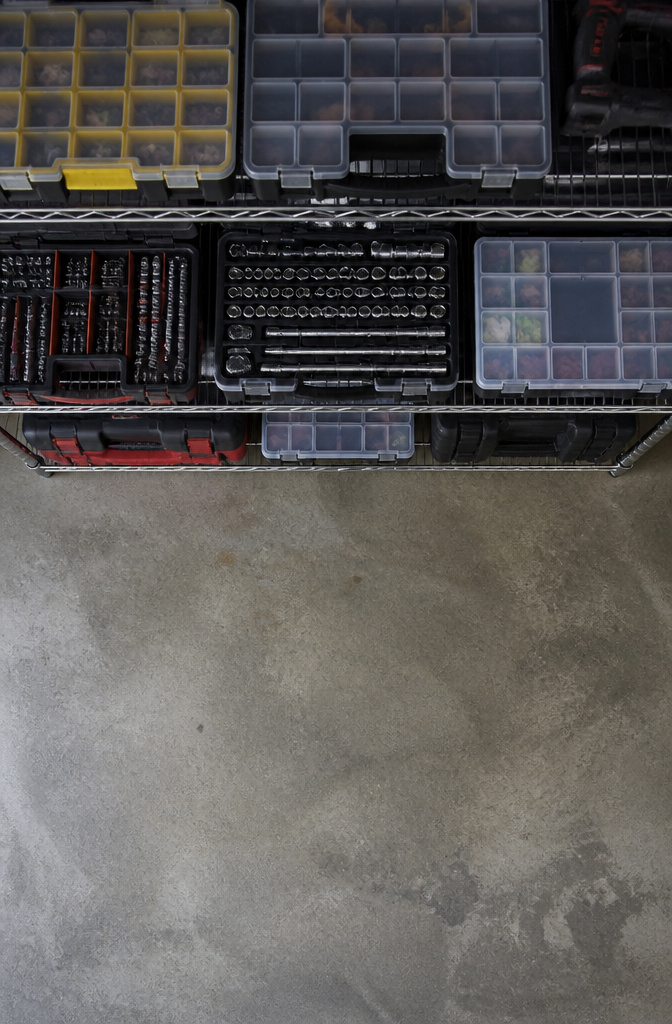
A dedicated tool organization kit with drawers and dividers beats a basic plastic toolbox the moment you own more than one tape measure. I learned that after losing three of them to the same black hole of sockets and drill bits. The photograph on the box usually shows every wrench standing in perfect rows, but what ships is often a stack of shallow drawers and a handful of plastic dividers you snap in yourself. The real value is the specific geometry: a long skinny slot for screwdrivers, a grid for socket sets, a deep well for the drill and charger that actually keeps them upright. My first kit had drawers that stuck when I loaded them the way the picture suggested. The second one worked better only after I stopped treating the dividers as suggestions and started cutting my own from scrap plywood to fit the oddball tools the manufacturer never pictured. Power tools need more clearance than the marketing implies; plan on losing one drawer entirely to the drill, the battery, and the charger brick.

Universal Fit for 27-Gal Totes: Rail spacing adjusts from 18 1/8" to 20 1/2" to fit bins across different brands, making it compatible with all 27-gallon totes commonly sold at major warehouse clubs and home improvement retailers, including models from HDX, Greenmade, Sterilite, CX, Black & Yellow, and others (brand names for reference only, no affiliation). Works as garage shelving for totes or a storage rack for bins, meeting 27 gallon tote/bin storage rack needs.

1400 lbs Total Capacity: Our garage wall shelving is engineered for superior strength and durability, supporting up to 1400 lbs in total. Each individual unit holds up to 350 lbs, making it ideal for heavy-duty garage storage with safety and reliability you can trust.
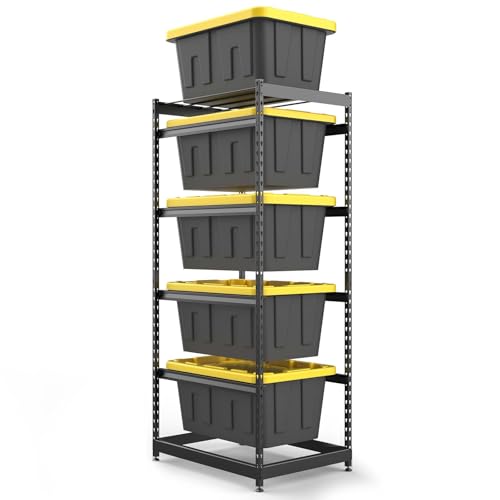
Universal Fit for 27-Gal Totes: Rail spacing adjusts from 18 1/8" to 20 1/2" to fit bins across different brands, making it compatible with all 27-gallon totes commonly sold at major warehouse clubs and home improvement retailers, including models from HDX, Greenmade, Sterilite, CX, Black & Yellow, and others (brand names for reference only, no affiliation). Works as garage shelving for totes or a storage rack for bins, meeting 27 gallon tote/bin storage rack needs.
6. Pegboards for Small Items
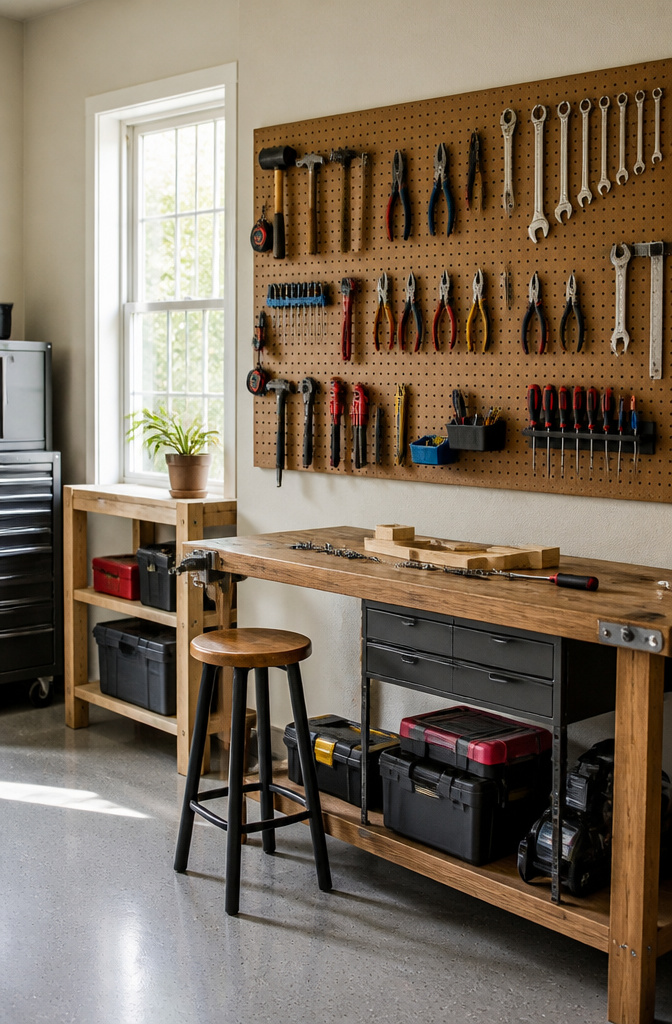
Standard pegboard comes in 1/4 inch holes on 1 inch centers, and that spacing matters when you are picking hooks. The flimsy 1/8 inch hardboard version warps in garage humidity, so I skip it now. What convinced me, reading through a dozen of these projects, was the number of people who installed it, loaded it, and watched it bow over a summer.
I painted mine once and the paint filled the holes. I had to re-drill every one of them, which took longer than hanging the board itself. If you want color, buy it pre-finished or use a roller with almost no pressure and accept that some touch-up by hand is part of the job.
Metal pegboard costs more and I have not tried it myself, but the absence of swelling and the cleaner edges on the hooks are what keep drawing my eye when I walk past it in the aisle. For a weekend project under a few hundred dollars, standard painted steel or the thicker 1/4 inch Masonite is where I would put my money.

Suitable for wood stud spacing of 16", 18" or 24". NOTE: The shelves can only be installed separately for 24" studs. Can NOT be mounted to metal wall.
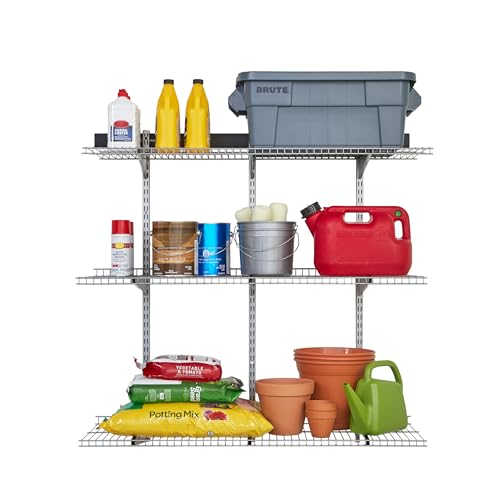
THE FAST WAY TO ORGANIZE: Equipped with rails, hooks, shelves and cabinets it’s an easy storage solution that can grow as life changes.

Heavy-Duty Storage Power: This garage wall shelving set features strong steel construction. Each 1 x 3 ft shelf supports up to 150 lbs, with 450 lbs total when evenly loaded, giving tools and bins a sturdy place to live.
7. Workstations for Projects
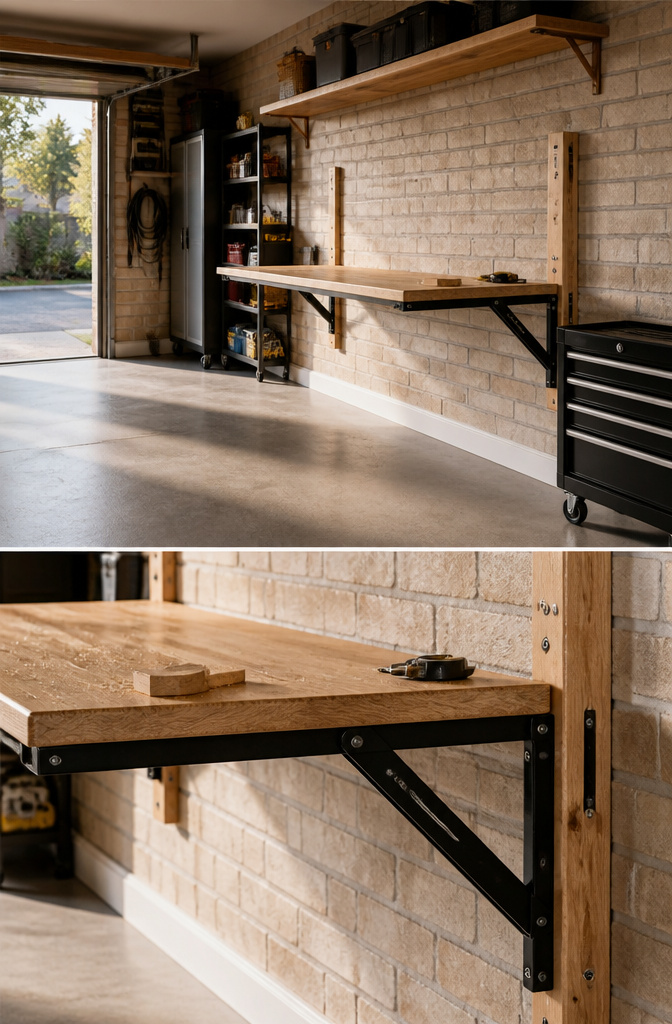
A folding workbench saves the wall space a fixed bench permanently blocks. I learned that the hard way after building a heavy plywood bench against the back wall of a two-car garage. It worked fine until a storm dropped a tree limb across the driveway and I needed to squeeze both cars inside for the night. The bench won, and one car sat outside in the hail.
The replacement folds flat to about six inches deep against the same wall. I mounted it with steel brackets rated for the weight, and it opens to a standard 24-inch depth when I need it. That is enough surface for sharpening mower blades, rebuilding a carburetor, or cutting lumber for the raised beds I build most springs. The brackets have a clear load limit, and I stay under it by keeping bags of concrete and the full toolbox on the floor, not the bench.
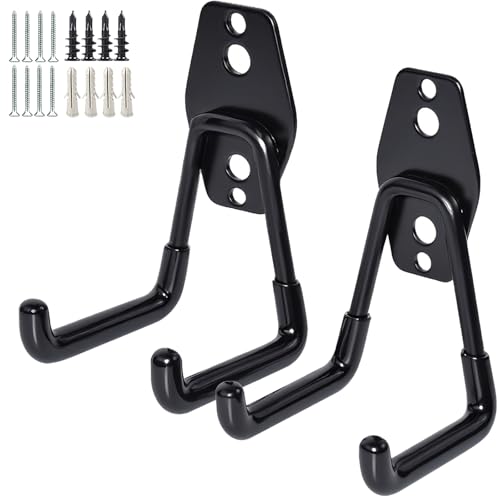
【MATERIAL】Our Small U Hooks are made of heavy duty iron and its anti-slip coating is made of sturdy PVC. Strong enough to hold 40lbs or more when properly installed.
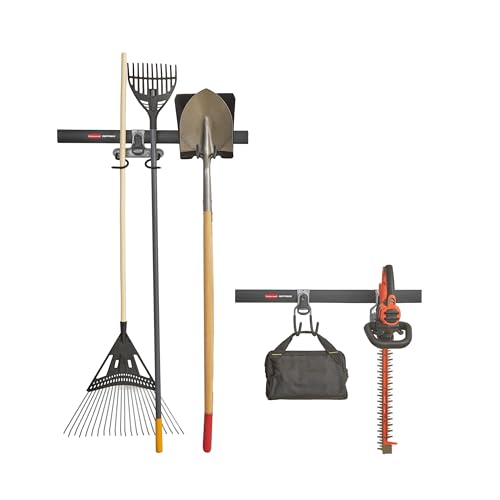
THE FAST WAY TO ORGANIZE: Equipped with rails, hooks, shelves and cabinets it’s an easy storage solution that can grow as life changes.

【MATERIAL】Our Small U Hooks are made of heavy duty iron and its anti-slip coating is made of sturdy PVC. Strong enough to hold 40lbs or more when properly installed.
8. Opaque Bins for Hiding Clutter
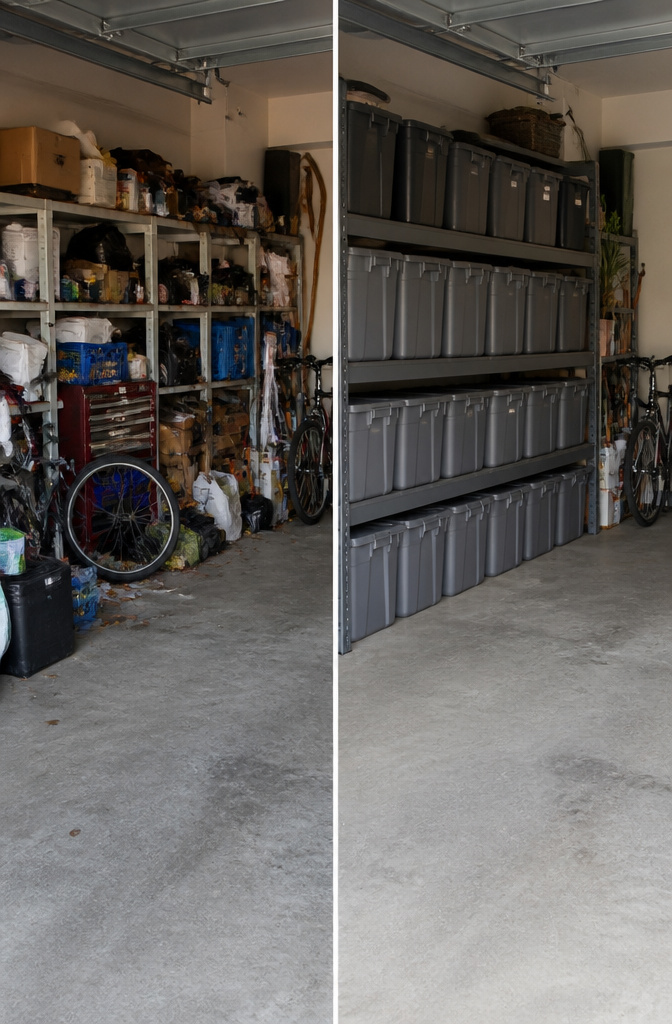
Opaque bins hide the visual noise that clear ones broadcast. I learned that the hard way after outfitting a whole wall in identical clear totes; every spare extension cord and half-empty paint can became part of the scenery the neighbors saw every time the door went up. One uniform color reads as calm, even when the contents inside are chaos.
My bigger mistake was buying one size for everything. Holiday decorations with their awkward angles and that inflatable snowman needed volume that socket sets and gardening gloves did not. A 30-gallon bin swallows a disassembled artificial tree; a 12-gallon tote just bulges and splits.
Labels still matter, just placed where you can read them at a glance. Masking tape on the short end, written in marker, has held up through three summers of heat cycling without curling off. The bin color keeps the wall serene; the label keeps you from opening four lids to find the bug spray.

HIGH QUALITY MATERIALS: Our heavy duty garage hooks(Two 5.1 Inch U hooks) are made from solid steel with anti-rust coating, ensuring durability and long-lasting use. The non-slip PVC sheath provides a secure grip, preventing items from slipping or getting scratched.
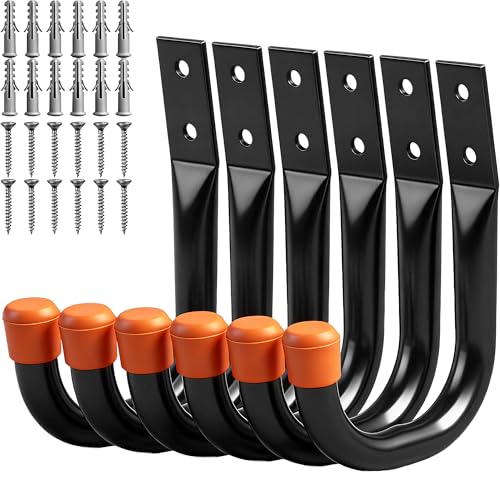
Comes with 6 heavy-duty wall hooks, 12 wall anchors, and 12 screws. HORUSDY delivers reliable quality and dependable support to make your garage organization easier and more efficient.

Durable Material: Our heavy duty garage hooks are crafted from solid steel, reinforced with a triple-layer coating for extraordinary weight capacity, ensuring your items are securely stored and organized without the worry of bending or breaking.
9. Labels for Easy Identification
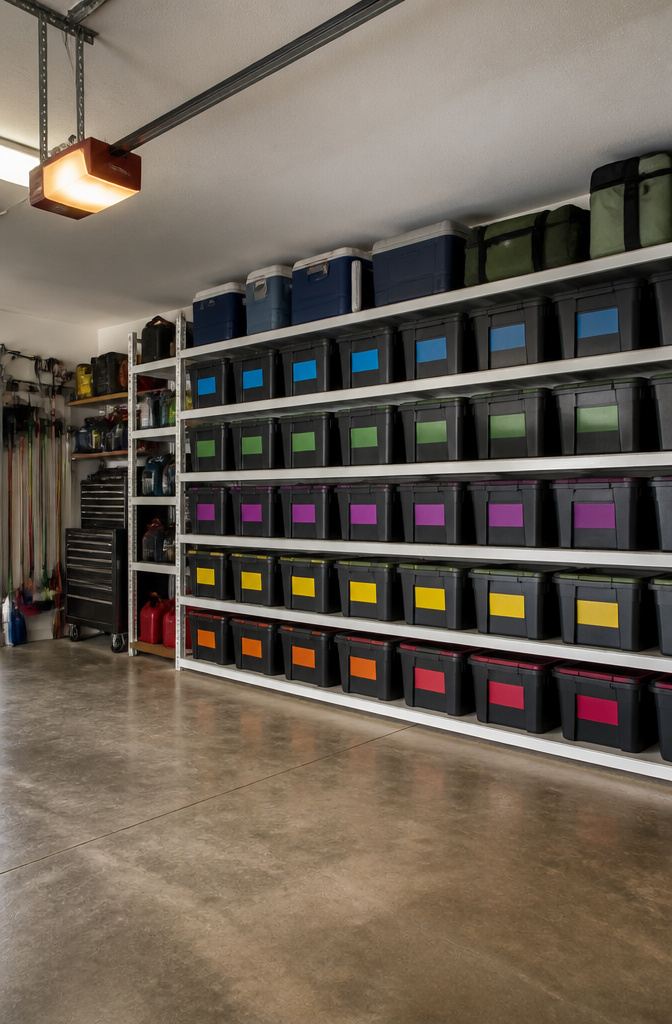
Colored tape on the bin edge beats buying matching bins every time. A roll of electrical tape in four colors costs about six dollars and sticks to anything already sitting on your shelf. I mark red for holiday decorations, blue for camping gear, yellow for automotive, green for garden. The tape lives on the lip where the lid meets the wall, so the color shows even when bins stack.
What goes on the label matters less than you would think. I used to write contents plus the date I stored it, thinking I would rotate stock like a pantry. I never once checked a date. Now I list the contents plain and short: "tent poles + footprint," "jumper cables," "sprinkler heads." If I need to know when something went in, the dust layer tells me enough.

Efficient Storage: Ultrawall metal pegboard keeps tools organized and within reach, minimizing clutter and maximizing efficiency in your garage, craft room, or workshop.

METAL NAILBOARD: Our peg board panels are made of high quality steel with a powder coated finish that is strong, scratch resistant and easy to clean. Each small pegboard has a weight capacity of up to 50 lbs. This is a favorite product for tool organizers, DIY enthusiasts, store owners and office workers

Durable Steel Construction: The garage pegboard is made of heavy-duty steel for superior strength and lasting performance. Its powder-coated finish resists rust and corrosion, making it ideal for garages and other humid areas
10. Zoning by Category
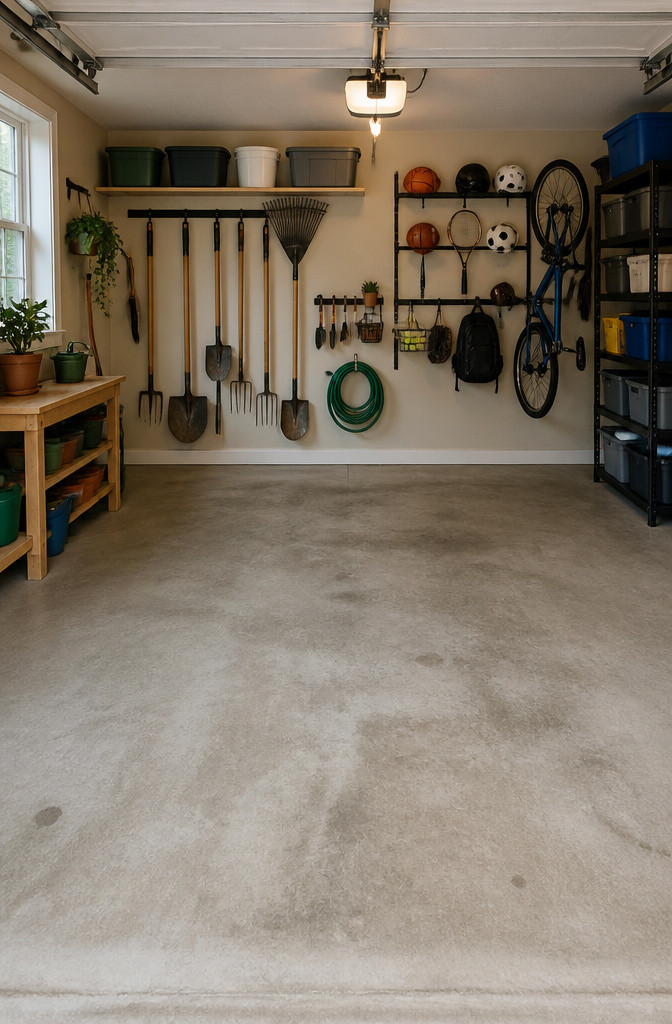
Grouping like items into zones sounds obvious until you see a garage where it never happened. Mine used to be that garage: rakes leaning against bike tires, motor oil on the same shelf as soccer cleats, one flat bike tire sending me from the back corner to the front workbench to the opposite wall for a pump that had migrated behind garden bags. That Saturday cost me forty minutes of walking in circles for a ten-minute repair.
The fix is wall-by-wall ownership rather than shelf-by-shelf cramming. Lawn and garden tools stay on one wall, sports gear on another, automotive on a third. The back wall in my setup now holds cleaning supplies, ladders, and the bin station together, which matters because those are the items I grab in sequence when I come in muddy.
Pegboards help within a zone, not across them. Hooks and small bins keep the hand tools for bike repair in one square yard, so the pump does not drift. Baskets, wire or woven, stack the small stuff that would otherwise scatter: gardening gloves, rollerblade pads, the odd socket that rolls off the bench. Labels on the baskets close the gap between "roughly here" and "exactly here."
The difference is not how much fits. It is how little thinking the next job takes.

【2250LBS Industrial Load Capacity with Reinforced Stability】 Stop worrying about overloading. Engineered with curved-edge reinforced steel uprights and 5mm MDF boards, this heavy duty shelving unit supports up to 2250 lbs total (450 lbs per shelf). Each shelf includes extra support ribs on the back to prevent sagging and maintain structural integrity—perfect for storing toolboxes, automotive parts, multiple water cases, or bulk pantry supplies preventing bending or wobbling.

DIY INSTALLATION: Our heavy-duty garage shelving can be easily installed in various configurations to suit your specific space requirements, providing you with versatile storage solutions. You have the flexibility to choose whether the baskets are interlocked or separate, and whether they hang on the shelf or mounted on a wall. Whether you need storage in your garage, workshop, yard, or garden, our DIY installation offers the ideal solution to meet your needs.

HEAVY-DUTY GARAGE SHELVING: Our 4-Pack wall-mounted shelves provide generous storage, featuring two 1.5'x4' shelves per unit. Built from heavy-duty steel, each shelf holds up to 250 lbs, offering a combined capacity of 1000 lbs. Ideal for garages, warehouses, offices, and beyond, these shelves are designed for durability, stability, and efficient space organization
11. Placement by Frequency of Use
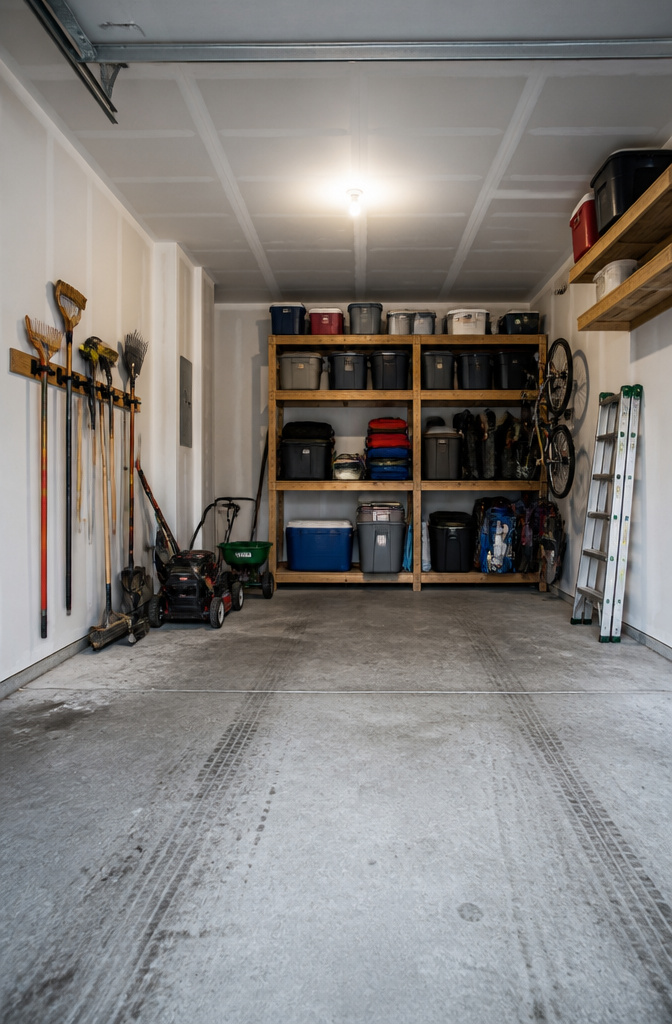
The heaviest thing in my garage is usually the thing I use least, and that mismatch costs time every time I have to shift it. Seasonal gear belongs highest and deepest, up on racks where you need a ladder and back behind the things you touch every week. Daily items sit at eye level and as close to the door as you can manage, because a rake you grab twice a week does not deserve a twenty-step round trip.
Lawn care items are the clearest case for this. Keeping them near the garage door, right where you step out to the yard, turns a chore into something you start without thinking. The grass gets cut sooner, and the tools actually go back where they live.
I learned the hard way with the wheelbarrow. One summer I parked it behind the snowblower, which seemed logical in May when both were idle. By July I had moved that wheelbarrow eleven times to get at other things, and by August I finally reversed their positions. The snowblower now waits in the back corner all year; the wheelbarrow stays within arm’s reach of the door from the moment the ground thaws.
12. Folding Lawn Mowers
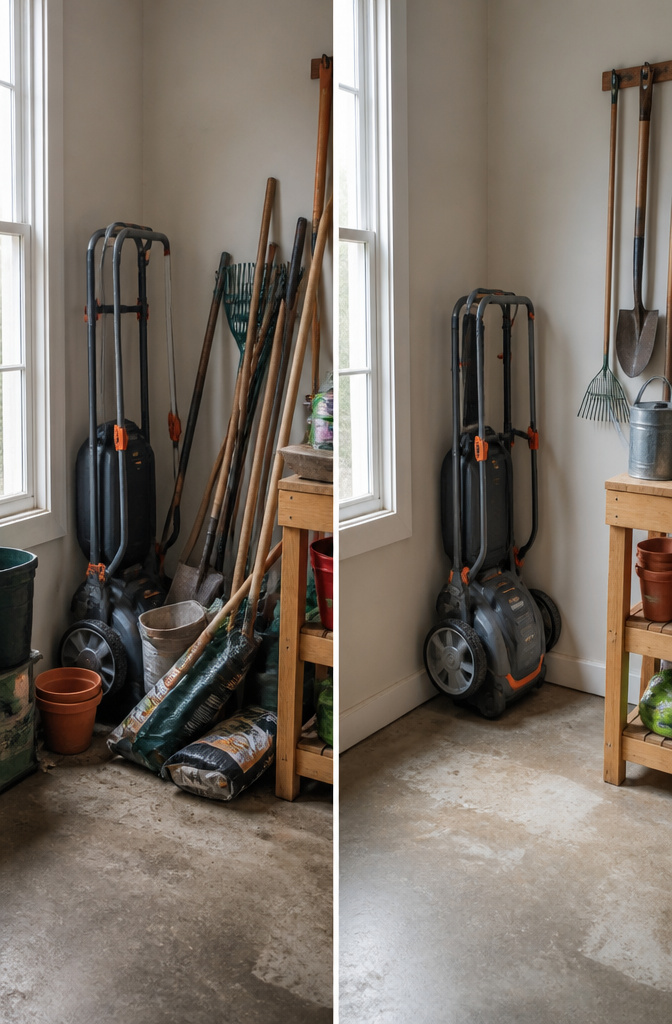
Folding lawn mowers are one of those features that sounds like a gimmick until you watch a neighbor wheel theirs into a corner you would have sworn was too narrow. The handles collapse and the deck tilts upright, turning a machine that normally dominates a wall into something that slots between a shelf and a workbench. I priced one last spring when my old mower finally rusted out, and the folding mechanism added about $80 to the sticker price. That was enough to make me pause. My garage has space, just not good space, and I ended up buying the standard model instead. It lives in the same footprint it always has, handle sticking out into the aisle, and I step around it every time I carry a trash bag to the bins. The neighbor’s vertical setup still looks smarter when I catch it across the fence, but the $80 bought me a spare blade and a gallon of gas, which felt like the more honest use of the money that weekend. If your floor space is genuinely tight, the folding hinge earns itself back in frustration avoided. If you have six inches to spare along a wall, it probably does not.
13. Wheelbarrow Storage

Wheelbarrows eat floor space like almost nothing else in a garage. The tub is wide, the wheel is off-center, and there is no flat side that sits neatly against a wall. I spent an evening measuring out a wall cleat setup, the kind where the lip rests in a bracket and the handles lean back. It would have taken about four feet of uninterrupted wall, and in my garage that meant moving three other things first.
Track systems with heavy hooks can handle the weight, but the wheelbarrow still projects two feet into the room. For a tight space, the math never worked.
I ended up standing mine on end in the corner, wheel up, handles down. The footprint shrank to maybe eighteen inches square. Then one Saturday I bumped it reaching for a ladder, and the whole thing tipped sideways, dumping potting soil I thought I had cleaned out. A single bungee cord, looped around the front lip and anchored to a stud, keeps it planted. No hardware to install, no wall space sacrificed, and the corner does the work the wall could not.
14. Hose Storage
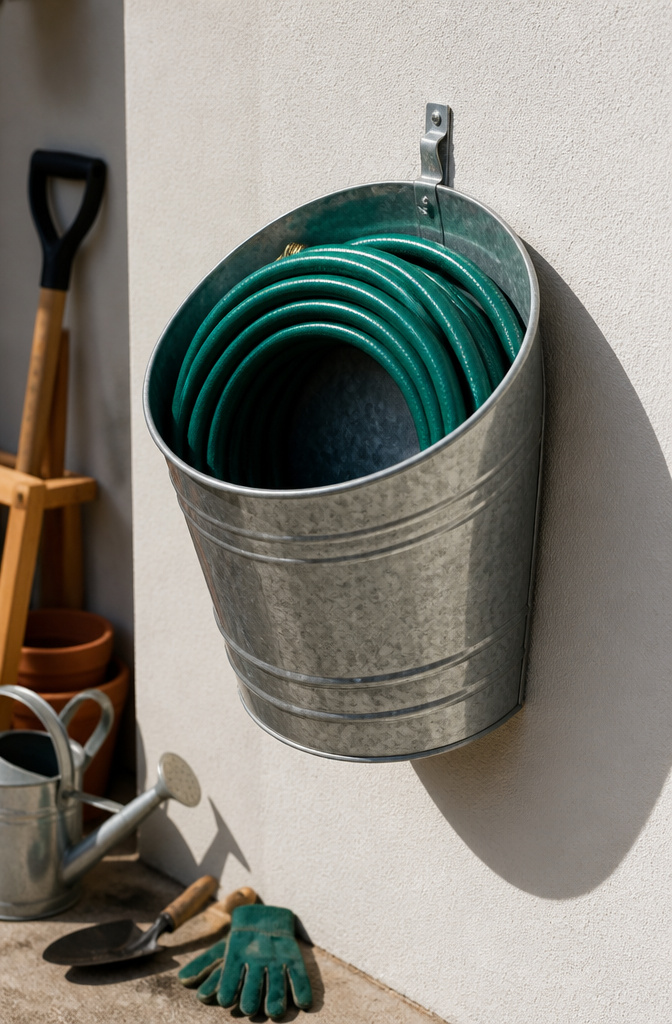
A hose left on the ground turns into a kinked tripping hazard the first time you back over it with the car. Wall-mounted reels fix that, though the cheap plastic one I tried cracked in its second winter and the metal replacement rusted wherever the paint chipped. Fifty feet of half-inch hose is about the max that fits comfortably on a standard wall reel; anything longer and you are fighting the coil every time you rewind.
Manual crank reels cost less and break less, but the automatic rewind sounds appealing until the spring jams with grit from your hands. I have settled on a large metal pail bolted to the wall instead, the hose coiled inside where it stays clean and untangled. No moving parts, no paint to chip, and it holds a seventy-five foot five-eighths hose with room to spare. The pot hides the hose entirely and costs next to nothing if you already have the hardware.
15. Bike Storage
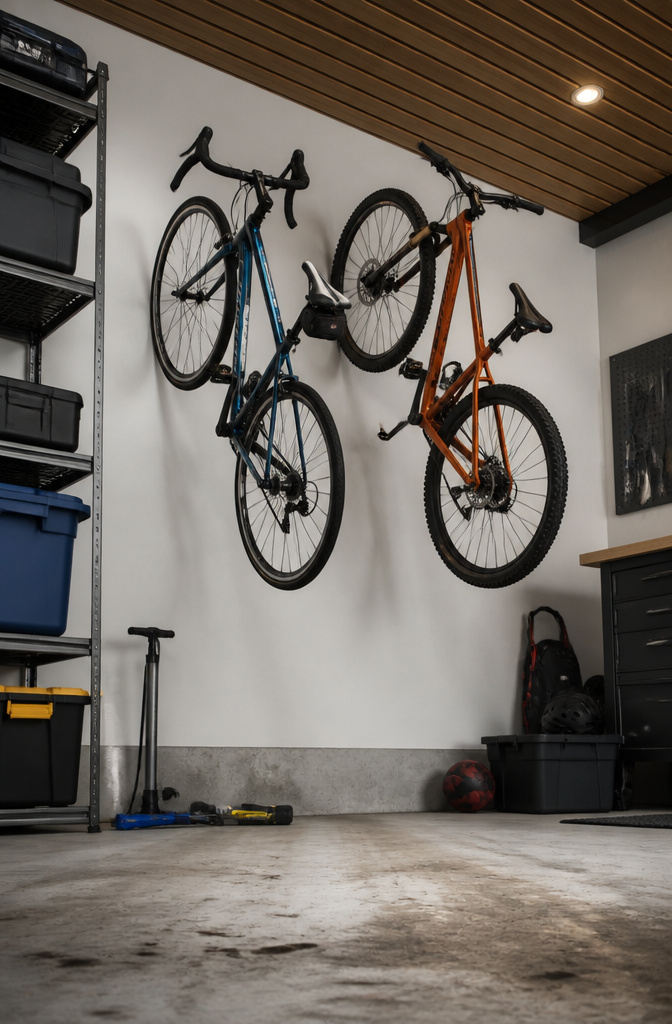
Bikes eat floor space faster than almost anything else in a garage, so vertical storage is usually the first move worth making. Wall hooks are the cheapest entry point, but height is the detail that ruins them. I mounted mine at what looked like a reasonable reach, about chest level, and spent two months turning sideways every time I walked past to avoid the handlebar jutting into the aisle. Raising it another foot fixed the traffic but made lifting the bike overhead a real chore; for a heavier frame, ceiling clearance and your own shoulder height matter more than the packaging suggests.
Ceiling pulley systems get the bike entirely out of the way, though they need a joist to bite into, not just drywall. In my garage the joists run front-to-back, which left one bay with nothing solid where I wanted the mount. I ended up shifting the whole setup one stud over rather than open the ceiling to add blocking. Floor stands keep both wheels down and work when you are renting or do not want to drill, but they still claim a two-by-six footprint that wall storage does not.
16. Drop Zones for Sports Equipment
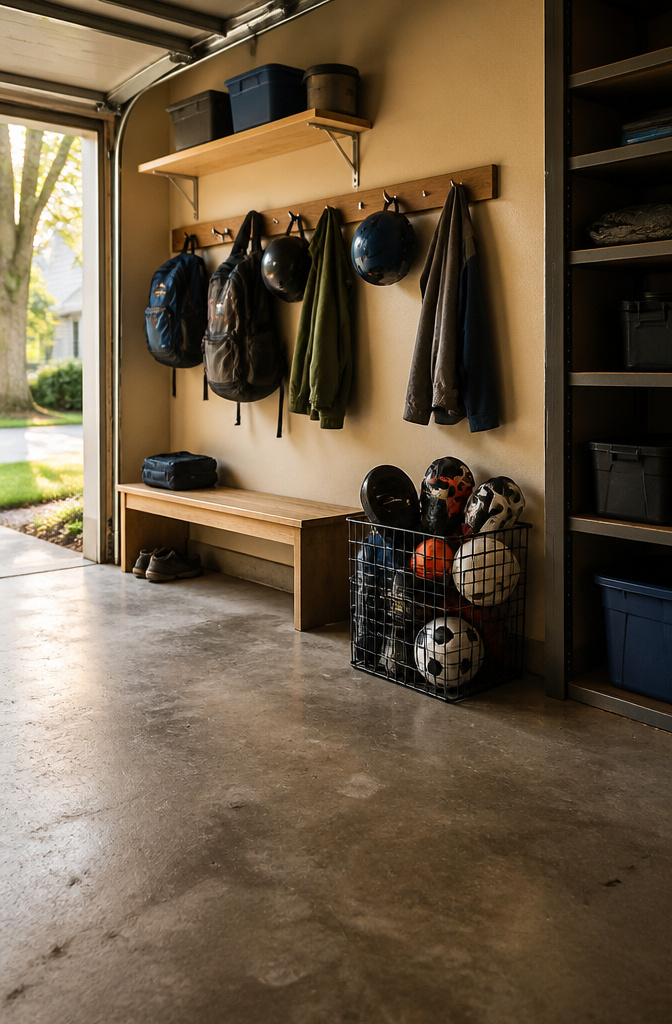
Sports gear needs a single spot where it lands the minute everyone walks through the door, or it ends up on the kitchen table. I tried a milk crate for soccer balls and cleats, but the narrow base tipped every time a kid dropped a helmet on the rim. Next came a lidded bin, thinking the smell would stay contained. The lid stayed open, every time; too many steps for a ten-year-old in a hurry.
What works for us now is an open basket, no lid, wide enough that a bag of bats can sit flat. The source of the smell is still the same, but at least the gear actually lands inside it. Wire, plastic, or woven all do the job; the key is the opening at the top stays open. Labels help if you have multiple baskets, though one per sport usually sorts itself by size.
17. Airing Out Smelly Items
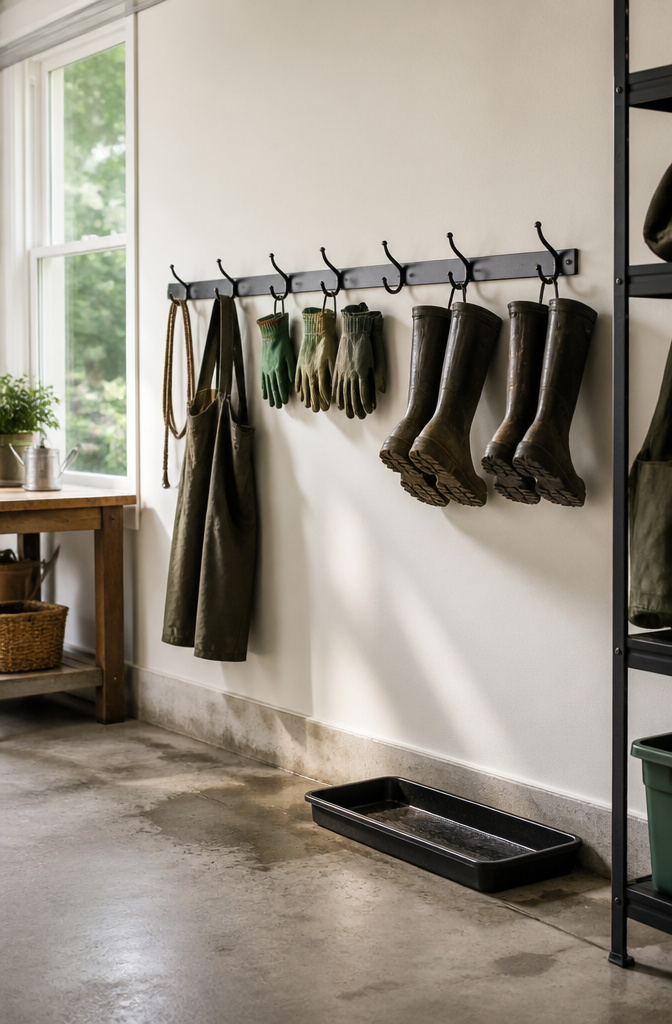
Garden gloves that never quite dry between uses, or work boots that hold onto yesterday’s mud, will keep a garage smelling like a shed no matter how organized the shelves are. A few hooks set at 18 inches high solve this by letting boots hang upside down so air circulates through the shaft and the sole faces out to dry. I learned the hard way that boots drip, and after the first rainstorm soaked the concrete below, I slid a cheap plastic drip tray underneath to catch the runoff. The same height works for helmets and knee pads, though I keep those on a separate hook a foot away so the wet gear doesn’t touch anything fabric. The smell may never fully disappear, but separating the items and giving them airflow beats tossing them in a bin where the odor concentrates and spreads.
18. Shoe Storage
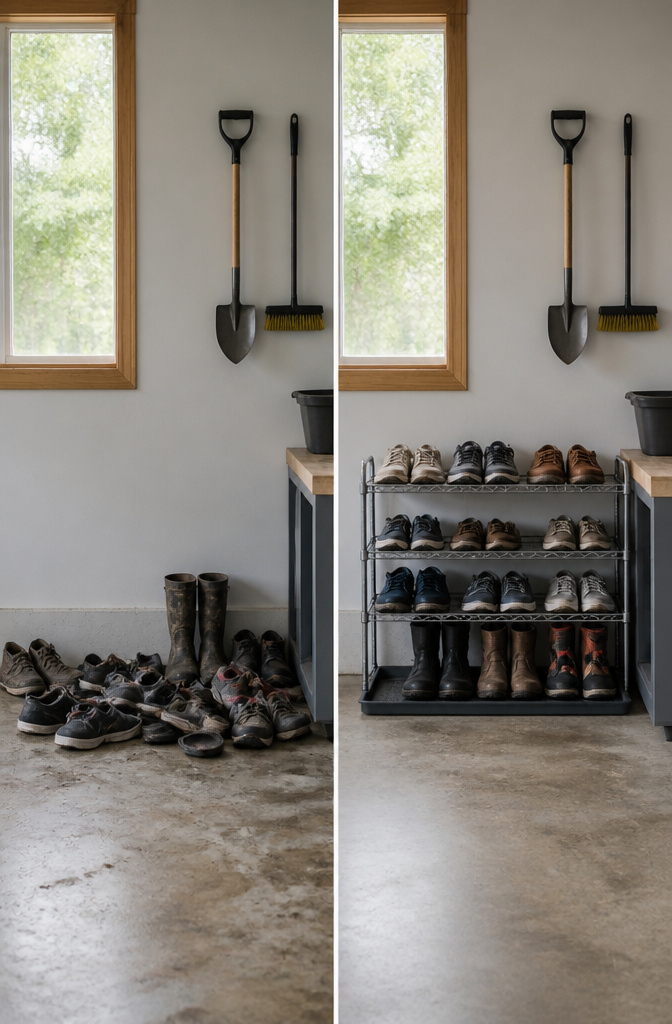
Shoes that live in the garage are dirty by definition. Mud, road salt, and whatever the dog walked through don’t belong in a closed cabinet where they stay damp for days. I learned that the hard way with a wooden shoe cabinet that started smelling like a locker room inside two weeks.
The slatted plastic rack I tried next was better in theory. Dirt and water fell straight through to the concrete, which solved the moisture problem, but the grid spacing only held about six pairs before the rows started overlapping. Sneakers wedged in fine; boots toppled.
What actually works year-round is a boot tray in winter and an open wire shelf the rest of the time. The tray catches melt and grit from four pairs of heavy boots without trapping anything underneath. The wire shelf holds ten to twelve pairs of everyday shoes, enough for two people plus guests, and a quick hose-off cleans the whole setup. Nothing stays wet overnight, and nothing needs a door.
19. Open Baskets for Daily Items
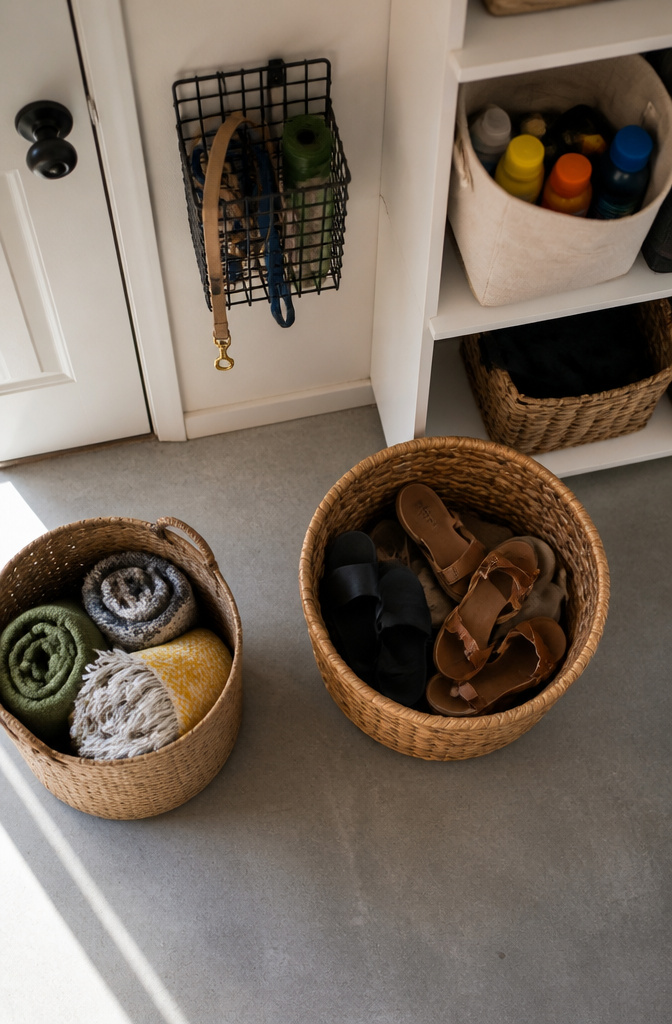
Lids are the enemy of daily habits. Every extra motion, every snap or hinge, adds friction to the moment you want to put something away, and friction is what turns a thirty-second task into a pile on the workbench. The basket without a lid wins for anything you touch more than twice a week.
I learned this with two baskets mounted by the garage door. The wire one, an IKEA ALGOT mesh basket screwed to a stud, holds dog leashes and the roll of waste bags. It stays rigid under maybe three pounds of nylon and plastic, and the open front means I can hook a leash back in without looking. The fabric basket I hung beside it, meant for the same kind of light daily load, started sagging within a month once I added sunscreen bottles and a small bug-spray can. Fabric softens; wire does not, and the weight limit where each type fails is visible in the droop long before anything tears.
Wire baskets keep their shape to roughly the load their mounting hardware can bear, which in my case is whatever a single drywall screw into a stud will take before it levers out. Fabric ones lose structure far earlier, usually between two and four pounds depending on weave and whether the contents sit in one corner. For anything heavier than a leash and a tube of SPF, the wire version is the safer bet, and for anything you need daily, neither gets a lid.
20. Narrow Bins for Garbage Bags
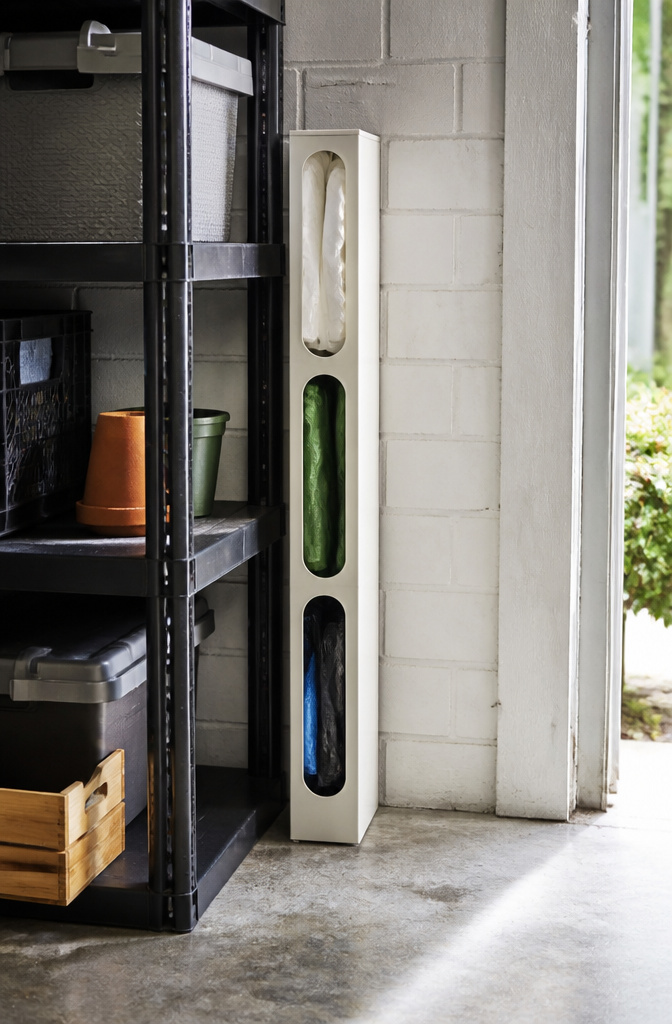
A six-inch-wide bin wedged between the shelving unit and the wall turned out to be the exact right shape for garbage bag rolls. I had tried a wall-mounted paper towel rack first, the kind you slide the roll onto, and it did keep bags from tangling. The problem showed up when I bought a different brand of recycling bags that came on a slightly thicker core. The roll wobbled, then jammed. The narrow bin holds standard garbage bags, the thicker recycling rolls, and even the small compost liners I keep for yard clippings, all standing upright so the next bag feeds itself over the rim. No mounting, no compatibility guessing.
Frequently Asked Questions
What are some garage storage ideas?
Wall-mounted shelving, track systems with adjustable hooks, heavy-duty wall hooks for bulky items, freestanding metal shelving units, tool organization kits with drawers and dividers, pegboards for small items, folding workbenches, opaque bins for hiding clutter, and open baskets for daily items all work well. The best approach depends on what you own and how often you use it. Start by measuring your wall studs before buying anything wall-mounted, since stud spacing in older garages often differs from modern standards.
How can I maximize my garage space?
Use vertical storage everywhere you can. Wall-mounted shelving turns empty wall space above workbenches into usable storage without eating floor area. Track systems let you hang rakes, shovels, and extension cords that refuse to sit on a shelf. For the bulkiest items like ladders and bikes, wall hooks reclaim floor space entirely. Folding workbenches save the permanent footprint a fixed bench blocks, and standing a wheelbarrow on end in a corner shrinks its footprint to about eighteen inches square.
What is the best way to organize tools in the garage?
A dedicated tool organization kit with drawers and dividers beats a basic toolbox once you own more than one of anything. Look for specific geometry that matches your tools: long skinny slots for screwdrivers, grids for socket sets, and deep wells for drills with their chargers. Plan on losing one drawer entirely to power tools and their accessories, since they need more clearance than marketing photos suggest. For hand tools you reach for constantly, a pegboard within arm’s reach keeps them visible and exactly where you left them.