Shoe storage in 2026 runs from a $25 bamboo rolling cart to custom built-ins you anchor to the wall yourself. What actually decides your pick is whether you can drill into that wall, and how many pairs you rotate through a single season. The IKEA Bissa cabinet hides everything for $50 but needs that anchor; without it, the unit tips forward when you pull the drawers open.
1. Shoe Baskets
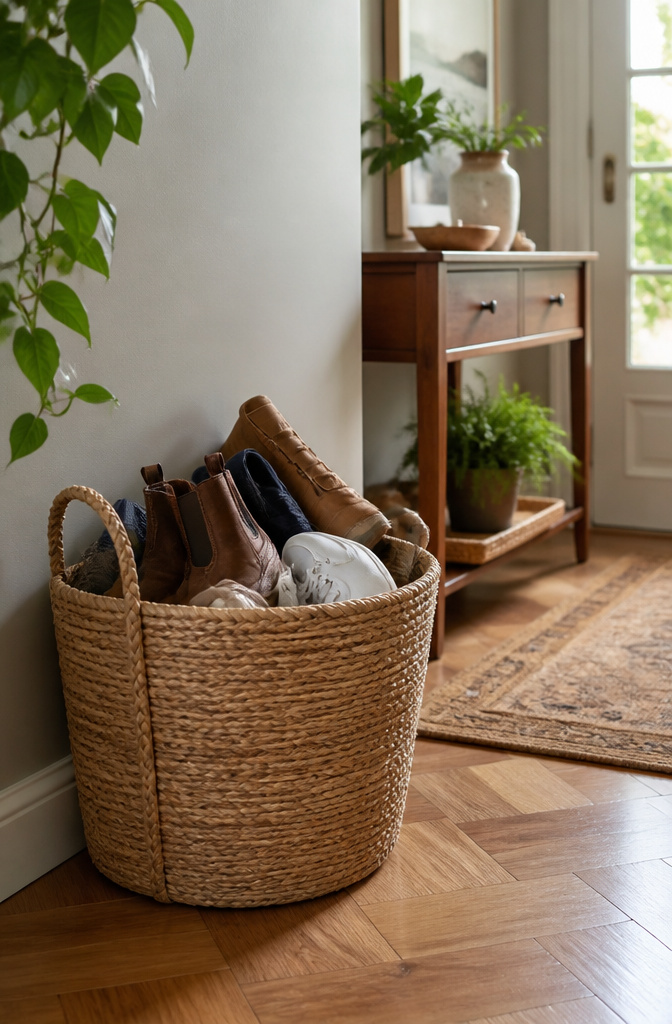
A braided handle basket with a metal framework inside is the kind of piece that holds its shape after months of boots and sneakers getting tossed in. The metal frame is the detail that separates a basket that slumps from one that keeps working. I like it for entryways where there is no closet to hide anything, because the weave itself becomes the decor.
Sources list fourteen basket styles, from seagrass lidded sets to herringbone cotton rope, but none give exact dimensions for shoe storage specifically. That gap matters more than it sounds. A basket too shallow sends shoes spilling; one too wide eats floor space you do not have. My rule of thumb is to bring a pair of your tallest boots to the store, or keep the tape measure out when you order online.
The two-tier rolling basket under twelve inches wide, mentioned elsewhere for laundry, works for shoes in the same spirit. Wheels let you roll it into a closet when company comes. Both options share the same limit: they corral, they do not seal out dust. If your entryway is dry and your rotation small, that tradeoff is fine. If you are storing leather seasons at a time, skip baskets entirely.
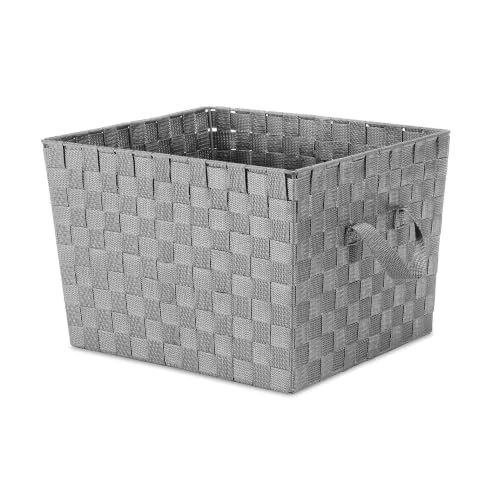
STURDY METAL FRAME & DURABLE WOVEN MATERIAL: Built with a heavy-duty internal metal wire frame, this storage basket offers exceptional structural integrity that won't collapse or lose shape even when fully loaded. The premium woven strap material is wear-resistant, long-lasting, and tightly braided to ensure an elegant texture that complements any home decor
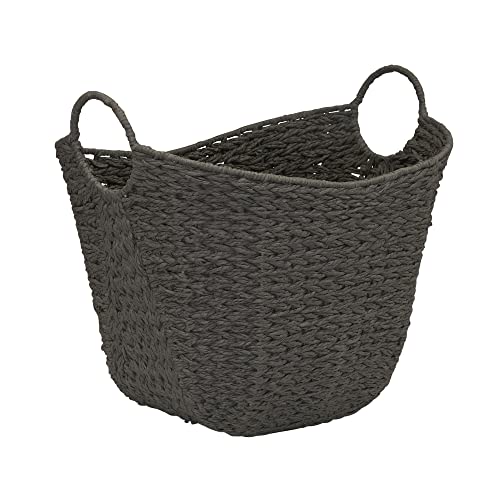
Handwoven Paper Rope Storage Basket with Metal Frame and Handles, Gray
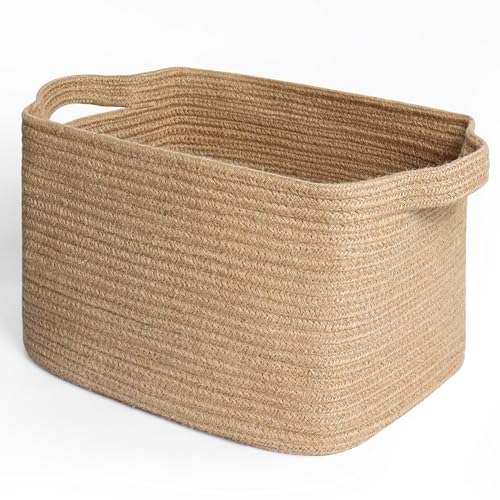
Ideal Size for Shelves and Floors: Measuring 15"x11"x9", this medium storage basket fits neatly on shelves, under benches, or in closets. Great for holding books, blankets, stuffed animals, towels, shoes, and other household essentials.
2. Storage Ottomans

A storage ottoman tucked under an entryway console handles two jobs at once: somewhere to sit while you lace up, and a hidden compartment for the shoes you just kicked off. The lift-off top keeps the clutter out of sight, which matters more than you’d think when the entry is the first thing anyone sees.
The shape is worth some attention. Upholstered cubes slide neatly into rectangular gaps and stack a surprising amount inside, while round ottomans soften the lines of a narrow hall. Neither one demands its own footprint; both disappear under a console until you need them.
I looked for a standard size to recommend and came up empty. Manufacturers don’t publish a single depth or height that fits most entryways, so the move is to measure your console’s clearance and shop with those numbers in hand. A cube that catches your ankle every morning defeats the purpose.
Baskets underneath work too, and they cost less, but they don’t give you a place to sit. For a small entry that has to do everything at once, the ottoman wins because it solves the seating problem without adding a second piece of furniture.

Shoe Storage Bench with Lift Top Storage: When you lift the top of the bench, the hidden storage is spacious enough to store umbrellas, soft hats, small shoulder bags, purses, keys, and other assorted items. It can also hold a nice throw blanket or keep socks easily accessible. This storage bench is the perfect addition to any entryway, providing both a comfortable seat and a stylish solution for shoe storage.


Shoe Storage Bench with Lift Top Storage: When you lift the top of the bench, the hidden storage is spacious enough to store umbrellas, soft hats, small shoulder bags, purses, keys, and other assorted items. It can also hold a nice throw blanket or keep socks easily accessible. This storage bench is the perfect addition to any entryway, providing both a comfortable seat and a stylish solution for shoe storage.
3. Entryway Shoe Storage Bench

An entryway bench that actually stores shoes solves two morning problems at once: somewhere to sit while you wrestle off boots, and somewhere those boots disappear afterward. The flip-top style gives the most room; one hinged seat opens to fit nine pairs lined up neatly, or more if you just pile them in. The seat stays open on its own and closes slowly, which matters more than it sounds when you’re balancing on one foot. For tighter spaces, a smaller bench with a storage drawer holds a few pairs without dominating the wall. Both come in enough colors, white through teal to dark blue, that you are not stuck with one look. A storage bench with an open-front shelf underneath keeps everyday shoes visible but off the floor, and some use removable bins if you prefer to sort by season or family member. The tradeoff is straightforward: more concealed storage means lifting a lid every morning, while open shelves mean faster grab-and-go and more dust to wipe.

Entryway Bench with Lift Top Storage: When you lift the top of the bench, the storage is spacious enough to store umbrellas, soft hats, small shoulder bags, purses, keys, and other assorted items. This storage bench is also a perfect addition to your entry area. And it holds the perfect amount of shoes and is sturdy enough to sit down and tie their shoes before going out.

Space-Saving Shoe Organizer Bench: Our entryway shoe bench with a size of 32.3"L x 12.4"W x 18.3"H takes up very little space, but it can perfectly organize your messy corridor. The flip-open storage box and adjustable shelf provide ample space for your shoes, hats, gloves, and other items
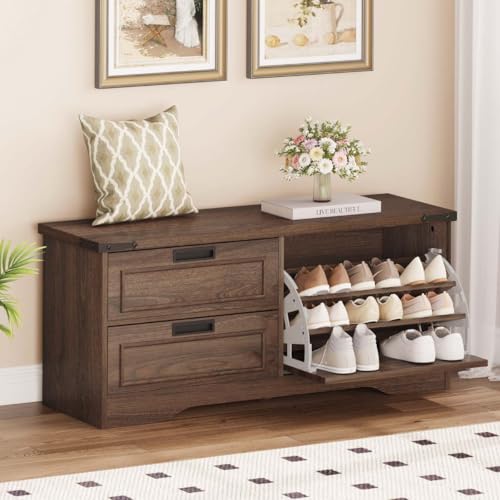
[Ample Storage Space & Multipurpose]: This storage bench for entryway designed with an adjustable flip door and 2 removable drawers, provides ample storage space while hiding clutter and keeping the room organized and neat. The adjustable shelf of the flip drawer allow you to easily store shoes of various sizes and the removable drawers can be used as drawers or storage shelves according to your needs
4. Hall Tree

A hall tree does three jobs at once, which is why it tends to win in entryways that have no closet. Hooks catch coats, a mirror lets you check yourself on the way out, and the bench or cubbies below handle the shoes. The white hall tree that keeps coming up in searches also runs in black, navy, and gray, so the finish is not the deciding factor. What matters more is whether the lower storage is open cubbies you can drop boots into, or drawers that hide the pile but need pulling open with an armful of groceries.
The floor-to-ceiling builds I have bookmarked run about 90 inches tall and angle the front shelf so small shoes do not slide out. That design is plywood and boards, intermediate skill, saw and drill. For most renters, the ready-made route makes more sense: a hall tree with shelving above the mirror is where you stash the gloves and hats that otherwise end up on the radiator. The mistake I see most is buying one too deep for the hallway. Measure your traffic lane before you order; 15 inches of depth is workable, 20 starts a shoulder brush every morning.

No-Drill Adhesive Mount: Strong adhesive strips stick to smooth surfaces — no tools, no holes. Clean wall, peel, press, wait 24 hours, hang. Damage-free removal.

WALL MOUNT SHOE STORAGE ORGANIZER: This 6-pack over-the-door shoe organizer is compact and slim, taking up minimal space while keeping shoes neatly stored to reduce clutter and make your home look tidy and stylish. IN THE BOX: The package includes 6 ABS plastic shoe racks, 12 sticky hanging strips, 12 sets of screws & anchors, 1 wrench, and 1 installation guide.(We’ve designed this rack with all kinds of shoes in mind, but with so many sizes and styles out there, it’s tough to please every single pair. We know you get it, and we’ll always make sure you’re fully taken care of if it doesn’t suit your shoes.)

【Space-Saving 4-Pack】Each wall-mounted shoe rack measures 12.5” x 5”, and this set includes 4 racks total. Designed to hold 1 pair of shoes per rack, they transform empty wall space into efficient storage—perfect for entryways, closets, or bedrooms to declutter floors without sacrificing style.
5. 2-Tier Rolling Baskets

Rolling basket systems with two tiers give you shoe storage that moves where you need it, not where your floor plan demands. A narrow unit under twelve inches wide fits tight entryways and can roll straight into a closet when company arrives, then back out for morning grab-and-go. The casters matter more than the frame material here; look for ones that lock so the cart stays put on tile or wood.
The Oceanstar 2-Tier Bamboo Shoe Rack lands at $25 from Walmart or Home Depot, light enough to shift around without emptying it first.
"This model is lighter and easier to move around than our top pick, and it’s nearly as easy to assemble."
That portability comes with a trade. The shelves do not adjust, and the rack only gains more capacity by stacking vertically with a second unit. For a weekend project under $50, though, two of these stacked still cost less than most fixed benches and leave when your lease does.
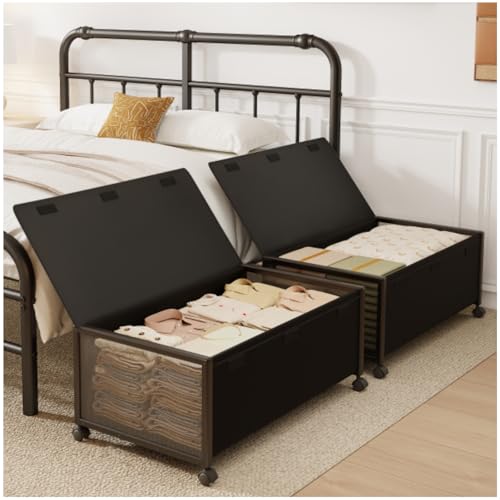
LARGE UNDER BED STORAGE:Fokyfok under the bed storage offers 2 times the capacity of a regular under the bed storage containers,allowing you to make good use of the space,our under the bed storage with wheels can be used as under crib storage,college dorm under bed storage drawers,shoe rack under the bed,With its generous size,you can store and organize a wide range of items,from clothing and bedding to shoes gear and seasonal decorations

👍【Multifunctional Storage】: This 2 tier rolling storage cart can be used anywhere you want such as office, bathroom, kitchen, art studio, salon, garden, garages, laundry rooms hobby and craft areas and so on. It can be used as a tools cart, organization rack, sofa or bed side end table, nightstand, book cart, bedroom/living room storage cart and so on.

Durable: Made of metal material for forming a sturdy frame
6. Shoe Storage Cabinet

An enclosed shoe cabinet keeps the visual clutter to zero, which matters when your entryway opens straight into your living room. The IKEA Bissa runs about $50 and sits slim enough for a narrow hallway, though you will need to anchor it to the wall; without that step, the unit tips forward when you pull the compartments open. Shoes also shift inside when the drawers move, so expect a little rearranging after busy mornings.
A cabinet that reads as ordinary furniture costs more, but the tradeoff is real if you rent and want something that does not announce itself as storage. The Bissa wastes less wall thickness than pricier cabinets I have seen compared, and assembly is far quicker, yet it still holds fewer pairs than a freestanding rack of similar width. For a tight space where every inch counts, the shallow footprint wins. For a household with more than a few pairs per person, the math gets tight fast.
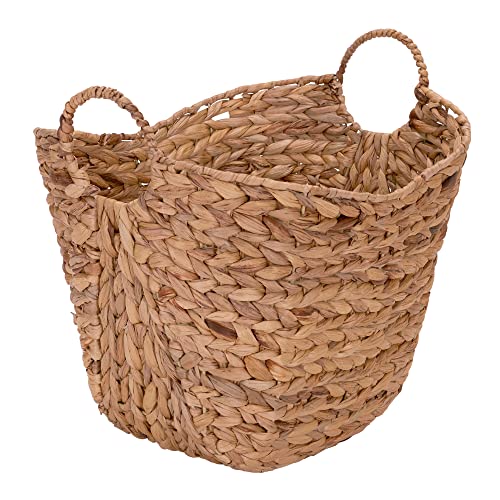
Tall woven basket handmade from water hyacinth wicker

MULTI‑PURPOSE STORAGE: Perfect for organizing blankets, laundry, toys, or even as a decorative plant holder

MATERIALS: Hand-woven imitation rattan weave basket, metal frame over polypropylene plastic wicker, very sturdy and durable, surface is dampproof and waterproof, set of 2, brown color, better for storage and organization. Natural texture is comfortable and textured, perfect as decorations in your home.
7. Over the Door Shoe Storage

The back of a door is dead space until it isn’t. An over-the-door organizer turns that vertical real estate into storage for a full closet’s worth of shoes without touching the floor or the walls, which matters when you can’t drill into either.
The Whitmor 36-Pair Over-the-Door Shoe Rack runs $54 and holds more than its name suggests because the shelves adjust to fit different sizes. Rubber-lined hooks grip better than the usual hardware, so the rack stays put when you grab a pair in a hurry. The catch is the same one every door rack shares: the bulk can keep the door from closing flush, and passing through becomes a two-step move. In a closet you open twice a day, that friction adds up. For a guest closet or a back hallway door you use less, the trade is easier to swallow.

Generous Divided Storage : Lift the lid of this fluted storage bench to reveal a large separated inner compartment. It can neatly store blankets, bed linens, pillows, shoes, toys and daily sundries, helping you organize your bedroom, hallway and mudroom efficiently.

LARGE STORAGE: This 47.2"L x 13.7"W x 17.7" H shoe ottoman bench features hidden drawers, a four-door structure , which can assist you in organizing and storing your items. The hidden drawer beneath the seat can be used to store small items such as socks, keys. The double-door cabinet in the four-compartment unit features a detachable and adjustable height divider, provides ample storage space for different types of shoes, clothes, toys with the single-door cabinet. As a shoe storage bench, this shoe bench can accommodate 12 to 14 pairs of shoes.

Extra Long Entryway Bench with Lift Top Storage: When you lift the top of the bench, you'll find spacious storage that can accommodate umbrellas, soft hats, small shoulder bags, purses, keys, and other assorted items. This storage bench is an ideal addition to your entryway. It provides ample space for shoes and is sturdy enough for you to sit down and tie your shoes before heading out.
8. Vertical Shoe Racks

Floor space in a closet or entryway disappears faster than most people expect, and shoes are usually the first thing to overflow. A vertical rack stacks pairs upward instead of letting them colonize the floor in a spreading row. The Seville Classics 3-Tier Resin Slatted Shoe Rack is one of the few that actually earns its footprint: three shelves where most budget racks stop at two, holding 9 to 12 pairs depending on shoe size. The resin slats keep toddler sneakers and men’s size 12s from sliding through, and you can remove or reposition a shelf when boots refuse to fit. It runs about $43 at Amazon or Home Depot, $50 at Walmart, and it is heavy to move once assembled. The wobble-free frame is a real plus on carpet or uneven tile, though the utilitarian look is something I would tuck against a wall rather than leave exposed in an open entryway. For renters who cannot build in, the vertical stack buys back walking space without asking for a single screw into the landlord’s drywall.

【Shoe Storage Cabinet with Hidden Storage】Bench with storage features two flip drawers and a soft, cushioned seat. With its rustic modern farmhouse design and vintage brown finish, Shoe storage bench seamlessly complements any décor. Perfect for entryways, hallways, living rooms, or porches, it keeps your home tidy, adds a touch of elegance, and saves space.

【Exceptional Sturdiness】Crafted from high-quality FSC-Certified bamboo, the PETKABOO shoe rack bench supports up to 550LBS (250KG), safely holding adults for daily use. Its sturdy, waterproof, and moisture-proof bamboo construction ensures long-lasting durability and makes it a reliable, eco-friendly choice for your entryway.

Ample Storage Space: Features 3 tiers to store up to 9-10 pairs of shoes, keeping your entryway tidy and clutter-free. The flip-open storage box provides hidden space for keys, gloves, scarves, or other small essentials. The adjustable shelf allows you to customize storage for taller boots, bags, or other items.
9. Built-In Entry Storage
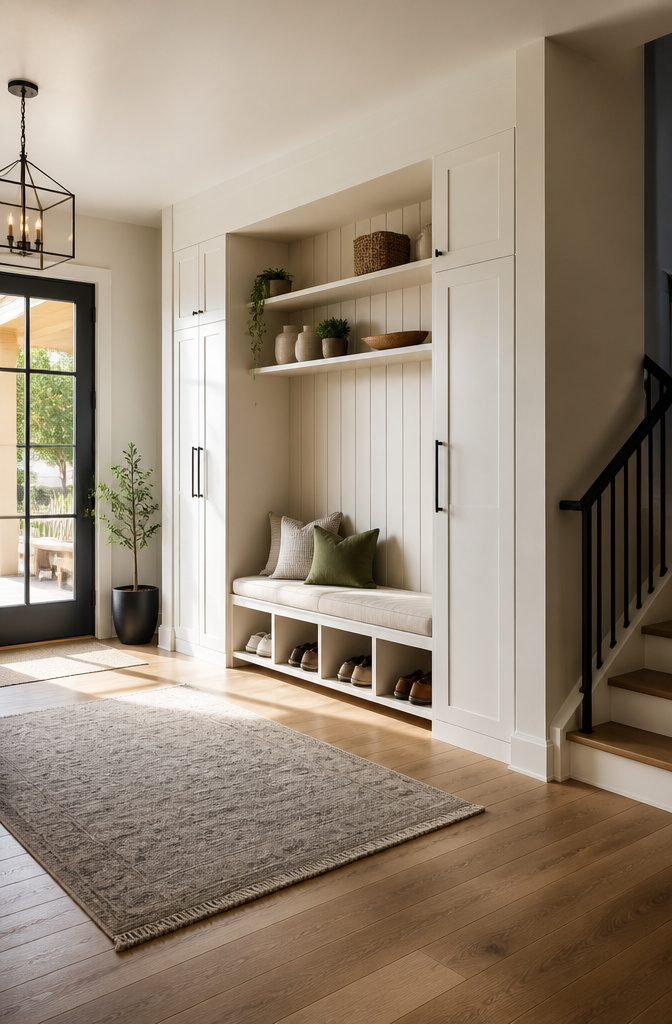
Built-in entry storage only makes sense if you actually come in through the front door every day. In my last rental, the garage won, so the mudroom bench I planned never got built. For anyone who does use their entryway, a bench with cubbies underneath keeps shoes off the floor and gives you a place to sit while you untie laces. Custom millwork runs the price up fast, but an IKEA-hacked system using their standard cabinets can hit the same look for a fraction of the cost. The trick is anchoring everything to the wall so it does not tip forward when you lean on it, a step half the Pinterest tutorials skip. Shelves above the bench handle the pairs you grab daily; deeper cabinets to the side swallow the boots you only wear when it snows. If your entryway is narrow, keep the bench shallow, around 12 inches deep, so the walking lane stays clear. I would rather have a slim built-in that fits than a grand one I have to squeeze past.

Space-Saving:Hangs vertically on doors or walls, freeing up floor space. Perfect for apartments, dorms, and any area where space is at a premium

WALL MOUNT SHOE STORAGE ORGANIZER: This 5-pack over-the-door shoe organizer is compact and slim, taking up minimal space while keeping shoes neatly stored to reduce clutter and make your home look tidy and stylish. IN THE BOX: The package includes 5 ABS plastic shoe racks, 10 sticky hanging strips, 10 sets of screws & anchors, 1 wrench, and 1 installation guide.

Premium Quality: Crafted from top-notch space aluminum, our closet organizer hooks guarantee long-lasting use. The sturdy material withstands daily wear and tear, ensuring your storage solutions remain intact.
10. Under-Bed Storage

The space beneath a bed is usually dead real estate, but a low rolling bin or flat container turns it into seasonal shoe storage that stays accessible without cluttering the floor. Pull-out drawers and plastic bins with wheels slide out for quick access, which matters when you are rotating summer sandals for winter boots and do not want to unstack anything. In a small bedroom, this keeps the footprint off the walls and out of the closet entirely.
A 2-tier rolling basket under twelve inches wide, originally meant for laundry, works here too. It rolls in and out on casters and holds roughly the same count as a large flip-top bench, so the pair you wear weekly can live at the front and the off-season pair at the back. The trick is measuring your bed frame clearance before buying; a bin that catches on the slats becomes a hassle you stop using.

LARGE UNDER BED STORAGE:Fokyfok under the bed storage offers 2 times the capacity of a regular under the bed storage containers,allowing you to make good use of the space,our under the bed storage with wheels can be used as under crib storage,college dorm under bed storage drawers,shoe rack under the bed,With its generous size,you can store and organize a wide range of items,from clothing and bedding to shoes gear and seasonal decorations

【Space Saving】Under bed shoe storage dimensions: 29.6*26.8*6.3inch(with wheels) ,under-bed height > 6.7inch,maximize unused space by placing it It can be placed under bed, sofa, table, and closets Underbed shoe storage with wheels is a Good choice for small apartment or tiny homes.

Effortless Mobility with 360°Swivel Wheels: This under-bed shoe organizer features six universal wheels with 360° swivel casters for smooth, quiet movement in any direction. Wheels are lockable, offering both flexibility and stability when you need the shoe box to stay in place. Whether you're sliding it under the bed or rolling it across the room, this shoe storage solution makes it easy to access your footwear anytime.
11. Wall-Mounted Storage
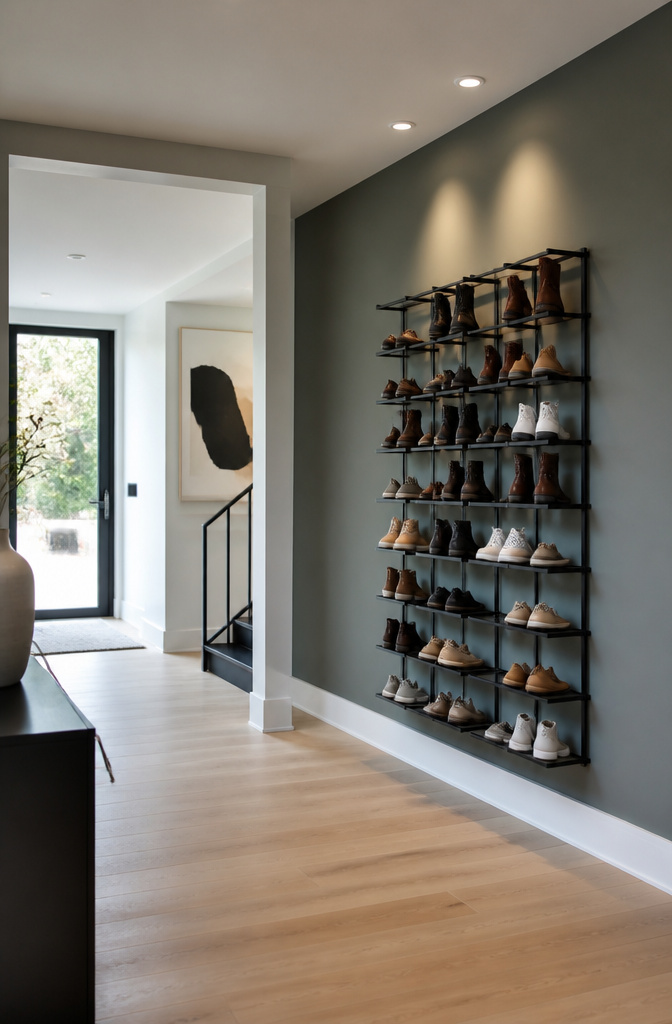
Wall-mounted rails or a slim vertical bin can clear an entire row of shoes off the floor without eating into the walking path. A 46-inch-wide shoe bin holds pairs upright against the wall, which matters more than it sounds in a narrow hall where every inch of floor counts. Floating shelves work for heels or sneakers you actually want to look at; pegboard or simple hooks handle the daily pairs you just need out from underfoot. The tradeoff is visibility versus dust. Open rails mean you will wipe the shoes more often, but you also grab them faster on the way out. Cabinets or lidded bins mounted flush to the wall hide the clutter entirely and give you a surface on top for keys or mail. Rented walls make some renters nervous, though a rail system with a narrow footprint and a few drywall anchors is easier to patch later than a full cabinet. For a weekend project, the vertical bin wins on speed: one piece, one wall, done by Sunday afternoon.
12. Compact Shoe Cabinets

A slim-profile shoe cabinet buys back floor space standard models eat up. The IKEA Bissa runs about $50, hides shoes behind a shallow front, and wastes less depth on thick cabinet walls than the deeper cabinets it gets compared to. That matters when your entryway is a hallway wall and not a mudroom.
The tradeoff shows up fast. Tilt-out drawers shift shoes when they open and close, and the whole unit tips forward unless you anchor it to the wall. Assembly is easier than most, but it still stores fewer pairs than freestanding racks of similar width. For renters, the wall anchor is the sticking point: a drywall screw leaves a hole, and a tension-based fix rarely holds something this top-heavy.
Shallow cabinets with vertical pull-outs do exist in slimmer footprints, though prices climb past the bargain tier. The finished-wood look blends better with actual furniture, which helps when the cabinet sits in sight of your living room. Top surface space is usable for keys or mail, a small detail that turns a single-purpose box into a real drop zone.
If your shoes number more than six or seven pairs, these cabinets fill fast. The math works for a one-person entry or a couple who rotates seasons elsewhere. For a family, the cabinet becomes a filter for daily pairs, not the whole collection.
13. Stackable Shoe Bins

Stackable shoe bins turn whatever vertical space you have into a column of storage, and the drop-front variety keeps you from unstacking everything to reach the pair on the bottom. The Container Store has sold these since 2008, and their original Drop-Front boxes now sit alongside the Everything Organizer line. Both are built to lock together so a full wall of them stays stable.
Clear or mesh sides help, but the drop-front flap matters more for daily use because you can spot the shoe and grab it without lifting three bins off the top. I have watched friends abandon perfectly good clear boxes after six months because the unstacking chore wore them down. If your closet floor is the only open space, a short stack under hanging clothes still works; the bin height just has to clear the hemline.
14. Hidden Shoe Drawers

Pull-out drawers tucked into stair risers or the toe-kick of entry furniture keep shoes completely out of sight but within arm’s reach, which is the part that sold me after years of baskets that always looked like baskets. The stair version turns the hollow wedge under each step into a shallow drawer on full-extension slides; a standard set of stairs can swallow a dozen pairs without changing how the hallway looks at all. For entry consoles or hall trees, the same idea lives in the baseboard-height drawer you would swear was trim if the pulls were recessed. What stopped me from building a set myself was the slide hardware: cheap runners bind once the drawer fills with leather soles, and replacing them means dismantling the riser face. A designer who does these regularly specs 100-pound-rated slides minimum, which is where the consultation fee starts to earn itself back. The hall tree route is simpler for renters, since a freestanding piece with a hidden lower drawer moves with you and needs no structural surgery. White, black, navy, and gray finishes seem to be the ones that actually ship, so matching existing trim is doable if you plan for it.
15. Rolling Shoe Cart

Most rolling shoe carts never get mentioned in the usual roundups, which is odd because they solve a problem fixed racks can’t touch. A cart on casters lets you roll the whole collection to a full-length mirror, choose an outfit, then wheel it back into a closet or corner where it lives out of sight.
The versions worth looking at range from open-tier shelves to enclosed racks with mesh or plastic liners. One expandable steel frame holds up to twenty-four pairs across two tiers and folds down when you don’t need it, which matters if you rotate sandals in for summer and boots out. Widths under twelve inches exist too, narrow enough to slip into an entry closet and roll out only when you’re grabbing shoes.
What convinced me, reading through the options, is that the same cart can serve an entryway in November and a bedroom in June. Fixed storage locks you into one wall. A rolling cart follows the season, or the roommate situation, or the fact that your lease ends in eight months and the next place has no coat closet at all.
Small-Space Strategies That Actually Work

Vertical space is the first place to look when square footage is tight, but the trick is knowing when it stops being useful. A ladder-style rack leaned against the wall eats zero closet depth and keeps pairs visible, yet the top tiers end up holding boots you wore once or shoes you forgot you owned. I would rather see someone stack upward only to the height they actually reach daily, then treat everything above as overflow storage for out-of-season pairs.
Under-bed organizers with pull-out drawers or wheeled bins slide out fast and hide completely, which makes them ideal for small bedrooms where a rack would become a second piece of furniture to navigate around. The catch is airflow: shoes need to go in dry or they will sit in their own humidity for weeks. I would not store leather or anything I planned to wear tomorrow in a sealed plastic bin under the mattress.
Over-the-door racks, like the Whitmor 36-pair model with its configurable shelves and rubber-lined hooks, turn the back of a door into storage that costs no floor space at all. The tradeoff is the door itself: you may not be able to shut it properly once the rack is loaded, and a door you use often becomes annoying to open past a row of sneakers. That makes this option best for a guest closet or a bedroom door that stays open anyway, not the main bathroom or the entryway you pass through twenty times a day.
The real small-space strategy is combining two of these rather than pushing one to its limit. Vertical racks handle daily rotation, under-bed storage swallows the overflow, and the back of a door catches what you grab on the way out, provided that door is not one you need to close.
What I Learned About Cost and Quality

The IKEA Bissa runs $50 for a slim cabinet that hides shoes behind a door, though the tradeoff is real: it holds fewer pairs than open racks and still needs wall anchoring so it does not tip forward when you grab your boots. At $25, the Oceanstar bamboo rack is the cheapest of the lot, but two tiers fills fast if you are not strictly a sneakers-and-flats household. The Whitmor over-door organizer lands at $54, nearly the same money as the Bissa for a completely different footprint; it works when floor space is gone entirely, though you are trusting a door and its hinges with the weight.
| IKEA Bissa | Oceanstar Bamboo | Whitmor Over-Door | Seville Classics 3-Tier | |
|---|---|---|---|---|
| Price | $50 | $25 | $54 | n/a |
| Pairs held | Fewer than freestanding styles | 2 tiers | 36 pairs | 9–12 pairs |
| Best for | Narrow entryways, hidden storage | Tightest budget | No floor space | Open, expandable storage |
| Catch | Must anchor to wall | Limited capacity | Door must stay closed to conceal | Exposed to dust |
What convinced me, reading through the testing notes, is that the $25–$54 band does not scale with quality so much as with format. The Seville Classics rack, which holds 9–12 pairs in an open tiered frame, was the top pick in its category; no price was listed in the research, so I will not invent one, but its footprint and capacity matter more than its finish. For a renter who might move in two years, the Bissa’s wall-anchoring requirement is a hassle worth weighing against its clean front. The Oceanstar’s low price only saves money if you do not outgrow it in six months.
Keeping Stored Shoes Wearable
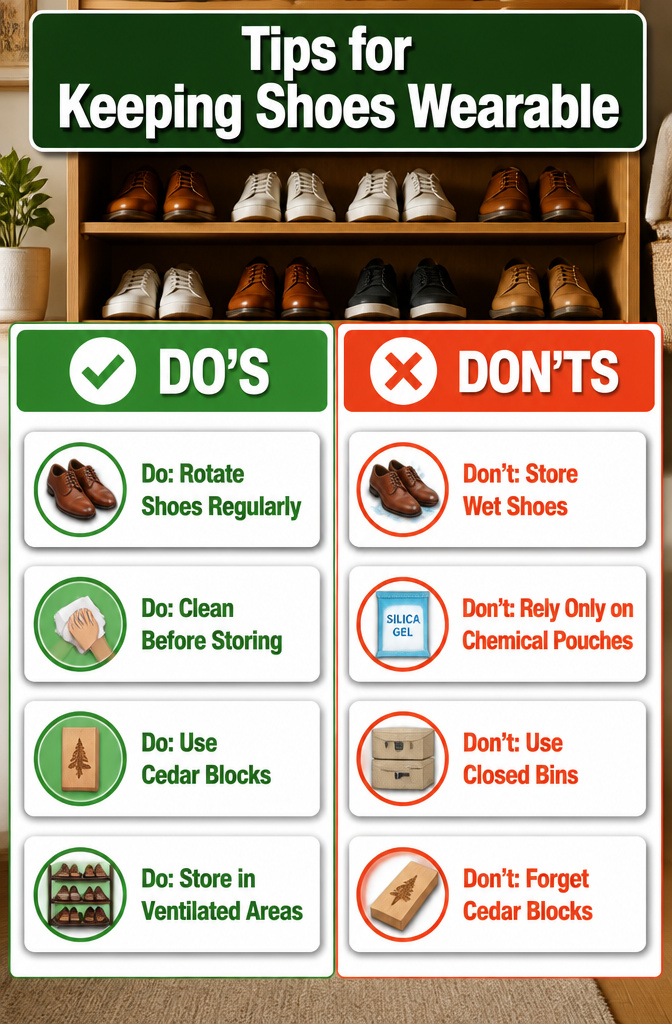
Shoes left untouched for months stiffen up, lose their shape, and sometimes grow a musty smell that no amount of airing fixes. The storage method you picked determines how much babysitting they need. Open wire racks let air move, so a quick brush-off before shelving is usually enough. Closed cabinets and fabric bins trap humidity against leather and canvas, which means they need more deliberate upkeep to stay wearable.
Rotation matters more than most people bother with. The pair you reach for weekly stays supple from use; the pair pushed to the back of a cabinet for half a year dries out and cracks along the creases. Every season, pulling everything out and swapping front to back takes maybe ten minutes and saves the cost of replacing stiffened boots.
For moisture, cedar blocks work better than chemical absorbers in most closets I have used. They smell pleasant, they do not need refilling, and they push back against the mildew that grows in dark corners. Chemical pouches dry the air faster in a badly ventilated space, but once they saturate, they are easy to forget until the problem returns. Check them every three months or they become decorative.
Cleaning before storing is the step most people skip. Dried mud flakes off inside a bin and grinds into suede; road salt eats at stitching over winter storage. A damp cloth and a few minutes of drying time before they go into any enclosed box prevents damage that shows up months later.
Where to Start If Your Entryway Is a Mess Right Now

If your entryway is a pile right now, the order you tackle it matters more than the finished look. Start with whatever is making you trip.
- Sort by traffic pattern first. The shoes you grab daily need a spot within one step of the door; anything worn less than twice a week can move to secondary storage. I keep my running shoes and boots by the door, sandals live in a closet bin.
- Label bins by season, not by person. A bin marked "winter" gets pulled out when the weather turns, and everyone in the house knows where to toss muddy boots without asking. The passages note this keeps pairs from getting cluttered together and damaged.
- Decide concealment versus speed before you buy anything. If you need out-the-door in ninety seconds, open cubbies or a low bench you can sit on beat a lidded cabinet every time. Built-in entry storage with shelves, benches, or cubbies works because you put shoes on and away as you walk in and out.
- Move the pile before you build for it. Stack your current shoes by the door and live with the arrangement for three days. The height and depth of the real pile tells you whether you need a two-tier rack or a full bench with cubbies underneath.
Frequently Asked Questions
What are some creative shoe storage ideas?
Baskets with metal frames, storage ottomans tucked under consoles, entryway benches with flip-top compartments, hall trees with cubbies, rolling carts, vertical racks, wall-mounted bins, and hidden pull-out drawers all keep shoes organized without adding clutter. The best choice depends on whether you need mobility, concealment, or seating built in.
How can I maximize shoe storage in a small space?
Stack upward with vertical racks or ladder-style units instead of spreading across the floor, slide wheeled bins under the bed for off-season pairs, and use the back of a door with an over-the-door organizer like the Whitmor 36-pair model. Combining two methods, such as a vertical rack for daily shoes plus under-bed storage for overflow, works better than pushing one solution to its limit.