The Steadyrack Classic is the wall-mounted pivot rack that actually wins, because you roll the bike onto its rear wheel and push it forward into place instead of hoisting the whole frame overhead. Buy something else if you rent and cannot drill into studs; this category demands solid wall anchors or it fails completely. The pivot then swings the bike left or right against the wall, so two racks pack narrower than two bikes would otherwise allow.
1. Wall-Mounted Pivot Rack

The Steadyrack Classic Rack and its imitators solve a problem most wall mounts ignore: getting the bike up there without a fight. The tray cups the bottom of the front tire, so you tip the bike onto its rear wheel and roll it forward into place. No lifting the whole frame, no twisting a knobby tire into a narrow hook. It folds almost flat when empty, which matters in a tight hallway or behind a door.
The pivot is the real space-saver. Once loaded, the bike swings left or right to sit closer to the wall, so two racks can sit narrower than two bikes would otherwise allow. The Classic fits wheel diameters from 20 to 29 inches and tire widths up to 2.1 inches; Steadyrack makes separate Mountain, Fat, and Fender versions for wider rubber. The 77 lb weight limit handles most e-bikes, though anyone with hydraulic brakes should know that hanging by the front wheel can draw air into the brake lines over time. Renters who cannot drill into studs should skip this category entirely.

【Strong, Safe & Secure】 monTEK bike wall mount is made of heavy-duty solid steel are able to hang weights up to 30 kg / 66.2 lbs. Rubber coated wall bike rack relieves pressure on the wheels, rims, and spokes and protects from unwanted scratches. Bike Wall Storage - Hang and store your bike in a vertical position, allowing for convenient storage and removal.

【Strong, Safe & Secure】 monTEK bike wall mount is made of heavy-duty solid steel are able to hang weights up to 30 kg / 66.2 lbs. Rubber coated wall bike rack relieves pressure on the wheels, rims, and spokes and protects from unwanted scratches. Bike Wall Storage - Hang and store your bike in a vertical position, allowing for convenient storage and removal.

Award-Winning Design: The Black Pivot Rack garage bike rack offers a full 150 degrees of swivel in both directions, providing hassle-free access to your bikes while maximizing floor space. International Houseware Association Gia Global Innovation Award winner.
2. Freestanding Gravity Stand
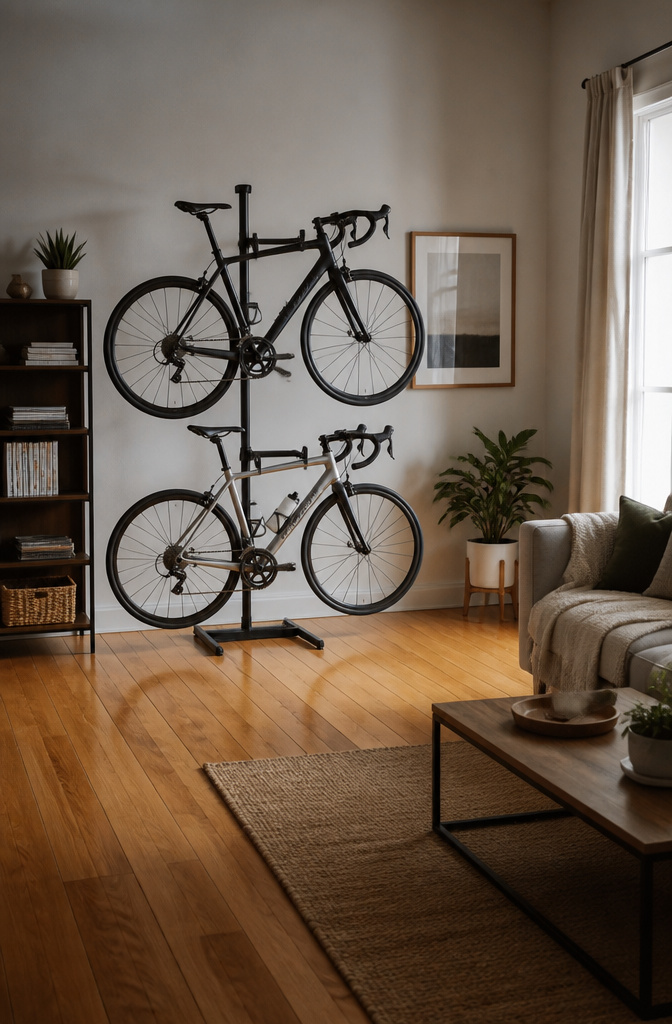
A freestanding gravity stand leans against the wall and holds bikes with pressure, not hardware. The Delta Cycle Michelangelo rack stores two bikes horizontally, one above the other, on adjustable arms that twist by hand to fit different frame shapes. Rubber cradles keep the finish clean, and the whole thing stands on feet that grip concrete, wood, tile, or carpet without slipping. One screw is all that touches the wall, a single strap for stability, which makes this the obvious choice for renters whose lease lines out holes like mine did.
The arms handle 80 lb total, enough for two standard road or hybrid bikes but not a pair of loaded e-bikes. Assembly takes a Phillips screwdriver and maybe ten minutes; the frame is slender steel tubing that reads more ladder than industrial rack, so it fades into a living room corner better than anything wall-mounted. Delta is phasing out the Michelangelo name, so the same rack may appear as simply the Delta two-bike standing rack.
Skip it if your floor is badly uneven, since gravity needs a level base to work safely, or if you are trying to park a household fleet. Two bikes is the limit. For a single rider in an apartment with smooth floors and a landlord who notices patch jobs, this is the least-commitment option that still gets both wheels off the ground.

FREE-STANDING: No more drilling holes around apartment or garage walls. This free-standing bike floor stand is sturdy enough to hold 2 bikes, max 55 lbs (25kg) per bike, 110 lbs (50kg) in total. It is great when you still need the flexibility to move your bike around.

The Perfect Balance of Utility & Design: Delta Cycle’s Two Bike Gravity Pole Stand safely suspends your bicycles and securely holds them within reach for your next ride. Ideal for apartment living or for your home or garage. Built to accommodate any bike size or type, this bike rack stand supports two bikes up to 30lbs per bike (60lbs total).

【Best Free-Standing Bike Rack】: Whether you’re using your bike for recreation, exercise, or simply commuting, the old two-wheeler can be a fun and useful part of your everyday life. They can also junk up a clean garage in a hurry. To help alleviate this problem, we’ve design the very best garage bike rack for the modern cyclist: free-standing bike rack, the 2-bike capacity rack is also available in 4-bike option.
3. Portable Floor Stand

A floor stand that needs zero drilling is the closest thing to a temporary roommate: it shows up, holds your bike, and leaves no trace when you move out. The Feedback Sports Rakk 2.0 fits tires from 23 mm road widths up to 4.5 inches, which covers almost anything short of a fat bike in its standard form. You roll the front or rear wheel into the tray and the spring-loaded arm does the rest; no lifting, no frame contact, no scuffed walls.
At 5 lbs and roughly 13.25 by 17 inches on the ground, it folds flat enough to toss behind a door or in a trunk. I see the appeal for renters who can’t drill into concrete or landlords who notice every patch job. The Rakk 2.0 also runs about $52, which puts it in the same range as a basic hook set but without the installation afternoon.
Who should pass: anyone measuring floor space in inches rather than feet, or anyone who needs the bike fully off the ground for cleaning or storage below. This is still a bike lying horizontal on your floor, just one that won’t slide sideways into your drywall.

IDEAL FREESTANDING BIKE STAND: Are you looking for a bike storage solution for your garage or indoor storage space? The CHEPARK bike stand is an impressively user-friendly freestanding floor rack that is also incredibly lightweight and portable to boot. There is no lifting required to load and unload the bike–simply roll it onto the wheel tray. Ideal bicycle storage space for apartments, garages, home or office.

UNIVERSAL COMPATIBILITY:Single wheel bike stand can be widely used to bikes with tire up to 3.55" wide of different specifications. The tire slot well accommodate 16"-24" bikes, 26"-29" mountain bike/BMX/commuter bikes, 650C 700C road bikes.
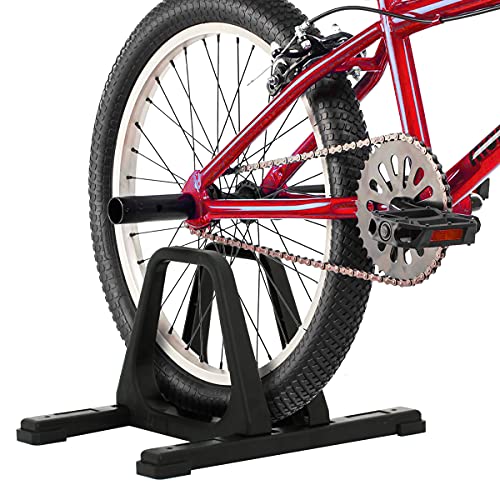
BIKE STAND FOR INDOOR STORAGE - This garage bike rack is designed to fit 20-inch tires that are up to 3.5-inches-wide, making it ideal for BMX and trick bikes used for races, rallies, and trail adventures. This bike holder stand can be used inside or out.
4. Vertical Stack Stand

Freestanding vertical stackers keep both wheels on the ground while the bikes stand nose-up, which matters more than it sounds if you live somewhere with plaster walls or a landlord who notices holes. The Topeak TwoUp Stand works on pressure alone: an expanding pole locks between floor and ceiling with a foot pedal, no drilling at all. I would not position it anywhere except directly under a joist or beam, since the pressure that keeps it stable can crack drywall otherwise. A scrap of plywood spread across the ceiling plate fixes this, though it sits there looking like what it is.
The continuous pole runs straight through your vertical space, so rotating a bike to reach the rear derailleur is not happening. Crank position matters too; get it wrong and metal rubs metal every time you walk past.
For a lighter single-bike option, the Bike Nook cradle takes only a rear wheel roll-back and a tip upward, seatpost caught in an upper bracket. At 4 lbs and 21.75 by 23.5 inches, it moves aside easily when company comes. Heavy or oddly weighted bikes test it, and e-bike owners should skip this whole category. The lifting geometry fights anyone with a 50-pound commuter or a frame so tall that vertical balance becomes a wrestle.

【BIKE FRONT RACK】- This Front Rack is the perfect addition to your bike for a classic and stylish look. Add a touch of elegance to your bike with the Front Rack with fixed basket.Featuring a 3D bend design, it is the perfect front rack for all those searching for a smaller rack which fit's perfectly on a mountain bike, gravel bike or Touring Bikes .The rack fits a sleeping mat or some bananas… what ever it takes to improve your bikepacking or randonneuring adventure.
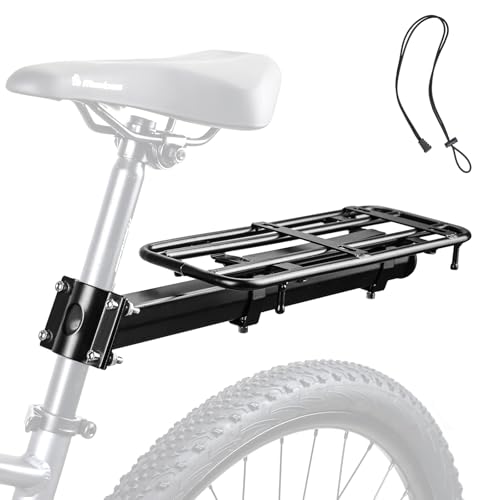
Wide Compatibility: Specifically designed for 20" to 29" bicycles, this rack offers universal fit. The unique front-and-back position adjustment allows it to perfectly fit different bike frames, ensuring optimal clearance from the rear wheel and seat. It works with most mountain bikes, city commuter bikes, and more

Great for storage or transportation
5. Ceiling Slide System
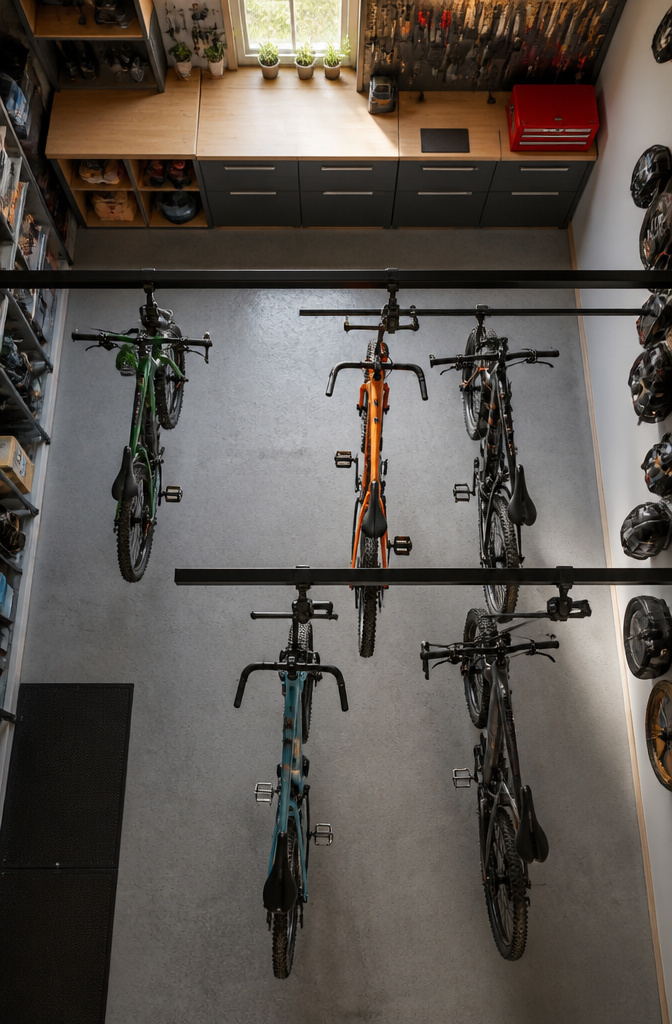
A ceiling slide system keeps the floor completely clear while letting you shift bikes sideways to reach the one you need. The Saris Cycle Glide holds four bikes on horizontal rails with hooks that slide to match any wheelbase, and an add-on kit expands that to six. With a 12-foot ceiling you can still park a car underneath; the rails slide the whole row out of the way when you need to pull one bike down.
Skip this if your ceiling is under 9 feet or you cannot hit solid studs. The hardware needs real structure above, and a low ceiling leaves no room to maneuver without knocking bars against your head or your car’s roof. The Buller system uses industrial-grade components with a 25-year warranty but demands more DIY skill and tool collection to install. The Stashed SpaceRail works as a wall mount too if ceiling height is wrong, though fatbike owners will need an adapter that hangs the rear tire lower. Most riders will find the Saris the easier path: sliding hooks lock in place when unweighted, so loading does not turn into a balancing act.

⚠️ PLEASE CHECK YOUR TIRE SIZE FIRST: Designed to accommodate standard leisure bicycles, securely fitting wheel sizes from 12 inches (toddler bikes) up to 26 inches (adult commuters) with a maximum tire width of 2.5 inches. Important Note: This rack is NOT compatible with 29-inch mountain bikes or oversized "fat tire" e-bikes; tipping or warping of spokes may occur
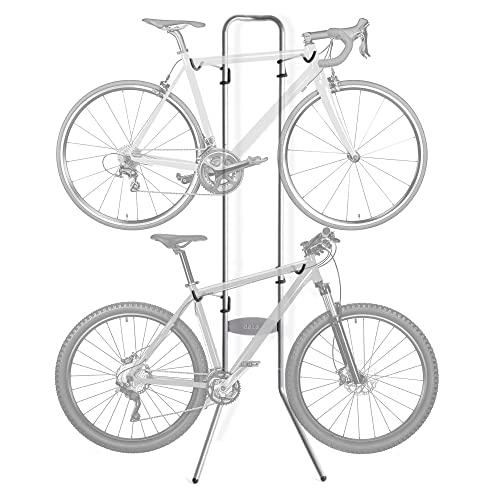
Leave it to Gravity: Delta Cycle’s Michelangelo Two Bike Gravity Stand safely suspends your bicycles with no permanent mounting or drilling required. Our innovative wall-lean design can securely hold up to 80 lbs (40 lbs per bike). 84” x 26” x 16”. Color may vary.
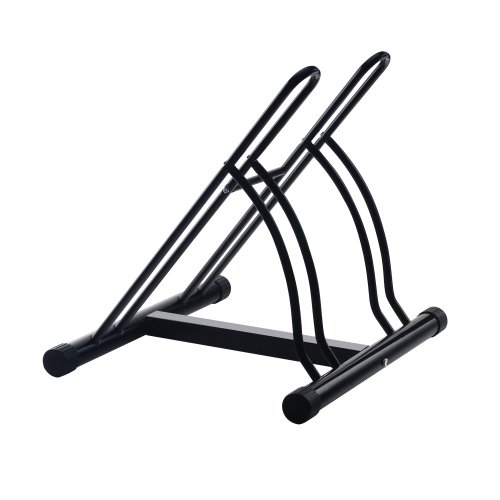
BIKE STAND FOR 2 BICYCLES - Park mountain, BMX, road, beach cruiser, or kid's bicycles with tires up to 2.4-inches-wide on this 2-spot bike storage rack. This bike floor stand is also great for bicycles without a kick stand.
6. Minimalist Wheel Grip

The Hornit CLUG is about the size of a matchbox, a two-inch bracket that grips your front tire and holds the bike vertical against the wall. At roughly $26, it is the cheapest proper rack in this list, and the one that demands the least space. You roll the bike back onto its rear wheel, push the front tire into the cup, and the CLUG clicks around it. The PRO version adds a magnetic security cord that wraps the rim so the bike stays put even if the tire deflates or someone bumps it.
Sizes run in tire-width increments, so a 23 mm road tire and a 2.4 inch mountain bike need different CLUGs. That specificity is the catch: your kid outgrows their balance bike, and the old bracket no longer fits the new tire. The holes stay in the drywall while you remount. For adult bikes that do not change, this matters less.
Renters who cannot drill into studs should skip this entirely. The grip point is small, and riders with very heavy bikes may find the single contact unsettling. But for a light road bike or a everyday hybrid in a tight hallway, the CLUG disappears into the wall and takes the bike with it.

Fits Most Bikes - Gootus wall mount bike storage system is compatible with road bikes, mountain bikes, cyclocross, hybrid, and kid bikes. Note: Not suitable for step-through frame bike, or bicycles with wide handlebars more than 31.5 inches / 80 cm, long wheelbases or fat bikes

🚴 Best for: Road, MTB, Hybrid, e-Bikes, eMTB, BMX, City... (NO FENDERS!!!).

🚴 Best for: Road, MTB, Hybrid, e-Bikes, eMTB, BMX, City... (NO FENDERS!).
7. Outdoor Storage Shed

A 7.5’×13′ footprint is serious real estate, and the Keter Newton Plus Shed asks for every inch of it. The shed arrives as a flatpack of corrugated plastic pieces with a metal frame and a more solid plastic roof, floor panels included. I would pour a concrete slab first, gravel or sand probably works but I went with the slab for peace of mind. Assembly took about two solid days with two people, the kind of IKEA-style instructions that reward patience more than skill.
This is not a cheap option, but against other outdoor sheds at this size it is a bargain. You will see it at Home Depot and assume it cannot possibly hold up. Having looked into it, the construction is worth considering if you have the space and the yard.
Skip this entirely if you rent without outdoor space or if your HOA regulates shed dimensions strictly. The flatpack delivery does not help if the finished structure violates a rule. For those with the room and the freedom, the shed changes the math on dedicated bike security without the five-figure investment a traditional build demands.

SAVE VALUABLE SPACE: Tired of cluttered spaces and want to maximize your storage? Look no further! This fully adjustable gravity storage rack is the space-saving solution you need for storing two bikes. With the ability to save up to 35" of horizontal space, you can store your bikes neatly and efficiently without the need for drilling holes in your garage or apartment.

FREESTANDING & DRILL-FREE STORAGE: This vertical bike rack garage securely holds 2 bikes (mountain, road, hybrid, and folding bikes) without any drilling or wall mounting. Its freestanding design allows for effortless placement anywhere in your garage, shed, or apartment.
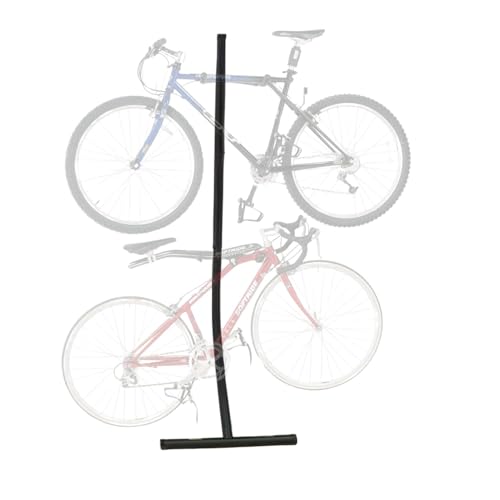
No Drilling or Mounting Required: Easy to set up and use, this gravity stand provides convenient bike storage without the need for drilling or wall mounting.
8. Sliding Rail System

A sliding rail system like the Stashed SpaceRail changes how tightly you can pack bikes without fighting them. Hooks slide left to right along an aluminum rail, lock into place when empty, and swivel so handlebars can face the wall and nest together. The same rail scales from a single bike up to 20 or more by adding length and hooks, and you can mount it to wall or ceiling depending on your garage layout.
The price starts around $462 and climbs past $638 for a four-bike kit, with larger bundles running higher still. That cost is easier to justify when you are storing a full household fleet, not one or two bikes you could hang on basic hooks in ten minutes. Fat bikes need an adapter that drops the rear tire closer to the floor, so measure your ceiling height before ordering one.
Cheaper alternatives exist, like the 1UP RS Slide or DIY channel-and-hook builds, though most skip the locking hooks and 360-degree swivel that make loading the Stashed system feel deliberate rather than fiddly. If your bike count is low or your budget is tight, this is the category to pass on.
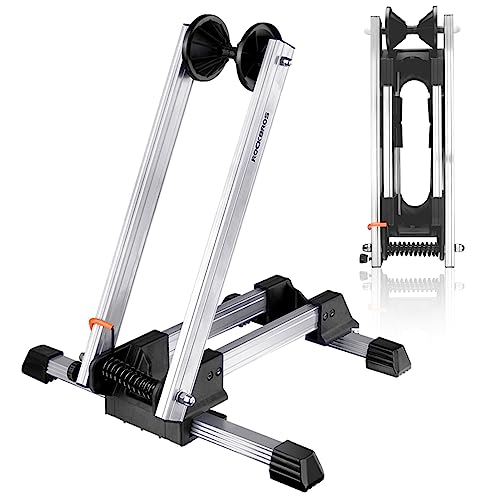
CONVENIENVE BICYCLE STORAGE: The foldable bicycle wheels holder is made of 5 folding system. One of wheel stand and four rack stands. The bike stand can folding in the 17.7*7.4*4.7 inches box. Storage conveniencely when not in use.
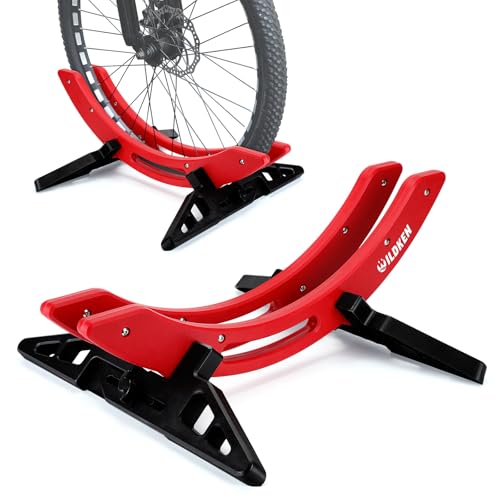
Durable Material : This bike stand is made of high quality ABS material, environmentally friendly and odorless.

【Sturdy Construction but Lightweight】:There are four points holding on the tires, much better than other stands which have only one or two points holding on the frame, rim, disc rotor and derailleur.The bike's front rear wheel sitting in the holder is much deeper than others, so it stays firmly in the holdder.Dual arm is better to hold heavy bike than single arm stand. Aluminum alloy material make the bicycle holder light ,only 3.5lbs, make it portable for your outdoor cycling purposes
9. Ceiling Pulley Lift

A ceiling pulley lift is the cheapest way to get a bike completely out of the way, and the Racor system is the one most people end up with. It handles wheel sizes from 12 inches up to 29 inches, though you will need to reset the hooks when a kid’s bike grows into a larger frame. The 52 kg weight limit covers most standard bikes but stops short of heavier e-bikes, so check your scale before ordering.
The motion is simple enough: pull the rope, the bike rises, tie it off. What does not get mentioned is that your shoulders and back do the work a rack would have done. Anyone already managing pain in either area should skip this category entirely. The lifting is not dramatic with a 25-pound hybrid, but a 40-pound mountain bike at the end of a rope, overhead, is a different equation. I have watched people install these optimistically and then leave the bike on the floor six months later because hoisting it became a chore they avoided.
Installation gives you one fixed point on the ceiling, which keeps the hardware simple but means your bike hangs in that exact spot. Plan the placement so the front wheel does not swing into your car door.

UPGRADED BIKE STAND - ALIXUEQIN bike floor stand features an innovative three-point fixed wheel system, Simply roll the front or rear wheel into the adaptive lower tray, and the support arm will lock the tire. Your bicycle will no longer lie on the ground or lean against the wall.

2023 Upgraded Bike Fork Mount: The upgraded fork holder has a heightened design that allows the quick release bar lever to rotate during installation without hitting the surface. High-quality thickened adapters with fixed rubber rings that do not easily fall off after installation.

【Sturdy Construction But Lightweight】Bicycle floor stand is made from heat treated high strength iron which has excellent toughness and hardness!The whole frame is jointed with stainless steel screws and anti-loosening nuts,which ensure the bike rack can securely hold heavy-duty bikes without wobbling and deformation!Smooth rust-proof coating not only ensures beautiful appearance,but also provides resistance to scuffing,rust and weather damage,suitable for both indoor and outdoor use!
10. Basic Hook Storage

Park Tool makes the hook most people picture when they think of wall storage, and the 450, 451-2, 470, 471 and XX versions cover enough tire sizes and mounting angles that you can usually find one that fits your wall or ceiling layout. The rubber coating wears faster than you’d expect if you’re pulling the bike down daily, and the rim bears all the weight, which makes these a poor match for carbon wheels or deep-section aero rims where the hook pressure can deform the profile over time.
A four-pack of Impresa hooks runs about $20, supports up to 100 pounds, and handles tires up to four inches wide. The catch is the same: you drill into studs or ceiling joists, then lift the bike onto the hook every time. Renters in apartments with plaster or strict lease terms should probably skip this category entirely. If you own your place and ride alloy wheels, though, nothing beats the price per bike.

Patented Design Fits Sedans, Hatchbacks, Minivans, And Suv'S Consult Manufacturer Web Site For Specific Vehicle Fit Information.Comes fully assembled set up and installs in seconds 12 inch long carry arms easily accommodate a wide range of bicycle styles and 115 inch wide carry arms for greater bike compatibilityShips in certified frustration free packaging 70 pounds max capacityFolds fully flat for easy storage.Allen's warranty does not cover items purchased through third-party sellersImportant, please consult manufacturer web page for specific vehicle fit.Target gender : unisex.

【2PC,Wide application】: Suitable for 20“-24” children's bikes, 26“-27” mountain bikes, and 650c-700c road bikes, supporting tires up to 4" wide and a maximum weight of 66 lbs (30 kg).Adjustable height of the lifting rod - unrestricted by fixed preset positions, offering vertical or horizontal rear wheel storage.Suitable for indoor/outdoor, such as apartments, garages, entrances, dormitories, small studios, corridors, and narrow rooms.(Note: not suitable for bicycles with mudguards/rear racks)
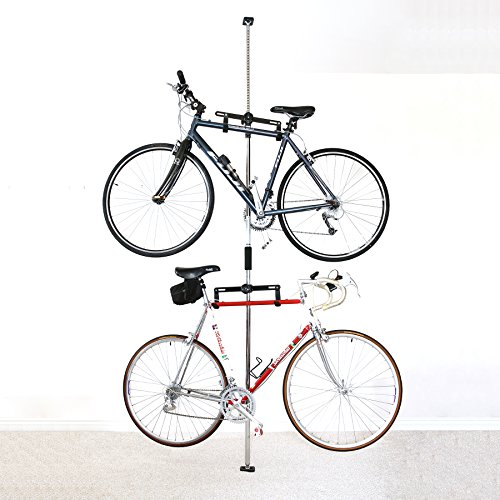
Dual Bike Storage Stand: The SPAREHAND bike rack is perfect for small spaces. It securely holds 2 bikes without permanent mounting. Its innovative bracing design stabilizes the rack between the ceiling and floor. Enjoy safe and efficient bike storage, ideal for families and dedicated cyclists.
11. Multi-Bike Floor Rack With Gear Storage

Freestanding racks that hold multiple bikes without touching a wall are the default choice for renters, and the BirdRock Home 3 Bike Stand at $117 is the one that actually earns its floor space. Three bikes roll straight into wheel slots that handle tires up to 4 inches wide, no lifting required, and the basket plus removable side hooks absorb helmets, pumps, and the random straps that otherwise end up on the nearest chair.
Assembly took about 20 minutes in testing, straightforward but not instant. The rack supports 20- to 29-inch tires well; very small wheels tend to flop sideways, so a kid’s bike or a folding model may need a different home. Width is the real constraint. The gear storage adds meaningful inches beyond the bikes themselves, which turns this into a poor fit for a narrow hallway or a tight corner of a studio where every square foot counts. For those spots, a vertical gravity stand that stacks two bikes in the same footprint makes more sense, even if it means giving up the basket.
12. Basic Multi-Bike Floor Stand

A floor rack like the Simple Housewares 5 Bike Floor Parking Rack runs about $60 and needs zero installation, which makes it the obvious first stop for anyone who rents or just wants bikes upright today, not after drilling into studs. The design is barely a design: five slots, bikes lean, wheels drop in, done. Kids can manage their own bikes without help, and the garage floor stops looking like a scrap yard.
The catch is what you give up. Bikes stay on the floor, so they eat square footage you might need for a workbench or a car door swing. They also lean against each other, which means paint rub and handlebar tangle if the fleet is crowded. Anyone riding carbon frames or just fussy about finish wear will wince every time they walk past.
I see the appeal for a family pile of beater bikes, and the price is hard to argue with. But if your goal is floor space back or your bikes cost more than your first car, this is where you keep scrolling. The RAD Cycles 2 Bike Stand at $45 and the Delta Cycle Stand at $95 play the same game with different slot counts, though the Simple Housewares unit still wins on capacity per dollar.
13. Adjustable Frame Hanger

Wall-mounted hangers that let you tweak the arm spacing solve a real problem for mixed households with a road bike and a kid’s mountain bike sharing the same hook. The Ibera Adjustable Bicycle Wall Hanger runs about $50 and ratchets its support arms to different widths and angles, then locks in place so the frame sits level rather than torquing against a single contact point. A telescoping mast also pushes the bike closer or farther from the wall, which matters more than you’d guess in a narrow hallway where handlebars otherwise swing into the walking lane.
The PRO Bike Tool version, closer to $68, works similarly with three arm positions and up to 15 inches of wall clearance, plus an elastic cord to keep the front wheel from drifting. Both claim to handle most frame shapes, though full-suspension mountain bikes with odd shock placements or very compact step-through frames can still sit awkwardly or stress a tube that wasn’t meant to bear weight there.
Renters should skip these entirely. The hardware needs lag bolts into studs, and the load is cantilevered enough that no adhesive or tension mount will hold it safely. If your lease forbids holes or your walls are lath-and-plaster with mystery spacing behind them, a gravity stand or floor solution keeps your security deposit intact.
14. Heavy-Duty Wall Rack With Gear Hooks
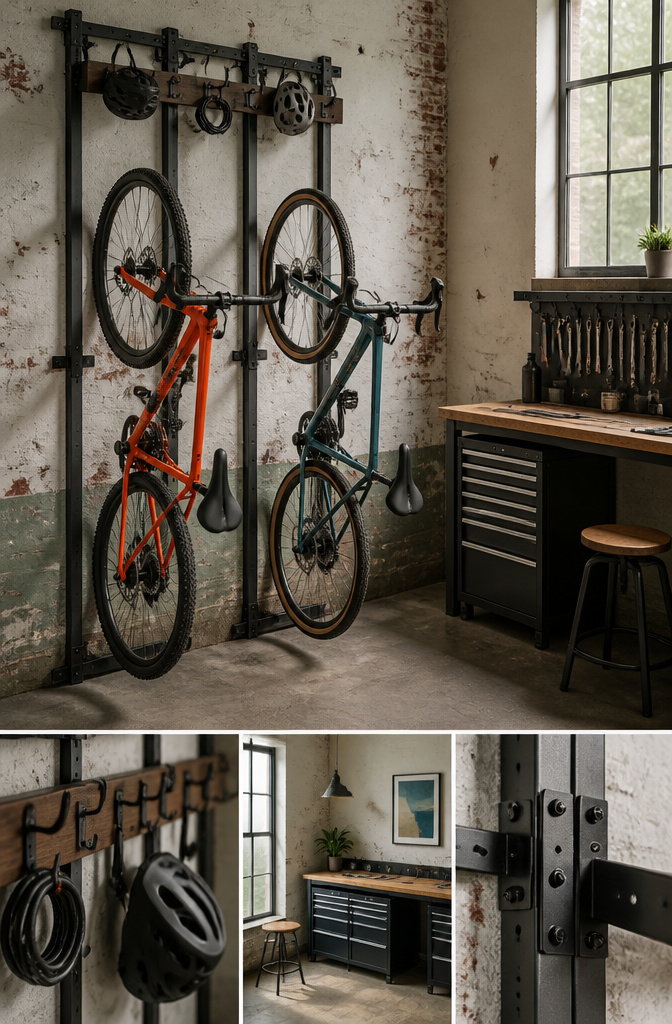
Steel wall racks that hold two bikes and still leave room for helmets or a pump run about $50 for the Koova 2-Bike model, which feels like the kind of thing you install once and forget about. The hooks are rubber-coated and open wide enough for 3-inch tires, and there is a small shelf plus gear hooks above the wheels. I would not try to make this look pretty in a living room; the raw steel finish belongs in a garage or basement where nobody minds the utilitarian look.
Lifting the bike to hang it gets old fast with a heavy mountain bike, and you are drilling into studs, so renters with strict landlords or anyone with just one bike should look elsewhere. The Dirza wall mount hits a lower price point at $20 per set and handles tires up to 2.5 inches, though it skips the integrated shelf. Both need the same wall commitment. If you are trying to park two bikes without turning your only wall into a workshop, a freestanding option saves you the drill and the security deposit risk.
15. Collapsible Travel Rack

A collapsible rack like the Ahha Toaster folds flat enough to slide under a tote in a truck bed, then pops up at the campsite to hold five bikes total, split across both sides. The aluminum frame has some flex to it, so stacking heavy gear on the folded rack risks bending it. At 5 lbs, the Feedback Sports RAKK takes a different approach: one bike, no lifting required, just roll the tire against a spring-loaded arm. It arrives fully assembled and connects to other RAKK units for a modular row.
Neither of these belongs in a daily routine. The Toaster’s setup and breakdown time adds friction you do not want every morning, and the RAKK still eats 13.25 by 17 inches of floor space per bike. Anyone after permanent storage should look at wall or ceiling systems instead. These racks earn their keep for renters who cannot drill holes, for travel, or for that one race weekend a year when you need the bikes locked and stable in an unfamiliar parking lot.
16. Modular Wall-or-Floor System
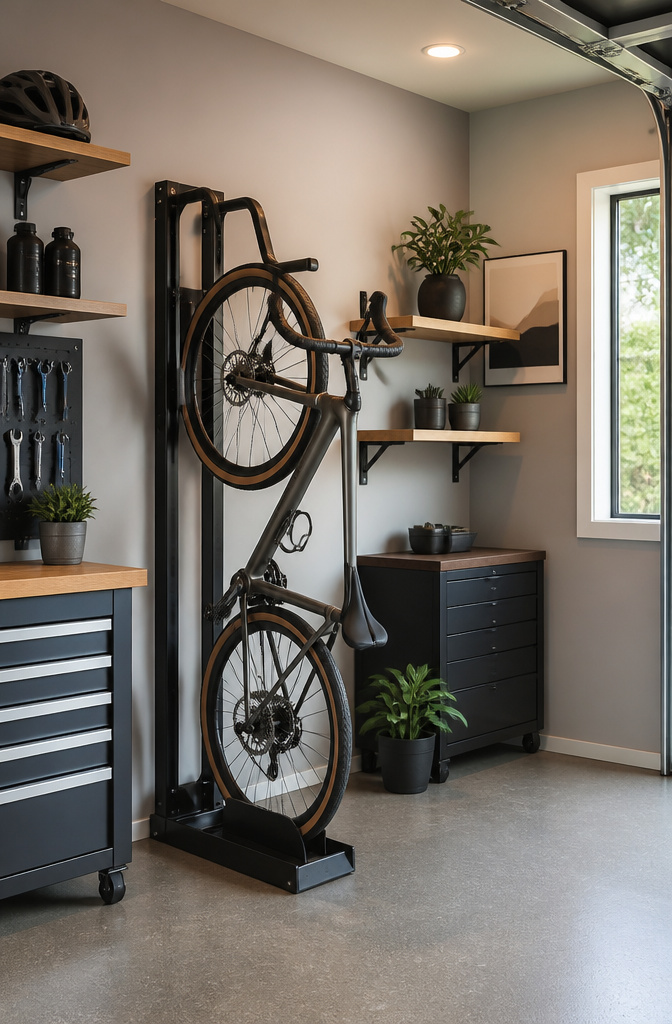
The Saris Universal Bike Trac runs about $299 and mounts either to a wall or freestanding on its own rack, which is the detail that separates it from fixed systems you bolt once and live with. I like that flexibility for renters or anyone who might move the bikes to a shed, a garage wall, or a different apartment later, but the tradeoff is real: you pay for adaptability you may never use.
The hook holds the bike by its front wheel with a tray underneath for the rear tire. The hook itself comes without padding, so pipe insulation is worth wrapping around it if your wheels have a finish you care about. For security, the system locks the bike at two points, which matters more in a shared bike room or a shed with a door that does not seal tight.
Saris also makes the Cycle Glide at a similar price point, a ceiling-mounted rail that slides bikes along horizontal tracks. The Glide handles four or six bikes and shines when garage wall space is already taken by shelving or a workbench. The Trac, though, is the one that converts between wall and floor without new hardware.
Skip the modular route if you already know your wall and your bike count will not change. A fixed wall hook at $26 or a basic floor stand at $45 wins when the situation is stable. The Trac only earns its price if you will actually move it or expand it.
17. Top-Tube Wall Rack
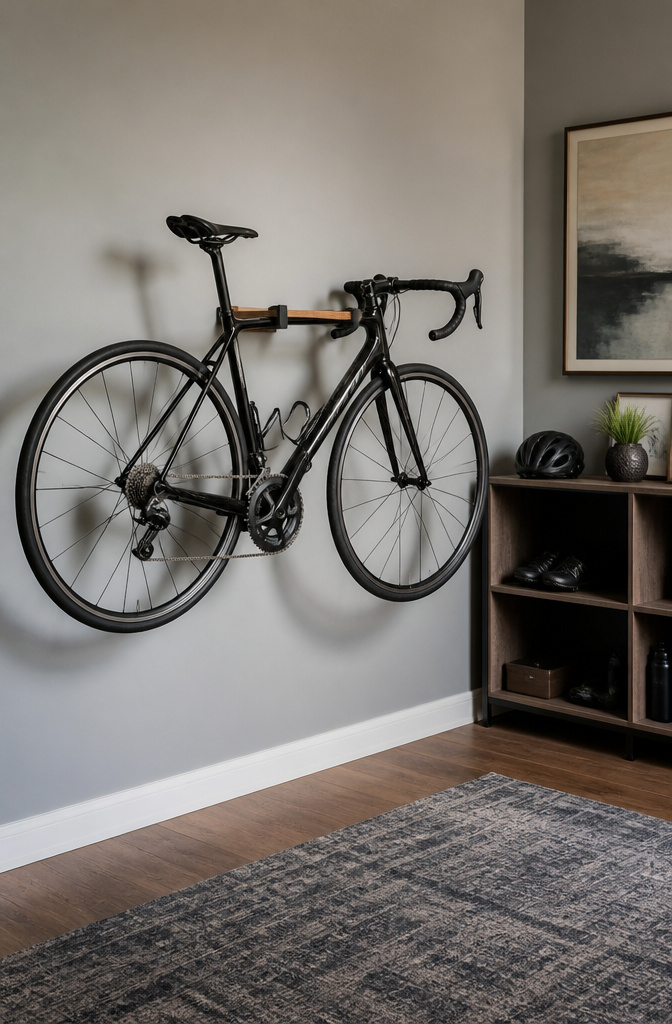
Wall-mounted racks that grip the top tube keep the bike horizontal and the wheels off the ground, which matters more than it sounds when you are storing a road bike with a quick-release front wheel. The Feedback Sports Velo Wall Rack 2D does this with a single stud mount and two adjustable arms that cradle the underside of the tube. You can angle the arms for a sloped top tube or a flat one, and you can set the wall clearance so drop bars or flat bars do not scrape drywall. Anyone with a step-through frame or an unusual top-tube shape should skip this style entirely; the arms need a straight tube to brace against, and a dropped or curved tube will sit wrong and possibly slip. The PRO Bike Tool Wall Hanger works on the same principle with U-shaped rubber cradles and up to 15 inches of wall clearance for the handlebar, plus an elastic cord to keep the front wheel from swinging. It lists at $68 and claims a 48.5-pound capacity, though the arms can conflict with full-suspension mountain bike shocks or intricate rear triangles. Both racks demand that you lift the bike to load them, so a 30-pound e-bike changes the math quickly.
18. Sliding Multi-Bike Mount

A sliding multi-bike mount only earns its price if you own three or more bikes and actually move them in and out regularly. The 1UP RS Slide Bike Storage runs cheaper than premium alternatives like the Stashed SpaceRail, but it drops the swiveling hooks and locking features those systems offer. That trade-off matters less in a garage where you are the only one grabbing bikes, and more in a shared space where a hook that swings freely can knock into the next bike over.
The Saris Cycle Glide, built for four bikes (six with an add-on), shows where the sliding logic really shines. Its rails shift horizontally across the ceiling base, so you can slide the whole row aside to pull one bike down without disturbing the rest. With a twelve-foot ceiling, you still park a car underneath. The Buller rack works similarly and carries a twenty-five-year warranty on industrial-grade hardware, though fitting it demands more tool time and ceiling detective work than the average weekend project allows.
Skip this category entirely if you are storing one or two bikes. A basic wall hook or a Steadyrack at ninety-nine dollars handles that without the rail cost or install complexity. The sliding function becomes useful only when you are shuffling a full quiver, mixing road bikes with kids’ rigs, or top-and-tailing frames to squeeze more into the same ceiling span.
19. PVC Pipe Build
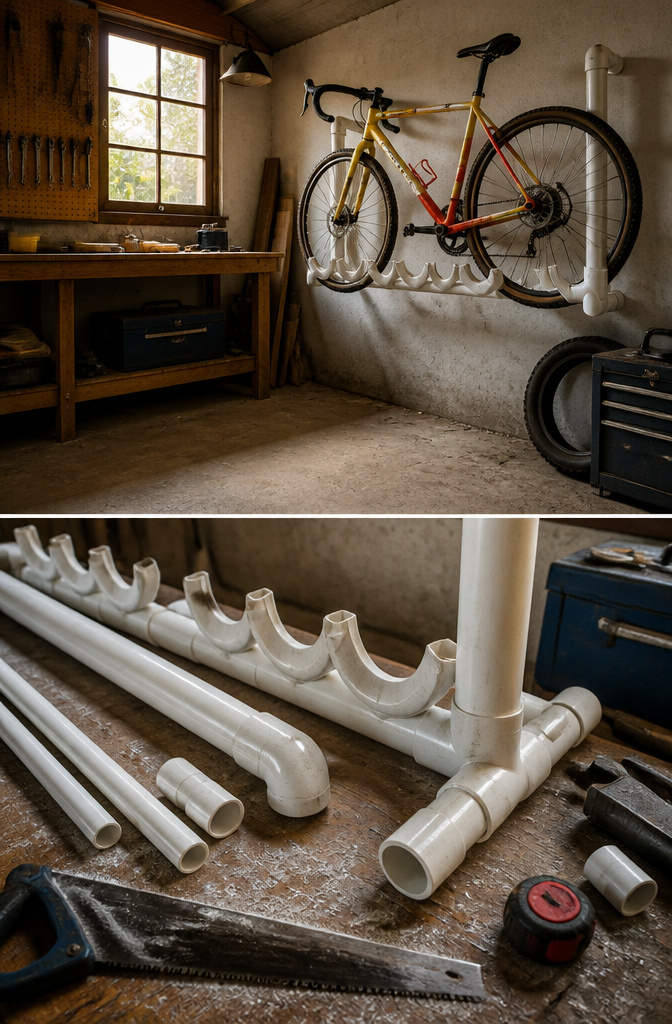
A PVC bike rack costs little and asks even less in materials: a length of large-diameter pipe, a handsaw, and sandpaper to knock the burrs off your cuts. The pipe gets cut at an angle so the tire seats into the notch, then mounted to the wall with standard brackets. It works. It is also visibly homemade, which is the point for some garages and a dealbreaker for a living room.
Skip this if you do not already own a saw or if your weekend is already spoken for. The cutting and fitting takes longer than the thirty-minute assembly videos suggest, especially if this is your first time dry-fitting PVC joints. Anyone who needs their storage to read as furniture should look at commercial options instead. The raw plastic and visible screws do not soften with proximity to a sofa.
For renters with a tool bag and a blank wall in a basement or back hallway, the payoff is real: under ten dollars in pipe, perhaps another five in hardware, and a rack that holds one bike or several depending on how many notches you cut. Just sand every edge until it passes the thumb test, or the first time you lift the bike out you will find a fresh scratch on the rim you spent an hour truing.
20. Sliding Ceiling Mount Rack

A sliding ceiling mount rack puts the whole weight of your bikes overhead and moves them sideways when you need one out, which is the only way to make a deep garage feel twice as wide. The Buller Sliding Bike Rack runs on industrial-grade rails with a 25-year warranty and swallows a 40mm rim without complaint; you can also top-and-tail bikes to pack more in. The Saris Cycle Glide works the same way, with sliding hooks along the rails that adjust to any wheelbase, and the whole rack shifts horizontally so you slide four bikes aside to grab the one you want. If your ceiling clears 12 feet, you still park a car underneath.
Both systems demand real ceiling-mounting skill: stud finding, lag bolts, and a level line across joists that may not cooperate. The Stashed SpaceRail and a few newer rivals add swiveling or locking hooks, but the core task stays the same. Without a stud finder you trust and a drill that can drive heavy hardware overhead, this category is not your weekend. Renters with drywall anchors or anyone who flinches at the thought of a bike dropping from ten feet should look at floor stands instead.
Frequently Asked Questions
What is the best bike storage solution for small spaces?
Wall-mounted pivot racks like the Steadyrack Classic work best in tight spots because they fold almost flat when empty and let the bike swing sideways to sit closer to the wall. For renters who cannot drill into studs, a freestanding gravity stand such as the Delta Cycle Michelangelo needs only one screw for stability and stores two bikes in a narrow footprint. The Hornit CLUG is the smallest option at roughly two inches, gripping just the front tire to hold a bike vertical against the wall.
How do I secure my bike in storage?
The Saris Universal Bike Trac locks the bike at two points, which helps in shared bike rooms or sheds with loose doors. For outdoor storage, the Keter Newton Plus Shed offers dedicated security without the cost of a traditional build, though you will need the yard space and HOA freedom to install it. The Hornit CLUG PRO adds a magnetic security cord that wraps the rim so the bike stays put even if the tire deflates or someone bumps it.
What are the best bike racks for kids’ bikes?
The Hornit CLUG comes in tire-width increments that fit smaller wheels, though you will need to buy a new size when the kid outgrows their tire width. The Basic Multi-Bike Floor Stand from Simple Housewares lets kids manage their own bikes without lifting, with five slots for a family fleet. Very small wheels tend to flop sideways in the BirdRock Home 3 Bike Stand, so a kid’s bike or folding model may need a different home there.
How much weight can bike racks hold?
The Steadyrack Classic handles up to 77 pounds, which covers most e-bikes. The Delta Cycle Michelangelo gravity stand carries 80 pounds total across two bikes, enough for standard road or hybrid bikes but not a pair of loaded e-bikes. The Impresa hooks support up to 100 pounds per four-pack, while the Racor ceiling pulley lift stops at 52 kilograms, short of heavier e-bikes. The Dirza wall mount claims up to 65 pounds per bike.
Can I store bikes outdoors?
Yes, but you need weatherproof protection and enough space. The Keter Newton Plus Shed covers a 7.5 by 13 foot footprint with corrugated plastic and a metal frame, though assembly takes about two days and a concrete slab helps for peace of mind. Skip outdoor sheds if you rent without yard space or your HOA regulates dimensions strictly. For apartment dwellers, indoor options like floor stands or wall mounts avoid weather damage entirely.