In a small yard, the idea that fits is set by what you already have: bare gravel asks for a painted fence mural, a full bed asks for hanging pots, and a shed at the back can become a room with French doors.
The list runs from a trellis that grows peas up instead of out to a fire pit ringed with chairs, and the cheapest changes, like string lights, need only hooks and a strand.
Sun, drainage and the 1 or 2 windows you look out of most narrow the choice faster than taste does.
1. Add a Pathway
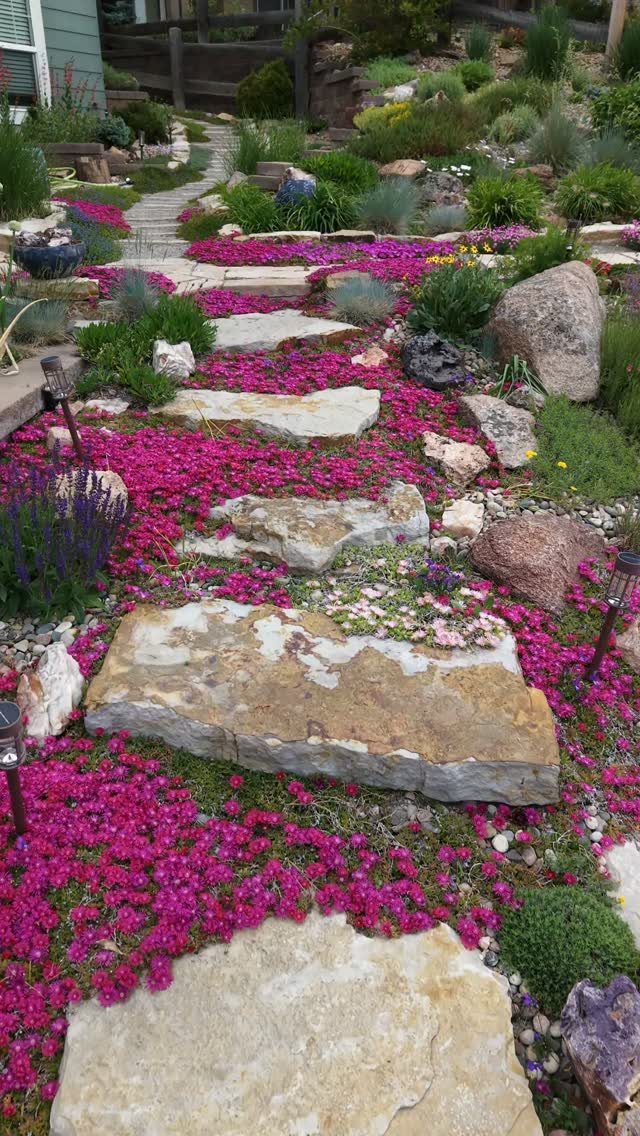
Large, flat stepping stones set into a low groundcover make a path that reads as part of the planting, not a strip cut through it.
In a small yard, that matters: the route from door to back corner becomes a garden feature, and it tells the eye where to travel.
I like stones spaced so each step lands naturally, with the groundcover filling the gaps. A gentle curve makes the walk feel longer than it is.
Pick a groundcover that tolerates a few footsteps, and keep the stones flat so they stay easy to cross.
2. Backyard Fence Mural
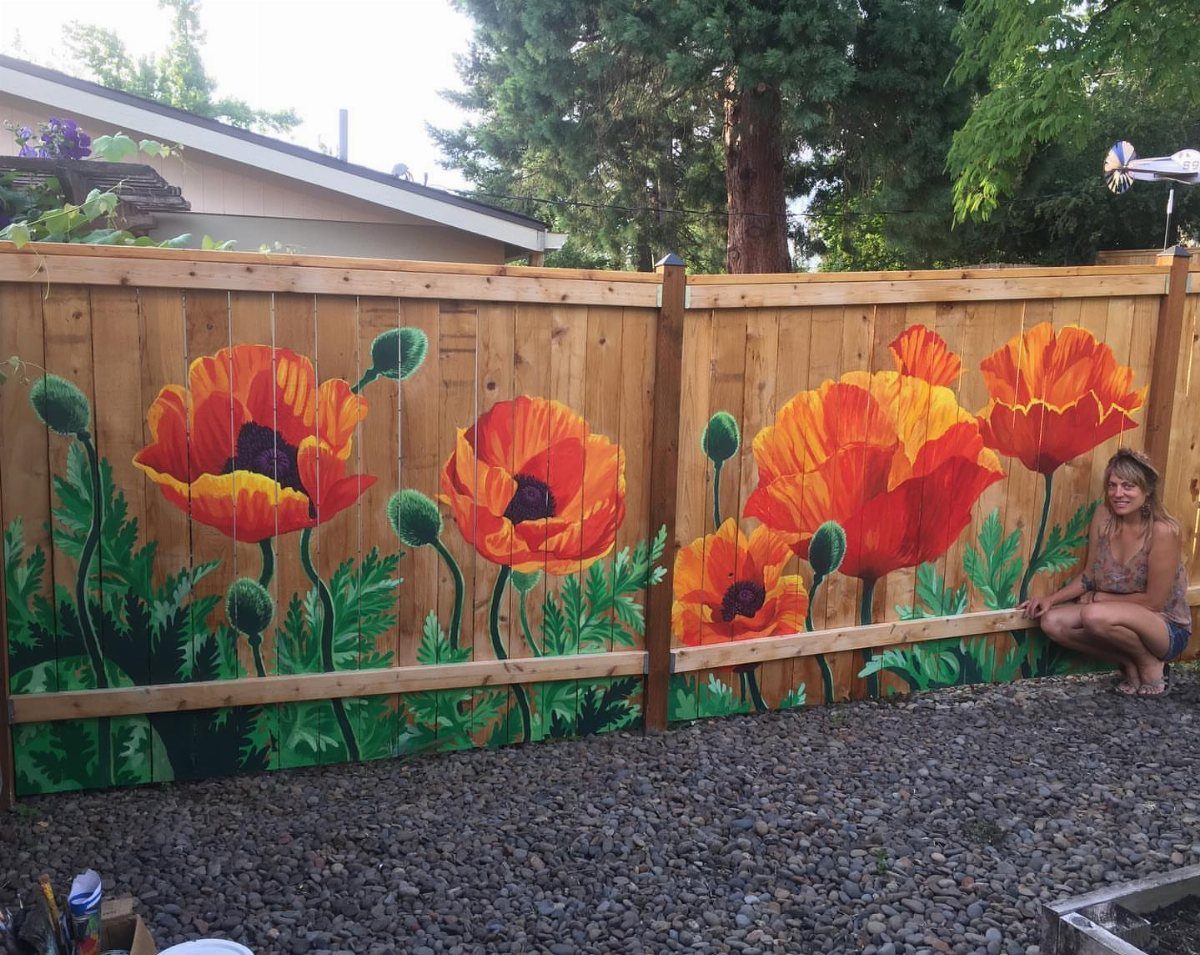
A painted fence turns the largest vertical surface in a small yard into the main attraction.
Big, simple shapes like oversized poppies in red and orange work best, because they read from across the yard and cost little beyond paint and brushes.
Sketch the flowers loosely in chalk first, then block in the color before adding details. Gravel underfoot means the fence is the only place for color to live, so let it be bold.
Keep the design to a few colors if you want it done in a weekend.
3. Hanging Planters
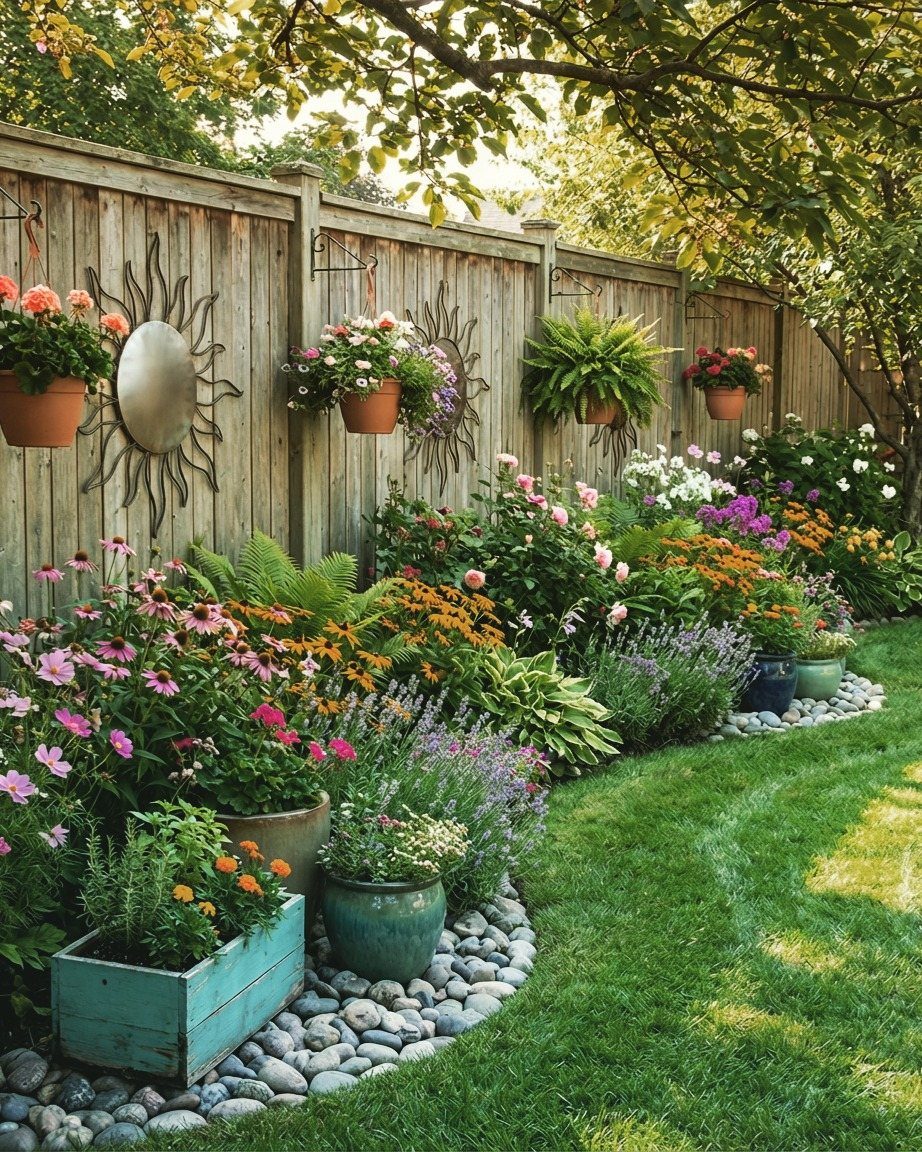
Pots hung along a fence put flowers at eye level without taking a single inch of lawn or bed. That makes them a smart move when the ground is already full, as it is in a small yard.
Space several pots along the same rail so they read as one row, and repeat a color or two from the beds below. The result looks planned and fills the blank wood above the garden.
Hanging pots dry out faster than ground beds, so plan on watering them more often.
4. Build Raised Beds
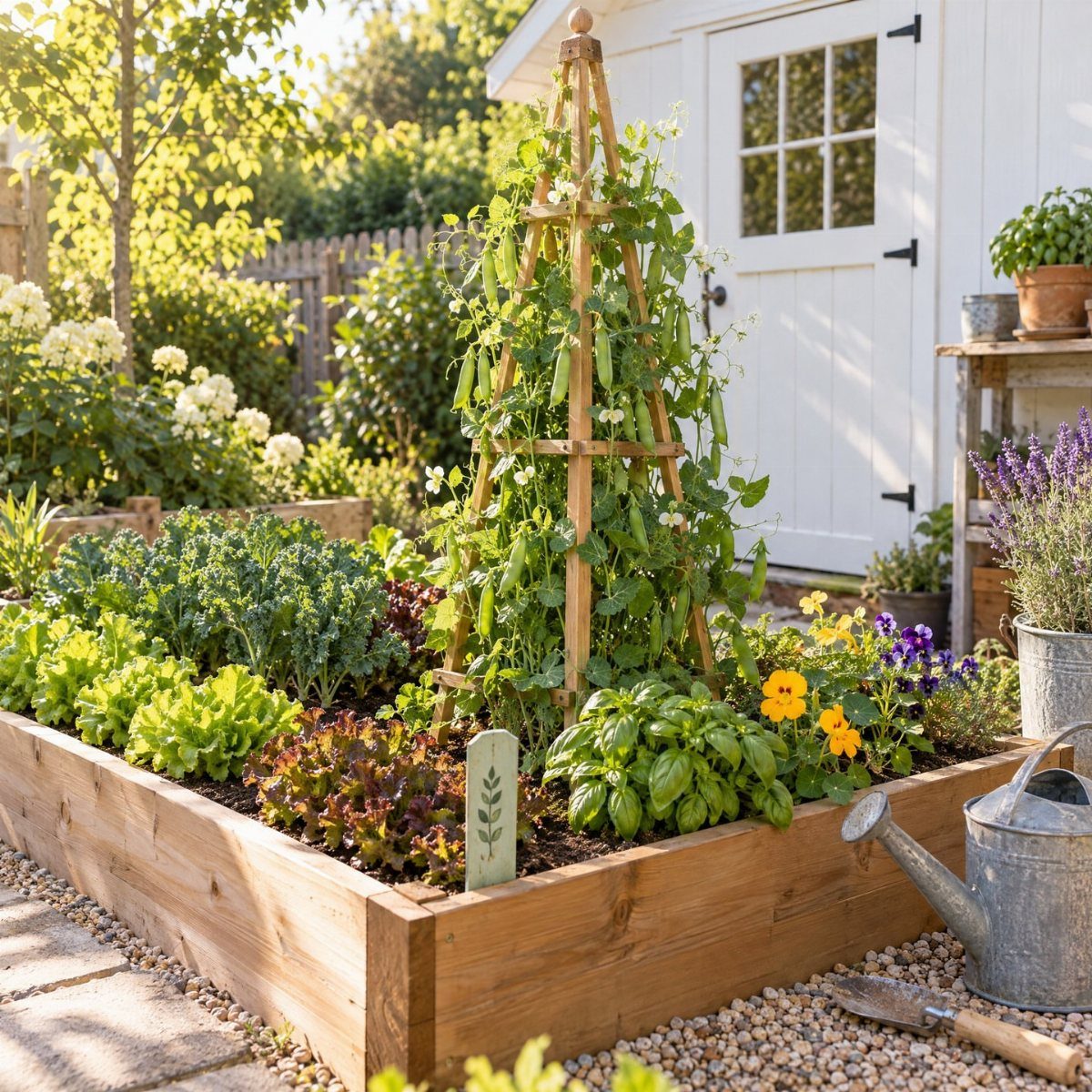
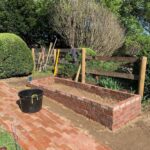
Wooden beds with a trellis at one end let a small corner hold lettuce, kale, basil, flowers and peas all at once.
Peas grown up a trellis take up a few inches of soil instead of a few feet, which leaves the rest of a raised bed open for greens and herbs.
Mix edibles with a few flowers, as this bed does, so the box looks good even between harvests. A spot beside a shed works well because the wall backs up the planting and keeps the bed tidy.
Keep the bed narrow enough to reach into from either side.
5. Hang String Lights
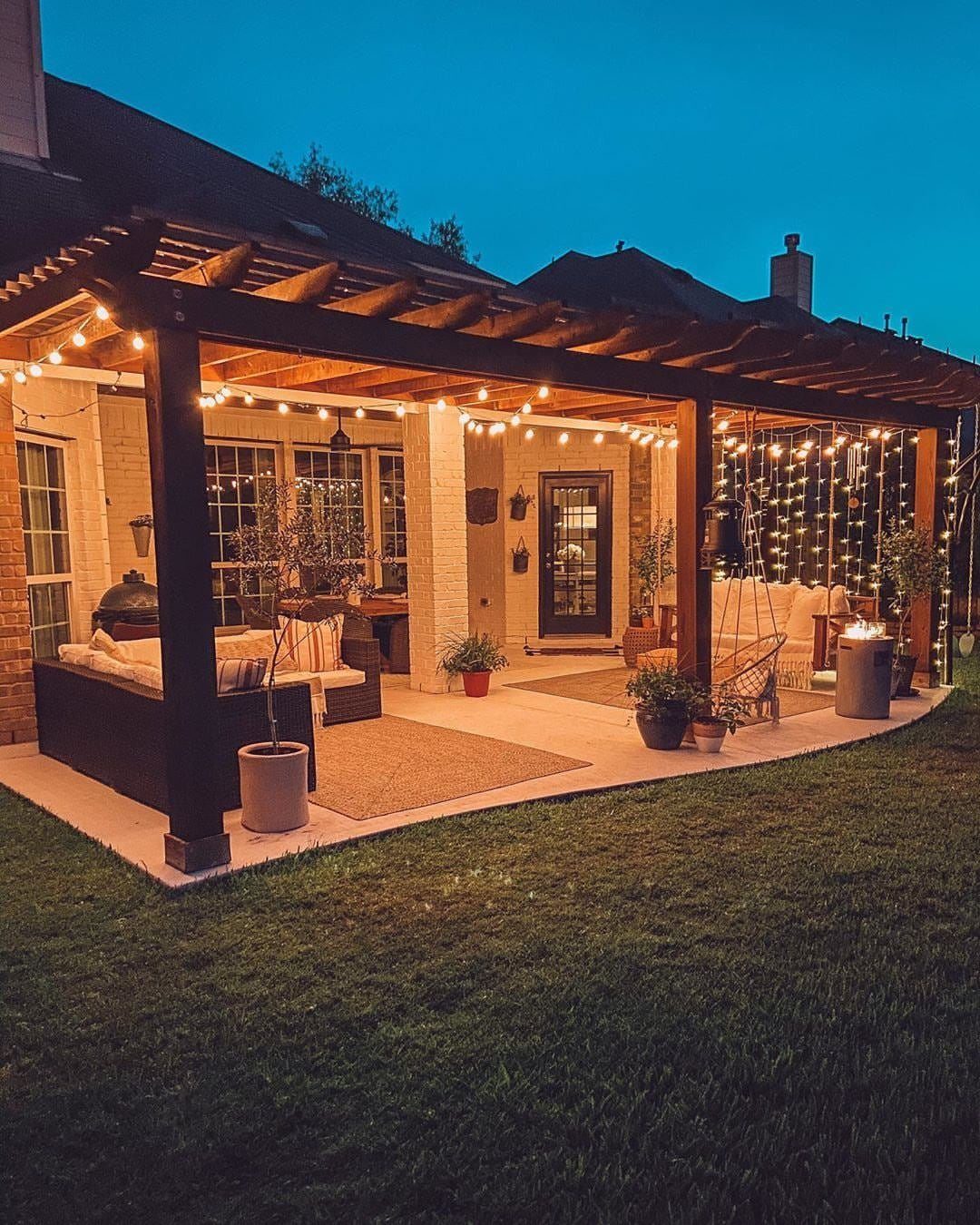
Strings of warm lights overhead give a patio an evening life without costing any floor space. A pergola makes the job easy, since the beams give you ready-made anchor points for each strand.
Run the lines across the open top in one direction, or crisscross them for a fuller glow. Warm-toned bulbs look best against wood and greenery.
Without a pergola, hooks on the fence and house wall can hold the same strands. Either way, it is among the cheapest changes on this list.
6. Define a Patio Area
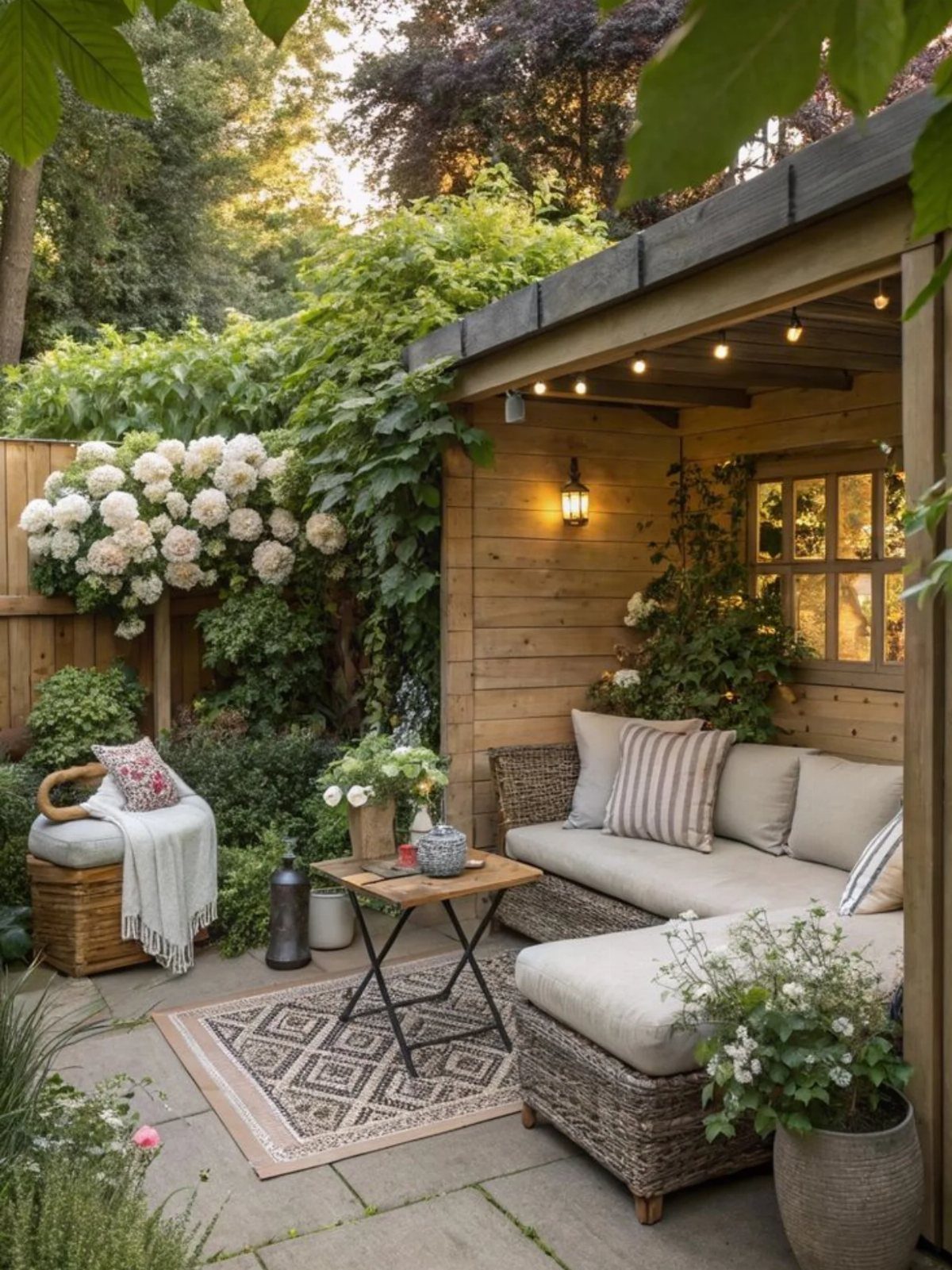
A patio gives a yard one clear job: this is where you sit. In a small space, a defined surface stops furniture from drifting across the grass and makes the whole area feel organized.
I would anchor it with a rug under a sectional, as here, and add a small table within reach.
Wicker pairs well with leafy planting around the edges, so the seating feels tucked into the garden instead of sitting on top of it.
Measure the surface first, so the furniture fits with room to walk around it.
7. Grow Edible Plants

Blueberries, beans and flowers can share one bed when the edibles are treated as part of the design.
A bean trellis does double duty here: it gives vertical structure and a harvest, so the food plants earn their spot in a small yard.
Put the tall crop at the back or center and let the shorter fruiting plants sit in front, where you can reach them. Keep a seat nearby so the garden gets used.
Choose edibles you will actually eat, since a plant you ignore just becomes clutter.
Core principle: A small backyard garden succeeds when it is designed for function first and planted for atmosphere second.
— Gardenia
8. Outdoor Rug
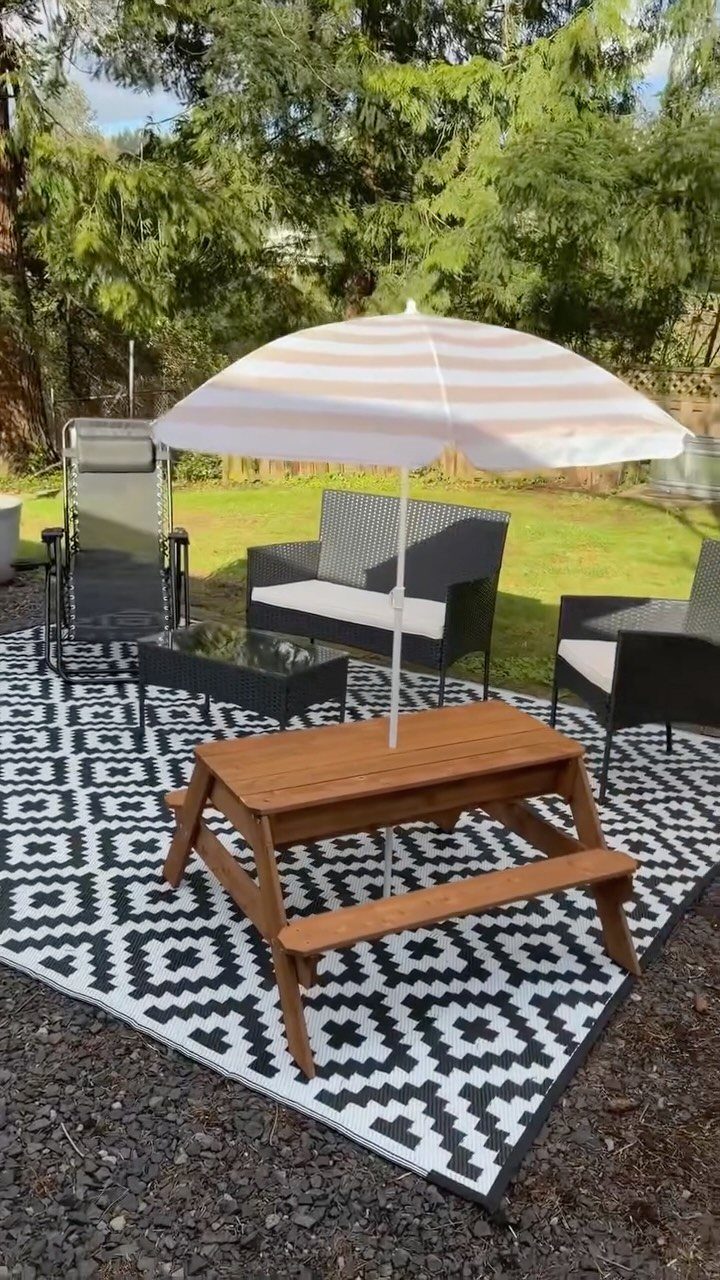
One rug on a small patio can mark the lounge zone, and a bold black and white geometric pattern keeps the whole space from reading as a bare slab.
A bold black and white geometric pattern keeps the pieces looking related, even when the furniture styles differ.
Size each rug so the front legs of the chairs sit on it, and leave a strip of bare ground between zones so they read as separate.
Pick a rug made for outdoor use, and expect to sweep it often.
9. Add a Trellis
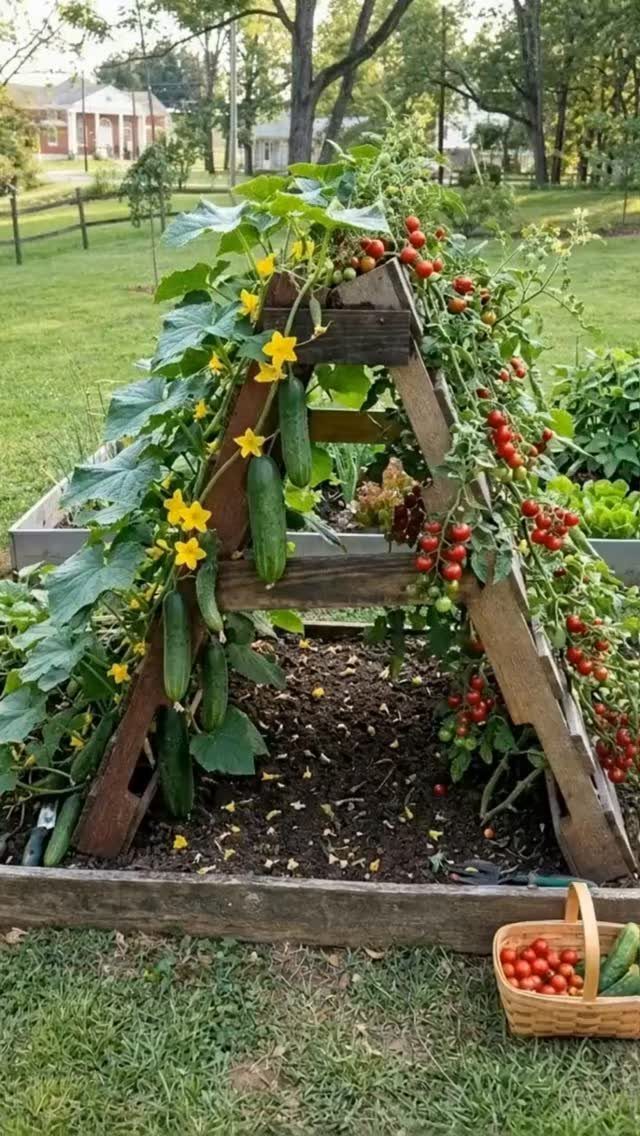
An A-frame trellis set inside a raised bed lets cucumbers and cherry tomatoes grow up instead of sprawling across the soil.
A trellis lets you plant on both sides, so one narrow strip of ground can carry a surprising amount of produce: pole beans on one face, cucumbers or small squash on the other.
I prefer wood for the frame, since it suits a grassy backyard and looks good even before the vines fill in. Tie stems loosely as they climb.
Place the frame where you can reach both sides to pick.
10. Add a Fountain
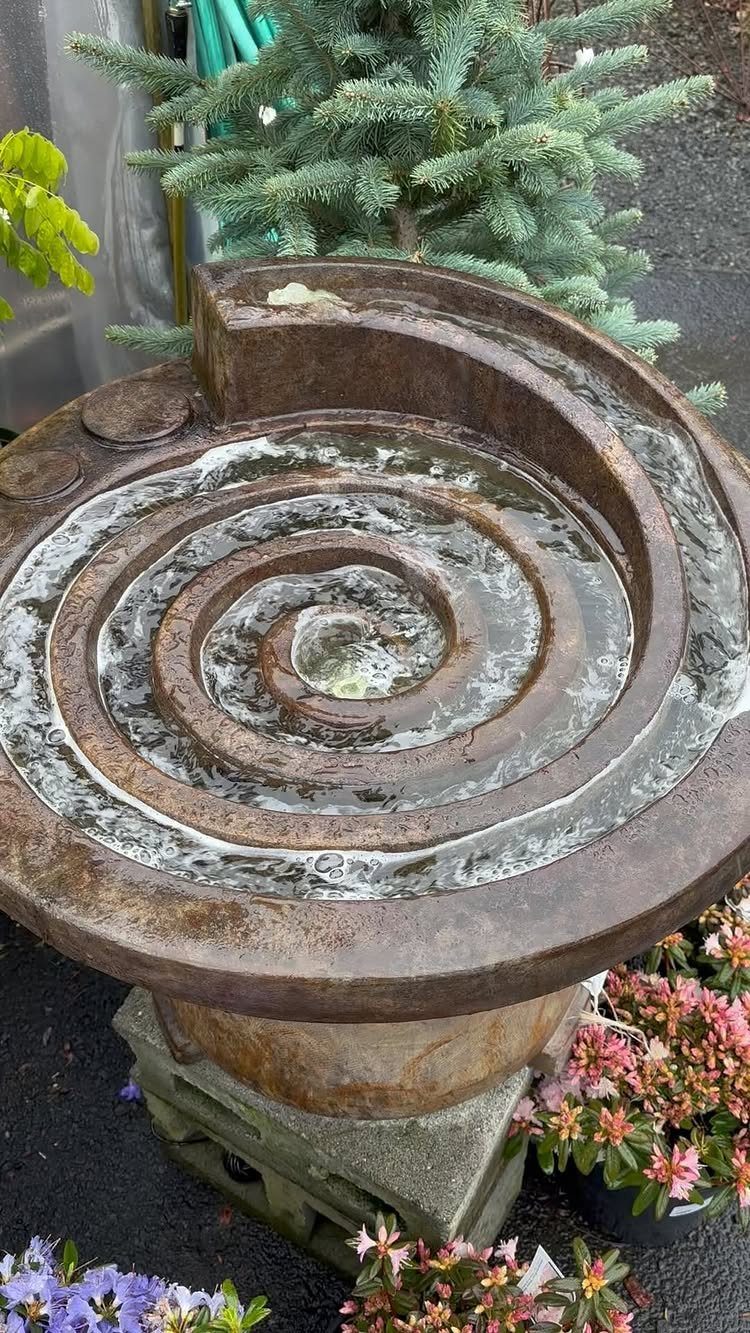
A spiral stone fountain gives a small yard the sound of moving water without needing a pond. Its sculpted shape works as a focal point even when it is switched off.
Ring the base with evergreen shrubs and pink flowers, so the stone looks settled into the garden. Set it where you will see it from a seat or window.
Choose a compact size so the fountain stays in scale with the yard.
11. Backyard French Doors
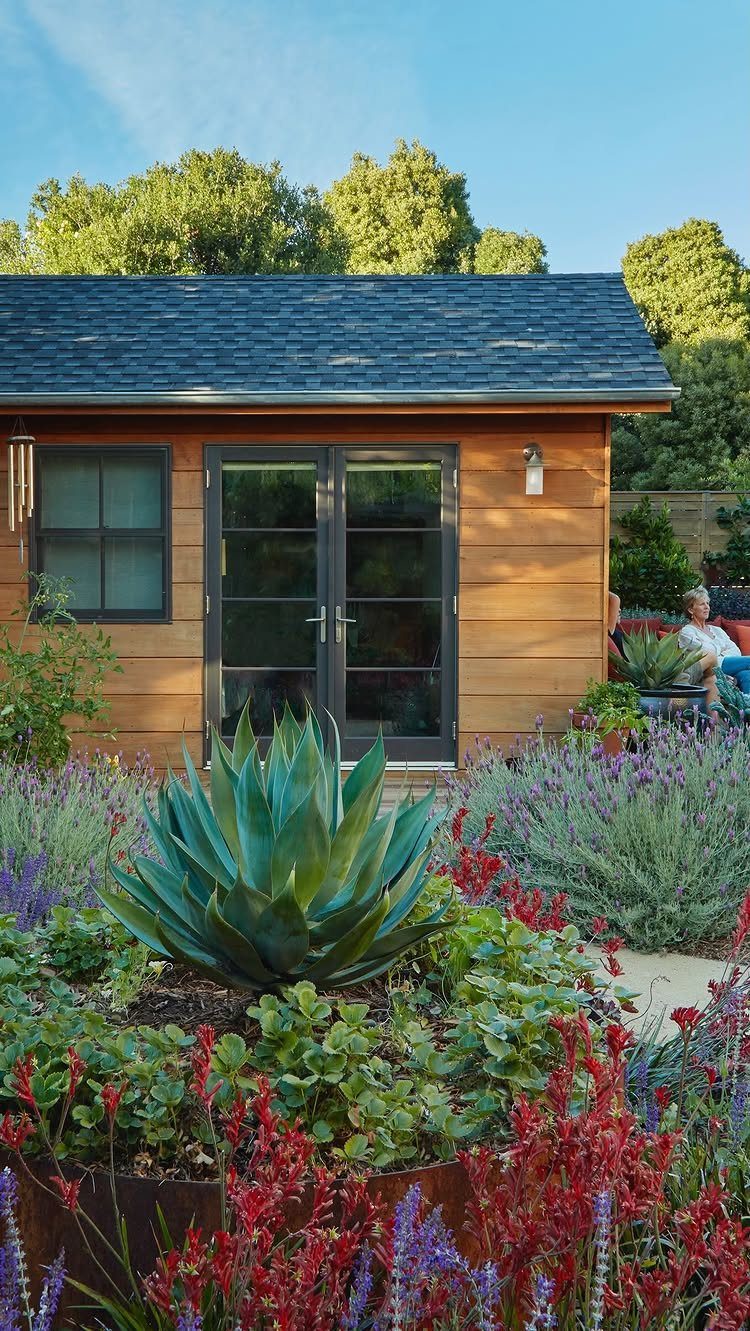
French doors with dark frames turn a wooden shed into a backyard room, one with light, a view and a clear front entrance. The dark trim stands out against the wood and gives the building a finished look.
Plant colorful flowers and one bold agave by the doorway so the shed reads as part of the garden instead of a box parked at the back. Leave space out front for a couple of chairs.
The doors open the shed to the yard, so keep what is inside tidy.
12. Garden Bed Edge
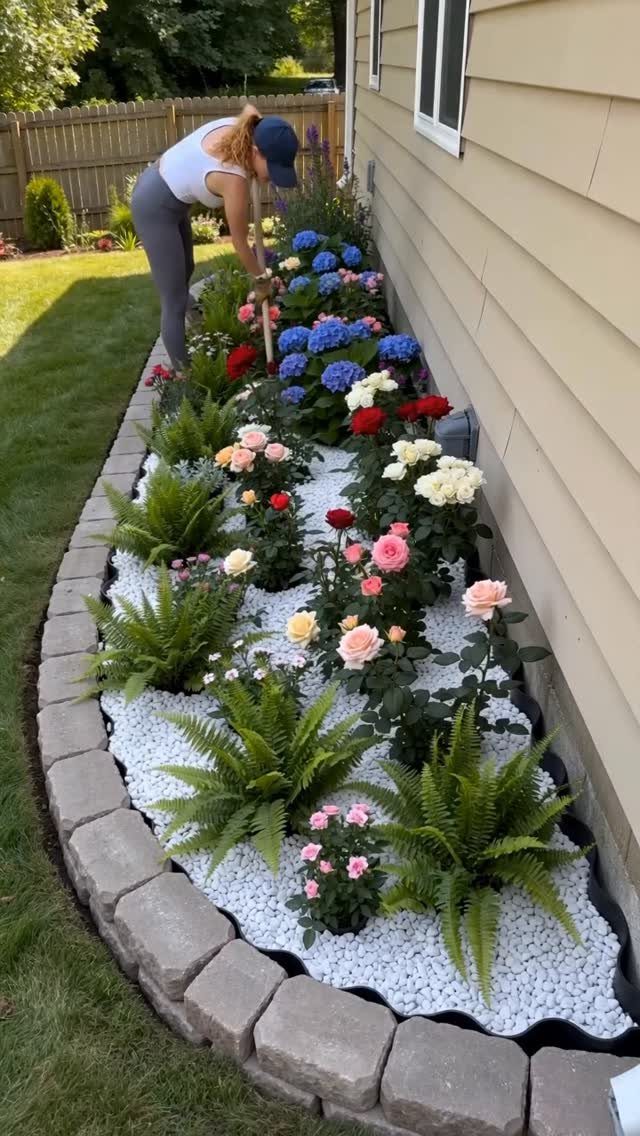
A narrow bed along the house wall can hold roses, ferns and hydrangeas, but only if the edge is firm; steel or stone edging keeps soil and mulch from washing onto the path.
Stone blocks along the front hold the line, and black plastic edging behind them stops the white pebbles from wandering into other areas.
I like pebbles as mulch in a tight strip: they keep the soil covered and brighten the shade beside the wall.
Work from the front of the bed, so you never step on the roots.
13. Use a Cantilever Umbrella
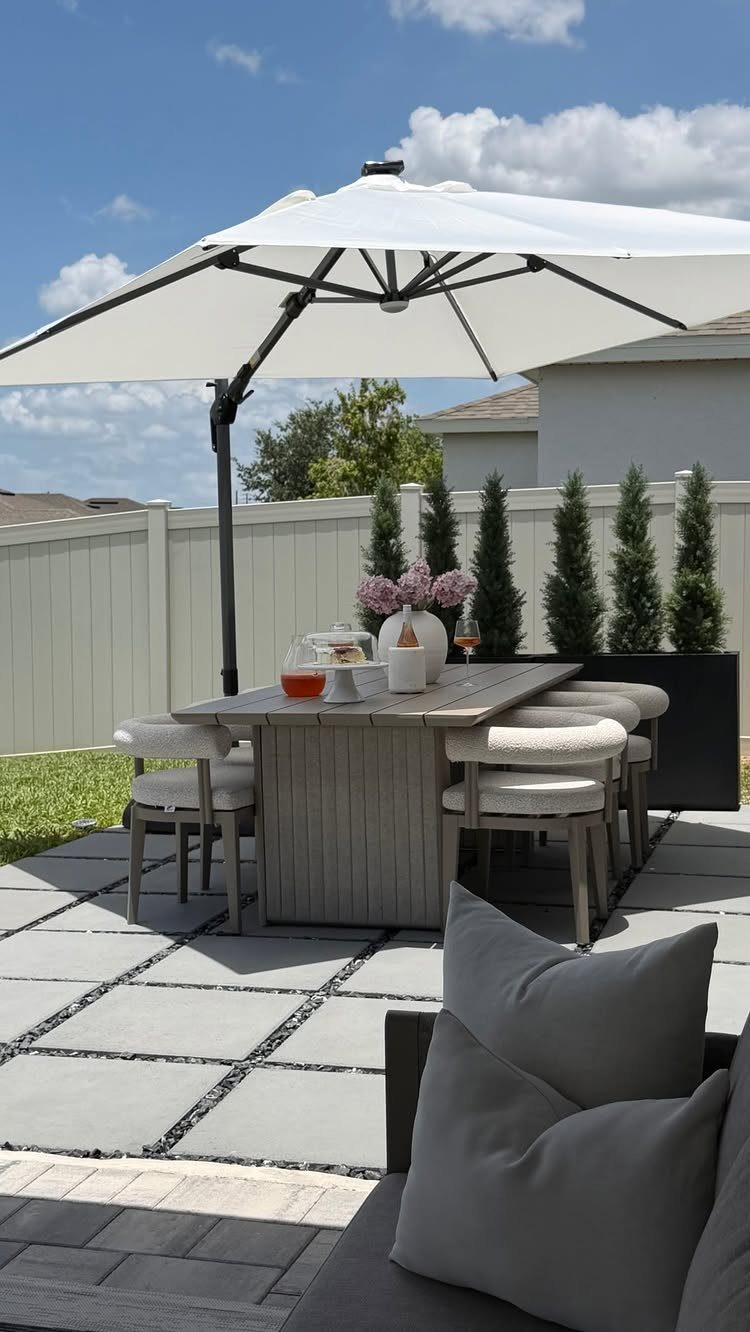
A cantilever umbrella puts shade over a dining set without a pole in the middle of the table. The post stands off to the side, so chairs pull out freely, which matters on a small patio where every inch counts.
I like white for a small space, since it stays light and doesn’t crowd the paving. Tilt the canopy as the sun moves, and set the base beside the table instead of under it.
Pick a canopy wide enough to cover the whole table.
14. Add a Fire Pit
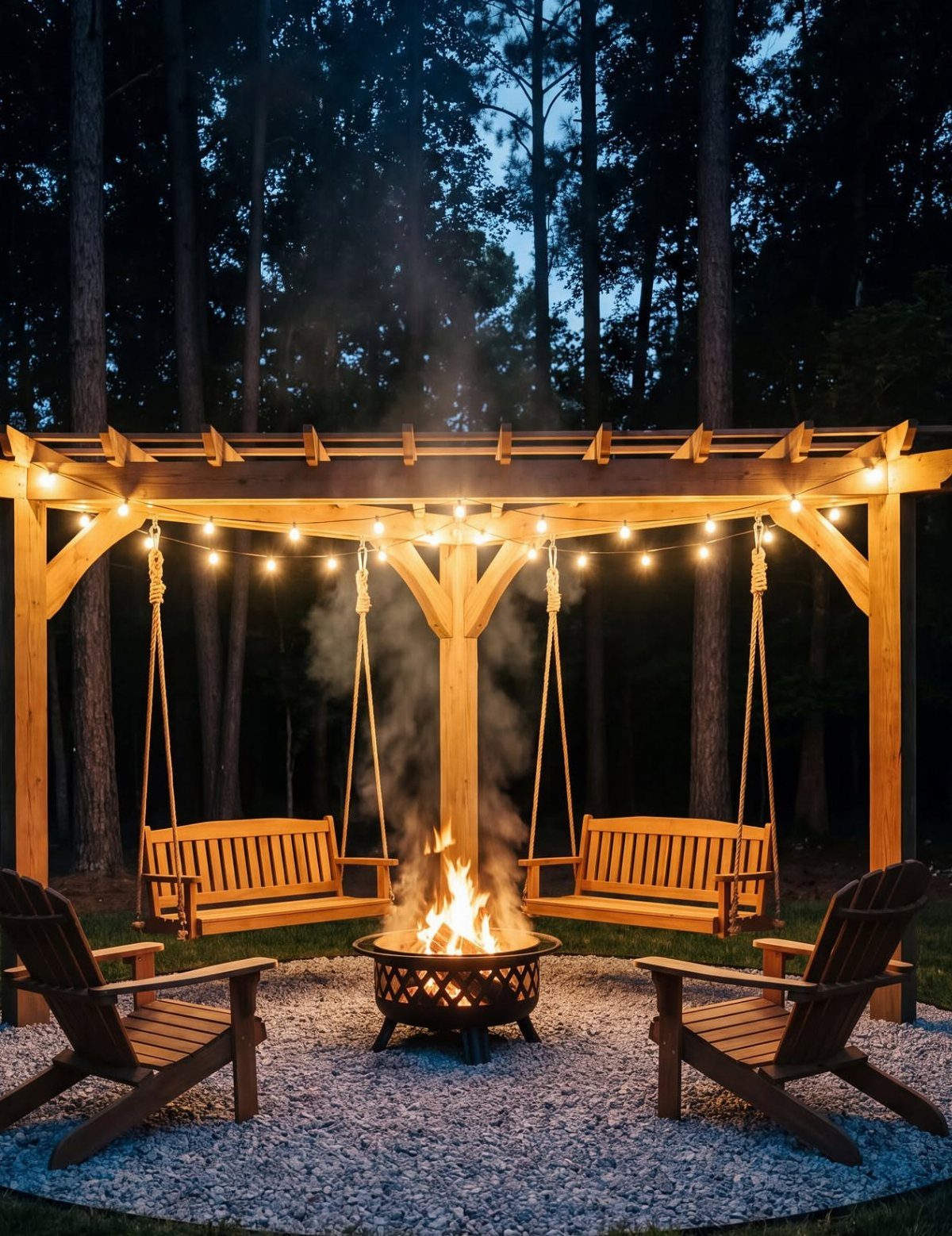
A fire pit gives a small yard one spot where evenings happen. Set it on a gravel base and ring it with chairs, and the pit becomes the focal point that the seating organizes itself around.
I would keep seating close to the flames so the circle feels snug, not scattered.
Check local rules before you build, and measure the clearance between the fire and anything overhead, since beams and open flame need real distance.
15. Pea Gravel and Concrete Pavers
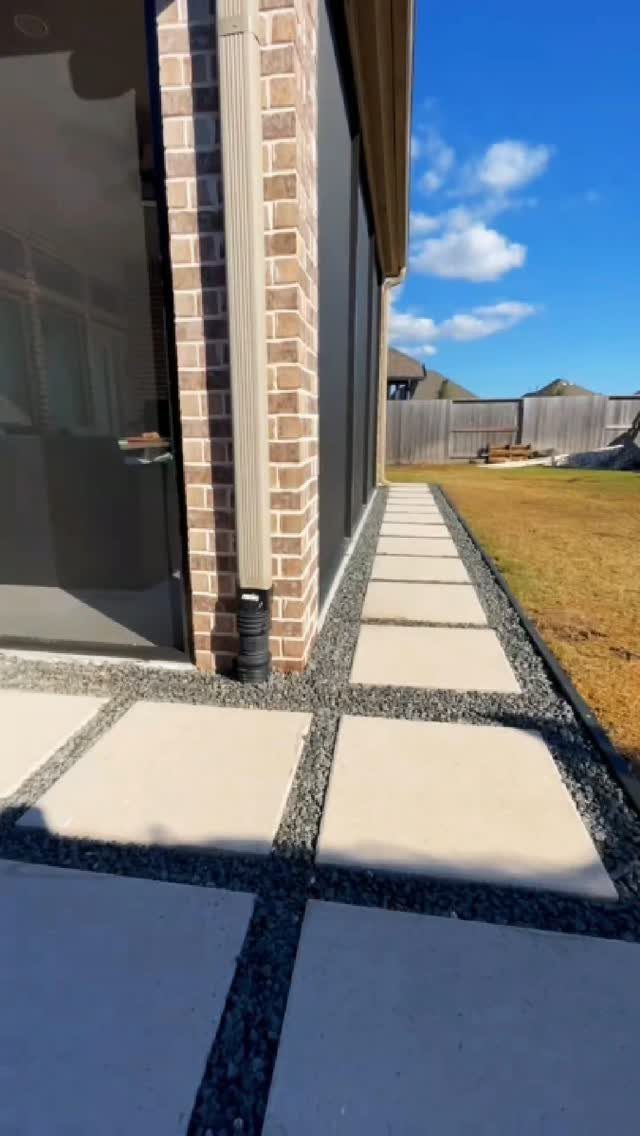
Square concrete pavers set in dark pea gravel make a side path that costs less than a poured walkway and looks tidy against brick. The gravel fills the gaps, so the grid of squares reads clean and drains easily.
Space the pavers evenly, a stride apart, and keep their tops level with each other so the walk stays easy underfoot. Dark gravel hides dust and leaves better than pale stone.
Edge the gravel where it meets lawn, or it will drift into the grass.
16. Backyard Privacy Screen
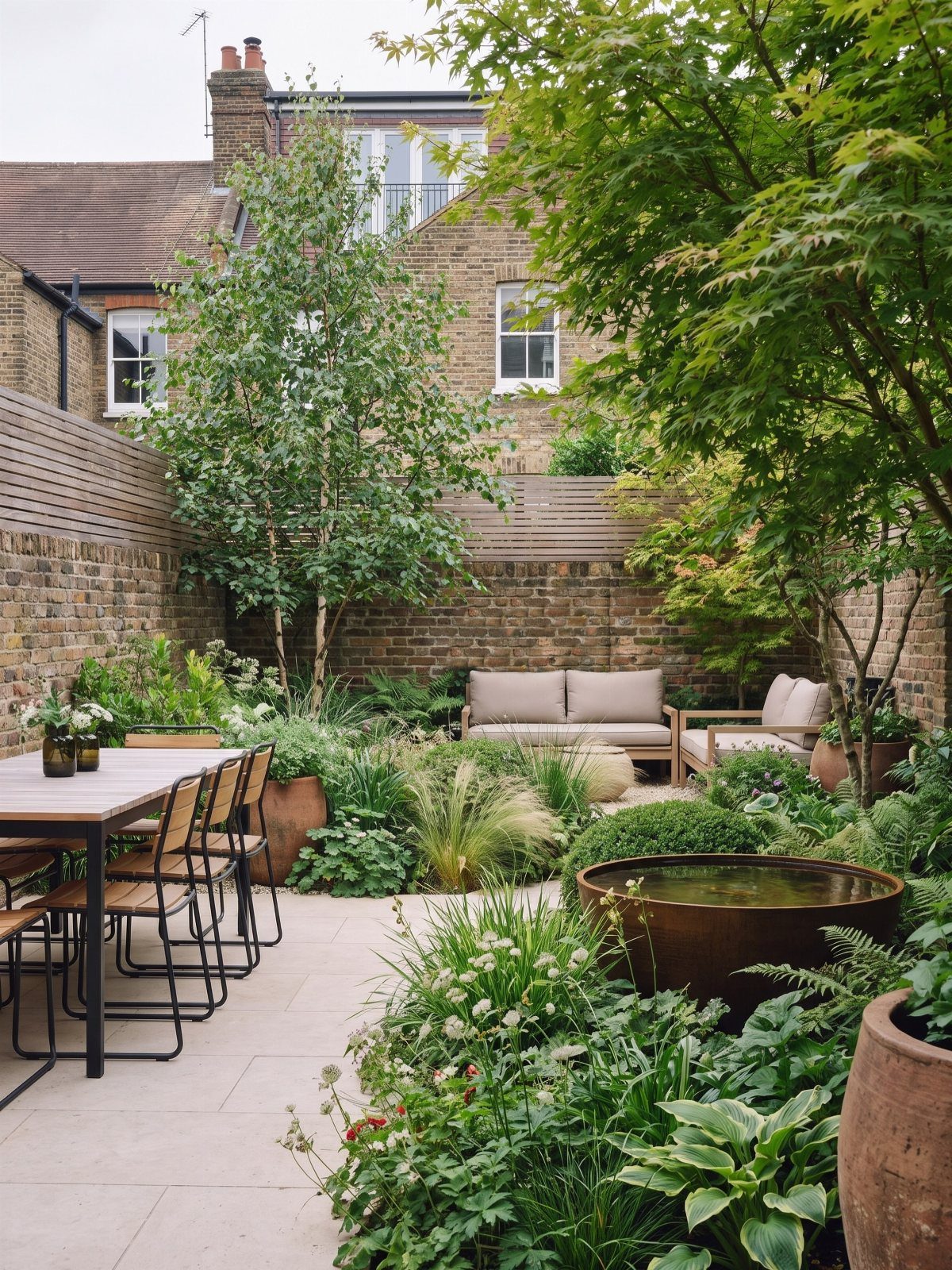
A wooden slat screen set on top of a low brick wall blocks the view from neighboring windows while the gaps between slats keep air and light moving through.
That’s the reason I prefer slats to a solid panel in a tight yard: the space never feels boxed in.
Place the screen on the side that faces the most houses, and keep the seating just in front of it. Plants along the base soften the wood.
Wider gaps give more light; narrower gaps give more privacy.
17. Layered Plants
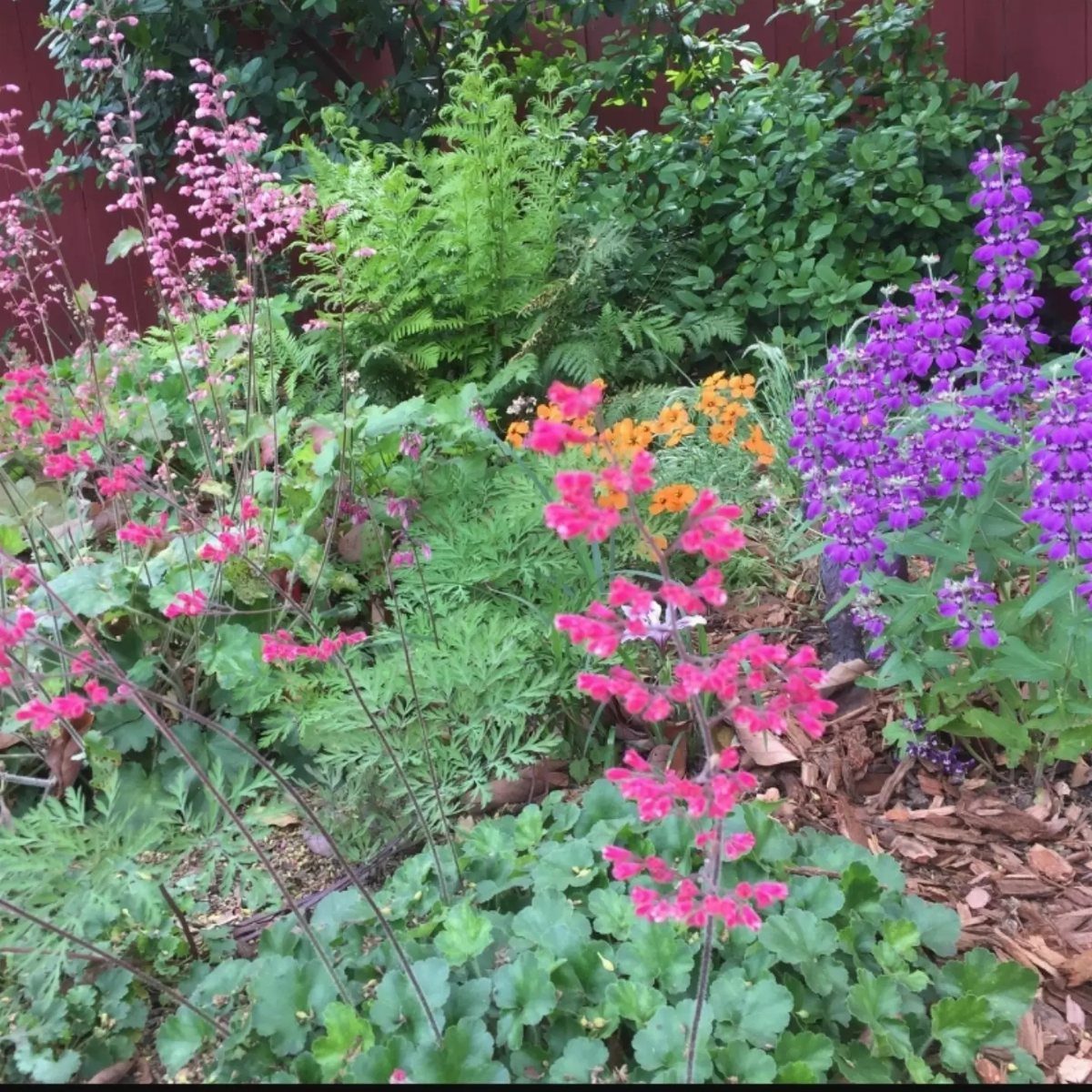
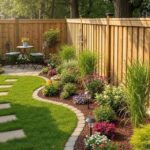
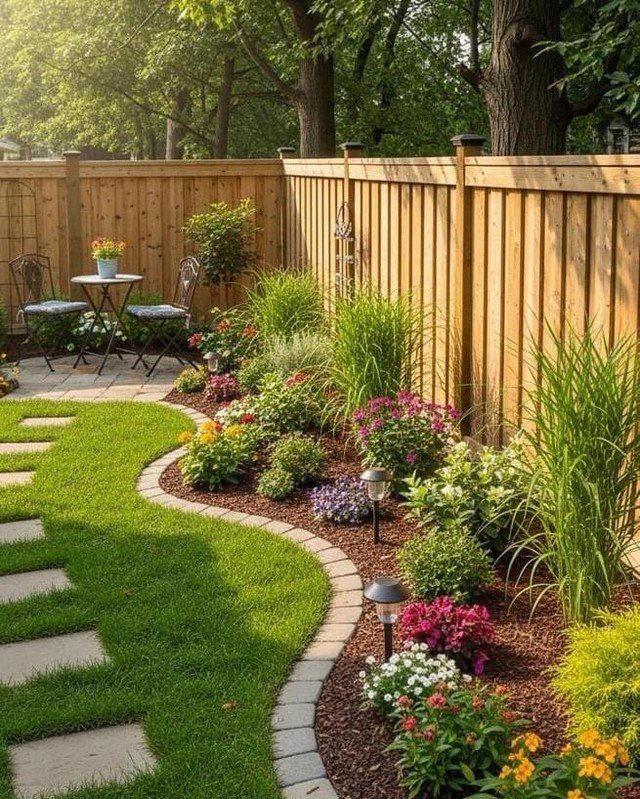
Planting in layers gives a flat bed depth: tall shrubs at the back, mid-height flowers in the middle, ferns and low plants in front.
Even a narrow strip looks full this way, and the eye travels back through it instead of stopping at the fence.
Repeat a color across the layers, such as the pink and purple here, so the mix reads as planned. Wood chip mulch fills the gaps between plants and keeps the soil covered.
Plant the tallest ones first, then work forward.
18. Artificial Turf Lawn
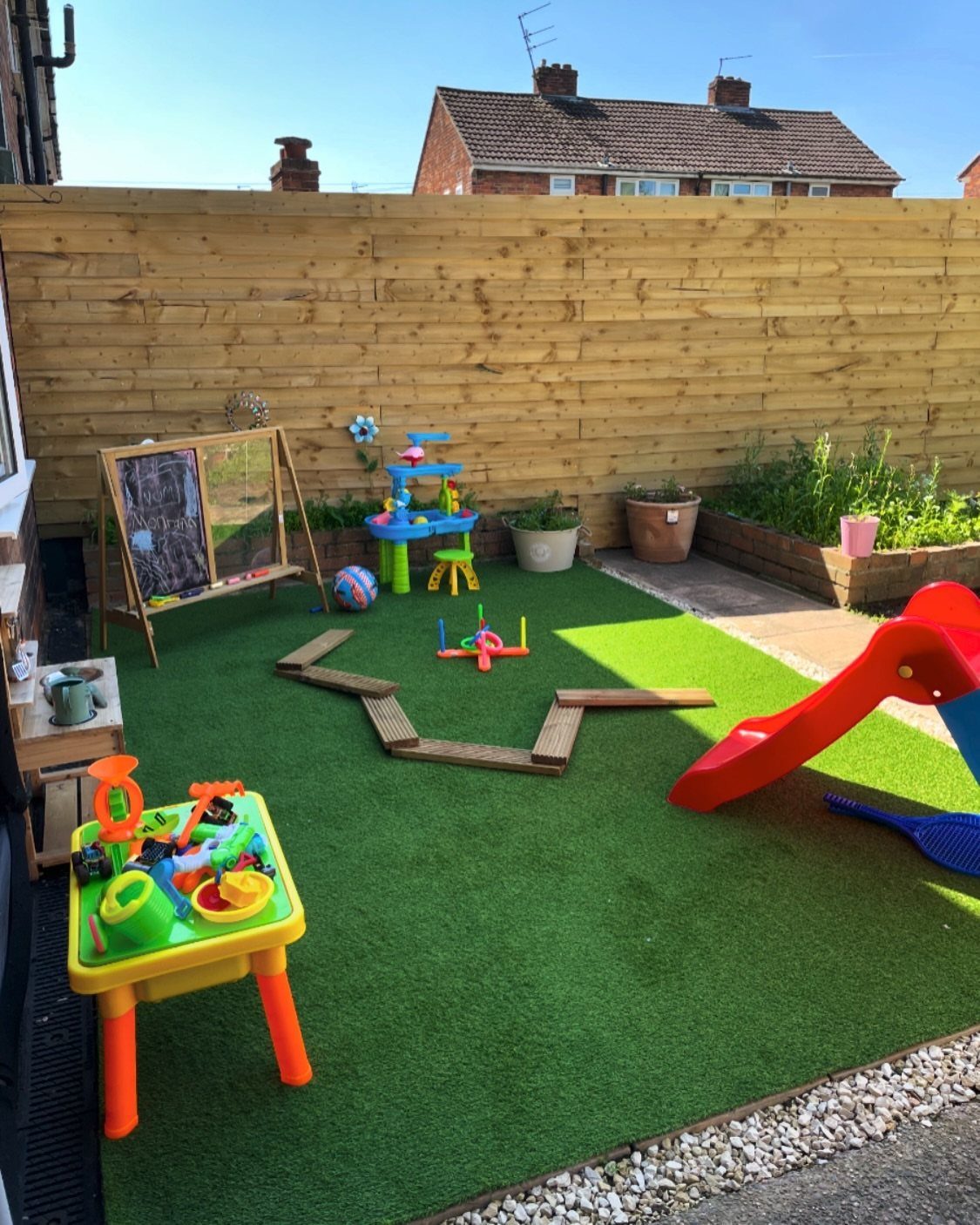
Artificial turf gives a small yard a green play surface that never turns to mud. For a family, that’s the draw: a slide, a play table and an easel can sit on it year-round with no mowing.
Lay it over a firm, level base so toys and feet don’t leave dips. I would keep the furnishings few and low, so kids have room to run.
Cost is higher up front than seed or sod, but you skip mowing and watering.
19. Side Yard Coffee Spot
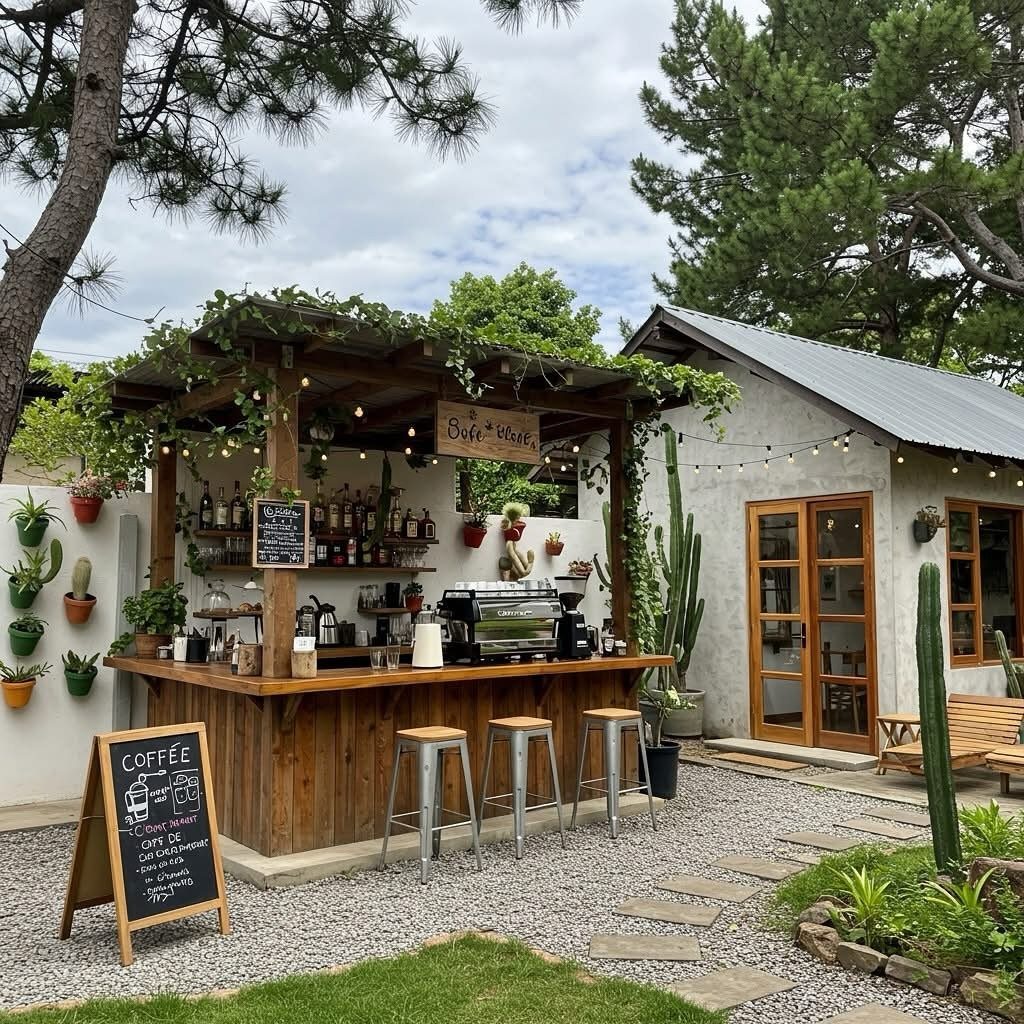
A narrow strip beside a building rarely gets used, and a coffee bar suits it because it needs depth for only one counter and a row of seats.
I would keep the counter slim so there is room to walk past, and let a small sign name the spot. Gravel underfoot means no paving is required.
Run a weatherproof outdoor outlet or extension cord to the machine before you build anything.
20. Fence Chalkboard
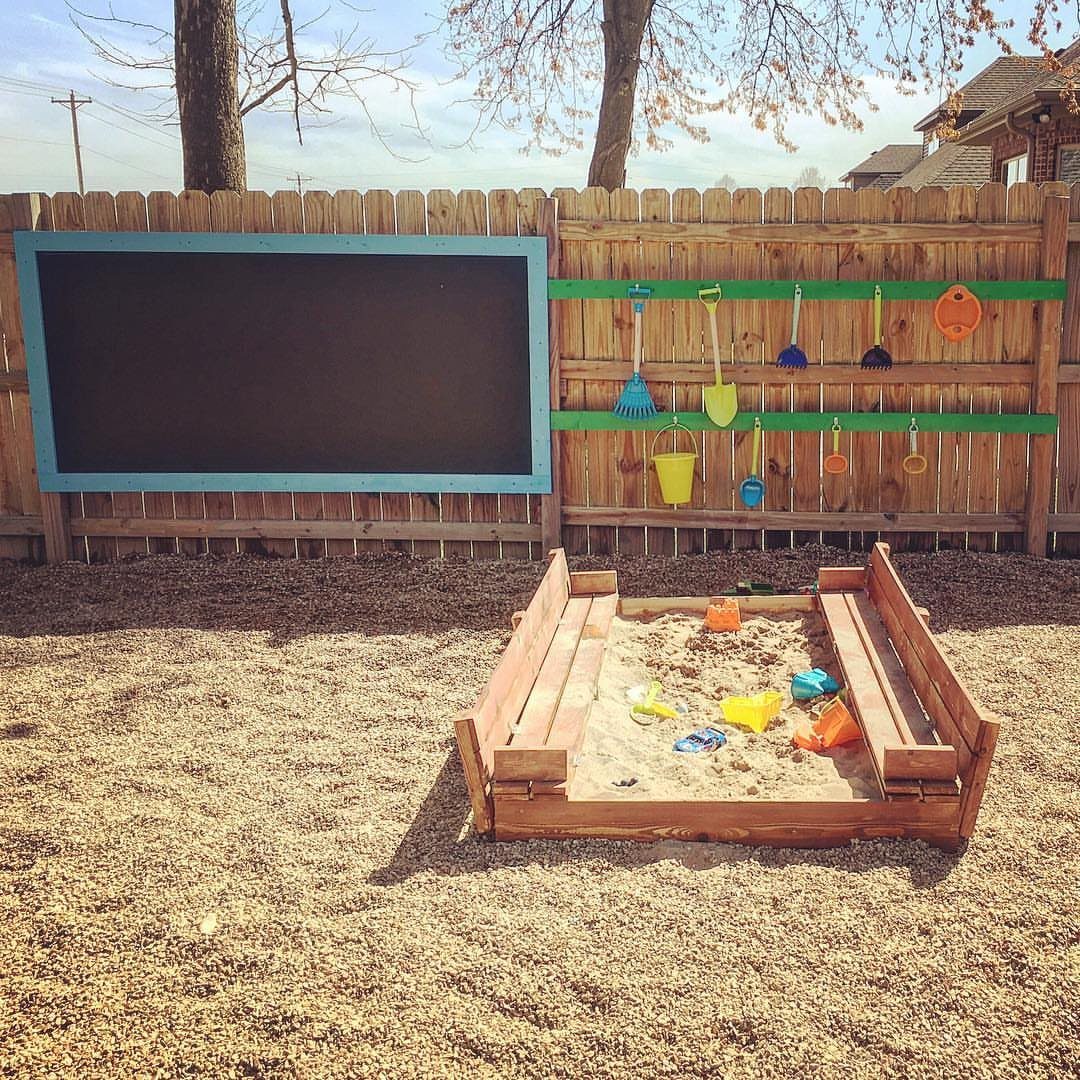
A chalkboard in a blue frame, hung on a wooden fence above a sandbox, turns a plain board wall into a drawing surface for kids.
Because the chalkboard hangs on the fence, kids get a place to draw and the lawn or patio stays clear.
Mount it at child height, and keep toy storage right beside it so chalk and sand toys have a home. The blue frame ties in with a sandbox and keeps the black board from looking heavy against the wood.
Screw it into fence posts or rails, not just a single thin board.
Assess the Site Before Designing
Sun decides more than any other factor, so track it before you buy anything. Check the yard in morning, midday and late afternoon, and note which corners stay shaded.
Then look at drainage, wind and privacy. Where does water sit after rain?
Where does a breeze make a chair uncomfortable? Which spots can the neighbors see into?
Pick the 1 or 2 windows you look out of most, then choose the single view from each that deserves to be the focal point. That is where your best feature belongs, since you will see it daily.
Next, settle on the job of the space.
Dining, lounging or both? Decide what you want from the space: blooms, foliage, food to pick, wildlife, or some combination.
Be honest about upkeep. If you will give a yard only an hour a week, choose plants and surfaces to match.
Keep the plan simple. One beautiful tree can anchor a small yard, and a green wall along the back fence can make it feel larger.
Plan Around Mature Plant Size
Oversized plants sink more small gardens than any other mistake.
That shrub looking small in its 1-gallon nursery pot can crowd a path or shade your seating within a few seasons, so check the tag for mature height, spread and growth habit before it goes in the cart.
The best small-yard plants are not always the smallest ones.
Match each plant’s full-grown size, shape and visual weight to the space it will fill. I pick compact evergreen shrubs, clump-forming ornamental grasses and perennials that rebloom over a short-lived novelty, since they hold up for years.
Repetition helps too. Planting fewer varieties in bigger groups reads as calmer and more polished.
A balanced plan for a small yard:
- 1–2 focal plants
- A few plants repeated for structure
- Several long-season flowering perennials
- One strong ground-layer strategy
Frequently Asked Questions
What are some good landscaping ideas for a small yard?
Start with a defined patio or seating area, then add vertical growing. A trellis in a raised bed lets cucumbers, beans and tomatoes climb, so a narrow strip carries a lot of produce.
Stack the planting in three tiers, shrubs along the fence, flowers at mid-height and a low edge up front, and even a 2-foot-wide bed reads as full.
What is the rule of 3 in landscaping?
I can’t point to a fixed rule of 3 for yards, but small-yard planting works best with repetition. A balanced plan has 1–2 focal plants, a few repeated plants for structure, several long-season perennials and one strong ground-layer strategy.
How can I make my yard look nice cheap?
Define each area’s job first, such as a rug-anchored lounge spot or a separate eating area.
Then add low-cost touches: a painted fence, hanging planters on the rail, or pebble mulch in a tight bed. Pick plants by their mature size so you don’t pay to replace crowded shrubs later.
How much sun does the yard get?
Walk out at 3 points in the day, morning, noon and around 4 p.m., and mark which corners never get direct light.
Areas with full sun get at least 6 hours of direct light, while fences, trees and the house cast shade elsewhere.
Where do you need privacy most?
Put privacy on the side that faces the most neighbors’ windows. Spacing is the dial: leave 1–2 inches between slats for light, or go under half an inch for more privacy, then plant along the base to soften the wood.
Do you need dining, lounging, or both?
Decide this before you buy furniture, because the job of the space drives the layout.
On a small patio, 2 rugs can split the space into a dining zone and a lounge zone, with a strip of bare surface between them as the divider.
Pick a rug size that lets the front legs of each chair rest on it, and measure the patio first so you can still walk around the edges.
How much upkeep are you realistically willing to do?
Think hard about your real week: if the yard gets about an hour of attention, the plants and surfaces should be ones that cope with that.
Artificial turf never needs mowing or watering, but expect to pay more at the start than you would for seed or sod.
Do you want flowers, foliage, edible plants, wildlife value, or a mix?
A mix works well in a small yard if each plant earns its spot.
Edibles like beans, blueberries and peas can share a bed with flowers, so the bed looks good between harvests. Grow only what you’ll actually eat, since an ignored plant becomes clutter.
Which view should become the focal point?
Pick the 1 or 2 windows you look out of most, then choose the single view from each that deserves attention.
Put your best feature there, such as a fountain, a fire pit or one beautiful tree, since you’ll see it daily. Even with the pump off, a fountain still anchors the eye as a focal point.