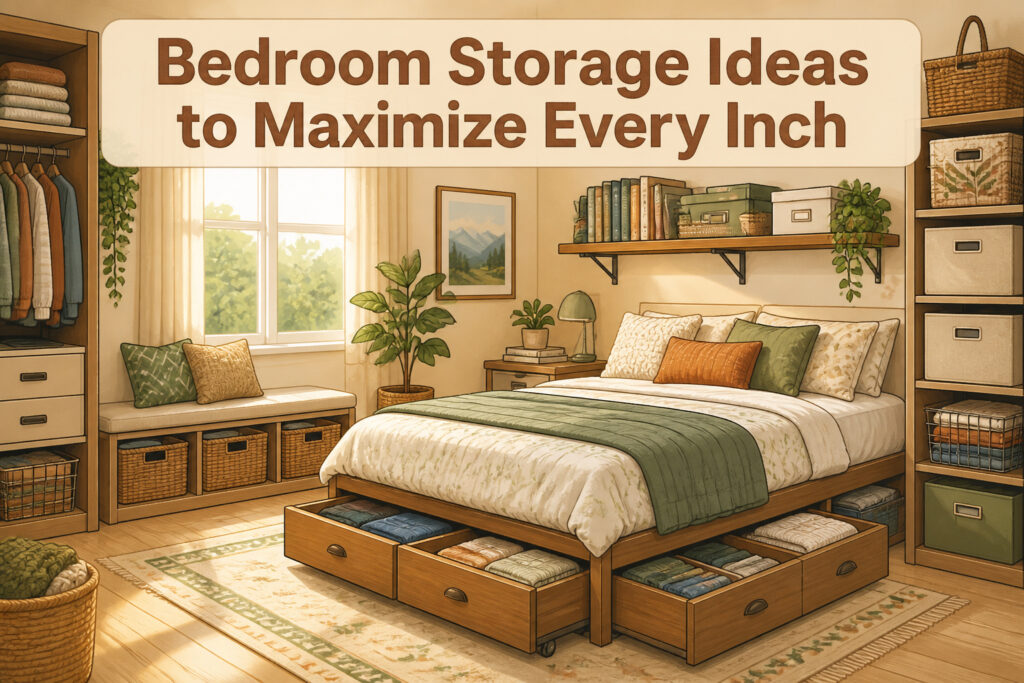
The right bedroom storage idea depends on how often you reach for what you are hiding. Daily-use jeans need a rolling drawer that glides on six-inch casters; ski jackets touched twice a year can sit in lidded bins you fish out with a broom handle. Most people get this backwards, buying expensive built-in drawers for seasonal storage and cheap lidded bins for the clothes they wear every morning.
1. Under-Bed Storage
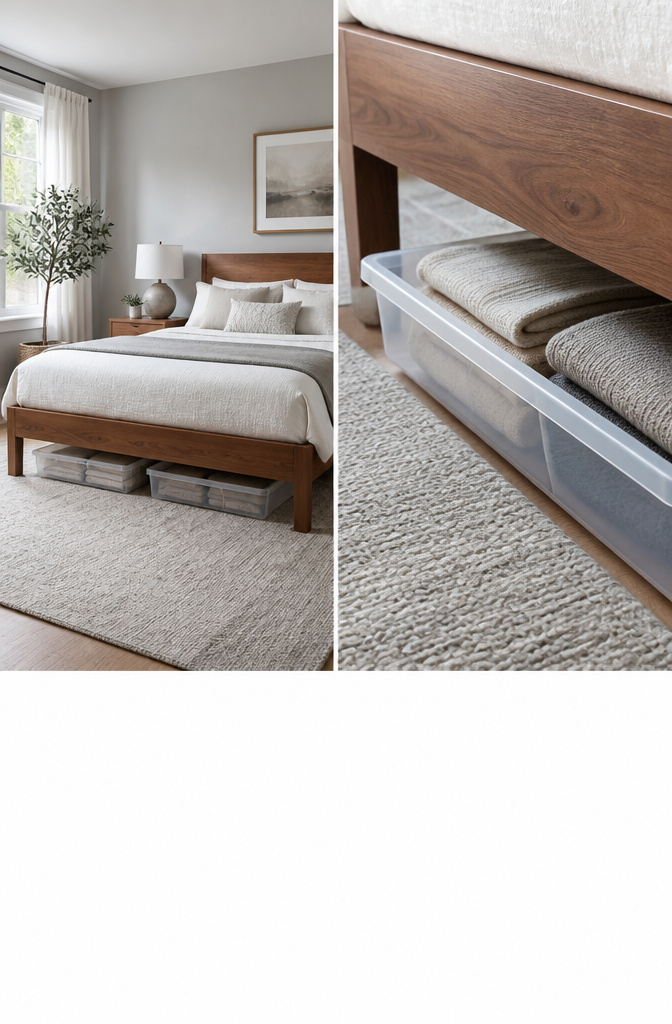
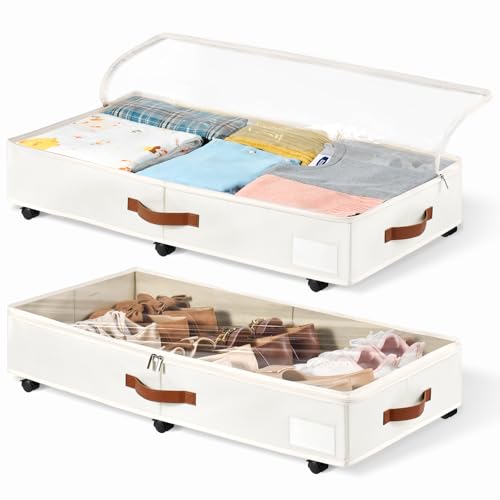
Most bed frames leave 7–12 inches of clearance underneath, which sounds like plenty until you try to slide a bin in and hit the center support rail. Standard shallow bins run 5–6 inches tall, a fit that works for metal frames and older box springs but leaves barely a finger’s width to grip the lid. Platform beds with built-in space can take the 11–12 inch drawers that actually roll, though you will want to check whether your frame has legs in the way or a solid deck all the way down.
A full bin at 28 inches wide fills half a queen bed’s width. That means two across, or one plus a narrow shoe box you will forget exists. The Iris drawer at about 6 inches tall and 30 inches deep glides well enough that daily access does not grate, which matters if you are using this for jeans and sweaters rather than the ski jacket you touch twice a year. For true seasonal storage, a lidded bin you slide out with a broom handle works fine and costs less; the drawer earns its price only if you open it weekly.
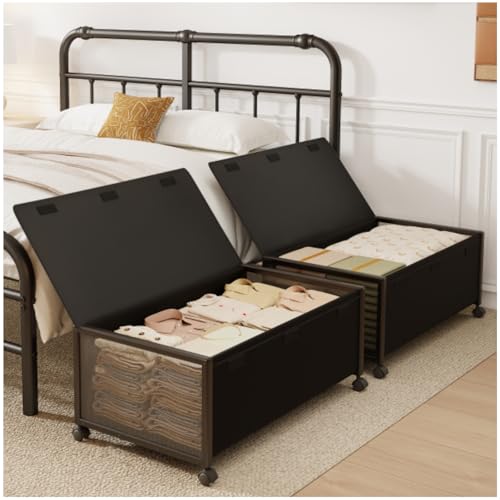
LARGE UNDER BED STORAGE:Fokyfok under the bed storage offers 2 times the capacity of a regular under the bed storage containers,allowing you to make good use of the space,our under the bed storage with wheels can be used as under crib storage,college dorm under bed storage drawers,shoe rack under the bed,With its generous size,you can store and organize a wide range of items,from clothing and bedding to shoes gear and seasonal decorations

LARGE UNDER BED STORAGE:Fokyfok under the bed storage offers 2 times the capacity of a regular under the bed storage containers,allowing you to make good use of the space,our under the bed storage with wheels can be used as under crib storage,college dorm under bed storage drawers,shoe rack under the bed,With its generous size,you can store and organize a wide range of items,from clothing and bedding to shoes gear and seasonal decorations

Premium Material : The under bed storage containers are made from high-quality, odorless, three-ply composite non-woven thick fabric, foldable and breathable, keep clothing fresh from long-term storage. NO cardboard NOR metal supports insert, arrive to you collapsed and packaged in a clear storage bag.
2. Storage Benches
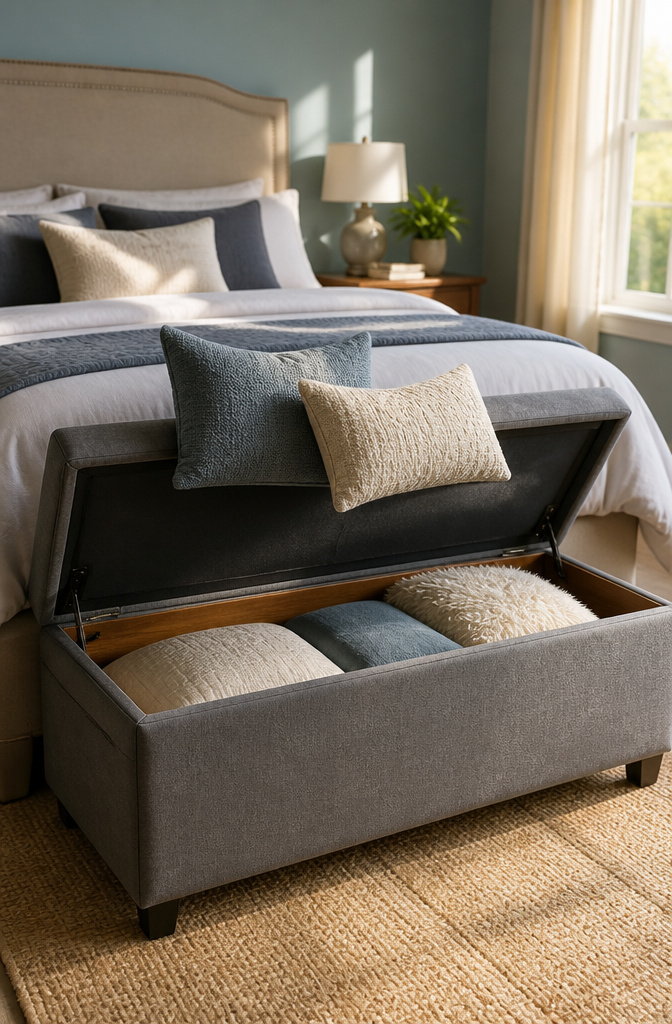
A storage bench at the foot of the bed gives you a place to sit while doubling as a trunk for extra pillows and blankets. Most run 48 to 60 inches long and 15 to 18 inches deep, though the usable interior shrinks to about 10 to 12 inches once the frame and lid take their share. If you go with a hinge-top model, leave 18 to 24 inches of clearance in front so the lid can swing open without you having to step back into the wall. Two smaller trunks pushed together with cushions on top work the same way if you find a single bench too bulky for the room, and rattan ones breathe a little so stored linens don’t turn musty in a closed-up bedroom. I lean toward the hinge-top style for bedding because you can lift it with one hand while folding with the other, but the slide-drawer versions keep dust out better if you are storing things you only pull out seasonally.

3 inches TALL FOR TIGHT SPACES:Fokyfok 6 inch under bed storage is designed for ultra-low clearance furniture such as low beds, platform beds,sofas,and couches.It fits where traditional storage containers cannot,helping make better use of unused space in small bedrooms,apartments,and dorms.

【Solid Composite Wood Construction for Long-lasting】: Crafted from sturdy composite wood, these underbed drawers are built to withstand heavy daily use. They offer superior strength and longevity compared to fabric organizers, protecting your belongings for years
Choice for Long Term Use: KitHero under bed storage applied with tough 600D Oxford Fabric, reinforced sides and bottom by thickened cardboard. The last thing wanted is after months of storage and those flimsy non-woven underbed shoe storage ripped apart as you try to pull them out
3. Wall-Mounted Shelves and Hooks
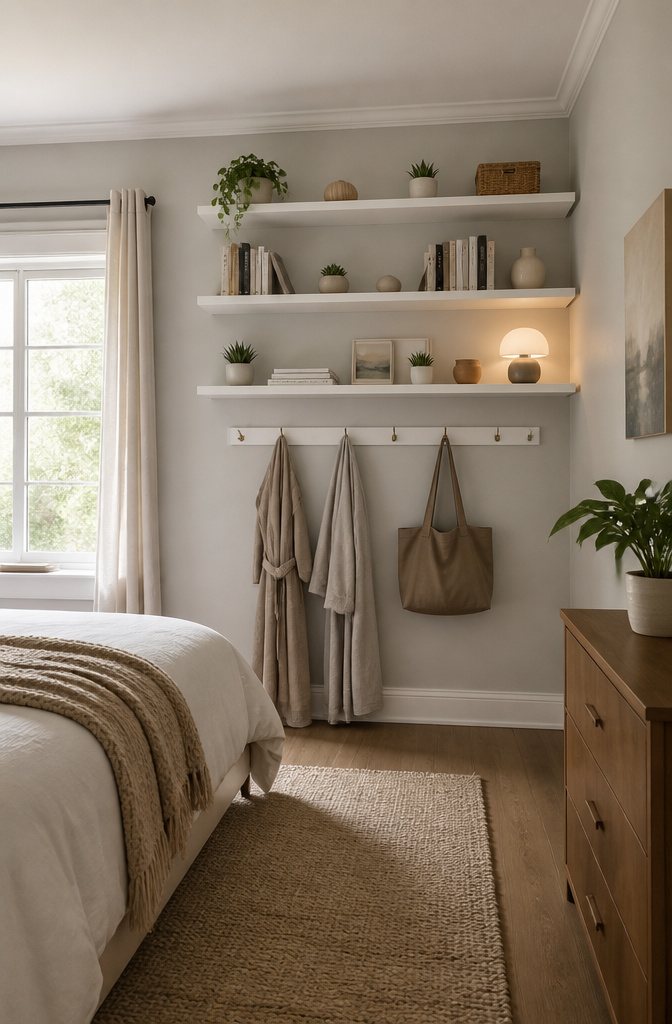
Wall-mounted shelves earn their space back twice: once by holding books or a lamp, and again by leaving the floor clear for a hamper or a pair of shoes. Standard floating shelves with a single bracket pair carry 15–30 pounds, which is plenty for paperbacks and a small plant but not for a full row of hardcovers or a heavy ceramic vase. In US construction, studs sit 16 inches on center, so shelf lengths of 16, 32, or 48 inches line up properly without drifting into drywall that has nothing behind it. I have watched a 36-inch shelf sag after six months because the brackets missed the stud pattern and relied on anchors instead.
Hooks at 5–6 feet high keep long items like robes, tomorrow’s outfit, or a tote bag off the floor and out of the closet door swing. That height clears most headboards and nightstands, and it puts the grab within easy reach while you are still half-asleep. In a narrow room, a single row of hooks along the wall behind the door handles what a chair would otherwise pile, without the pile.

Elegant Focal Point for Your Home: With its chic linen-look fabric and tufted design, this shoe storage bench enhances any living room or bedroom decor, working beautifully as an end of bed bench or a cozy window seat

Elegant Focal Point for Your Home: With its chic linen-look fabric and tufted design, this shoe storage bench enhances any living room or bedroom decor, working beautifully as an end of bed bench or a cozy window seat

【ELEGANT DESIGN, ENDURING COMFORT】This ottoman boasts a chic linen-look surface with an elegant tufting design, adding a stylish touch to your space. The double-layer fabric and high-resilience foam ensure lasting comfort for relaxation
4. Multi-Functional Furniture
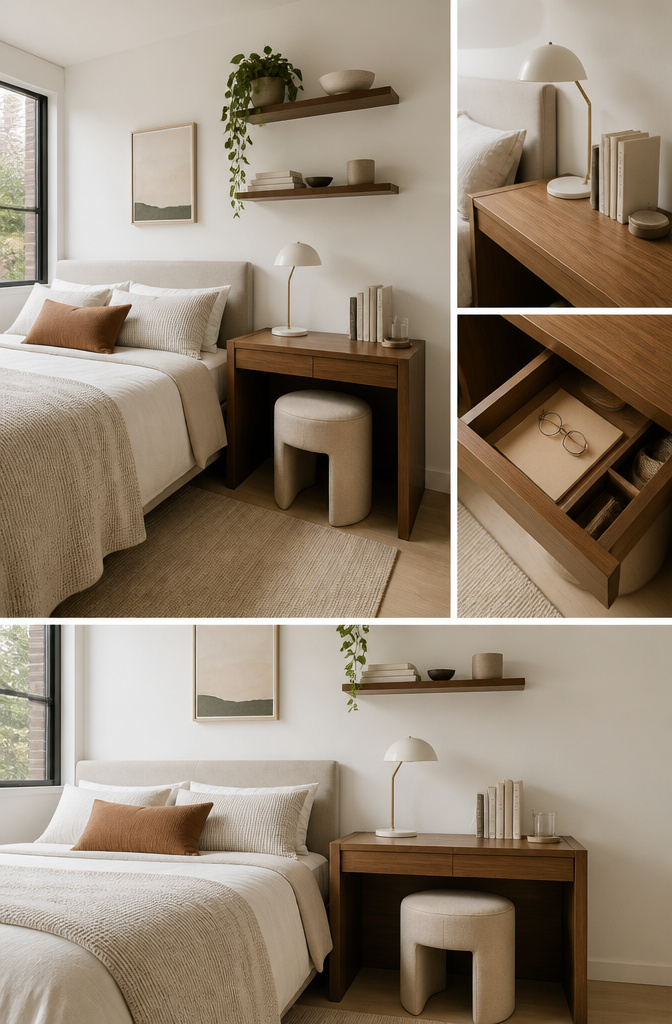
A desk doubling as a nightstand buys back floor space in a tight bedroom, but the swap comes with a footprint you have to plan around. Standard nightstands run 16–18 inches deep, while even a small writing desk sits 20–24 inches front to back. That extra depth is workable only if you leave 30 inches of clearance for a chair to pull out. I learned that the hard way in a 10-foot-wide guest room where the desk fit against the wall but the chair blocked the closet door until I swapped it for a backless stool that slides underneath.
Storage ottomans hide the clutter you do not want to look at: spare bedding, off-season clothes, the laptop you use twice a month. They sit at the foot of the bed or against a wall and do not ask for extra square footage.
Beds with drawers underneath keep everything accessible without lifting the mattress. The Room & Board Hudson frame extends its drawers nearly 2 feet in the queen size, and one drawer swallows six thick bath towels or 10 pairs of jeans. You need clearance to pull them fully open, and the drawer closest to the wall stays half-blocked unless you use a wall-mounted nightstand or skip one on that side entirely.
Murphy beds with side cabinets add 12–16 inches per side, so the wall has to be wide enough to absorb that bulk when the bed is down. The storage is shallow, good for bins and folded clothes, not for hanging anything.
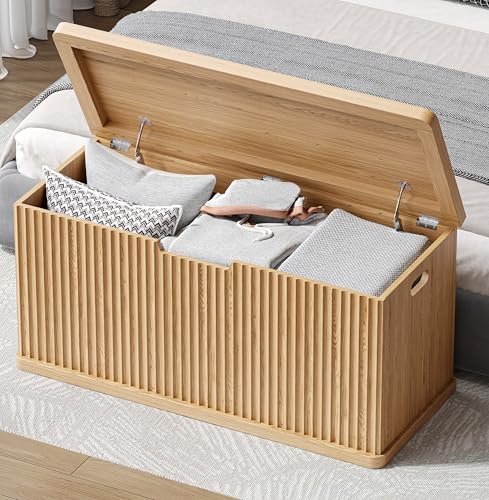
Large Storage Space: Measuring 15.4" D x 37.4" W x 17.9" H overall, this large storage chest features an enormous interior storage space that can easily accommodate clothes, books, blankets, and more. It enables neat one-stop organization, meeting your diverse storage needs while keeping your home tidy and orderly

Large Storage Space: With overall dimensions of 15.7" D x 51.2" W x 17.7" H, this storage chest delivers generous interior capacity for organizing clothes, books, blankets, and everyday essentials. One centralized spot for all your storage needs—keeping every room clutter-free and well-organized

【2 Hinges for Added Safety】The sturdy wooden storage chest features 2 safety hinges, holding the lid open and close slowly and smoothly. The lid can stay open at any angle without risk of slamming shut or pinching fingers. 2 cut-out handles allow you to easily move around
5. Nightstands with Storage
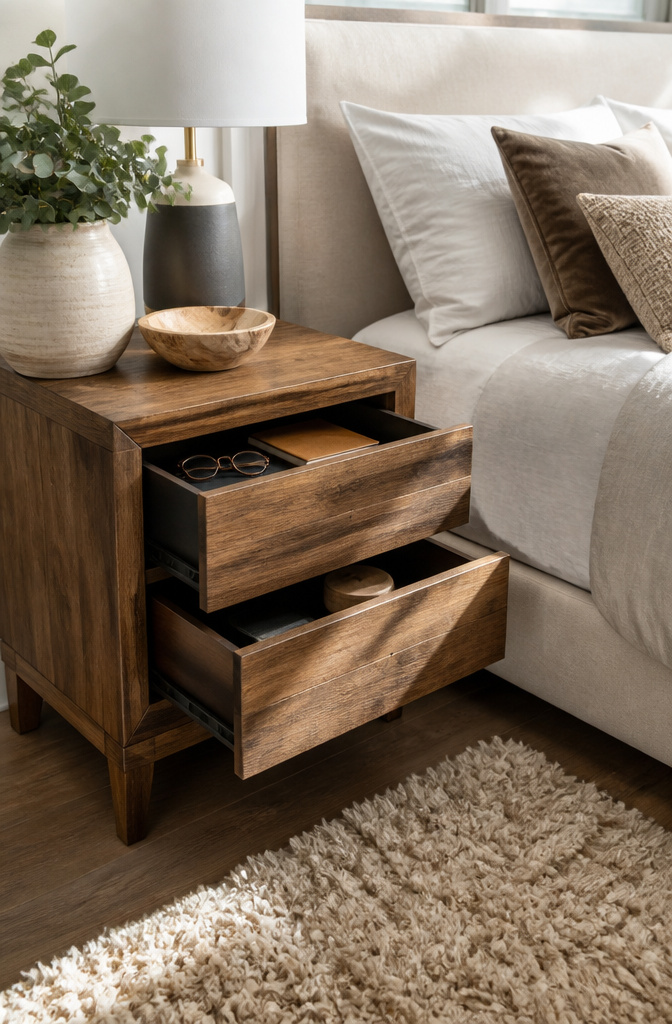
A nightstand without storage turns into a landing strip for ChapStick, phone chargers, and whatever book you are pretending to read. The surface collects clutter because there is nowhere else for it to go. Two drawers with 4–5 inch interior depth handle most bedside items without swallowing them whole, and the standard 16–18 inch width fits even tight spots beside a bed frame.
Open shelf versions trade privacy for speed. A 10–12 inch vertical clearance lets you stand books upright or slide in a basket for socks and pajamas, treating the nightstand as an extension of your dresser. I used to think empty space would force me to stay tidy. Instead I just had a mess at eye level every morning. Drawers hide the chaos until you are ready to deal with it; shelves force you to curate what stays in view. Either works if you match it to what you actually reach for at 11 PM.

2 Set Wall Jewelry Organizer: With sizes of 13.4 x 4 inches. Made of premium transparent acrylic, this compact and functional jewelry storage would be a nice addition to your home decor.

【𝐁𝐨𝐡𝐨 𝐖𝐚𝐥𝐥 𝐀𝐜𝐜𝐞𝐧𝐭】This arched wall plant shelf combines boho charm with rattan-inspired details, creating a relaxed yet stylish look that instantly enhances your living room, bedroom, or cozy reading nook
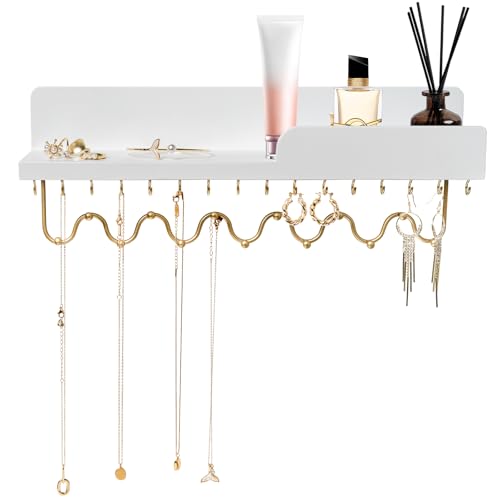
Save Time – No more untangling or searching for necklaces! Keep your accessories neatly displayed and easily accessible, so you can get ready faster and stress-free.
6. Built-In Storage
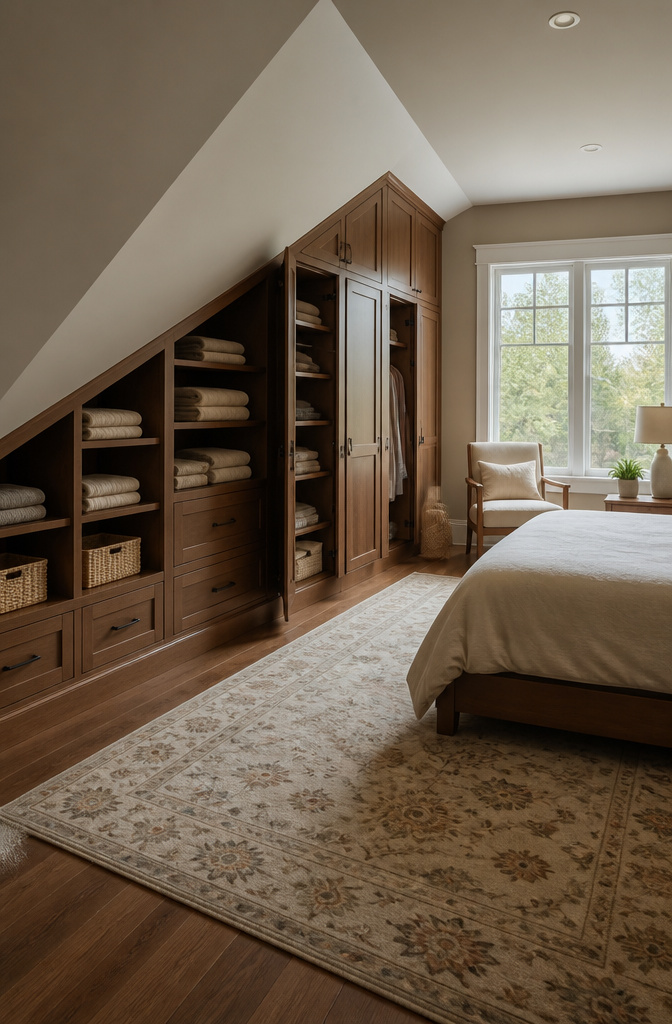
Built-ins turn the awkward geometry of a bedroom into storage that furniture cannot match. A knee wall under a sloped ceiling, dead space in most rooms, typically yields 24–36 inches of usable shelf height at its center if you follow the roof pitch rather than forcing a flat line. The low sides stay useful for shallow cabinets or shoe cubbies.
Window seats sit at the same intersection of function and lost space. The seat itself needs to hit 18–20 inches to match standard chair seating; anything lower and adults end up bracing on their knees to stand. Below that, a depth of 12–16 inches keeps the storage reachable without the lift-up lid hitting your shins. Drawers work better if the seat fronts a straight wall, but a hinged top is often the only option where the bench wraps a bay.
Cabinets recessed between studs eat only the wall thickness, though renters should check the lease before cutting drywall. For owners, the payoff is clothing storage that does not project into the room at all.

100L SPACIOUS STORAGE CAPACITY: The under the bed storage features extended height and length, offering spacious room for comforters, winter coats, boots, and other bulky items while maximizing under-bed space

[Easy to Move and Store]: Our EE-RoomWorld underbed storage with wheels allows for effortless mobility, making it a breeze to pull in and out from under the bed. With 8 packs of 360° rotating wheels, you'll experience smoother sliding and better support when accessing your items.

HOMZ for Your Home: From organization to storage, we have the container that you are looking for. Proudly made in the USA, allow us to make your house a HOMZ.
7. Decluttering First
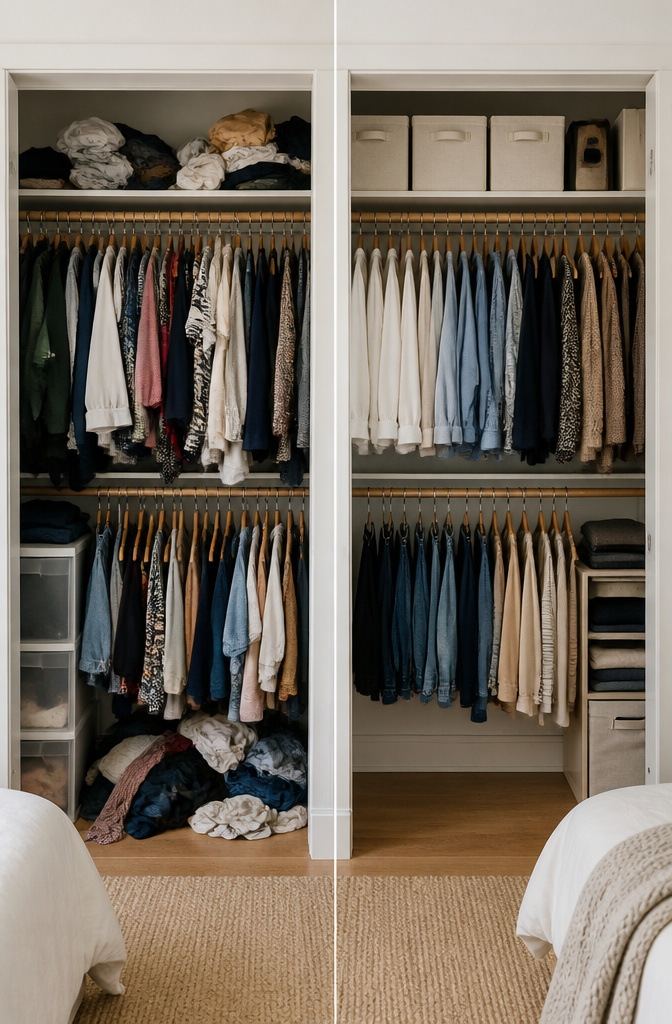
The 12-month rule for clothing is simple: if you haven’t worn it in a year, it goes. I used to keep pieces for "just in case" and they sat there, taking up rod space I actually needed. Decluttering before you buy a single bin or shelf typically cuts your storage needs by 20–30 percent, which means you might not need that extra dresser at all.
Once the excess is out, everything left needs a designated home. Not a general zone, not "somewhere in the closet"—a specific spot where it lives and where you check to see if you already own one before buying again. That’s where the one-in-one-out rule becomes maintenance instead of another weekend project. A new sweater in means last year’s least-worn sweater out, same day, no debate. The system only works if the outgoing item leaves the house immediately; my own pile of "to donate" bags sat by the door for three weeks once and slowly got raided back into drawers.
The real payoff comes in how much less furniture you end up buying. Sources consistently flag this as the step most people skip, then wonder why their new organizer still feels cramped.

【92L Expandable Large Capacity, Fit 99% Bed Heights】Total game changer for small space! The flexible extendable under bed storage containers has an overall size of 34in*17in*10in (Adjustable height from 6 inches to 10 inches), providing a huge storage capacity of 92L to adapt to different bed frames, offering you a flexible storage solution!

【Solid Engineered Wood Construction for Long-lasting】: Crafted from sturdy particleboard, these underbed drawers are built to withstand heavy daily use. They offer superior strength and longevity compared to fabric organizers, protecting your belongings for years
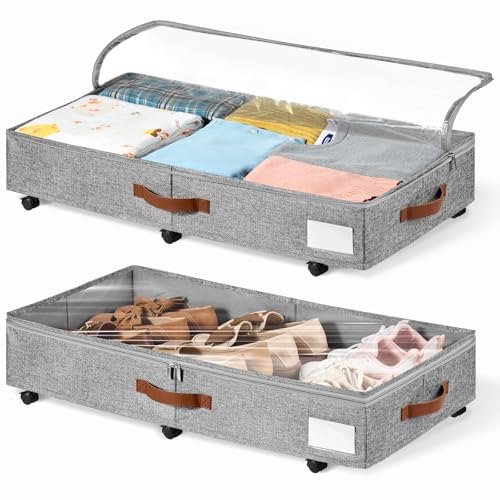
Choice for Long Term Use: KitHero under bed storage applied with tough 600D Oxford Fabric, reinforced sides and bottom by thickened cardboard. The last thing wanted is after months of storage and those flimsy non-woven underbed shoe storage ripped apart as you try to pull them out
8. Rolling Carts
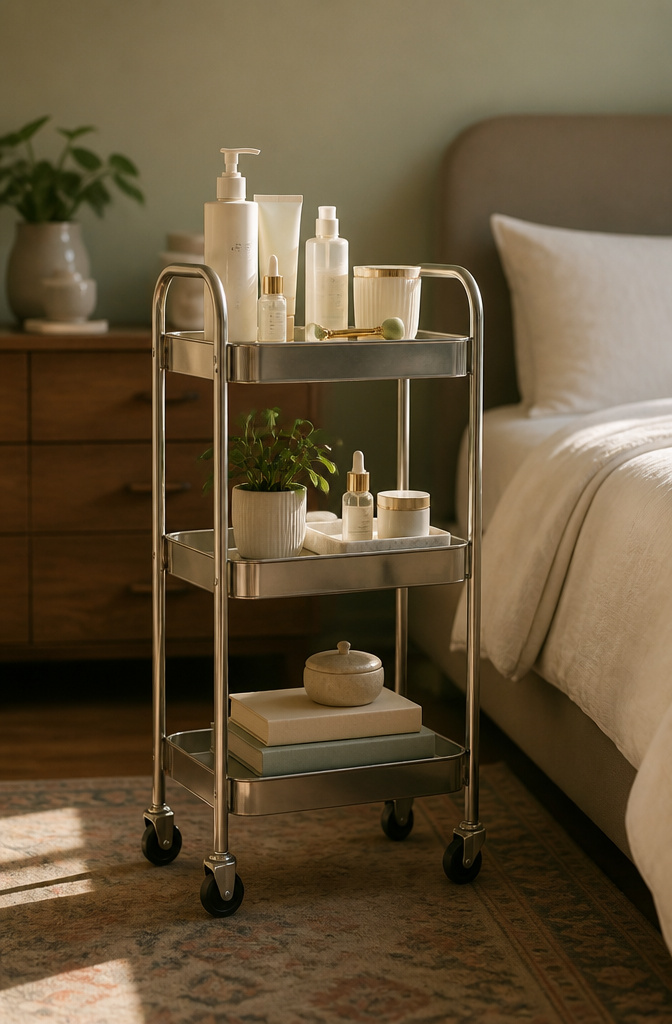
A rolling cart slides into the gap between a bed and wall, or lives in the closet until Friday night skincare routines call it over. The standard utility cart runs about 12–15 inches wide and 24–30 inches tall, with two or three tiers that leave roughly 3–4 inches of clearance between shelves. Casters add another 2–4 inches, so measure your bed frame or desk overhang before buying.
The real value is mobility. Morning skincare, evening reading, weekend craft supplies all live on one cart that follows you around the room instead of claiming permanent real estate in three different spots. I have watched a friend roll hers from bathroom to bedside to desk and back, and the clutter stayed contained in one footprint.
Doorway width is the gotcha. Older homes often have 28-inch door frames, and a cart pushing past 16 inches wide will scrape or refuse to fit through at all. Check the hallway and bedroom door before you buy, not after assembly.

【ELEGANT DESIGN, ENDURING COMFORT】This ottoman boasts a chic linen-look surface with an elegant tufting design, adding a stylish touch to your space. The double-layer fabric and high-resilience foam ensure lasting comfort for relaxation

【COMFORTABLE SEAT】 43.3"L x 15.7"W x 15.7"H (110 x 40 x 40cm), suitable height for sitting & resting your feet or legs. Highly resilient foam padding ensures a comfortable sitting experience. Constructed by 9mm MDF, Sturdy and durable. The MDF used in this ottoman is made from FSC certified wood, This ottoman benches holds up to 660lbs (static load capacity); easily seats 2-3 adults.

Foldable & Quick Setup: This foldable storage ottoman allows effortless tool-free quick assembly within just minutes. The storage bench can fold completely flat when unused and neatly tucked under bed or closet to save extra indoor storage space
9. Closet Organization
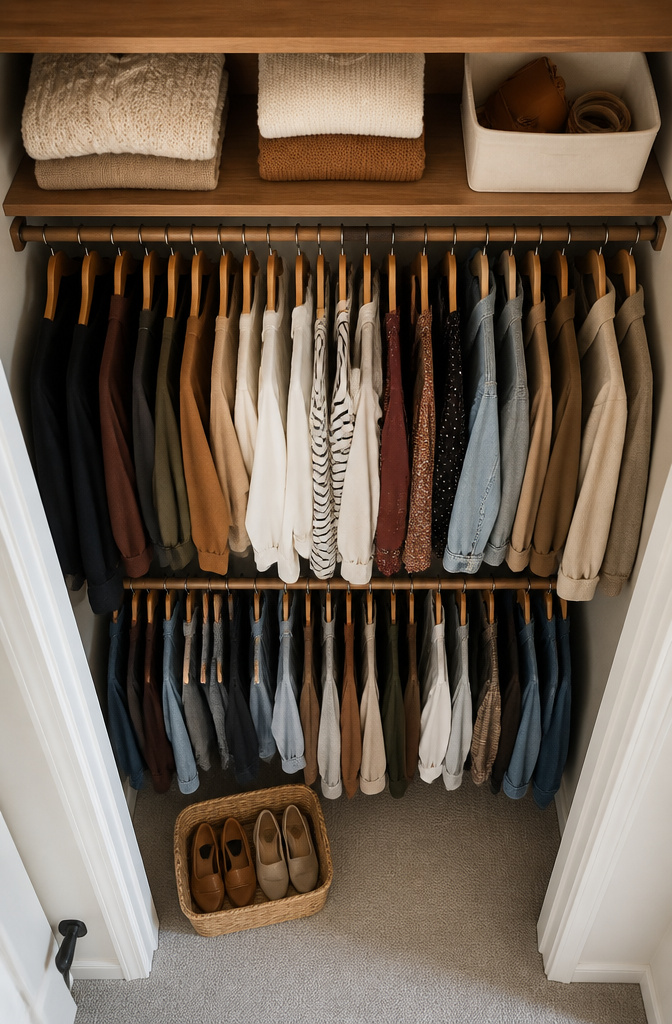
Closet rods mounted at 63 inches leave room for dresses without pooling, while a second rod at 45 inches handles shirts and blouses. I stacked shelves above the higher rod with 12 inches of vertical clearance, which fits folded shirts in a 12-inch depth or sweaters pushed back to 16 inches. Double-hang systems need 42 inches total height to work without the lower bar brushing the floor.
Bins on upper shelves work best under 12 inches front-to-back; anything deeper and you end up fishing blind for what slid to the back. In a rental right after getting married, I used pantry bins to corral shoes and keep them off the bedroom floor, which was the only storage I had until the closet got sorted. Adjustable shelves matter more than they look like they should, especially when the same closet later needs to hold a kid’s bigger coats instead of your own.

【2 Hinges for Added Safety】The sturdy wooden storage chest features 2 safety hinges, holding the lid open and close slowly and smoothly. The lid can stay open at any angle without risk of slamming shut or pinching fingers. 2 cut-out handles allow you to easily move around

Tons of Storage: Sized at 15.7"D x 39.4"W x 18.3"H, this large storage bench boasts a spacious compartment to stow your blankets, pillows, clothes, and books away for an organized living space

1. Versatile: Sized to hold various books, toys, and art accessories in the nursery or playroom with a practical flip-top lid.
10. Decorative Storage
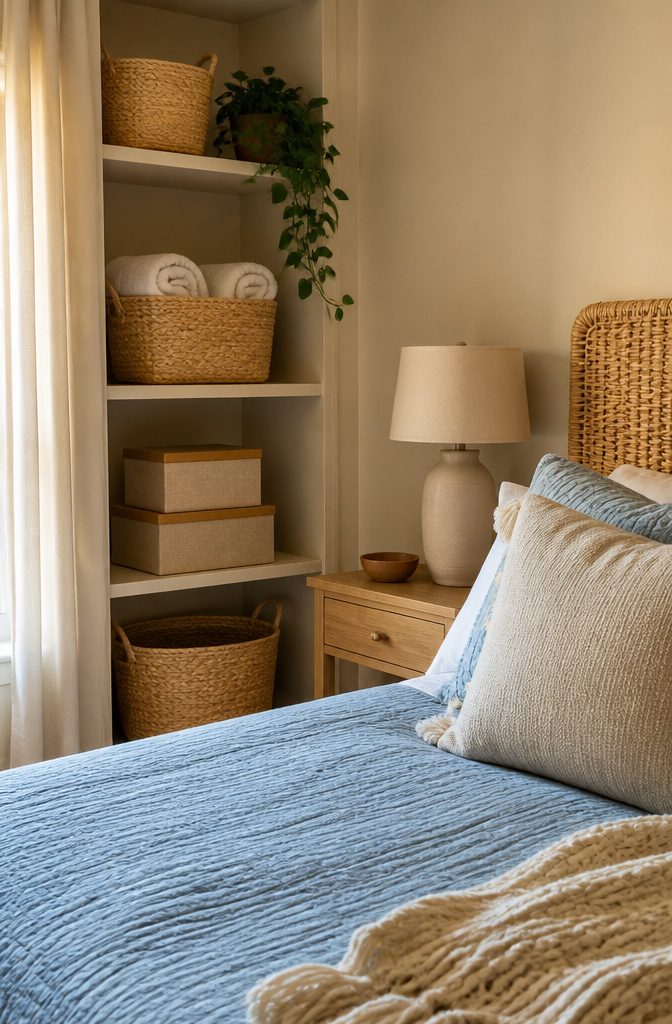
Woven baskets on a bedroom shelf read as texture first and storage second, which is exactly the point. A 10×10×10 inch cube fits most standard shelving without swallowing the whole surface, and the weave itself becomes the visual interest so the contents barely matter. Floor baskets scale up to around 14×18×12 inches, big enough for spare blankets or the laundry that never quite makes it to the hamper.
Lidded boxes stack to 24–30 inches safely before the tower starts feeling precarious, and that lid is what lets them sit out in the open without becoming a junk display. Open storage, though, has to stay curated; a vintage crate looks charming with three rolled towels and a dried branch, but fill it with loose chargers and yesterday’s mail and the charm collapses fast. Closed storage forgives the clutter you haven’t sorted yet, which for most of us is most of the time.

【𝐁𝐨𝐡𝐨 𝐖𝐚𝐥𝐥 𝐀𝐜𝐜𝐞𝐧𝐭】This arched wall plant shelf blends boho charm with mid-century modern style, adding warm wood grain and a vintage touch to living rooms, bedrooms, and entryways

【𝐁𝐨𝐡𝐨 𝐖𝐚𝐥𝐥 𝐀𝐜𝐜𝐞𝐧𝐭】This arched wall plant shelf combines boho charm with rattan-inspired details, creating a relaxed yet stylish look that instantly enhances your living room, bedroom, or cozy reading nook

The 2024 nursery book shelves features a versatile design that incorporates valuable customer suggestion, resulting in enhanced functionality. We have incorporated hooks to accommodate books, photo frames, toys, and other decorative items based on customer input. Additionally, the hooks on the nursery book shelves provide convenient storage options for kids clothing or towels, bags, and more. This innovative solution offers flexibility in organizing your kids room.
Vertical Space
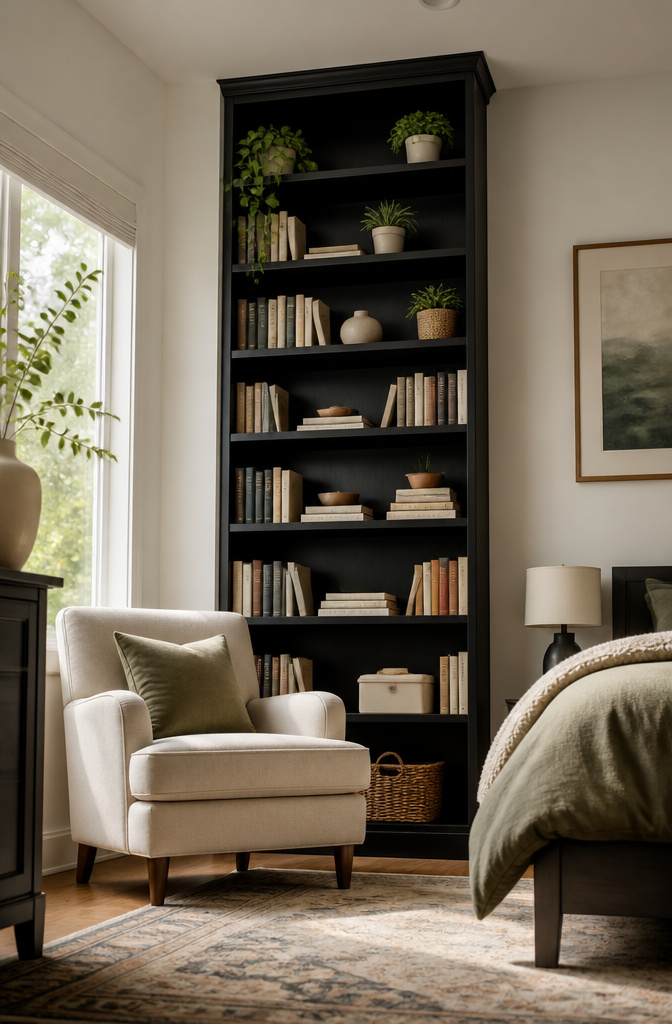
Ceiling height minus 7 feet is your usable vertical margin, and most bedrooms leave it untouched. Standard door height is 80 inches, so anything taller tilts during install: lean the spine against the frame, slide it through, then right it. I watched a neighbor wrestle a 96-inch case through a 78-inch opening and leave a gouge in the jamb that still shows at move-out.
Tall bookcases at 72–84 inches fit without that drama. The Container Store’s Floating Bookshelf stands 5 feet, claims barely more floor space than a photo album, and holds roughly 50 books. Wall-mounted systems above 6 feet need a step stool for daily access; reserve that zone for seasonal bedding or backup linens you touch twice a year. What sits at eye level to a standing adult should be what you reach for Monday morning.
Bins and Baskets
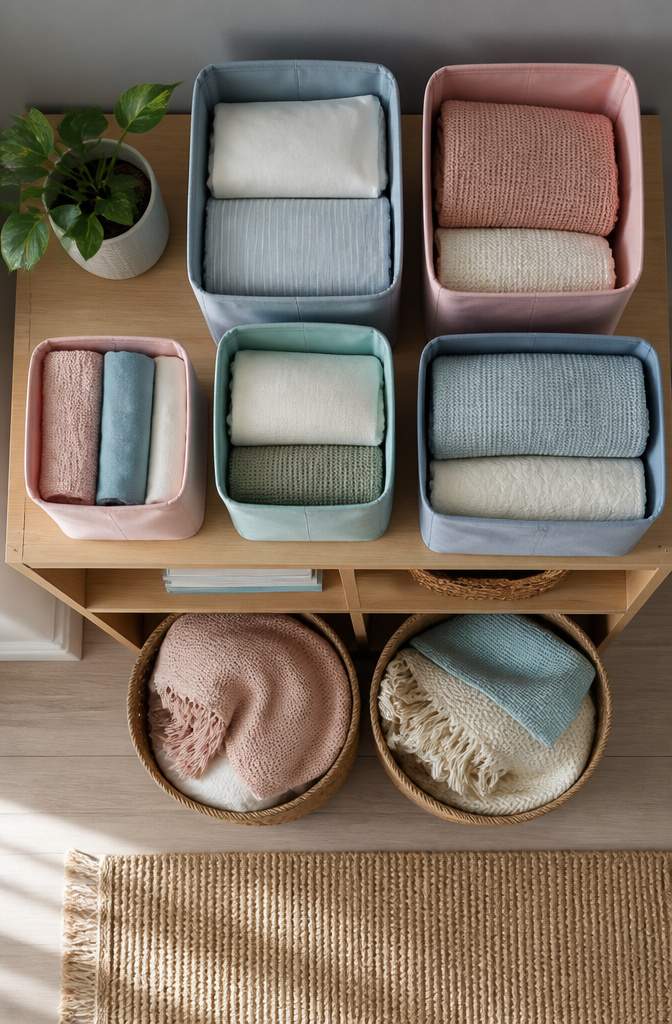
Fabric bins collapse flat when empty, which matters more than people admit until they trip over a stack of rigid containers sitting idle in a closet. Wire shows you exactly what you grabbed without opening anything, though a sweater sleeve snags on every joint if you are not careful. Plastic wipes clean in seconds but reads strictly utilitarian on an open shelf, so I tend to hide it behind a cabinet door or a curtain panel.
"Under-bed storage is such valuable real estate," said interior designer Cristina Cleveland. "You’d be surprised at how much you can stash away if you have the right setup, whether it’s built-in storage or a few under-bed bins."
That setup starts with leaving 1–2 inches of clearance above any basket on a shelf, or the lip catches every time you slide it free. Labels work at 2×4 inches held to a 10–12 inch reading distance; anything smaller and you are squinting from the doorway guessing whether this holds scarves or spare sheets.
Custom-Built Options
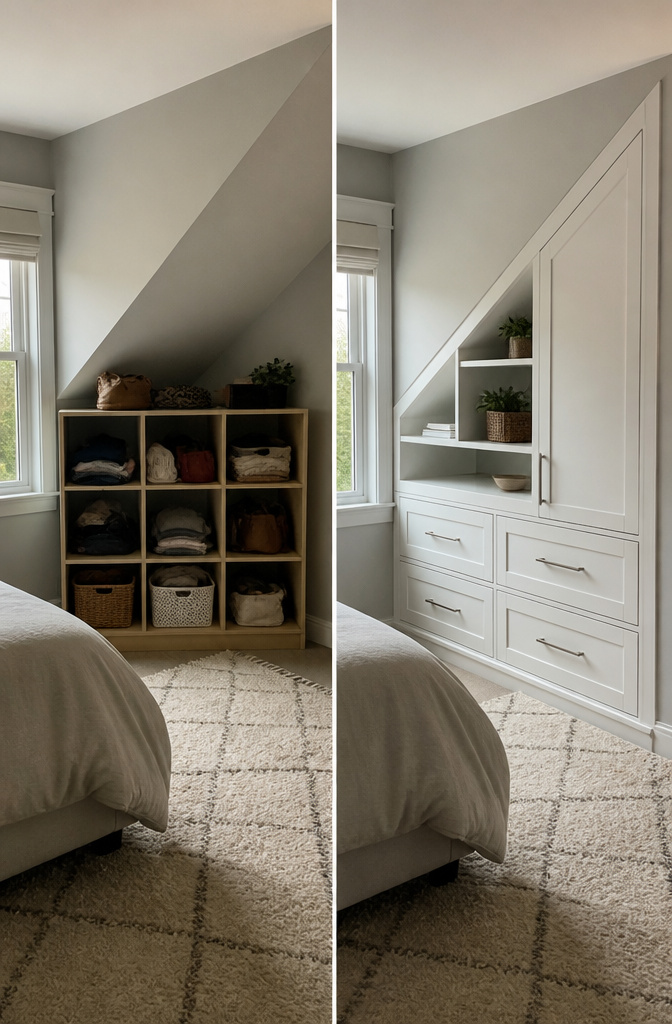
Custom work earns its price in rooms that ready-made simply cannot serve. A sloped ceiling in a finished attic, a window dropped low on a wall you need to use, existing baseboards and door casings you are not allowed to tear out: these are the spots where a piece cut to the wall wins over another box that floats two inches short. The millwork match alone, running baseboard and crown straight into the cabinet sides, makes a bank of shelves read as original architecture rather than furniture parked in a corner.
Three to five times the cost of comparable ready-made is where custom bids start, and four to eight weeks is the usual wait even after the deposit clears. Most renters and first-home owners I see in forums land in the middle: IKEA PAX or BILLY frames, then added trim, paint, and hardware until the seams disappear. The frame gives you the structure in a weekend; the trim and caulk give you the built-in look without the built-in invoice or the permanent-installation risk. It is not true custom, but it is the path most people actually finish.
What to Measure Before Buying
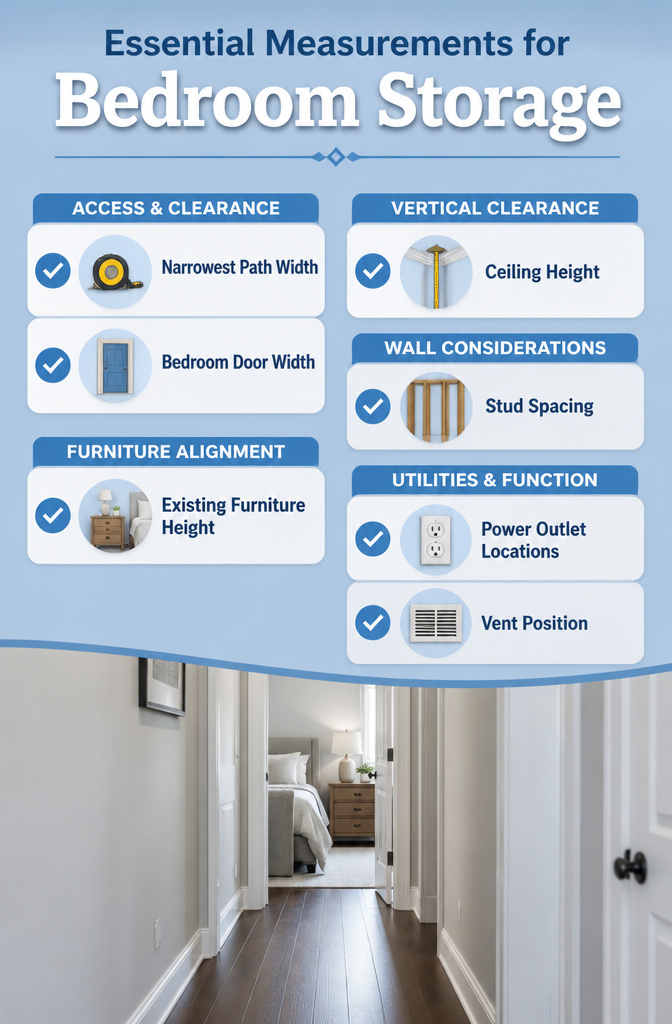
A 25-foot tape measure and a notebook cover every project on this list. Most people skip straight to the fun part of picking a piece, but the hallway between your front door and your bedroom is what decides whether that piece ever arrives intact. Measure the narrowest point of the path, including any tight turn on a landing, and write it down next to the width of your bedroom door itself. Anything that does not break down, flat-packed, needs to clear both numbers with an inch or two to spare for your knuckles.
Ceiling height matters most for tall units like bookcases or wardrobe systems. An 8-foot ceiling sounds standard until you add crown molding or a light fixture that hangs low, so note the real clearance, not the wall height alone. For wall-mounted shelves or hooks, stud spacing is the number that matters. Sixteen inches on center is common in newer construction, but older buildings hit twenty-four or skip studs entirely in places, so check with a stud finder before you plan your layout.
Existing furniture height keeps the room from looking like a clearance rack. Your new storage should sit level with or below the line of your bed frame and dresser, not tower above them. Finally, mark every power outlet and vent location in your notebook. A dresser that blocks the only outlet near your bedside means extension cords, and a shelf over a vent turns your storage into a heat trap.
Frequently Asked Questions
What are some creative bedroom storage ideas for small bedrooms?
Under-bed storage bins or drawers work for everyday clothes and seasonal bedding, wall-mounted shelves keep floors clear, and multi-functional furniture like storage ottomans or beds with built-in drawers cut down on separate pieces. The article notes that most bed frames leave 7–12 inches of clearance underneath, which fits standard shallow bins at 5–6 inches tall or deeper drawers if your frame allows.
How can I maximize closet space?
Mount a second rod at 45 inches below the main rod at 63 inches to double hanging space, and add shelves above with 12 inches of vertical clearance for folded items. Bins on upper shelves should stay under 12 inches deep so nothing gets lost in the back, and adjustable shelves adapt as your storage needs change.
What furniture can double as storage?
Storage benches at the foot of the bed hold extra bedding, nightstands with two drawers keep clutter off surfaces, and desks serving as nightstands buy back floor space. Storage ottomans hide spare linens or off-season clothes without claiming extra square footage, and bed frames with pull-out drawers keep everything accessible without lifting the mattress.
How do I declutter my bedroom effectively?
Apply the 12-month rule: anything unworn in a year goes. Decluttering before buying storage typically cuts needs by 20–30 percent, and everything kept needs a specific home, not a general zone. The one-in-one-out rule keeps it maintained: a new item in means the least-worn item out, same day, and it has to leave the house immediately to work.