Shade, space and how much daily care you’ll give it narrow the rest.
The ideas run from a bag of potting soil laid along a fence to concentric wooden beds with a gravel path, and from a single terracotta mint pot to a chicken run beside the plot.
Start with where the sun falls, then pick the idea that fits that patch.
1. Raised Beds
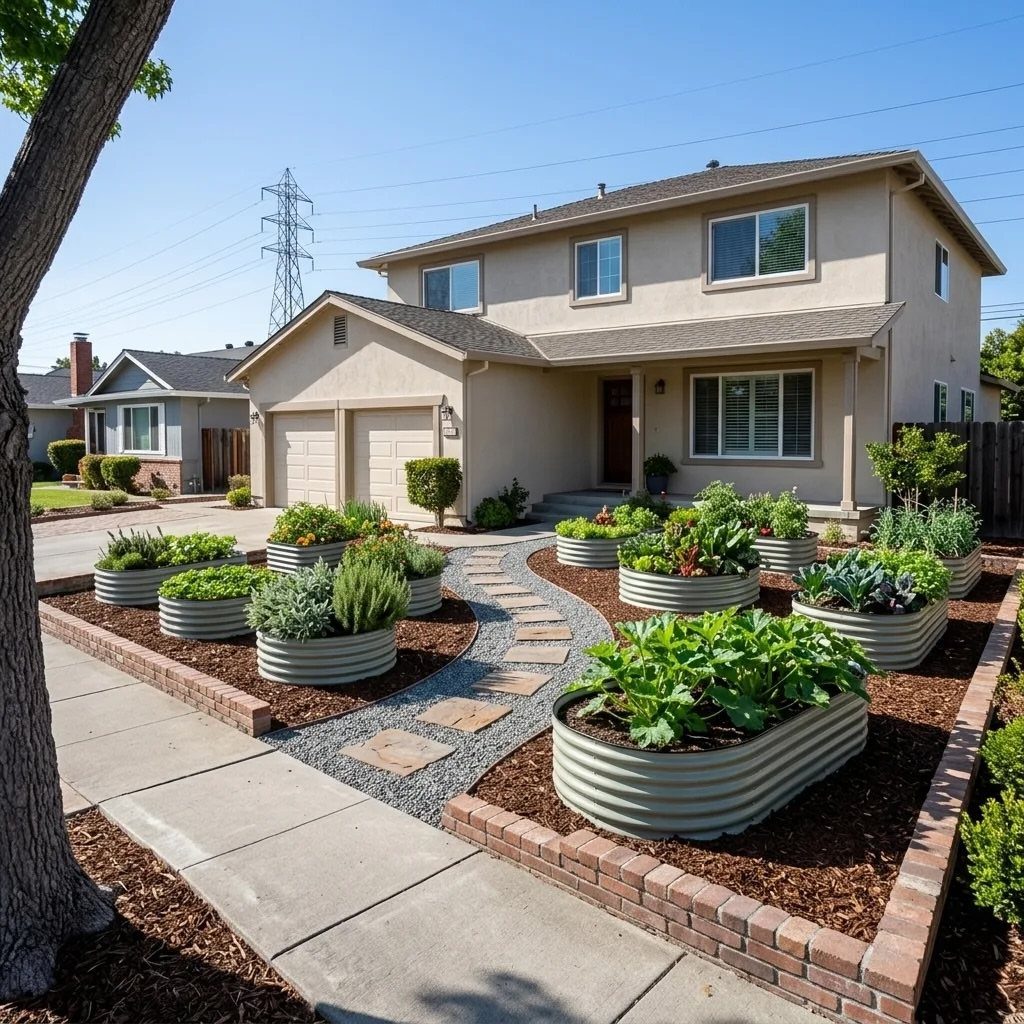
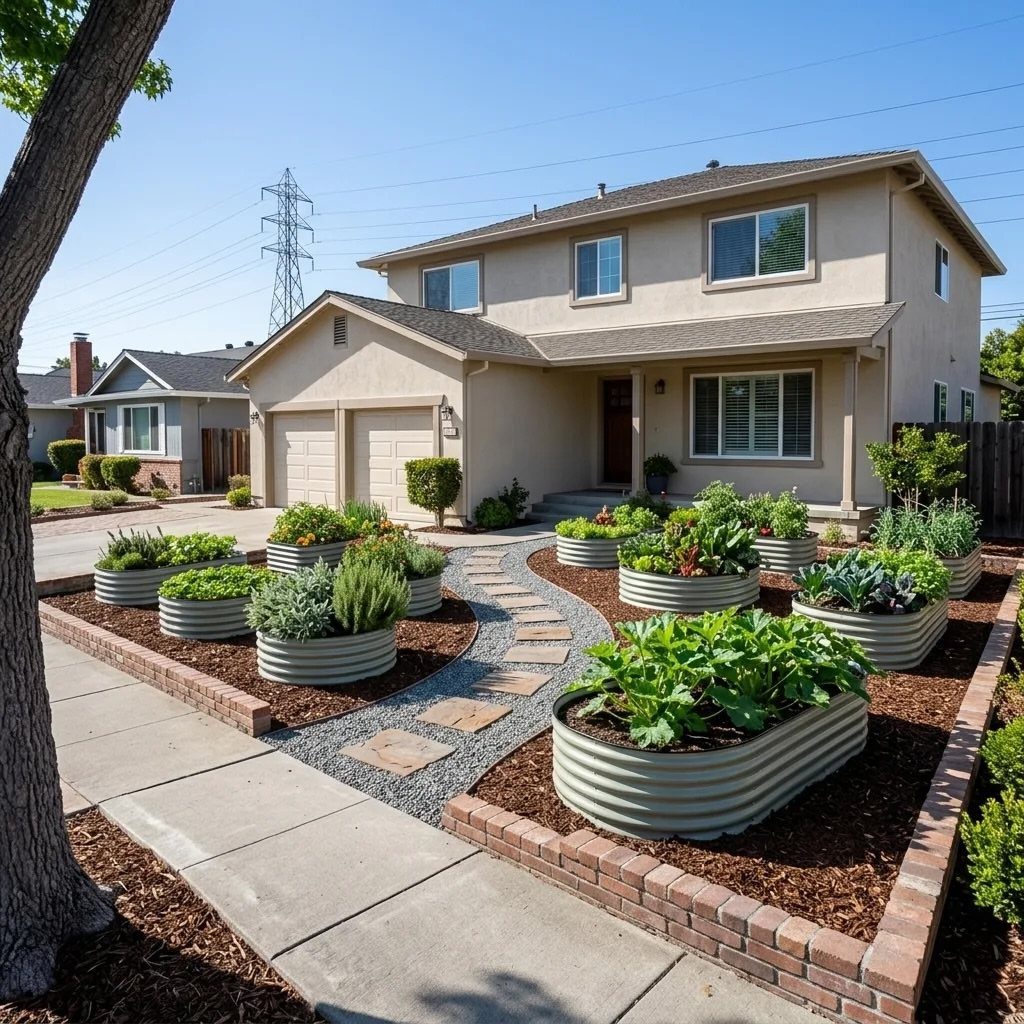
Corrugated metal beds give a front yard clean edges and a clear boundary between planting and path. Filling them with fresh soil means skipping whatever is in the ground, and weeds have a harder time getting in.
Oval shapes soften the look next to a driveway, and the gravel and stepping stones keep the paths from turning to mud.
I would keep the beds narrow enough to reach the center from either side, so you never step on the soil.
2. Vertical Gardening
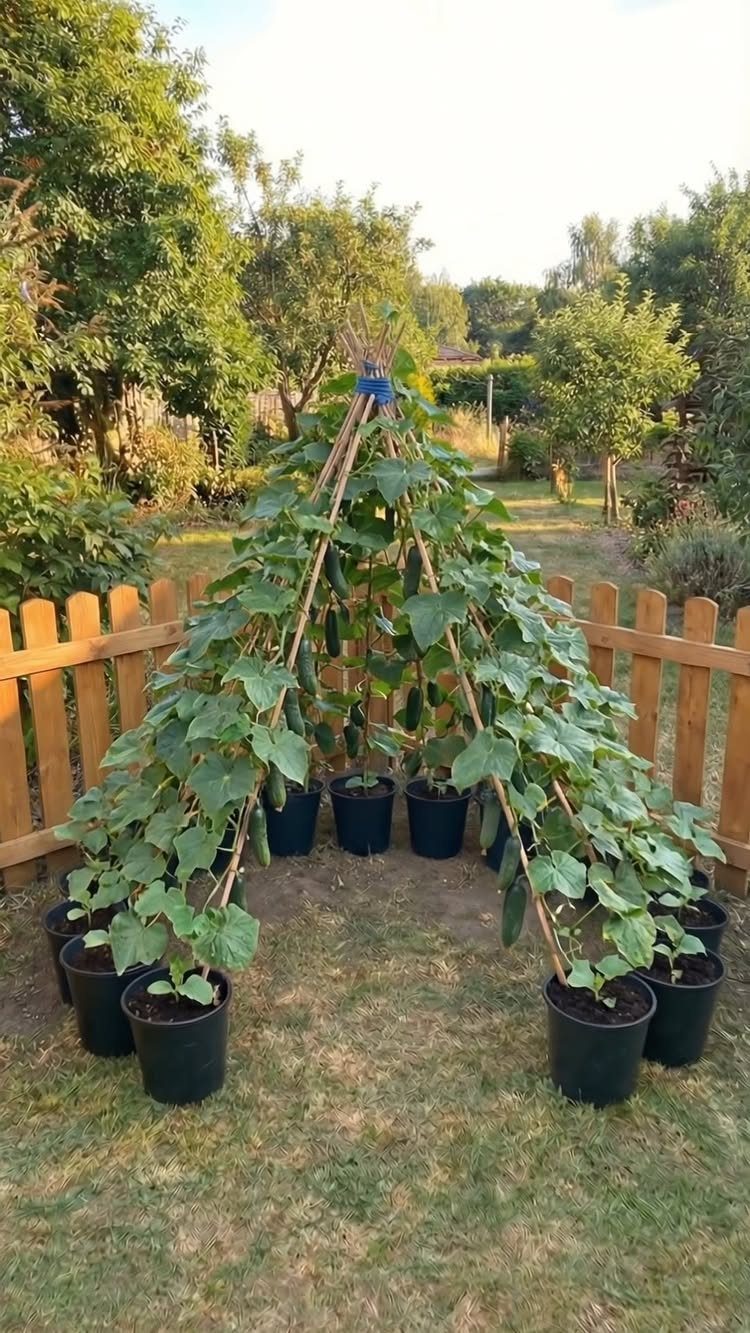
Cucumbers want to climb, so a bamboo teepee over a pot gives them somewhere to go besides across the lawn. Height is free square footage.
Push the canes deep into the pot, lash them together at the top, and tie the first vines loosely so they find the support. A teepee also looks good in a plain grassy yard with a fence behind it.
I would pick a pot big enough to stay stable once the vine is heavy.
3. Circular Garden Layout
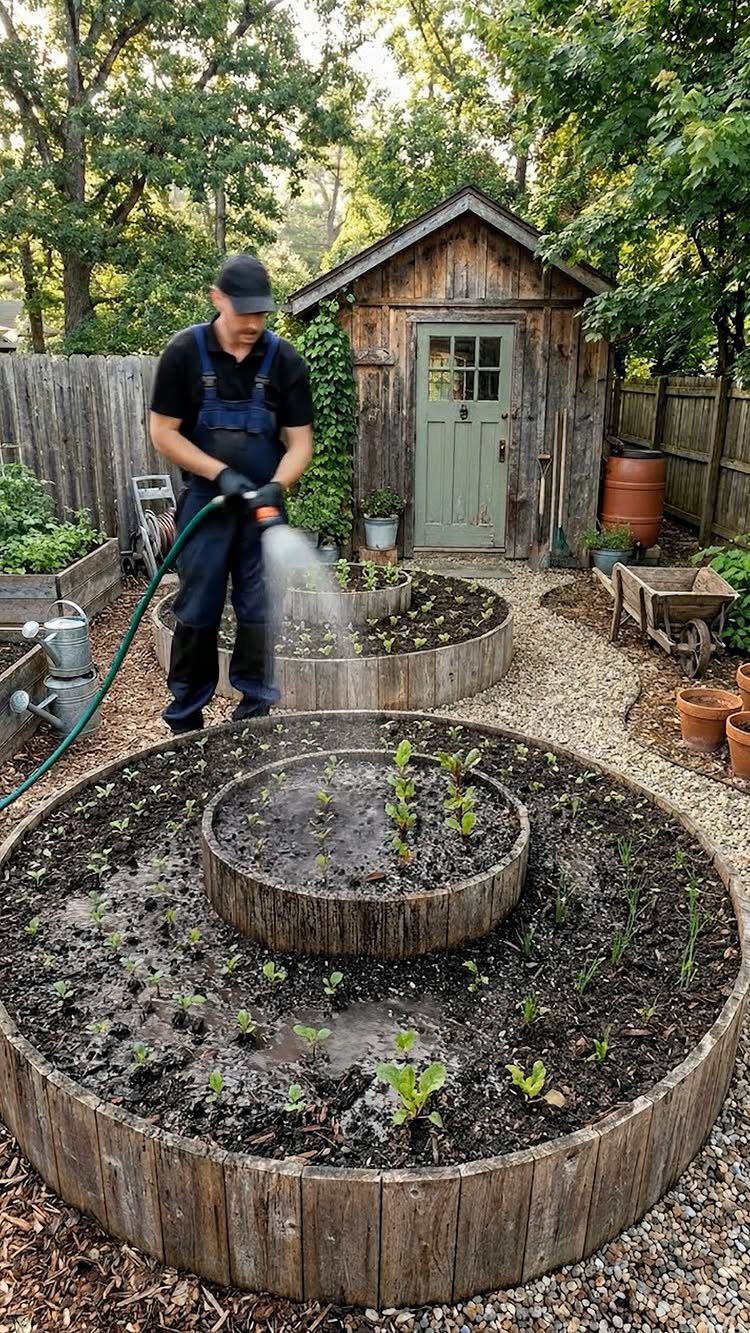
Concentric rings of wooden beds turn a backyard plot into a focal point, with a gravel path winding around it and a shed nearby for tools. Stepping up in tiers also lets you reach every ring for watering.
Plan the path width before building so a hose and a wheelbarrow both fit. Wood edging is cheaper than stone, though it will need replacing eventually.
I like this layout best where the yard is otherwise plain.
4. Tiered Plant Stand Garden
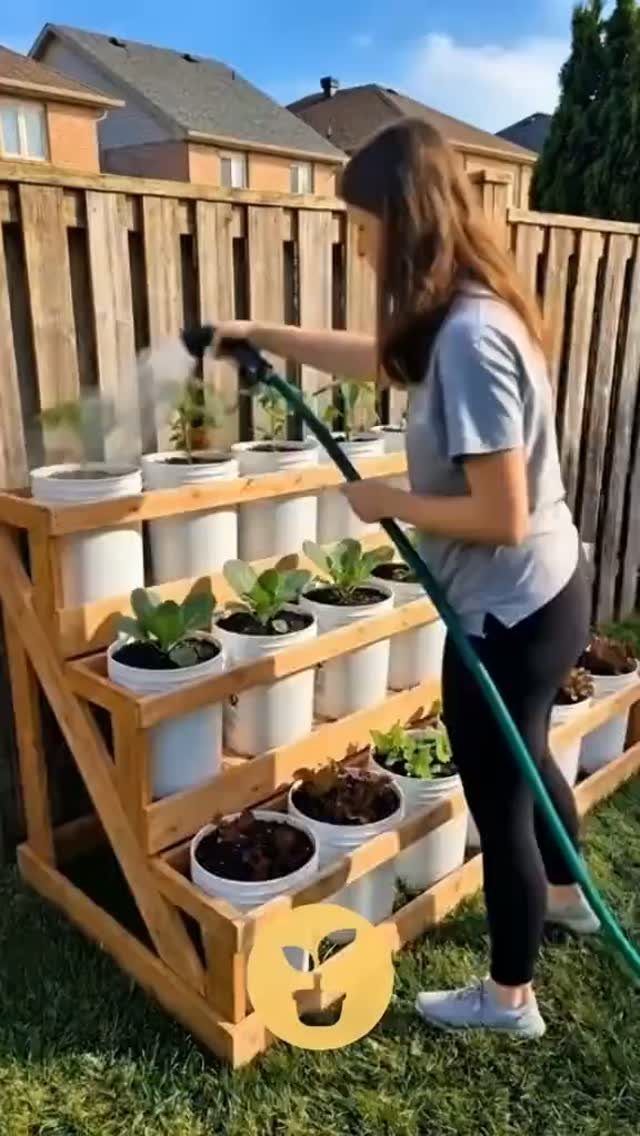
A three-tiered wooden shelf against a fence gives a small patio a vertical garden with no digging. Each tier holds pots, and watering from the top down is quick.
Put thirstier edibles on the lower shelves and keep every pot light enough to move. White pots look tidy against wood, and the fence behind the stand helps keep the whole thing steady.
Check that the shelf sits level before loading it with wet soil.
5. Soil Bag Planting
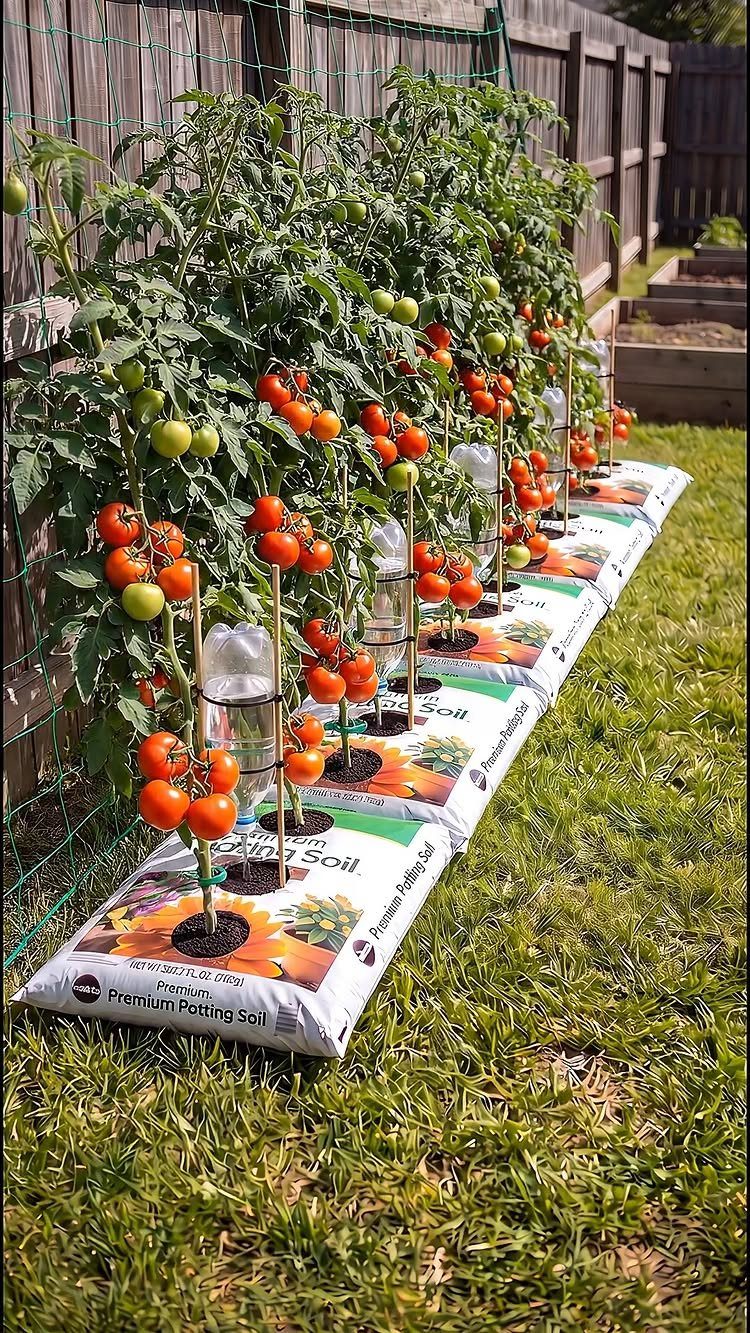
A bag of potting soil is already a planter. Lay it flat along a fence, cut a large window in the top, and set a tomato plant straight into the soil.
Poke drainage holes in the underside first, or the roots will sit in water. Tomatoes need a stake or netting to climb, and the fence plus green netting handles that.
This is the cheapest container setup on the list, and it works on lawn, but the bags look rough after a season.
6. Potted Container Herb Garden
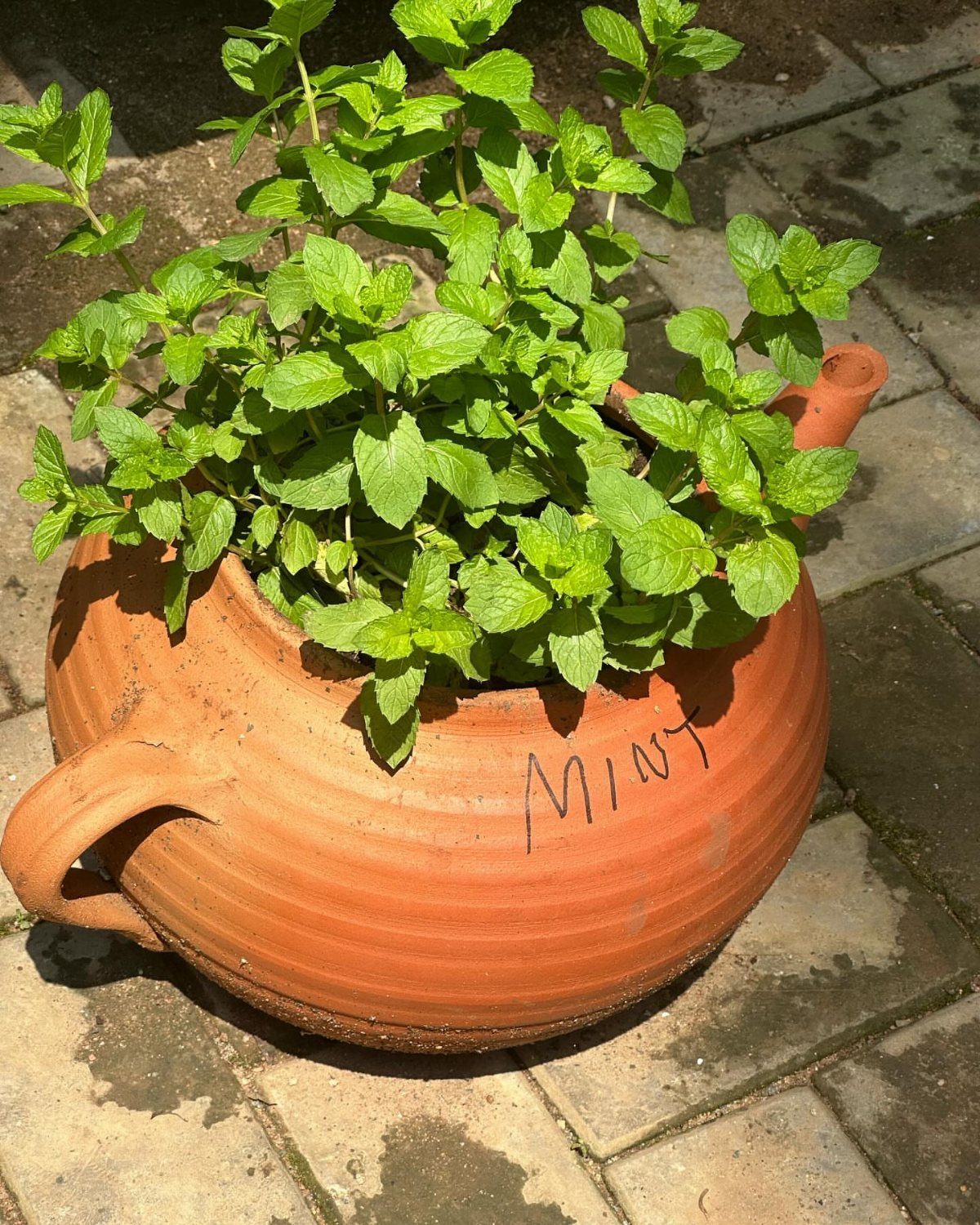
Mint spreads aggressively, so a single terracotta pot is the right home for it. Roots stay contained, and a stone patio keeps runners from escaping into beds.
Write the name on the pot, as this one does, so guests know what to pinch. Terracotta dries out faster than plastic, so check the soil often in summer.
Set the pot close to the kitchen door and you will actually use it.
7. In-ground Garden Rows
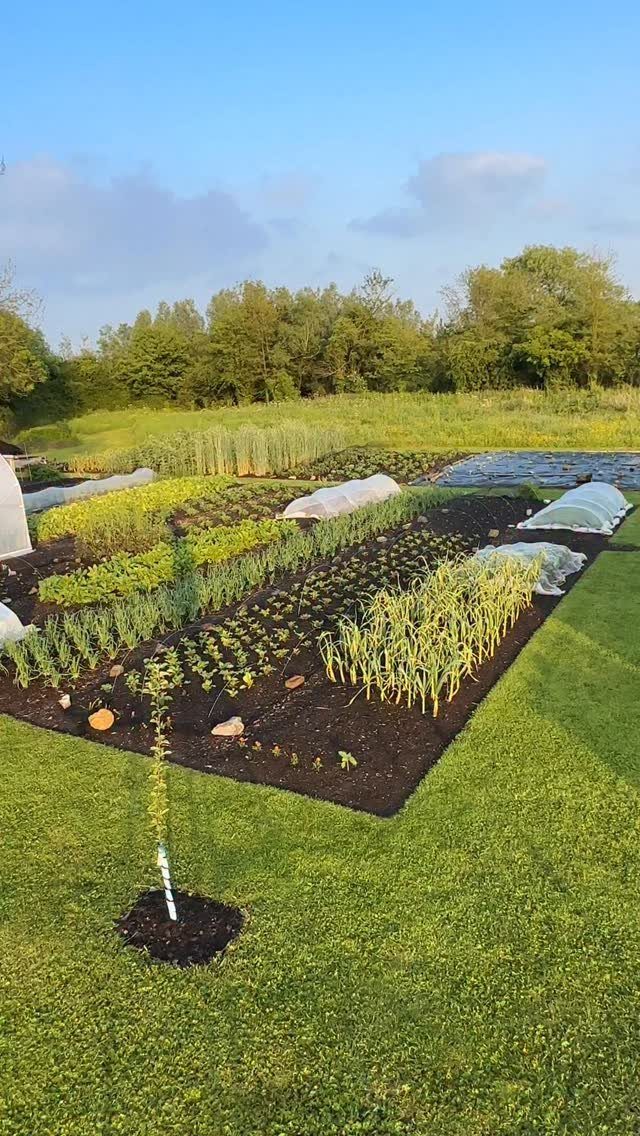
Straight rows make a garden easy to read and easy to work. Planting directly in the ground costs nothing for lumber or soil, and you can hoe, water and harvest along each line without guessing where anything is.
The white row covers over some of the rows are worth copying. Cover only the crops that need protection and leave the rest open, so you can keep checking on them.
Leave a walking gap between rows wide enough for your feet and a bucket.
8. Upside-down Hanging Bucket Planter
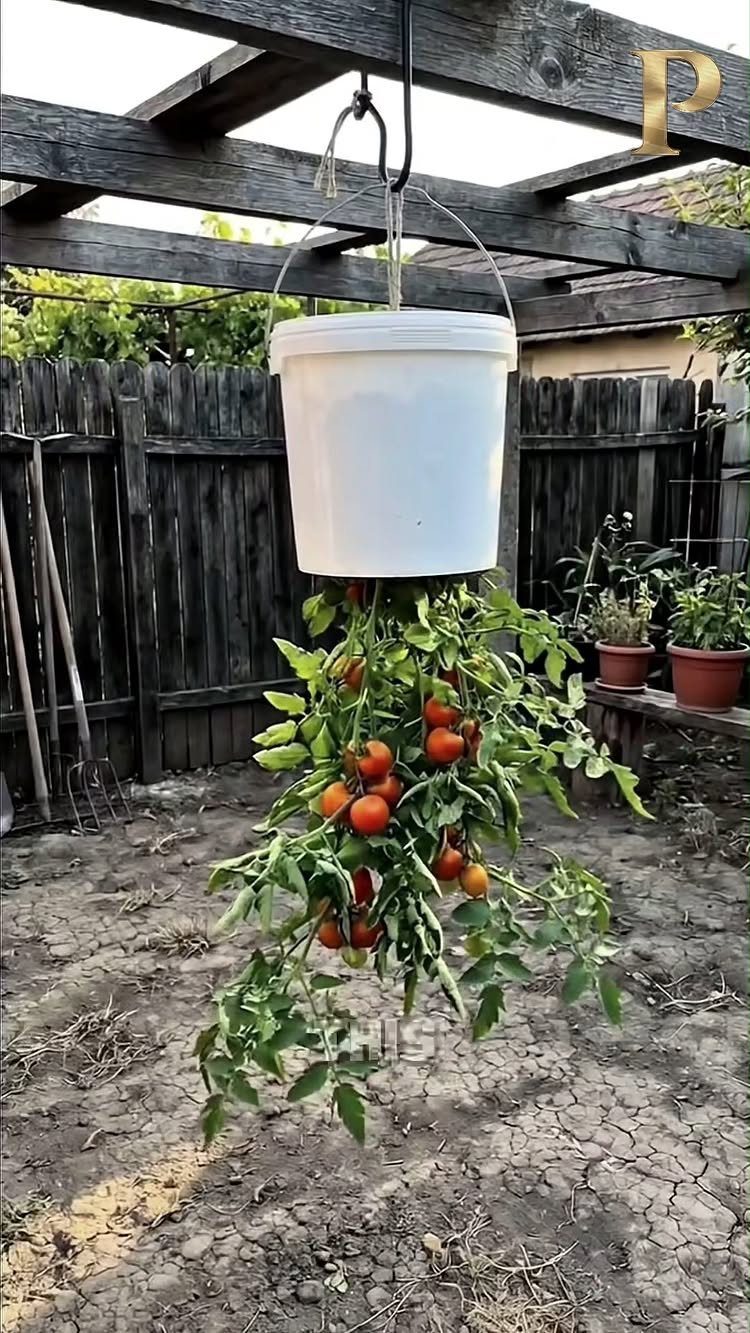
A tomato growing out of the bottom of a hanging bucket frees up ground space entirely. A pergola beam makes a ready hook, and the red fruit hangs where it is easy to see and pick.
Cut the planting hole in the base before filling, and hang the bucket from something sturdy, since wet soil and a loaded plant get heavy.
I would try this for a single plant, not a whole crop.
9. Garden Integrated Chicken Run
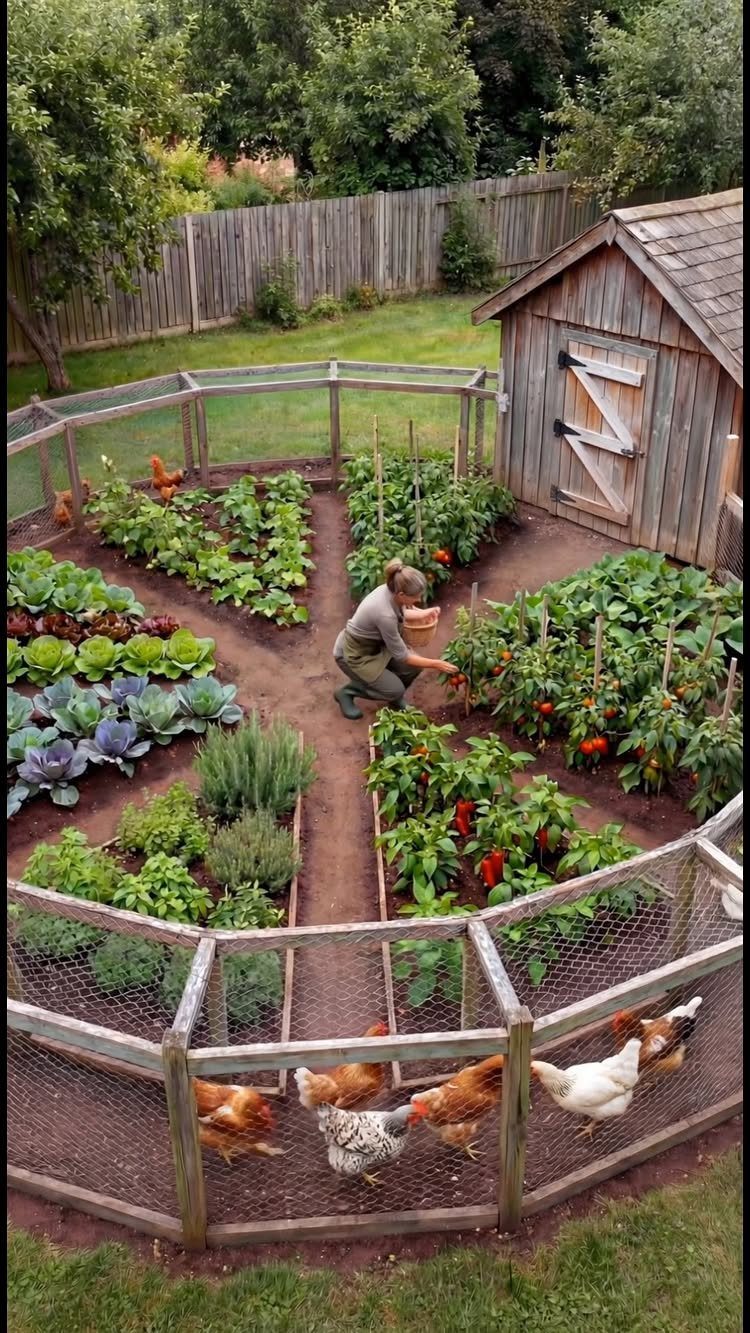
Chickens and vegetables can share one fenced yard when the coop and run sit right beside the plot. A small wooden coop keeps the birds close, and the fence marks where the foraging area ends and the beds begin.
Keep the fence solid between the chickens and the plants you want to harvest. Plan the layout so you can walk from coop to beds without opening more than one gate.
This setup asks for more daily attention than any other idea here, so I would pick it only if you want the birds as much as the vegetables.
Choose Site and Sunlight
Sun decides what you can grow, so settle it before you buy a single board. Most vegetables, herbs and fruits want 8–10 hours of direct light, and fruiting crops like tomatoes and peppers need the best spot you have.
Sketch your yard on graph paper and mark where shade from trees, the house, a fence or a neighbor’s garage falls through the day. Check it again in the afternoon, since the shade moves.
Tall crops can shade short ones, so place them where they won’t block the plants behind them.
2 more checks: put the garden near a door you use daily, so you notice dry soil and pests early, and keep it within hose reach.
Stay away from walnut trees, whose roots release a toxin that harms vegetables, and from big shrubs and trees that compete for water and nutrients.
Start Small and Expand
A first season goes better with a few crops you can actually keep up with. Pick one bed or a handful of containers, learn how they behave, then add more next year.
Spread the project over several years. Building one bed this spring and saving the rest for fall or next season beats a yard full of half-tended plots by July.
Give each plant the spacing its tag asks for, because crowded plants fight over light, water and nutrients and end up smaller.
Arrange each bed like a staircase, with tomatoes, pole beans or corn along the back, peppers and bush beans in the middle, and lettuce, radishes or herbs along the front edge so nothing shades its neighbor.
Once you have a second season, move crops to different beds each year. That helps prevent soil diseases and pests that overwinter.
Plan Crops and Soil
Start your crop list with what your household really eats, then add anything that costs a lot at the store. A bed of vegetables nobody likes is wasted weekends.
Test your soil before planting.
A test shows nutrient levels and pH, which tells you what to add instead of guessing. Your local Cooperative Extension office can point you to a testing option and answer vegetable questions.
Prepping the soil is only one stage in a longer chain that runs from planning and choosing a site through planting, upkeep and harvest, but it is the stage that is hardest to fix later.
Skipping it is the most common reason a good layout still gives a thin harvest.
Prioritize crops by choosing to grow only those that you enjoy eating or are expensive to buy. Avoid planting large sprawling crops unless they can be trained up a fence or other structure.
Frequently Asked Questions
How do you design a small vegetable garden?
Stick to crops your household actually eats or ones that cost a lot at the store, and train vining plants up a trellis or cage so they stop eating floor space.
Cucumbers do well on a bamboo teepee set in a large pot; the vines climb, so the same footprint gives you more leaf and more fruit.
Tuck fast, small plants between larger, slower ones so no soil sits empty, and replant a spot as soon as a crop finishes.
Start with one bed or a handful of containers, because a small plot you can keep up with beats a big one that gets away from you.
How do you keep deer and other critters from grazing on edibles?
An electric fence is the method one gardener reports working in a larger space. If you keep chickens, put a solid fence between the flock and anything you plan to harvest, and the beds stay intact.
How do you turn a small, awkward strip into a garden people want to sit in?
Fill it with containers in mixed sizes and shapes, and paint them in colors that coordinate so the strip reads as one design.
Terracotta pots with herbs written on them, like mint, give guests something to pinch while they stand around.
A patio with no soil to dig still works: line pots up by the kitchen door and lean a tiered wooden stand on the fence for a layered, vertical garden.
Mirrors, old windows and other reused decor add to the feel.
How much sun does a vegetable garden need?
Plan on 8–10 hours of direct sun for most vegetables, herbs and fruit. Tomatoes and peppers should get the best spot you have.
Map the shade from trees, the house, fences and a neighbor’s garage on graph paper, and check again in the afternoon because shade moves. Keep tall crops where they won’t shade shorter ones.