The job you want a tree to do picks the species: Emerald arborvitae makes a tight screen along a fence, Japanese maple anchors a path, and crabapple gives two seasons of color in one spot.
The list runs from spring bloomers like saucer magnolia to winter-interest trees like paperbark maple, and a few, such as White Geiger, only suit warm climates.
Mature size sets the planting distance, so leave 8–10 feet from walls and other trees, or match the tree’s full height if you’re unsure.
1. Saucer Magnolia
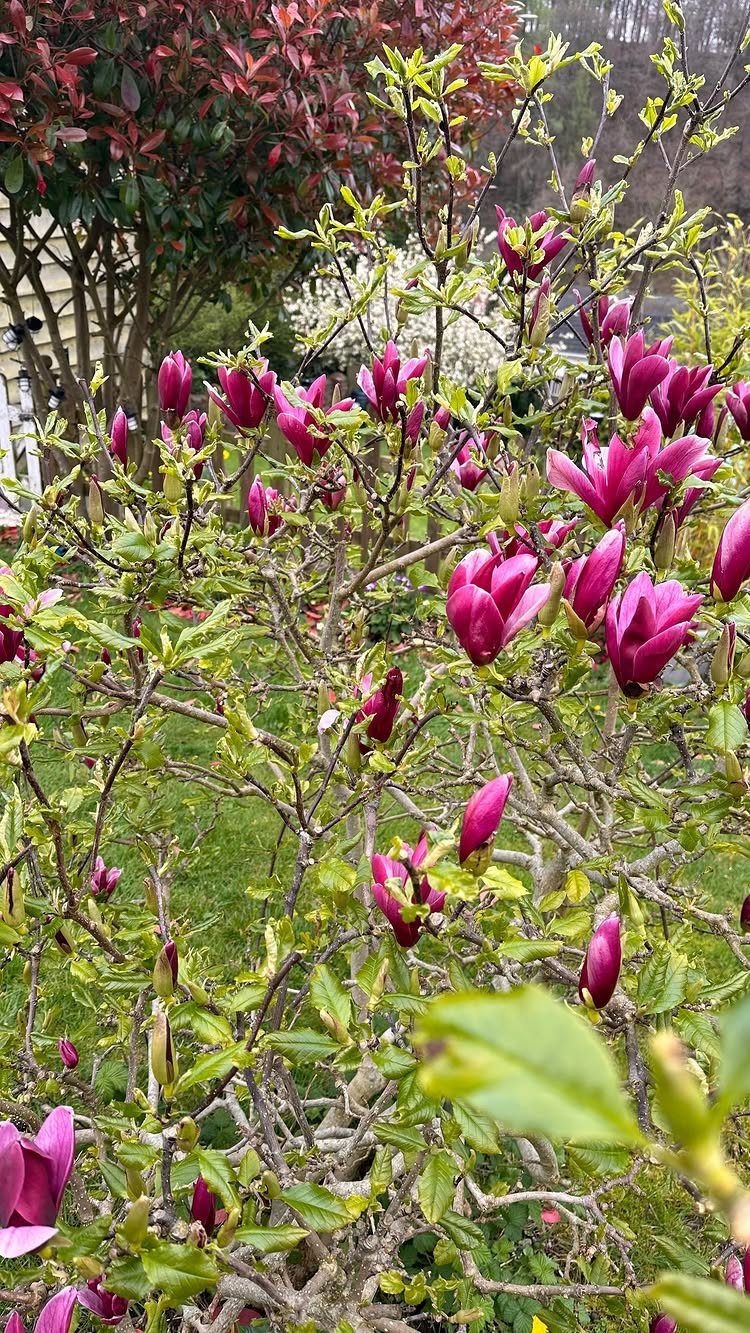
Saucer magnolia grows slowly, which suits a yard with little room to spare. It stays under 4 m, smaller than most magnolias, and young trees add only 6–12 inches a year.
Large pink to purple flowers open in early spring, and the show is big enough to carry the whole yard for a couple of weeks.
I’d plant it where a window looks onto it, since the flowers are the main reason to grow it.
Buy the biggest tree your budget allows, because you will wait for size. It is sometimes sold as a multi-stem shrub, so check the form before you choose a spot.
2. Flowering Cherry
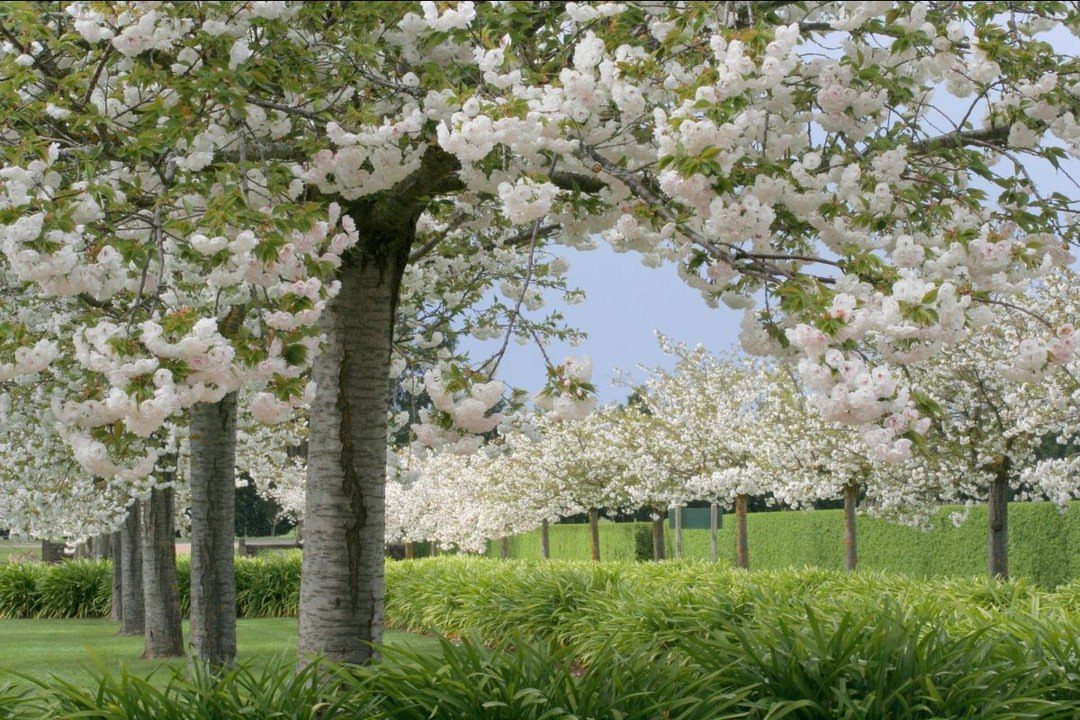
Flowering cherry comes in 2 shapes, and picking between them settles most of the design. Upright forms work in a row, like the white-blooming line along a hedge here, where repetition gives you a clean edge.
Weeping forms suit a single spot, such as a corner of the lawn or beside a path.
I lean toward the upright type for tight lots, since it takes less side room. Flowering cherry is grown for its spring bloom, so plant it where you will see it every day.
3. Crabapple
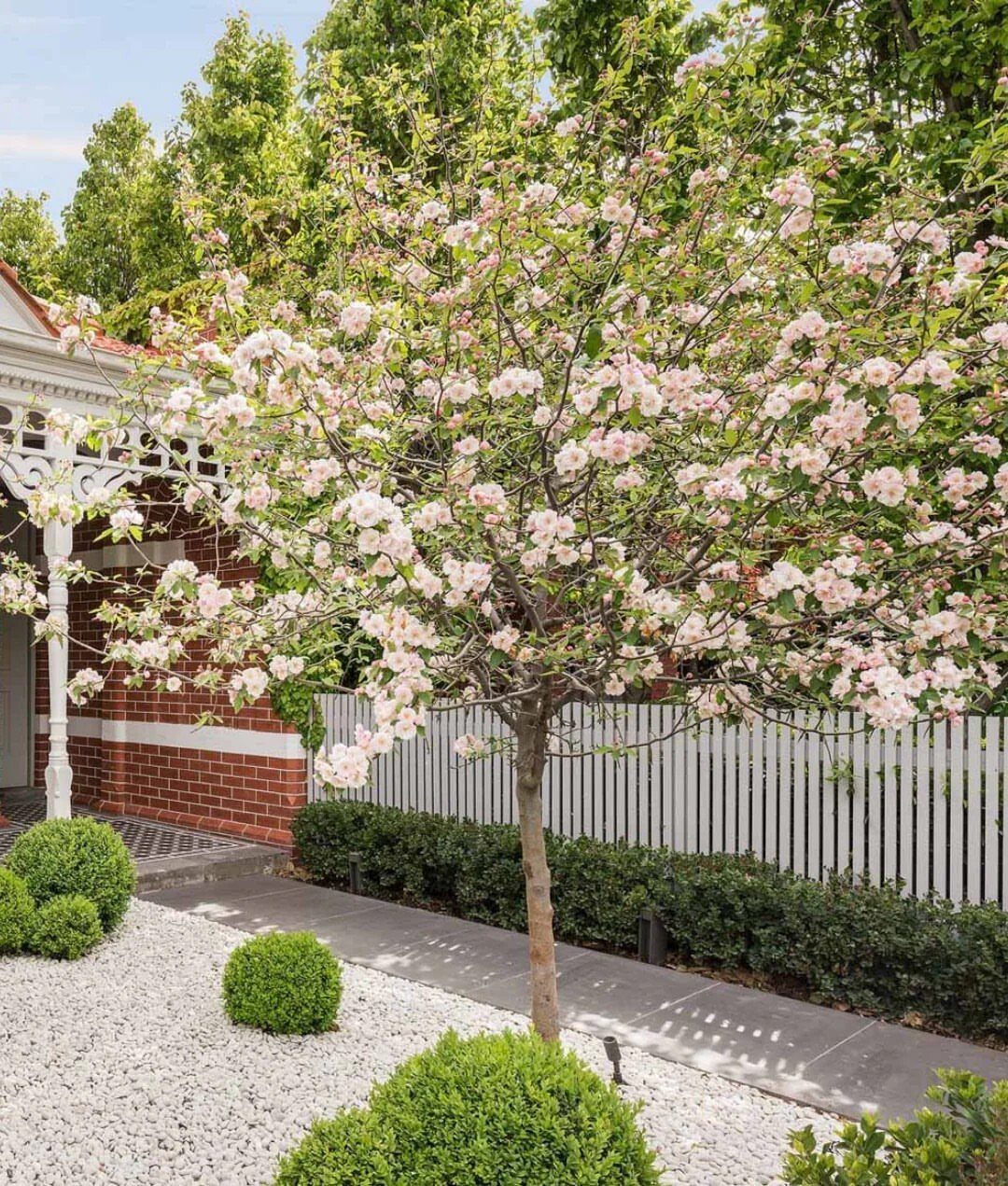
A crabapple earns its space twice: blossoms in spring, then colorful fruit that can hang on into winter. That second season matters where space is tight, because every tree has to work for months.
Pink-flowering types like this one look right against gravel, a picket fence and brick, because the fruit and flowers carry the color.
Fallen fruit means some cleanup, so keep it off a patio you sit on. Set it at the edge of a lawn or planting bed instead.
4. Satomi Dogwood
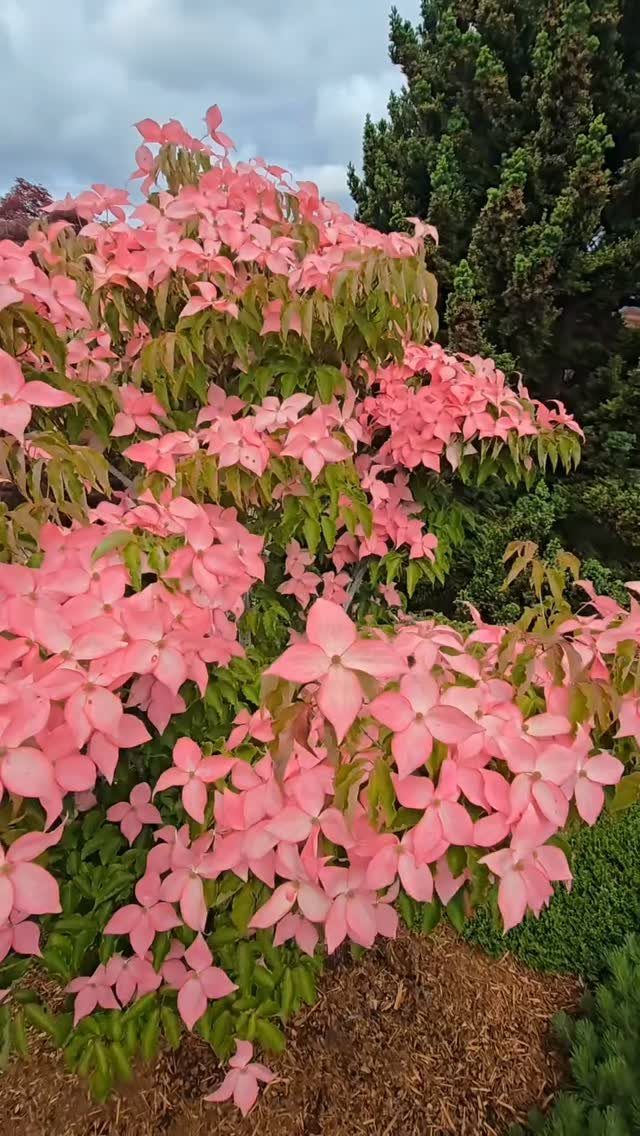
Satomi is a kousa dogwood, and its main selling point is disease resistance. That makes it a safer pick than many dogwoods for someone who wants a tree that just gets on with it.
Coral-pink flowers come first, then red fruit, so you get 2 stretches of interest. Pink flowers stand out much more against a dark evergreen than against a pale wall, so plant it in front of one.
Mulch the base and keep the grass back from the trunk.
5. Wolf Eyes Dogwood
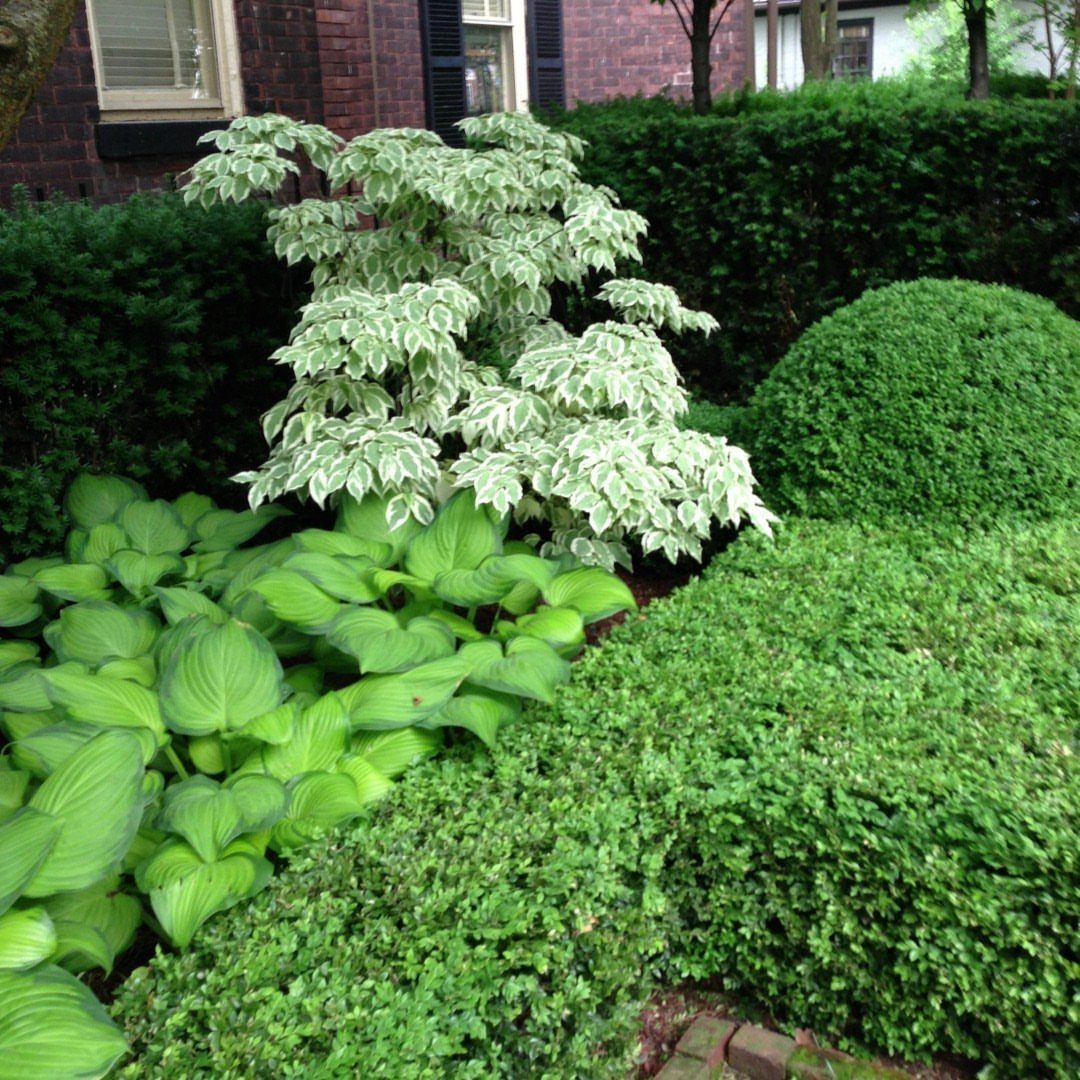
Wolf Eyes is grown for its leaves, not its flowers: wavy blades edged in cream that brighten a shady corner. Wolf Eyes variegation looks good beside plain green hostas and clipped boxwood, because the solid green calms the pattern.
I like it as a layer between low plants and the fence, where a tall tree would crowd things. It stays more shrub-like than most of the trees here.
Pair it with solid green neighbors so the pattern doesn’t compete with anything.
6. Japanese Maple
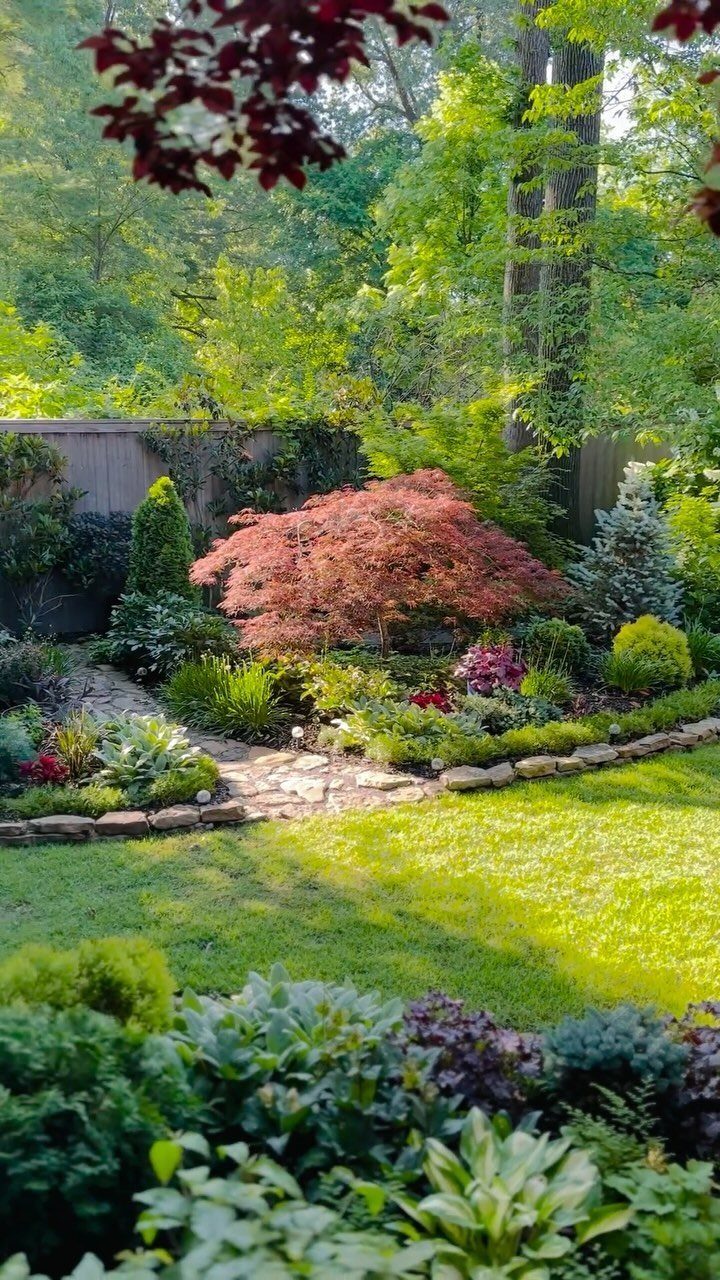
Japanese maple is the pick for foliage, form and fall color together. Leaf shapes and tree habits vary widely, so you can choose a graceful, layered outline or a color you love.
A red-leaved one, like this, works as a focal point beside a stone path, with green lawn and shrubs letting the color stand out.
Choose it in person if you can. Because the forms differ so much, seeing the actual tree beats ordering by name alone.
7. Serviceberry
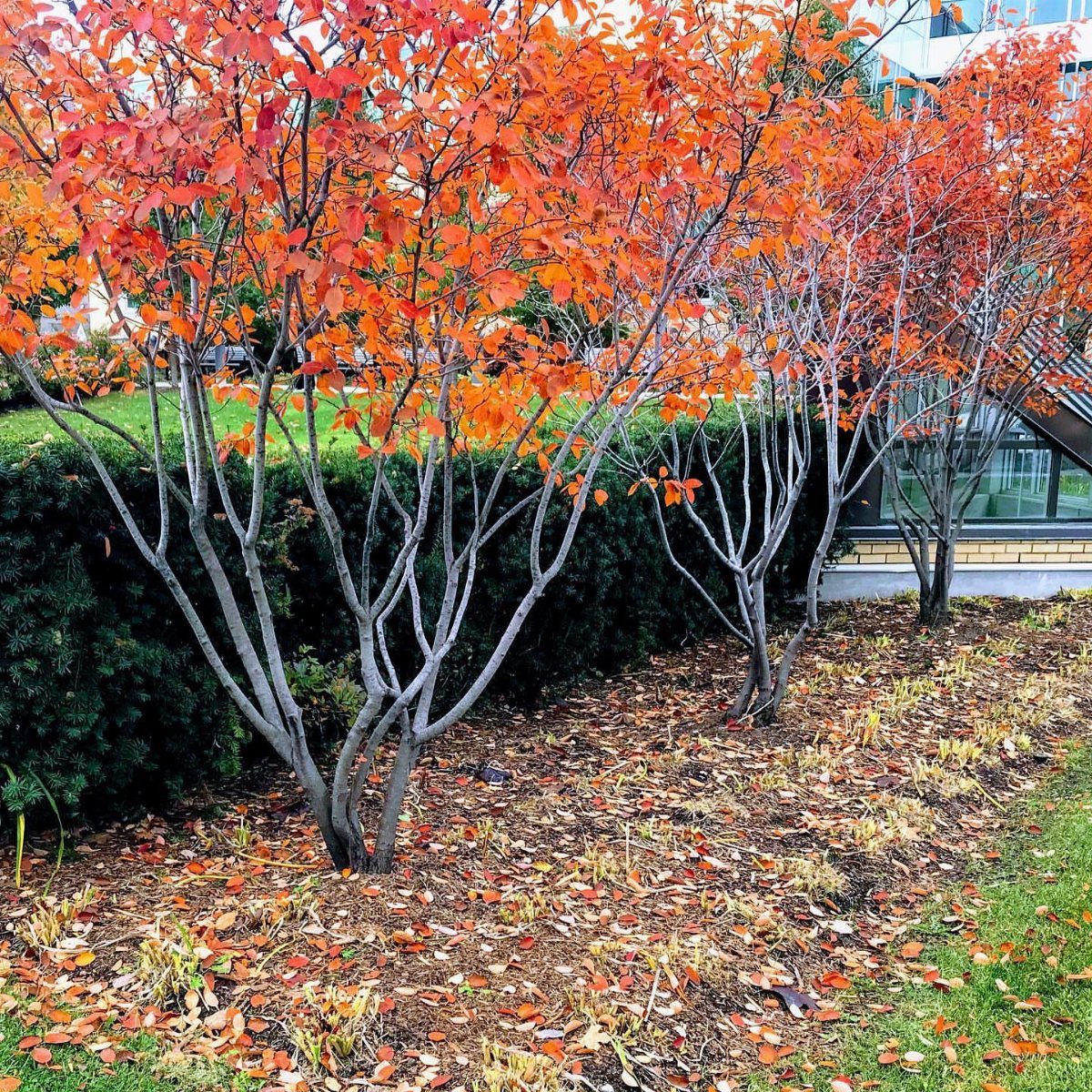
Serviceberry gives you three jobs from one small tree: flowers, edible fruit and orange-red autumn leaves. Birds like the fruit too, so it doubles as wildlife habitat.
A bed beside a clipped green hedge, as here, makes the fall color read clearly. Plain evergreen behind it keeps the leaves from competing with anything.
If you want berries for yourself, plant it where you can reach them. Birds get there fast.
8. Fringetree
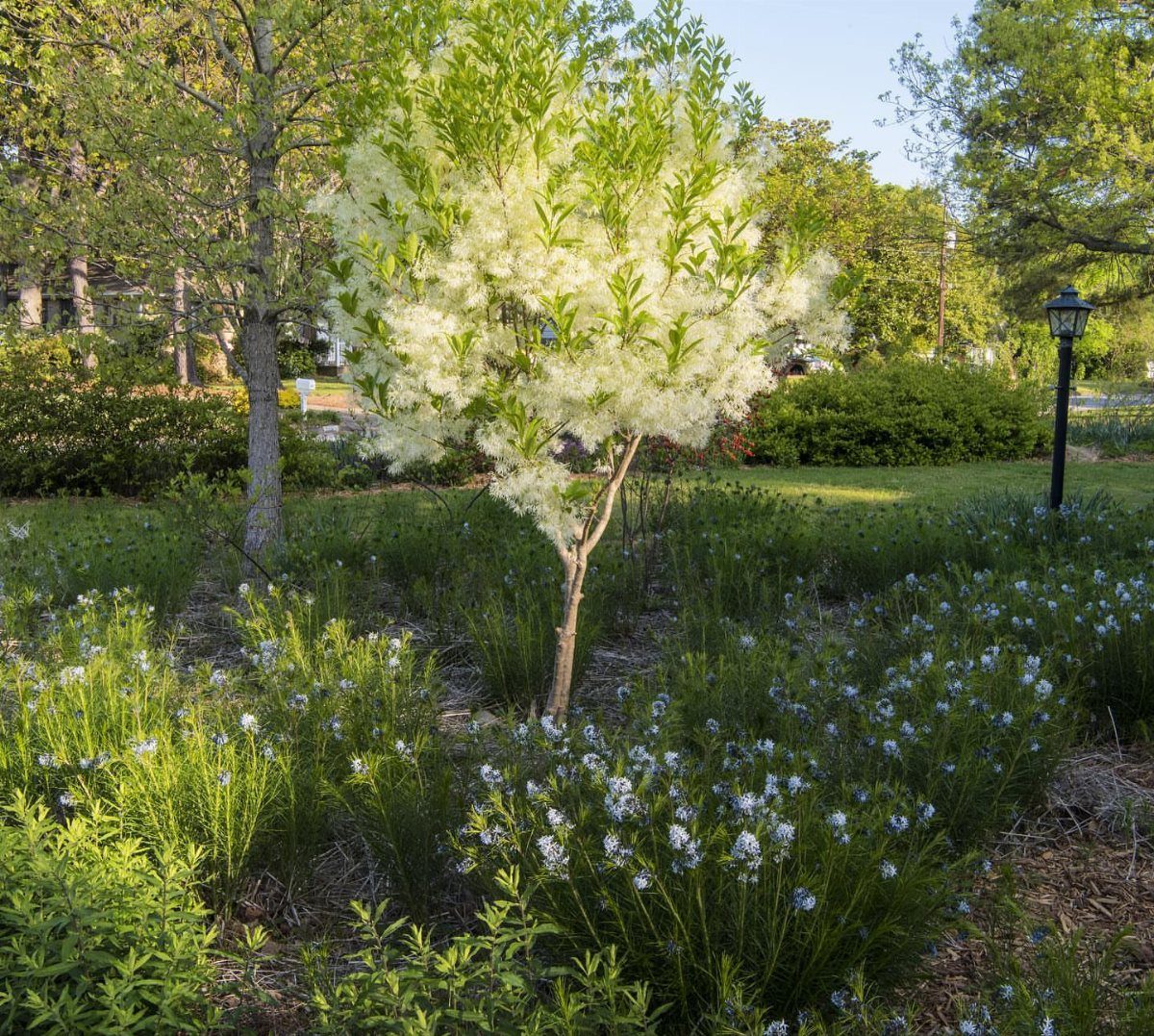
Fringetree is all about its flowers: white, fringe-like and fragrant. Plant it near a path, patio or window, where you will actually smell it.
Blue flowers underneath, like the ones here, make the white clusters stand out. I’d keep the planting low and simple so the blooms stay the focus.
It stays small, so it fits a front yard with a lamp post and a few neighbors already in the bed.
9. Paperbark Maple
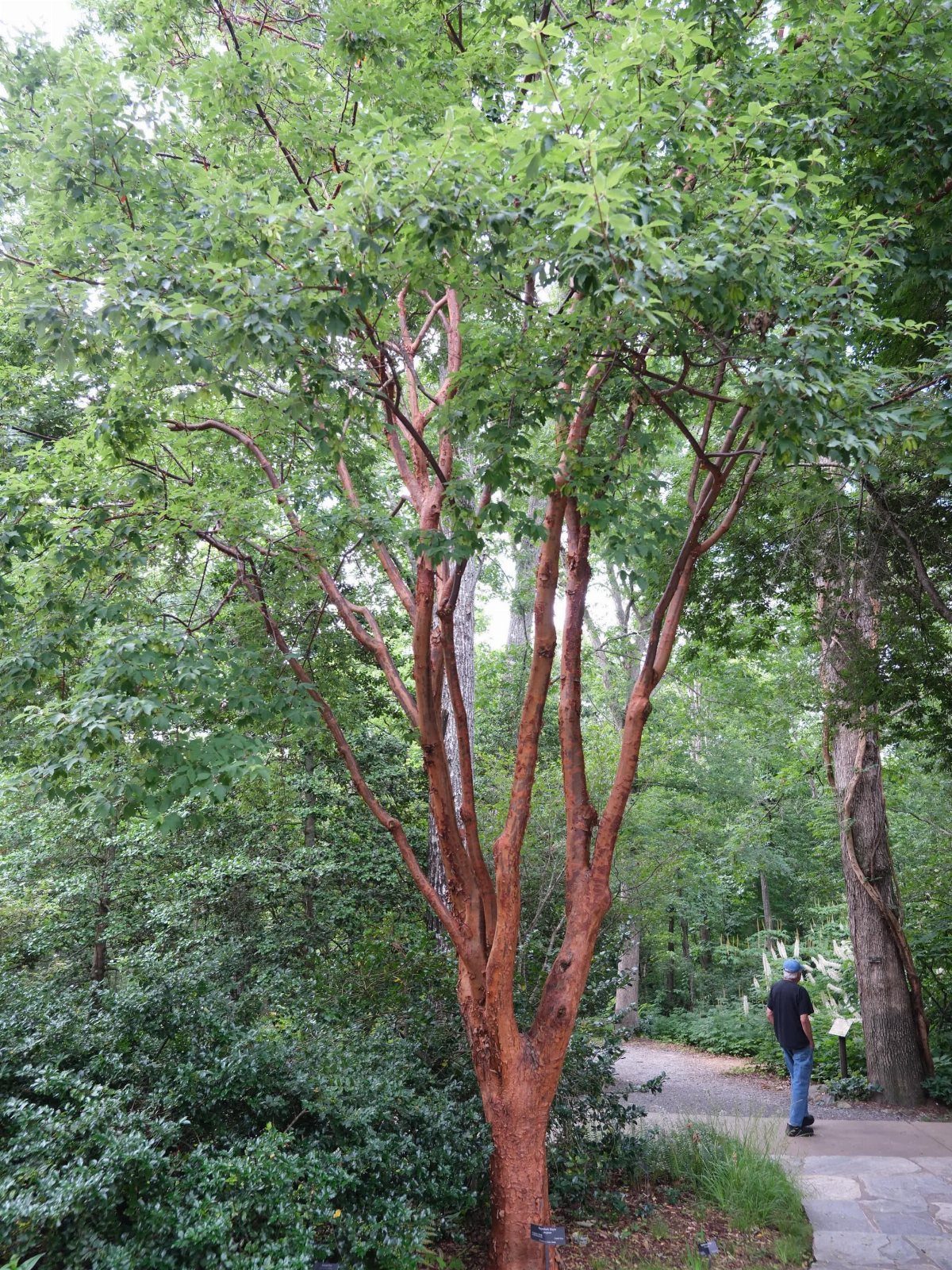
Paperbark maple earns its place with bark: peeling, rust-brown curls that stay interesting when the leaves are gone. Then orange-red fall color adds a second show.
Give it a spot where the trunk is seen up close, such as beside a stone path. Bark you can’t reach or see is wasted.
I’d pick it over a flowering tree for a yard you look at in winter. Buy in person if you can, so you can check the bark.
10. Eastern Redbud
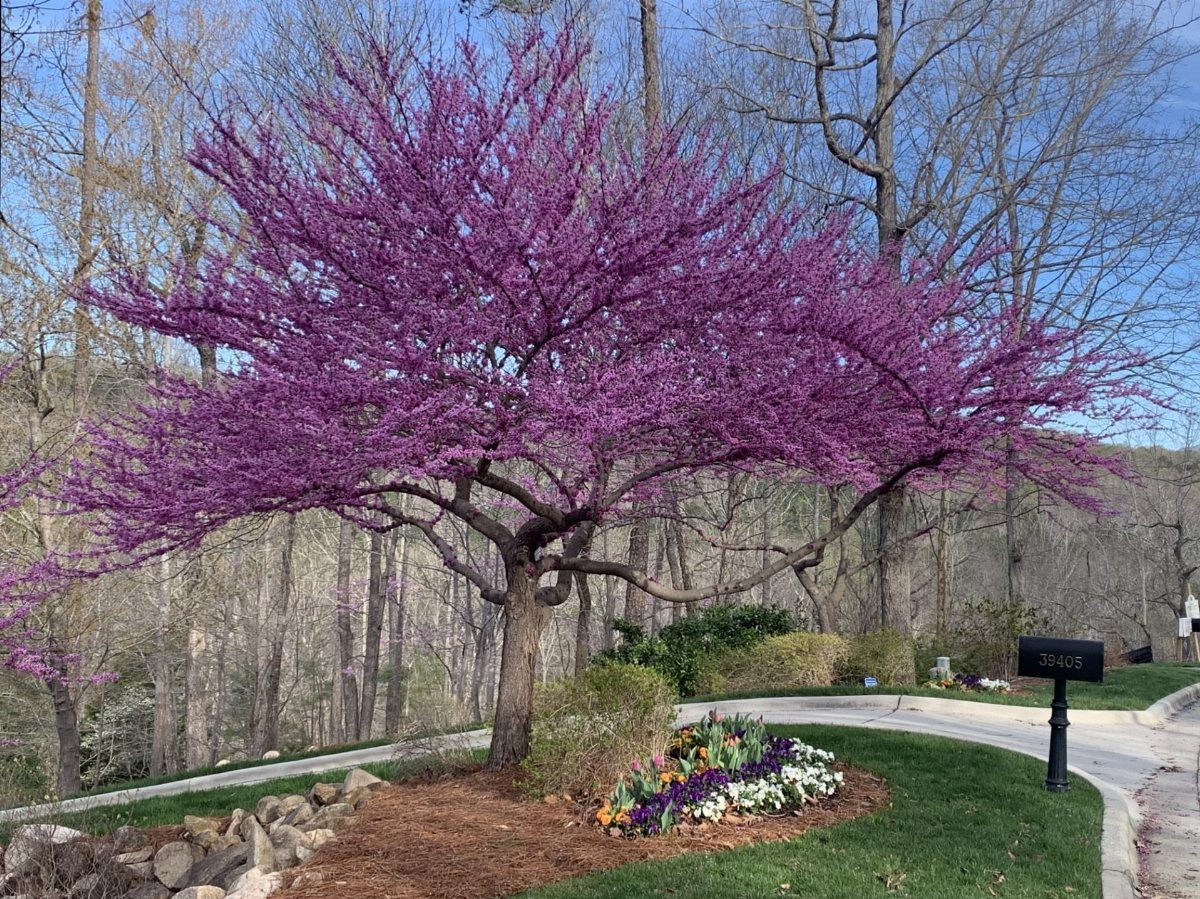
Eastern redbud blooms early, in purple-pink, and its heart-shaped leaves follow. That early color is the reason to plant it near the front of the yard.
A flower bed underneath, like the one here, keeps the planting layered and tidy. I’d set it where the bloom shows from the street or a window.
It is a small flowering tree that suits an ordinary residential lot without taking over.
11. Crape Myrtle
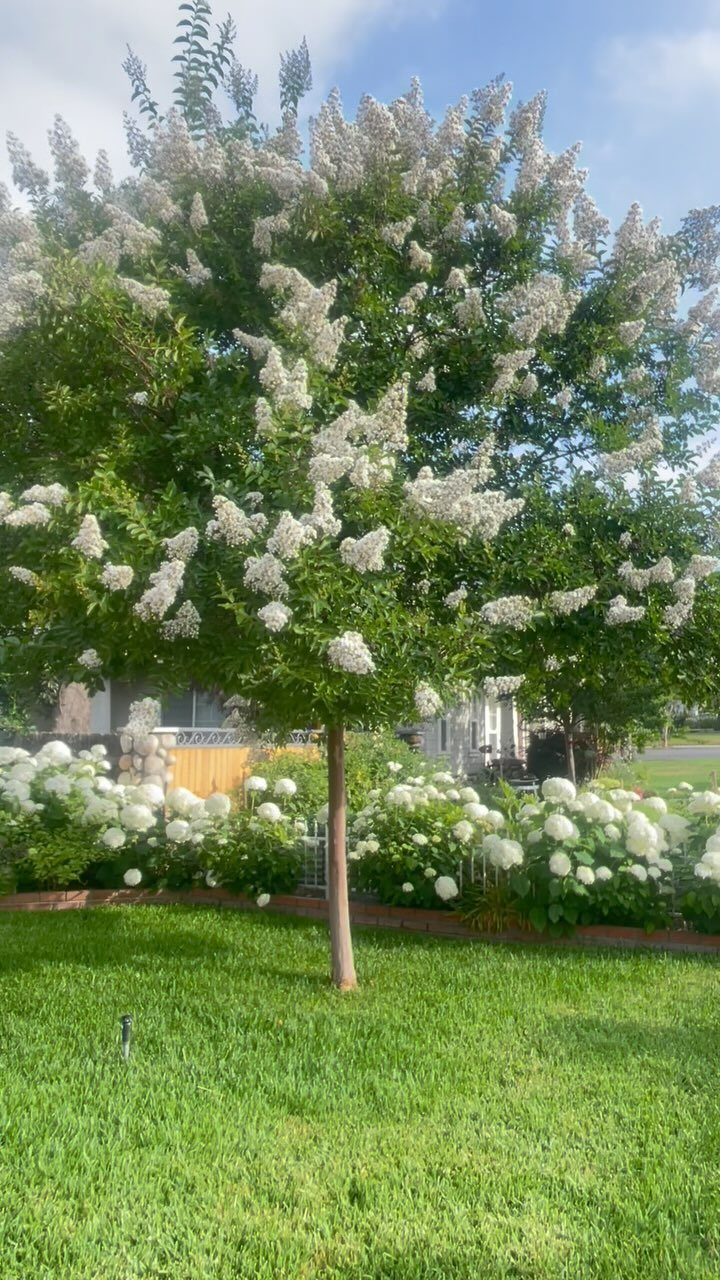
Crape myrtle flowers from summer into fall, which is the stretch when most small trees have gone quiet. It also tolerates heat, so it suits hot yards where others struggle.
Colorful bark and foliage add more interest beyond the blooms. White flowers, like these, sit well against a green lawn and white hydrangeas behind.
I’d choose the flower color first, then check how big that variety grows before you pick a spot.
12. Red Buckeye
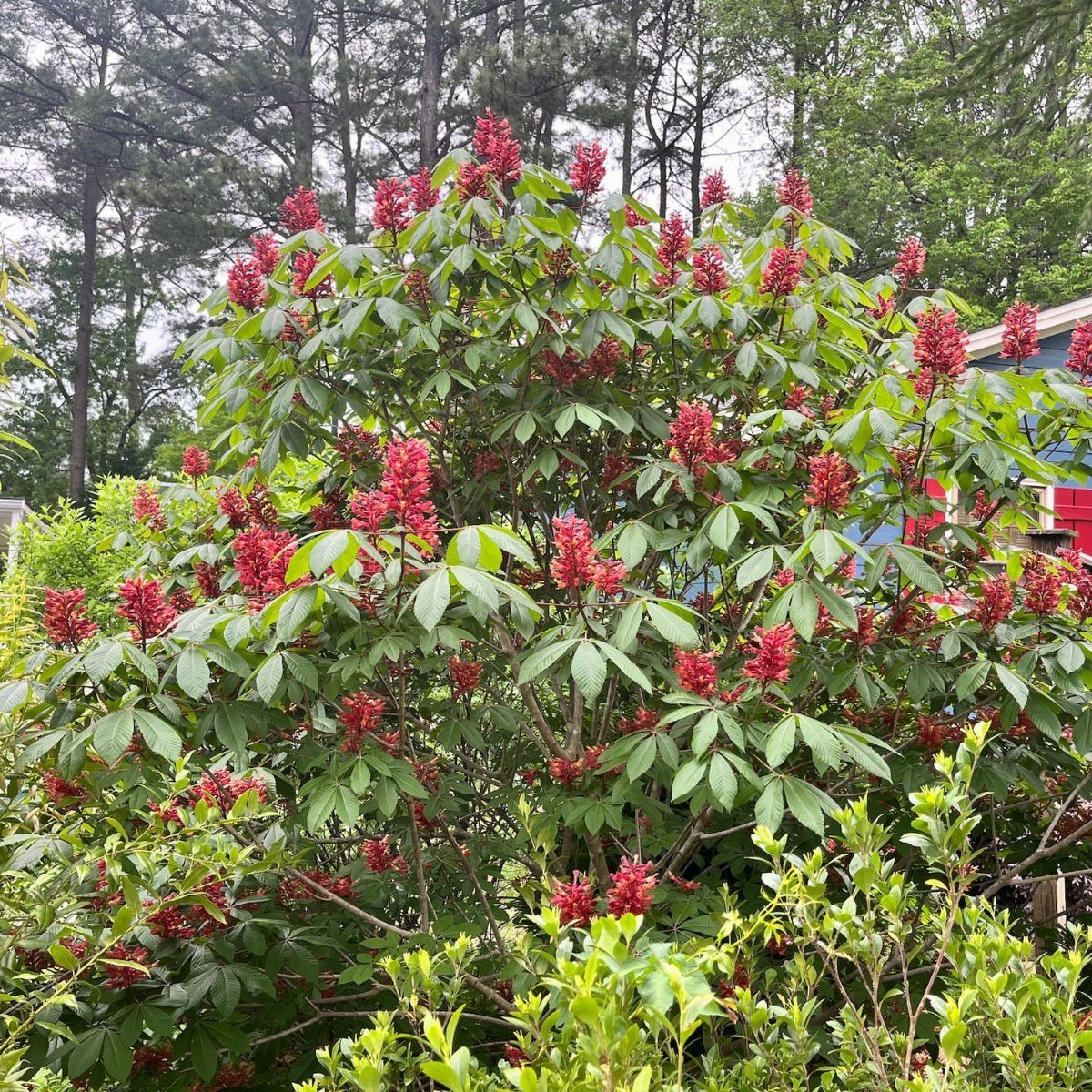
Red buckeye is a native tree with crimson flower spikes that draw hummingbirds. Red buckeye pulls hummingbirds in spring with its red flower spikes, and bees work it too, so it’s one of the most direct picks for wildlife.
Against tall pines and a blue house, the red stands out strongly. Plant it where dark green or a cool-colored wall sits behind it.
I’d put it near a window or seating area, so you can watch the hummingbirds visit.
The native red buckeye (Aesculus pavia) is an ideal choice for small spaces in zones 6A to 9A since it only reaches a maximum height of 20 feet. The crimson tubular flowers it produces in the spring are a favorite of hummingbirds.
13. Flowering Dogwood
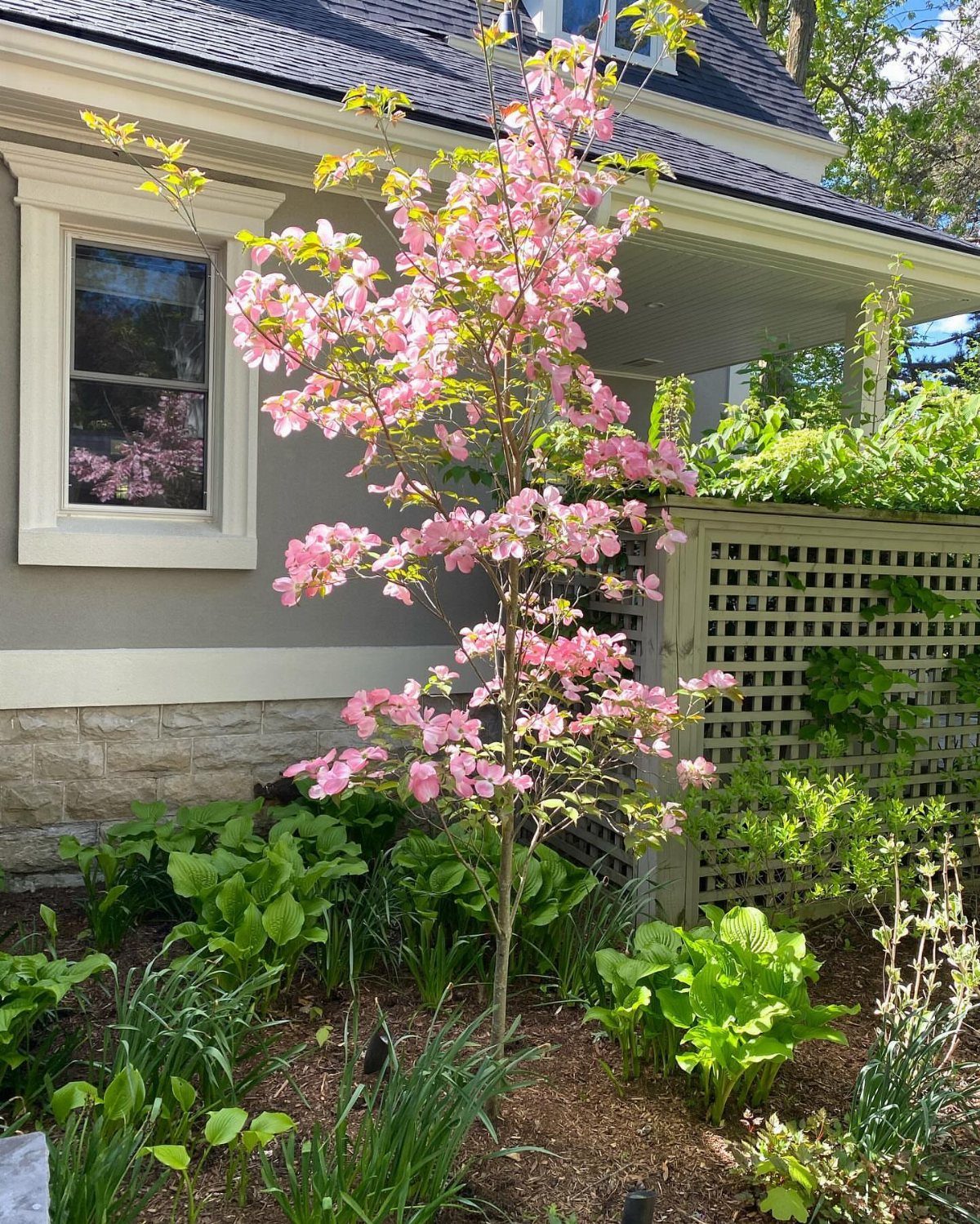
Pink flowering dogwood is a native that blooms in spring and sets red fruit afterward, so it gives 2 seasons from a small footprint.
Grey siding and a white window frame make a calm backdrop, and pink blossoms read well against that kind of plain wall. I’d plant it in a bed close to the house, where the flowers show from inside.
Choose white if your house is already colorful, and pink if the walls are neutral.
14. Emerald Arborvitae
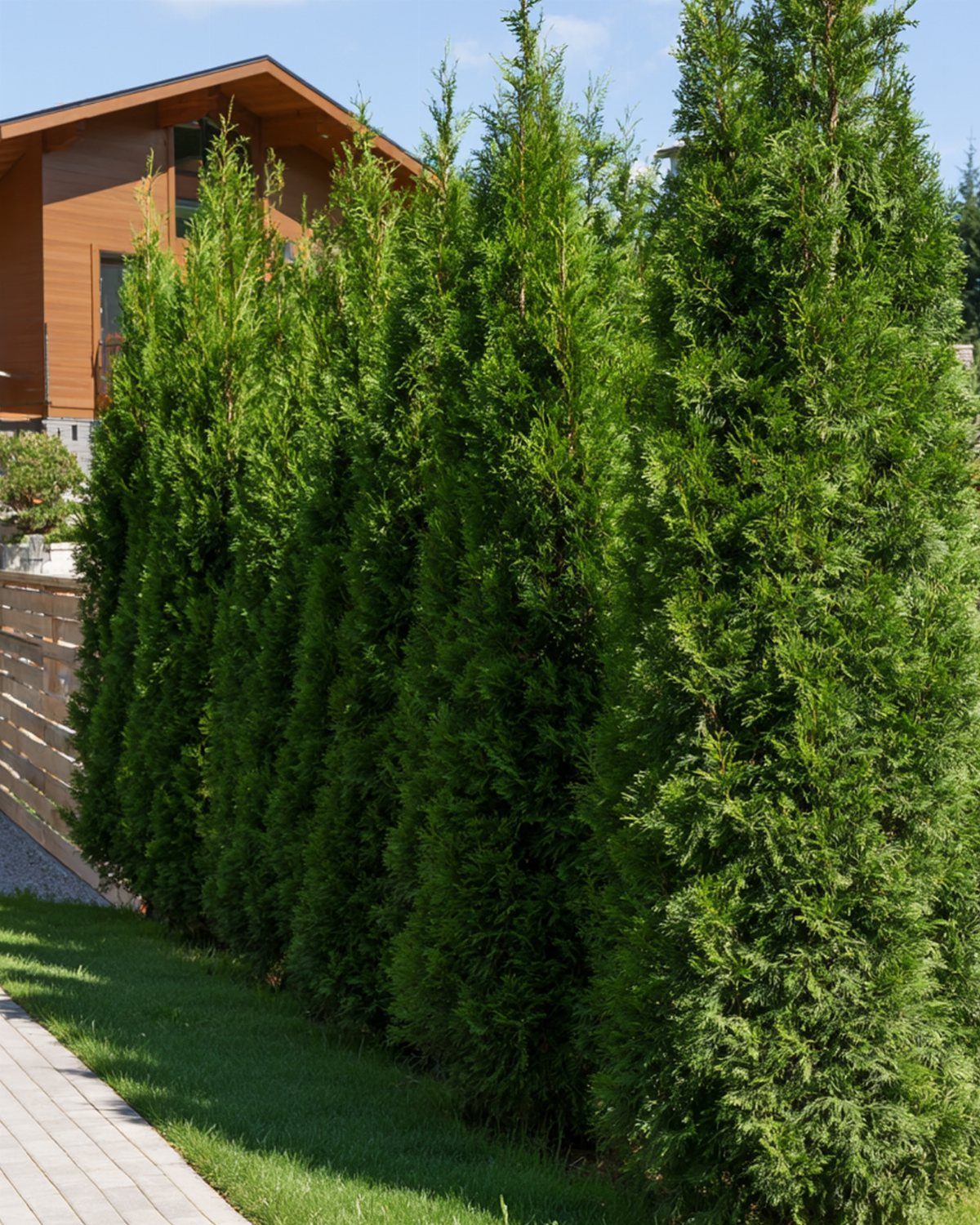
Emerald arborvitae is the narrow evergreen I’d pick for a privacy screen on a tight lot. Its slim, upright shape lets you line trees up along a fence without losing much yard width.
A row works best when the trees are spaced evenly, so the screen reads as one clean edge. Because it stays green all year, it hides the view in winter, when deciduous trees can’t.
Plant it in a straight line, not a zigzag, for a modern look.
15. White Geiger
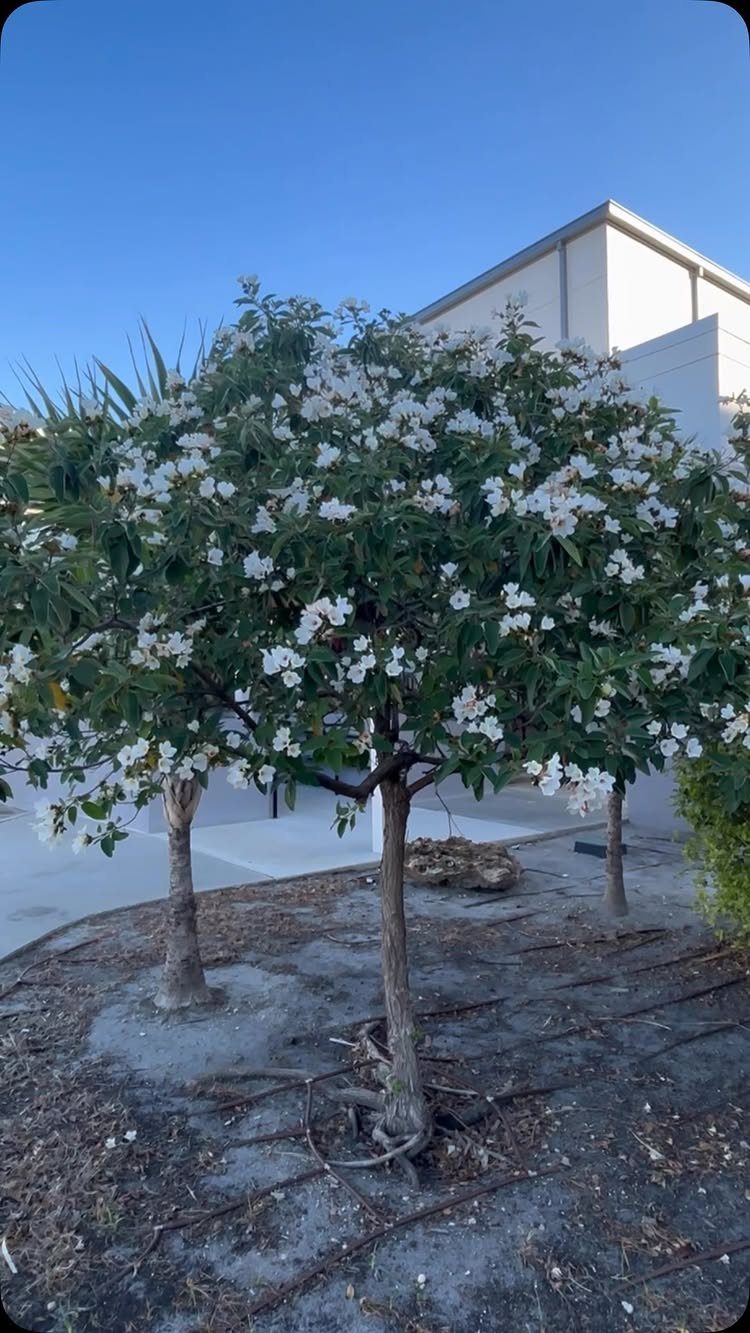
White Geiger is a small flowering native that blooms year-round in warm climates, which is rare for a tree this size.
Mature height runs about 11 feet, with a spread of about 12 feet, so it is nearly as wide as it is tall.
Leave that width in your plan. It suits a bare bed beside a light wall, where the white blossoms and green leaves stand out.
In a cold climate, skip it.
16. Olive Tree
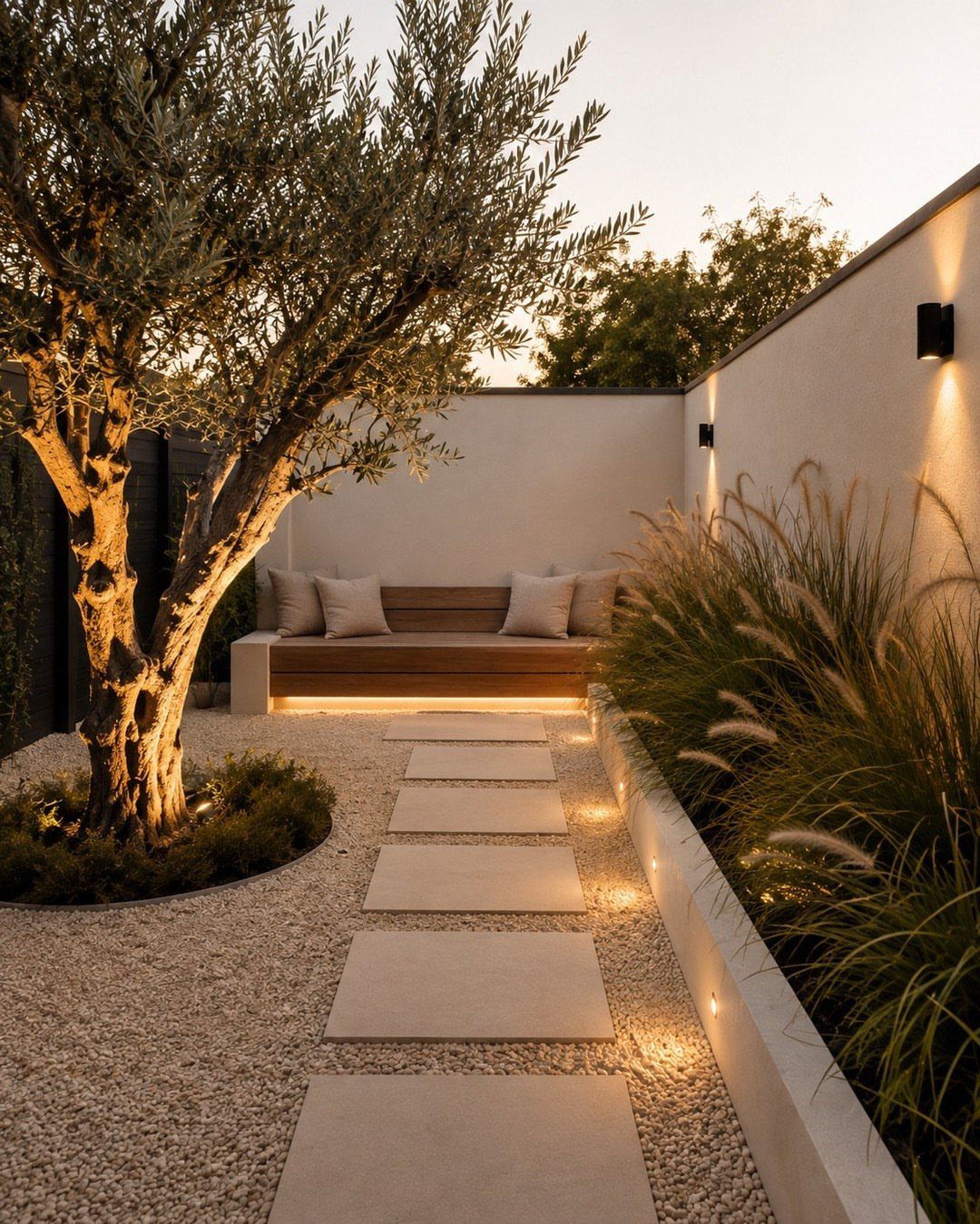
Olive tree brings silvery foliage and edible olives to a compact yard, and it gives the Mediterranean look without much fuss.
I like an olive best as a single specimen, set in gravel with stone pavers and a few ornamental grasses around it.
I’d place it near a bench so you see it up close. One well-placed tree beats several crowded ones.
17. Myrtle-Leaved Holly
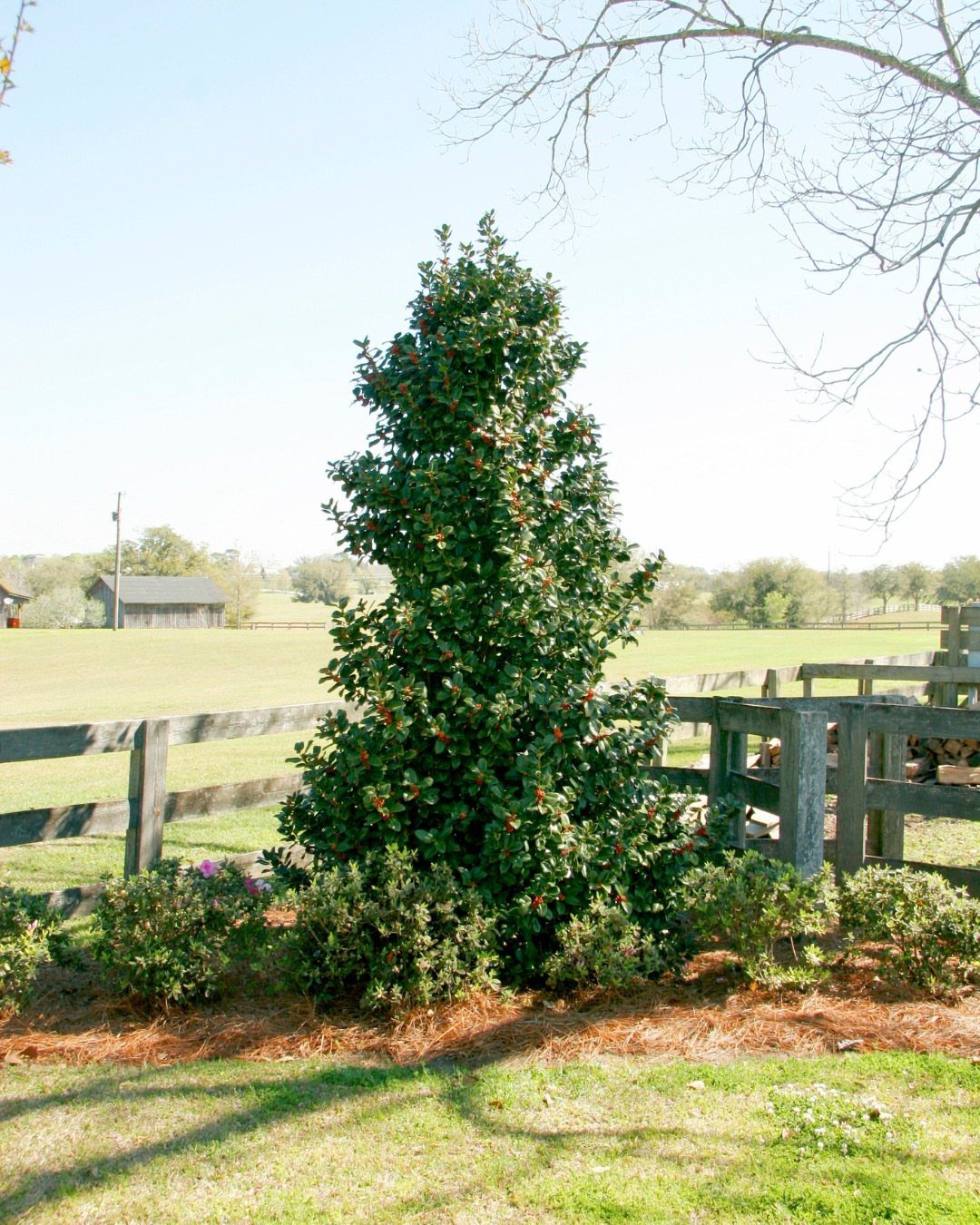
Myrtle-leaved holly stays small and grows in a tidy cone, and red berries add color through the colder months. It also suits wetter areas, where many small trees sulk.
I’d put it along a fence or property line, where the narrow shape fills a gap without taking over.
If your yard stays damp after rain, this is a sensible choice.
Match Tree to Landscape Purpose
Start with the job you want the tree to do, then pick the species.
A small tree can give shade over a seating spot, soften a view of a neighbor’s wall, frame a walkway or entrance, or add height to a flat yard so it feels bigger.
Shade from a house or an existing tree is not a problem. Under 20 feet, most small garden trees evolved as understory plants in the wild, which is why they usually handle filtered light or dappled shade without complaint.
No ground to plant in?
Planted in a big container, a small tree can throw enough shade to cool a patio or deck. Placing one near the house also improves the view from a window, whether it sits in the ground or in a pot.
For privacy, aim for a soft screen, not a solid wall. Evergreens give you cover and color all year.
Choose a Site and Planting Distance
Check 4 things before you dig: how wet the soil stays, how much sun the spot gets, how exposed it is to wind, and the soil pH.
A tree that likes drainage will struggle in a low corner, however good the spot looks.
Distance from the house matters just as much. Leave 8–10 feet between small trees and anything else, whether that’s a house wall, a fence, or the next tree.
A stricter rule of thumb is to match the tree’s mature height, so a 15-foot tree sits about 15 feet from the wall.
For a tight lot, I’d follow the 8–10 foot minimum only for trees that stay truly small, and use the height rule for anything you’re unsure about. Never plant right against a building.
Small is also loosely defined. Some sources count trees up to 30 feet tall as small, so check the mature height on the tag.
Planting and Ongoing Care
Fall and winter are the usual planting seasons. Some trees do better in late winter or early spring, so read the nursery tag before you buy.
A wide hole lets roots spread into loosened soil, while a hole deeper than the root ball lets the tree settle too low.
Prune regularly to keep the tree healthy. Remove dead or crossing branches first, and keep cuts modest.
Container-grown trees may need extra winter protection, since roots in a pot have less insulation than roots in the ground. Move the pot against a wall or into a sheltered spot when hard freezes arrive.
Frequently Asked Questions
What is a good small landscaping tree?
Flowering dogwood, eastern redbud and serviceberry all stay compact enough for a tight lot.
Flowering dogwood and redbud are natives that bloom in spring, and the dogwood sets red fruit afterward. Choose by the job you want done, such as shade, screening or a focal point, then match the species to it.
Are there trees that stay small?
Yes, many do.
Saucer magnolia stays under 4 m and adds only 6–12 inches a year, and fringetree, Wolf Eyes dogwood and myrtle-leaved holly also stay compact. Dwarf cultivars of bigger species are worth a look too; a compact flowering dogwood is one example.