The tree that suits your front yard depends on how much room it has at full size, and the plant tag tells you before you dig.
This list runs from compact magnolias and a weeping cherry to a Japanese maple in a pot, with one near-constant: keep small trees at least 8–10 feet from the house, measured from the trunk.
Spring bloomers like Eastern Redbud and Saucer Magnolia want space to spread, while crape myrtle carries color through summer and a container lets you move the tree if the spot is wrong.
1. Magnolia Ann
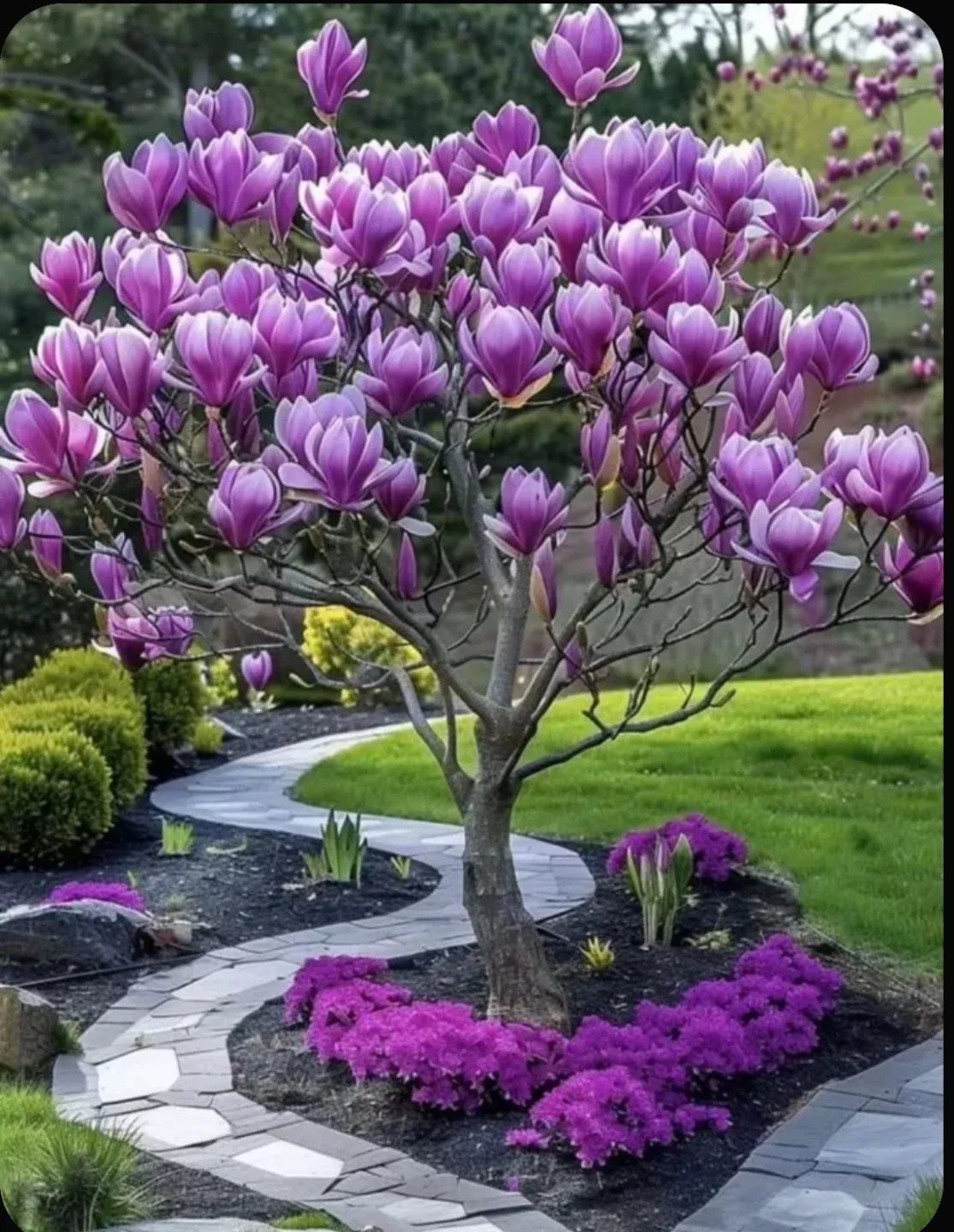
Purple, tulip-shaped blooms set Magnolia Ann apart from the paler magnolias, and its compact size of about 8–10 feet suits a small front yard.
The flowers are the point, so give the tree a spot where they read against green, as a curved path and a low purple groundcover do here.
A compact magnolia suits a small front yard better than a full-size one. I would still check the mature size on the plant tag against the distance to your walkway and windows before digging.
2. Leonard Messel Magnolia
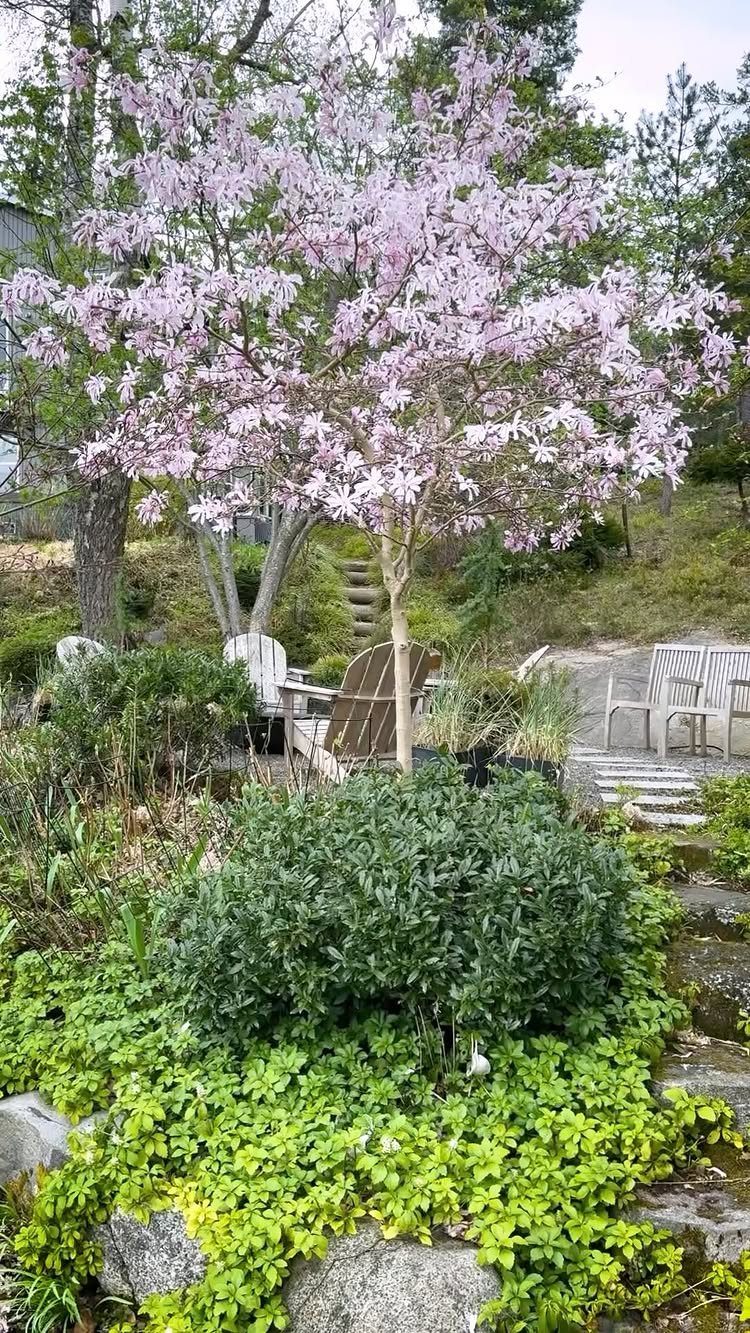
Fragrant, light pink, star-shaped flowers make Leonard Messel a tree you want near a door or a seat, where the scent actually reaches you.
Pairing it with green shrubs and rock, as in this garden, keeps the pale blooms from washing out.
It stays small, which helps in a tight yard. Plant it where you will walk past it daily, such as beside steps, so the fragrance does some work.
3. Little Gem Magnolia
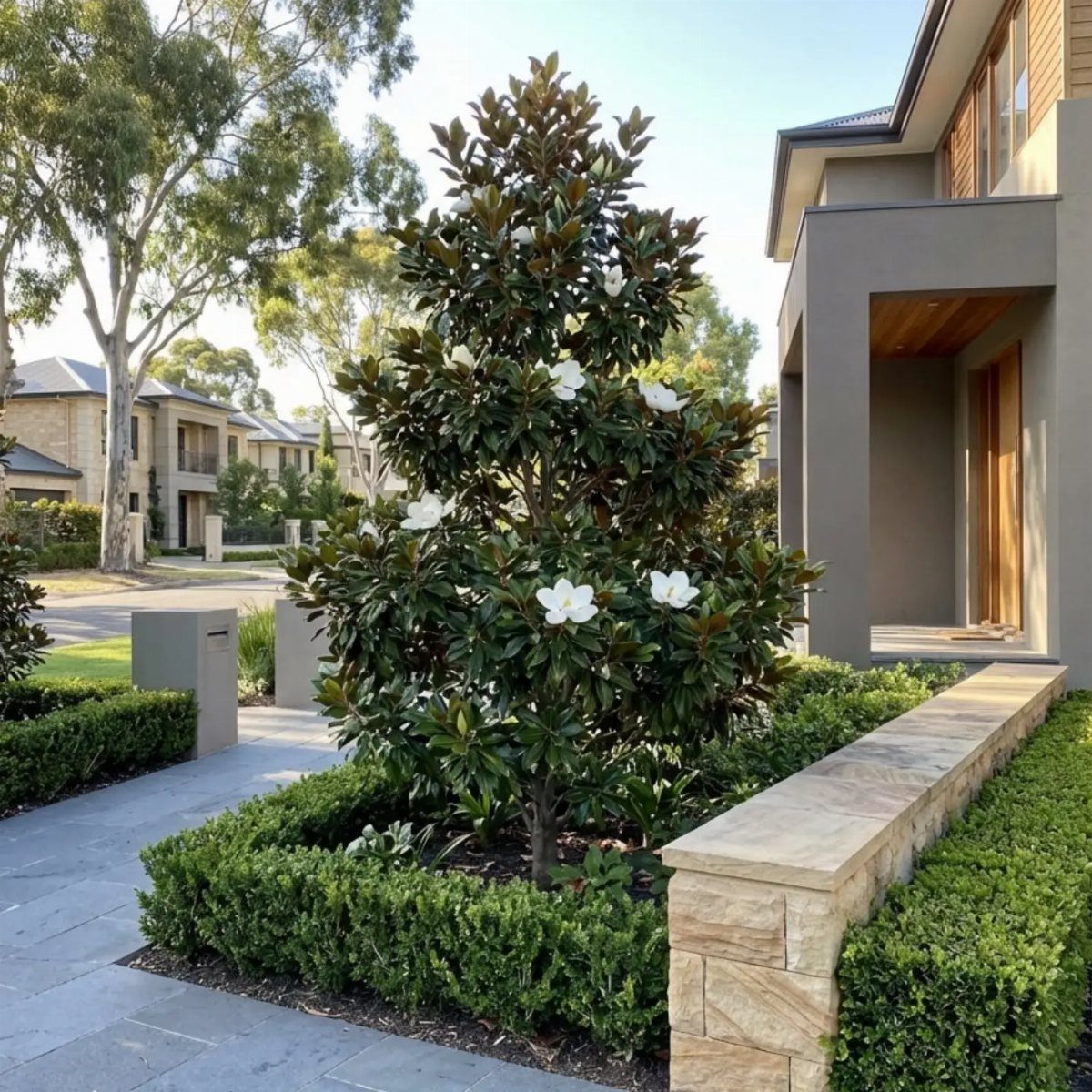
Little Gem is the evergreen of the magnolias, so it gives you leaves all year instead of a short flowering window. That makes it useful 2 ways: as a single specimen, or lined up as a screen.
Little Gem’s white flowers read clean against a low hedge or a stone wall, so it fits a modern house with tidy lines.
For a front yard where you want structure in winter, I would choose this one over the deciduous types.
4. Saucer Magnolia
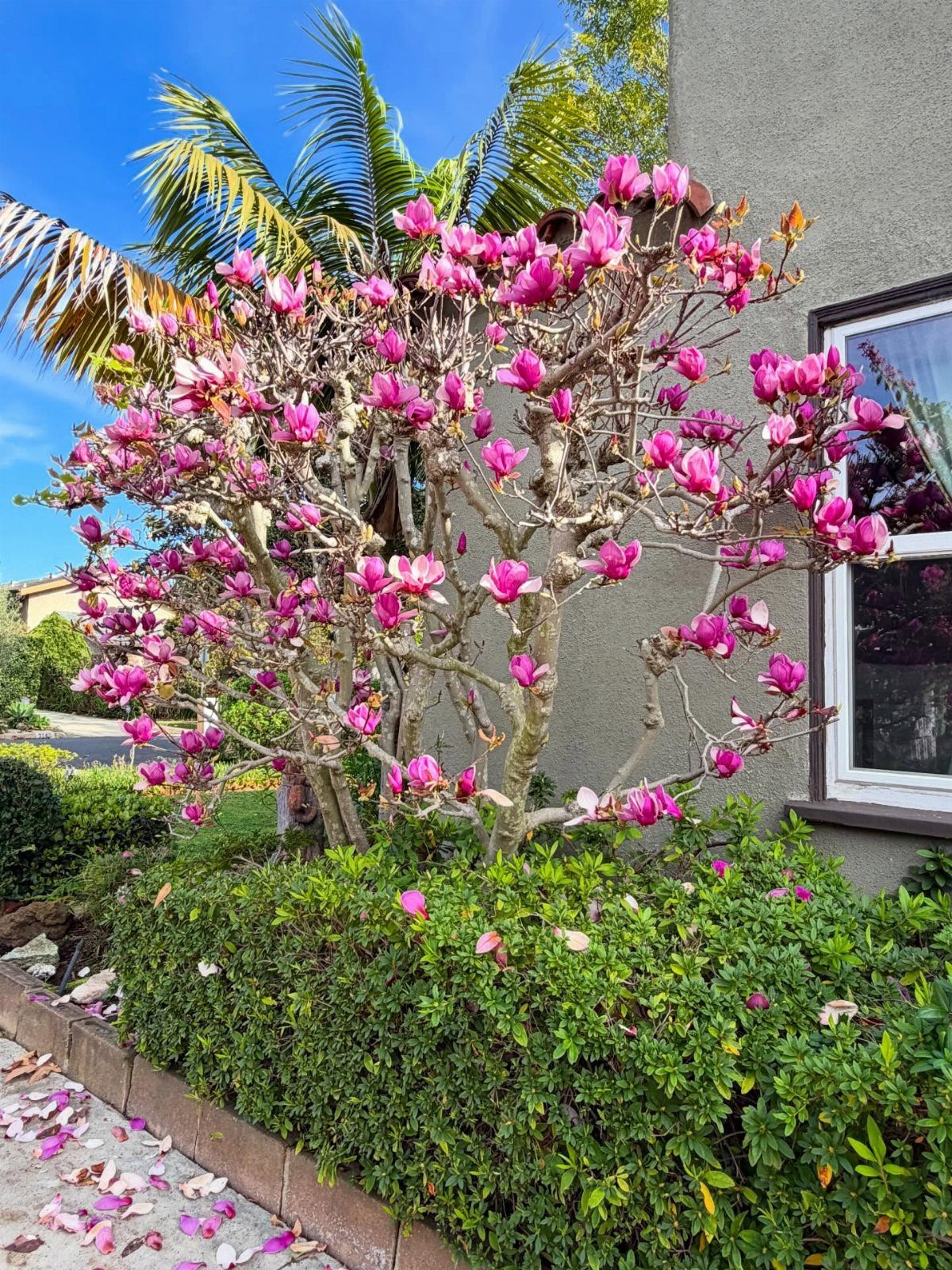
Large flowers in early spring are why people plant a saucer magnolia, and they open before most of the yard wakes up. Put it where the pink blooms face the street, against a plain wall like the grey one here.
Check the mature size before you plant, since a house wall close behind it leaves little room to spread. Keep shrubs low around it so the branches stay the star.
5. Flowering Cherry
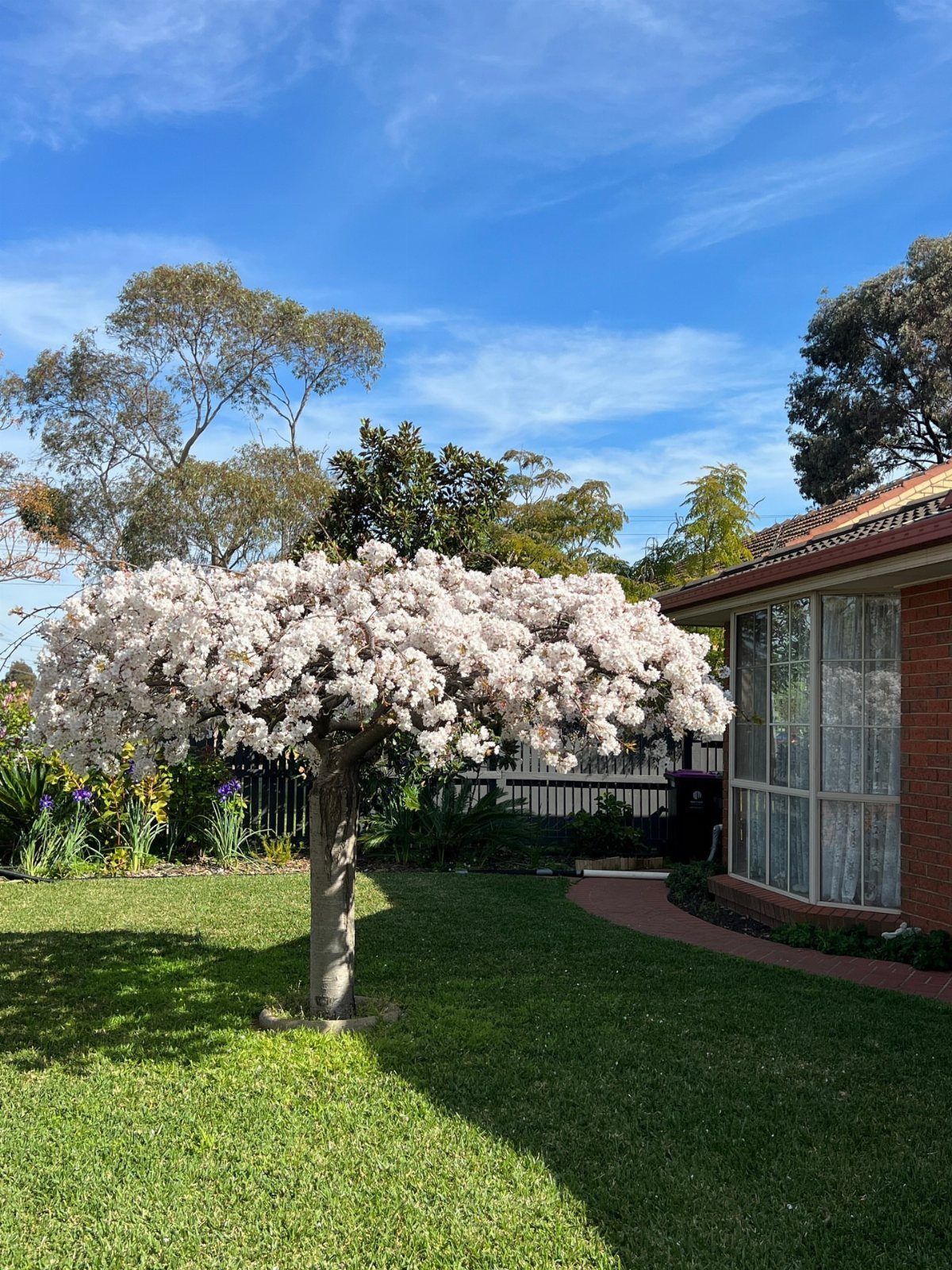
Flowering cherries come upright or weeping, and that choice decides how the tree fits. An upright form suits a narrow strip beside a drive; a weeping one makes a softer focal point in the middle of a lawn.
White blossoms look crisp against brick and a clear spring sky, as in this yard. Pick the shape first, then the color, and give it sun.
6. Serviceberry
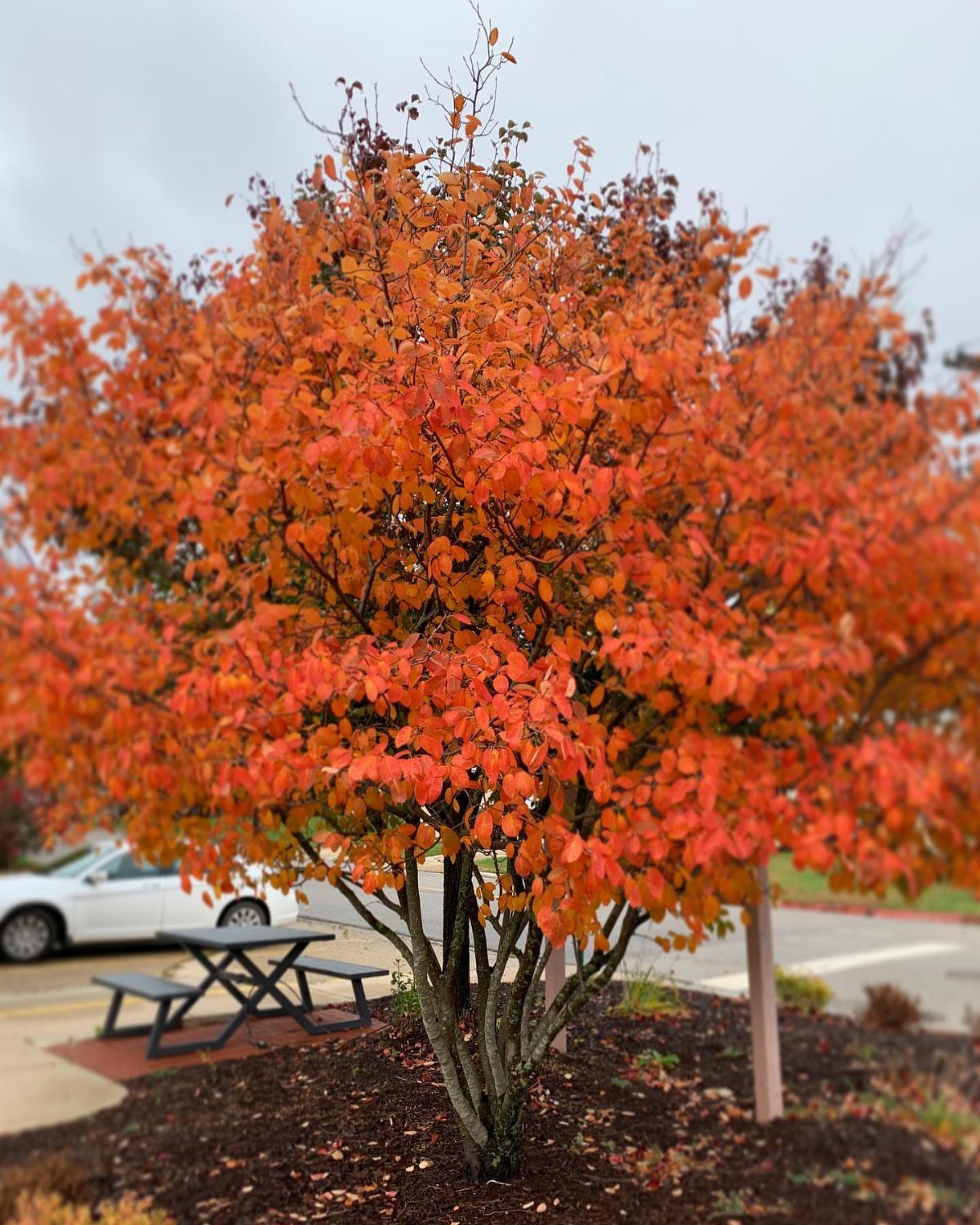
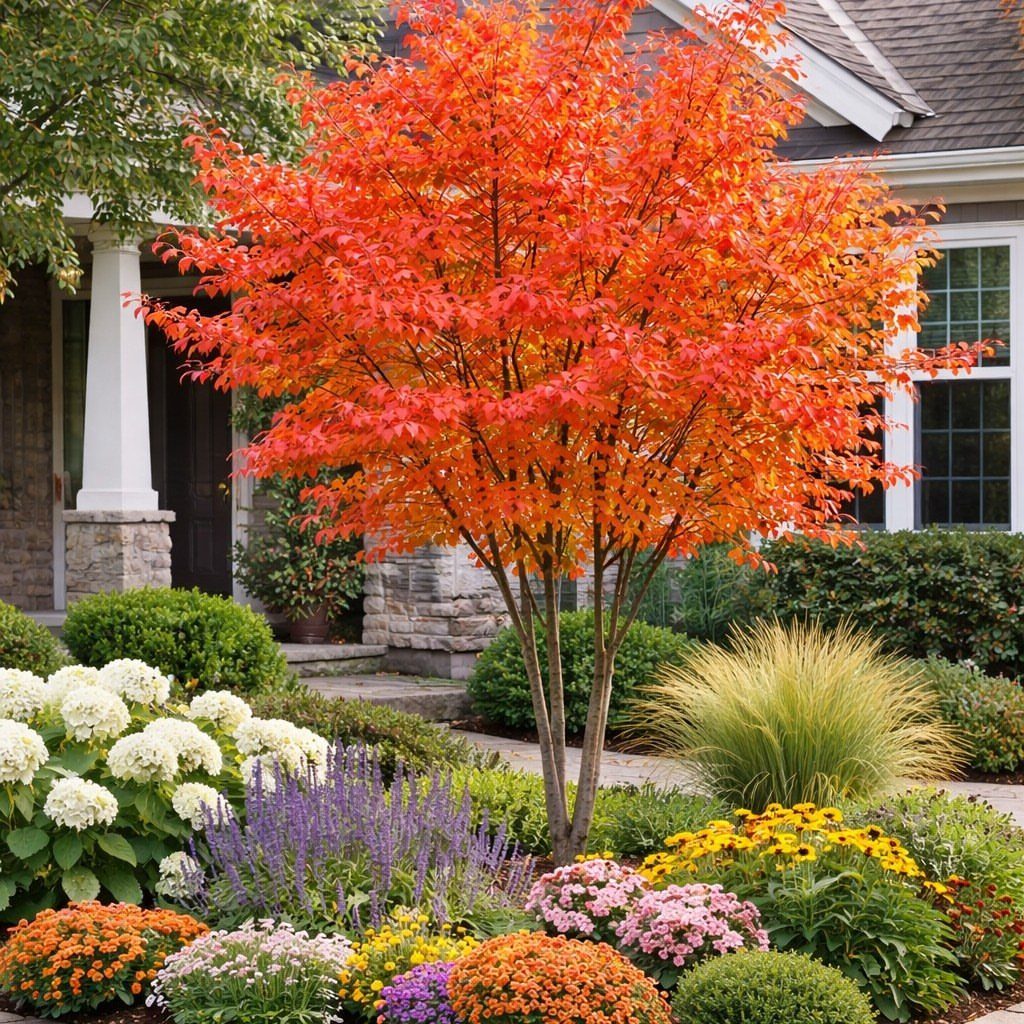
Serviceberry earns its space across the seasons: spring flowers, edible berries, fall color and food for wildlife. The bright orange leaves here show why it is worth planting for autumn alone.
A mulched bed keeps the base tidy and cuts lawn mower trouble. Expect birds to take much of the fruit; if you want berries for yourself, plan to pick early.
7. Eastern Redbud
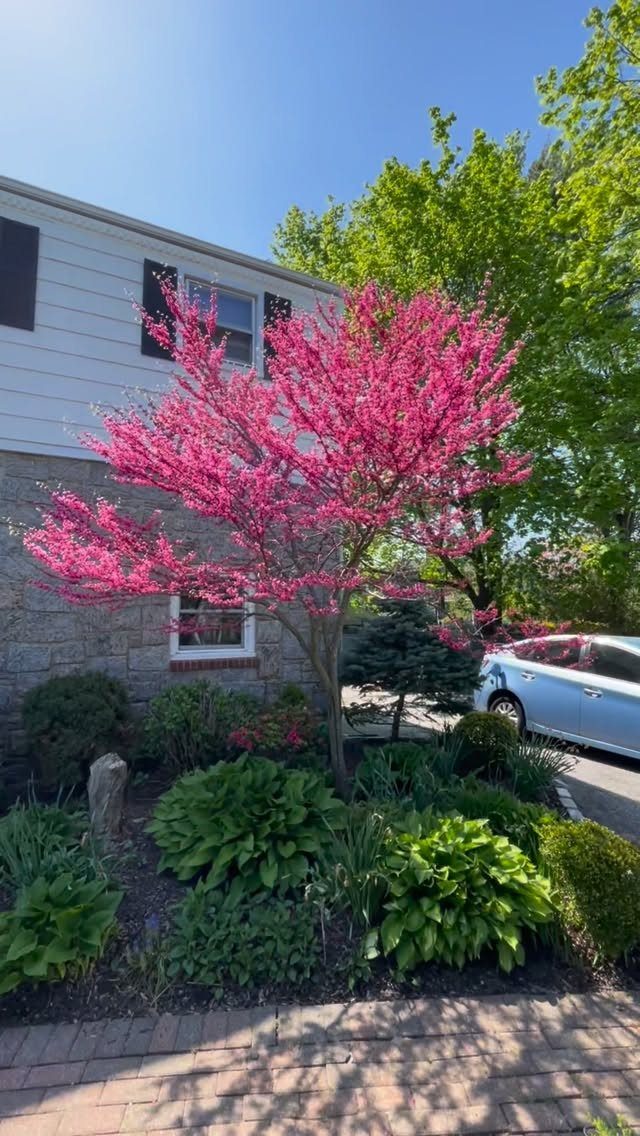
Early lavender-pink flowers and heart-shaped leaves make Eastern Redbud easy to spot, and the blooms show up before the yard has much else going on.
Here it sits close to the house, with a clear patch of lawn and bed around it.
Give it room to spread before you commit. Tag size matters most near the driveway: a redbud that spreads 25 feet will hang over a parked car, so plant it far enough back that the branches clear the roofline.
8. Kousa Dogwood
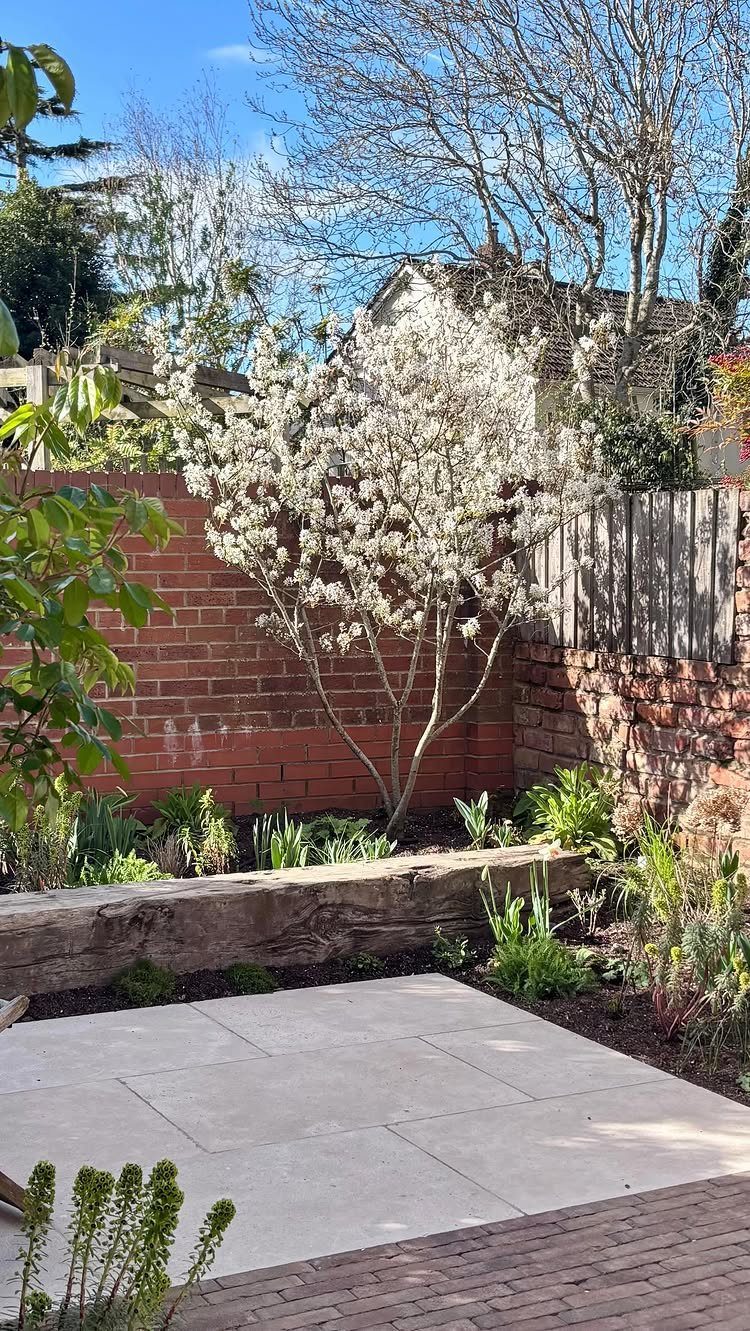
Kousa dogwood gives you three seasons from one trunk: white bracts in late spring, fruit after, then colorful fall foliage. That spread of interest is why it works so well in a small space.
Against a red brick wall like this one, the white reads sharply.
The maker said they planted three in a small 7m x 5m garden. I would plant one in a front yard and let it stand alone.
9. Flowering Crabapple
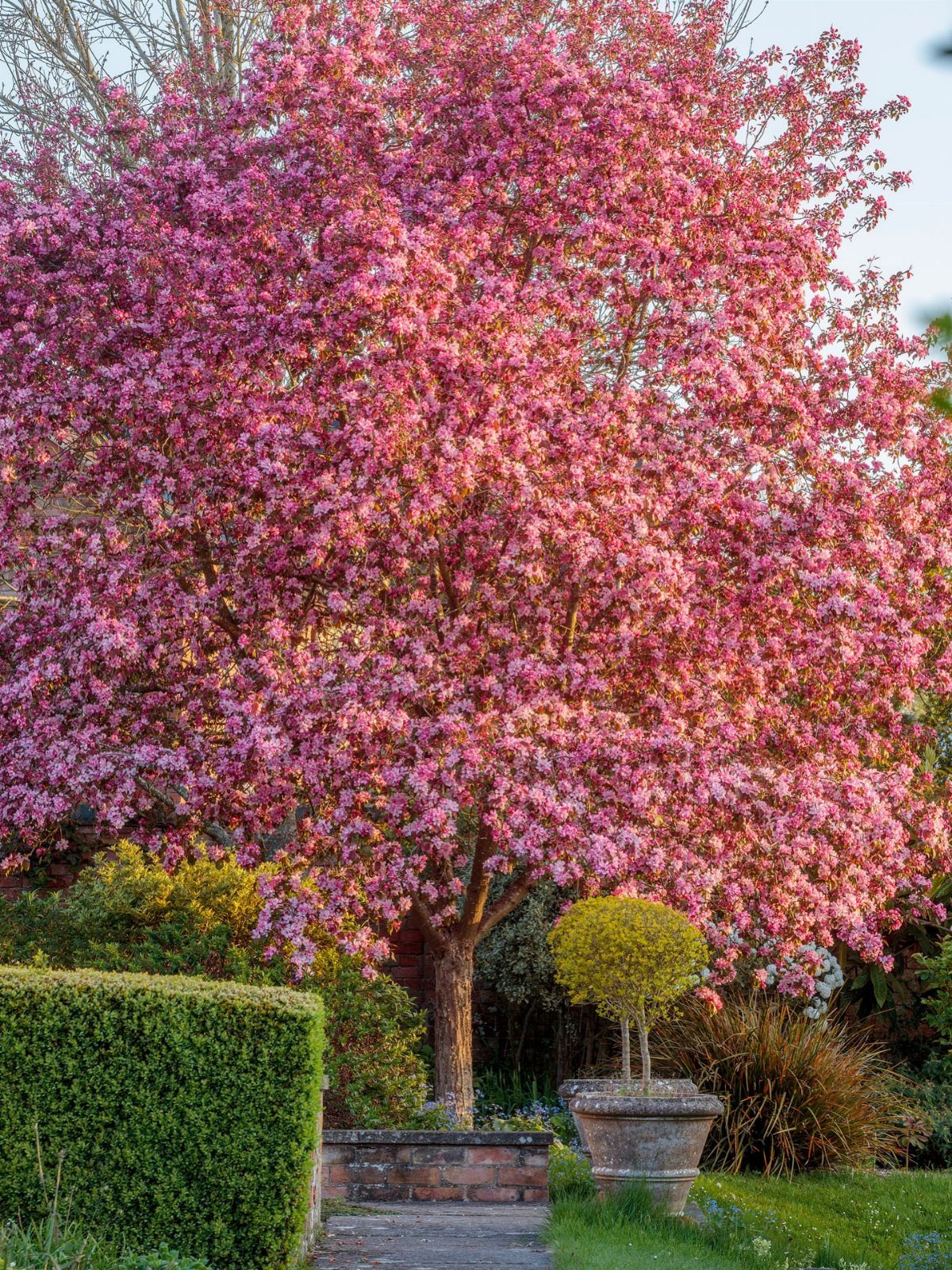
Flowering crabapple is a spring bloomer that can also give fruit and seasonal color, so it earns more than a week or two of attention.
Pink blossoms like these look best with a plain green backdrop, such as the clipped hedge here.
Leave real space around the trunk. A brick border keeps the bed neat, and a potted shrub nearby adds a low layer without crowding the branches.
Check the mature size on the tag before planting.
10. Crape Myrtle
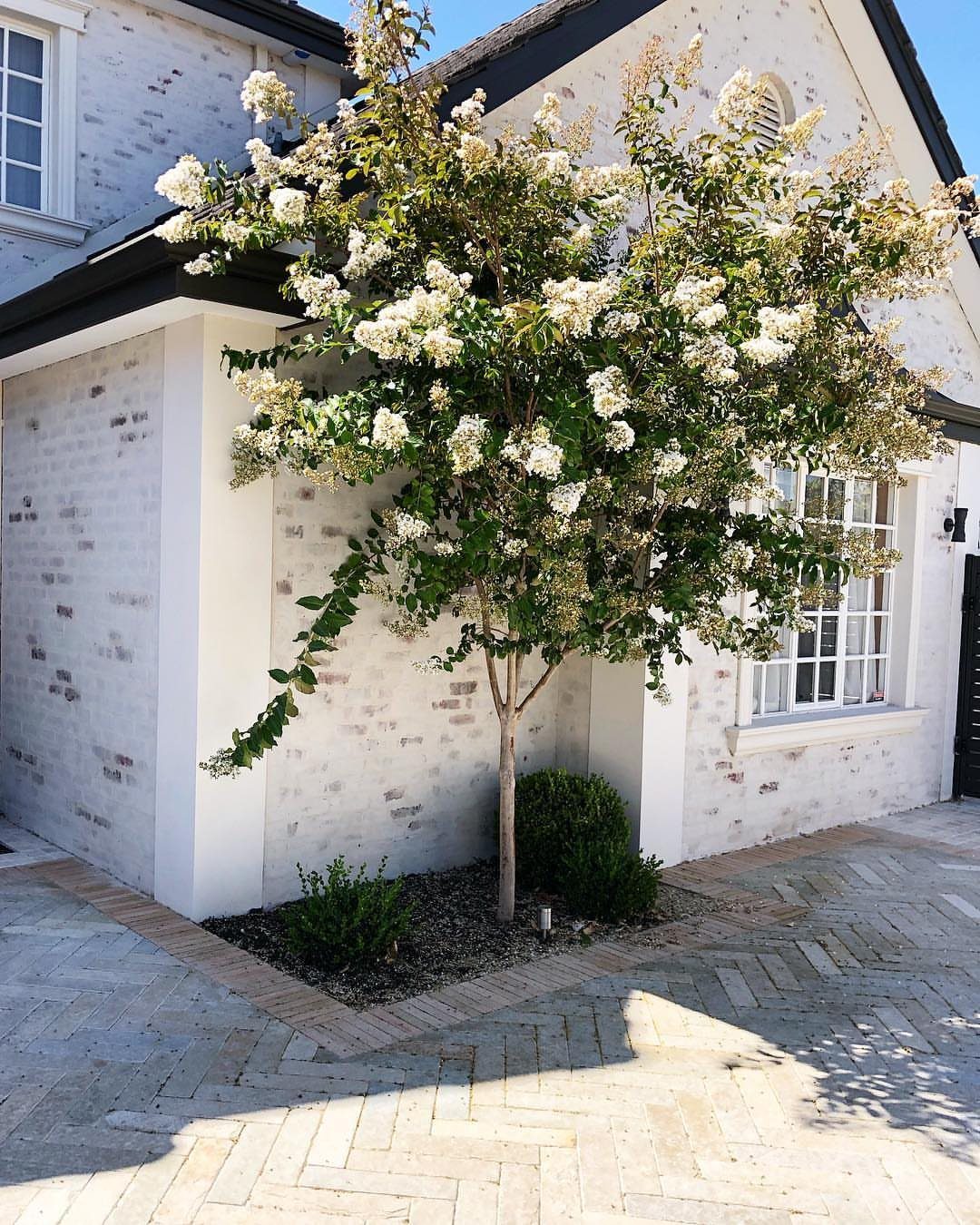
Crape myrtle flowers from summer into fall, long after most small trees have finished, and its ornamental bark adds interest once the blooms are gone. White flowers suit a white brick house, where the tree reads soft instead of loud.
Plant it in a defined bed beside the paving, as here, so roots and mulch stay contained. For a front yard that needs color in the hot months, I would pick this over the spring bloomers.
11. Fringe Tree
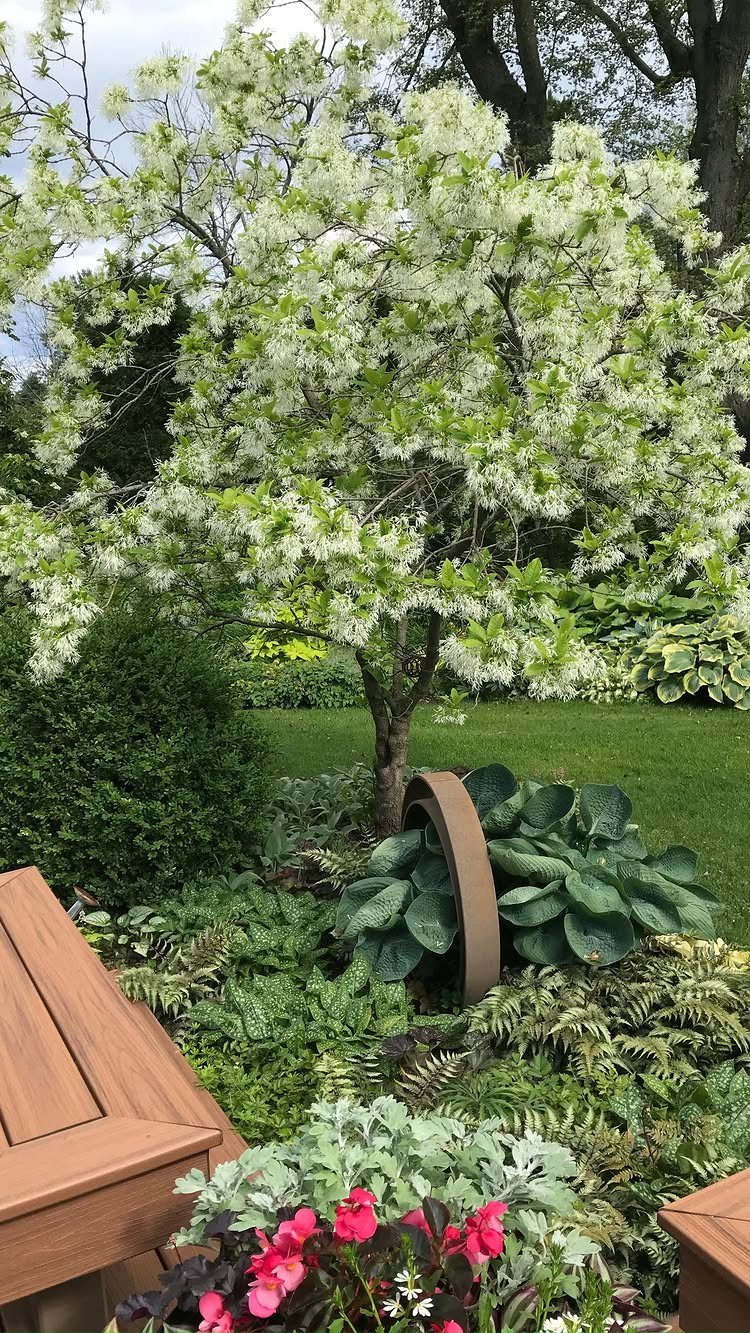
Fringe tree hangs fragrant white flowers in loose, fringe-like clusters, which gives it a softer look than the more solid blooms of magnolia or cherry. Plant it where you will pass close enough to smell it.
Underplanting with hostas and ferns, as in this garden, keeps the ground green and shaded around the trunk. A bench nearby gives the scent somewhere to be enjoyed.
I would choose it for a calm, woodland-style front yard rather than a bold one.
12. Japanese Maple
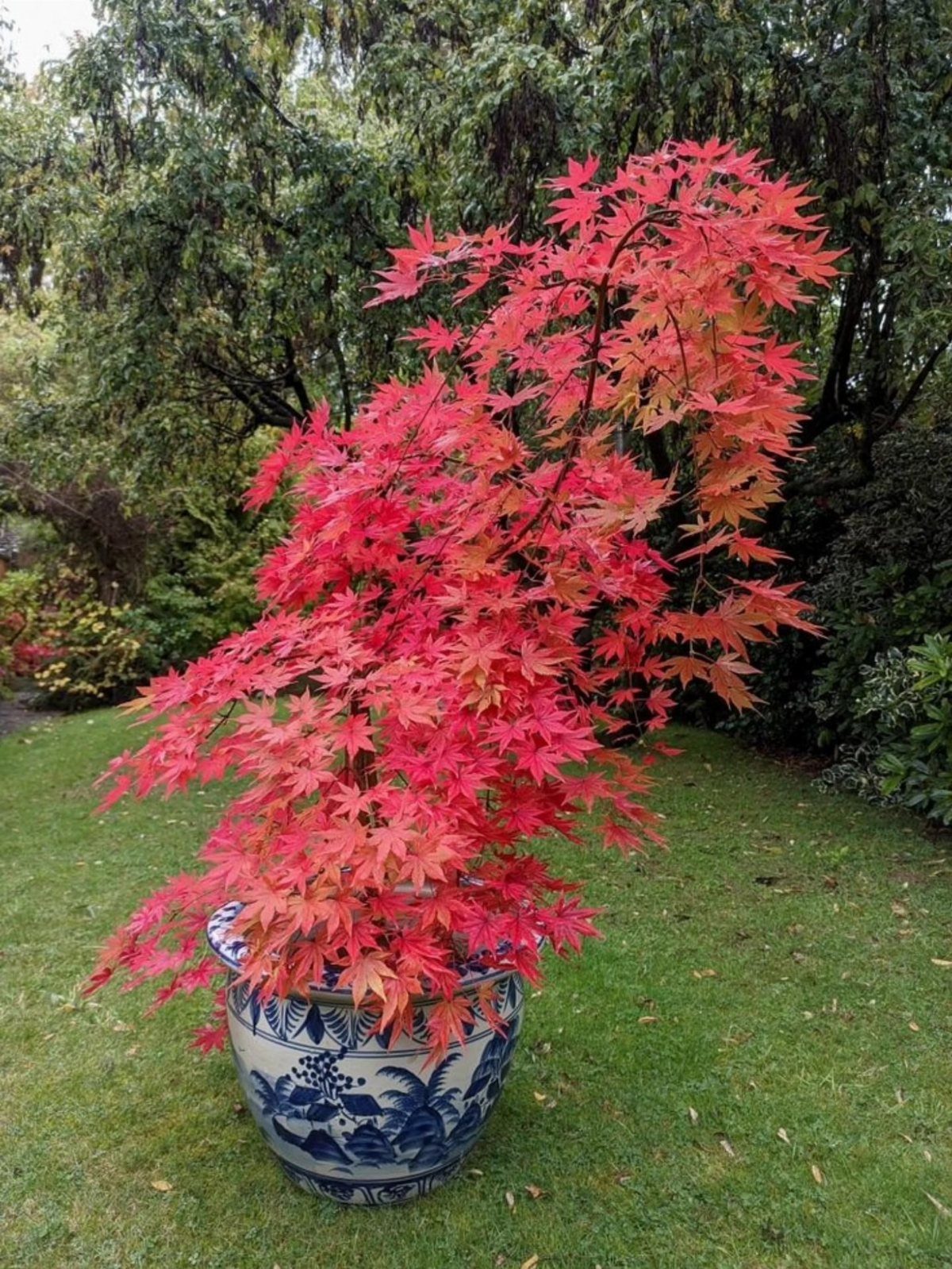
Japanese maples come in many foliage colors and forms, upright and weeping among them, so shape is the first choice to make. The red leaves here stand out against plain green lawn.
A pot like this blue and white ceramic one lets you place the tree exactly where you want it, and move it later. Pick a pot with plenty of room for roots.
Choose the form for your space first, then the leaf color.
13. Small Tree in Raised Bed
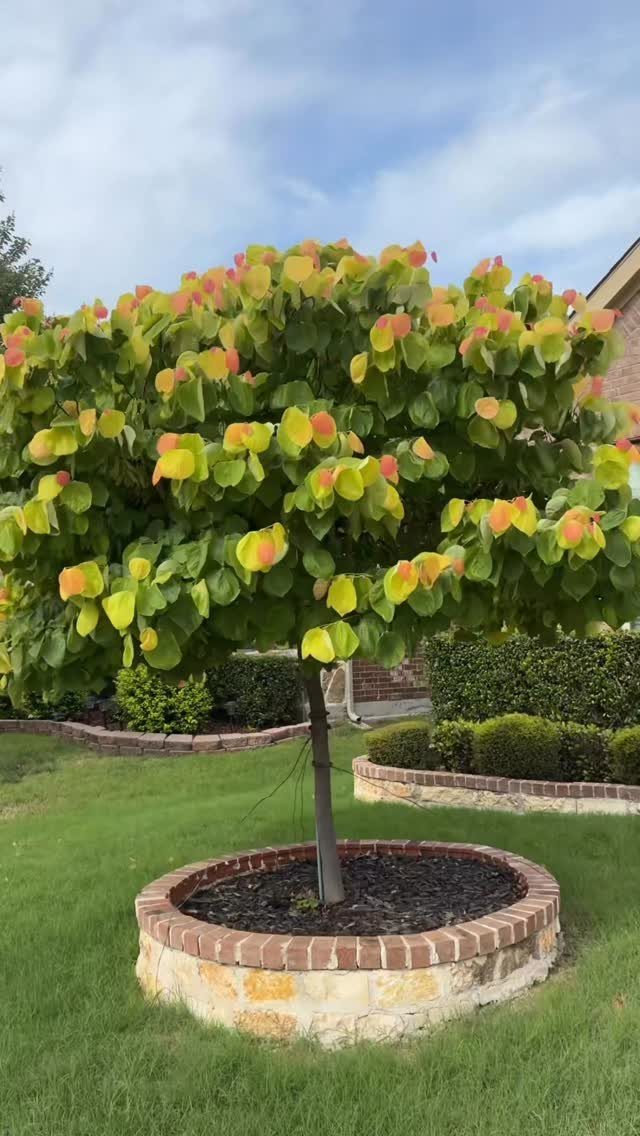
A circular stone and brick bed lifts a small rounded tree off the lawn and gives it a defined spot, so the mower stays clear of the trunk.
Size the ring generously. A wider bed leaves room for roots and keeps the stone from crowding the trunk.
I would add mulch inside the ring and keep the edge tidy, since the border does most of the work of making a lone tree look planned.
14. Container Planted Front Yard Tree
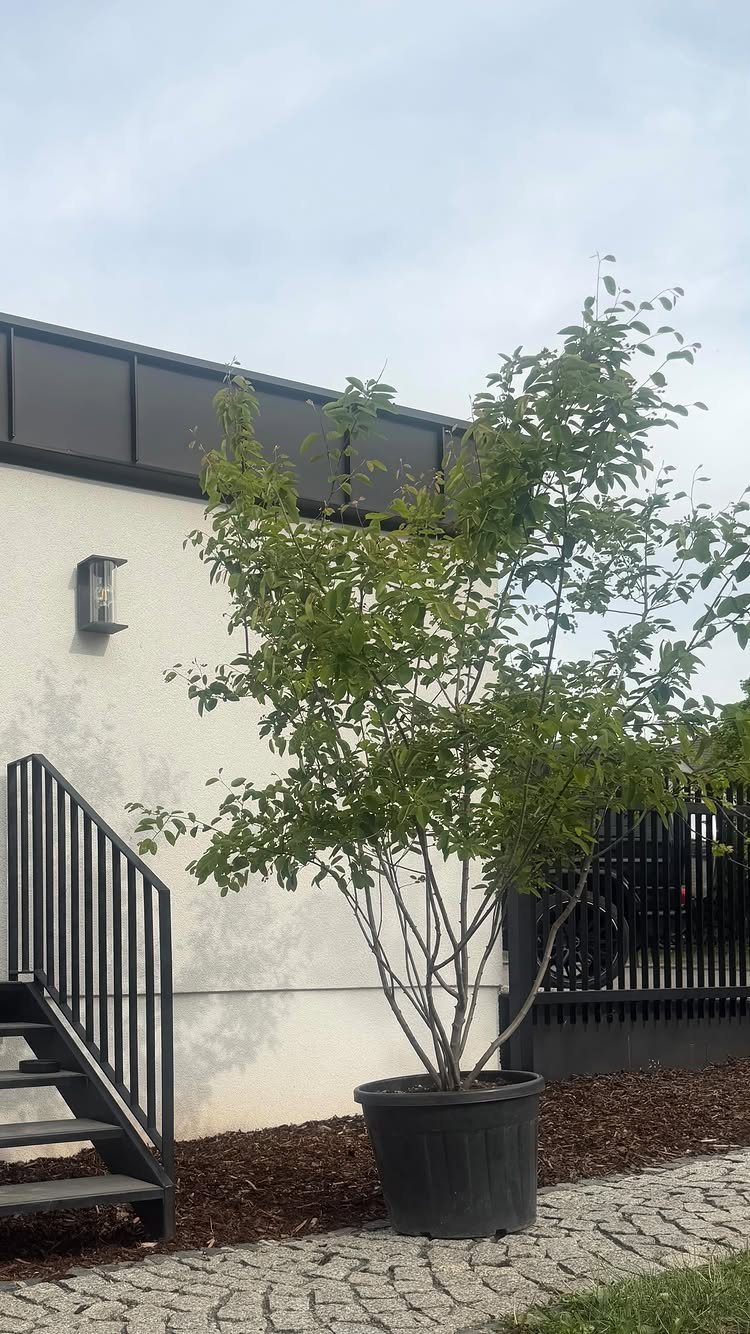
Planting in a black pot by the front walkway puts a small leafy tree exactly where the entrance needs it, against a white wall that makes the green stand out.
Choose a container with real room for roots, and set it on mulch so it sits in the bed instead of on bare ground.
Keep it clear of the stairs and the walkway so nobody brushes the branches on the way in.
A pot also means you can shift the tree later if the spot is wrong.
15. Ornamental Autumn Foliage Tree
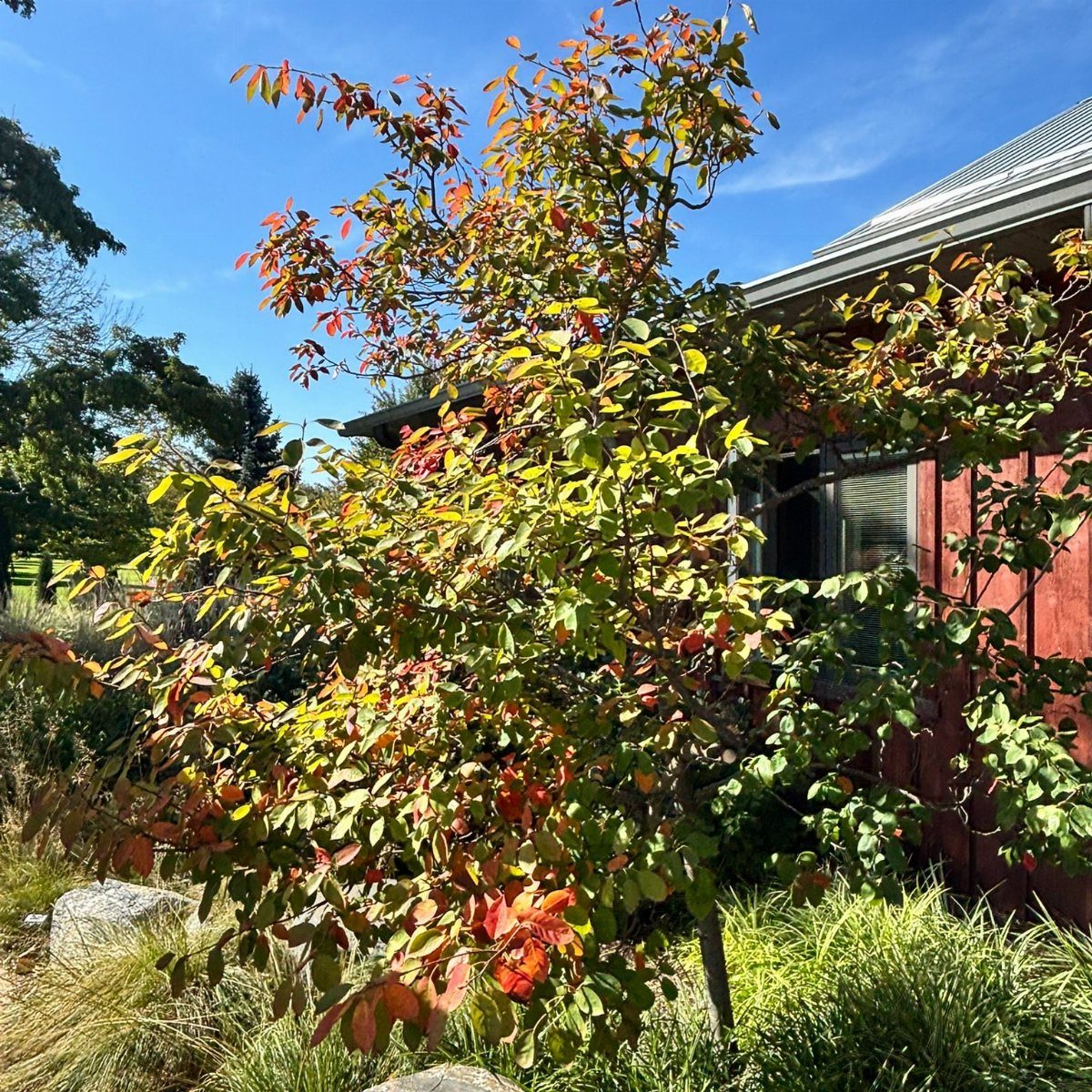
Orange fall leaves are the reason to pick this tree, and a red wooden house is a strong backdrop for them. Ornamental grasses in the same bed keep the ground soft and let the canopy stand out.
Plant the tree toward the back of the bed with the grasses in front, so the trunk shows.
Pick a deciduous tree if fall color is the draw, but read the mature spread on the plant tag first and measure it against the distance from your house wall, since a tree that outgrows its spot costs far more to fix than to place well.
Match Tree to Planting Site
Before you buy anything, spend a day reading the yard. Before buying anything, watch the spot and count the hours of direct sun it gets, then sort it into full sun (6 or more hours), part sun, or shade.
Soil comes next. Grab a handful and see whether it feels sandy, gravelly, or sticky like clay, then pour water in a hole and see if it drains within a few hours or sits there.
Dig a small hole and look. If the ground is packed hard as concrete, break it up with a digging fork first, because roots can’t grow and water can’t soak in through a crust like that.
A thick layer of mulch, either composted leaves or aged hardwood bark, holds moisture in and slowly feeds the soil as it breaks down.
Wind matters too. An exposed corner dries a young tree out faster than a sheltered one.
A soil test is cheap and tells you the pH and which nutrients are low. Match those results to what the tree needs, because a tree suited to the site needs far less rescuing later.
Planting Near a House
A sapling will not stay a sapling.
Roots reach out about as far as the branches do, and you cannot see them, so trouble shows up only after it starts: cracked older water lines, pressure on a foundation, limbs over the roof.
A common rule says to plant a tree about as far from the house as it will be tall at full size, though small trees can sit closer.
That works for big shade trees, but it is more than a small front yard can give. For small trees, plan on at least 8–10 feet from the house.
Do not plant against the wall. Branches rub siding, roots and constant moisture work on the base of the house, and fallen fruit stains whatever is underneath.
Measure from the trunk, not from the edge of the planting bed.
Frequently Asked Questions
What trees will stay small?
Compact magnolias like Magnolia Ann (about 8–10 feet) and Leonard Messel, plus serviceberry, Eastern redbud, Kousa dogwood, crape myrtle, fringe tree and Japanese maple, all suit a small yard.
The Arbor Day Foundation counts trees up to 30 feet tall as small. Sizes vary by variety, so check the mature height and spread on the plant tag before you buy.
What tree is best for the front of a house?
Little Gem magnolia is my pick if you want structure in winter, since it is evergreen and works as a single tree or a screen.
Crape myrtle is the better choice if you want color in the hot months, because it blooms from summer into fall. Whichever you choose, match it to your sun and soil first.
What is the most beautiful small tree?
It depends on the season you care about most.
Kousa dogwood gives three seasons from one trunk: white bracts in late spring, then fruit, then colorful fall foliage. Serviceberry also earns its space year-round with spring flowers, edible berries, fall color and food for wildlife.
What are some trees that don’t get too tall?
Magnolia Ann tops out around 8–10 feet, and Leonard Messel stays small too.
Serviceberry, redbud, Kousa dogwood, fringe tree and Japanese maple are other compact choices. A pot also helps you keep a small tree in scale, and a Japanese maple does well in one with plenty of room for roots.
What are the best trees to plant near your house?
Choose a small tree, since small ones can sit closer to a house than big shade trees with fewer problems.
Plan on at least 8–10 feet from the house, measured from the trunk, not the edge of the bed. Never plant against the wall, because branches rub siding and roots and moisture work on the foundation.