Wood choice shapes this list more than styling does: cedar costs more than basic pine and weathers to a silvery gray, while pressure-treated boards are the budget pick, and the Pressure-treated Wood Two-tier Planter and the Choosing and Caring for Wood section cover how to handle them.
The ideas run from a single Two-tier Garden Box to Three-tier Garden Boxes you can build one weekend at a time, plus a look at wood and sizing.
1. Two-tier Garden Box
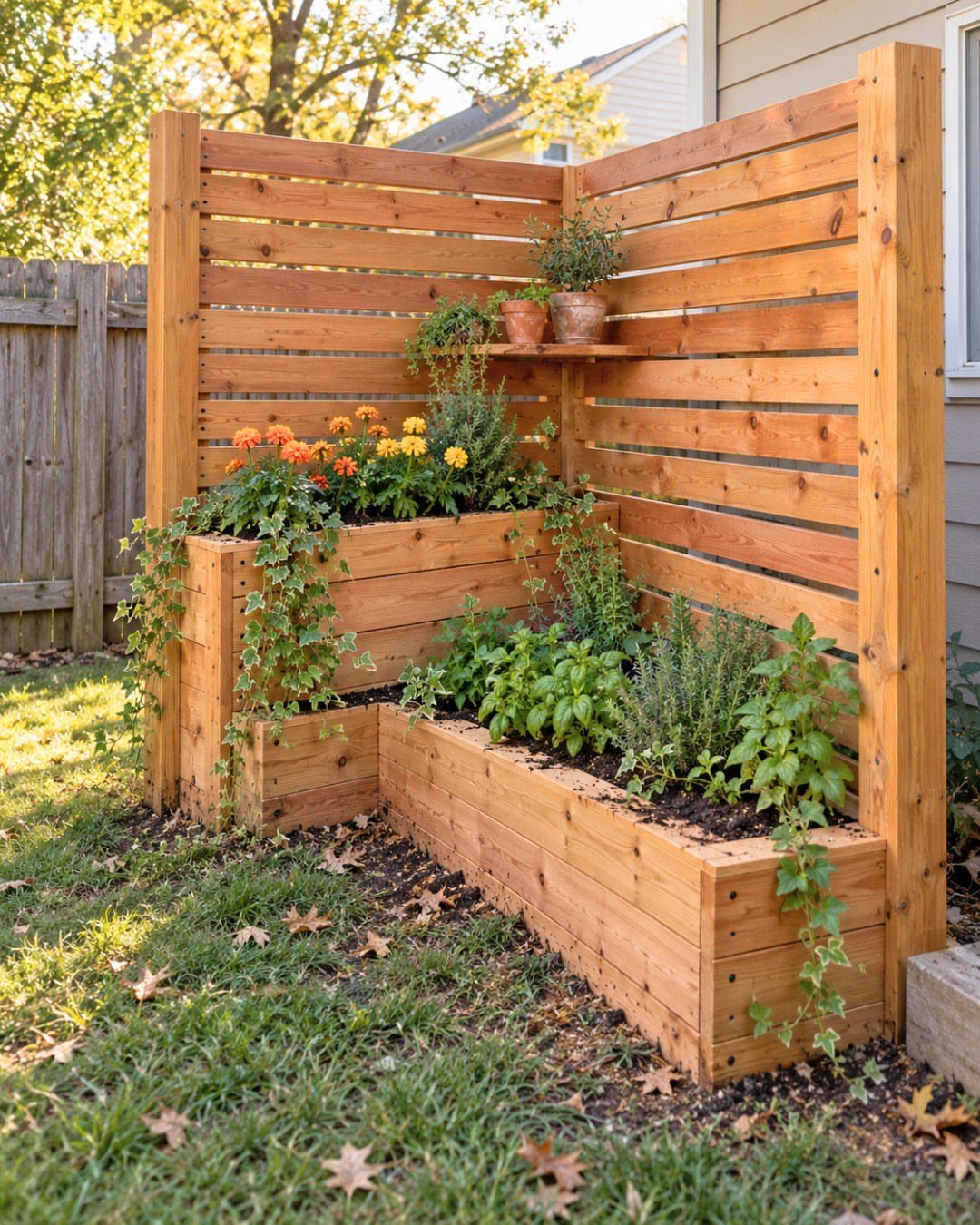
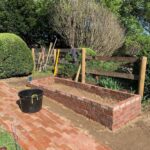
A two-tier box built tall and wide makes a good guard for a flower bed in a residential yard. A planter this size takes up real ground, so an animal that likes digging has less open soil to work with.
Cedar slats make a good match here, since the box and the fence read as one piece.
I would keep herbs on the upper tier and flowers on the lower, so the taller tier holds the plants you pick most often.
Cedar costs more than basic pine, but it is the version I would build if the box stays outdoors year-round.
2. Three-tier Garden Boxes
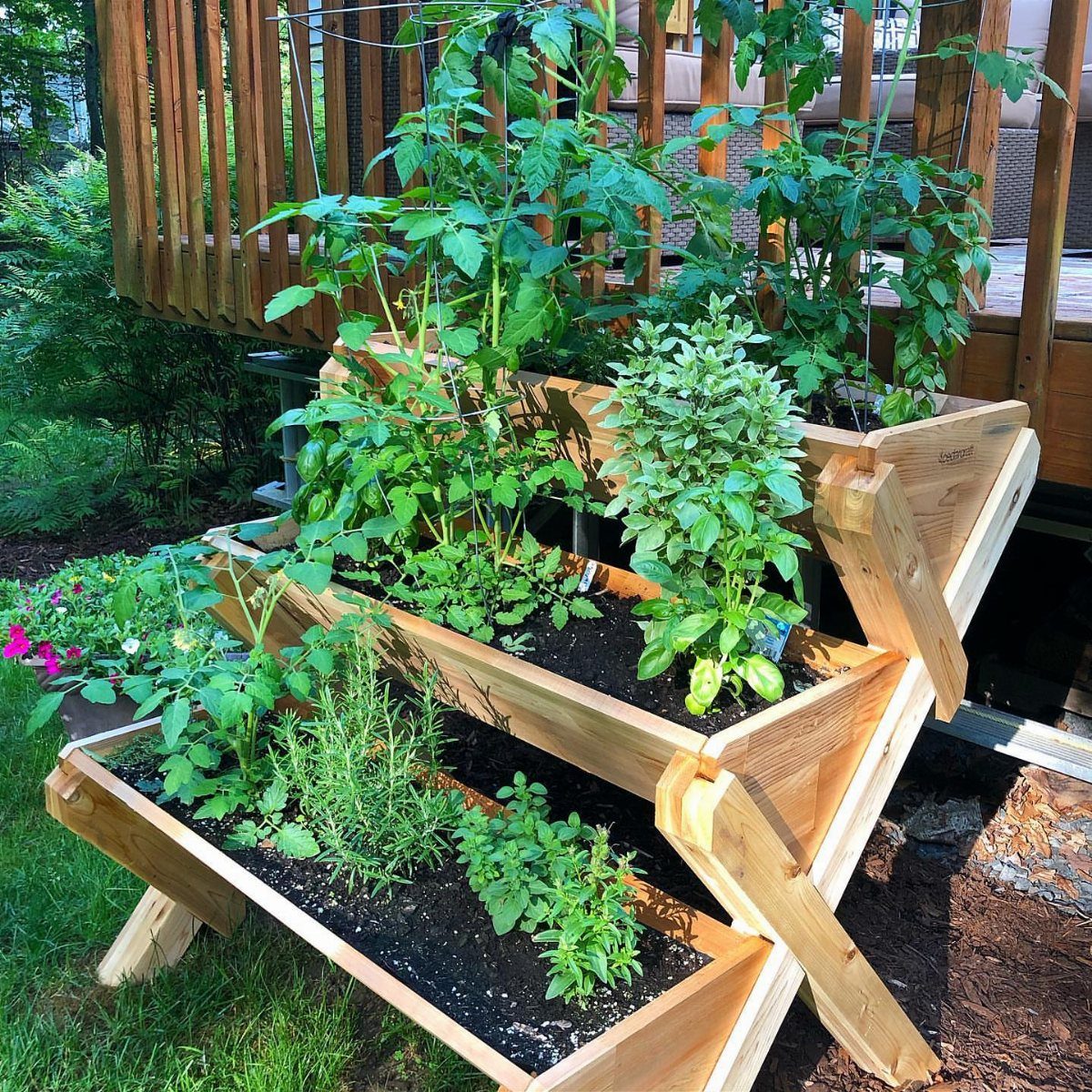
Three separate boxes that lean on each other give you more freedom than one big stacked unit. You can build them one weekend at a time, and each box stays a size you can lift and square up by yourself.
Tomatoes suit the back, tallest box, and basil fits the lower ones where it is easy to reach.
Set the boxes snug against each other so they brace one another, and check that each one sits level before you fill it with soil. Soil is heavy, so level ground matters more than fancy joinery.
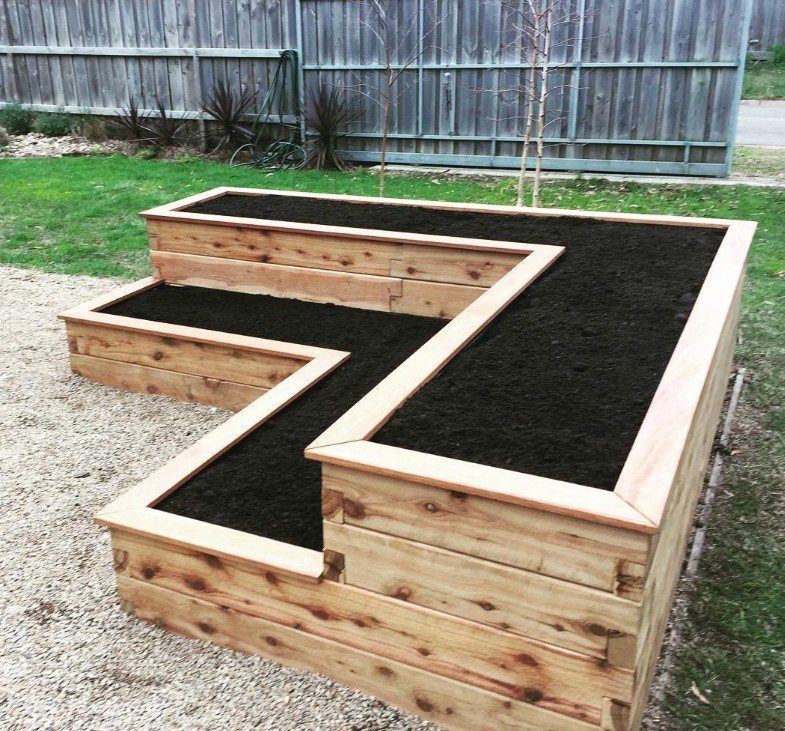
3. Pressure-treated Wood Two-tier Planter
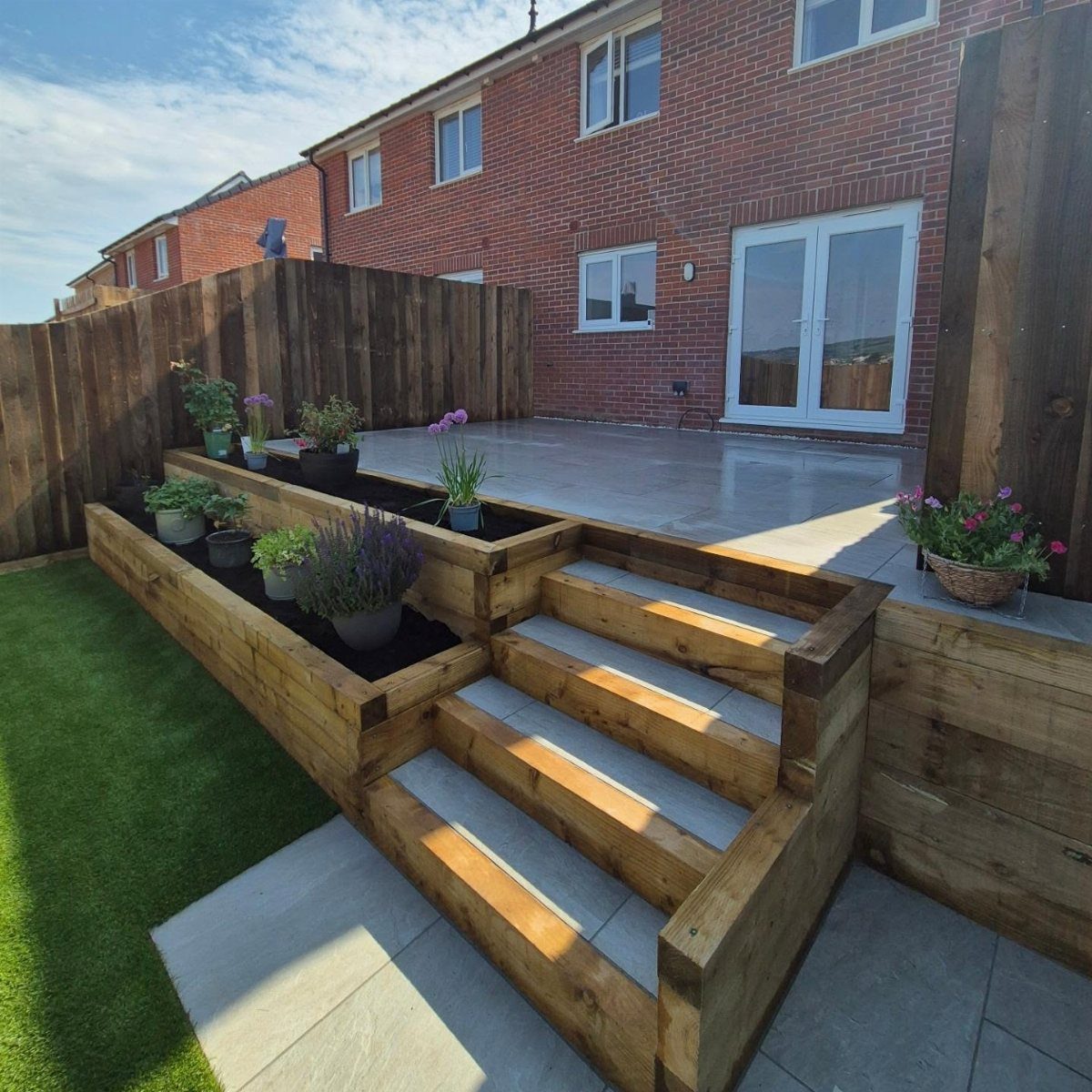
Pressure-treated lumber is the budget answer to rot: outdoor-treated boards are built to last longer in wet soil and weather, so a planter on a patio holds up without constant repair.
Building the stairs into the tiers, as this one does, turns a plain box into a display for potted plants.
I would line the inside with a barrier or use pots set into the tiers if you plan to grow vegetables, since many people prefer to keep treated wood away from edible roots.
For flowers, plant straight in and skip the extra step.
Choosing and Caring for Wood
Milled cedar resists weather and bugs on its own, and it needs no top coat. Left bare, it weathers to a silvery patina, so expect an aged look rather than that fresh orange-tan color.
Cedar pickets cost less, but they can arrive bowed or uneven. Sort through the stack at the store and sight down each board’s edge before it goes in the cart.
Pressure-treated lumber is the cheaper route for a 2 tier planter box when you can live with its greenish tint and don’t mind painting or staining it.
If you want the cedar look on a tight budget, I’d buy pickets and pick them carefully. Spend the extra on milled boards only where a straight, clean edge shows.
For the actual frame of the planter box, you want to keep the whole thing pretty light weight, so a 2×2 works best. Unfortunately, pine 2×2 studs are notoriously prone to warping and aren’t very weather resistant.
Planter Construction and Sizing
Depth decides whether a tiered planter works. Leave each planting area deep enough for roots, because a tier that looks generous from the outside can lose room to framing and trim.
Predrill the framing screw holes with a 1/8-inch bit. Keep pilot holes smaller than the screws so the threads still bite, which also keeps the wood from splitting near the ends.
Soil pushes outward as it settles and gets wet. Add braces so the top tier can’t pop out under that weight, and set them before you fill anything.
Leave a little extra room in your layout for any trim that will go on the outside of the box. Fit it into your measurements at the start, since adding it later means the tiers no longer line up.
Frequently Asked Questions
How do I build a tiered planter box?
Decide on any outside trim before you cut anything, because adding it afterward pushes the tiers out of line.
Drill pilot holes in the framing with a 1/8-inch bit; it’s narrower than the screw shank, so the threads grip and the board ends stay intact.
Set braces before any soil goes in, because settling, wet soil pushes outward and can pop the top tier out.
Should I line planter boxes with plastic?
No. Water needs to drain downward, and plastic traps it, which can leave the soil sitting wet and rotting.
Is there anything I’d change or wish I’d known sooner about a tiered planter?
Plan for the aging.
Bare cedar goes silver over time, which suits most people but surprises some. Measure depth with the framing and trim in mind, because a tier that looks roomy from the outside can lose planting space to them.
Add the braces before filling, since fixing a bowed tier after the soil is in is a headache.
Is it cheaper to build a planter box or buy one?
Building lets you pick the material to fit your budget. Cedar pickets run cheaper than milled cedar, though some bow; pick through the stack and sight down the edge of each board before buying.