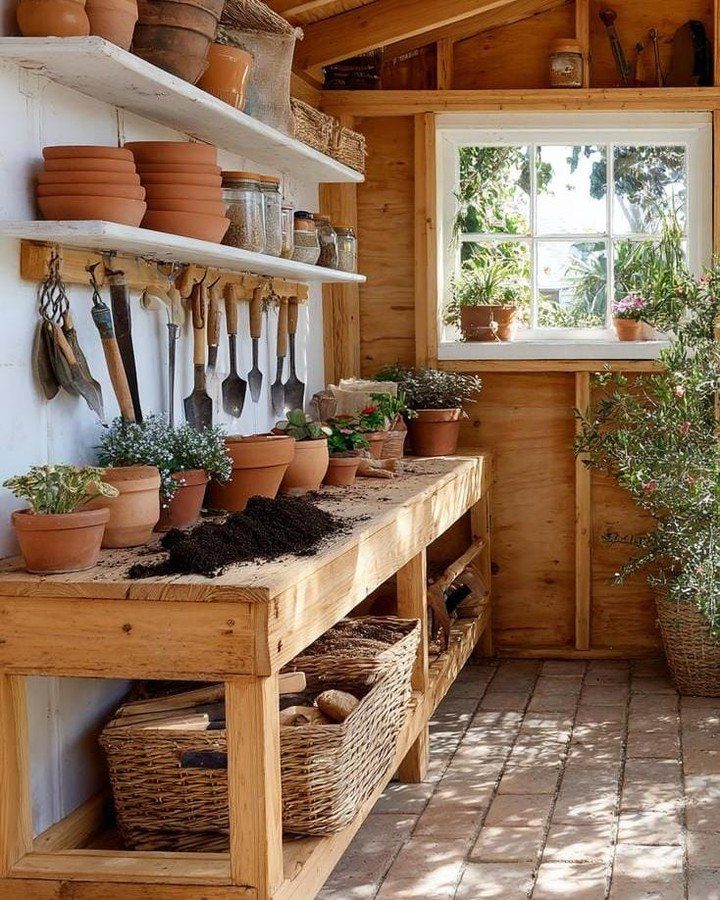
What you plan to keep inside decides which of these sheds is yours, and the ideas range from a pallet box on a plastic sheet to a 12 x 16 feet build with sliding barn doors and a poured concrete pad.
A mower needs a roll-in front, seedlings need glass, and fuel and power tools need a dry, closed building.
Pots and hand tools can live almost anywhere, which is why a cottage-style shed, a green-roof shed or a creative painted one works just as well for them. A living roof, though, needs framing built to carry it.
1. Greenhouse Garden Shed
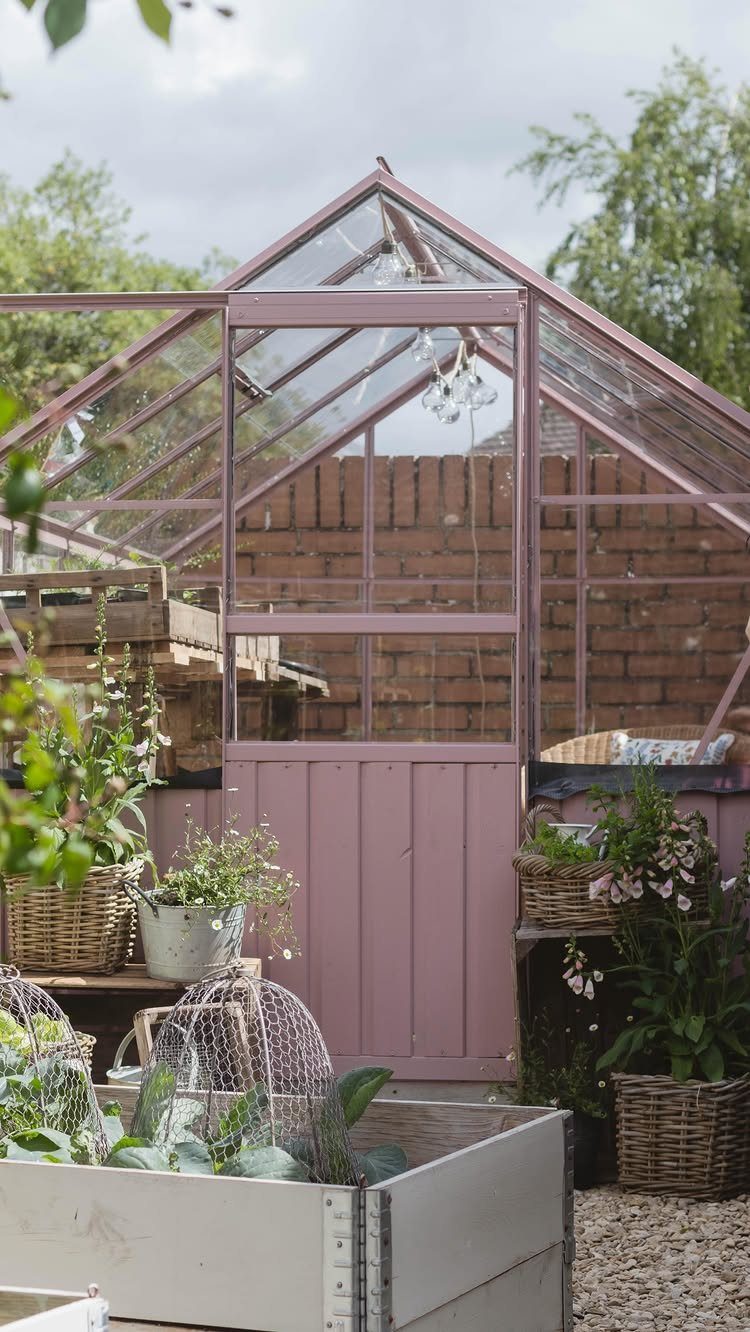
A greenhouse shed makes sense when you want one structure to hold both the rakes and the seedlings. Glass or clear panels let the plants get light, so the shelving inside can hold trays and pots instead of tools.
A solid lower door, as on this one, keeps the bottom half sturdy where boots and wheelbarrows bump. Painting the frame a bold color like pink also makes it a feature rather than a utility box.
Set it against a wall, as here, so one side is already sheltered, and keep pots and a raised bed right out front for easy hauling.
2. Green-roof Shed
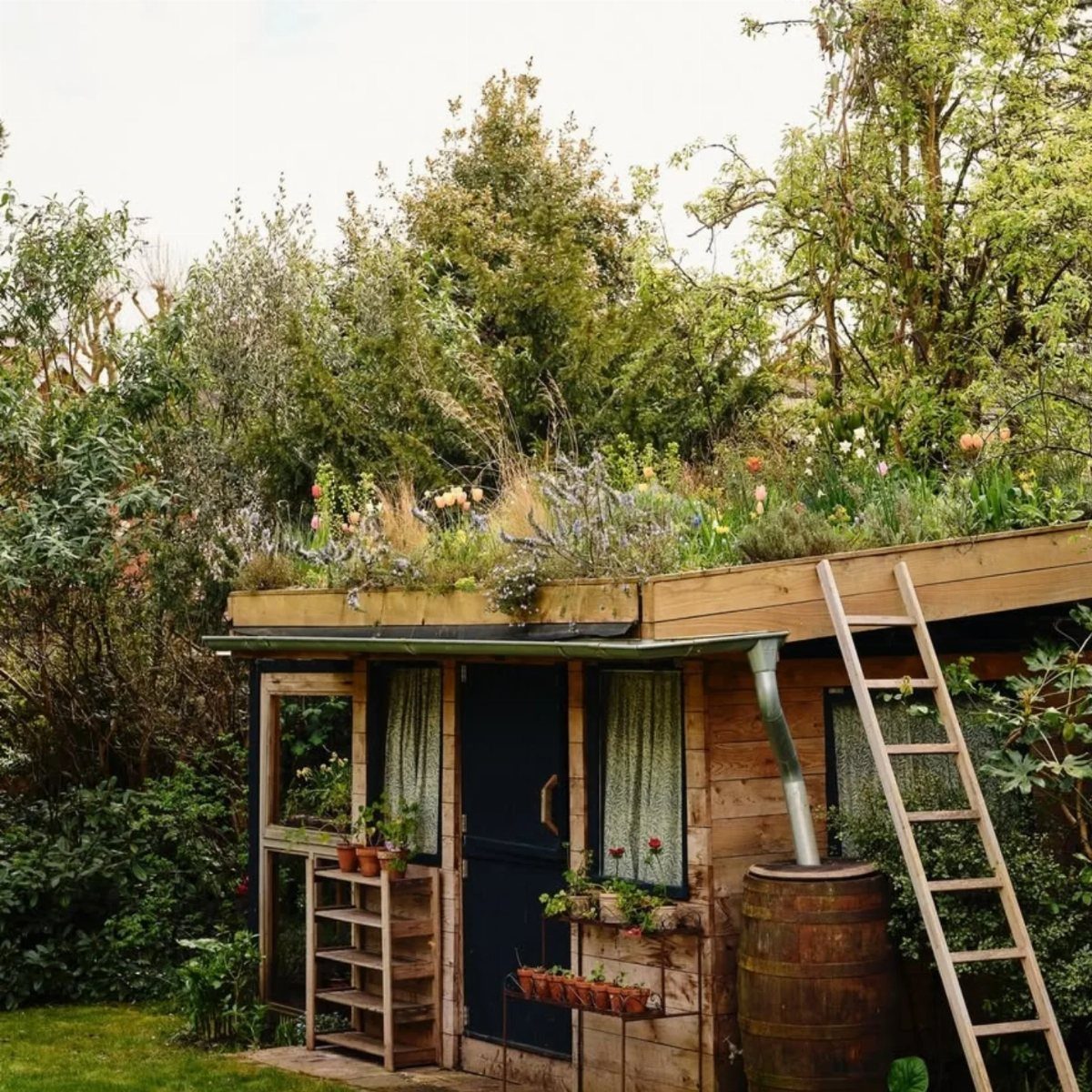
Grass and wildflowers on a shed roof turn the structure into a small garden of its own. I like it most on a plain wooden shed, where the planting does all the decorating.
A gutter and rain barrel can still pair with it, though a planted roof soaks up most of the rain it gets, so expect only a modest trickle from the overflow.
Keep a ladder handy for trimming and weeding up top.
A living roof adds weight and upkeep, so build the roof framing for it from the start rather than adding turf to a light kit shed.
3. Potting Shed
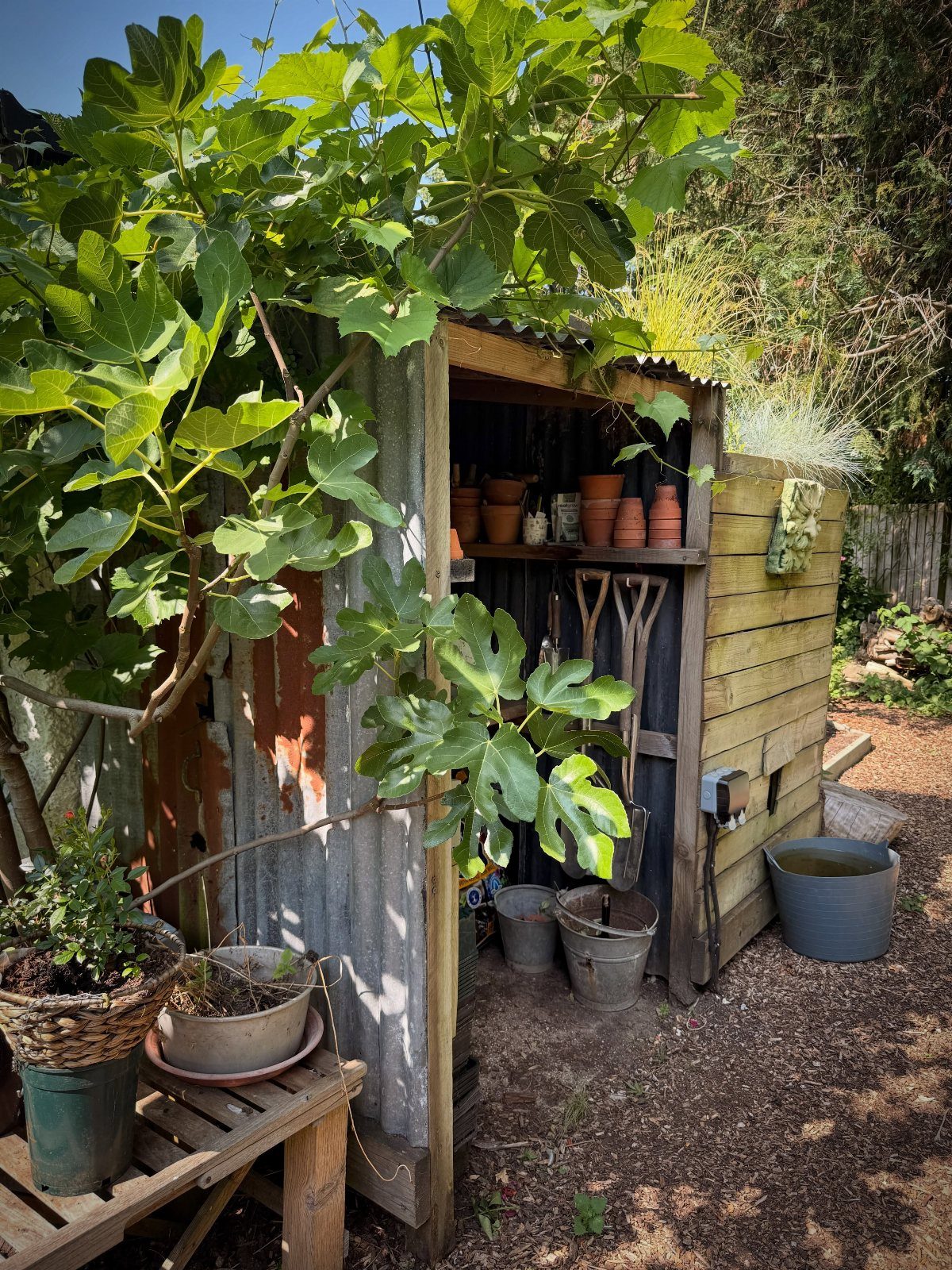
Corrugated metal and rough wood suit a potting shed, because dirt, water and clay pots will never look out of place there.
Keep potting soil, terracotta pots and hand tools within arm’s reach of one work surface so you stop carrying things across the yard.
A tree overhead gives shade on hot afternoons, though it will drop leaves and fruit on the roof. You can dedicate the whole shed to this or just claim one end of a larger one.
4. Short Storage Shed
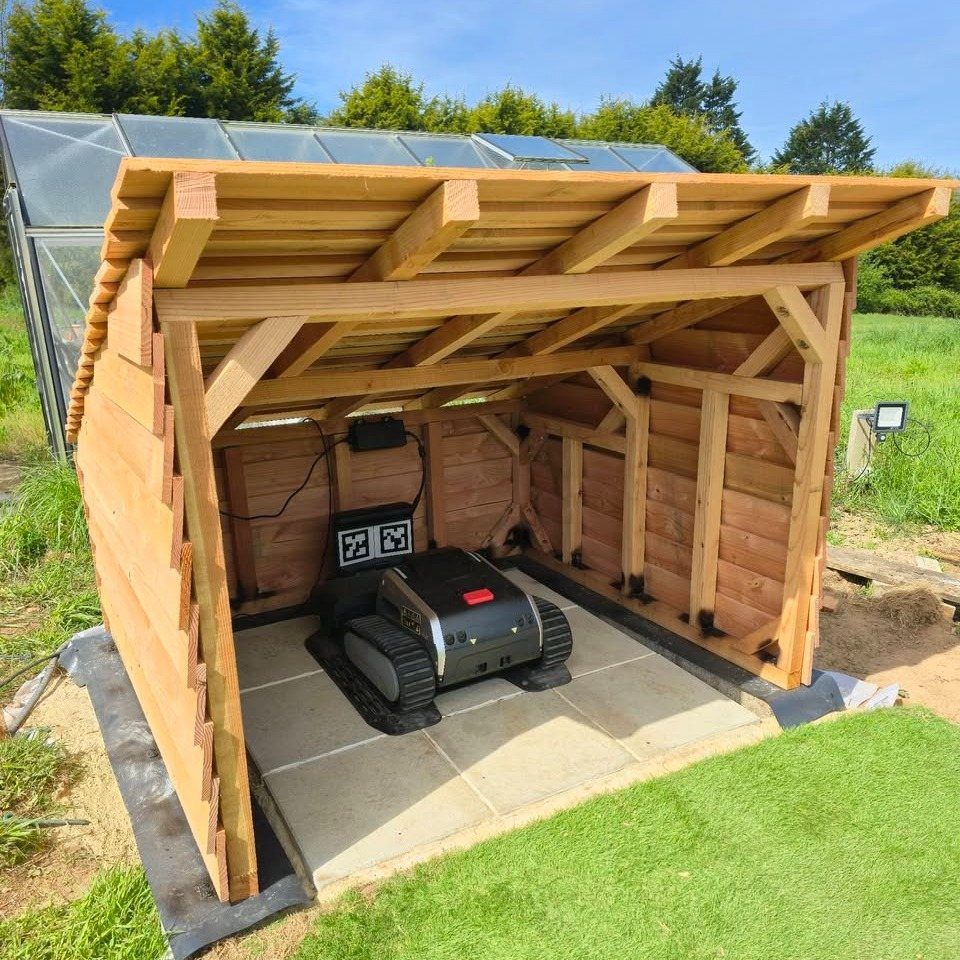
A low, wide shed with an open front is the simplest way to garage a mower. Roll the machine in and out with no door to fight, and nothing taller than the mower needs to be built.
A paved base gives the wheels a clean, flat surface to roll on and keeps grass from growing up around the shed. The slanted roof sheds rain away from the opening.
Because it stays small, it tucks beside a greenhouse or fence without eating much yard.
5. Sliding Barn Doors Shed
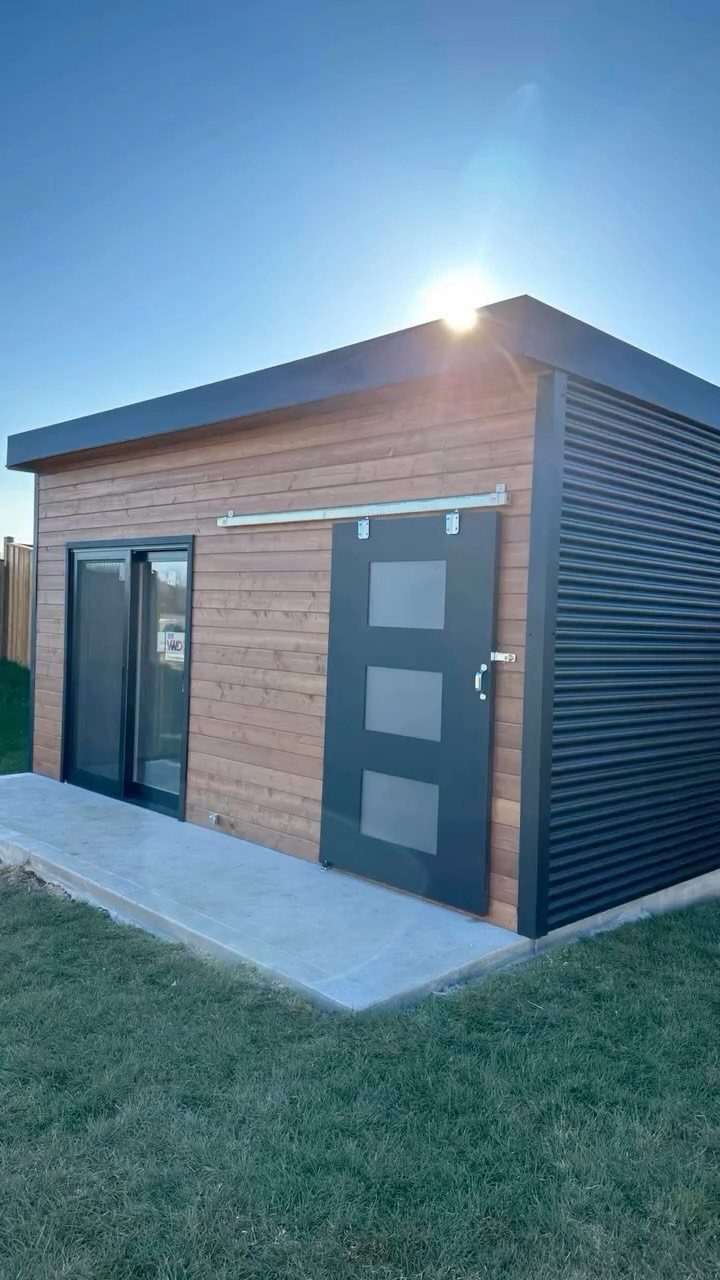
At 12 x 16 feet, a shed has room for a bench, a mower and a few bikes, and wide sliding barn doors let you reach all of it.
Sliding doors need no swing space, so a path or patio can run right up to the front.
I prefer the frosted glass panels in the doors, since they bring in daylight without showing off the clutter. Pour a concrete pad first, as here, so the track and doors stay square.
Expect this to be a real project, not a quick weekend build.
6. Modern Garden Shed
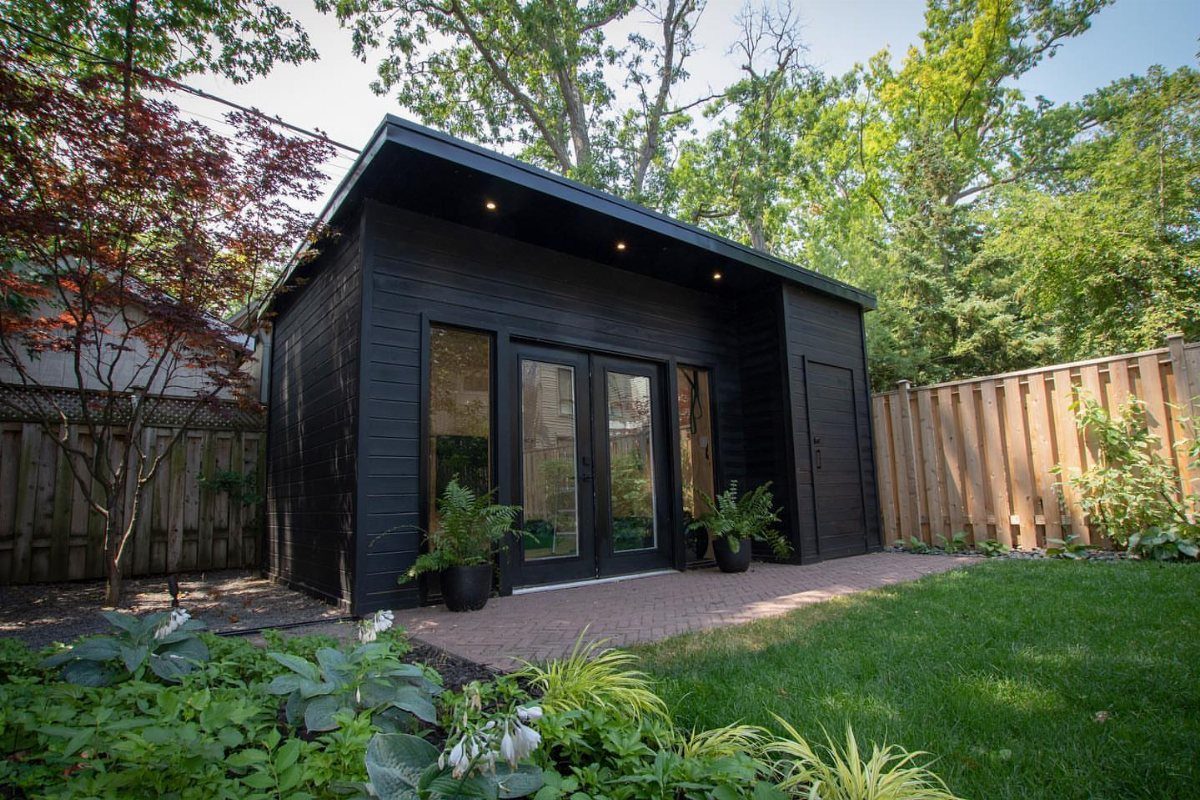
Black siding, a slanted roof and glass doors give a shed a clean, modern look that reads more like a small studio than a toolshed. Skip the cottage trim and let the simple lines do the work.
The glass doors let light in, which makes it usable as a hobby space as well as storage.
A brick patio makes a firm, tidy base for a modern shed, and it draws a clear line between the building and the lawn.
Dark finishes show every bit of dust, so I would keep tools inside and the front uncluttered.
7. Lean-to Shed
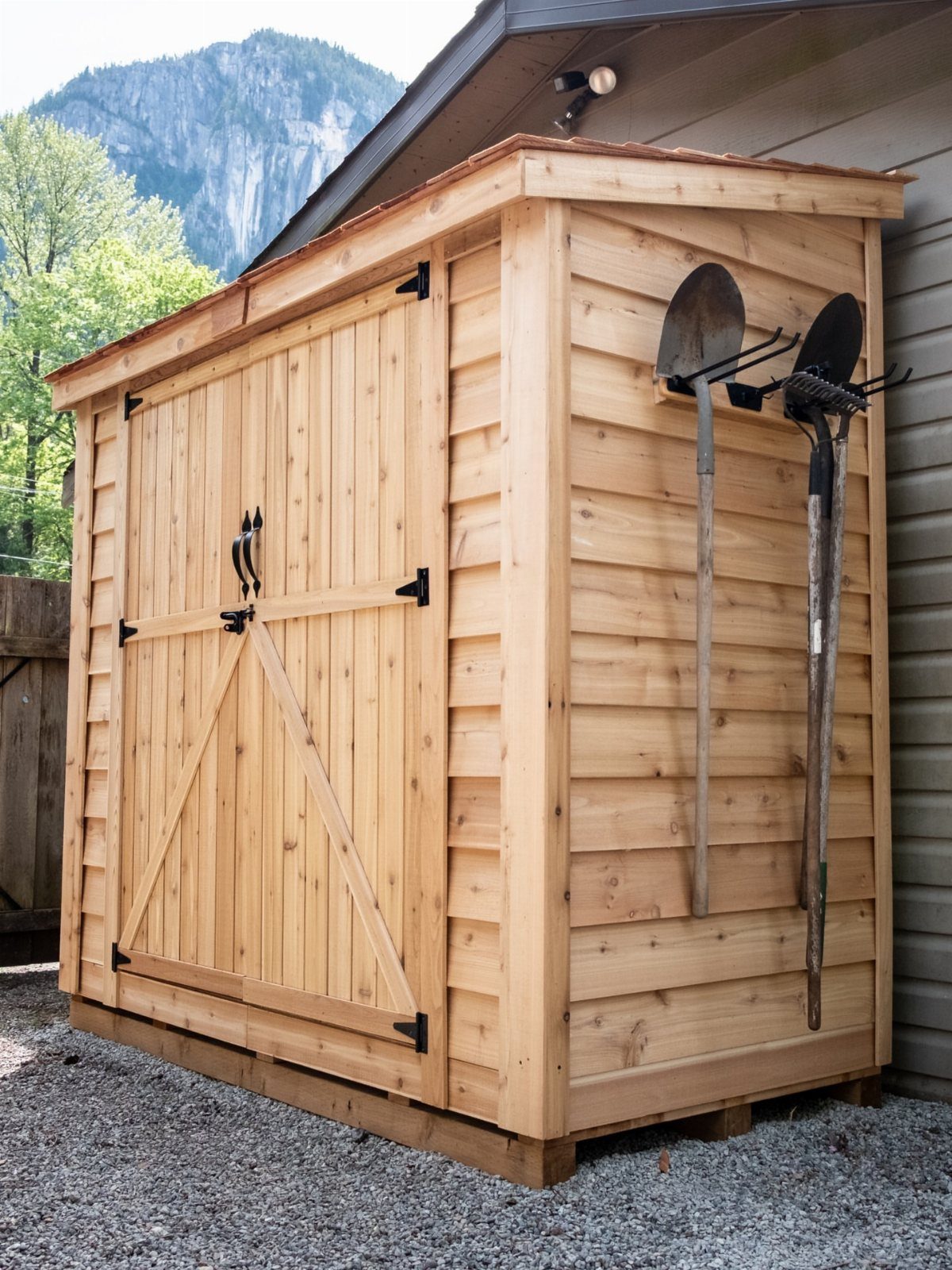
A lean-to shed uses the house as its fourth wall, so you build or buy only 3 sides and a sloped roof. That saves materials and keeps the footprint narrow, which suits a tight side yard.
Gravel underfoot, as here, drains well and gives the shed a firm place to stand. Shovels and rakes can lean right on the outside wall for quick grabs.
Pick a spot out of the way of walkways, and choose a shed made to sit against a structure, not a freestanding one pushed up to the wall.
8. Pallet Shed
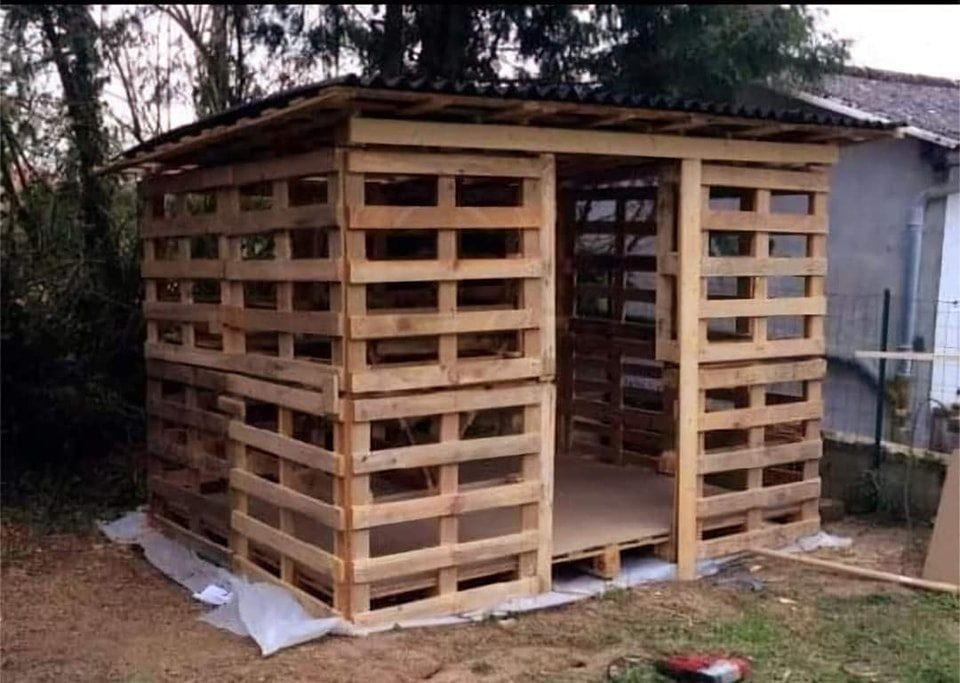
Pallets are the cheapest way I know to get walls for a garden shed, and an open front keeps the build simple.
Stack and fasten them into a box, then top it with a dark corrugated roof so rain runs off.
Lay a plastic sheet under the base before you stack the pallets; it keeps dirt and moisture from creeping up into the floor. A gravel or paver base would be a tidier step up.
Expect a rough, rustic look and a shed best for tools, pots and bags of soil rather than anything precious.
9. Cottage-style Shed
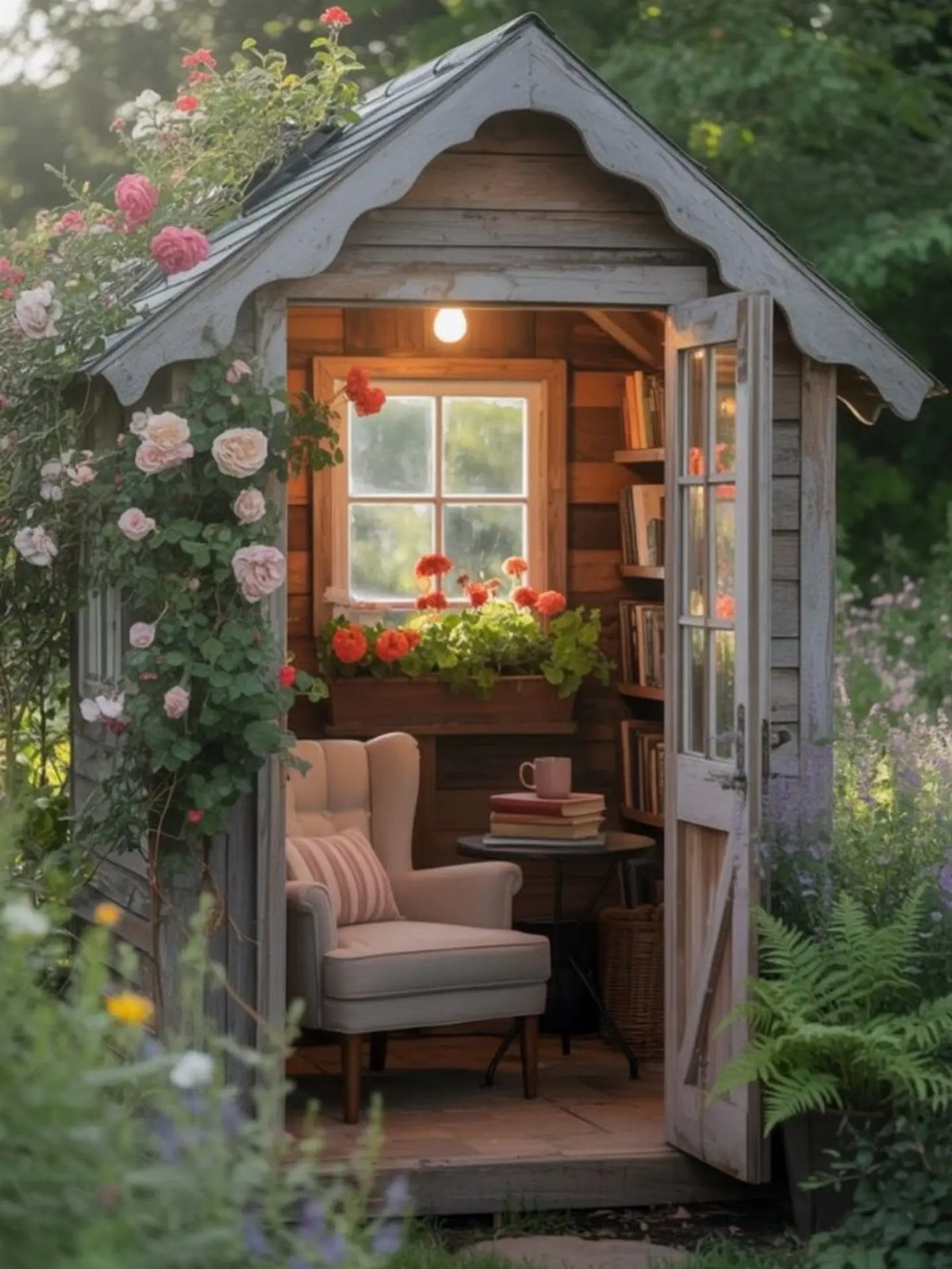
Plant them at the base and train them up the walls so the wood softens under the flowers.
I like the scalloped roofline, since it adds charm with no extra clutter.
Use the shed for either one: tools in half, a quiet nook in the other.
10. Home Design Garden Shed
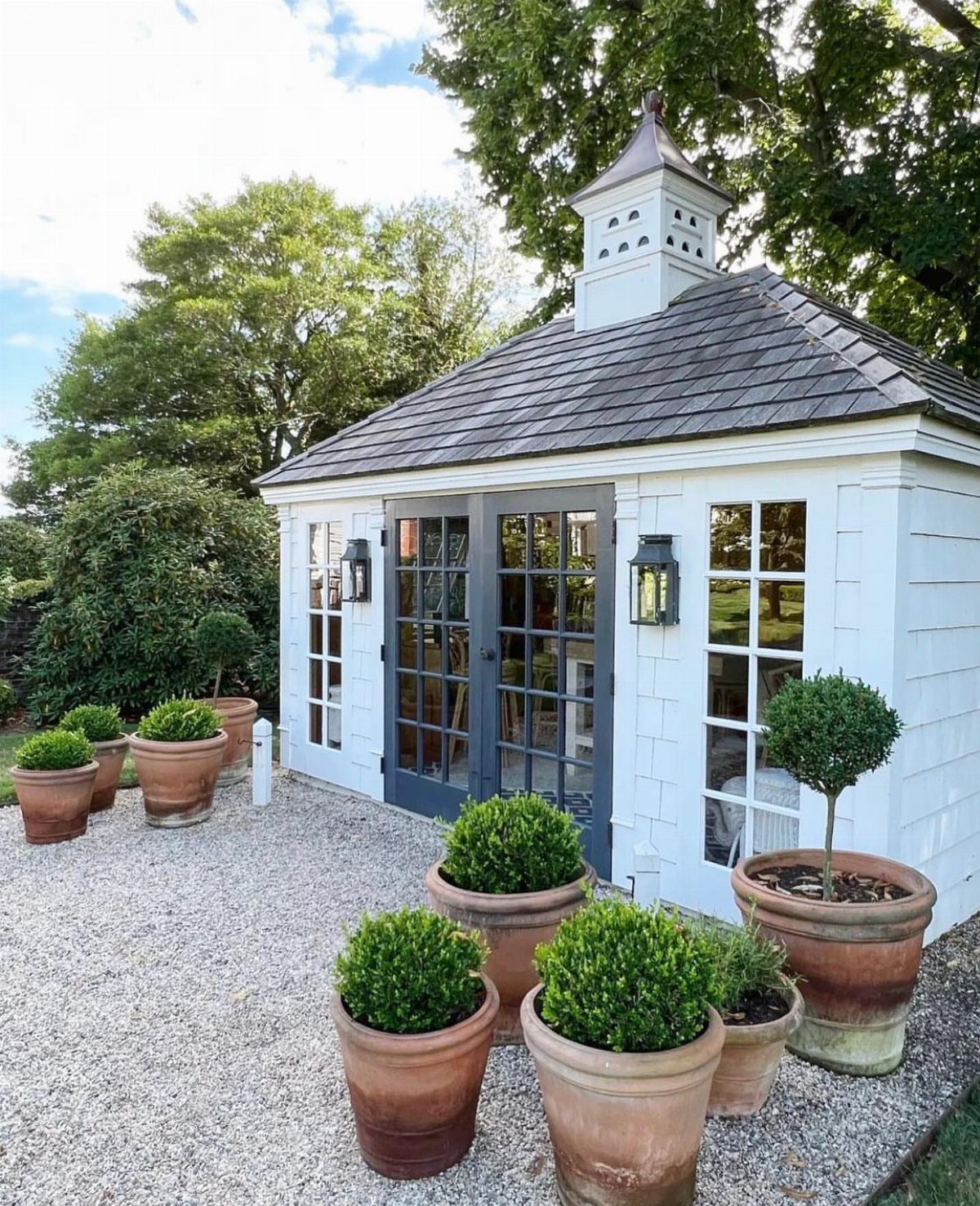
Copy your house and the yard starts to feel planned.
Match your home’s paint color and roofing so the 2 read as a set. Potted boxwoods on a gravel patio keep the look tidy without much digging, and the pots can move if you change the layout.
Glass doors and trim cost more than a basic shed, so I would spend there and keep the rest plain.
11. Focal Point Garden Shed
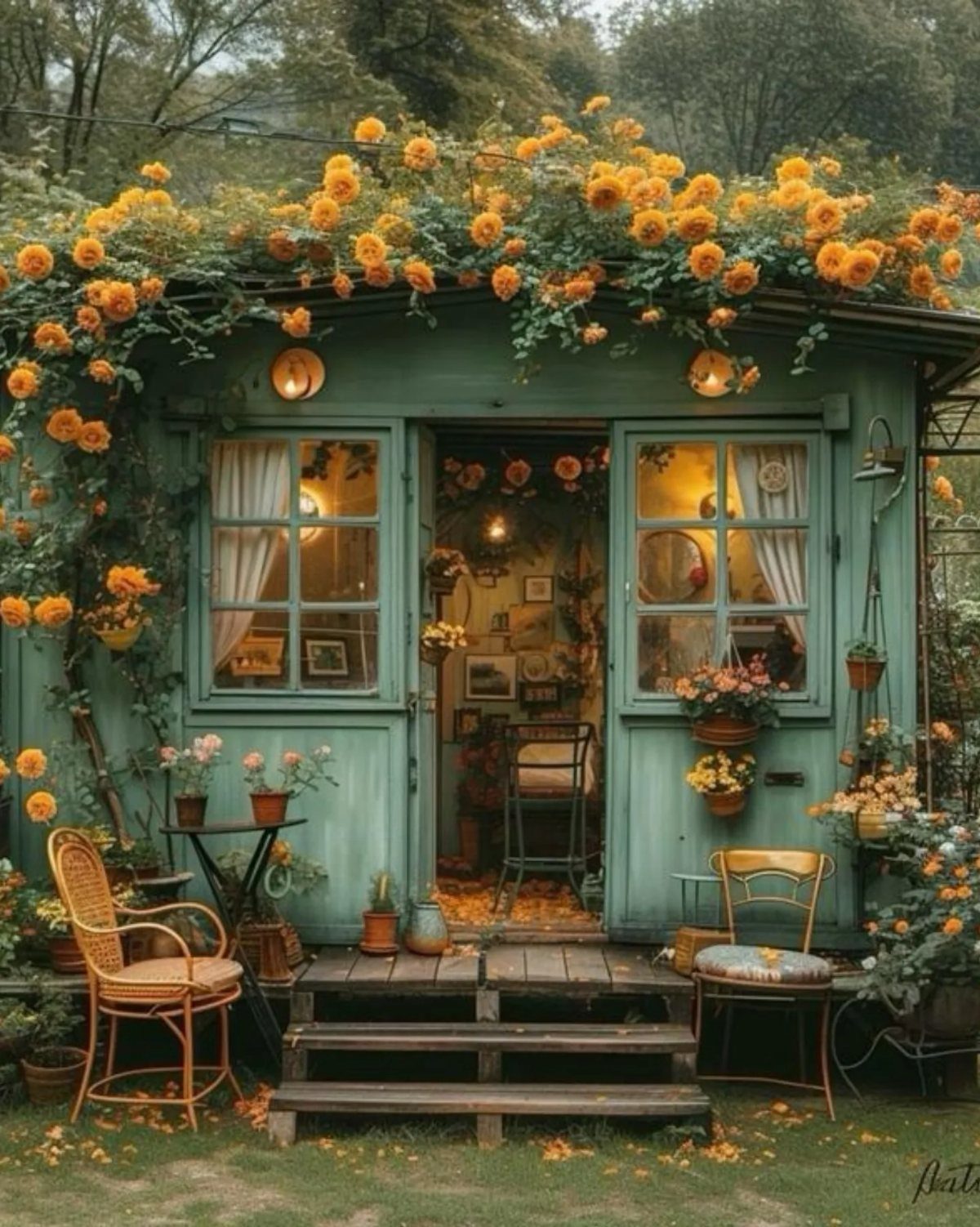
A small shed gets a lot of pull in a yard when you paint it a strong color.
Teal against orange climbing roses is a bold pairing, and I would pick a shade that contrasts with whatever you plan to grow over it.
Add a small wooden porch with a couple of wicker chairs and the shed becomes a place to sit, not just a place to store. Curtains in the windows finish it.
Set it where you can see it from the house or the patio.
12. Shed with Windows
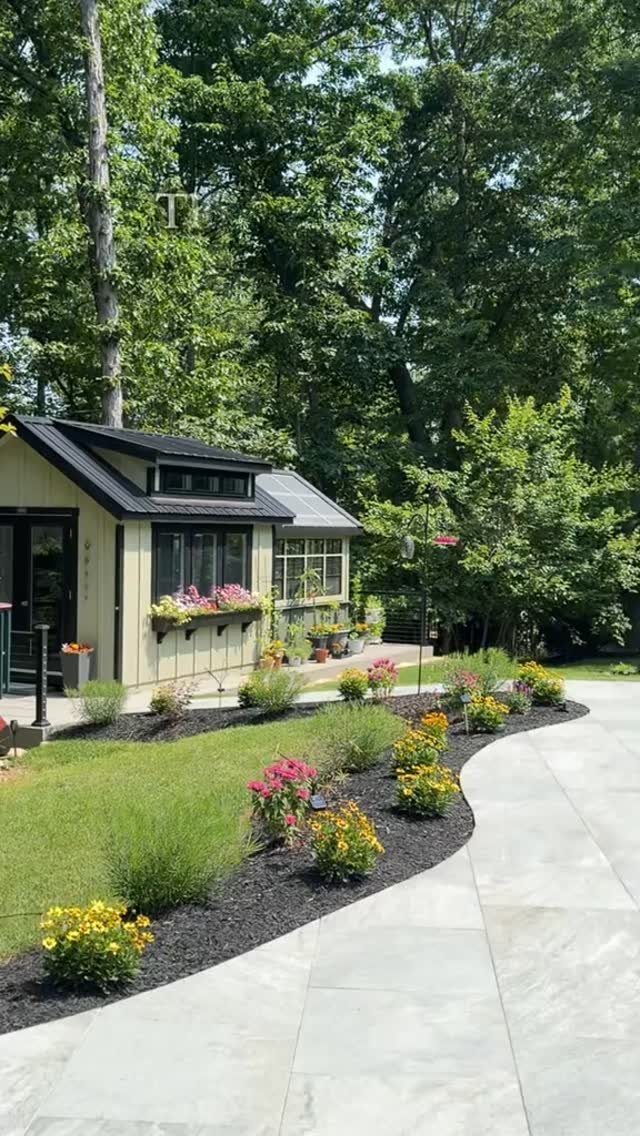
Windows are what stop a shed from feeling like a dark box. Several of them, as on this tan shed, let in daylight so you can find a trowel or pot up seedlings without a lamp.
Flower boxes under the glass tie the building to the beds around it, and a paved walkway keeps your shoes clean on the way in.
Place windows along the side that gets the most sun, and keep shelving below them so nothing blocks the light.
13. Garden Shed Workshop
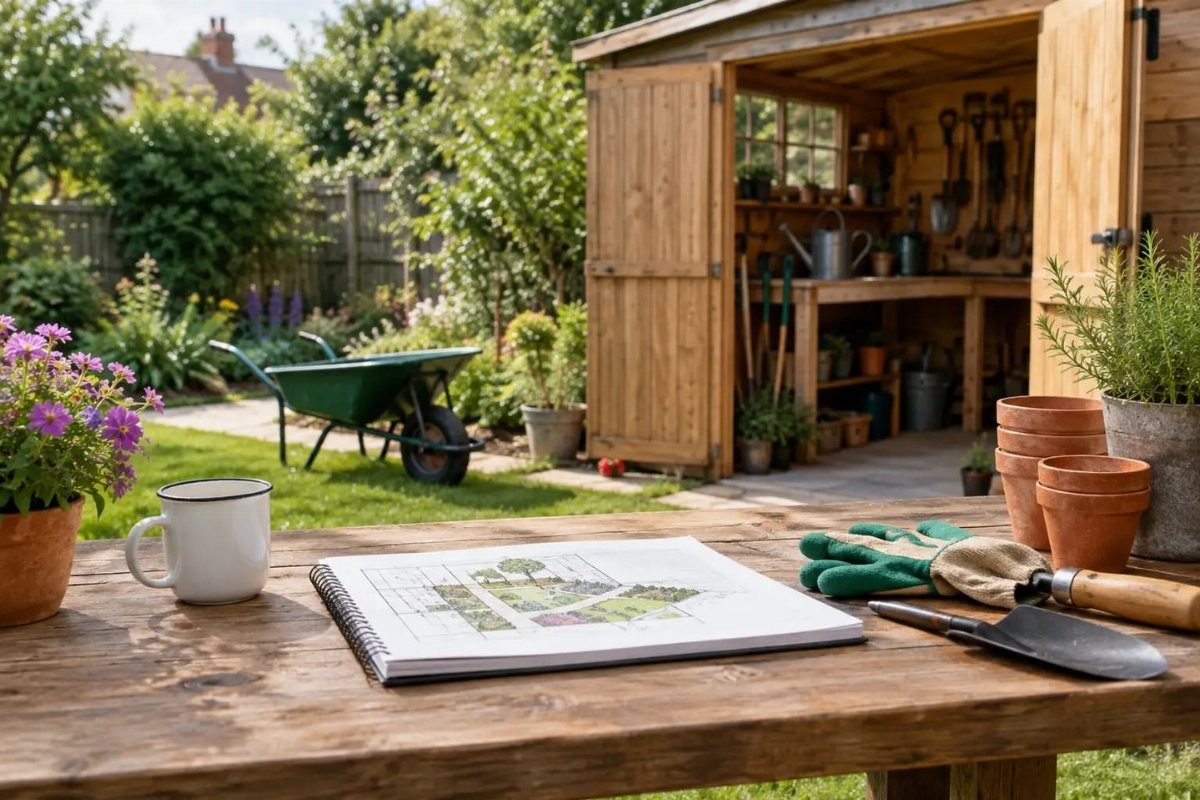
Hang tools on the wall and put shelving above the bench so the work surface stays clear.
Set a small table just outside, as here, for plans, gloves and a mug of coffee. Sketching a bed layout in the sun beats doing it at the kitchen counter.
I would give the bench the best wall and let the tools take the rest.
14. Steep Roof Shed
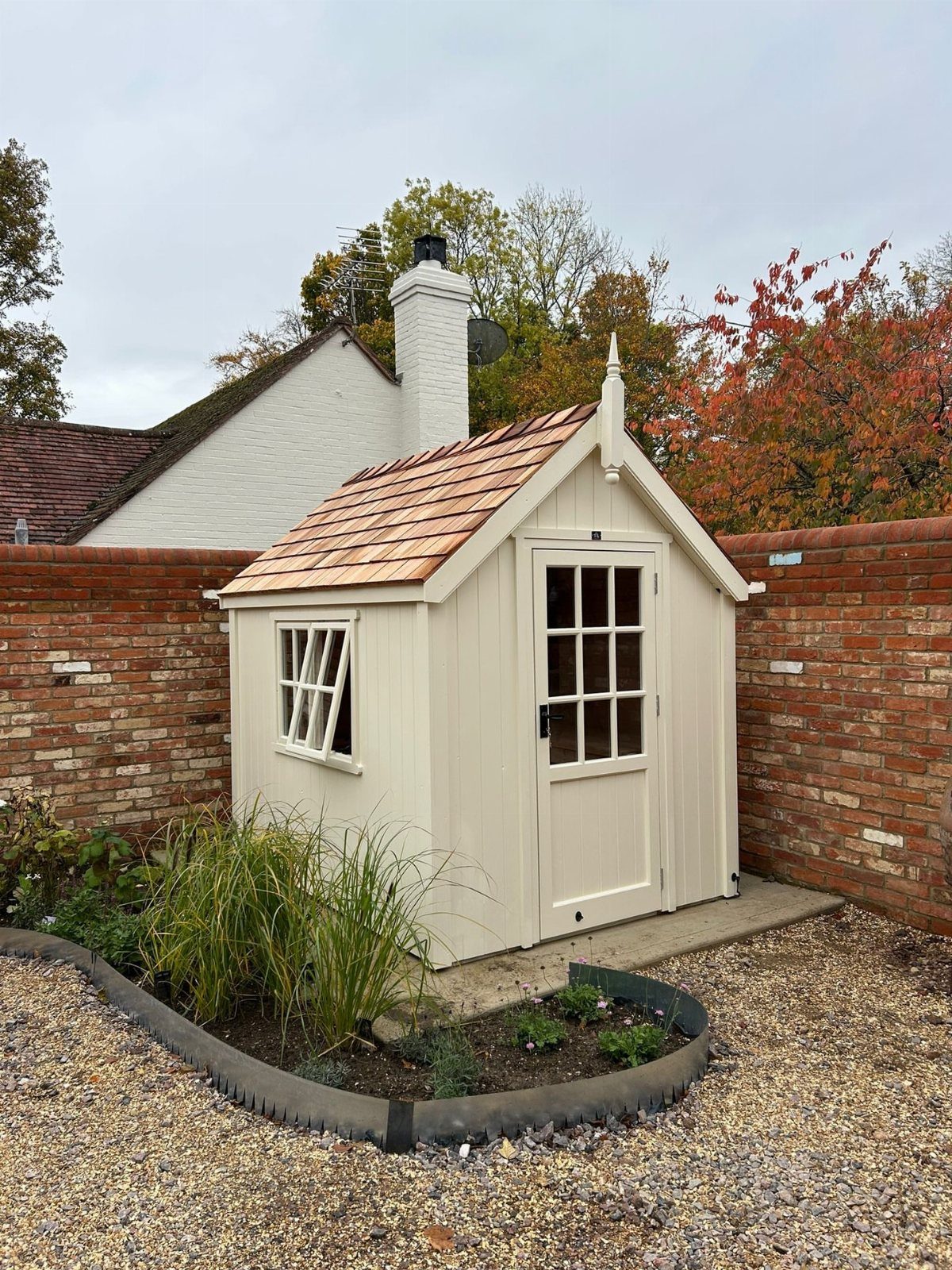
A steep roof is what gives a small shed its character. The sharp pitch, a cedar shingle surface and a finial on the peak make a plain box look like a little garden house.
Cream paint keeps a shed light against dark red brick, and a gravel apron around the base stays tidy with no mowing or edging.
Steep roofs shed rain quickly, but they cost more to build than a flat slope, so I would pick this where the shed will be seen.
15. Antique-decorated Shed
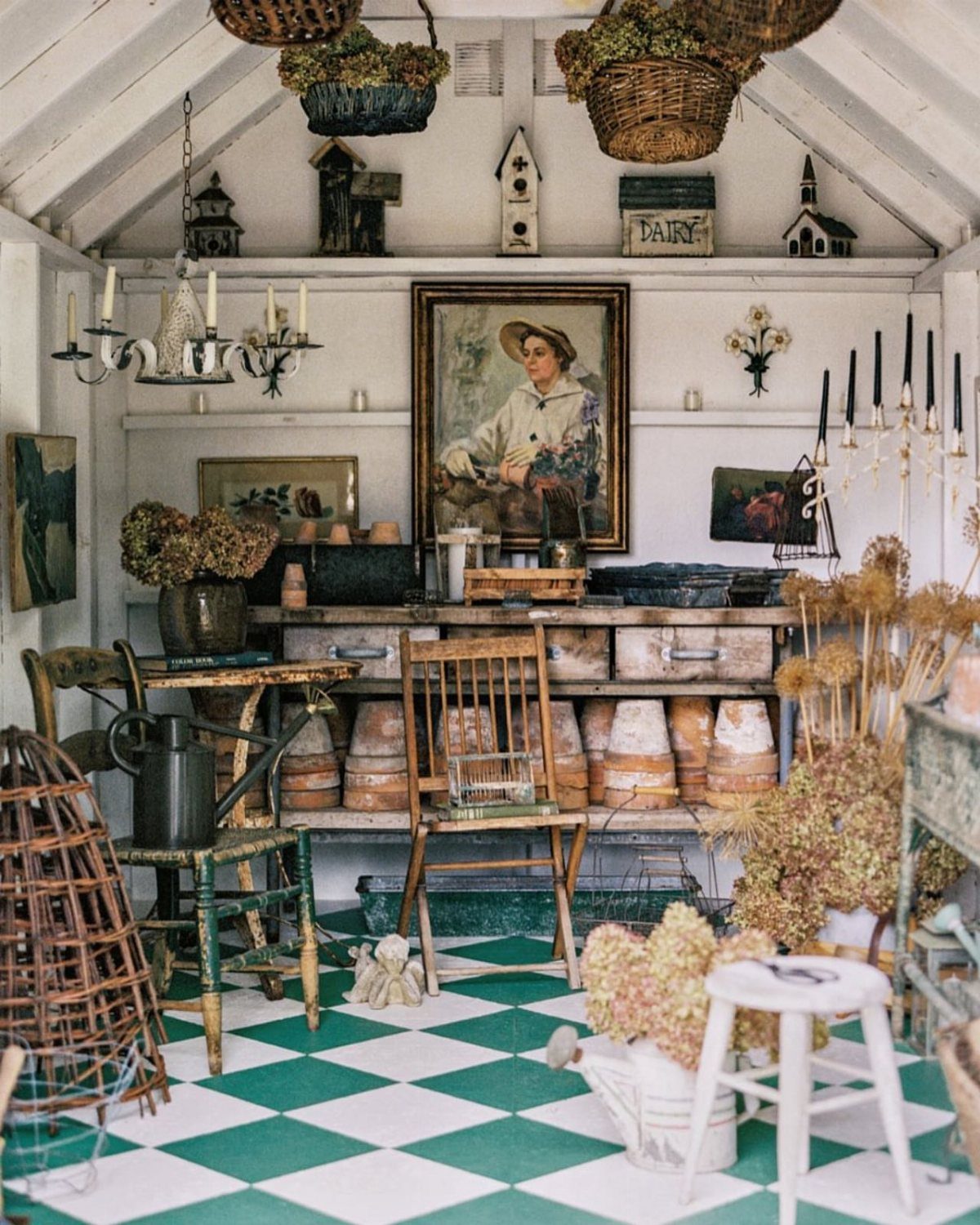
Old things feel at home in a new shed. Paintings, baskets hung from the rafters and a vintage sign make a white shed read as a keepsake room instead of a tool closet.
A checkered green and white floor sets the tone, and sheet vinyl or painted plywood wipes clean after muddy boots. Antique furniture is the easy part to add, since flea markets and relatives’ attics supply it cheaply.
Keep the pieces that dislike damp, like paintings, away from the door.
16. Creative Painted Garden Shed
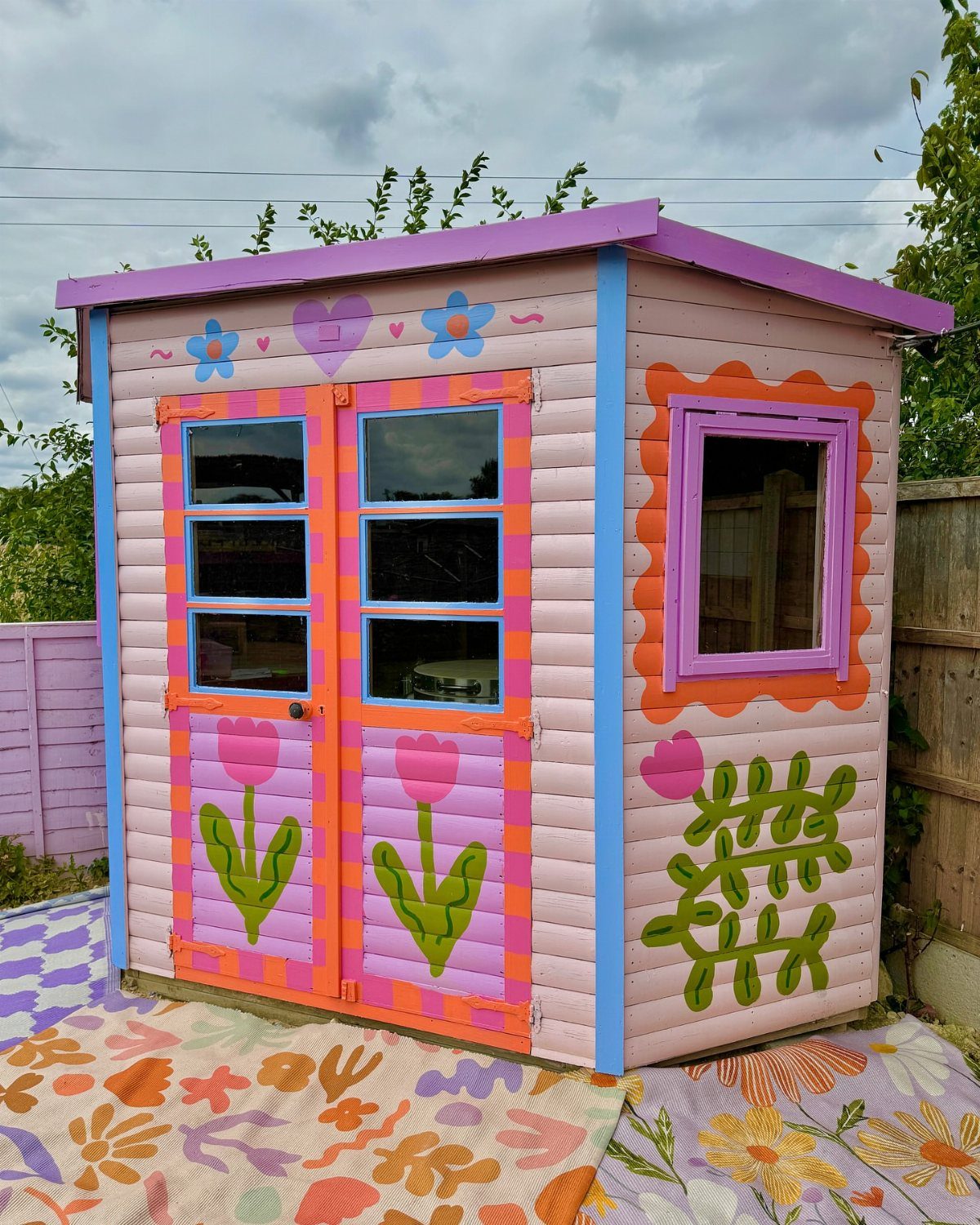
Paint is the cheapest way to give a shed a personality.
Pink, purple and blue with hand-painted flowers make a small wooden shed the loudest thing in the yard, and that is the appeal; a coat of exterior primer first keeps the colors from fading fast.
Sketch the flowers in chalk before you commit. Then paint the base colors first and add the details once they dry.
An outdoor mat out front finishes it. I would keep the surroundings plain so the shed gets all the attention.
17. Shed with Patio
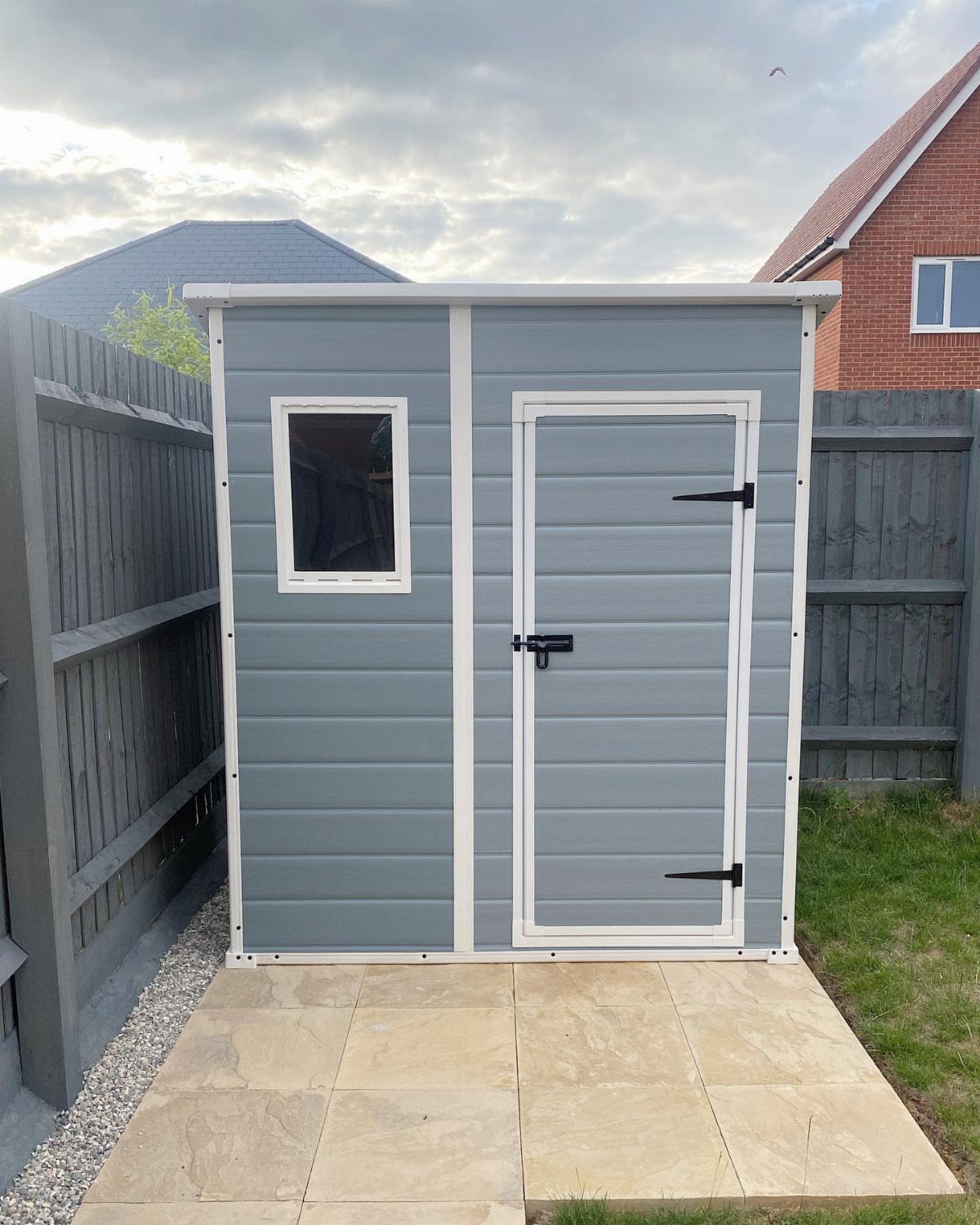
A stone patio beside a shed gives you somewhere to stop. Light stone tiles show off a grey shed with white trim, and the hard surface keeps mud from following you in and out.
Leave room for a chair and a small table, and set the patio level with the shed floor so nothing trips you up.
A plain grey wooden fence behind a shed makes a quiet backdrop, so a brighter shed color reads cleanly against it. Tiles cost more than gravel, but they last and sweep clean.
18. Formal Garden Shed
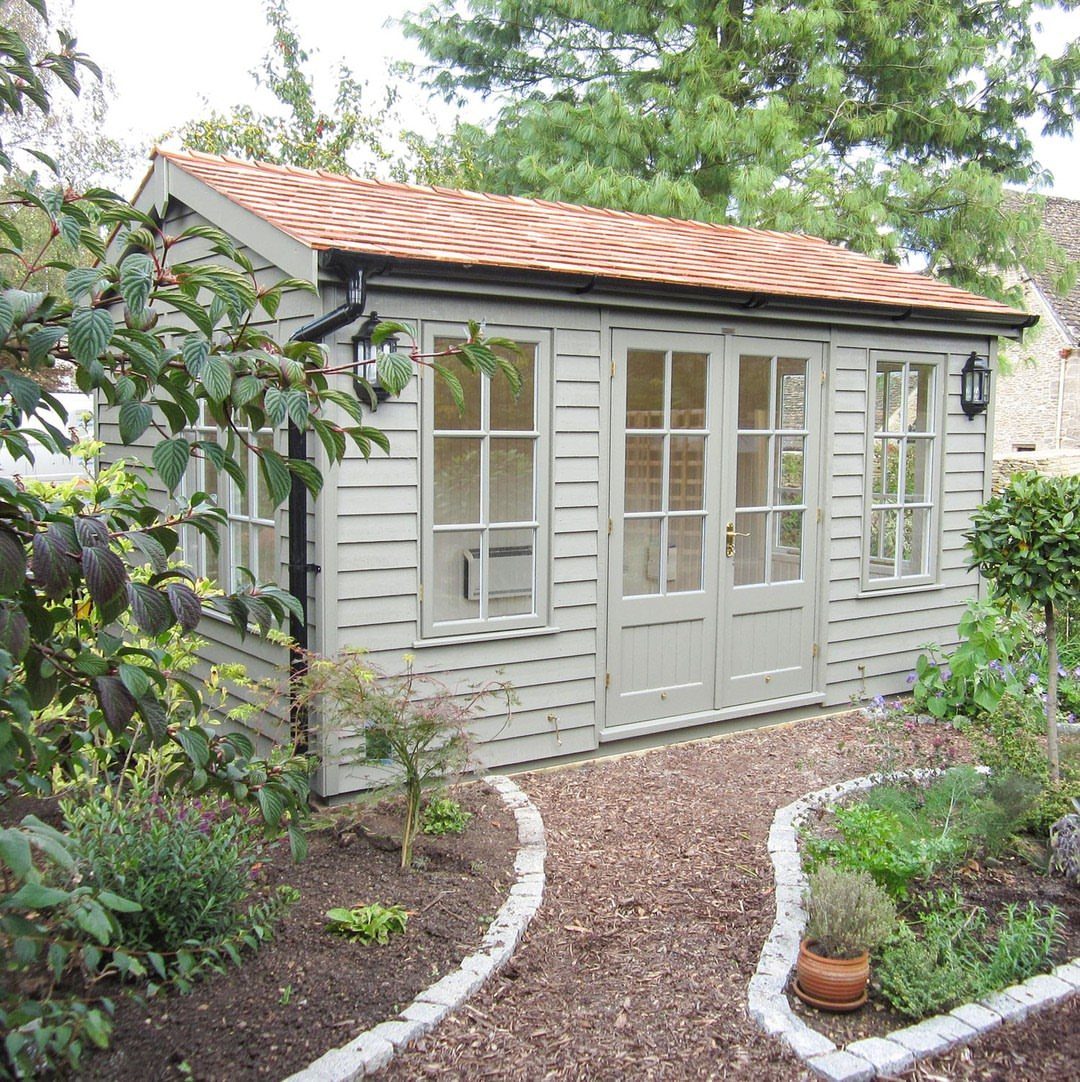
Edging turns a shed into part of a designed garden.
Lay the edging first, then fill the path with bark so the lines stay crisp. Plants along the border soften the stone without hiding the shed.
Bark thins out over time, so plan to top it up now and then.
Plan Storage and Protection
Start with a written inventory.
List what has to live in the shed: a mower and other lawn equipment, or just hand tools and pots. The biggest item sets the minimum size, so measure it before you look at any plan.
Then sort that list by how much weather each item can take.
Fuel, fertilizer and power tools want a dry, closed building, while a wheelbarrow can sit under an open roof. That sorting often decides how much wall and door you need.
Plan room for both ends of the scale.
Hang hand tools on a pegboard, then add shelves and a few built-in drawers so screws, twine and other small items have a home instead of ending up in a heap on the floor.
Leave open floor for the big pieces so you aren’t lifting a mower over a box of bulbs.
Last, set a yard-space limit before you shop, and decide how hands-on you want to be. A full build costs you weekends, and a kit costs you less time but gives you less control over size and layout.
Frequently Asked Questions
Is it cheaper to buy or build a garden shed?
It depends on the shed you want. Pallet walls are the cheapest way I know to get a shed up, and fixing an old shed you already own can cost far less than any new one.
A prebuilt shed or a kit costs more up front; a kit does spare you the planning, while building from scratch costs you a few weekends instead of cash.
Can I put my shed directly on gravel?
A gravel pad can hold a shed on its own, since water drains straight through it and the floor frame sits on firm, level ground.
Pavers are a tidier step up. Under a pallet shed, lay a plastic sheet first so moisture and dirt don’t creep into the floor.
How do I make a simple garden shed?
The simplest build is a pallet shed with an open front. The finished look is rustic, so I’d keep it to garden tools, spare pots and soil bags, and store nothing valuable inside.