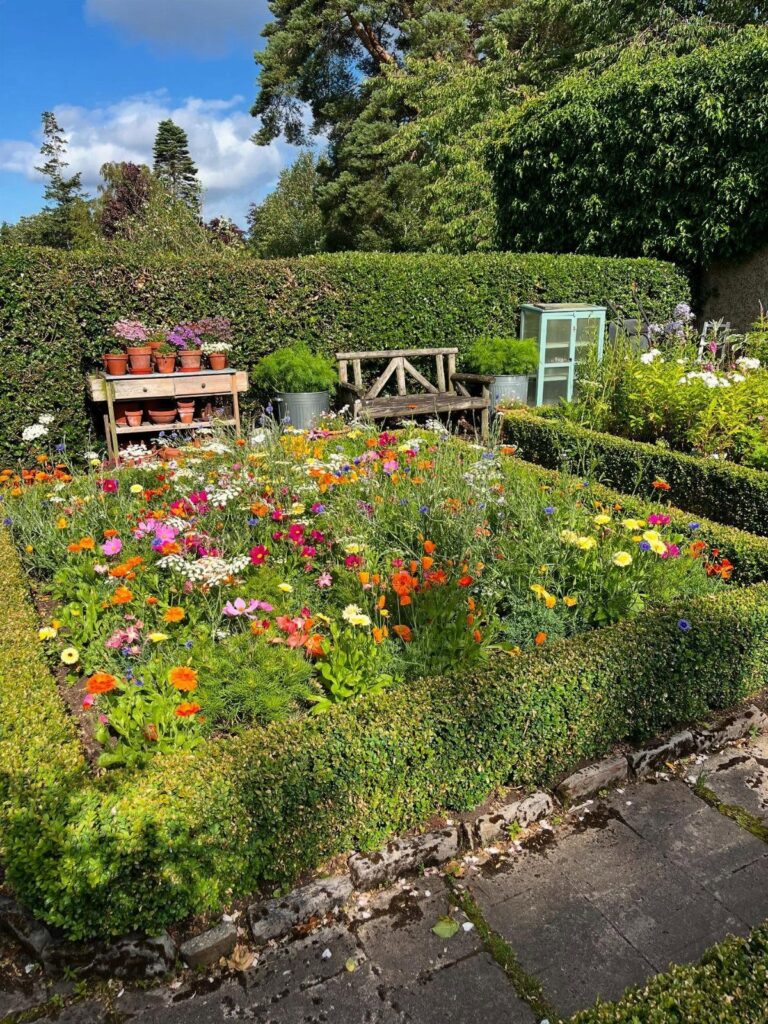
Sunlight decides which of these beds will work in your yard, so measure how many hours of sun the spot gets before you pick one, and buy only plants tagged for that light.
The ideas run from a mailbox bed filled with a few flats of annuals to a pergola of bougainvillea that takes a few seasons to fill in, with rock gardens, slopes, and potted balcony beds between.
If a plan calls for full sun and your yard gets part sun, swap in plants that fit your light instead of hoping the originals cope.
1. Pollinator Garden
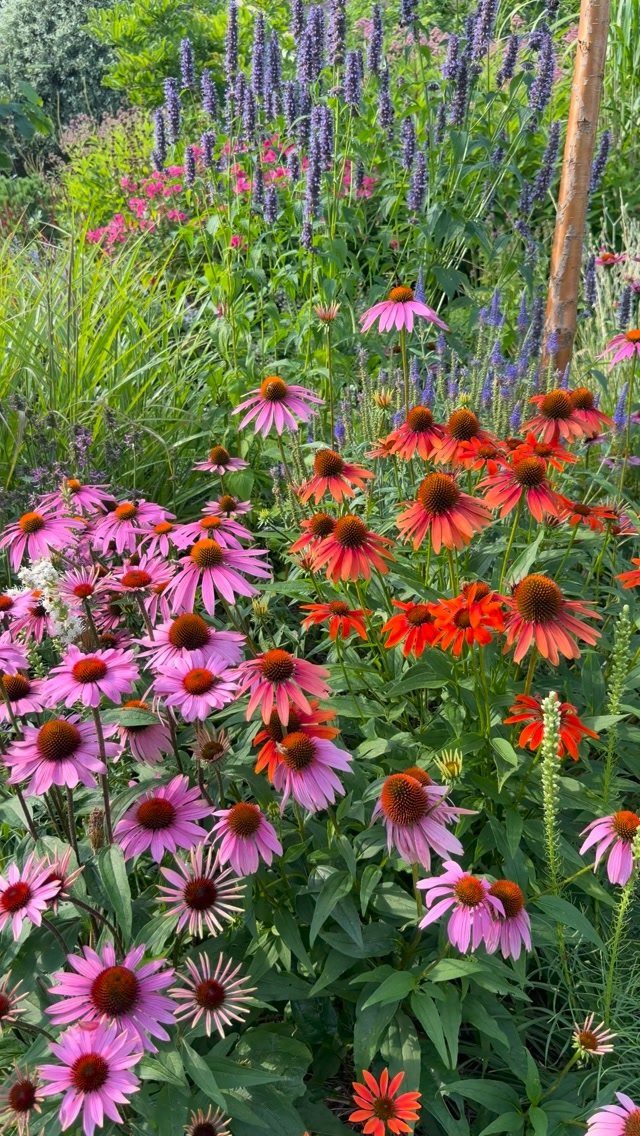
Coneflowers and salvia make a strong pair for a bed meant to feed bees and butterflies: the flat, daisy-like coneflower heads give insects a landing pad, and the tall salvia spikes add height behind them.
Pack the plants close, as this bed does, so blooms overlap and the ground stays covered. A dense planting looks fuller and leaves less room for weeds.
I would pick a few flower shapes and repeat them rather than buy one of everything.
2. Walkway Flower Bed
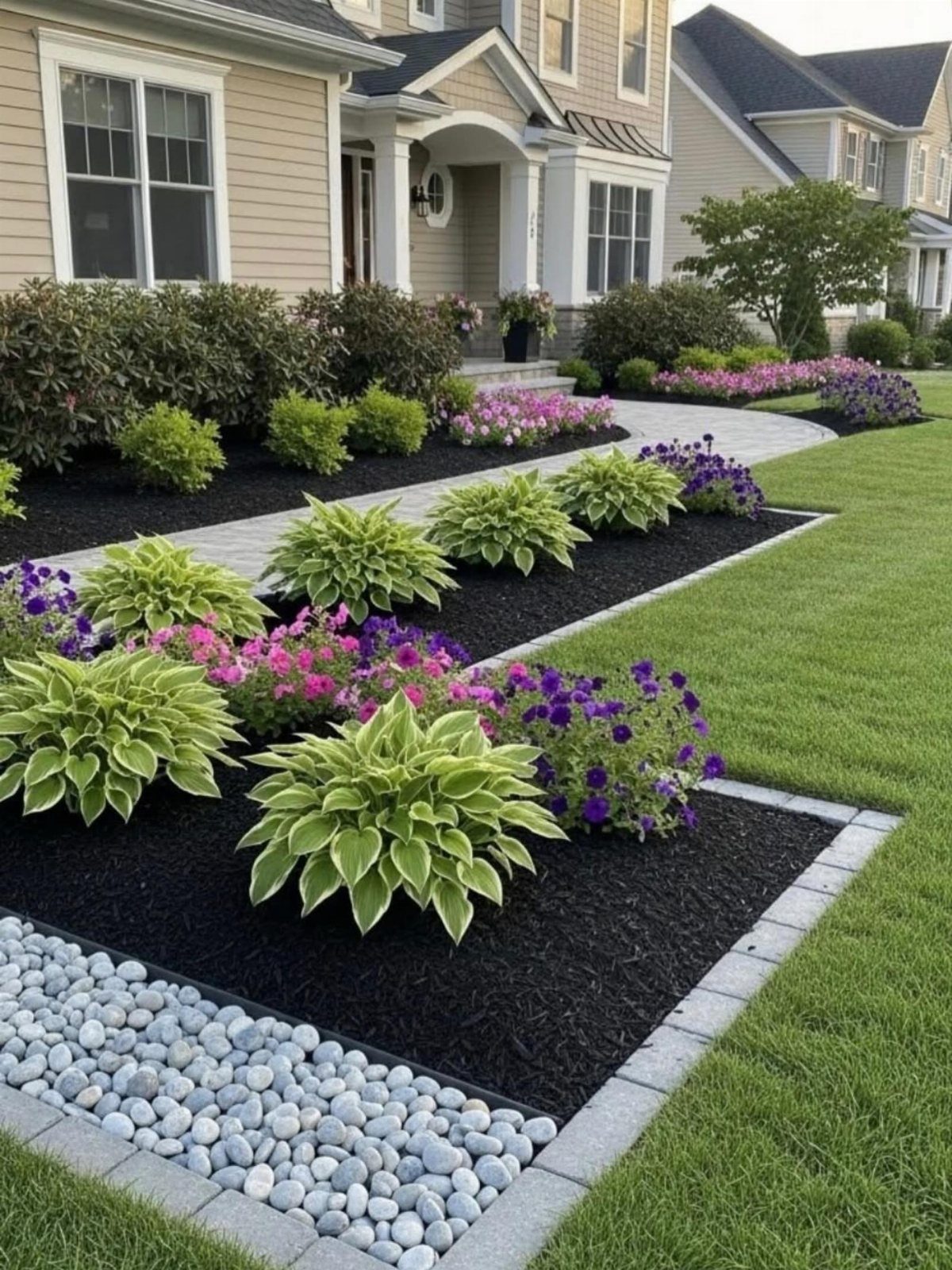
Hostas along a stone walkway do the quiet work: their broad green leaves keep the edge of the path soft while purple and pink blooms add color above them.
Black mulch behind the plants makes those colors stand out and keeps the bed looking tidy. Run the planting along both sides if the path is long, so it reads as a corridor leading to the door.
Foliage first, flowers second, is the order I would plan in.
3. Mailbox Flower Bed
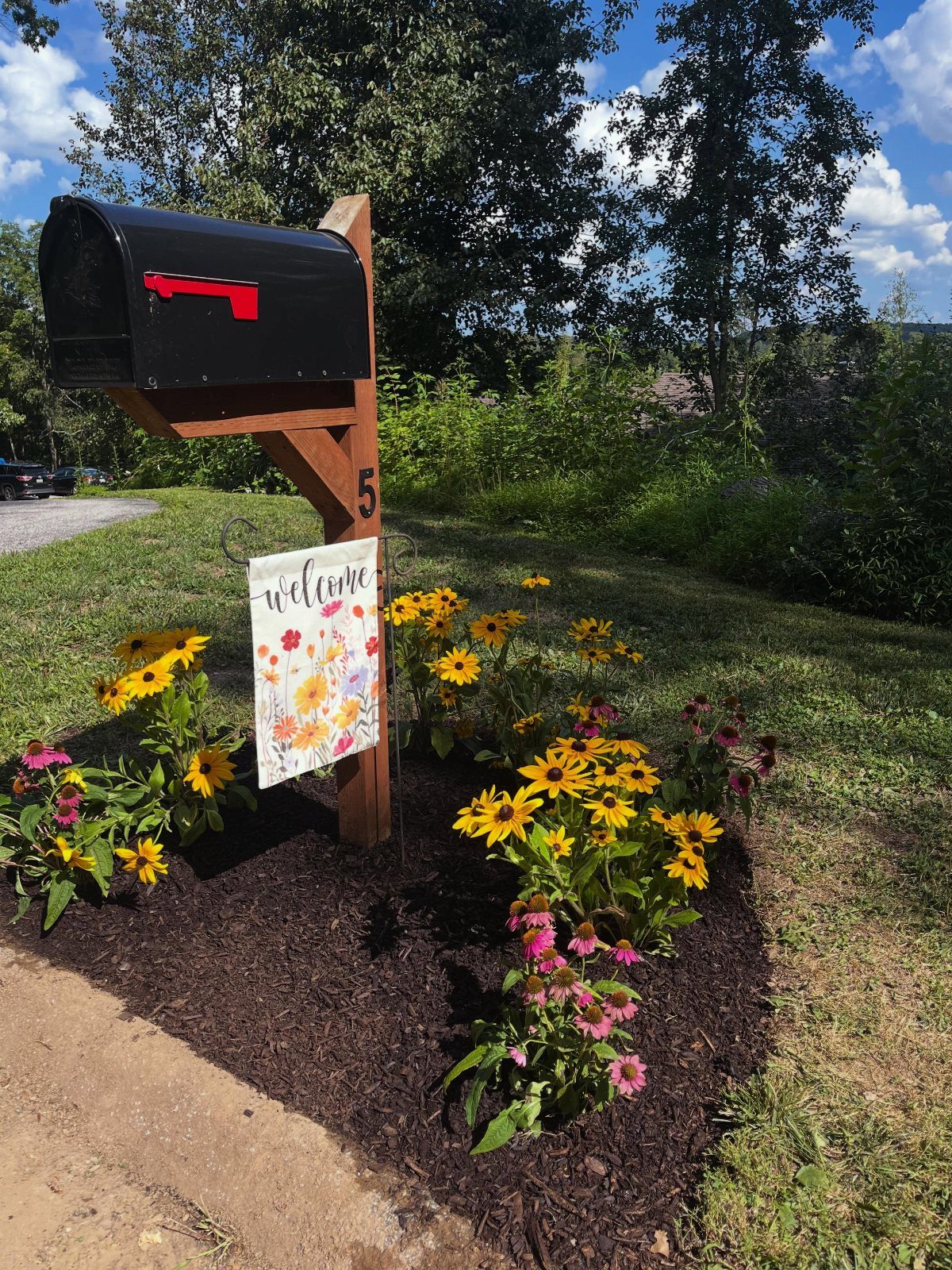
A mailbox sits alone at the curb, so a small bed around the post gives it a purpose beyond holding mail.
Keep the planting low and compact, in the way yellow and pink flowers sit here, so nothing blocks the door of the box. A mulched circle or square around the post also saves trimming grass at its base.
A mailbox bed is the cheapest flower bed to plant, since a few flats of annuals and an hour or two of digging will fill it. A few flowers are enough.
4. Edged Flower Bed
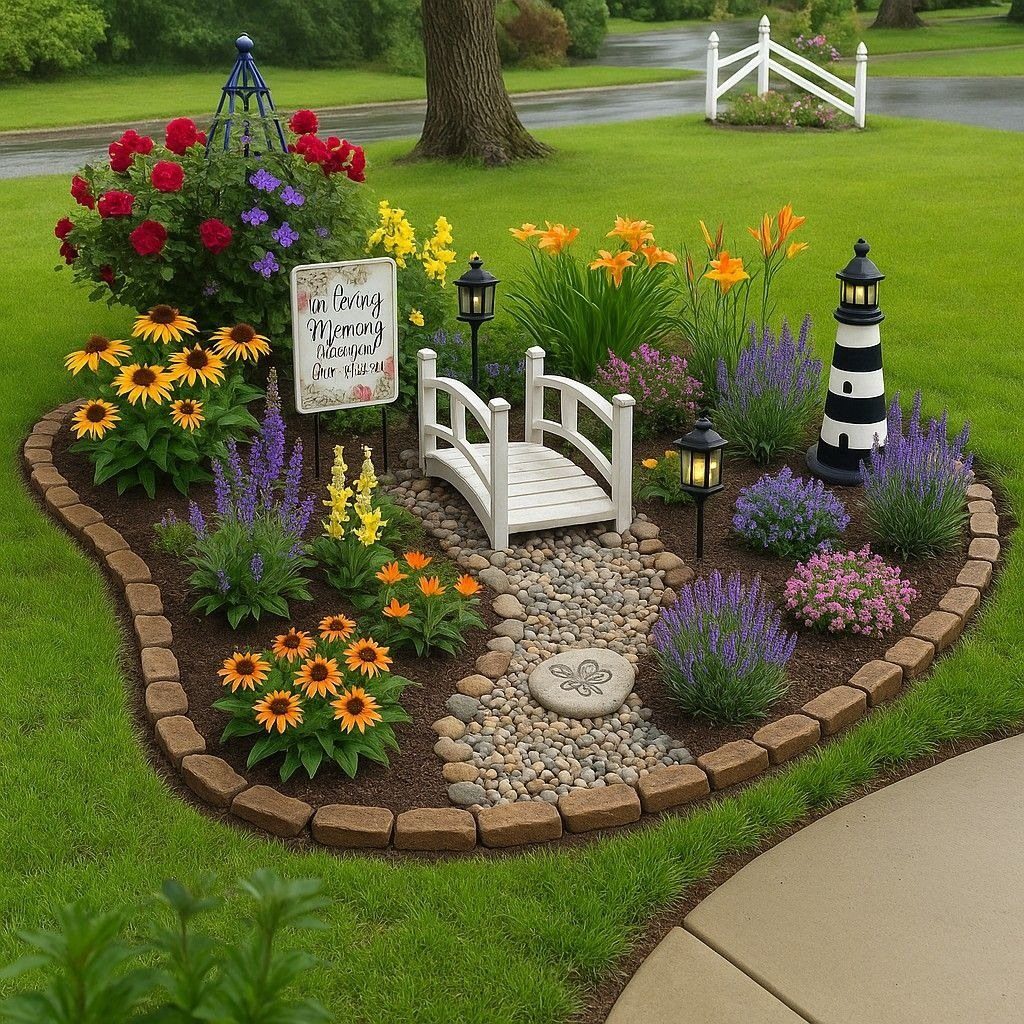
A stone edge gives a bed a clear outline, and everything inside it suddenly looks planned. Even a crowded mix of colorful flowers reads as one deliberate garden against the lawn.
Choose edging stone that suits your house and keep the line clean, since the border is doing most of the design work.
Add small accents if you like, such as lanterns or a little bridge, but I would keep them few so the flowers stay the main event.
5. Retaining Wall Bed
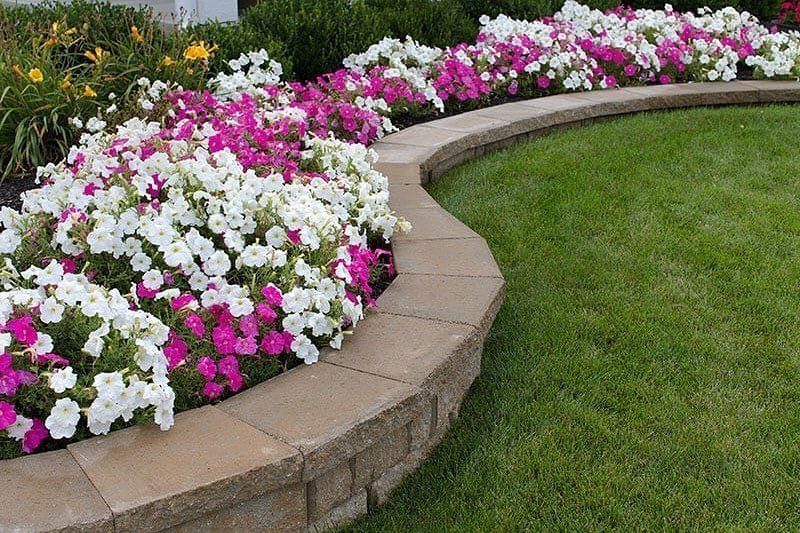
Planting behind a curved stone retaining wall turns a grade change into a feature. The wall holds the soil, and the flowers spill toward the lawn, softening the hard edge.
Pick 2 or 3 colors and plant each in a drift of 3–5 or more, because a scatter of single plants looks busy against a wall. The curve is worth the extra effort in layout, because it looks gentler than a straight run.
Pick plants that trail or mound so they hang over the top of the stone.
6. Tree-Base Flower Bed
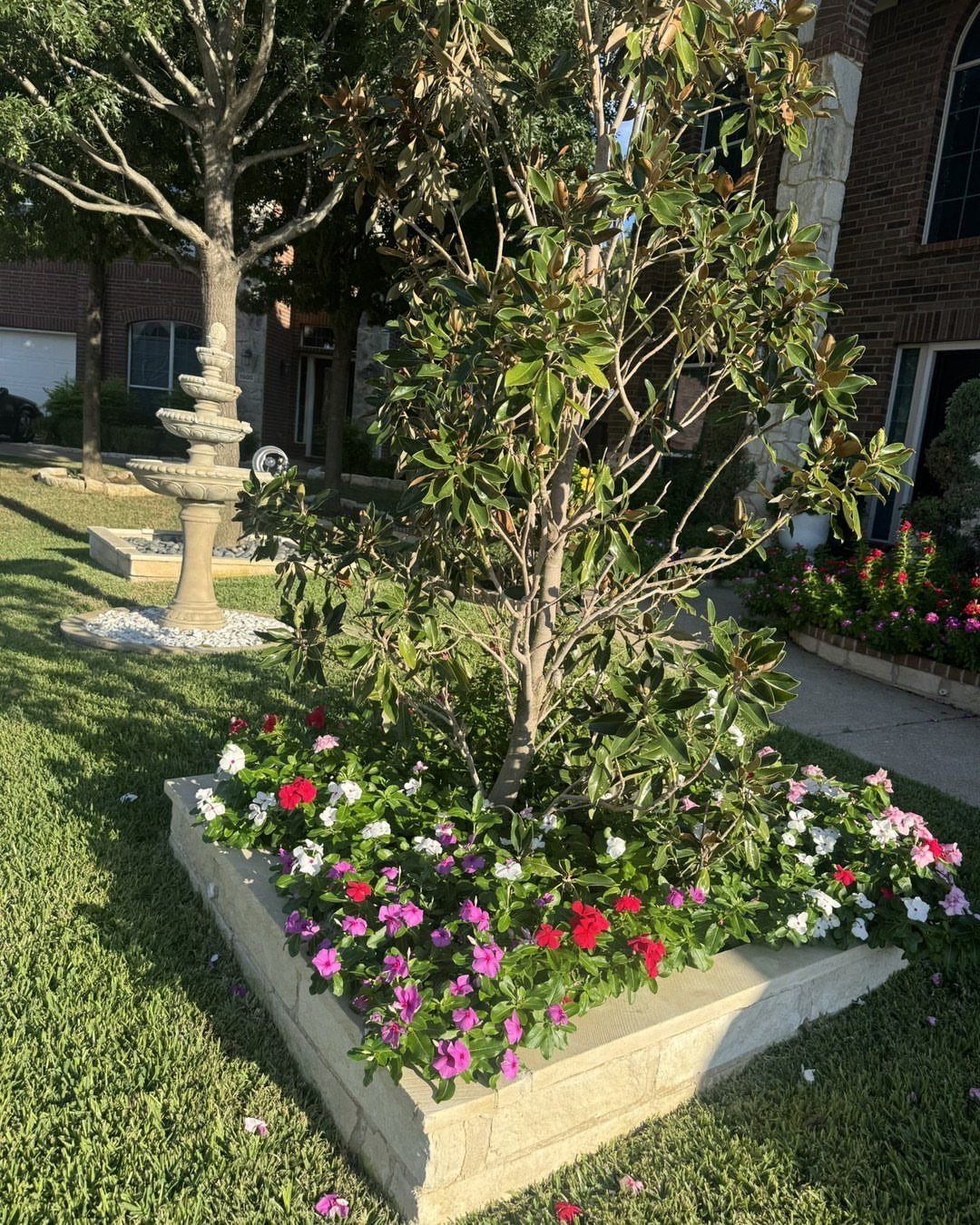
A tree in the middle of the lawn gets lonely, and a ring of flowers around its trunk fixes that. A raised stone border, like this one, also keeps mowers away from the bark.
Red, pink, and white blooms work well because they stay bright in the tree’s partial shade. Choose a bed wide enough to look generous, not a tight collar around the trunk.
Pull mulch and soil back a few inches from the trunk so the bark stays dry and doesn’t rot.
7. Side-Yard Flower Bed
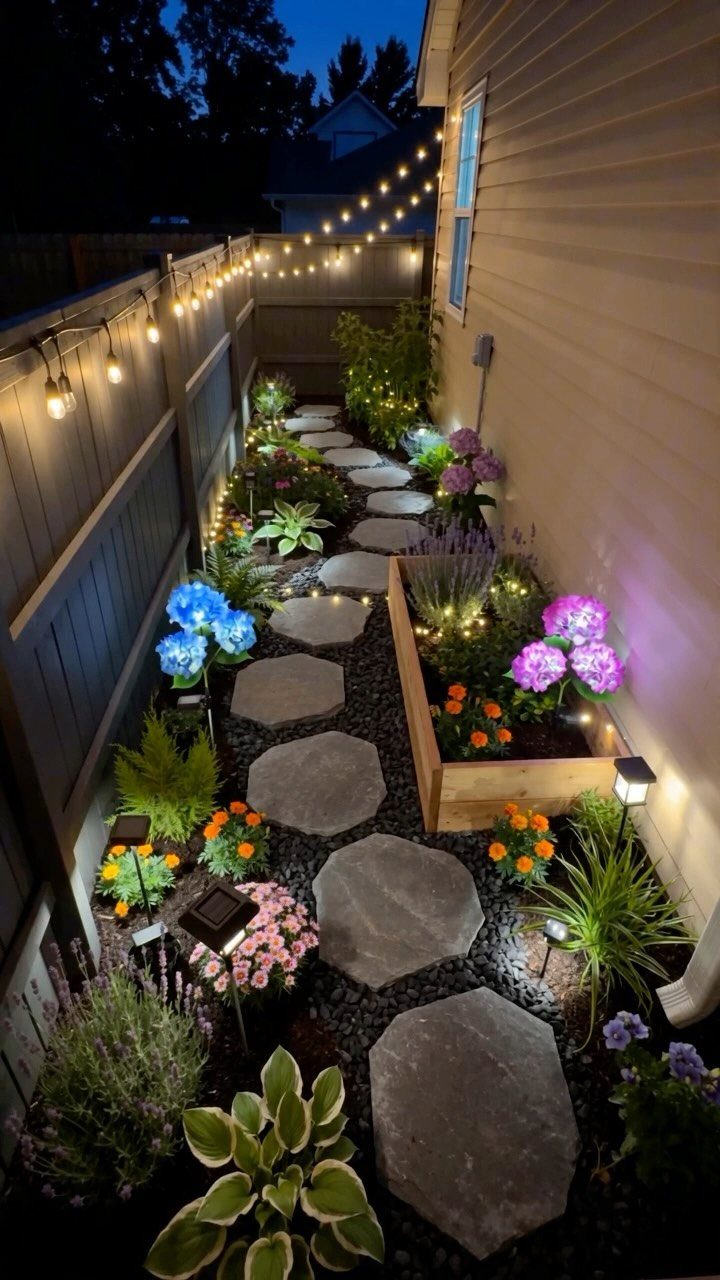
A side yard is usually the part of the property nobody plants, which makes it the easiest place to add a garden that surprises people.
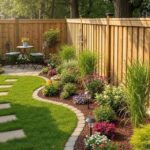
A stone stepping path down the middle keeps the ground walkable and leaves room for beds on both sides.
Wood planters and a few solar lights along the fence add height and evening glow without any wiring. In a space this narrow, I would keep the flowers in tight, colorful clusters so the path still reads as a path.
8. Single-Species Bed
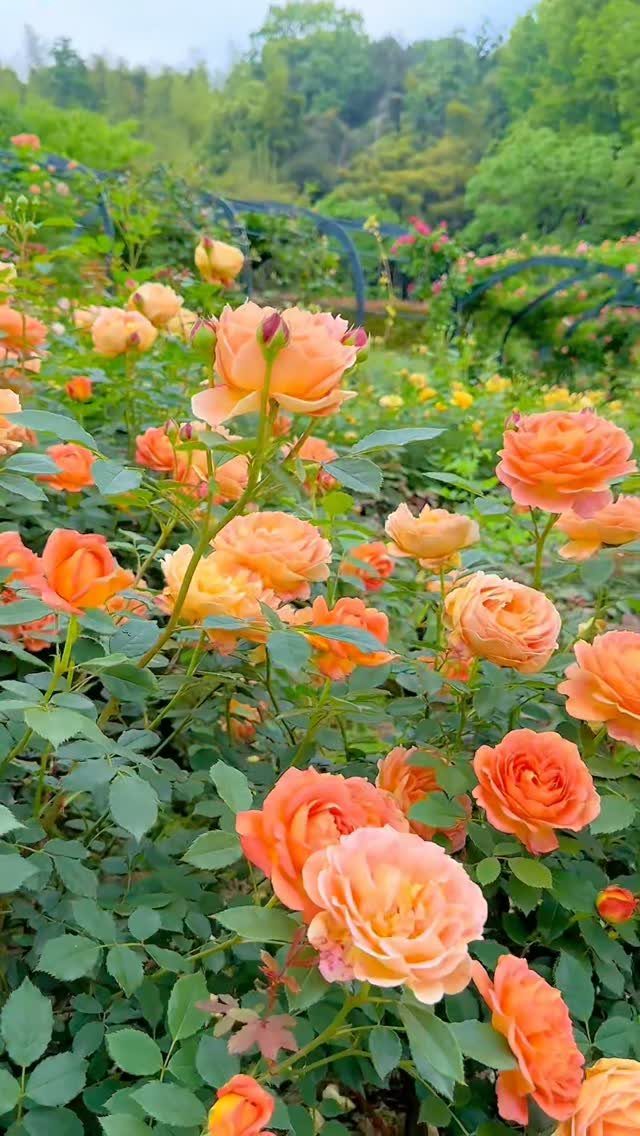
Orange roses packed into one bed look richer than a mixed border, because the eye reads a single color and a single bloom shape as one big statement.
Plant them close enough that the foliage meets and the ground disappears. Green leaves do the supporting work, so there is no need for filler plants.
If you have one flower you love, give it the whole bed. I like that choice better than a sampler, since it simplifies the planning and the shopping list.
9. Rock Garden
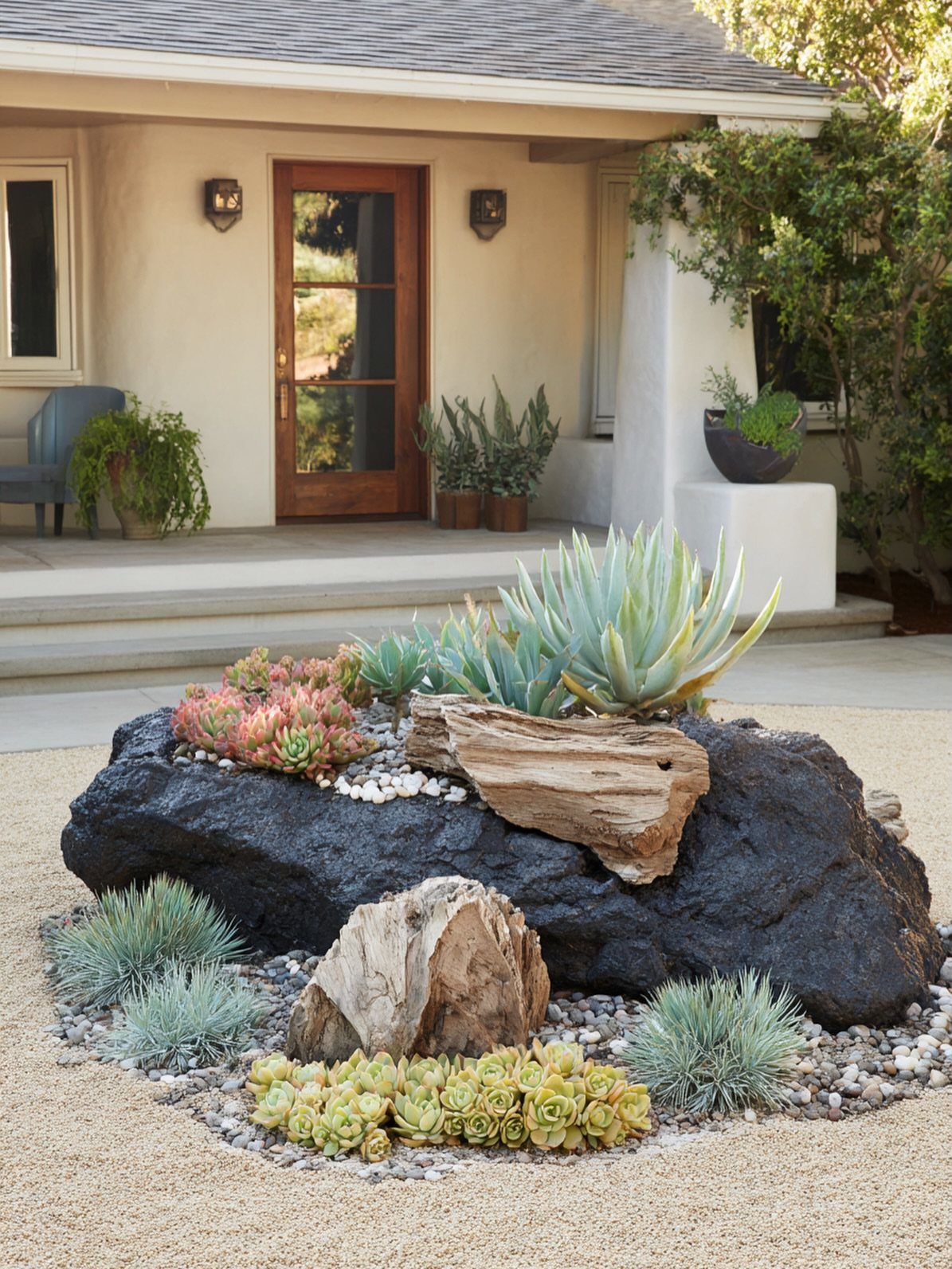
Large dark volcanic rocks set the tone in a rock garden, and the planting is kept small so the stones stay the stars.
Succulents tucked between the rocks add softness, and a piece of driftwood adds a different shape and a warmer tone. Fill the open ground with gravel, as this yard does, so no lawn or mulch fights the look.
Place the biggest rocks first, then fit plants around them. Use fewer, larger rocks rather than many small ones.
10. Perennial Garden in Groups
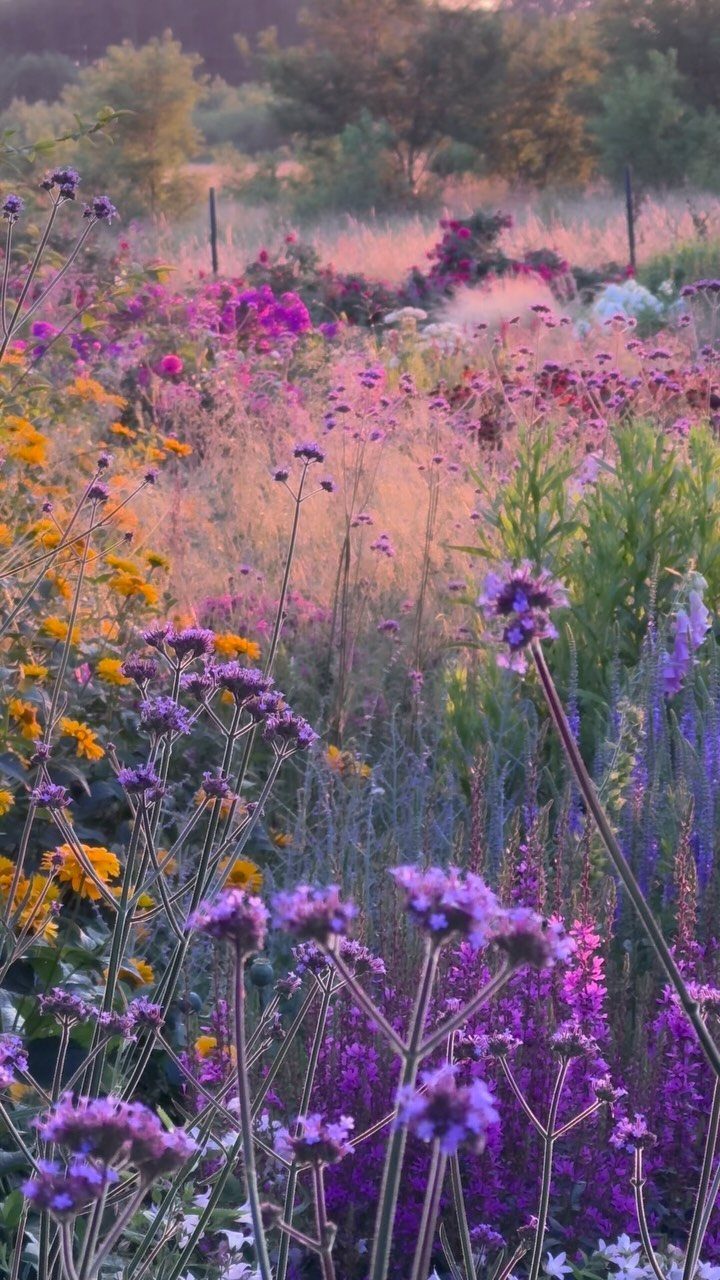
Planting perennials in groups gives a garden more punch than spacing single plants evenly. Each cluster of purple, pink, or yellow reads as one bold patch, and the patches blend into a full border.
Buy 3 or more of the same plant and set them together, then repeat that color at another point in the bed so the eye moves across it.
Single plants dotted around look spotty. Planting one kind in a group beats scattering singles every time, because repeated shapes and colors read as a deliberate drift instead of a random collection.
11. Corner Accent Bed
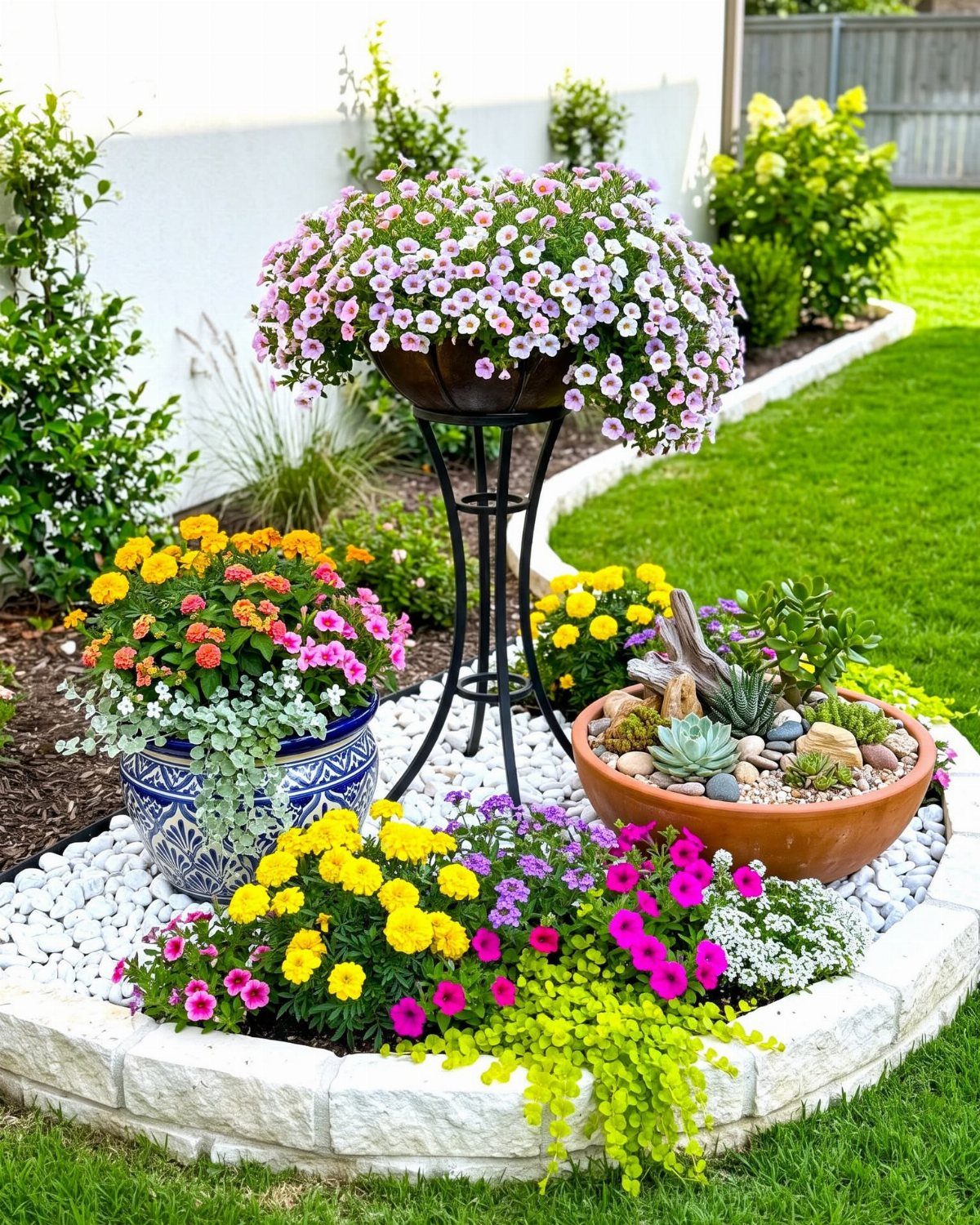
An empty lawn corner is the best spot for a bold bed, since nothing else competes for attention there. A curved edge in white stone, filled in with white pebbles, makes the shape feel finished and cuts down on mowing.
Mix in-ground plants with pots, and add a tall plant stand with a hanging basket to give the corner height. Petunias suit a stand like this because they spill over the sides.
Keep the border clean and let the flowers be loud.
12. Layered Flower Bed
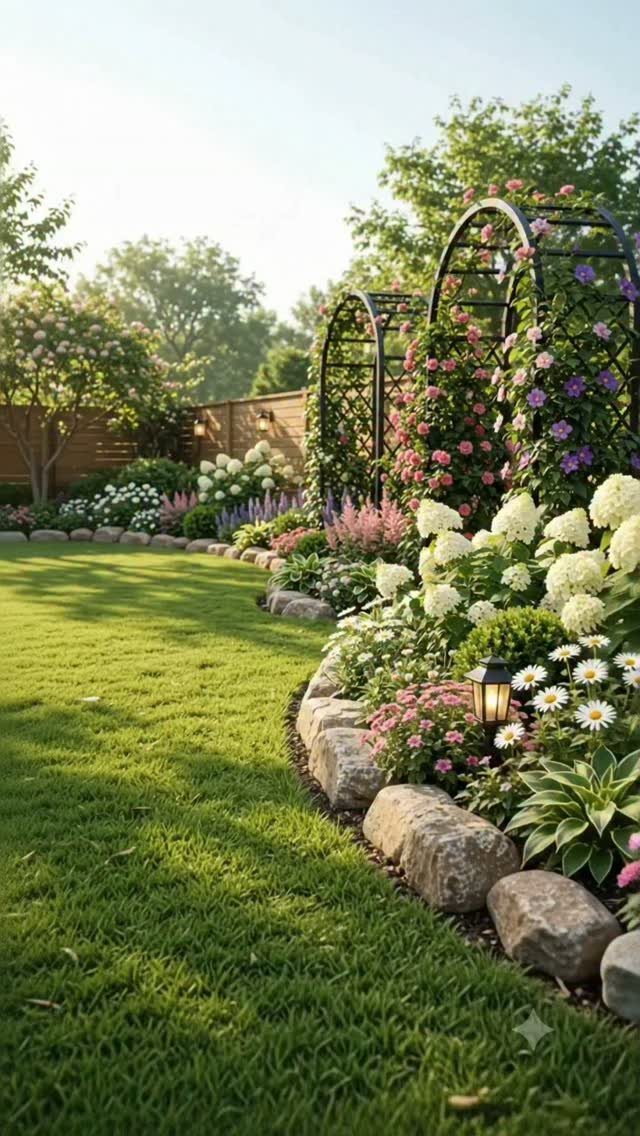
Layering a bed by height, with tall plants at the back, medium ones in the middle, and low ones in front, makes a small curve of ground look full from the lawn.
Black metal trellises add vertical lines behind the plants, and they suit a fenced yard.
Plan the tallest row first and work forward. I would leave a little room between layers so each one stays visible.
13. Fence-Line Flower Bed
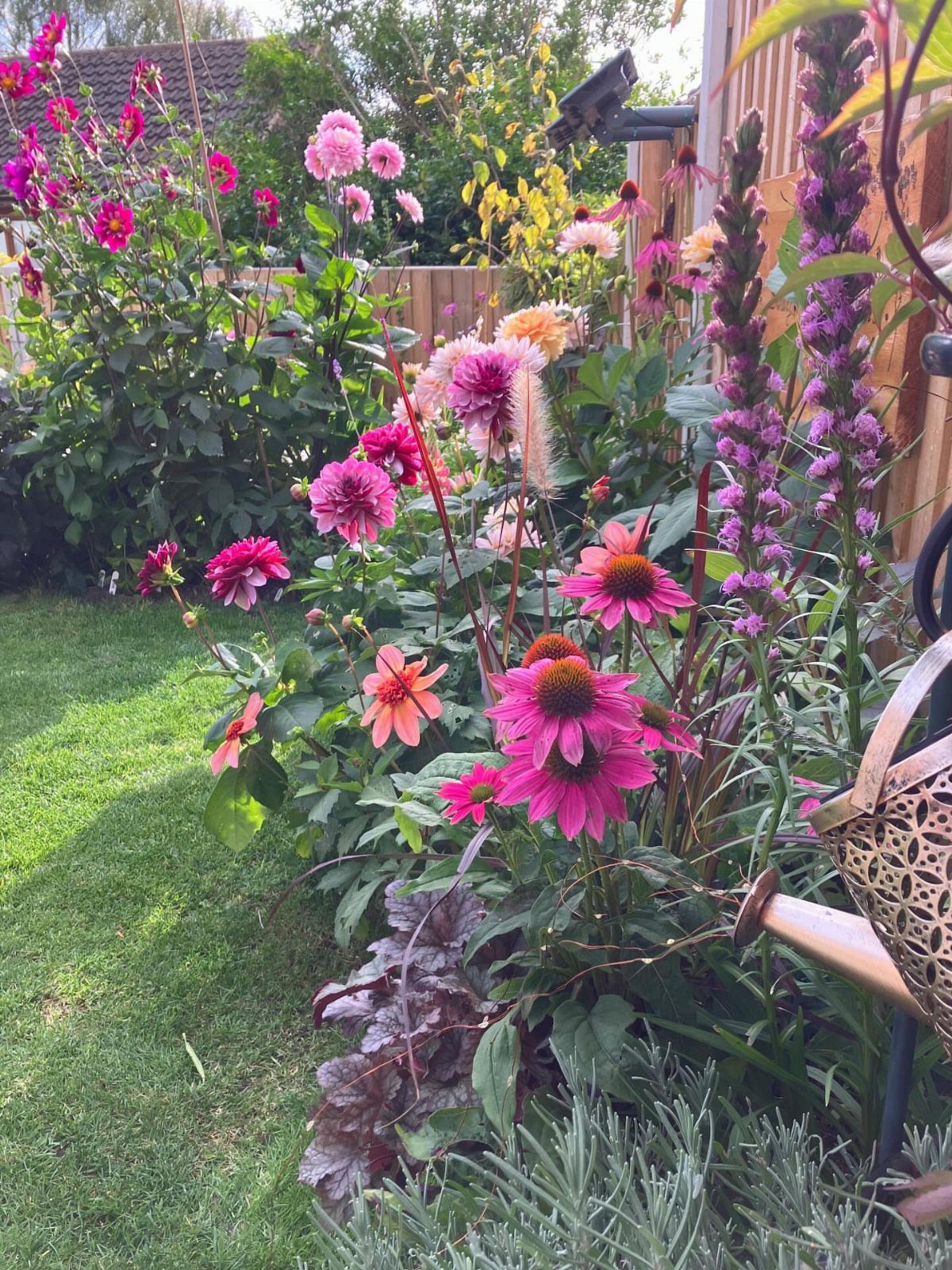
A fence gives a bed a ready-made backdrop, so the tall plants can stand against the boards and the shorter ones fill in below.
Weathered wood makes a quiet backdrop, so pair 2 colors that sit apart on the wheel, like pink dahlias with purple salvia or veronica spikes, and each one reads clearly.
Plant the tallest flowers nearest the fence and step down in height toward the lawn. A bed along a shed or fence also hides the plain base of the structure.
Two colors repeated down the line look calmer than a mix of six.
14. Potted Flower Bed
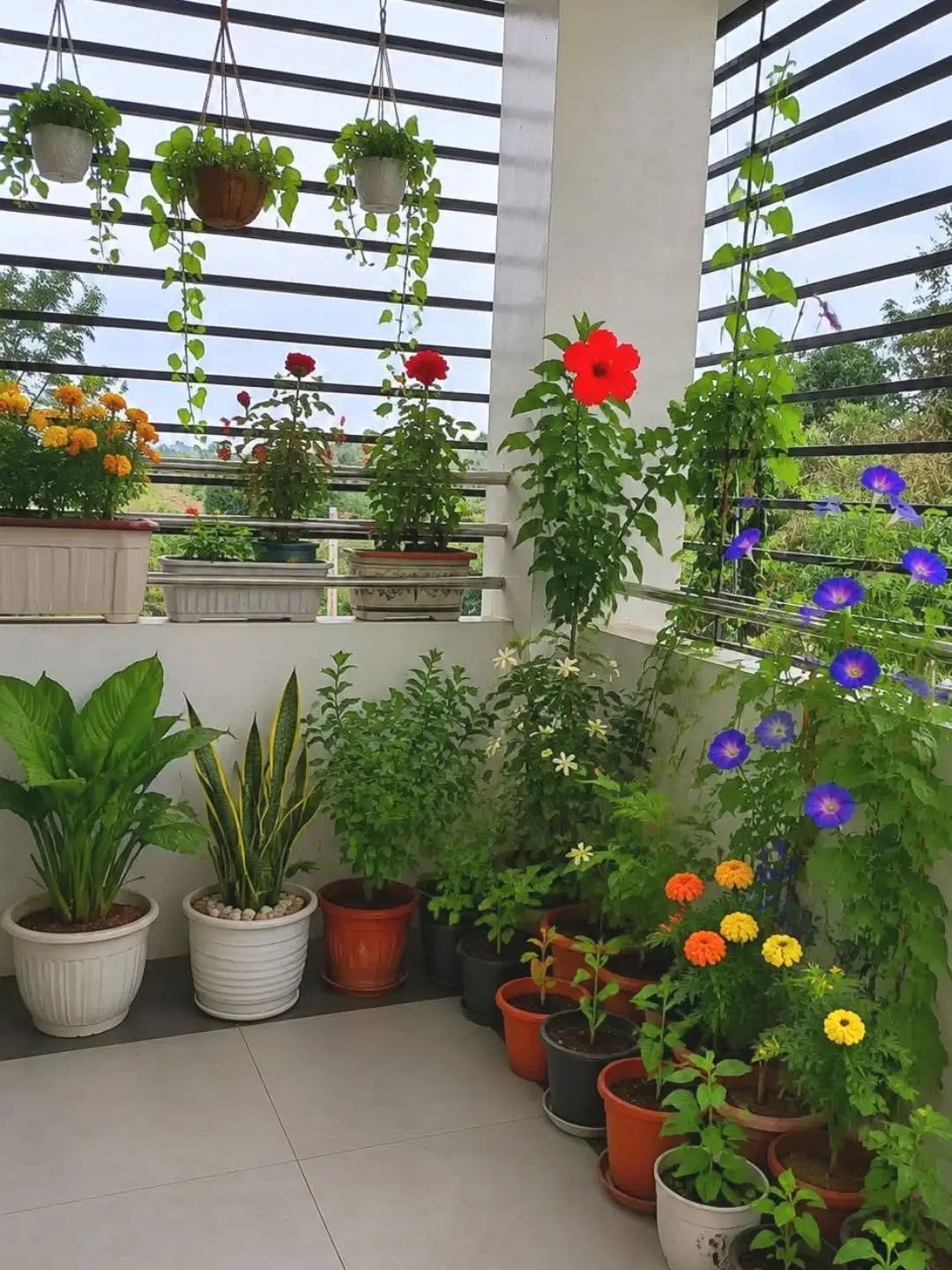
Pots grouped in different sizes can stand in for a flower bed on a balcony where there is no soil at all.
Set some on the floor, some on the railing, and hang a few from above, as this tiled balcony does, so the plants fill the space from floor to ceiling.
Mix flowering pots with plain green ones so the color has room to breathe. Vary the pot heights and the group looks like a layered bed instead of a row.
I would cluster pots tightly; scattered ones look like storage.
15. Window-View Garden
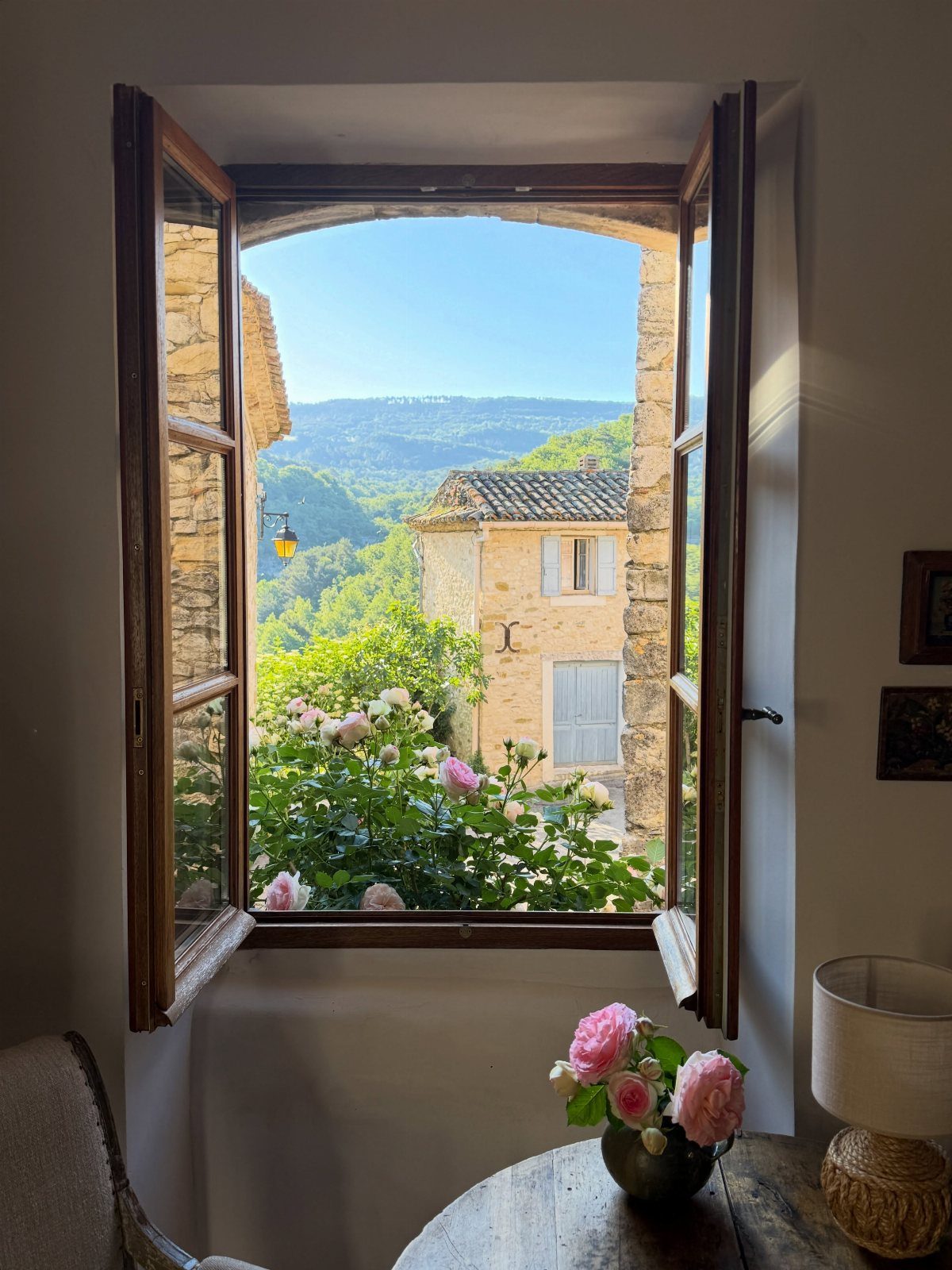
Plant the bed outside the window you look through most, and the garden works indoors too.
Plant roses or other cut flowers right outside a window you look through often, then keep a small vase of the same bloom on the table inside so the room and the garden feel linked.
Pick the window over the kitchen sink, a desk, or the breakfast table, since those are where you stand or sit longest. Choose plants that bloom at eye level from that spot.
Cutting a few stems for a vase is the bonus.
16. Curved Flower Bed
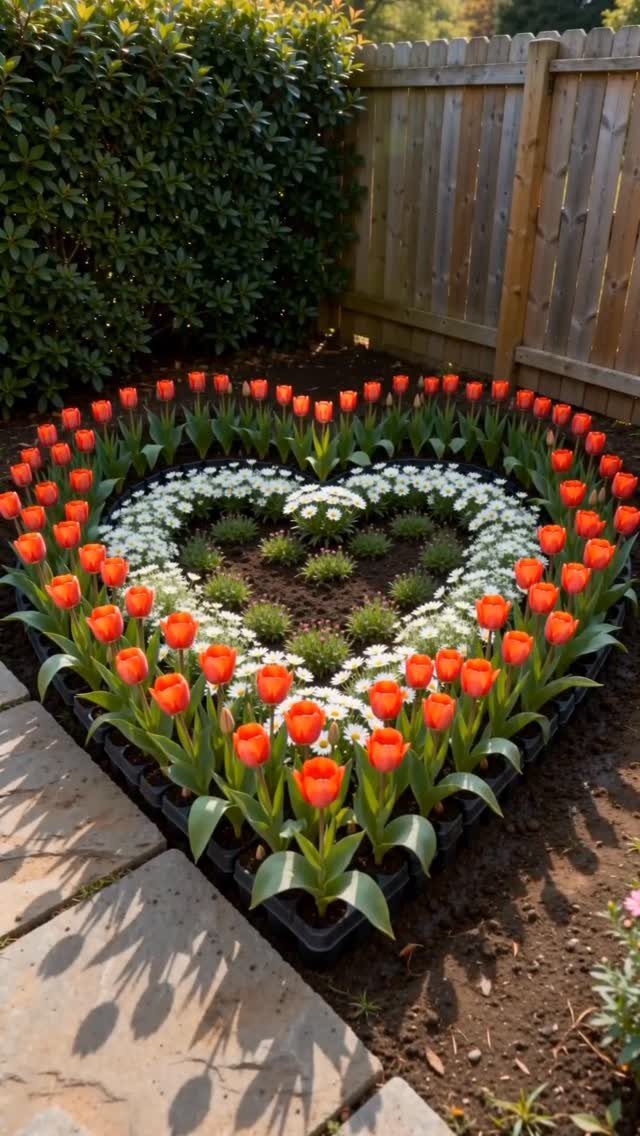
Round beds and heart shapes break up the straight lines of a fence and lawn. Red tulips edged with white flowers make the shape easy to read, even from across the yard.
Lay out the outline first with a garden hose or rope, then cut along it with a spade. Plant one color around the edge and another in the center so the shape holds up.
A bold shape works best with simple planting. A shape this clear needs only 2 colors.
17. Slope Flower Bed
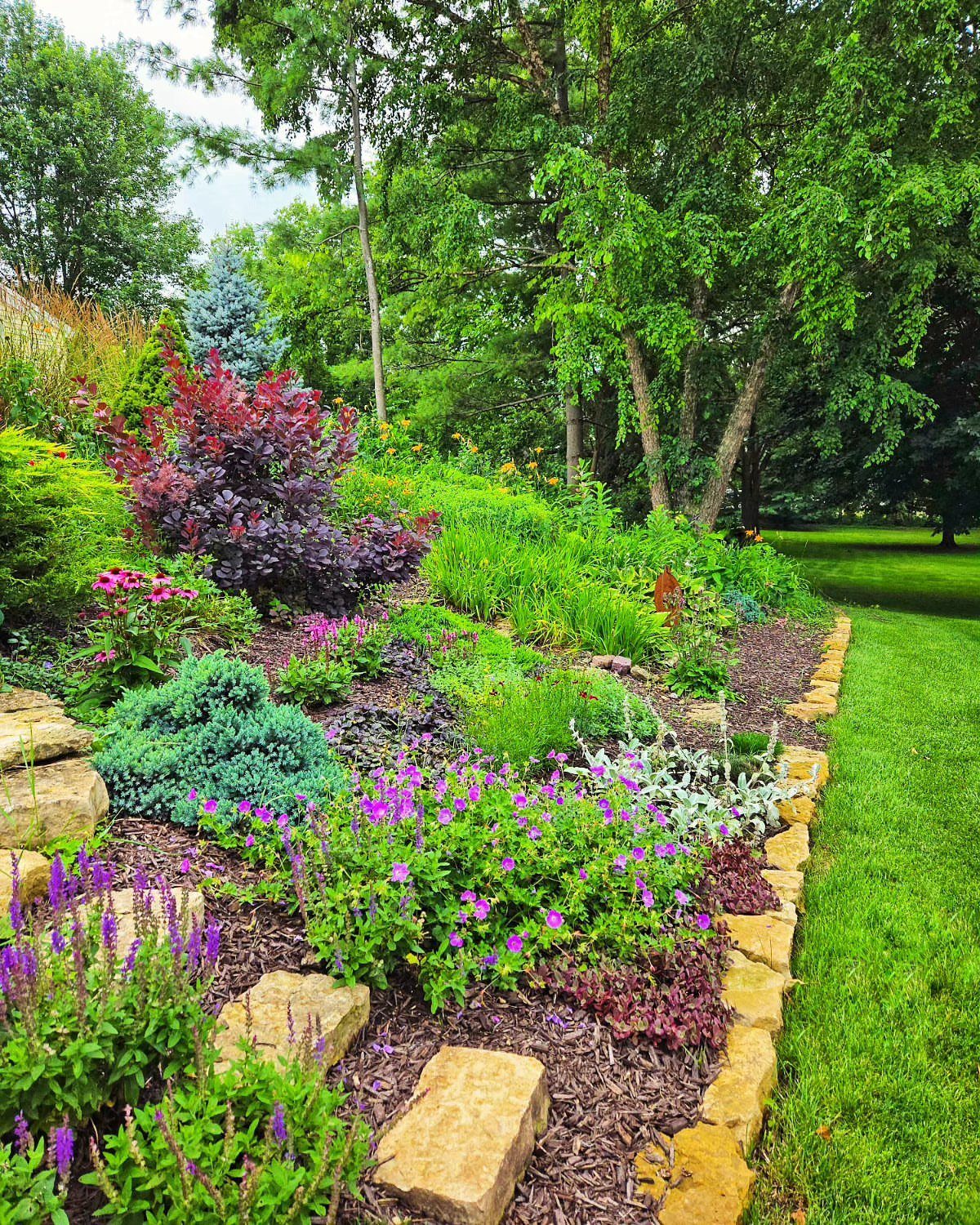
A slope is hard to mow and tends to look neglected, so filling it with shrubs and perennials solves both problems.
Layered purple and pink flowers with a stone border, as seen here, turn the hill into the best part of the yard.
Set the stone edge along the bottom to frame the bed against the lawn. Plant in groups of the same kind, and mix in a few shrubs for shape through the year.
I prefer a full planting on a slope to a sparse one, since dense plants cover more ground.
18. Naturalistic Flower Bed
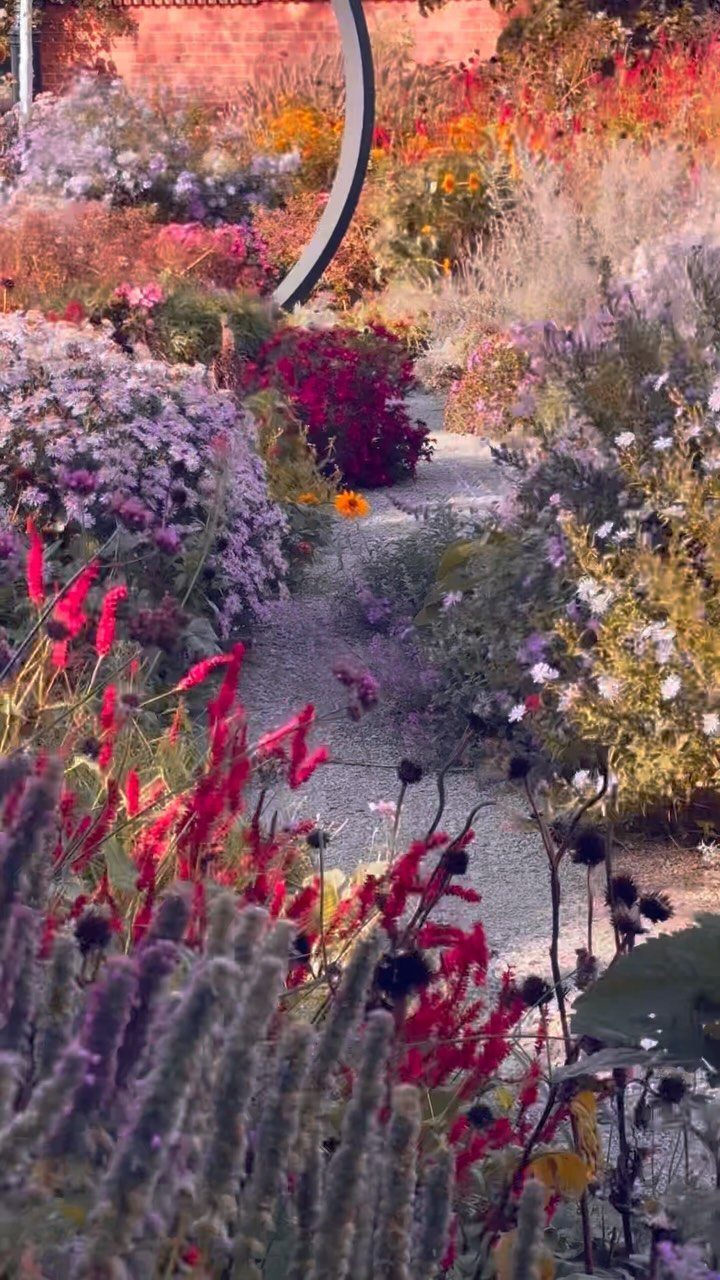
A naturalistic bed trades neat rows for dense, overlapping blooms, with purple, red, and orange growing into one another.
Plant close and let the plants lean into the path a little. Keep the path curved so the bed feels like it grew there.
A tall circular arch, like the black one here, gives a loose planting a firm focal point. I would add one such structure, not several.
19. Entertaining-Space Garden
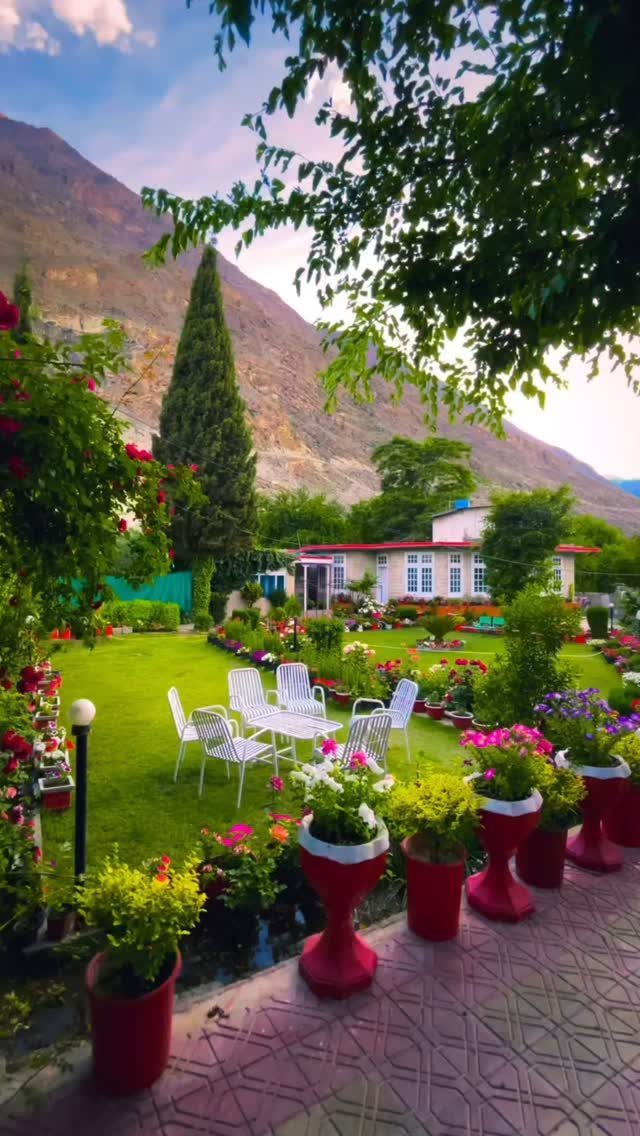
Red flower pots around a patio set tie the seating to the lawn, and white furniture lets those pots carry the color.
Group the pots close to where people sit so the flowers are part of the conversation, not a distant view. Repeat one color, like the red here, in several pots so the area feels pulled together.
I would keep the beds low near the seats and save taller plants for the back.
20. Gravel Yard Garden
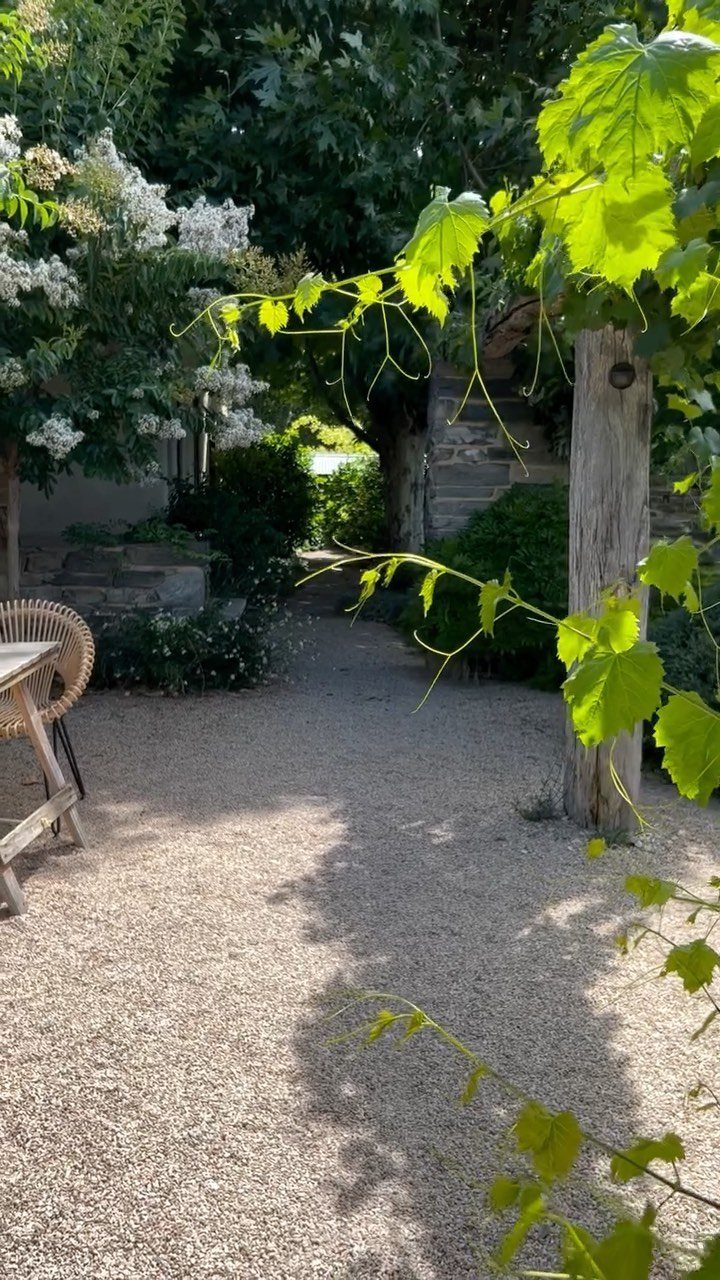
Gravel suits a yard where you want flowers without a lawn to mow.
White flowering shrubs and green vines against pale gravel keep a sunny yard looking bright and calm, and the light stone reflects heat, so choose plants that tolerate full sun.
Let the gravel serve as the path and the floor between plants, so the beds and the walkway read as one surface. A wooden post gives the vines something to climb and adds a warm, upright line.
21. Textural Flower Bed
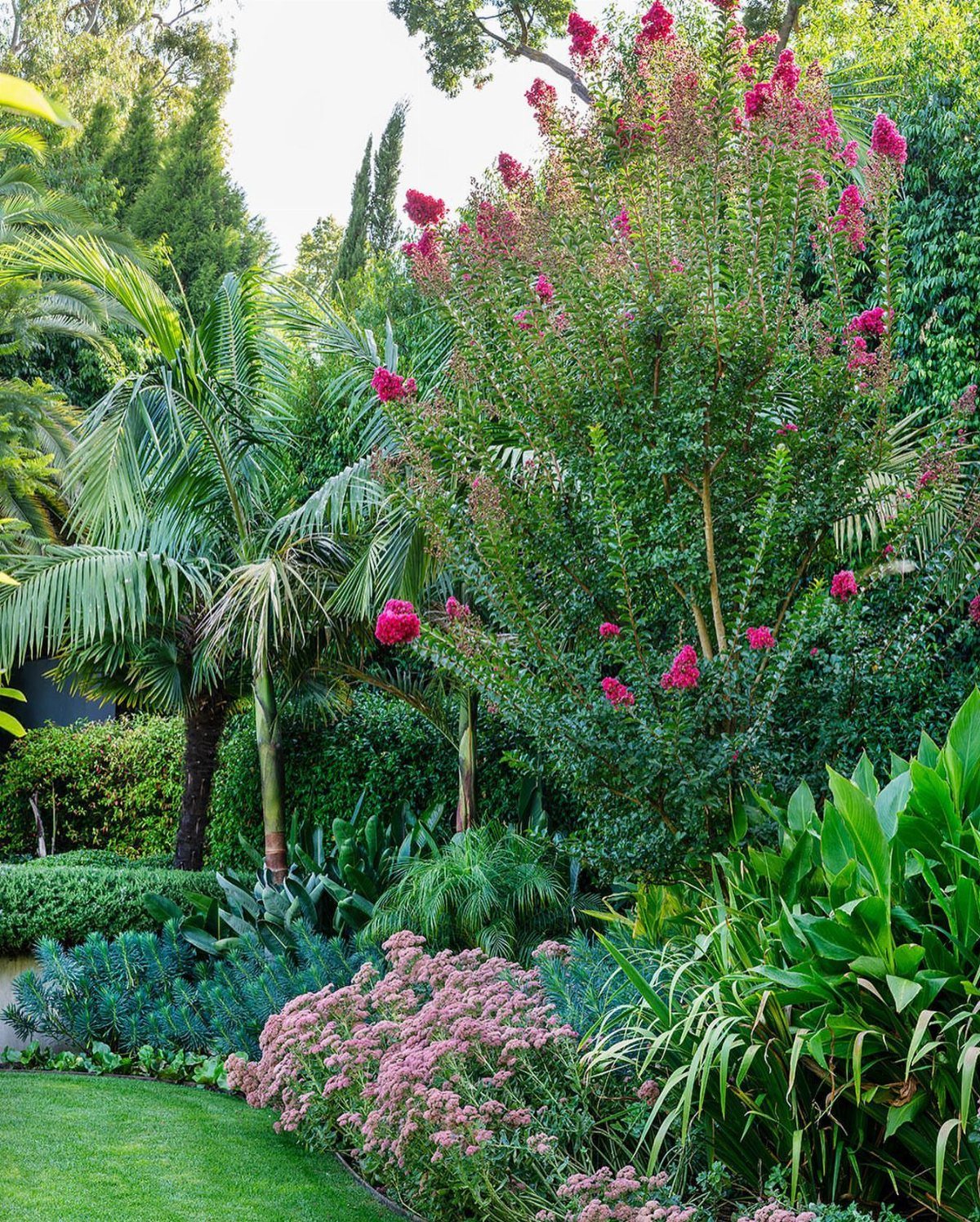
Texture is what holds this bed together: broad glossy leaves, spiky palms, and a mass of small pink flowers all sit side by side, and no two look alike.
Color stays mostly green and pink, so the shapes get the attention.
Pair a big-leafed plant with a fine, low one, then add one tall tree for height. Keep the flowers to a single color so the bed doesn’t turn busy.
Contrast in leaf shape beats variety in color, in my view.
22. Small Yard Flower Garden
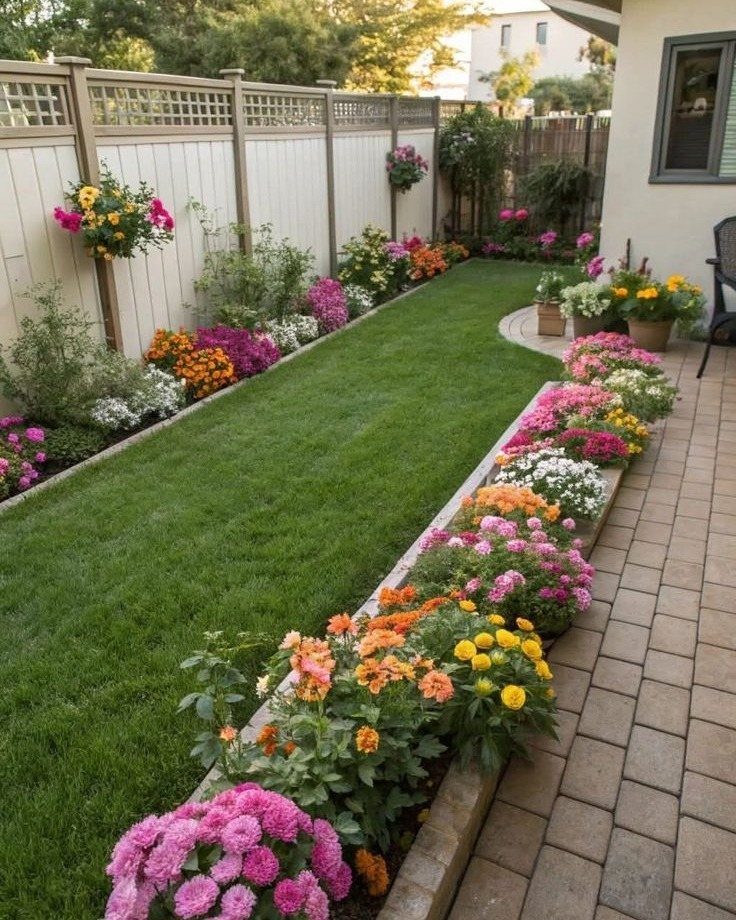
A narrow lawn with flower beds along both sides makes a small yard feel planned, and a white fence gives the plants a clean backdrop. A paved walkway keeps the ground usable without eating into the planting.
Put the color in the borders and keep the center open, so the space reads as wider than it is. The same approach scales down to a courtyard, patio, or balcony, where pots can take the place of beds.
I would rather have deep borders and a small lawn than the reverse.
23. Fairy or Gnome Garden
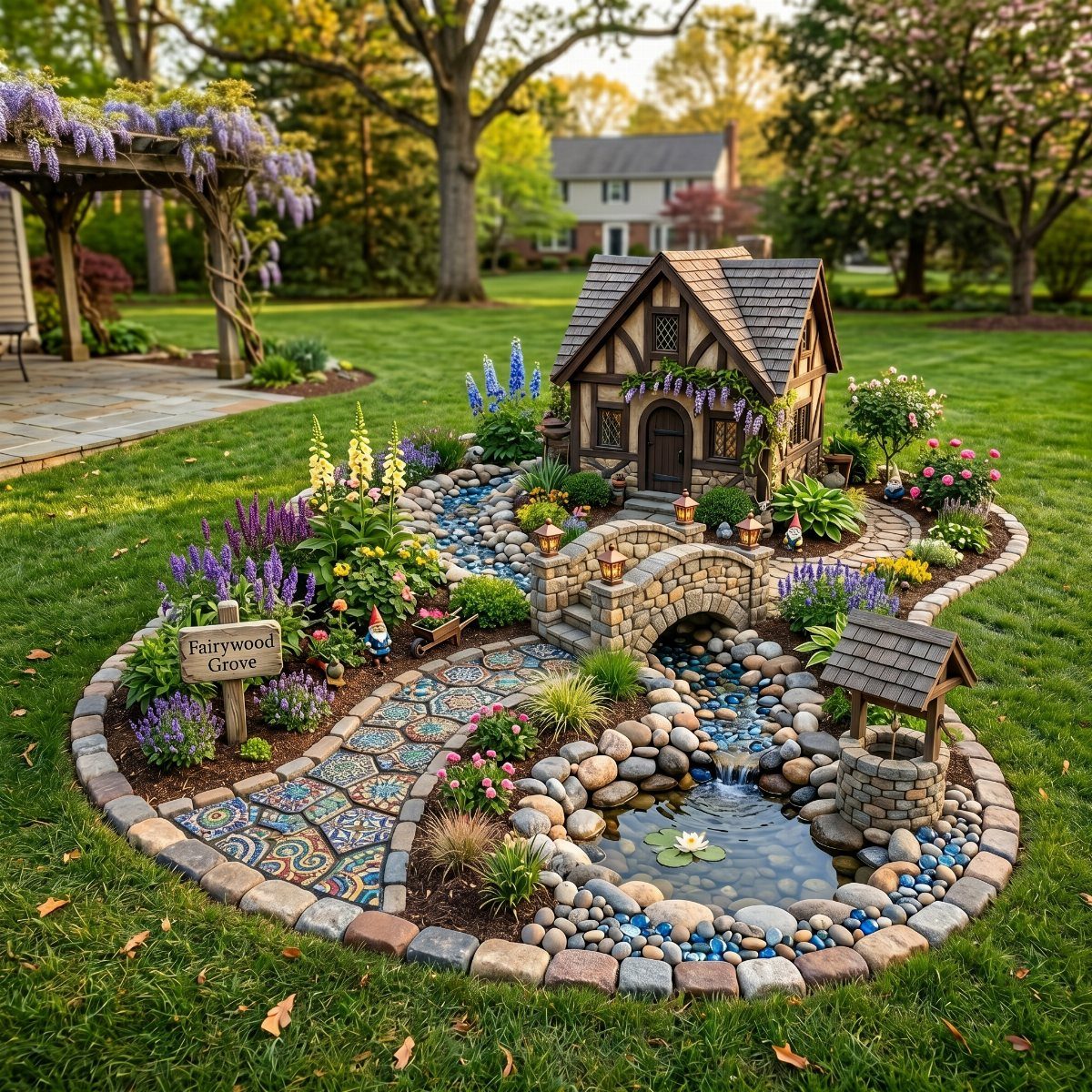
A fairy or gnome garden is a small scene built on a patch of lawn: a tiny cottage, a stone bridge, a pond, and a gnome, with a sign to name the place.
Colorful flowers around the edges give the miniature village a landscape to sit in.
Pick a theme first, then add pieces that fit it, so the cottage, bridge, and pond tell one story. Plant flowers that stay small so they don’t swallow the figures.
Cheap to build and easy to expand, it grows one piece at a time.
24. Cottage Garden Bed
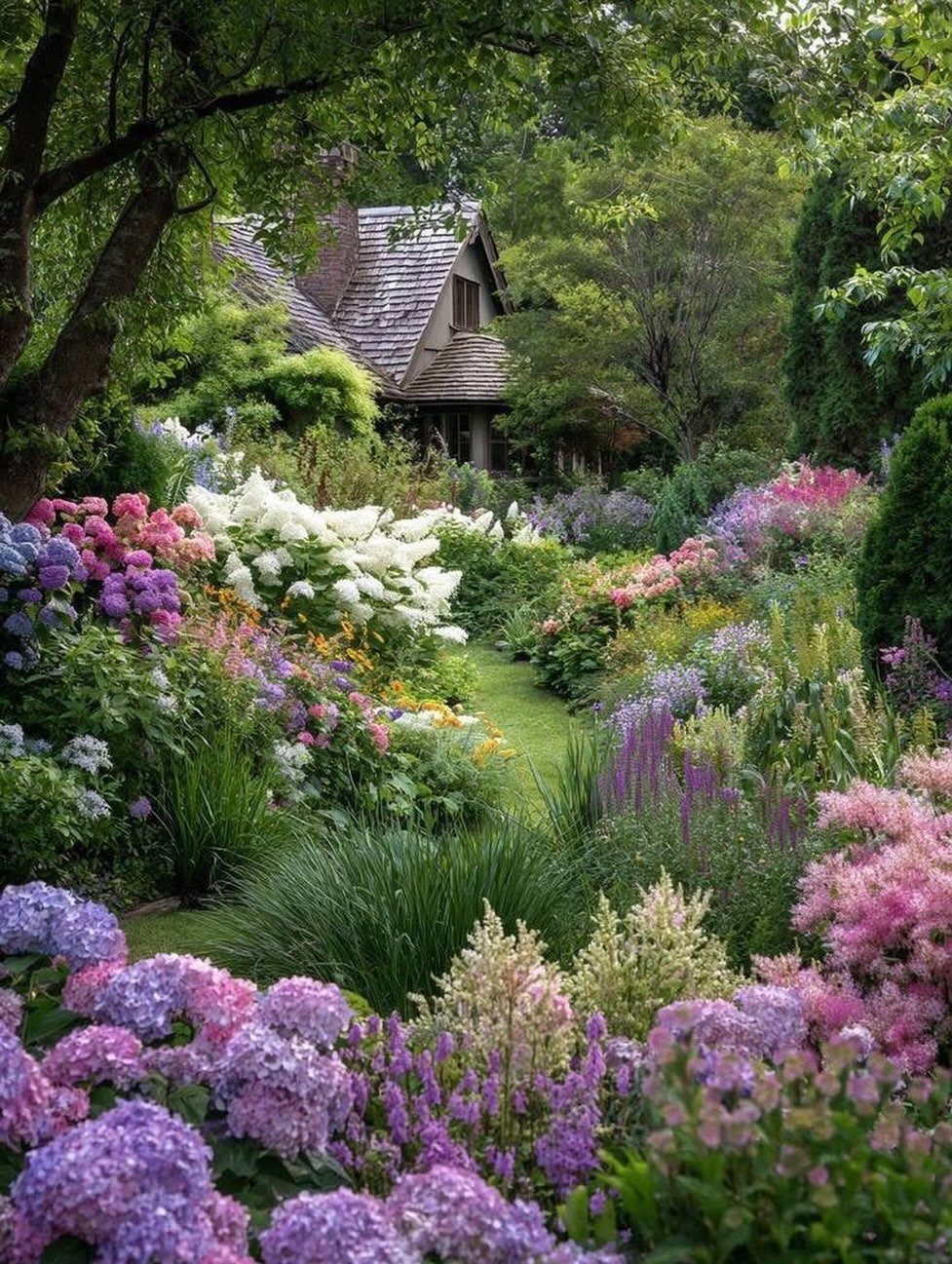
Cottage beds look generous because the flowers are layered, tall at the back and spilling forward, with purple, pink, and white mixed together. Nothing is clipped into a neat shape, and that looseness is the style.
Run the beds along a grass path so the flowers lean toward it and lead the eye to the house.
Keep the palette to a few related colors, here purple, pink, and white, so the abundance feels cohesive and not chaotic.
Dense planting is the whole look, so I would never leave gaps.
25. Flowering Pergola or Archway
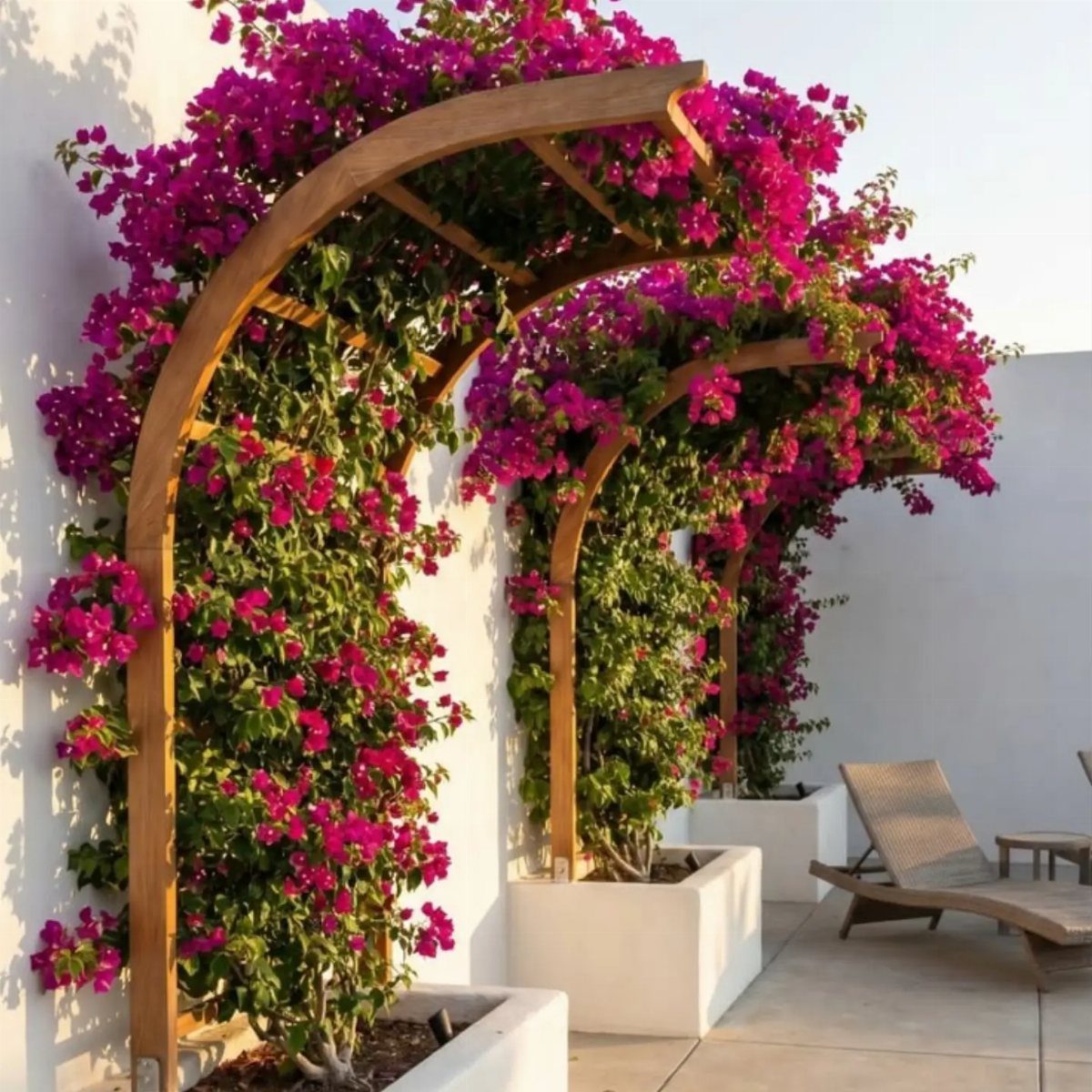
Bougainvillea trained over curved wooden pergolas turns a patio into a room with a roof of flowers.
Pink blooms keep the color clean when the planters and walls around them stay a single pale shade, and a pergola this size throws enough shade for a lounge chair underneath.
Set each pergola in its own rectangular planter so the roots stay contained and the frames line up along the wall.
I would give the vines a few seasons to fill in rather than buying a mature plant to rush it.
Put the seating under the frames, not beside them.
26. Spilled Pot Pebble Stream
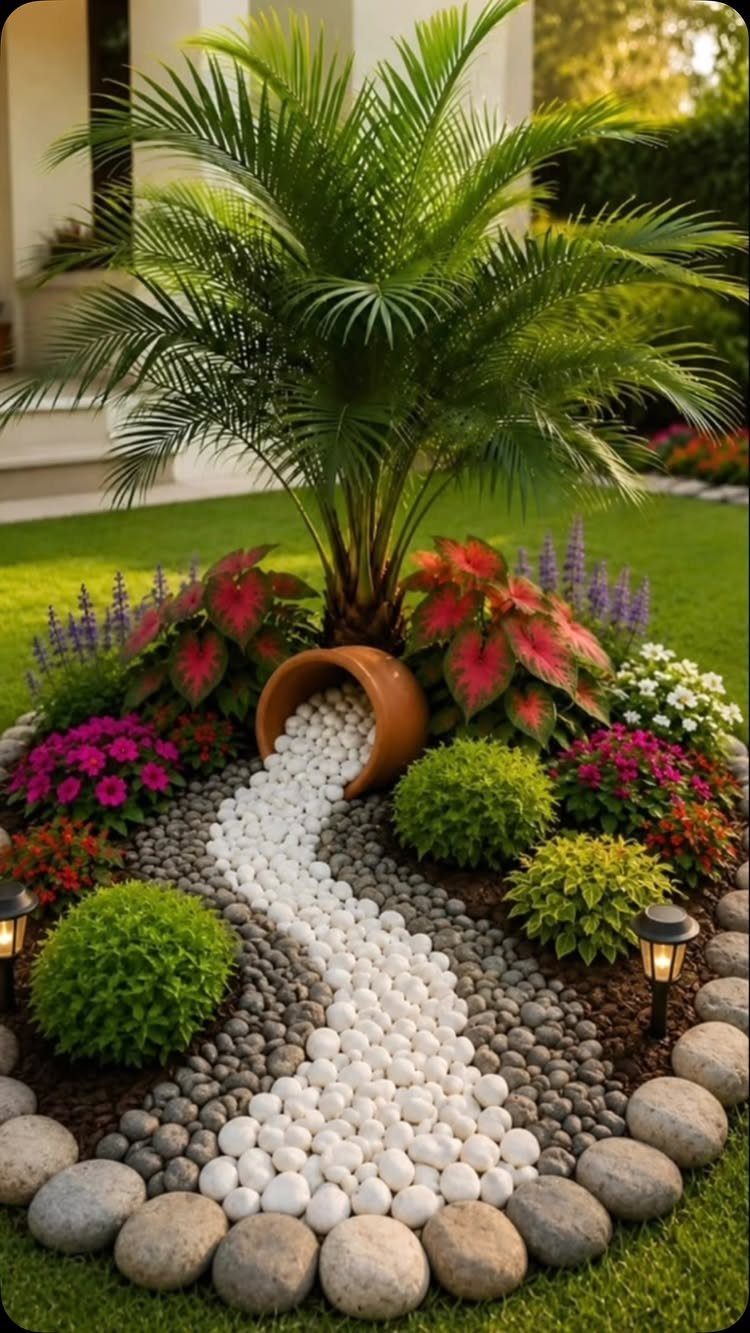
A tipped ceramic pot with white pebbles pouring out of it reads as a dry stream, and it costs far less than a real water feature.
The pebbles run across grey stones toward the palm and the flowers, which gives the bed a path for the eye.
Lay the pot on its side first, angled slightly downhill, then pour the pebbles out in a ribbon that narrows as it travels. Keep the stream to one pot and one color of pebble.
White stands out best against darker stones, so choose contrast over matching.
27. Secluded Garden Bench Nook
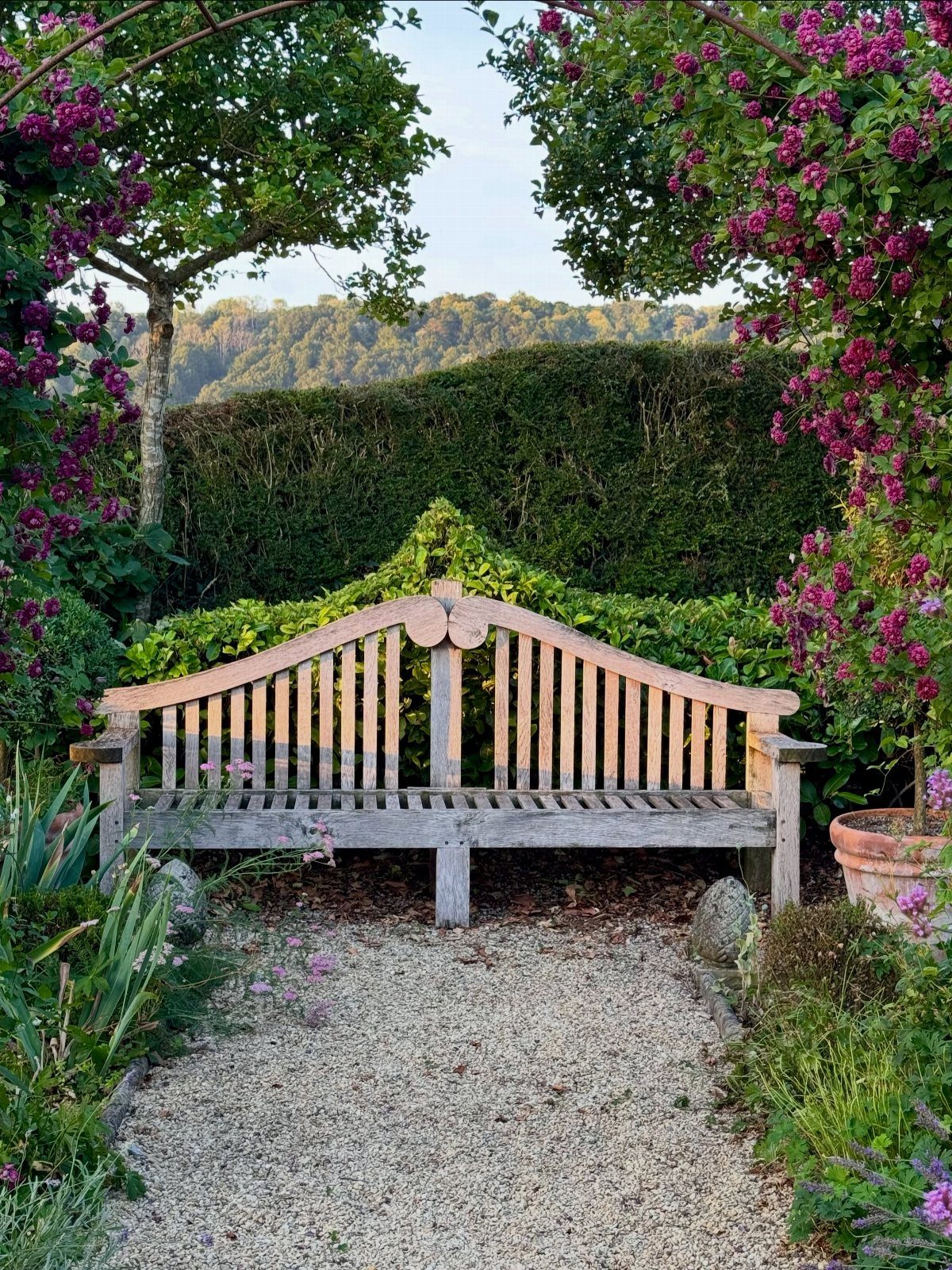
A bench at the end of a gravel path gives a walk somewhere to go.
Purple flowering vines and a green hedge close in around the seat, so the nook feels set apart from the rest of the yard even under open sky.
Put the bench at the far end of the path, not beside it, so the path leads to it. Plant the vines where they frame the seat on both sides, and let the hedge sit behind as a green wall.
A plain wooden bench is my pick; the flowers should be the decoration.
28. Climbing Roses on Brick Wall
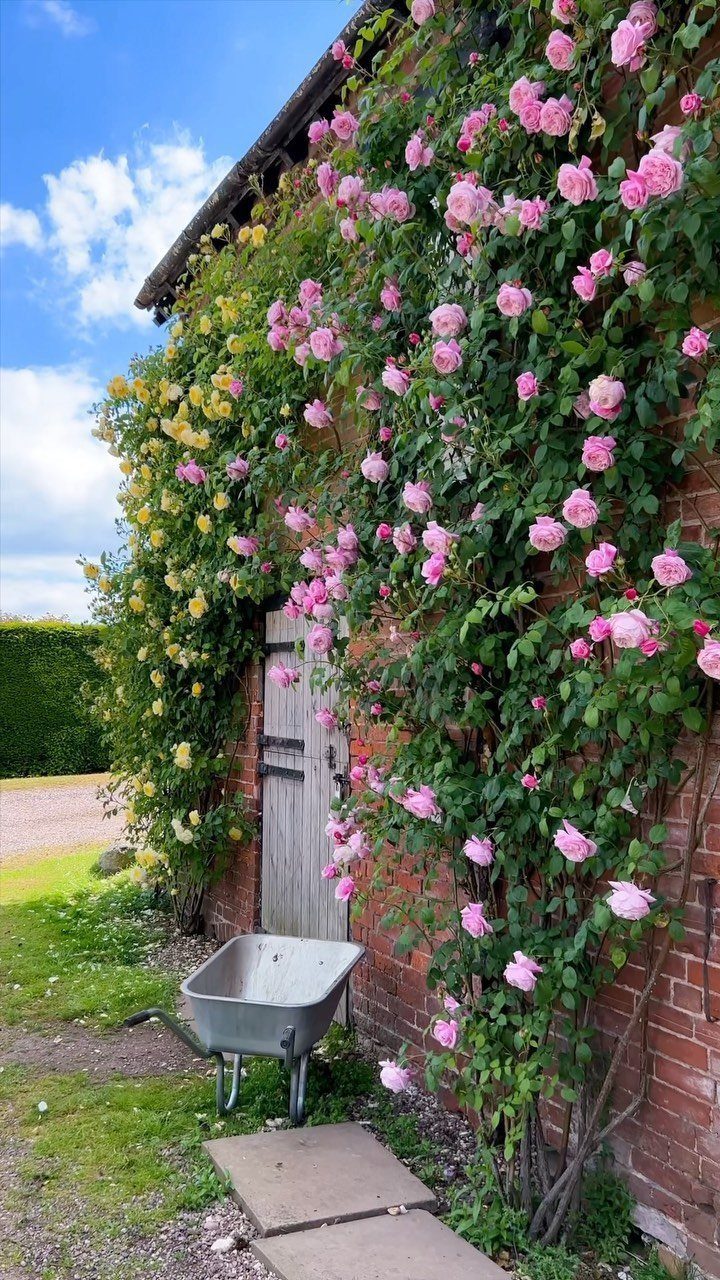
Red brick is a strong partner for pink and yellow roses, since the warm wall makes both colors glow. Climbing roses can be trained up an exterior wall, and the beds below stay narrow enough to leave the path open.
Tie the canes to the wall as they grow, spreading them sideways instead of straight up, because horizontal canes tend to flower along their length. Use 2 shades, as here, and no more.
29. Foundation Shrub Flower Bed
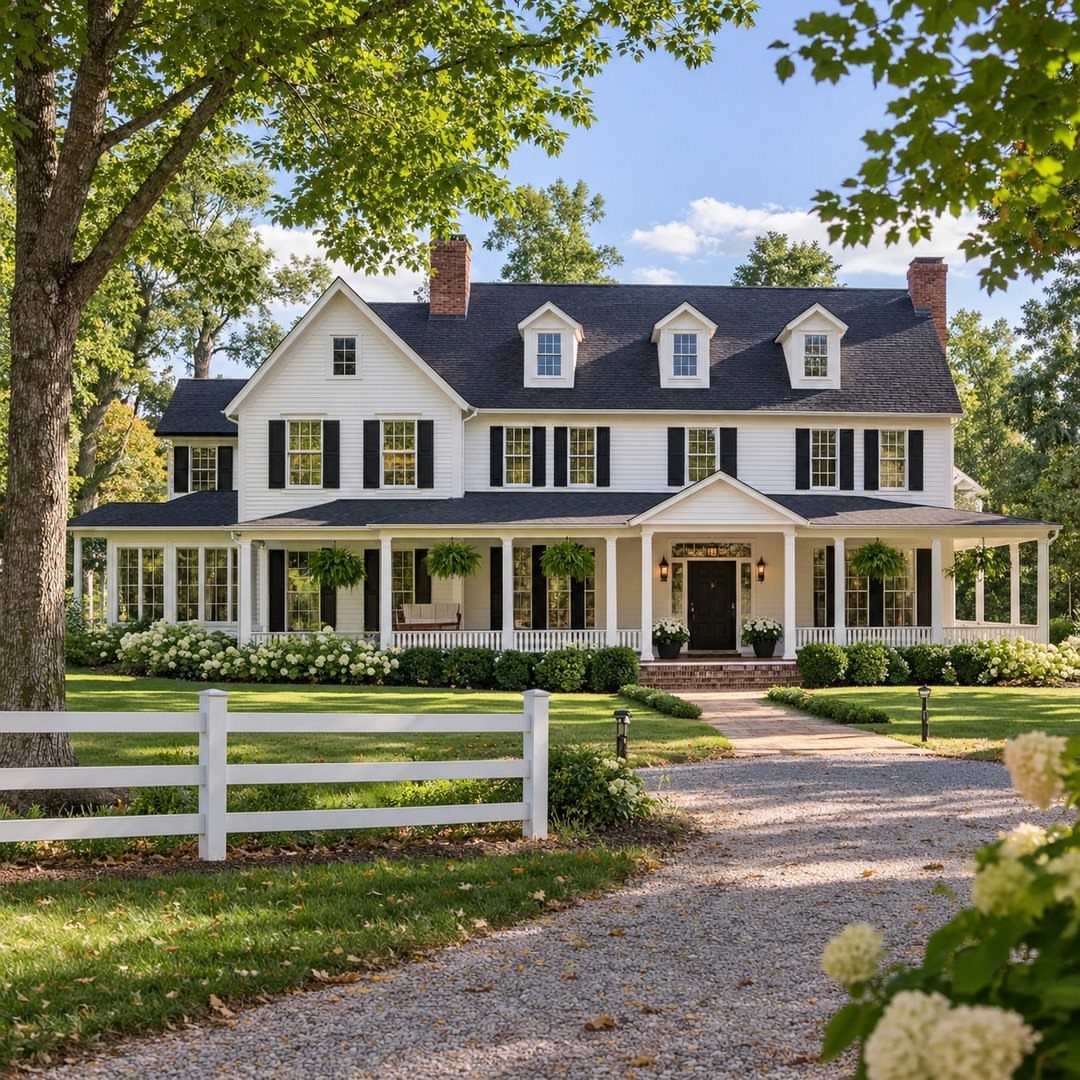
White flowering shrubs along the porch and foundation make a house look settled, and a white farmhouse suits them because the whole front stays one calm color.
The shrubs hide the base of the walls and soften the step up to the porch.
Space them evenly, and keep the planting low enough that the windows stay clear. Gravel and a white fence nearby keep the edges crisp.
Shrubs come back every year, so I like this bed for anyone who wants curb appeal with little replanting.
Match Plants to Conditions
Sunlight decides more than any other factor, so measure it before you shop. Note whether the spot gets full sun, part sun, or shade, then buy only plants tagged for that light.
Know the difference between annuals and perennials. Annuals need replanting every year; perennials go in once and return.
Read the plant tag for mature size.
In a small bed, I choose small-to-medium plants and skip perennials that grow huge or sprawl. Anything labeled as spreading aggressively or taking over will crowd out its neighbors within a few seasons.
Check local suitability and winter hardiness too. A plant that is not rated for your winters will be a one-season expense.
If you copy a plan that calls for full sun and your yard gets only part sun, substitute plants that fit your light rather than hoping the originals will cope.
Plan Succession and Maintenance
Plan for succession so the bed is not all color in June and bare in August. Spring bulbs and flowering shrubs open the season, tall perennials and lavender follow, and hardy fuchsia and panicle hydrangeas carry color later.
Mix perennials, annuals, and evergreens. Perennials return, annuals fill gaps, and evergreens hold the shape when nothing is blooming.
When you swap in a plant, match the original’s mature height and width, sun needs, hardiness, and bloom season. That keeps the layers and the timing intact.
Even a well-settled bed still wants regular attention; plan on weeding, deadheading and watering every week or two, not none at all.
Expect to water during dry spells, weed, and renew mulch. Tall flowers may need occasional staking, and shrubs and perennials need seasonal pruning and tidying as blooms finish.
Prepare Soil and Mulch Beds
Skipped prep sinks more flower beds than poor plant picks do, so give the first day to the soil.
Strip off the sod, weeds and roots across the whole bed outline; a flat spade lifts turf faster than most people expect.
Work the soil loose to 8–12 inches, break up any hard compacted layers, and fold in 2–3 inches of compost. Good soil work does more for the plants than any fertilizer I could add afterward.
Set edging before planting. Stakes, bricks, or metal edging go in much easier in an empty bed.
Plant, then mulch 2–3 inches deep. It holds moisture, suppresses weeds, and gives the bed a clean finish.