Front yards here run from a gravel-and-lantern Zen bed that asks for an occasional rake to a stacked stone wall that takes a weekend and a good supply of stone.
Which one is yours depends on how much light the yard gets and how much time you’ll spend on it, since a citrus tree needs 6–8 hours of direct sun to fruit while a camellia scorches in that same afternoon glare.
Light and soil should pick the plants first, and the style follows from what will actually grow, which is why Choose Plants for Conditions sits near the end of this list.
1. Layered Planting
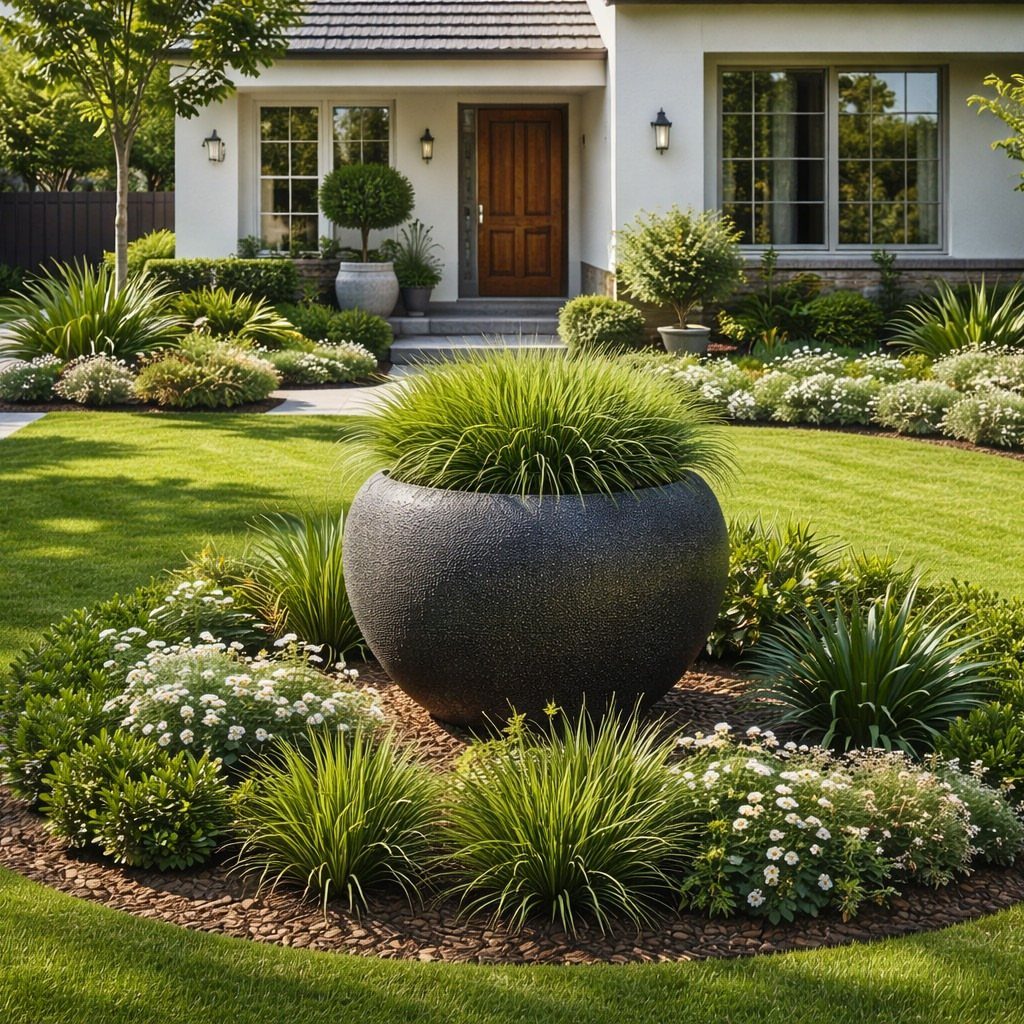
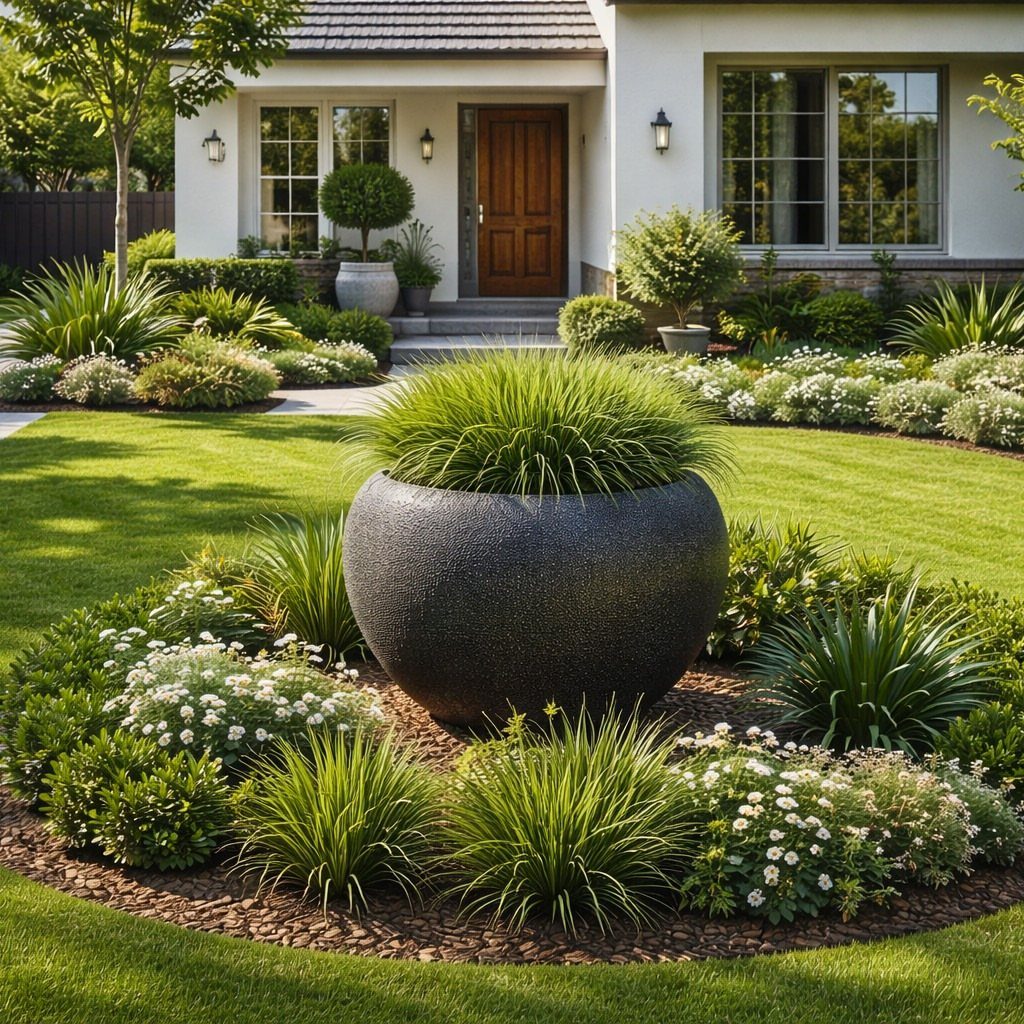
Height does the work here.
Tall grass in the big planter sets the peak, shrubs sit at mid level, and low white flowers fill the front edge, so the eye travels up toward the door instead of stopping at the lawn.
For a small yard, I’d go with one tall anchor rather than several. Repeating it twice makes a bed look busy.
Keep the shortest plants at the front edge and the tallest at the back, or in a single central pot like this one.
2. Garden Walkway
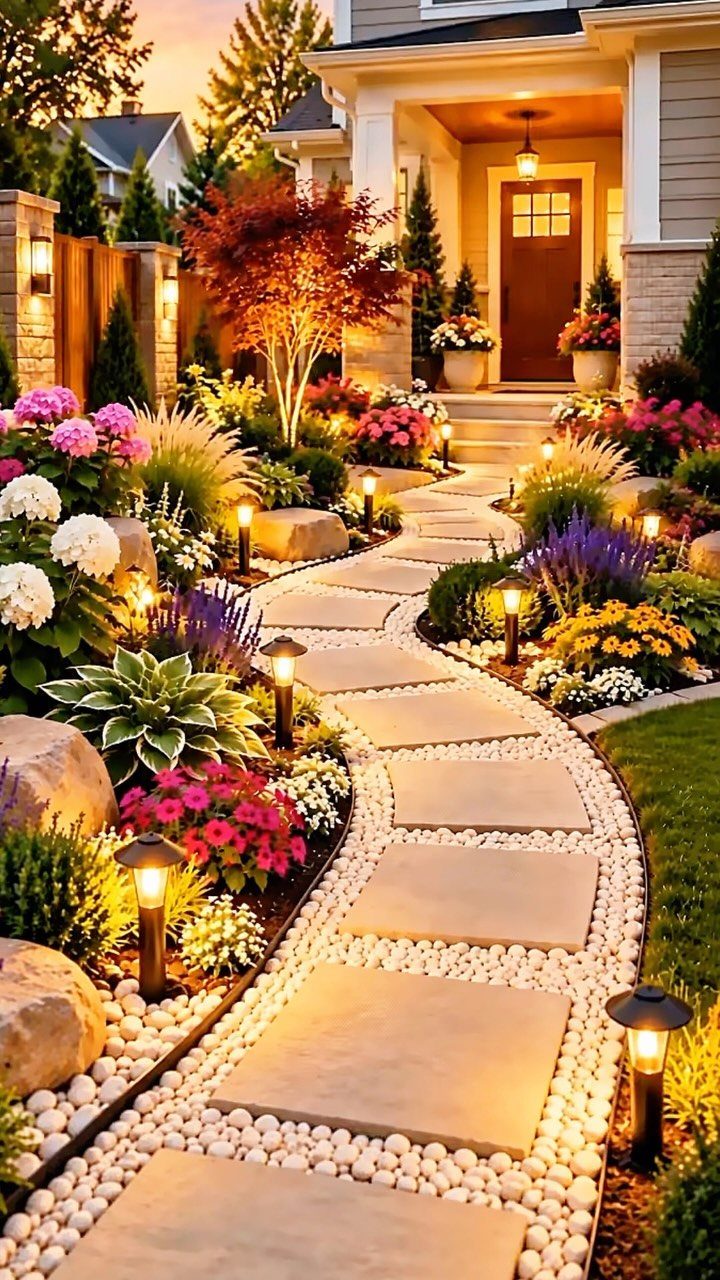
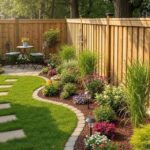
A curved path makes the walk to the door feel longer and more deliberate than a straight shot. Stone pavers with white pebbles packed between them look finished without requiring a poured surface.
Solar lights along the edge are the budget move I’d pick: no wiring, and they stake into the soil in minutes.
Plant flowers and shrubs right up to the path edges, and the walkway reads as a piece of the bed instead of a strip cut through it.
Lay the pavers out on the ground first and adjust the curve before you dig anything.
3. Varied Plantings
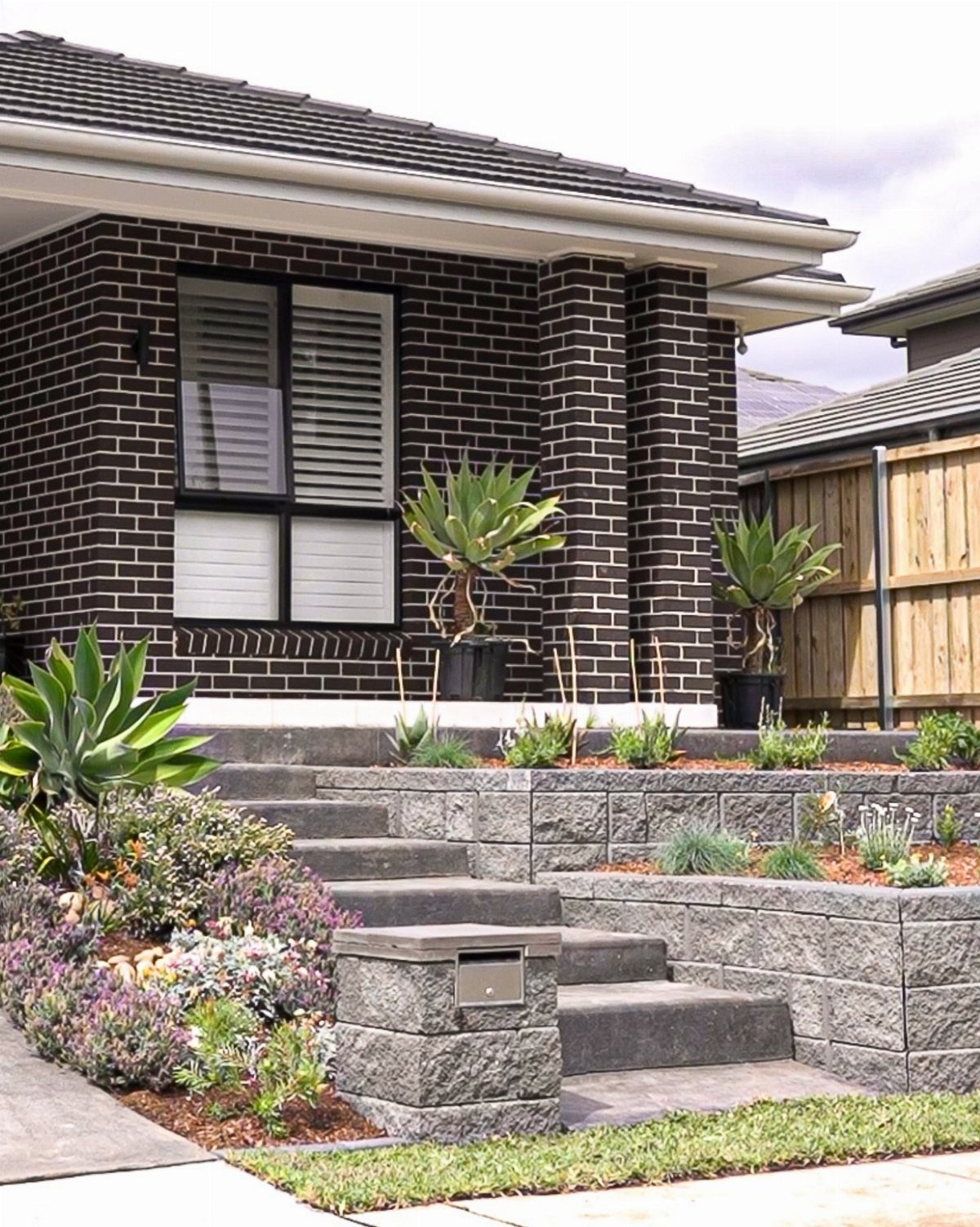
Mixing succulents with flowering plants at different spots on tiered walls gives a looser look than planting in rows. Nothing has to match, which makes this forgiving for beginners.
I’d place each plant where it has room to spread, then repeat one or two types so the variety reads as intentional. Odd groupings, 3 or 5 of a kind, look more natural than pairs.
The one cost is that a relaxed layout still needs a little editing: pull out whatever crowds its neighbor.
4. Brick Pavers
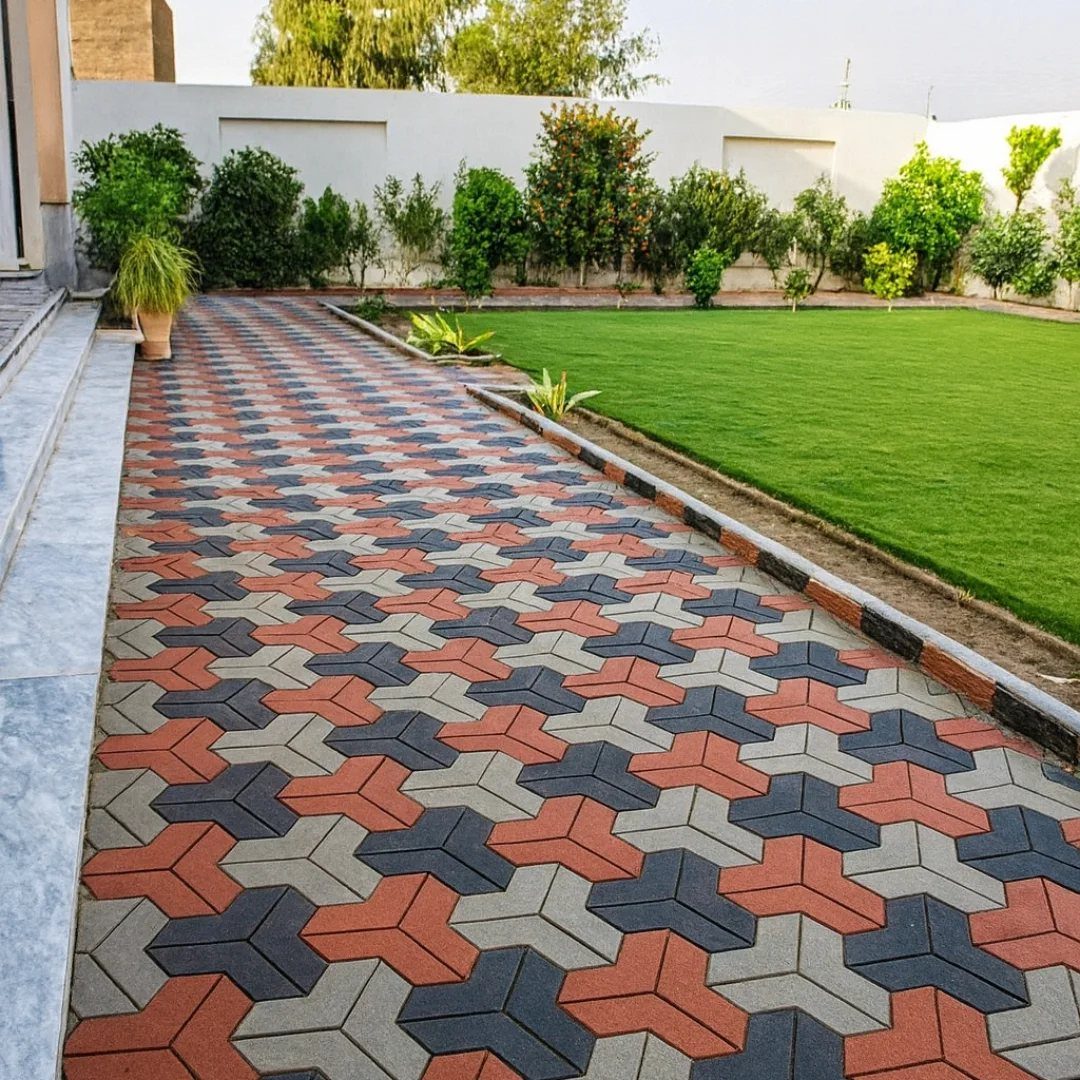
Pavers in a repeating geometric pattern add color and texture to a plain walkway, and mixing red, grey and black hides dirt and wear better than a single flat shade would.
Pick a pattern with a clear repeat. It looks deliberate beside a lawn, and it’s easier to lay because each course follows the last.
Because the pavers are interlocking, a damaged one can be lifted out and replaced rather than redoing the whole path. Against a white wall, the warm red tones stand out nicely.
5. Compact Front Garden
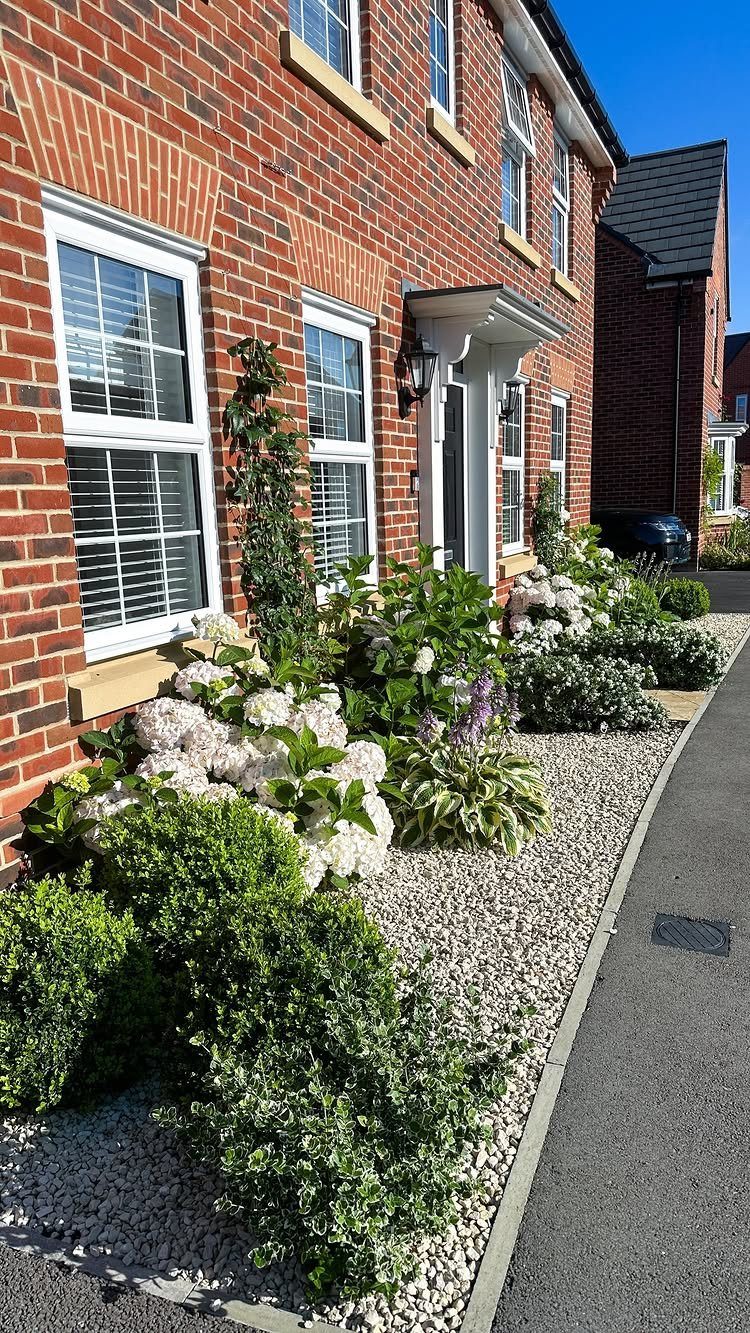
A narrow yard needs fewer plants, not more. White hydrangeas, a few green shrubs and a climbing plant on the wall give this one structure, and light gravel keeps the ground tidy and bright.
Going vertical is the smart move for tight space: a climber uses the wall, not the floor. I’d keep the palette to white and green, which makes a small bed look calm rather than crowded.
Choose a climber that suits your wall, and leave walking room along the front.
6. Rock Garden with Succulents
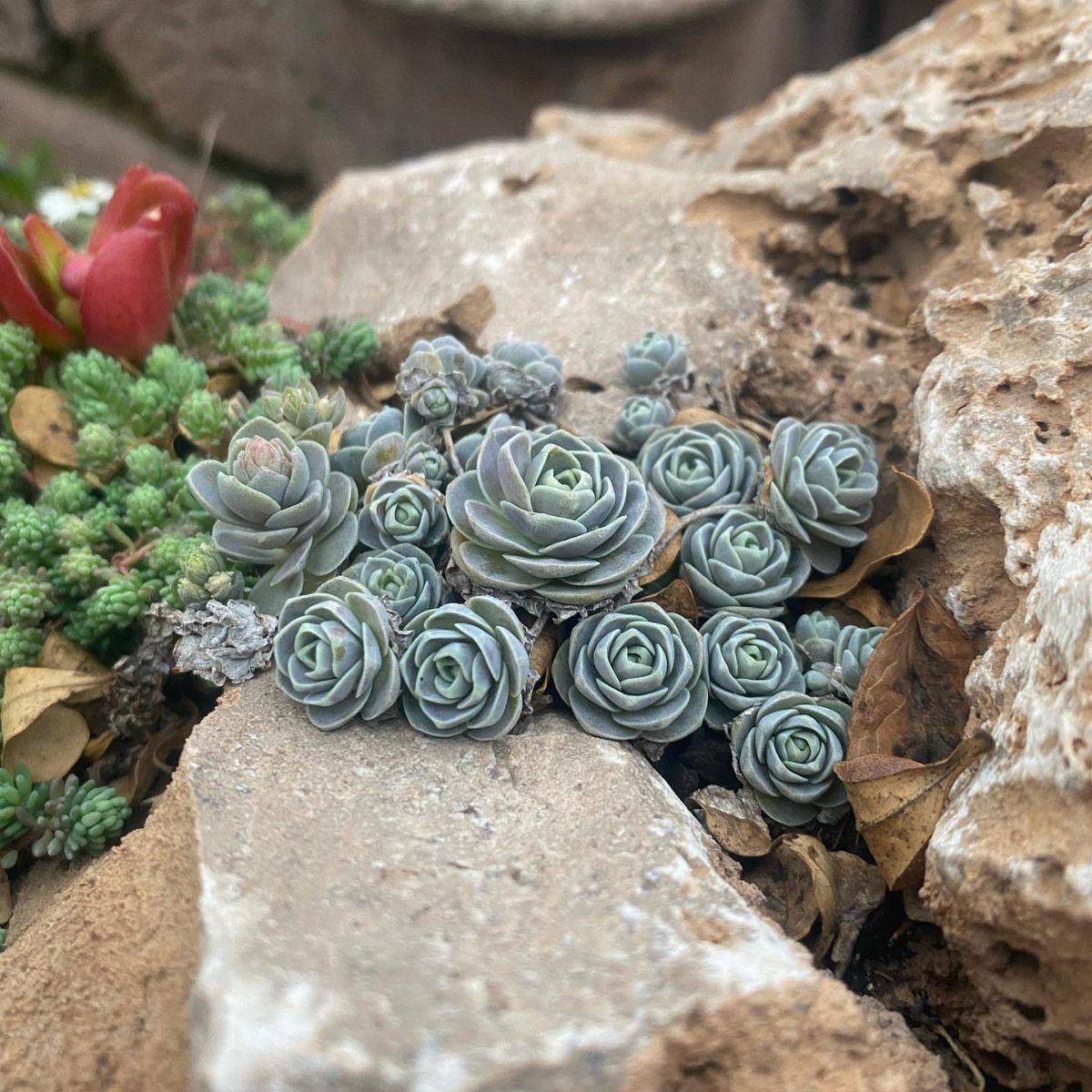
Echeveria rosettes in blue-grey look best against pale, textured rock, since the stone makes their color stand out. Hardy succulents are about as low-care as a front bed gets, which suits anyone short on time.
I’d set larger rocks first, then tuck plants into the gaps so they look wedged in naturally. Cluster a few of the same kind rather than scattering single plants.
Skip heavy soil under them; succulents prefer to drain quickly.
7. Mulch and Rocks
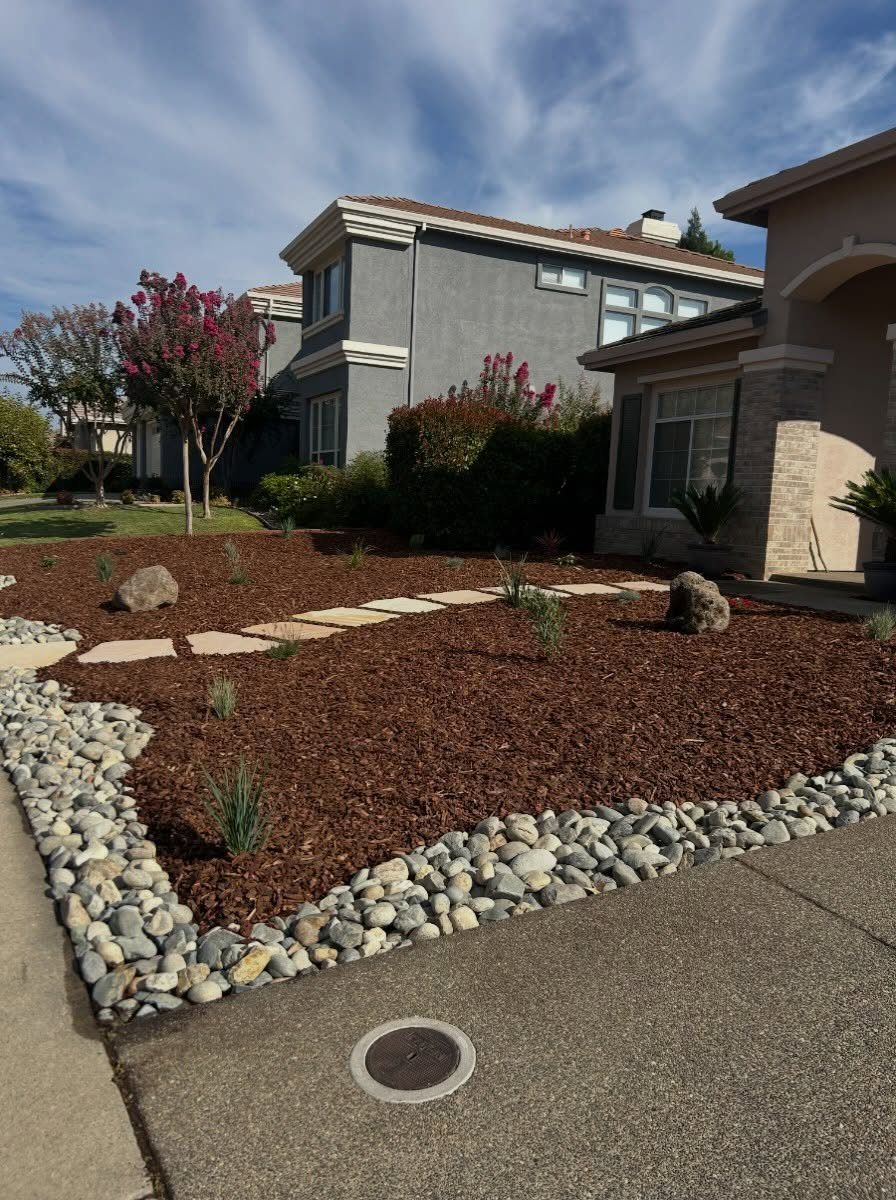
Grey river rock against brown wood mulch gives a bed 2 textures and a clean line between them. The rock edge keeps mulch from drifting onto the stepping stones, which is why I like it beside a walkway.
Lay the rock where foot traffic and water run, and keep mulch around the plants. A layer of landscape fabric under the stone helps hold weeds back.
Rock stays put for years, while mulch needs topping up as it breaks down.
8. Native Plants for Wildlife
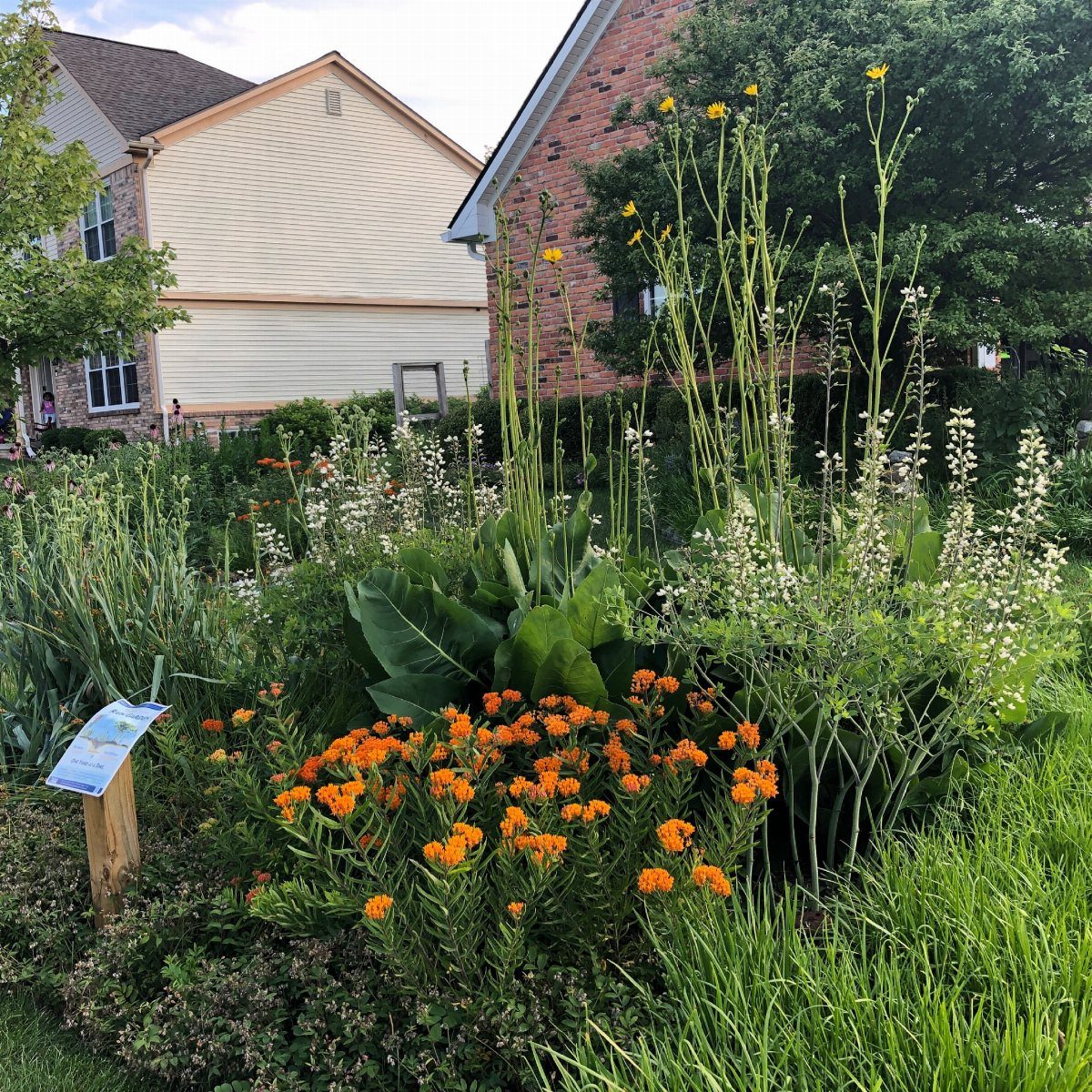
Native plants earn a spot in a front yard because they’re matched to local soil and weather, so they usually ask for less fuss than imported showpieces. Orange milkweed with tall yellow flowers also draws pollinators.
I’d check a regional native plant list before buying, then plant in drifts of one kind instead of single specimens.
A small sign, like the one here, tells neighbors the wild look is on purpose. That matters if your street likes tidy lawns.
9. Perennial Flowers
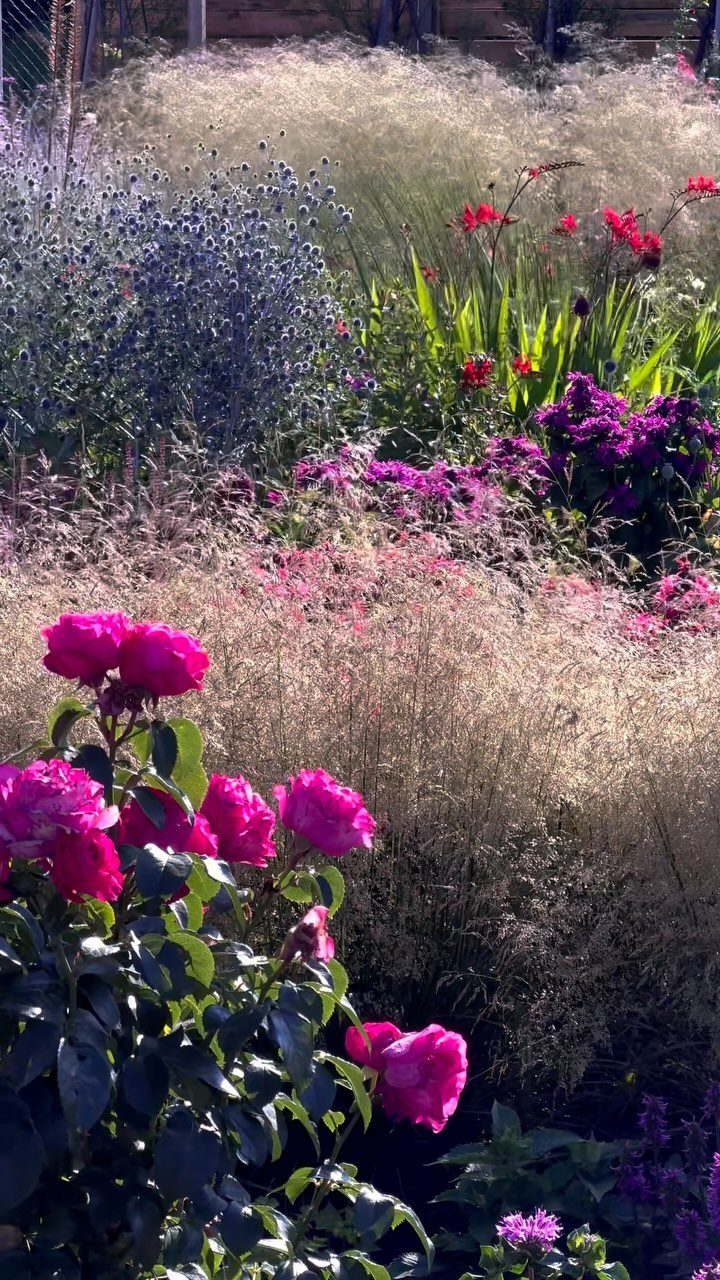
Perennials come back each year, so you plant once and the bed fills in.
Pick plants with staggered bloom periods so something is always flowering. Group them in 3s or 5s, like the earlier entries suggest.
Expect a thinner first year; most perennials need a season to settle in.
10. Symmetrical Plantings Around an Entry
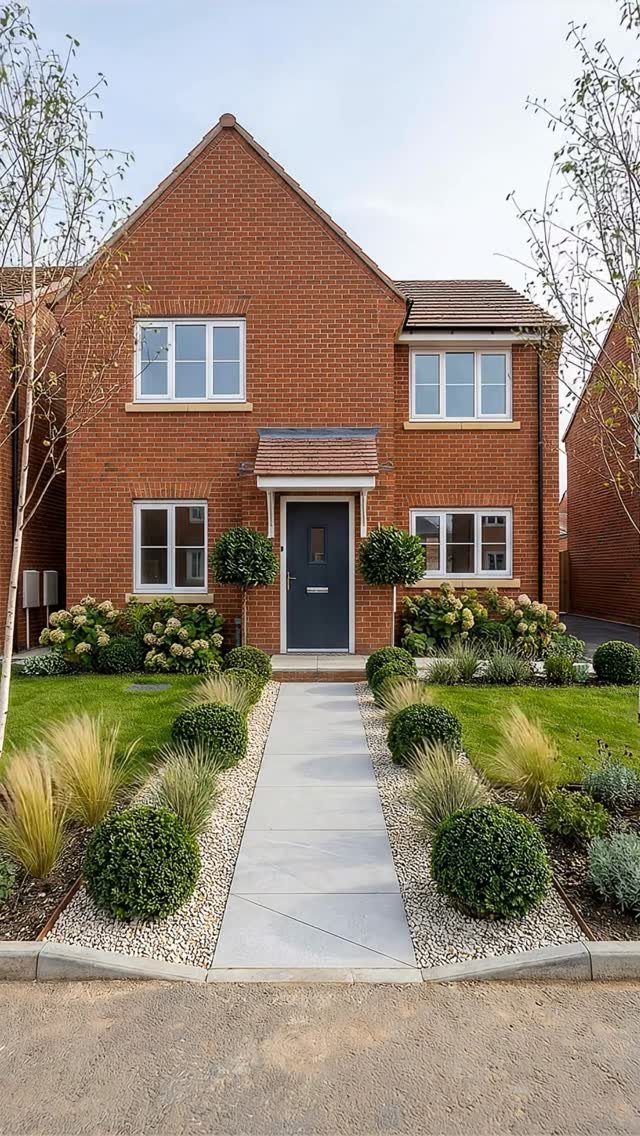
Mirror the plantings on both sides of the path and the entry looks orderly, even when the house itself is plain. Rounded shrubs and ornamental grasses work well because the shapes repeat cleanly.
Measure from the center of the path and place each plant at matching distances. Use the same plant, in the same size, on each side; a mismatch shows fast in a symmetrical layout.
I’d keep the palette small, so the pattern does the work.
11. Ground Cover
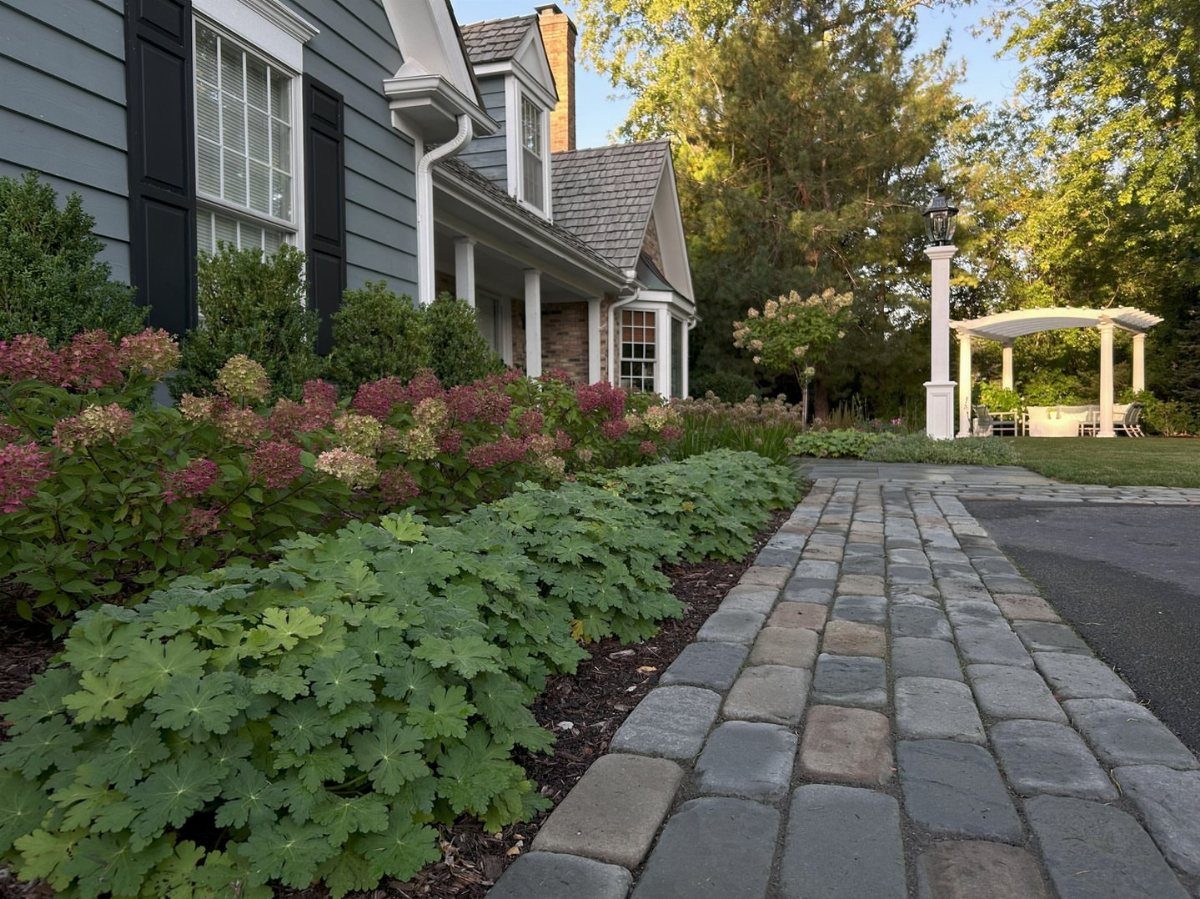
Low green ground cover can replace lawn along a path and fill the bare or awkward patches where grass struggles. Next to gray pavers, a soft ground cover makes the stone look settled in.
I’d pick one type and plant it across a whole area instead of mixing several. Space plants according to the tag and weed well at first, since bare soil between young plants invites weeds.
Ground cover means less mowing, though it won’t take heavy foot traffic.
12. Decorative Elements
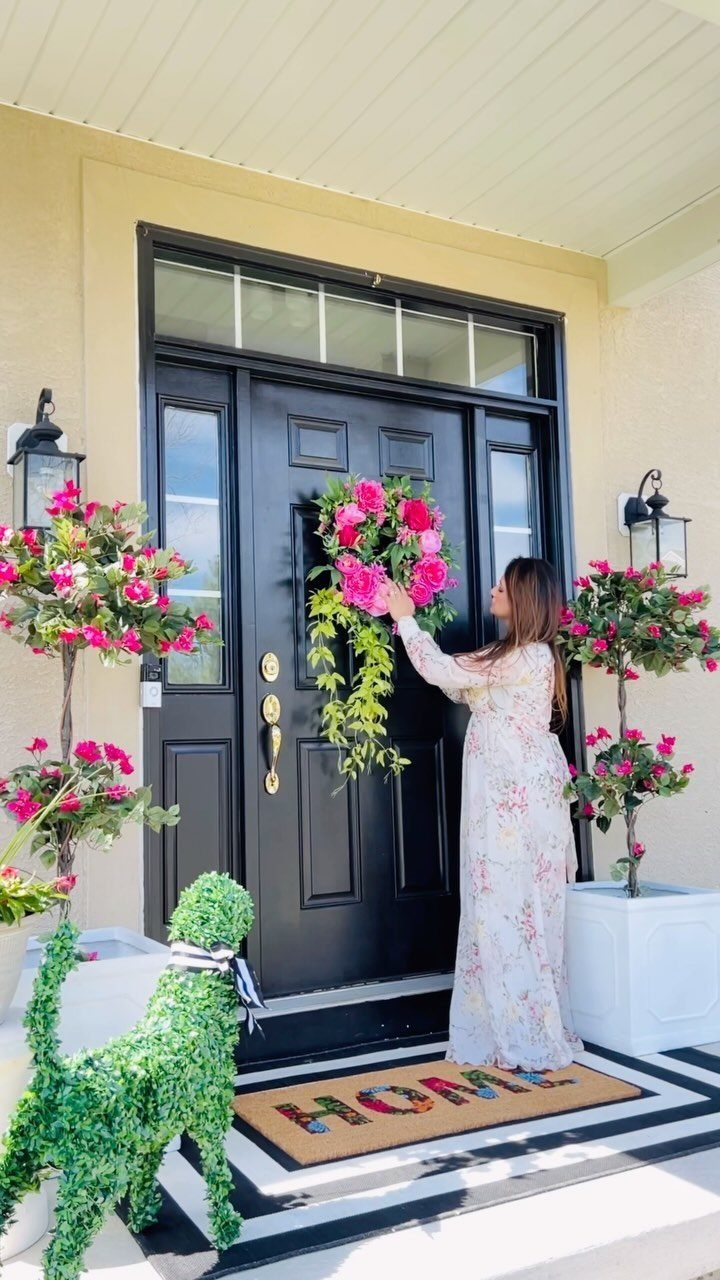
Keep the grouping small and let one piece lead; a wreath is a good choice for that. A "HOME" mat and a green dog topiary add playful touches without crowding the entry.
I’d swap the wreath with the seasons and leave the permanent pieces alone. That keeps the cost low and the look fresh.
13. Zen Garden
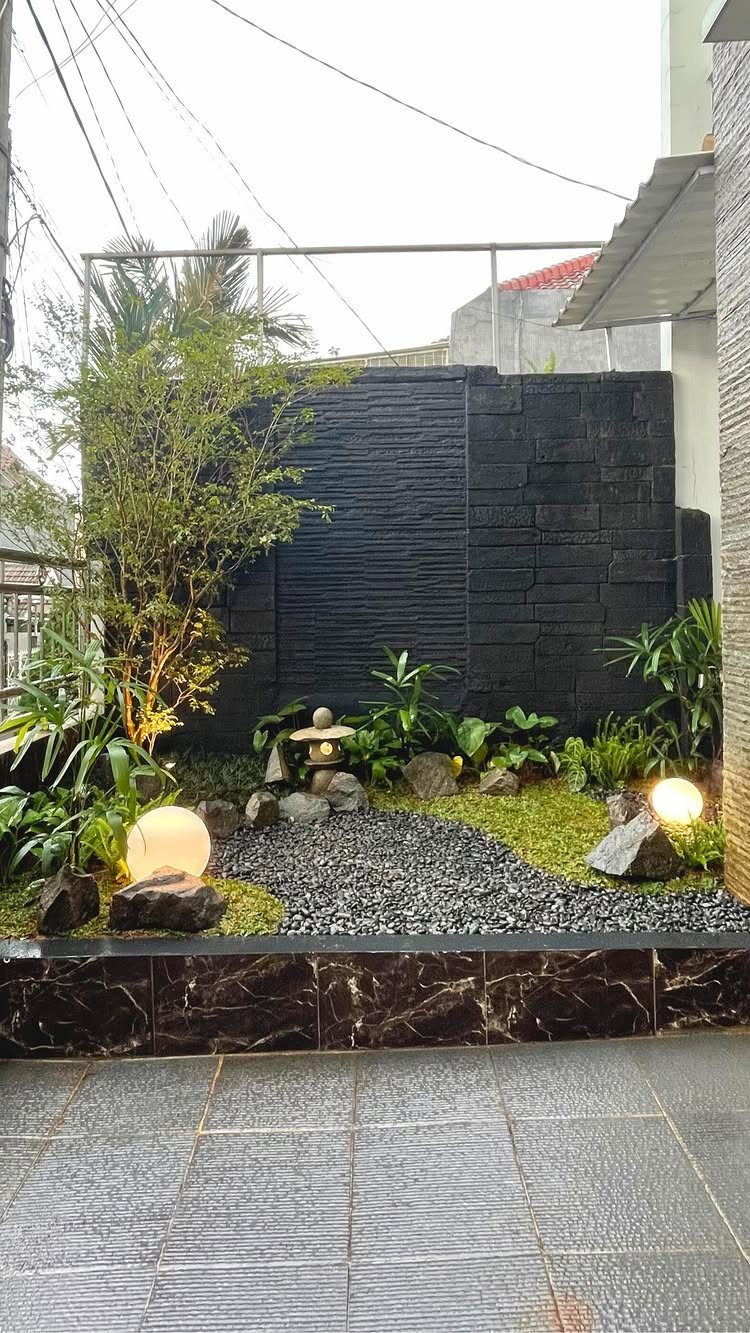
Gravel, a few stones and a lantern do more than a crowded bed ever could.
I’d keep the planting sparse: a handful of green plants, each with room around it. Empty space does real work in a Zen garden, so resist filling it.
Low upkeep is the appeal for anyone short on time, though gravel will still need the occasional rake to look tidy.
14. Seasonal Decorations
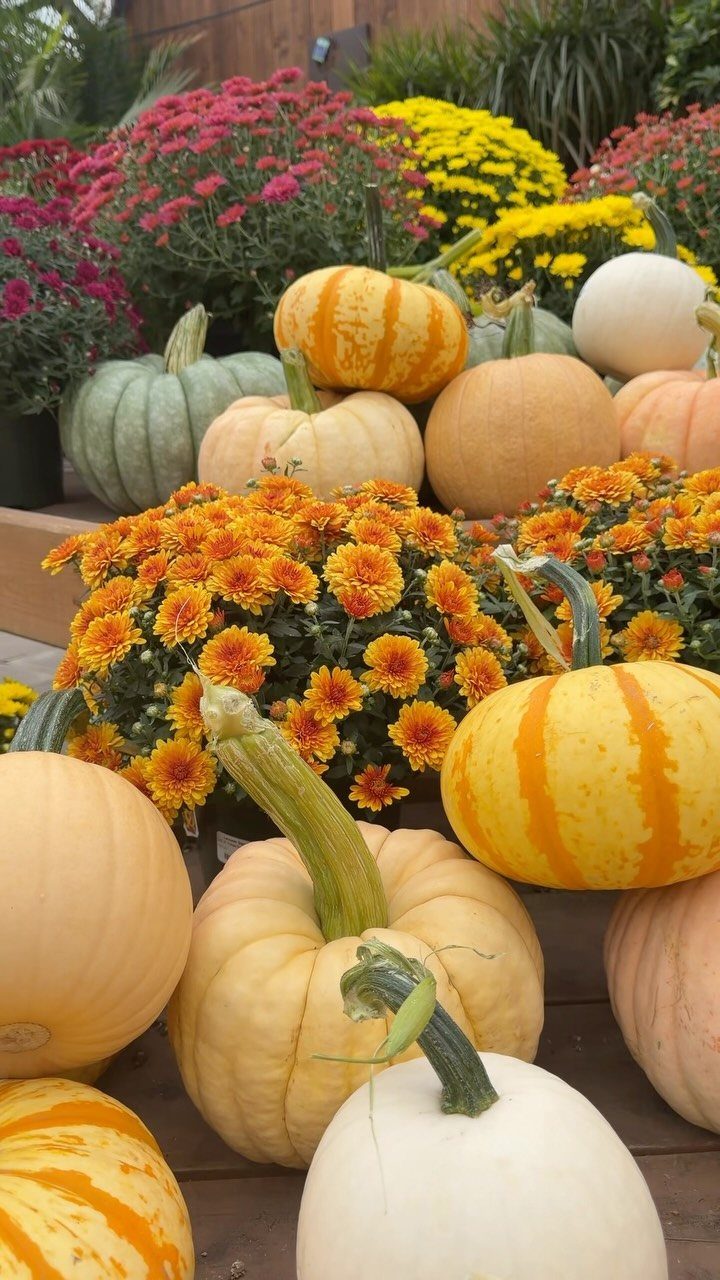
Nothing gets planted, so the cost stays low and the setup takes an afternoon.
I’d set the largest pumpkins down first, then fill the gaps with mums so the colors overlap. Raising a few on a wooden crate or bench adds height.
When the season ends, clear it all out and start the next round. Swapping the display each season is what makes this idea worth the small cost.
15. Garden Mirrors
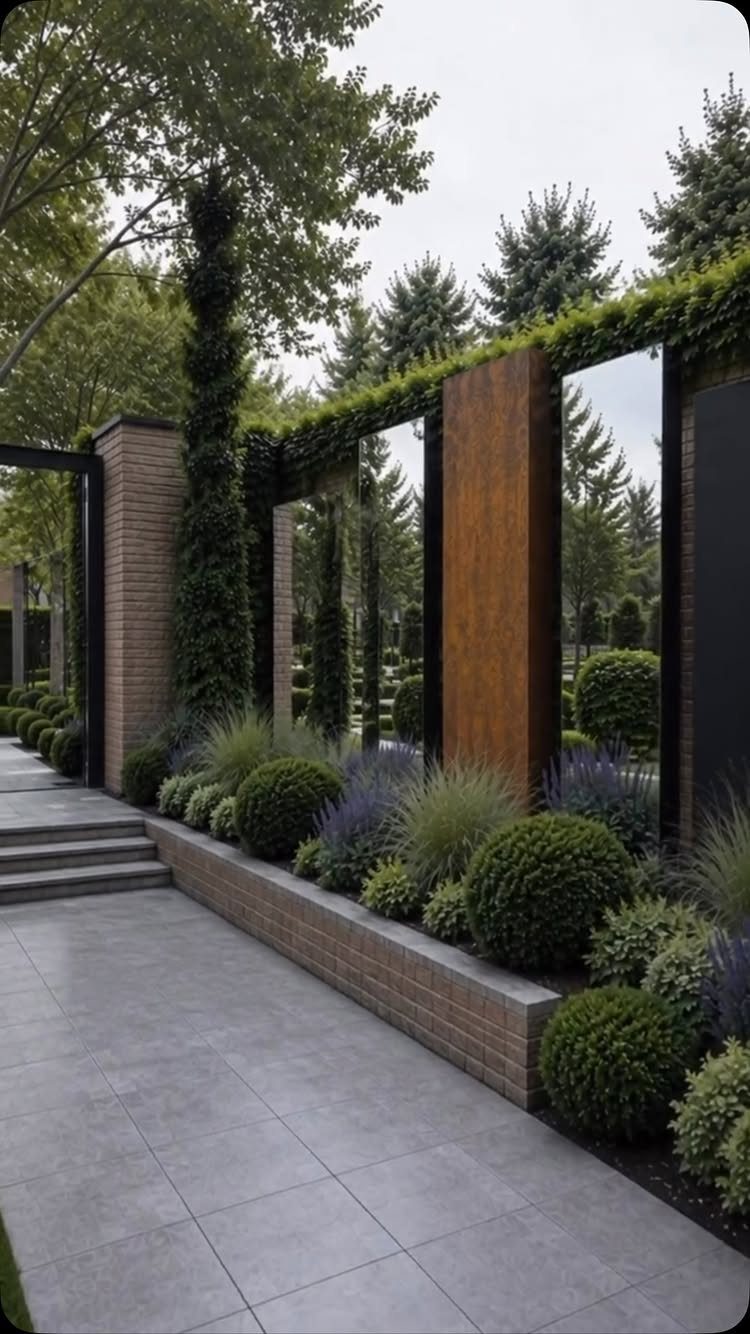
Large mirrors set into a wall make a narrow garden read as deeper, because they repeat the greenery in front of them.
I’d place a mirror where it reflects plants, not the street or a bare fence. Mounting it among foliage softens the edges.
Choose a mirror made for outdoor use, and wipe it now and then so the reflection stays clear.
16. Stone Wall
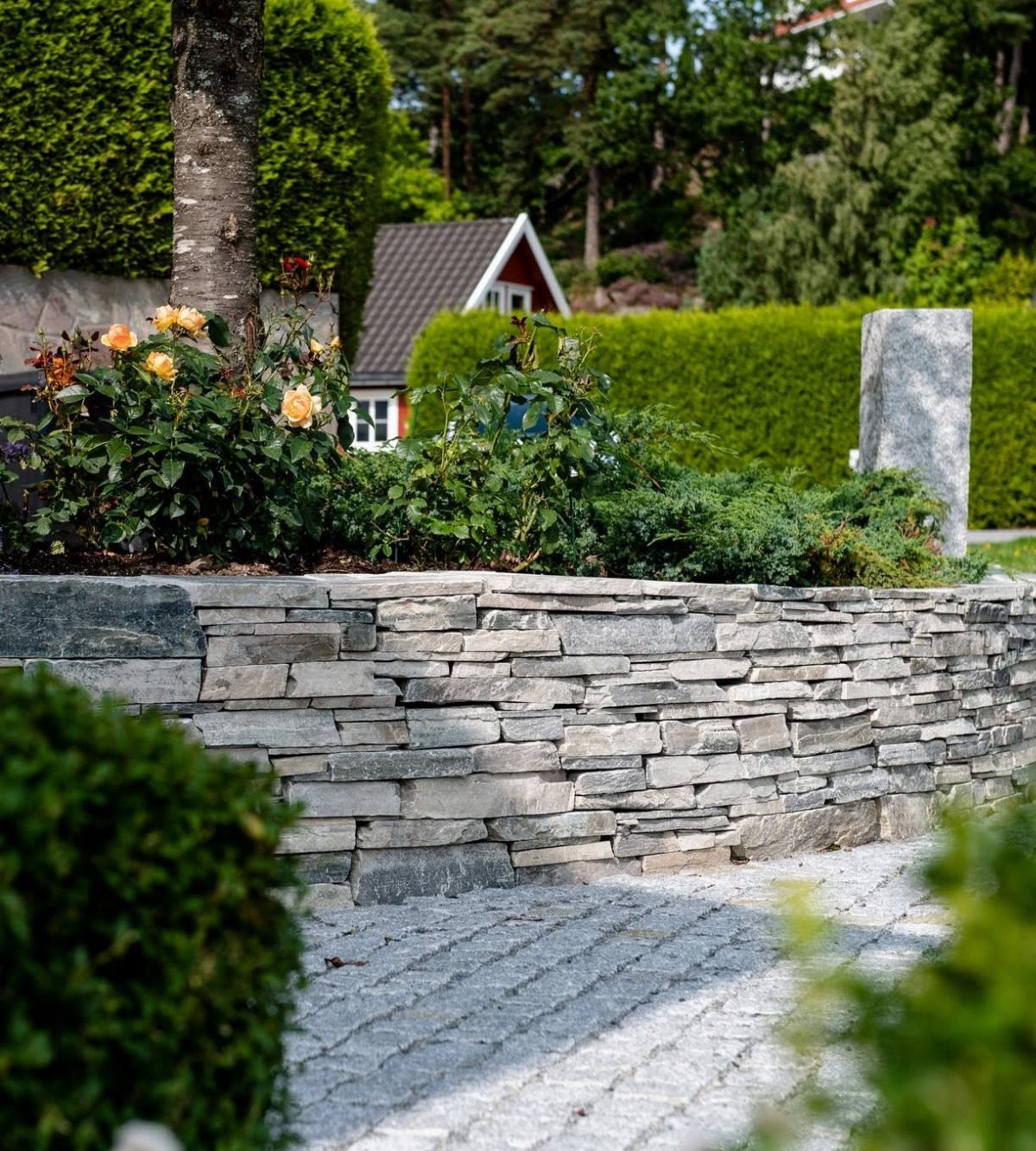
A low stacked stone wall holds soil and frames a bed in one move, and yellow roses against grey stone look warm without much effort.
Dry-stack means no mortar, so a weekend and a good supply of stone can handle a short run.
Start with the biggest, flattest stones at the base, and fit each course snugly over the joints below. Keep the wall low if you’re building it yourself.
Stone is heavy and rarely cheap, so measure the run before ordering.
17. Front Garden Lighting
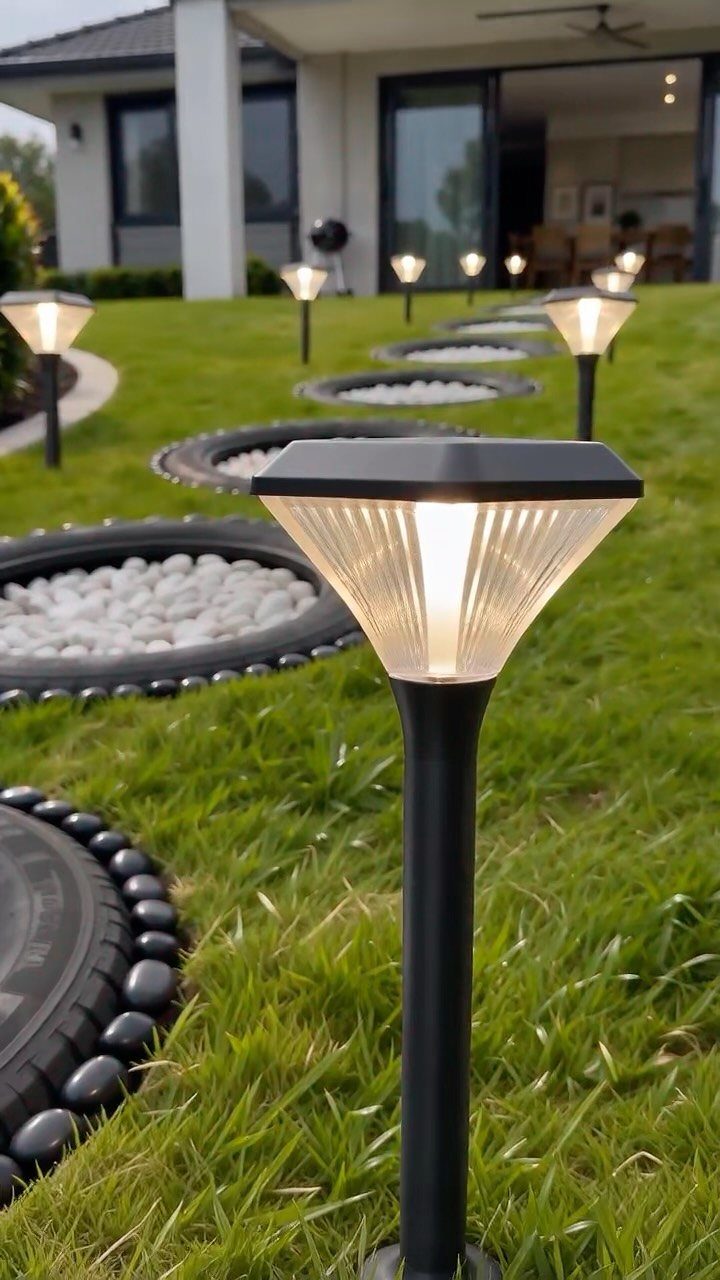
Black stake lights pushed into the lawn light the grass and mark where the edges are, with no wiring and no electrician. Spaced evenly, they make a front yard look cared for at night.
I’d line them along a path or beside steps, where the light does a practical job. Test a few spots after dark before staking them all in.
Solar units are the budget choice; they need a sunny spot to charge, so keep them out of deep shade.
18. Flower Bed Near the Entry
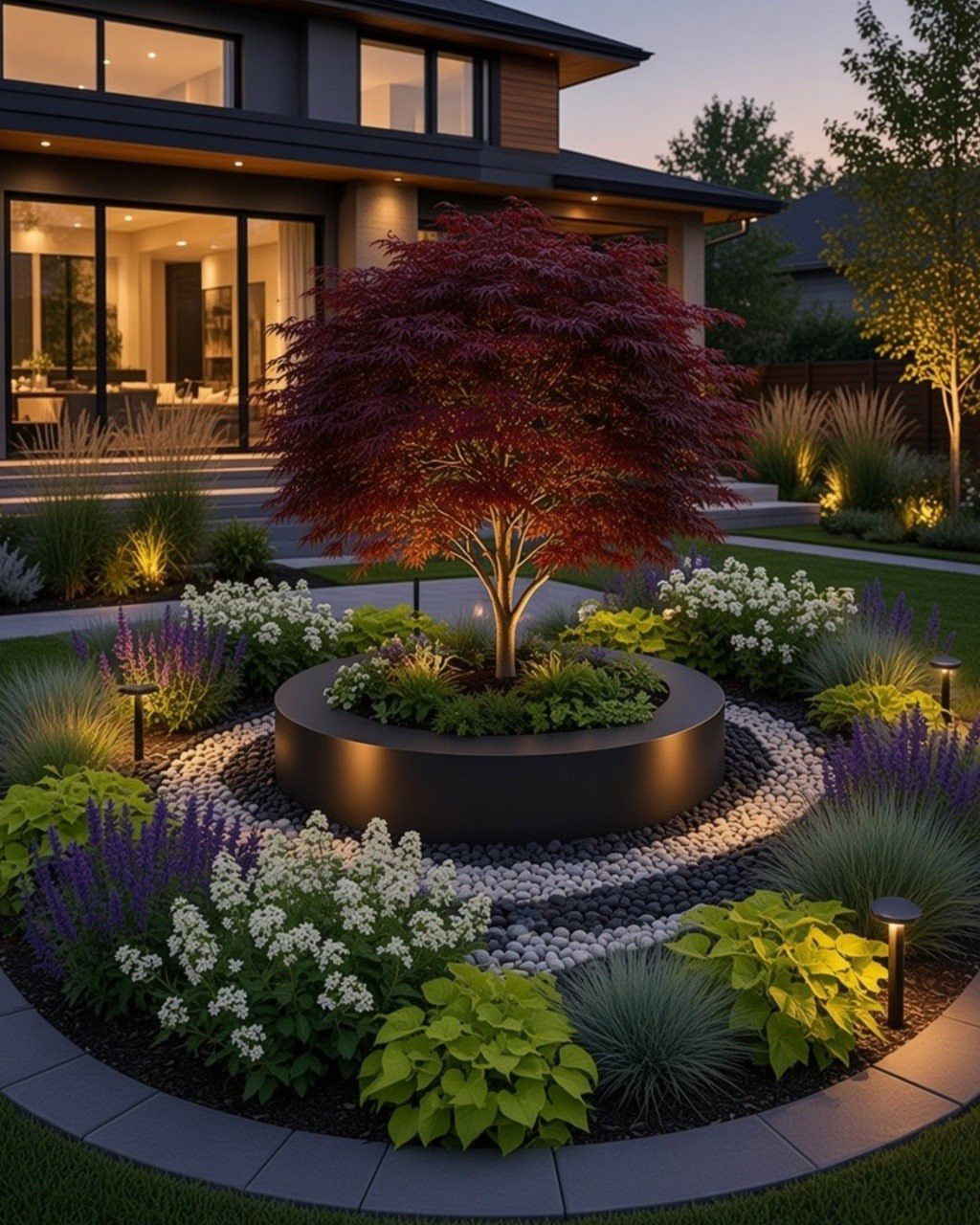
A red Japanese maple in a round black planter gives the entry one clear focal point, and white and purple flowers around it keep the color from feeling heavy. Ornamental grasses add height and movement at the edges.
I’d let the tree be the star and repeat the flower colors in small groups. Pebble paths between beds keep the area neat and easy to walk.
Putting the bed by the door means you see it every day, so it earns the effort.
Borrow from Japanese garden philosophy to create a front yard flower bed centered on calm, balance, and natural materials.
19. Raised Garden Beds
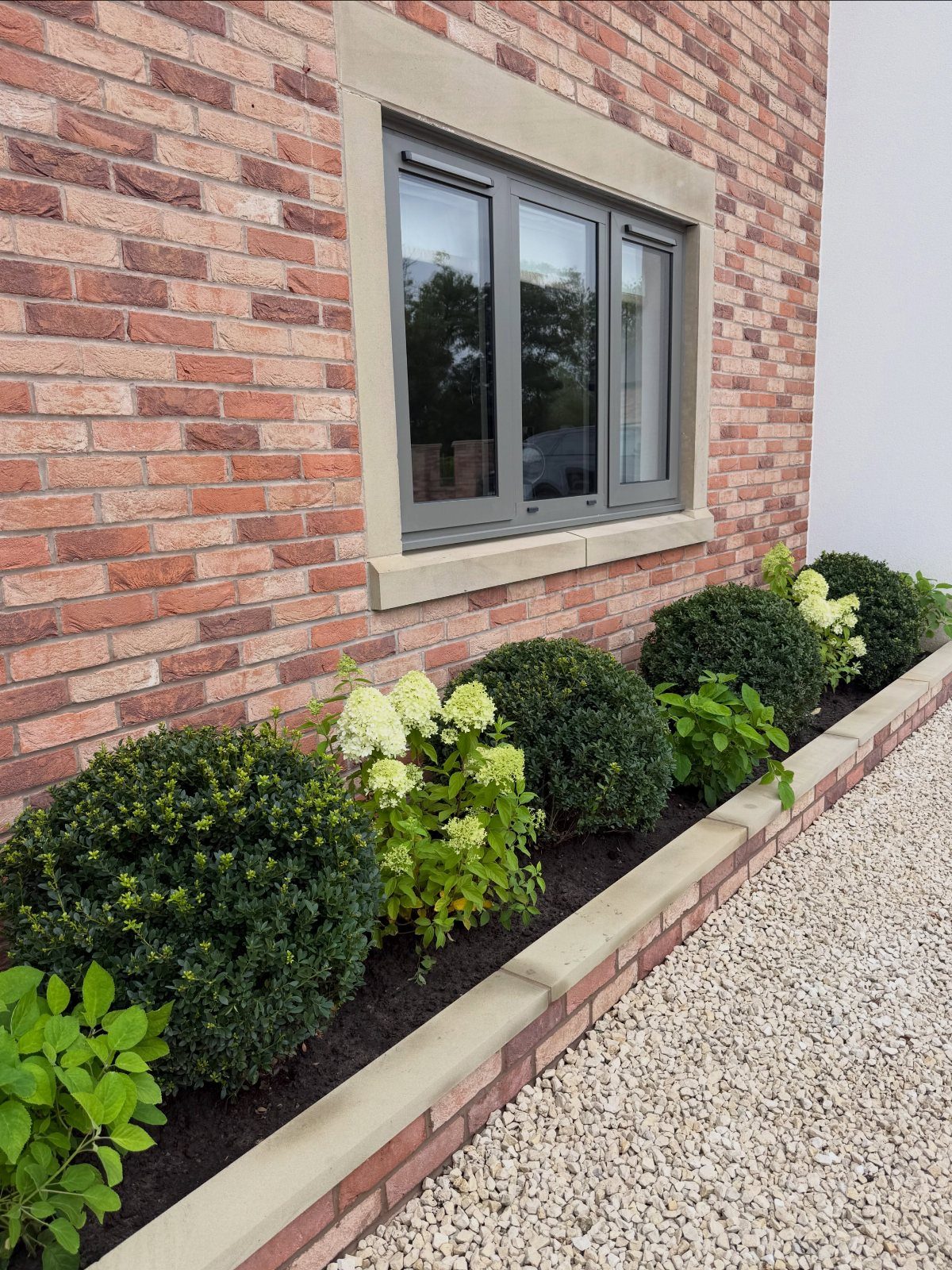
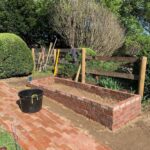
A raised bed lets a small front yard grow more, because the walls lift the soil above the path and give plants a defined space of their own.
Brick or stone edging that matches the house makes a raised bed look built in.
Fill it with good planting soil rather than whatever is in the ground. Hydrangeas and evergreen shrubs give a bed shape all year, since the shrubs hold their form after the hydrangea blooms fade.
The main cost is the edging material, so measure the full run first and price it per linear foot.
20. Water Feature
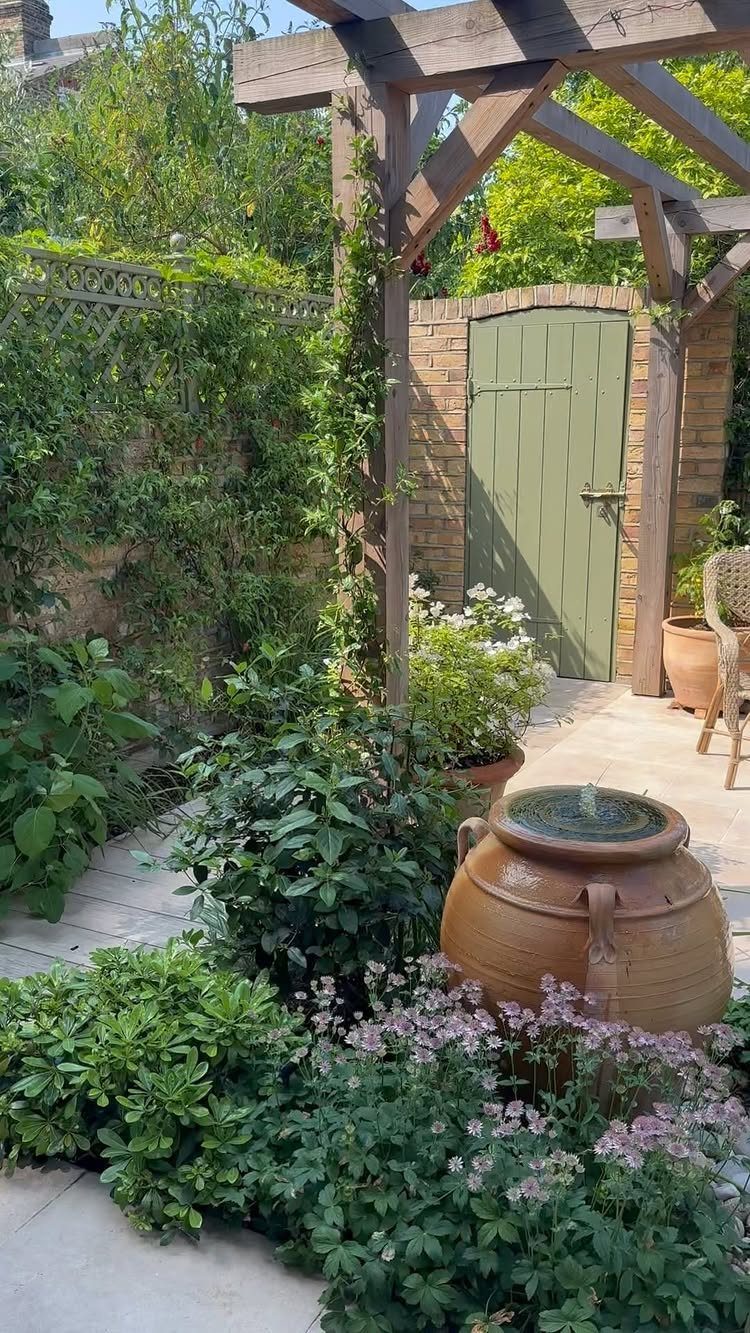
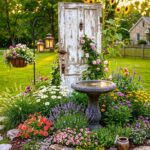
A large ceramic jar set among plants gives a front garden a quiet focal point without digging a pond. I like terracotta for a water feature: the warm brown looks natural beside green leaves and a wooden pergola.
Place it where you can see it from the door or a seat, and let flowers crowd close around the base so it looks settled.
Water needs topping up, so keep it near a hose.
21. Arbors and Trellises for Climbing Plants
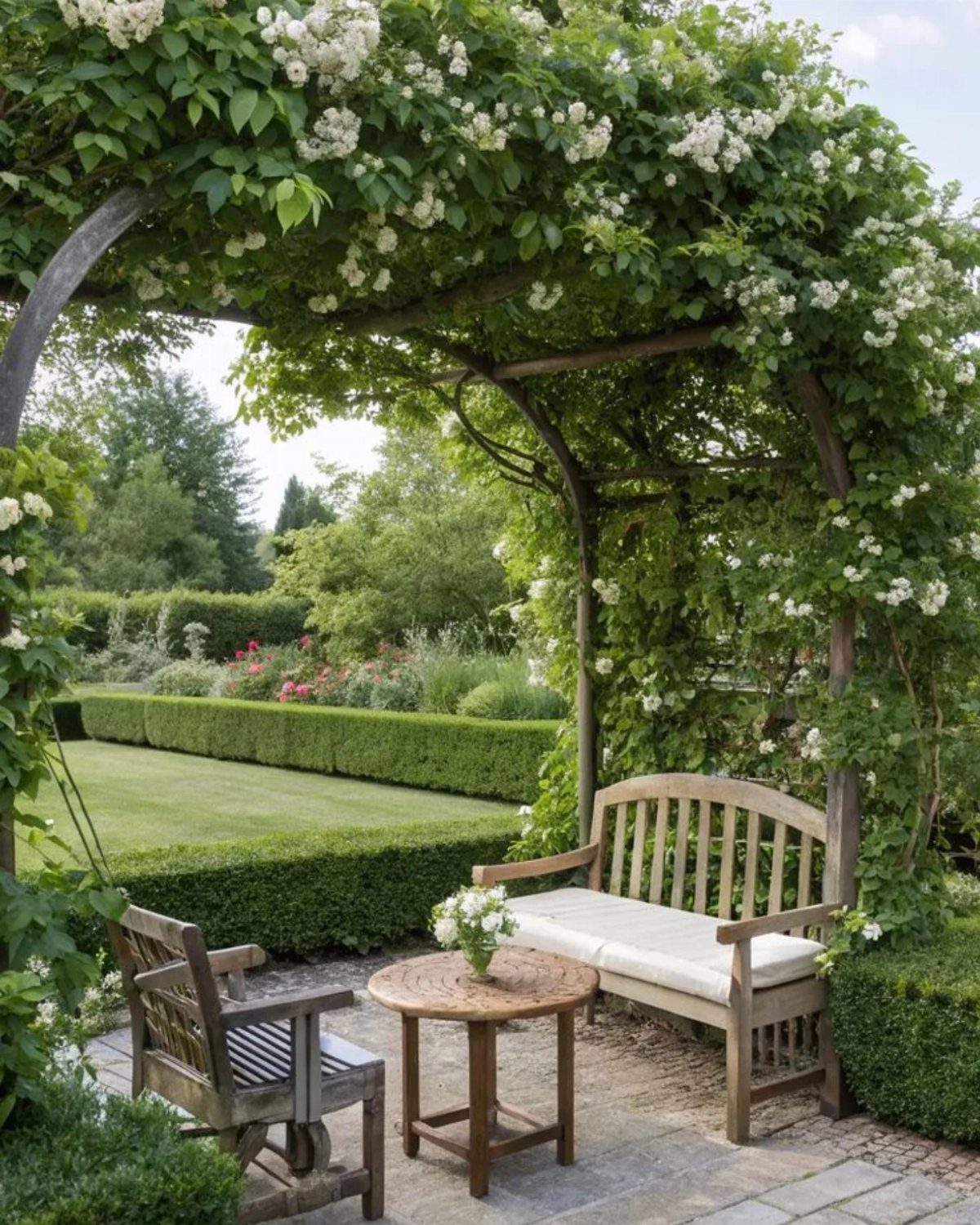
An arbor gives climbing roses something to hold and gives a bench or entrance a roof of flowers. I’d pick this over a freestanding trellis when you want a spot to sit under the blooms.
Set the posts firmly, since a mature climber gets heavy. Tie young stems to the frame loosely as they grow.
Plan for pruning once a year, or the structure disappears under the plant.
22. Picket Fence
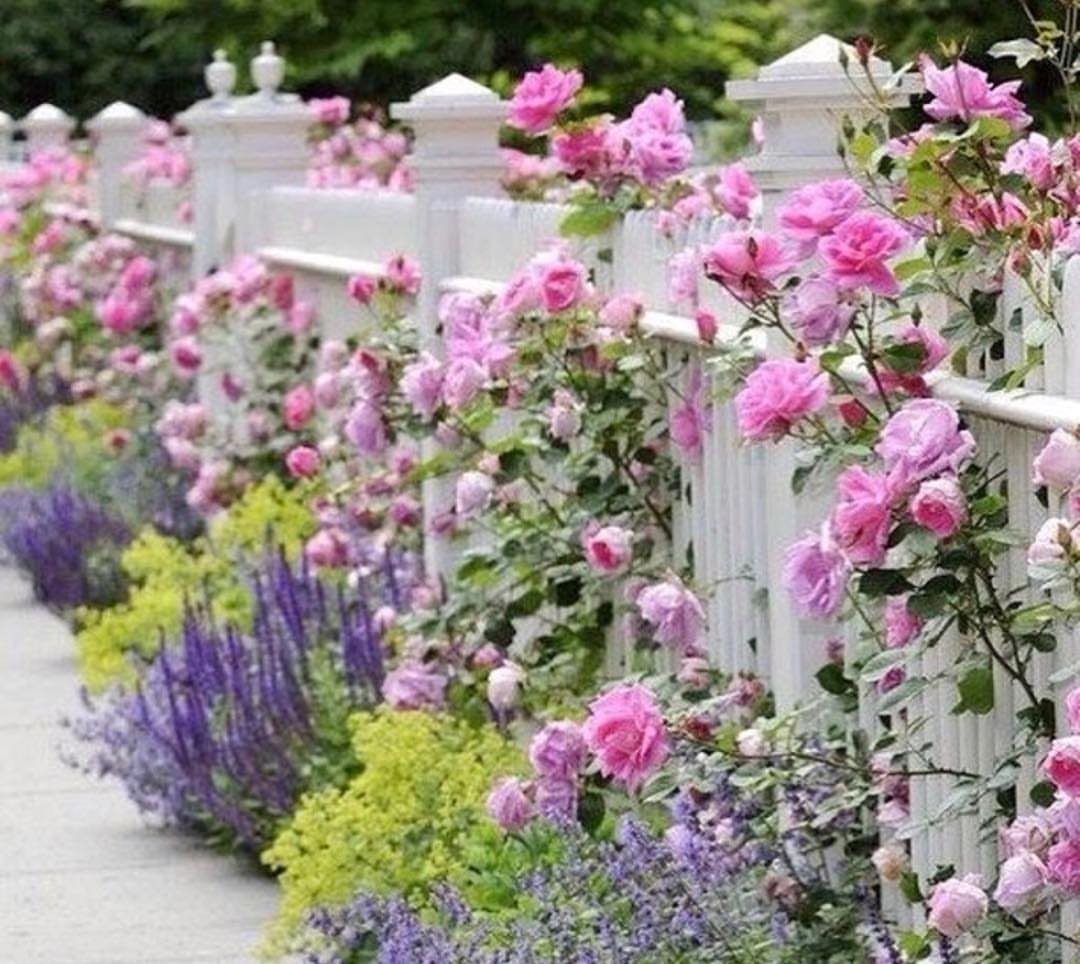
A white picket fence marks the edge of the yard and works as a backdrop, so pink roses and purple flowers show up clearly against it. Climbers can be tied along the rails, while perennials sit in front.
White paint shows dirt and chips, so expect to touch it up now and then.
I’d keep the planting loose and slightly spilling over, which softens the rigid line of the pickets.
23. Window Boxes and Hanging Planters
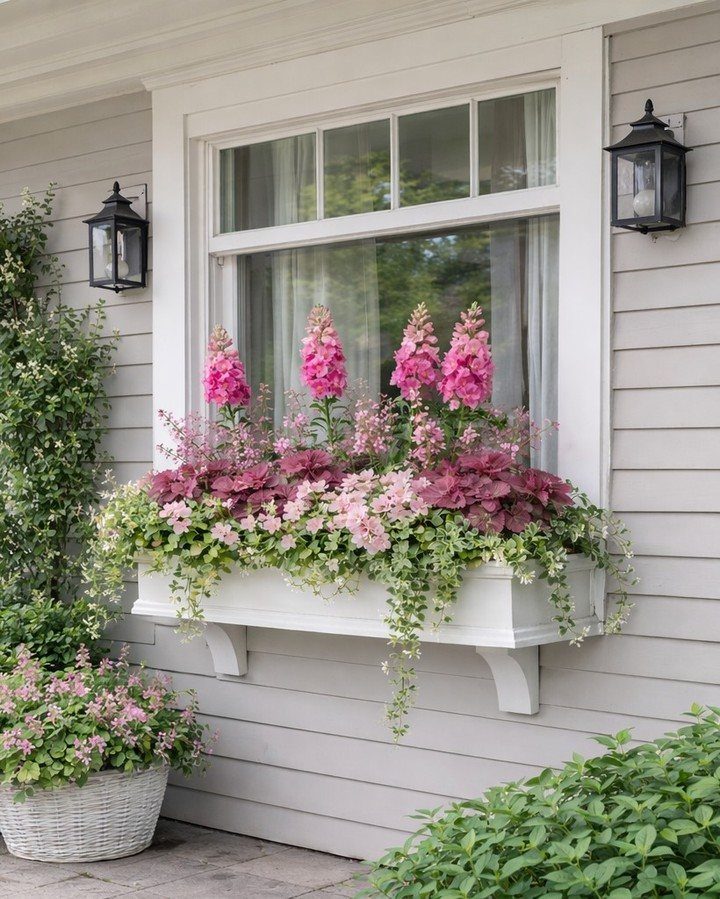
A window box puts color right where people look first, which suits a house with a plain front wall. Pair upright flowers with trailing greenery so the box looks full from the side as well as the front.
Choose a box with drainage holes, and mount it firmly to the wall or sill brackets. Potting mix in a shallow box dries fast, so I’d expect to water often in summer.
White boxes look crisp on gray siding.
24. Garden Bench
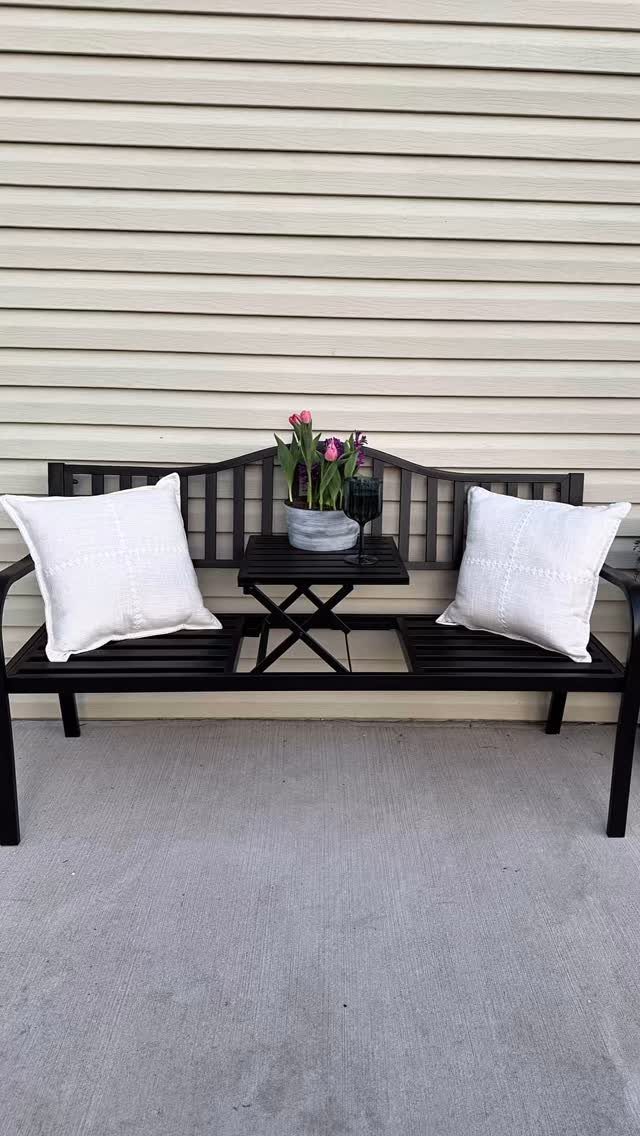
A metal bench with a small table built in gives a front garden seating and a spot to set a drink. The maker says it fits 3 people, or the center pops up to become a little table.
I’d add 2 pillows in a light color so the black frame looks softer. Put it against a wall, with a pot of tulips on the table for color.
Wipe the metal down now and then, and bring cushions in when it rains.
25. Garden Fountain
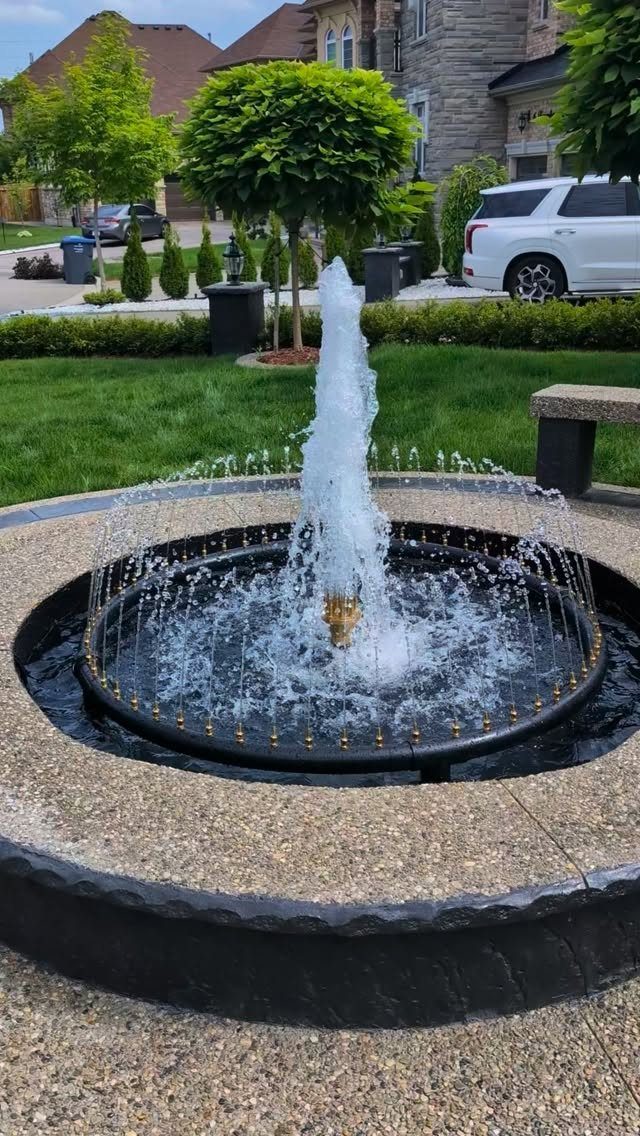
A round fountain with a center jet and an outer spray ring works as a focal point because the moving water draws the eye across a big lawn.
I’d center it in the open lawn, where it can be seen from the street and from the front windows. Leave room to walk around it, and put it near an outdoor outlet or a hose.
Plan on topping off the water every week or two in summer and scrubbing out algae a few times a season.
26. Garden Art and Sculptures
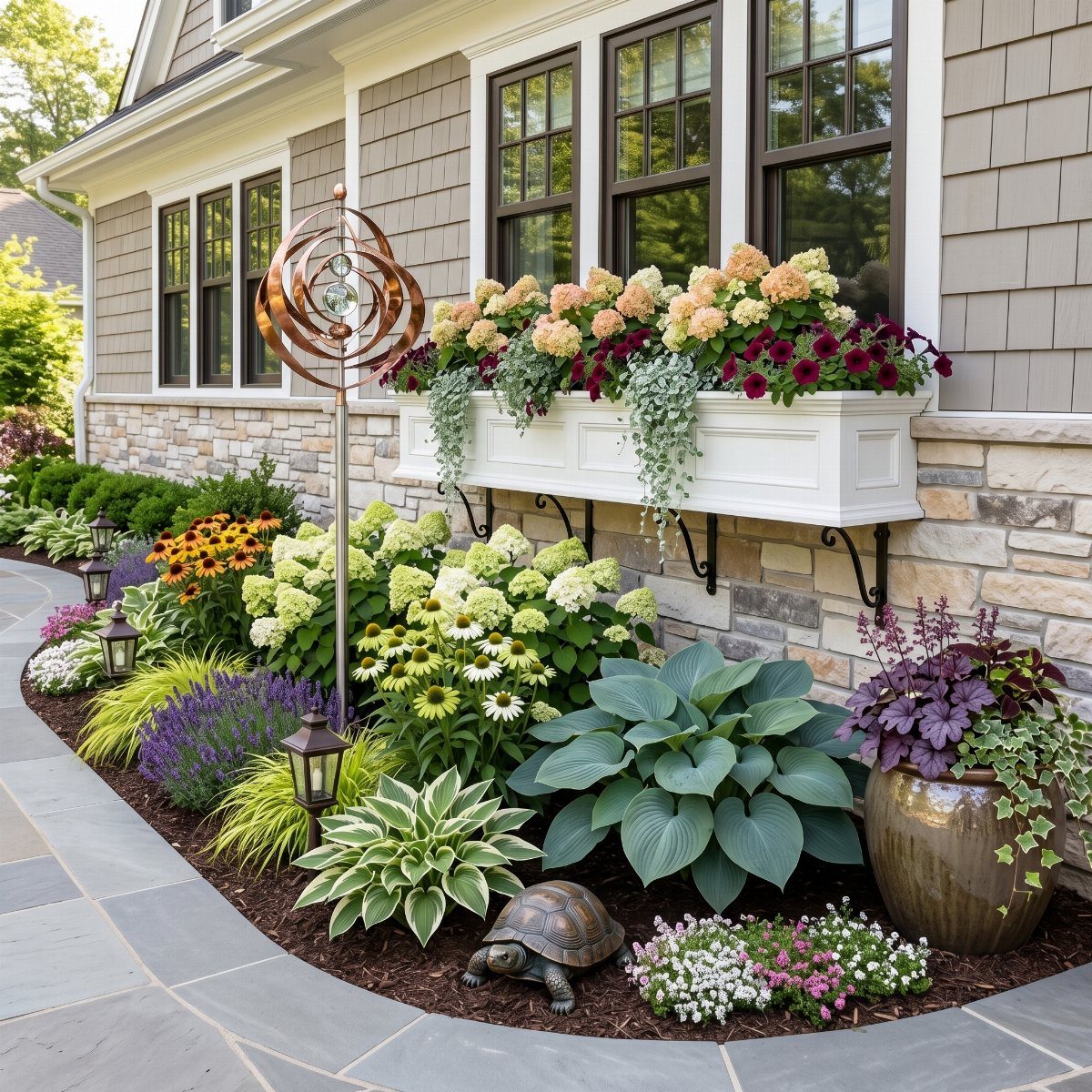
A copper spiral rising out of the planting gives a front garden height and a shine that foliage can’t. A small turtle figurine down low adds a quiet surprise for anyone walking the stone path.
I’d pick one larger piece to anchor the space and limit the small ones to a couple, since a crowd of figurines makes a front garden look cluttered.
Set the tall sculpture among plants, with flower boxes nearby, so it looks part of the bed.
Pieces made for outdoor use are the safe pick.
Plan Before Starting
Before buying a single plant, rank how your household actually uses the front yard. Do you want a quiet spot to sit, a place to chat with neighbors walking by, or room for kids and pets to play?
Write the list in order, because the top item decides the layout and the lower ones get whatever space is left.
Then measure the yard and sketch it on paper, even roughly.
Odd lots need a plan of their own: on a skinny strip, trellises and climbing vines add height where there’s no width, and on a wide or awkward patch, a low carpet of creeping thyme or sedum fills the gaps without much upkeep.
Also think about who walks through it every day. Mail carriers, guests and family all need a clear route, and the sketch is the cheapest place to find out your plan blocks it.
If you buy plants at a local nursery, ask whether staff will help with planning. Some offer it, and it costs nothing to ask.
Choose Plants for Conditions
Plant choice ties the whole yard together, so start with your climate. Check your USDA hardiness zone and the rainfall in your area, then read the tag on every plant for its zone range.
Next, match each plant to your sun and soil.
Match the plant to the light before you buy: a citrus tree needs 6–8 hours of direct sun to fruit, while a camellia scorches in that same afternoon glare and does better with shade after noon.
Walk the yard at a few times of day, because one yard often holds several microclimates, such as a dry, sunny strip by the driveway and a damp, shaded corner by the steps.
Put each plant where its conditions fit and it will need far less coaxing.
Check the mature size on the tag too. A shrub that looks small in a 1-gallon pot can crowd an entryway in a few years.
Evergreens like boxwood or dwarf holly hold the shape of the bed through winter, and a few seasonal bloomers tucked in around them, such as tulips in spring and coneflowers in summer, keep the color changing.
The evergreens hold the bed together in winter, and the bloomers add color as the seasons turn.
Frequently Asked Questions
How to make a front yard look nicer?
Layer by height: tall plants go against the house or fence, mid-size shrubs fill the center, and low bloomers edge the front so the eye climbs toward the door.
A curved path with plants growing right up to its edges also helps, and so does one focal piece such as a Japanese maple in a planter.
Keep the palette small and the plantings tidy, and the yard looks cared for without much money.
What is the best shrub to grow in the front of my garden?
Evergreens such as boxwood or dwarf holly are the safest pick, since they hold the bed’s shape through winter. Hydrangeas are a good partner because they add blooms while the evergreens give structure.
What is the best plant to put in the front of the house?
Climate, sun and soil decide the winner, so match your USDA hardiness zone to the range printed on each tag.
Sun exposure changes the pick too: a citrus tree wants 6–8 hours of direct light, but a camellia will scorch in it.
How do I start creating a low maintenance yard?
Rank how your household uses the front yard first: sitting, chatting with neighbors, or play space for kids and pets.
Then measure and sketch the yard, leave a clear route for mail carriers and guests, and choose low-care elements like native plants, ground cover or gravel.
How do you organize a small garden?
Sketch the space on paper and decide what the top use is, then give that use the layout and let the rest take what space is left.
Where a strip has no width to spare, trellises and climbing vines let you build upward instead. Keep a clear walking route, and use raised beds to give plants a defined area.