Light decides most of these front yard ideas before taste does: a bed that gets full sun, one in deep shade and a soggy corner each call for different plants, so a day spent watching where the sun and water fall will narrow the list faster than any photo.
The ideas run from a bag of mulch or a container garden by the door to a water feature, a fire pit or a garden arbor over the walk. Renters can stick with containers, since pots move with you.
1. Add Mulch
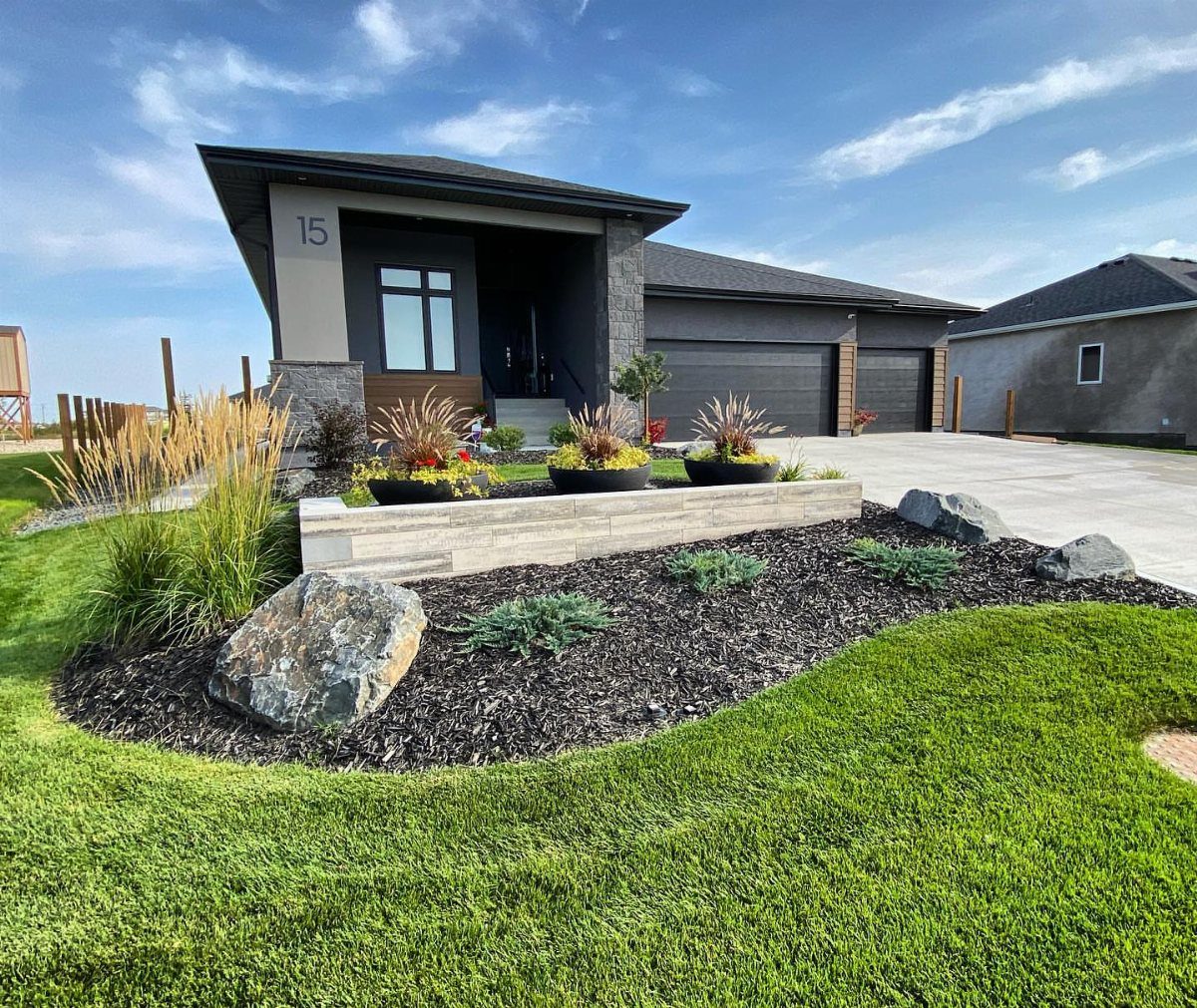
Dark brown mulch gives a planting bed a finished edge, and it earns its keep after that.
A layer over bare soil holds moisture and keeps weeds from getting a start, which means less watering and less pulling for a beginner with limited time.
Spread it after the plants are in, and the whole bed looks planned.
2. Add a Water Feature
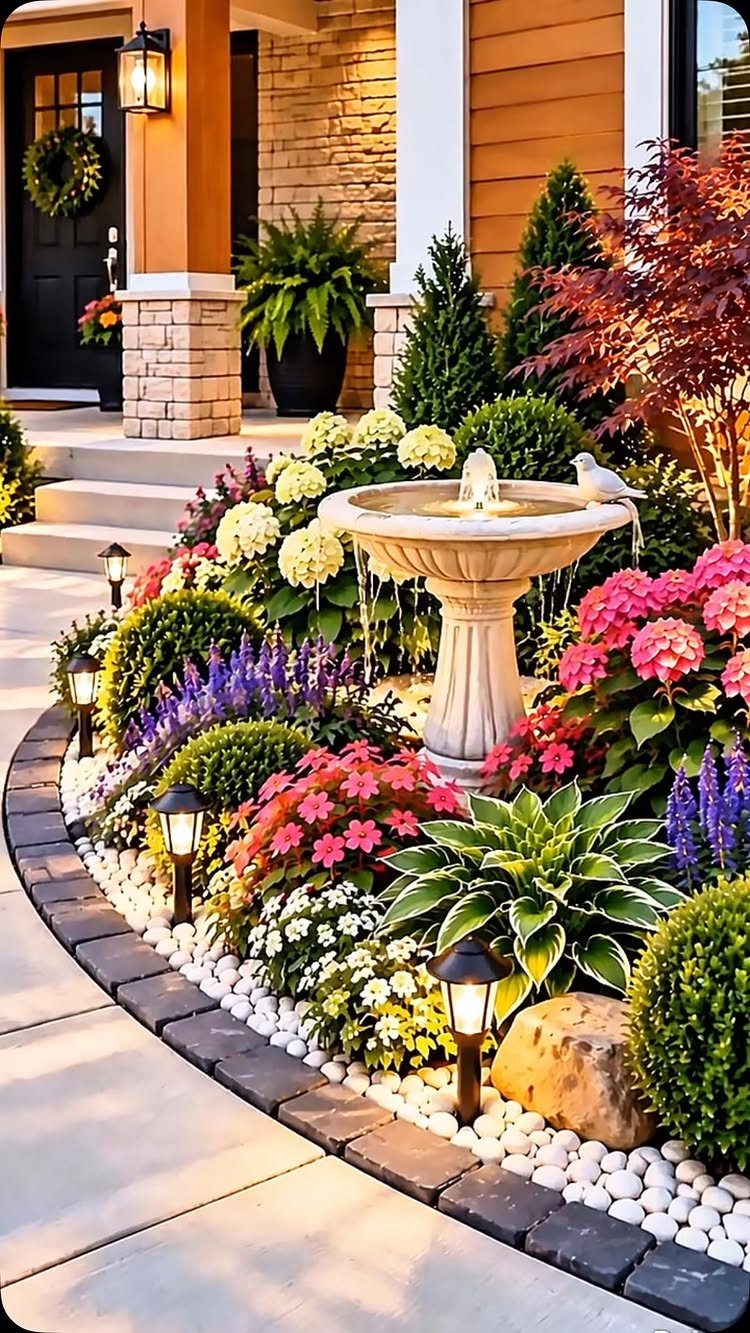
A tiered stone fountain gives a front yard one focal point, and it works best when flowers and shrubs crowd around its base. That planting softens the hard stone and makes the fountain look like it belongs there.
Garden lights nearby, like the ones in this yard, keep it in view after dark.
If a full fountain is more than your budget or space allows, a smaller water element can do the same job. I would pick one feature and give it room rather than squeeze in several.
3. Add a Fire Pit
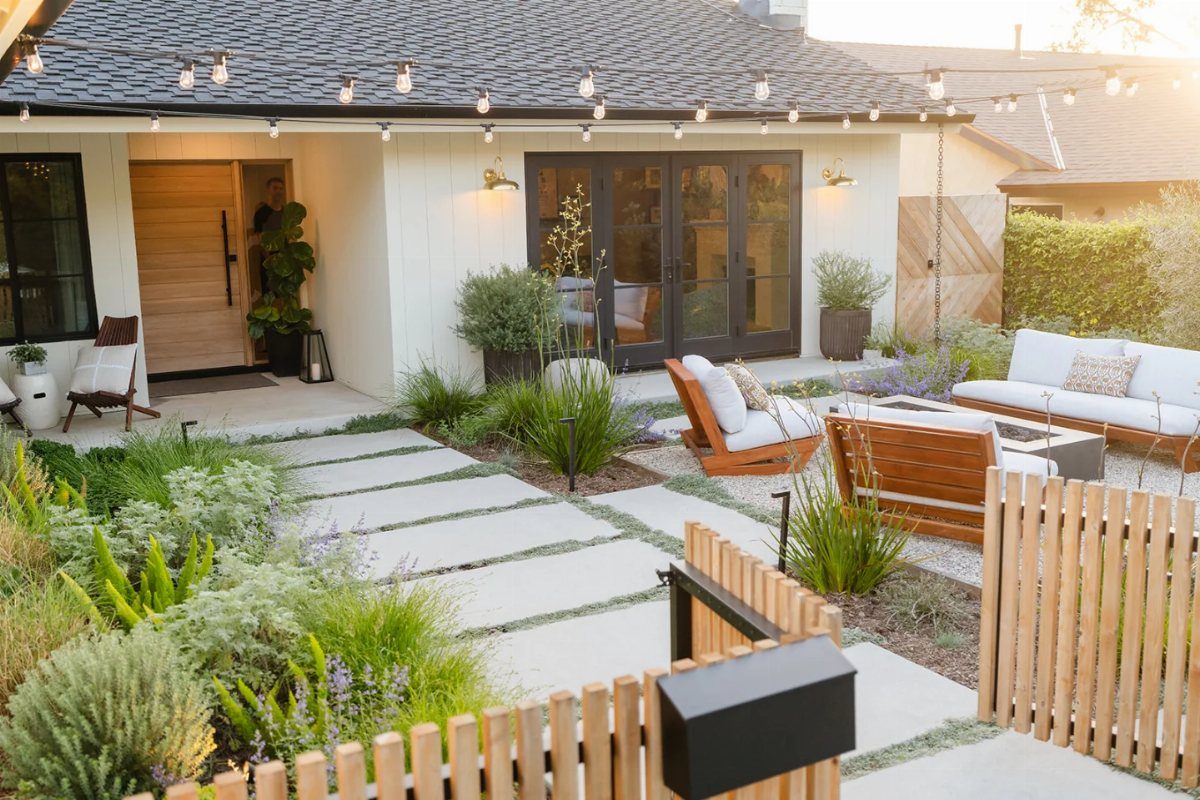
Front yards rarely get used, and a fire pit with seating changes that. A square grey pit set on concrete pavers reads as a small outdoor room, and the hard surface keeps the area tidy with almost no upkeep.
Greenery around the edges keeps it from feeling like a patio dropped onto the lawn.
String lights, like those on the house, add a soft glow. I would choose pavers over loose ground here, since they make the seating feel settled and easy to maintain.
4. Add a Fence Feature
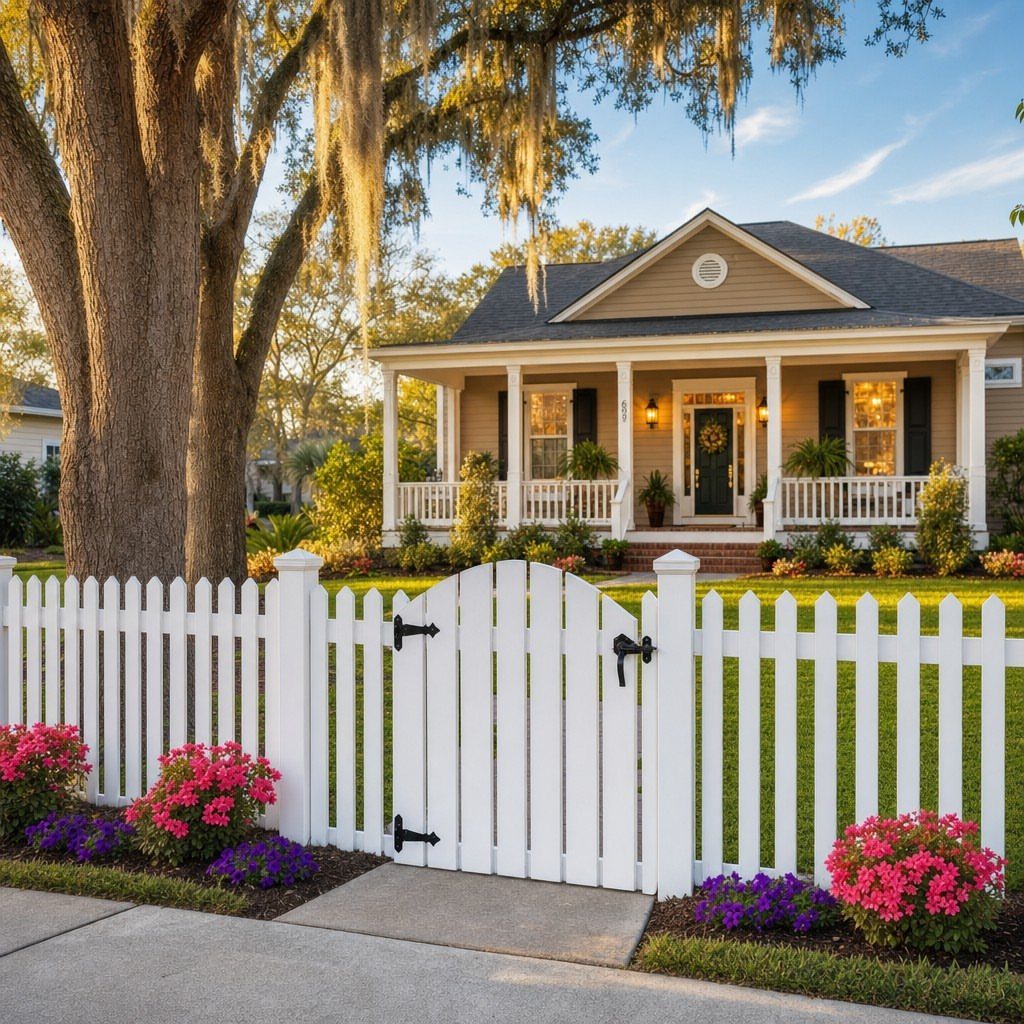
A white picket fence with a gate marks where the yard begins, and it does that without blocking the view of the house. The low, open style says traditional and welcoming at once.
Pink flowers planted along the fence line add color and soften the straight pickets.
I would keep the planting simple so the gate stays the star. For renters or anyone on a tight budget, even a short run of fence near the entry gives the yard a clear edge.
5. Plant Hedges
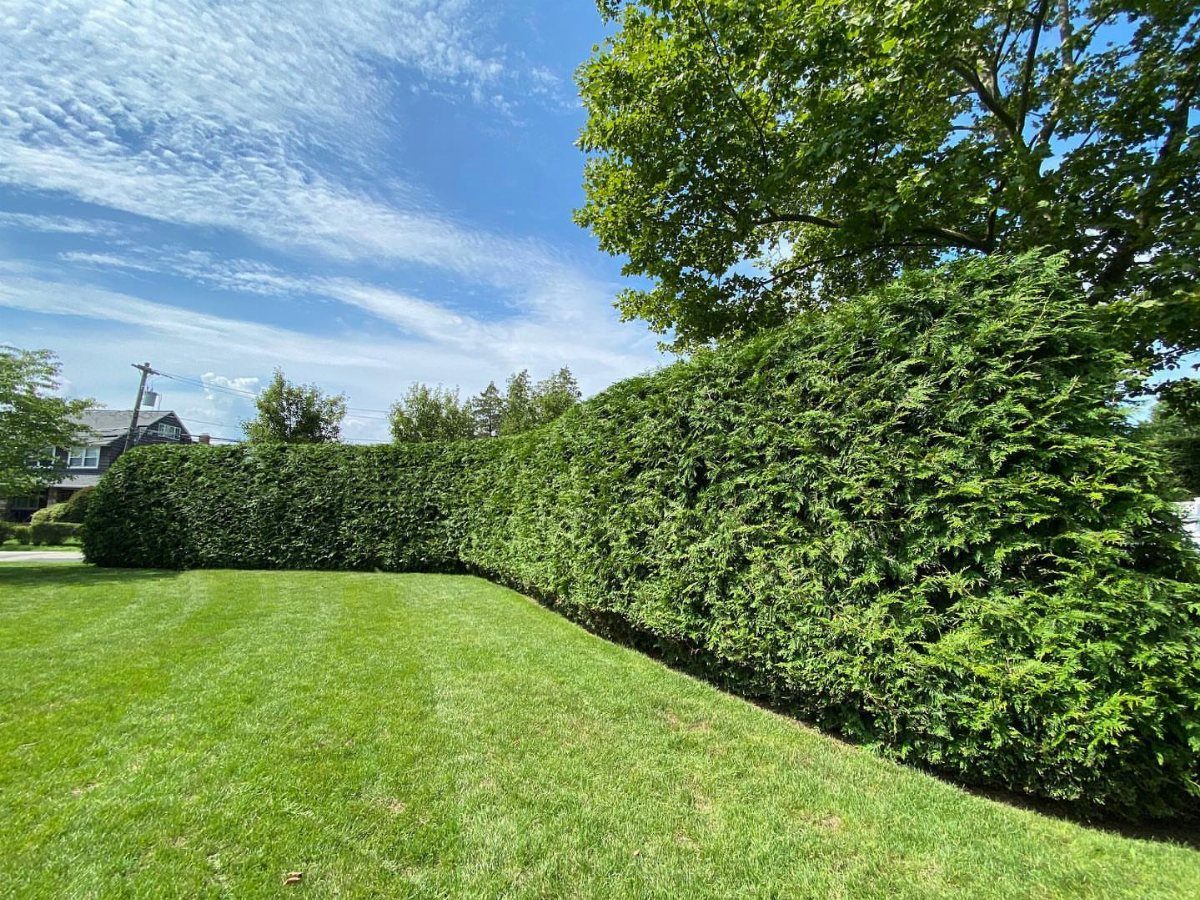
A clipped evergreen hedge draws a clean green line along a property edge, and the lawn in front of it looks sharper for it.
It can mark a border or give some privacy, depending on how tall you let it grow.
Shrubs take patience compared with a fence, since a hedge needs time to fill in.
Still, I prefer one for a front yard because it looks soft and alive all year. Plan on regular trimming to keep that neat shape.
For a taller, narrower space, perhaps in a grouping at the corner of your house or as a privacy hedge, choose a Pinpoint false cypress. They grow 15-20’ tall with a 5-6’ diameter at the base.
6. Use Perennial Plants
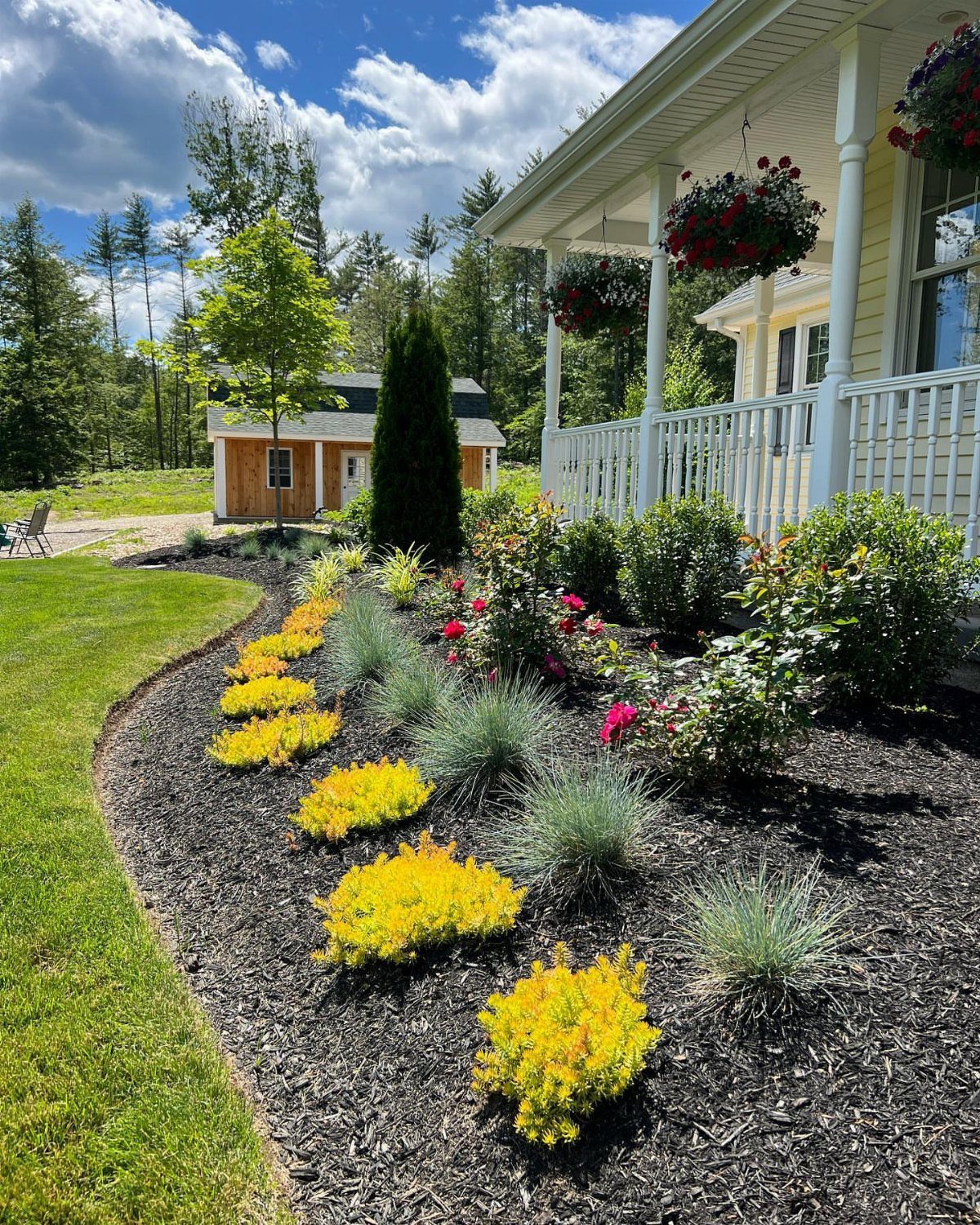
Perennials return each year, so you plant a bed once and enjoy it again next season. That suits anyone who wants color without replanting every spring.
I would mix a few types instead of one, so something is always in good shape. Start small, learn what thrives in your yard, and then add more over time.
7. Add Garden Beds
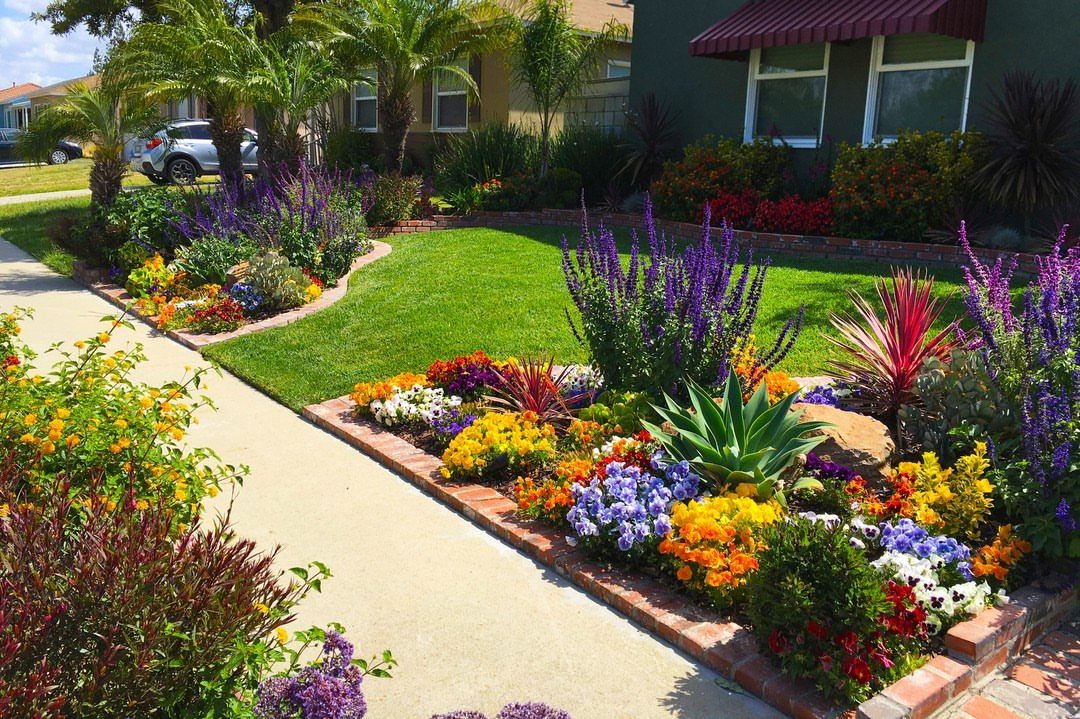
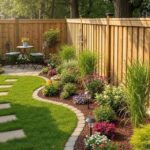
Swapping a patch of lawn for a defined bed gives a front yard a shape that mowing alone never will. Brick edging, like the curved run here, holds the line between grass and soil and keeps the bed looking deliberate.
Less lawn also means less mowing, which suits anyone short on weekends.
I would start with one bed near the walkway and fill it with a mix of flowers and a few succulents, then widen it later if you like the result.
8. Ground Cover
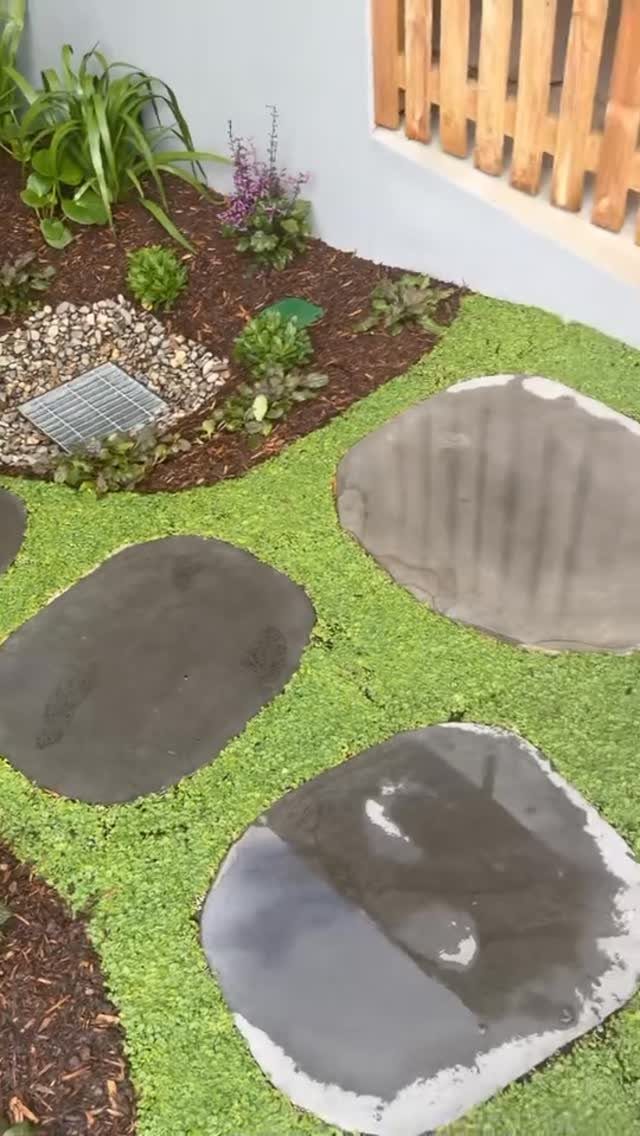
Bare, awkward spots where grass won’t settle are where low-growing ground cover earns its place. Planted around stepping stones, it fills the gaps with green and leaves a clear path to walk.
Plant small starts a few inches apart and let them spread.
Mulch fills the spaces in the meantime, which keeps weeds down while the plants knit together. I would choose ground cover over grass for any strip you dread mowing.
9. Use Ornamental Grasses
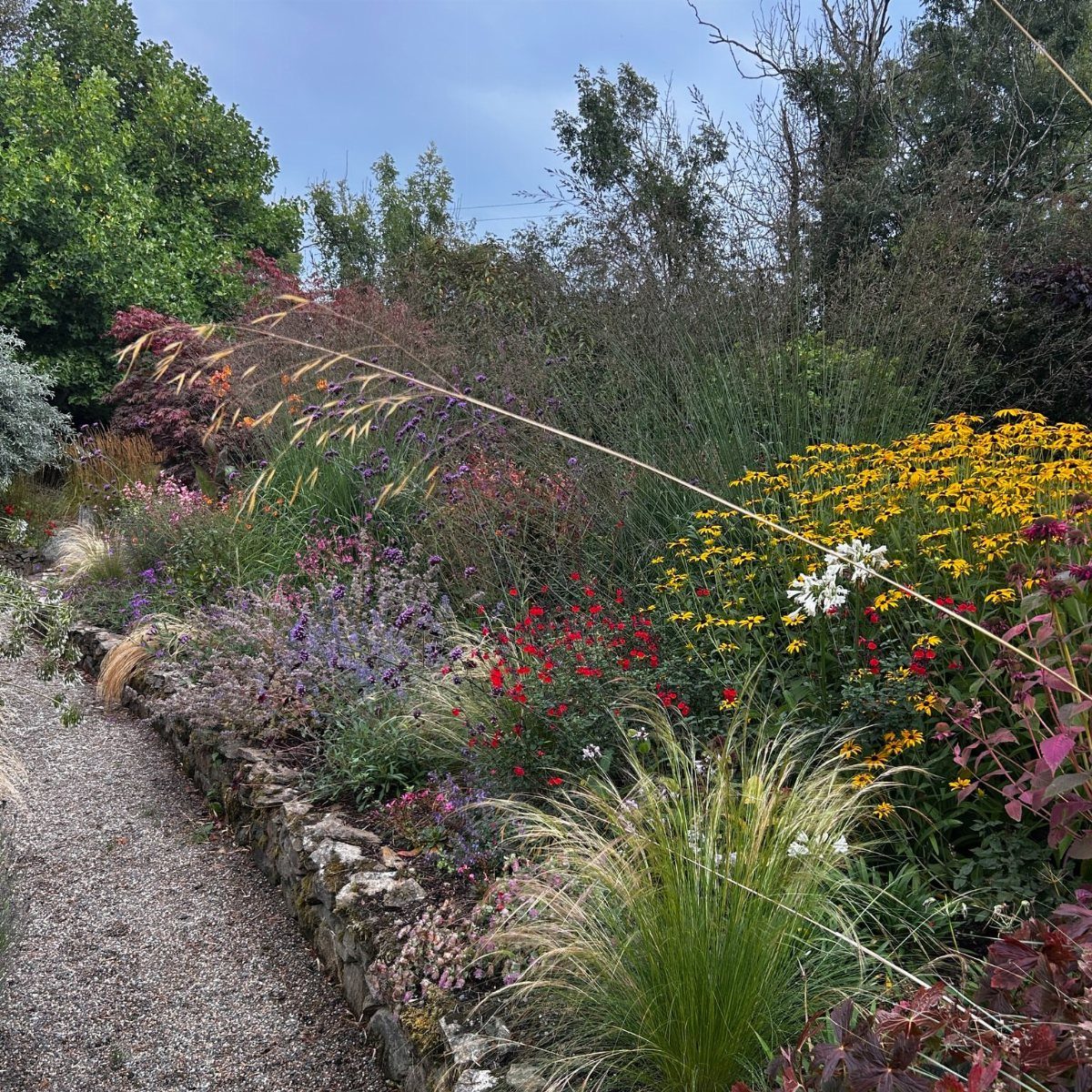
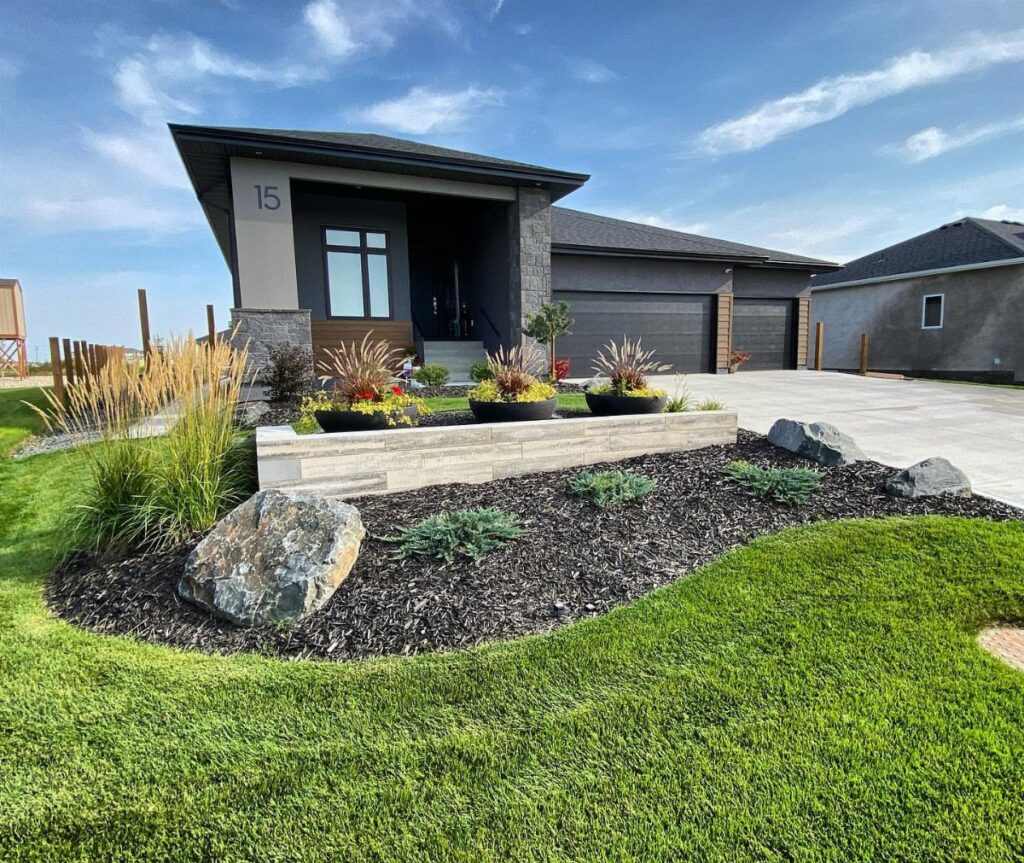
Ornamental grasses add height and movement, and they pair well with flowers because their fine texture keeps a bed from looking crowded; for edging, a gravel path bordered with stone keeps the base tidy and cuts down on weeding.
Their fine, arching leaves make a good backdrop for bolder yellow and red blooms.
Pick a variety suited to your site, meaning your sun and soil, so it grows without fuss. I like setting the taller clumps at the back of the bed and the shorter flowers in front, so each layer stays visible.
10. Use River Rock
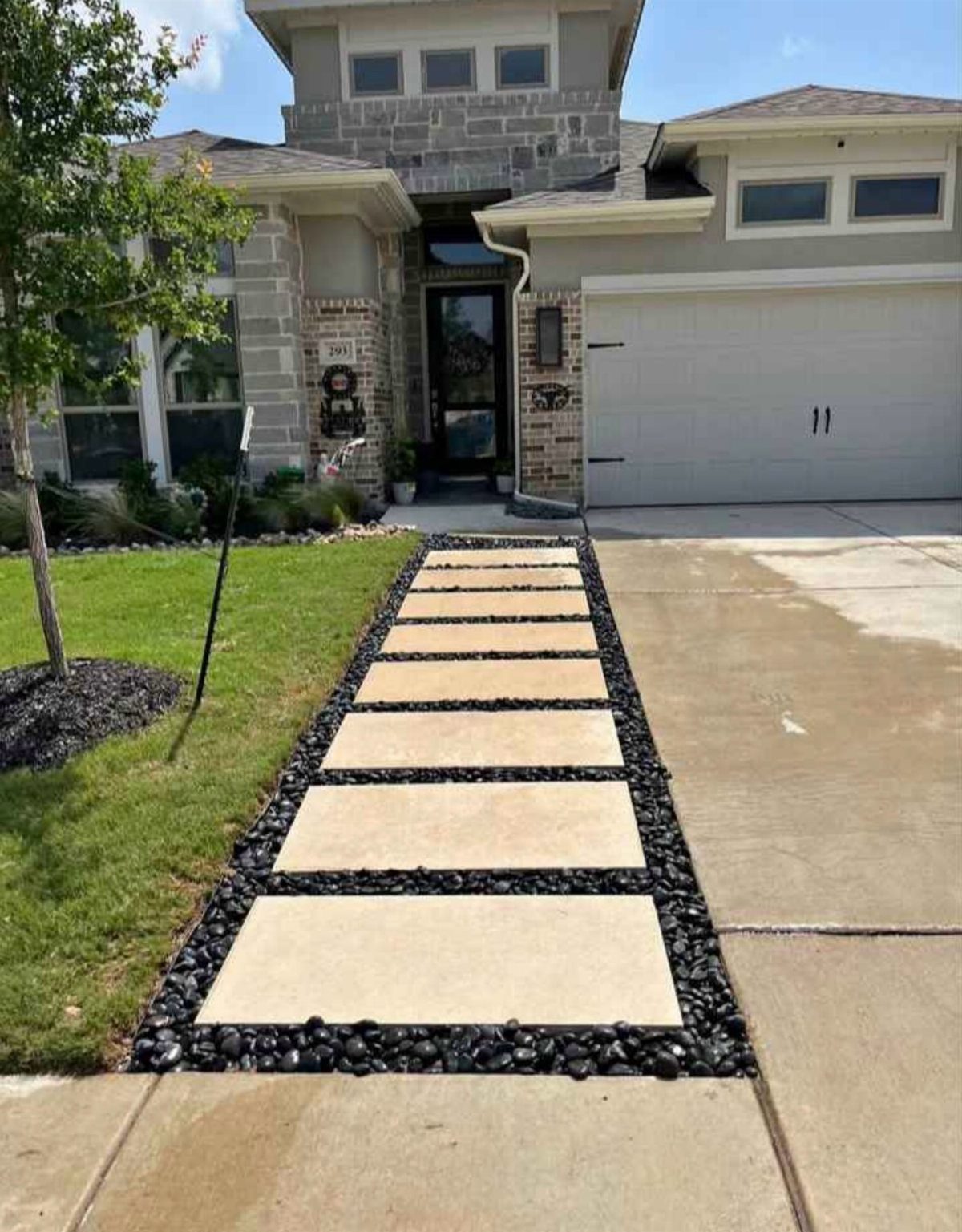
Black river rock around light pavers makes a walkway with strong contrast and very little to maintain. The smooth stones fill the space between each paver, so there is less bed to plant and nothing to mow.
That makes rock a fair choice for windy spots, where mulch can blow around.
I would lay it over landscape fabric to hold weeds back. Keep in mind that dark rock looks sharp but needs an occasional rake to stay level.
11. Curved Bed Edges
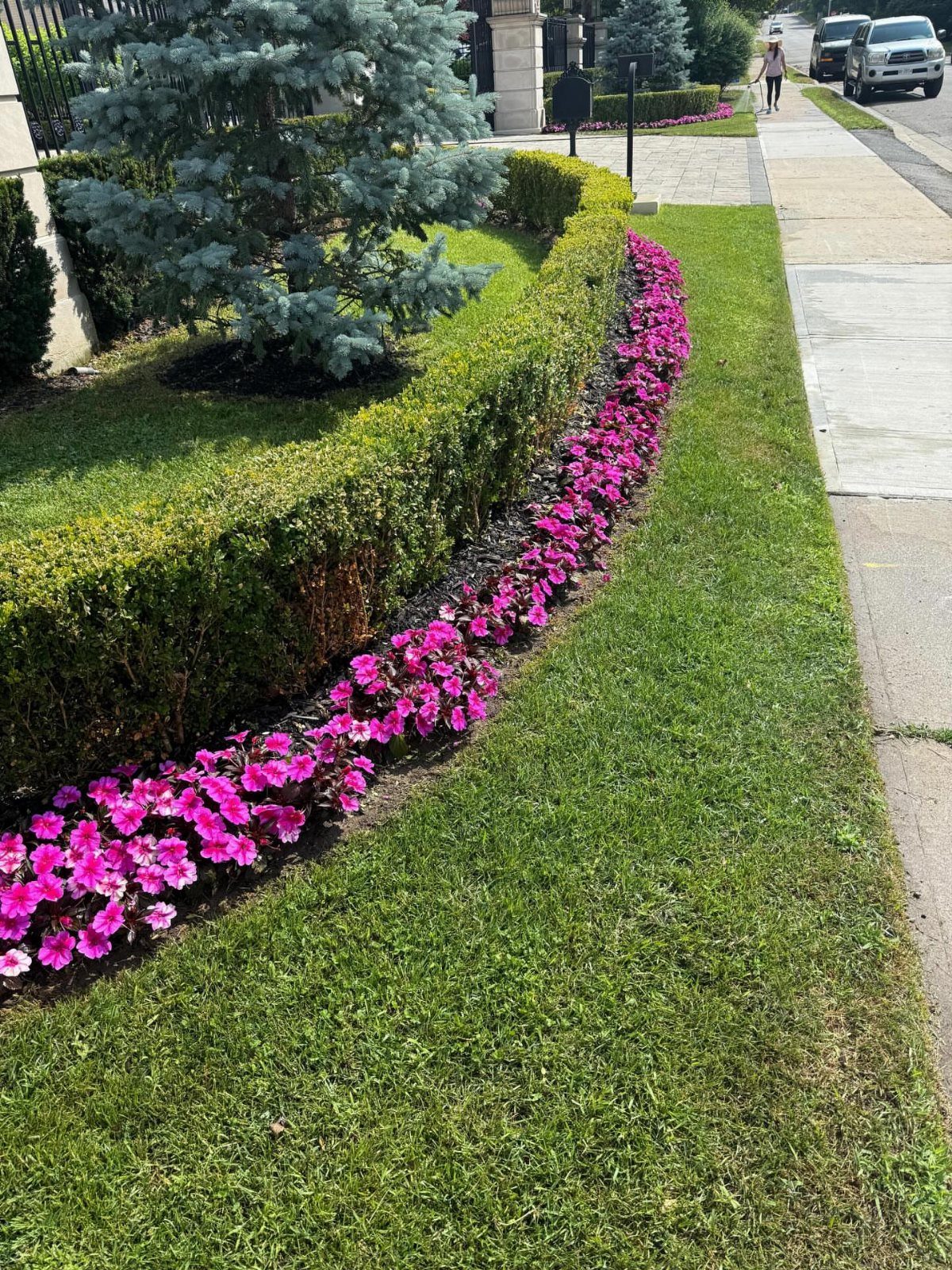
A curved bed edge softens the line where lawn meets garden, and it reads as relaxed next to a straight sidewalk. A low hedge and pink flowers along that curve give the bed a full, finished look.
To lay one out, I would use a garden hose as a guide and adjust until the sweep looks natural from the street.
Then cut the edge cleanly with a spade. Gentle curves are easier to mow than tight ones.
12. Plant a Container Garden
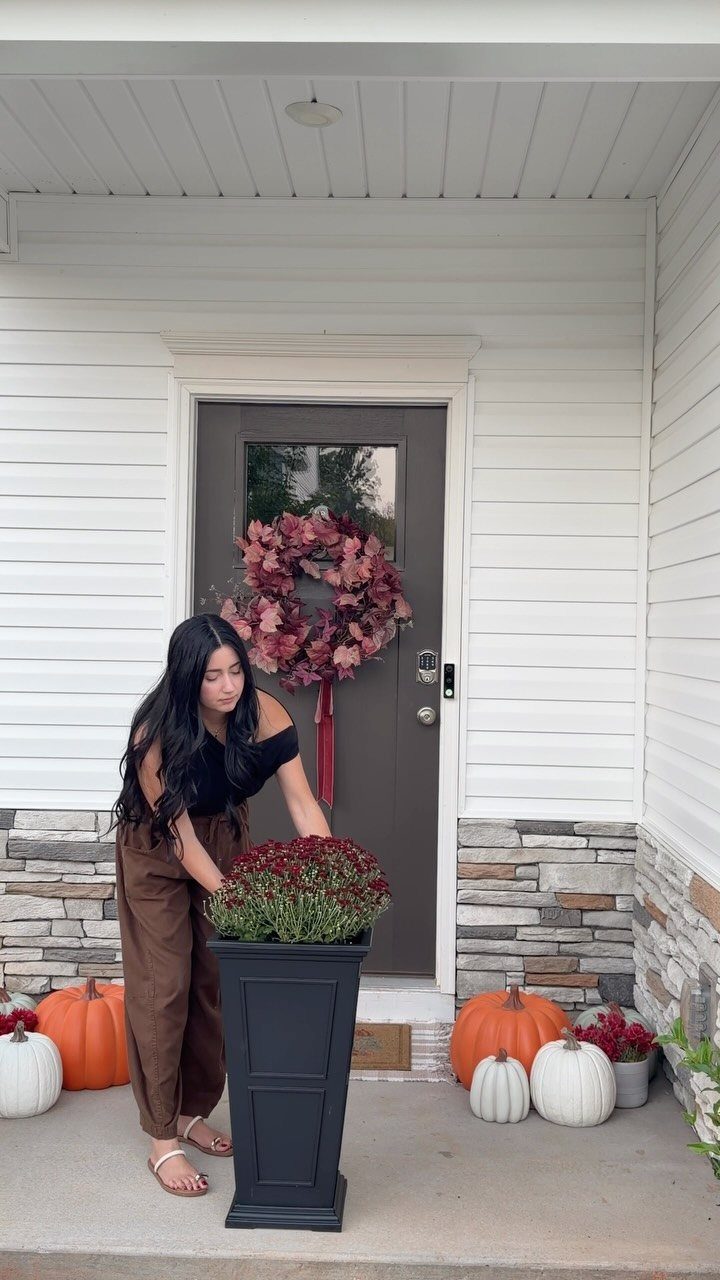
Pots let you add color right at the door, and you can change them whenever you like.
Because containers move, they suit renters especially well.
I would group one tall planter with a couple of smaller pots and swap the plants as seasons turn. Pairing them with pumpkins and a wreath, as here, pulls the porch together.
13. Add a Vegetable Garden
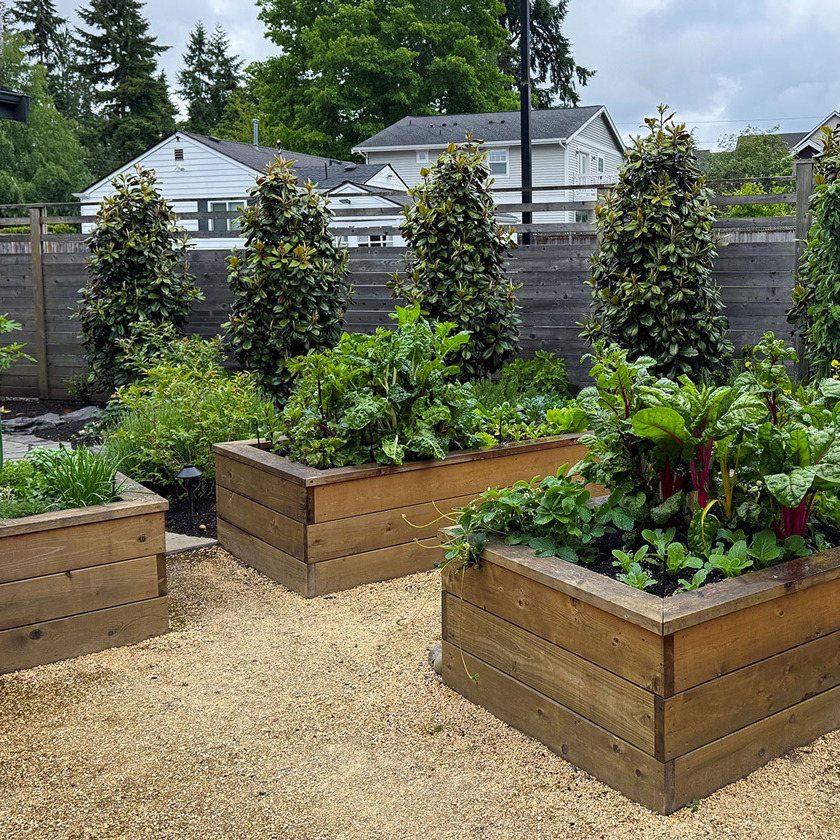
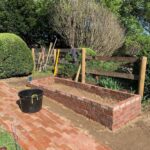
Raised wooden beds let a front yard grow food without any digging up of lawn.
Leafy crops suit a beginner because they fill a bed quickly. I would start with one bed rather than three, so watering and picking stay a short weekend chore.
A fence behind the beds gives the garden a backdrop, and keeping the wood neat makes the whole thing read as a design choice instead of a patch of dirt.
14. Add a Garden Arbor
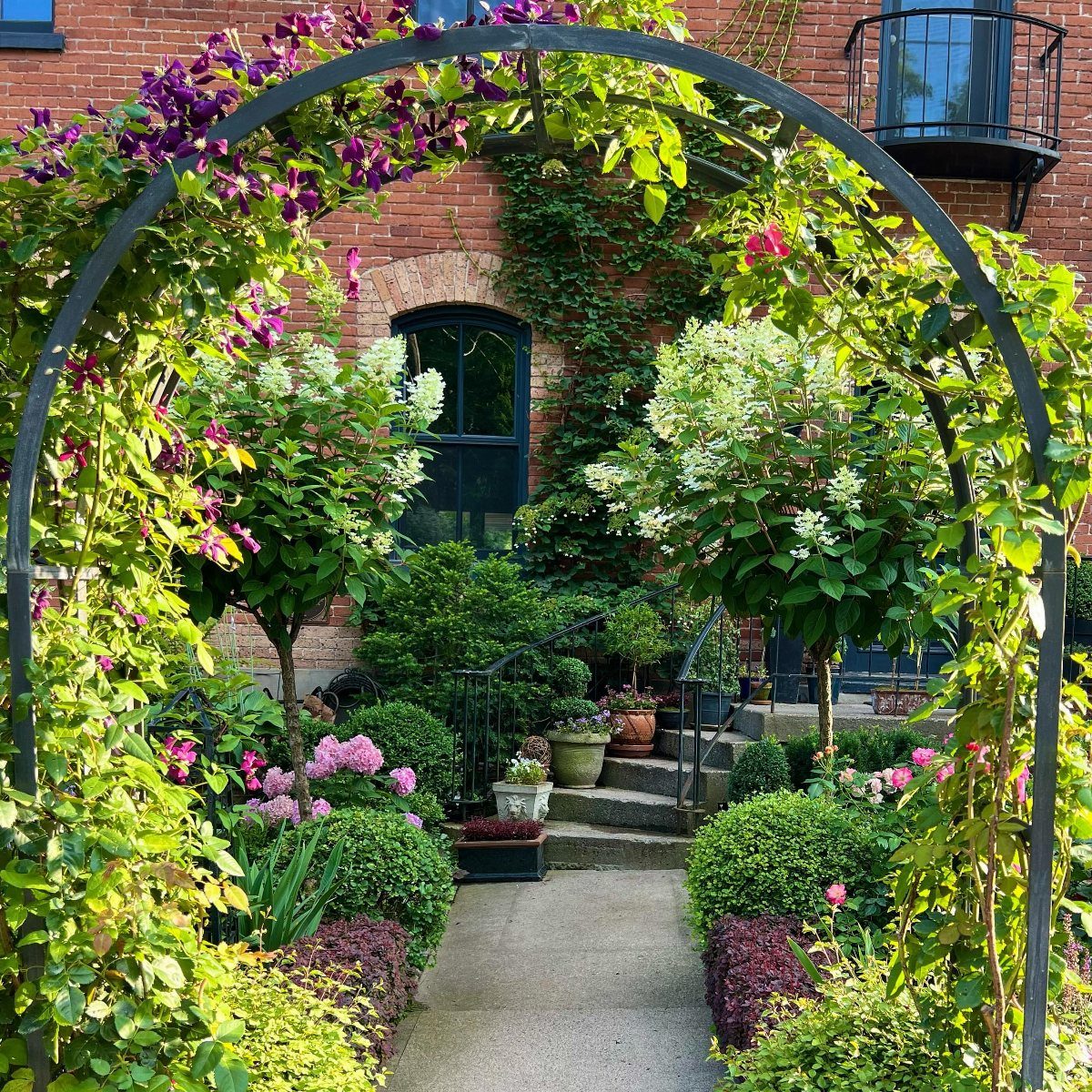
An arbor over a walkway turns a plain path into an entrance.
Dark metal looks crisp against brick, and it needs less fuss than painted wood.
I would plant a climbing flower at each leg and let it grow up the sides. Keep the path underneath clear and wide enough to walk through comfortably, since a crowded arch feels more like an obstacle than a welcome.
15. Use a Shade Garden
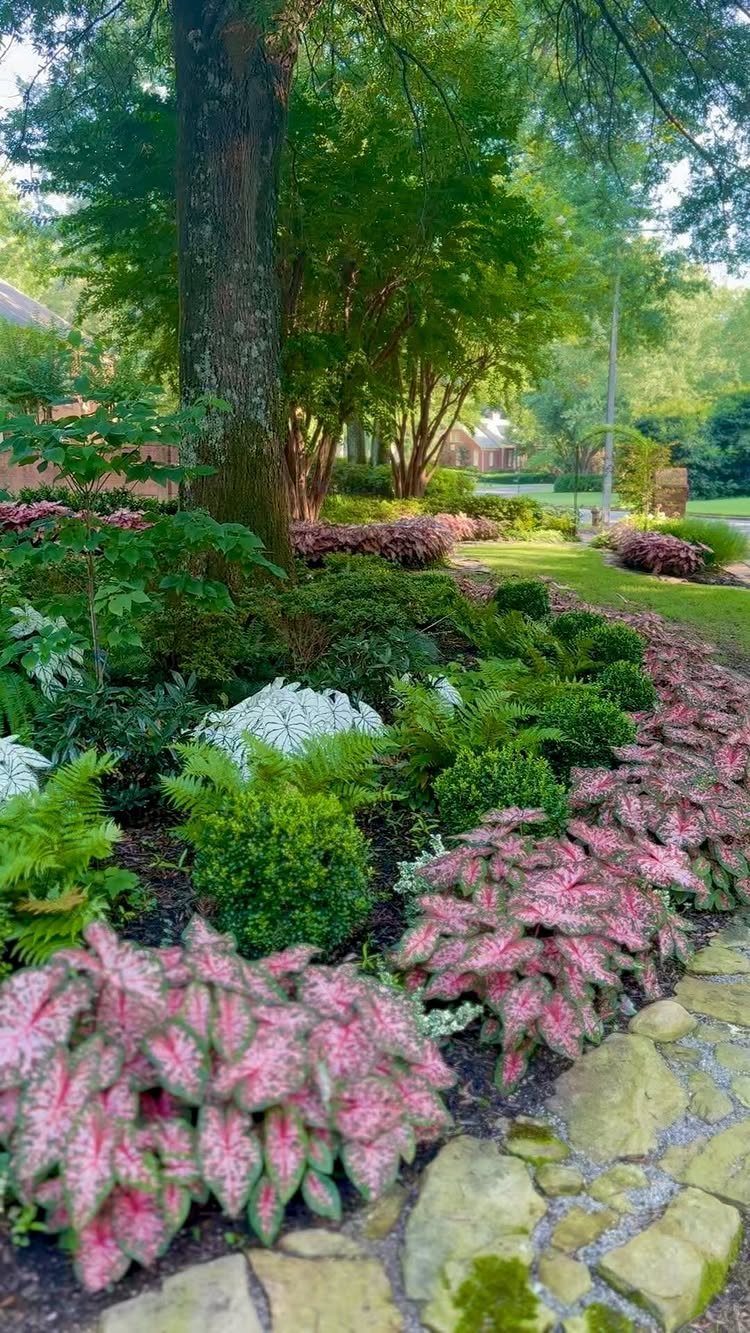
Shade is not a problem for a foundation bed if you pick plants that want it. Coleus, ferns, caladiums and hostas all bring color and leaf shape without needing sun, and together they make a bed that looks full.
I would mix leaf colors and sizes, such as pink coleus beside feathery ferns, since foliage carries a shade garden when flowers are scarce.
Check how much light your spot really gets before buying, then match plants to it. A stepping-stone or gravel path along the edge of a shade bed lets you reach plants without stepping on the soil.
16. Plant Ornamental Onion
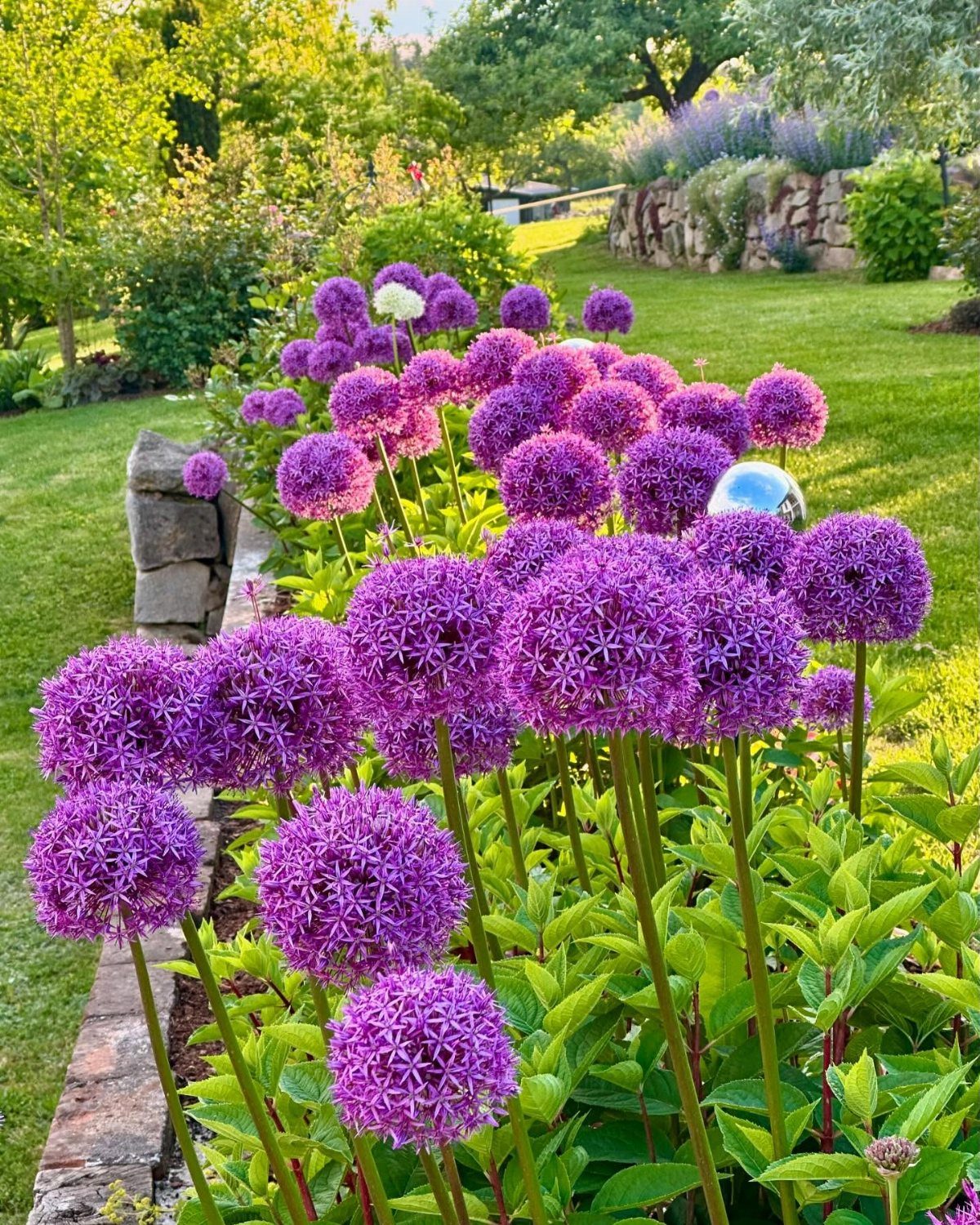
Ornamental onion, or allium, sends up round purple flower heads on tall, straight stems, and they float above a low mound of leaves. That shape adds something a flat bed lacks.
Plant ornamental onion along a border, ideally against a wall or a stone edge, where the round purple globes stand out.
I would set several together instead of one or two, because a cluster looks intentional. Pair them with lower plants that fill in around the stems as the allium foliage fades.
Assess the Site Before Planting
Before spending a dime, spend one full day watching how sun and shade move across the front yard.
Note which spots get morning sun, afternoon sun, all-day sun or almost none, and write down the times so you can count the hours of light each bed gets.
Check where water collects after a rain, too. A spot that stays soggy needs different plants than one that drains quickly.
Look at the soil and at what already grows there, and find out whether your community has rules about permanent features before you install any. Renters should ask the landlord first.
A nursery can only help if it knows your yard, so bring photos and measurements of the bed and describe the light, soil and drainage.
After that, put the same question to each plant on your list: how much work will it ask of me from season to season? Its answer says more about the plant than the glossy photo on the tag ever will.
Choose specific varieties by mature size and care needs. Not every shrub, perennial or grass is low-maintenance just because of its category.
Plan for the Home’s Style
Look at the house before you pick plants. Is it symmetrical or lopsided?
Look at the house itself: are the materials simple and clean, or textured and mixed? Plantings that echo those lines and colors look like they belong to the house instead of fighting it.
A symmetrical facade usually asks for matched plantings on each side of the door. An asymmetrical one can take a looser, uneven arrangement.
A few placement rules save you from regret:
- Keep plants below the windows, so they never block light or the view out.
- Frame the entry rather than hide it. The front door should still be the first thing you see.
- Leave clearance along paths so no one brushes against branches.
Always shop by mature size, not the size in the pot. A small shrub that ends up 6 feet wide will crowd a walkway within a few years, and you will be pruning it hard or pulling it out.
Frequently Asked Questions
What is the cheapest way to landscape my front yard?
Improve what is already there. On a tight budget, start by cutting crisp edges on the beds, pulling the weeds, spreading fresh mulch, and planting one small cluster by the front door.
Putting your money into one visible spot beats spreading it thin across the whole yard, and a layer of mulch also holds moisture and keeps weeds down, so the upkeep stays cheap too.
What is the rule of 3 in landscaping?
Plant perennials in groups of 3 at minimum, up to 5 or more, and stick to odd numbers.
The plants grow together into one mound, and repeating the same plants or elements farther along the bed gives the yard a calm, balanced look instead of a random one.
I find a cluster of several always looks more intentional than one or two.
What is the best landscaping in front of a house?
Plantings that echo the house’s own lines and colors look best. If the house is symmetrical, matching plants on both sides of the door look right; an off-balance facade can handle a looser, more casual mix.
Plants should frame the front door rather than hide it, stay under the window sills, and leave walking room beside any path.
How do I start creating a low maintenance yard?
Spend a full day watching how sun and shade move across the yard, and note where water collects after rain.
Then match plants to that light, soil and drainage, and ask how much work each one will need from season to season. Starting with a single bed keeps the workload small while you learn the yard.
How do I choose low-maintenance plants for the front of my house?
Check your sun, soil and drainage first, then pick plants by how big they get and how much care they need.
How can I landscape a small front yard without making it look crowded?
Use a few types of plants and repeat them instead of buying one of everything. Keep the path and front door visually open.
What should I plant beneath front windows?
Pick plants whose mature height will stay below the windows, so they never block light or the view out.
Compact shrubs or lower perennials usually work. Before buying, jot down the window measurements and snap a photo of the wall to show the nursery staff.
Should I finish all my landscaping immediately after moving in?
No.
Learn the yard first by watching its light and drainage, then add beds in stages. Plant one bed first, watch what does well, and add more as money and free weekends allow.
When is professional landscaping advice worth it?
Drainage trouble, erosion, regrading, a large tree, or any plan with heavy permanent construction is worth paying a professional to look at.
For a smaller planting project, a local nursery can often supply the plant selection and care advice you need.