Ideas here run from free tin cans and thrifted teacups to rope-hung wooden tiers and metal buckets, and where the light falls decides which one suits you.
1. Hanging Wall Planters
Small pots on removable hooks make the easiest vertical herb garden I know of for a renter. Screw-in or adhesive hooks come off without much of a mark, so the deposit stays safe.
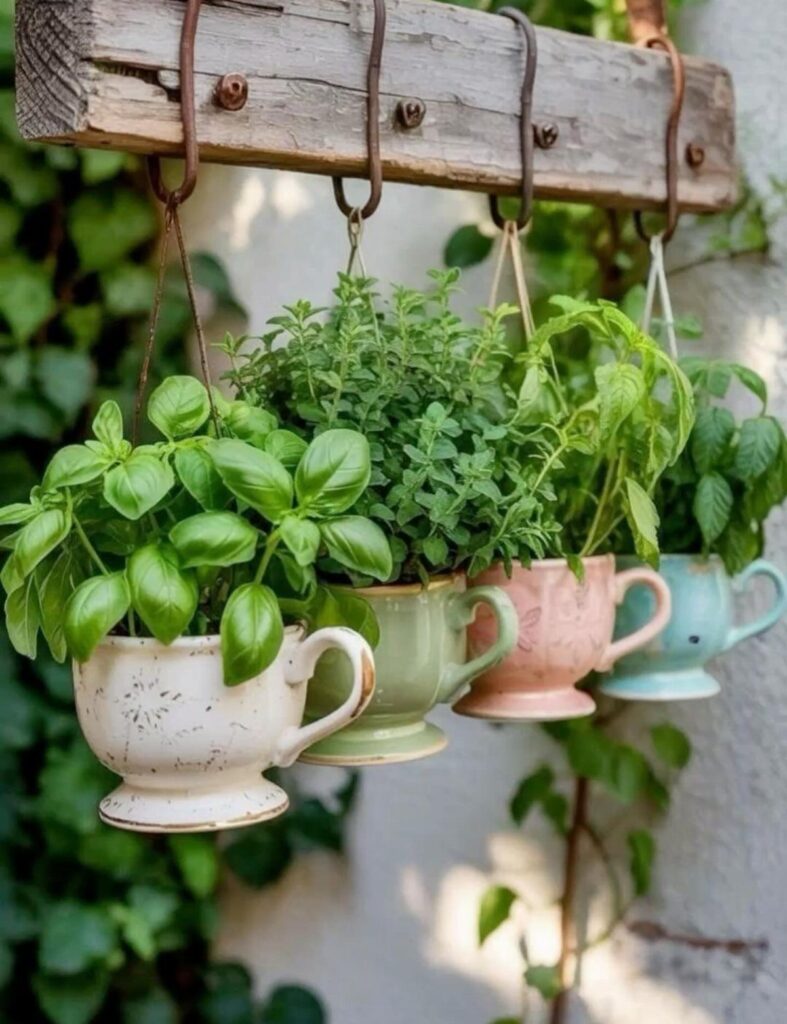
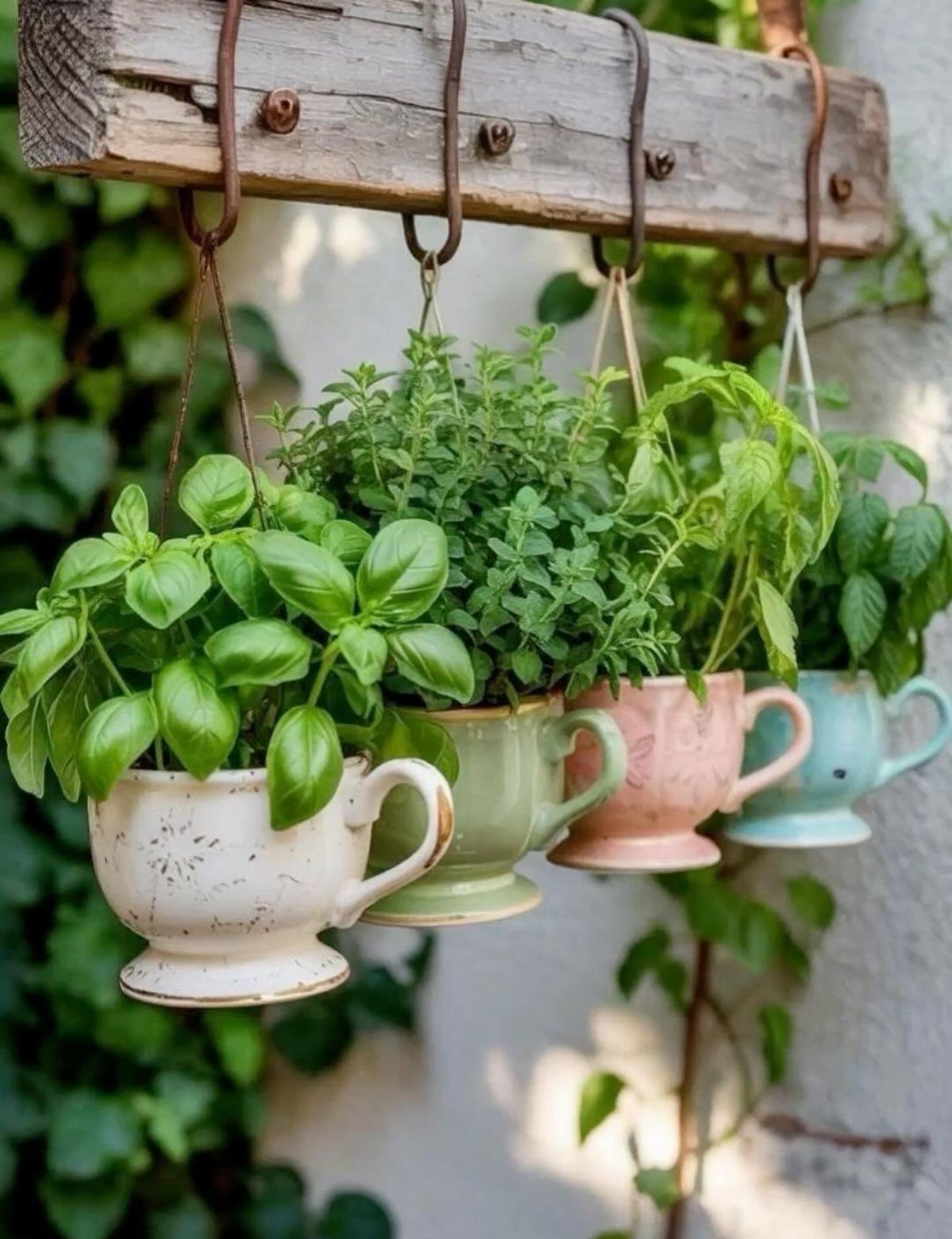
Teacup-style pots like these suit compact herbs, and hanging them at different heights keeps each plant from shading the one below.
Mount the beam or rail first, then add hooks. Keep the pots close enough to the kitchen that you actually snip from them.
2. Window Herb Shelves
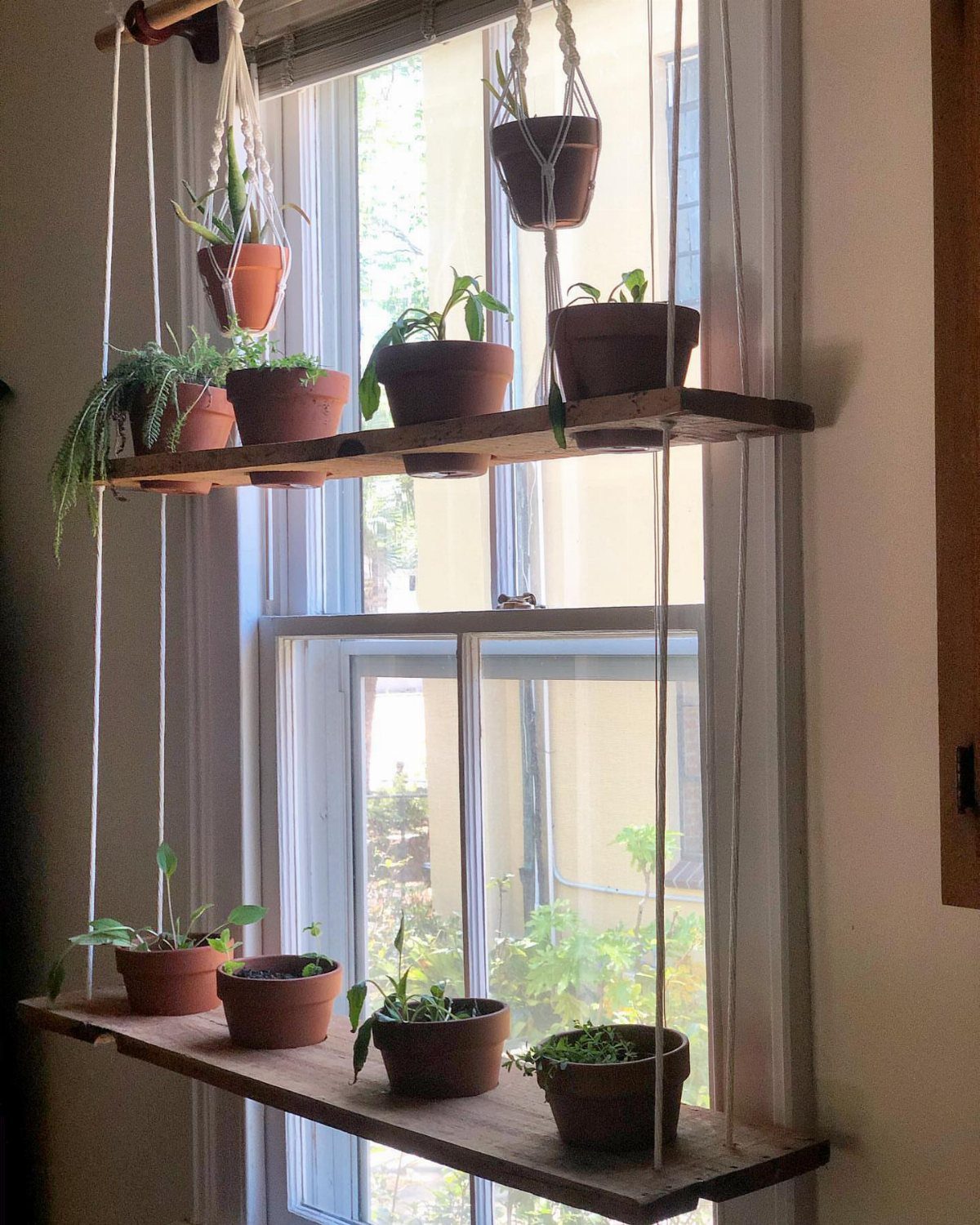
2 rope-hung shelves in front of a window give herbs the light they want and take zero counter space. Terracotta pots fit this setup well because they are cheap and sit steady on a flat board.
Anchor the ropes to a ceiling hook or a curtain rod mount, and knot each rope under every shelf so nothing slides. Leave a gap between shelves for tall plants.
A south-facing window is my pick if you have a choice. Water over a tray, since terracotta drips.
3. Tin Can Planters
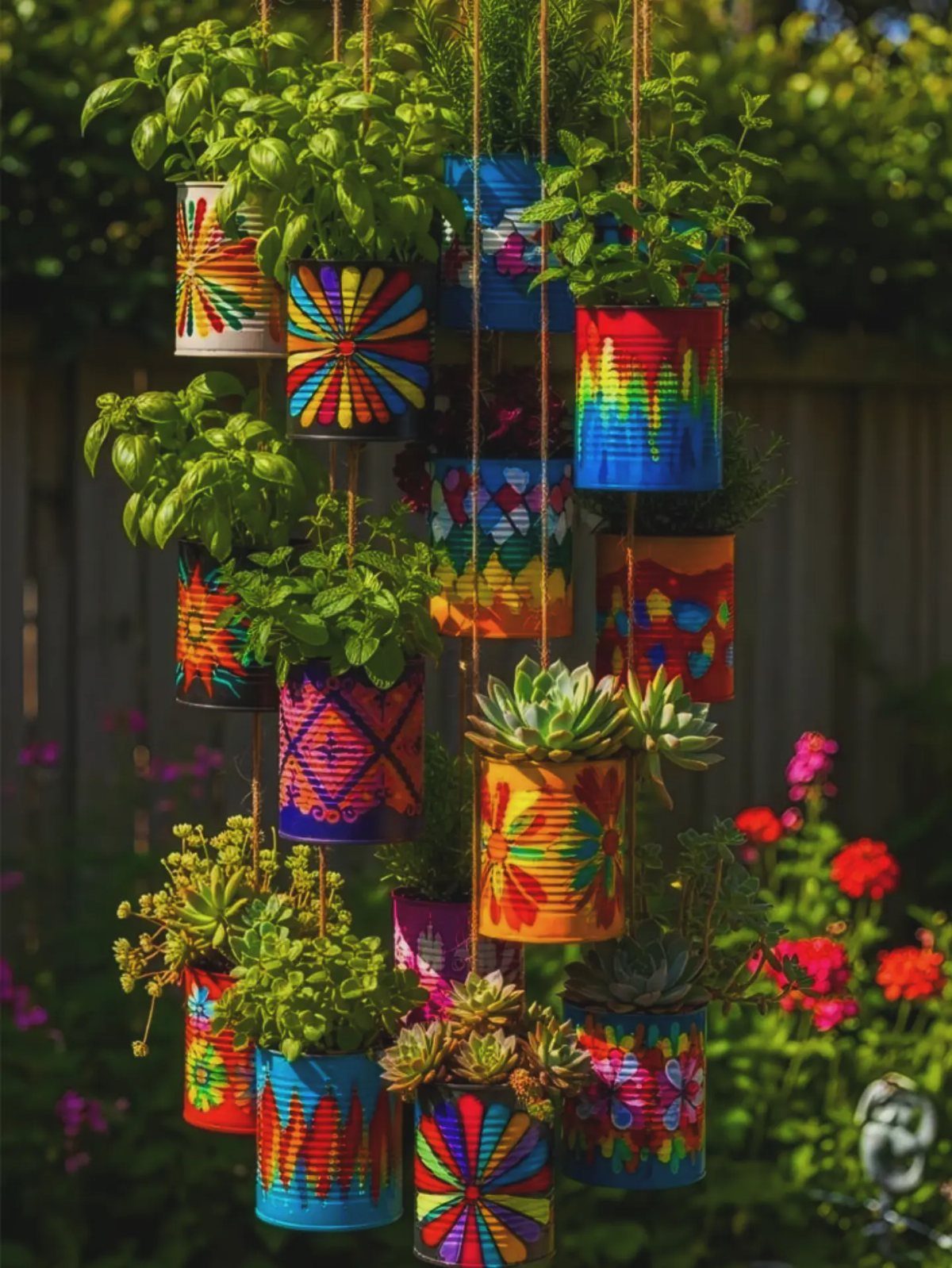
Empty food cans cost nothing, which makes this the cheapest idea on the list. Paint them in bright colors and hang them from string, and a recycling bin turns into a herb wall.
Punch a few drainage holes in the bottom with a hammer and nail before planting.
2 more holes near the rim take the string. File or hammer down any sharp edges first.
I like these outdoors, where a little rust and drips don’t matter.
Succulents can share a hanging row with herbs, but give basil, mint and parsley their own cans, since they want water every few days while succulents want a dry spell between drinks.
4. Board and Jar Garden
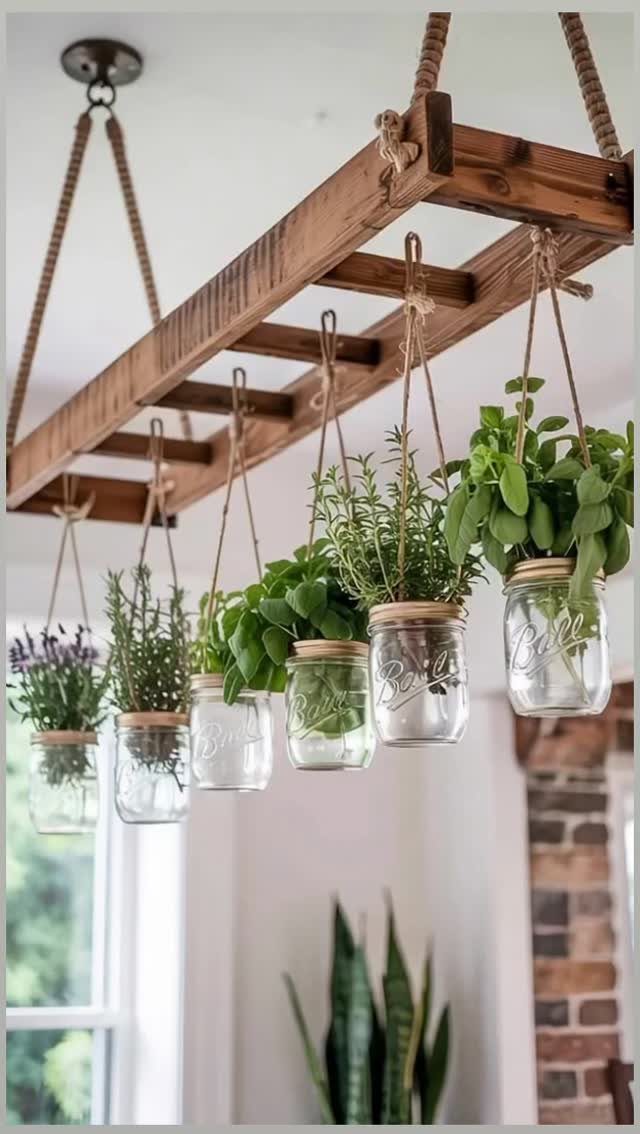
Mason jars strung from a ladder-style wooden rack make a herb garden that looks like decor. Jars are easy to find, and twine lets you adjust each one’s height.
Jars have no drainage hole, so add a layer of pebbles at the bottom and water lightly. Better still, slip a small nursery pot inside each jar.
Hang the rack from ceiling hooks rated for the full weight of wet soil, and keep it near a bright window.
5. Macrame Plant Holder
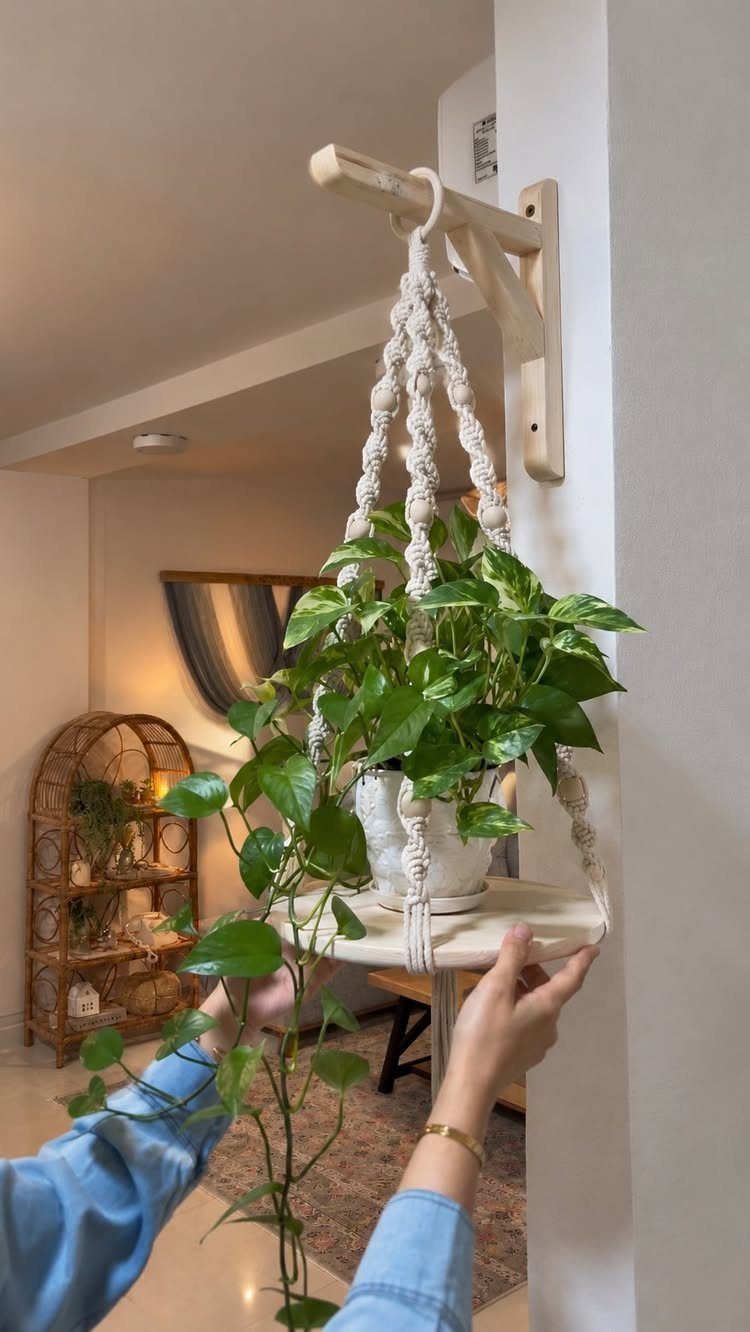
A round wooden plate hung inside a yarn macrame holder turns one hook into a mini herb stand.
A macrame holder like this one cradles a single pot in its knotted cords, so match the pot size to the cord length and the weight of wet soil.
Pick a plate with a lip or set the pots on a saucer so water never reaches the wood. Mount a wall bracket with a screw into a stud or a proper anchor.
Hang it where you can reach it. Pots swing when you water, and a low hang keeps that easy.
6. Indoor Herb Garden
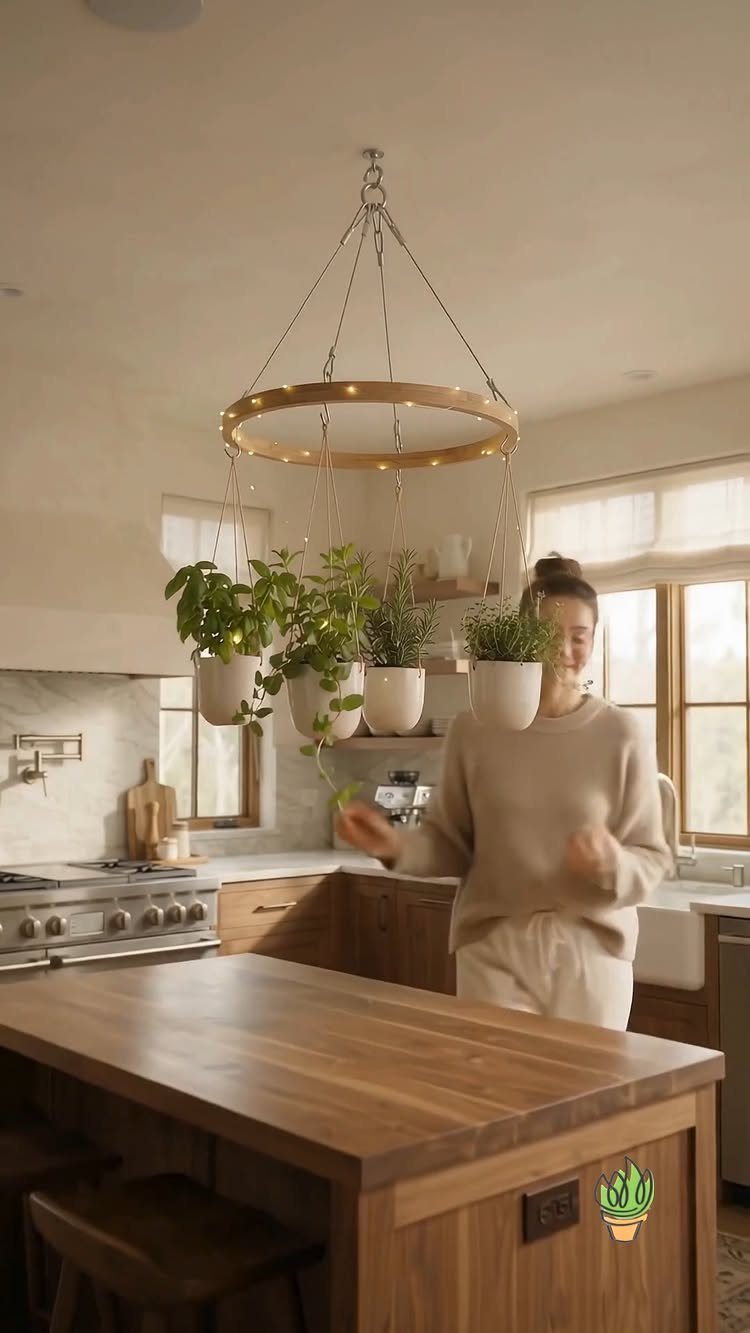
Fresh basil, mint, and oregano in January make a winter kitchen feel alive, and a ceiling-hung ring keeps them off the counter. One maker built theirs from a custom wooden circle and metal chains, with ceramic pots hanging below.
Hang it over an island or a table near a window so the plants get light. Use chains and ceiling anchors that can hold wet pots, which weigh more than they look.
A ring-style hanger like this keeps herbs right at eye level, close enough to snip a few leaves while you cook.
7. Railing Mounted Hanging Planters
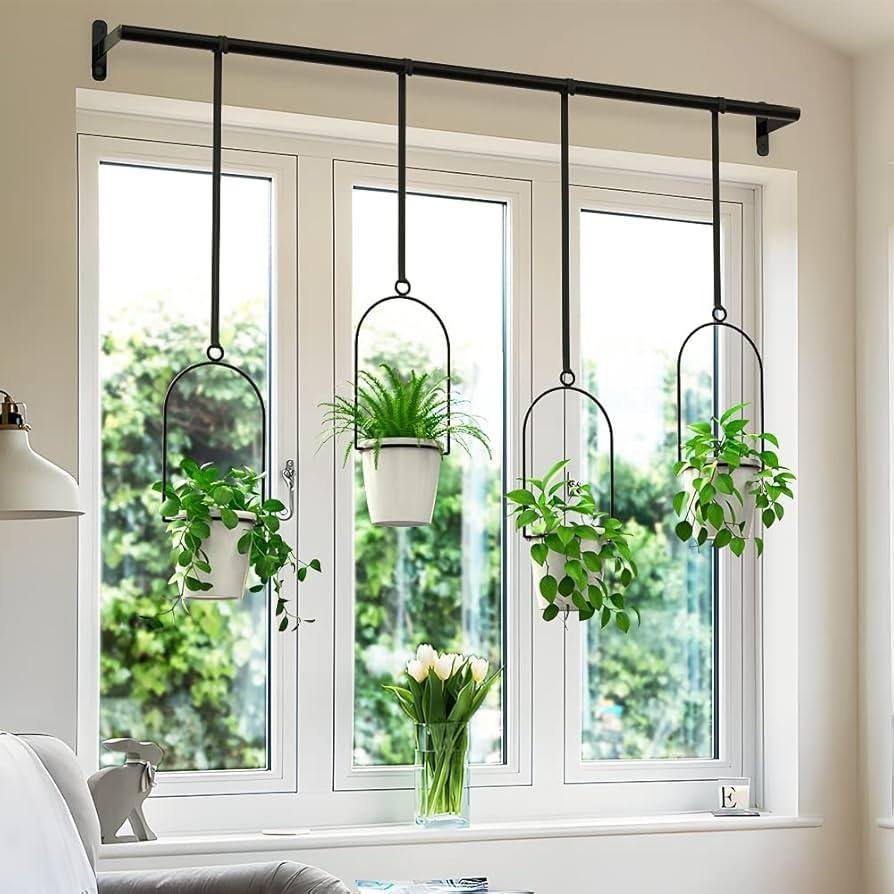
A plain black curtain rod already hangs in most rentals, which makes it a free mount for a herb row. Use S-hooks or sturdy hooks over the rod and drop the pots at the same height for a tidy line.
White pots keep the look clean against a white frame. Give them a saucer or a liner pot, since a window sill takes drips badly.
Check that the rod and its brackets can carry wet soil before you load all 4 pots. Spread the weight toward the brackets, not the middle.
8. Hanging Teacup Herb Garden
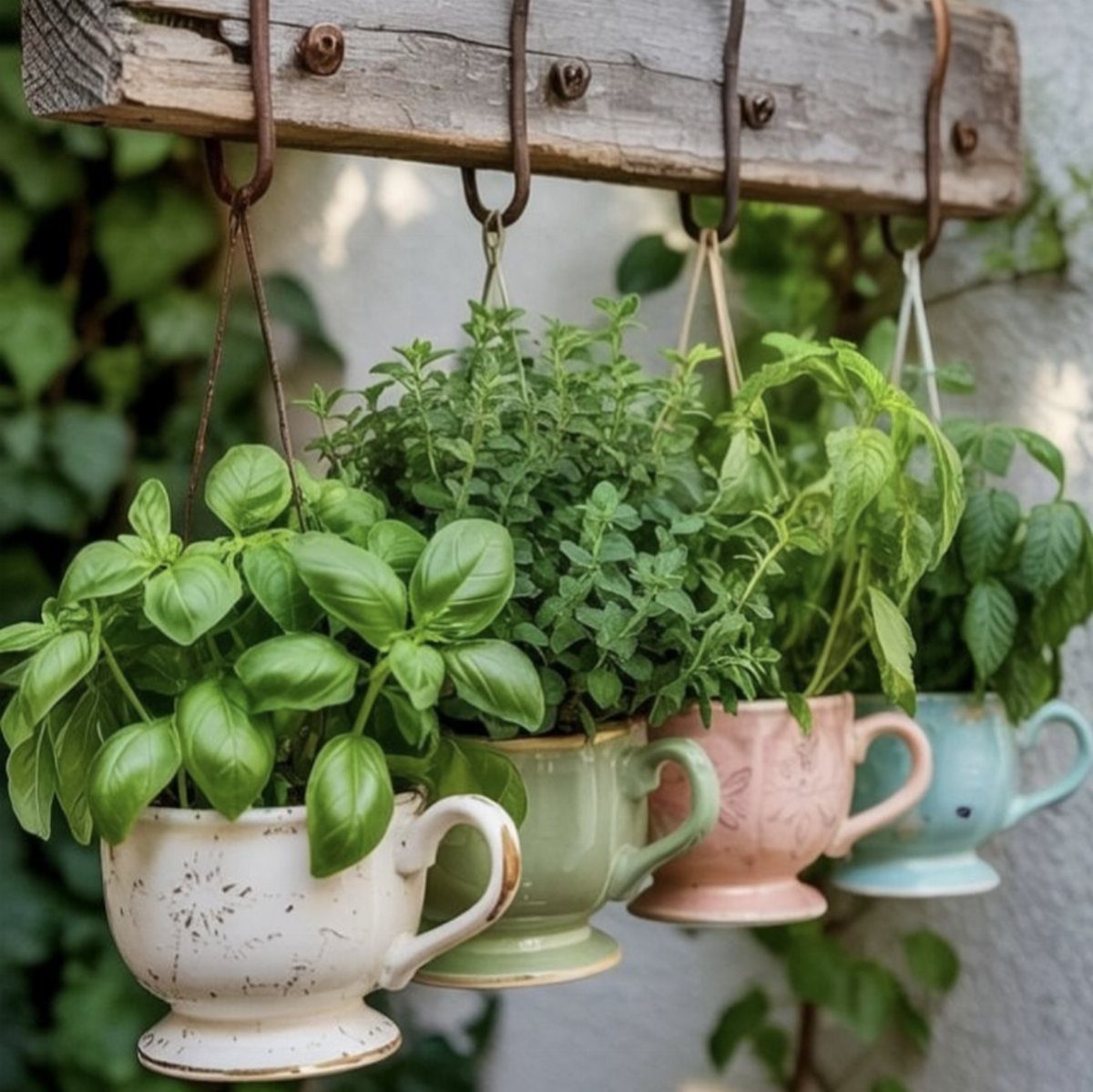
Mismatched thrift-store teacups are the cheapest planters you can hang, and they look good in a row. Wire or chain looped through the handle lets each cup hang from its own hook on a beam.
A drilled hole is better if you are willing to risk a cup or two on a ceramic bit.
Pick small herbs for such small pots, and snip often to keep them compact.
9. Rope-suspended Wooden Tier Shelves
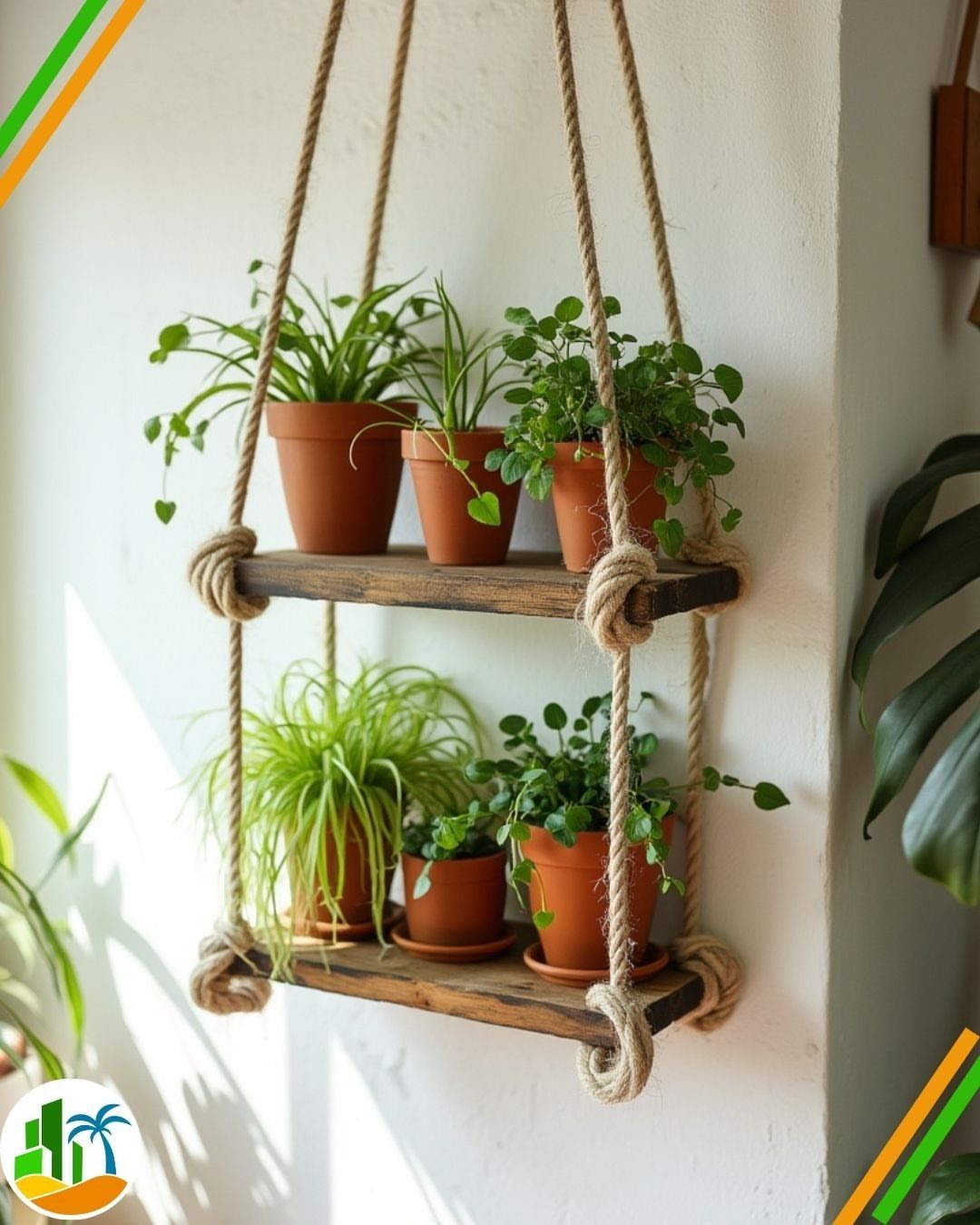
Thick rope and 2 boards make a tiered stand for terracotta pots, with room for a third shelf if the wall allows.
Drill a hole near each corner of each board, thread the rope through, and tie a heavy knot under every shelf.
Terracotta is cheap and heavy, so hang the rope from a solid ceiling hook or a stud, not drywall alone. Put a saucer under each pot, because clay sweats onto the wood.
I would pick this over single hooks when you want a lot of herbs on one wall.
10. Hanging Metal Bucket Planters
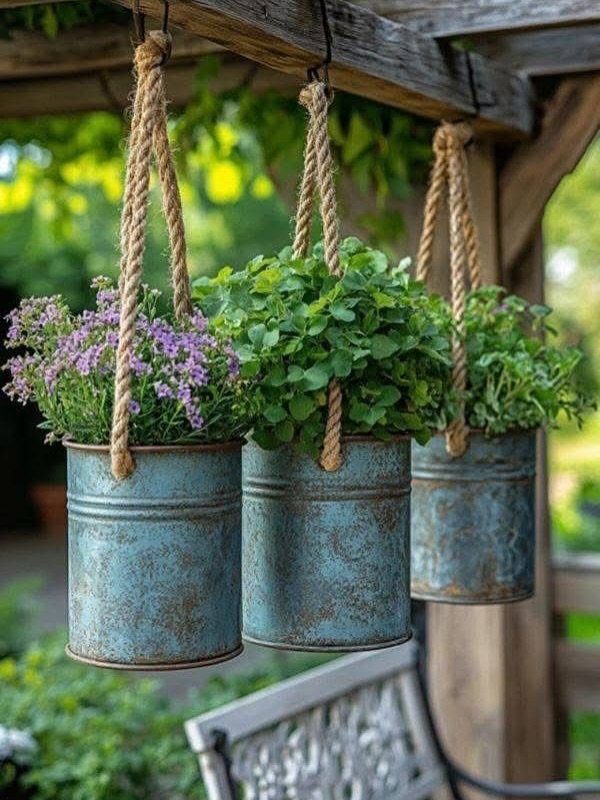
Old metal buckets work as hanging planters, and a worn blue finish suits an outdoor beam. Three of them in a row hold herbs with a few flowers mixed in.
Drill a few drainage holes in the base before planting, since a bucket left to fill with rain will rot the roots. Thick rope tied to the handles holds them from a porch beam or pergola.
Outdoors, a little rust and weathering only add to the look. Keep the herbs you cut most closest to the door.
Choosing a Bright Location
Most herbs are hardier than their reputation, but they do want a lot of sunlight. Light decides whether a hanging garden thrives, so pick the spot before you pick the planters.
Walk through your home on a clear day and look for the room with the most natural light. A window with strong light beats a pretty corner that stays dim.
Hanging suits narrow spaces well, because it uses the air in front of a window or along a wall instead of a counter or shelf. If your flat surfaces are already taken, that’s where vertical planting earns its place.
Pots that sit inside a plastic nursery pot are easy to move. If a herb sulks, shift it closer to the glass and watch how it responds over the next week or two.
You can find a bunch of great tips for that on thegardenglove. For example, you should always pick herbs in late morning for best flavor.
— Homedit
Frequently Asked Questions
Can you plant herbs in a hanging basket?
Yes, as long as the container drains or holds a liner pot.
Cans, buckets and terracotta need a few drainage holes, and jars with no hole do best with a small nursery pot slipped inside. Standing water rots roots, so a saucer or liner also keeps drips off wood and sills.
What is the best plant to grow on a wall?
Herbs are my pick for a wall: basil, mint, oregano and parsley all work in small hanging pots. Most are hardier than their reputation and want strong light more than anything else.
Mixed rows work for succulents alone; thirsty basil, mint and parsley belong in separate pots, because they want water every few days and succulents rot if they get it.
How to successfully grow an indoor herb garden?
Pick the brightest spot first, then choose planters to fit it. A sunny windowsill will grow better herbs than a stylish corner that never gets bright light, so pick the spot for sun first and looks second.
Use a drainage hole or a liner pot, hang everything from hardware rated for wet soil, and move any sulking herb closer to the glass for a week or two.
Do herbs like deep or shallow pots?
Small herbs do fine in small pots, such as teacups or jars, if you snip them often to keep them compact.
A shallow pot suits compact growers, while thirstier herbs like basil, mint and parsley need watering every few days. Whatever the depth, drainage matters more than size.