Full sun means 6 or more straight hours of unfiltered light, and that count, not the plant’s looks, decides which of these 21 is yours.
The list runs from silvery lamb’s ear for edging to drought-tolerant agastache in a hot, dry corner, and on to bee balm along a path you walk often.
1. Lamb’s Ear
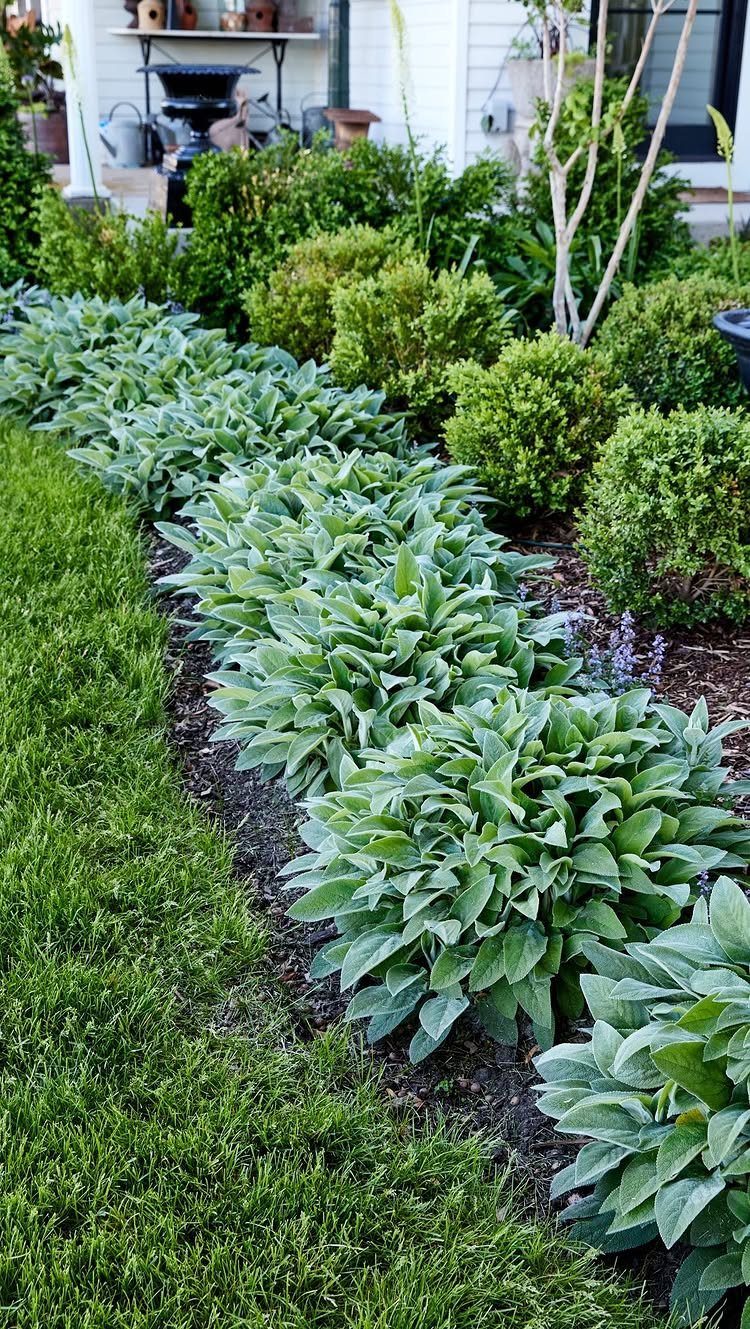
Silver foliage does the work here. Planted in a tight row along the edge of a green lawn, lamb’s ear makes a soft, pale border that separates grass from bed without a single flower.
I like it best as a repeated edging, spaced evenly so the fuzzy leaves read as one continuous line. The gray-green against turf is a quiet contrast, and it suits a sunny strip where you want something calm.
2. Bog Sage
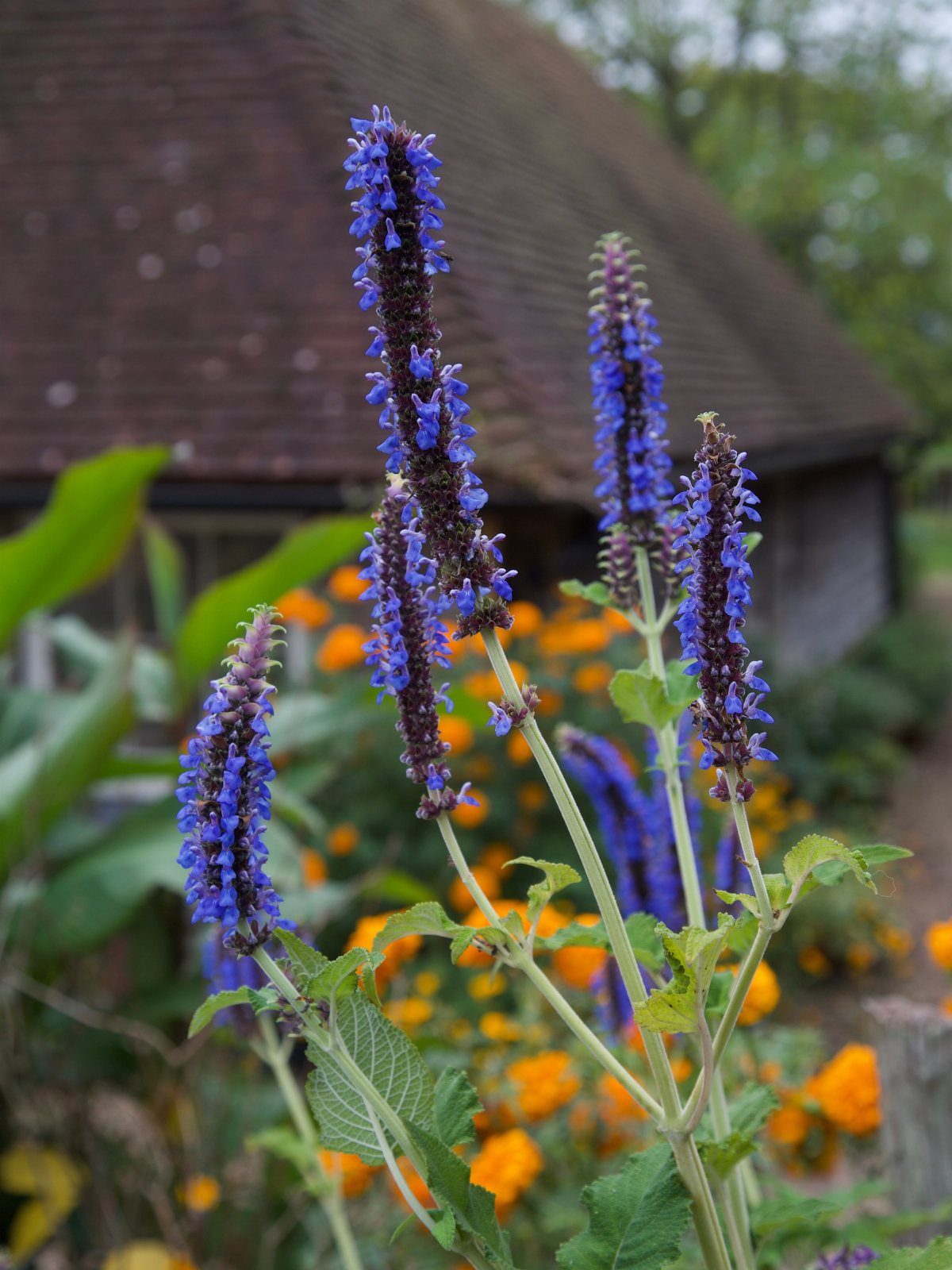
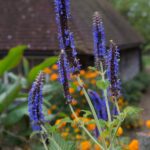
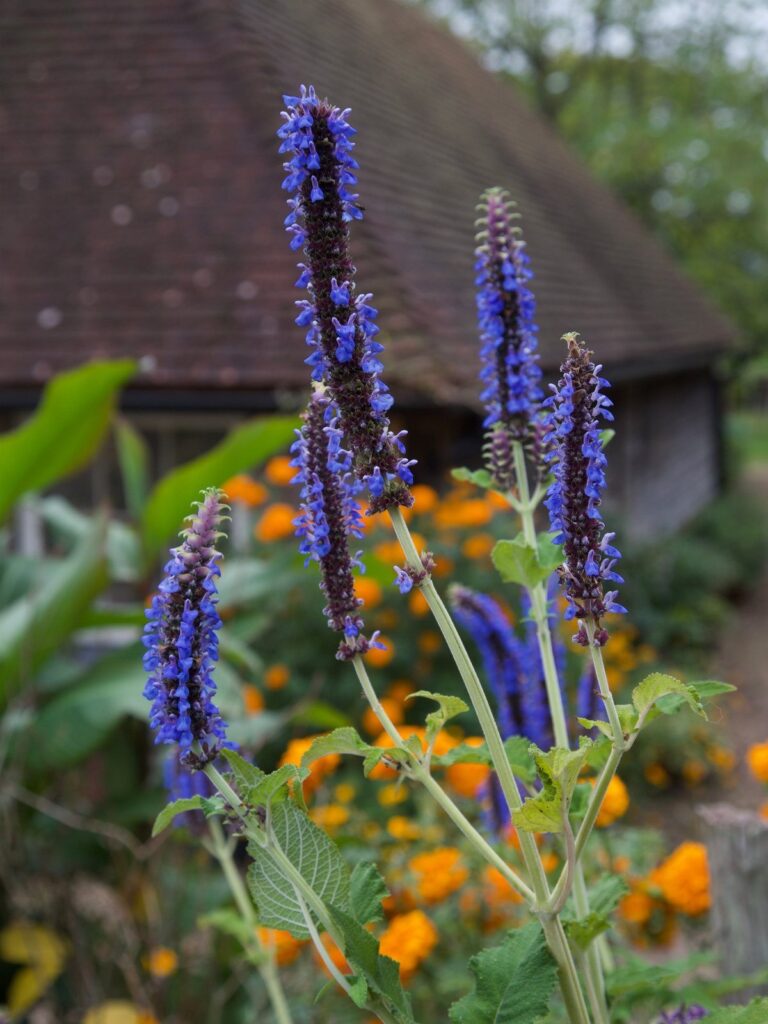
Spikes of blue rise above orange blooms in this pairing, and the contrast is the reason to copy it. Bog sage brings the height and the cool color; the orange behind it makes the purple look deeper.
Pair it with a warm partner like orange, since 2 shades of purple side by side tend to blur together.
3. Bee Balm
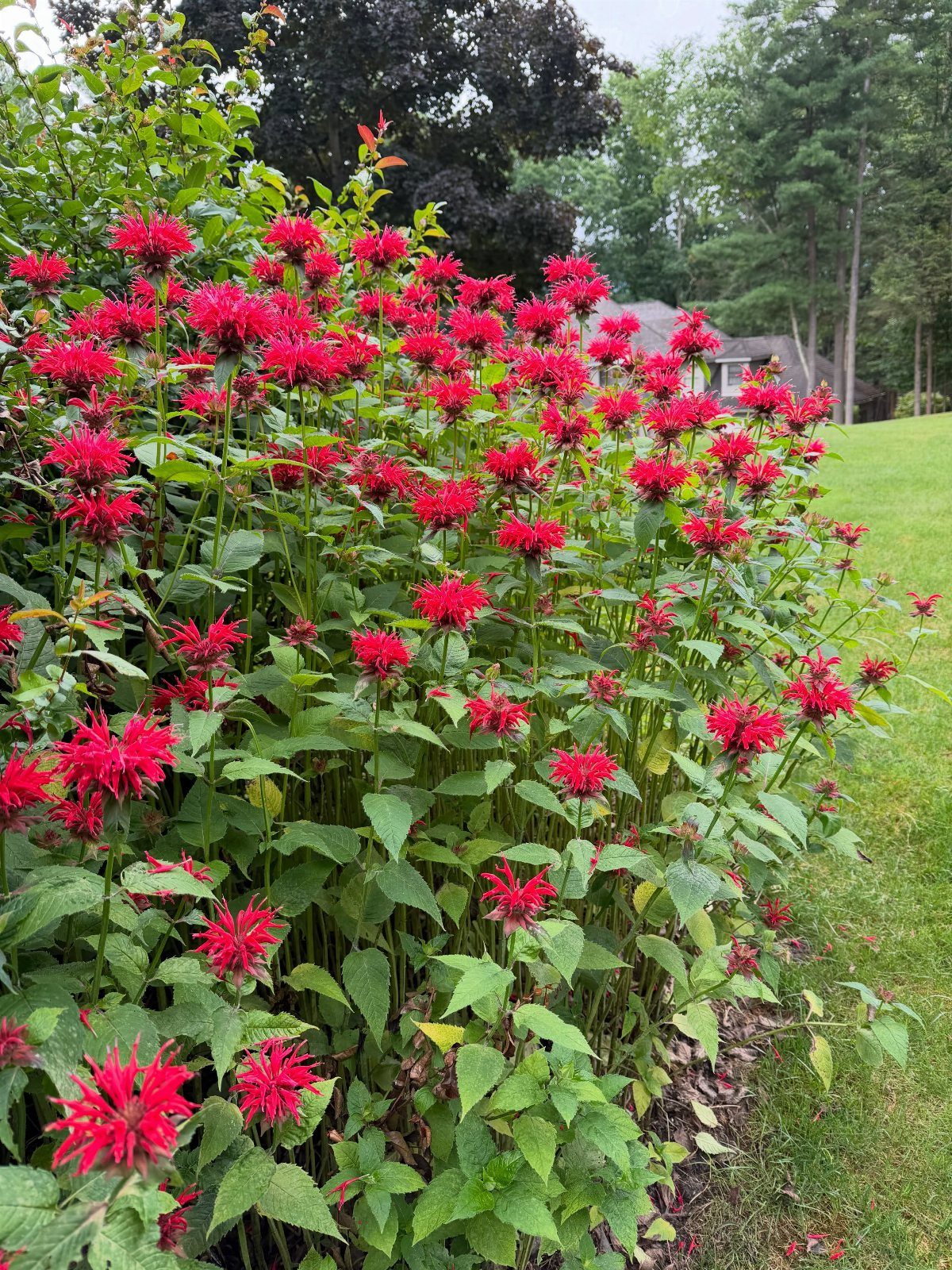
Red bee balm flower heads sit in rounded clusters, and the tubular blooms are what pull in hummingbirds, butterflies, and other pollinators.
The scented foliage adds a second reason to plant it near a path or patio, where a brush of the leaves releases the aroma.
For a sunny bed, I would choose a red like this one for the strongest hummingbird appeal. Give it a spot you pass often, so you actually see the visitors.
4. Agastache
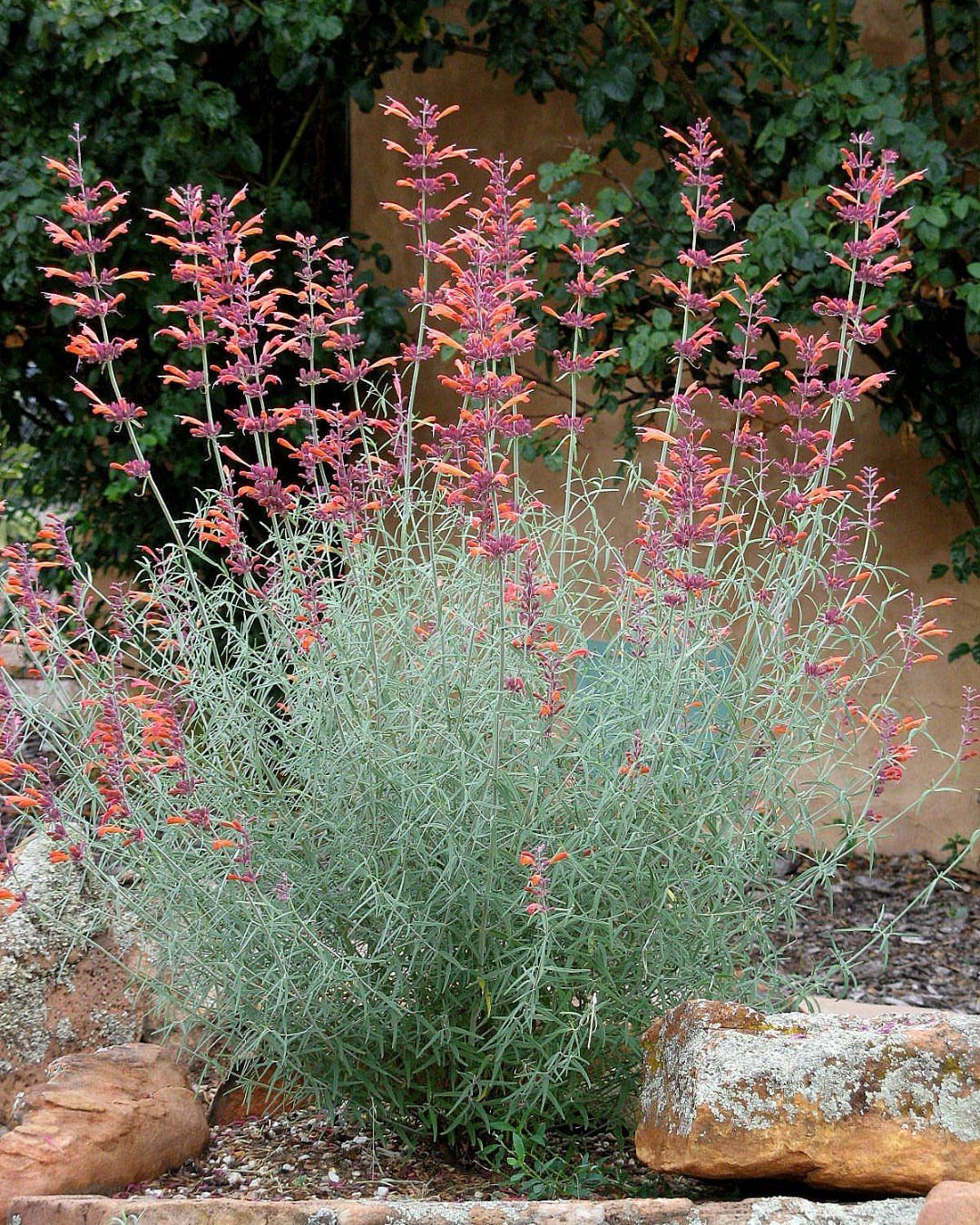
Silvery-green leaves and tall reddish-orange spikes make agastache a good fit for a rock-edged bed, where its drought tolerance matters. The foliage is aromatic, and the flower spikes last a long time.
Hummingbirds and pollinators visit the blooms, so it earns its place twice.
Tuck agastache among stones or along a wall, and let its bushy form fill the space. For a hot, dry spot with little watering, it is a practical pick.
5. Bellflower
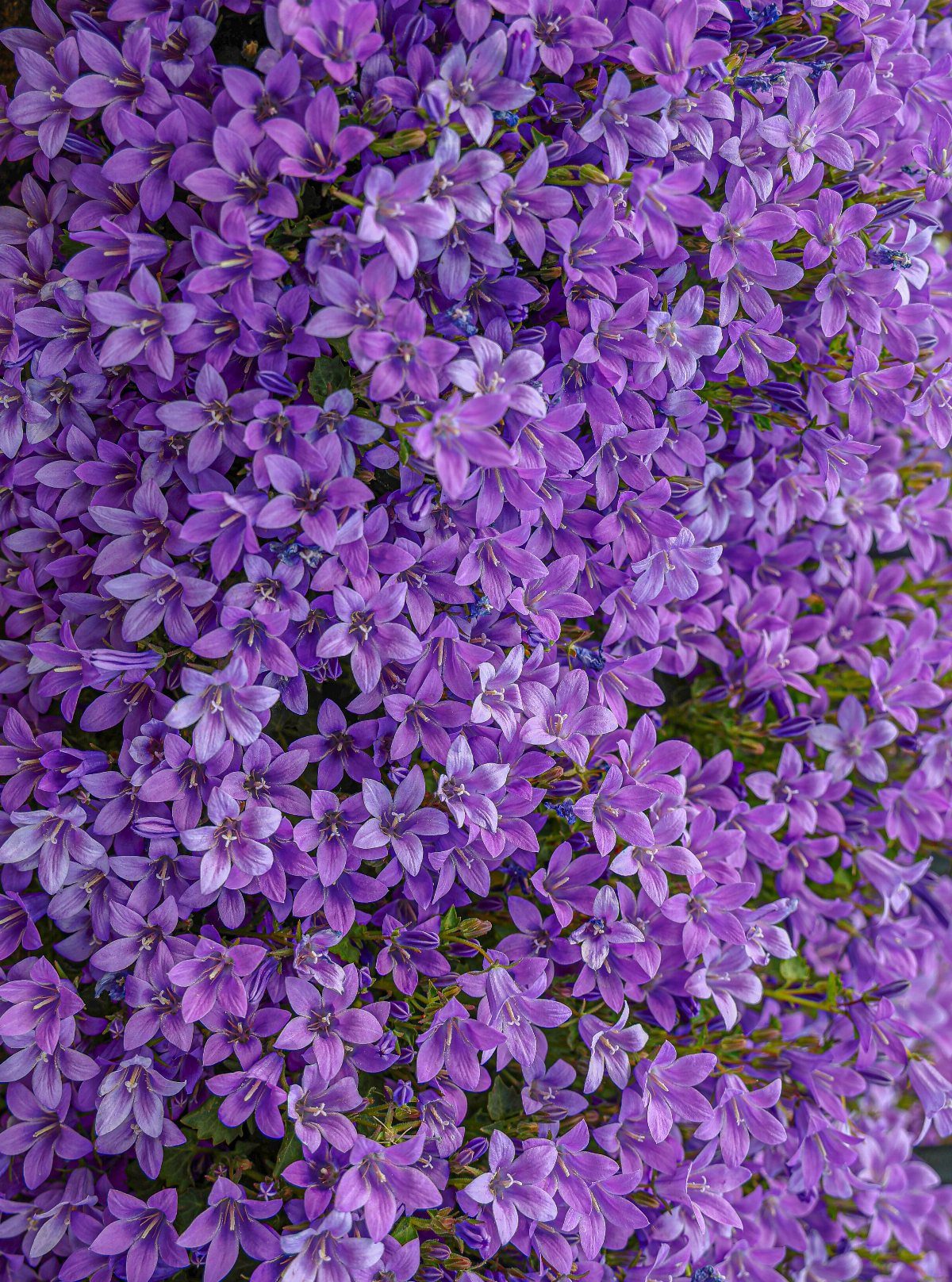
Bellflowers grow in cup or bell shapes, and the plants come in upright, mounding, or creeping forms. That range is the first thing to check at the nursery tag, because the form decides where it belongs.
Mounding and spreading bellflowers knit into a dense purple mass when planted close together. Choose creeping kinds for edges and gaps, upright ones for the middle of a border, and mounding ones where you want a full cushion of blooms.
6. Blazing Star
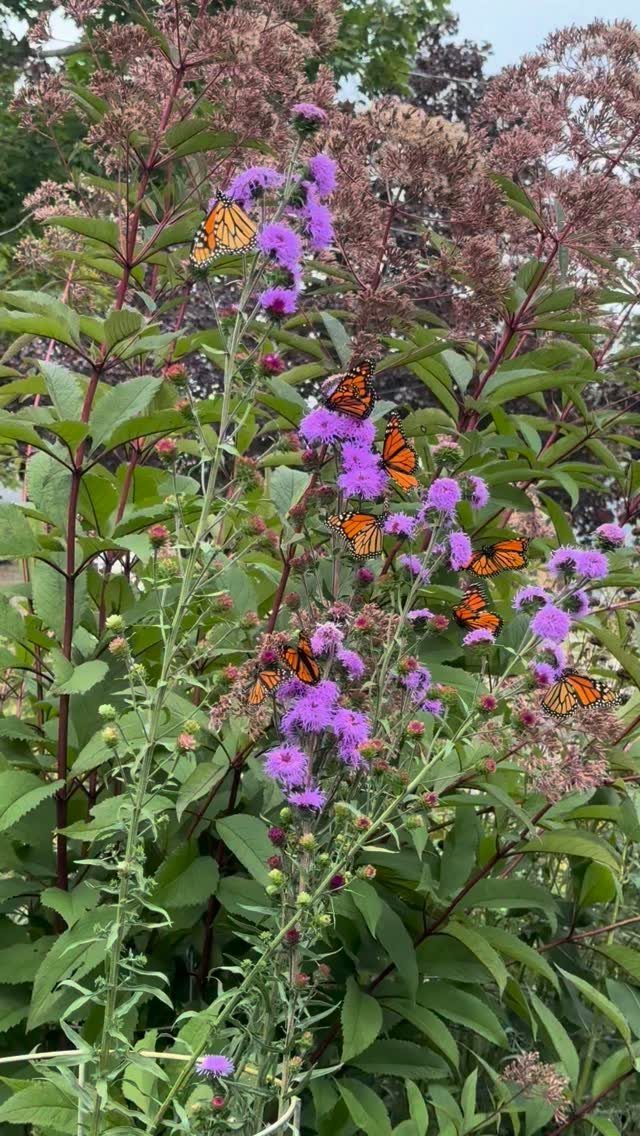
Feathery purple plumes of blazing star draw monarch butterflies, and a clump in bloom can host several at once. That makes it a strong choice for a sunny patio where you can watch pollinators at work.
It tolerates drought and poor soils, so a lean, bright spot where fussier plants struggle suits it well.
Skip rich soil and heavy watering; the plant does not need them. Group several together so the plumes make a bigger landing zone.
7. Canna
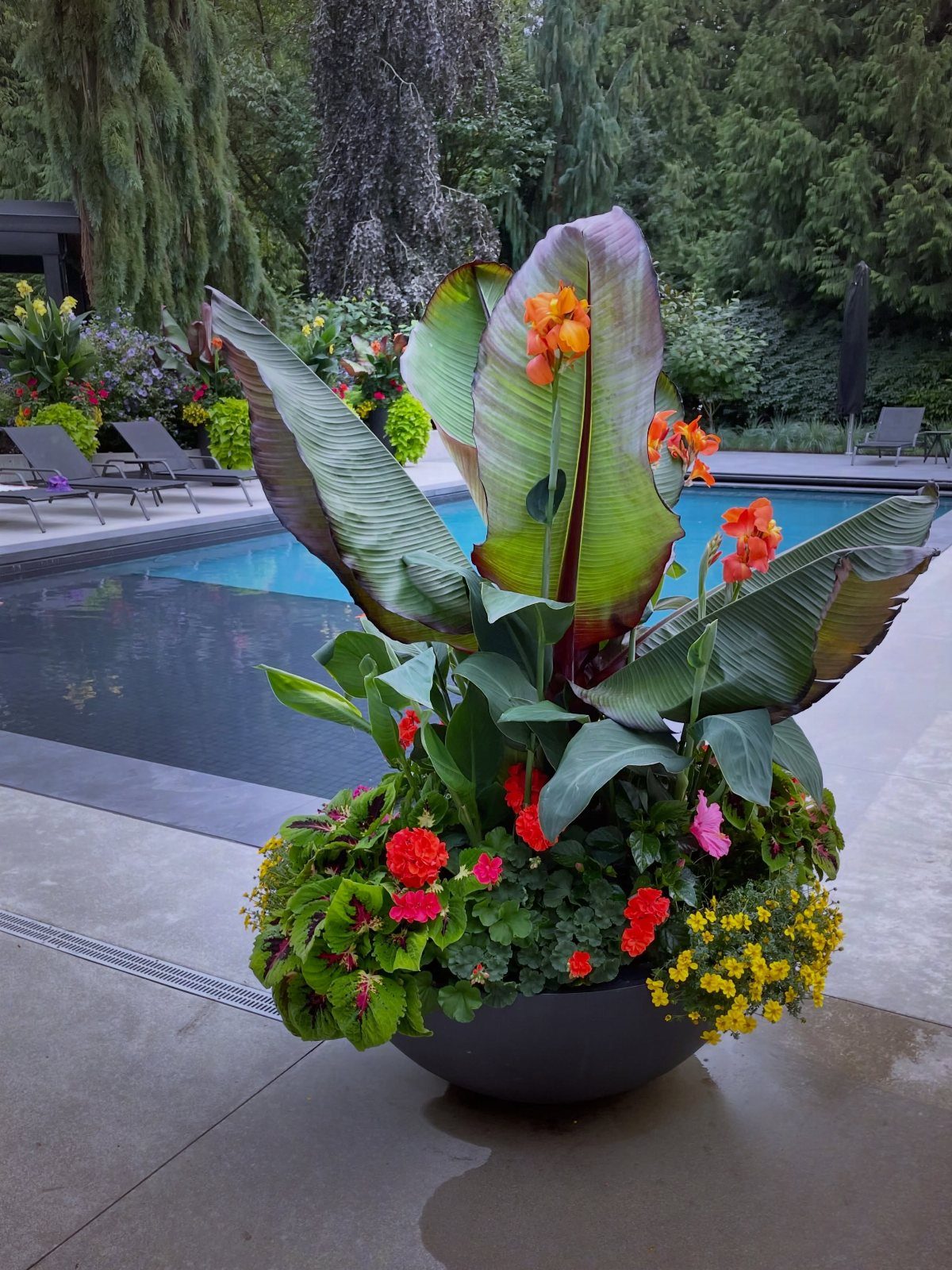
A black patio planter suits canna because the dark pot makes orange flowers and wide leaves look even bolder.
The plant is a heat lover, so a sunny spot beside a pool or on a paved patio is where it belongs.
I would plant one canna as the tall centerpiece and tuck smaller red and yellow bloomers around its base. The leaves do most of the tropical work, so choose a pot large enough to hold the plant without looking cramped.
8. Catmint
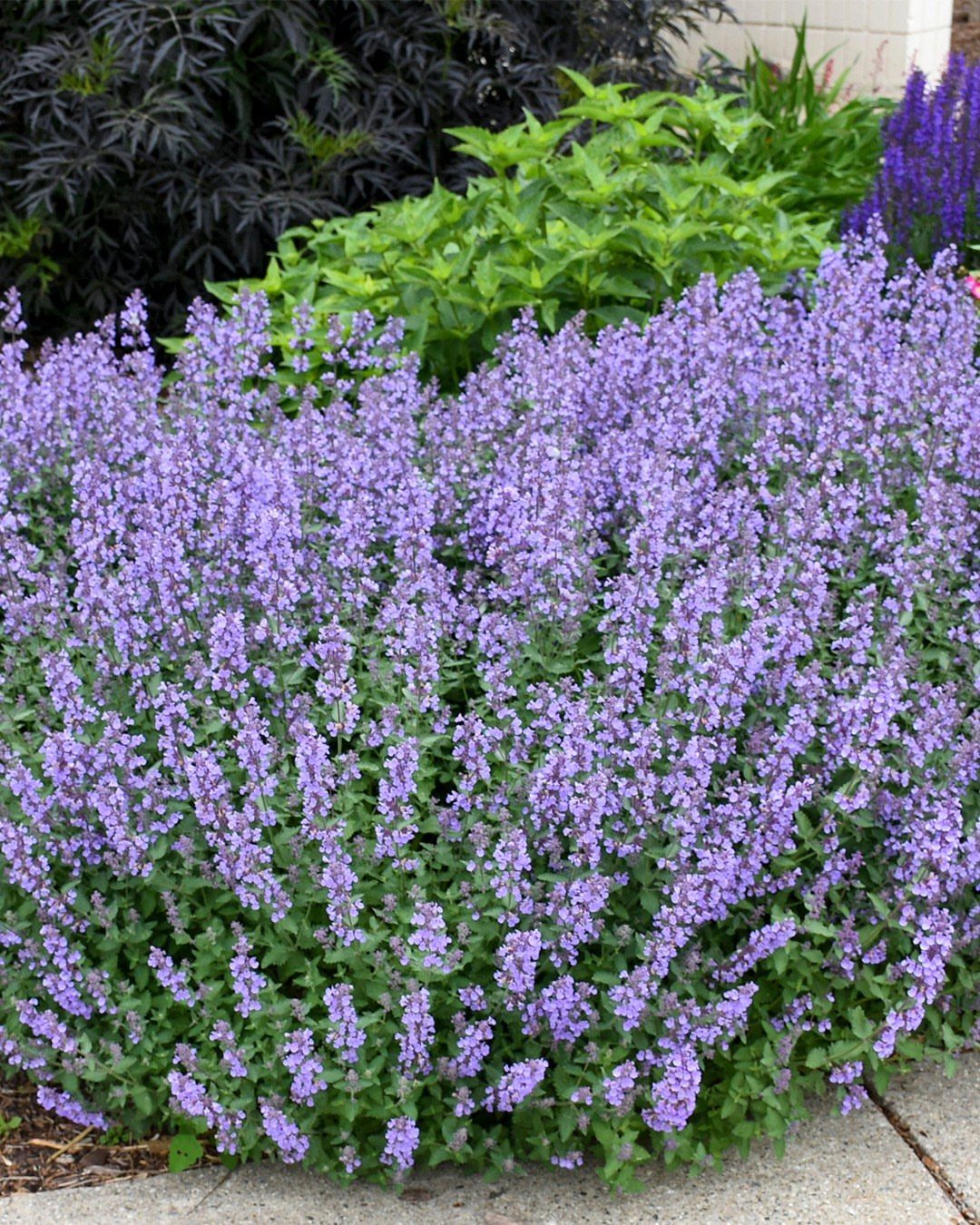
Catmint grows into a dense mound, and its purple flowers keep coming over a long stretch, which gives pollinators a steady supply of nectar. That makes it a dependable filler for a sunny bed.
Plant it where the mound can spread against darker shrubs; the purple stands out well next to deep plum and bright green foliage. I would choose catmint over a short-lived bloomer when I want a bed that never looks empty.
9. Coneflower
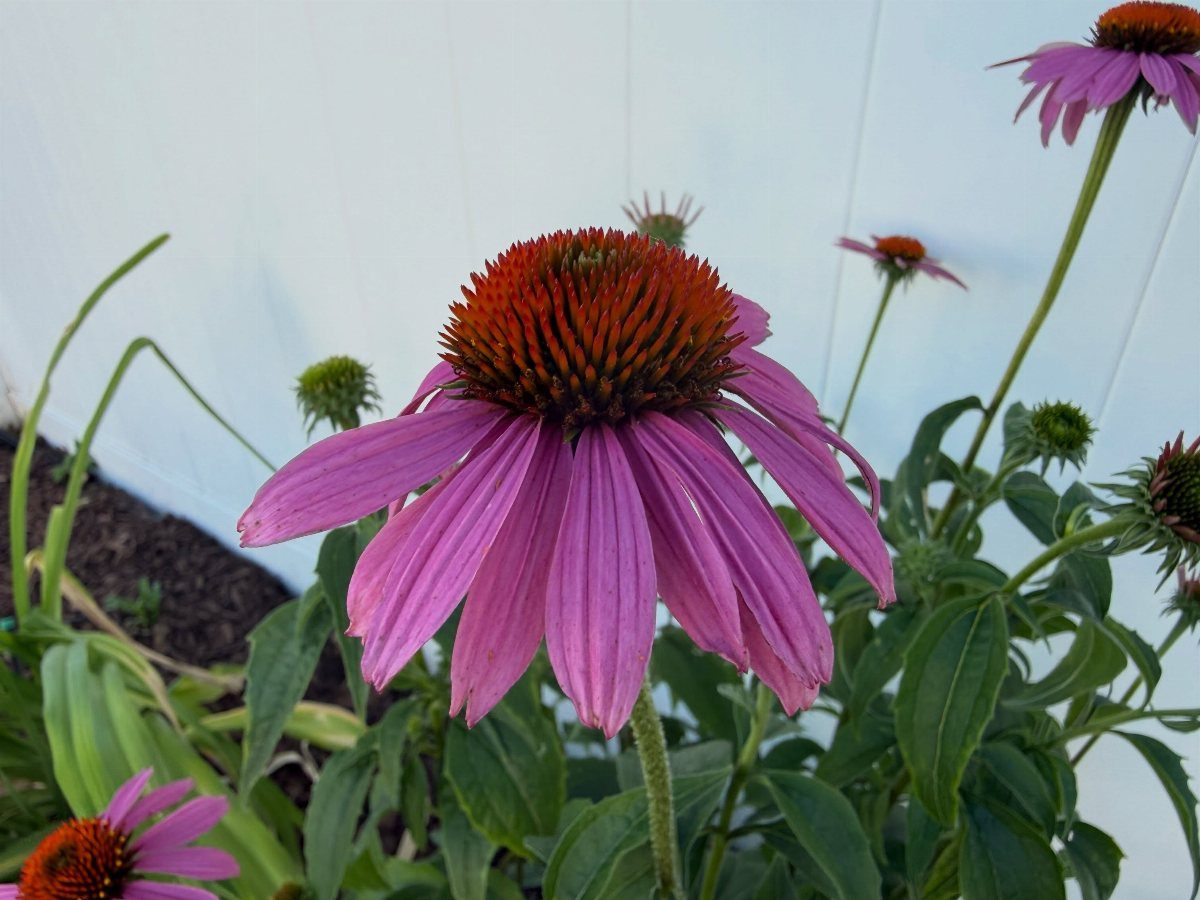
Coneflowers give you two seasons of use from one plant. Pollinators work the blooms, and the seedheads left standing become food for songbirds.
Hold off on cutting the stems back once the petals drop. I prefer leaving the seedheads up and tidying later, since the birds are half the reason to plant it.
10. Daylily
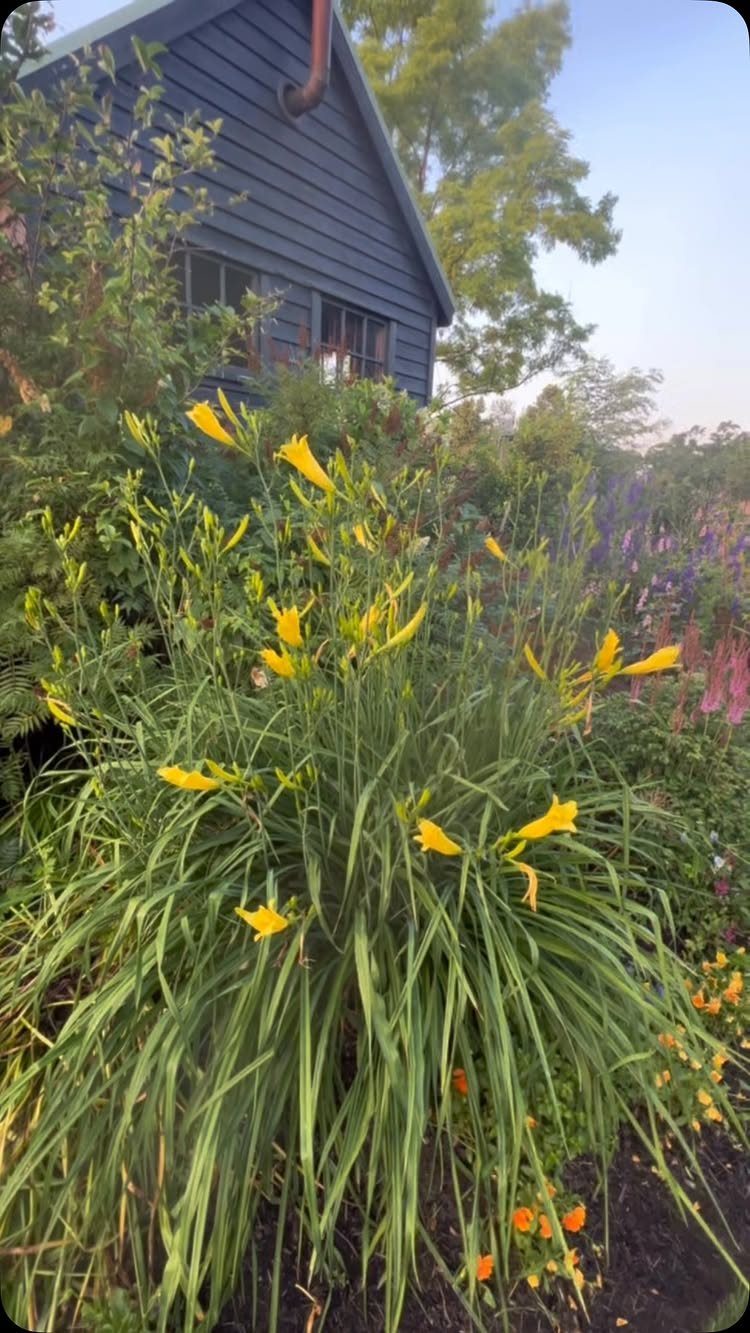
Daylily is the plant I suggest when someone wants a sunny bed that asks for little.
Daylilies ask for very little, and they come in so many colors and flower shapes that yellow is only one choice; red, coral, and deep burgundy are just as easy to grow.
The long, arching green leaves look good even between blooms. Plant a drift of them along a shed or house wall, where the foliage softens a plain surface.
11. Dianthus
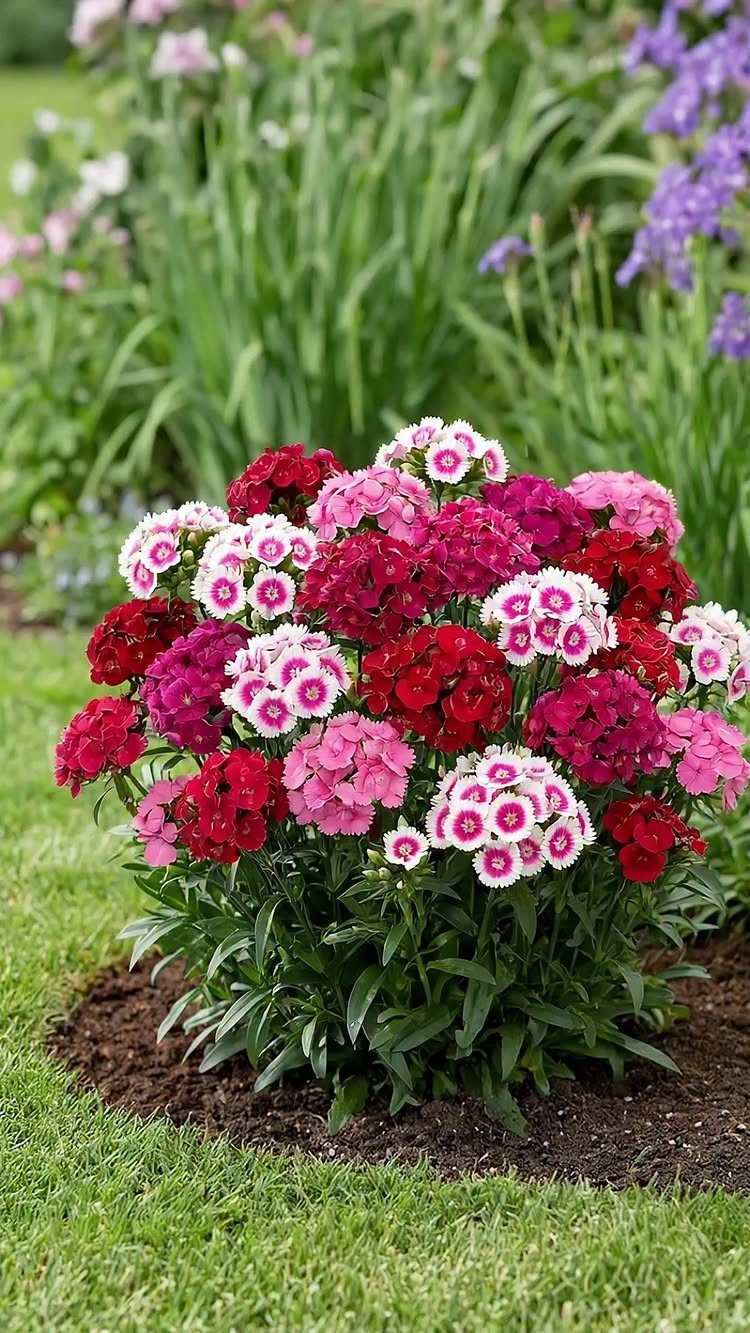
Expect dianthus to bloom from spring into early summer, and a few reblooming varieties will push out a second round of flowers in fall. Check the tag for that detail, because it separates a one-time show from a long season.
A mix of red, pink, and white, packed close, makes a ruffled low carpet.
It works well at the front of a bed, where the small blooms are easy to see. For color that lasts past early summer, pick a reblooming type.
12. Lavender
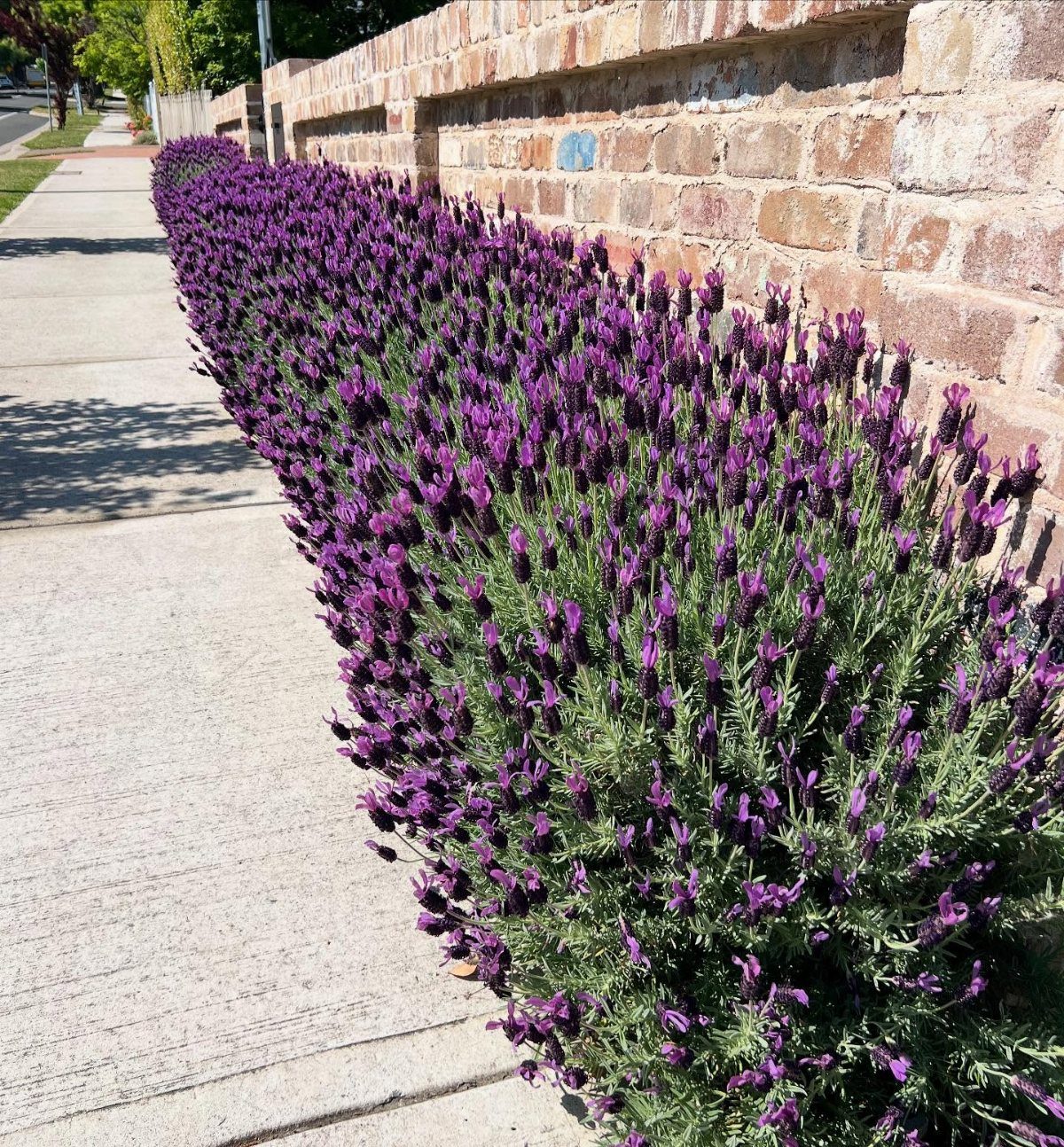
Lavender in a straight row along a brick wall looks tidy and deliberate. The purple blooms against warm brick, with a sidewalk alongside, make a clean line that needs little design effort.
A sunny strip like this is the right home for it. I would plant a full row of one kind, evenly spaced, rather than mixing several, so the line reads as one.
13. Milkweed
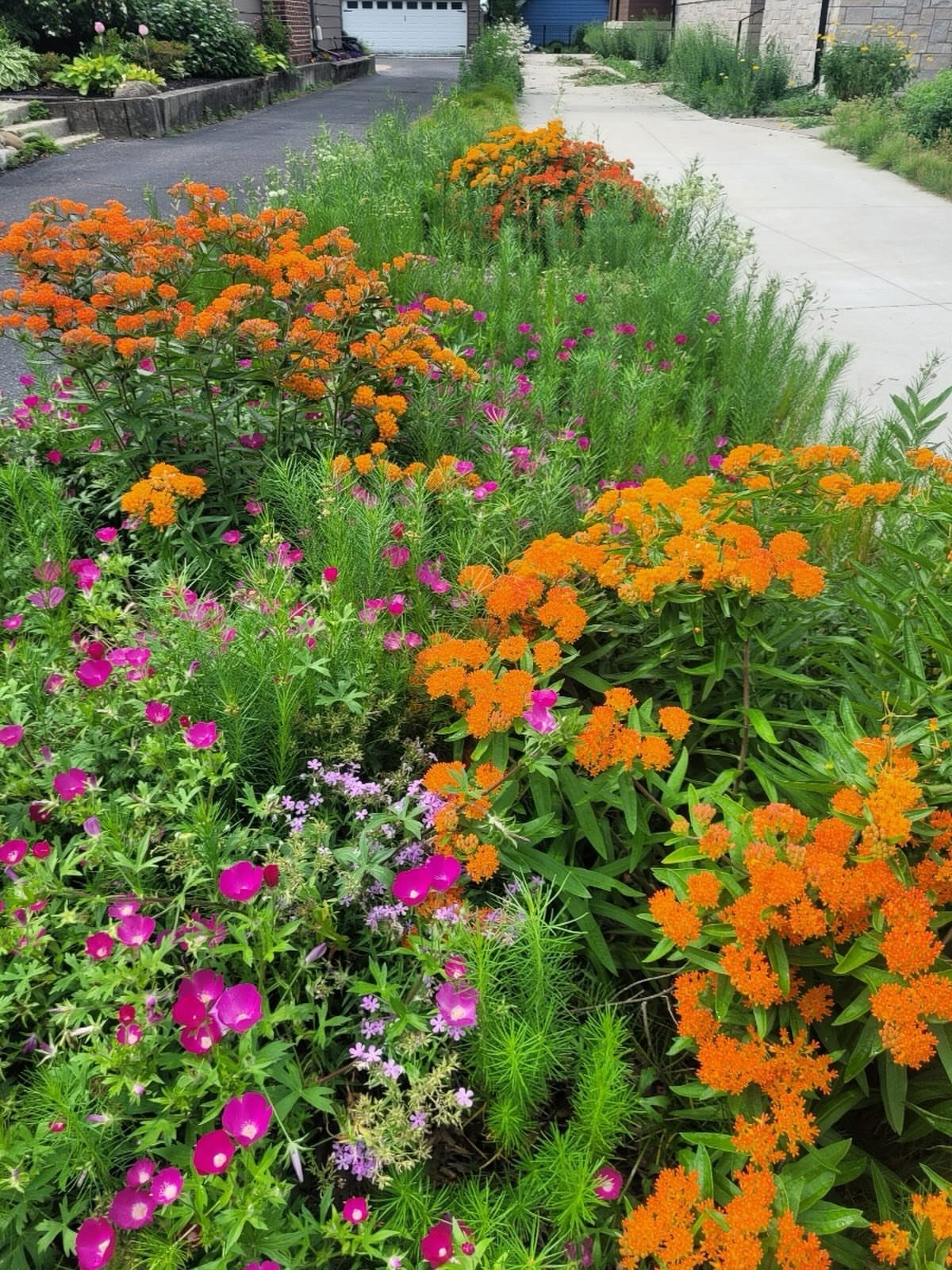
Milkweed needs very little ground, and it will grow in a narrow strip along a driveway, where orange blooms can sit right next to pink ones. A sunny strip between pavement and lawn is plenty.
I would choose the orange kind for a border like this, since it stands out against pink and green.
Plant it where you will see it from the sidewalk or the front door, and leave it in place once it settles in.
14. Red Hot Poker

Tall flower spikes in orange and yellow give red hot poker a torch-like look that no other plant on this list matches.
Set them behind lower plants, and let the roses or other rounded blooms sit in front. The upright form works as an accent, so I would plant a small group of them rather than scatter singles.
15. Russian Sage
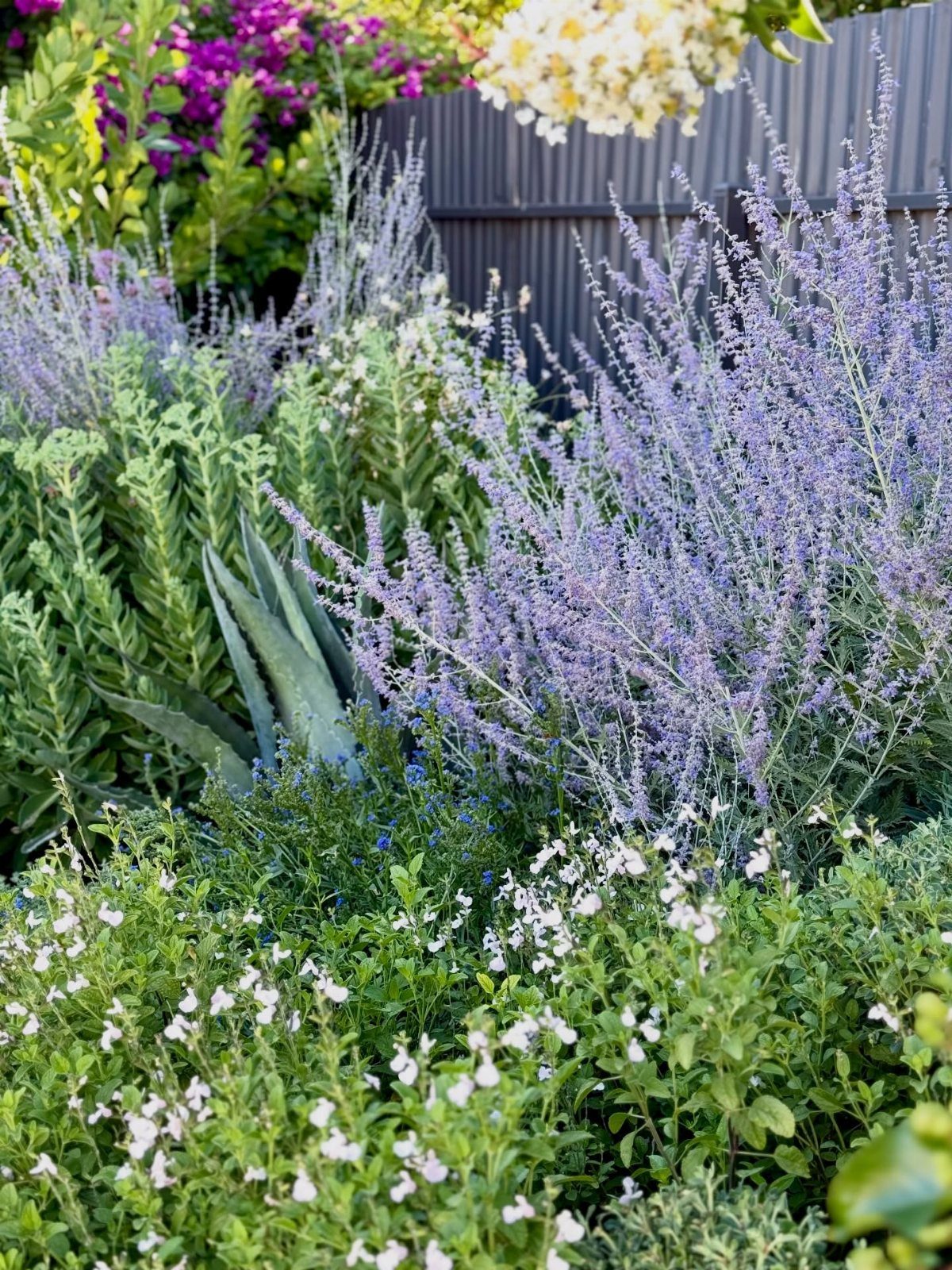
Russian sage brings airy purple spikes that soften a heavy backdrop. Against a dark gray fence, the haze of lavender-blue reads clearly, and white flowers nearby make it look brighter.
Pair it with a bold, spiky shape like agave for contrast in texture. I would plant it at the back of a sunny bed, where the height has room and the fence frames it.
16. Shasta Daisy
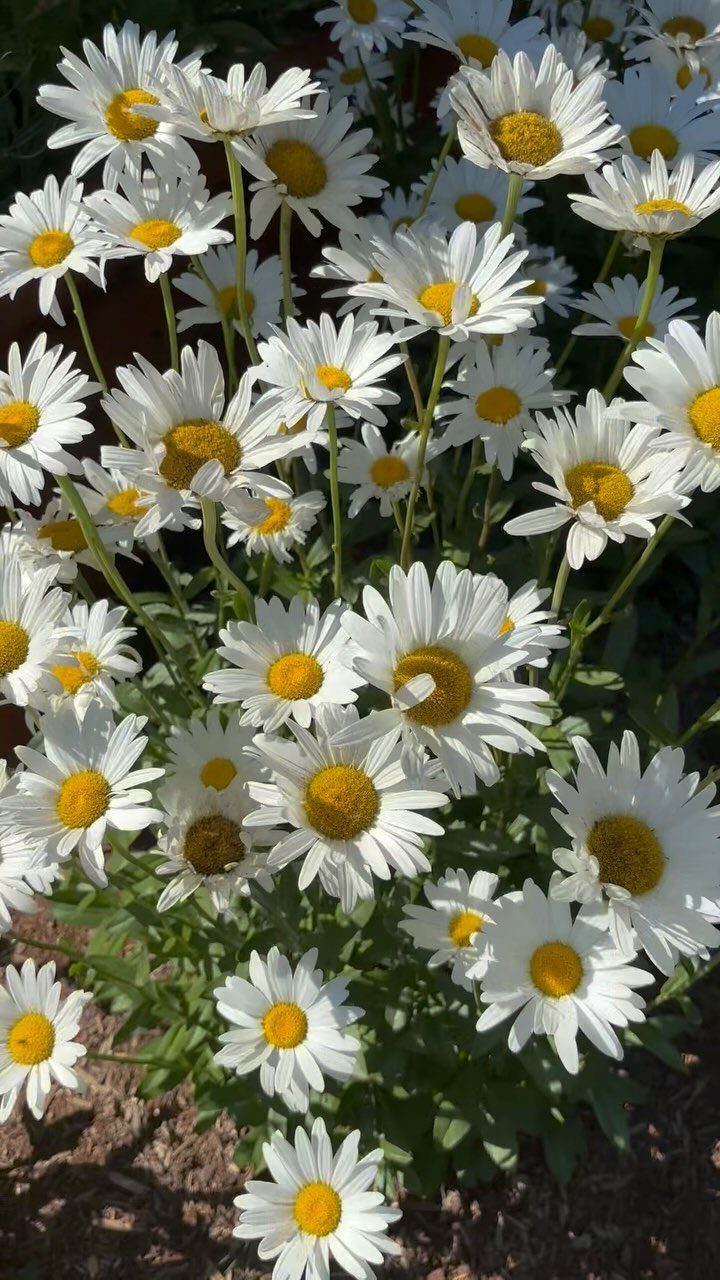
Shasta daisies are cheap to buy and fast to grow, and they multiply on their own schedule. The gardener who grew these says to divide them every 2–3 years to quadruple your plants.
That makes one purchase into a whole border for the price of a single pot. White petals with yellow centers go with nearly everything, so I would plant them in mulched beds where they can fill in.
17. Speedwell
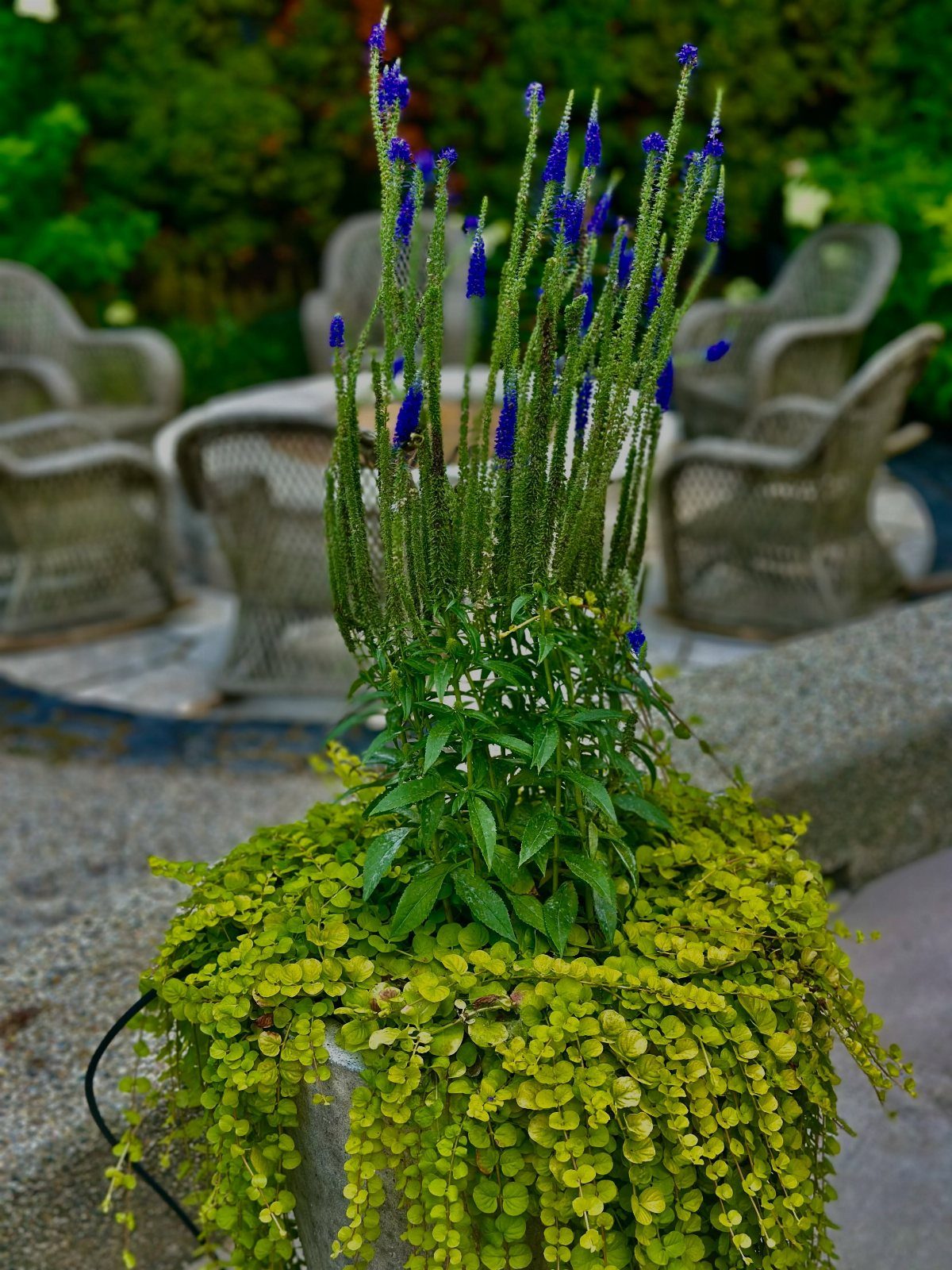
Speedwell does well in a container, where its tall blue spikes rise from a pot and lime-green foliage trails over the rim. Pairing an upright plant with a trailing one gives a single patio pot a full look.
Plant it near seating, where the blue sits close to your line of sight. A pot like this needs little else around it, so skip crowding it with other flowers.
18. Sedum / Stonecrop
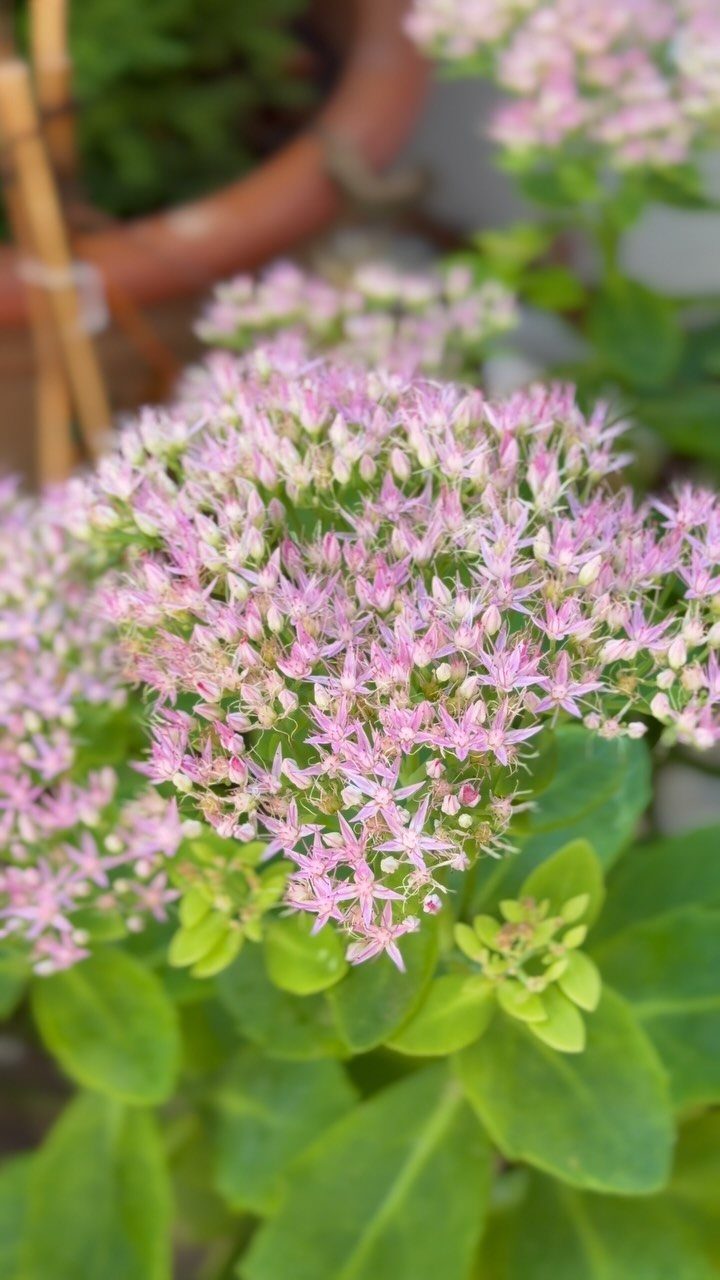
Sedum has thick, fleshy green leaves that hold water, which is why it handles a sunny spot so well. Pink flower clusters sit on top of that tidy foliage.
I like it at the front of a bed, where the leaves are easy to see up close.
Since it stores its own water, sedum suits a gardener who forgets to water, and a hot, bright corner is where I would put it before any thirstier plant.
19. Pearly Everlasting
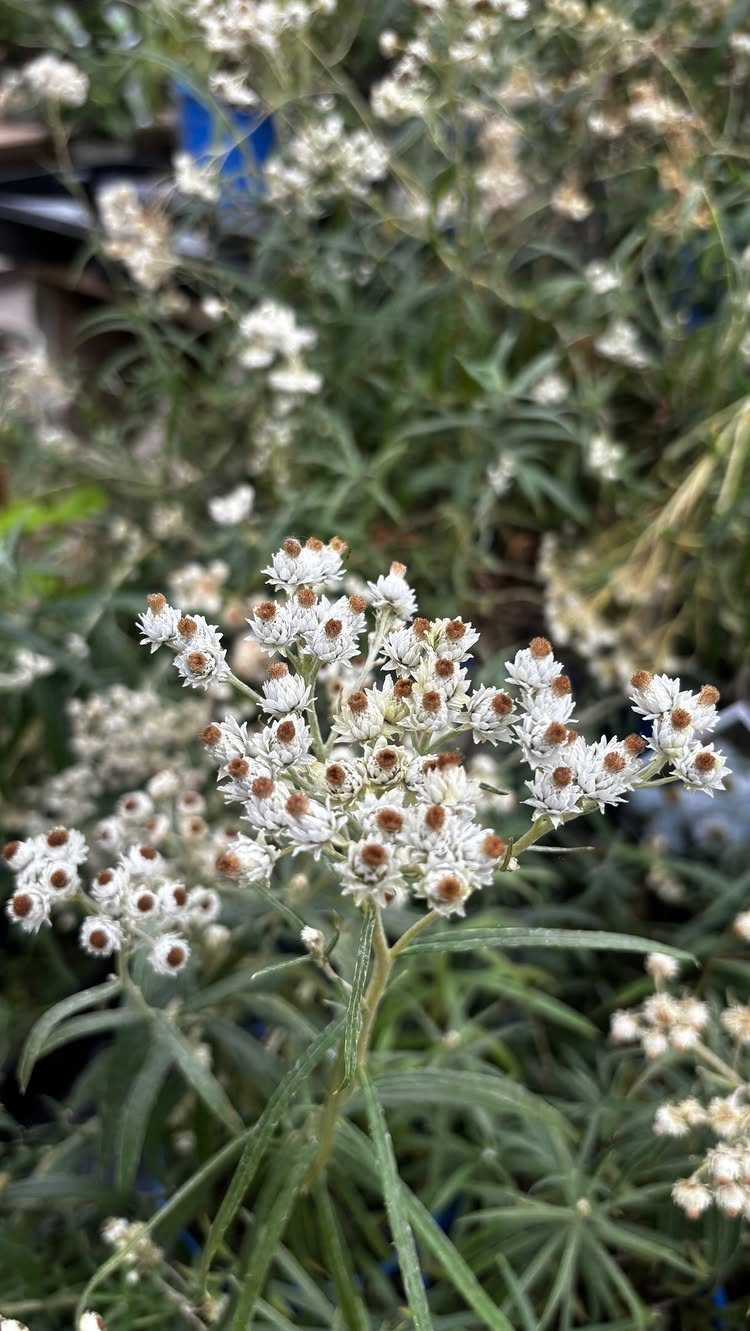
Small white flowers that look dry even when fresh sit above silvery, fuzzy foliage, and the plant holds together in upright mounds. Silvery foliage and papery white flowers keep pearly everlasting quiet and cool, which suits a hot, bright bed.
I would pair it with greener or darker neighbors, since the silver reads best against them. Plant a few mounds together rather than a single one, so the pale tone shows up as a patch.
20. Ruby Slippers’ Oak-leaf Hydrangea
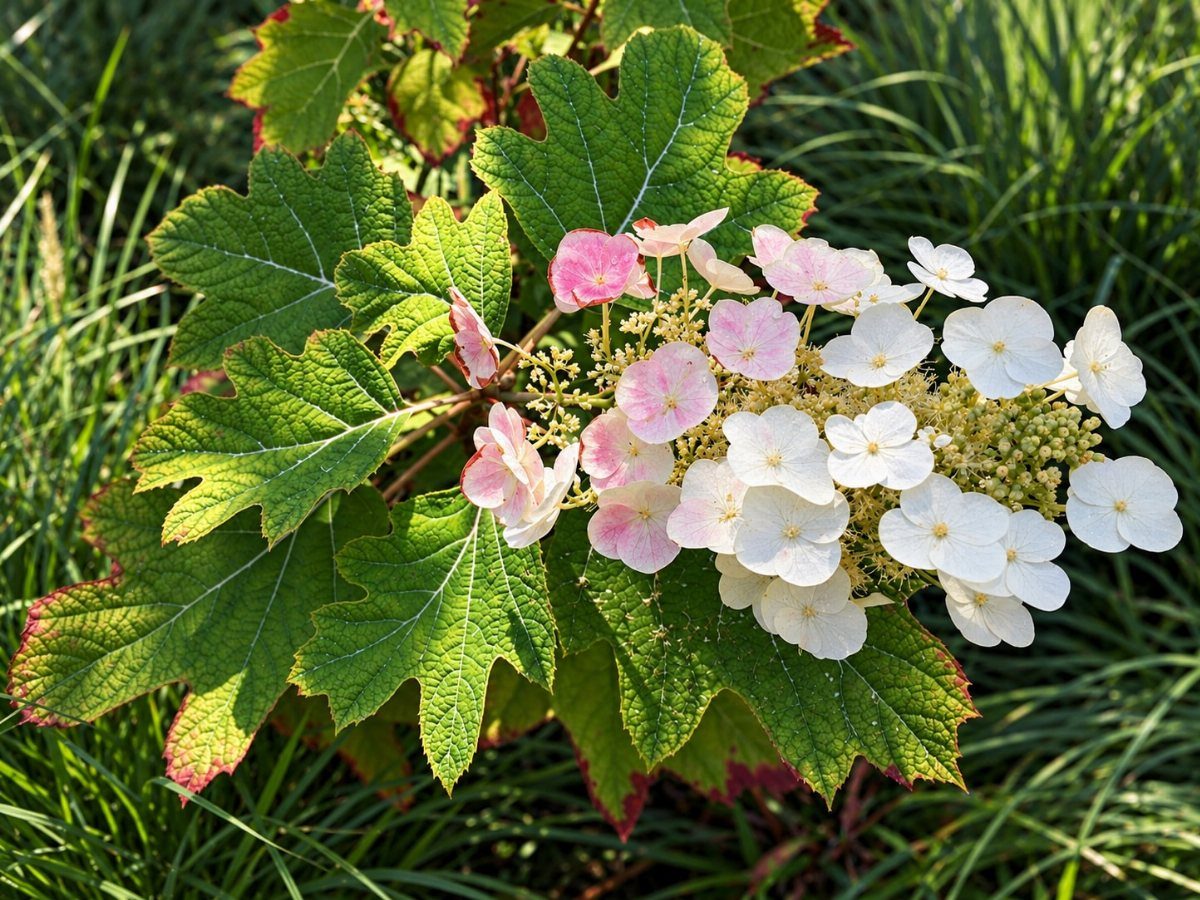
Each ‘Ruby Slippers’ bloom starts out white, blushes pink as it matures, and finishes a deep ruby red. A single shrub can carry all 3 shades at once, which is the reason to pick it over a plain white hydrangea.
I would set it where you can see it up close from a lawn edge or path, so the color shift is easy to follow over the season.
21. Blaukappe’ Sea Holly
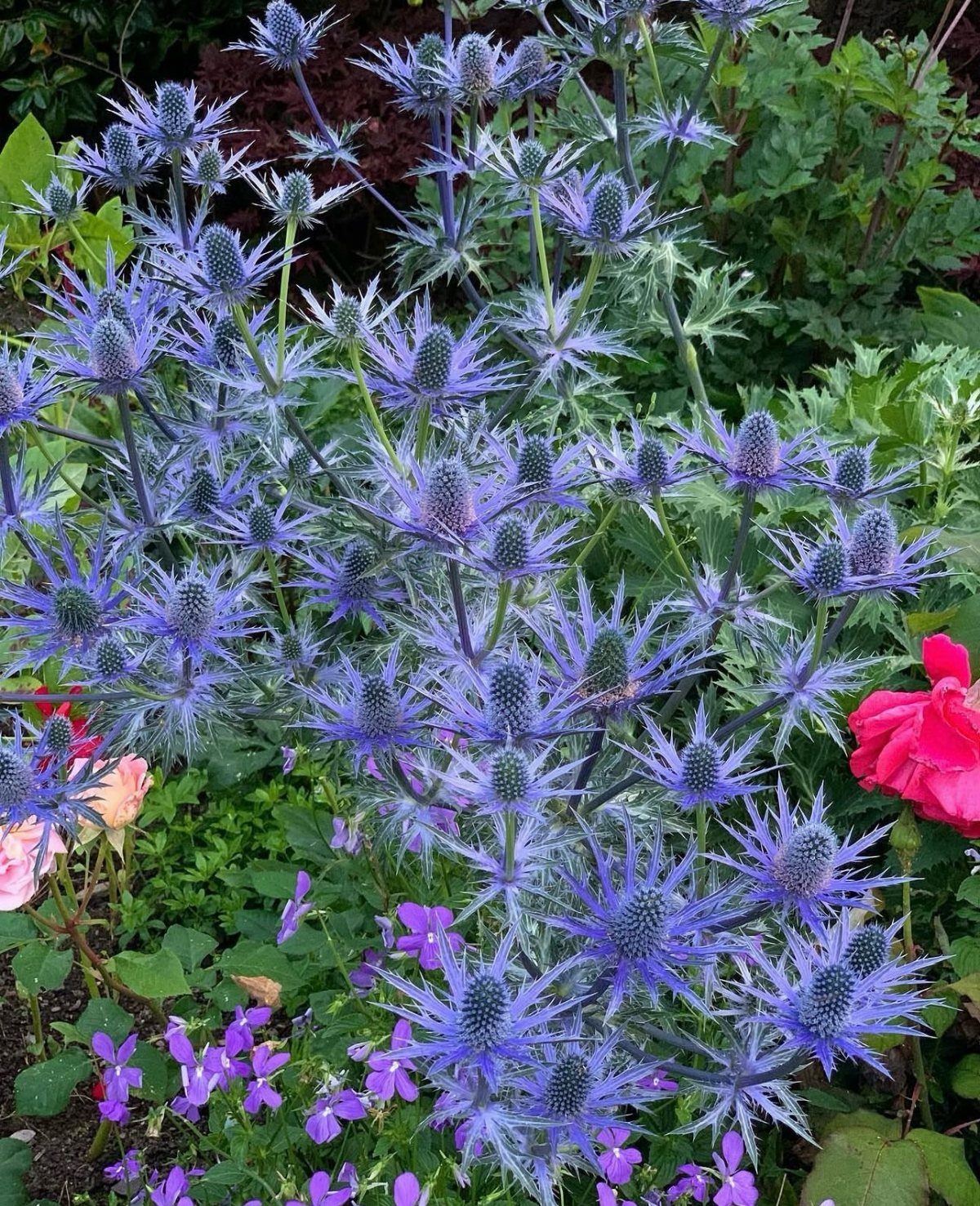
‘Blaukappe’ sea holly has blue-purple flowers and spiky foliage, so it adds a sharp texture that most soft border plants lack.
I would tuck it among rounded, softer flowers so the spikes have something to contrast with. Plant a small cluster, not a lone plant, and the blue reads as a deliberate patch.
Full-sun Definition and Exposure
Full sun means 6 or more straight hours of unfiltered light on the spot, so time it with a phone alarm on a clear day before you spend a dime.
Watch the spot on a clear day, noting when the light arrives and when it leaves. A bed that looks bright at noon may be shaded by 2:00.
Some plants perform even better with more sun than that minimum, and many full- to mostly-sunny perennials get showier as the hours add up.
Some plants scorch in the heat of late day, and they do best where morning light is strong and shade creeps in by early afternoon.
If your yard is hot all afternoon, check each plant tag for how it handles heat before you commit.
A bed on the east side of a house is a gentler kind of full sun than a bed against a south-facing wall.
“Full sun” for plants is regarded as being at least 6 hours of direct sun per day. Some will perform even better with more sun, while others may benefit with protection from hot afternoon sun.
Perennial Garden Benefits
Perennials come back year after year, so one planting day pays off for many seasons. That matters on a budget: you buy the plant once and get structure, long-lasting flowers, and attractive foliage without replanting each spring.
Pick varieties with a track record: hardy in your zone, and known to come back for years. A plant with a long track record is a safer purchase than a new release with a pretty tag.
Native wildflowers, along with nativars (cultivated selections of native plants), earn a spot on the shortlist too.
Natives suit the conditions where you live, and nativars are selected versions of native plants, often bred for a tidier habit or a different color.
If you plant a bed in stages, start with a few reliable perennials and add more as your budget allows.
Frequently Asked Questions
What plants thrive in full sun and heat?
Agastache, blazing star, sedum, canna, and catmint all handle bright, hot spots well.
Agastache and blazing star tolerate drought and lean soil, sedum stores water in its thick leaves, and canna is a true heat lover. Before buying, check each plant tag for heat tolerance if your yard stays hot all afternoon.
What does full sun mean for plants?
A spot counts as full sun once direct, unblocked light hits it for 6 or more hours a day.
Check the bed on a clear day and write down when the sun reaches it and when it leaves; a patch that glows at noon can be in shade by 2:00.
Some plants do even better with more sun, while others scorch in late-day heat and prefer afternoon shade.
What plants grow well in full sun with little watering?
Sedum, agastache, and blazing star suit a hot spot where you rarely water.
Sedum holds water in its fleshy leaves, and the other two tolerate drought. Blazing star also does fine in poor soil, so skip the rich soil and heavy watering.
What full-sun plants attract hummingbirds and butterflies?
For hummingbirds, I pick bee balm, and a red variety wins: the tubular flowers draw hummingbirds, butterflies, and plenty of other pollinators.
Blazing star draws monarch butterflies, and agastache also draws hummingbirds. Set these beds along a path, a patio, or a window you look out of so the visitors actually get noticed.
Are perennials a good choice for a sunny bed?
Yes: a perennial returns each year, so a single afternoon of planting keeps giving for many seasons.
Check that each variety is hardy in your zone, and if cash is tight, plant a few at a time and fill in as money allows.