The ideas here run from a water feature and a garden seat to a full run of cottage flowers, and the one that fits depends on how much ground and how many seasons you can give it.
1. Cottage Garden Flowers
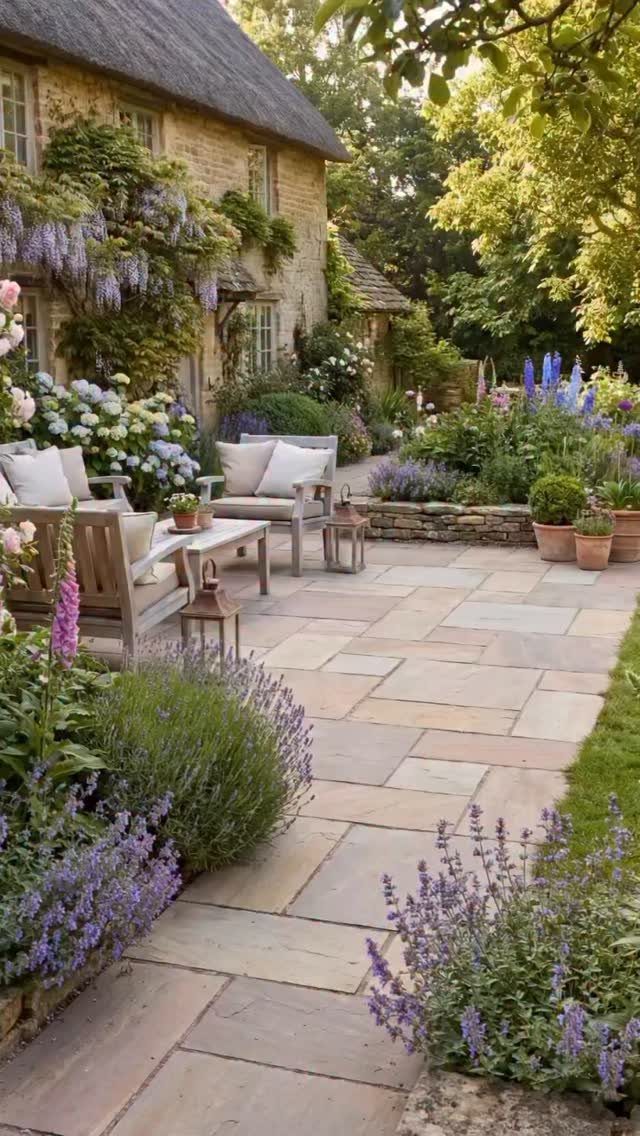
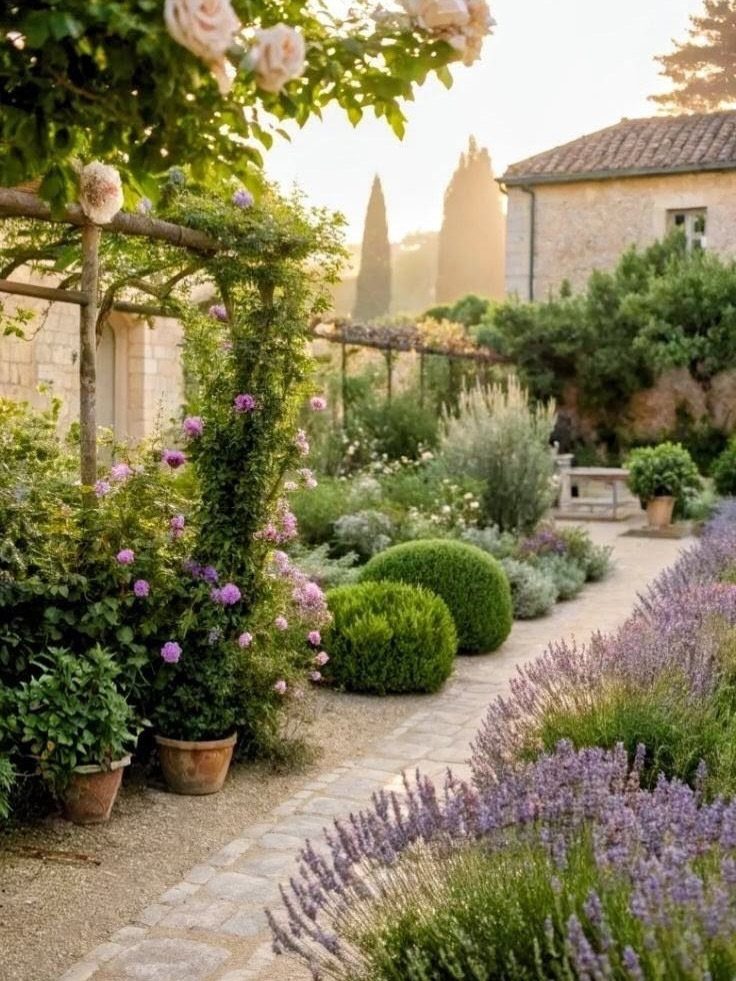
Lavender beside wisteria is the pairing to copy here: one low and mounded, one climbing, with no gap between them.
Cottage planting works because beds are packed and the edges blur, so let foliage spill over the stone instead of trimming it back.
Buy plants in small pots to keep the cost down, and mix heights so nothing stands alone. Stick to a tight palette of purples and blues, and the crowding reads as deliberate rather than messy.
2. Sweeping Beds and Curves
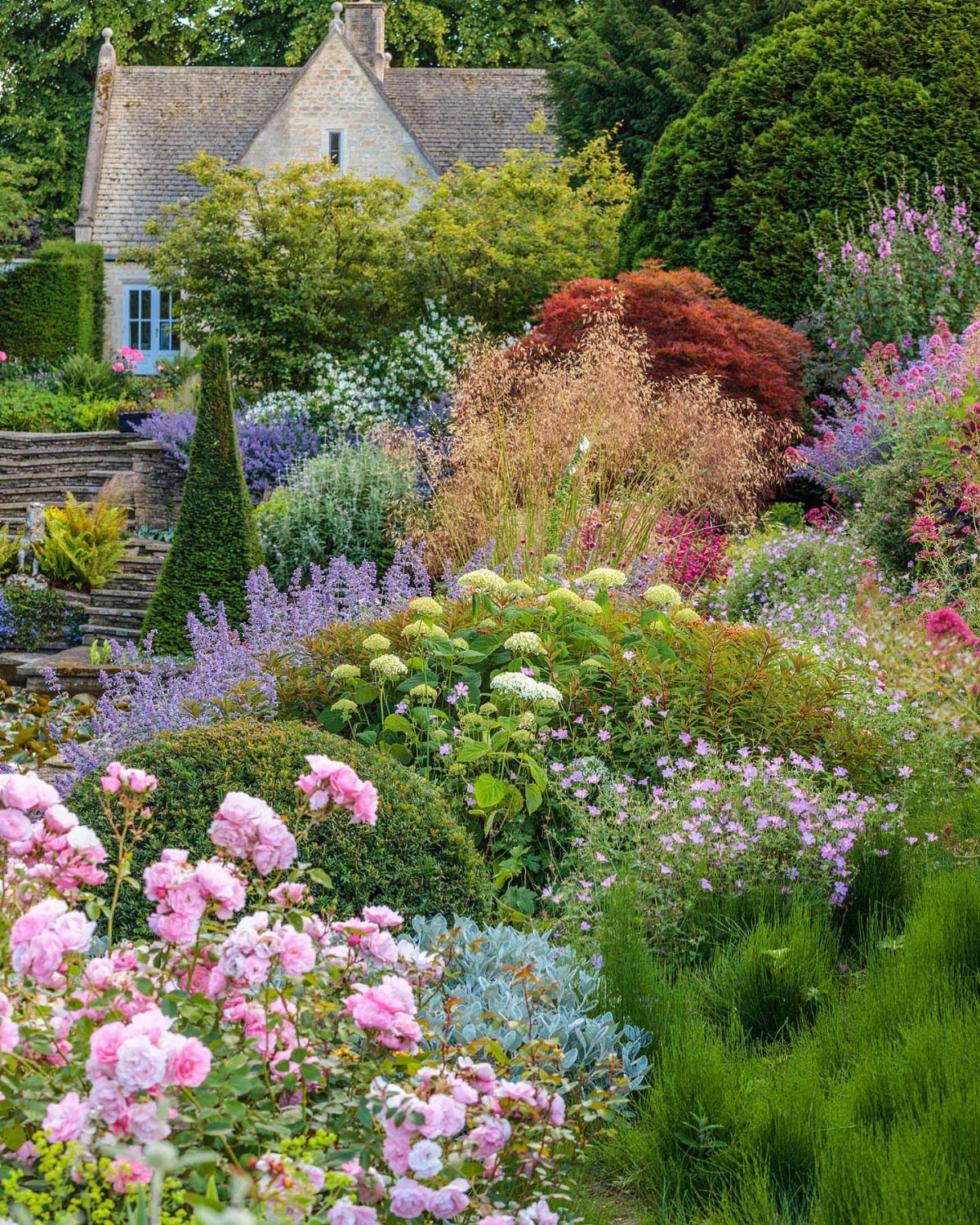
A curved bed edge does more to soften a yard than any plant. Roses and shrubs sit comfortably inside a long, sweeping line, and the eye follows it toward the house.
Lay a garden hose on the grass and shift it until the curve looks easy, with no tight wiggles.
Then cut along it with a spade. Keep the curves wide and few, since order comes from repeating one gentle shape rather than adding several.
3. Garden Structures
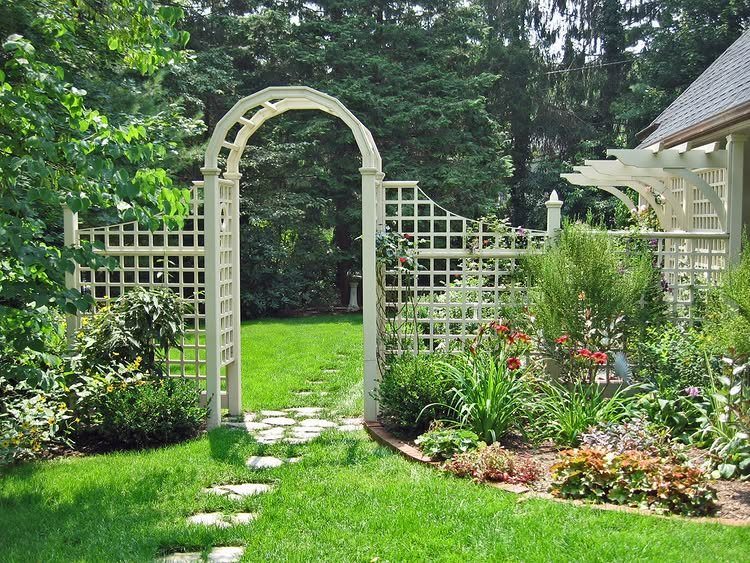
White paint on a wooden arch and trellis fence gives a yard a clear doorway between one area and the next.
Place the arch where a path begins or where the lawn turns into planting, so it marks a real change of space.
Wood is the budget-friendly pick, and a fresh coat of exterior paint keeps it crisp. A trellis fence also gives climbing plants something to hold, which adds height without taking floor space.
4. Water Features
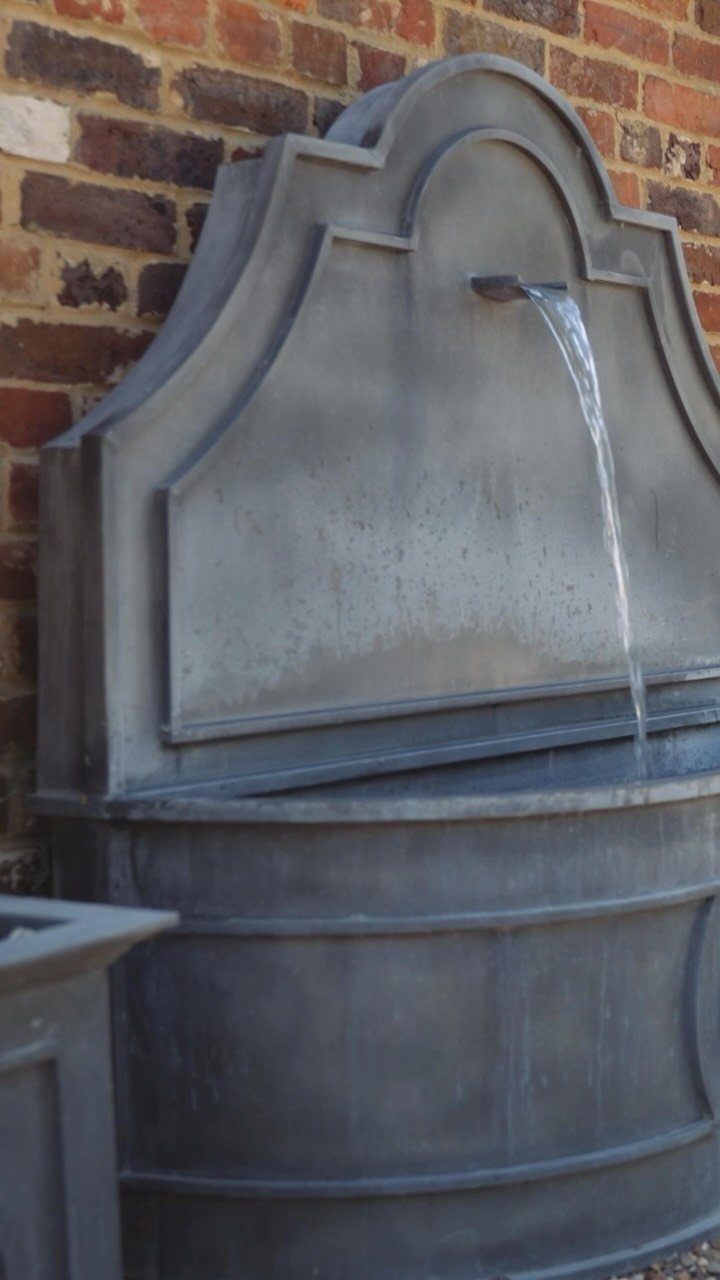
A wall fountain suits small yards because it needs a wall, not a pond. The sound of water falling into a basin masks street noise, and the stone looks calm against brick.
I would choose this over a freestanding fountain for a patio or renter-sized space. Settle where the power or pump will sit ahead of the purchase, and pick a spot where you can reach the basin to top it off.
5. Weathering Stone and Wood
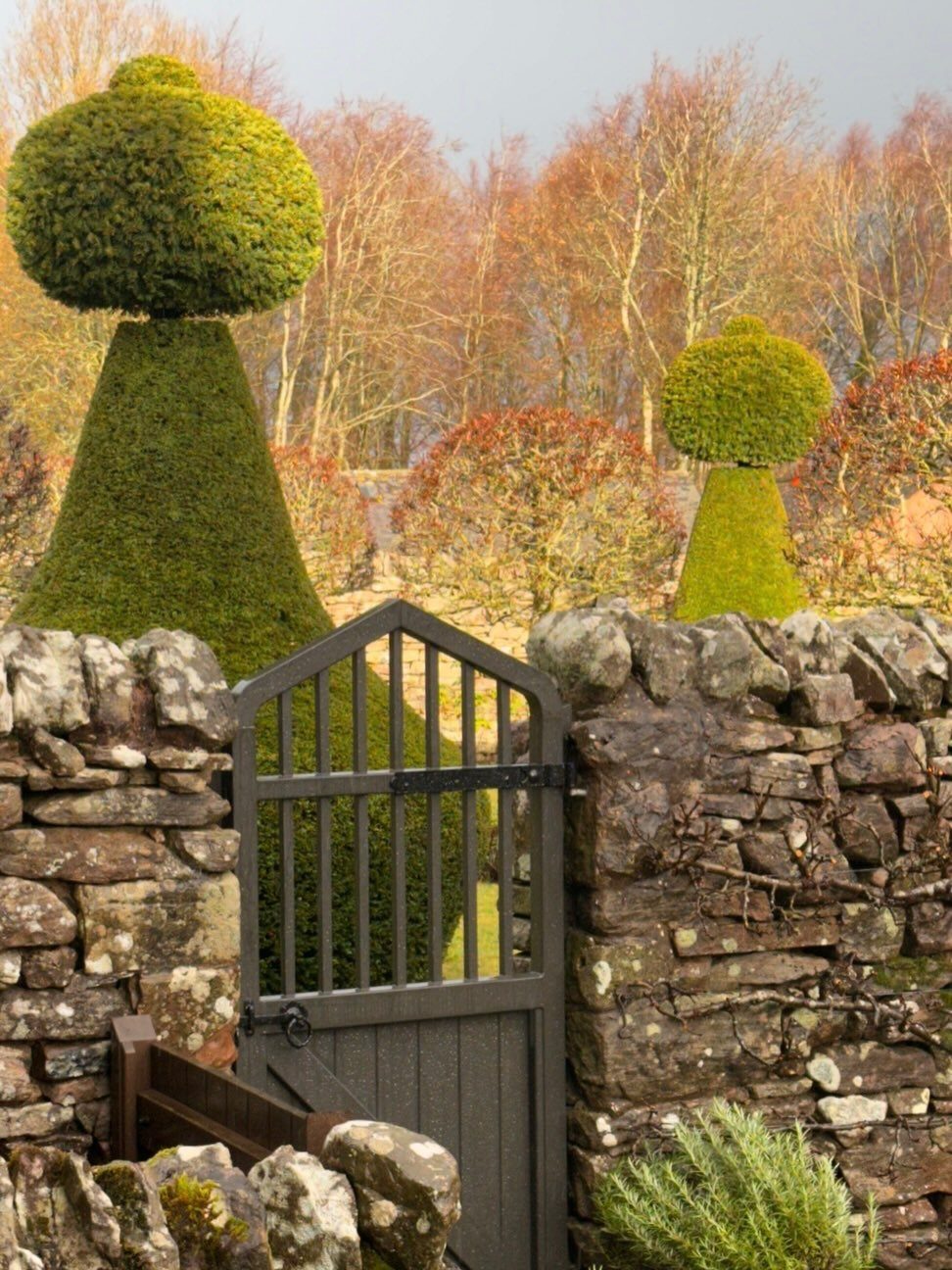
Old stone and dark timber look settled because they have aged together, so buy materials that will weather rather than ones that stay shiny.
A wooden gate in a stone wall is a good example: both soften with time, and nothing fights the plants.
Skip sealers that keep wood looking new.
Let moss and tone develop, and pair the wall with clipped shrubs for contrast. Patience is the main cost here.
6. Hedges and Borders
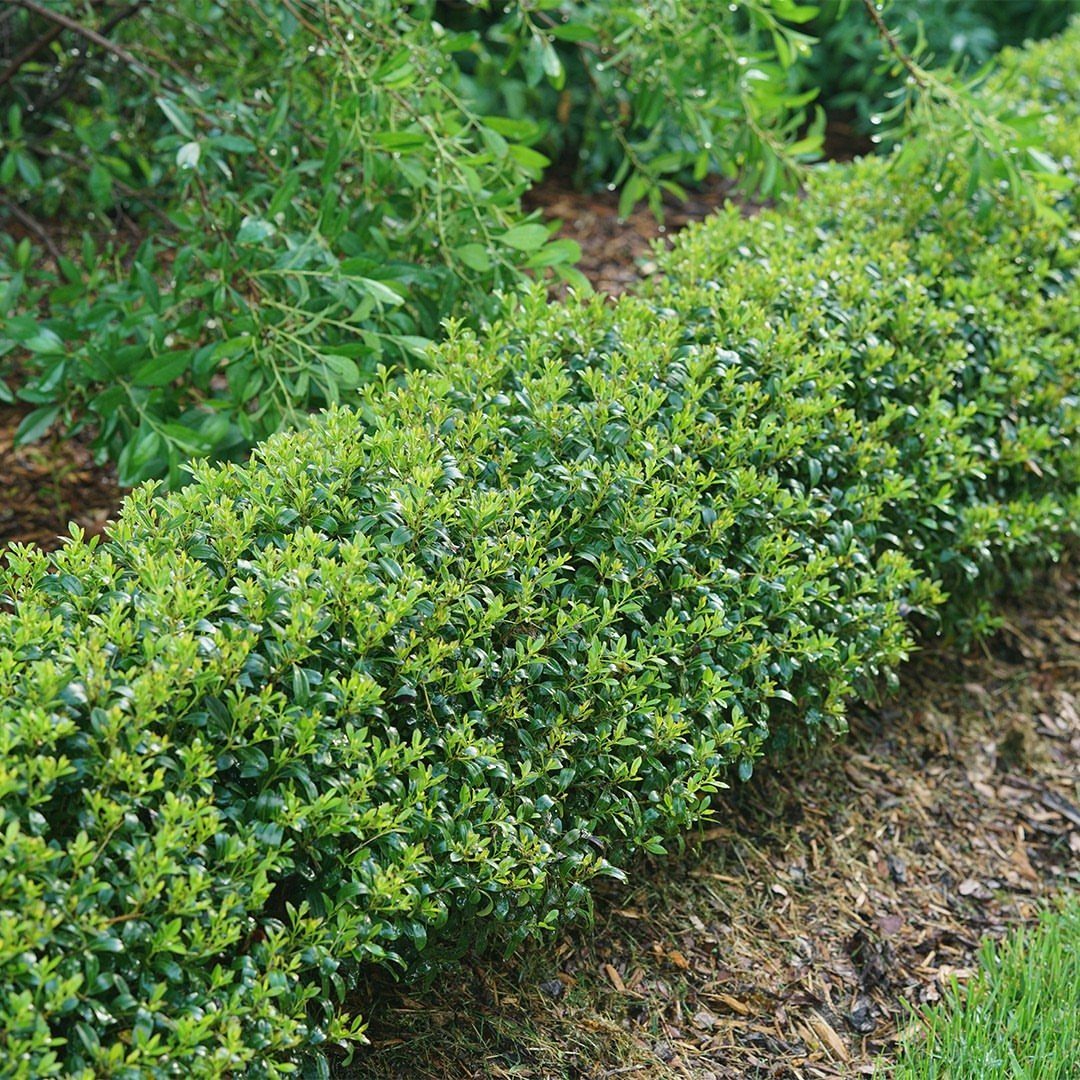
Clipped boxwood gives loose planting a clear edge. A low hedge along a mulched bed keeps the shape tidy, while taller shrubs behind it can stay relaxed and leafy.
I like this for gardens that feel too wild: the hedge does the organizing so the flowers don’t have to. Regular trimming holds the line, and fresh mulch keeps the contrast between green and brown sharp.
7. Garden Paths
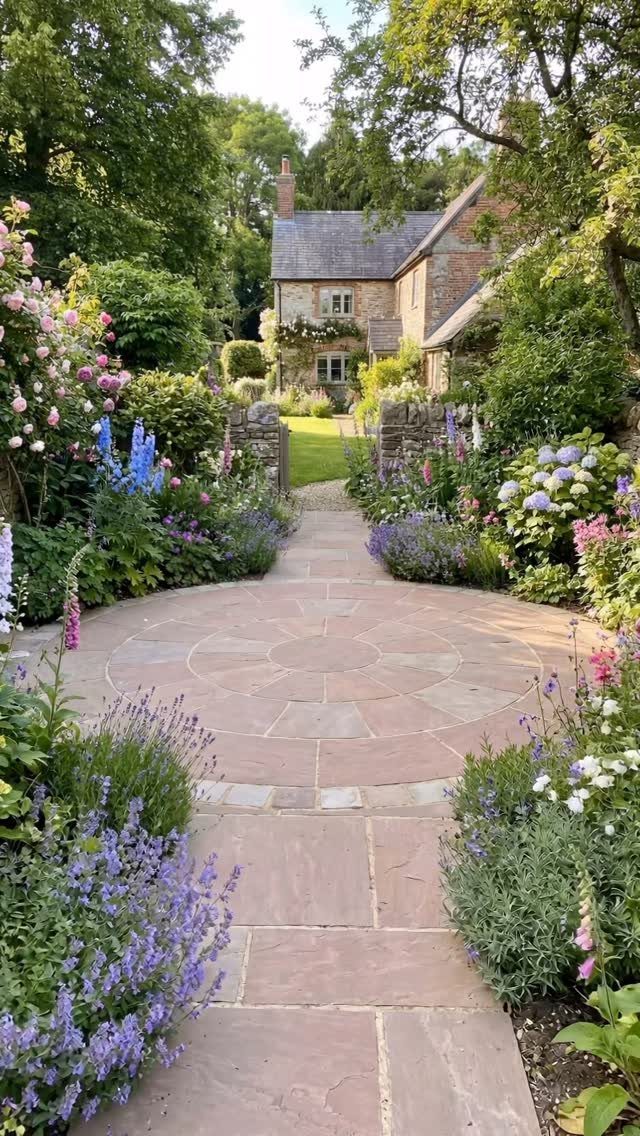
A path earns its place when it leads somewhere, and the circular stone patio here sets a clear destination in front of the cottage door before you ever reach it.
Choose stone you can afford in the quantity the route needs, since a short path in good material beats a long one in thin stuff.
The makers of this one describe it as built to last with high quality materials, and that is the right instinct.
Lay the surface well once, because a path that heaves or shifts shows every season. Let the flower beds crowd its edges.
8. Whites, Purples, and Pinks
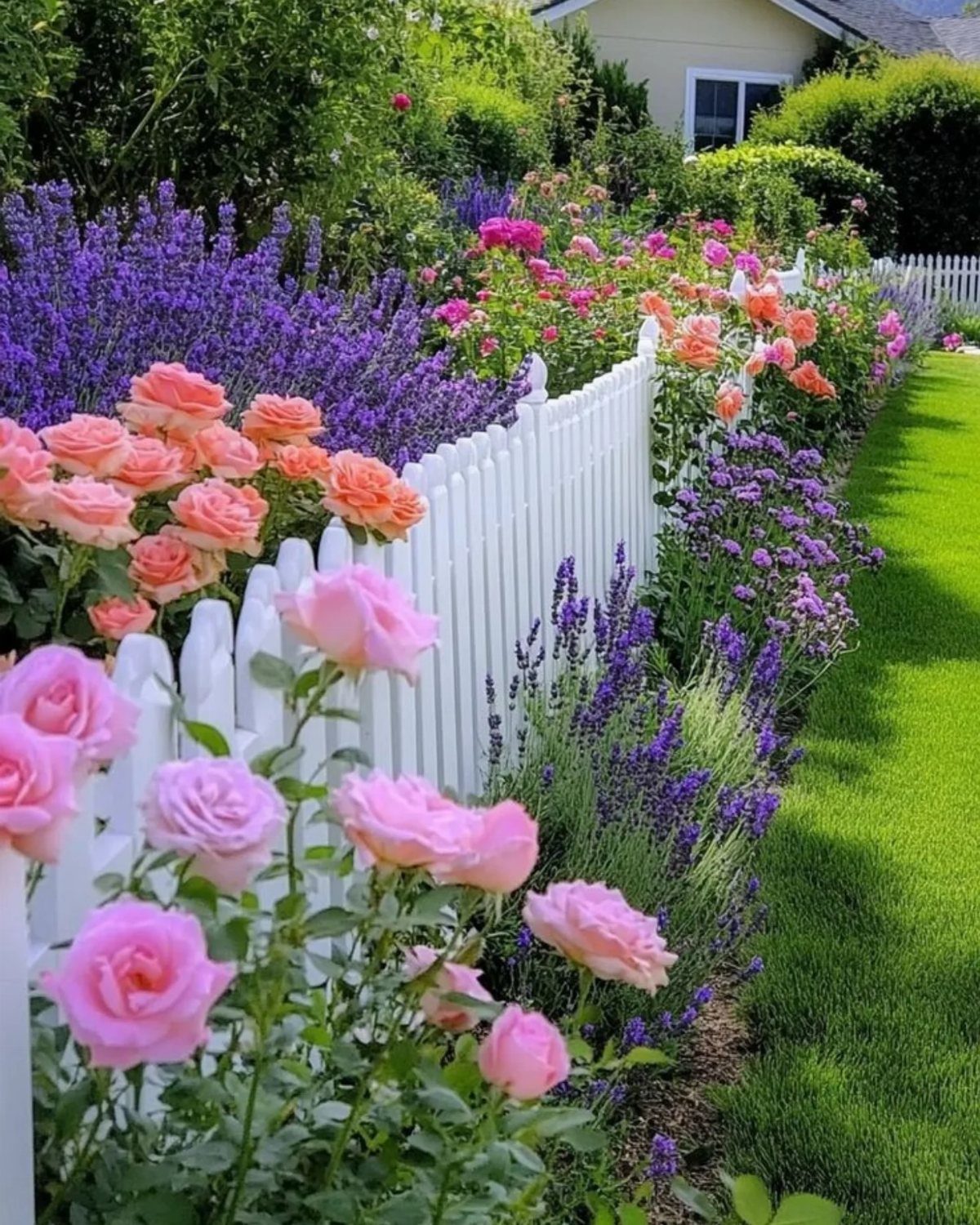
Pink roses and purple lavender against a white fence make a three-color scheme simple enough to repeat anywhere. White gives the beds a clean backdrop, so the pinks and purples read as the main event.
Lavender works at the front with roses behind it, which keeps the heights stepped.
Limit yourself to these shades and add more of the same instead of new colors. A fresh coat of white paint on the fence keeps the contrast sharp.
9. Garden Seating
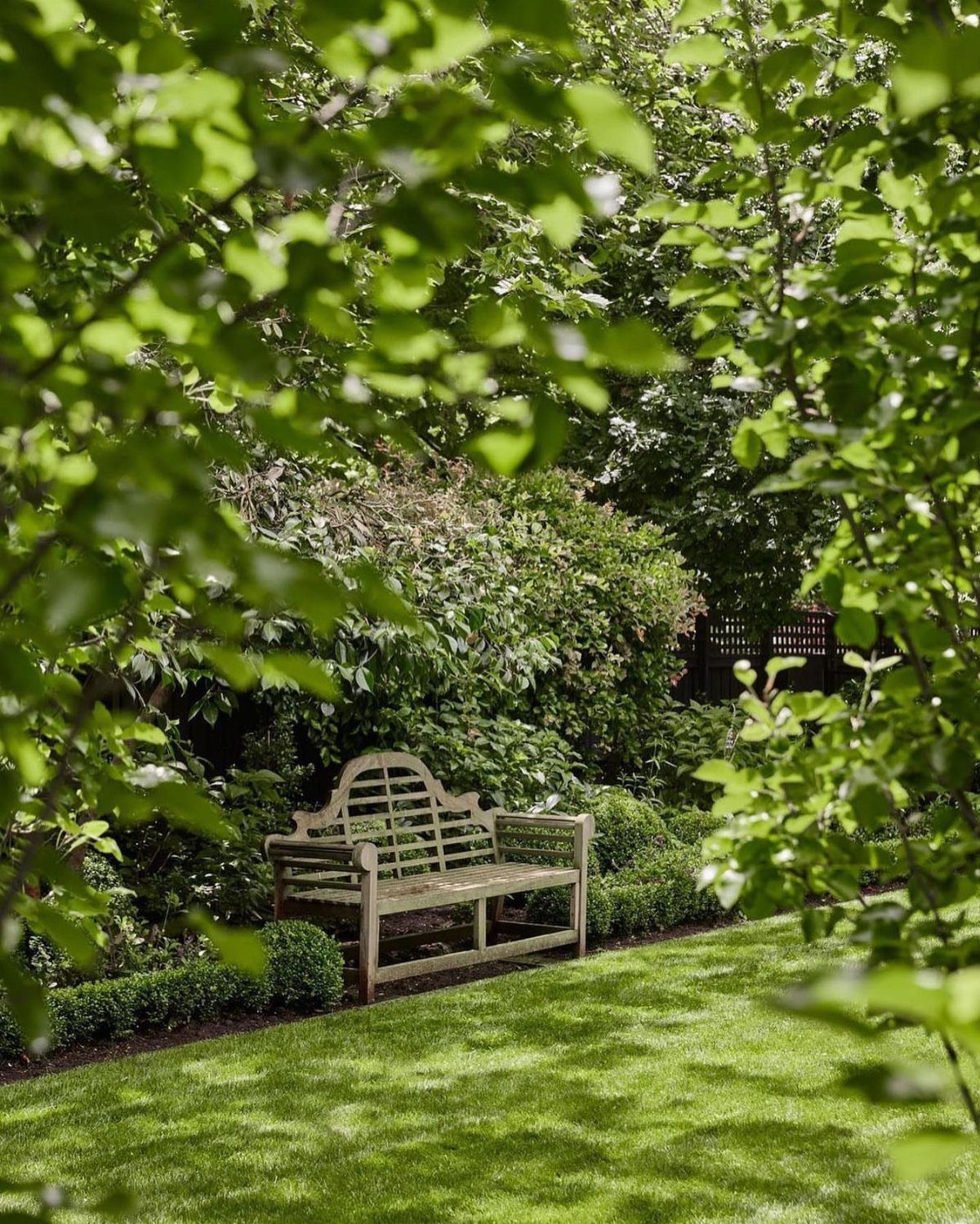
A bench works best when it’s treated as a stop you walk toward, so set it where you can look back at the planting, not against a blank wall.
I prefer weathered wood like this one, since it already belongs among shrubs and trees.
Put it on level ground at the lawn’s edge, with foliage close on both sides so it feels tucked in.
Leave a little room to walk up to it. Nothing fancy is needed; a plain bench and a good view do the job.
10. Lawn Between Planted Beds
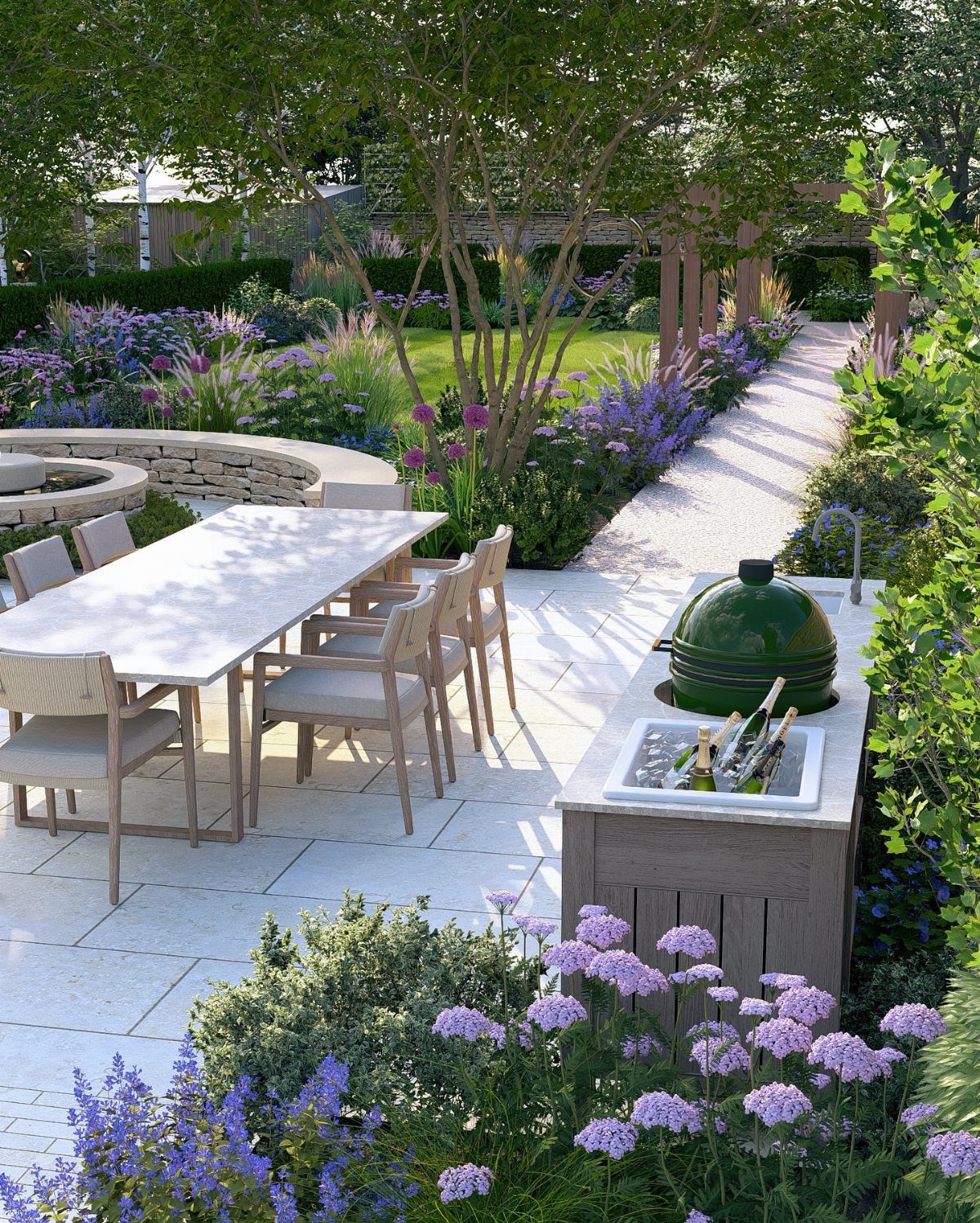
Open lawn between planted beds gives a garden somewhere to rest, so the flowers don’t have to fill every inch.
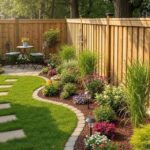
Here the grass links a dining patio to the purple borders, and the green reads as calm next to the color.
Plan the lawn first and plant around it.
Keep the shape simple and wide enough to walk across comfortably. If your yard is small, a modest patch of grass still works, and it runs cheaper than filling the same space with more plants.
Match Plants to Site Conditions
Sun, soil, drainage and microclimate decide which plants will live, so check all four at the nursery gate, with the pots still on the bench.
Spend a day watching where light falls, and note which corner stays damp after rain and which stays sheltered from wind.
A classic border does best with sun for most of the day, or at least half of it, in soil that drains quickly after rain.
Then choose plants that already like what you have.
A shady, wet corner suits different plants than a dry, sunny one, and fighting your site means replanting every year. Amending the soil to make it rich helps most beds, but it won’t fix a spot with too little light.
English-style borders need full to partial sun and good drainage. Find an area in your yard that gets 6 to 8 hours of direct sun during most of the growing season.
Plan for Time and Maintenance
A mature cottage-garden look takes years, not a month. Plants need seasons to fill in, and that casual, overflowing effect usually rests on careful planning of what goes where.
Expect ongoing work, too. English-style planting can be labor-intensive, but you can cut the load with a few choices:
- Low, spreading perennials such as hardy geranium or lamium fill the bare soil between larger plants and leave weeds little room to sprout.
- Mulch generously.
- Pick sturdy plants that don’t need staking.
- Let self-seeders stay instead of pulling them as weeds.
- Choose low-pruning roses and shrubs.
I would start with the weed-suppressing perennials and the mulch, since they save the most hours. Once plants are established, a well-matched planting needs little intervention.
Adapt Design to Scale
An estate isn’t required to borrow from English gardens; a 10 x 12 ft yard can hold plenty of the look.
They shrink well to a small yard, a patio or a balcony if you plan around your real space, time, budget and local climate.
Split a small yard into separate garden rooms, each with its own planting theme, and the whole space reads as bigger than it is. On a patio or balcony, containers carry the cottage look.
Scale everything down. Swap big plants for dwarf varieties that won’t outgrow the spot, and pick a tabletop fountain or birdbath over a full water feature.
A bistro set takes up about 2–3 feet less width than a full bench, so it fits in corners where a bench would block the path.
Layering still works in tight spots: use climbing plants and wall shrubs to add height without taking up floor space.
Frequently Asked Questions
What is the English garden style?
It balances loose, packed, naturalistic planting with a few firm structural elements like clipped hedges, paths and curved bed edges.
It comes in 2 main forms: grand estate gardens with wide lawns and trees, and small cottage gardens crowded with flowers.
How do I make my backyard look like an English garden?
Before buying a single plant, watch how light and water move through your yard: 6 hours of sun suits most classic borders, and the soil should not hold puddles after a storm.
Then add a few signature pieces: a wide curved bed edge, a low clipped hedge, a path that leads somewhere, and tightly packed perennials in a limited color palette.
What is the difference between an English and a cottage garden?
English gardens in the grand sense are estate-scale, with formal structure, big lawns, hedges and walled garden rooms.
A cottage garden is the small, informal version, packed with flowers and spilling over its edges. The two styles are often mixed, and the cottage look is the easier one to copy in a typical yard.