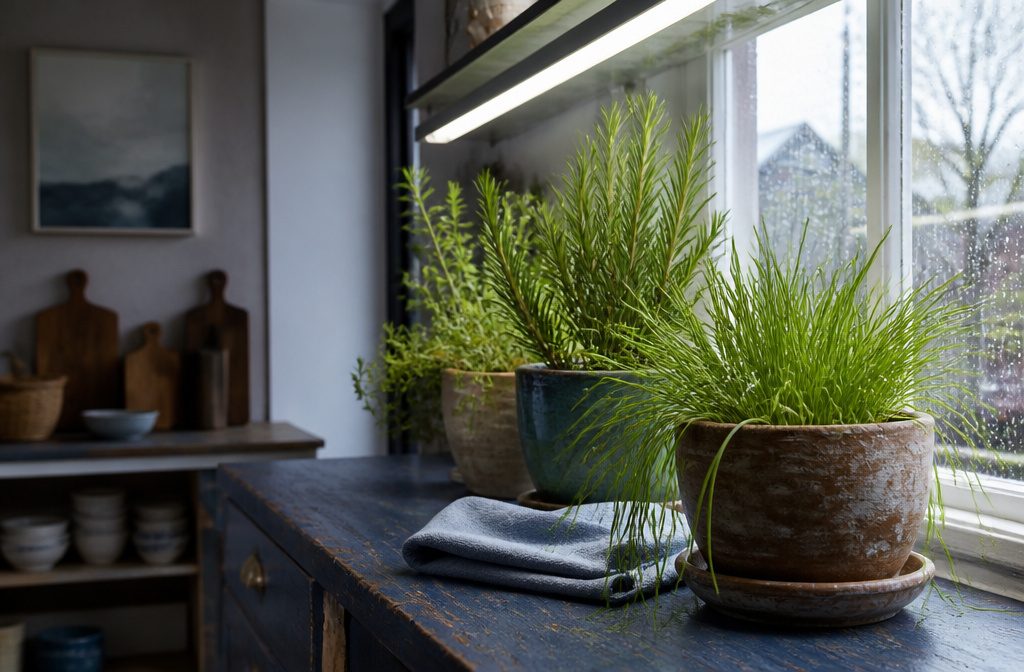
Growing herbs in a kitchen means keeping a few pots of cooking herbs on a bright windowsill or under a grow light.
Light decides whether it works: most herbs want at least 6 hours of direct sun, and without it rosemary turns soft and scraggly. Chives are the easiest to keep going.
Choose Herbs You Cook With
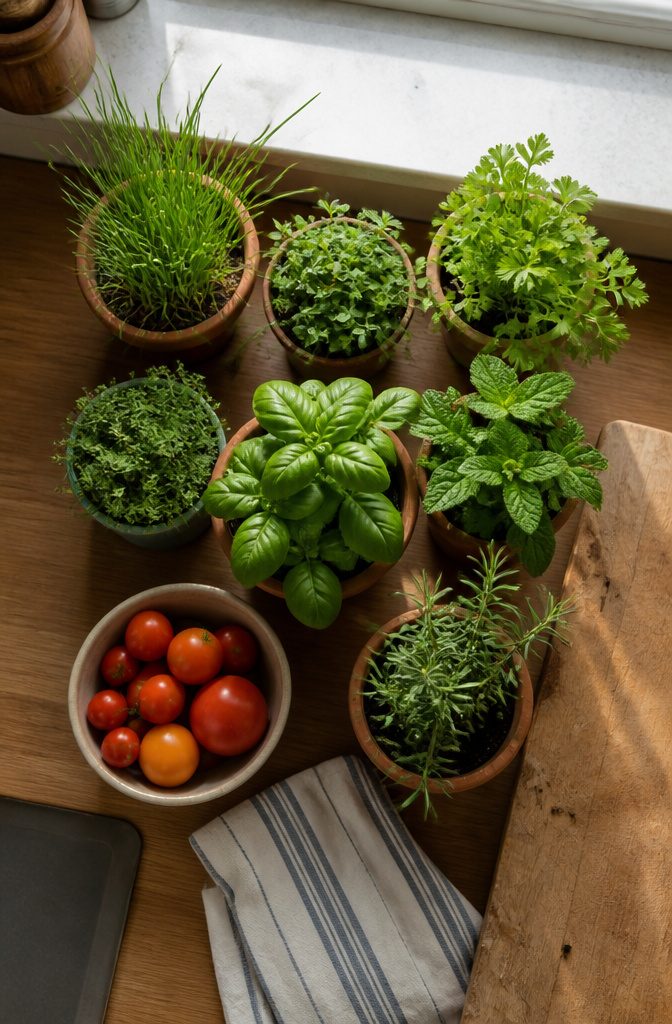
Start with the last week of your cooking, not the nursery shelf. A pot of basil is wasted on someone who never makes pesto or caprese, and mint earns its spot only if you make drinks or desserts.
Basil, which comes in around 150 varieties, suits tomato dishes best, but it needs lots of light indoors.
Chives are the easiest herb to keep going on a windowsill, with oregano and parsley close behind. Parsley wants regular water, while oregano prefers to dry out between drinks.
Thyme stays compact and suits roasts and soups. Rosemary is the one I’d skip unless you have a very sunny window or a grow light, since dim winter light leaves it soft and scraggly.
Plan around how much room you have: pick herbs that stay small.
Pick a Spot and Containers
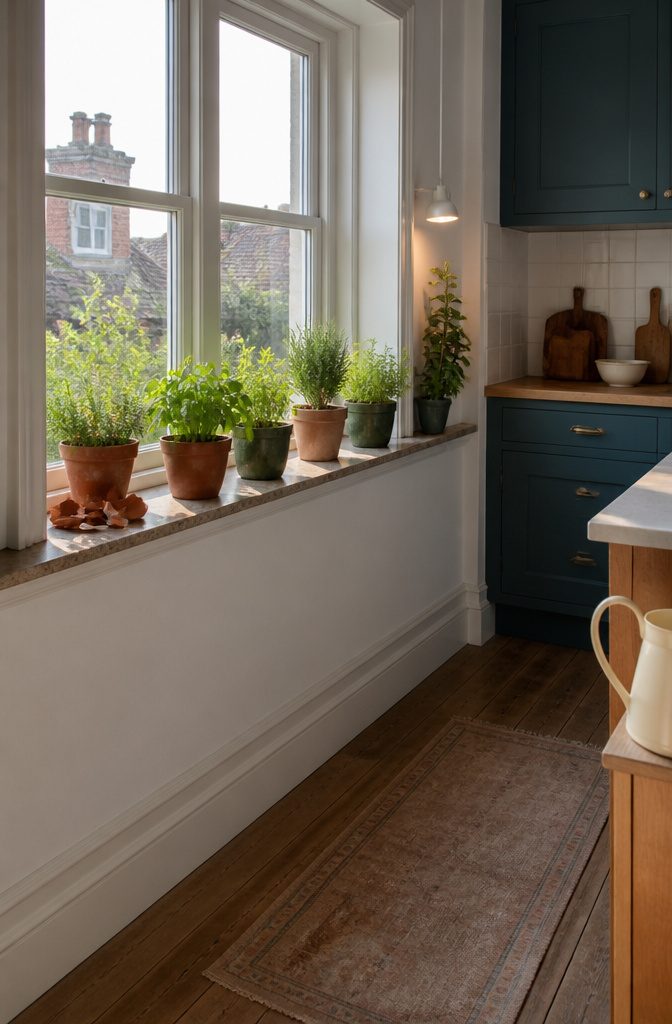
A bright kitchen windowsill is the default spot, and most herbs want at least 6 hours of direct sun there.
If your window falls short, a grow light covers the gap. Every pot needs drainage holes, and terra cotta is my pick for thyme and oregano because it lets soil dry out.
Soil matters here as much as the pot, and University of Minnesota Extension puts it plainly:
Most herbs grow best in well-drained soil with a pH between 6.0 and 7.5. Avoid heavy clay, soggy soils, and overly fertile sites.
A few stones or terracotta shards at the base help water escape. Size each pot about an inch larger than the rootball, and give rosemary or sage a container 12 inches wide and deep.
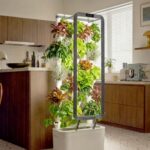
When the sill fills up, go vertical with an IKEA RÅSKOG cart, tiered stands, or hanging planters.
Light, Soil, and Water
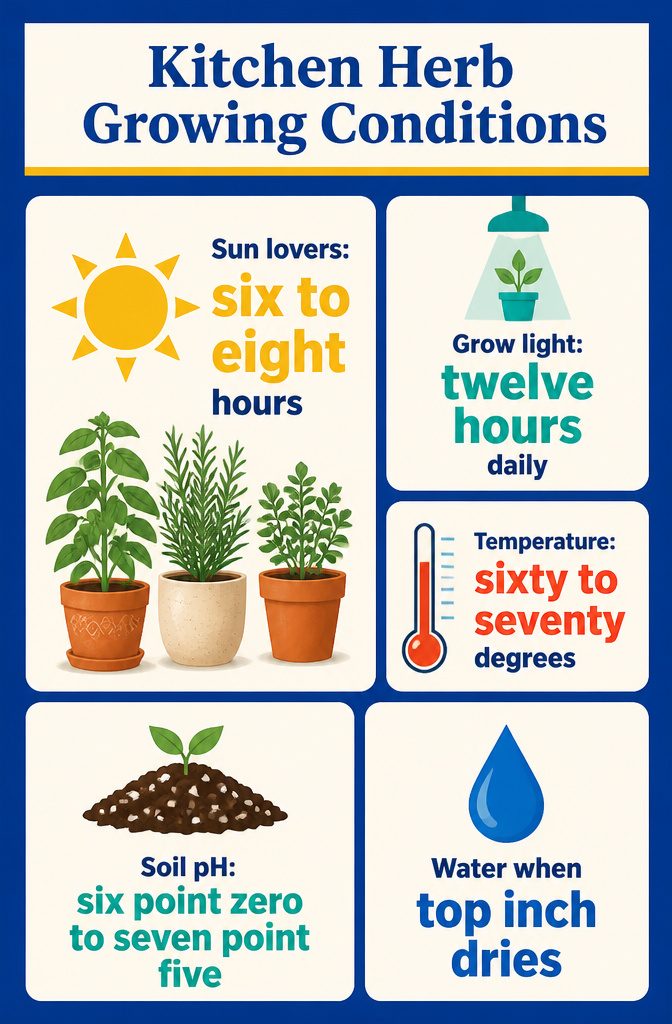
Light is the number people argue about. Advice runs from at least 4 hours for tolerant herbs, to 4–6 hours, to 6 hours of direct sun, to 6–8 hours in a south-facing window.
For basil and other sun lovers, aim at the high end. Where the window falls short, a grow light running 12 hours a day fills the gap.
Aim for 60–70 degrees, a soil pH of 6.0–7.5, and a potting mix lightened with perlite or sand.
Water when the top inch is dry. Indoors, some growers wait until it’s dry 1/2 inch down; I’d use the inch rule, since soggy soil rots roots fastest indoors.
Feed with 20-20-20 monthly, or every six weeks indoors. Give each pot a quarter turn every few days.
Seeds or Transplants
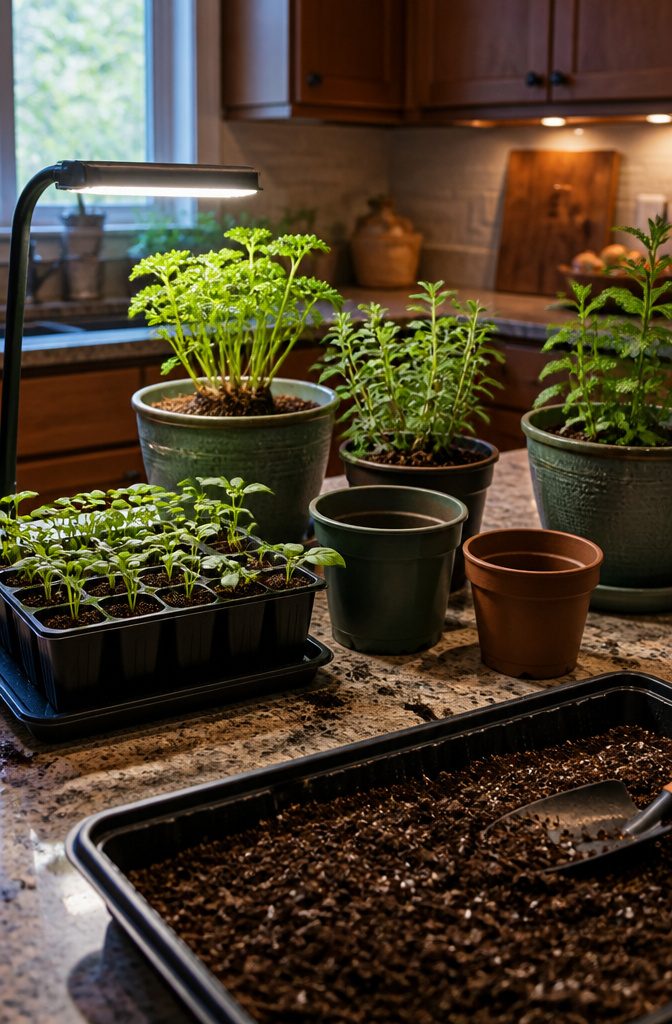
Parsley is the one herb where I’d skip seed and buy a plant: it can take a couple of months to come up, and its carrot-like taproot hates being disturbed, so handle it gently at transplant.
Basil and oregano are cheap to start from seed. Oregano needs warmth above 20°C (68°F) and germinates in about three weeks.
Start seeds 6 to 8 weeks before transplanting, with lights 4 to 6 inches above the seedlings for 14 to 16 hours a day, raised as they grow. Sow basil every six weeks for a winter supply.
Move young plants from 4-inch pots to 5–6-inch ones.
Pinch oregano tips once it reaches about 4 inches to prevent legginess. Mint spreads, so give it its own pot.
Harvest Without Stunting Growth
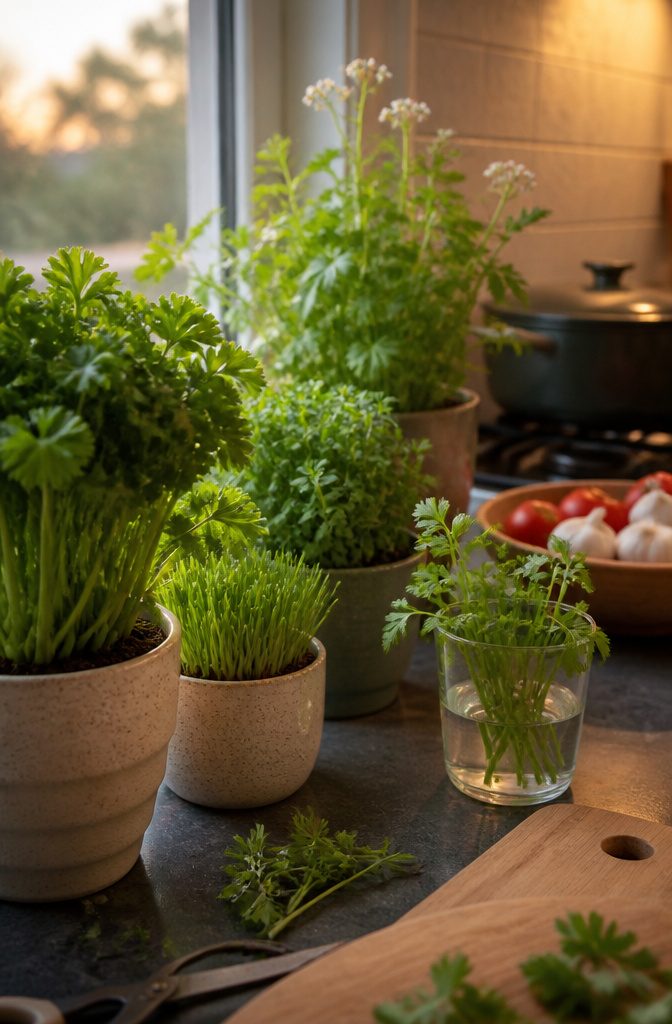
Never take more than one-third of a plant at a time, and clip often, because regular picking is what pushes out fresh growth.
Parsley rewards a weekly routine once it reaches 6 inches: cut the outer leaves near the base and leave the center to keep producing.
Chives go down to within 1 inch (2 cm) of the soil, which feels harsh but works. Oregano gets its tops pinched at 4 inches (10 cm), and that keeps it bushy instead of leggy.
Cilantro bolts once temperatures reach the 70s and 80s, so a warm kitchen window can turn it to seed fast. Pinch off flower buds when they appear.
Cut stems keep 3–5 days upright in a glass of water. I’d pick for tonight’s dish: oregano for pasta sauce, cilantro for tacos.
Dry and Freeze Extras
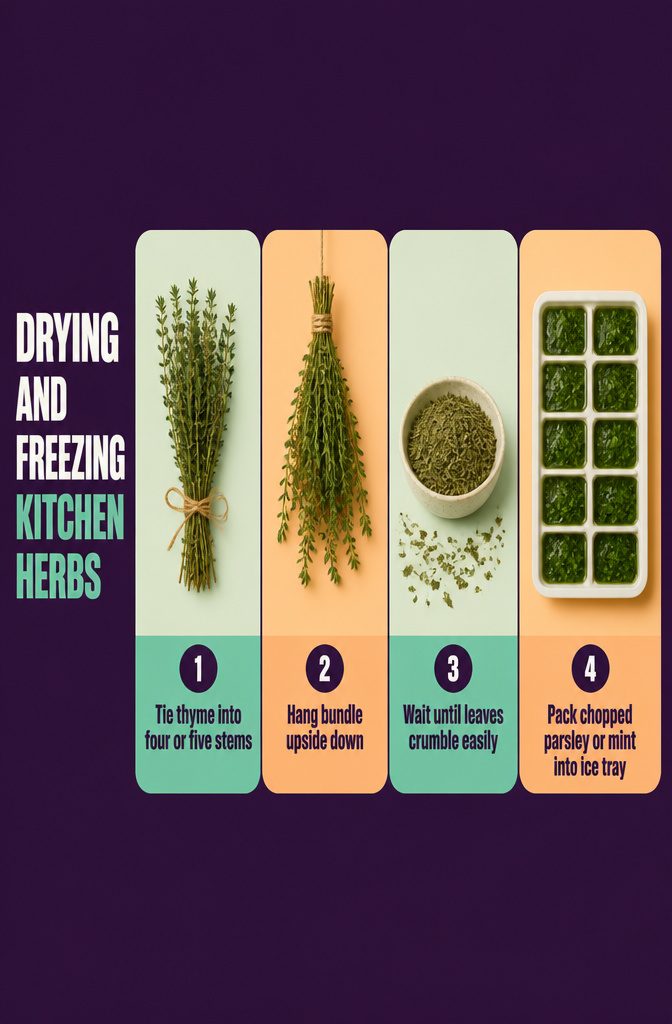
Thyme dries fastest by hanging: tie 4 or 5 stems into a bundle, hang it upside down, and give it about a week.
Softer herbs can take up to 14 days. If your kitchen is humid or you’re short on patience, a dehydrator set at 95 to 115°F finishes a single layer of leaves in 2 to 6 hours.
They’re done when the leaves crumble easily. Stored dried herbs keep up to a year.
Dried herbs run stronger, so use 1 part dried for every 3 parts fresh a recipe calls for.
Parsley and mint are better frozen than dried, and I’d skip drying parsley entirely because the flavor suffers. Chop the leaves, press them into an ice cube tray, and cover with water or olive oil.
Oil cubes drop straight into a hot pan. Basil pesto freezes the same way.
Keep Mint in Its Own Pot
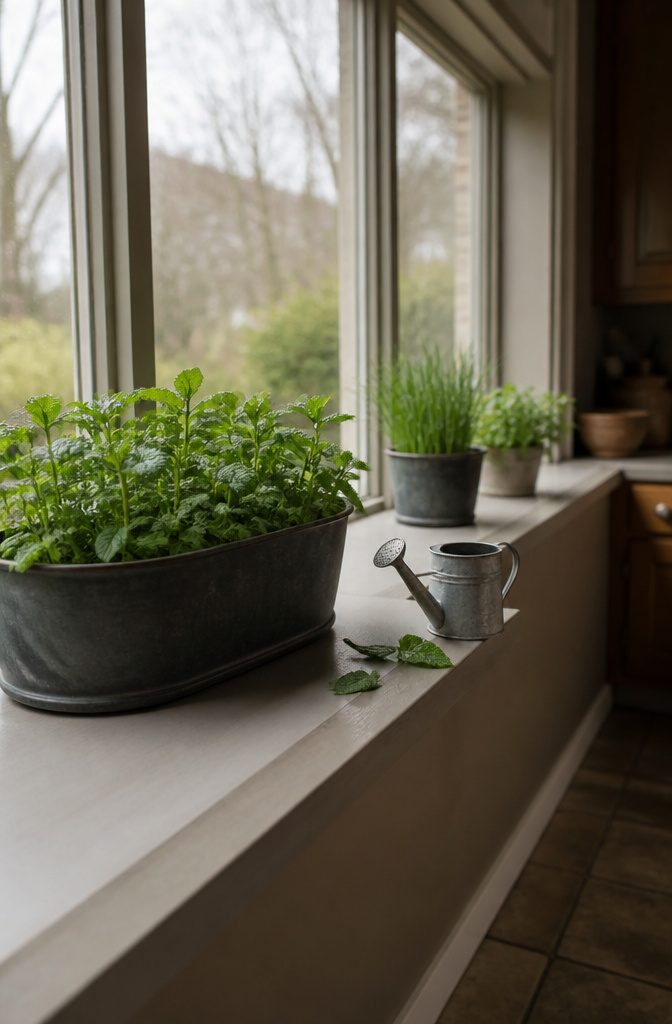
Mint spreads underground by rhizomes, and in a shared bed or planter it will crowd out its neighbors within a season.
A pot of its own is the fix. Pick a large container, since a cramped one just means constant repotting, and don’t mix it with the thyme or rosemary.
If you grow more than one kind, say spearmint and chocolate mint, keep the pots at least a couple of feet apart. Close neighbors dilute each other’s flavor, and the aromas blur.
Mint tolerates shade better than most herbs, so a dimmer windowsill suits it.
Chives are worth a spot nearby: their strong smell is said to deter pests. Sage gets the same pest-deterrent reputation, though I’d treat that as a bonus rather than a reason to buy it.
Shade-Tolerant Herbs and Year-Round Growing
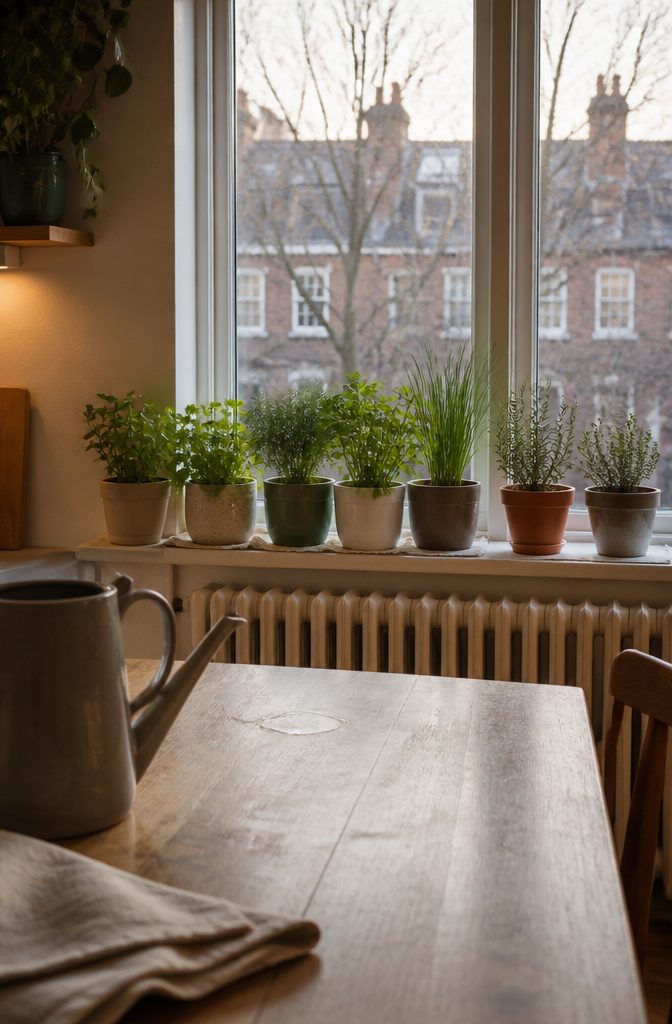
Mint, coriander, dill, parsley, and chives are the herbs I’d put on the dimmer side of a kitchen.
They tolerate shade and prefer moisture-retentive soil, so a pot that dries out slowly suits them better than the gritty, fast-draining mix rosemary and thyme want.
Those two need strong sun, because the heat is what releases the oils that give them flavor.
For year-round growing, a bright, warm windowsill is the requirement. Skip either the light or the warmth and winter harvests fade.
Pots win for a renter: you can move them toward the glass in December. Once established outdoors, mint, rosemary, oregano, sage, and thyme can stay in the ground all year, but that only helps if you have a yard.
Frequently Asked Questions
Are herbs better in pots or in the ground?
Either works, but pots are the better fit for a kitchen.
A pot keeps spreaders like mint from taking over, makes watering simpler, and lets you move plants toward the light. Mediterranean herbs that want fast-draining soil and strong sun also do better in a pot, where you control the mix.
Can you grow herbs all year round?
Yes, if you have a bright, warm windowsill. Skip either the light or the warmth and winter harvests fade.
A grow light running 12 hours a day can fill the gap when the window falls short. Mint, rosemary, oregano, sage, and thyme can also stay outdoors year-round once established, but only if you have a yard.
Do herbs like full sun or shade?
Most herbs want full sun, at least 6 hours of direct light, and basil does best at the high end of that range.
Mint, coriander, dill, parsley, and chives tolerate shade and prefer soil that holds moisture. Rosemary and thyme need strong sun to develop their flavor.
Can I grow fresh herbs indoors?
Yes.
Chives are the easiest to keep going on a windowsill, with oregano and parsley close behind. Give them a bright spot with about 6 hours of direct sun or a grow light, pots with drainage holes, and temperatures of 60–70 degrees.
How do you store fresh herbs?
Stand cut stems upright in a glass of water, where they keep for 3–5 days.
Better yet, leave the plant in its pot and snip only what tonight’s dish needs. For longer storage, dry or freeze the extras.
Can you freeze herbs?
Yes. Chop the leaves, press them into an ice cube tray, and cover with water or olive oil.
Oil cubes go straight into a hot pan. Parsley and mint freeze better than they dry, and basil pesto freezes the same way.