Sun decides most of these planters before style does: cosmos, cuphea and petunias want full sun, while begonias, Cordyline and lysimachia suit a dim porch corner.
The ideas run from one terracotta pot of geraniums to a tiered metal shelf or oversized urns that fill a whole porch, and the cheap ones, like galvanized buckets, work as well as the big ones.
Check your light first, then pick the container, because drainage matters more than looks, and the Container Soil and Drainage section covers it.
1. Thriller, Filler, Spiller Planter
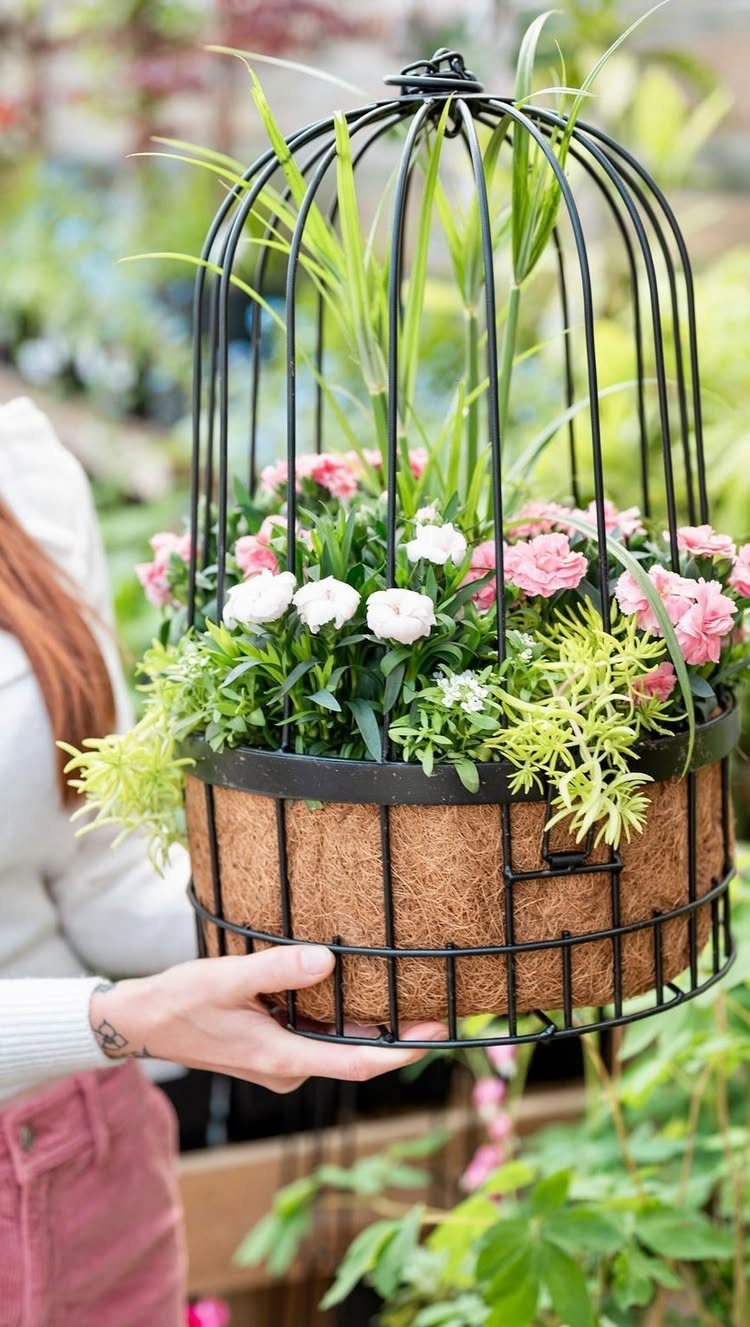
A birdcage planter with a coconut liner already gives you the container and the soil holder in one piece, so the planting is the only real decision.
For the thriller, pick something tall like fountain grass or a spike plant; for the filler, mound in 2–3 pink or white bloomers such as geraniums or petunias; for the spiller, tuck chartreuse sweet potato vine along the rim so it trails over the edge.
I like that the lime green brightens the whole pot. Stick to that three-layer order and the planter reads as finished.
2. Dahlias
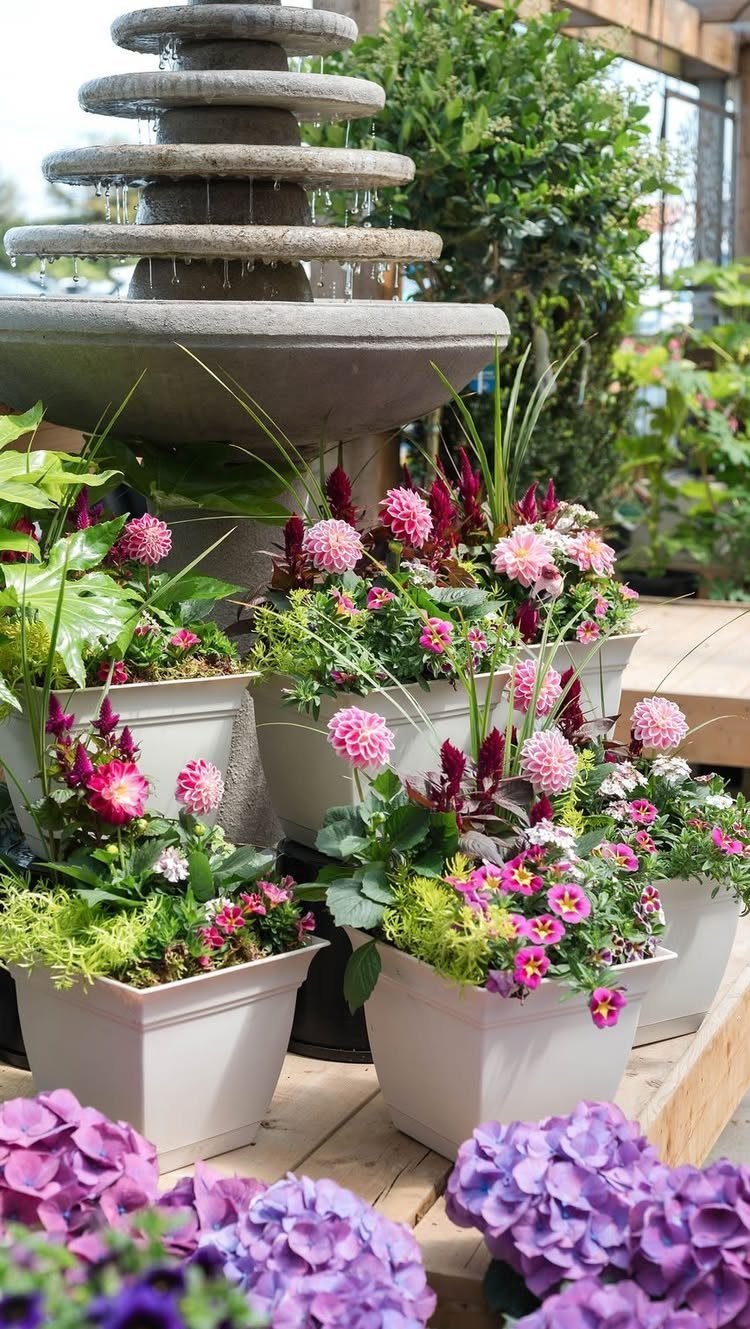
Dahlias keep blooming for a long stretch of summer, and the flowers run from small buttons to dinner-plate size. That range lets you pick the scale that suits the container.
White square planters make pink and red blooms look sharper. Place them near a focal point, like the fountain here, and a few pots hold their own.
I would choose the big dinner-plate types for one statement pot and smaller ones for a group.
3. Purple Fountain Grass and Calibrachoa
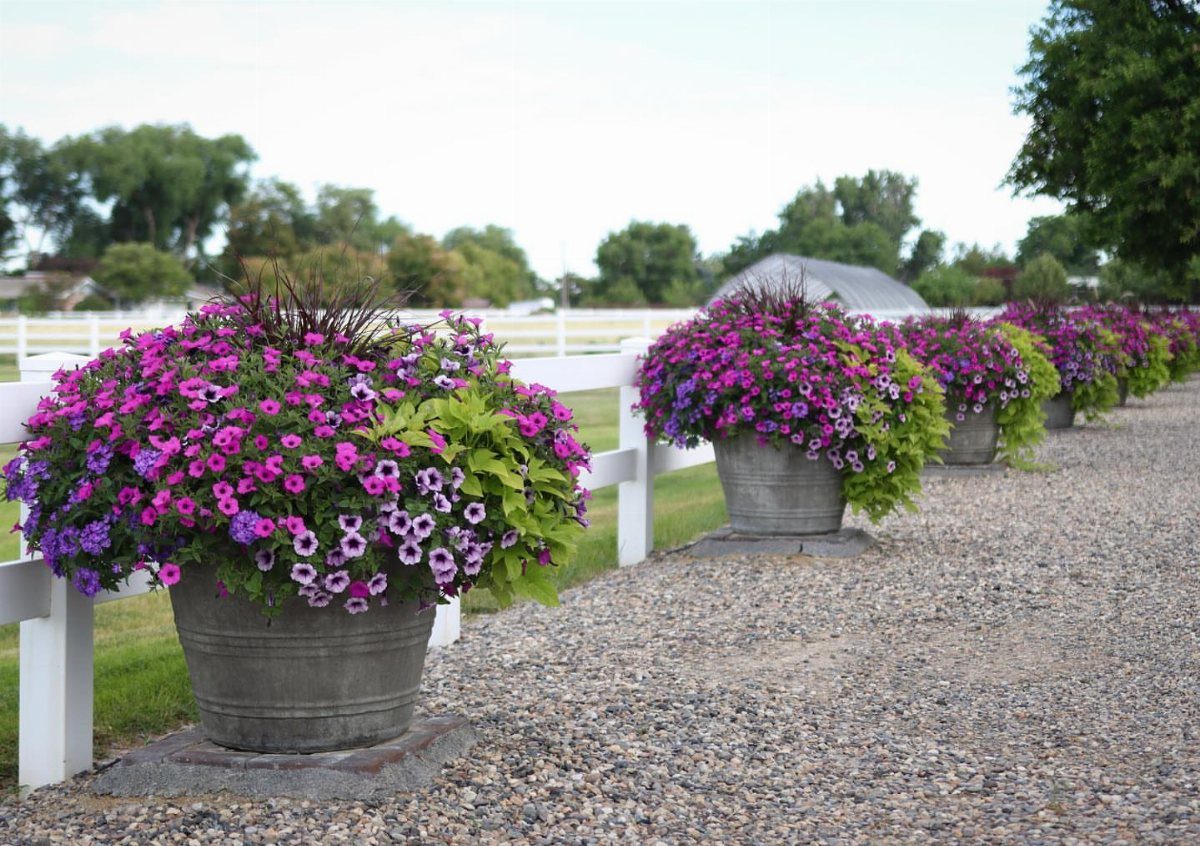
Purple fountain grass gives a row of metal planters height, and calibrachoa, osteospermum and dichondra fill in beneath it. The result is colorful without being messy, because the grass stays upright while the dichondra trails.
Grey galvanized containers keep the purples looking rich. Repeat the same mix in each planter along a fence and the line looks planned rather than random.
I prefer repetition over a different recipe per pot.
4. Herb Summer Pots
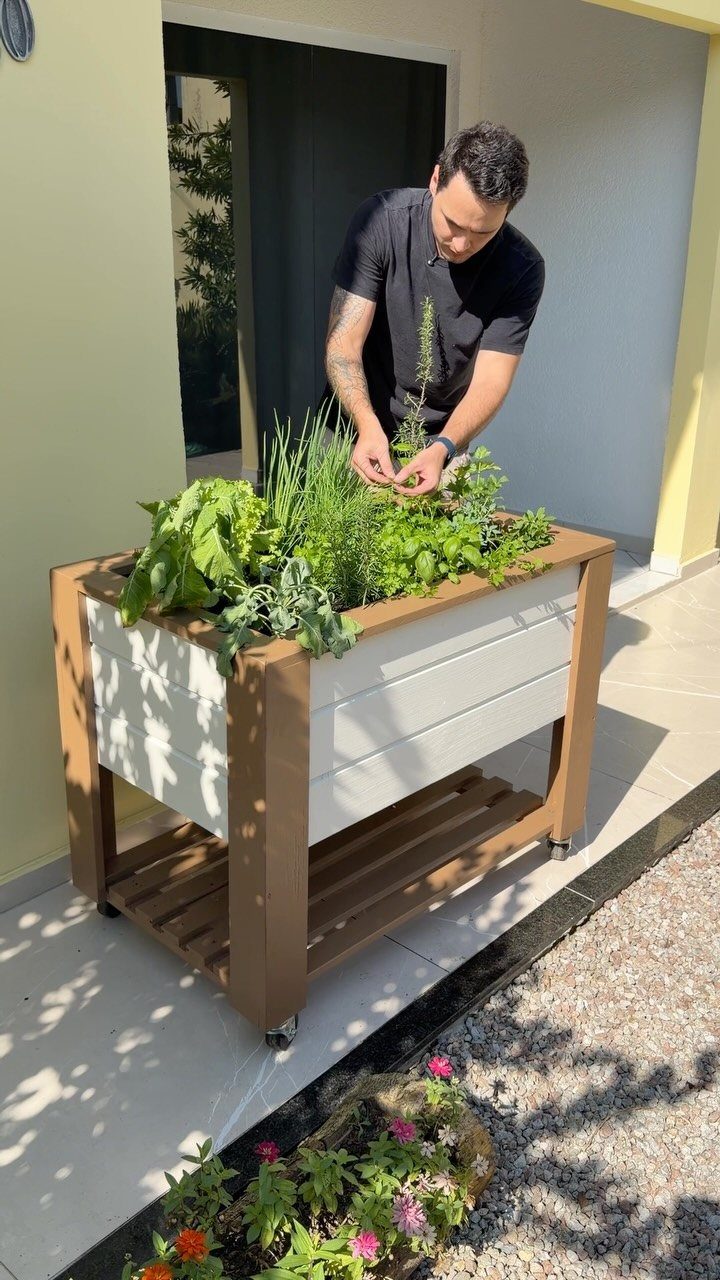
Herbs bring fragrance, color and texture to a summer pot, and you can eat the trimmings. A wooden planter box holds a mix of them in one spot, so you can reach everything while you water.
Mix leaf shapes and shades of green for contrast, and snip often so the plants stay full. Tuck a few ornamentals among them if you want flowers.
I would put the box close to the kitchen door.
5. Grouped Clay Pots
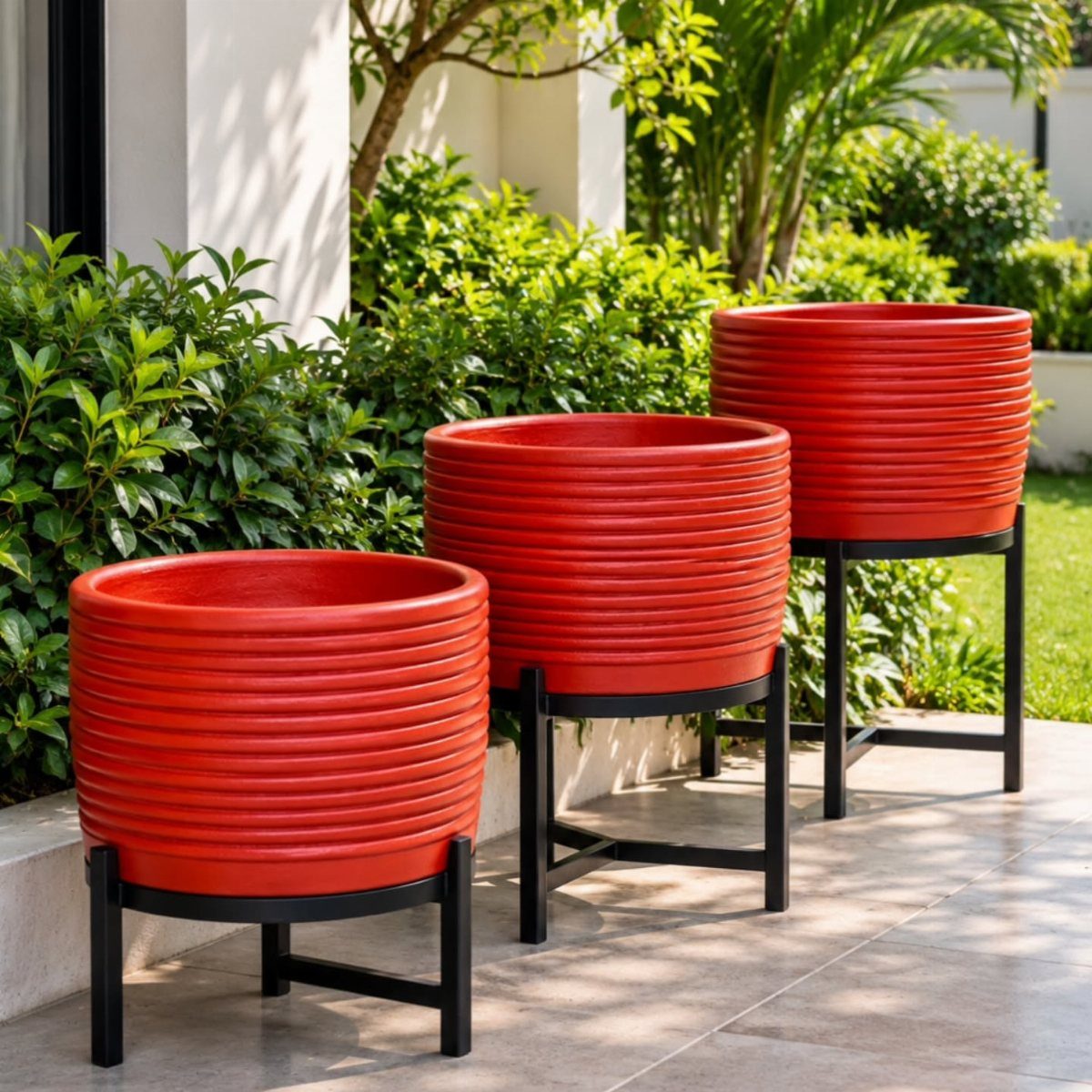
Three red ribbed clay pots on black metal stands turn plain terracotta-style containers into a small display. Grouping does the work: matching pots in a row look deliberate.
Keep the pots identical in color and shape, and vary the stand heights if you want more depth. Fill them with one plant type each, so the shape of the pot stays the star.
Cheap clay plus a set of stands is an easy weekend upgrade.
6. Palms, Begonias, and Lysimachia
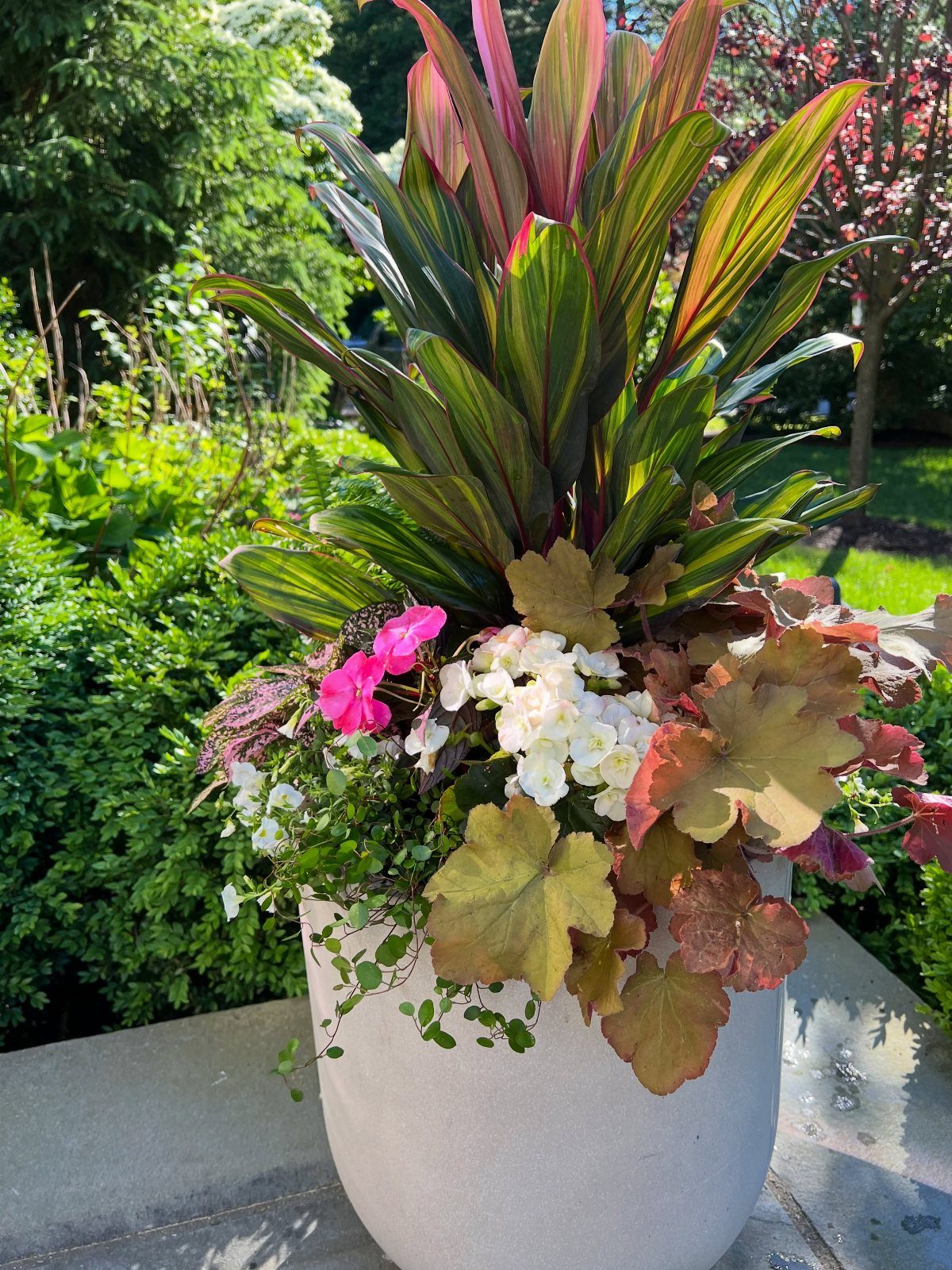
For shade, a tall Cordyline, pink and white begonias and trailing lysimachia make a full pot. The begonias bring bold flowers, and the bright lysimachia carries color even when the blooms rest.
Place the Cordyline at the center for height, begonias around it, and let the lysimachia hang over the rim. A white or concrete pot keeps the foliage looking crisp.
I like how little this asks of a dim porch corner.
7. Castor Bean and SunPatiens
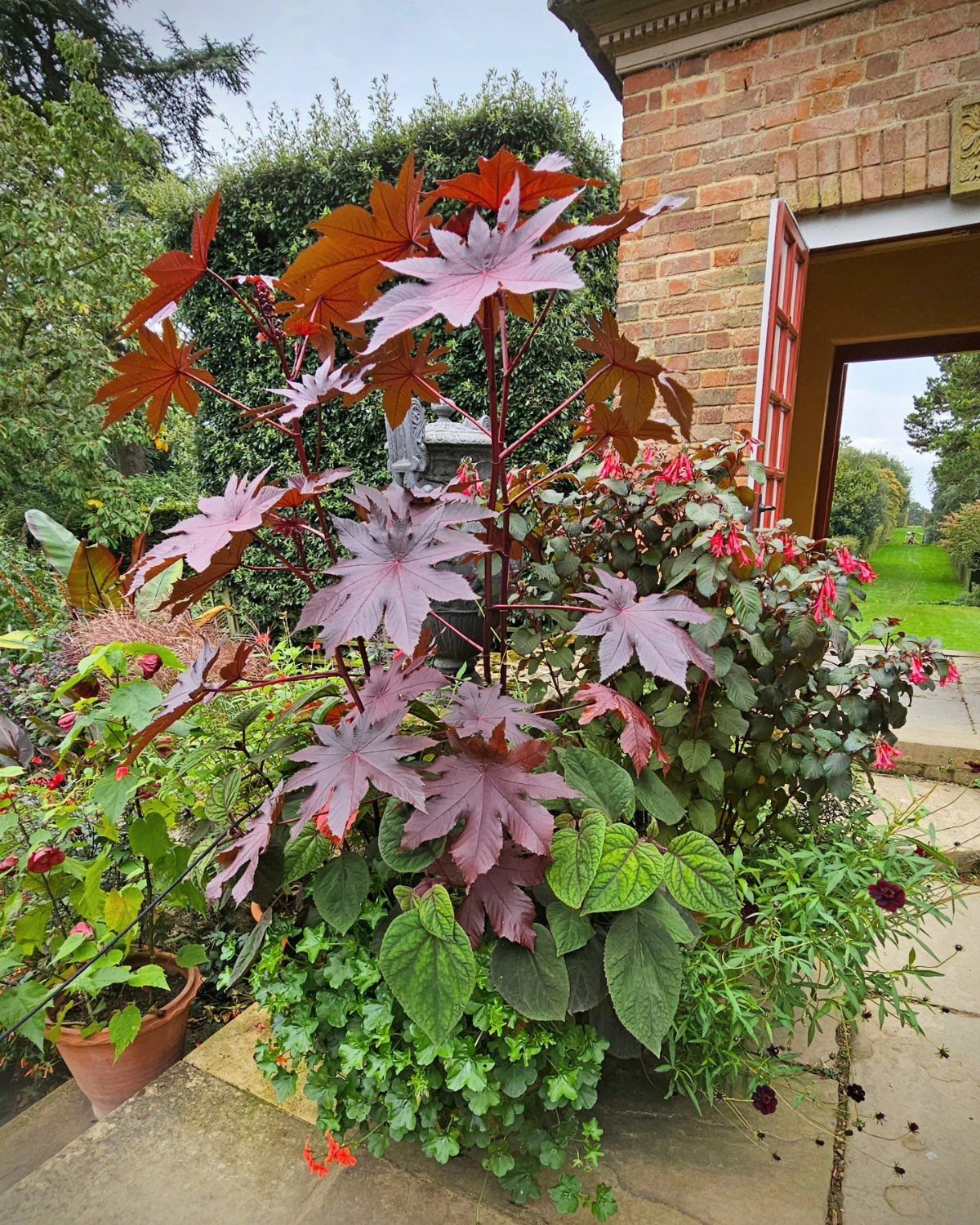
Castor bean sets the whole planter: tall, burgundy leaves that look tropical beside plain brick.
Red SunPatiens planted at the base of a castor bean echo the leaf color and keep flowers at eye level, where the bare lower stems would otherwise show.
Put the castor bean in the center as the tall piece and plant the SunPatiens around it. Choose a big pot, since a plant this tall needs weight at the bottom.
I would keep the flower color to one shade so the leaves stay the focus.
8. Palms and Coleus
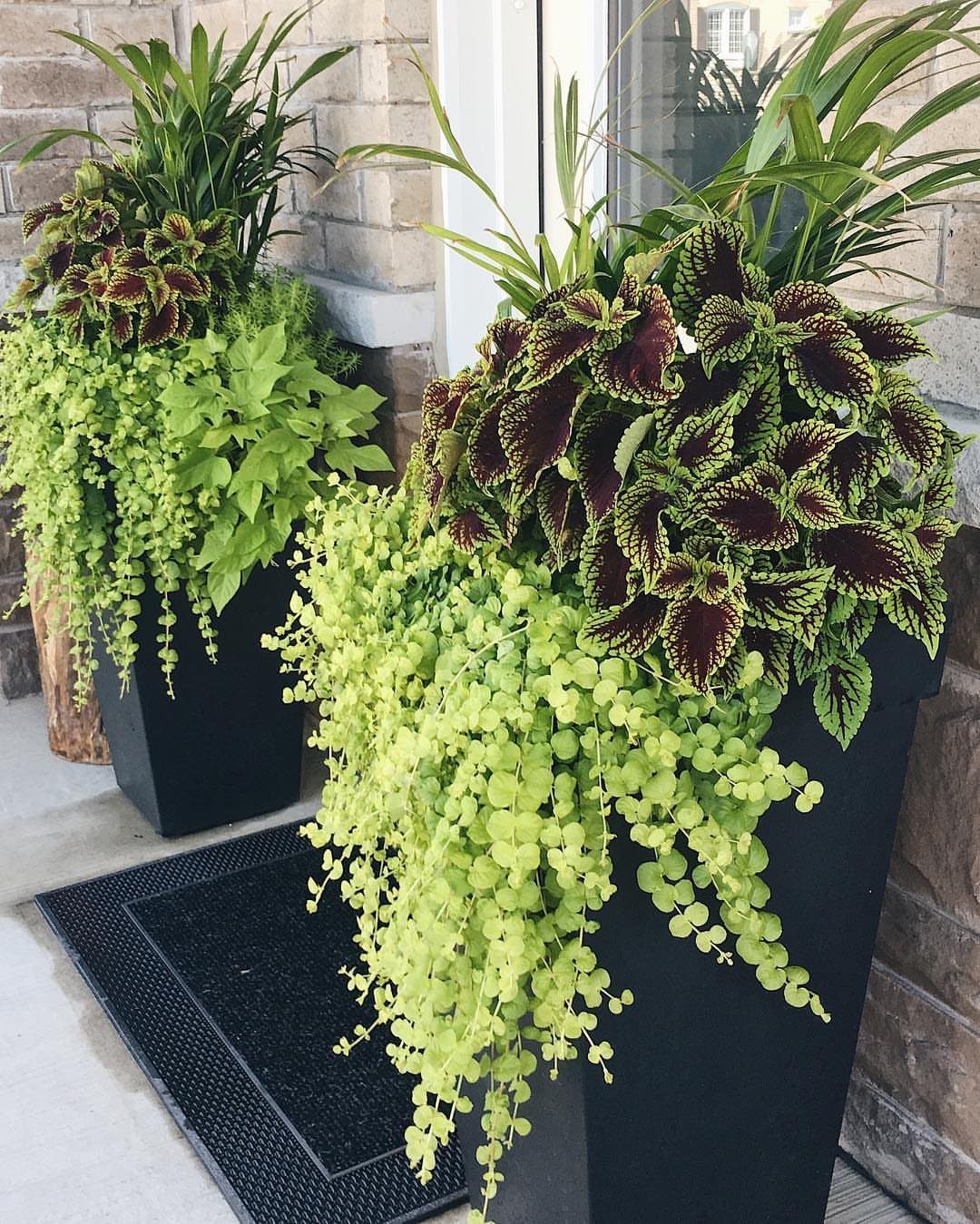
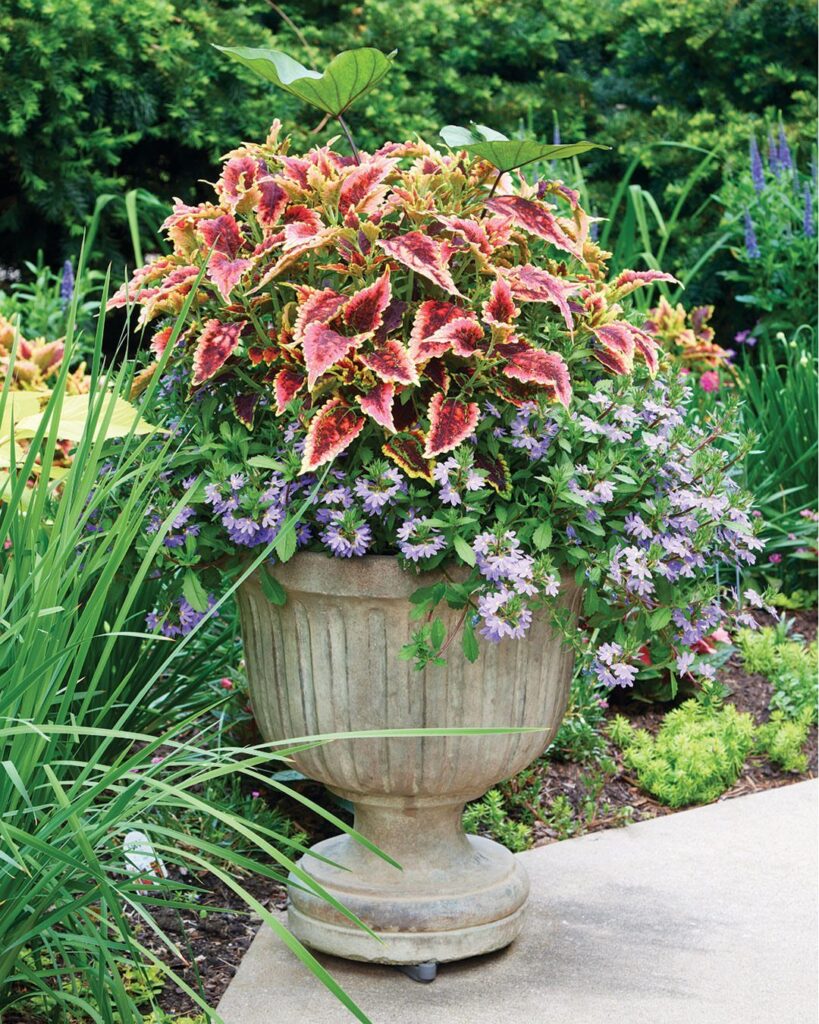
Two tall black planters of palms and coleus prove a porch does not need blooms to look finished. Burgundy coleus gives color, and trailing lime-green foliage softens the rim.
Pair the containers on either side of a door, and repeat the same plants in both. The black pots make the green and burgundy look deeper.
Foliage like this holds its color all summer, which is why I prefer it to a pot that depends on flowers.
9. Cuphea
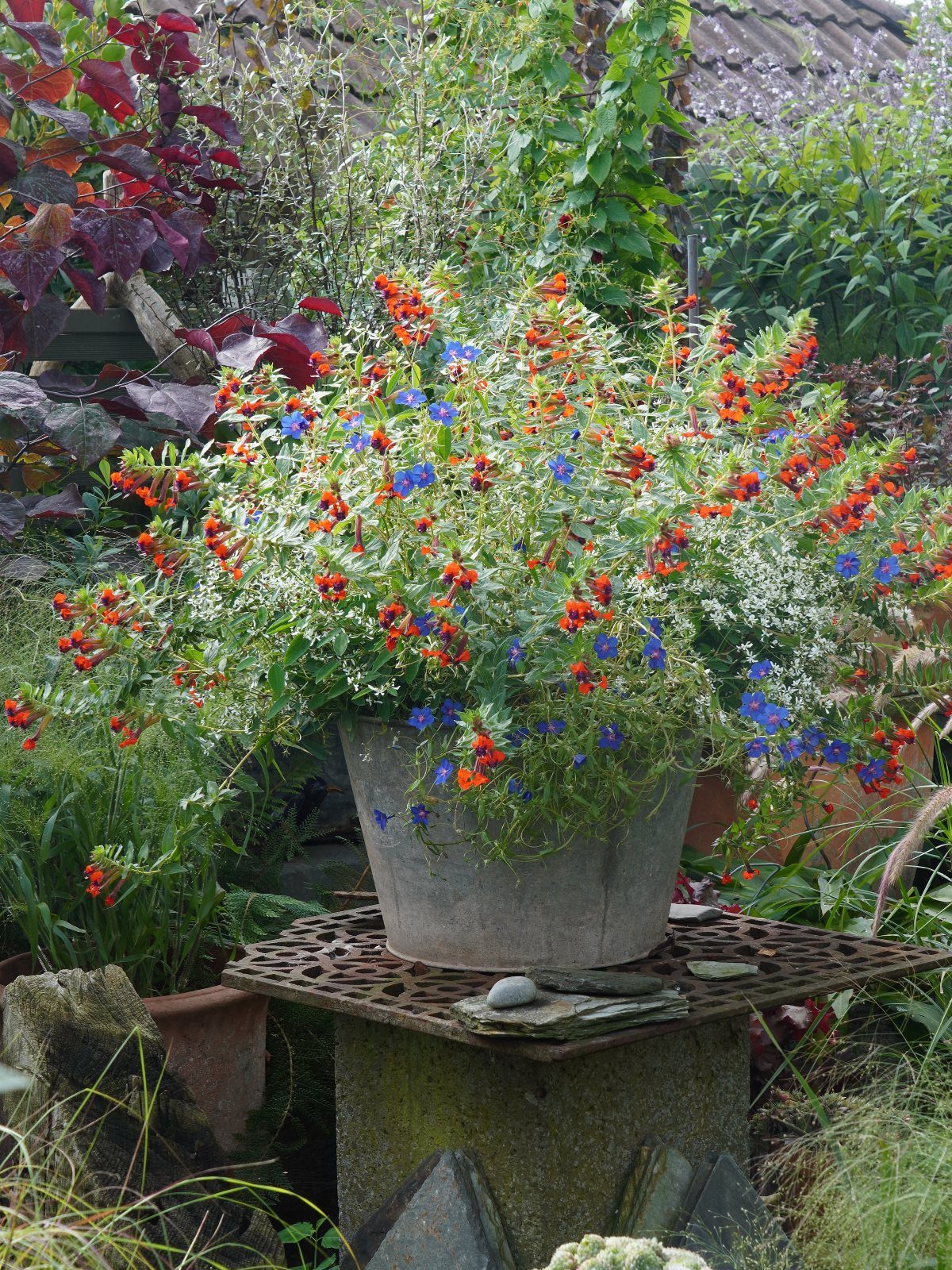
Cuphea is a heat-tolerant flower that draws hummingbirds and bees, so a pot of it brings movement to a hot corner. Red cuphea with blue flowers beside it makes a bold, simple pairing.
A grey stone planter on a pedestal lifts the plants to eye level, where visitors are easier to watch. Pick a sunny spot, and hold the combination to 2 colors.
I would choose this over fussier mixes for a spot that bakes in the afternoon.
10. Cosmos
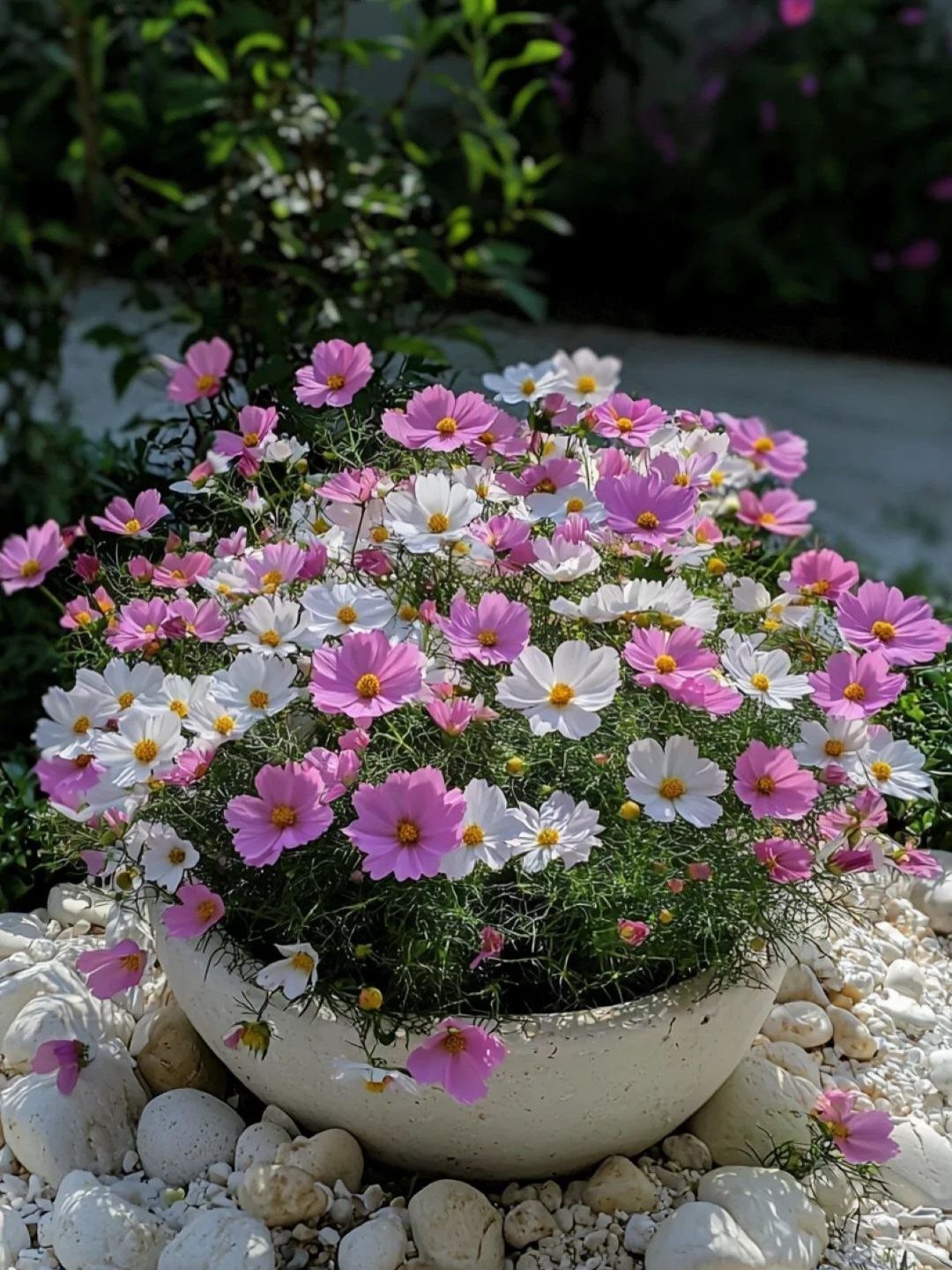
Cosmos is a low-maintenance, sun-loving flower that blooms through the season, and a shallow white bowl suits its loose, airy look. Pink and white blooms together stay soft rather than loud.
Set the bowl in full sun and fill it with one kind of plant. A bed of white pebbles under it, as here, keeps the display clean and bright.
For a first-time planter, this is among the easiest wins I can name.
11. Fuchsias
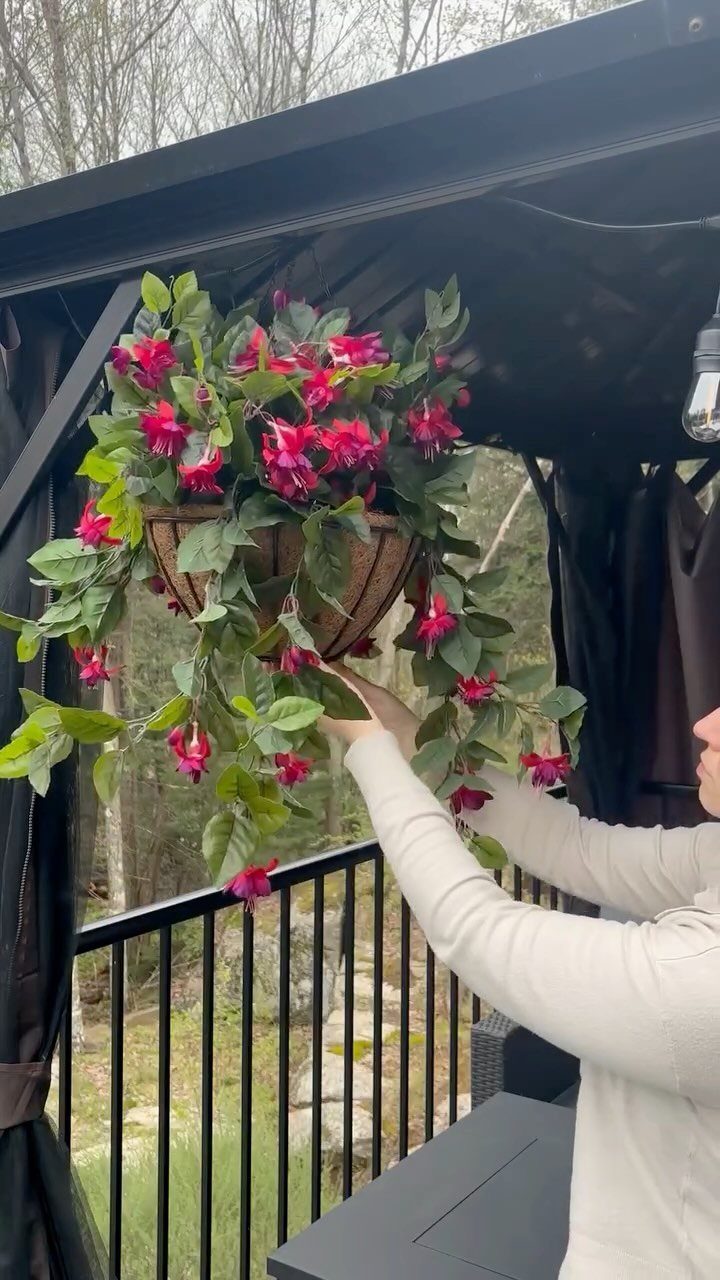
Fuchsia flowers hang like little lanterns in two tones, usually a skirt of one color over a different center. That pendant shape is why they belong in hanging baskets, where you can see them from below.
Hang the basket at about head height, so the blooms are close enough to enjoy. A covered porch or gazebo, like the one here, suits them well.
I would give one full basket pride of place rather than scatter several small ones.
12. Galvanized Buckets
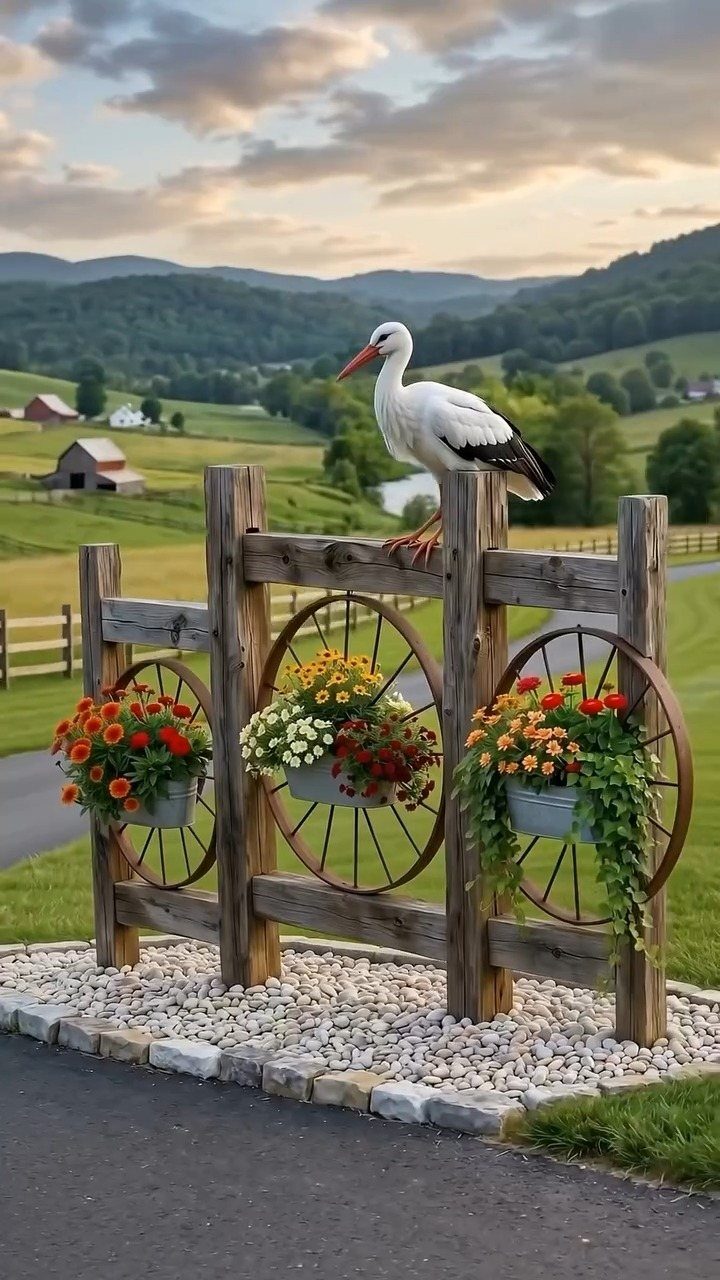
Galvanized buckets bring a plain metal look that makes bright flowers stand out. Mounting them on a wooden fence, as here, gets planters off the ground and turns a bare rail into a display.
Space 3 buckets evenly and fill them with the same mix so the row looks planned. Rustic wood behind them adds warmth against the cool grey.
Buckets cost little, which makes this an easy weekend project for a fence that needs interest.
13. Oversized Urns and Baskets Porch Vignette
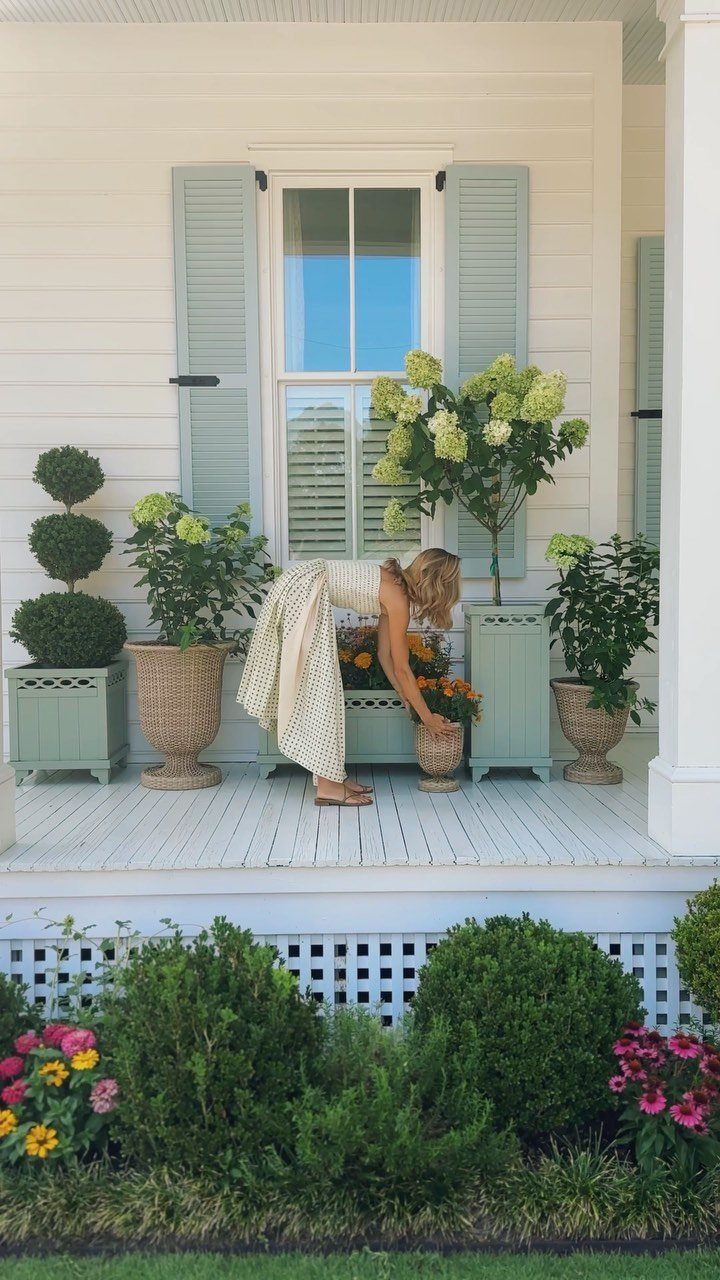
Big urns on a porch give the display its anchor, and baskets plus smaller seasonal pots fill in around them. Scale does the work: one oversized piece reads as a plan, while a dozen small ones read as clutter.
Set the urns first, then group the baskets and small containers at their feet, varying heights. White paint on the porch keeps the plants as the color.
I would swap the small pots with each season and leave the urns alone.
14. Tiered Metal Shelf Patio Vignette
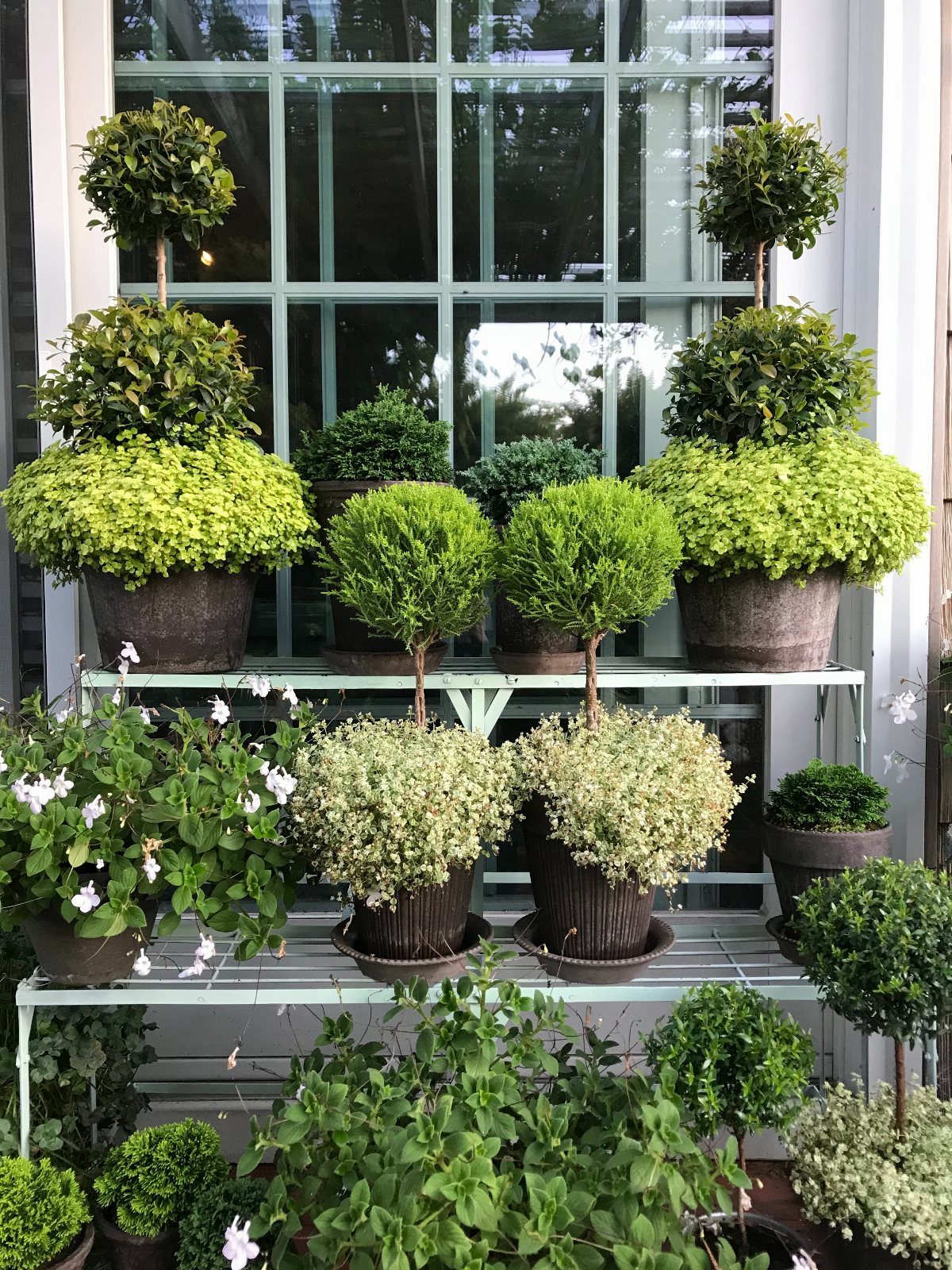
A white tiered metal shelf turns a handful of small pots into one patio display. Each tier holds a few containers, so you get height without needing a big planter.
Put taller topiaries on the top shelf and flowering plants below, where the blooms are easy to see. Setting the shelf against a window or wall keeps the group tidy.
I like this for small patios, since it grows upward instead of across the floor.
15. Half Wine Barrels
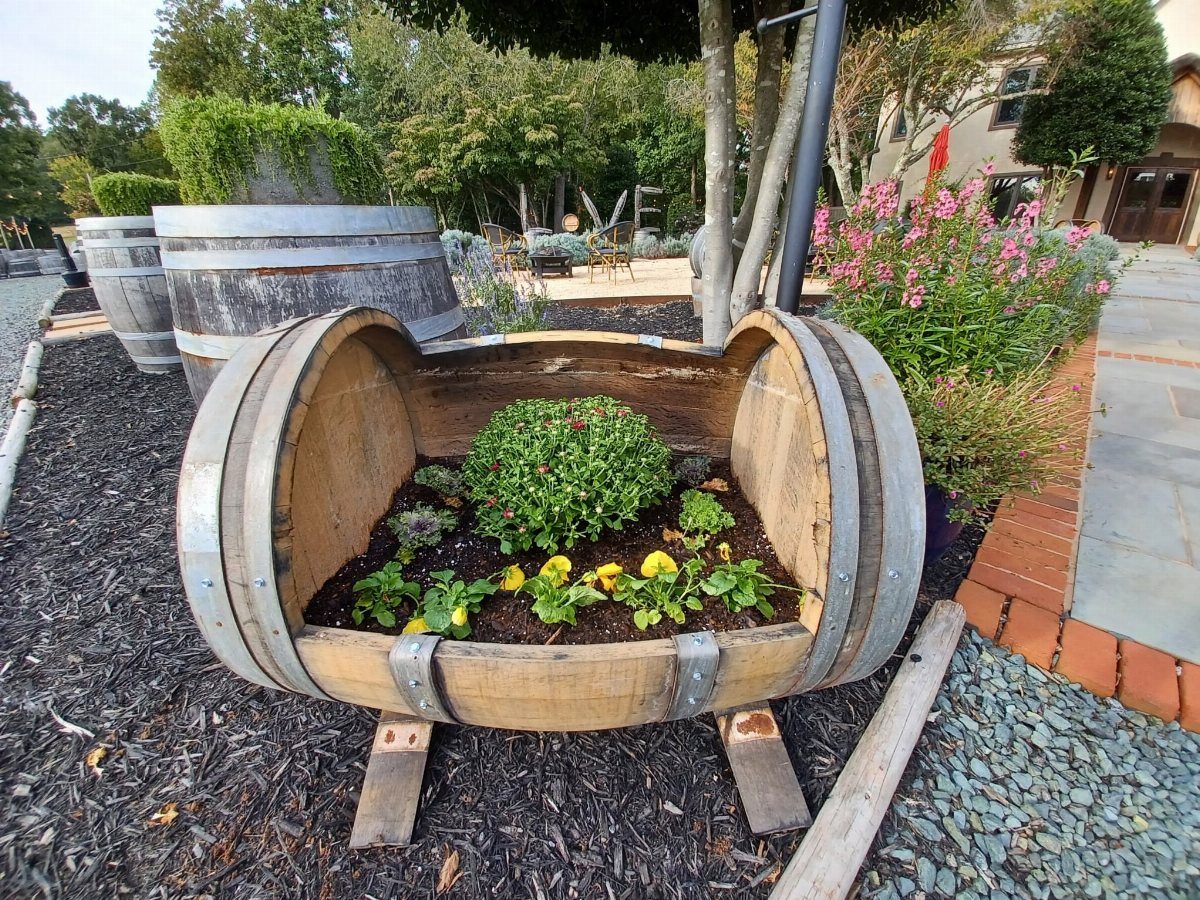
Half wine barrels give shrubs and summer flowers a wide, deep home with a rustic look. A green shrub in the middle with yellow flowers around it keeps the barrel full without much fuss.
Dark mulch around the base, as here, ties the wood to the bed. Several barrels placed together look best when the plantings repeat.
I would choose one barrel as a feature before filling a whole row.
16. Wooden Wheelbarrow
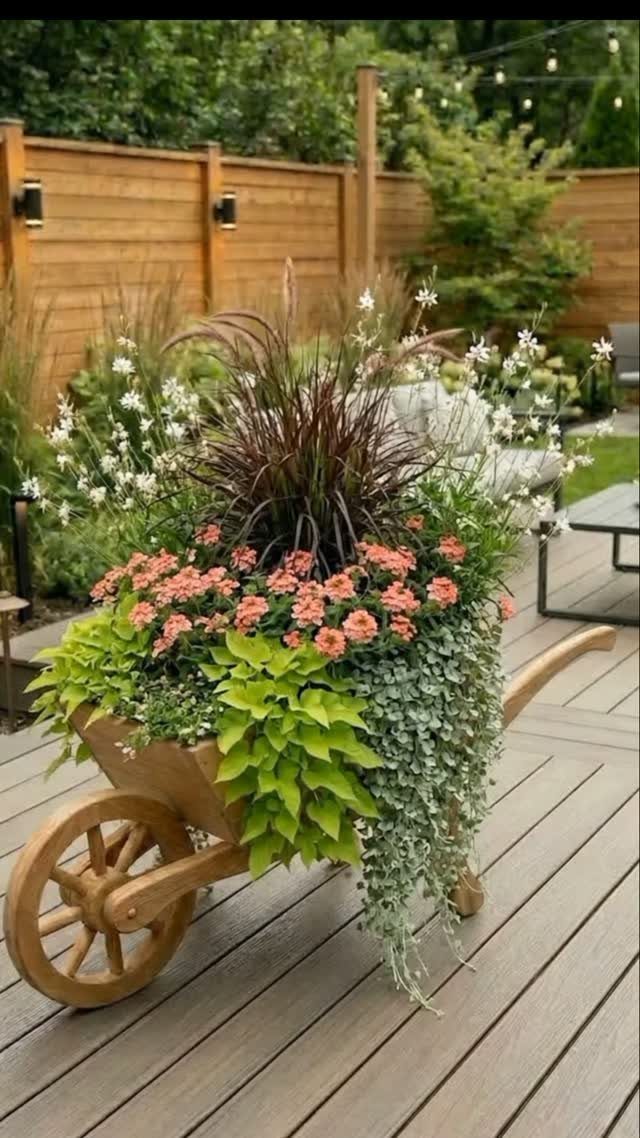
An old wooden wheelbarrow works as a country planter with room for a full mix: purple grass for height, pink flowers in the middle and trailing silver foliage over the edge.
Keep that same three-part order, and set the wheelbarrow where its shape can be seen, like a deck or lawn edge.
An old wheelbarrow from the garage or a relative’s shed beats buying a new one, since weathered wood and a little rust suit a planter.
17. Elephant Ears and Coleus Combo
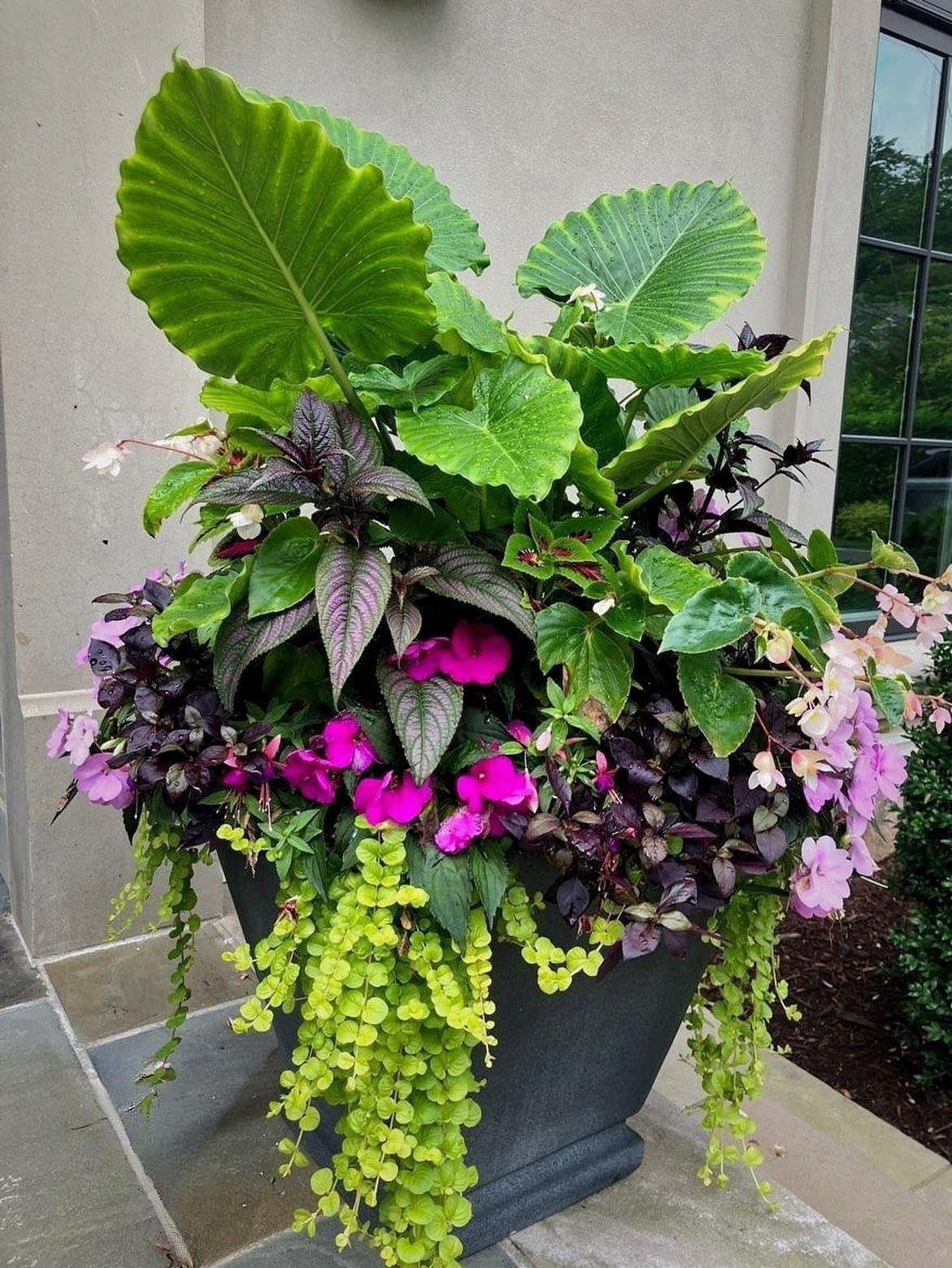
Broad elephant ear leaves give a large dark planter its bulk, and purple and green coleus ties in beneath them. Lime-green creeping jenny spilling over the rim adds the bright note.
Place the elephant ears at the center, coleus around them, and a few pink flowers for contrast. A dark grey pot makes the greens look richer against a light wall.
I would choose this for a spot where you want one big, bold pot.
18. Topiary and Petunias
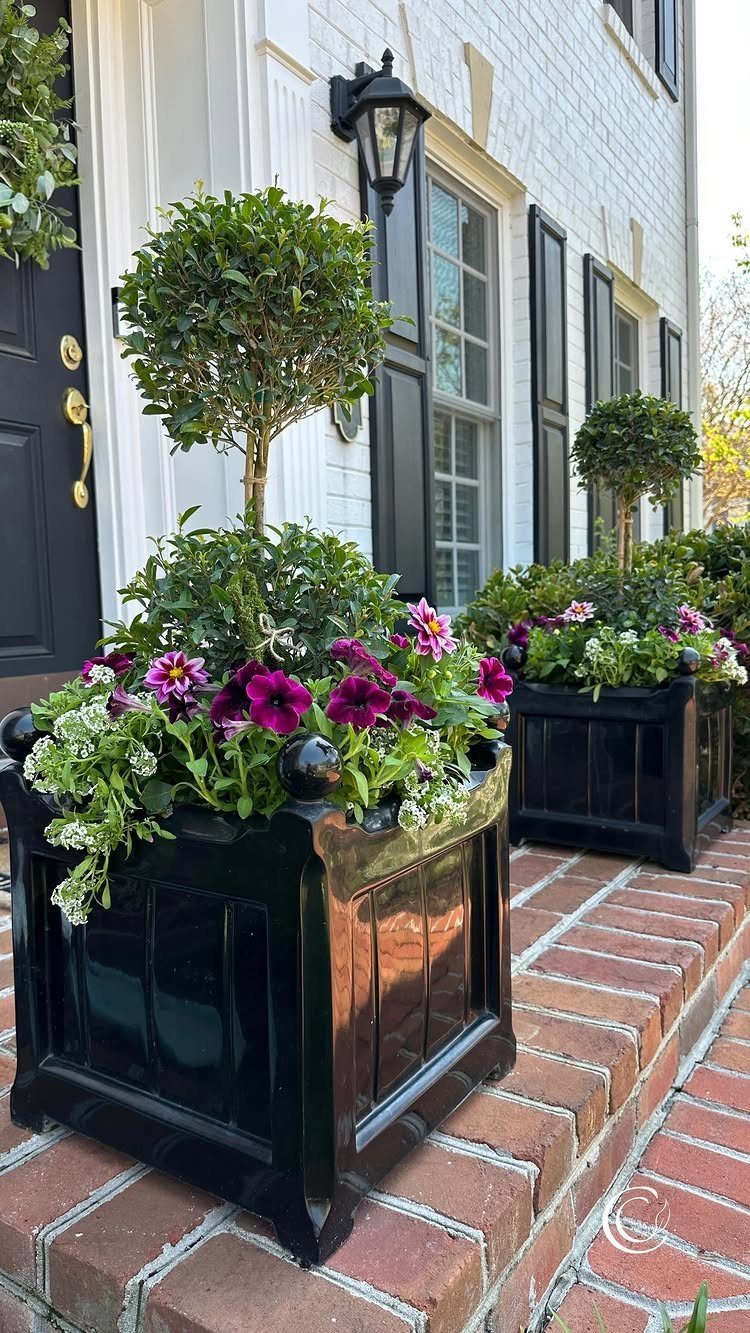
A clipped evergreen topiary in a black square planter gives brick steps a formal look, and purple petunias with trailing white flowers soften the edges.
Plant the topiary in the center and pack the petunias around it. Use a matching pair on either side of the steps so the entry looks balanced.
I prefer keeping the flowers to purple and white, so the topiary stays the star.
19. Cordyline, Begonias, and Alocasia
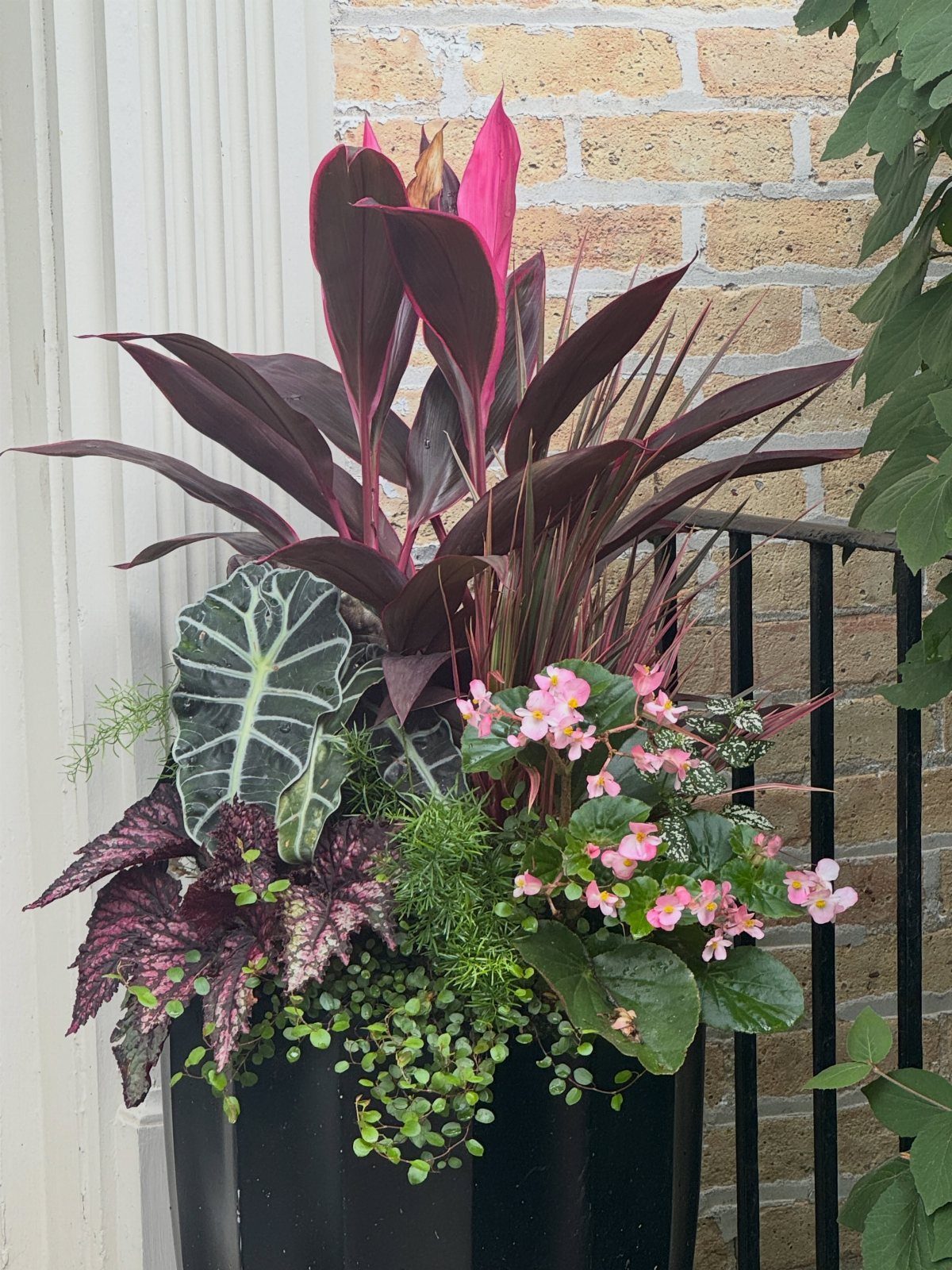
Burgundy cordyline spikes give this black planter its height, and pink begonias and purple coleus fill in below. One big alocasia leaf adds a bold shape that the small leaves around it lack.
Set the cordyline toward the back, tuck the begonias and coleus around it, and place the alocasia where its leaf can show. Keeping the palette to burgundy, pink and purple makes the mix look planned.
I would pick this for a brick wall, where the dark foliage holds its own.
20. Blue Ceramic Spire Planter
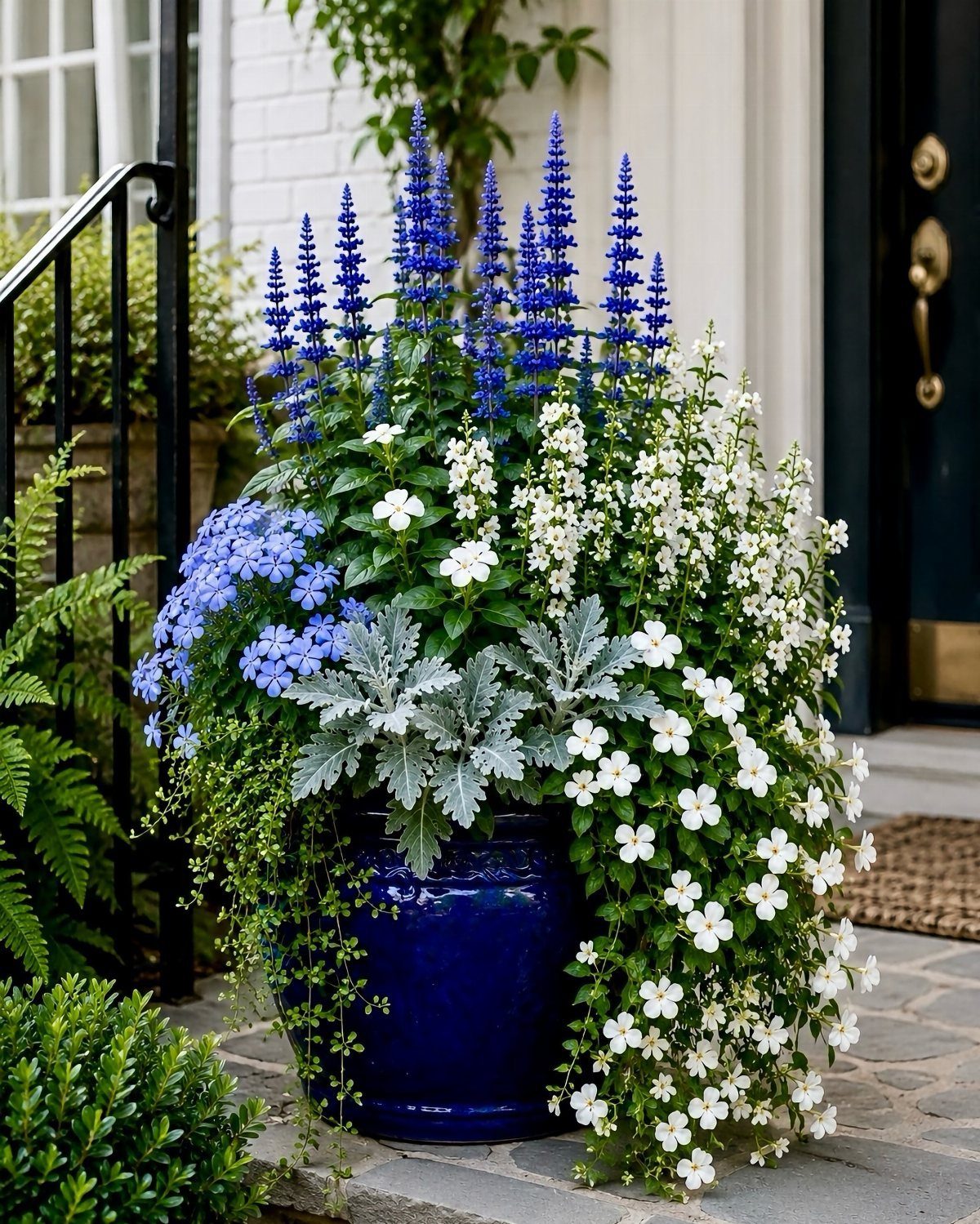
Deep blue glaze on a ceramic pot makes silvery foliage and white flowers look cleaner. Tall blue spikes repeat the pot’s color and carry the eye upward, so the planter feels taller than it is.
Keep the palette to blue, white and silver. Plant the spikes in the center, white flowers around them, and let the silver foliage soften the rim.
A pot this glossy works best alone beside a dark door, and I would not crowd it with other containers.
21. Spilled Flower Pot
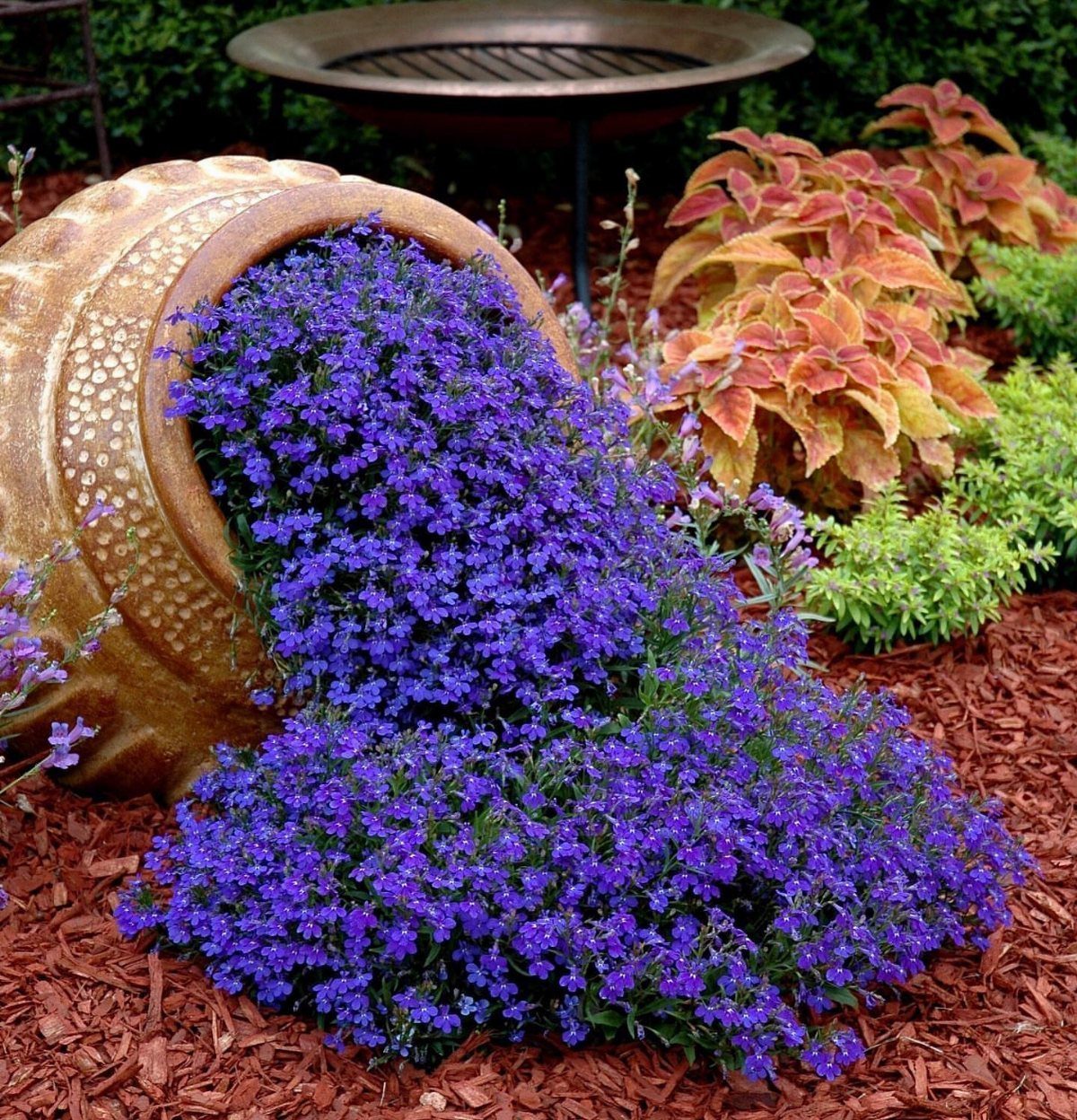
Tip a large ceramic pot on its side, and a plain planting becomes a scene. Purple flowers pouring out across mulch look like a drift that grew there on its own.
Pack the pot densely with one flower so the spill looks full.
Settle it on a bed of mulch, as here, and the flowers have a surface that sets off their color. Red mulch makes purple stand out.
I like this beside a fire pit or path, where the shape draws a second look.
22. Ribbed Metal Flower Basin
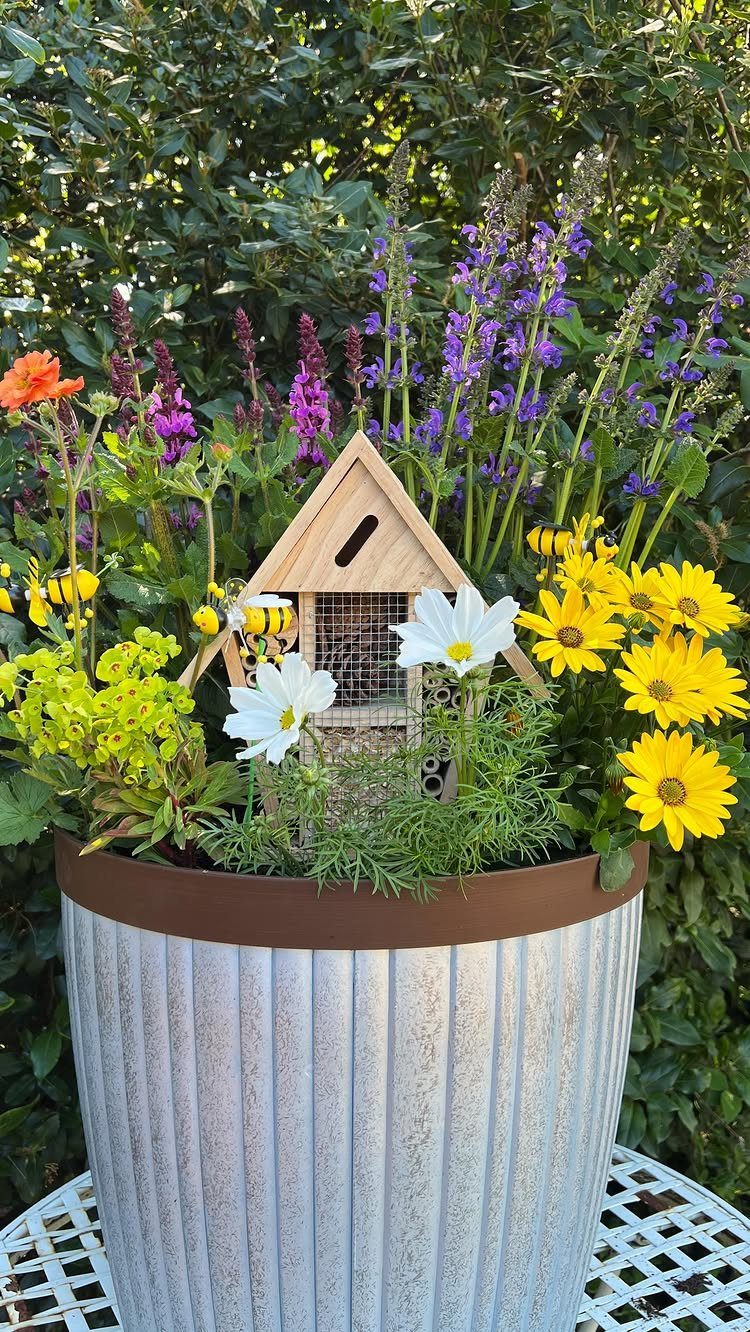
A ribbed metal basin holds sunflowers, cosmos and purple salvia like a cut bouquet, and a small wooden birdhouse tucked in gives it a story. Tall sunflowers go at the back, cosmos in the middle, and salvia up front.
Choose a sunny spot, since all 3 flowers want full sun. Set on a table against a green hedge, the basin lets its bright colors stand out instead of competing with the background.
I would add the birdhouse last, once the flowers fill in, so you can judge where it fits.
23. Porch Hanging Petunia Baskets
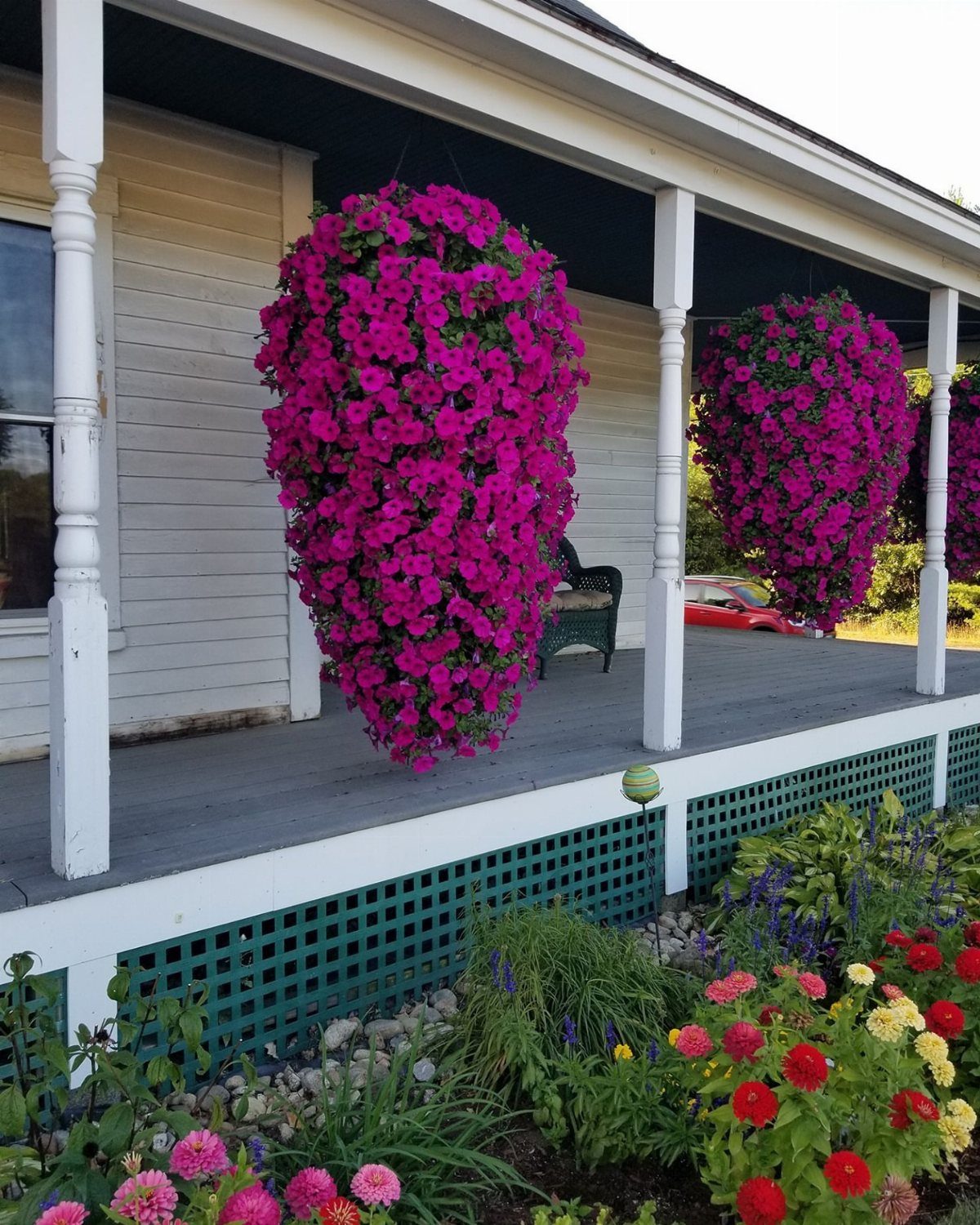
Three magenta petunia baskets hung in a row along a porch roofline fill the whole edge with color. Matching baskets at the same height read as a deliberate line, and one color keeps it bold rather than busy.
Hang them evenly spaced from the porch roof, where the trailing stems can spill freely. A white porch makes the magenta glow.
I would take one color in three full baskets over a mix of shades.
24. Classic Terracotta Geranium Pot
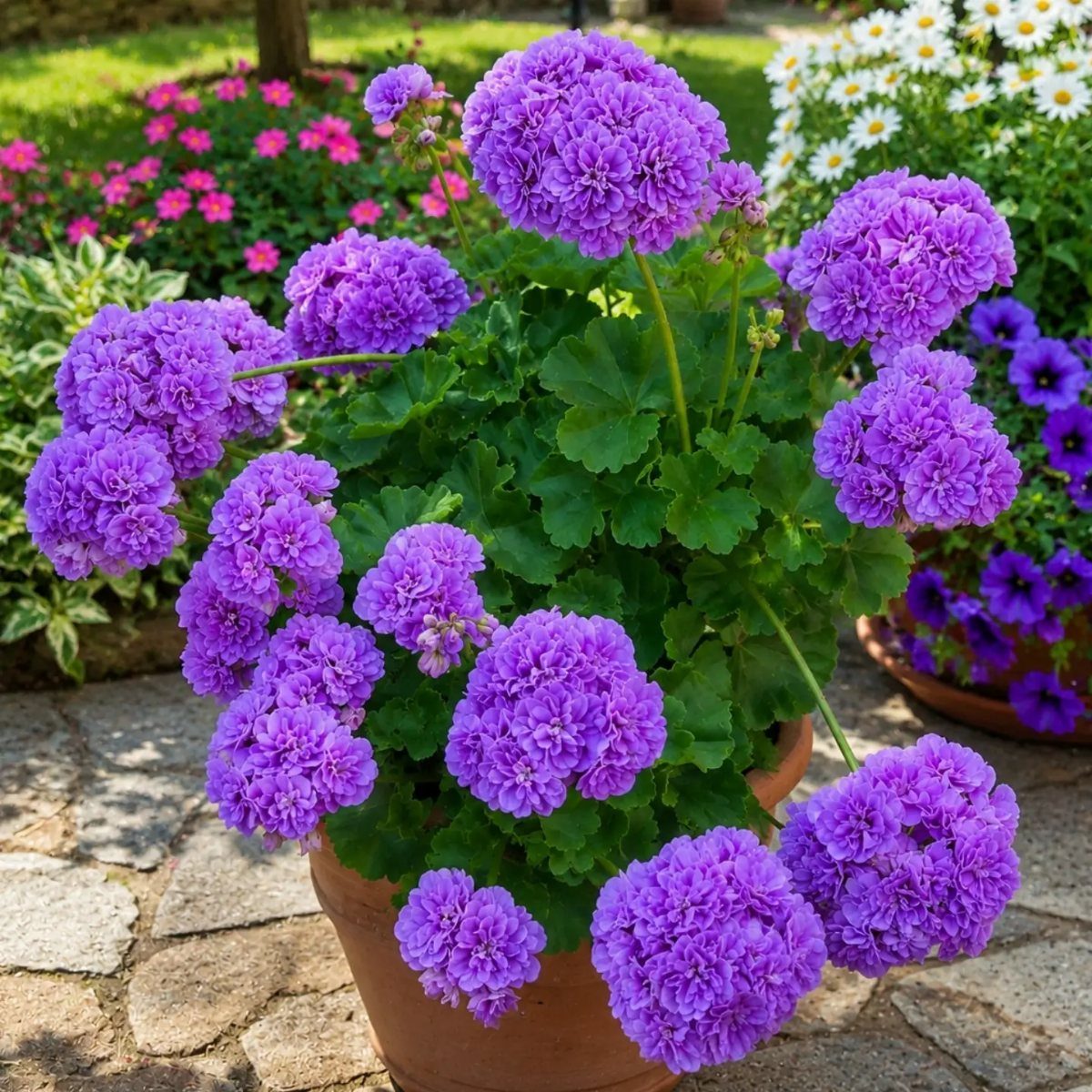
A terracotta pot of purple geraniums is about as simple as a summer planter gets, and it works because nothing competes with the flowers. The warm clay sits easily on stone.
Fill one pot with a single geranium color and set it on a patio, where it can anchor the surrounding greenery. Terracotta pairs with nearly any other pot, so adding more later is easy.
I would start here if you want a planter that needs no planning.
25. Lavender, Petunias, and Ivy Urn
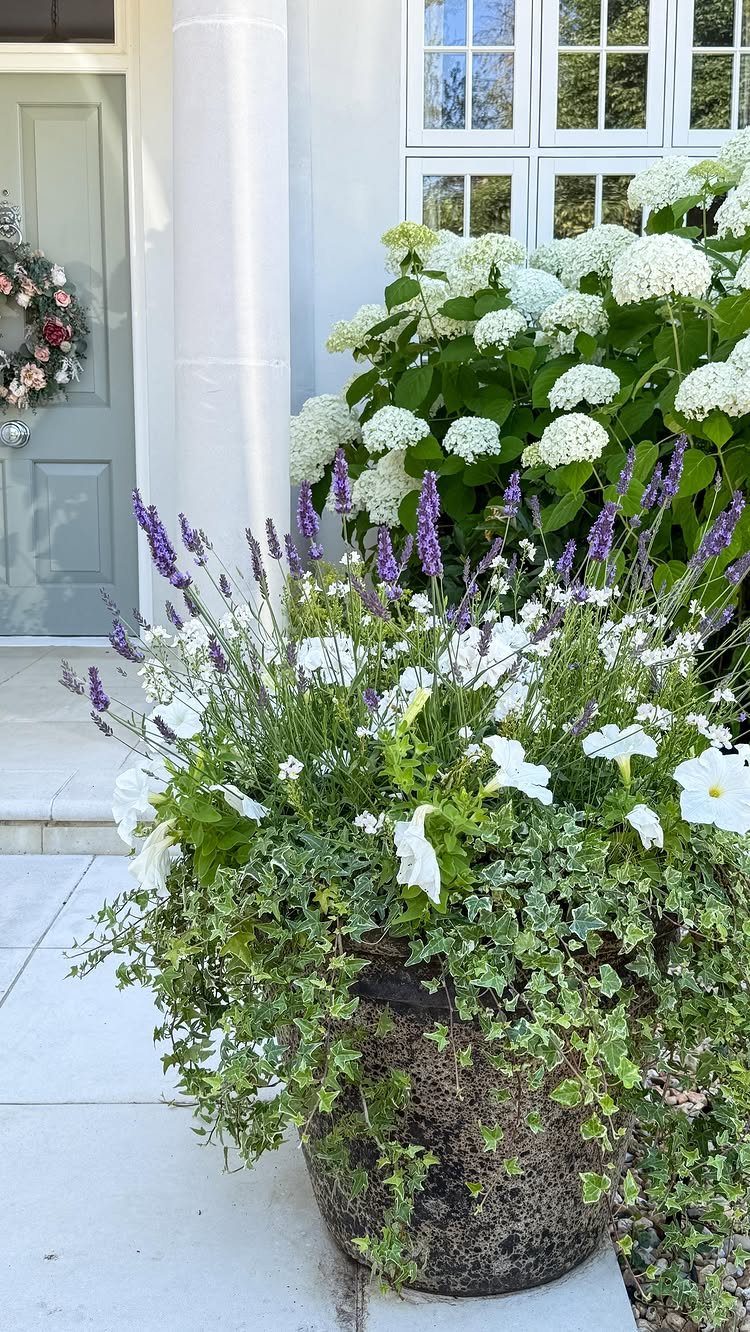
Lavender gives a stone urn height and scent, and white petunias and trailing ivy fill the lower half. Purple and white against a grey door looks calm and a little formal.
Plant the lavender in the center, petunias around it, and ivy at the rim so it spills over the stone. Keep the palette to those 2 flower colors.
White hydrangeas beside the urn repeat the petunias, which I like better than adding a third color.
26. Trailing Begonia Hanging Basket
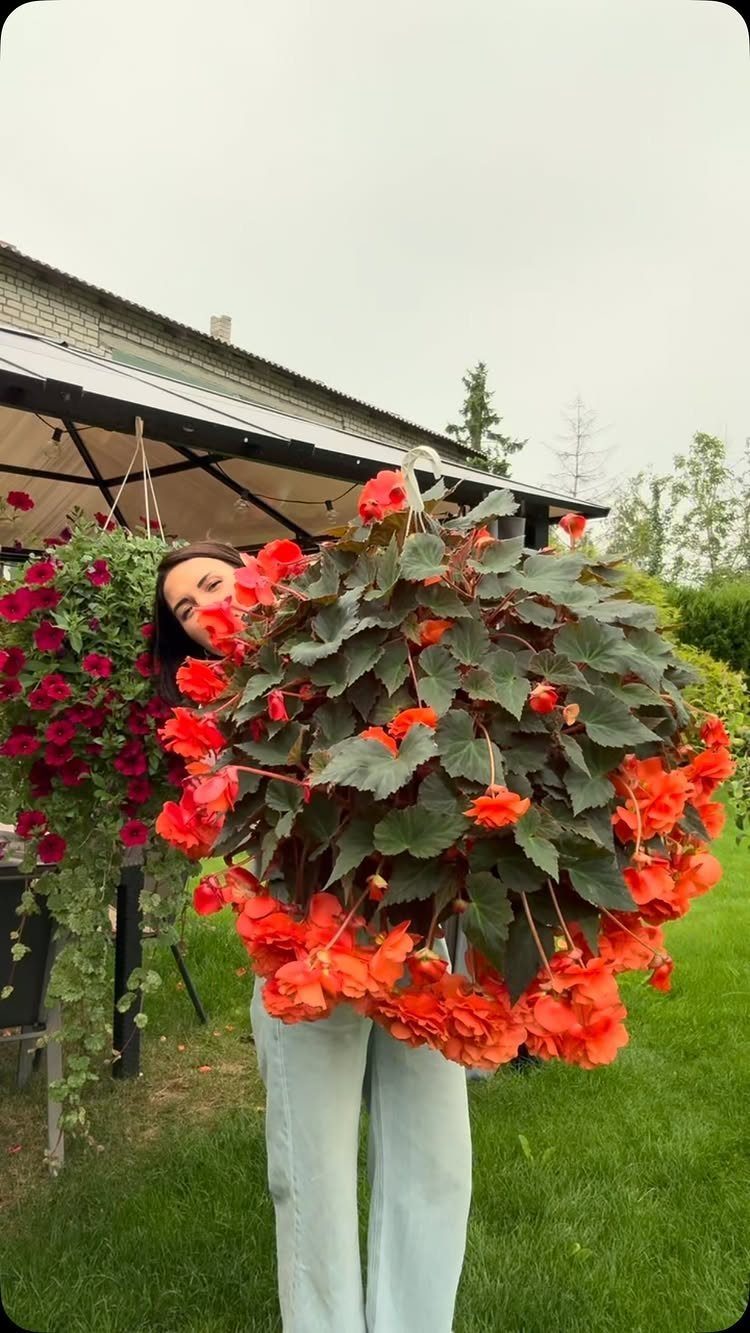
A single deep red begonia basket, packed until the foliage hangs over every side, does more than a row of thin ones. The green leaves make the red read richer.
Choose a large basket and plant it full from the start, so no soil shows at the rim. Hang it under a patio cover where it sits at a comfortable height for you to enjoy.
Red begonias paired with a second matching basket look deliberate, and I would stop at two.
27. Multi-Colored Petunia Bowl
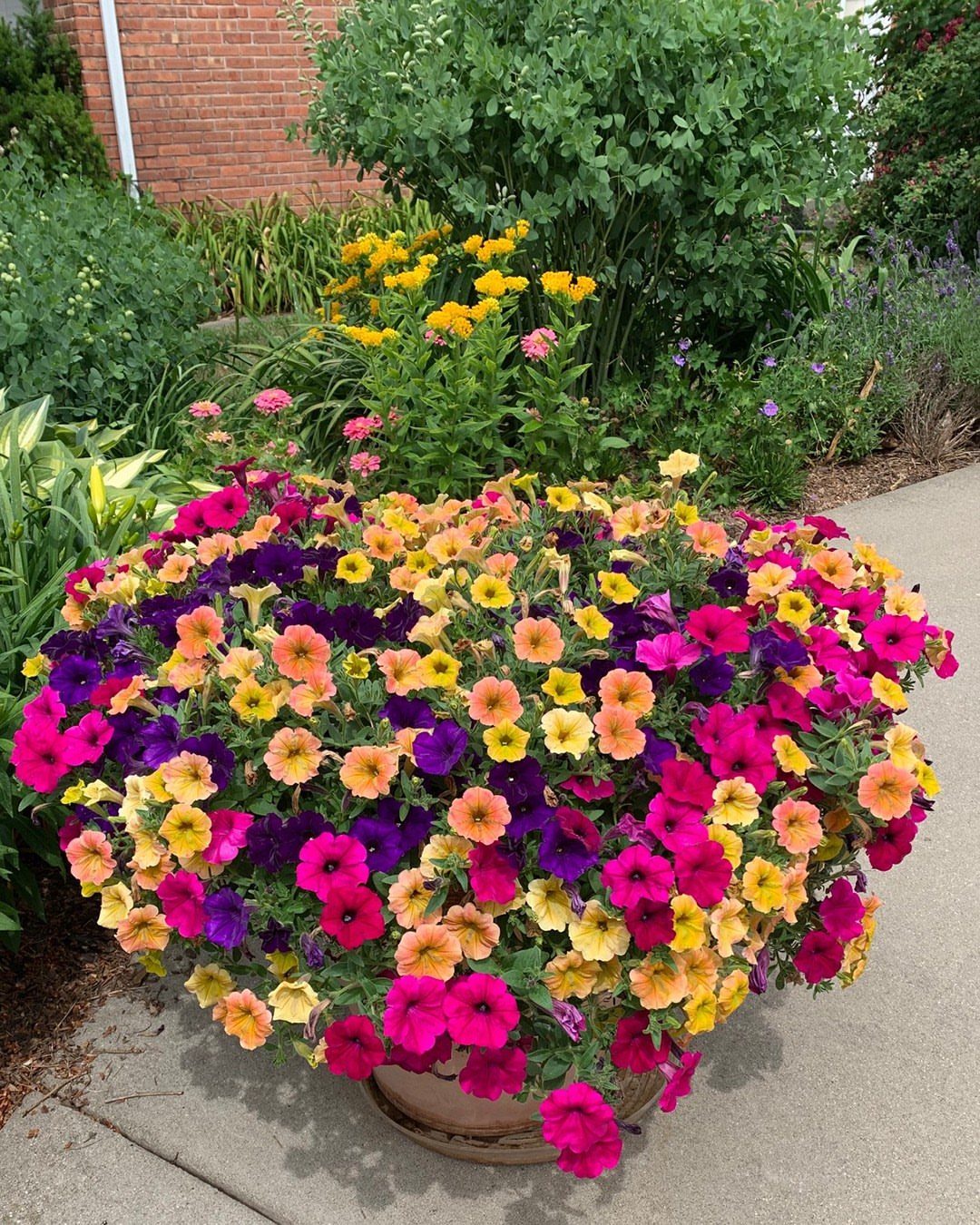
Petunias in pink, purple, yellow and orange turn one rounded bowl into a mixed bouquet. Because the plant is the same, the colors feel related even when they differ.
Pick a wide, rounded container and plant the petunias close together so the blooms overflow the edge. Set it beside brick or green shrubs, which give the bright colors a calm backdrop.
I would use a mix like this in one bowl only. Several would compete with each other.
28. Lush Coleus Container
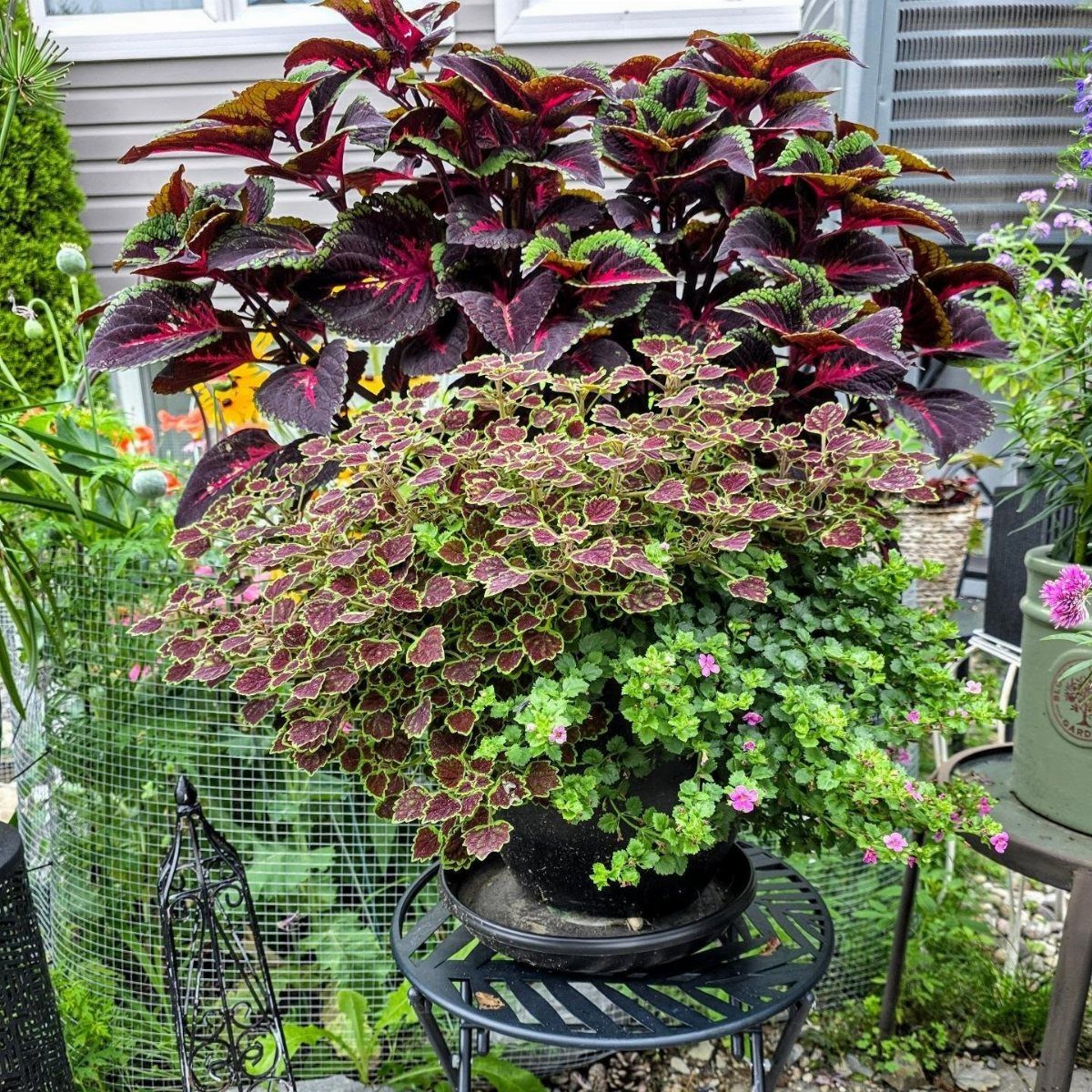
A black planter on a metal stand shows off burgundy, red and green coleus, and trailing greenery softens the edge. The stand lifts the leaves to where their patterns can be seen up close.
Mix 3 coleus varieties with different leaf colors and plant them tightly so the pot looks full. Let the trailing plant hang over the rim.
Black makes every shade look deeper, so I would keep the container plain and let the foliage carry the display.
Container Soil and Drainage
Skip the dirt from the yard and pack each pot with a bagged peat-based potting mix, the soilless kind. Compared with garden soil, these mixes keep moisture longer and stay loose, so roots spread out easily instead of packing down.
Mix a slow-release fertilizer into the potting mix when you plant, and the plants get steady food starting in week 1.
Turn each pot over and look for drainage holes first, because a pot without them will drown the roots no matter how good the plant is.
A pot with no holes holds water around the roots, so drill some or use it as a cover for a plain nursery pot.
Stop filling about 1 inch below the rim so water has room to pool and soak in instead of running over the side.
That gap holds water while it soaks in, so it doesn’t run over the edge and wash the mix out.
Match the mix to the plant. Dahlias and alpines want well-drained soil, so they do better with a faster-draining blend than moisture lovers do.
Small, shallow pots dry out suddenly and completely, with little room for roots. I would use them only for plants that like that, such as alpines.
Frequently Asked Questions
What are good plants to put in a planter?
A thriller, filler and spiller mix is the easiest formula.
Coleus, begonias, herbs and cosmos also work. Group plants that share the same light and water needs.
What are the best plants for container gardening?
Choose plants that suit the pot’s light and water conditions, then combine flowers with foliage.
Annuals, herbs, dwarf shrubs, succulents and ornamental grasses all do well in containers. Foliage plants like coleus and cordyline hold their color all summer, so a pot doesn’t depend on blooms alone.
What size container do I need?
Size the pot to the plant’s full-grown width, not the nursery pot it came in; 12 inches across is a safe minimum for most flowers and vegetables.
Dahlias need a planter at least 12 inches deep. Larger pots dry out more slowly, and tall plants like castor bean need a big, heavy pot to stay steady.
Do containers need drainage holes?
Yes. Drill holes in the pot, or use it as a decorative cover and keep the plant in a plain nursery pot with proper drainage inside.
How often should I water container plants?
In hot weather, expect to water most containers daily, and small pots will want it most. Push a finger into the mix, and if the top inch is dry, water.
Can I use garden soil in containers?
No. Yard dirt packs down and drains poorly in a pot.
Skip garden dirt and fill with bagged peat-based potting mix instead. It’s soilless, so it stays loose, gives roots room and holds moisture longer.
Do I need to fertilize container plants?
Yes.
Potting mix only holds so many nutrients, and all that watering rinses them out of the pot. A balanced water-soluble fertilizer every 2–4 weeks during the growing season also works.