
DVD storage in 2026 runs from free shoeboxes to custom plywood builds, and the deciding factor is whether you still watch the discs or only keep them for legal backup. The Atlantic Media binder that packs 400 discs into a space smaller than a shoebox is the benchmark for collections that have outgrown the entertainment center but still need the physical disc on hand.
1. DVD Sleeves
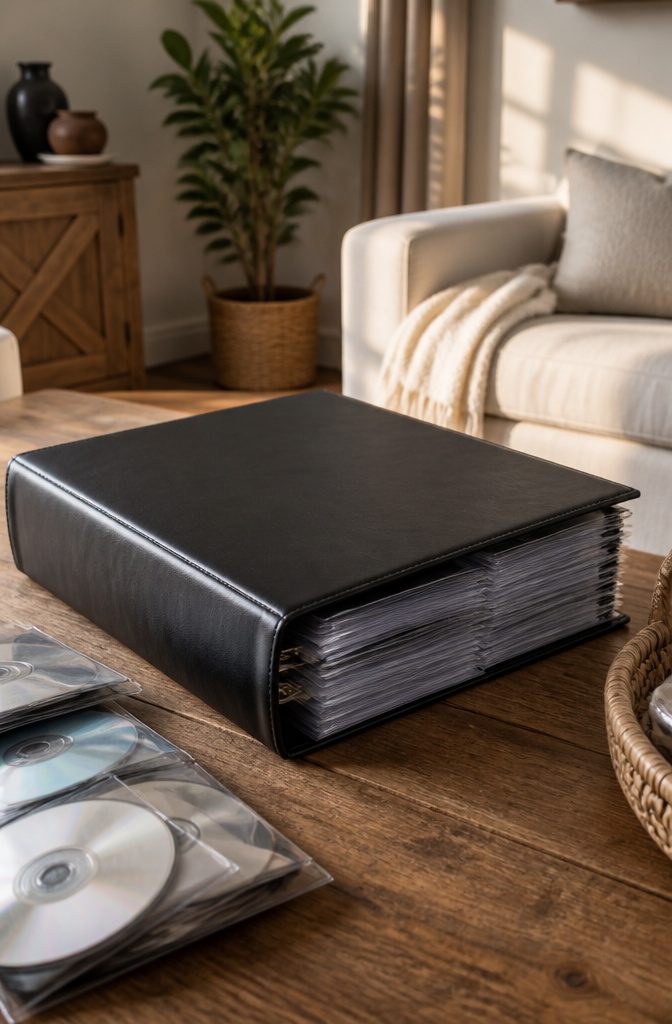
DVD sleeves strip a collection down to almost nothing. Each sleeve holds two discs plus the folded cover art, and a binder like the Atlantic Media Sleeves packs 400 discs into a space smaller than a shoebox. The tradeoff hits the moment you want to watch something. You flip through pages instead of reading spines on a shelf, and the folded insert never quite lies flat again. I alphabetize my pages and keep a running list on my phone, because hunting through four hundred loose sleeves is not how I want to spend a Friday night. The system works best for movies you already backed up to a hard drive or NAS and keep only for legal compliance, or for genres you rewatch rarely but cannot quite sell off. If you pull a film more than twice a year, the sleeve starts to feel like a chore.
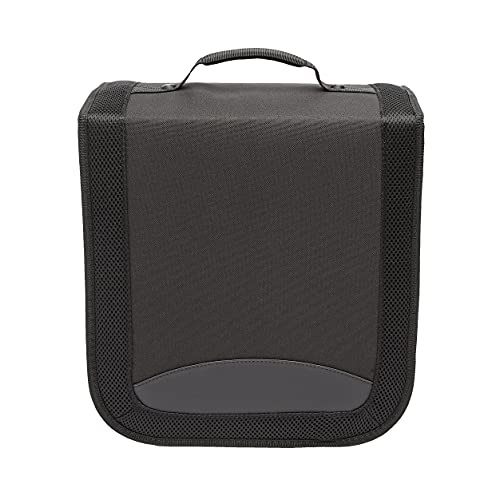
Portable storage wallet for CDs, DVDs and data disc collections; 400 disc capacity

The Sivet CD/DVD case bag is made of durable, moisture-proof, and tear resistant silk fabric, which can be used for a long time to protect your precious CD/DVD from damage.
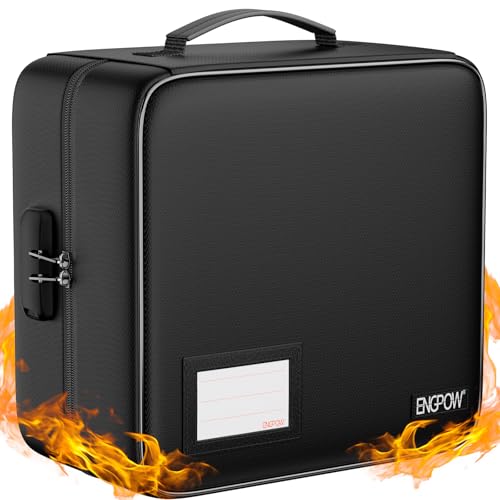
Fireproof Materials:In contrast to ordinary CD Cases,this upgraded fireproof CD Case is made of 3 layered non-itchy silicone coated fiberglass which stands up the temperature up to 2200℉.Giving you time to save your important CD/DVD when disaster strikes.Additionally,the CD Case is water-resistant,so it can effectively protect your CD/DVD from both fire and wet weather.And the Non-dusty material can prevent dust from sticking to the outside of our CD holder, always keep it neat and tidy
2. DVD Storage Binders
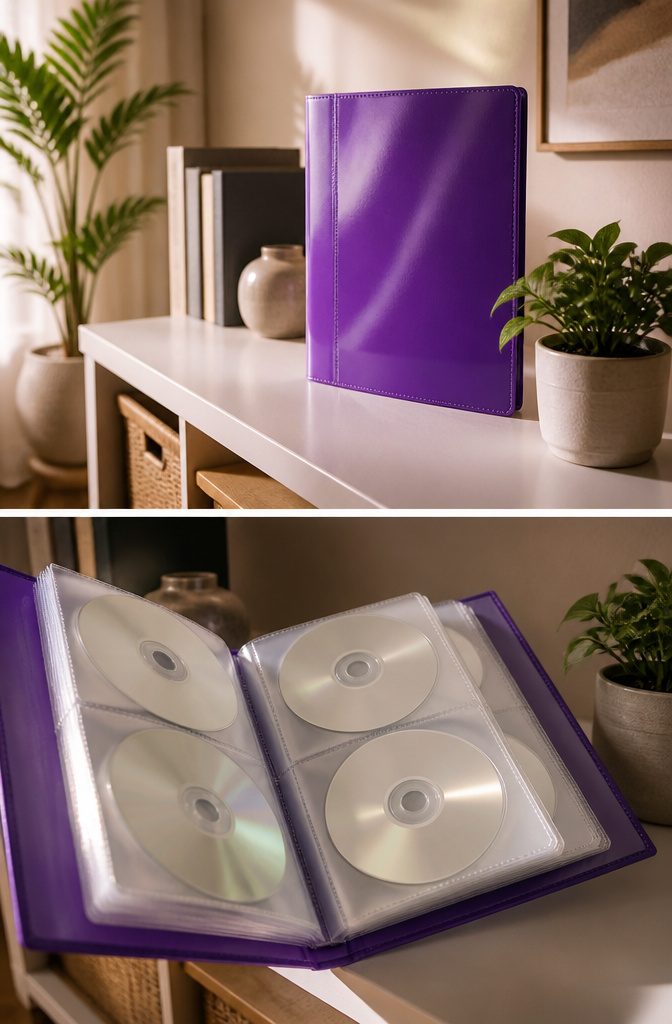
A single Atlantic Media binder at 400 discs is the benchmark for how much shelf space you can reclaim in one move. The discs slide into polypropylene sleeves inside a zippered case, and the whole thing tucks into a drawer or a cabinet you already own. That portability matters if your collection moves between rooms or if you are digitizing to a NAS and need the originals close but not displayed.
Binders beat loose sleeves when you want the spine labeled and the pages flipping. Most versions include index cards or printable inserts so you can alphabetize without pulling discs. The trade is the case itself: jewel cases go to recycling or storage, and the paper cover art either gets folded into the binder pocket or discarded. I have seen people keep a single binder of "keepers" and donate the rest; the format almost encourages it.
Materials run from vinyl at the budget end to leather-look versions that read more like a photo album on a shelf. Either way, the 400-disc capacity is the number that makes the math work for anyone whose collection outgrew the entertainment center years ago but who still wants the physical disc as backup.

25 Pack of removable CD storage pages fit oversize 3-ring binders
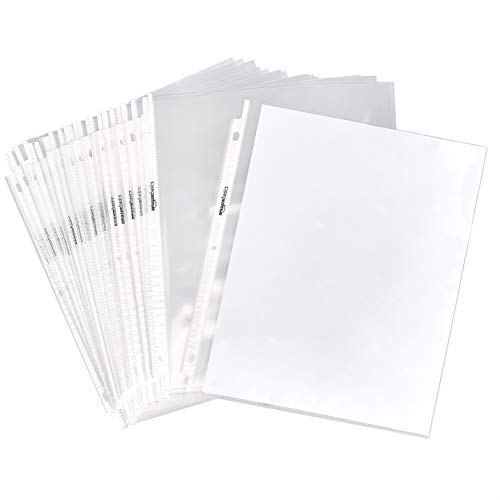
Clear sheet protectors (100-pack) for organizing, storing, and protecting 8.5 x 11-inch sheets of paper

Easily organize and protect your CDs, CD booklets and DVDs in any standard 3 ring binder
3. Wall-Mounted Storage

Wall-mounted shelves and racks claw back floor space in a room where every square foot counts. Standard floating shelves work, but a shelf built to the depth of a DVD case sits flush against the wall instead of wasting six inches of dead space behind the row. Dedicated DVD racks mount the same way and hold cases spine-out in tighter rows.
Weight capacity hinges on whether you hit a stud or settle for drywall anchors. A DVD case weighs next to nothing; fifty of them do not. Plastic expansion anchors or self-drilling anchors grip standard drywall well enough for a small rack, but a steel hollow-wall anchor or toggle bolt carries the load if you are spanning studs or stacking multiple rows. I have learned to stop trusting the knock-test and spend the ten dollars on a stud finder, because the patch kit costs more and the weekend is already short.
A wall-mounted unit also removes the tipping risk that comes with anything a child might climb. The bracket and anchor expand behind the drywall as the screw drives in, and the cabinet locks to the wall instead of riding on it.

1.【Durable Metal & High Capacity】 Crafted from sturdy, smooth-finish metal for modern aesthetics and long-lasting durability, our game storage tower hold up to 18 standard game cases per tier. A set of 4 offers massive game storage capacity—72 discs total—perfect for organizing your video game and movie collection

Robust & High-Capacity: This wall-mounted video game shelf organizer is expertly crafted from durable metal with a sleek, spray-painted finish for enhanced longevity. The set includes 4 holders, each capable of storing up to 18 disc cases, providing an impressive total capacity of 72 discs.

Simple and quick installation process: Includes 2 metal wall brackets [15.55x5.91x3.54 inches] and all necessary mounting hardware (10 expansion screws with plastic anchors, level, instructions, etc.). Complete from unboxing to installation in under 5 minutes.
4. Floating Shelves

Floating shelves give that clean, bracket-free look because the hardware hides inside the shelf itself. For DVDs, that means a slim ledge that sits almost flush against the wall, nothing jutting out underneath to catch a sleeve. The catch is the install. You are drilling into studs or using toggle bolts rated for the load, and even then, more than about three rows of standard DVD cases per foot starts to pull the nose down over time. I have seen a 36-inch pine shelf bow visibly after a year of holding a full collection. The IKEA Lack hack works for narrow gaps between doors, but the Lack is hollow core; fill it and the weight climbs fast. A better play is building your own from solid stock cut to DVD depth, which wastes no space and carries the load straighter. Either way, check level twice before the anchors go in. A shelf that tilts even a degree will slide cases forward every time you brush past.

Large Capacity: Siveit CD case can store 96 CDs/DVDs and keep them well organized, saving you more space. With 15 color choices, you can choose the color you like and store CDs into several categories by color.

Large Capacity: Siveit CD case can store 40 CDs/DVDs and keep them well organized, saving you more space. With 15 color choices, you can choose the color you like and store CDs into several categories by color.

Large Capacity: Siveit CD case can store 40 CDs/DVDs and keep them well organized, saving you more space. With 15 color choices, you can choose the color you like and store CDs into several categories by color.
5. Underbed Storage
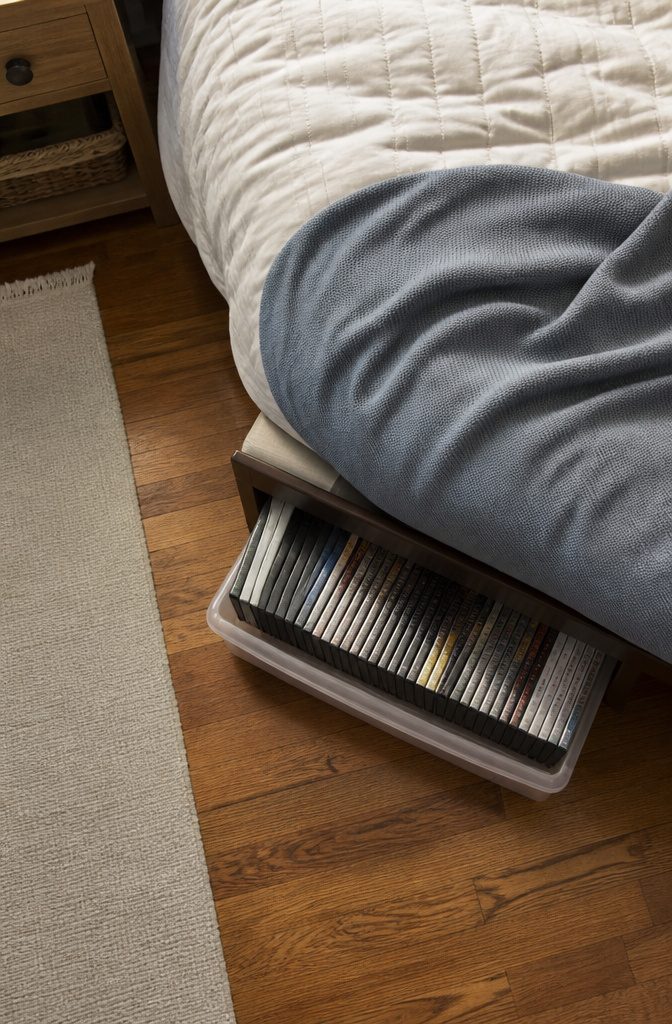
Underbed space is dead space until dust turns it into a hassle, so the first move is measuring what you actually have. Most bed frames leave six to eight inches of clearance, and a container taller than that gap scrapes every time you change sheets. Rubbermaid Bento Storage Boxes sit low enough for standard frames and hold roughly 75 DVDs apiece, which is a real number to work with if you are sorting a collection of any size.
Dust is the quiet problem here. The floor under a bed is a static trap even in carpeted rooms, and disc cases with their hinge seams collect it faster than flat media. A lidded box beats an open bin, and a box with a gasket or tight snap beats a loose lid. If you are sliding the whole thing out monthly, you will notice the film before it settles into the case seams. If you only touch it twice a year, check the seals first.
Retrieval frequency shapes the whole system. Bento boxes stack but do not roll, so a full one at the back of a king bed means crawling or dragging. Bags with a rigid base and a handle slot, the kind sold for shoe storage and repurposed, slide easier on hardwood but collapse if you overfill them. Two ways to play this: keep a single shallow container near the edge for the movies you actually rewatch, or mount casters on a shallow wooden crate and treat it like a drawer you pull into the room. The crate takes an afternoon and a drill; the Bento boxes take a Target run and no tools. For renters who might not stay past the lease, the boxes win.

Maxtek premium DVD case, made with high quality plastic

Maxtek DVD case, made with high quality plastic
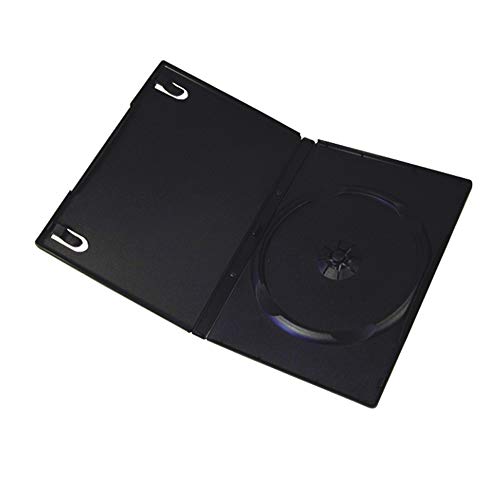
Progo standard black DVD case.
6. Storage Ottomans
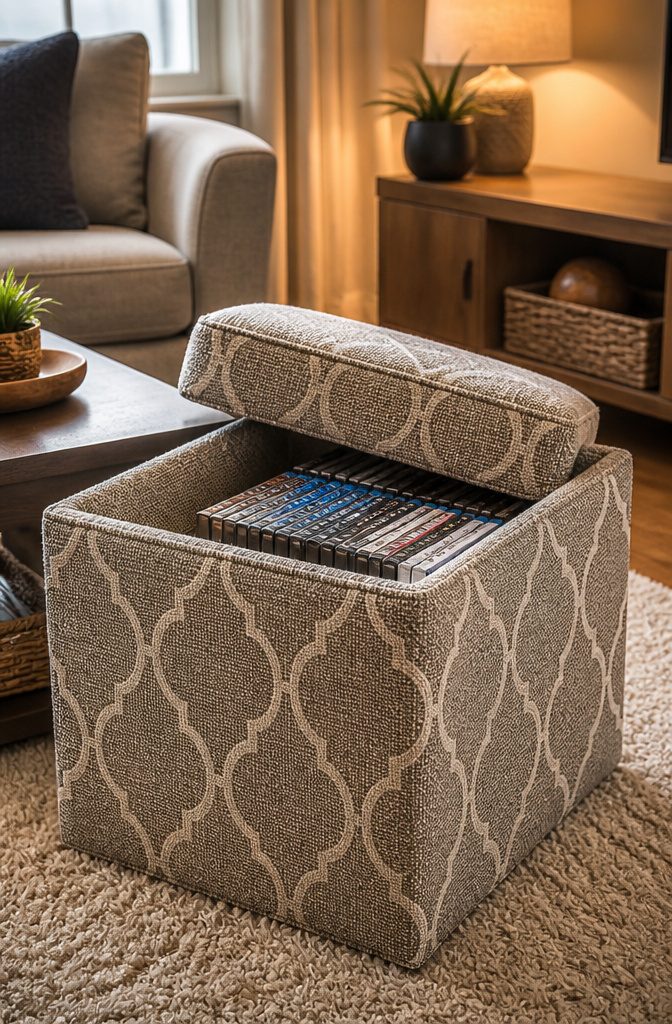
A storage ottoman hides discs inside something you already wanted for the living room, which sounds tidy until you try to live with it. The cushion top compresses over months of sitting, so the lid starts to sit lower and the gap lets dust settle on the cases stacked underneath. The real problem is the stack itself: every ottoman I have seen with a DVD compartment stores cases flat in a single deep bin, which means the movie you want is always at the bottom. You lift the lid, remove the cushion, dig through the pile, and reverse the whole process to close it up. For a film you watch once a year, that friction is fine. For anything you reach for regularly, the ottoman becomes a seat that occasionally punishes you.
The weight adds up faster than you expect. A standard case runs about five ounces, so two hundred discs hit sixty-plus pounds sitting on a hinged plywood base. The hardware loosens, the lid starts to list, and the ottoman wobbles when someone sits. Leather or fabric options come in enough colors to match most sofas, which is the appeal, but matching your décor does not fix the access problem. If you already own an ottoman and want to repurpose it, measure the interior first. Many are built for throw blankets and collapse under anything denser.
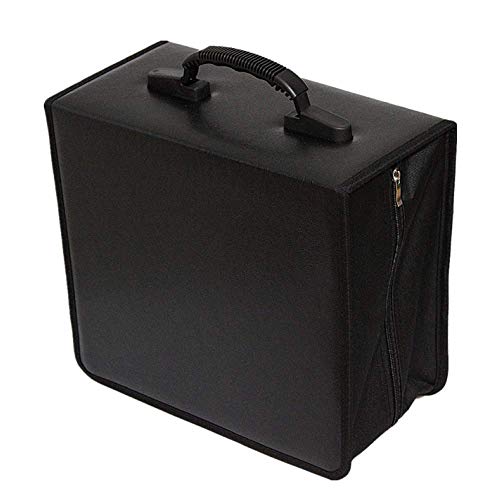
【High quality】DVD case is made of PU lather & Nonwoven Fabric.The dimensions is 12.4x 6.3 x 11.4 inch.

The Sivet CD/DVD case bag is made of durable, moisture-proof, and tear resistant silk fabric, which can be used for a long time to protect your precious CD/DVD from damage.

【High quality】DVD case is made of mercerized cloth & Nonwoven Fabric.The dimensions is 12.4x 6.3 x 11.4 inch.
7. Repurposed Furniture

A dresser with deep drawers already does half the work of a media cabinet if you line the movies on their sides like files in a drawer. The same principle works in a side table with a lower shelf, or in the hollow of a storage coffee table that has gone mostly empty since you stopped buying discs every month. The trick is measuring the interior height against a standard DVD case, which runs about 7.5 inches; anything shorter and the cases lean, anything deeper and you waste the back half of the drawer on shadow space. I have seen people pull the existing drawer boxes entirely and drop in dividers made from scrap plywood, turning one wide cavity into four narrow channels so the spines face up and titles read at a glance. That swap costs almost nothing if you already own the saw, though renting a circular saw for an afternoon runs roughly $15–25 if the toolbox is bare. The finished piece still looks like ordinary furniture from across the room, which matters in a rental where the landlord supplied the built-ins and they do not include media storage. The limit is weight: a drawer full of DVDs runs heavy fast, so test the slide hardware before you commit, and expect to replace cheap roller glides with something rated for 75 pounds or more if the drawer starts sticking in humid weather.

200-pack of sheet protectors for organizing, storing, and protecting 8.5-by-11-inch sheets of paper

Holds up to 5 CDs/DVDs with graphic booklets

High-Capacity Set of 100 Refillable Pages: This package includes 100 black CD binder pages. Each page is designed to hold 8 discs, providing a total capacity of 800 CDs or DVDs. This quantity is intended to support bulk storage needs for home media collections, office archives, school libraries, DJ equipment, and audiovisual enthusiasts who require organized, large-volume disc storage
8. Decorative Boxes and Concealment
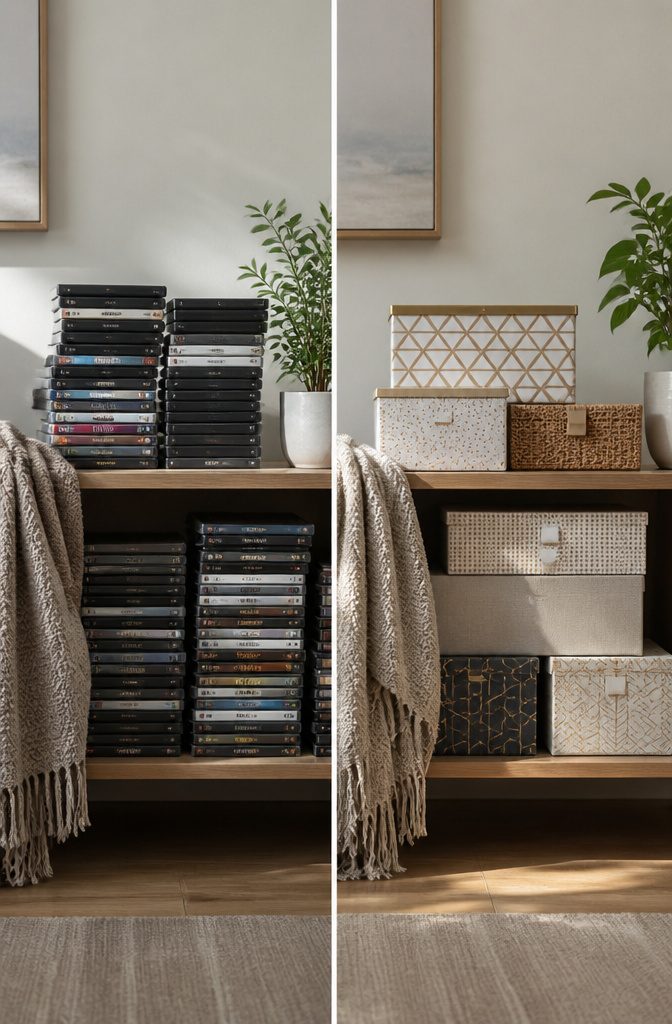
Decorative boxes built for concealment sit on shelves or under tables looking like ordinary storage while the DVDs inside stay invisible. A woven lidded bin from a home goods store, a set of faux-linen boxes with magnetic closures, or a row of matching photo boxes on a bookcase all do this without any weekend project attached. The trick is picking a box that looks like it belongs in the room already, not one that whispers "media storage" through a plastic handle or a DVD logo embossed on the spine.
The cost runs roughly $8–$25 per box depending on size and material, so a collection of fifty discs might need three or four. Stack them vertically like books and the spines stay hidden; lay them flat and you gain more discs per box but lose the quick browse. I lean toward the vertical method because lifting a lid to scan titles beats pulling out a whole tray when you are hunting for one movie on a Friday night.
The real limit is capacity. These boxes fill faster than dedicated media furniture, and once they are full the neat illusion breaks because you end up with discs stacked on top or a second row of mismatched containers creeping in. For a small collection they are the cleanest option I have found; for anything over a hundred discs, the concealment starts to require more boxes than most shelves gracefully hold.

High-Capacity DVD & Game Storage: Organize your DVD, CD, Blu-ray, and video game collection with this 2-tier DVD storage rack. Designed to hold up to 56 standard cases total, including 29 cases on the lower shelf and 27 cases on the upper shelf, this media storage solution also works as a CD holder, game case holder, and video game storage rack for your entertainment area

LARGE CAPACITY: Each DVD storage rack holds 28 DVD cases, 32 Blu ray discs, or 38 CDs — 2 pack holds up to 56 DVDs total. An efficient DVD tower shelf to organize your desktop and movie collection

1.【Durable Metal & High Capacity】 Crafted from sturdy, smooth-finish metal for modern aesthetics and long-lasting durability, our game storage tower hold up to 18 standard game cases per tier. A set of 8 offers massive game storage capacity—144 discs total—perfect for organizing your video game and movie collection
9. Custom Built Shelves
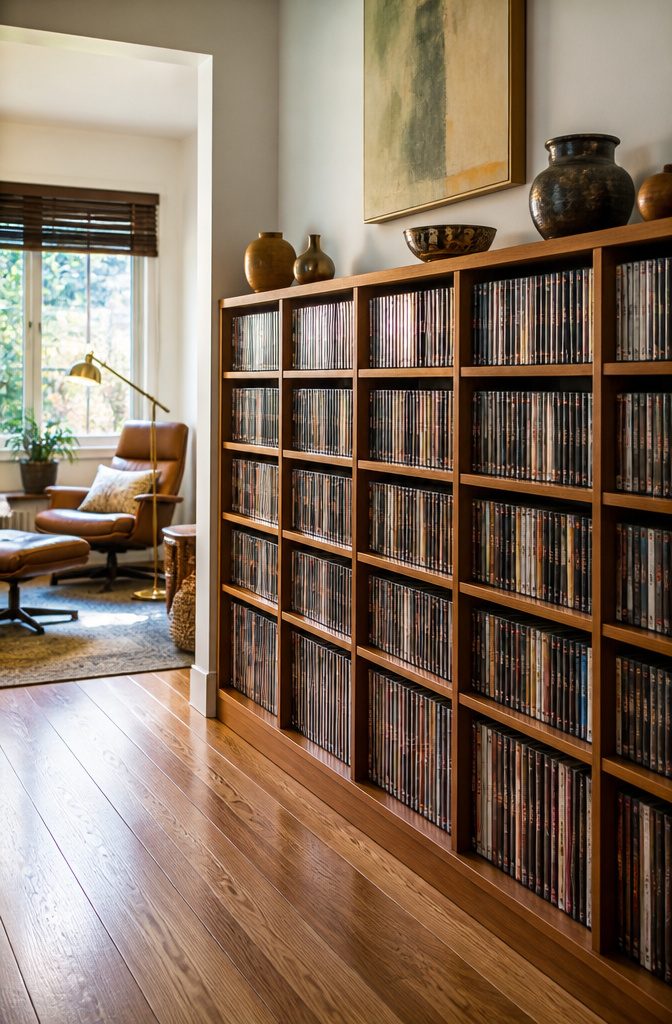
Standard DVD cases measure 7.5 inches tall, 5.3 inches wide, and 0.6 inches deep, and every built-in project should start there. I learned this the hard way after building a gorgeous pine unit that looked perfect in the sketch, then watched my cases stick out half an inch past every shelf face because I had trusted a "media storage" diagram online that turned out to be for CDs.
Depth is the measurement that gets skipped in most published plans. A shelf cut to 6 inches looks generous until you add the lip of a face frame or the thickness of a back panel, and suddenly your cases jut forward like a row of buck teeth. Build to 8 inches of clear depth if you want a flush front, or 9 if you plan to add labels or a small lip.
Width planning matters too. Six cases across need 32 inches of interior shelf, not 30, because that 0.6 inches stacks into real space fast. For vertical storage, which I prefer for scanning spines, 8 inches between shelves gives finger room without wasting height. Risers or adjustable peg holes let you double up later if the collection shrinks or you switch to slimmer cases.
Plywood runs about $50–$60 a sheet in my area, and one sheet plus a few strips of poplar for facing gets you a 4-foot-wide unit in an afternoon. Paint-grade construction hides a lot of sins; stain-grade does not, so practice your dados on scrap first.

100-Disc & 50-Booklet Storage – Store up to 100 discs and 50 booklets in one compact CD/DVD storage binder. Designed for standard φ12cm discs, including CDs, DVDs, Blu-ray discs, VCDs, software discs, PC driver discs, music albums, movies, and most game discs. Separate storage areas, keep discs and their matching cover art, liner notes, manuals, or inserts together in one organized case.

【Massive All-in-One Capacity: Holds 56 Discs & 28 Booklets】Organize your entire collection effortlessly. Every binder stores up to 56 CDs, DVDs, or Blu-rays alongside 28 booklets, covers, or posters in dedicated side pockets. Each inner page features 2 disc slots and 1 booklet slot, keeping every movie, game, and album with its original art and inserts perfectly paired and protected

【Massive All-in-One Capacity: Holds 56 Discs & 28 Booklets】Organize your entire collection effortlessly. This binder stores up to 56 CDs, DVDs, or Blu-rays alongside 28 booklets, covers, or posters in dedicated side pockets. Each inner page features 2 disc slots and 1 booklet slots, keeping every movie, game, and album with its original art and inserts perfectly paired and protected
10. Digitizing DVDs
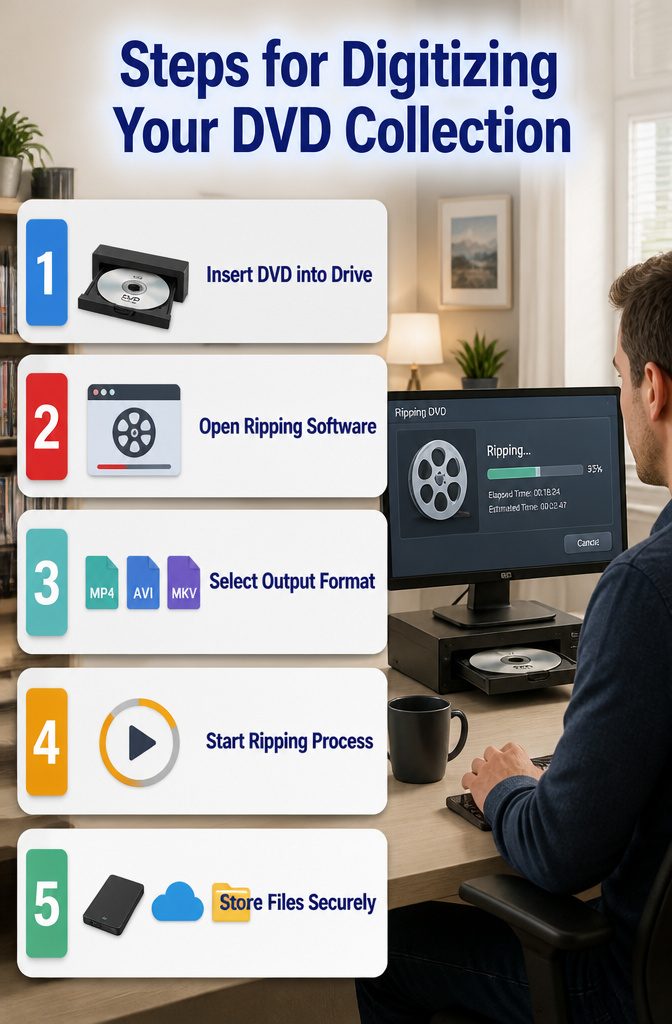
Converting a DVD collection to MP4, AVI, or MKV files is the only storage idea that actually removes the physical object entirely. A computer with a DVD drive and ripping software handles the transfer, with each disc taking several minutes to hours depending on file size and processing speed. The resulting library lives on a hard drive, external drive, or cloud service, accessible from a streaming device without ever touching a case again.
The legal gray area sits right at the center of this approach. Ripping software exists in abundance, free and paid, but copyright law in the United States has never cleanly authorized format-shifting of movies you already own. What convinced me, reading through a dozen of these guides, is that the risk assessment is yours to make while the technical path stays straightforward.
The time investment stacks up fast. A hundred discs at twenty minutes each is thirty-plus hours of active babysitting, not a weekend project you start Saturday morning and finish by dinner. The files need a home afterward, and that home needs its own backup discipline; one failed drive erases the entire collection you spent weeks building. For renters with shelf space at a premium, the tradeoff can still win. For anyone who values the original menus or commentary tracks, it loses something the other storage ideas keep.

Sturdy Zipper Window Design: Convenient front window with zipper on the DVD storage bag enables easy access while maintaining stackability


American made with high-quality, durable BPA-free clear plastic. Domestic production of this DVD organizer provides you with the peace of mind that you're buying a product that contributed less carbon emissions to the atmosphere from creation to delivery than those produced overseas.
Sorting and Labeling Systems
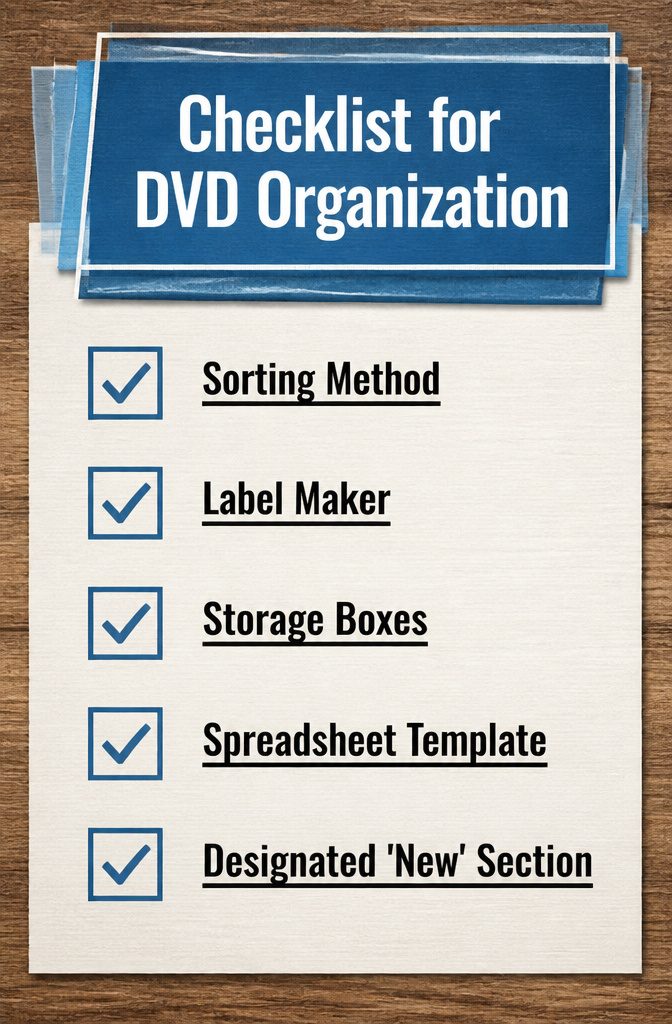
Genre sorting sounds logical until you pull out a film like The Big Lebowski and three people argue whether it belongs under Comedy, Crime, or Cult. Alphabetical order settles that, but it scatters series across the shelf and buries the movies you actually rewatch. The system that survives a shared household is the one everyone will actually maintain, not the one that looks prettiest on paper.
I tried color-coding once, using colored binder spines in a filing drawer system laid on its side. The visual grouping worked for about two weeks, then my partner filed Blade Runner under blue because of the cover, not because it was sci-fi. We switched to a simple alphabetical run with a single "New / Unwatched" section at the front. That front section is where the compromise lives: anything still in rotation stays visible, the back catalog stays findable.
For collections that cross genres heavily, a spreadsheet backup saves the shelf from over-labeling. One commenter I came across catalogued over 1000 discs in Excel by title, genre, and notes, then stored the physical copies in 6×6 boxes by broad category. The digital list did the heavy lifting; the boxes just had to be roughly right. If you are splitting storage between a cabinet and overflow boxes, that two-level approach is worth the twenty minutes it takes to set up.
The real test is the purge. Anyone who owns discs needs to be in the room when you decide what stays, because you cannot make that call for another person and the system falls apart the first time someone cannot find a movie they never agreed to discard.
Case Durability and Disc Protection
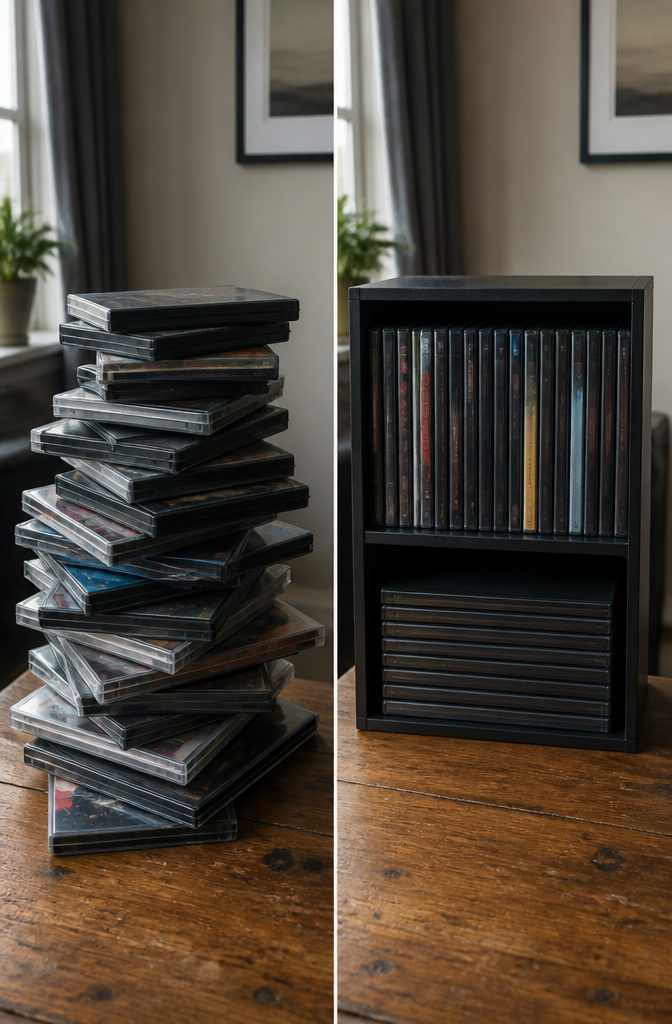
Sleeves save space, but the tradeoff is real protection. Paper or thin poly sleeves let discs rub against each other every time you flip through a binder, and the cover art gets folded in half to fit. That seam down the middle of your insert wears faster than the disc itself, which is why I kept my most-played titles in their original hard cases even after switching everything else over.
Hard cases stack two ways, and only one of them works long-term. Vertical standing puts the weight on the locking hub, which can crack under pressure and let the disc rattle loose. Horizontal stacking spreads the load across the case face, though you need to keep stacks under a foot tall or the bottom cases warp from the weight. Heat and humidity do the actual killing: attic storage above 85°F softens the polycarbonate layer, and basement damp swells the adhesive until the reflective film bubbles. Binders with zippered nylon covers handle this better than open baskets or drawer piles, since they at least slow down dust and moisture. A $20 binder holding 400 discs in sleeves is the compact choice, but the discs you reach for monthly will last longer in the cases they shipped in.
Costs at Each Tier
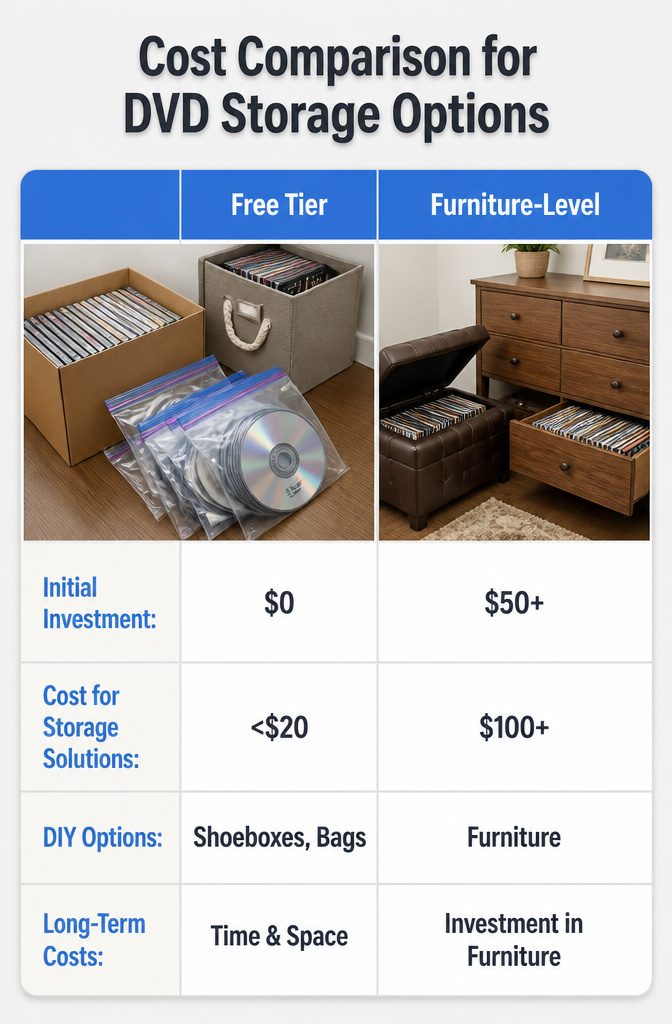
The free tier starts with what you already own: shoeboxes, spare drawers, or that fabric-covered drawer a commenter found at a thrift store for two dollars. Zip-lock bags run about three and a half cents each when bought in bulk, which puts a hundred-disc rehousing under twenty dollars total. That is the under-twenty sweet spot for anyone who just wants the clutter gone this weekend.
Furniture-level spending opens up once you need the collection to live somewhere intentional. A storage ottoman or a secondhand dresser with deep drawers costs what any small piece of furniture costs, and the hidden-DVD approach works because it borrows space you were already going to fill.
The hardware entry point for digitizing sits apart from all of this. External drives and ripping software exist at every price, but the real cost is time: feeding discs one by one, filing names, deciding what stays. One commenter made the switch only after years of boxed-up discs had already become a pain. For most renters, the physical route wins until the collection outgrows the next apartment.
Frequently Asked Questions
What is the best way to store DVDs?
The best way to store DVDs is whichever method fits your space and how often you watch them. Wall-mounted shelves or racks claw back floor space, while binders and sleeves pack hundreds of discs into a drawer. A 400-disc binder like the Atlantic Media Sleeves fits in a space smaller than a shoebox, making it ideal when shelf space is tight.
How do I organize my DVD collection?
Alphabetical order settles most arguments, though it scatters series across the shelf. A spreadsheet backup works well for large collections: catalog titles digitally, then store physical copies in broad categories. The system that survives a shared household is the one everyone will actually maintain, not the one that looks prettiest on paper.
Can I digitize my DVDs?
Yes, though United States copyright law has never cleanly authorized format-shifting of movies you already own. Ripping software exists in abundance, and the technical path is straightforward: a computer with a DVD drive converts discs to MP4, AVI, or MKV files. The real cost is time; a hundred discs at twenty minutes each is thirty-plus hours of active work, and the resulting files need their own backup discipline so one failed drive does not erase everything.