Your USDA hardiness zone decides which of these plants live through the winter, and the same zone check applies whether you buy a dwarf evergreen in a pot or a clipped beech hedge.
The ideas run from nothing at all, like leaving dried hydrangea heads uncut, to a few that need a partner to work: winterberry hollies only fruit when a male stands near a female, so plan the pair together.
Match the plant to your local conditions first, then pick the look.
1. Dwarf Evergreen Varieties
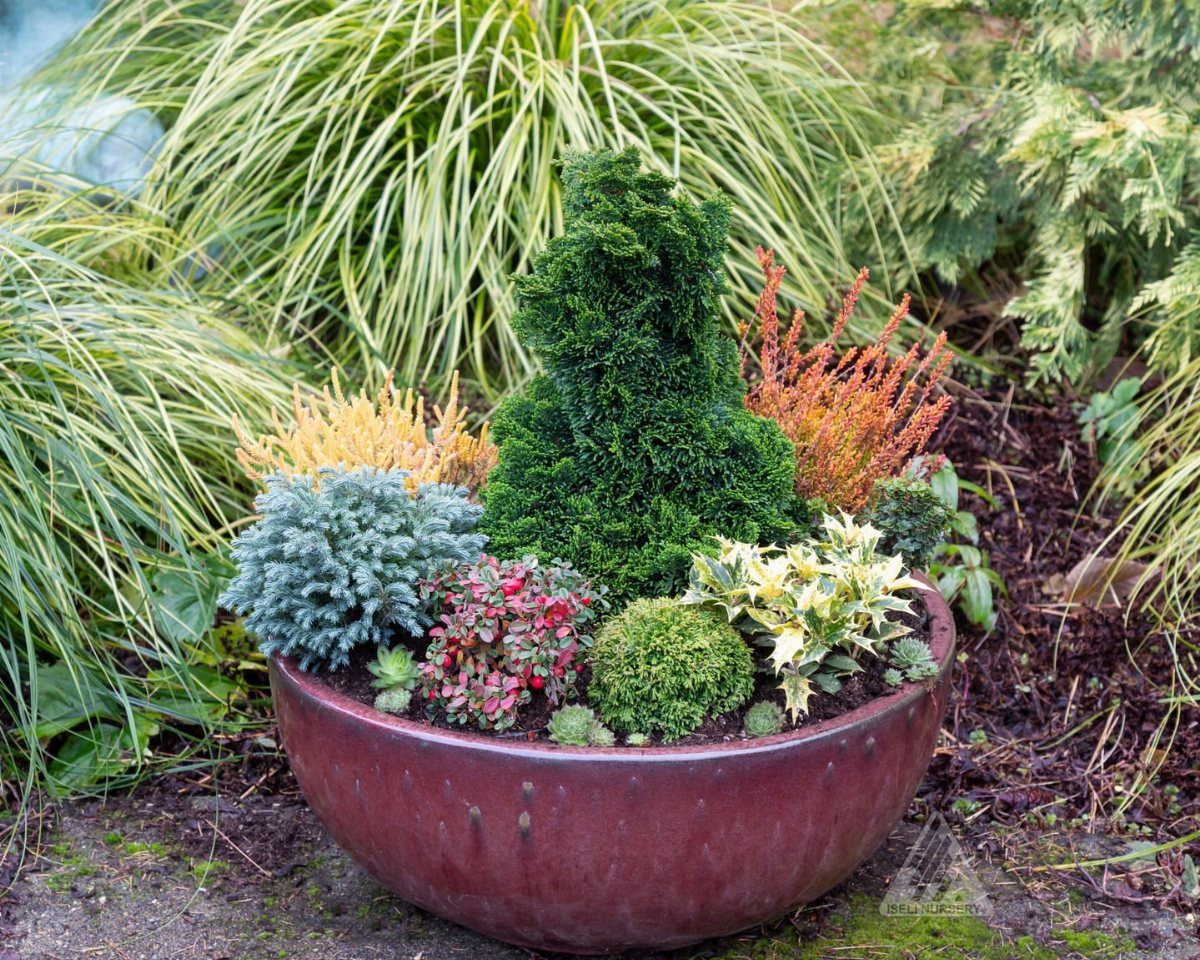
Small evergreens solve the problem of winter structure in yards too tight for a full-sized tree. A single large pot, packed with dwarf shapes in different colors and forms, gives you green and outline when everything else has gone bare.
I like mixing a rounded form, an upright one and a low spreader in one container, then setting grasses or shrubs behind it. A pot also moves, so you can park it by the door or at a path bend.
Check the plant tag for mature size before buying. "Dwarf" still means growth, just slower.
2. Colorful Winter Stems
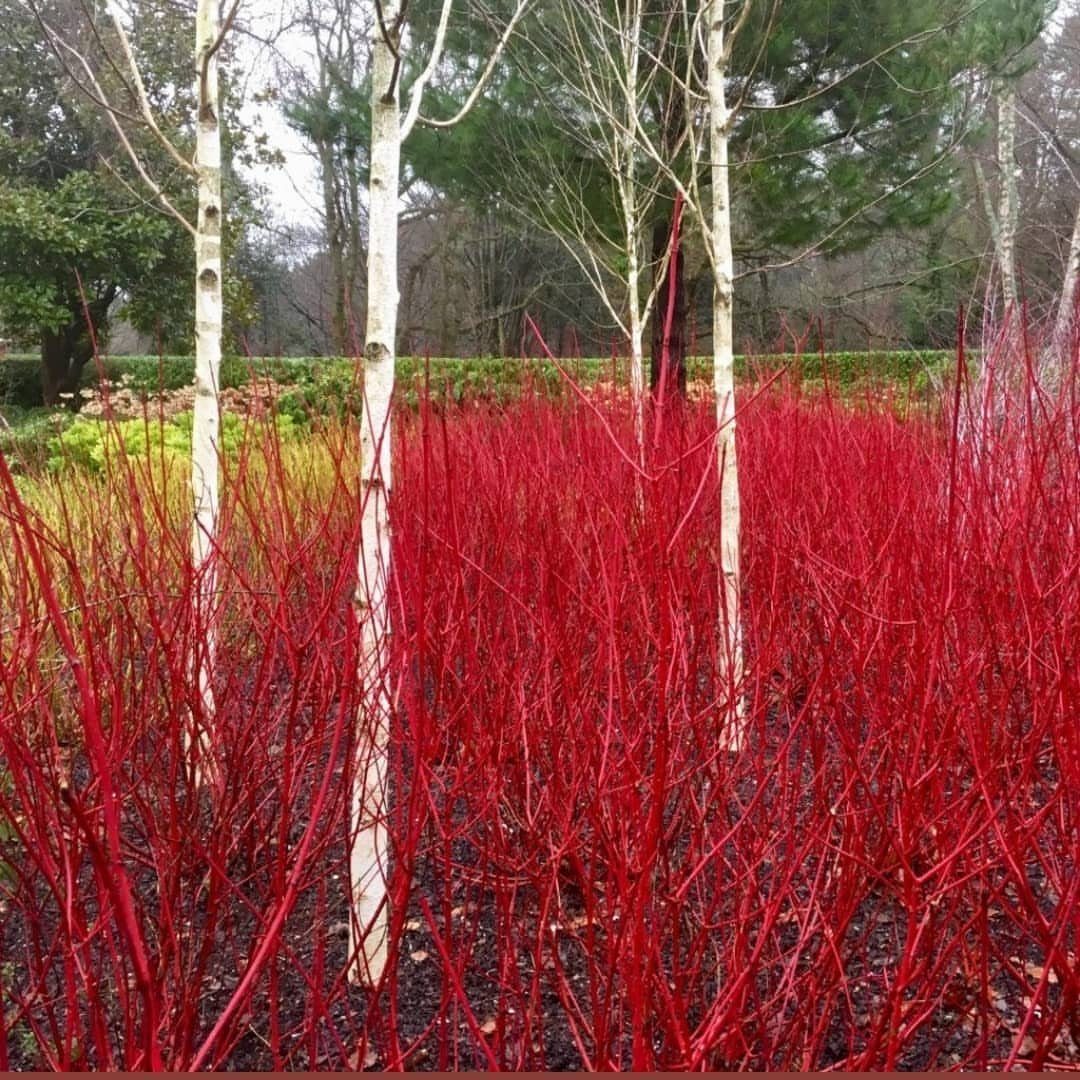
Bare stems can carry a whole winter bed. Bright red deciduous branches look loud once the leaves drop, and they hit hardest against snow or a backdrop of white birch trunks.
Plant them where you see them from a window or the walkway, and give them a pale or dark background so the red reads clearly. A cluster of several plants beats a lone shrub.
I would place them in front of birches, since the red and white pairing needs no extra decoration.
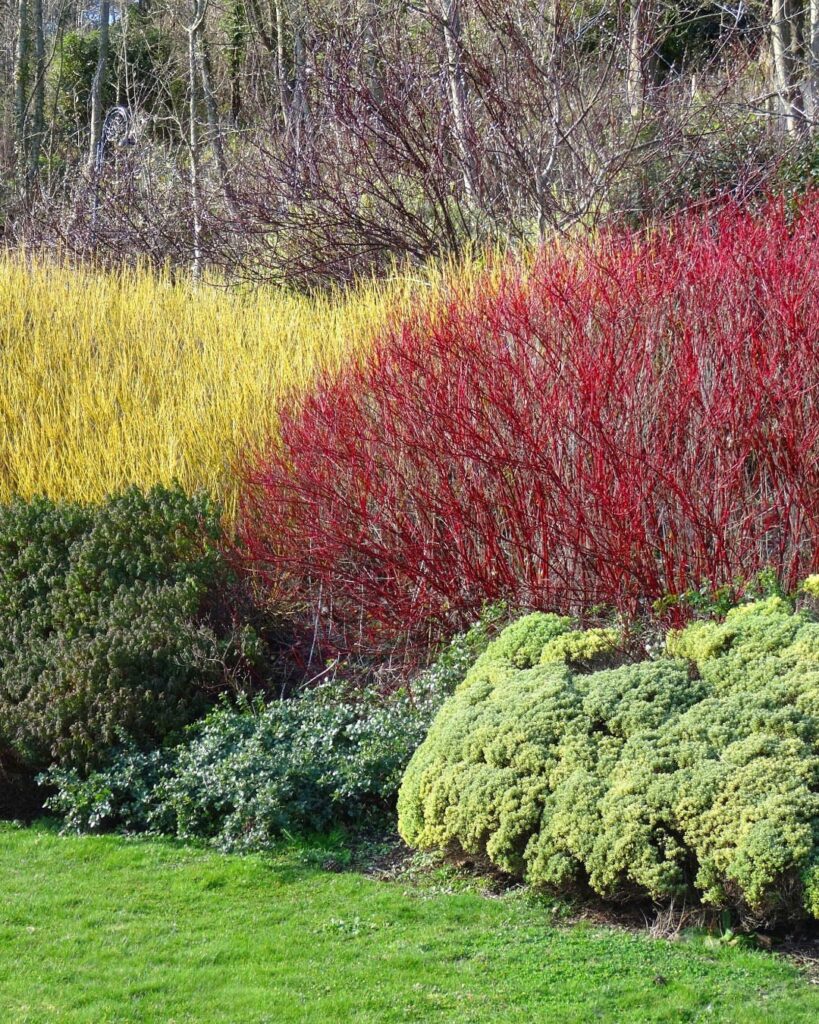
Red-twig dogwood, yellow-twig willow, and coral bark maple don’t all handle the same winters, so match each variety to your USDA hardiness zone first.
3. Winter-blooming Flowers Near Paths
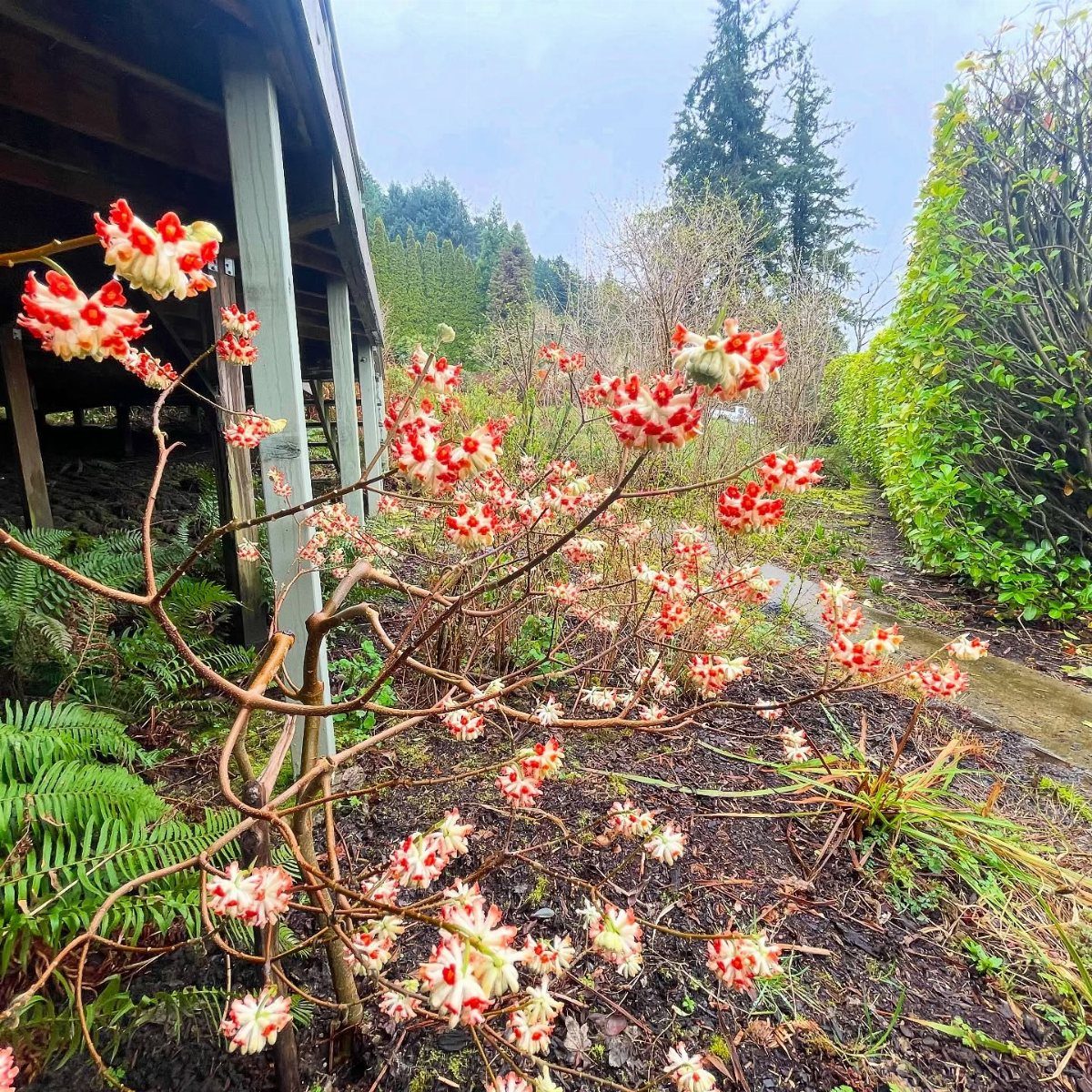
A shrub that flowers in the dormant season earns its spot beside a path.
Red and white blossoms against green foliage stop you mid-stride on a gray day, so put the plant where you walk, not at the back of the yard.
Planting at path edge means you pass it daily and catch the color up close. Choose early or winter bloomers suited to your local conditions.
Keep a bench or structure nearby if you can. A wooden frame behind the flowers gives the eye something to rest on.
An attractive landscape requires careful planning for seasonal interest throughout the year. Since the Iowa landscape is dormant for about four months of the year, extending the attractiveness of the landscape and garden into the winter can help make the season a little more bearable.
4. Maroon Bergenia Foliage in Winter Beds
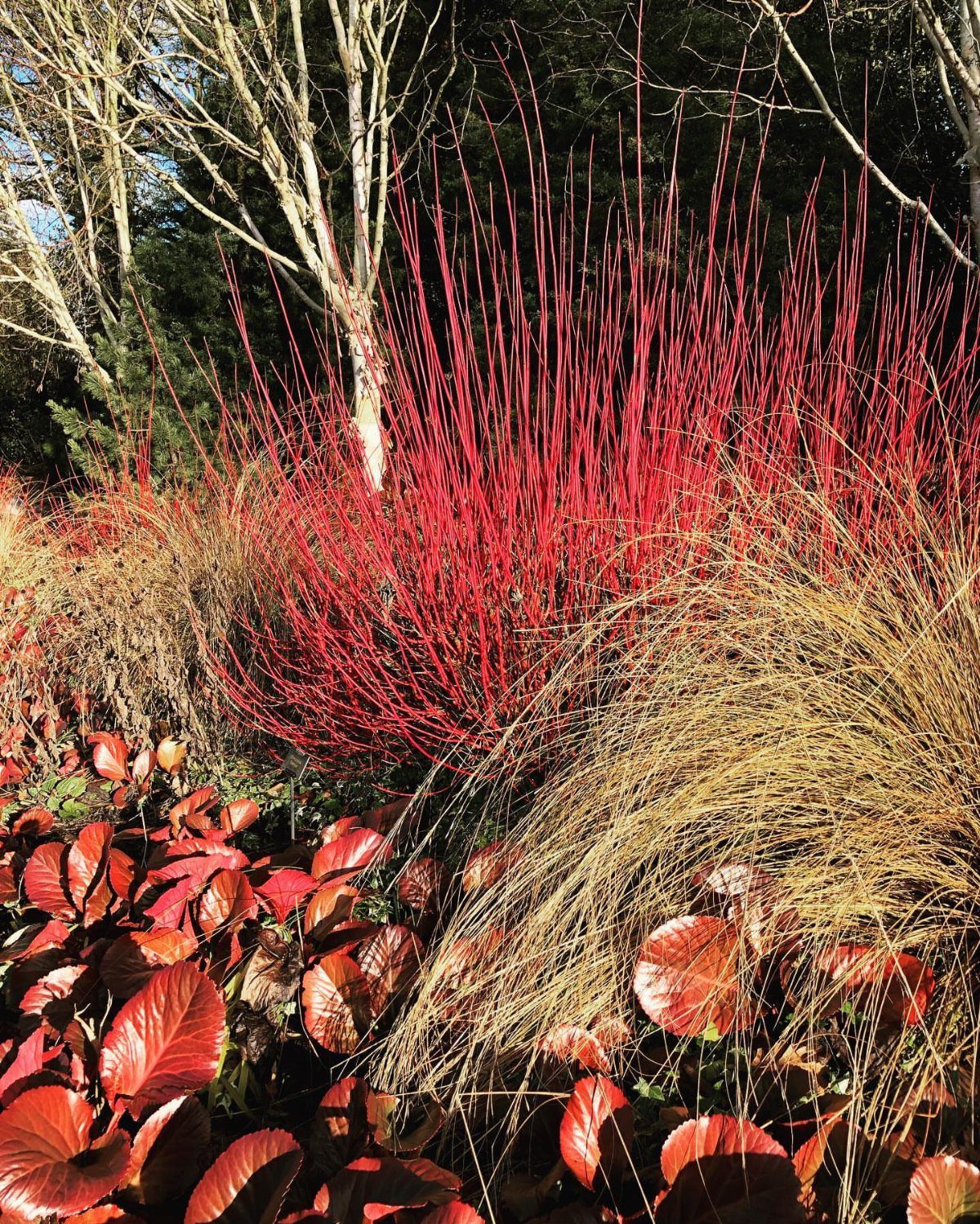
Bergenia leaves turn maroon in winter, which makes them one of the easiest fixes for a bed that looks brown or white. These evergreen or semi-evergreen perennials sit low and wide, so they work at the front of a border.
Bergenia leaves turn maroon in cold weather, and they look best against golden grasses with red stems behind them. The maroon fills the lowest layer, the grass the middle, the stems the top.
I would plant them in drifts of several, not singly. A lone leaf rosette gets lost.
5. Dried Hydrangea Flowers
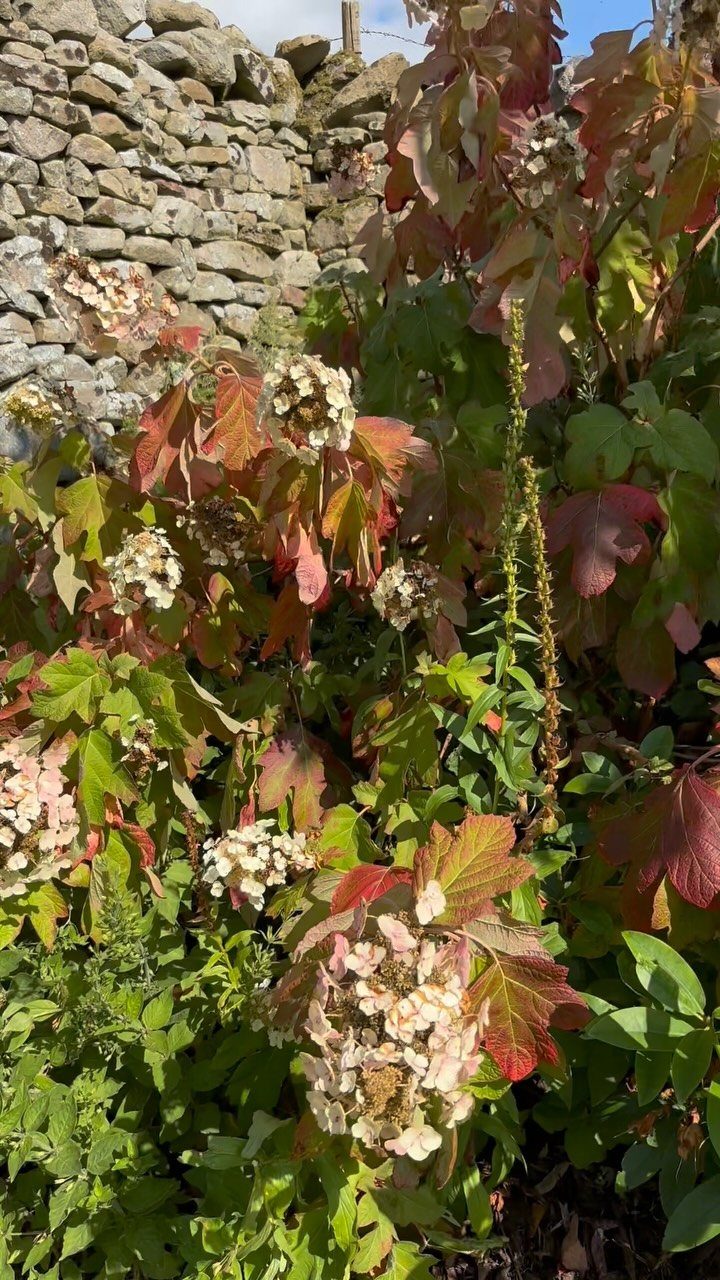
Leave the spent hydrangea heads alone. Sturdy dried blooms stay on the shrub through winter, pale and papery, and they look best against stone, brick or a dark fence.
The simplest move is to skip fall cleanup and hold the pruners until later. That costs nothing and takes no time.
Reddish leaves hanging on in autumn add warmth, though the flower heads are what last. I prefer white or pale heads on a gray wall, where the contrast stays soft.
6. Ornamental Grasses
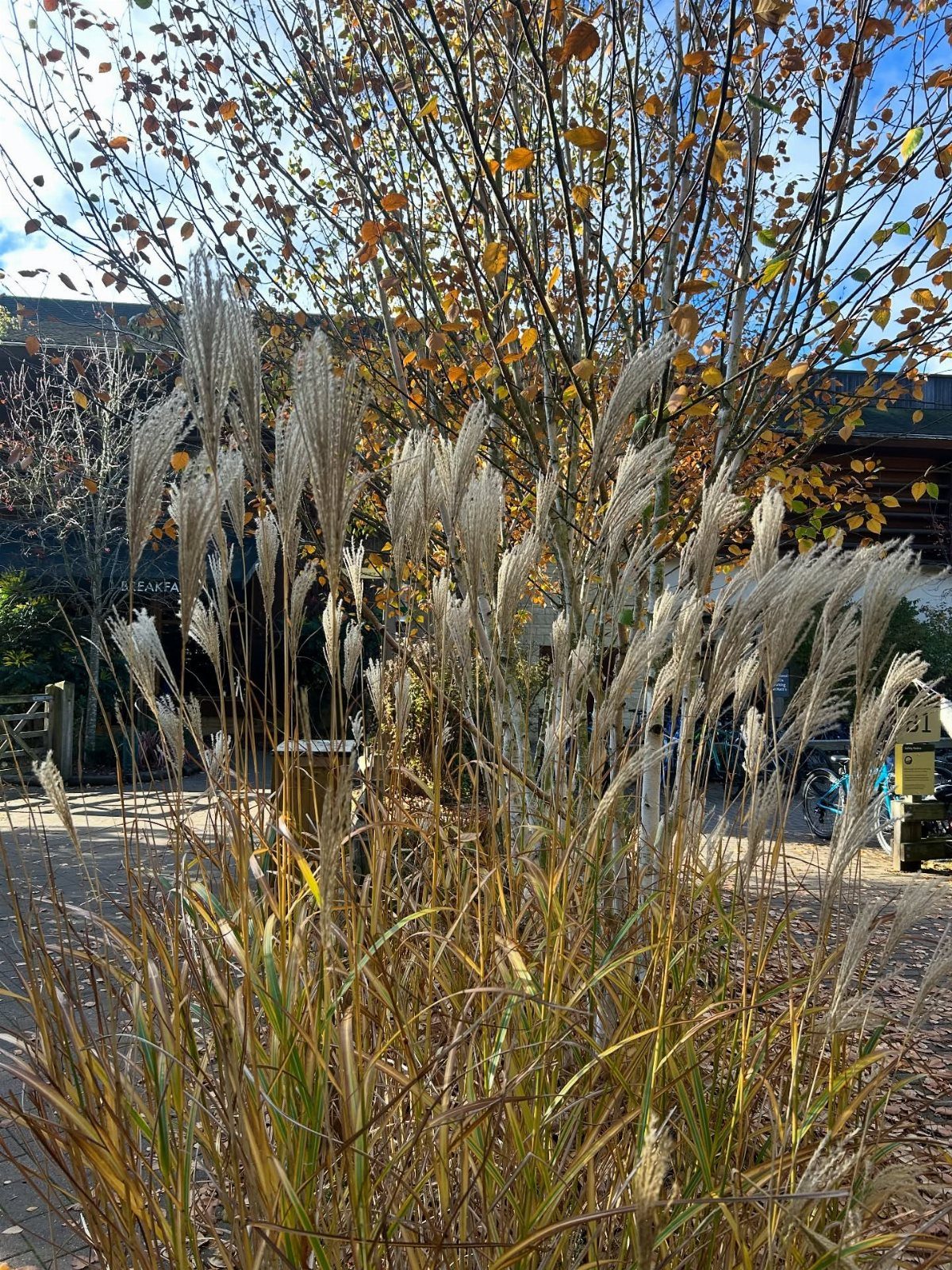
Standing grasses give a winter yard height, movement and texture all at once. Tall tan clumps with fluffy seedheads sway in wind and catch low light, which a bare bed can’t do.
Wait to cut them back until late winter, so they stay up through the cold months. Place them where light hits from behind, since seedheads glow when backlit.
I would plant a group of three or more instead of a single clump. Repetition makes them look planned, and they pair well with a tree holding its autumn color.
7. Juniper Berries
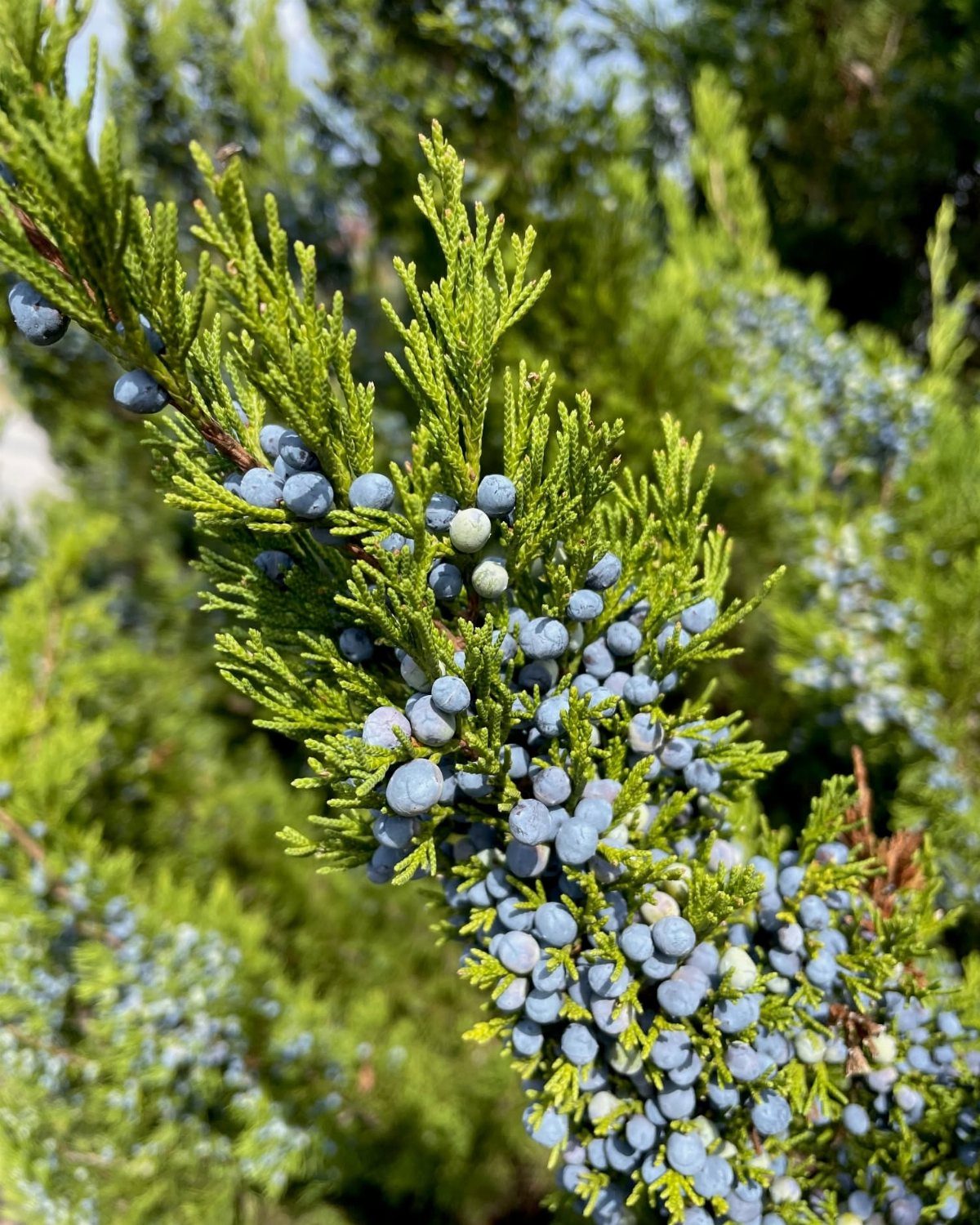
Dusty blue berries on a juniper give an evergreen a second color, a cool silvery note against the green scales.
Plant it where you can see it up close, since the berries are small and easy to miss from across the yard.
Birds may come for the berries, which adds a little movement to a quiet bed. Berry set varies by cultivar, and only female plants fruit, so read the tag for the sex and name of the variety.
8. Winter Lighting
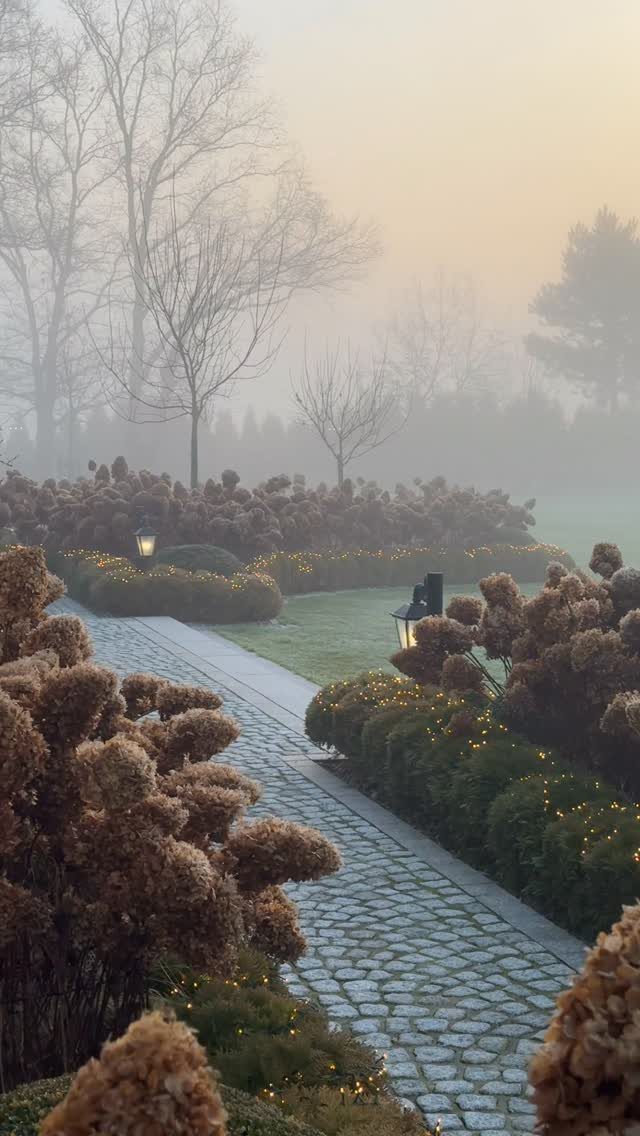
Short winter days leave a garden dark by late afternoon, and a few low landscape lights keep the best parts of it visible. Small path lamps along cobblestones show the edge of the walk and light the plants beside it.
I would put them near dried hydrangea heads or evergreens, where the glow has texture to catch. Fairy lights add a softer layer on top of that.
Keep the fixtures few and low. Too many turns a path into a runway.
9. Winter Groundcovers
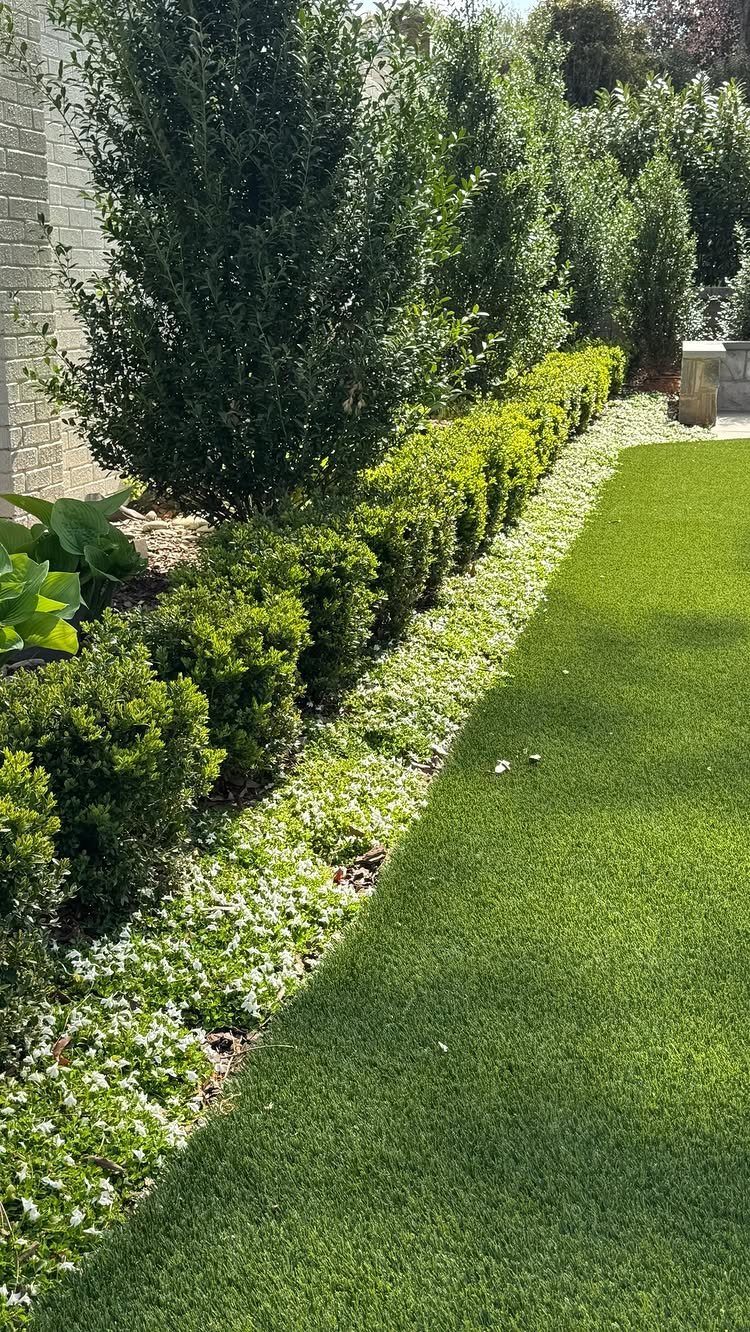
A low groundcover along a lawn edge keeps the bed from looking empty in winter. Small white flowers over a tight green mat, backed by a clipped boxwood hedge, give a neat three-step layering of heights.
I like it best in front of taller evergreens, where the low plants soften the base. Pick a variety that stays green or changes color in cold weather, and match it to your zone.
Plant in a continuous row rather than scattered patches, so the edge reads as one clean line.
10. Bird Feeders
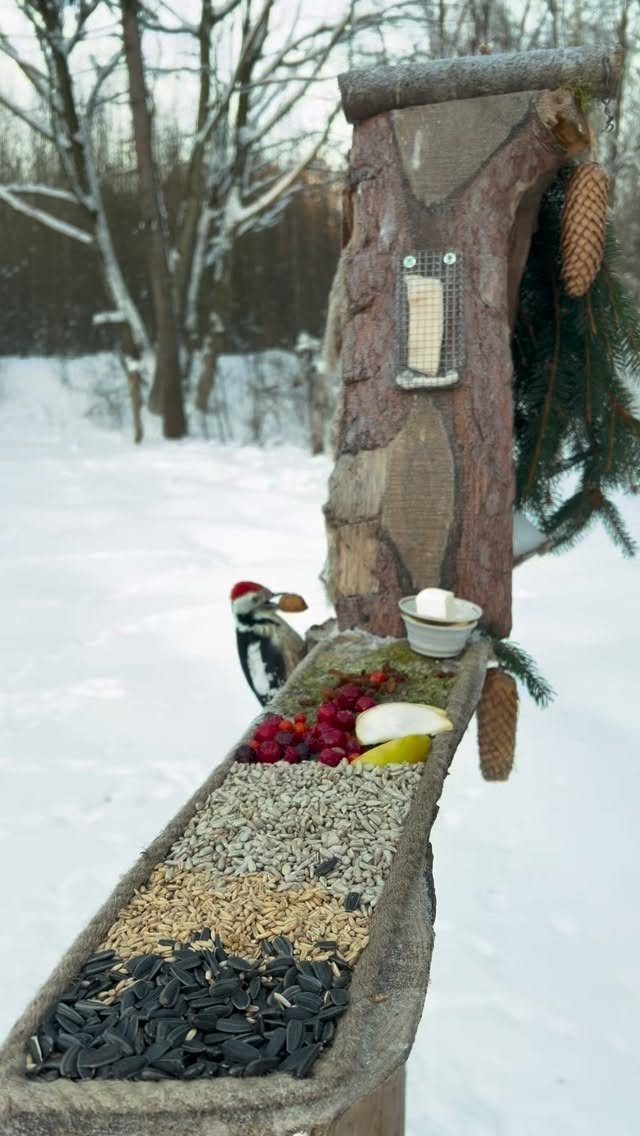
A wooden feeder stocked with seeds and berries turns a still yard into one with something happening in it. A woodpecker landing on snow gives you motion no plant can.
Place the feeder where you can see it from a kitchen or living room window. Rustic wood suits a garden better than shiny plastic, and it weathers into the beds around it.
Refill often, since birds learn where food is. Keep it close to shrubs so they have cover nearby.
11. Heaths and Heathers
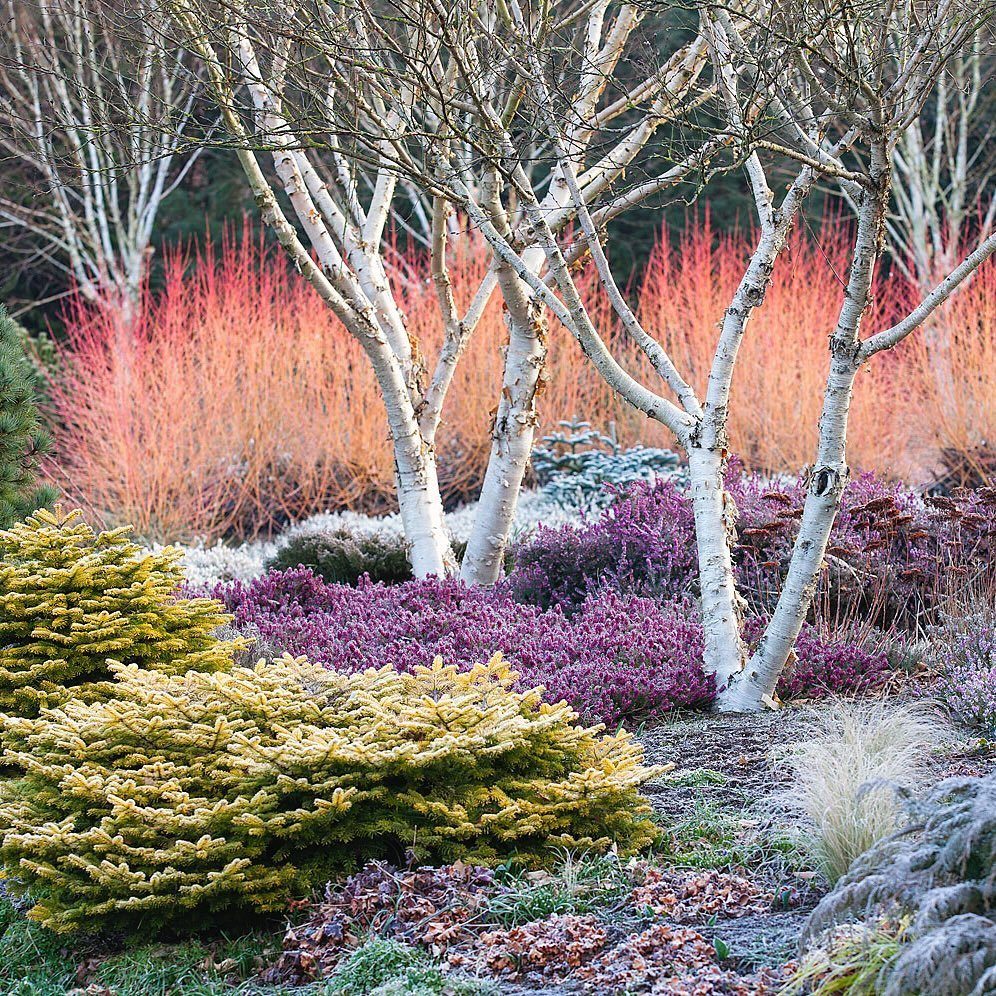
Purple heather spreads into a low carpet of winter color, and it looks even better beside golden dwarf evergreens. Heaths and heathers stay evergreen, so the bed has foliage when perennials have vanished.
Buy several plants of one kind rather than a mix of singles. Heathers look best when they knit together into one patch.
12. Shrubs with Bright Red Berries
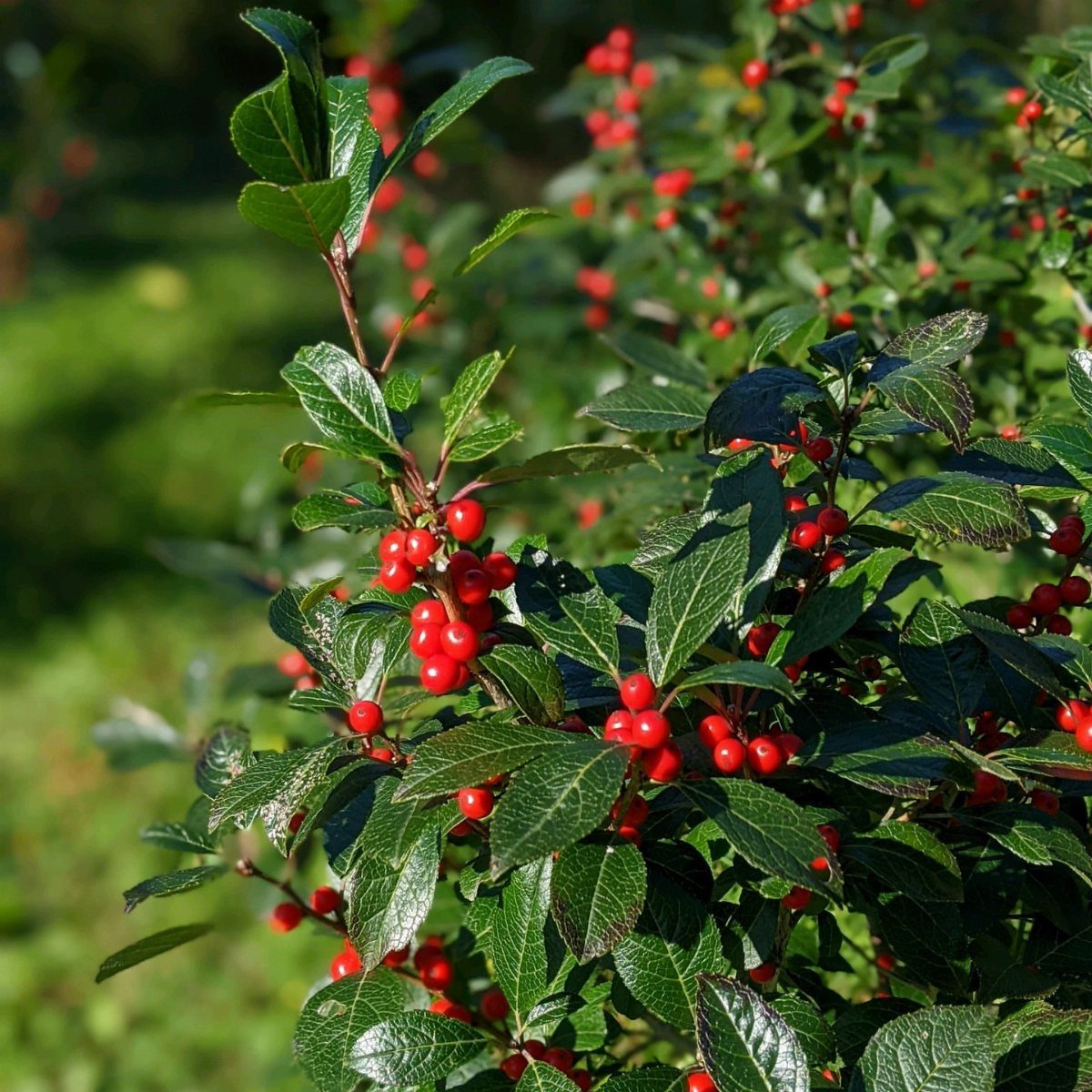
Glossy evergreen leaves with clusters of bright red berries make one of the strongest winter pairings you can plant. The dark green sets off the red, so the berries show even on a gray day.
Put the shrub where you will see it from a window or near the front door. A single shrub works, but two or three make a bolder statement.
Look up the variety’s hardiness for your zone first, and find out whether it needs a second plant nearby to set berries.
13. Deciduous Shrubs with Yellow Berries
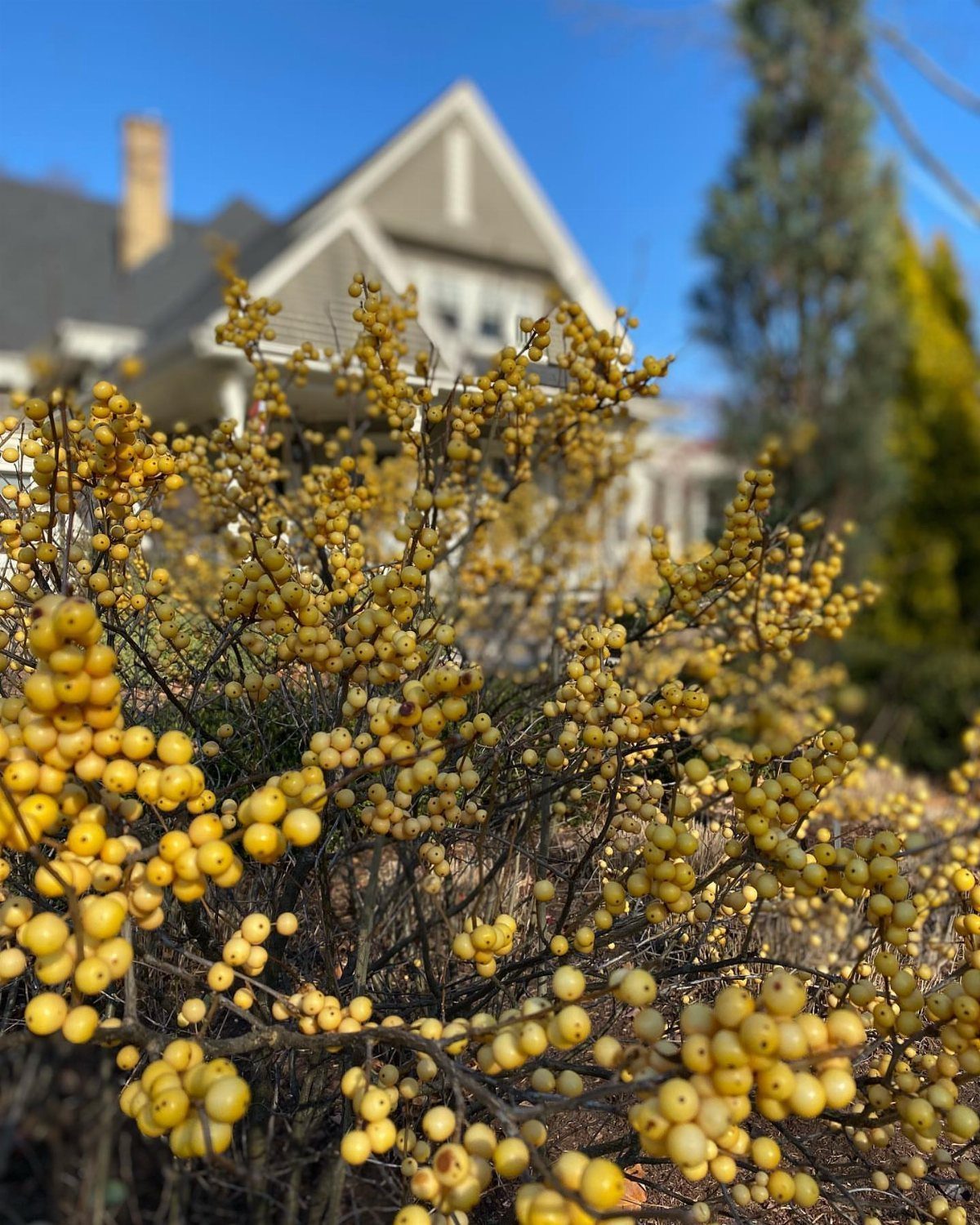
Yellow berries hang on bare stems long after the leaves have dropped, and a dense cluster reads as bright as a blossom.
Plant the shrub where you pass it daily, against a plain house wall or the sky, so nothing competes with the color.
Pale walls and open sky make yellow-orange look sharper than a busy backdrop would. I would set two or three plants together for a bigger block of color.
Read the plant tag for your hardiness zone, and check whether a second plant is needed for berries to form.
14. White Birch Bark
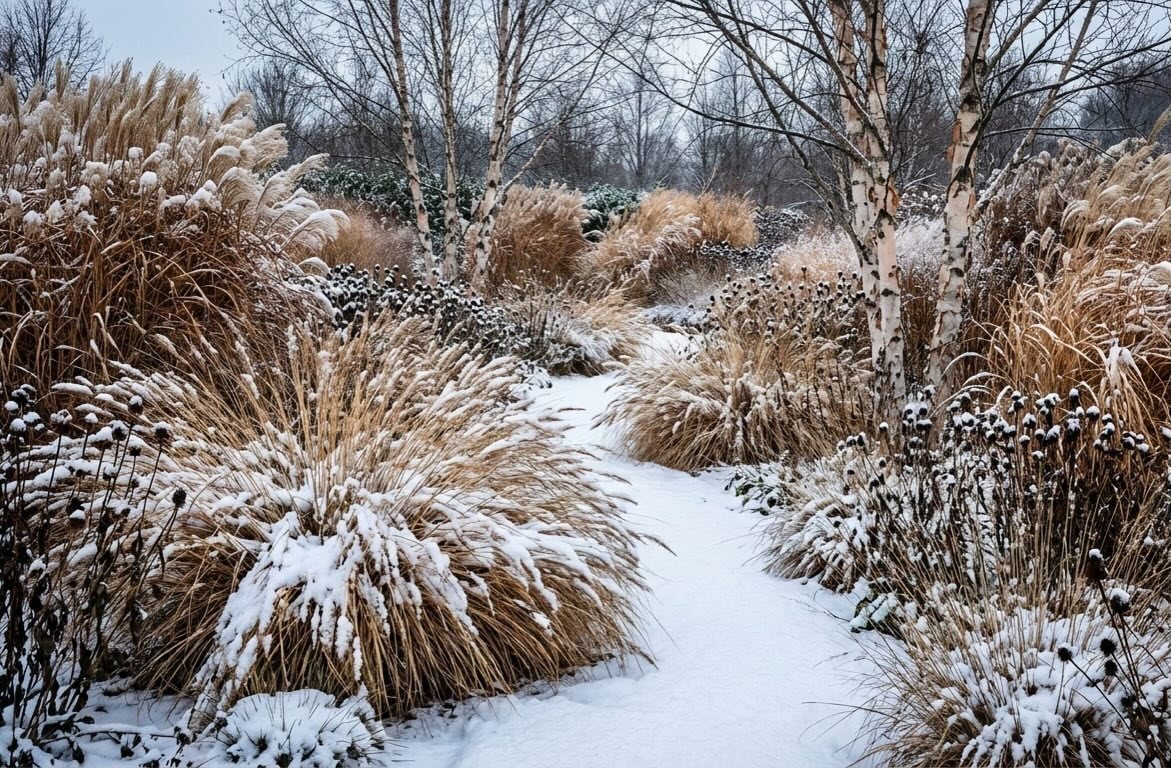
Snow makes a white birch trunk glow, and a row of them along a path gives the whole walk a rhythm.
Pair them with golden grass clumps at their feet and the pale bark picks up the warm tone without any extra work.
Space the trees along one side of the path so they read as a line. Dormant brown shrubs behind them fade back and let the trunks stand forward.
I would keep the grasses uncut until late winter, as the earlier entry on grasses says. Pick a birch variety that suits your zone.
15. Persistent Beech or Hornbeam Hedges
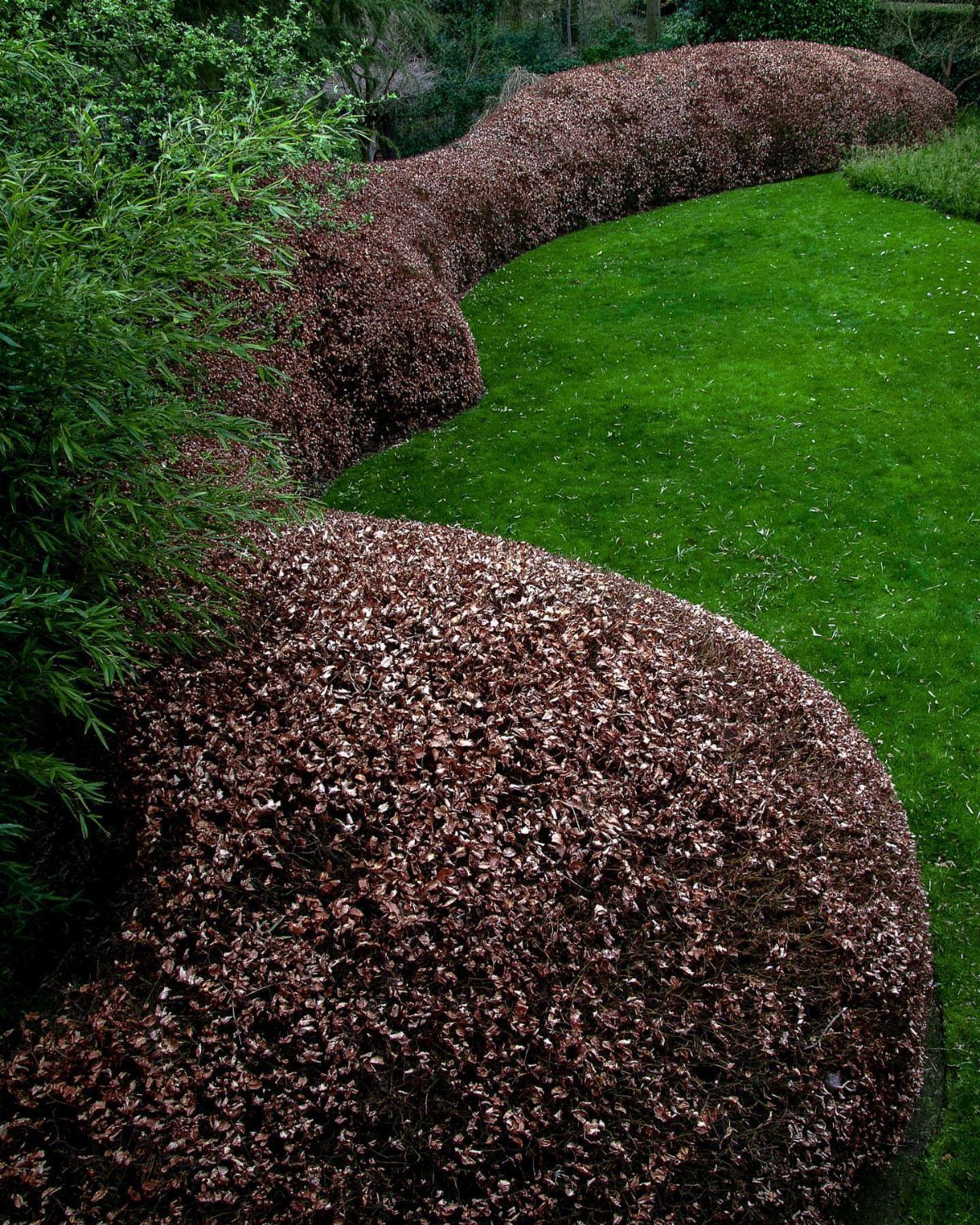
Beech and hornbeam hold their dry leaves through winter, so a clipped hedge keeps its coppery wall of color and its privacy when other hedges go see-through.
That makes it a strong choice along a lawn edge, where a curved line against green grass looks formal and finished.
Trim it into a clean, even shape, since the brown leaves show every uneven patch. I like a gentle curve over a straight run in a small yard.
Both plants suit a hedge, but check which does better in your zone before buying.
Match Plants to Local Conditions
Hardiness zones decide which of these plants survive your winters, so look up your USDA zone before you shop.
A plant that does well in the humid South can struggle in the dry Southwest or the swingy Midwest, so check your own zone and local conditions first.
Read each tag for 3 things: the zone range, the sun requirement and any wind-protection need. Some varieties only work inside a narrow zone range, and a sheltered spot by a wall can matter as much as the zone number.
If a plant sits at the edge of your zone, choose a different variety instead of gambling on it. A local nursery will know which cultivars hold up in your area.
Plan Male and Female Hollies
Berries on winterberry and American holly only show up when a male plant stands near a female one. A female planted alone will leaf out and sit there with no fruit.
Pair them by name, because a male has to be a compatible variety that blooms at the same time as the female. Read the tag or ask a nursery employee to confirm you’re getting a matching pair at the register.
Because winterberry is deciduous, the leaves fall in autumn and leave bare branches loaded with bright red berries through winter. It suits foundation plantings, borders, or a spot in front of an evergreen backdrop.
Short on room?
Berry Poppins® is a compact winterberry that tucks into small beds and corners with ease. Still plan for the male.
Prune to Renew Colorful Stems
The brightest color on red-twig and yellow-twig dogwoods comes from young stems, so older wood looks duller. Older twigs fade to brown, so the shrub needs pruning to keep the show going.
Prune with judgment: remove some of the oldest, brownest stems and leave the rest, so new colorful growth replaces them.
Late winter timing means you enjoy the bare stems through the cold months and cut only when the season’s display is nearly done.
The prunings are useful too. Bring the colored stems indoors for winter arrangements in a tall vase.
Frequently Asked Questions
What are some good landscaping ideas for winter?
Start with plants that hold color or shape after the leaves drop: dwarf evergreens in a big pot, red-twig dogwood stems, winterberry with red fruit, and ornamental grasses left standing.
Add a feeder and a few low path lights for movement and glow. Plant in groups of 3 or more, since repeated shapes look planned.
What plants provide winter color?
Red-twig and yellow-twig dogwood, winterberry holly, heaths and heathers, and maroon bergenia are strong picks. Dogwood stems and holly berries show best against snow, a pale wall, or white birch trunks.
For cold-season color in the beds, I’d plant heather, which holds its foliage all winter in low purple mats, and bergenia, whose big glossy leaves darken to maroon once frost sets in.
Check each plant’s hardiness against your USDA zone first.
Should I leave ornamental grasses standing during winter?
Leave the stalks standing through the cold months, since they hold frost and snow nicely, then shear them to a few inches above the ground once late winter arrives and before new growth starts.
Standing clumps add height, movement and texture, and the seedheads glow when light hits them from behind. A group of 3 or more looks better than one lone clump.
How can lighting improve my winter landscape?
A few low landscape lights keep the best parts of the yard visible once dark arrives early. I like small path lights set beside a walk because they mark where the edge is and wash light over nearby plants.
Put them next to evergreens or spent hydrangea blooms, where the texture gives the glow something to catch. Keep fixtures few and low so a path doesn’t start to look like a runway.
Are evergreen trees or shrubs better for winter landscapes?
Neither wins alone, so use both if you have room. Choose shrubs if you want fullness and a solid backbone in the bed; choose trees when you want height and a bare, sculptural outline against the winter sky.
In a tight yard, dwarf evergreens in a large pot give you the same outline; check the tag for mature size, since dwarf plants still grow, only slower.