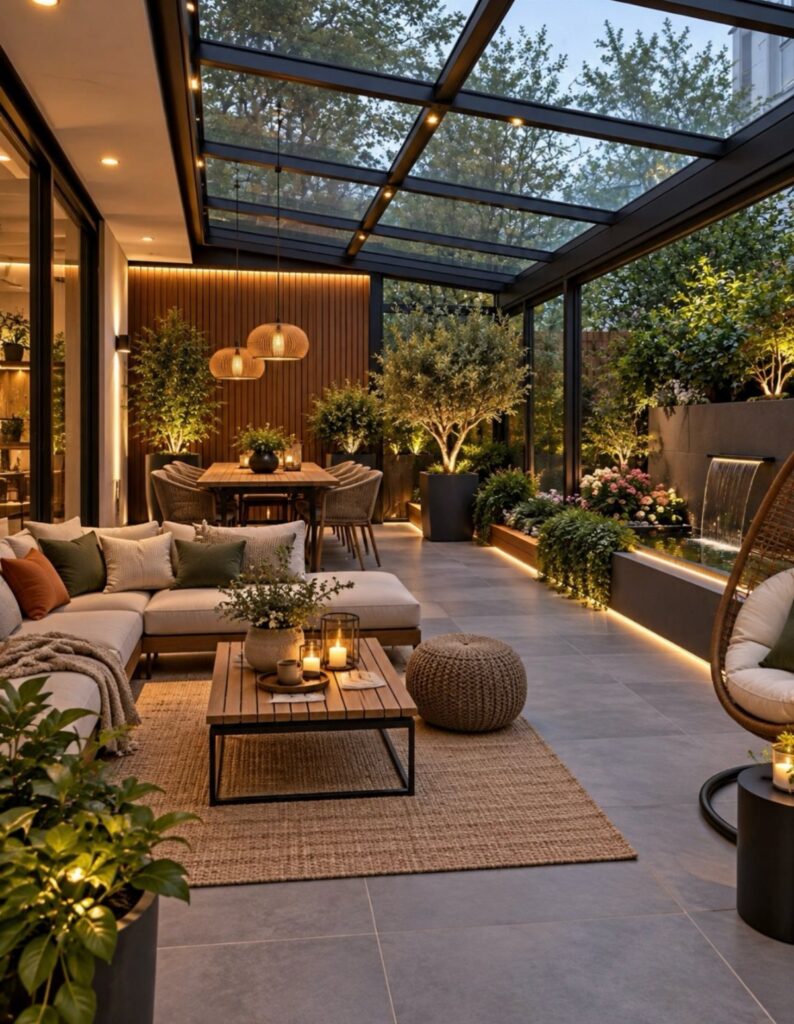
Which of these winter garden ideas fits depends on what your yard already gives you: a window with a view, a deck or patio, a wall to back a shrub, or only a bare bed.
The list runs from cut evergreen boughs in stone urns and teacups hung as bird feeders to a built-in tub, a fire pit under a pergola and a glass greenhouse, so the effort ranges from leaving seed heads standing until late winter to pricing a major build.
Climate and snow conditions, from snow load to wind direction and your hardiness zone, decide which of these ideas will actually survive your winter.
1. Evergreen Structure
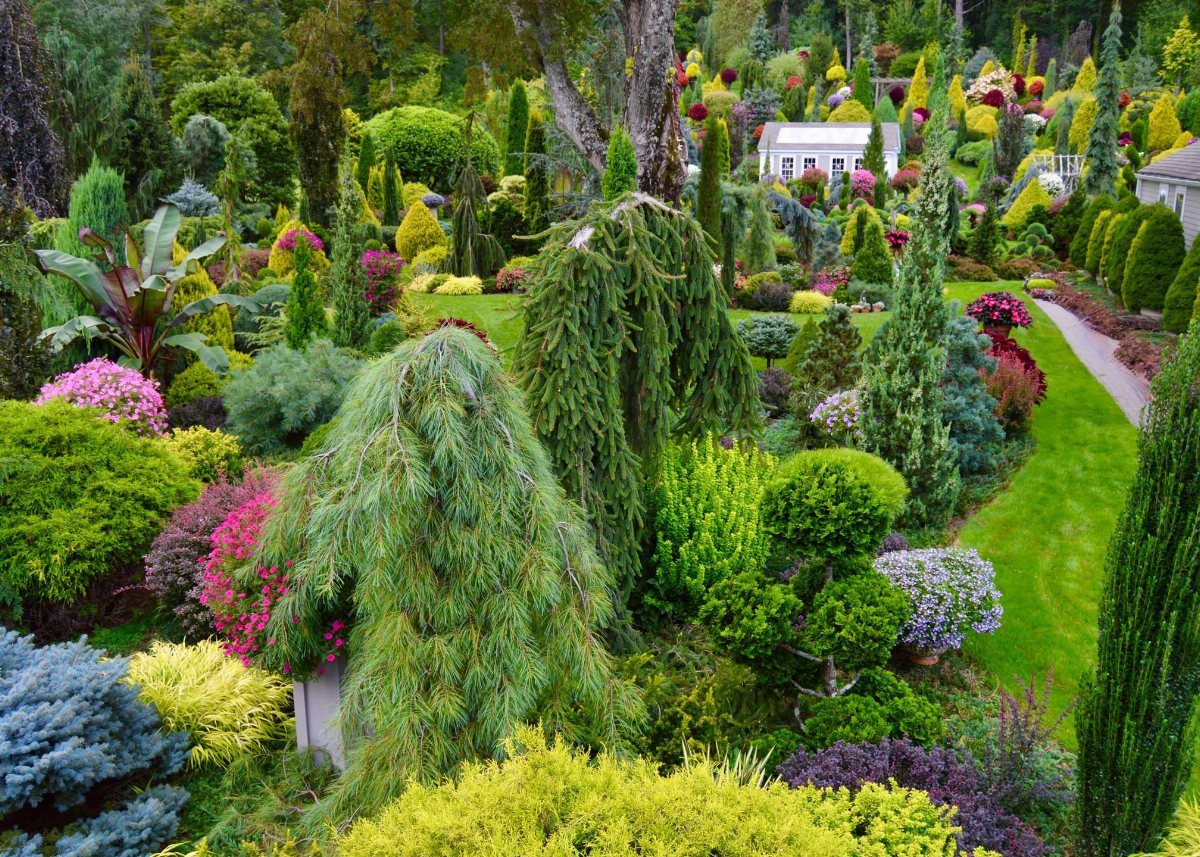
Evergreens carry a winter garden when everything else drops its leaves. Conical trees, rounded shrubs and weeping forms give you 3 different silhouettes, and in different greens they read as layers rather than a single hedge.
Place the tallest ones toward the back or along a boundary, where they also screen the view in January.
I would repeat one or two shapes across the bed instead of buying one of everything; the repetition keeps a busy planting calm.
2. Colorful Winter Bark
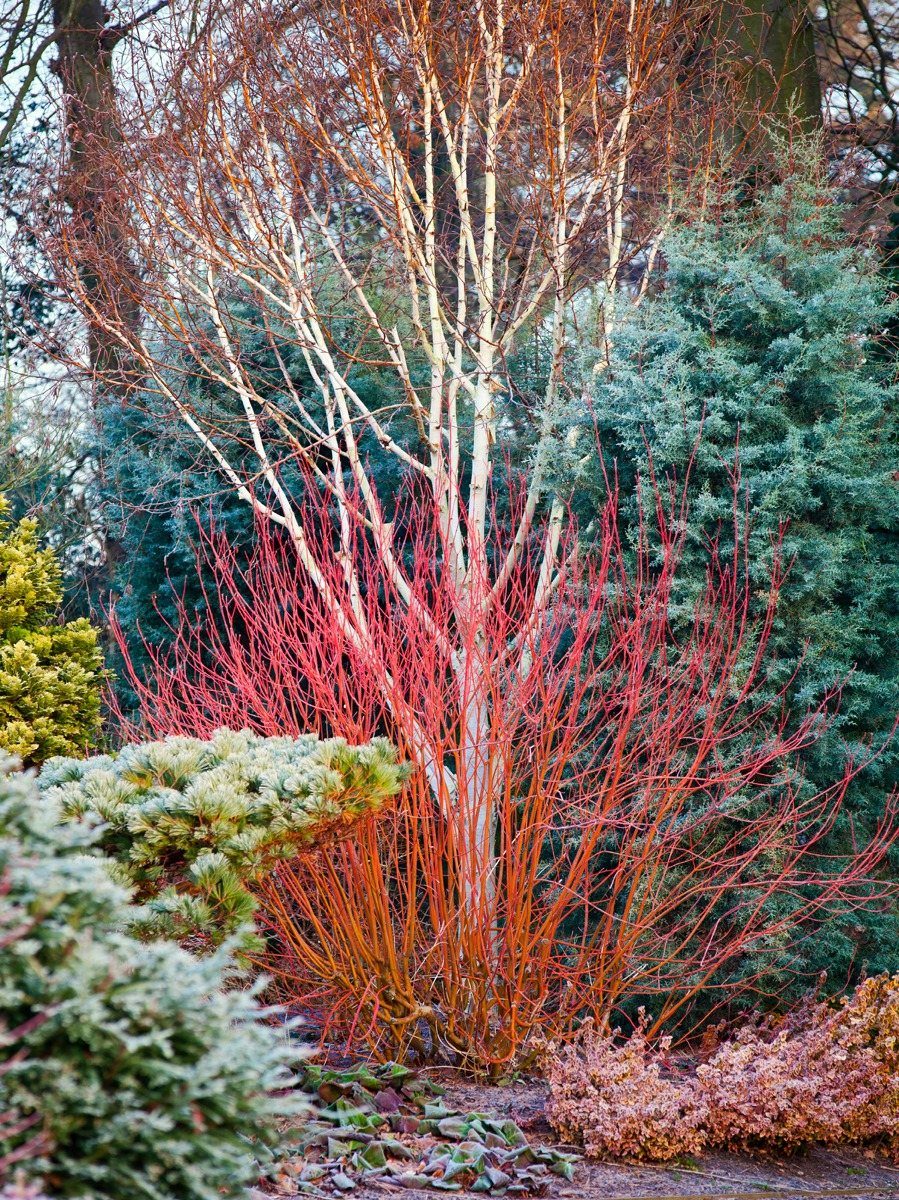
Bare branches stop being filler once the bark has color. A shrub with bright red stems beside a white-barked tree gives a winter garden a focal point that needs no flowers at all.
Put them against a dark or blue-green evergreen backdrop, because the contrast does the work.
Low groundcover at their feet keeps the base tidy. Choose plants for their bark first and their summer looks second, then site them where you can see them from a window.
3. Winter Berries
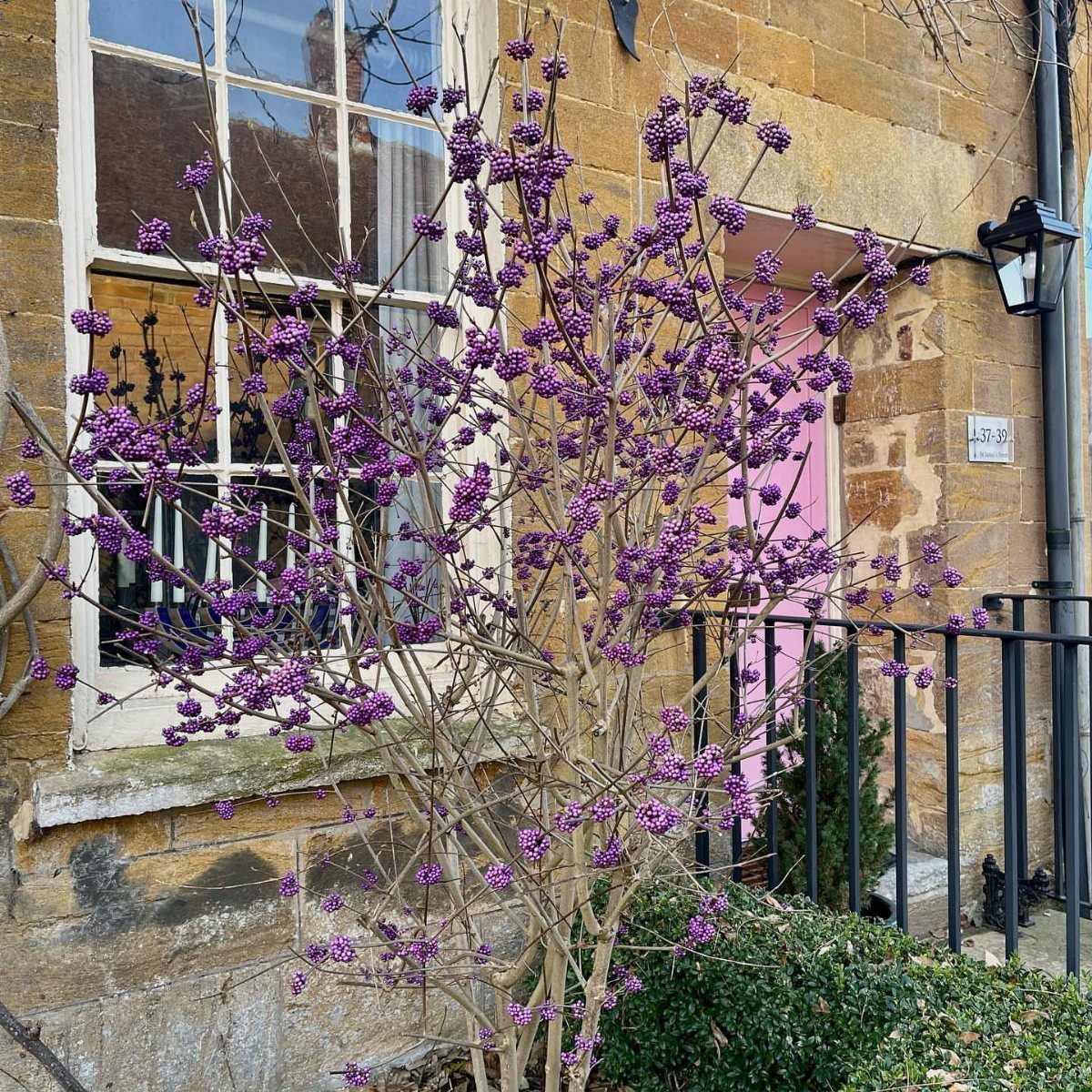
Purple berries against a pale stone wall are hard to beat, and the same shrub also feeds birds when other food runs short. Berries hold the color of a flower for weeks without any deadheading.
Pick a berrying tree or shrub that suits your space, and plant it where you will see it from indoors.
Backing it with a wall, fence or dark evergreen makes the fruit stand out. Leave the berries on the branches rather than cutting them for indoors, so the birds get their share.
4. Bird Feeders
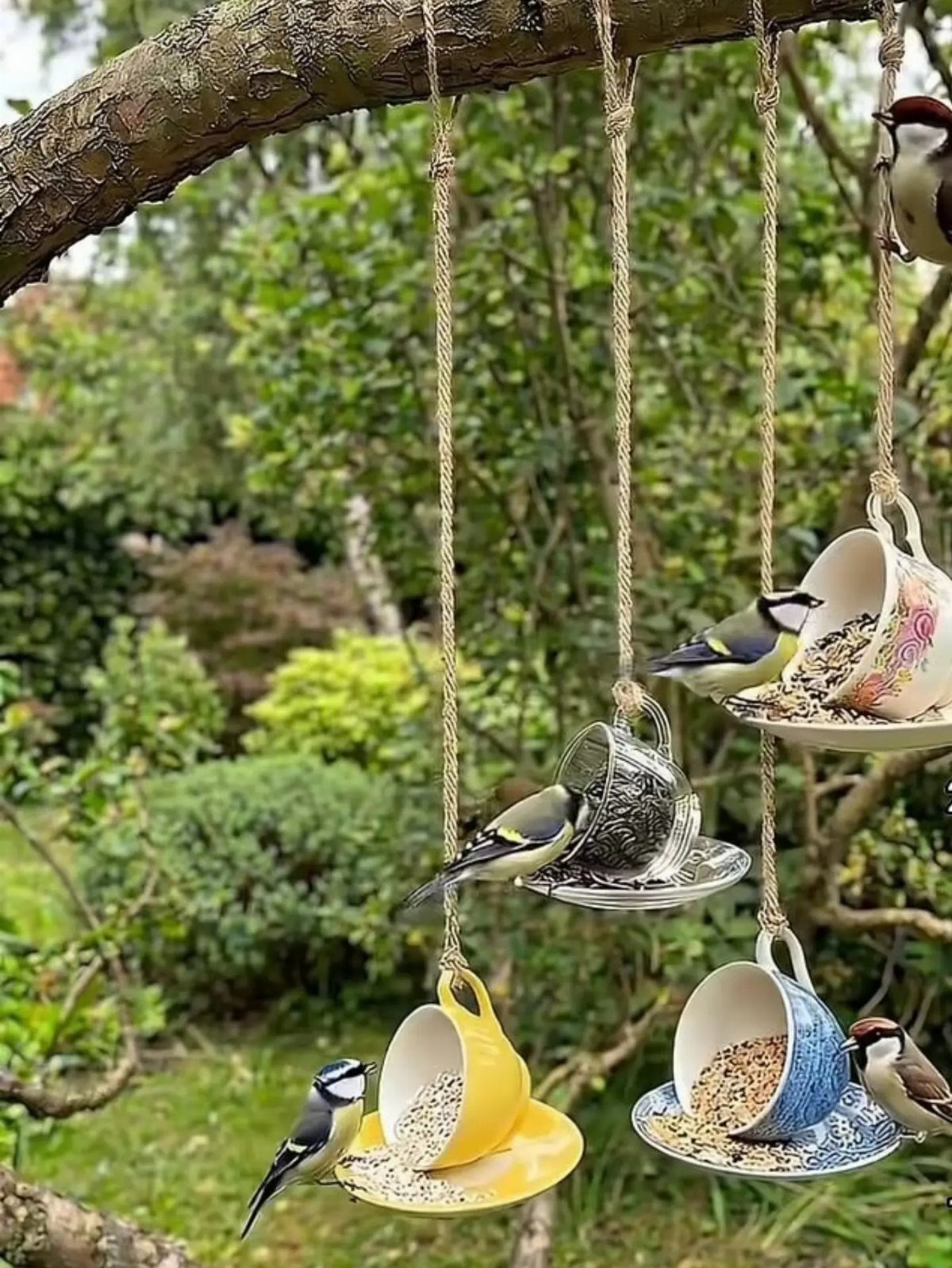
Old teacups make charming feeders: hang each one from a branch on a length of rope and fill it with seed. The cups swing slightly as birds land, which adds motion to a still garden.
Hang them at different heights so smaller birds do not crowd each other.
Pick a branch you can see from a window, and keep the rope long enough to reach without a ladder. Refill often in cold weather, since a feeder that goes empty teaches birds to stop visiting.
5. Perennials and Grasses Seed Heads
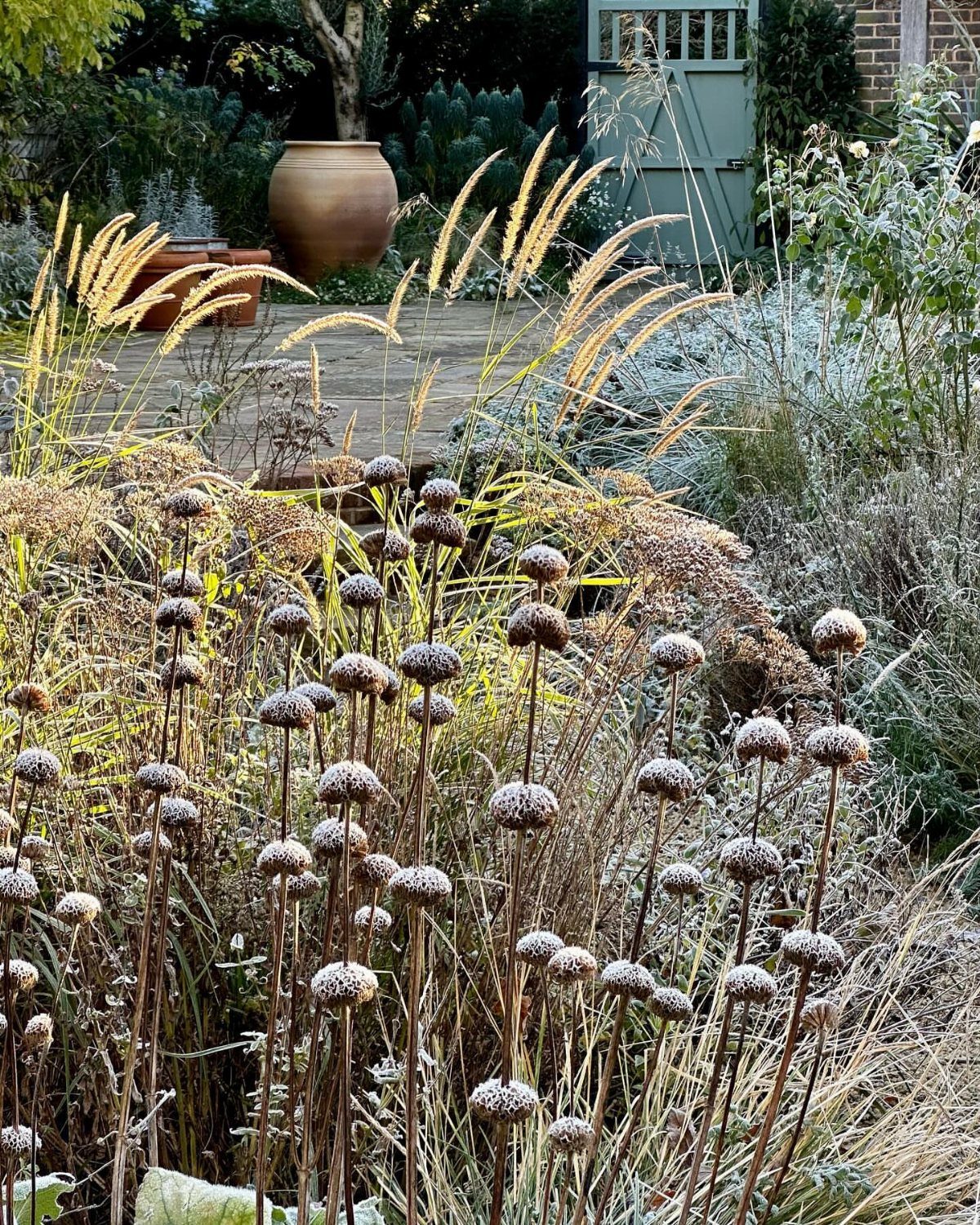
Leave the stems standing. Perennials and ornamental grasses dry to brown seed heads that catch frost and turn an ordinary border into something sculptural, and cutting them in autumn throws that away.
Delay the cleanup until late winter, then cut everything back before new growth starts.
Pair the dry texture with a solid element, like a large clay pot or a painted door, so the bed looks intentional rather than neglected. It is also the least work of any idea here.
6. Winter Containers

A pair of stone urns beside a door or on a patio gives you winter color exactly where you walk past it every day.
Cut evergreen boughs for the base, push in a few stems of red winterberry, and tuck dried oak or beech leaves between them for a rougher texture.
Use matching containers on either side of an entrance; the symmetry looks deliberate and polished.
Cut branches are cheaper than a full planting and easy to swap when they tire. I would keep the arrangement tall in the center and loose at the edges so it looks natural.
7. Mixed Evergreen Foliage and Seasonal Plants
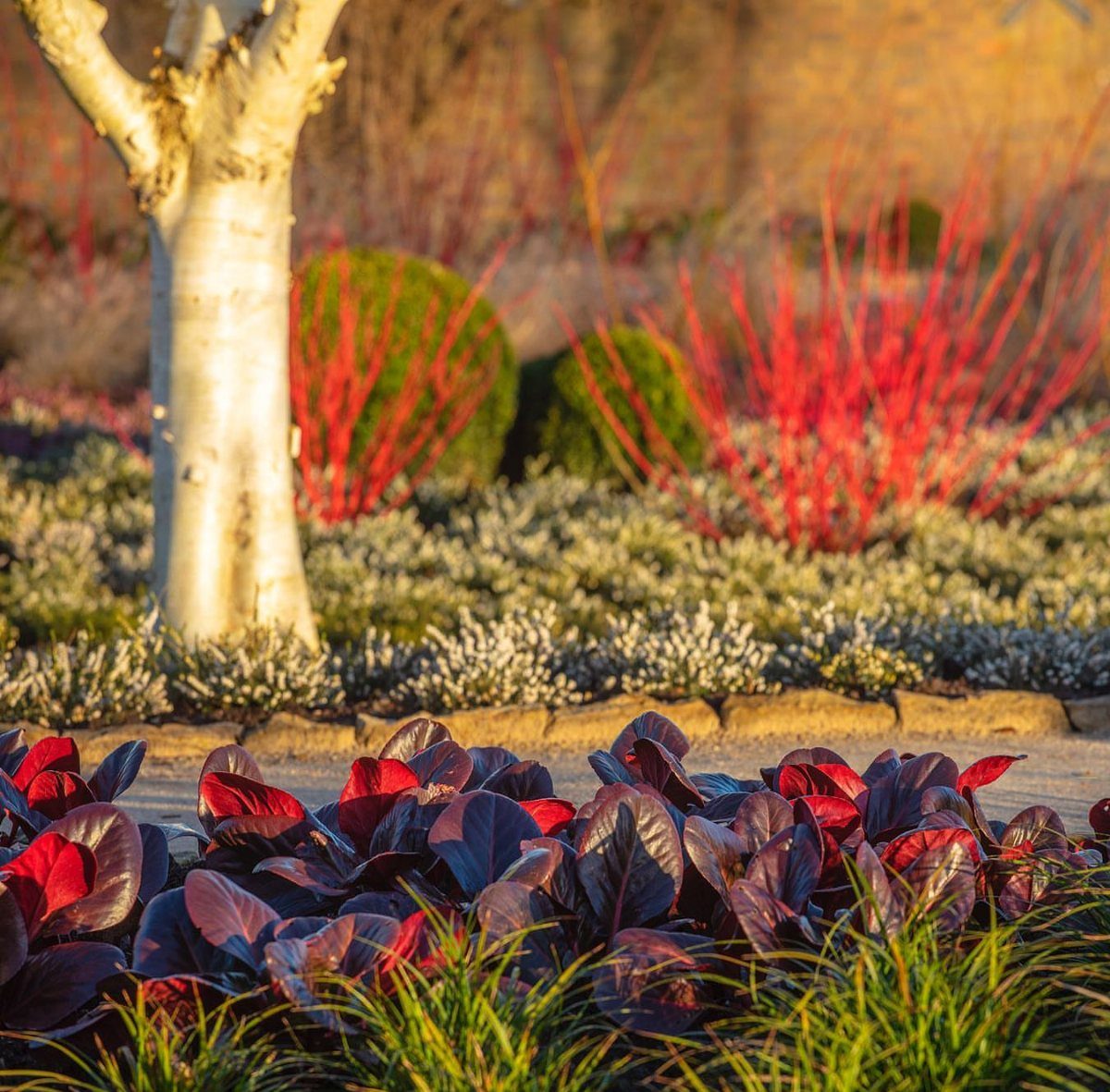
Layering heights does more than any single plant. Here, a white-barked tree, red dogwood stems, silver-grey groundcover and dark burgundy foliage sit at different levels, so the eye travels from the ground up.
Plant tall at the back, mid-height shrubs in the middle and low foliage along the front edge.
I would pick two or three foliage colors and repeat them rather than add one of everything. Dark burgundy next to silver looks rich even when nothing is in flower.
8. Winter Lighting
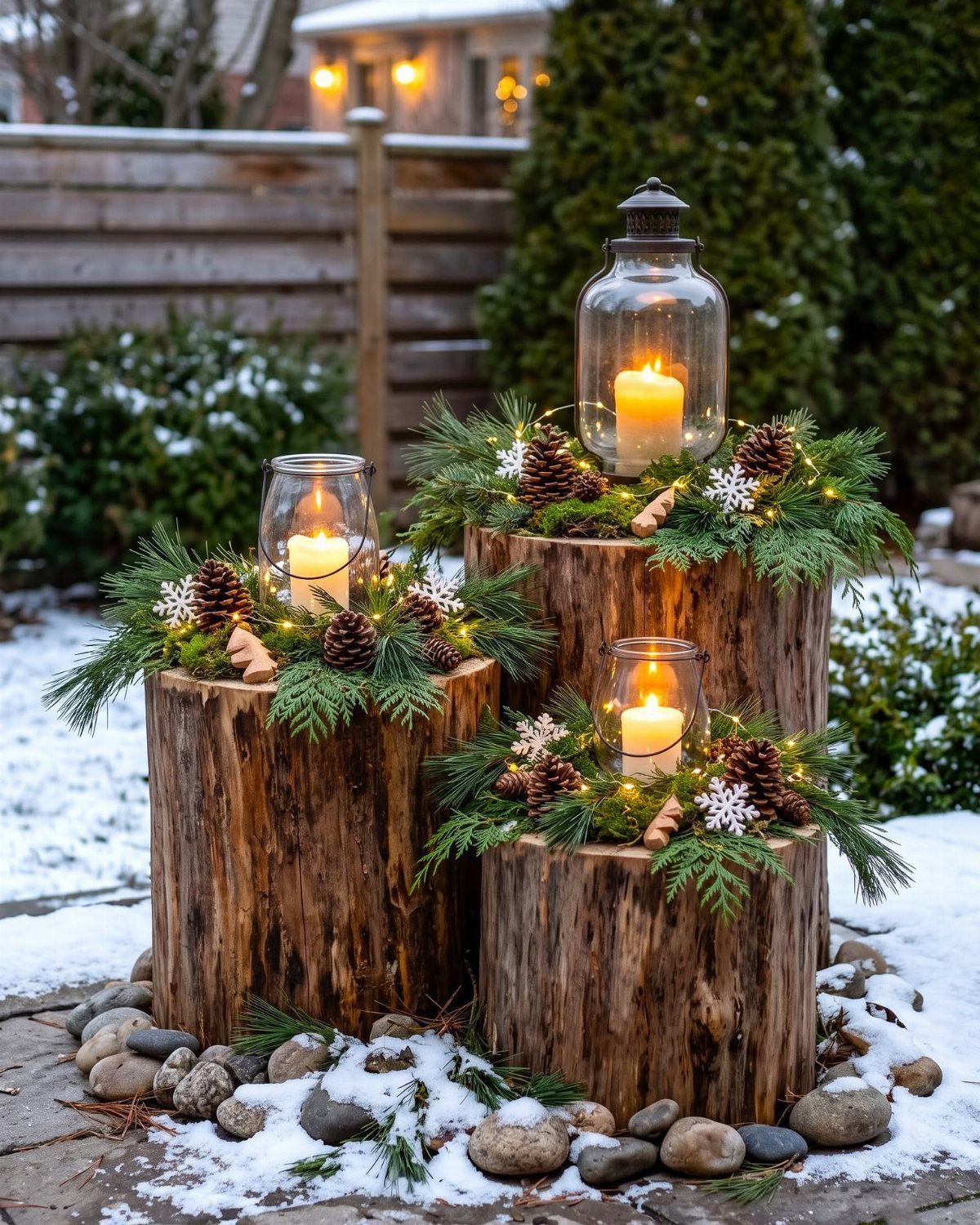
Stack the logs in a group of three, top them with lanterns, pine branches and a strand of fairy lights, and the snow reflects the glow.
Vary the heights so the light sits at several levels.
I would set the group beside a path or seating spot, where the glow marks the way after dark. Real candles burn down, so battery ones are easier for a display you want lit every evening.
9. Indoor Gardening
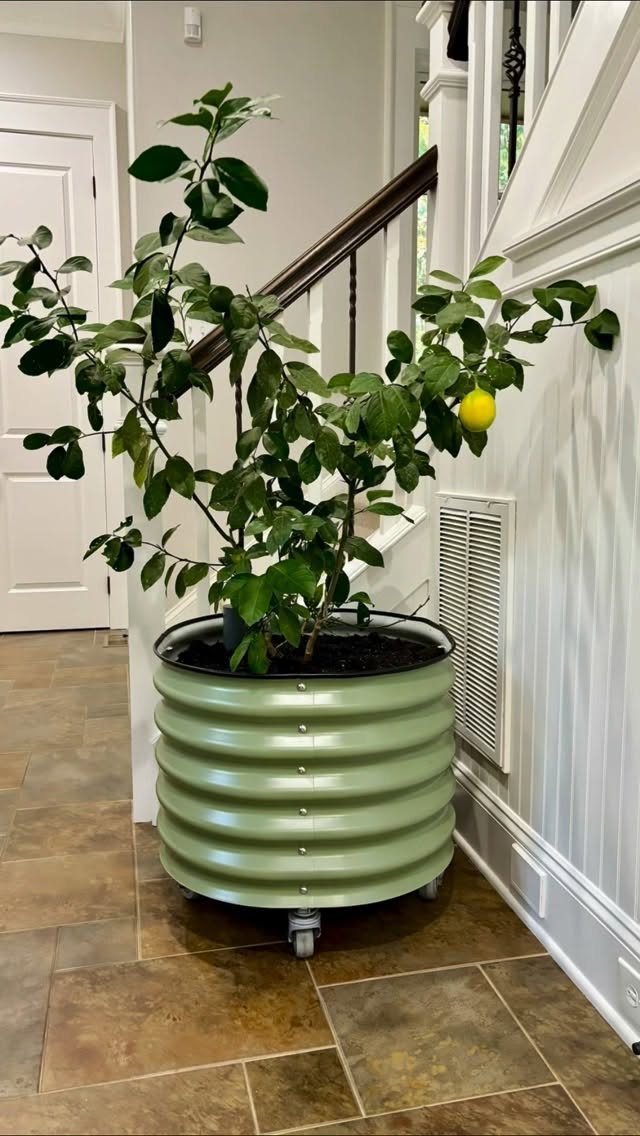
A potted lemon tree in the hallway proves winter gardening can move indoors. Put a potted tree on a wheeled plant caddy, and you can roll it to the brightest window by day and back into the room at night.
Houseplants and seedlings are the other easy route.
I like wheels best for anything heavy, since a full pot is hard to lift. Choose a spot near the brightest glass you have, and keep the plant away from drafty doors.
10. Garden Fire Features
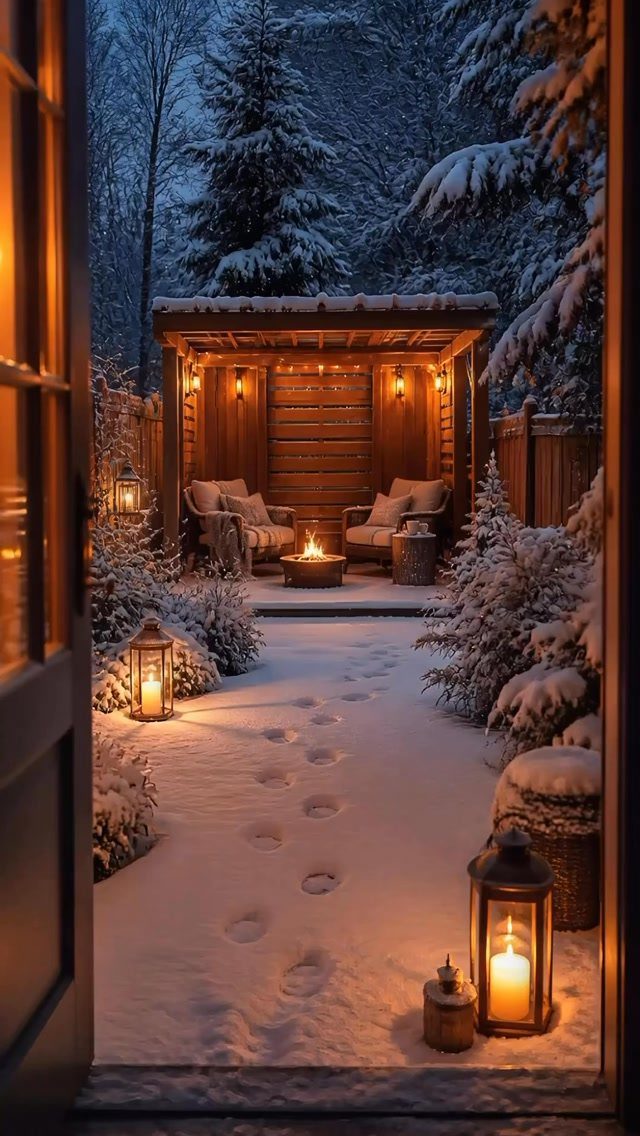
A fire pit turns a snowy patio into a place people actually want to sit. Set it in front of a pergola with lounge chairs around it, and the fire becomes the focal point of the whole garden.
Line a path of lanterns from the back door so the walk out feels inviting.
I would keep seating a comfortable distance from the flames and clear of the pergola overhead. Check your local rules on open fires before you build anything permanent.
11. Outdoor Winter Living
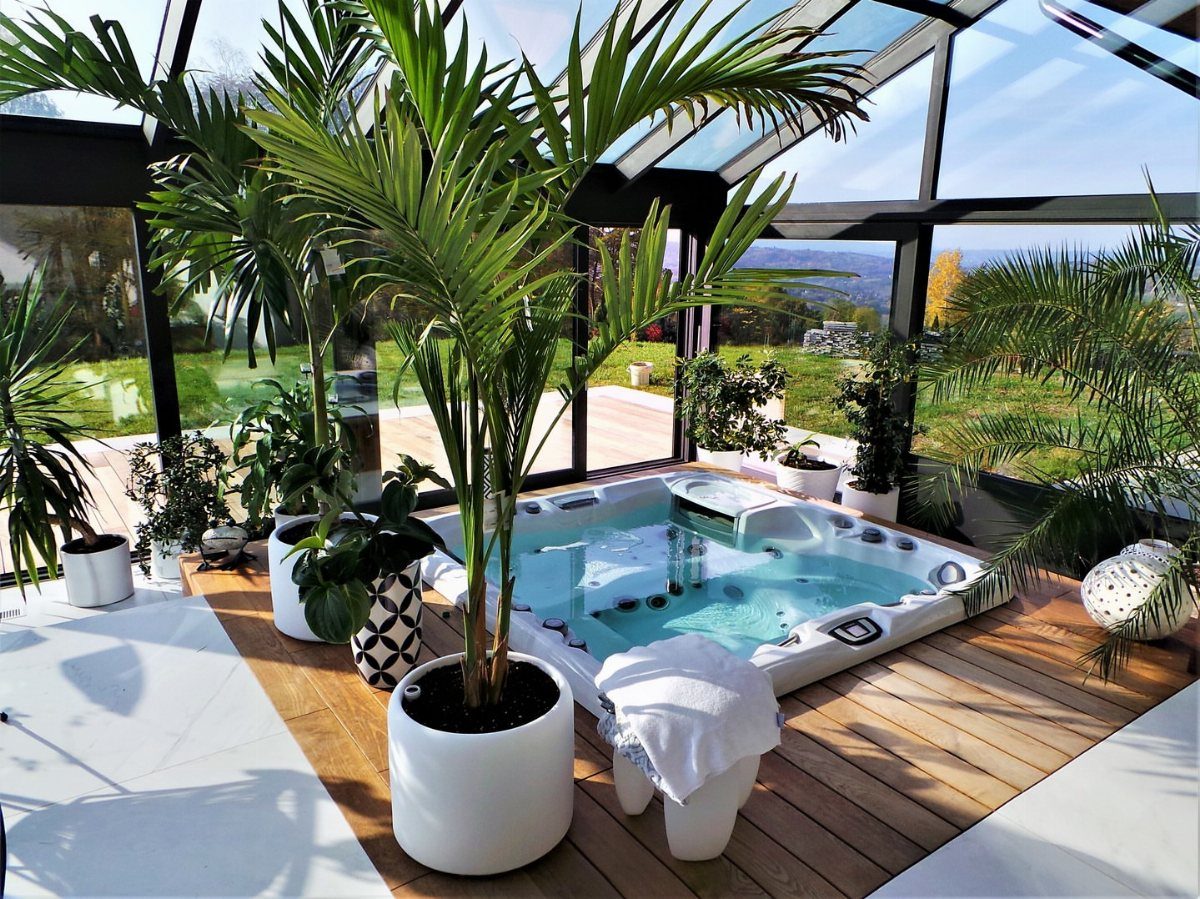
Large potted palms along a deck or patio edge keep green in view when the beds outside are bare, and because they sit in pots, they can come indoors before the first hard freeze.
Choose a deck material that is comfortable underfoot, and plan the layout so the tub faces the view.
A built-in tub is a big project and a real expense, so I would price it before anything else. Potted palms are the cheap part of the idea.
12. Winter Garden Water Features
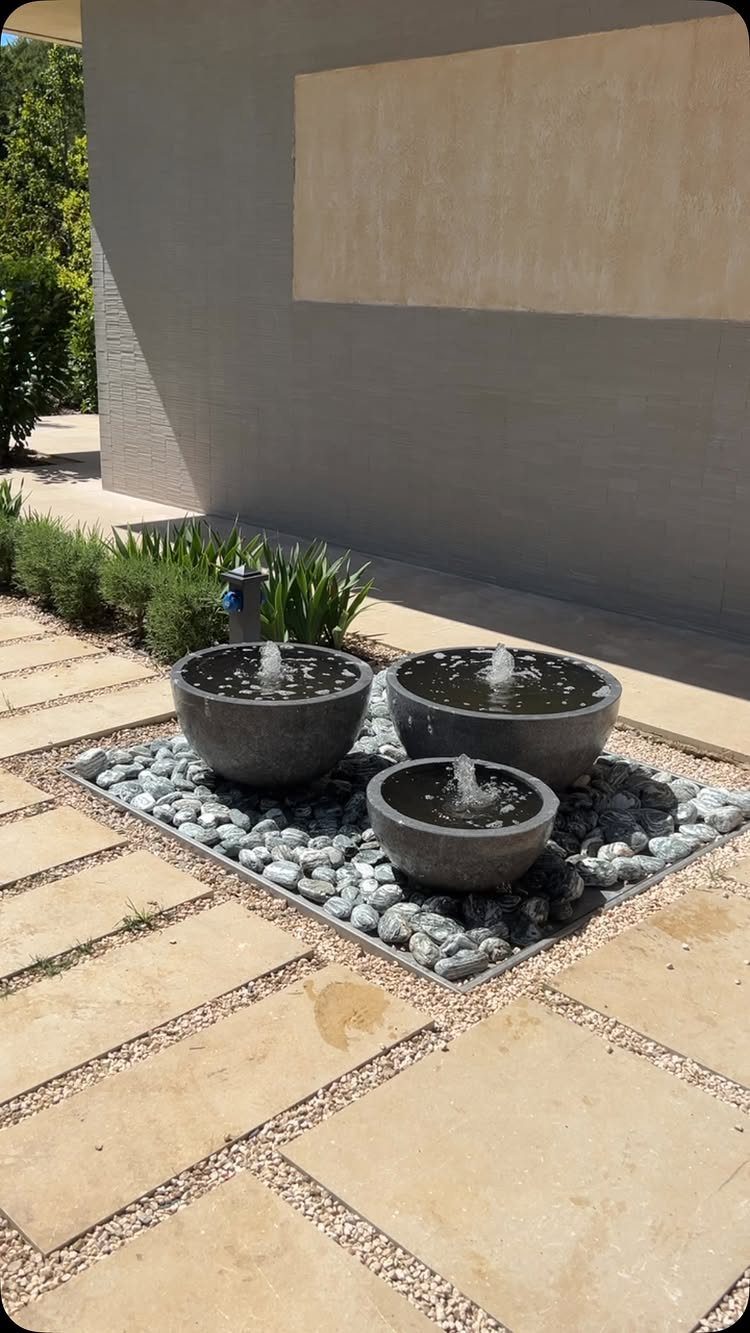
Moving water gives a frozen-still garden sound. 3 stone bowls of graduated sizes, each with a small bubbling fountain, create a balanced focal point without overpowering the architecture, according to their maker.
Set the bowls in a bed of grey pebbles so splashes drain away and the surface stays tidy.
I would place them where you can hear them from a doorway. In very hard freezes, running water may need turning off, so check your fountain’s instructions.
13. Permeable Garden Surface
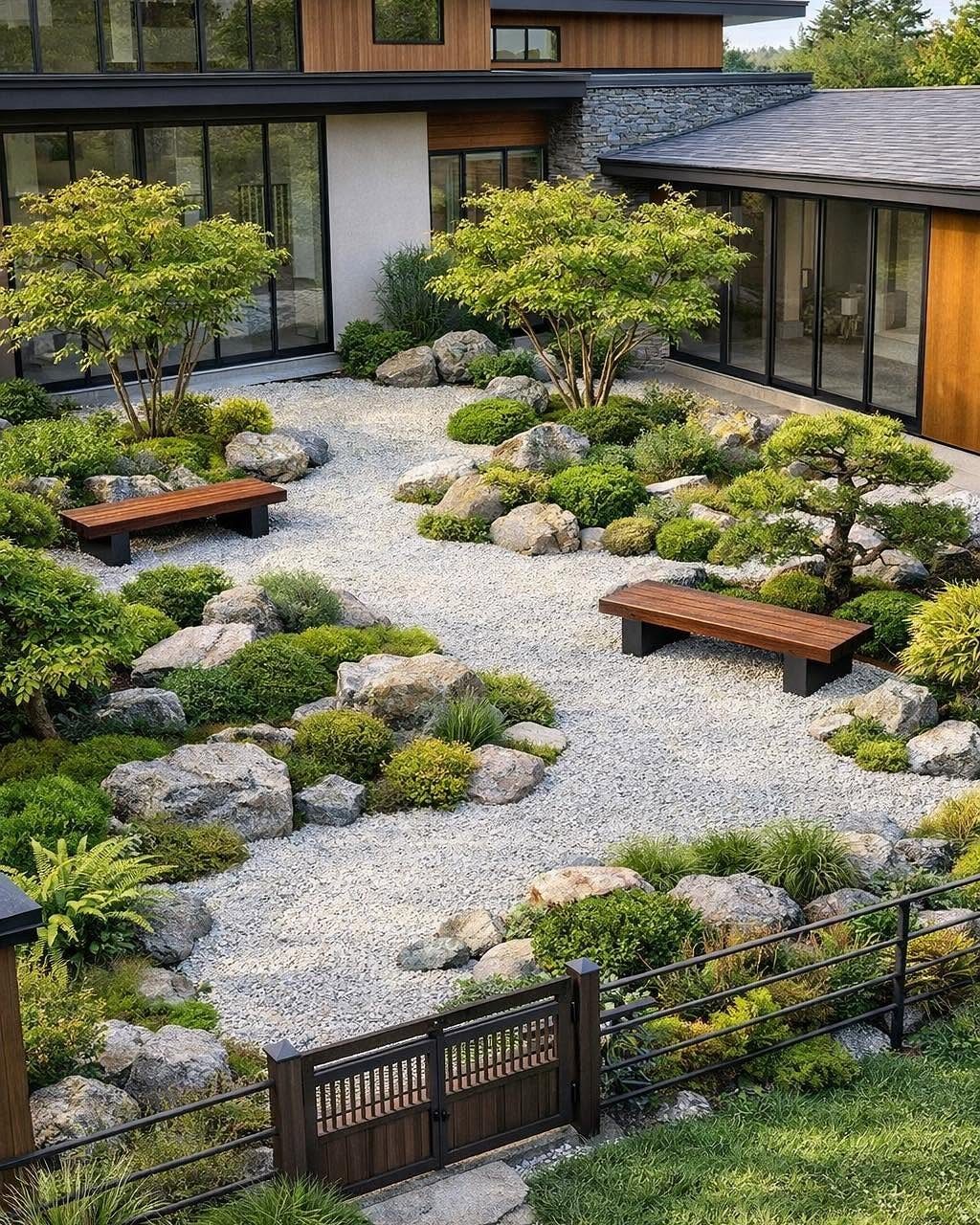
Gravel lets rain and melting snow soak into the ground instead of pooling on a hard surface, which is why it suits a winter garden built with the environment in mind.
Light-colored stone also reads clean and bright on gray days.
Set large boulders into the gravel and keep the planting to a few clipped shrubs, so the open ground feels designed.
I would place the benches where you can sit and look across the whole bed. Gravel is the cheaper route compared with paving, but you will want to rake it now and then.
14. Winter Greenhouse or Garden Shed
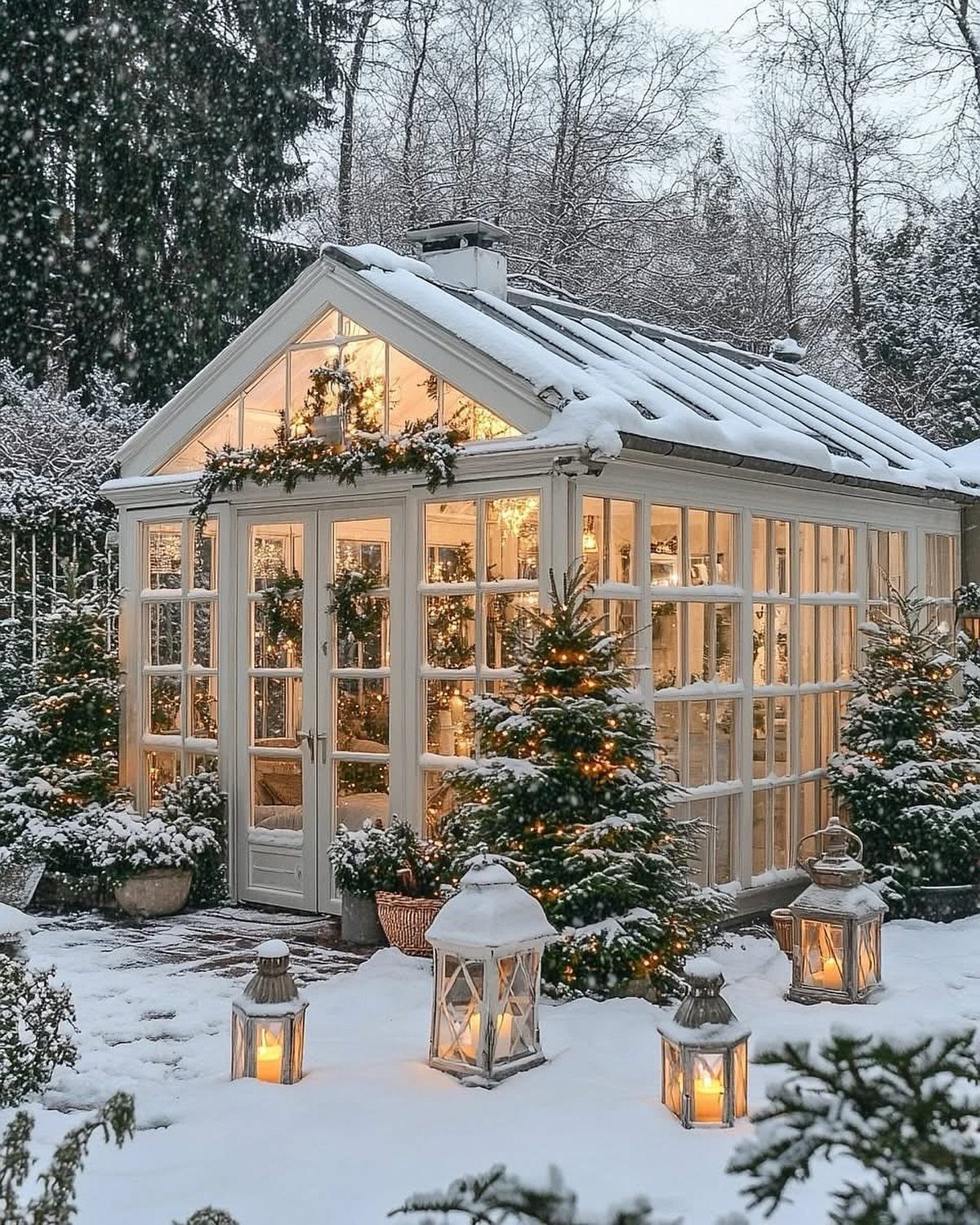
A glass greenhouse with snow on its roof becomes a lit focal point once the days shorten. Strings of lights and garlands along the frame, plus a few lanterns on the ground, make it glow after dark.
Position it where you can see it from the house, so the light greets you in the evening.
I would keep the decoration simple and tied to the building’s lines. Battery lights save you from running a cord across snow.
A garden shed gets the same treatment if a greenhouse is beyond the budget.
15. Winter Flowering Shrubs
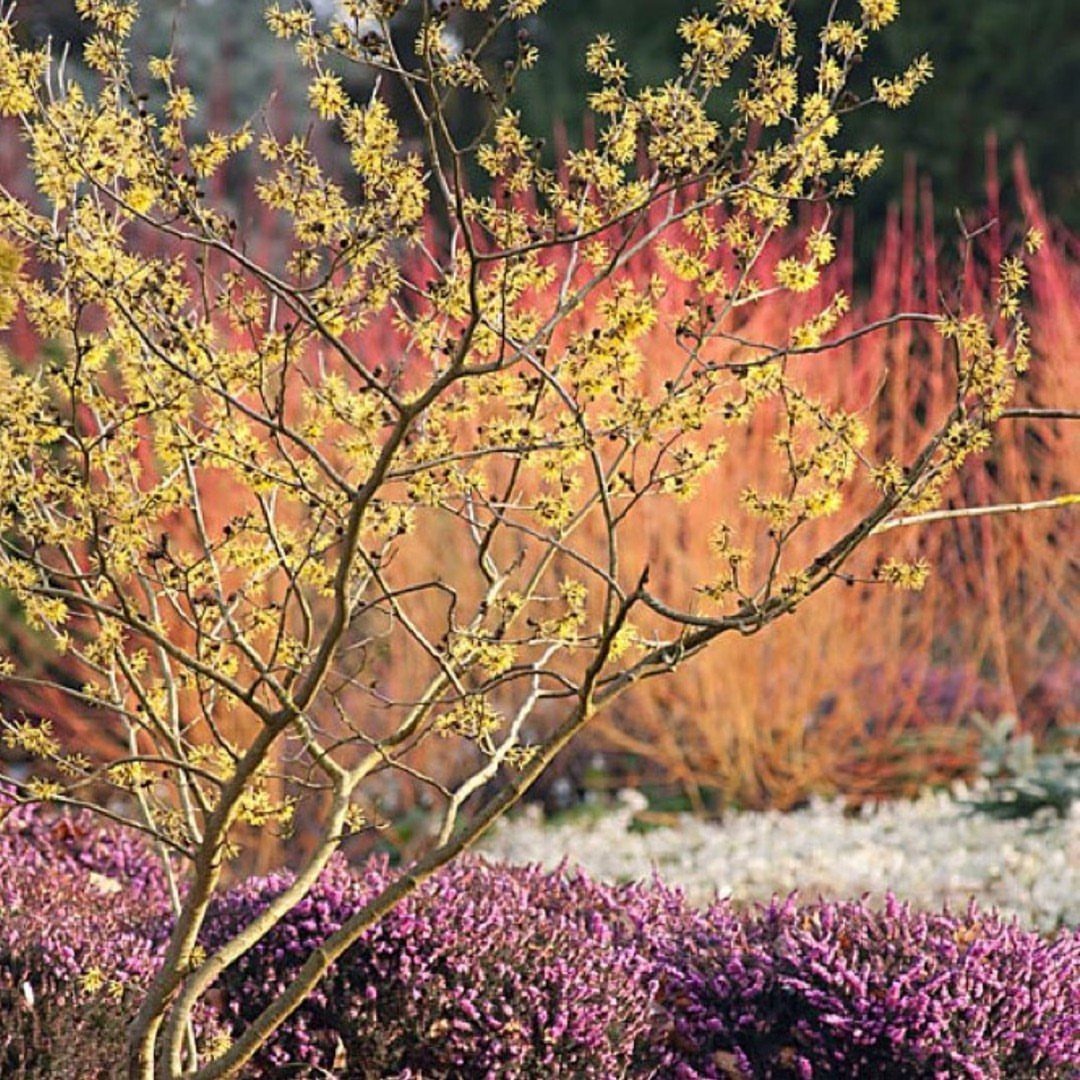
Yellow blooms in winter hit harder than any summer flower. A bright yellow shrub with purple heather at its feet and reddish-orange grasses behind gives you three colors in one glance.
Plant it along a path, so you pass the color on every walk to the door. I would keep the heather low in front, the shrub in the middle and the grasses at the back.
Leave the grasses uncut until late winter, as the earlier entry on seed heads suggests, so their warm tone stays through the cold months.
Climate and Snow Conditions
Snow type changes what you can leave standing. Dry, light snow slides off tall perennials, while heavy wet snow can flatten or snap them, so check what your winters usually bring before you decide what stays uncut.
Plan a place to pile snow before you plant anything. Keep shrubs, beds and ornaments away from any area that gets plowed or shoveled, since that is where plants take the damage.
Find out which direction the cold wind blows from. An evergreen hedge or a fence on that side works as a windbreak and protects everything behind it.
Watch the winter sun, too. Low sun and bare neighboring trees change where shade falls, and a sun-loving plant may sit in shade all season.
Look at the soil and your hardiness zone before buying, because a plant that survives one region’s winter can fail in another.
Winter Design Advantages
Winter is the best time to judge a garden’s layout.
Once the leaves drop, a bare bed shows its flaws: a flat stretch with no height, a corner with nothing to look at, a border that needs a shrub, a wall, or a few stones to hold it together.
Walk the yard and look out from the windows you use most. Bare branches make those calls easy.
Write your notes down or take photos while the view is open.
Timing matters for hired work, too.
Designers may have more availability in winter. If a project needs materials or permits, order early and apply early, so a delay doesn’t push the work past spring planting.
The bones of the garden are exposed in winter, allowing you to easily see what’s out of balance and where you might want to add in structure or visual texture, whether in the form of plants or hardscaping.
Garden Benefits and Enjoyment
A winter garden pays you back in several ways. It keeps the front of your home looking cared for, which helps curb appeal, and it gives wildlife food and shelter when both are scarce.
It also gives you a reason to go outside. I would treat that as a pleasant bonus rather than a cure.
Even if you stay indoors, a view of plants and birds from a window helps on dark days.
Greenery inside the house is linked to better mood and less stress, so a few houseplants make a fair companion to the outdoor planting.
Frequently Asked Questions
What are the best plants for a winter garden?
Pick plants that look good without leaves or flowers: evergreens for structure, shrubs with red stems or white bark for color, and berrying shrubs for fruit and bird food.
Red twig dogwood, holly, spruce and paperbark maple are the plants I’d start with, since each one gives a winter garden color, bark or shape that holds up without leaves.
Repeat one or two shapes and a few foliage colors across the bed so it reads as layers instead of a jumble.
What plants bring the best winter color in the Central Valley?
Camellias, pansies, nandina, pyracantha and ornamental grasses all hold color through winter in that region. Nandina and pyracantha add berries and foliage tone, while grasses give warm, dry texture.
Zone matters more than any plant tag, so look up yours first; a shrub that shrugs off one region’s cold can die in the next zone over.
How do I keep my garden interesting year-round?
Layer heights and textures, then add lighting. Layer the bed by height, with tall plants behind, mid-size shrubs in the center and low foliage up front, and stick to 2 or 3 repeating foliage colors so it reads as one design.
Evergreens carry the structure, and lanterns or battery fairy lights keep the garden worth looking at after dark.
What do you do if you live in an area with much snow?
Decide where plowed or shoveled snow will land before anything goes in the ground, then keep shrubs, beds and ornaments out of that zone.
A row of evergreens or a solid fence on the windward side cuts the cold wind and shelters everything behind it.
Can I entertain outdoors in winter?
Yes, a fire pit is the easiest way to do it. Pull chairs back from the flames and out from under the pergola roof, and look up local open-fire rules before building anything permanent.
Is xeriscaping good for winter gardens?
Yes.
Drought-tolerant plants with suitable irrigation give year-round interest while limiting extra water use. Gravel suits a dry-style garden well, because rain and melting snow drain through it and pale stone brightens a gray day.