The ideas below run from a single bed of dark mulch to a full cottage garden, and the right pick depends on how much upkeep you will actually do.
A yard you can keep up beats a bigger one that slips, so match the idea to the hours you have, then to your sun and soil.
1. Flower Beds
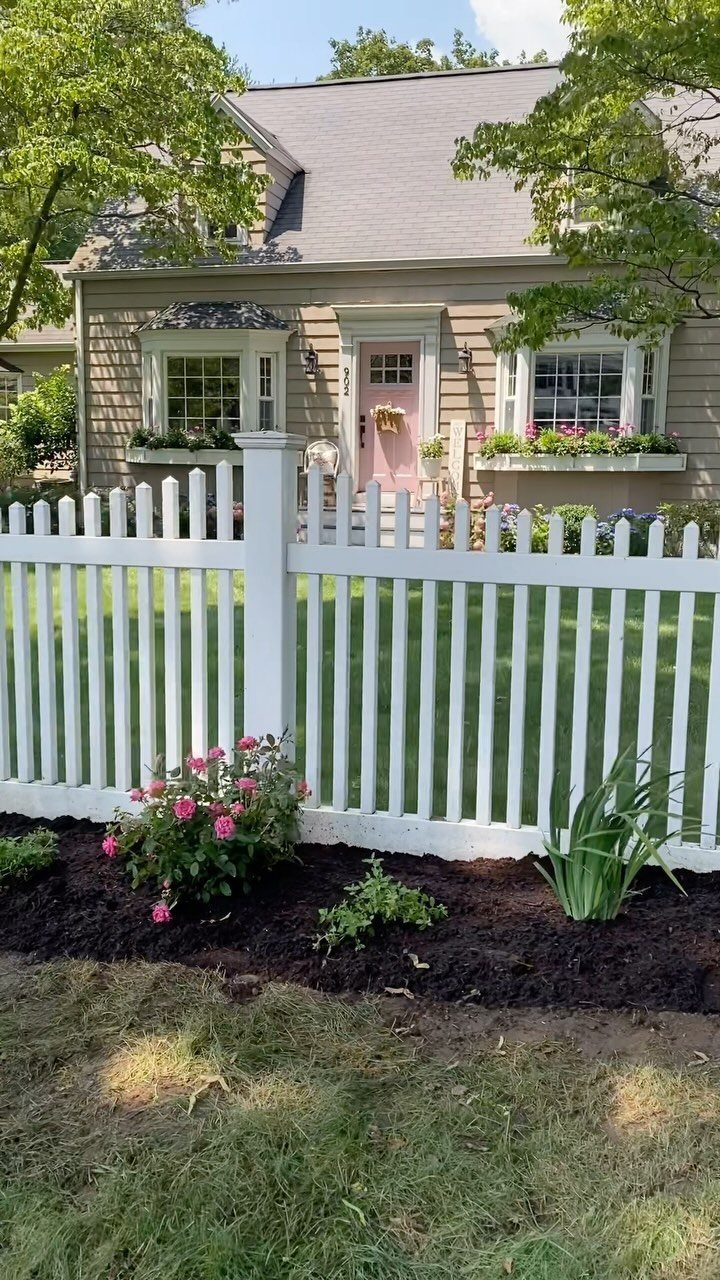
A planted bed along the fence line gives a front yard color, texture and growing room in one move, and roses against dark mulch make a strong version of it.
Pink blooms stand out against the dark background, and the mulch hides bare soil between plants.
Mark the bed edge with a garden hose first, then adjust the curve until it looks right from the street.
A bed that runs the length of a fence gets planted in layers: taller shrubs or roses at the back, lower green filler in front.
2. Fall Color Plantings
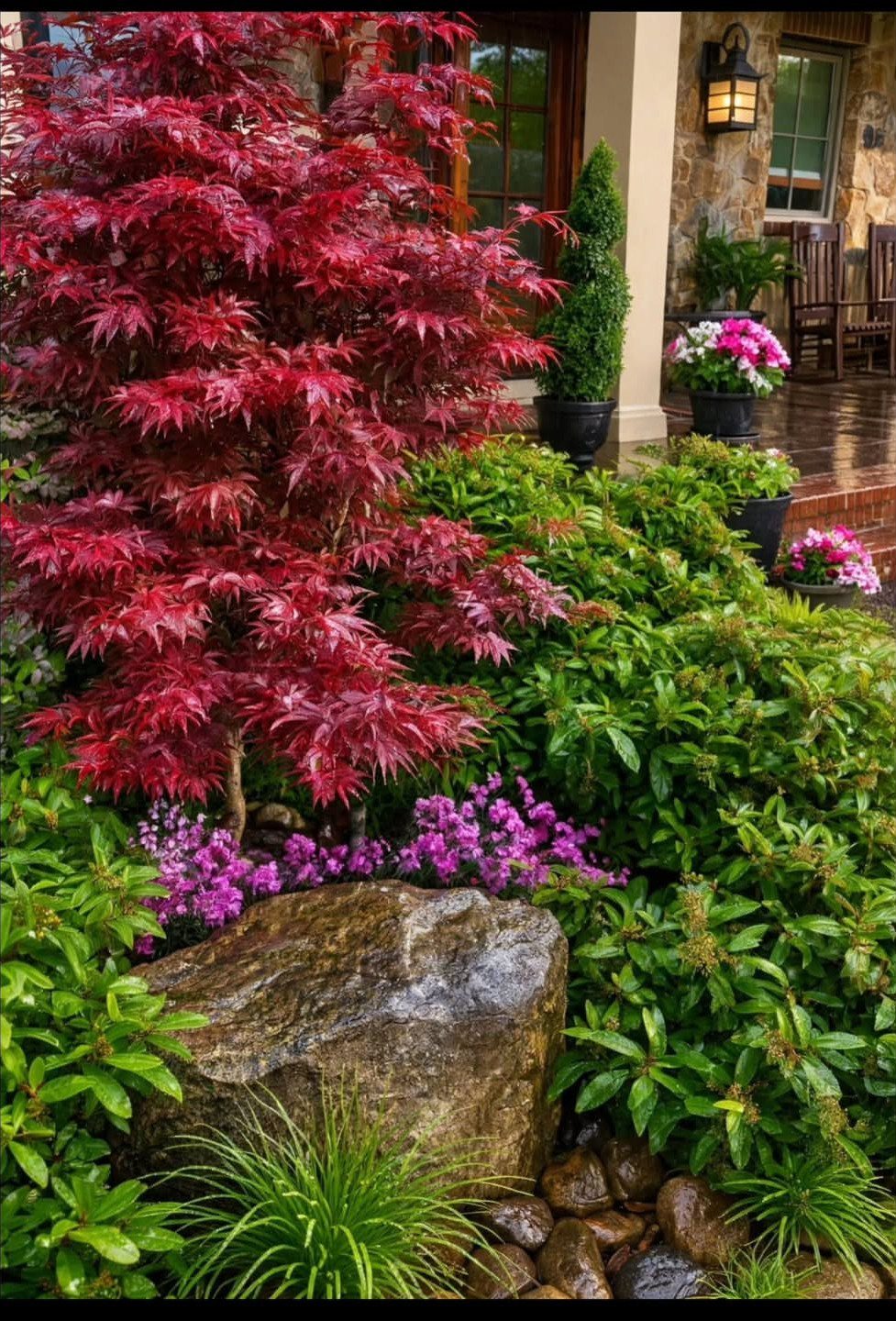
Autumn color comes from pairing foliage with flowers, and a red Japanese maple does most of the work. Purple blooms at its base make the red look deeper, and green shrubs keep the bed from turning into one loud patch.
A large rock anchors the group and gives the eye a place to rest. Build around one focal tree, then add 2 or 3 supporting plants in contrasting colors rather than a dozen different ones.
3. Corner Planting Space
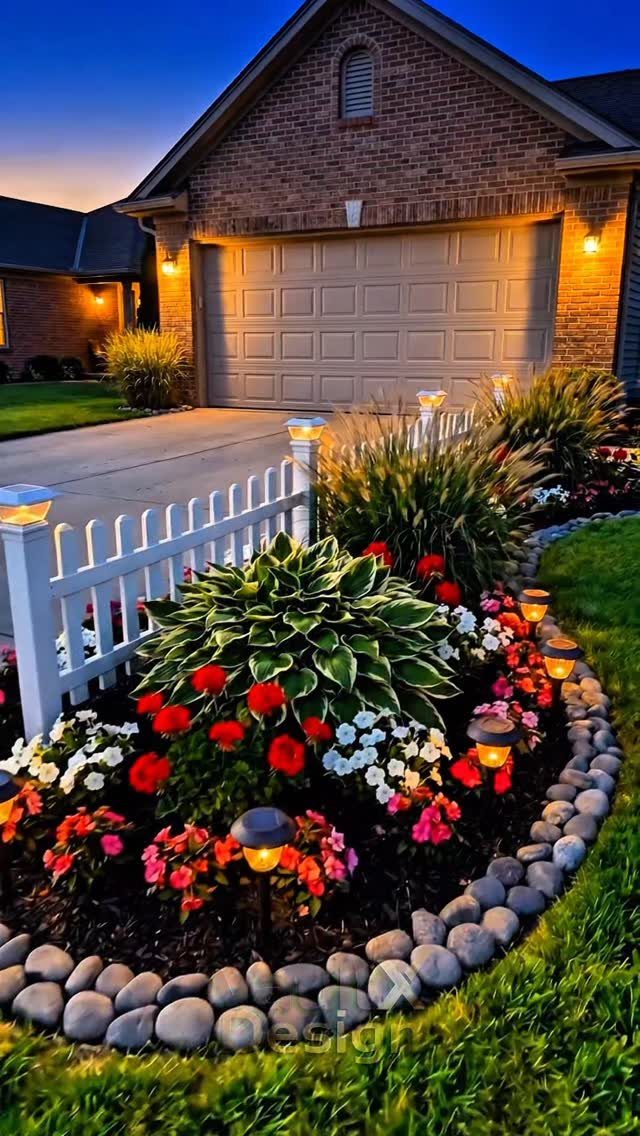
An unused yard corner becomes a garden once it has a clear edge, and river rocks do that job cheaply. Rounded stones hold the bed’s shape against the lawn and look good beside a white fence and brick.
I like how solar lights tucked among the flowers extend the bed into the evening with no wiring. Fill the corner with red and white flowers over green foliage, tall plants near the fence and shorter ones toward the lawn.
Instead, Shrader sees front yard landscaping as a chance to set a distinct tone for your property: “Your house doesn’t start at the front door—it starts at the street.”
4. Color-coordinated Planting
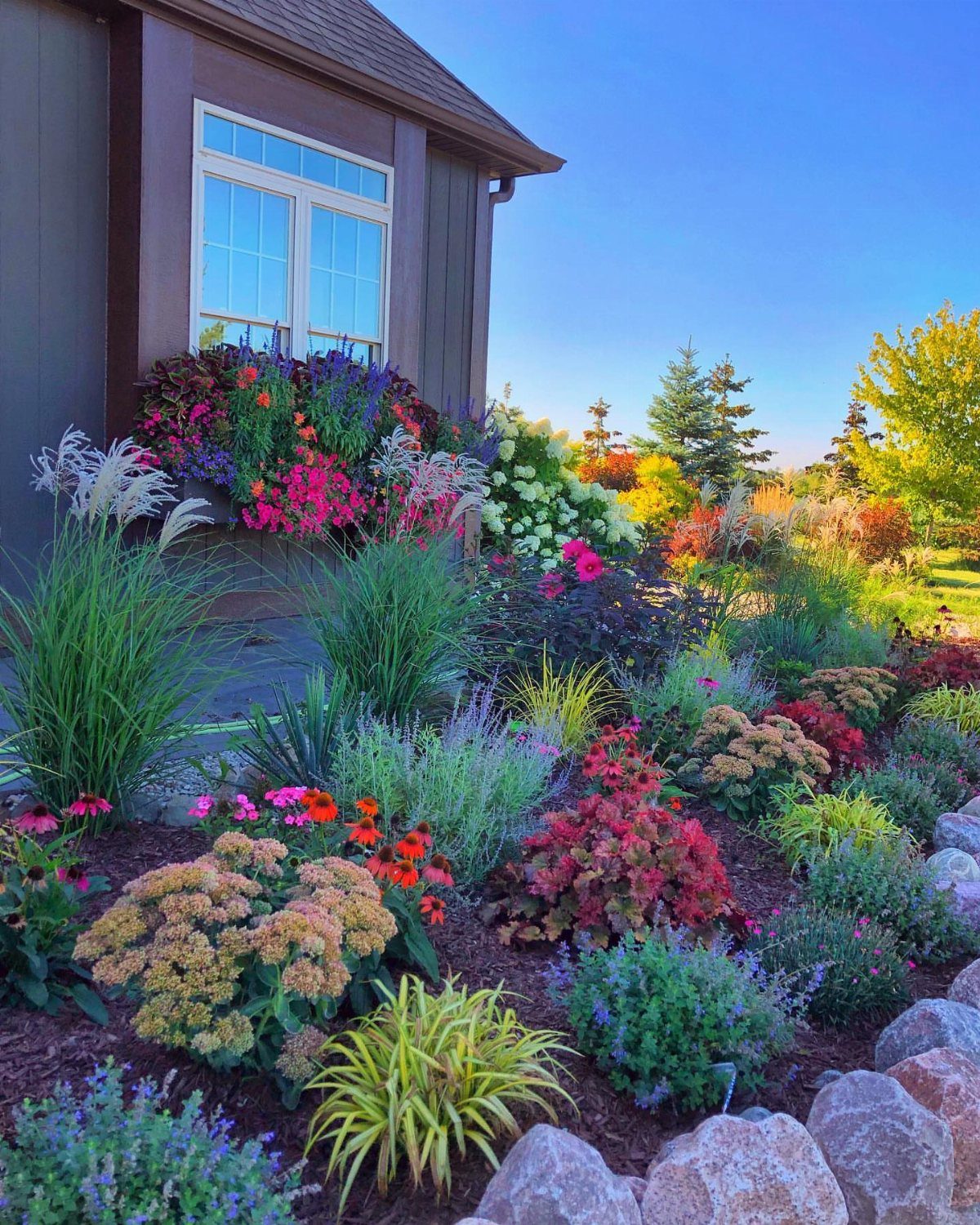
Pick plant colors from the house itself. A brown exterior with white window trim pairs well with red, purple and yellow, because warm tones echo the siding while purple adds contrast.
Mix flowers with grasses so the color has some texture behind it. Limit the palette to 3 main colors, and repeat each one in at least 2 spots so the bed reads as planned rather than random.
5. Ground Cover
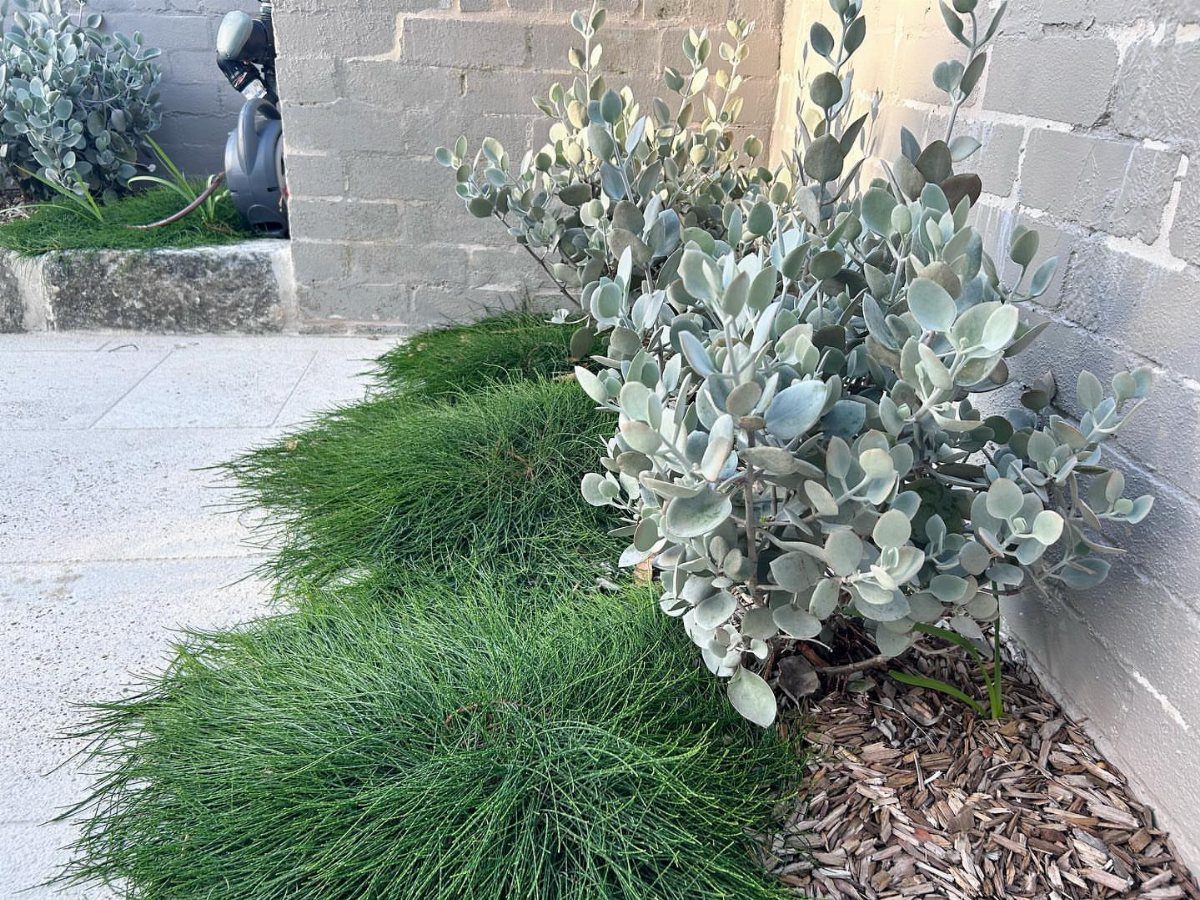
Low-growing plants and mulch cover soil so weeds have less room, and they shrink the lawn you have to mow. Grass-like ground cover in green, with a silver-leafed shrub rising above it, makes a calm, layered strip along a wall.
Wood mulch fills gaps while the ground cover spreads. Space plants closely enough that they knit together, and keep mulch on any bare soil until they do.
6. Perennial Plants
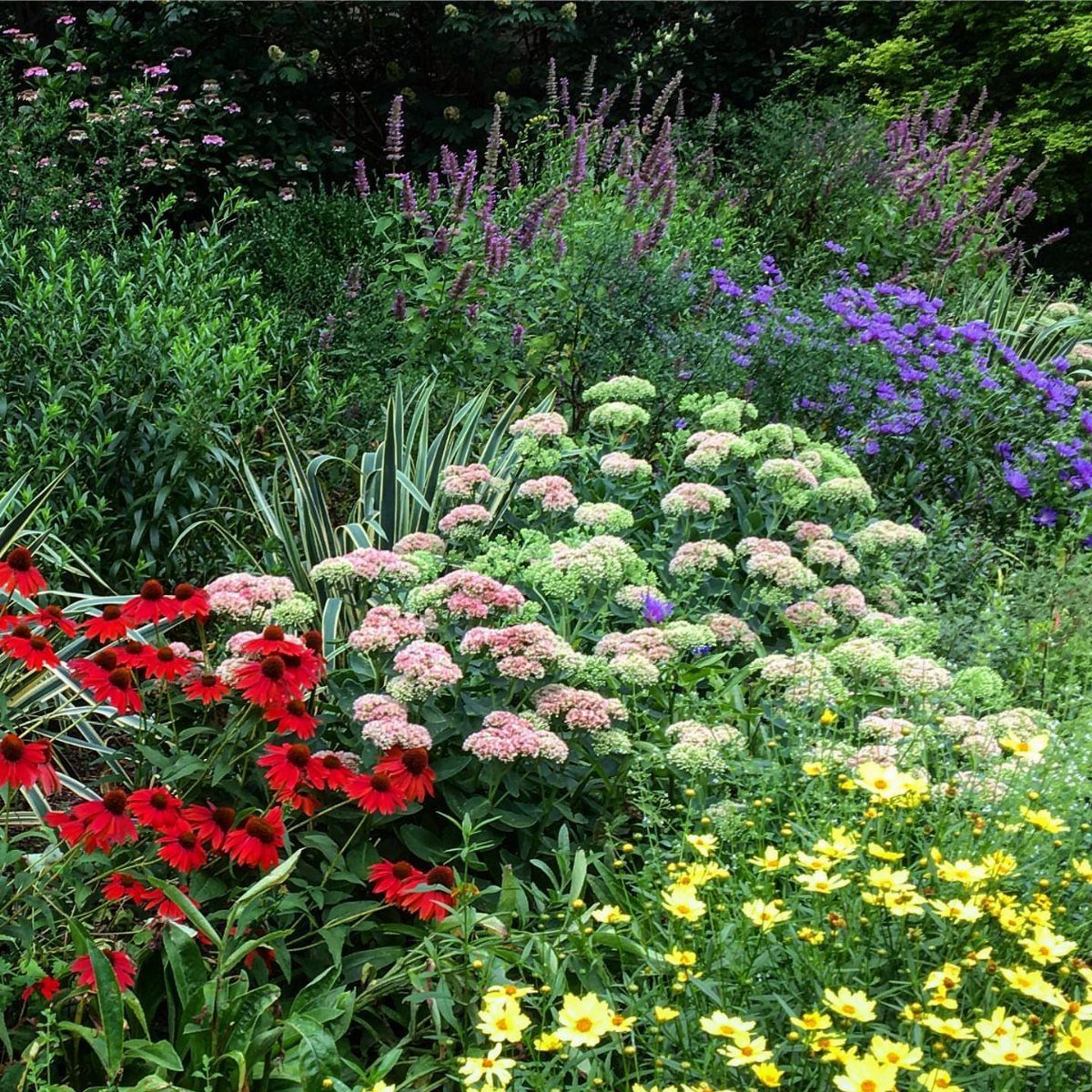
Perennials return every year, so a bed planted once keeps paying you back without replanting.
A single perennial bed can hold coneflowers, hydrangeas and daisies together, and the mix works because their bloom times overlap and their heights stack from front to back.
Plant in groups of the same kind instead of single specimens, and stagger heights with the tallest at the back. Dense planting fills the bed fast, but it costs more up front than a few annuals.
7. Climbing Flower Trellis
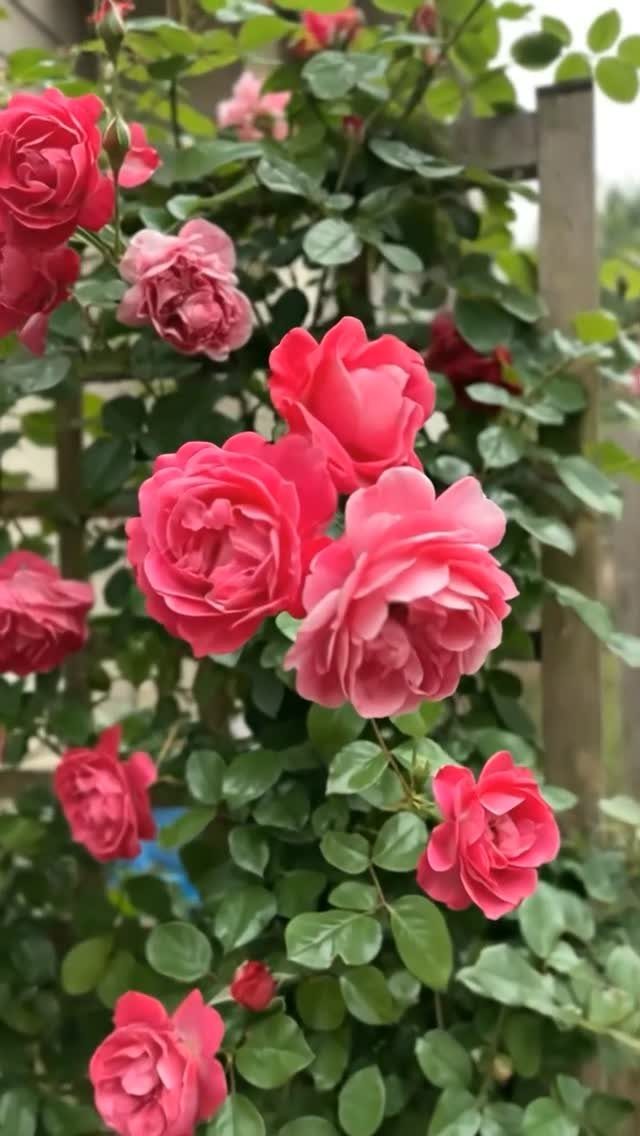
Roses on a wooden trellis give a front yard height without taking any ground space. Pink blooms against green foliage soften a flat wall or fence line.
Set the trellis firmly against the wall or in the ground before planting, since a mature climber gets heavy.
Tie young canes to the slats loosely as they grow, and train them sideways as well as up so flowers cover the frame evenly.
A wooden trellis looks warm beside brick or siding, though bare wood needs a finish to hold up outdoors.
8. Native Plants Garden
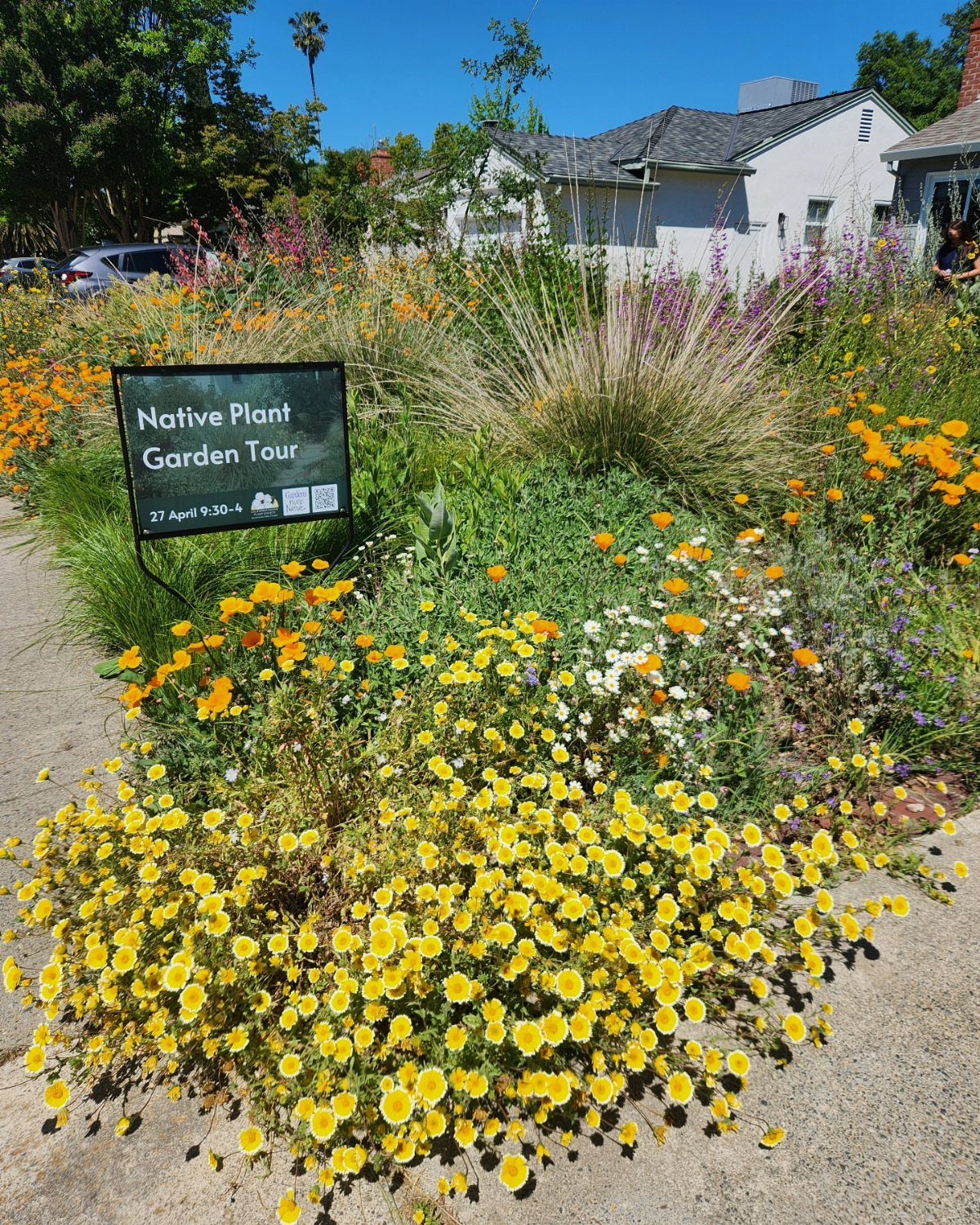
Plants adapted to your local climate and soil are the base of a native garden, and wildflowers in yellow, white and purple are an easy way to get color without fighting your conditions.
Natives tend to want less coaxing than imports because they already suit the conditions outside your door.
Start by checking which species grow wild near you; a local nursery or extension office can supply a list. Plant in drifts of one kind rather than singles, so the color reads from the street.
I would start with one bed rather than the whole yard.
9. Ornamental Grasses
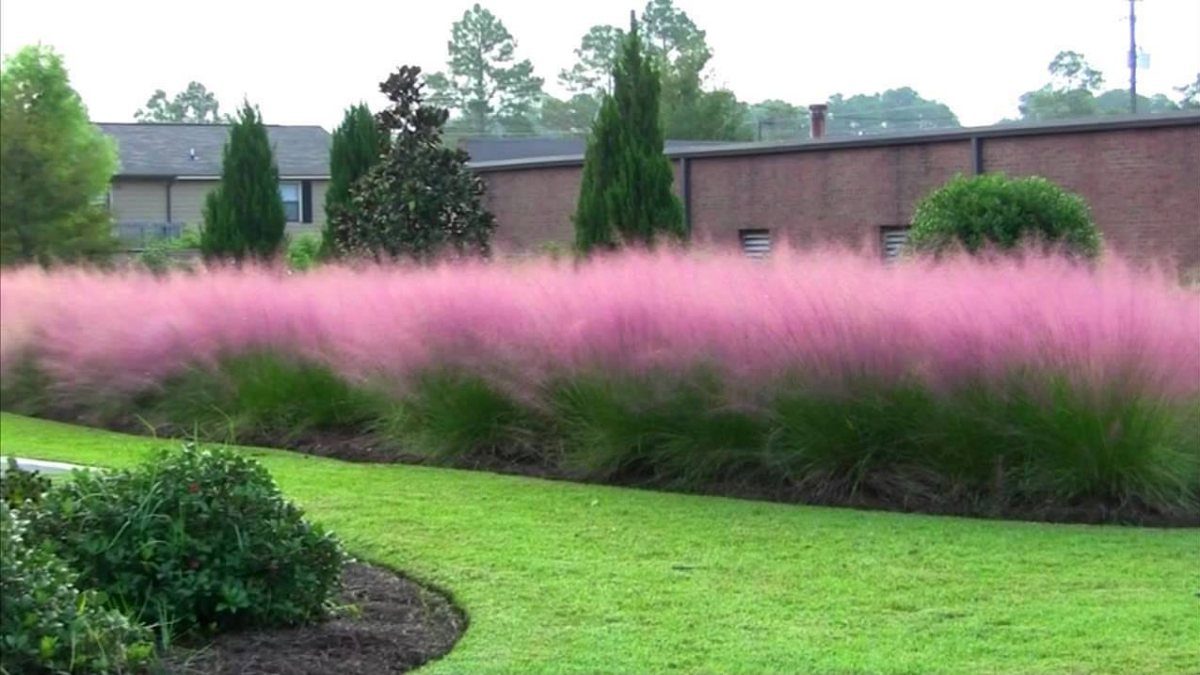
Pink muhly grass in a row turns a plain bed into a soft, moving line, with fluffy plumes that catch the light against brick. Grasses give texture where flowers fade, so the bed keeps its interest through the year.
Repeat the same grass at even spacing for a clean, planned look, or mix heights if you want a looser one. Leave a little room between plants for them to fill out.
10. Vertical Gardens
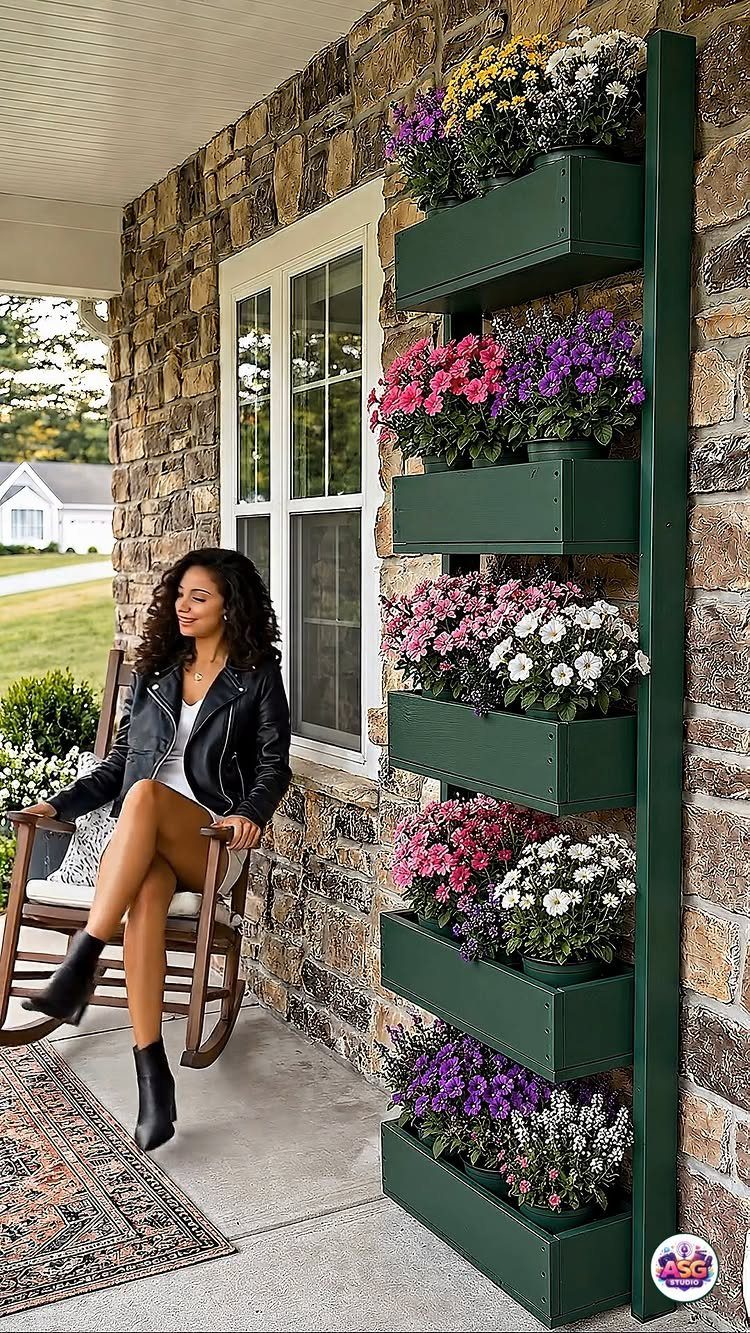
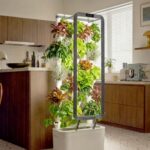
A vertical planter holds flowers at eye level, which makes it the answer when a porch or entry has no soil to plant in.
Stone steps and a small porch leave little room, and a tall green planter packed with blooms uses the wall instead.
Place it where you will see it from a seat or the front door, and keep it within reach of a hose or watering can, because small containers dry out quickly.
Choose one with a built-in frame so you only have to hang or lean it, then fill with a few flower colors.
11. Mulch Beds
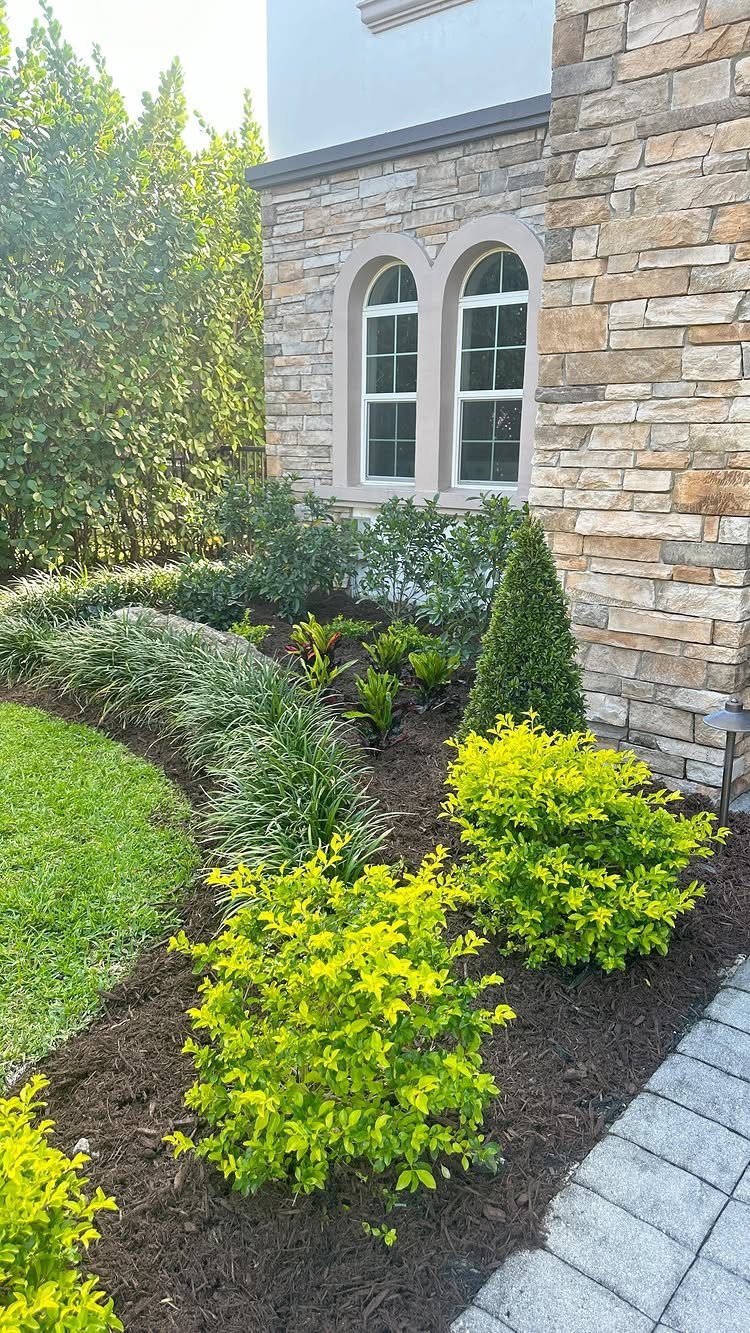
Dark brown mulch finishes a bed the way a frame finishes a picture.
Mulch also cuts weeding and covers bare soil, so a bed needs less of your time. Spread it evenly across the whole bed, and pull it back slightly from plant stems so they are not buried.
Choose a dark shade when your plants are light or yellow-green; the contrast does the work. Topping it up as it fades keeps the look fresh.
12. Low Maintenance Plants
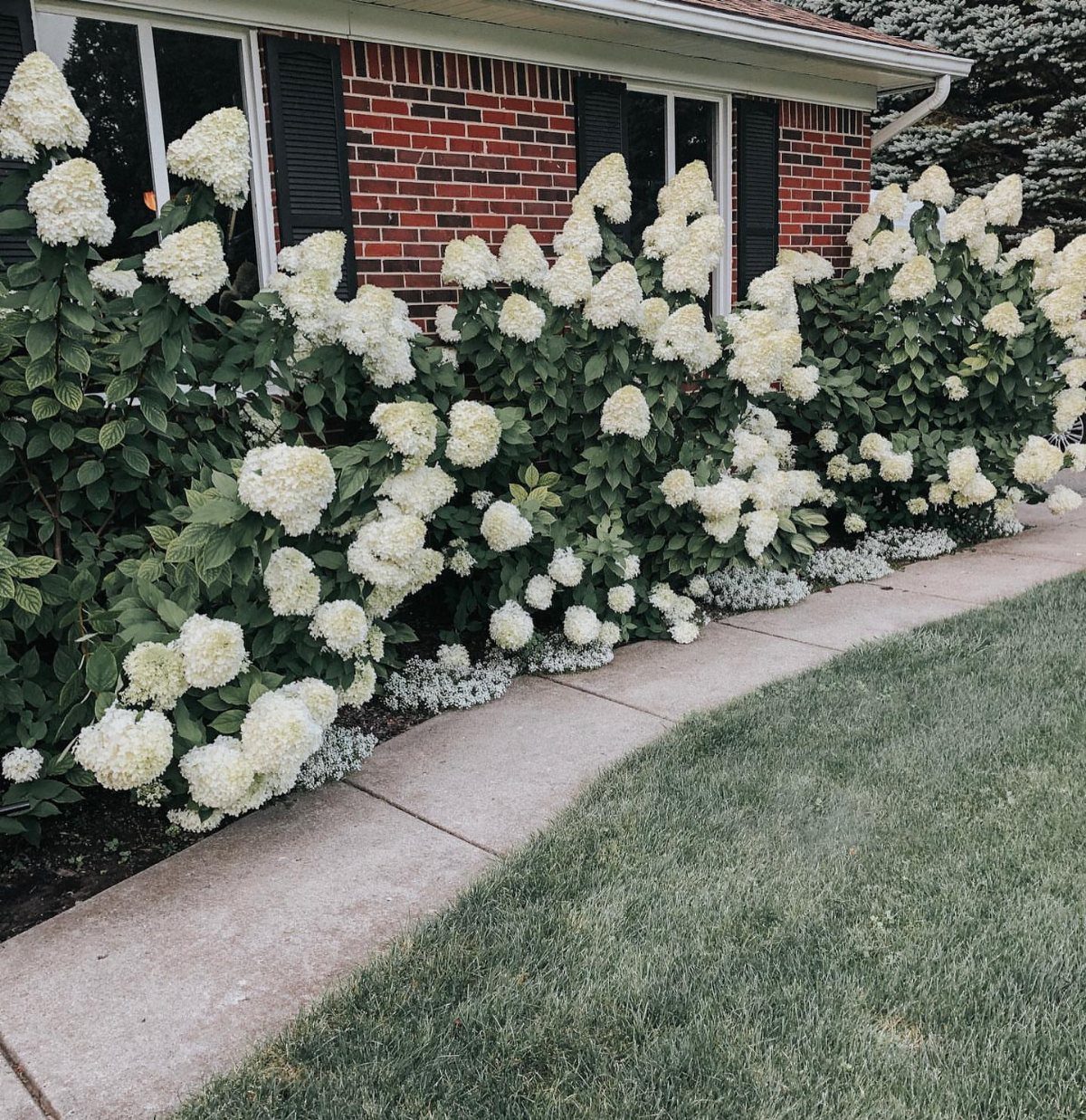
White panicle hydrangeas along a brick wall give a front yard big blooms from a single shrub. White flowers read cleanly against red brick and a concrete walkway, and a short row along the wall fills it without fuss.
Space them to match their mature width so they do not crowd the path. Plant them a few feet off the wall for air flow.
For a low-effort bed, I would choose shrubs like these over many small annuals, because you plant once and mostly just water.
13. Cottage Gardens
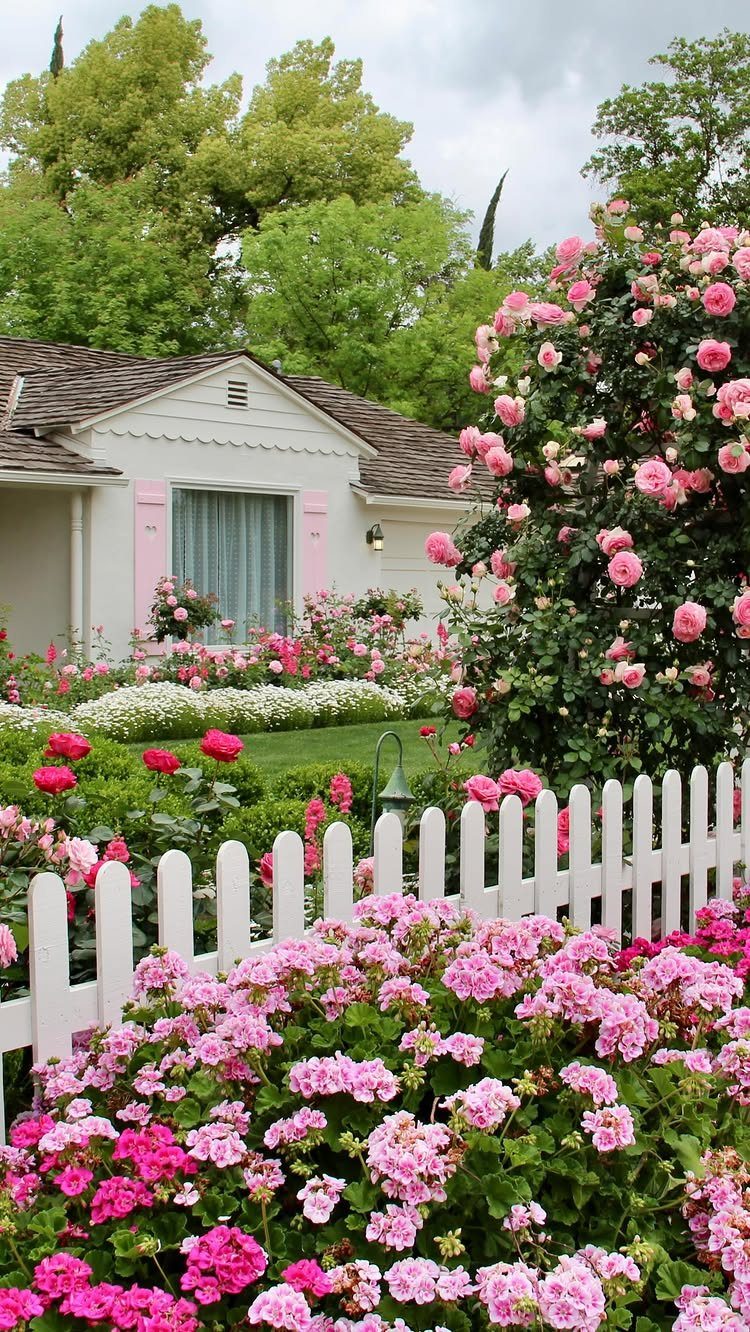
A cottage garden works by letting flowers crowd each other: roses, geraniums and small white blooms packed in front of a white picket fence, with no clipped rows or bare gaps.
Pink against white reads soft and old-fashioned from the street.
Keep the palette narrow, pink and white here, so the busy planting still looks intentional. Plant tall roses behind and low geraniums along the fence, and let them spill a little over the edge.
I would pick this style if you like a loose, full look over a tidy one.
14. Rock Gardens
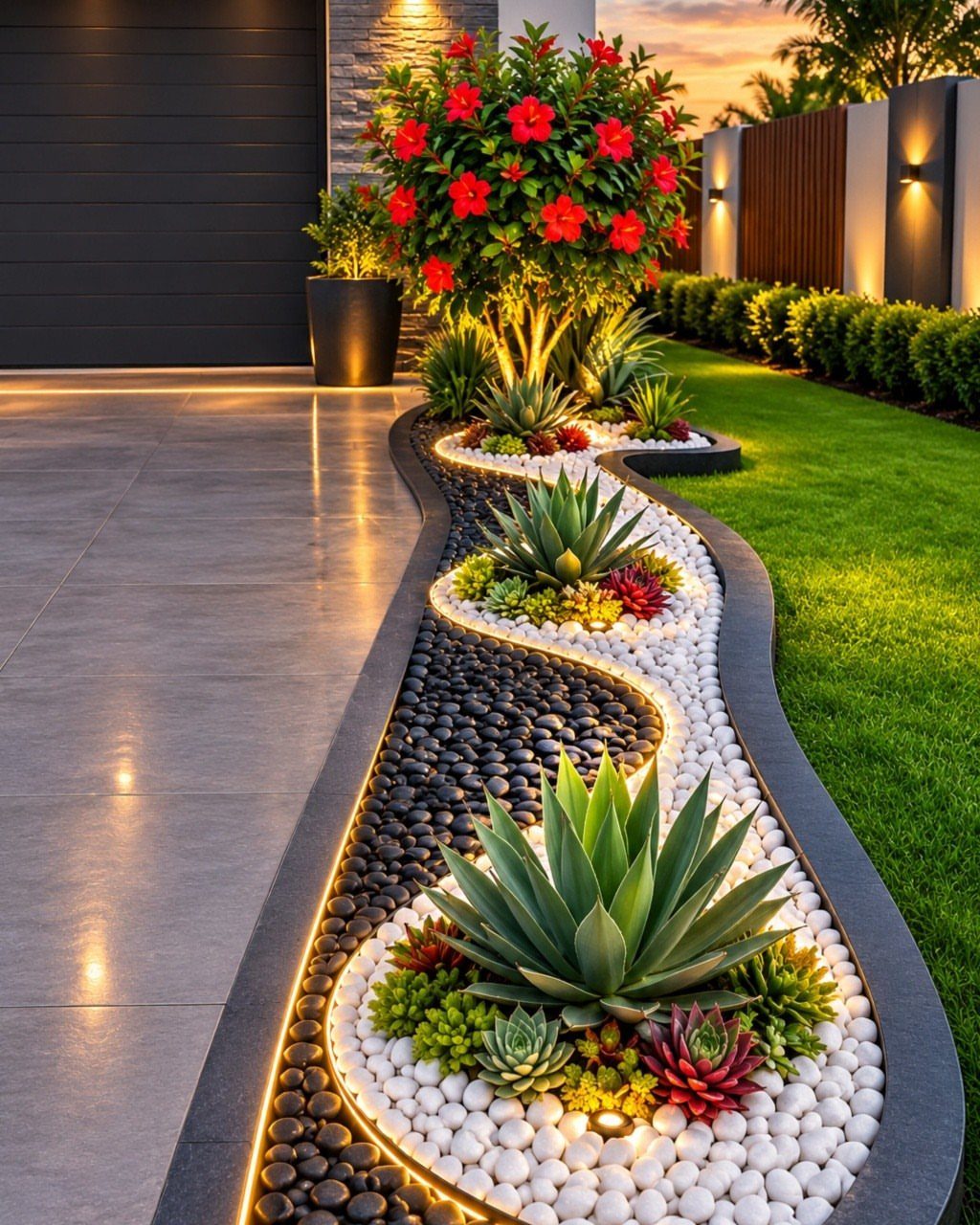
Stones and gravel can shape a garden bed as well as plants do, and a curved bed of black and white pebbles with succulents is a low-water version.
Plants like succulents sit well in rock, and a single red flowering shrub adds the color.
Set the curve first, then lay the pebbles around the plants. Mixing black and white stones gives contrast without adding more plant types.
LED strip lighting along the bed edge, as in this one, makes the stones glow after dark, though it adds wiring and cost.
Plan Around Use and Maintenance
Before choosing a single plant, rank what the yard is for.
Kids playing, a spot to chat with neighbors walking their dogs, a quiet place to sit, and a setting for guests all call for different layouts, and a ranked list settles the arguments early.
A play yard needs open lawn, while a sitting yard needs a bench or chairs and some privacy. Put the top priority where it gets the most room.
Study your own site next.
Before buying anything, I walk the yard and note how much sun each spot gets, where the wind cuts through, how the soil drains after rain, and which plants are already thriving, because those facts tell you where new plants will grow well and where a bench or path will actually get used.
Walk your neighborhood too, and note which plants look good and which look struggling.
Then budget for upkeep as well as installation.
Dying plants, patchy grass and general disorder make a yard look cheap at any price, so I would rather plant a smaller area I can keep up than a larger one that slips.
Frequently Asked Questions
What plants should I put in my front yard?
Match plants to your site first: sun, wind, soil drainage and what already thrives nearby.
For easy color, perennials like coneflowers, hydrangeas and daisies return every year, and white panicle hydrangeas or ornamental grasses like pink muhly need little upkeep. Native wildflowers suit your local conditions, so they want less coaxing than imports.
What is the point of a front yard?
It depends on how you use it, so rank your uses before planting. A front yard that serves kids, a chat with the neighbors, a quiet morning seat, or dinner guests will each end up laid out differently.
What do you call a garden in front of a house?
A front yard garden is the usual name, and a planted strip along a fence or wall is a flower bed.
Named styles exist too: cottage gardens pack in roses, geraniums and small white flowers, while rock gardens rely on stone, gravel and succulents.
How do I make my yard look better?
Keep what you plant healthy and tidy, because dying plants, patchy grass and general disorder make a yard look cheap at any price.
Walk the yard and note sun, wind and drainage, then look at which plants thrive in your neighborhood. Dark mulch also finishes a bed neatly and covers bare soil.
How do I start creating a low maintenance yard?
Start by deciding who will use the yard and how, then rank those priorities and give the top one the most space.
Pick plants that match your light and soil, like shrubs that go in once and need little beyond watering. Mulch cuts weeding too, and budgeting for upkeep keeps the plan realistic.