The ideas here run from a layer of dark mulch to a pergola with lattice sides, and what decides which one fits is what your yard actually does: how many hours of sun each bed gets, which spots stay soggy after rain, and whether your hose reaches.
Note your sun and soil first, then pick from the list, and mind the mature width on the tag, since a 1-gallon shrub can crowd a walkway in 3 years.
1. Landscape Lighting
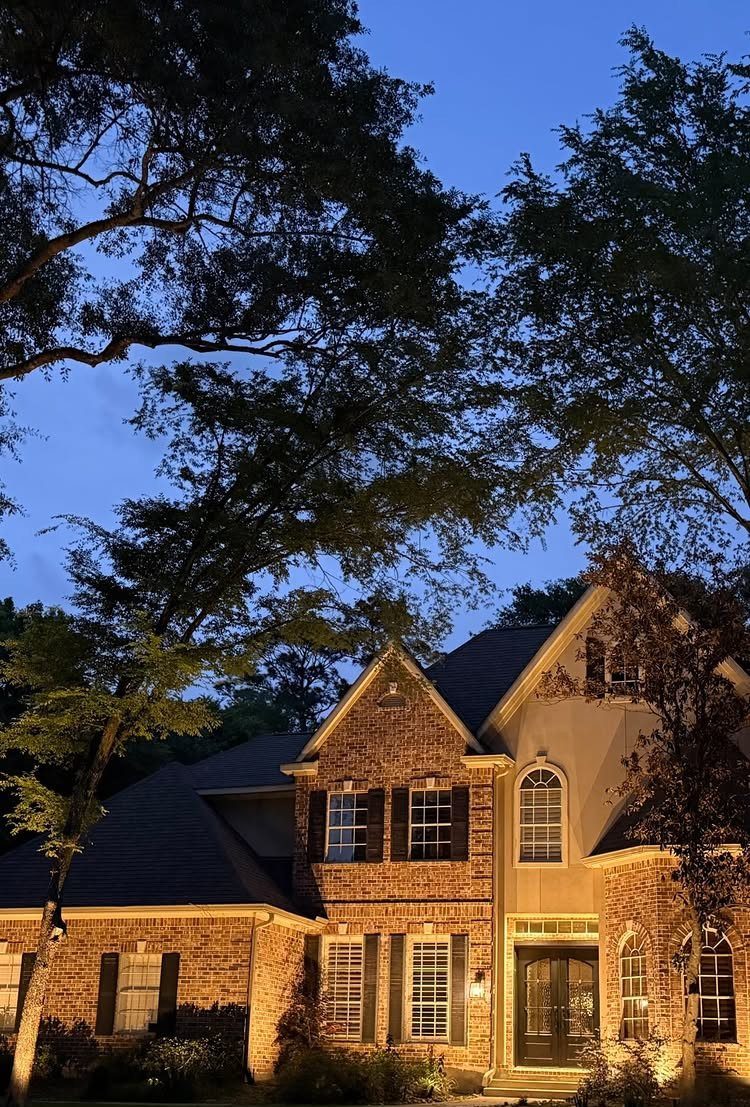
Warm light on a brick facade does more than show off the house; it lights the walkway and door so visitors can see where they’re stepping.
I’d start with the entry and the path, then add a light or two aimed at the trees or walls you want to keep visible after dark.
Choose warm-toned bulbs, since they flatter brick and stucco. Place fixtures low and aim them up, and keep the count modest so the yard looks lit rather than floodlit.
2. Welcoming Entryway with Matching Containers
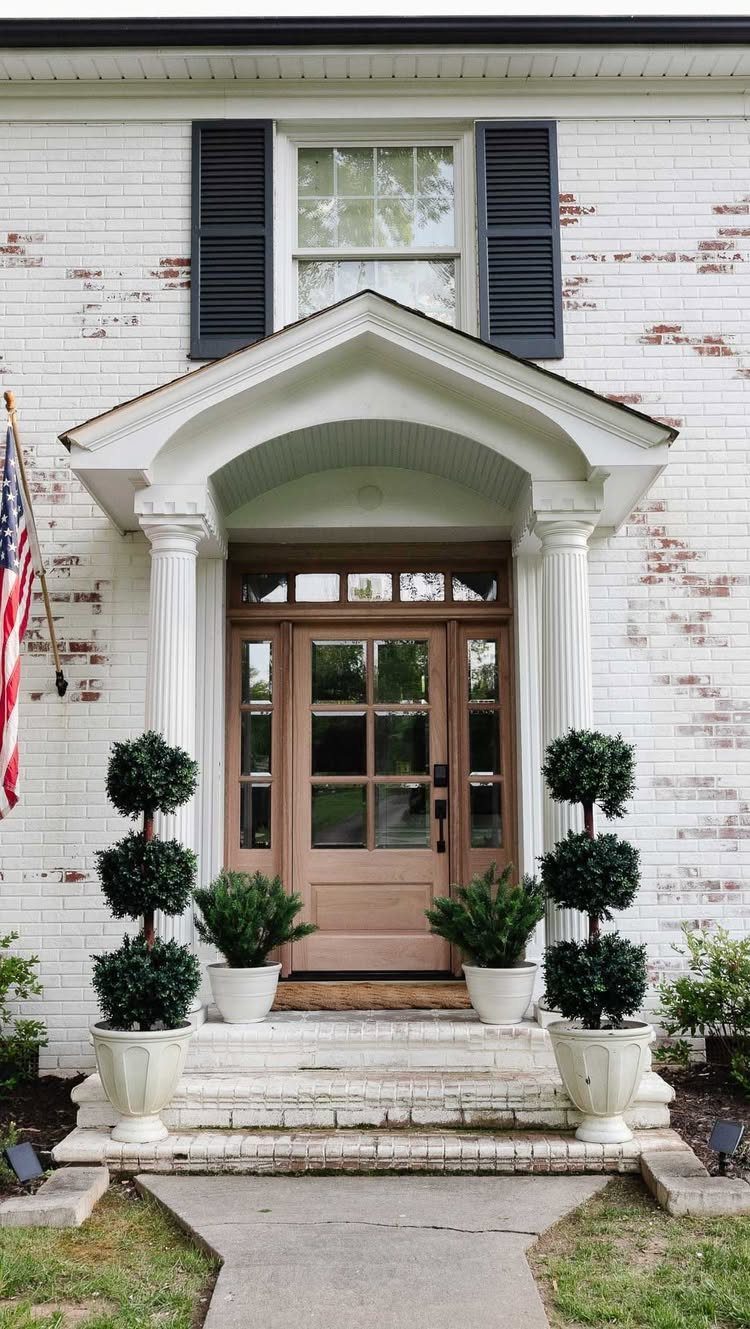
2 identical planters flanking the steps give a front door symmetry with almost no effort. Tiered topiary in white containers reads as formal and tidy, and it suits a white brick house with a wooden door.
Buy the pair together so the size, finish and plants match exactly. A mismatch of even a few inches shows up when the two sit side by side.
Set them close enough to frame the door without crowding the steps.
3. Low-maintenance Plants
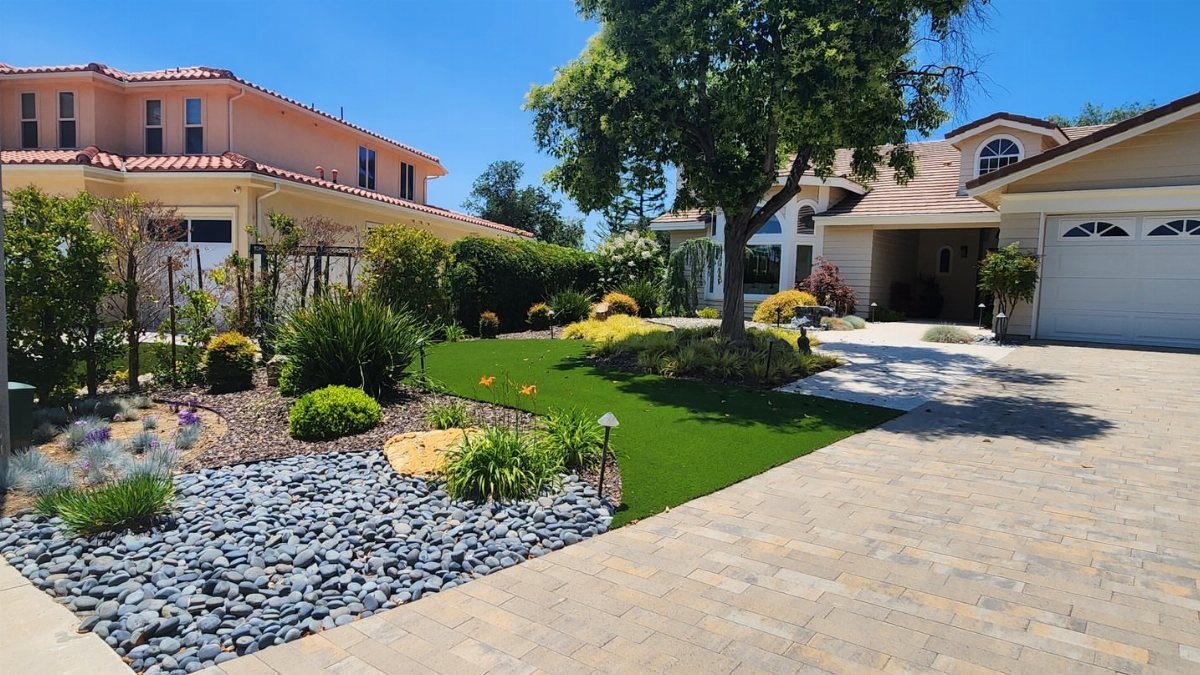
Plants that fit your local conditions are the cheapest upkeep plan I know.
Check what thrives in your area before you buy, and match each plant to its sun and soil. Group them in drifts rather than scattering singles.
Rock between plantings cuts down on bare soil to weed.
4. Architectural Accents
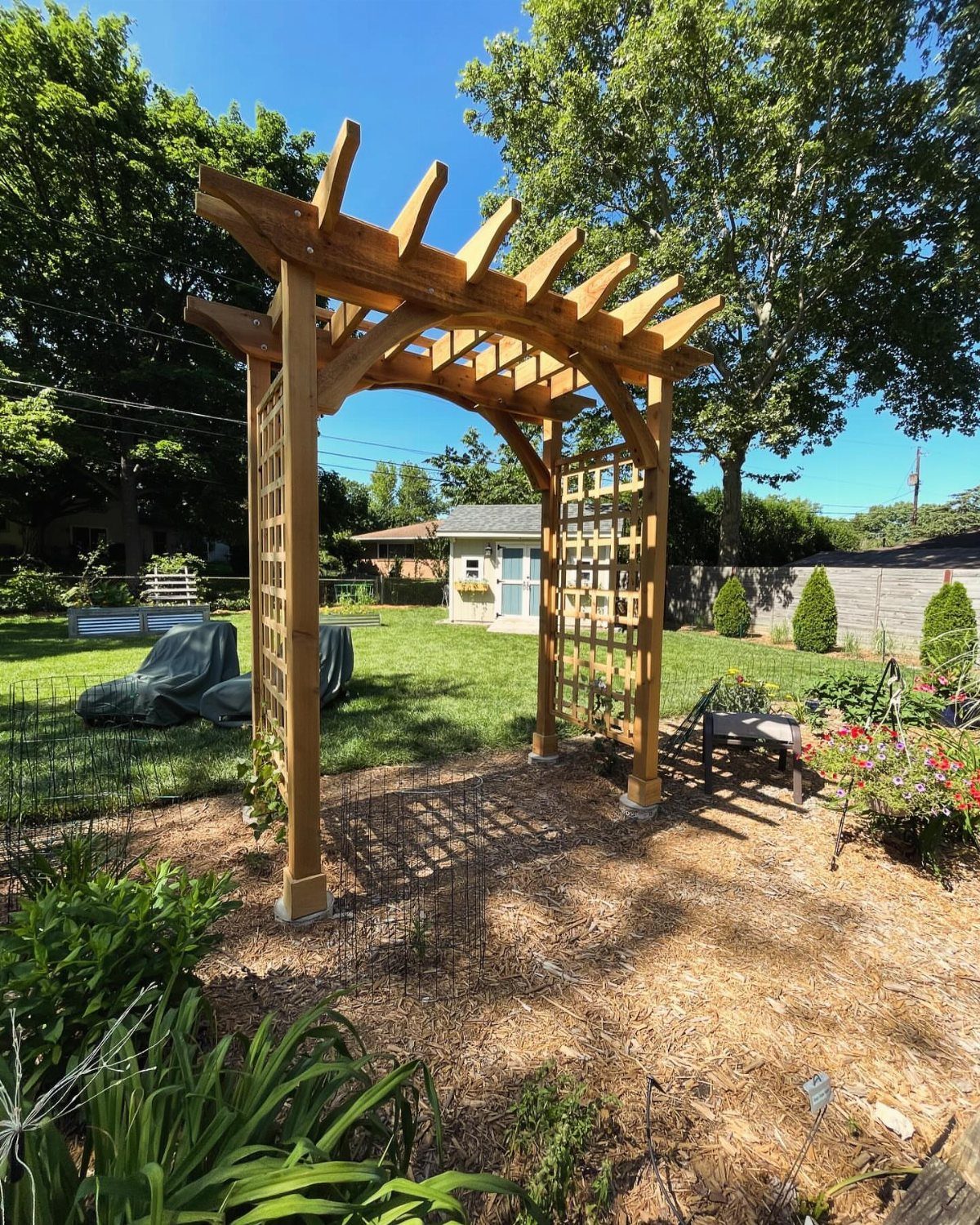
A pergola with lattice sides adds height to a flat yard, and it’s the structure I’d pick if you want something to grow on. Vines can climb the trellis panels, and the roof gives shade and a bit of privacy.
An arched top softens the lines compared with a square frame.
Set it on a mulched bed so the base blends into the planting, and let one climber fill in over a season or two instead of crowding the sides with several.
5. Ornamental Grasses
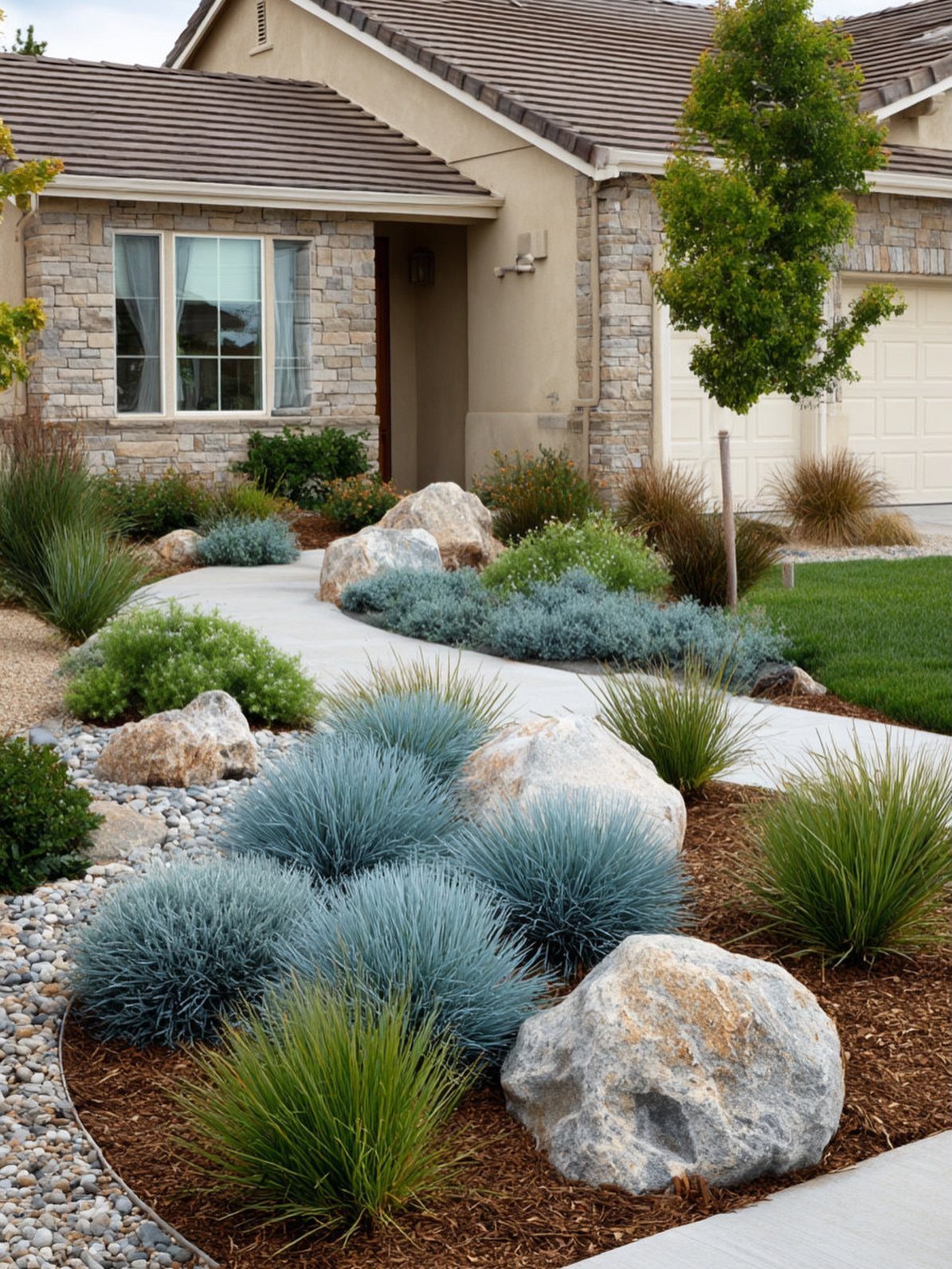
Blue and green grasses against boulders give a curved walkway movement that flowers rarely match. Their narrow leaves add texture, and taller clumps can screen a window or a utility box.
Mix two or three types in different heights and colors, planting the tallest toward the back. Mulch between clumps keeps the bed tidy.
Boulders placed at the path edge anchor the grasses and make the whole bed look planned rather than planted in a rush.
6. Water Features
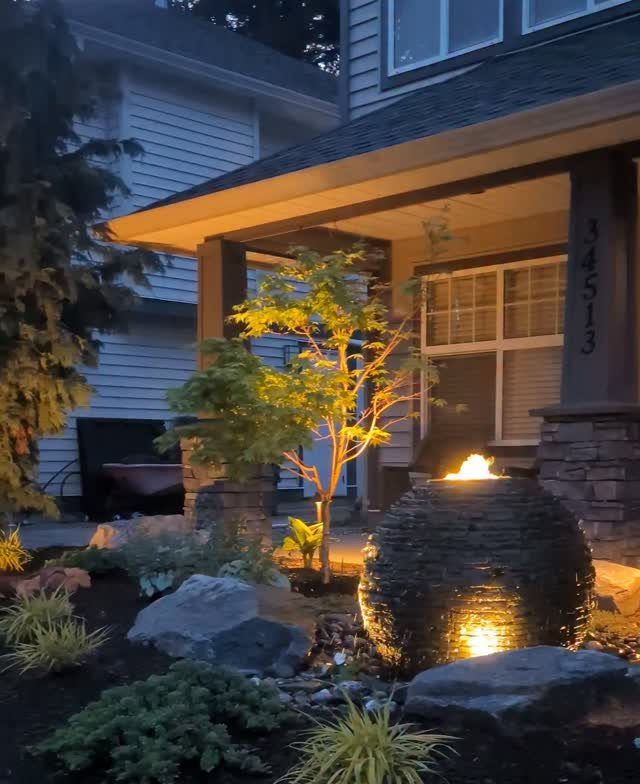
A small spherical fountain works well in a front garden because it gives you a focal point and a soft trickle of sound without taking much room.
Add a built-in light and it glows at dusk, which is when this idea looks best.
Surround it with rocks and a small tree so it feels part of the bed. Put it where you can see it from the porch, and make sure an outdoor outlet is nearby before you buy.
7. Curbside Tough Plants
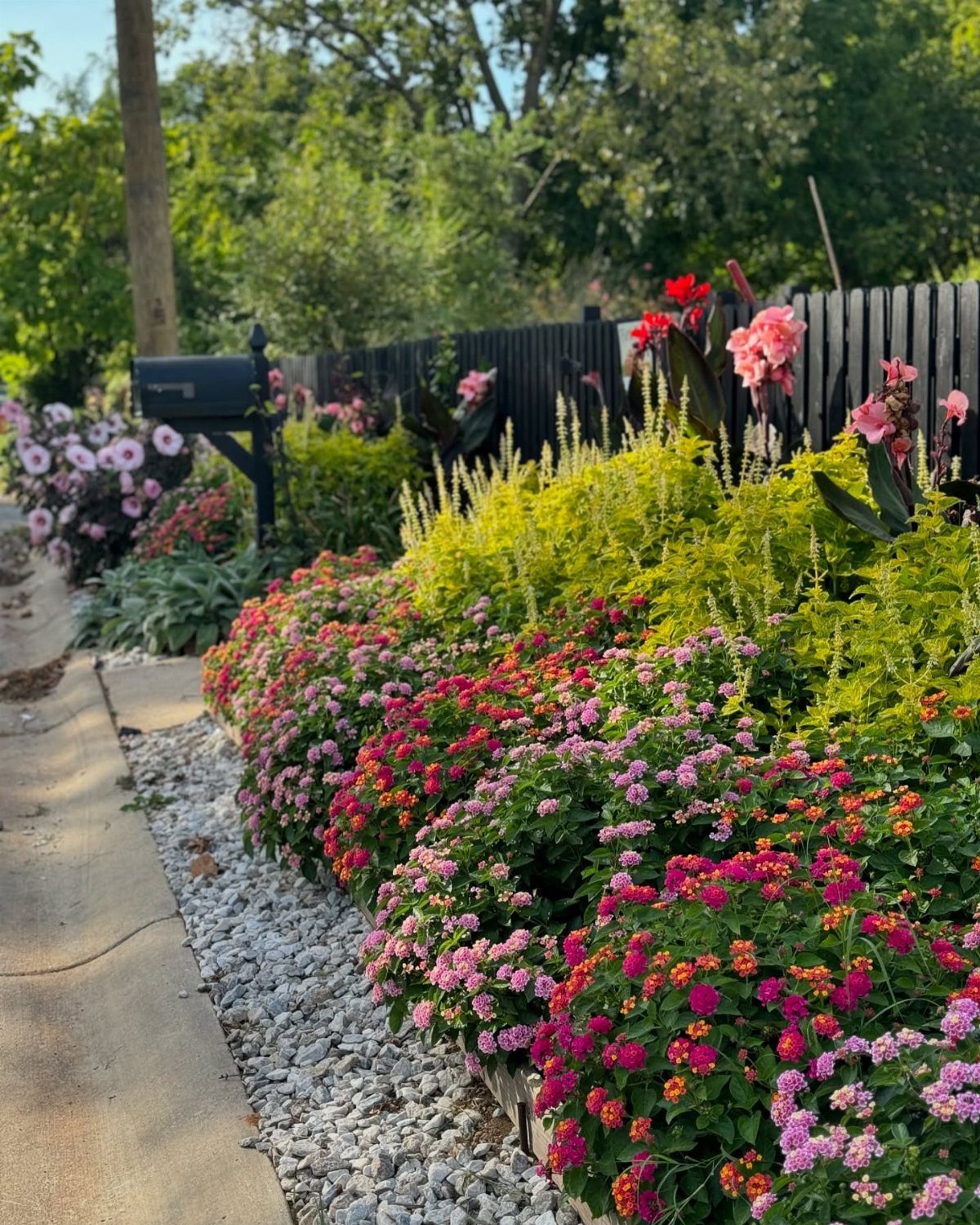
A bed along the curb has the worst conditions on the property: reflected heat, packed soil, and winter salt thrown off the road. I’d pick plants sold as heat and drought tolerant and skip anything fussy.
Dig in some compost at planting time, and water new plants well for the first season until roots settle. Keeping the bed a little back from the pavement edge gives the roots more room and keeps spray off the leaves.
Repeating one or two plants down the strip looks calmer than a mix of many.
There aren’t a lot of plants that have early-spring color that can also withstand roadside conditions besides ‘Orange Storm’ quince and daffodils (Narcissus spp. and cvs., Zones 3–9).
8. Pathways and Borders
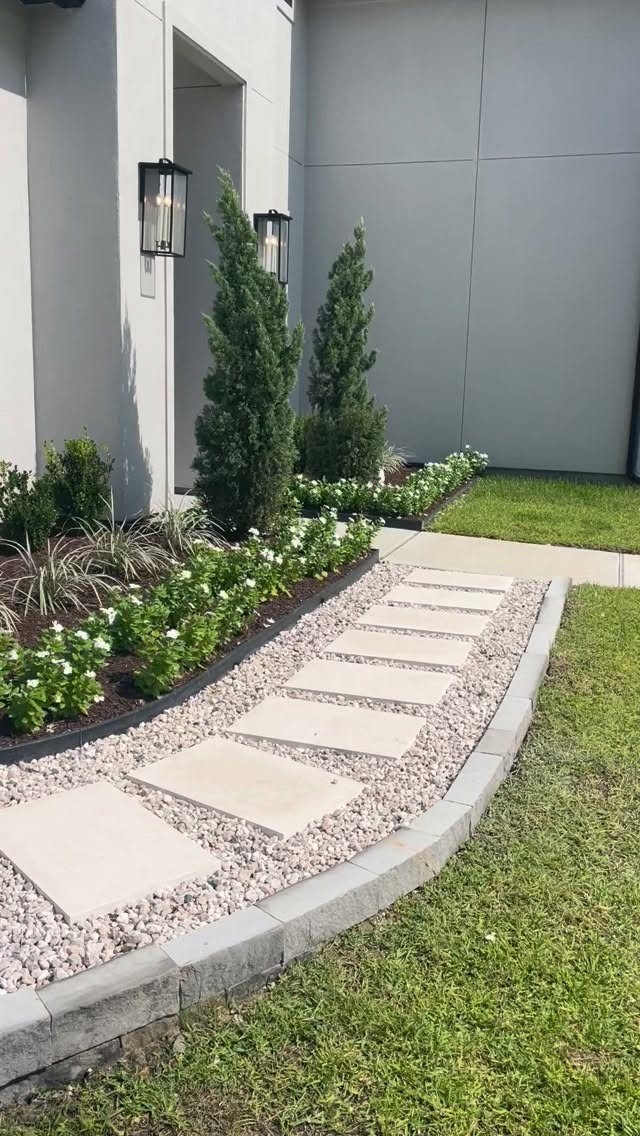
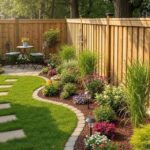
Stepping stones set in light gravel give the door a clear route and keep foot traffic off the plants. A grey stone border holds the gravel in and marks where the path ends and the planting begins.
River rock is the finish I’d choose for a walkway like this, since it needs almost no upkeep: no mowing, no re-edging every month, and a quick rake keeps it neat.
Lay the stones with even gaps, and keep each one level so nobody trips.
Cone-shaped evergreens on either side give the path a tidy frame.
9. Evergreen Shrubs Screening a Foundation
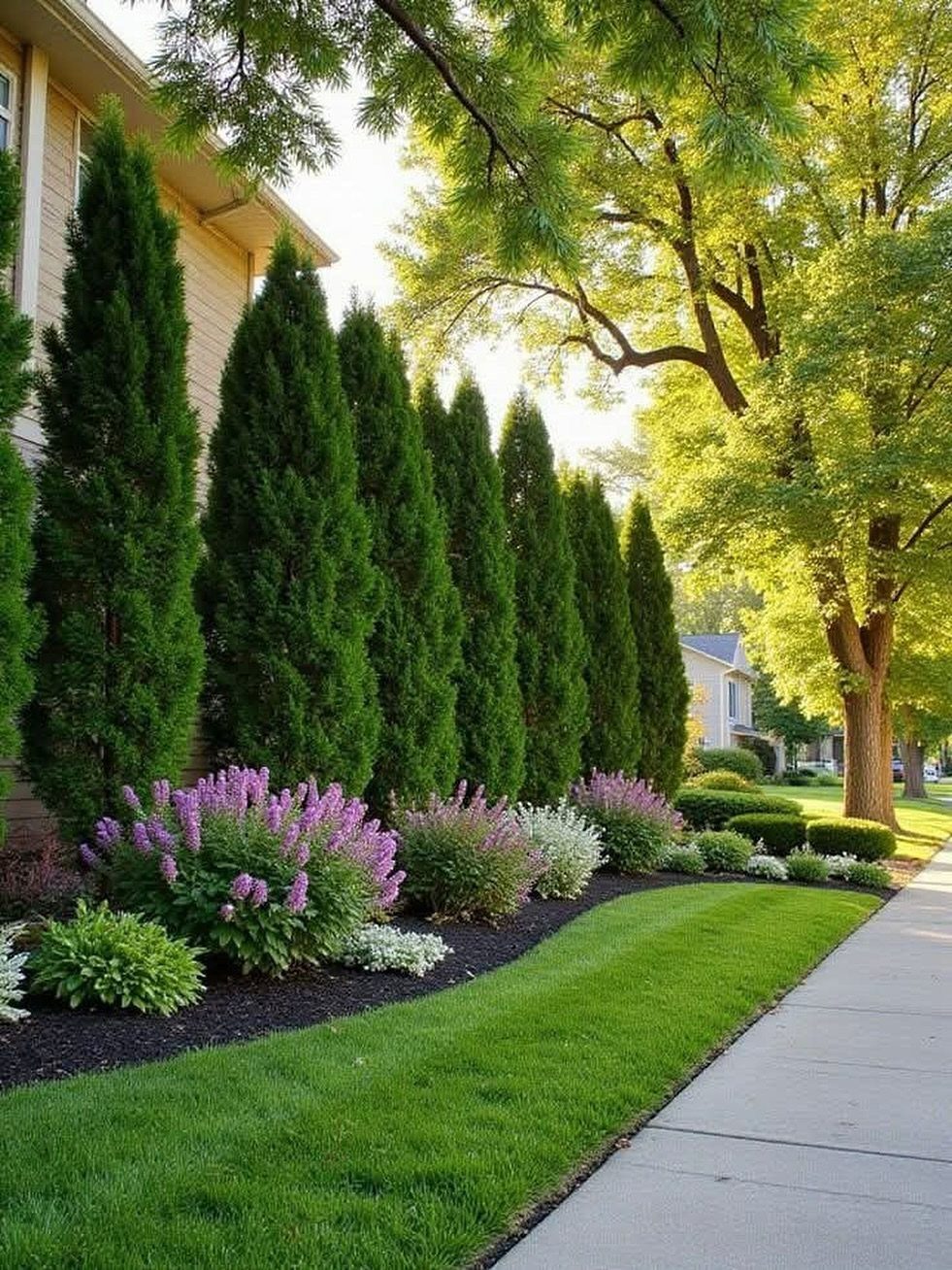
Tall, cone-shaped evergreens along the foundation hide the lower wall and keep the front of the house from looking bare in winter.
Because they hold their leaves all year, they act as the backbone, and flowers can come and go in front of them.
Space them evenly so the row looks planned. Dark mulch under evergreen shrubs deepens the green and makes purple flowers stand out against the foundation.
Check the mature width on the plant tag before you set them close to the wall.
10. Fresh Mulch
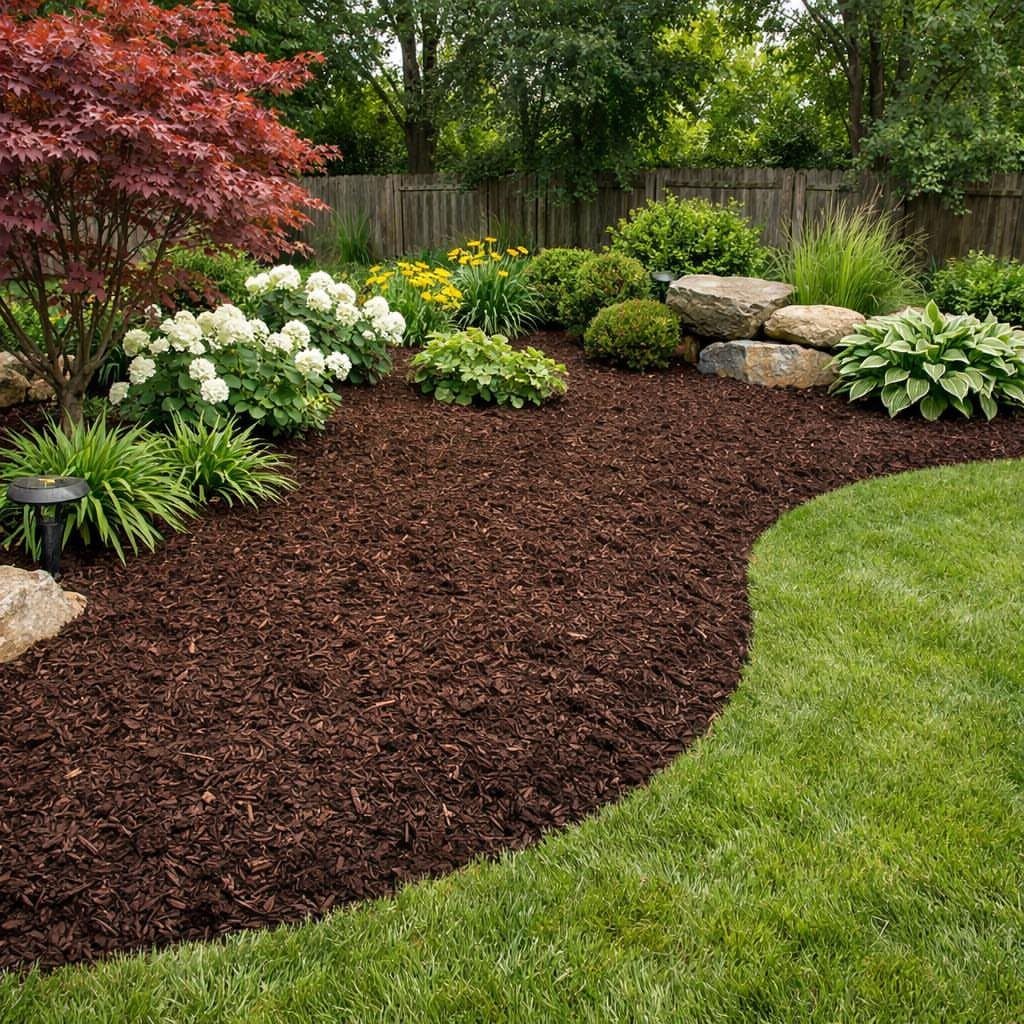
Dark brown mulch is the cheapest way I know to make a bed look finished.
Spread it over the soil in an even layer, and pull it back from stems and trunks so the bark can breathe.
Cut a clean edge along the lawn first; the line does as much for the look as the mulch itself.
Mulch also slows moisture loss from the soil, which means less watering.
11. Annual Flowers
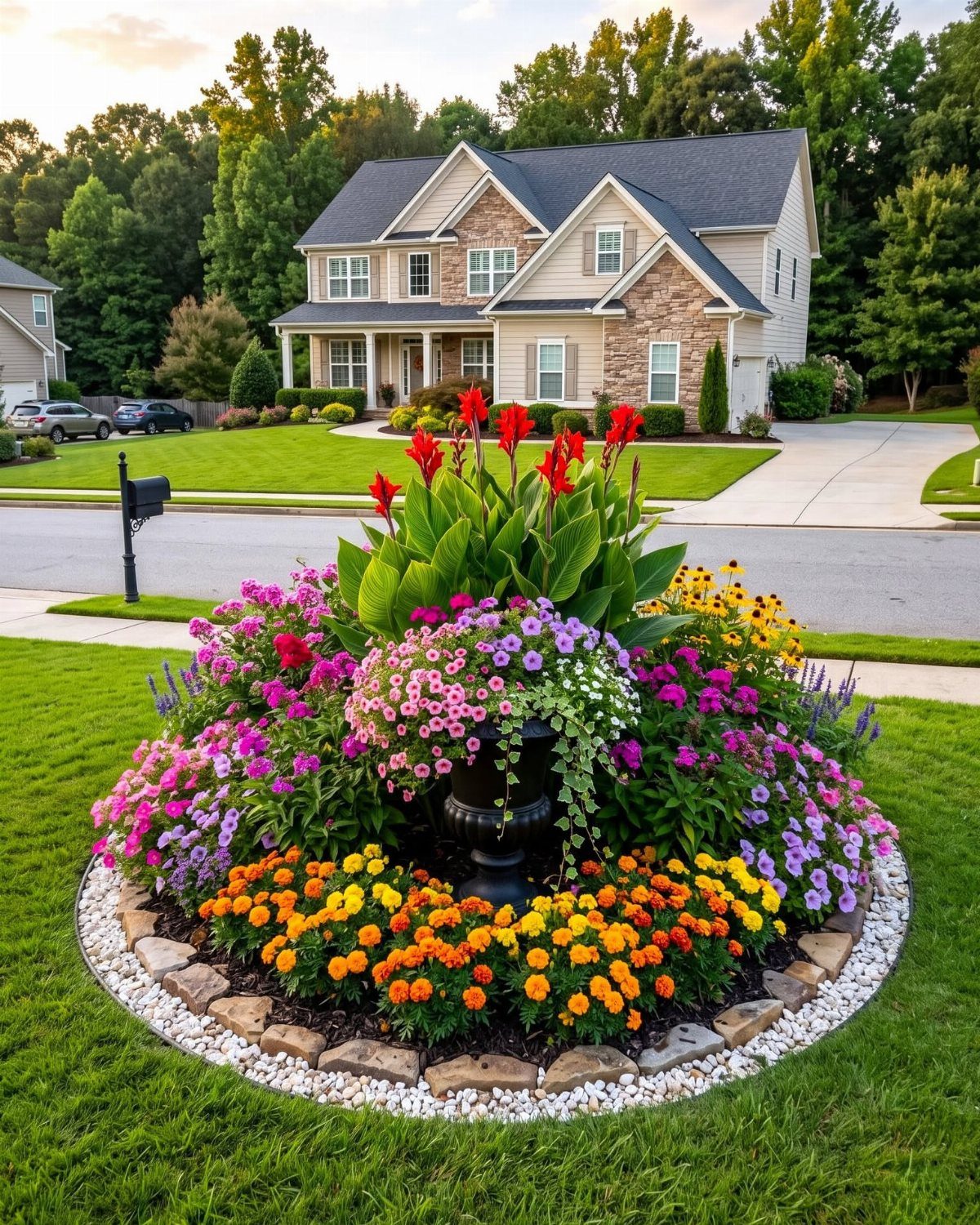
A round bed with an urn at the center puts annual color right where visitors look first. Annuals bloom hard all season, so one bed can carry the whole front of the house.
Plant them close together for a full, packed look, and keep the colors to a few so the circle reads as deliberate. A stone edge keeps the shape crisp against the grass.
Annuals die at season’s end, so expect to replant each year. I find that a fair price for this much color.
12. Seasonal Plantings
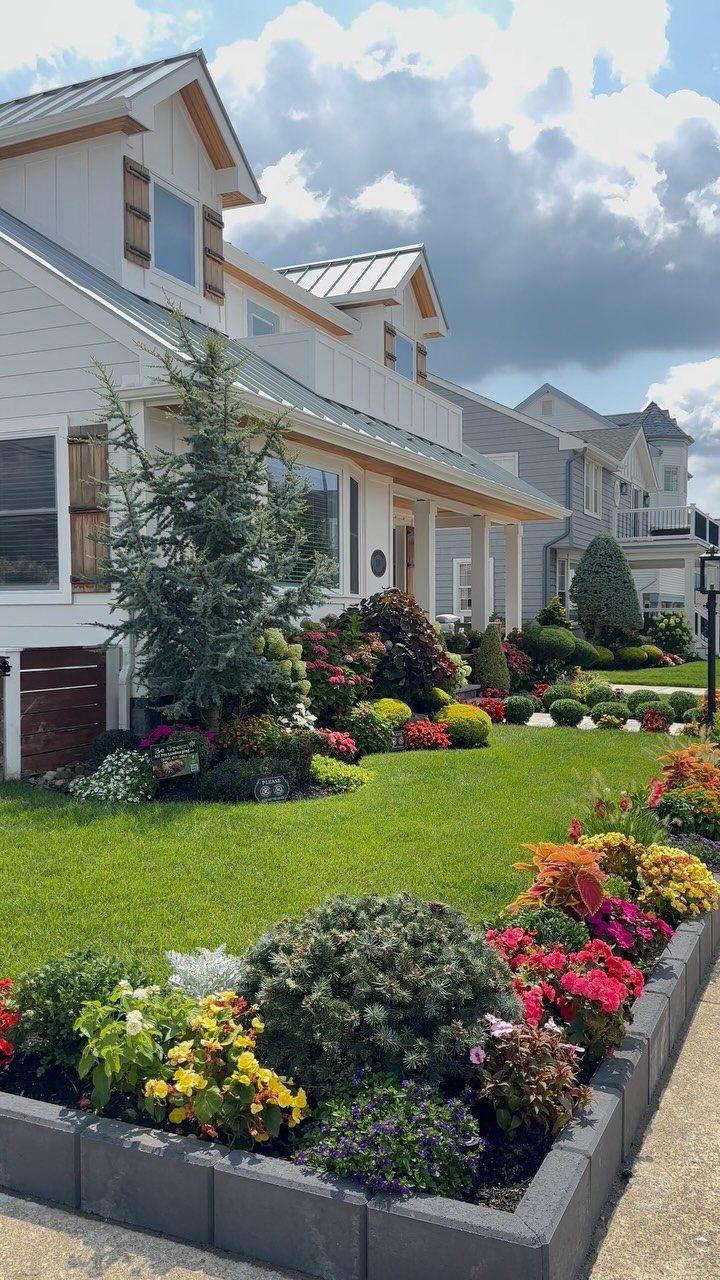
A front garden that looks good in only one month wastes its space. Layering helps: evergreen shrubs and a blue spruce hold the structure all year, while flowering plants fill in the color as seasons turn.
Start with the permanent shapes, then add flowers in front that bloom at different times. Foliage color, not just blooms, can carry the bed between peaks.
Leave a little gap in the planting so you can drop in fresh color later.
Assess Site Conditions First
Walk to the curb, turn around, and photograph the house from there. Photos show bare patches and overgrown corners that you stop noticing when you see them every day.
Then write down what the yard actually does. Note how many hours of sun each bed gets, and when.
Note which spots stay dry and which stay soggy after rain, and whether you’re inland or near the coast. Find out where your hose reaches, because a bed that is hard to water usually ends up neglected.
Be honest about upkeep, too. A plant that needs weekly attention is a poor pick if you only have a free hour on weekends.
Read the tag for mature height and width before you buy. A 1-gallon shrub looks tiny in the pot and can crowd a walkway in 3 years.
Choosing native or climate-adapted varieties for the foundation beds means less water, less labor, and fewer dead spots.
Plan a Cohesive Layout
Stand at the curb again and check the balance. If one side of the door is heavy and the other is empty, fix that before you buy anything new.
Plant in tiers so nothing hides anything else: tall plants go at the back of the bed, shrubs and perennials fill the middle, and low growers hug the walkway and the edges.
This makes a bed look fuller and more natural.
Repeating 3–5 plant varieties across several beds ties the yard together better than one of everything.
A common designer guideline is the 70/30 split: about 70% structural plants and 30% seasonal color and fillers. I like it because it keeps the yard colorful without turning busy.
Pick the plants, paving, and lighting to suit the house’s style. A tidy cottage and a sleek modern box each want a different look.
Maintain Planting Beds
Mowing, pruning, and weeding are what keep a yard looking cared for. A neat lawn and clean beds make even a simple planting look polished.
Set a routine rather than waiting for a free weekend.
A short weeding pass every week beats a long, miserable session once a month, because weeds pulled young come out in seconds. If your schedule won’t allow it, hiring help is a fair choice.
For tough roadside beds, Fine Gardening recommends 4 things: compost, soaker hoses, mulch, and dividing plants.
A soaker hose puts water at the roots and saves you from standing there with a sprayer. Divide crowded clumps every few years to refill gaps for free.
If mulch keeps washing out, consider river rock or gravel beds. Choose one rock size and color, and lay weed barrier underneath first.
Frequently Asked Questions
What is the 3-year rule for plants?
The 3-year rule is a rough guide to how perennials settle in: they sleep the first year, creep the second, and leap the third, so a small 1-gallon plant in a pot will look very different once it matures.
How do I choose the best plants for my front yard?
Match each plant to the sun, soil and water your yard really offers.
What are current trends in front yard hardscape?
One source points to permeable pavers, clearly defined walkway shapes, and mixed materials that suit the style of the house.