The ideas here run from a Rock Garden and a Water-feature Garden to a Rooftop Garden and Dry Creek Bed Landscaping, so cost and effort swing widely.
Your ground should pick the idea: poor soil points to a Raised Bed Garden, a slope to a Terraced Garden, a roof to a Rooftop Garden or Container Garden, and a lawn you are tired of mowing to a Garden Without Grass.
Check the sun, the soil and the weight a roof allows first, because those 3 limits settle most of what you can plant.
1. Raised Bed Garden
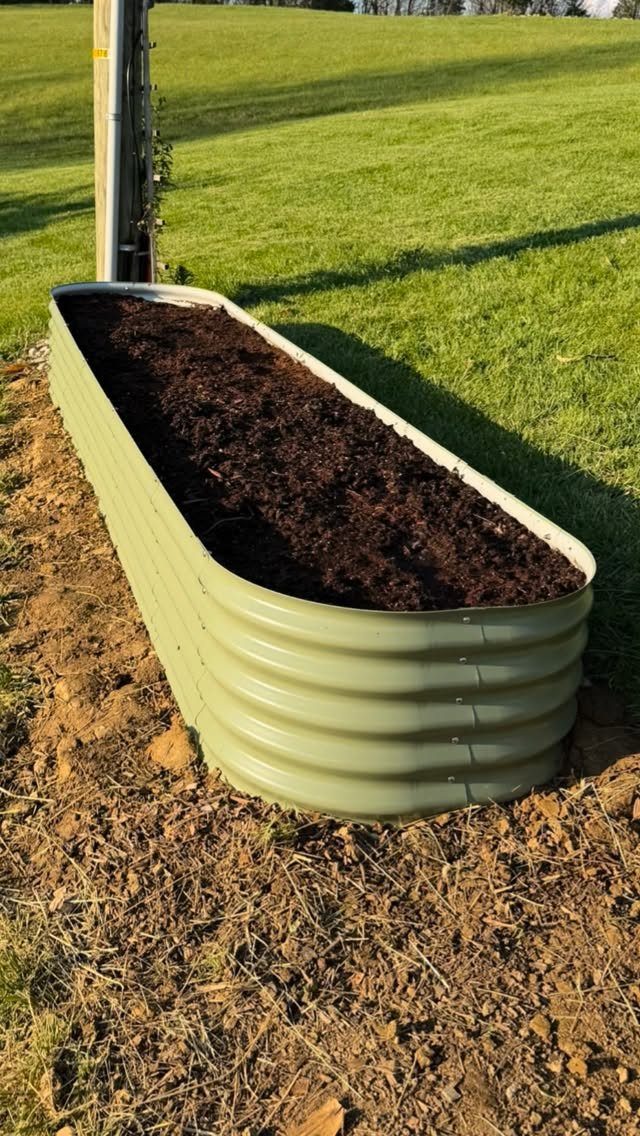
A corrugated metal bed holds its shape and its soil in one tidy shell, which makes it a good fit for a yard with poor ground or not much room.
You fill it with fresh soil, so what lies underneath matters far less.
The oval shape suits a lawn edge, since you can mow right around it. Use it for flowers or vegetables, and set it where you can reach the middle from both sides.
2. Flowering Tree Focal Point
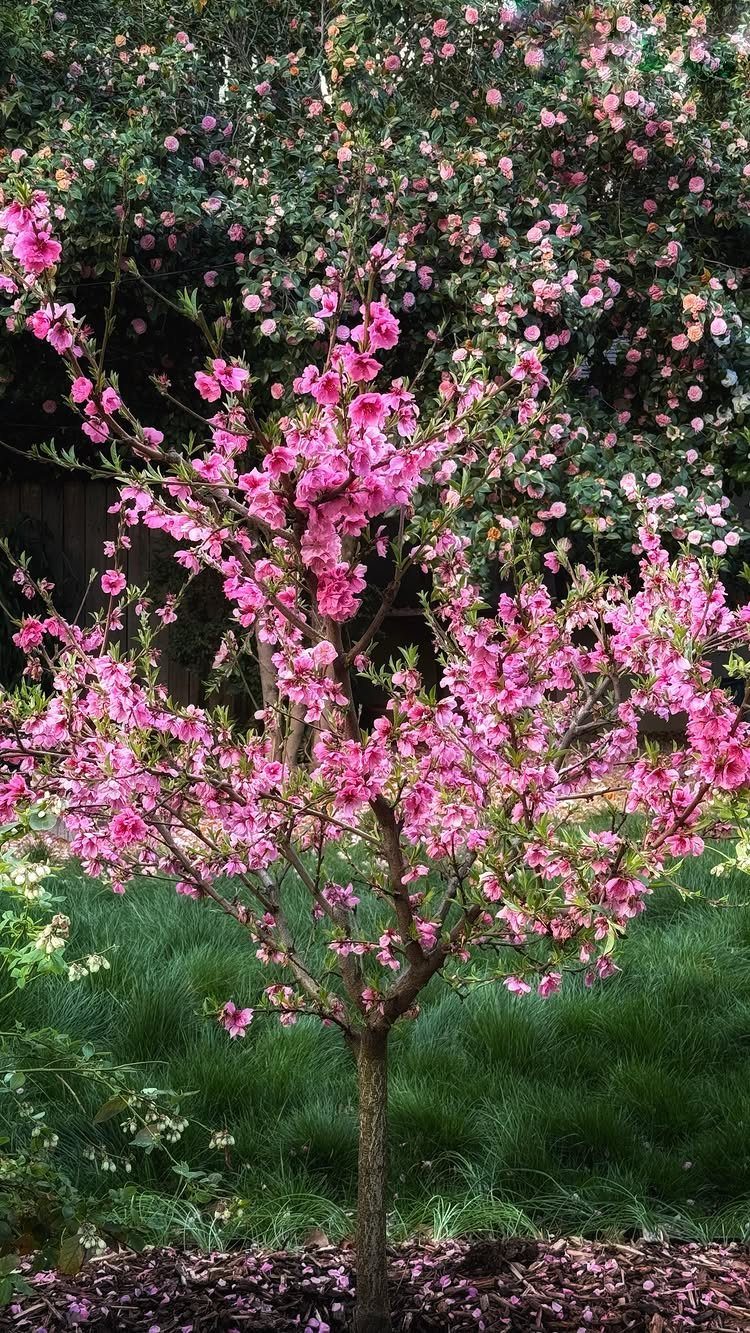
One small tree in bloom can anchor an entire yard. Place it where the eye lands first, with lawn around it and a hedge behind so the blossoms stand out against the green.
I prefer a single tree over several, because the pink reads as a deliberate center rather than scattered color. Choose a variety sized for a small space, and picture the full-grown canopy before you dig.
3. Small Garden Design
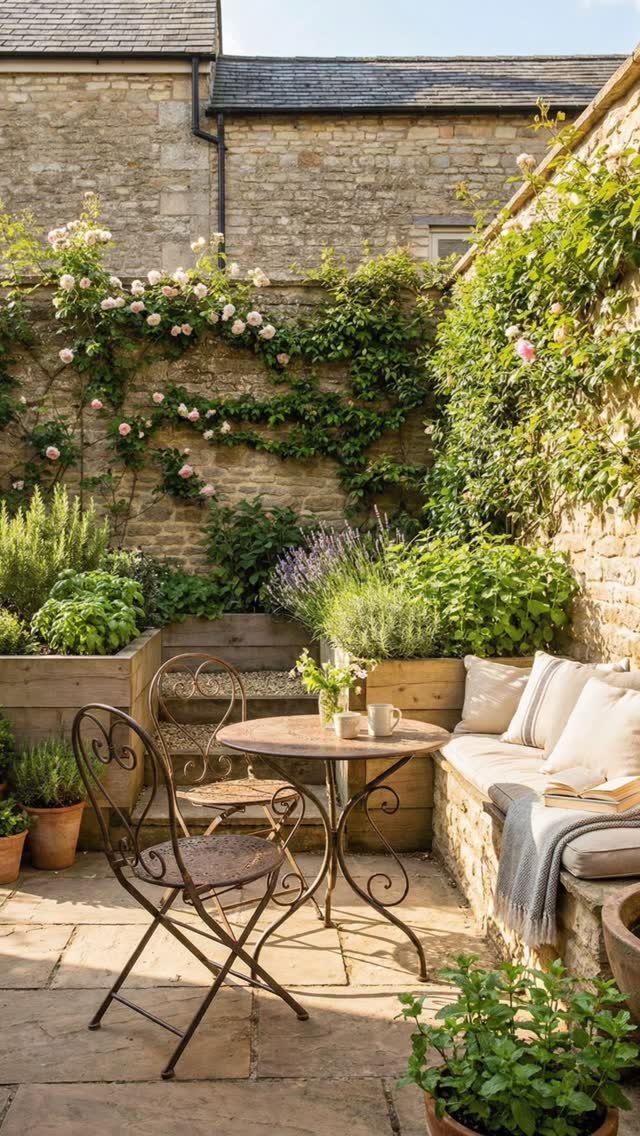
A bistro table, 2 chairs and a cushioned bench turn a tiny stone patio into a place to sit, and that matters more than adding plants.
Built-in seating along a wall saves floor room, so the table and chairs have space to move.
Skip big freestanding pots in a space this size; let the walls carry the planting.
4. Cottage Garden
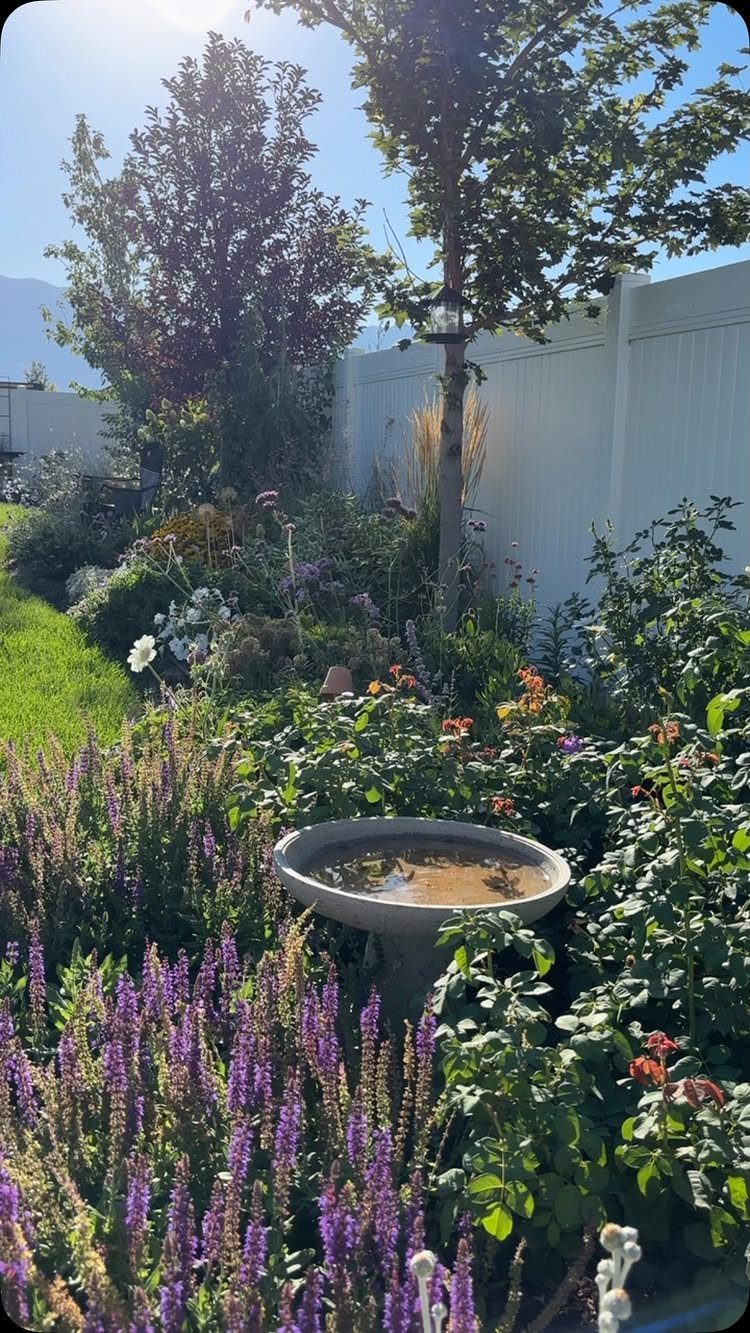
Cottage gardens look loose, but the best ones work because tall and soft plants are packed close, with purple salvia mixed in among white blooms. Crowded planting leaves little bare soil, so weeds get less room.
A stone birdbath gives the eye a resting spot in all that color. Mix in a few herbs between the flowers, and let plants lean into each other rather than lining them up in rows.
5. Herb Garden
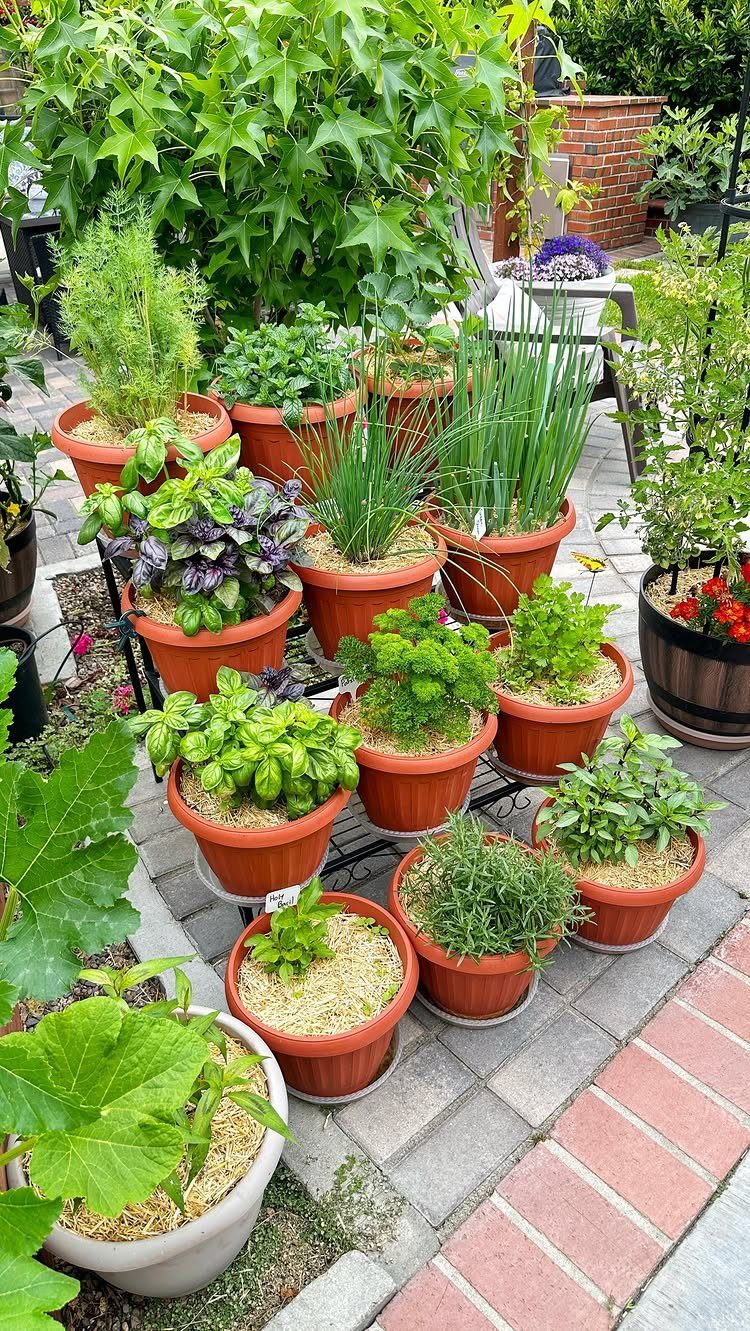
Terracotta pots let you grow a whole kitchen supply of herbs on a paved patio. The maker of this tiered stand wrote that it holds 4 tiers and 12 containers, which shows how much a small footprint can hold.
Put the stand close to the door so you actually snip herbs while cooking.
Give each herb its own pot, since a crowded pot makes watering uneven. Terracotta dries out fast, so check it often in summer.
6. Garden Path
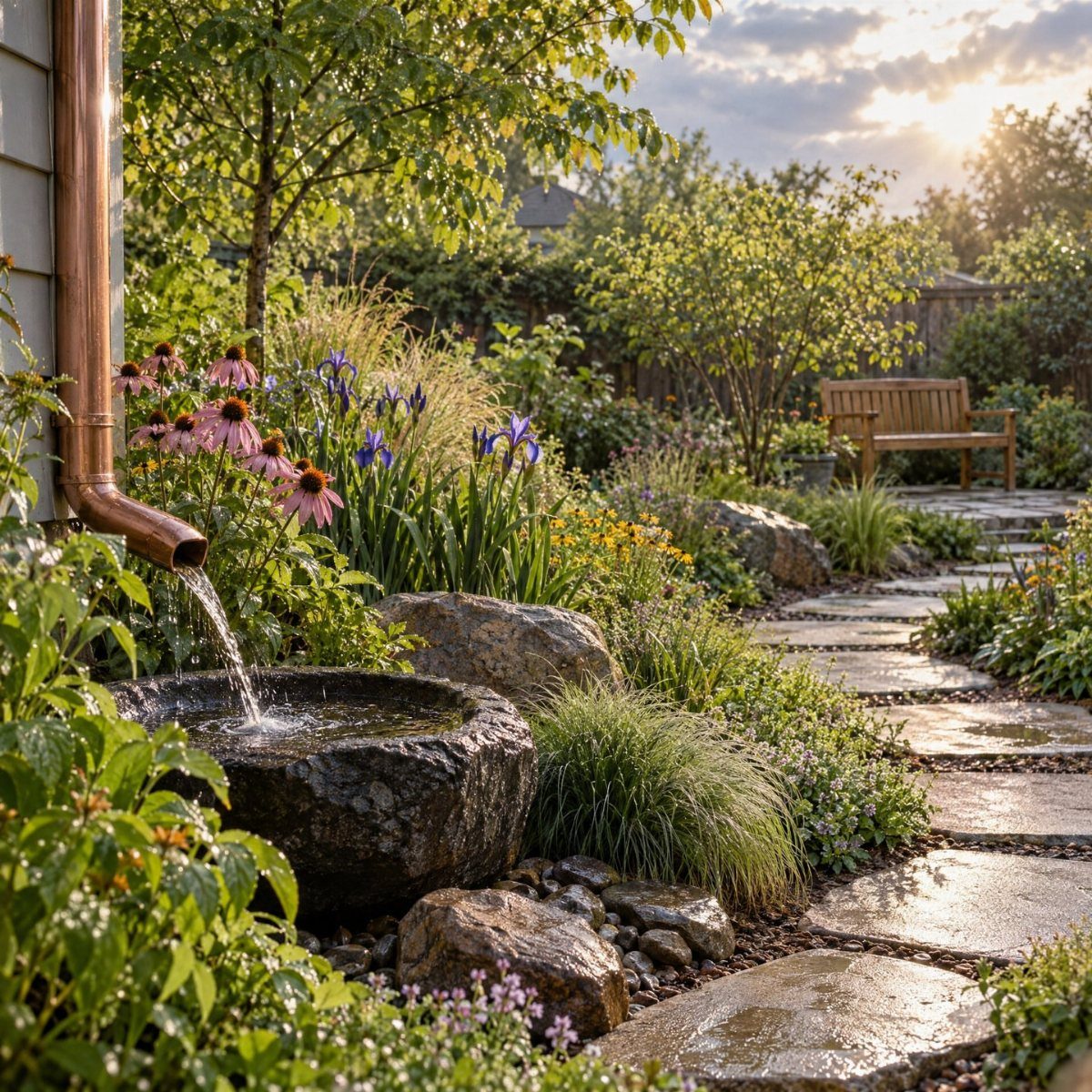
Stone slabs set through planting beds give a garden a clear route and a sense of structure. A gentle curve works better than a straight line here, because it hides what lies ahead and pulls you forward.
End the path at something worth reaching, like the bench in this garden. Let flowers spill a little over the edges to soften the stone, and keep the slabs wide enough for comfortable steps.
7. Patio Planting Bed
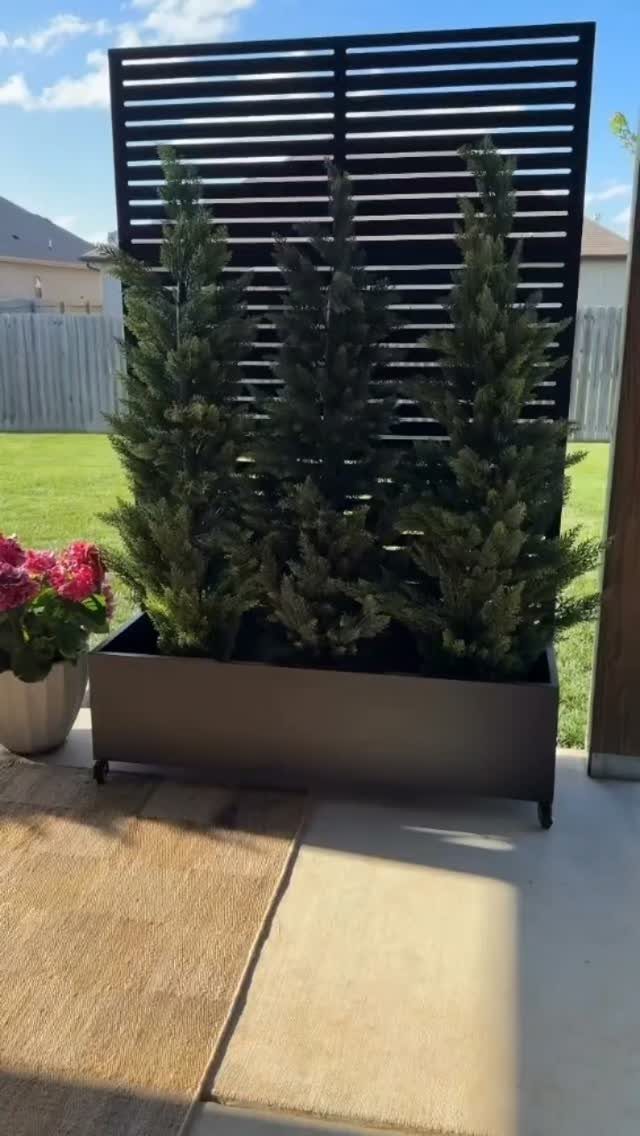
A planting bed on wheels gives a concrete patio an edge, and that edge is what makes it feel like a room. Lined up against the slatted screen, the 3 evergreens form a green wall that stays full all year.
Wheels let you shift the bed when you rearrange the furniture. Pick evergreens that suit a container, and leave a gap behind the bed so the screen and the trunks both show.
8. Winter Flowers
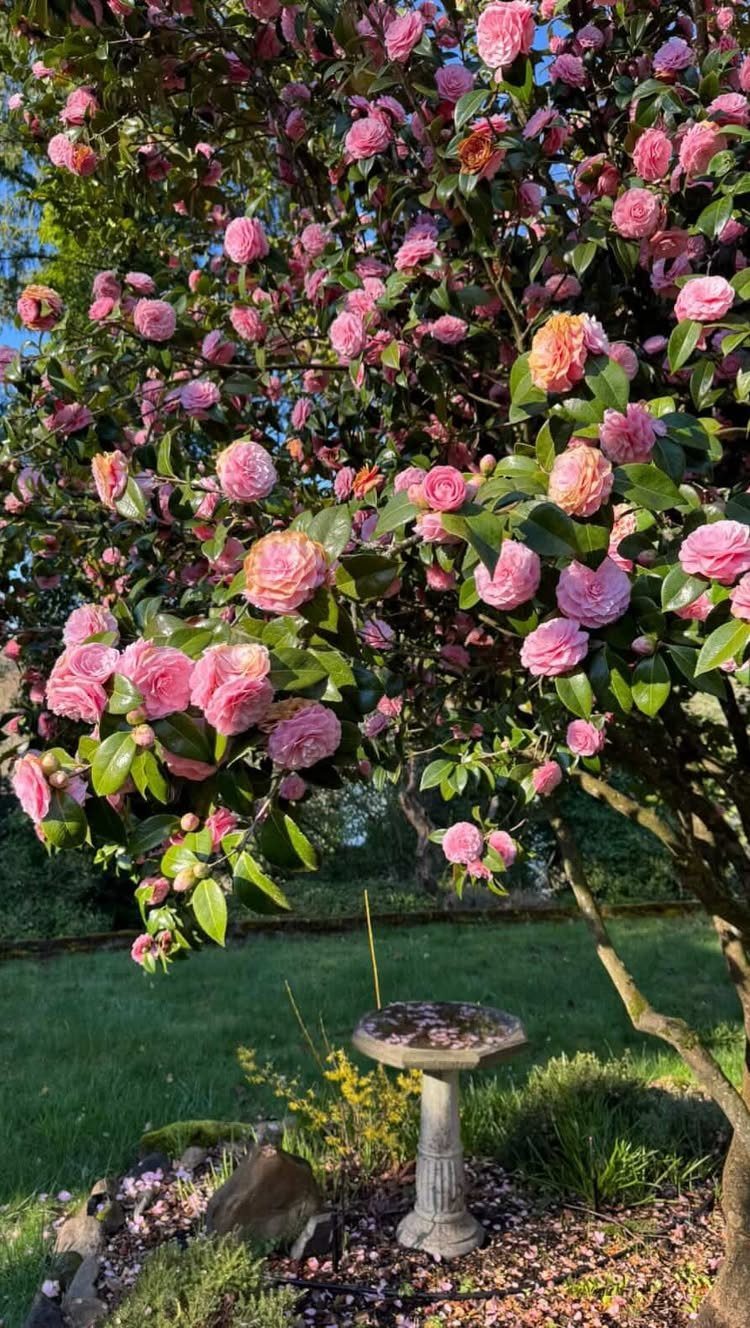
Camellia is my pick for a garden that needs color in winter, when most beds sit bare. A shrub in full bloom beside a birdbath gives the cold months a focal point.
Plant it where you can see it from a window, since that is where you will look most in winter. Leave open ground around the shrub so the flowers hang over the stone and the pink shows against grass.
9. Formal Garden
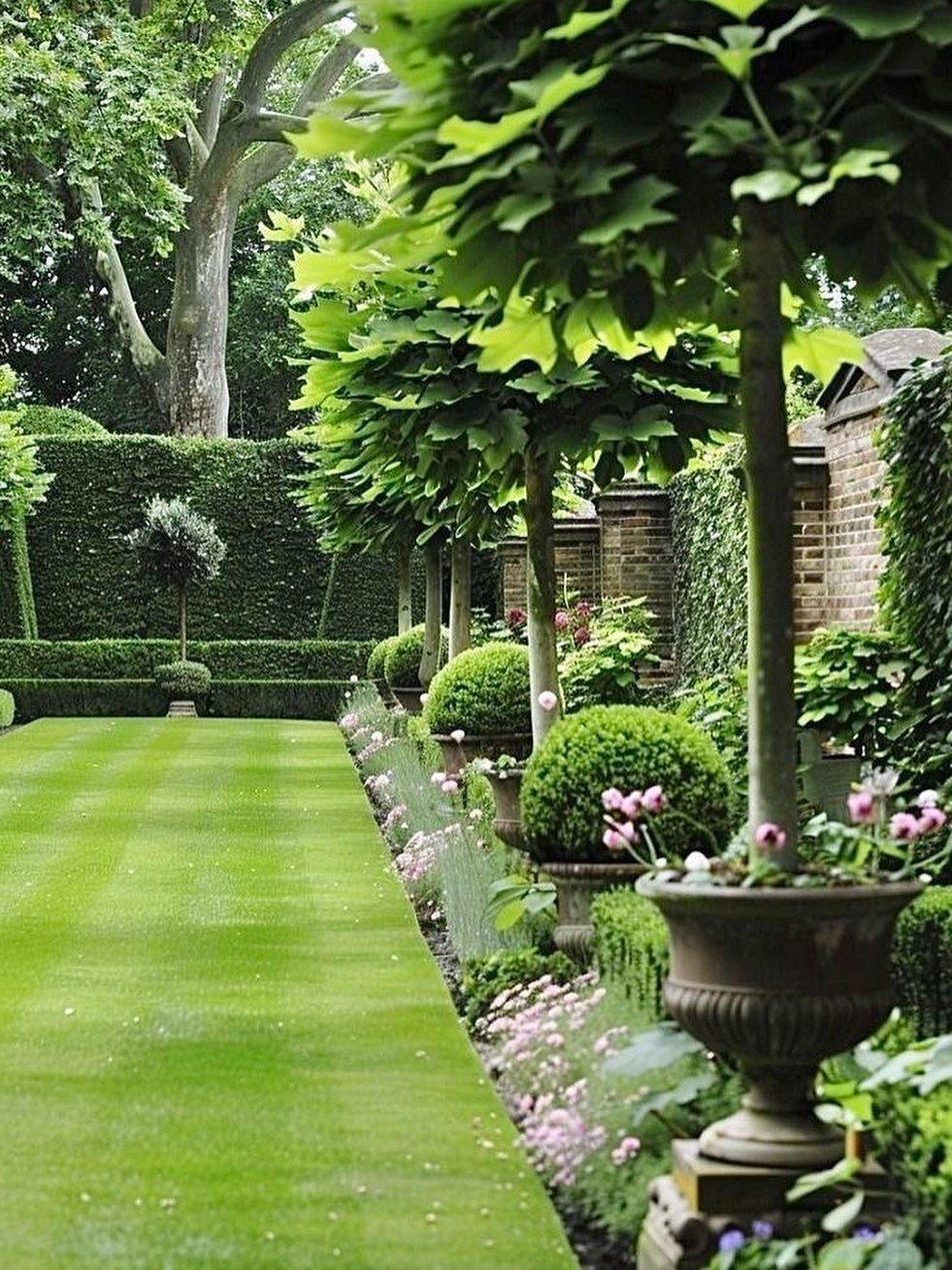
Formal gardens run on repetition: matching topiary, clipped hedges and a row of trees spaced evenly along a wall. Pairs of urns or pots on each side of a path or lawn give that balance with little effort.
Be honest about upkeep.
Hedges and shaped shrubs need regular trimming to keep their edges crisp, and a striped lawn needs steady mowing. Start with one hedge and two matching pots, then add from there.
10. Modern Garden
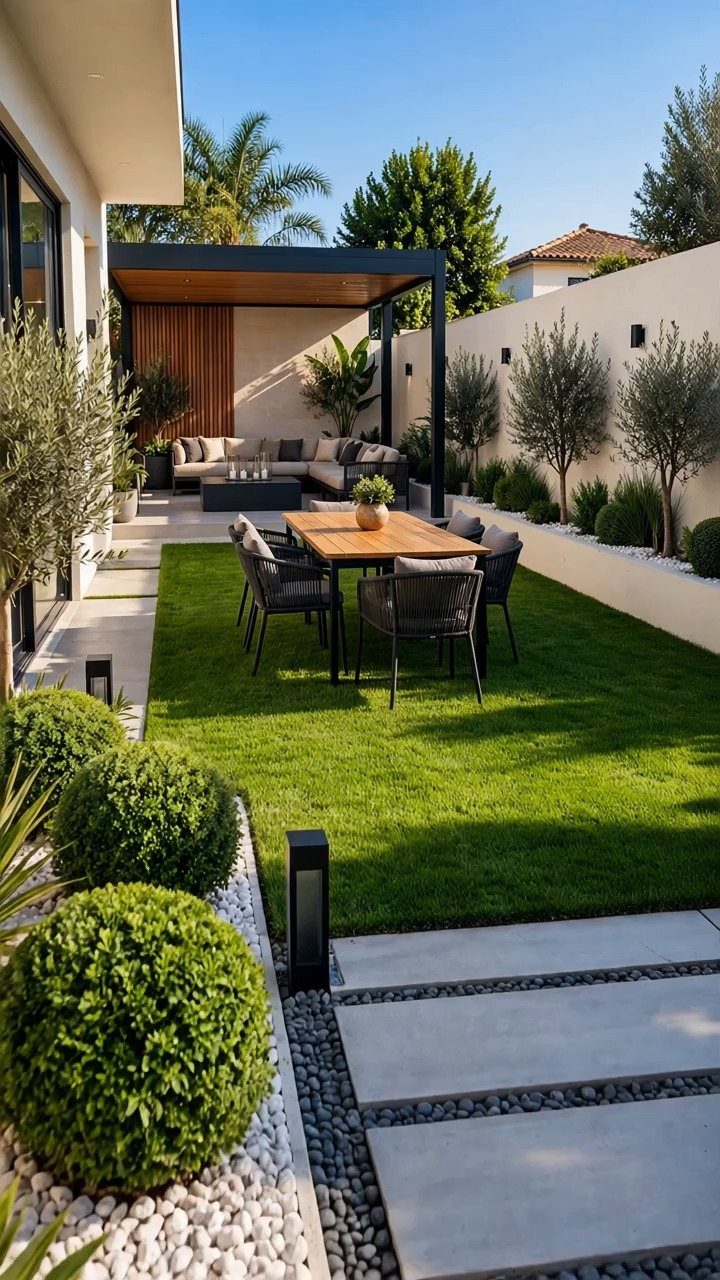
A modern garden runs on restraint: 1 or 2 hard materials like concrete pavers and a wood or steel pergola, plus a single shape of plant, such as clipped round shrubs, repeated in a steady rhythm.
Keep the palette tight, here wood, black and white, and let the green do the rest.
I like spherical shrubs against a plain wall, because their soft shape contrasts with the straight lines around them.
Space pavers evenly with a clean gap between them. Pick one dining zone and one lounge zone, and resist adding more pieces.
11. Flower Garden
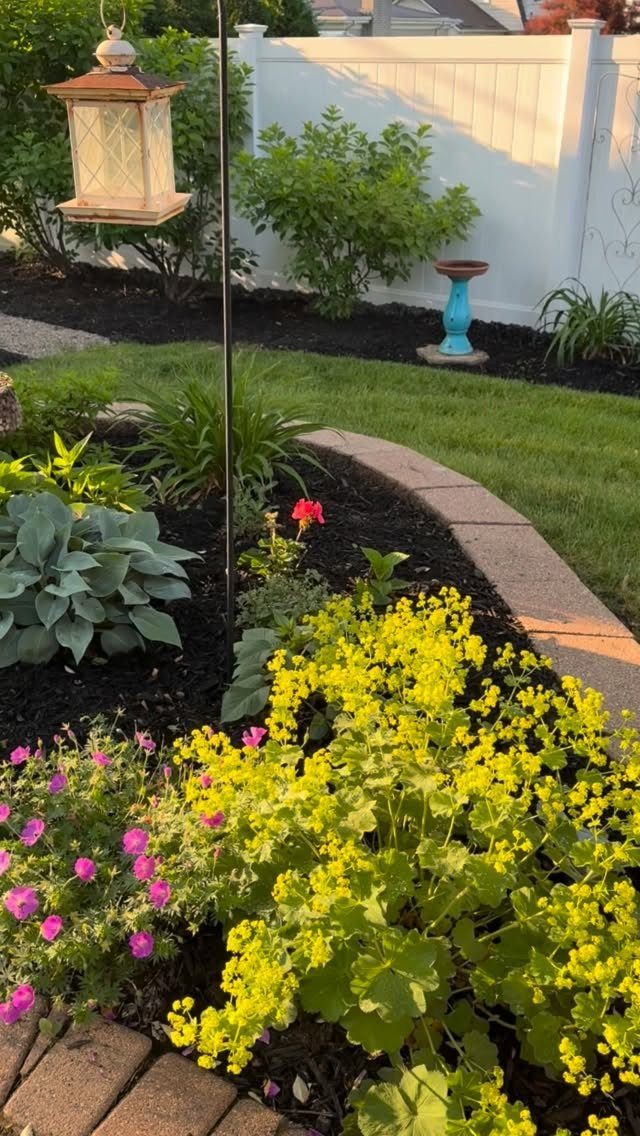
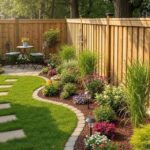
A flower bed with a curved, stone-bordered edge reads as the centerpiece of a yard. Mix yellow and pink in drifts rather than single plants, so the color has some weight against a plain fence.
Add one object to rest the eye, like the lantern or the birdbath here. A bed in front of a white fence shows off the blooms, but it also shows every gap, so fill the bare spots as you plant.
12. Water-feature Garden
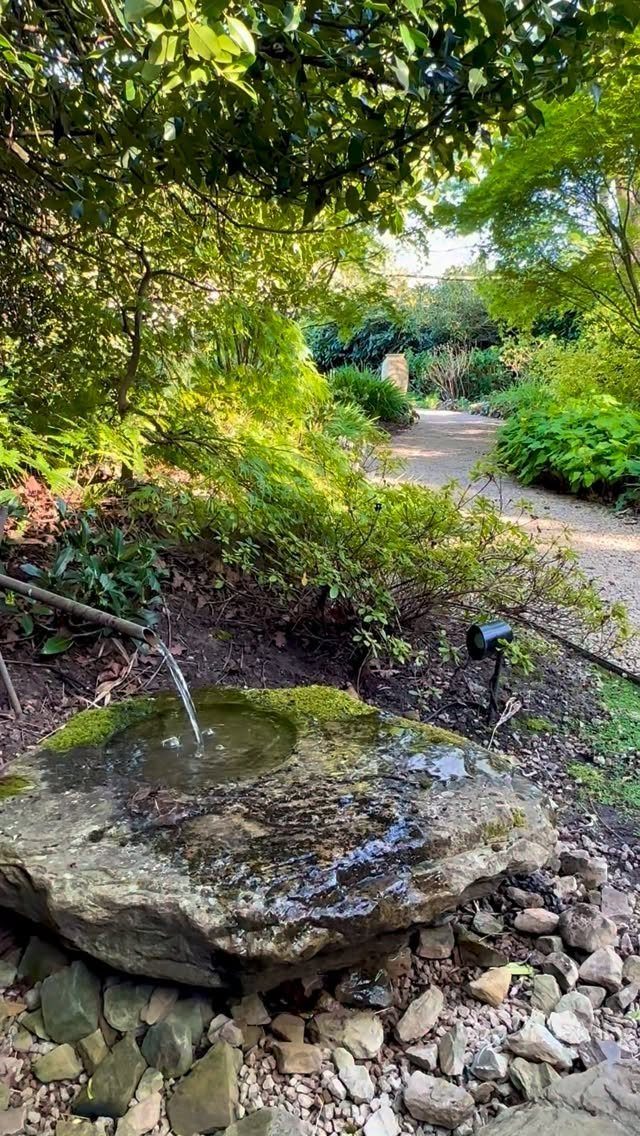
A bamboo spout pouring into a stone basin gives you the sound of water without digging a pond. It takes up little ground, which suits a small yard.
Set it beside a path so you hear it as you pass, and plant thick foliage around the basin so it looks settled in.
A recirculating pump keeps the water moving. Check that the basin stays filled, since a dry basin ruins the effect.
13. Garden Lights

Uplighting a single large tree gives a garden one strong shape after dark. Aim spotlights up from the base so the light climbs the trunk and the twisting branches throw shadows on their own.
Warm white bulbs look softer and more natural than cool ones. Keep the low shrubs around the tree dim or unlit, so the tree stays the main event.
Place the fixtures before you commit to a final spot, and test them at dusk.
14. Tropical Garden
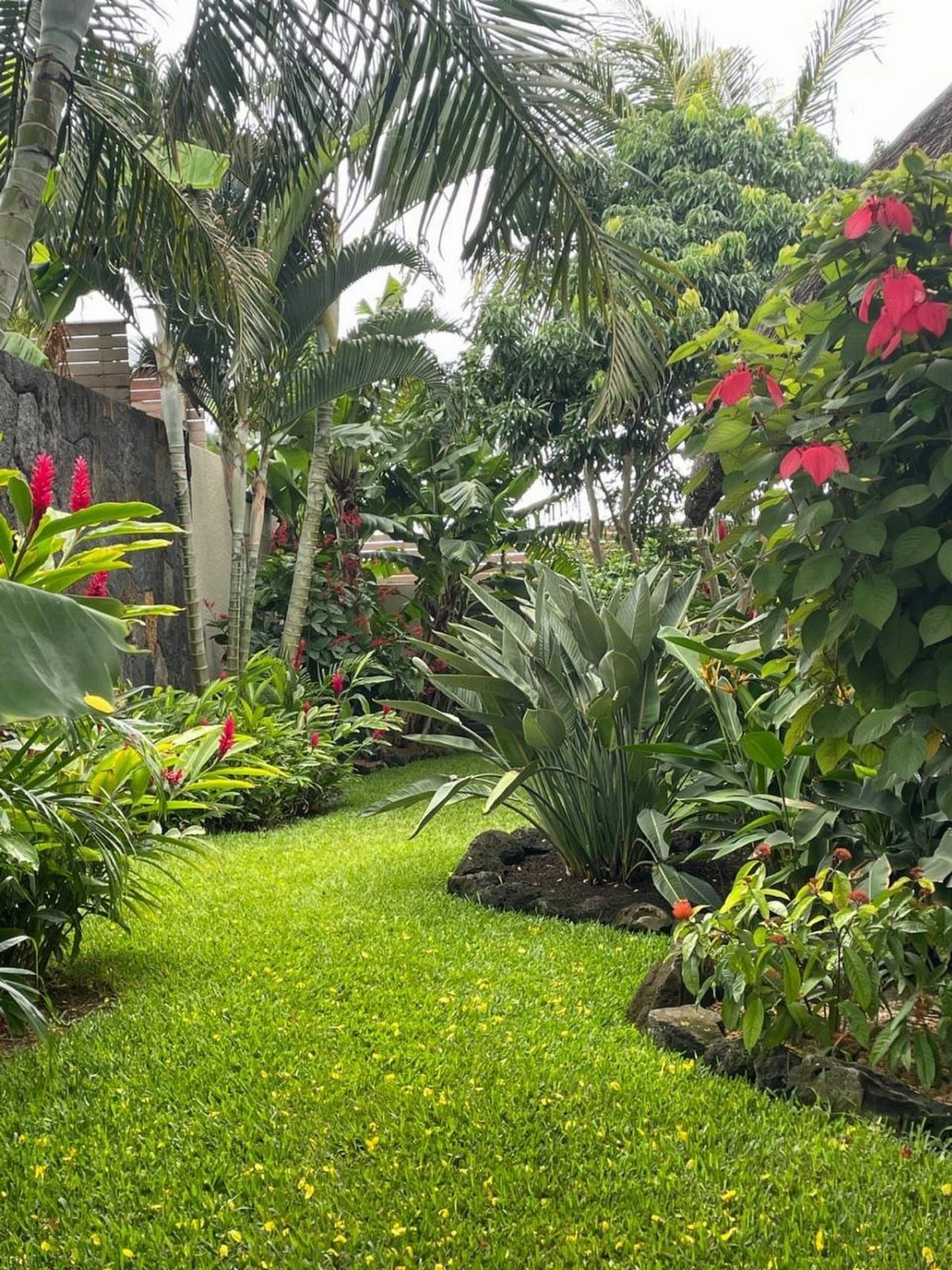
Plant tall palms at the back, put the flowering plants in a middle band, and let low foliage spill toward the front of the bed.
Tropical plants are thirsty, so plan for steady watering from the start. Feed them with a good fertilizer and spread mulch over the soil to hold moisture in.
A mown grass path gives the eye a clear line through all that growth, and I like it more than gravel here.
15. Vertical Garden
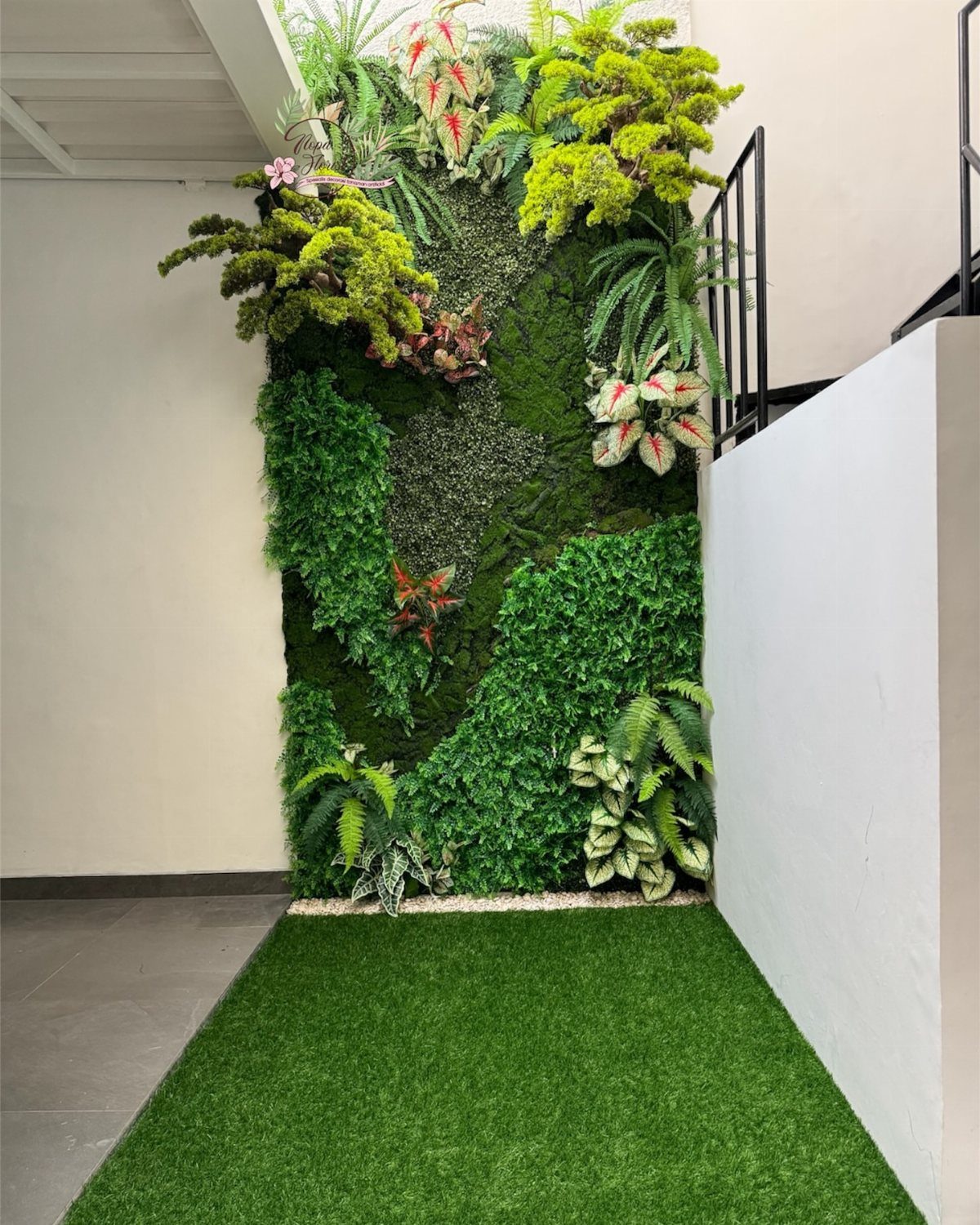
Ferns and leafy plants stacked up a wall give you a full garden with almost no ground. Mount the planting against a plain white wall, where the green and red leaves stand out.
Choose plants with similar water needs, since the water runs down and the top rows dry first. Artificial grass below pairs well, because drips will not turn it to mud.
Start with one panel before covering a whole wall.
16. Woodland Path Garden
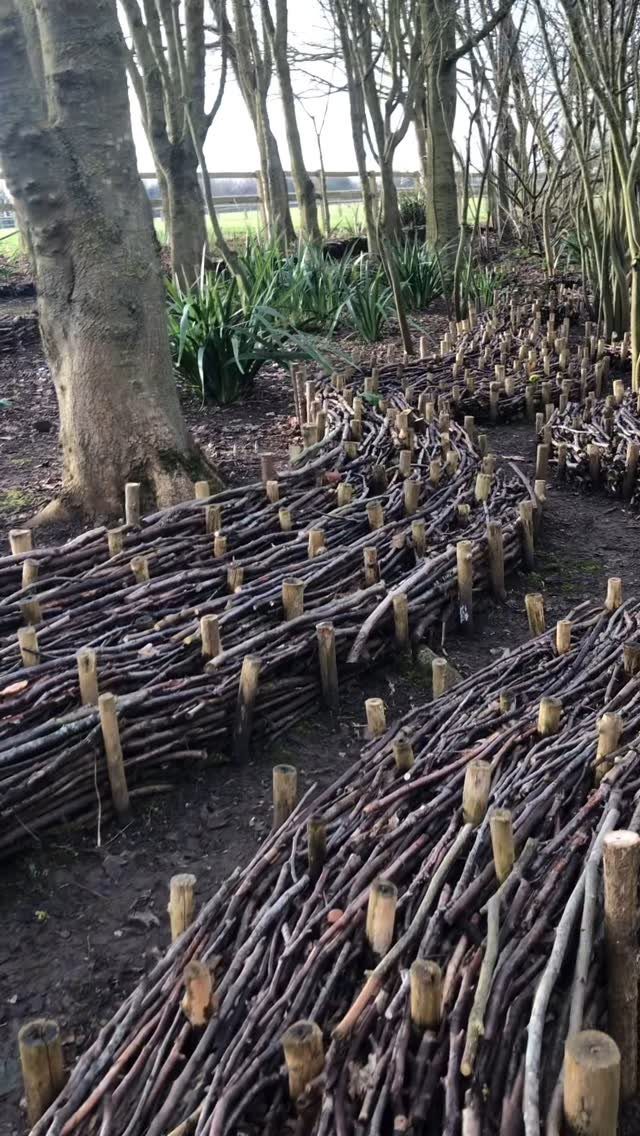
Woven stick fencing turns pruning waste into a path edge, so the material costs next to nothing.
The waves of sticks work best when they run in long, loose curves, so the path reads as one flowing line instead of a few short patches.
Drive vertical stakes into the ground every foot or so, then weave thin branches between them. Let the path wind rather than run straight, so walkers slow down and look at the plants beside it.
Dirt underfoot suits the look better than gravel.
17. Container Garden
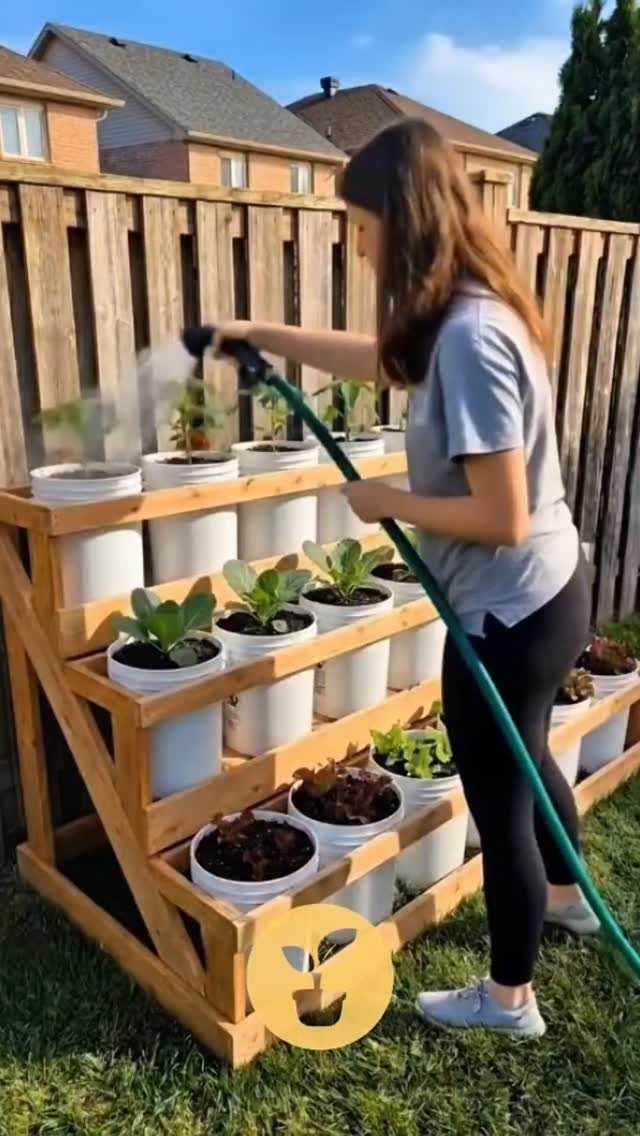
Buckets on a tiered wooden stand put a whole garden at waist height, which saves your back and your lawn. Each tier gives the plants in it their own share of light.
Drill drainage holes in the bottom of every bucket, or the roots will sit in water.
White buckets are cheap and tidy, though they heat up in full sun, so check the soil often in summer.
18. City Garden
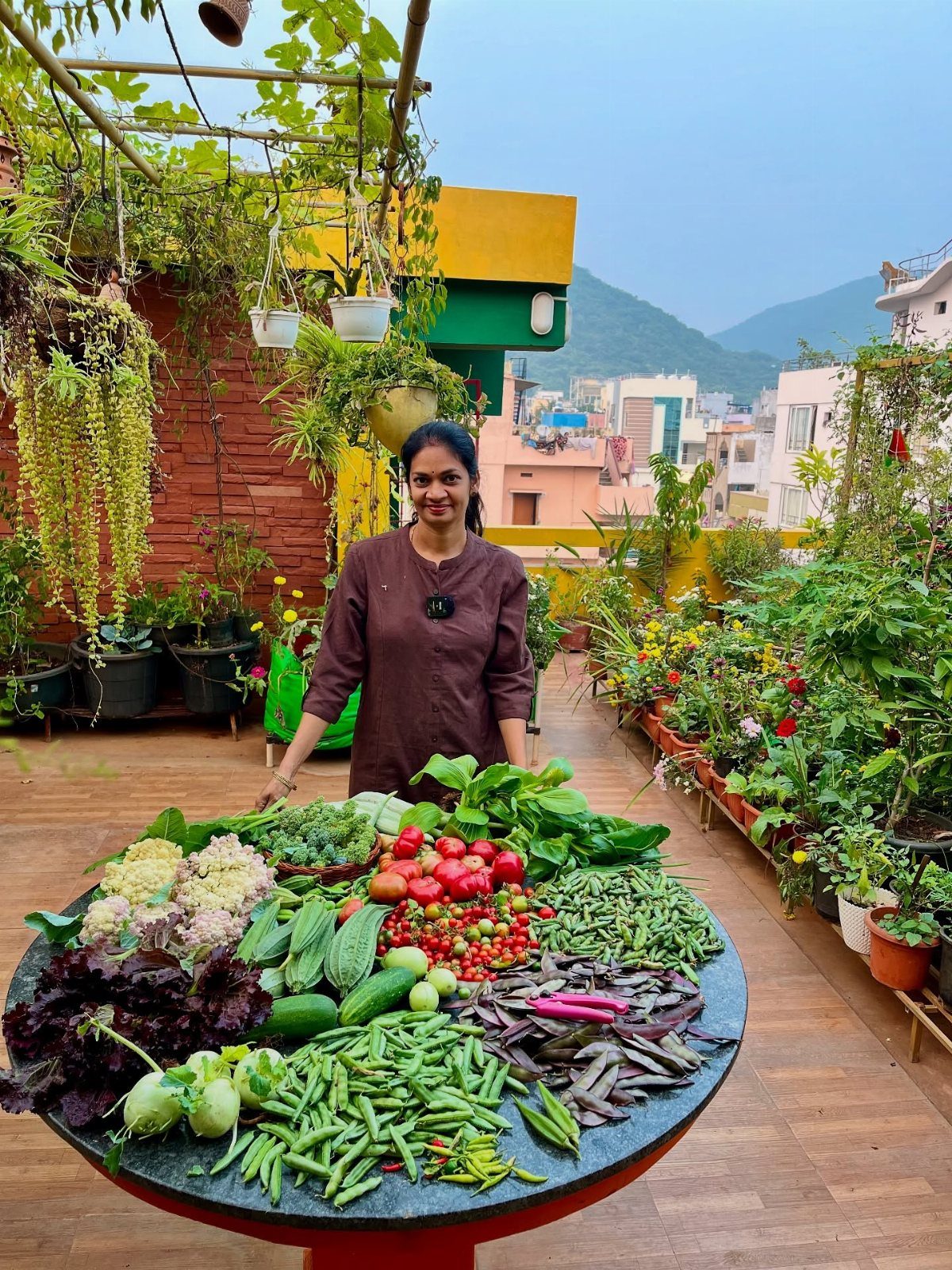
A rooftop can grow vegetables, hold a table and still leave floor space to relax. Potted plants and hanging baskets do the planting work, so nothing needs digging.
Group the pots along one edge and keep the middle open for people. Hang baskets from rails to free up the floor.
A small table doubles as a harvest spot and a place to eat. Before loading up on heavy pots of wet soil, check what weight your roof allows.
19. Rooftop Garden

Grow bags and plastic pots let a bare concrete rooftop hold a real garden, even a small tree, with no digging at all. Fabric and plastic containers are far lighter than stone or ceramic, which helps on a roof.
Group the containers in clusters and leave a clear lane to walk through. Before filling large bags with wet soil, check what weight your roof or terrace allows, since a full 15-gallon bag is heavy.
Set a tray or saucer under pots if the surface matters to your landlord.
20. Indoor-outdoor Garden
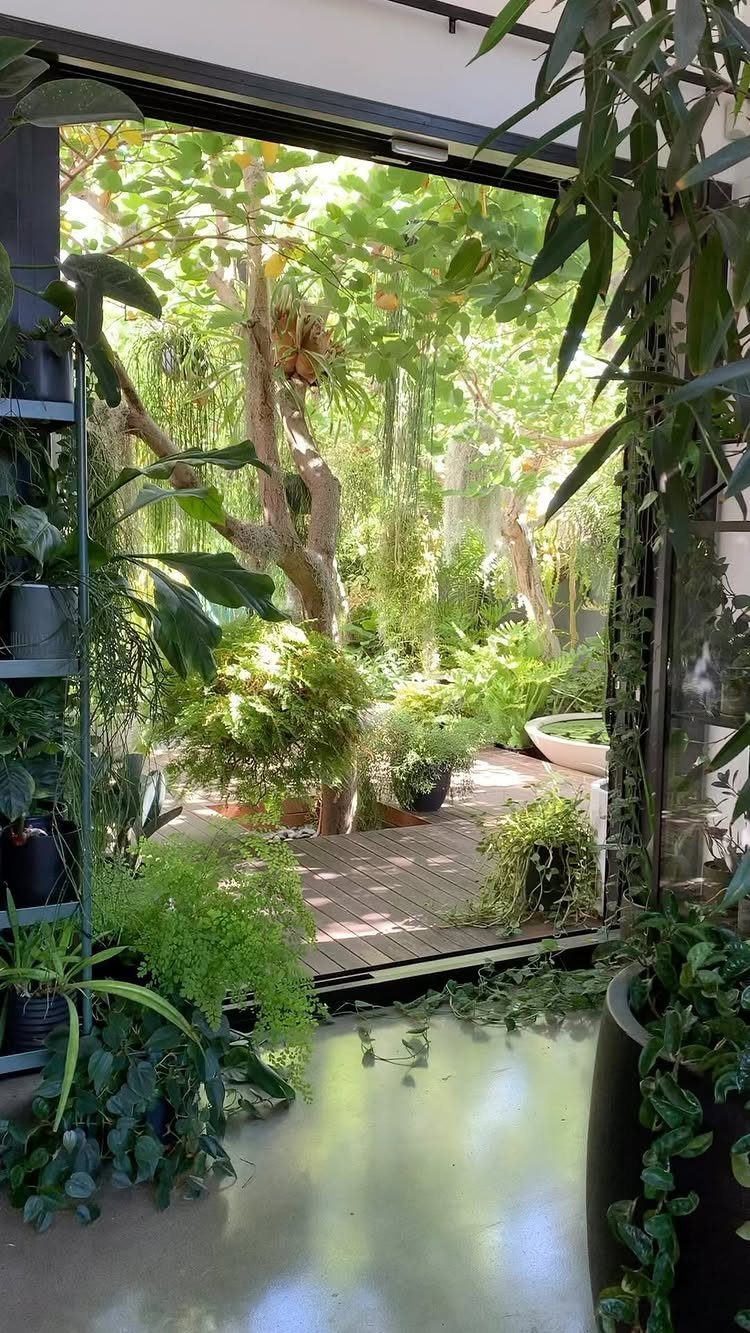
Open sliding glass doors blur the line between deck and living room, and planting right up to the glass finishes the effect.
Keep the floor level between inside and out as close as you can, so the step is barely noticed.
Pick a few big-leaved plants and let them crowd the deck edge, so the view from the sofa is all green. I would rather have one dense view than many small pots.
Choose deck furniture in the same tones as the room.
21. Stone Edging
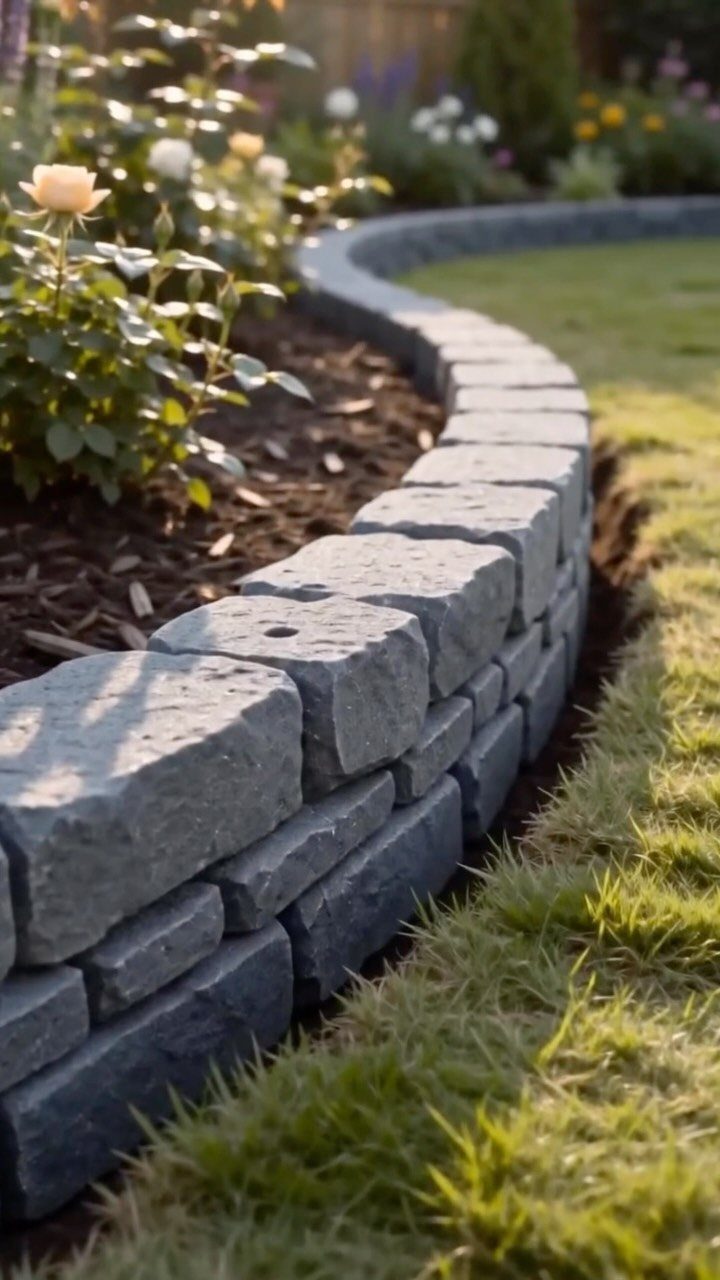
Stacked stone blocks in a gentle curve hold a rose bed apart from the lawn and give the mower a clean line to follow.
Curves look more natural than straight runs, and they are easier to adjust as you lay each block.
Keep the wall low, and fill the bed with mulch so the roses stand out against the gray stone. Dig a shallow, level trench first so the first course sits firm.
Mow along the stone, not over it.
22. Outdoor Dining Space
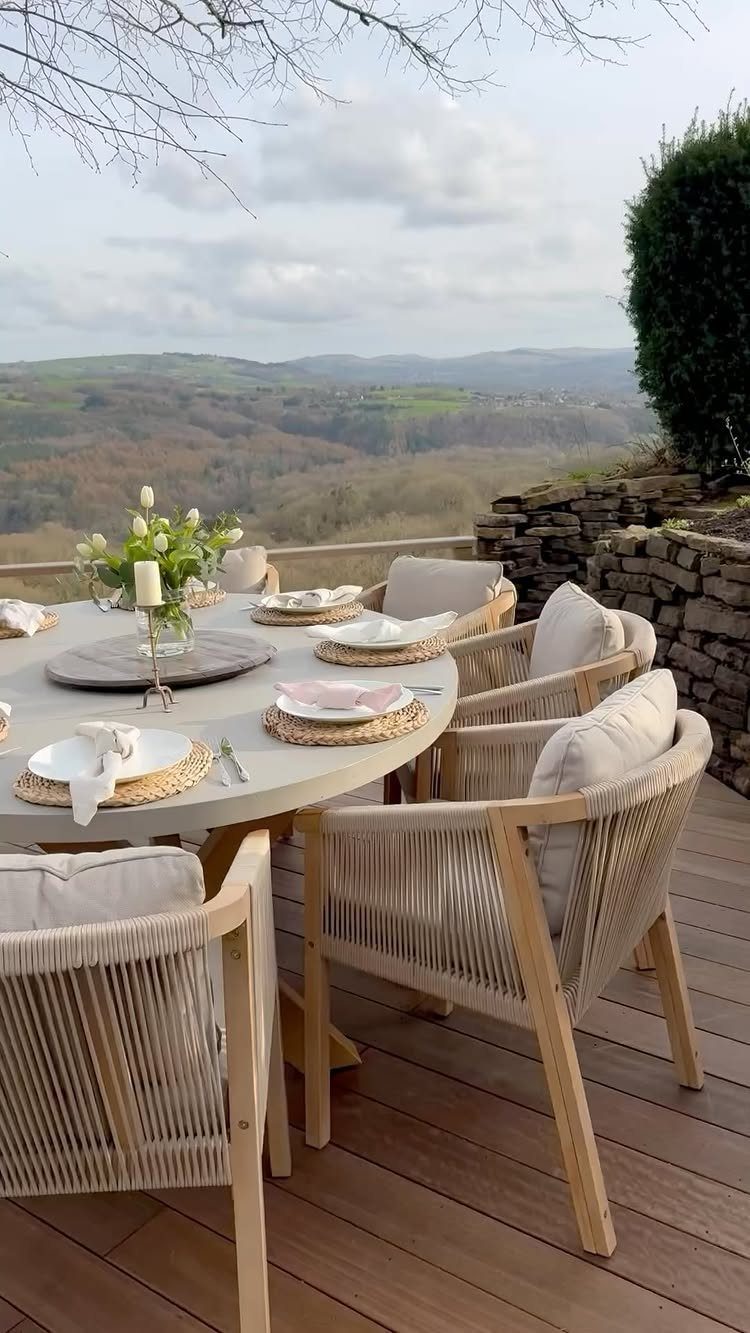
A round table seats everyone facing each other, which suits a deck better than a long rectangle. Leave enough room behind each chair to pull it out without hitting the rail.
Woven chairs look relaxed and suit the open view. Put a small vase of flowers in the center, and keep place settings simple so the setting does the talking.
Plan this zone before you plant, so beds do not crowd the table.
23. Railway Sleeper Path
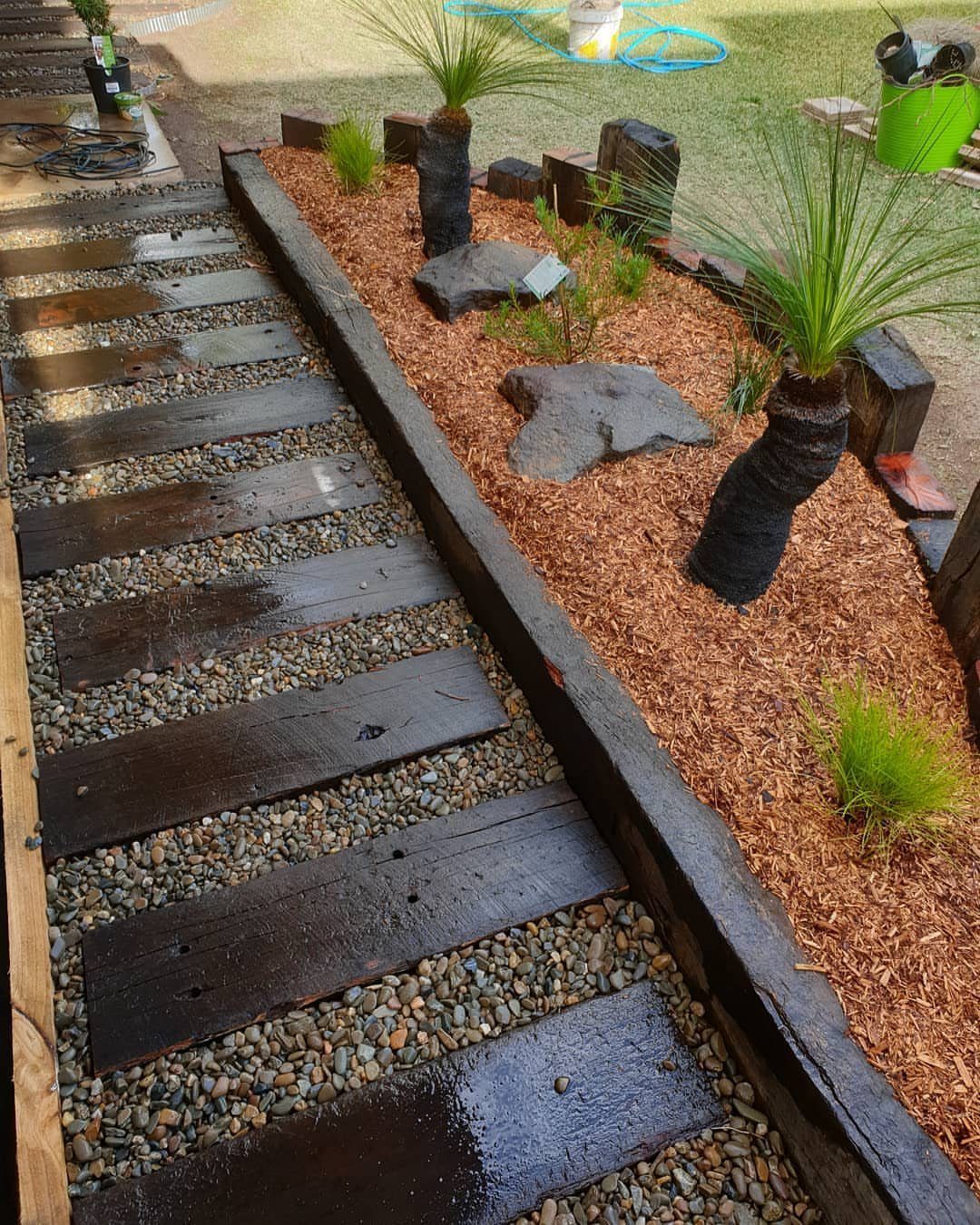
Dark railway sleepers set in gravel make a path that looks bold beside a mulched bed, and each sleeper gives you a wide, solid step. Space them evenly, with a steady gap, so your stride settles into a rhythm.
I like the contrast of dark wood against gray pebbles. Fill between the sleepers with gravel and level it with a rake.
Sleepers are heavy, so plan the delivery and the carrying first, then place the order.
24. Arbor and Pergola Garden
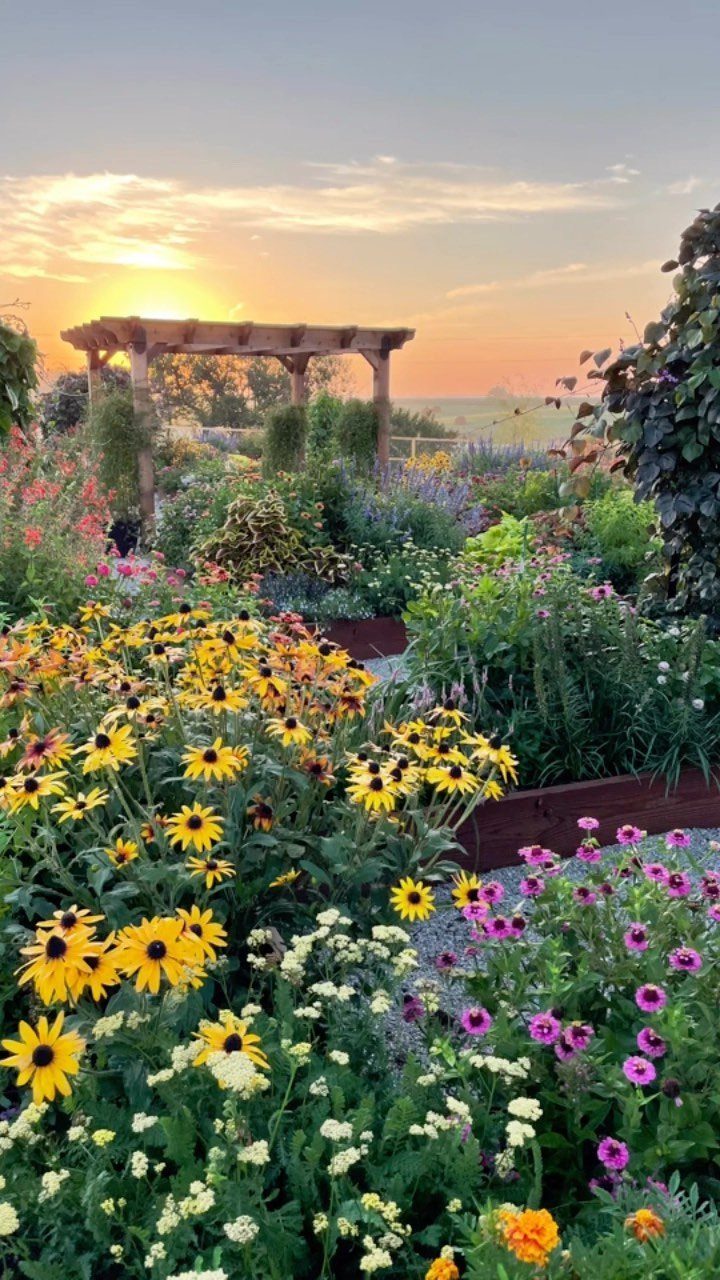
A pergola gives a flower garden height, so the beds have something tall to frame them and the eye travels up as well as across. Set it over a path and it becomes a doorway into the garden.
Plant climbers at the posts and let them grow up the frame over the seasons. Place the structure where the evening light reaches it, since the wood and flowers glow at sunset.
An arbor is the smaller version if space is tight.
25. Japanese Zen Garden
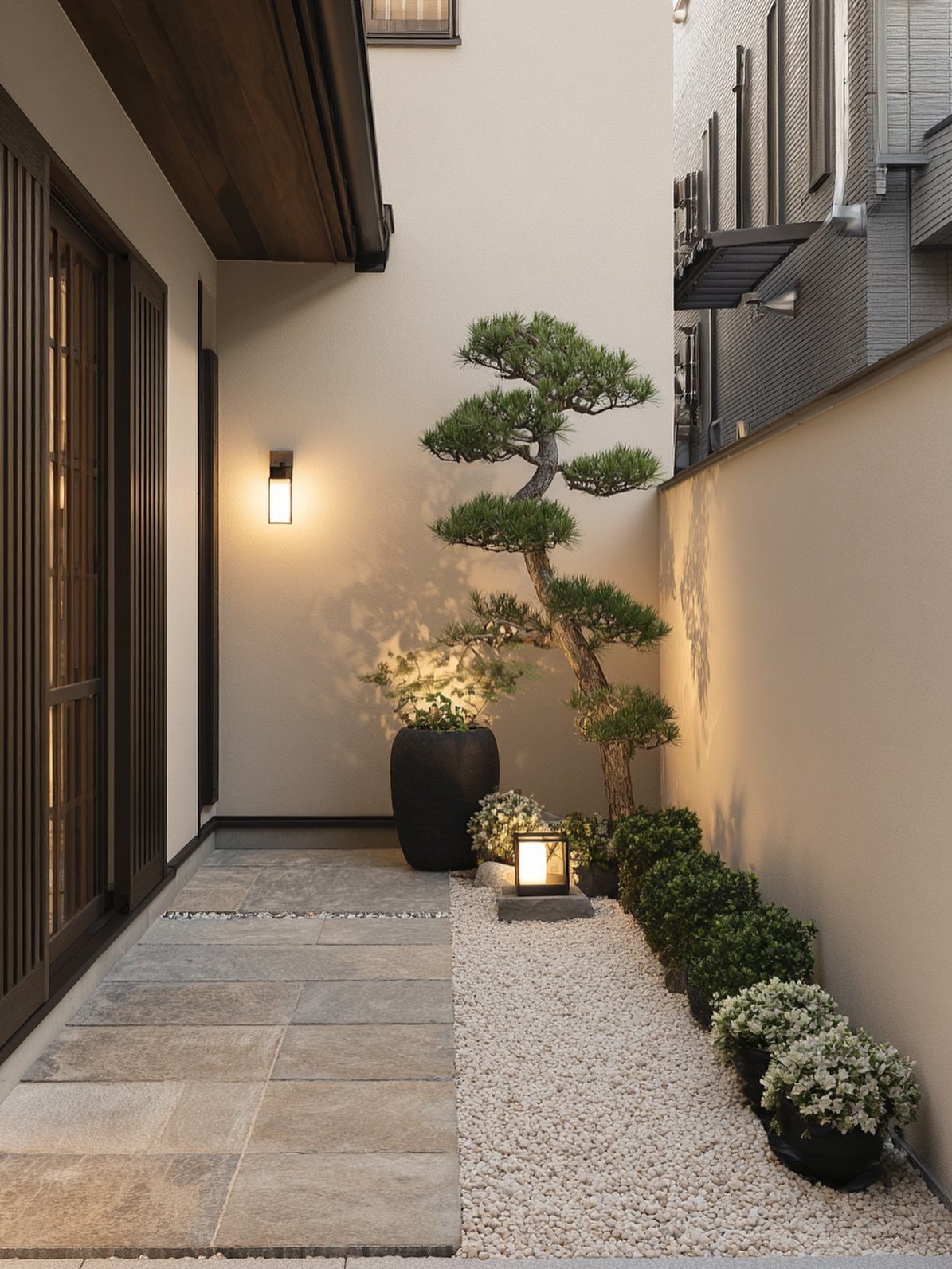
One tree carries the whole design, so choose it first and build the rest around it.
Keep the ground simple: gravel in the open areas, stone pavers as stepping surfaces, and a single black pot for contrast. I would skip extra ornaments, because empty space is what makes this style read as calm.
26. Rock Garden
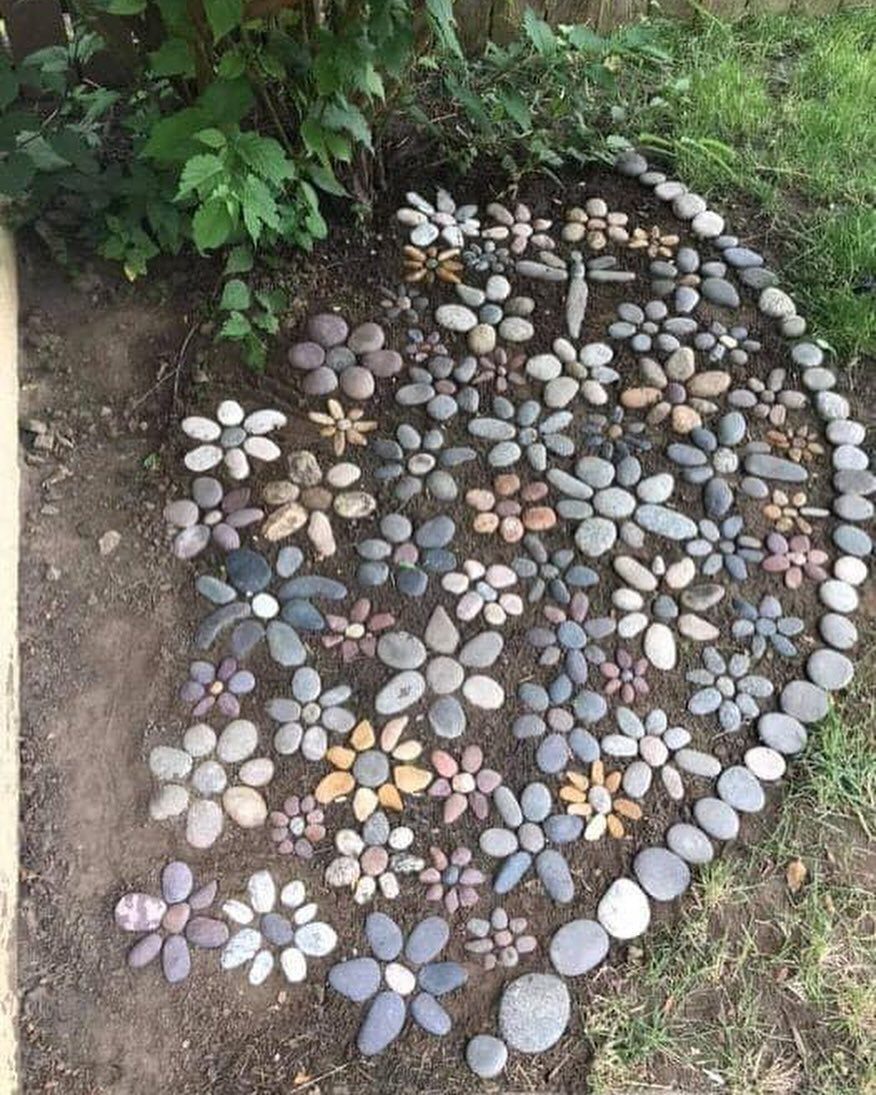
A rock garden costs little and takes patience more than skill.
Sketch the shape first, then press the pebbles in one color at a time, outline before fill. A curved border of larger stones holds the design in place and keeps soil from creeping over it.
Plant green foliage around the edge so the colors stand out.
27. Drought-tolerant Garden
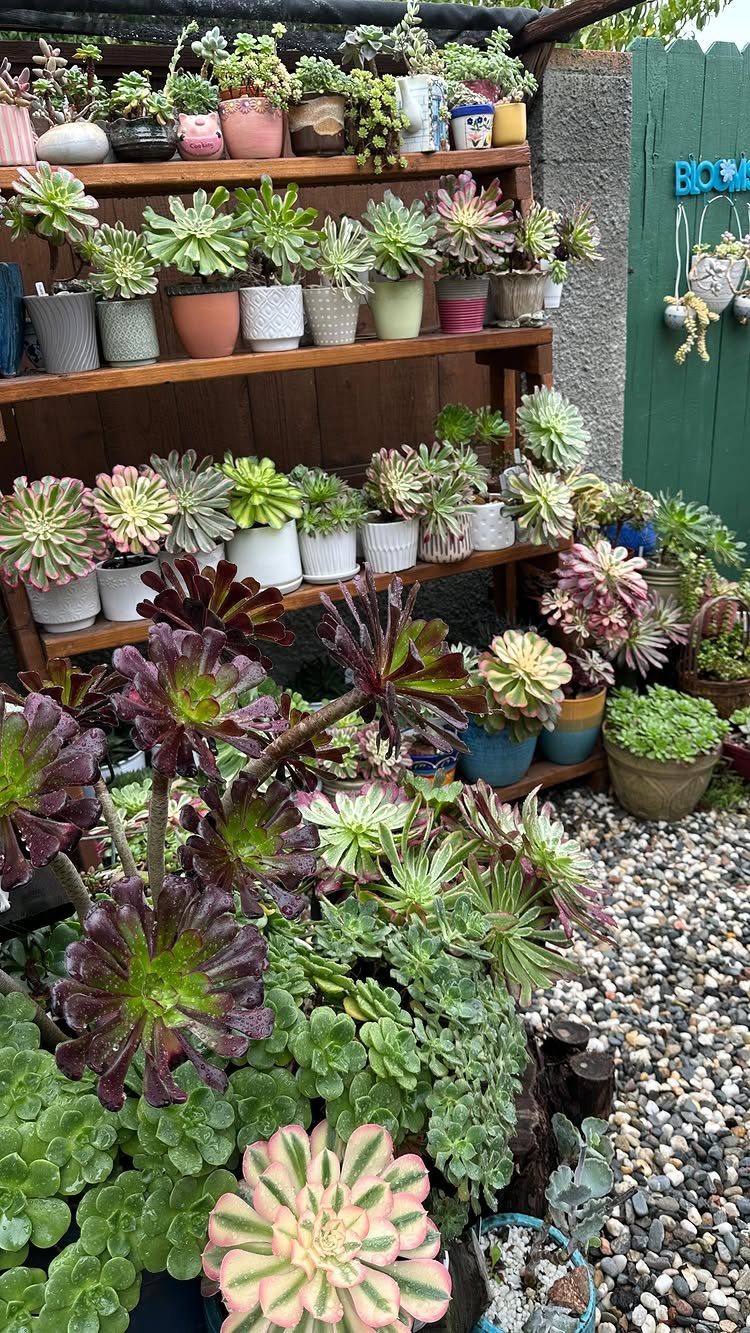
Succulents are the easy answer for a dry garden: they hold water in their leaves, so a missed week of watering does little harm.
Pebbles around the plants keep the surface tidy and dry. Group the plants by size, and give potted ones a hole in the bottom so water can drain.
Start with a shelf of 5 or 6 pots before you plant out a bed.
28. Shade Garden
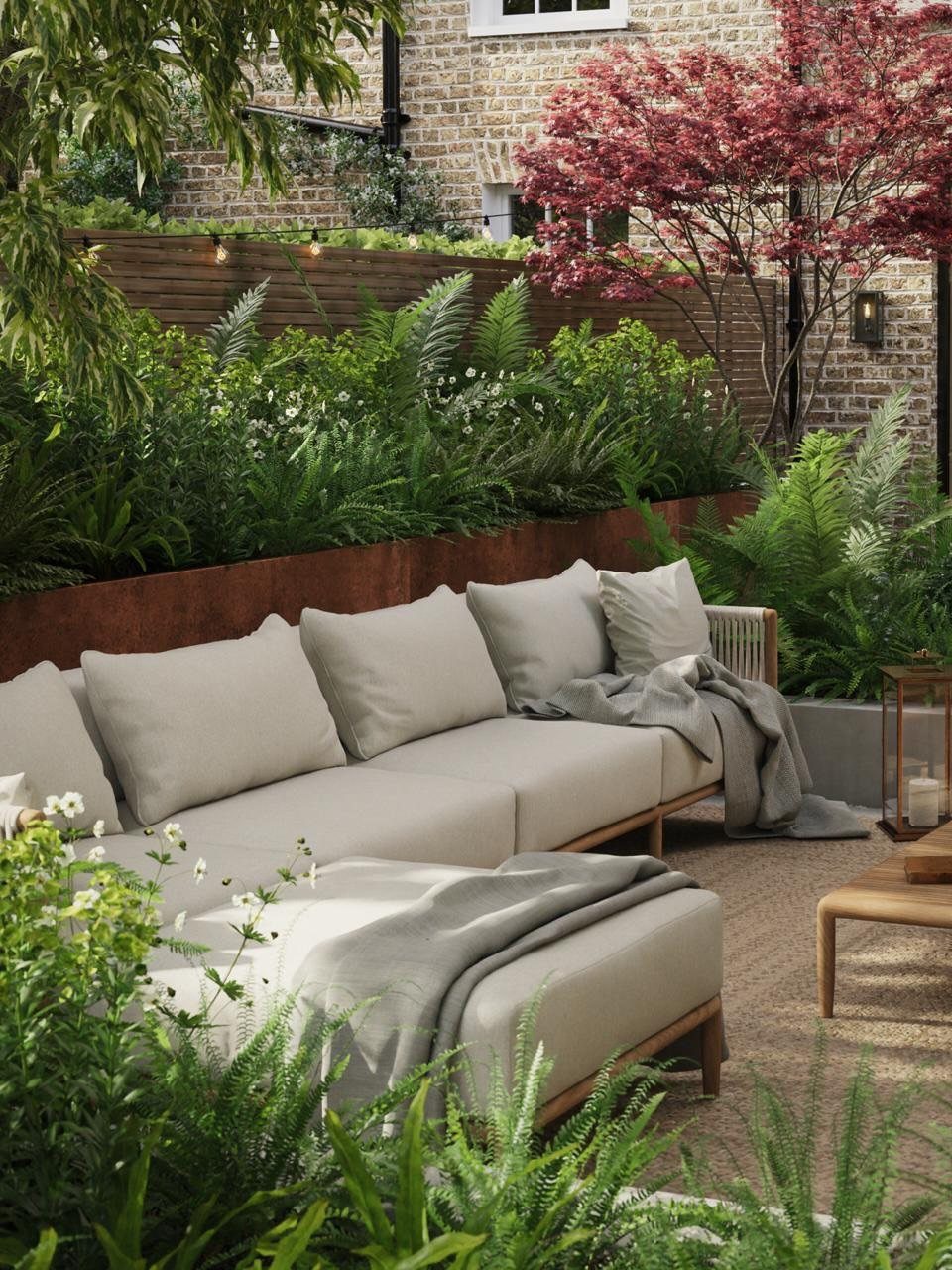
Shade suits ferns, and ferns suit a seating area, because the leaves stay lush without much sun. A red Japanese maple above them adds the one strong color, which is why I would plant just one.
Rusted metal planters lift ferns to a comfortable height beside a sofa, and the orange-brown finish plays well against green fronds. Pick a light-colored sofa so the seating stays bright against all that green.
A brick wall behind the planting gives the leaves a solid backdrop and keeps the whole corner feeling enclosed.
29. Terraced Garden
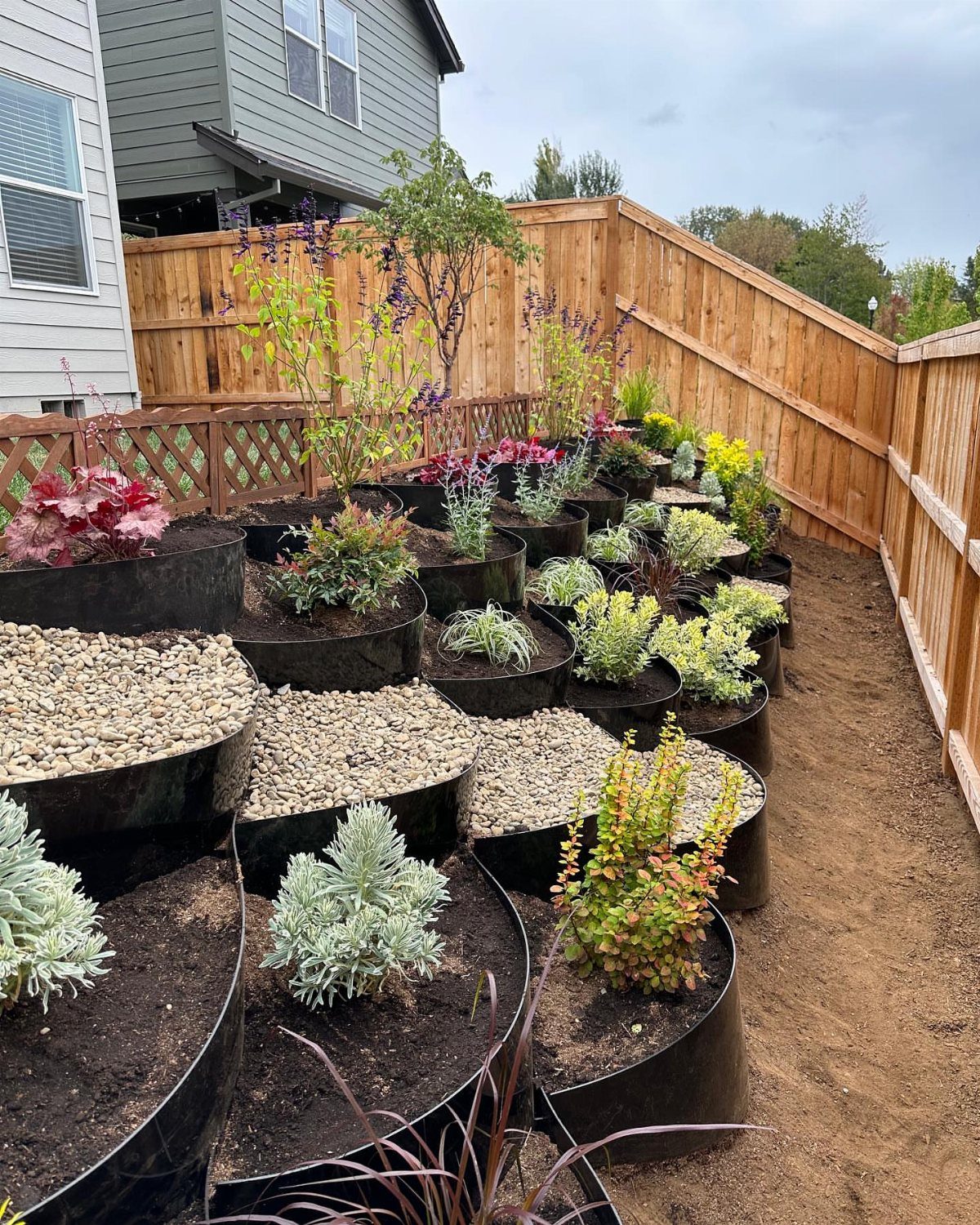
Round black planters stepped down a slope turn tricky ground into tiers, and you never have to build a retaining wall.
Set the planters in a staggered line, with gravel between them so you can walk across without slipping. Mix tall and trailing plants so every tier shows.
Level the ground under each planter before you fill it, or it will lean downhill.
30. Garden Without Grass
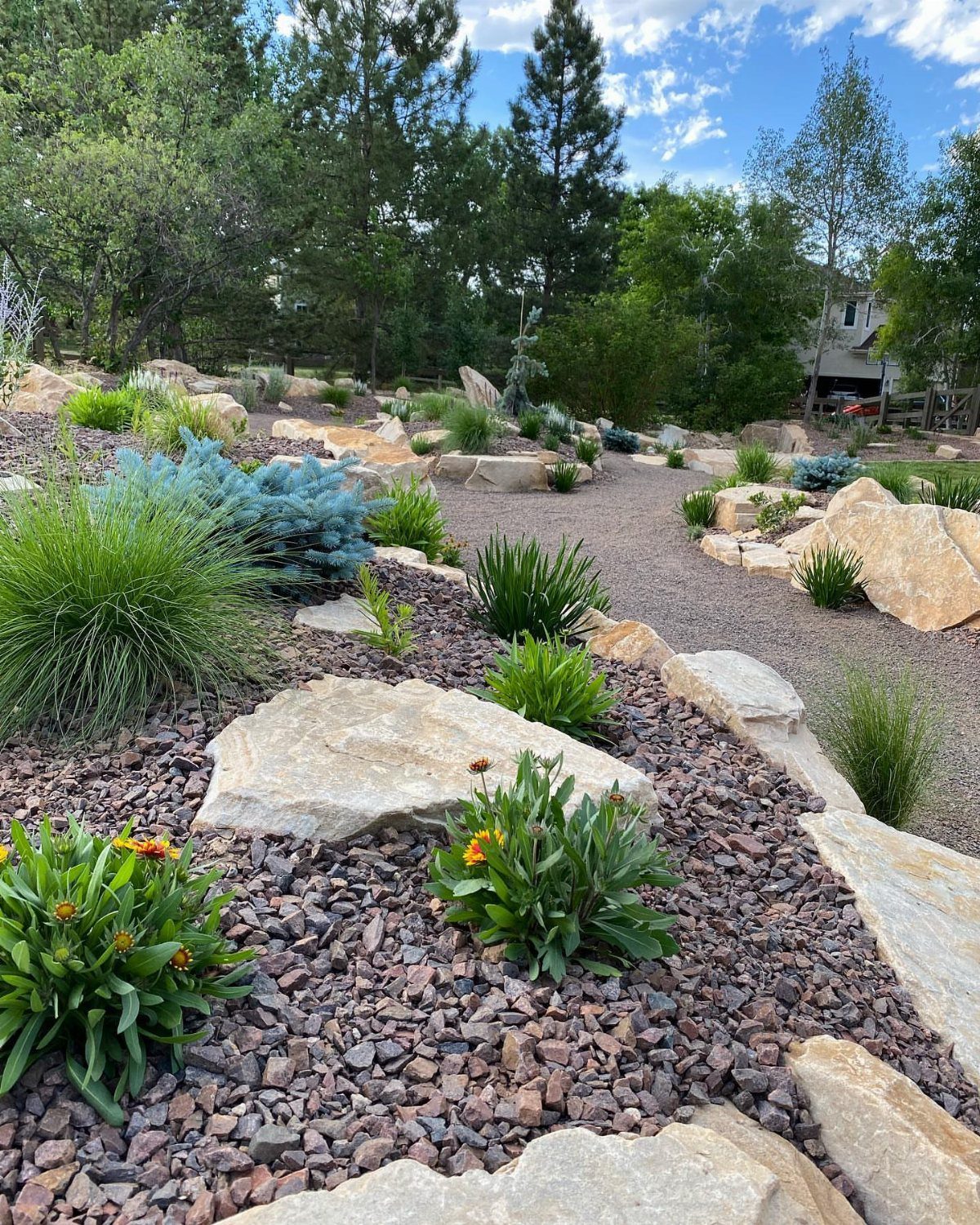
Gravel, boulders and ornamental grasses can fill a yard with no lawn at all, and the result needs far less mowing and watering. A gravel path winding between the beds gives the space a route.
Set the large boulders first, since they are the hardest to move, then plant grasses and shrubs in groups around them. Reddish-brown gravel suits the warm tones of the planting.
Choose drought-tolerant plants so the bed stays easy to care for.
31. Cinder Block Garden
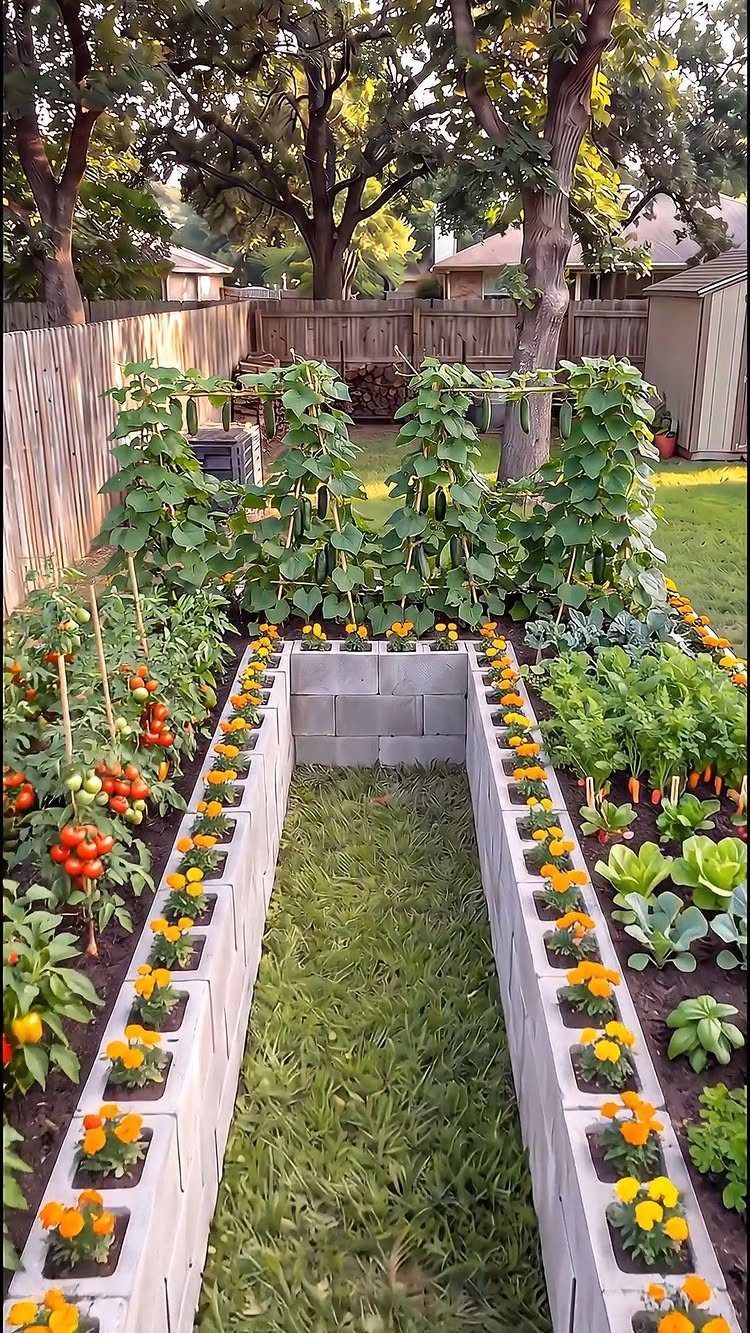
Cinder blocks stack into a raised bed with no mortar and no saw, and the hollow cores take extra plants of their own. Tuck the orange and yellow flowers into those openings so the bed edge blooms too.
Set a trellis at the back for the climbing vegetables, and keep tall plants behind short ones so nothing shades its neighbor.
Level the ground and the first row before stacking higher. Every row after it follows the first.
32. Dry Creek Bed Landscaping
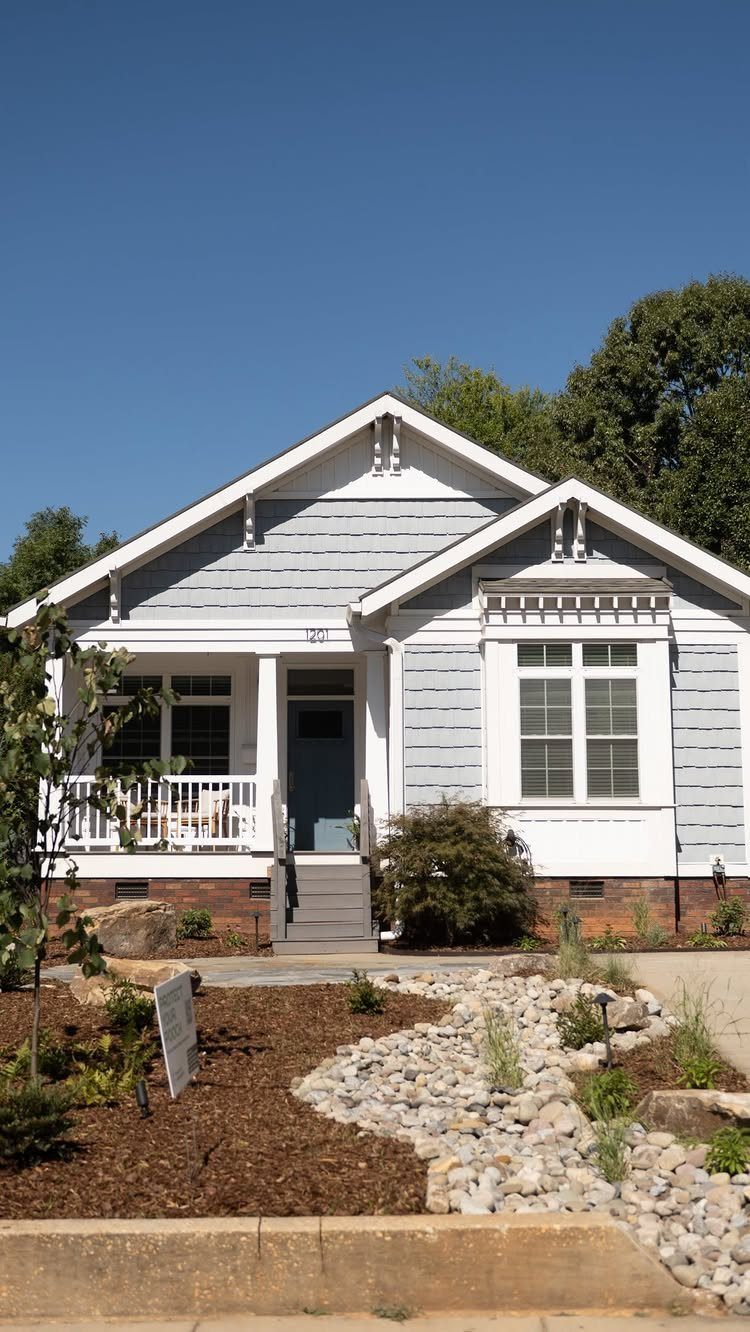
A dry creek bed gives a front yard a winding line of smooth river stones, and it never needs water to look right. Let it curve rather than run straight, and make it widest where it bends.
Edge it with brown mulch and low shrubs, which keep upkeep light. I would choose stones in a few sizes: large ones at the bends, small ones filling between.
Lay the stones over the shaped channel, and step back to check the curve from the street before you finish.
Plan Around Site and Use
Before you pick a theme, decide who will use the garden. A space for you alone needs different things than one shared with kids, pets, friends or a crowd at a cookout.
That answer settles whether you need a lounge area, whether a pergola earns its cost, and which flowers make sense.
Look at the house next. A house with clean, modern lines looks right next to a modern garden, and an older traditional house usually suits an English-style cottage garden better.
Then read the site itself: where the sun lands, where shade sits, where water pools or runs short, and what the soil is like.
Plant in spring or fall. Planting works in any season, but spring and fall temperatures are gentler, so moving things around and settling on spots is much less of a chore.
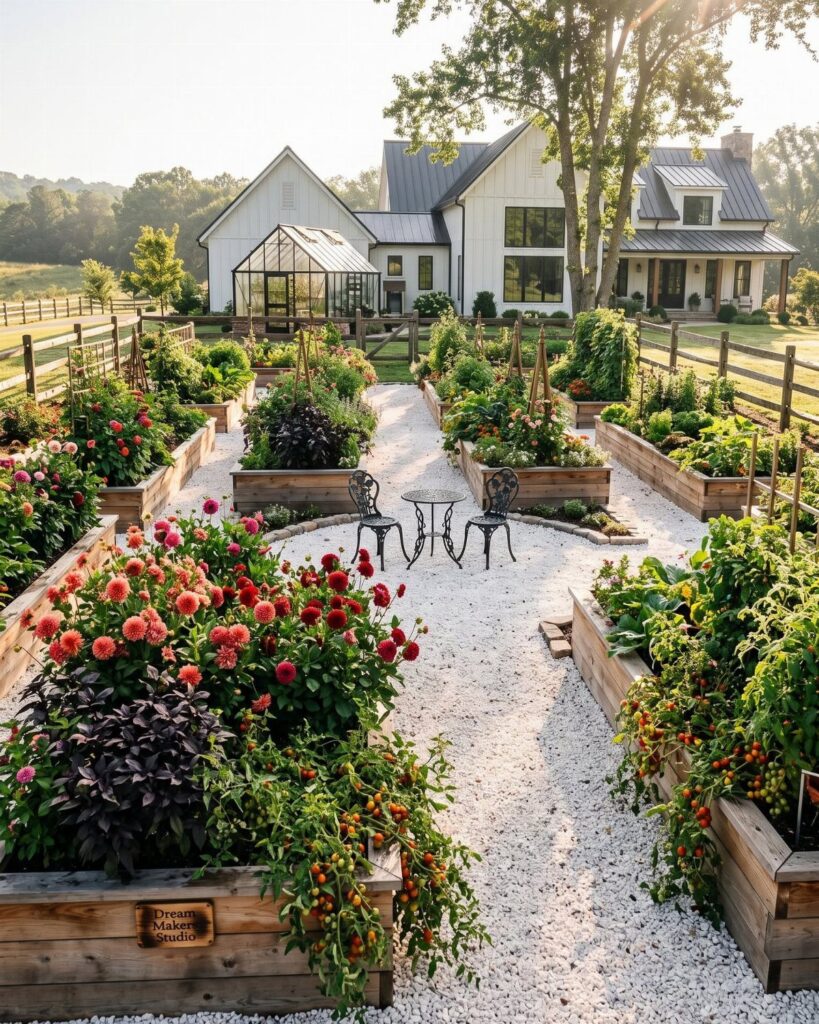
When faced with Linda Lipsett’s 30-by-90-foot plot, garden designer Chris Fischer got crafty with organization.
Draw and Test the Layout
Sketch the plan on paper first, since moving a line costs nothing and moving a shrub costs a Saturday.
Graph paper works well: outline the plot, then draw beds, paths and structures at true scale, so 1 square equals a fixed distance.
Draw it to scale and you can test plant spacing and path widths on paper, well ahead of any trip to the nursery.
Check where shadows fall and how you will reach each area, too, because a bed that looks fine on paper can end up in shade or block the way to the hose.
If you would rather work on a screen, a garden planner app draws to scale and can print or export your plan.
A simple order works best: pick the site, list the plants you want, then draw the layout around them.
Keep Paths Safe and Usable
Size a walkway to the way people will use it. Too narrow and it feels cramped; too wide and it eats into planting space you wanted for flowers.
Test it with a wheelbarrow. If you will haul mulch, soil or plants, the path has to fit the barrow and any access needs in your household.
Keep slopes and steps as even as you can, because uneven ground is where people trip and get hurt. Make steps the same height and keep the surface level from one stone to the next.
If you spot a loose slab or a dip, fix it right away rather than waiting for the season to end.
Frequently Asked Questions
How do you set up a garden from scratch?
Start with how people will use the space, because that decides whether you need seating, a pergola, or just beds.
Then look at the house and pick a style that suits its lines. For raised beds, find the best spot, remove the sod, level the ground, line the bottom and fill with good soil.
What are some ideas for focal points in a garden?
A single flowering tree is my top pick: set it where the eye lands first, with lawn around it and a hedge behind so the blossoms stand out.
Smaller pieces work too: a stone birdbath, a lantern on a post, or a bamboo spout dripping into a basin of river rock. One strong focal point reads as deliberate, while several compete.
What are some different garden styles?
Cottage, formal, modern, Japanese Zen, woodland, tropical and rock gardens all work in a home yard. Cottage gardens pack tall and soft plants close together.
Formal ones rely on matching pots and clipped hedges, and modern ones use 1 or 2 hard materials with one repeated plant shape. Clean-lined houses suit the modern look best.
Will you be the only one using the garden or sharing it with others?
Decide this before choosing a theme. A yard for kids, dogs, or a 20-person cookout has to handle wear and traffic that a quiet corner for one never will.
Once you know who’s using it, the other choices get easier, like whether to build a dining spot, whether a pergola earns its $500 or more, and which flowers to plant.
How do you design a small vegetable garden?
Grow only crops you enjoy eating or find expensive to buy, and train sprawling ones up a fence or trellis. Tuck fast-growing plants between slower, larger ones, and replant as each crop finishes so no space sits idle.
How do you install DIY raised beds?
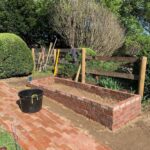
Pick the best spot, strip the sod, and level the ground before anything else.
Line the bottom of the bed, then fill it with good soil. Take your time leveling the bottom course of a block or board bed, because any error there gets repeated in every layer you stack on top.