The best way to get rid of weeds in a lawn depends on timing and weed type: pull young ones by hand, or treat them with the right herbicide.
Preemergent products only stop annuals like crabgrass if they go down between May 1 and May 15. Perennial broadleaf weeds are best treated in fall.
Pull Weeds by Hand
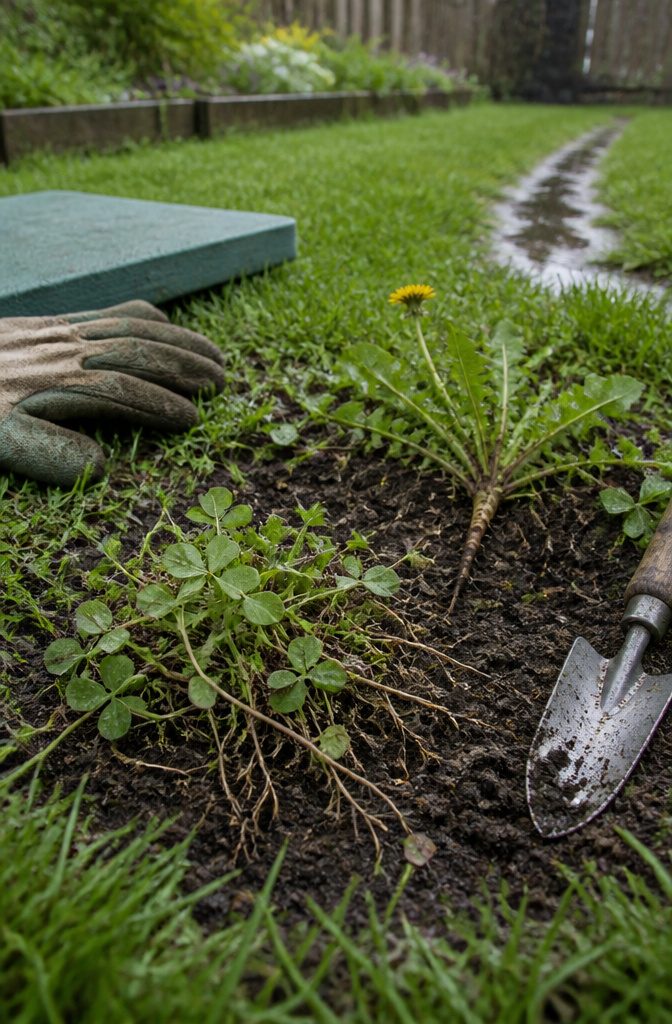
Hand pulling suits small patches and works best on young weeds, before the roots develop and the seeds spread.
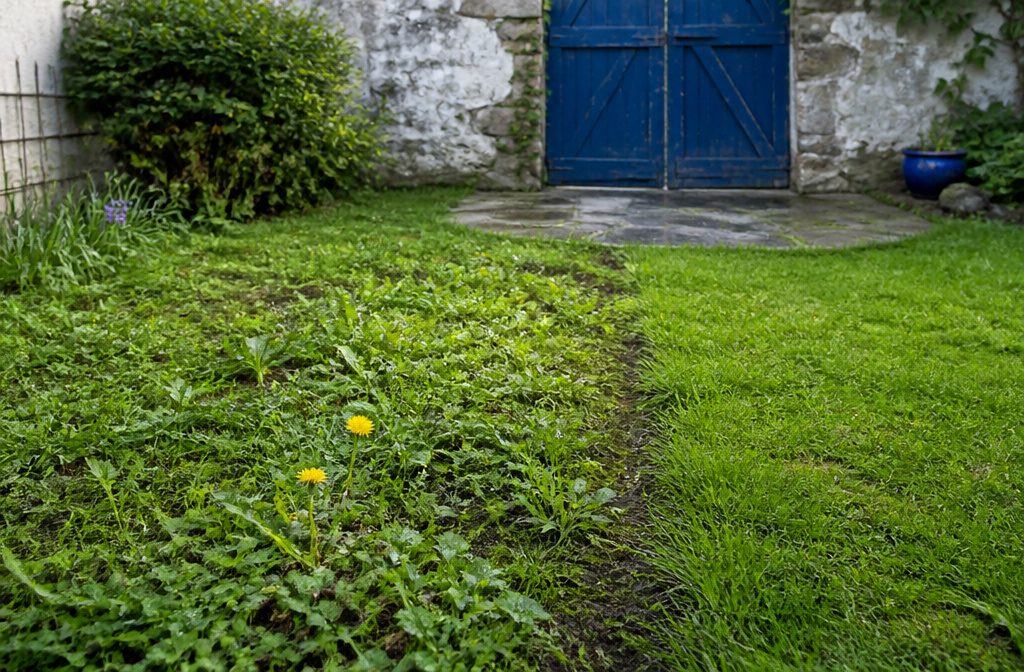
Chickweed, clover, and purslane have shallow roots and come out easily. Dandelions need to go before the deep taproot forms.
Pulling the top of the plant snaps it off at soil level. Instead, work a screwdriver, cultivator, or trowel around the roots to loosen the dirt, then pull with the tool still in place.
Take as much root as you can, and do it after rain or a thorough watering, when the soil lets go.
A long-handled weed puller pries out the whole root with a simple rocking motion, and some models let you stay standing the entire time.
Thick gloves run $7–$13. A 1-inch foam pillow is a decent kneeler.
A sharp hoe held at about 45 degrees also slices young weeds. Skip the rototiller: it churns the soil and spreads seeds.
Build a Dense Lawn
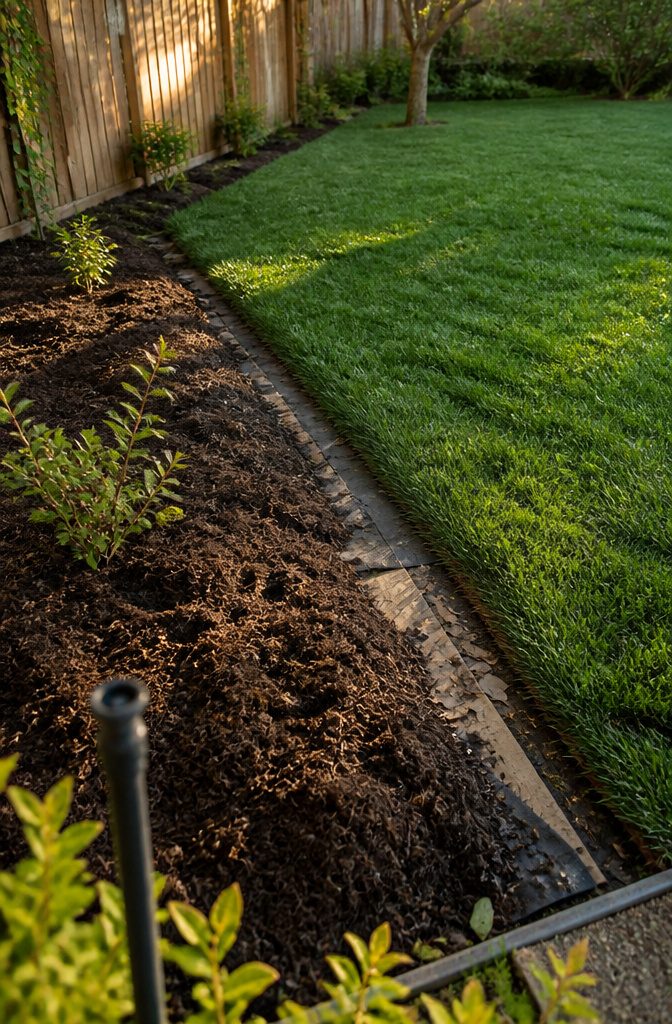
Overseeding keeps weeds from returning but does nothing to the ones already growing, so pull or treat them first and seed afterward.
Pick a grass that crowds weeds out: Bermudagrass or Kentucky bluegrass for heavy overseeding, and Zoysiagrass if you can afford sod, since its dense canopy blocks weed seeds and seeding it usually goes poorly.
Mowing height, watering gaps, fertilizer amounts and aeration all tilt the lawn toward grass, so adjust one at a time.
For beds, spread mulch 3–4 inches deep. Over landscape fabric, gorilla hair mulch at that depth packs down into a springy path, and weeds that root in it pull out easily.
For a new bed, sheet mulch: cardboard, then compost and leaves stacked 12–18 inches thick, and wait three or four months.
Herbicides and Natural Killers
Preemergence herbicides don’t kill seeds. They kill the root or shoot as a seed sprouts, so they only work on annuals like crabgrass if they go down first.
Apply between May 1 and May 15, or when the top inch of soil holds at 50–55°F early in the day.
Postemergence products hit weeds already up.
For perennial broadleaf weeds, fall is the window, mid-September through mid-October, at a one-time low rate. Read the label; it sets the rate and the grasses it spares.
Nonselective postemergence herbicides kill most green plants, both desirable and undesirable.
Spot treat, and wet only the foliage.
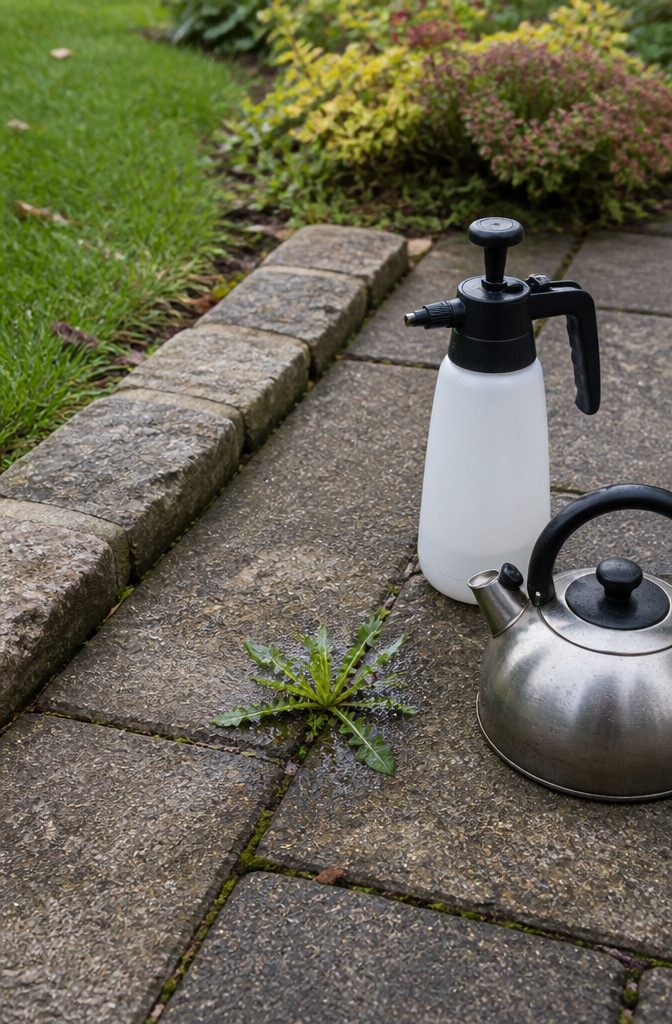
For cracks in a patio, boiling water on weeds under 8 inches works within minutes and wilts them by the next day.
Kitchen vinegar at 4–5% needs repeat doses; 49% kills faster but etches stone and demands protective gear. Keep both off turf and soil.
Match the Method to the Weed
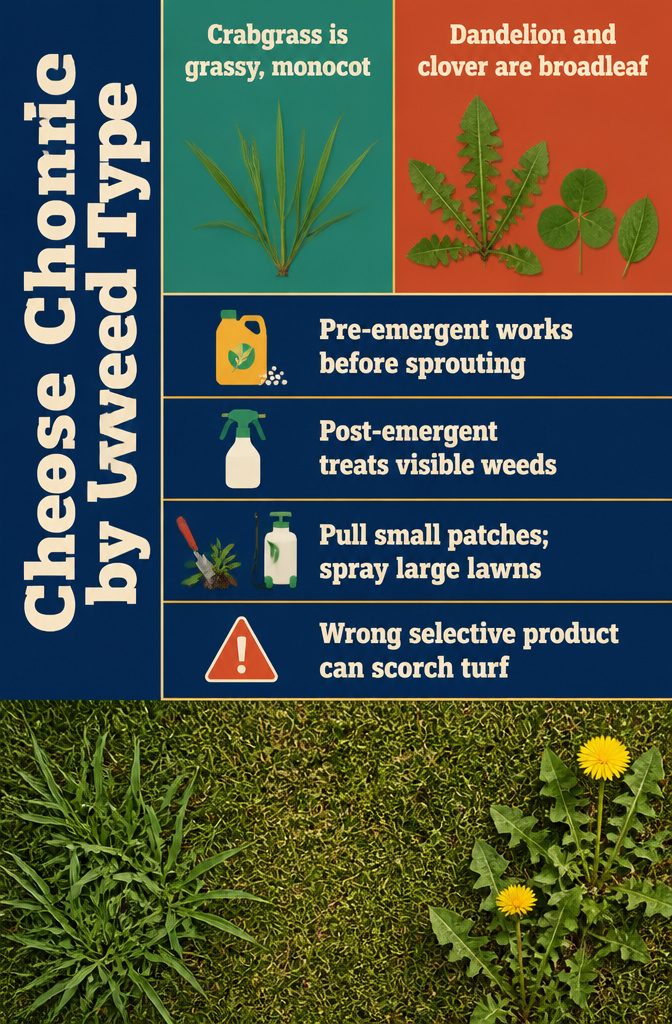
Start by sorting the weed into one of two groups: grassy or broadleaf. Crabgrass is a monocot, a weedy grass that sprouts with a single seed leaf.
Dandelion, clover, creeping Charlie, plantain and knotweed are dicots, which means broadleaf. That split matters because a selective product works on one group and can hurt the other.
Don’t try to name every plant in the yard. Pick the one or two weeds covering the most ground and deal with those first.
Timing and size come next. Pre-emergent stops seeds from sprouting, so it only helps before the weed shows up.
Anything already growing needs a post-emergent product, or your hands. A small patch of shallow-rooted weeds is a pulling job; a big lawn is a spraying job.
If you’d rather skip synthetics, choose organic, but be honest about your skill, because the wrong selective product on the wrong weed does nothing and can scorch turf.
Why Thick Grass Wins
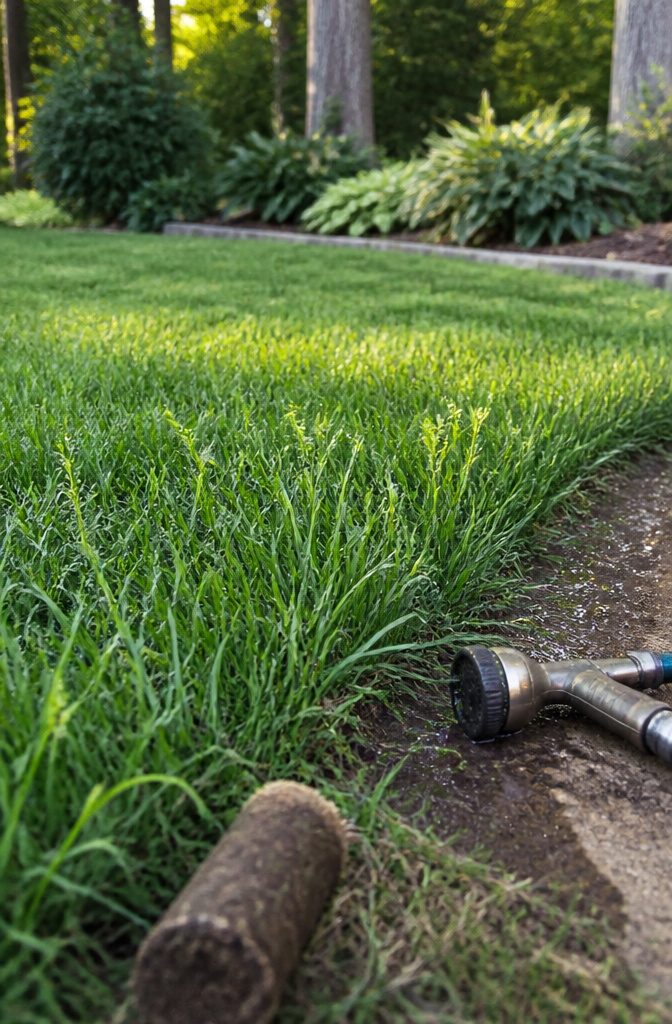
Weeds need open soil and light, and a thick lawn leaves them neither.
Grass that is dense enough to touch its neighbors shades the ground and takes the space a seedling would use, so most of the fight is won before a weed sprouts.
That is why mowing height, how often you mow, the gap between waterings, and how much fertilizer you apply all count as weed control.
Each one can be adjusted to favor grass over weeds. Aerating helps too, since it lets air, water and nutrients reach the roots.
Overseeding works by crowding, not killing.
It prevents new weeds but does nothing to the ones already there, so pull or treat those first, then seed heavily. Kentucky bluegrass (cool-season) and Bermudagrass (warm-season) compete best.
When to Hire a Professional
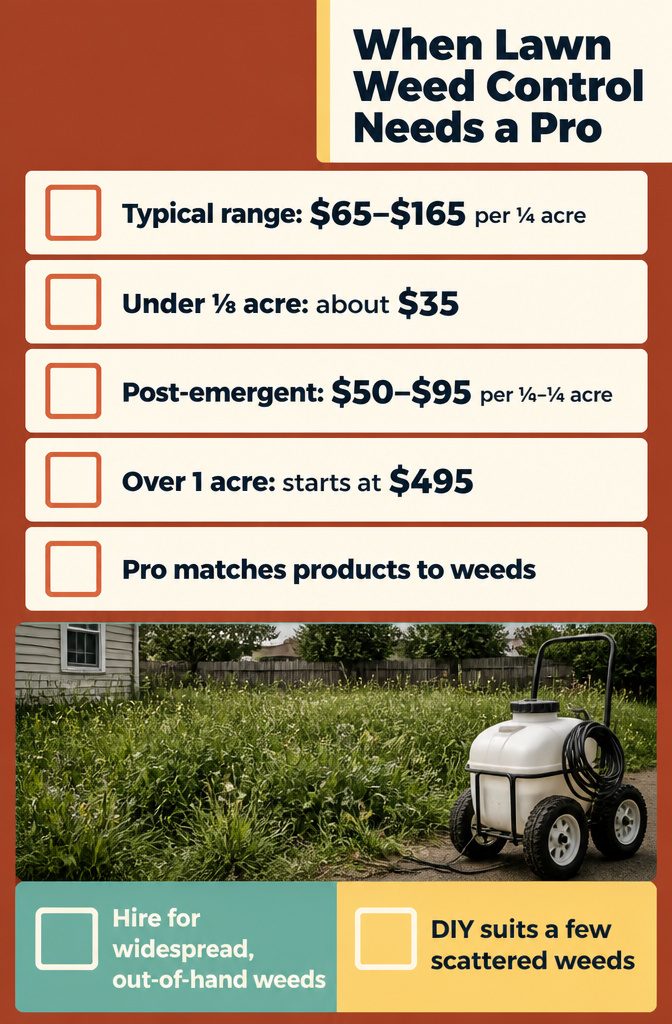
Call a pro when the weeds are already ahead of you or the job needs gear you don’t own.
A large, widespread infestation can eat a full day or more of DIY work, and that’s before you count the cost of buying products and tools.
- Professional control usually runs $65–$165 per ¼ acre, so budget the middle of that range for an average yard.
- Lawns under ⅛ acre run about $35, which is hard to beat for a small patch.
- Post-emergent applications cost $50–$95 for ⅛ to ¼ acre.
- Lawns over 1 acre start at $495.
- A pro brings professional-grade products and knows which one fits the weed, which saves you from guessing twice.
I’d hire for a yard that’s gotten away from you and DIY for a few scattered weeds.
Frequently Asked Questions
How do you kill weeds without killing your grass?
Match a selective product to the weed type, or pull by hand.
Selective products work on one group, grassy or broadleaf, and can scorch turf if you pick the wrong one, so read the label for the rate and the grasses it spares.
For a few weeds, spot treat and wet only the foliage.
Is it better to pull weeds or spray them?
Pull for small patches of young, shallow-rooted weeds, and spray for a big lawn.
Pulling works best after rain, with a tool loosening the roots so you get as much of the root as possible. Spraying covers more ground in less time.
What is the best way to prevent weeds from sprouting?
Apply a preemergent herbicide before the seeds sprout. Put it down between May 1 and May 15, or when the top inch of soil holds at 50–55°F early in the day.
It only works on annuals like crabgrass if it goes down first, and it does nothing to weeds already growing.
What is the most weed-resistant type of grass?
Zoysiagrass is the most weed-resistant, with Bermudagrass a close second.
Zoysia’s dense canopy blocks weed seeds from germinating, but it is best established from sod because seeding usually goes poorly. Kentucky bluegrass is another good choice for heavy overseeding.
How long does a natural weed killer take to work?
Boiling water wilts weeds within minutes and they look dead by the next day.
Vinegar at 4–5% needs repeat doses and can take a few hours to a couple of days to show results. Weed type, weather and how you apply it all change the speed.
What should I do if my lawn is full of weeds?
Identify the one or two weeds covering the most ground and deal with those first.
Pull or treat what’s already growing, then overseed heavily so grass fills the open soil. If the infestation is already ahead of you, a professional typically charges $65–$165 per ¼ acre.