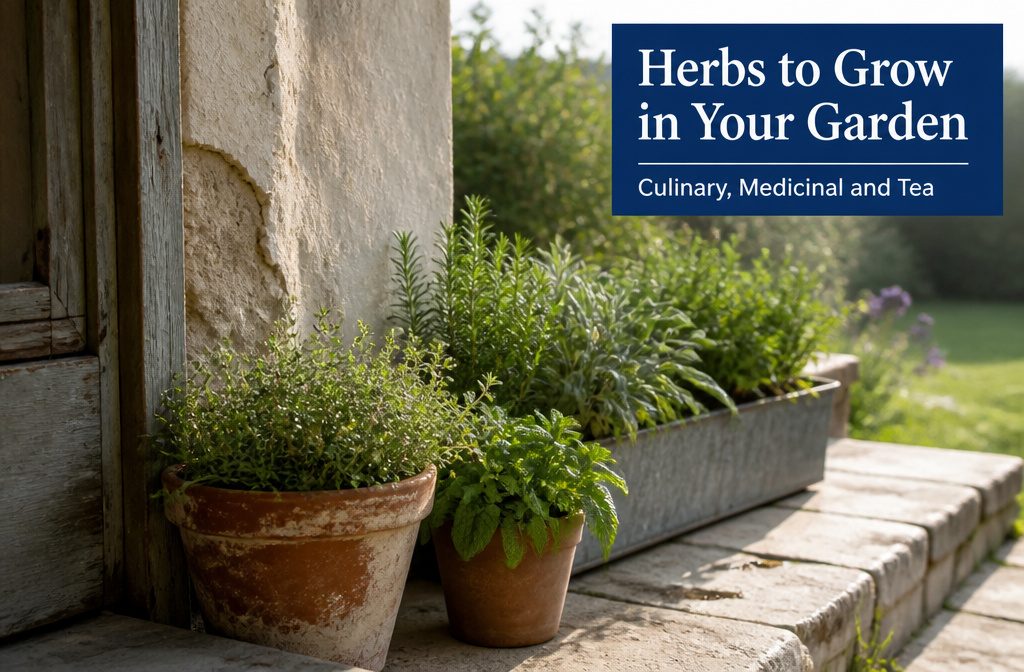
Most herbs worth planting in a garden want full sun (at least 6 hours) and well-drained soil, and they do better with less fertilizer and water than you’d expect.
Mint is the exception that bites: it spreads by runners and takes over a bed unless you sink a 5-gallon bucket with the bottom cut out.
Oregano
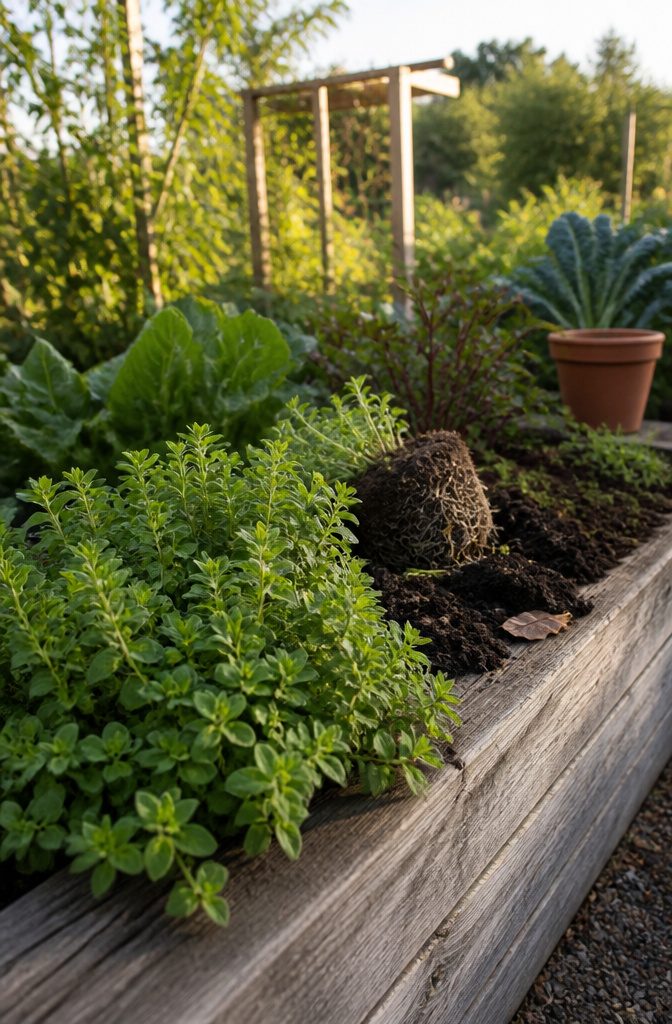
Oregano grows in the ground, a raised bed or a large container at least 12 inches wide and deep, which makes it one of the easier perennials to place.
Start from seed sown right in the garden, start seeds indoors, or buy a nursery plant. The plant is the fastest route, and the return on a few dollars is hard to beat.
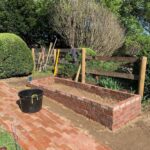
In a raised bed, prune from the back so the plant spills over the edge and leaves the interior free for other crops.
Divide an overgrown clump by cutting it in half, digging up one side of the root ball and replanting it elsewhere. Clip off brown or spotted leaves as you see them.
In the kitchen, fresh or dried both work, and pizza is the obvious first stop. For beginners, it forgives pruning and spreads on its own, so you get plenty of leaves.
Basil
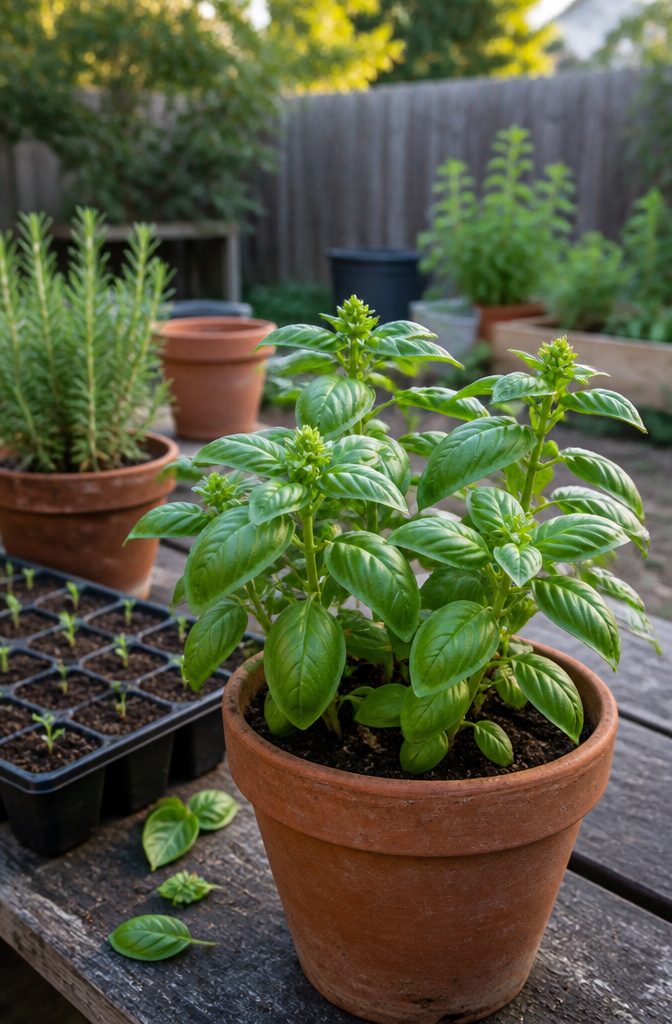
Basil sulks in cold.
Anything under 40°F can damage it, so the plants go outside only after the last frost has clearly passed. Start seeds indoors about 4 weeks before your last frost date and move them out about 2 weeks after it.
Sow seeds 1 inch apart and ¼ inch deep.
Once they’re up, thin to 8 inches apart; crowded basil stays spindly and invites mildew. In a container, choose a pot at least 6 inches wide, which suits one or two plants.
Pinch off the top pair of leaves above a leaf junction as soon as flower buds appear, and keep doing it.
Flowering signals the plant to wind down, so pinching buys you more leaves. Harvested basil keeps in the fridge for up to a week.
Chives
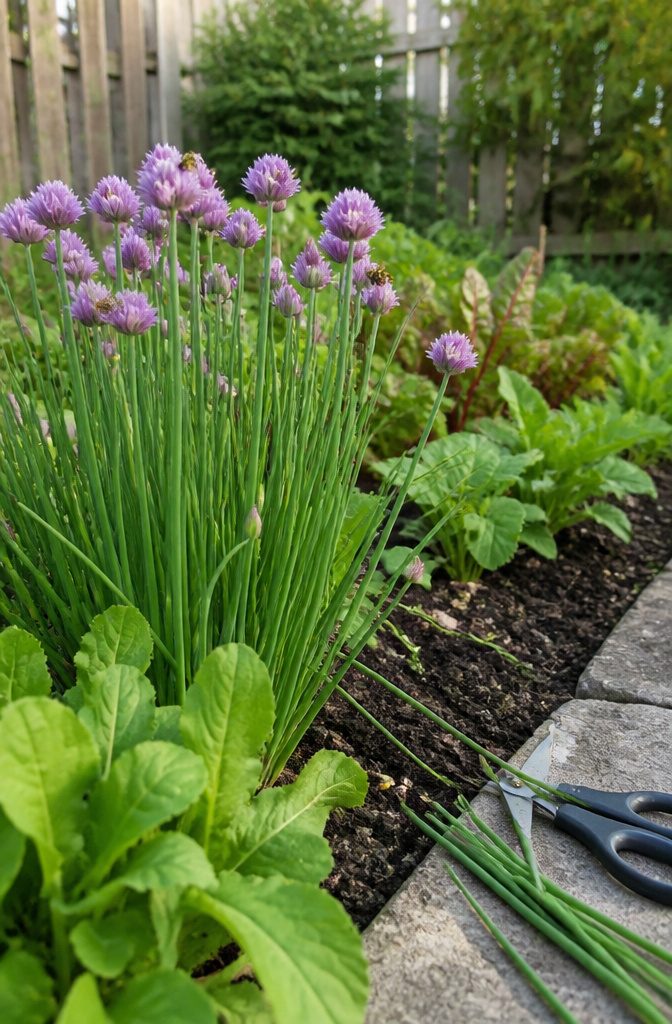
Chives are the easiest herb here to leave alone. They are a hardy perennial, winter hardy to Zone 3, so the clump comes back for years with no coddling.
The hollow leaves taste mildly of onion, and the lavender pom-pom flowers are edible too, good scattered over a salad. Bees like them, which is why I’d tuck a clump into a flower bed.
Seed works but is slow: 2–3 weeks to germinate, then thin seedlings to 8 inches apart. A garden center transplant gets you cutting sooner, and I’d buy one if you’re impatient.
Cut leaves a couple of inches above the ground with scissors. Every 3–4 years, divide the clump to keep it vigorous; the extra pieces become free plants for a friend’s yard.
Dill
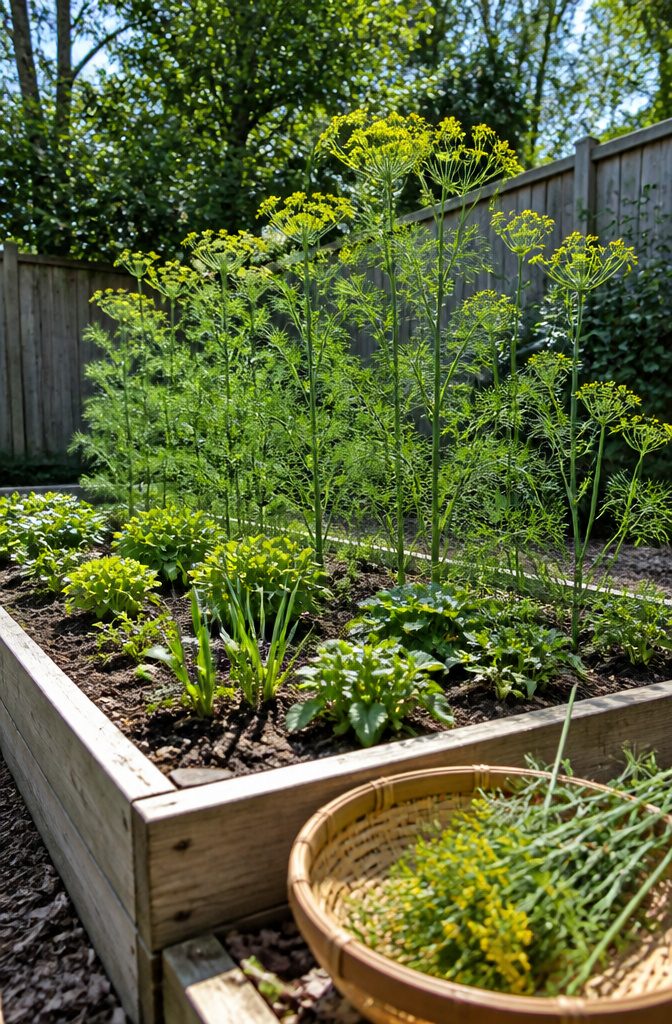
Dill grows fast in cool weather and then bolts once it warms up, so sow it early.
It tolerates a light frost, which means seeds can go in the ground in early spring, about ¼ inch deep and 1–2 inches apart. I skip transplants because dill resents being moved; direct sowing wins.
Seeds take about 2 weeks to germinate. Once seedlings are a few inches tall, thin them until plants sit at least 12 inches apart, since a crowded patch turns spindly and a spaced one gets thick and leafy.
Plan for height: it can reach 3 feet or more, so give containers and raised beds a back-row spot.
Sow again every 2–3 weeks for steady leaves.
When flowers open, let some stand. Bees and butterflies visit them, and the seed heads can be clipped for harvest.
Parsley
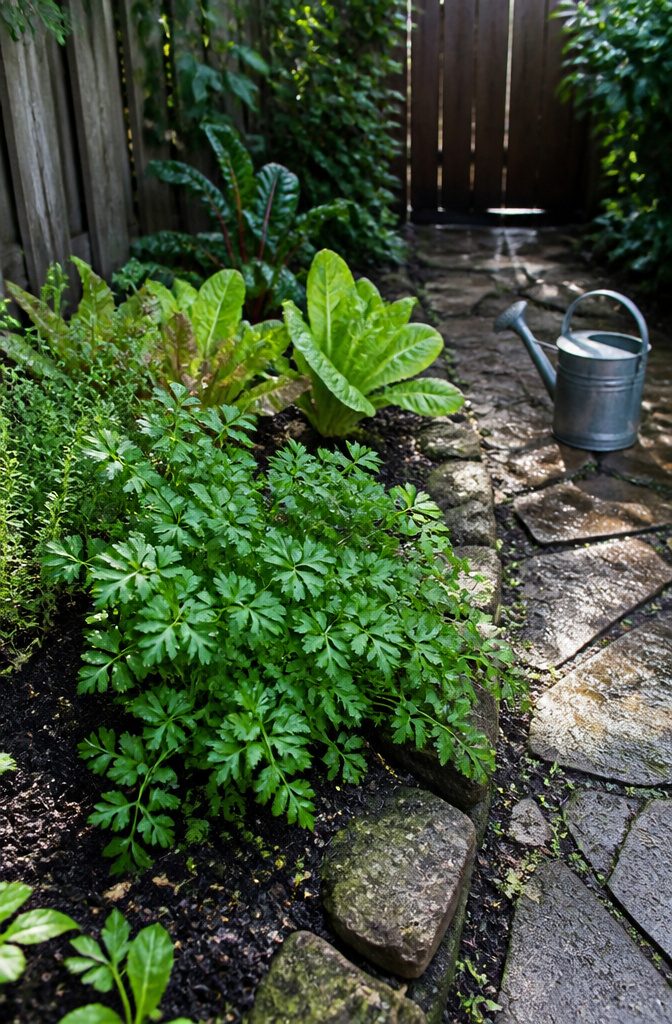
Parsley sits in the carrot family, not the mint-and-oregano crowd, and it is a biennial: leaves the first year, flowers and seed the second.
Once it flowers the leaves turn bitter, so many gardeners treat it as an annual anyway. In milder climates it can come back for a second season.
For cooking, I’d grow flat-leaf (Italian) parsley, which has the better flavor. Curly is the garnish type, though its bumpy leaves hold up longer in freezing temperatures.
Parsley is the exception to the full-sun rule: partial sun is fine, as long as the soil stays moist and drains well.
Seeds are slow, 3 weeks or longer, so soak them overnight or buy started plants. Space plants 10–12 inches apart, and cut outer stalks near the ground to keep it producing.
Mint
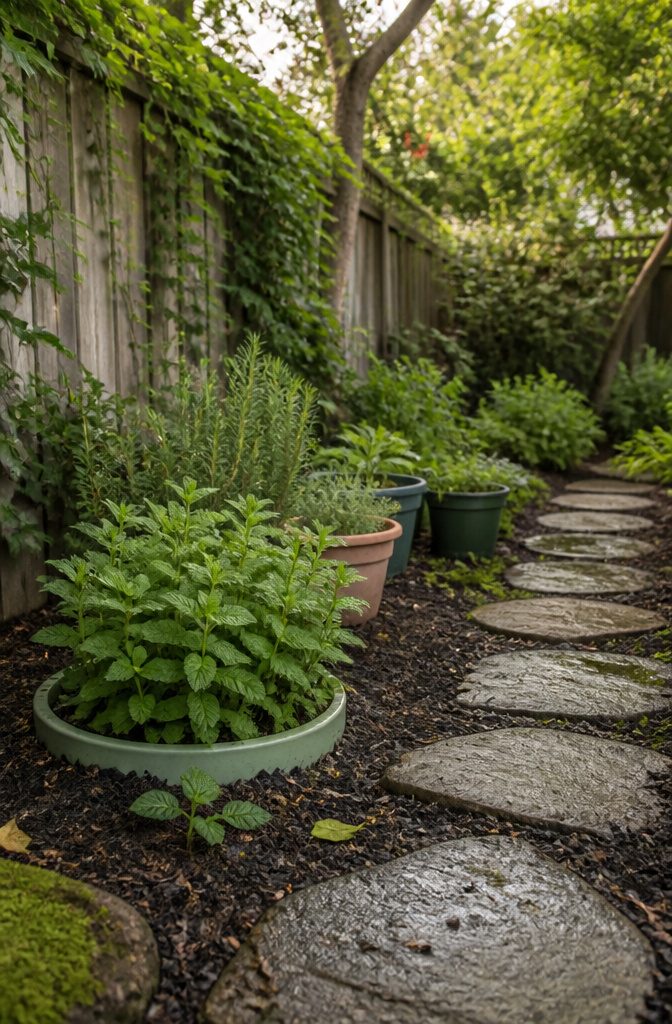
Mint spreads by underground runners, and left alone in a bed it will take over the whole bed. Peppermint, spearmint, pineapple, chocolate, apple and orange mint all grow the same way, so pick by flavor and not by habit.
For a pot, give it a large container of its own.
To use a bed, cut the bottom off a 5-gallon bucket and sink it in the soil, leaving a few inches above ground, then fill it with soil and plant inside.
Keep different mints a couple of feet apart so their scents stay distinct.
Mint is another exception to the full-sun rule: it does fine in part shade with moist, fertile soil.
Most types are hardy to Zone 5. Pinch the tips to keep it bushy, and divide every 3–4 years.
Thyme
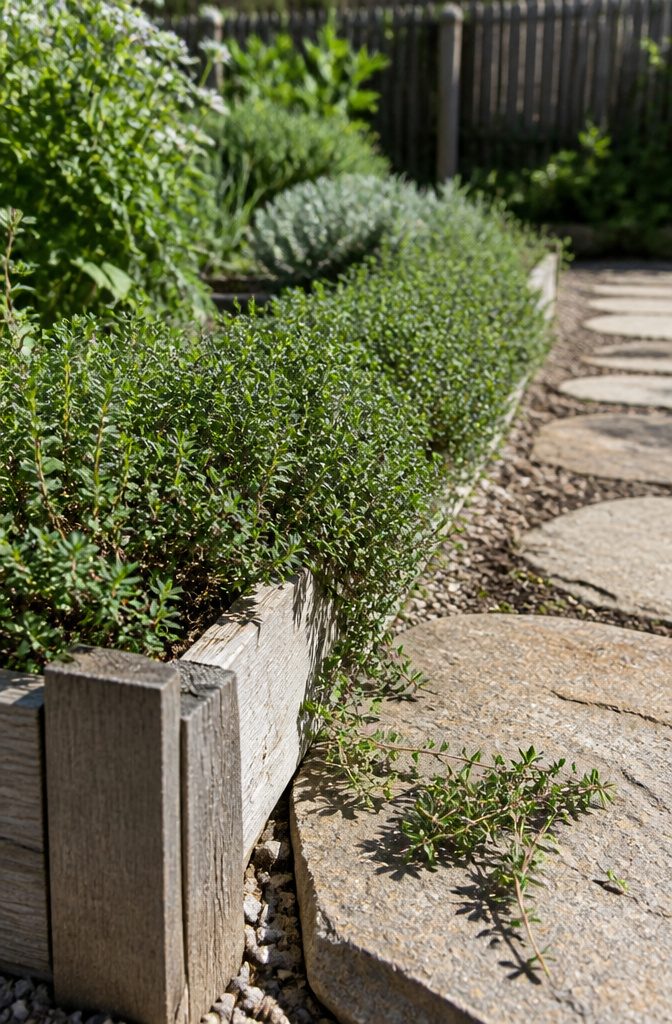
Thyme stays low and tight, so it works at the front of a bed, trailing over a raised-bed edge, or as ground cover where grass won’t grow.
Its shallow roots also suit containers. Most types are hardy to Zone 5, though a winter mulch helps in colder zones.
Start seed indoors 6–8 weeks before your last frost. Scatter it on top of the mix, cover it very lightly, and keep it moist for the 2–4 weeks it can take to sprout.
A store-bought plant skips all that and pays for itself in a couple of harvests, which is the route I’d take if you’re short on windowsill space.
Set plants 8–12 inches apart in full sun with sandy, well-drained soil. Cut stems back to the base when you harvest, since that keeps the plant from going woody.
Sage
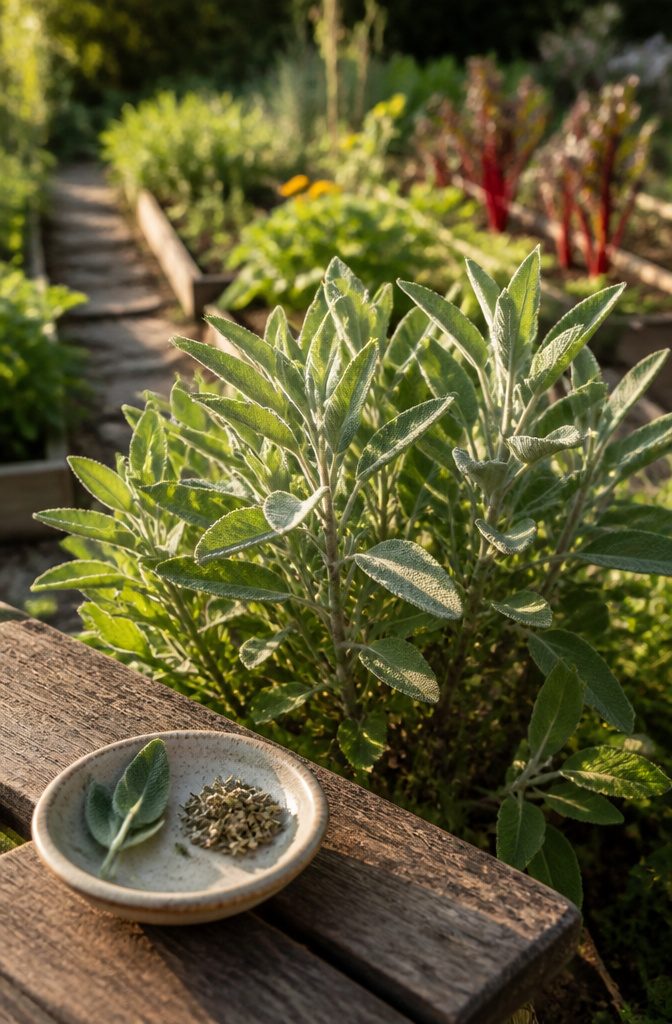
Sage earns its spot in the kitchen with fatty, rich foods. Its savory, slightly peppery leaf cuts through pork, sausage, butter sauces and poultry stuffing, and it is the classic partner for browned butter over pasta or squash.
Use it sparingly, because the flavor turns bitter and medicinal fast. One or two leaves go a long way, and dried sage is much stronger than fresh, so cut the amount if you swap.
As a perennial, it comes back each year and gets woody with age.
Plant it where you can leave it alone. The strong scent also makes it a decent companion near vegetable beds, since many pests dislike it.
I would skip it for delicate dishes; it overpowers them. For tea, a few leaves steeped in hot water give a bold, earthy cup that suits a sore throat.
Cilantro and Coriander
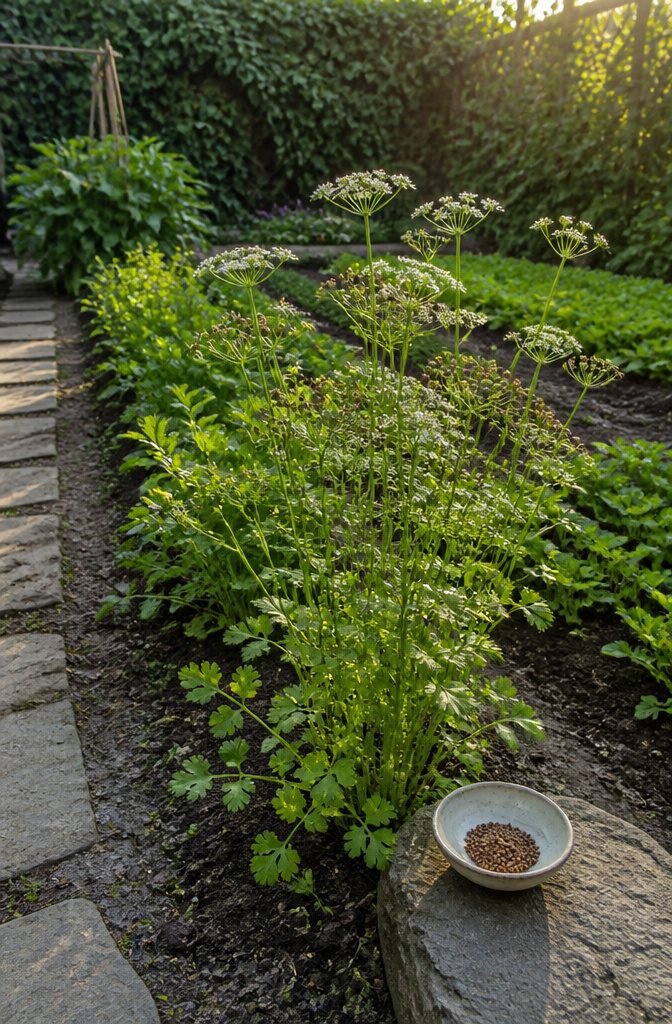
Cilantro is a cool-weather annual, and most "difficult plant" complaints are really timing problems.
Once temperatures climb into the 70s and 80s it bolts, so sow in early spring or fall. The leaves are cilantro; the seeds are coriander, and one plant gives you both.
It grows 1–2 feet tall in a container, up to 3 feet in the ground, and spreads about 10 inches.
It has a taproot and sulks in a pot, so I’d plant it in the ground with a little afternoon shade and regular water. The ground-grown plants can look spindly, but they produce plenty.
Pinch leaves as needed for salsa, tacos or fish. Let a few plants flower, and the blooms draw beneficial insects.
Harvest the coriander seeds once they turn brown. If summer is your only window, culantro is a heat-tolerant stand-in with a similar flavor.
Rosemary
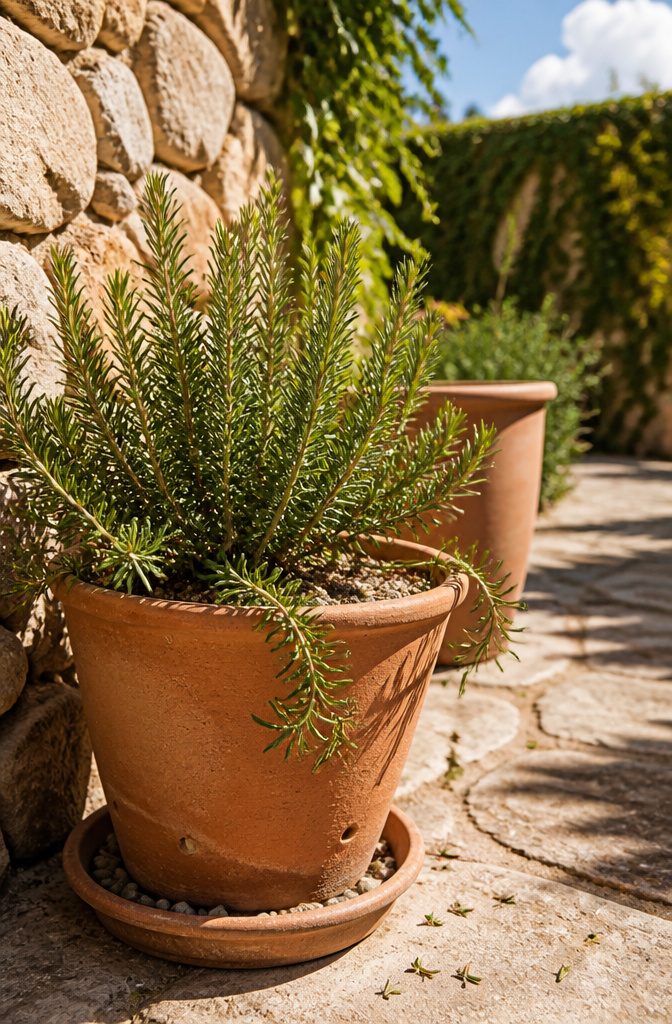
Rosemary is an evergreen shrub from the Mediterranean, and it grows the way you’d expect from that origin: full sun, well-drained soil, and very little water.
Overwatering is the mistake I’d warn you about first. Let the soil dry out between drinks, because a plant built for drought sulks in wet roots.
That makes it a natural for containers, where you control the drainage.
Pick a pot with holes and a gritty mix. Needle-like leaves hold their oils, so a few sprigs go a long way in roasted potatoes, chicken, or bread.
Varieties differ more than you’d guess.
Prostrate rosemary flowers more than most and spills nicely over a pot edge. Salem is bred for North Carolina’s climate, which makes it worth a look if you garden there.
Lavender
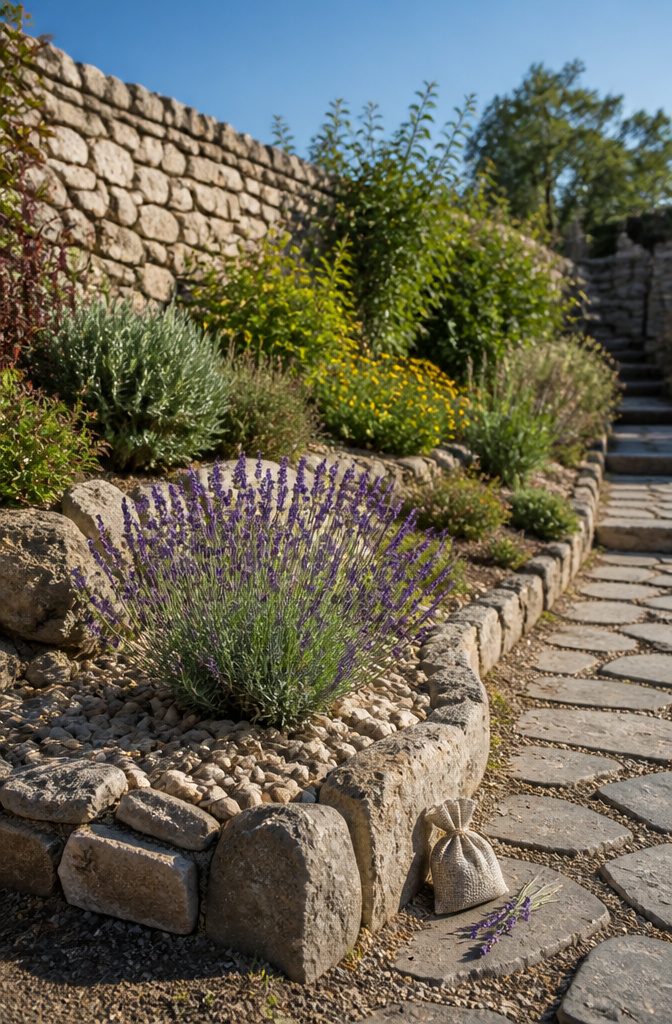
Lavender comes from the Mediterranean and the Middle East, so it wants full sun and sandy, well-drained soil more than it wants care.
Soggy soil is what kills it, and heavy clay or a humid summer makes the problem worse. A raised bed fixes most of it, and so does working 2 to 3 inches of cracked pea gravel into clay.
A 1–2 inch layer of pea gravel or other stone around the plants helps too. Lavender has gray leaves and dislikes damp, and stone mulch keeps moisture off the crown and helps prevent disease.
Water deeply, then let the soil dry before the next round.
Prune regularly to hold the shape and bring on blooms. The flowers go into tea, baking, potpourri and sachets, and the scent alone is worth the bed.
Fennel
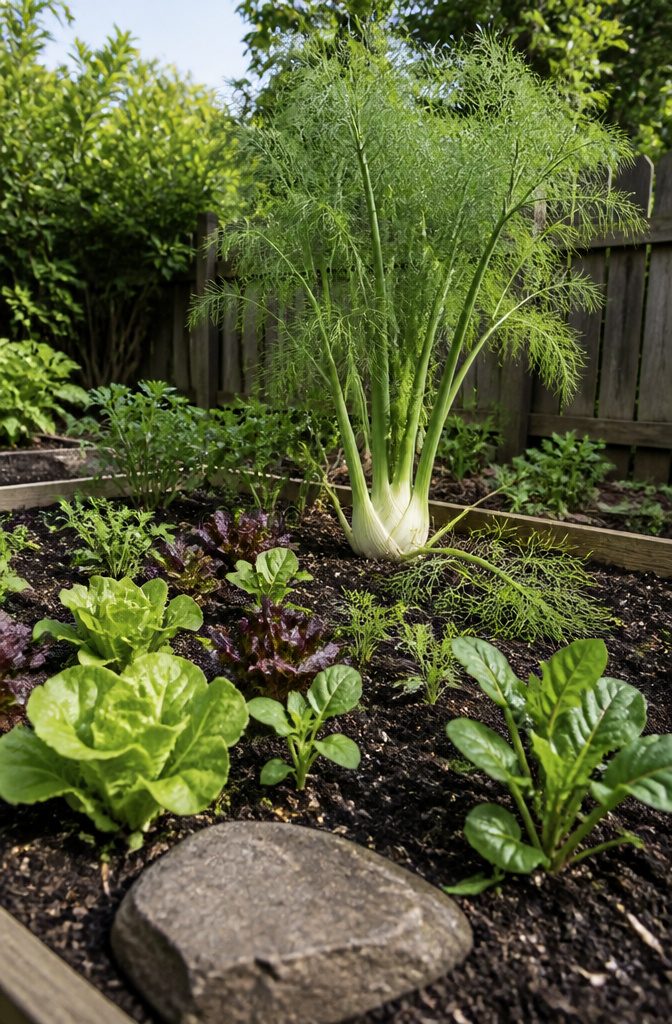
Fennel gives you two crops in one plant: feathery fronds with a fresh anise flavor and seeds that go into breads, pastries and meats.
The Florence variety adds a third, a bulbous stem base you can braise in quarters or dice raw into salads.
Wait until the danger of a hard frost passes, then sow seeds ½ inch deep and 4 inches apart. They take 2–3 weeks to germinate, so keep the soil moist.
If you want large bulbs, thin the seedlings to 10–12 inches apart. Bulbs may take 90 or more days, which is a long wait for a small return.
Bronze fennel is a perennial that can reach 6 feet, so give it the back of the bed. Butterflies and their caterpillars also feed on it.
French Tarragon
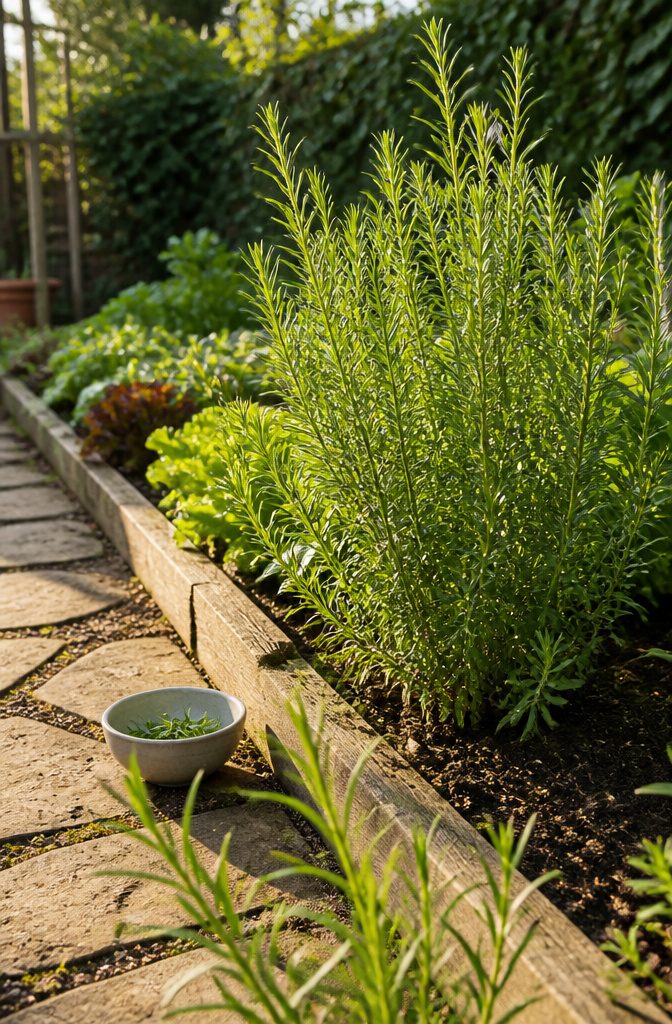
French tarragon (Artemisia dracunculus) tastes faintly sweet, with an anise or licorice note, and that flavor is the reason to grow it.
Read the plant tag before you buy. Russian tarragon is bitter and adds little in the kitchen, so buy French, not Russian, even if the Russian plant looks identical on the shelf.
Give it room: it grows 2–3 feet tall and about 2 feet wide, a branching hardy perennial with many narrow leaves.
In the kitchen, it earns its space with fish poached in a few sprigs, roast chicken, homemade mayonnaise and mustard, and flavored vinegars.
A handful of fresh leaves also lifts green salads and potato salad. Chop it with the other fines herbes for omelets and soups.
Chamomile
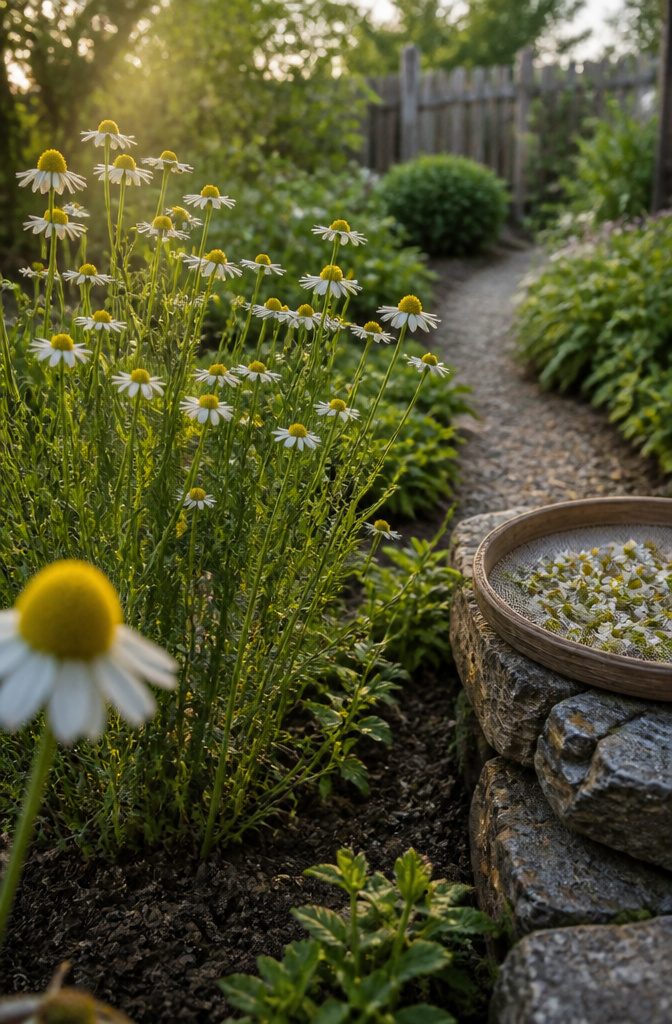
German chamomile is the annual, and it’s the one most people want for tea.
It grows upright, branches into feathery foliage, and covers itself in small daisy-like flowers with yellow centers. It dies at season’s end but reseeds freely, so one planting often becomes a patch that returns on its own.
Roman chamomile is the perennial.
It stays low and spreads in a soft mat, which suits a path edge, a border front or a container where you want ground cover. It makes tea too, though I find its flavor more bitter.
For tea, plant German; for a lasting, low carpet, plant Roman. Renters who want a quick harvest from a pot will do better with German, since it flowers in a single season and needs no commitment.
Lemon Balm
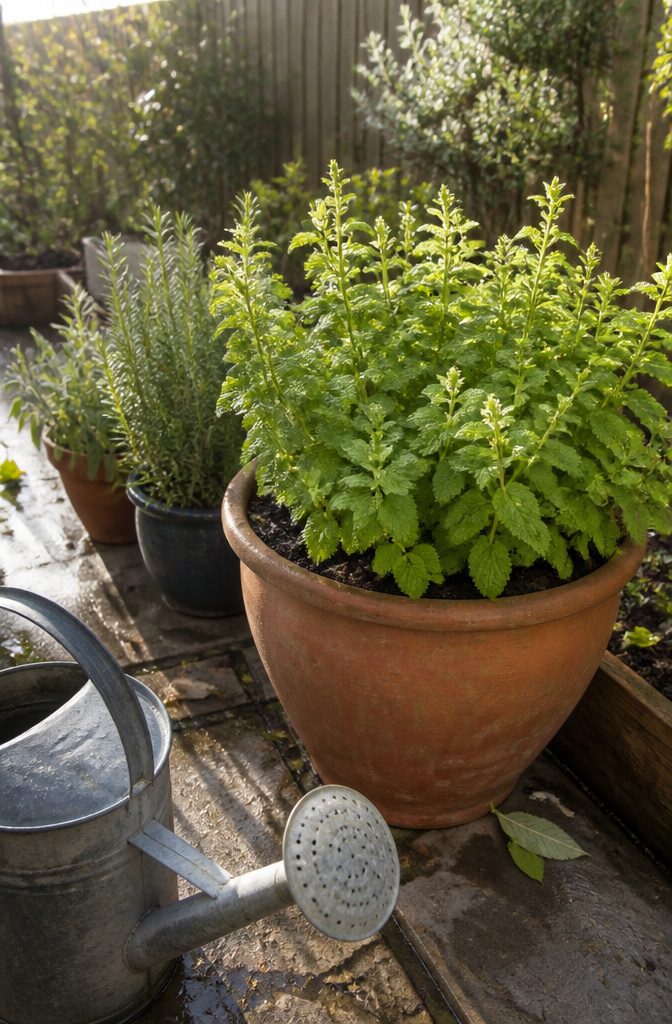
Lemon balm is the herb I’d plant first for tea, because the foliage is strongly lemon scented and flavored and the plant shrugs off almost anything.
It handles temps in the 90s, drought, frost and neglect, and it comes back every spring, even after harsh Chicago winters.
That toughness is also the problem. Lemon balm colonizes, and it drops seed easily, so new plants turn up in places you never planted them.
Cut the flower stalks before they set seed, and grow it in a pot or a bordered bed if you want it to stay put.
Use the leaves in tea, fruit dishes and candies. Bees love the flowers, which is a fair reason to let a few bloom.
Sun, Soil, and Water
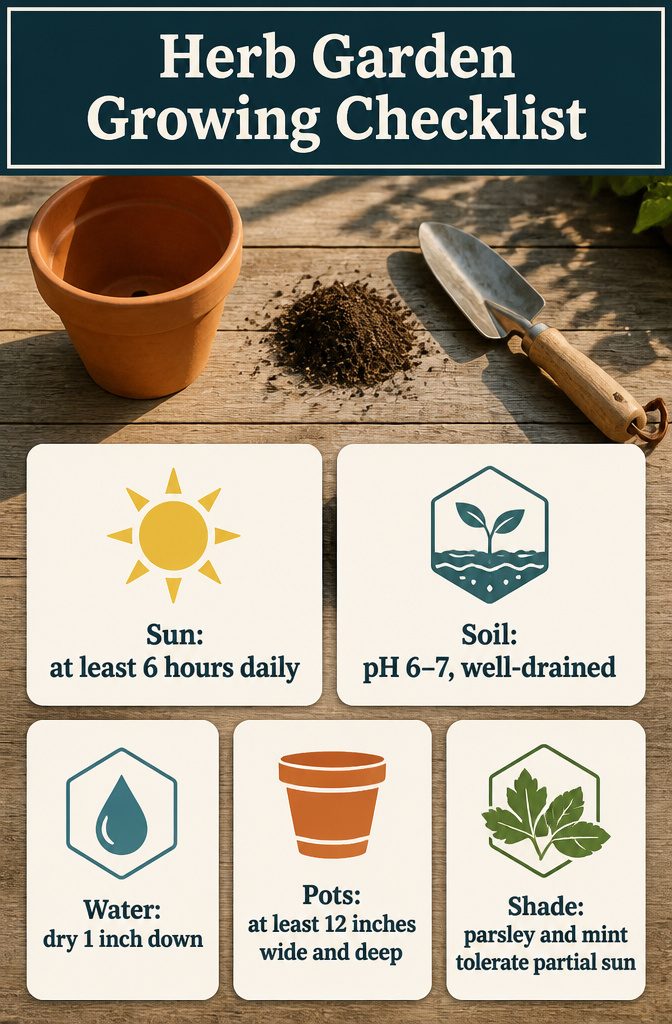
Most herbs ask for the same few things, and the list below covers them.
- Sun: Aim for at least 6 hours a day, since fragrance oils, which carry the flavor, build up with light. A spot with 4 hours still works for a beginner, with milder flavor.
- Soil: Well-drained with a pH of 6–7. Heavy clay needs 2–3 inches of pine bark, pea gravel or coarse compost worked in.
- Water: Test with a finger. Water when the soil is dry 1 inch down, and do it early so leaves dry before dark.
- Containers: Use pots at least 12 inches wide and deep. Annuals need 6–8 inches of soil.
- Exceptions: Parsley and mint tolerate partial shade, and mint likes moisture.
Skip rich fertilizer. Very fertile soil grows lush, bland leaves.
Harvesting and Using Herbs
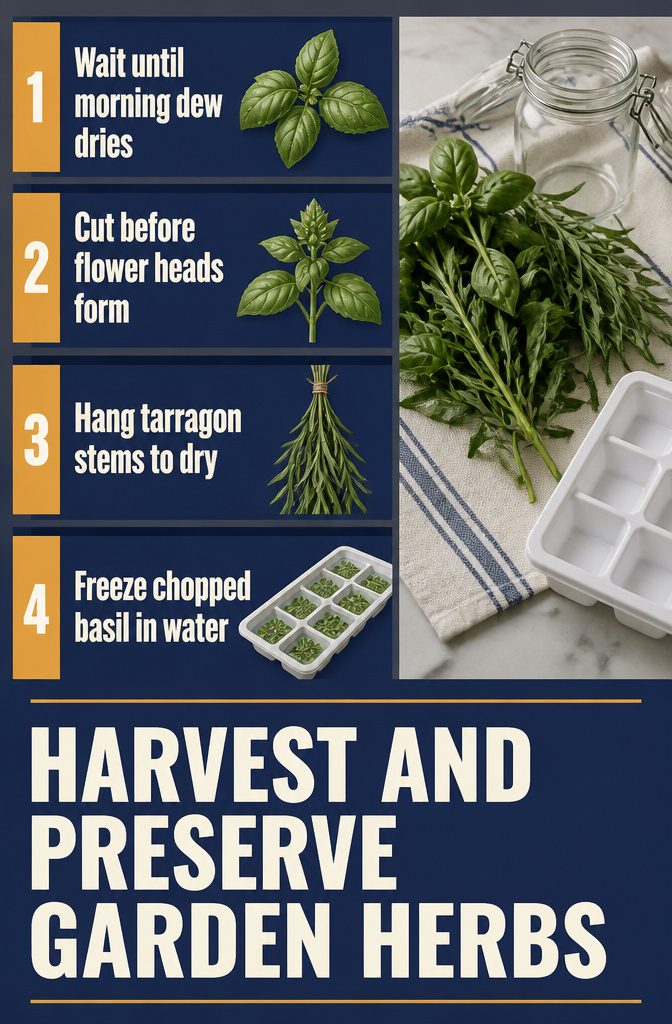
Cut herbs early in the morning, after the dew dries but before the heat of the day, and you catch the leaves when their oils are strongest.
Herbs should be harvested just prior to blooming, which is when the essential oils are at their peak.
— Clemson Cooperative Extension Home & Garden Information Center
For leafy herbs like basil and tarragon, that means cutting before the flower heads form. Regular cutting also pushes new growth, so I’d harvest often rather than save the plant for later.
Use leaves fresh when you can.
To keep extra, hang tarragon stems to dry, strip the leaves, and store them airtight. Basil loses flavor dried, so chop it coarsely and freeze it in ice cube trays filled with water.
Annuals, Perennials, and Timing
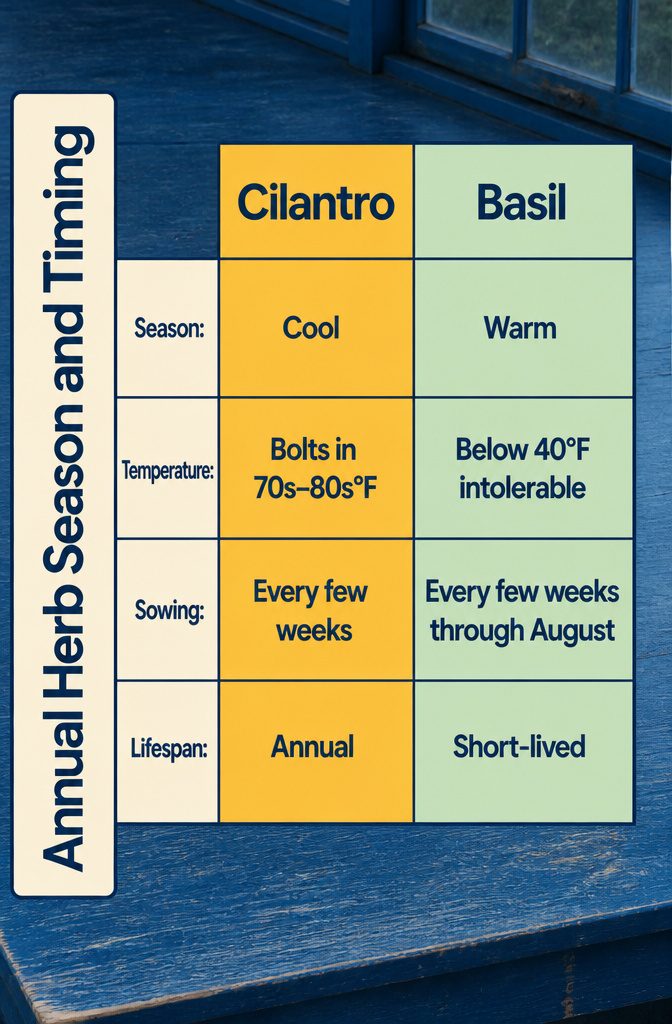
Cilantro and dill want cool weather, and cilantro bolts once temperatures climb into the 70s and 80s. Sow it in spring and again every few weeks, since it runs to seed fast.
Basil is the opposite: it can’t take temperatures below 40°F, so it waits for warmth. Sow or plant basil every few weeks through August, because individual plants are short-lived.
| Herb | Season | Lifespan | Timing |
|---|---|---|---|
| Cilantro | Cool | Annual | Sow every few weeks |
| Dill | Cool | Annual | n/a |
| Basil | Warm | Annual | Every few weeks through August |
| Chervil | n/a | n/a | Every 2 weeks |
Pinching off fully formed basil flowers buys a little more life, but once they mature the plant declines.
Frequently Asked Questions
What are some popular herbs for cooking?
Flat-leaf (Italian) parsley has the better flavor for cooking, and basil goes outside only after the last frost has clearly passed. Pizza and pasta cover oregano and basil, while sage and rosemary suit rich meats and roasted dishes.
What are the easiest herbs to grow at home?
Chives, oregano, mint and lemon balm are the most forgiving. Chives are winter hardy to Zone 3 and come back for years with no fuss, and oregano tolerates pruning and spreads on its own.
Mint and lemon balm spread so aggressively that they are best kept in a pot or a bordered bed.
Can rosemary be grown in South Carolina?
Yes. Rosemary is an evergreen shrub from the Mediterranean that wants full sun, well-drained soil and very little water.
Let the soil dry between waterings, and grow it in a pot with drainage holes and a gritty mix if your soil stays wet.
The Salem variety was bred for North Carolina’s climate, so it is worth a look in the neighboring Carolinas.