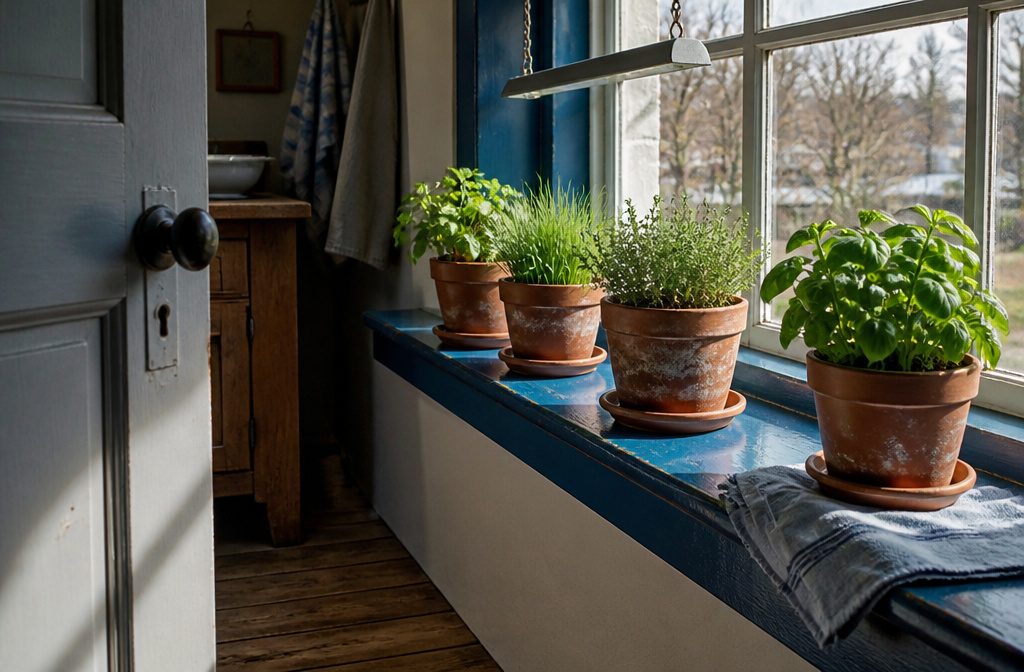
Herbs grow on a windowsill in a 6-inch pot with a drainage hole, but only if the window gets about 6 hours of direct sun.
South-facing glass works best. Without it, stems stretch and leaves shrink, and a grow light 6–12 inches above the plants, run 12–16 hours a day, makes up the difference.
Herbs That Suit Indoors
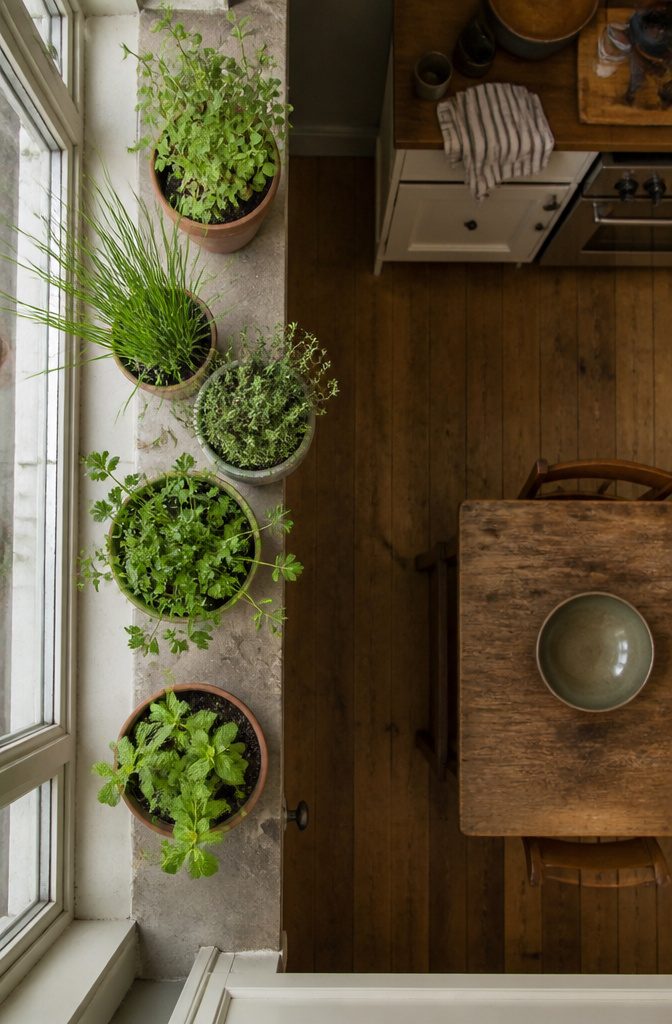
Start with chives, parsley, oregano and thyme.
Chives take the least fuss, and the woody herbs (oregano, thyme) cope with a container and mostly indirect light. Most of these have shallow roots, so a pot about 6 inches deep that fits a windowsill is enough.
Mint and lemon balm grow fine in pots, but give each its own.
Their roots will crowd out slower neighbors. Thyme, oregano and chives share similar light and water needs, so they can sit together.
Basil, cilantro and sage are the ones I’d hold back for a bright window. Sage needs very good light and good airflow, or it invites disease.
Rosemary, marjoram and bay laurel also want extra light and can attract spider mites indoors. Basil roots run deep, so it wants its own pot too.
Containers and Spacing
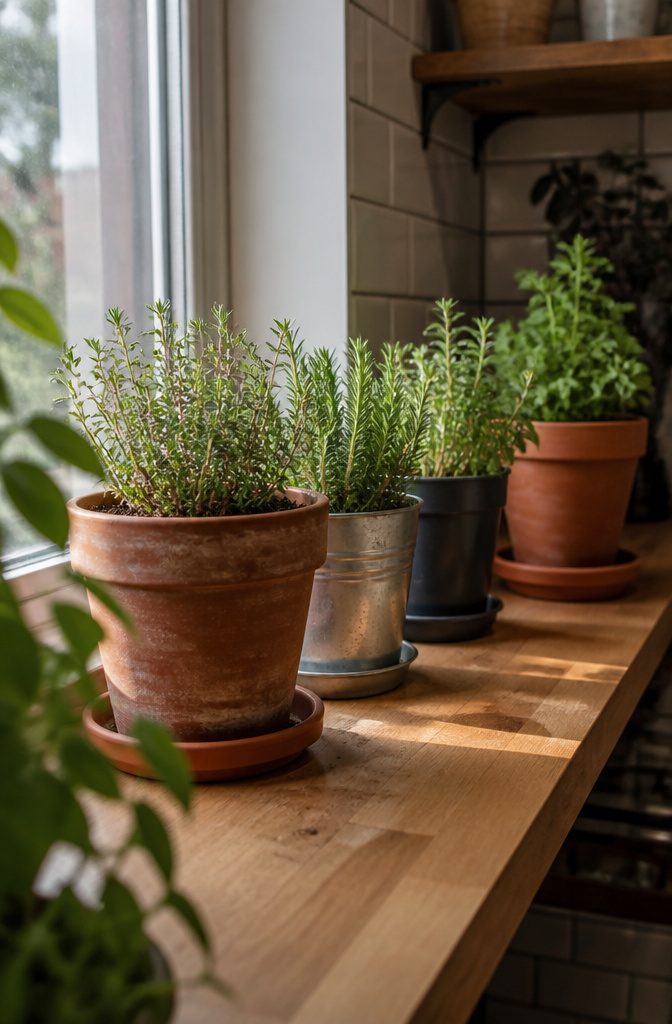
Every pot needs a drainage hole and a saucer under it.
Herbs rot when they sit in water, and a pot draining straight onto a sill ruins the finish. Use a plastic, rubber, or metal saucer, since clay passes moisture through to the surface below.
If a planter you love has no holes, drill them every 3 to 4 inches. Rocks in the bottom are no substitute.
Give each herb its own pot unless the plants share the same light, water, temperature and humidity needs.
Mint and lemon balm spread until they crowd out their neighbors, so they always go solo. Herbs that stay under 12 inches tall are happy in a 6-inch pot.
Potting Mix and Planting
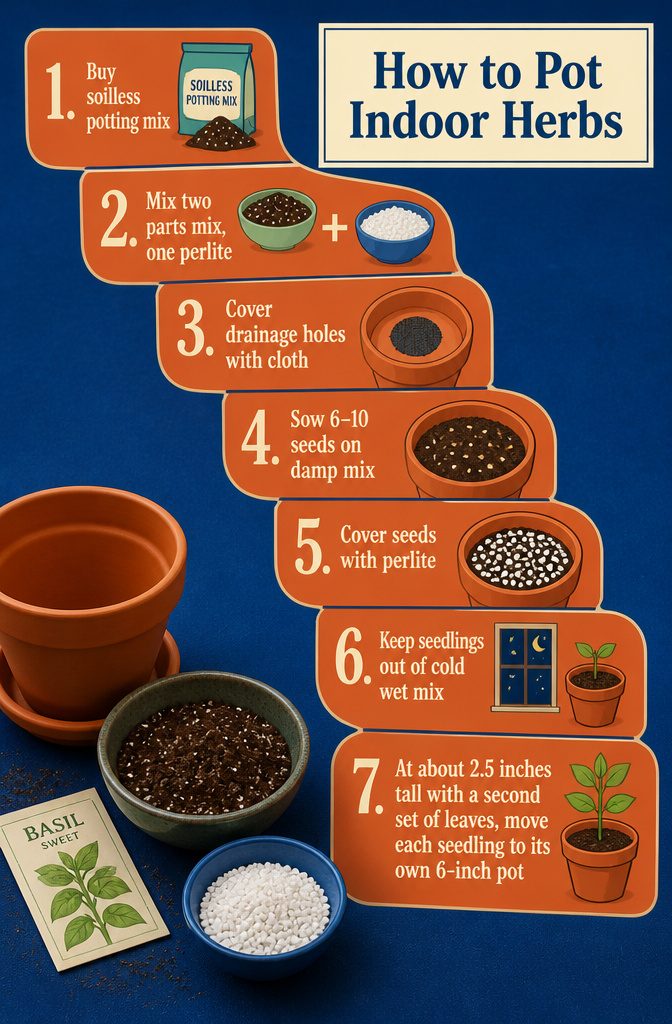
- Buy a soilless potting mix and skip outdoor garden soil, which compacts easily and can carry pests and pathogens indoors.
- Mix 2 parts soilless potting mix to 1 part perlite. To build your own, use 1/3 potting soil, 1/3 organic matter (peat moss, compost or leaf mold) and 1/3 perlite.
- Cover each drainage hole with a porous barrier, such as weed barrier cloth, so mix stays in the pot.
- Fill the pot and sow seeds thinly on the damp surface, about 6–10 per small pot.
- Cover the seeds with perlite instead of compost, and water only if the surface dries, in the morning.
- Keep seedlings from sitting in cold, wet mix. That is how damping off starts, and windowsills get cold at night.
- At about 2.5 inches tall with a second set of leaves, move each seedling to its own 6-inch pot.
Light, Temperature and Airflow
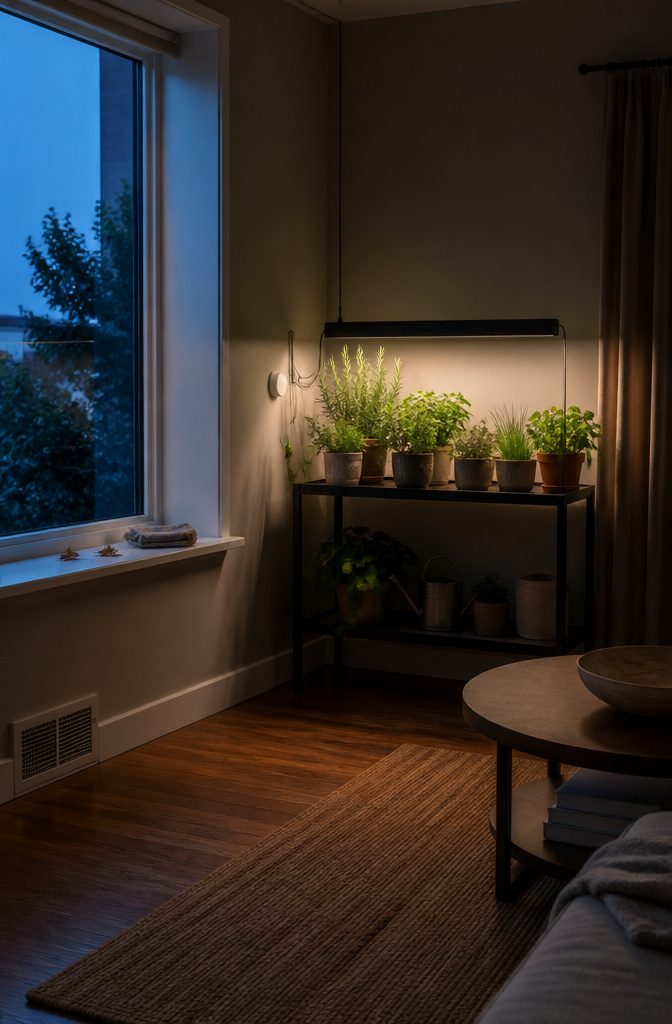
A south-facing window that stays unblocked is the best spot, and 6 hours of direct sun is the working minimum for most herbs.
Rosemary, thyme and bay want the full dose; chives, cilantro and lemon balm get by on less. Pale stems, long gaps between leaf sets and small leaves mean the plant is reaching.
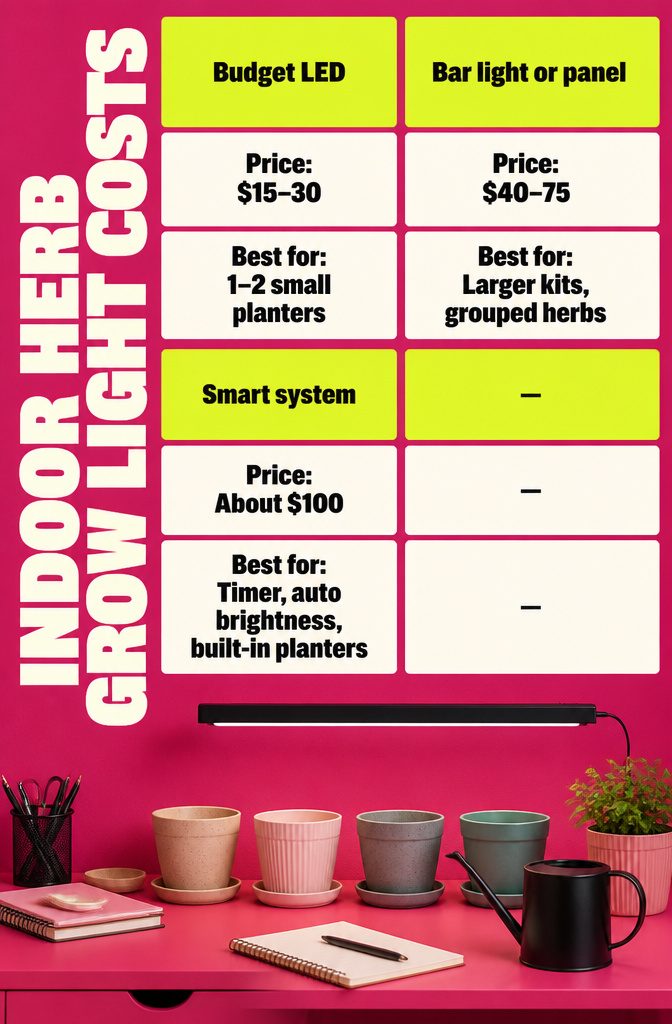
Where the window falls short, a grow light 6–12 inches above the leaves, on a timer for 12–16 hours, fills the gap. Budget LEDs run $15–30 and cover one or two pots; panels at $40–75 suit a grouped shelf.
Herbs like the temperatures you do: 65–70°F by day, 55–60°F at night. Basil wants to stay above 50°F, so keep it off a cold sill.
Keep leaves off the glass, and away from vents and drafts. A little air movement keeps the plants sturdy and mildew away.
Watering and Fertilizing
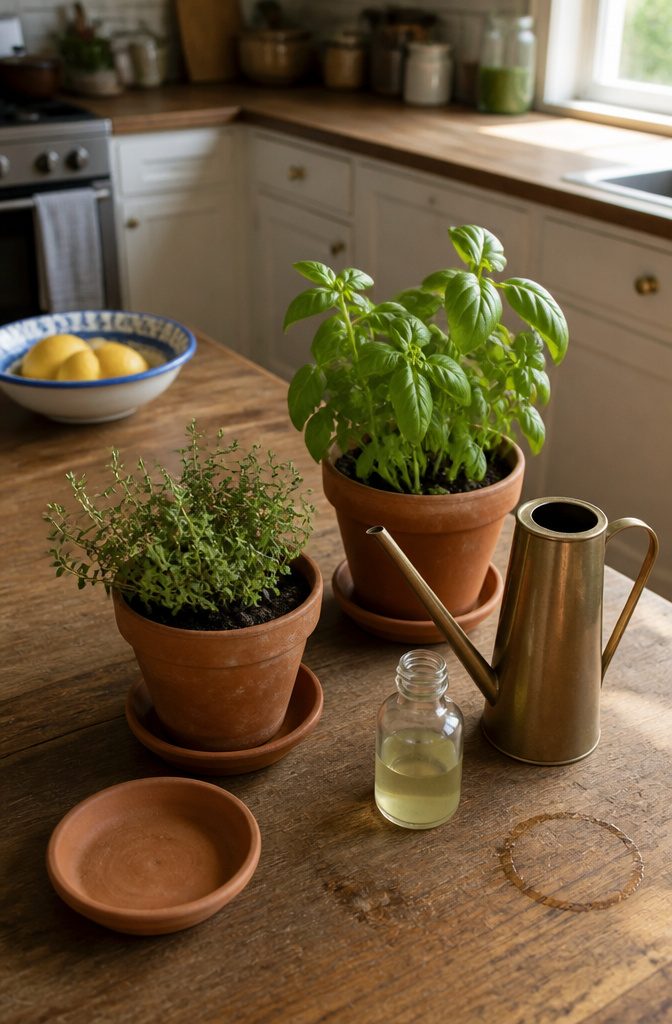
Push a finger into the top inch of soil before you water; for oregano and thyme, about ½ inch is enough to check.
If it feels dry, water until it drains. Basil is the exception, since it should never dry out fully, so check it more often than the rest.
No single schedule fits every pot on the sill. Fertilize at half the label strength, only into already moist soil.
Fertilizing herbs more often may negatively affect the herb’s aroma and taste.
More feeding means weaker flavor, so I’d stay on the light side. Basil and parsley get it every 2–3 weeks; rosemary and thyme every 4–6 weeks.
Harvesting and Pruning
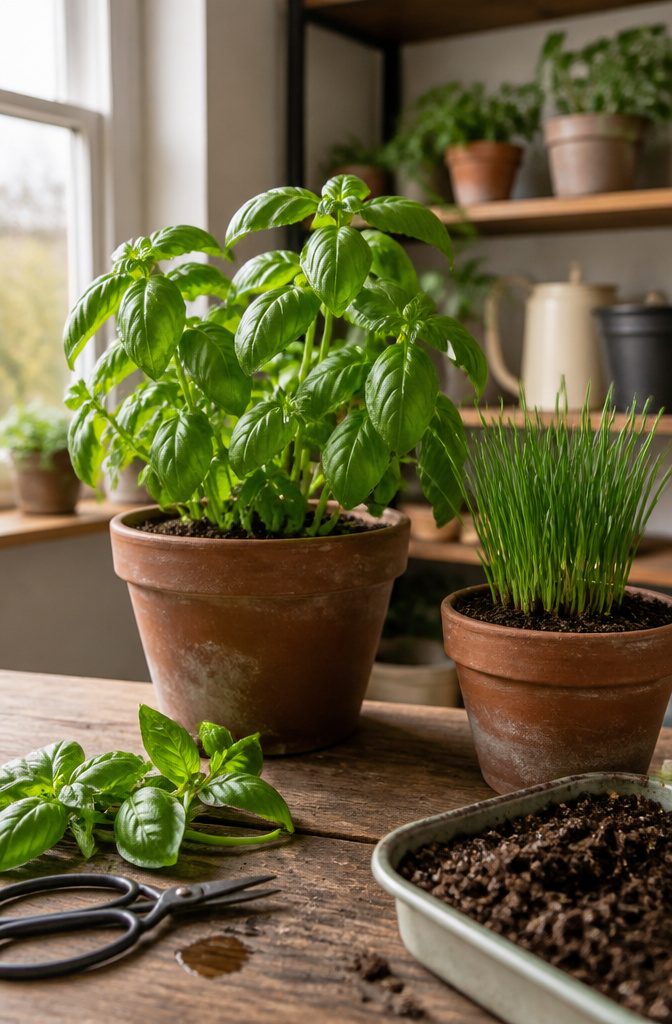
Start cutting once a plant stands 4–8 inches tall with several strong stems. Snip just above a leaf node, the spot where a new pair of leaves will form, and never take more than one-third of the plant at a time.
Basil is best picked from the top, which pushes out side shoots instead of height.
Chives follow their own rule: cut at 6 inches and leave 2 above the soil.
Watch for pests, yellowing leaves, and leggy stems, which mean too much water, too little light, or both.
Roots poking out of the drainage holes mean it’s time to repot, and early spring is the best moment. Before moving pots outdoors, start them in partial shade and add light every few days.
Choosing a Grow Light
A windowsill without southern exposure leaves most herbs thin and spindly, with smaller leaves and weaker aroma.
A grow light fixes that, and the fluorescent setup is the one with a clear spec: two 40-watt cool white bulbs, 6–12 inches above the plants, running 14–16 hours a day.
LEDs cost more up front for some formats, and the price tells you what you get.
| Option | Price | Best for |
|---|---|---|
| Budget LED | $15–30 | 1–2 small planters |
| Bar light or panel | $40–75 | Larger kits, grouped herbs |
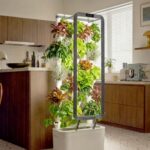
| Smart system | About $100 | Timer, auto brightness, built-in planters |
For a few pots, I’d buy the $15–30 LED and stop there.
Spend $100 only if you want the timer handled for you. Rotate pots often, since the side facing away from the light grows lopsided.
Common Pests and Problems
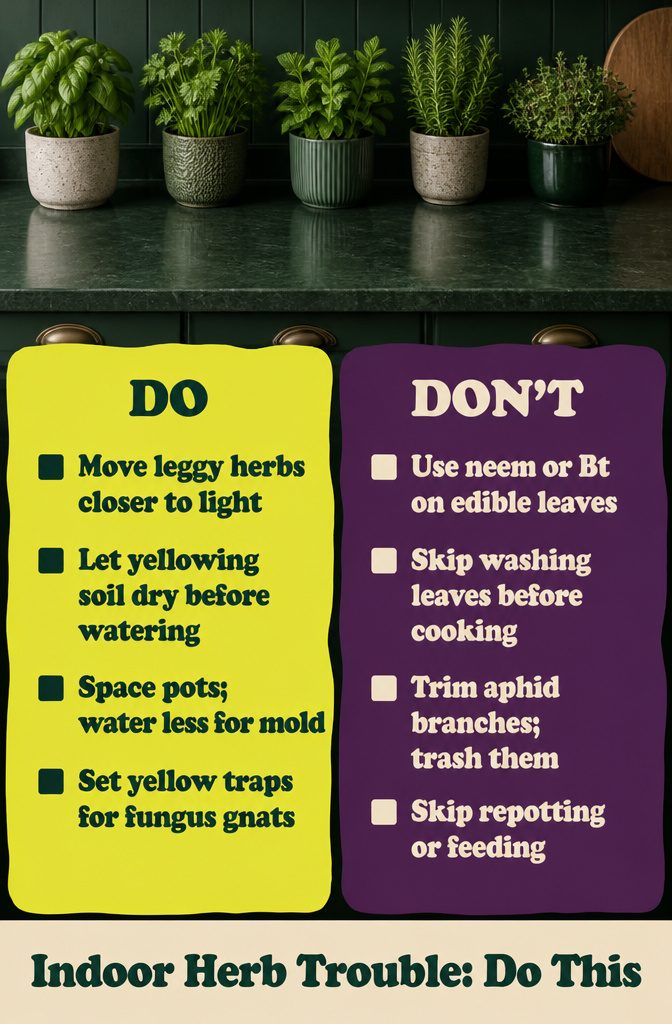
Most indoor herb trouble traces back to light or water, and the plant tells you which.
- Leggy, stretched stems mean the plant is reaching for light. Move it closer to the window before blaming anything else.
- Yellowing leaves usually point to too much water. Let the soil dry before the next drink.
- Mold on the soil surface means poor airflow, overwatering, or both. Space pots apart and water less often.
- Fungus gnats: set yellow sticky traps near the pots and fix your watering.
- Aphids: trim off the infested branches and put them in the trash.
- Neem oil or a Bt-based product is a last resort, label directions followed. I skip them, since you’ll be eating the leaves.
- Wash every leaf before it goes in a recipe.
- Slow growth often means the plant needs repotting or feeding.
Cooking With Fresh Herbs
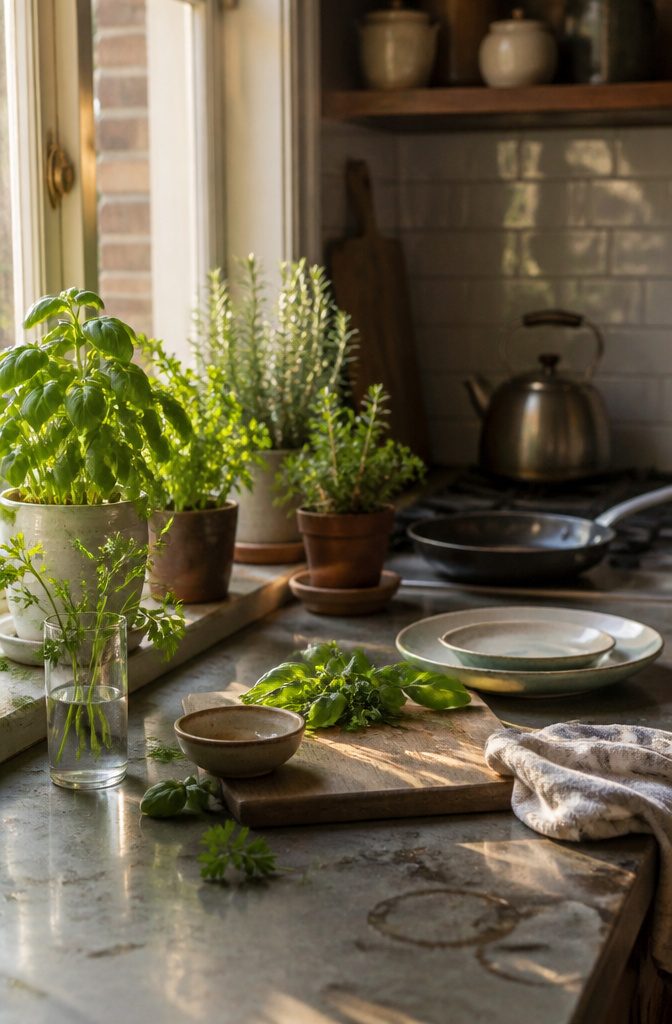
A kitchen windowsill puts the herbs where you’ll actually use them. You see the basil every time you cook, so it gets watered and snipped instead of forgotten.
Steam and warmth from the stove help too, though a spot right beside a burner gets too hot, so keep pots a step or two away.
Fresh herbs are milder than dried, so use about three times as much fresh as the recipe calls for dried.
A teaspoon of dried oregano becomes a tablespoon of fresh. Add tender leaves like basil and parsley at the end, and put woody ones like rosemary and thyme in early.
If a recipe calls for a herb you don’t have, swap in a similar one, such as oregano for thyme. To store a cutting, set the stems in a glass of water on the counter.
Frequently Asked Questions
Can you grow herbs indoors?
Yes, and you don’t have to have a yard or balcony to do it.
A sunny windowsill, a kitchen nook or a spot under a grow light is enough for a few pots. Chives, parsley, oregano and thyme are the easiest to start with.
How much light do indoor herbs need?
Most herbs need at least 6 hours of direct sun a day, ideally from an unblocked south-facing window.
Rosemary, thyme and bay want the full amount, while chives, cilantro and lemon balm get by on less. If your window falls short, run a grow light 6–12 inches above the leaves for 12–16 hours a day.
What three herbs grow well together?
Thyme, oregano and chives make a good trio because their light and water needs are similar.
Herbs can share a pot only when light, water, temperature and humidity needs match. Mint and lemon balm should always get their own pots.
What herbs cannot be planted together?
Mint and lemon balm should not share a pot with anything, since their roots spread and crowd out slower neighbors.
Basil also does better in its own pot because its roots run deep and it needs more frequent watering than most. Keep herbs with different light or water needs apart too.
Do indoor herbs need drainage?
Yes, every pot needs a drainage hole and a saucer.
Herbs rot when their roots sit in water. Use a plastic, rubber or metal saucer, since clay lets moisture through to the surface below, and skip the rocks in the bottom, which don’t replace holes.