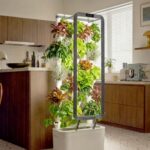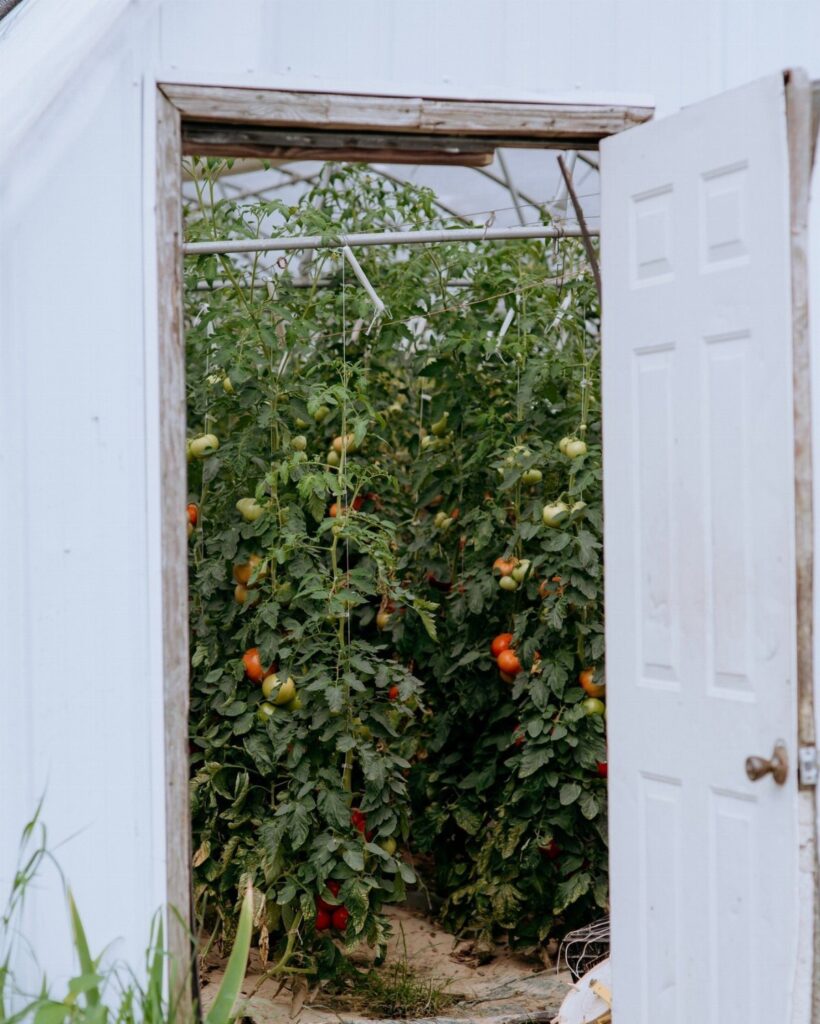
The enclosed space also shields plants from wind and lets you control soil moisture more precisely than you can in an open bed.
The structure you already have decides how much winter protection you can count on: glazing holds warmth overnight, and in Zones 3 through 5 you may need row cover or supplemental heat to grow anything beyond the hardiest varieties.
Some vegetables yield over months under glass, others turn around fast enough to squeeze 3 plantings into a single season.
1. Tomatoes
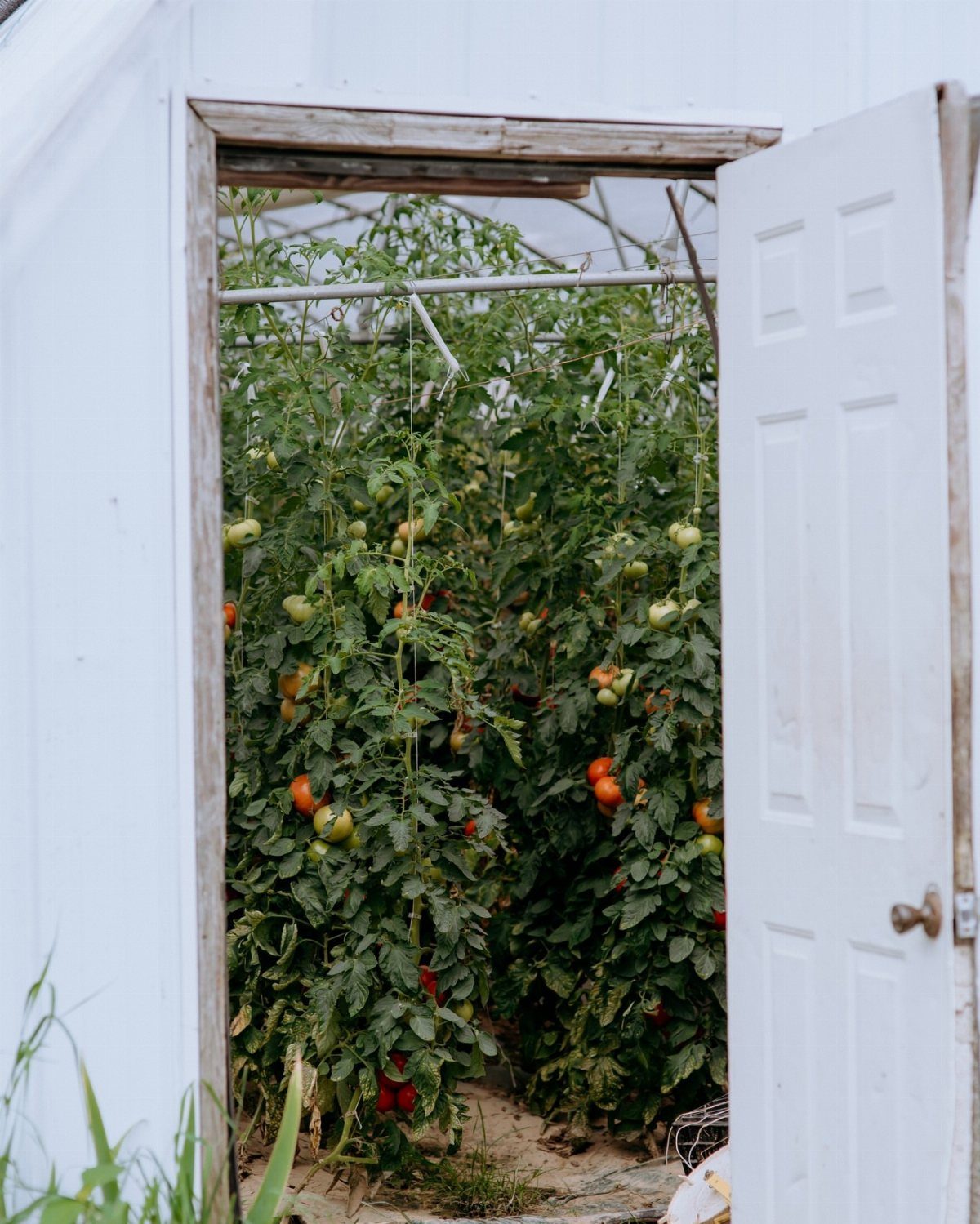
Tomatoes grow taller and produce longer under cover than they do outside. The greenhouse holds warmth through cooler stretches and keeps the foliage dry, which cuts down on blight.
Tie the stems to stakes or twine as they grow taller. Indeterminate varieties can reach 6 feet or more and keep fruiting until frost if you pinch off suckers and keep the soil moist.
Ventilation matters once temperatures climb. Crack the door or prop open a vent so the plants can set fruit.
2. Cucumbers
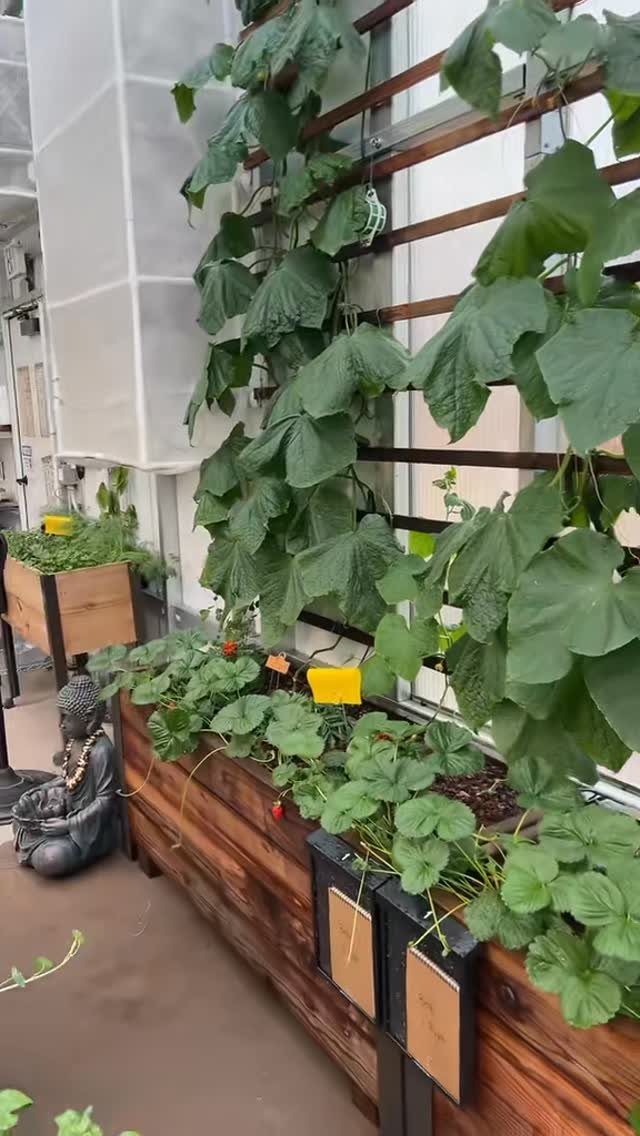
Cucumbers climb fast and fruit heavily when the air stays warm and the soil stays damp. A trellis keeps the vines off the ground and makes the fruit easier to spot and pick.
Give each plant enough space along the base of the support so they aren’t competing. Tie the main stem loosely to the trellis as it grows, and water at the root rather than overhead to avoid mildew on the leaves.
Pick the fruit while it’s still firm. Leaving overripe cucumbers on the vine slows down the next round of production.
3. Lettuce
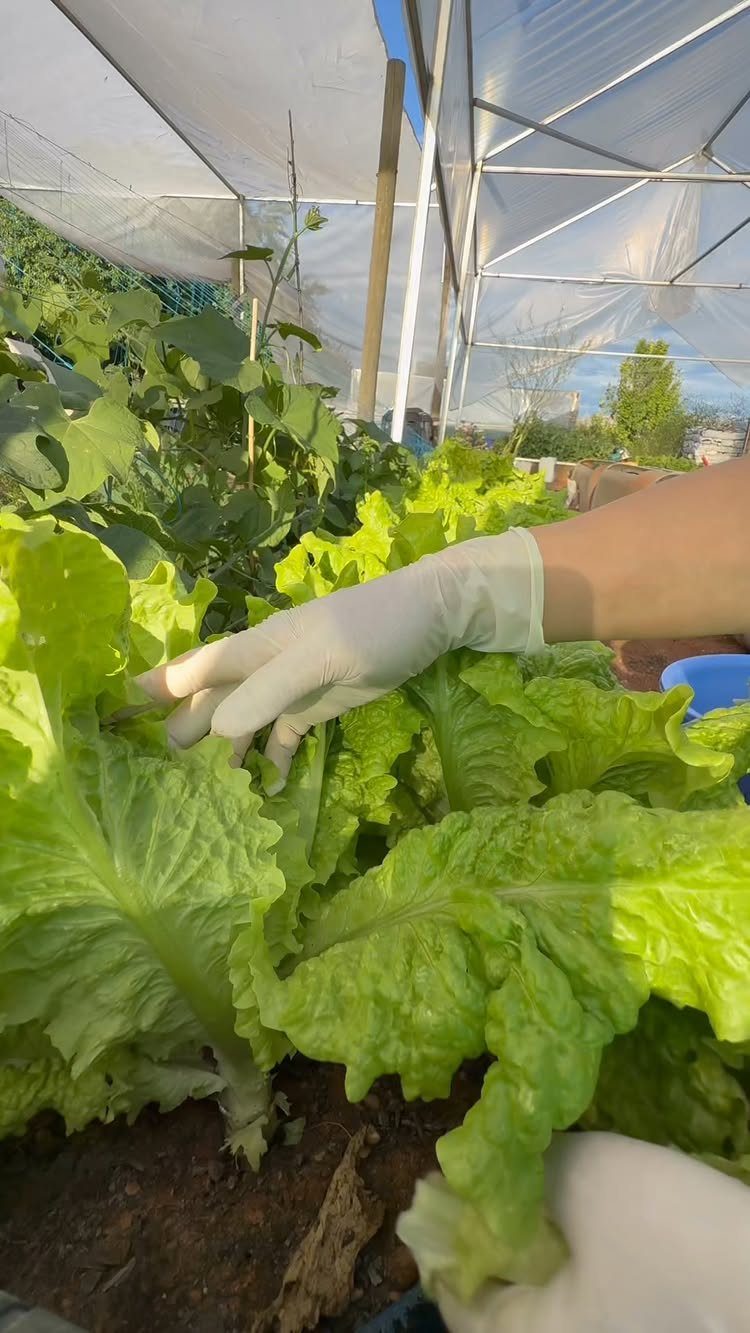
Lettuce grows quickly in cool conditions and can be cut multiple times from the same plant. A greenhouse extends the season on both ends, letting you start earlier in spring and grow later into fall.
Sow seeds in waves for continuous harvest. The leaves are ready to cut when they reach 4 to 6 inches, and the plant will regrow from the base if you leave the roots intact.
Keep the soil moist but not soggy, and shade the plants when heat builds inside. High temperatures make the leaves bitter and force the plant to bolt.
4. Peppers
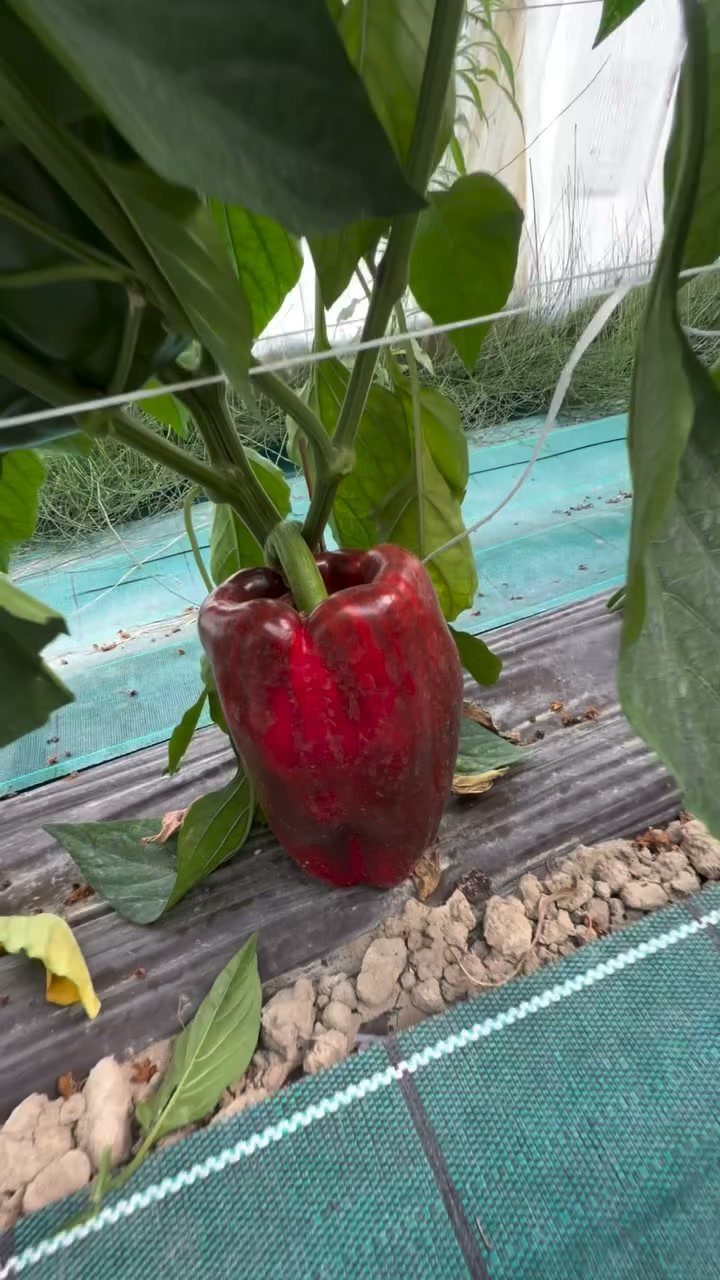
Peppers need consistent warmth to set fruit, and a greenhouse gives them that without waiting for the outdoor soil to heat up. The controlled environment also keeps the plants from stalling during cool nights.
Stake the stems once they start to branch so the weight of the fruit doesn’t snap them.
Water at the base of the plant and avoid wetting the leaves. If the air gets too humid, open a vent to keep fungal problems from starting.
5. Herbs in Small Pots on Shelves
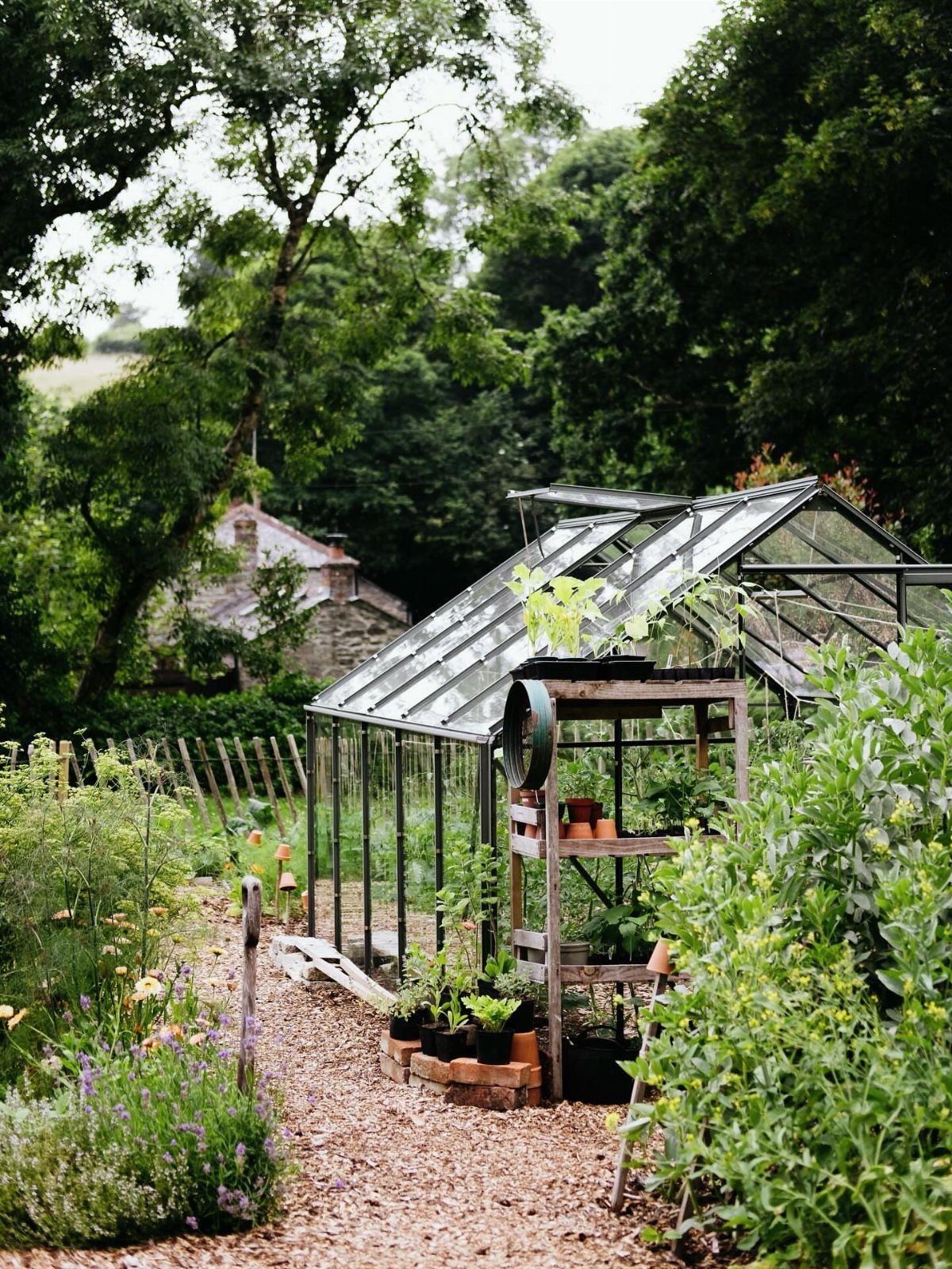
Small pots on shelves let you grow basil, cilantro, parsley and thyme in a space that would otherwise sit empty. The vertical arrangement keeps the plants within reach and makes watering easier.
Use pots deep enough to support root growth, with drainage holes. Herbs in containers dry out faster than those in the ground, so check the soil every couple of days and water when the top inch feels dry.
Pinch off the tips regularly to encourage bushy growth and prevent flowering, which turns the leaves bitter.
6. Kale
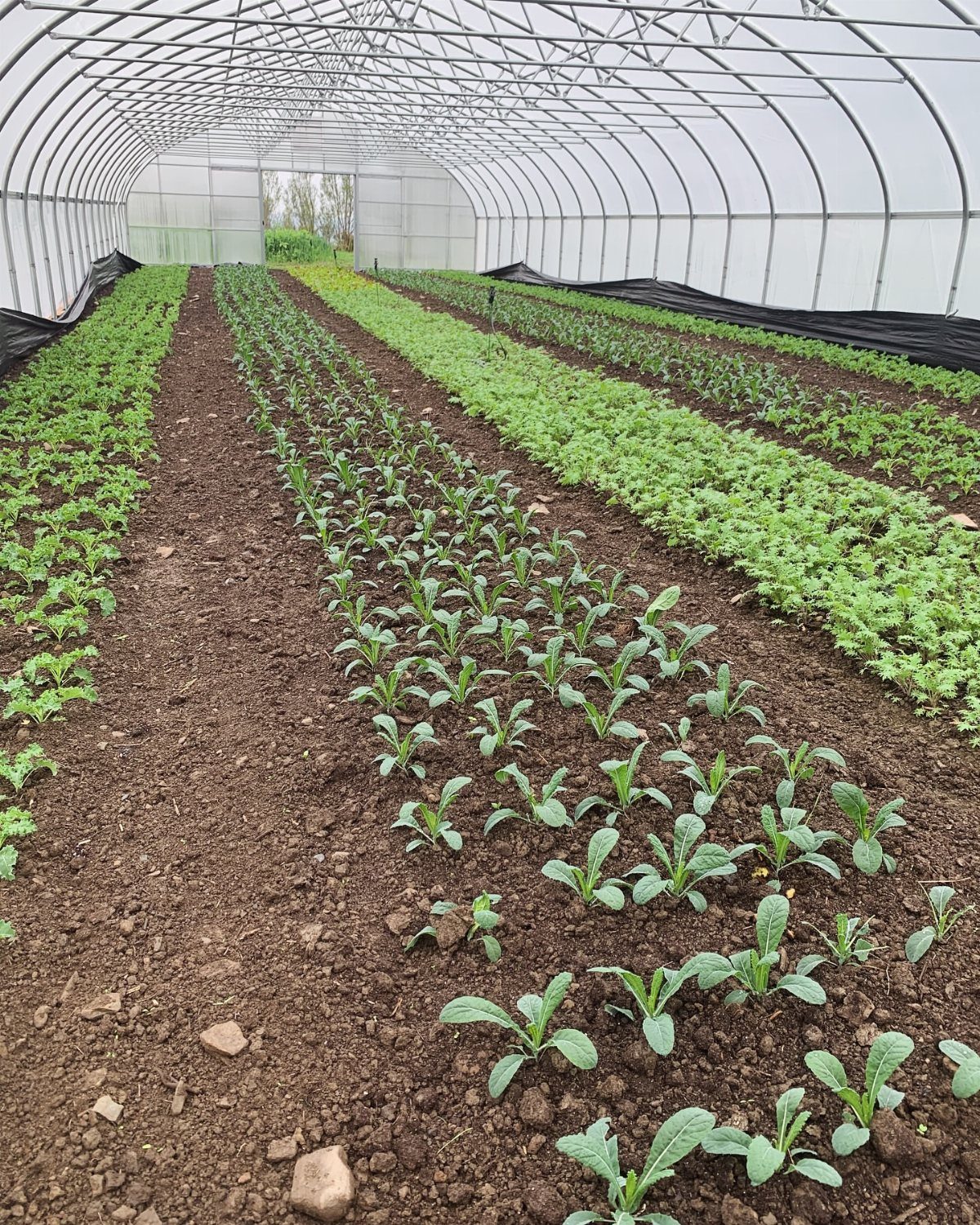
Kale holds up through cold weather and grows steadily in a greenhouse through fall and winter. The leaves get sweeter after a light frost, and the plants keep producing through cold weather.
Sow seeds directly in the soil or start transplants before your first frost date. Harvest the outer leaves first, leaving the center to keep growing.
Water at the base and keep an eye out for aphids, which cluster on the undersides of the leaves. A strong spray of water usually knocks them off.
7. Arugula
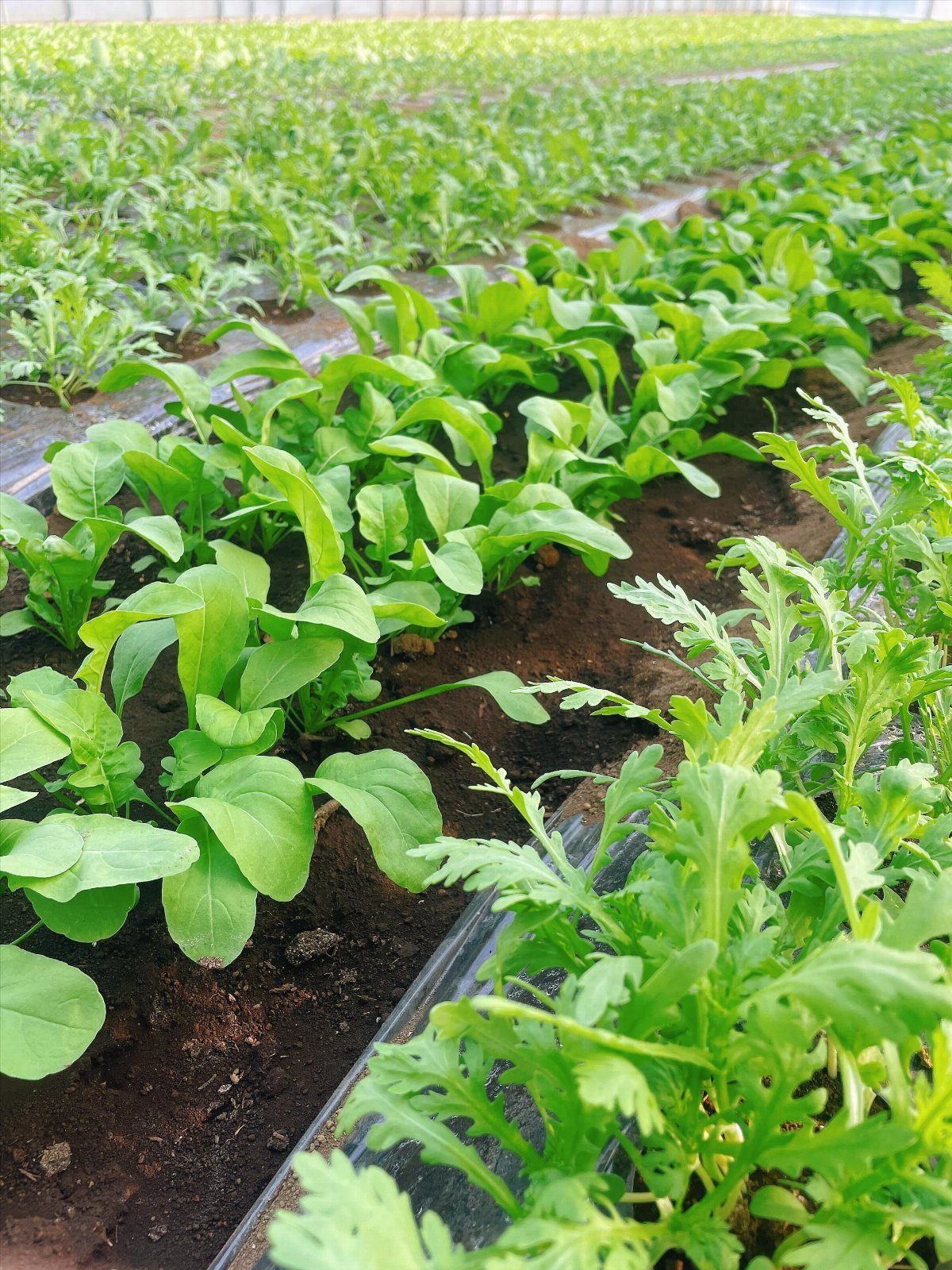
Arugula grows fast in cool weather and can be cut and left to regrow. The greenhouse keeps it from bolting as early as it would outside, giving you more weeks of tender leaves.
Sow seeds directly and thin the seedlings to give each plant room. The leaves are ready when they’re young and tender; harvest by cutting the outer leaves or shearing the whole plant just above the soil.
Water consistently to keep the flavor mild. Dry soil makes the leaves hot and bitter.
8. Eggplant
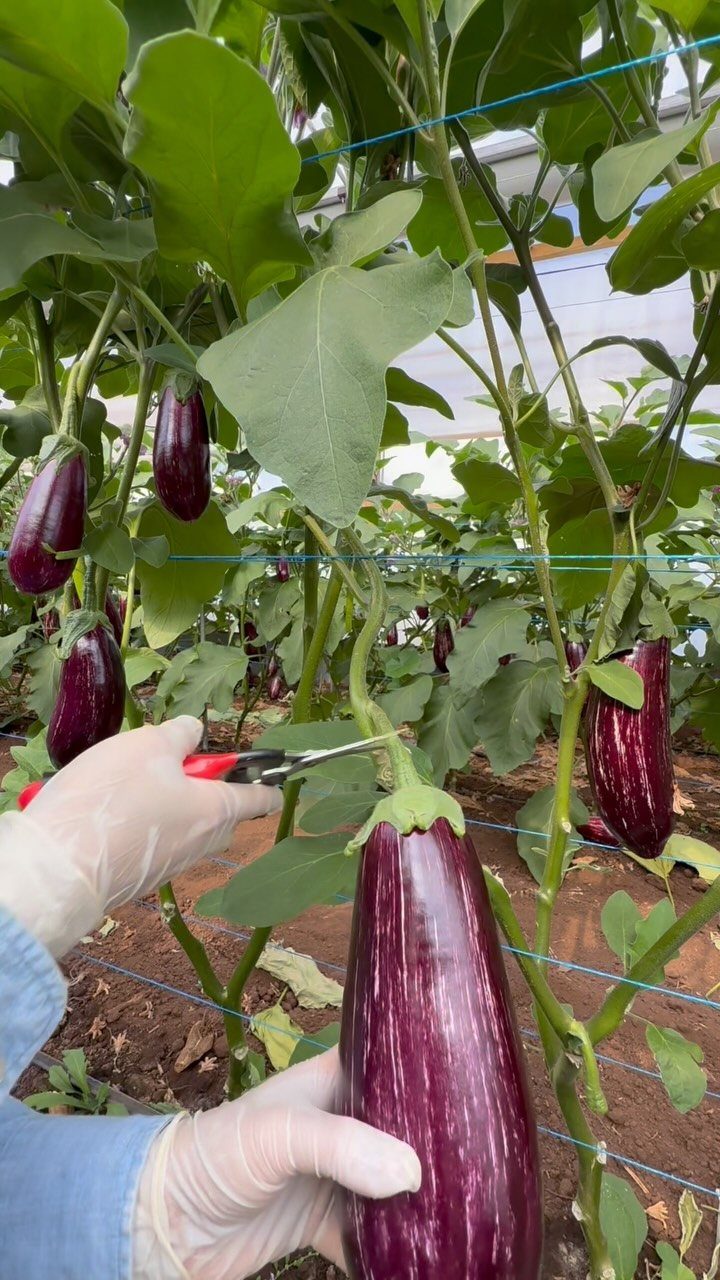
A greenhouse gives it the heat it needs in regions where outdoor nights cool off too early.
Stake the main stem before the fruit gets heavy. The plant can carry multiple eggplants at once, and the stems will snap if they aren’t supported.
Water at the base and pick the fruit while the skin is still glossy. Dull skin means it’s overripe and the seeds inside have turned bitter.
9. Cabbage
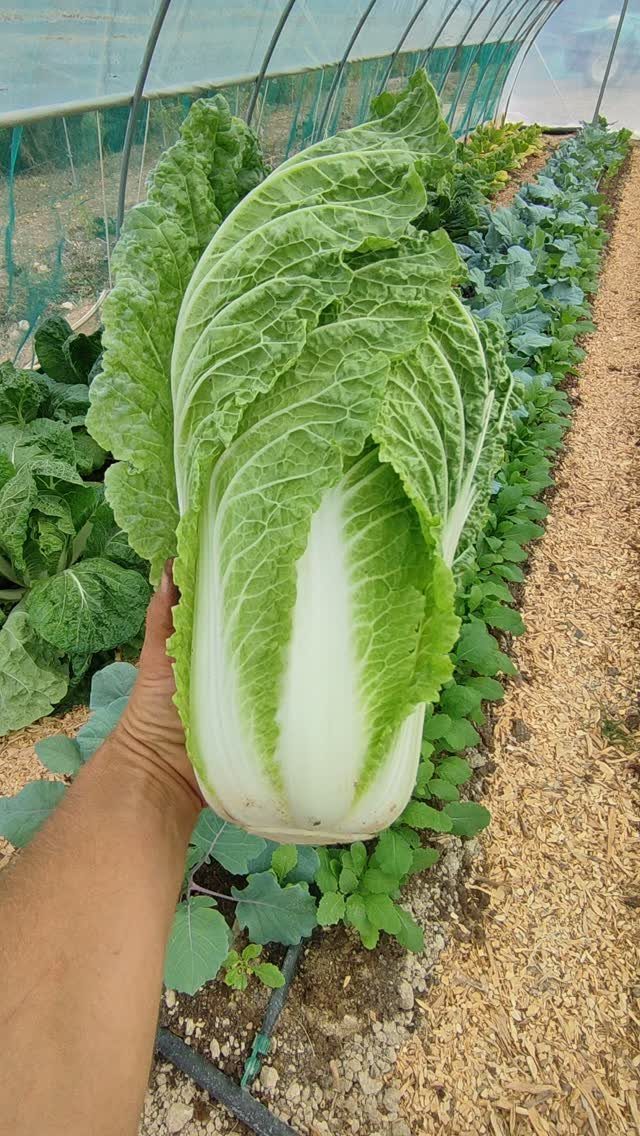
Cabbage takes time to form a head, but it tolerates cold and grows steadily through fall and winter in a greenhouse. The cooler temperatures keep the leaves from splitting as they tighten.
Plant in spring for a summer harvest or in late summer for winter storage. Space the plants so the heads have room to fill out without crowding.
Cabbage worms chew through the foliage quickly if left alone.
10. Radishes
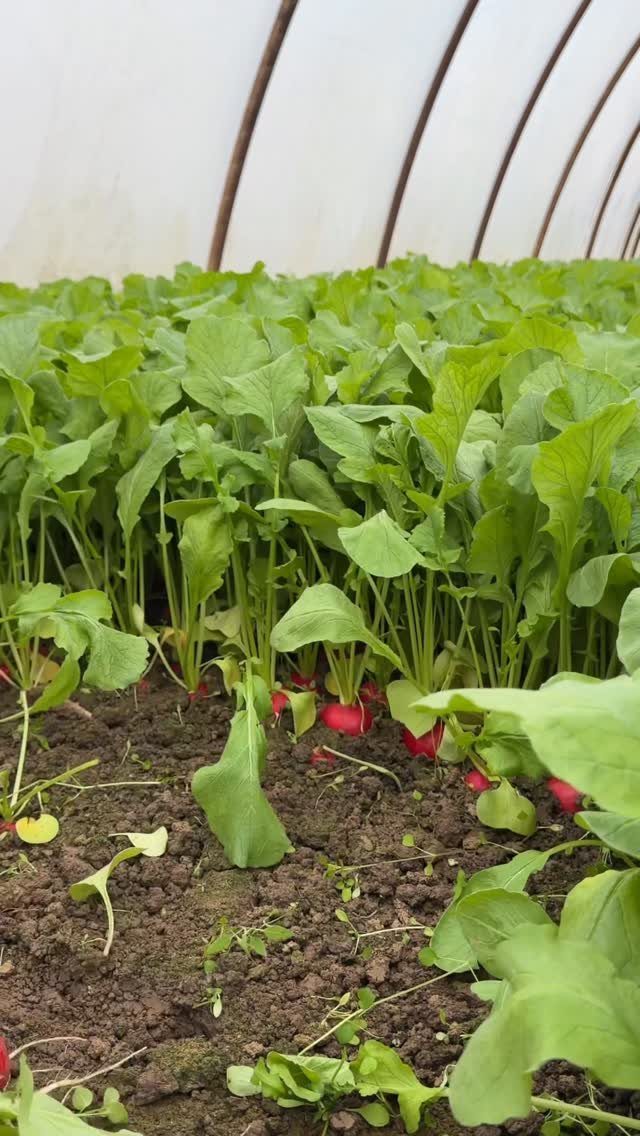
Radishes are ready to pull quickly, making them one of the fastest crops to fit into a greenhouse rotation. They grow well in winter and can be planted between slower-growing vegetables.
Sow seeds directly, spacing them an inch apart.
The roots stay crisp if you pull them as soon as they reach full size. Leaving them in the ground too long makes them woody.
Keep the soil moist. Uneven watering causes the roots to crack or turn pithy inside.
11. Brussels Sprouts
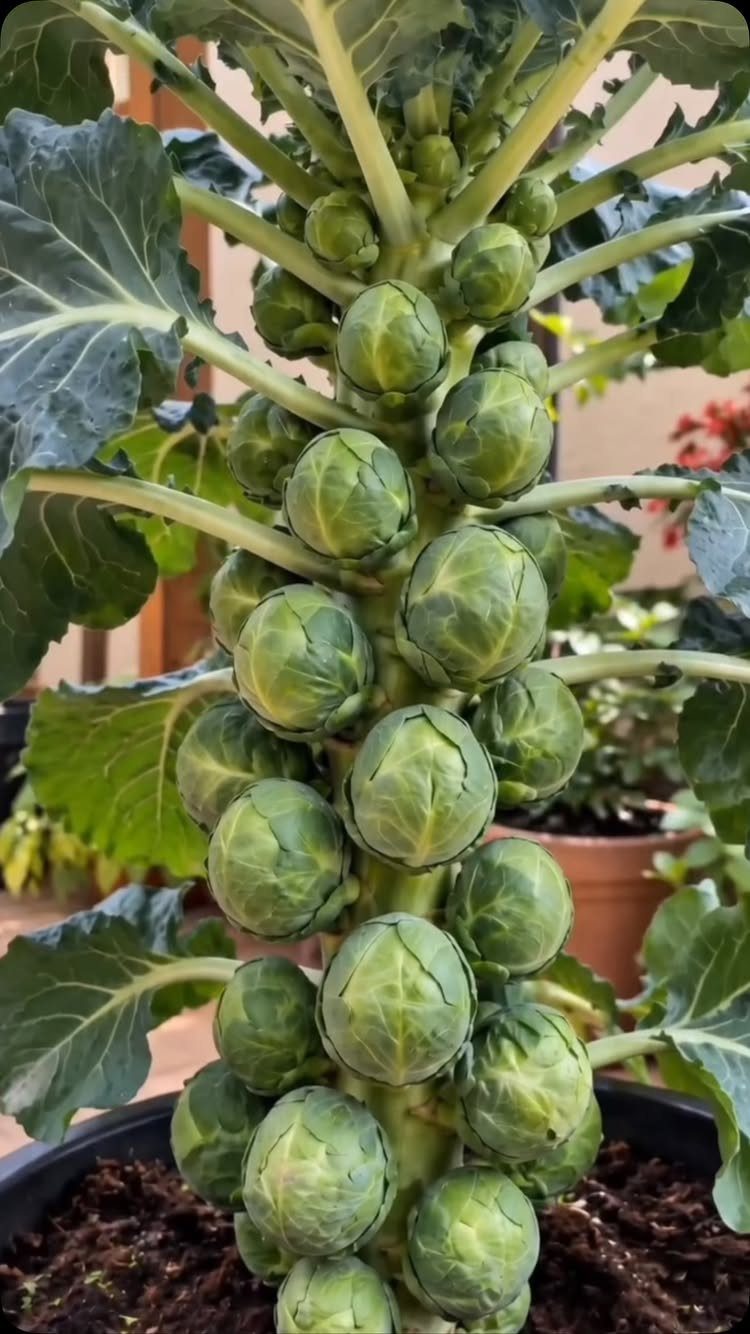
Brussels sprouts form tight heads along a tall central stalk and need several months to mature. A greenhouse protects the plants from hard wind and keeps the sprouts from freezing solid, which can turn them mushy.
The sprouts at the bottom of the stalk ripen first, so harvest from the bottom up.
Remove the lower leaves as the sprouts develop. That directs energy into the heads and improves air circulation around the plant.
12. Chard
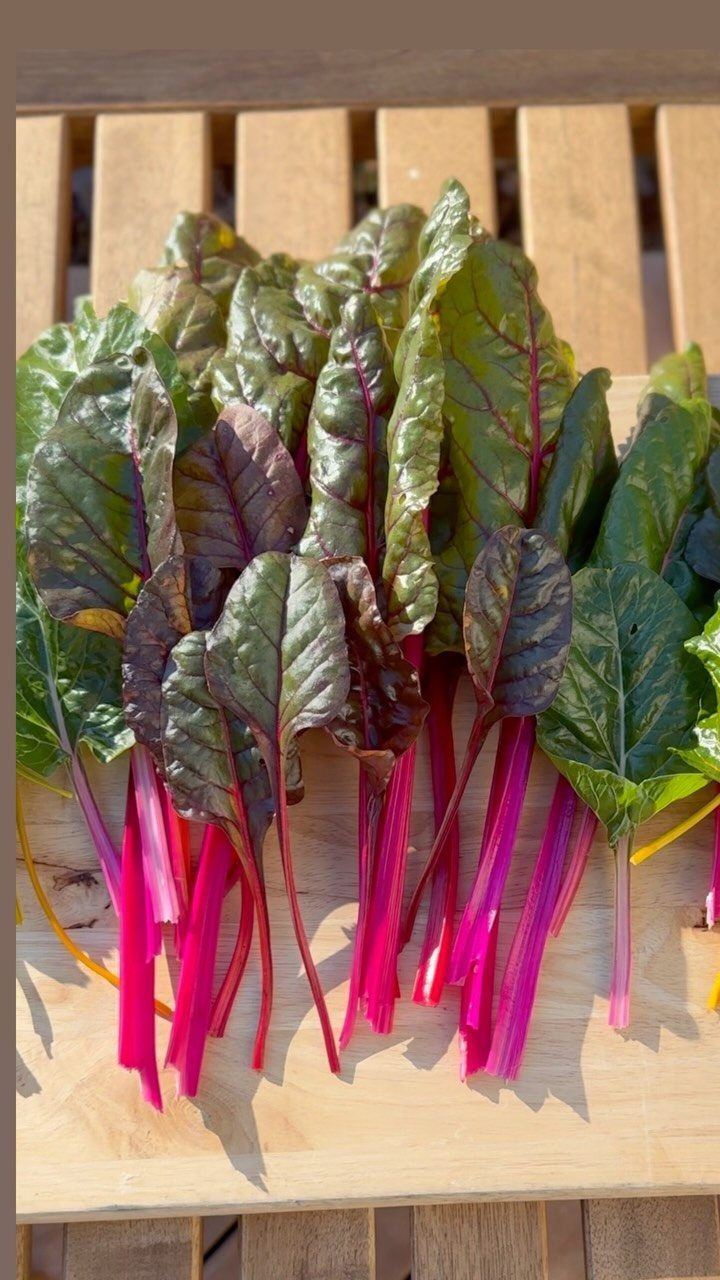
Chard produces through cold weather and keeps growing after repeated cuttings. The stems stay crisp in a greenhouse, and the plant tolerates frost better than most leafy greens.
The leaves are ready when the stems are long enough to grip and snap cleanly.
13. Peas
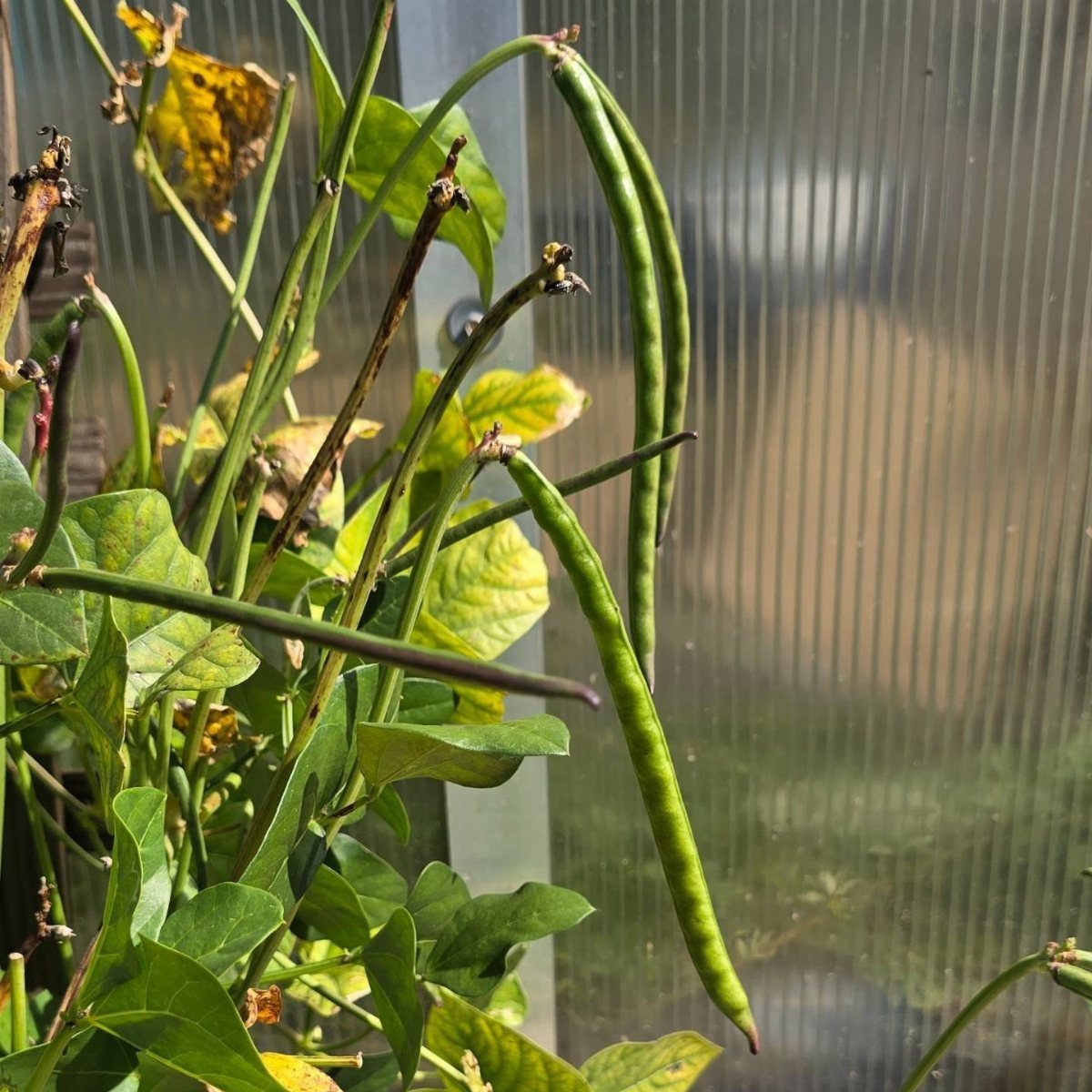
Peas climb early in spring and again in fall when most heat-loving crops won’t set fruit. The vines attach to string or trellis mesh on their own and produce steadily in cool conditions.
Plant seeds directly in the soil when temperatures are still chilly.
The pods are ready when they feel full but haven’t started to bulge. Picking them young keeps the plant producing longer.
Water at the base to keep the foliage dry. If aphids show up on the tips, rinse them off before they spread.
14. Squash
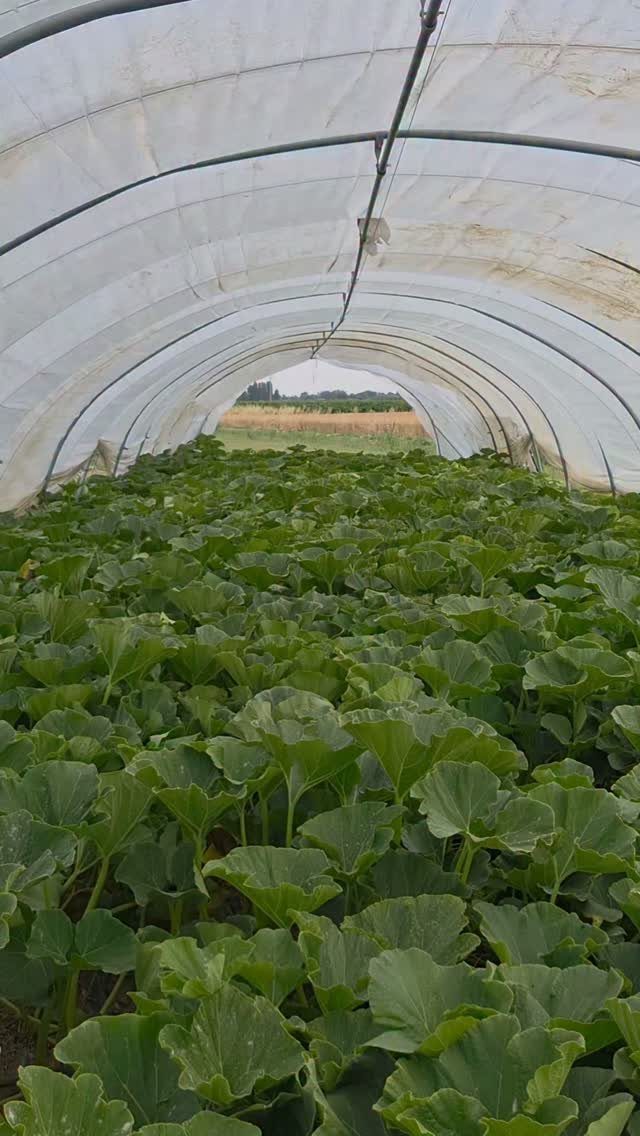
Summer squash grows large leaves that need room to spread, but a greenhouse gives the crop enough heat to fruit reliably even in short-season climates. The vines sprawl across the floor or can be trained upward if space is tight.
Pollinate by hand if bees aren’t getting inside. Use a small brush to move pollen from the male flowers to the center of the female ones, which have a swollen base behind the petals.
Harvest the fruit while it’s still small. Oversized squash turn seedy and slow the next round of production.
15. Hardy Lettuces
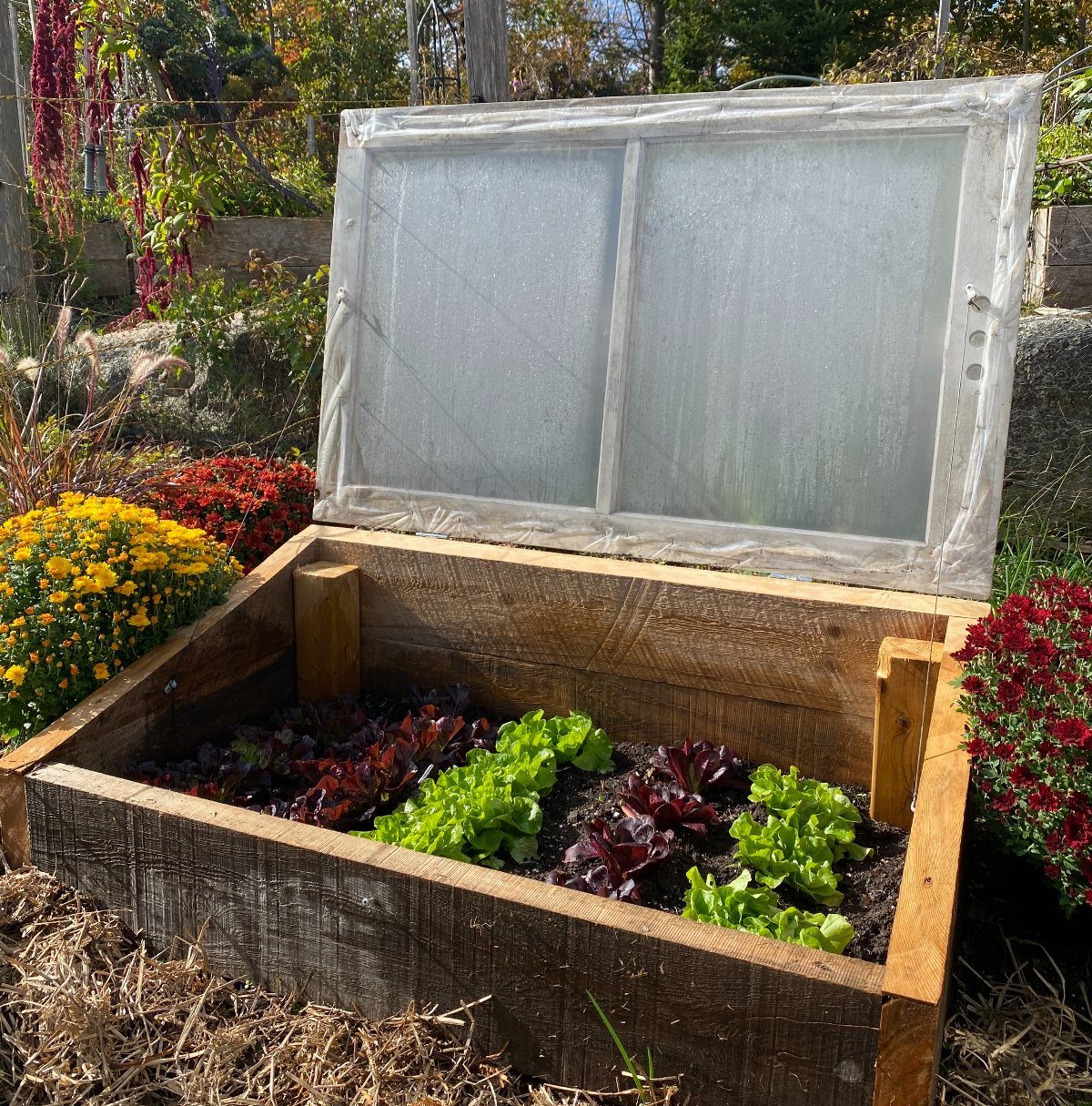
Cold-hardy lettuce varieties hold through frost and keep producing when outdoor beds have already bolted or frozen out. A cold frame or unheated greenhouse gives enough protection to grow through winter in most regions.
Get them in the ground by late summer so they have roots down before the cold sets in. Growth slows in the short days, but the leaves stay tender and the plants keep going.
Harvest outer leaves as needed. The plant will keep regrowing from the center as long as temperatures stay above hard freezing.
16. Spinach
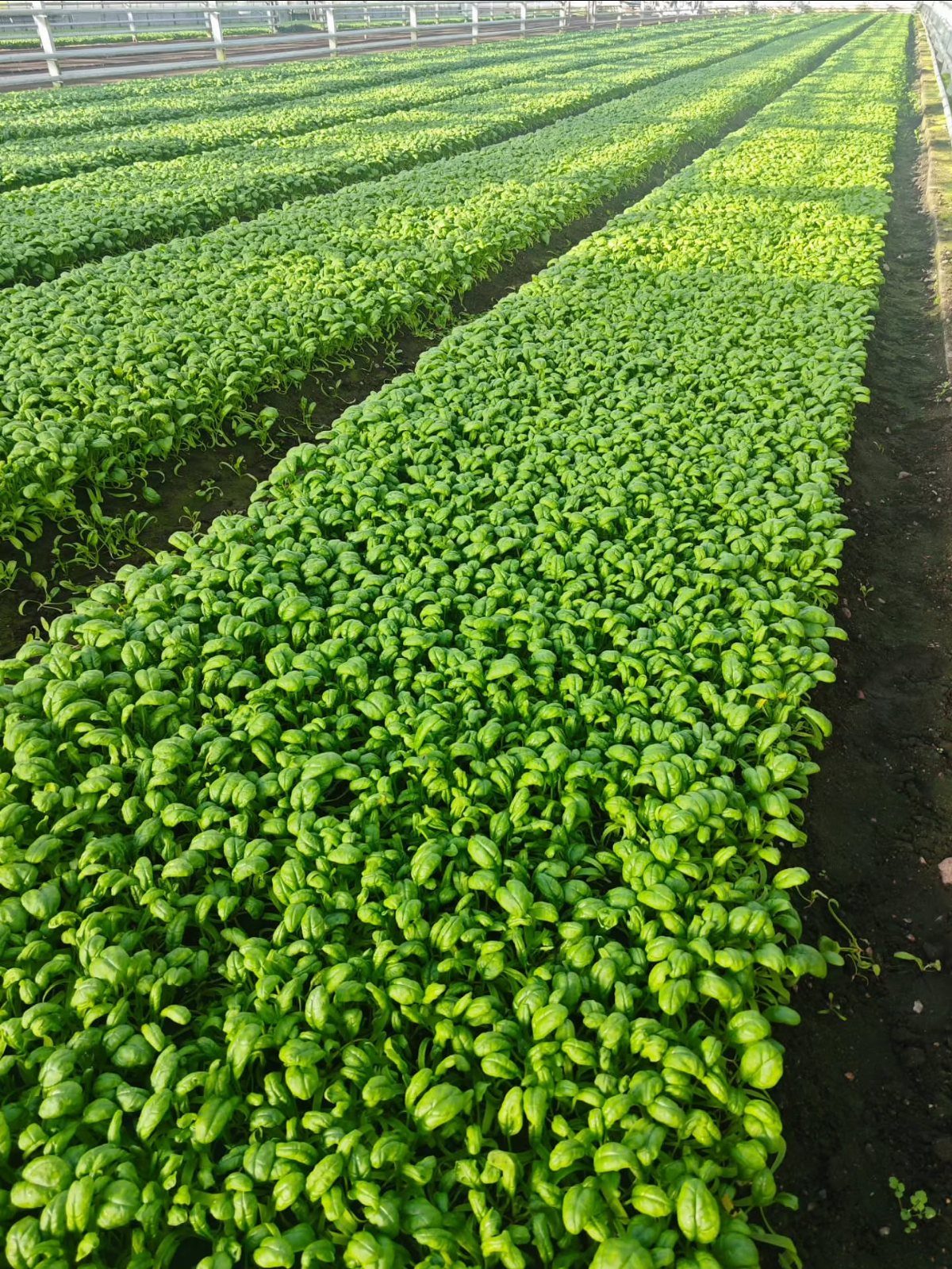
Spinach grows quickly in cool weather and tolerates light frost without damage. A greenhouse stretches the season and keeps the leaves from turning bitter as fast as they do in full sun.
Sow seeds in rows or scatter them across a bed. Thin the seedlings to give each plant a few inches of space, and harvest the thinnings as baby greens.
The plant will keep producing until temperatures climb or daylight gets too long, which triggers bolting.
17. French Beans
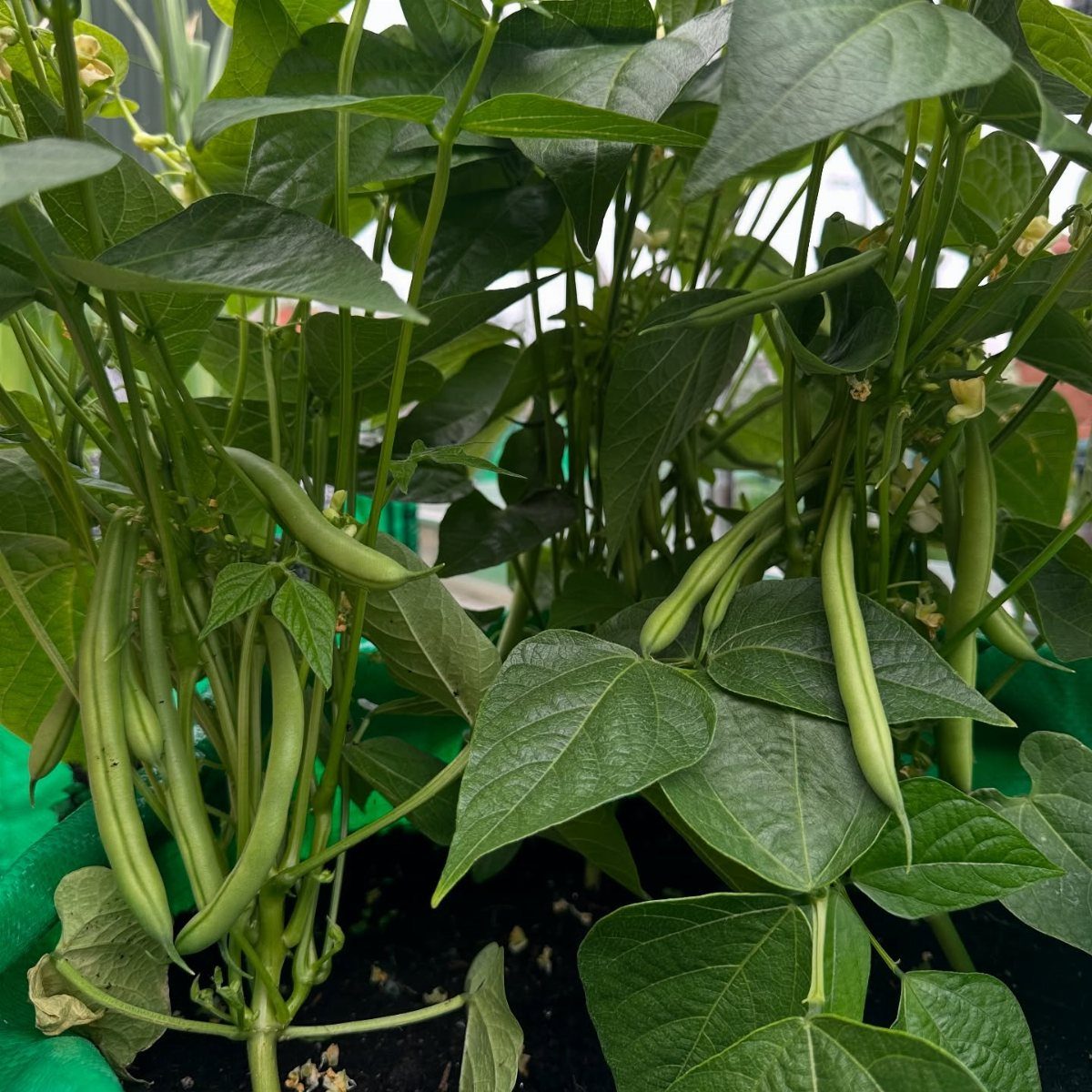
French beans grow upright on short vines and produce tender pods in a fraction of the time it takes bush varieties to fill out.
Plant seeds after the soil has warmed. The pods are ready when they snap cleanly and the seeds inside are still small.
Pick every few days. Leaving mature pods on the vine signals the plant to stop flowering.
18. Corn
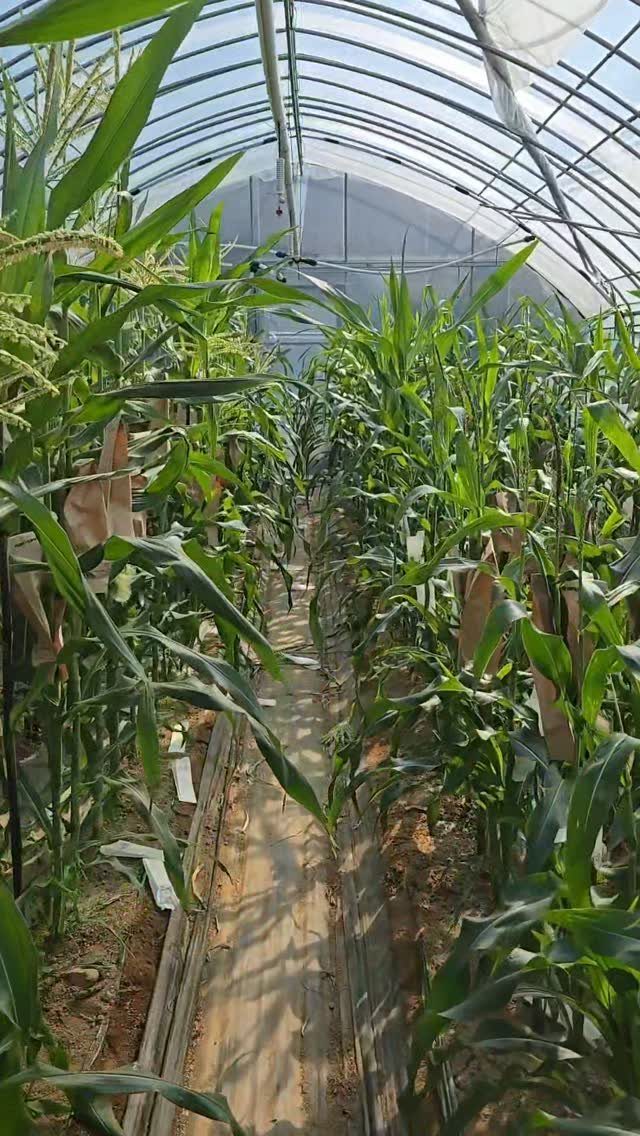
Corn needs space and takes longer than most greenhouse crops, but the controlled heat helps it set ears in climates where outdoor plantings struggle.
Plant in blocks rather than single rows so the pollen from the tassels reaches the silks below.
Each stalk produces one or two ears. The kernels are ready when the silks turn brown and the juice from a test kernel runs milky, not clear.
Corn pulls heavy nutrients from the soil. Rotate the crop or add compost before planting the next round.
19. Parsley
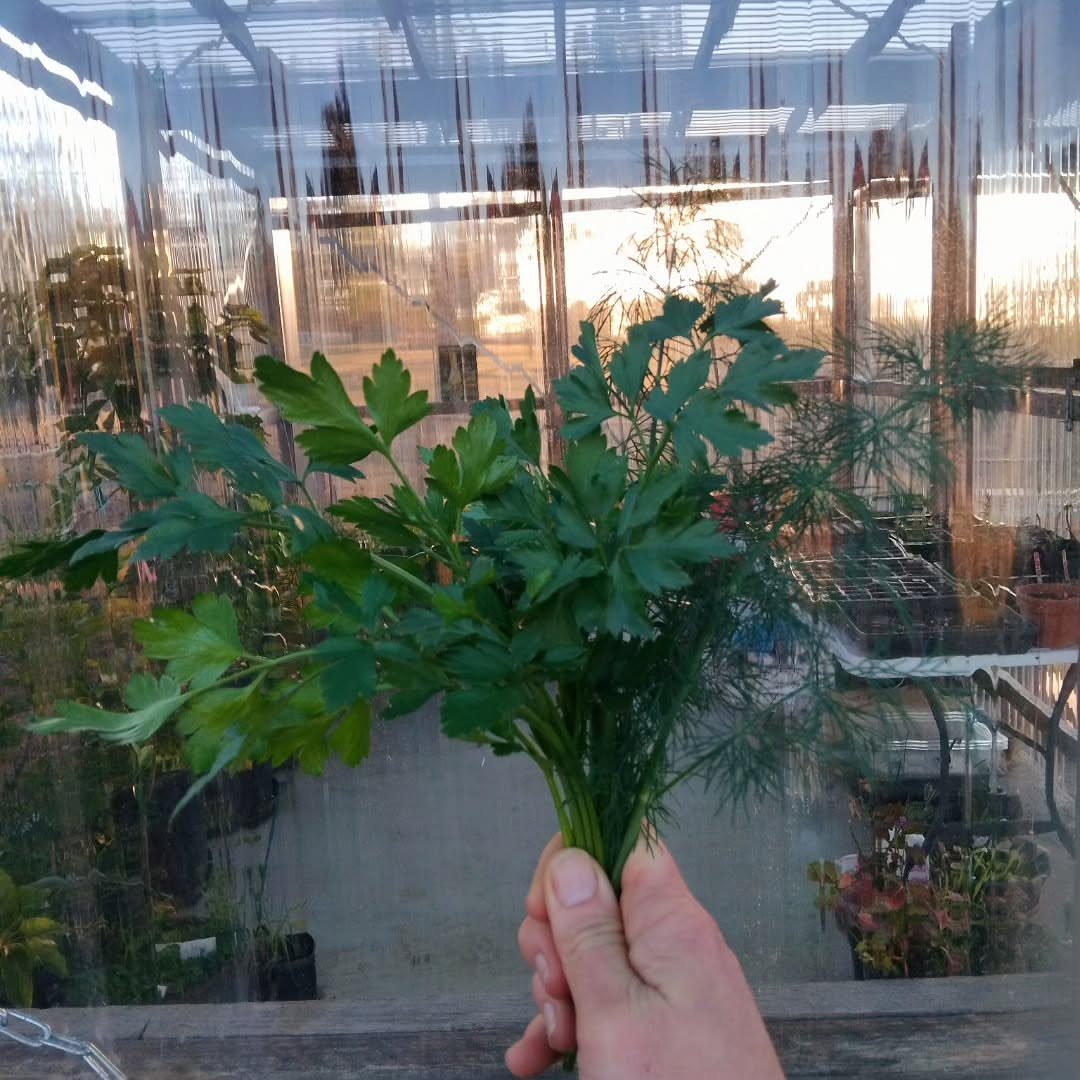
Parsley grows slowly from seed but keeps producing fresh leaves through cool weather once it’s established. The greenhouse protects the plants from frost and gives you a cutting supply through winter.
The flat-leaf types have stronger flavor, while the curly varieties hold their shape better on the plate.
Water when the soil feels dry an inch down. The roots need drainage or they’ll rot in soggy conditions.
20. Onions
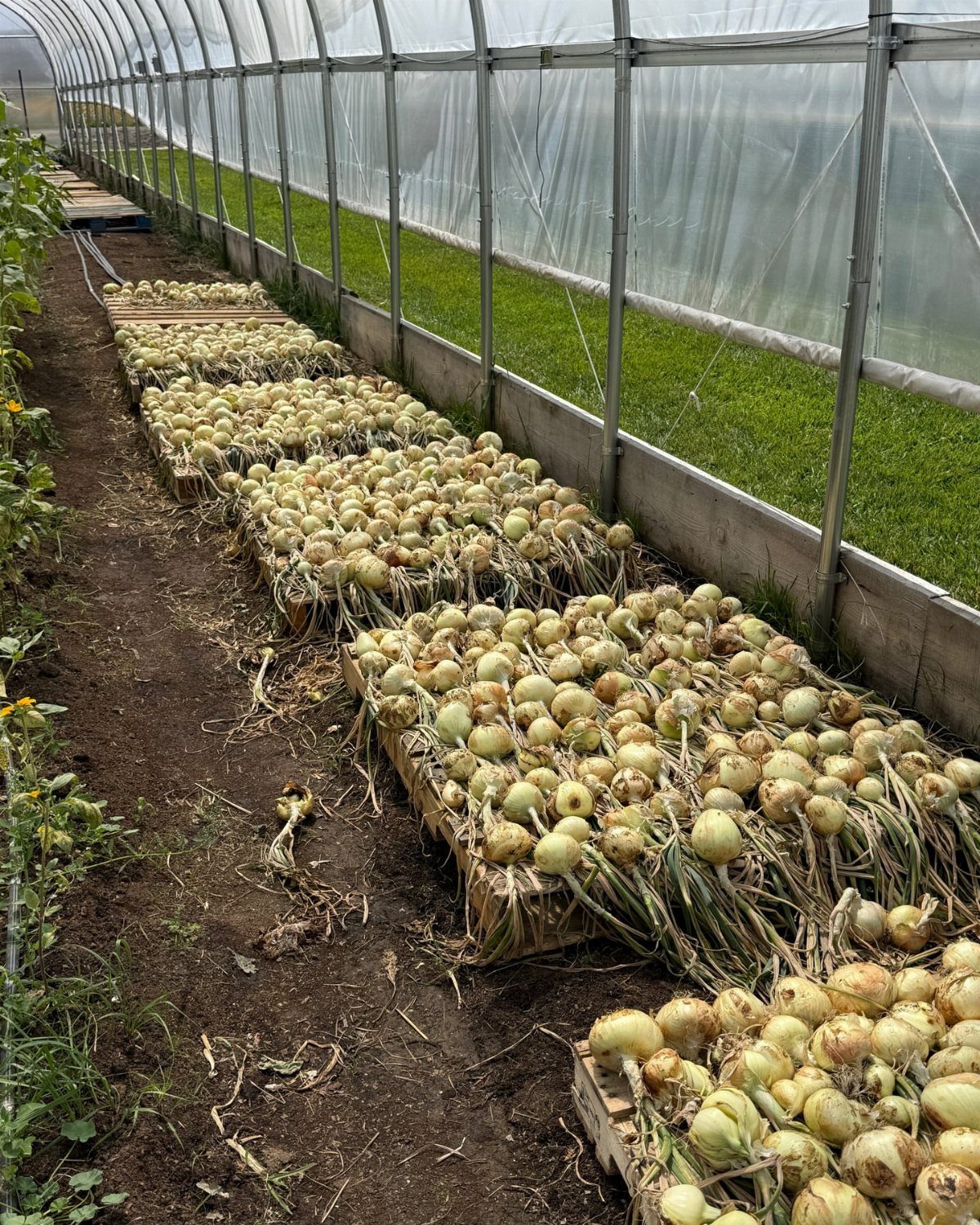
Onions need a few weeks of warm, dry conditions after harvest to cure properly, and a greenhouse gives them that space without risking rain or ground moisture.
Spread them in crates or on mesh so air can reach all sides of the bulbs.
The skins should feel papery and the necks should be completely dry before you move them into storage. Onions that still feel damp at the neck will rot.
Turn them once or twice during the first week so they cure evenly.
21. Watermelons
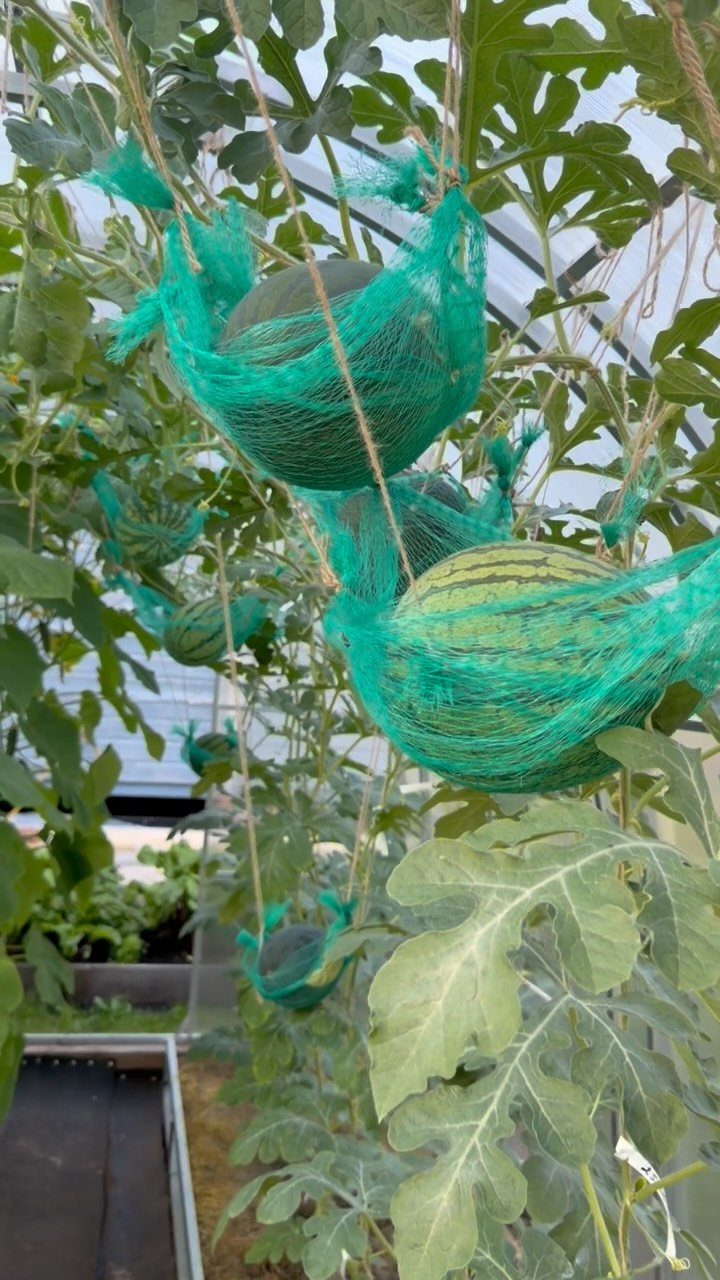
Growing watermelons vertically saves floor space and keeps the fruit from sitting in damp soil where it can rot. Mesh nets or fabric slings tied to the trellis hold the weight as the melons grow.
Support each fruit individually once it reaches softball size. The stem can carry a small melon, but a full-grown one will snap off without a sling underneath.
Check the tendril closest to the stem. When it turns brown and dries out, the melon is ripe.
22. Gourds
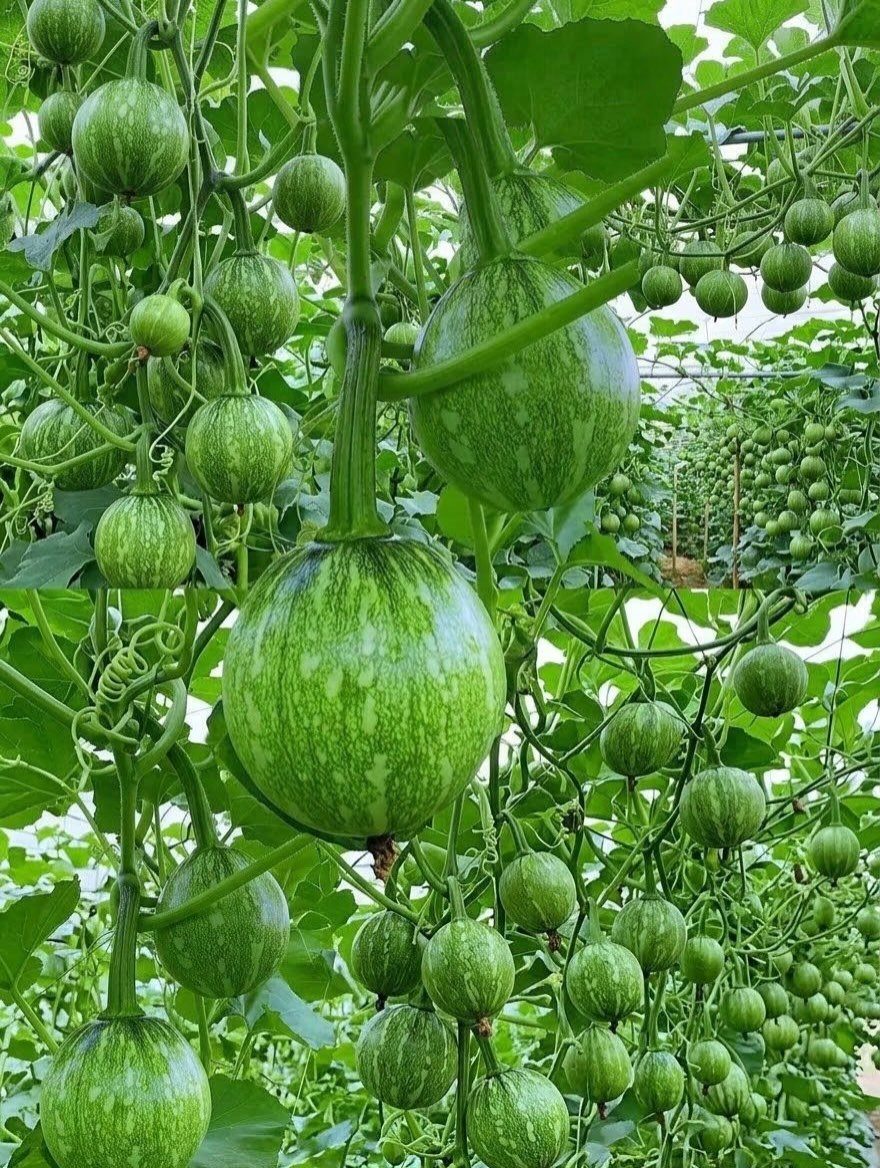
Gourds climb fast and fruit heavily when trained up a trellis or string. Growing them vertically keeps the fruit clean and makes it easier to spot when they’re ready to pick.
The vines will attach on their own, but tie the main stem loosely at first to guide it upward. Gourds are ready when the stem dries and the skin hardens enough that you can’t dent it with a fingernail.
Leave them to cure in a warm, dry spot for several weeks before using them for decoration or craft projects.
Greenhouse Growing Conditions
Sun exposure and outdoor temperature decide what you can grow and when. I measure both a few days ahead, especially in an unheated greenhouse where temperature swings with the sun and drops hard at night.
Ventilation keeps temperatures from spiking once the weather warms. Monitor temperature and humidity through the season and adjust vents or doors as needed to avoid overheating, which stops fruit from setting and forces leafy crops to bolt.
Soil quality matters more under cover than it does outside.
Use a mix formulated for containers or raised beds, and add compost or manure according to what each crop needs. The contained space means nutrients deplete faster, so plan to refresh the soil between plantings.
A closed greenhouse can reach 100°F on a mild spring day, which is why a thermostat-activated exhaust fan matters more for tomatoes than for almost anything else you’ll grow.
Space and Crop Planning
Light and space needs change by crop. Tomatoes, peppers, and cucumbers need floor area and headroom, but training them vertically on stakes or trellises frees up ground space for additional plants.
Once outdoor soil warms in late spring, I transplant some of the starts outside to free up bench space. That opens room inside for succession plantings or crops that need the controlled conditions more.
Match your planting plan to the available staging and floor area before you start. Greens and herbs need linear feet of shelf.
Fruiting crops need square footage on the ground. Plan the layout around both so you’re not scrambling for space mid-season.
Winter Protection and Preparation
Before planting for winter, pull spent crops, clean the interior, and check for damage to the glazing or frame. Move the structure to a sunnier location if possible, since shorter days mean less available light.
In Zones 3 through 5, row cover draped over the plants adds a few degrees on hard nights and extends the range of what survives. Supplemental heat may be needed to grow anything beyond the hardiest varieties in those zones.
Glazing holds warmth overnight, and the insulating value of the panel determines your margin when temperatures drop.
Frequently Asked Questions
What kind of food can you grow in a greenhouse?
Warm-season fruiting plants like tomatoes, peppers, cucumbers, and eggplant thrive in the sustained heat through spring and summer.
Cool-season greens including lettuce, spinach, kale, arugula, and chard produce through fall and winter, especially in Zone 6 and warmer where they’ll keep going without added heat.
What vegetables can grow in 4 weeks?
Most radish varieties are ready to harvest in under a month, so you can sow them between slower crops.
Arugula matures fast in cool greenhouse conditions and gives you cut-and-come-again leaves in three to four weeks. Lettuce reaches harvestable size in 4 to 6 weeks when grown from seed.
Can you grow strawberries in a greenhouse?
Strawberries thrive in protected conditions and take up minimal square footage when you grow them in pots or baskets raised off the ground.
The controlled conditions protect the plants and allow for sweeter fruit, and you can extend the season by growing them when outdoor plants would struggle.
What plants can you grow in your greenhouse each season?
Spring and summer bring warm-season crops like tomatoes, peppers, cucumbers, and basil that need sustained heat to fruit.
Why are my greenhouse tomatoes flowering but not fruiting?
In a still greenhouse, tomato flowers don’t get the shake they need to drop pollen onto their own stigmas.
I tap each flowering cluster gently with my finger every morning or 2 while blooms are open. High temperatures can also stop fruit from setting, so open a vent when the air gets too hot.
What should you not grow in a greenhouse?
Crops like potatoes and large root vegetables aren’t practical under cover because they need a lot of room and perform just as well outside in most zones.
Corn relies on wind to carry pollen from tassel to silk, and that doesn’t happen inside a structure with closed doors. Reserve your greenhouse beds for plants that actually benefit from the warmth, shelter, or season extension you’re giving them.