Greenhouse crops split by season more than by taste: tomatoes, cucumbers, peppers and eggplants want long, warm stretches, while spinach, kale and lettuce keep the space working when the heat-lovers sit empty.
Floor space decides the rest, because sprawling zucchini and squash eat up room that carrots, turnips and a pot of mint can share far more politely.
Mint is the one plant that always gets its own pot, because it spreads into everything beside it.
1. Tomatoes
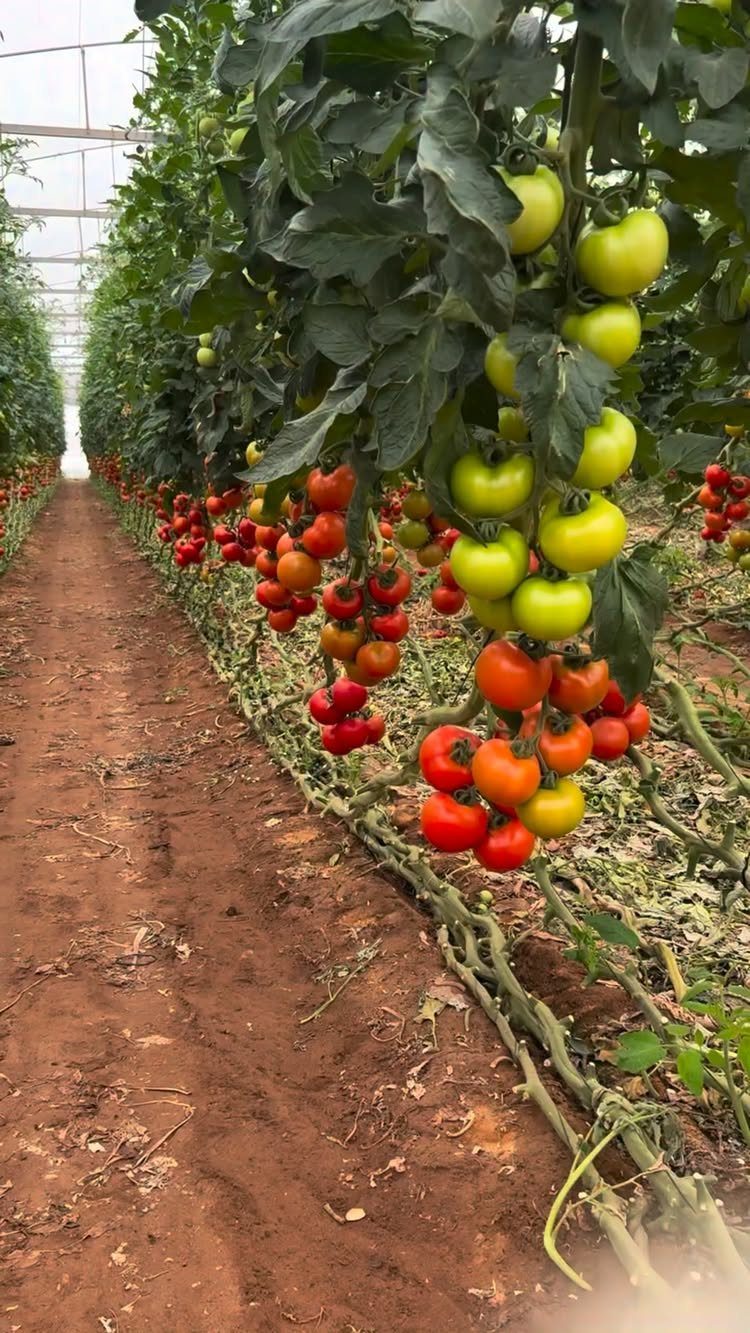
Tomatoes are the crop I would give the best greenhouse bed to.
Tomatoes are the classic greenhouse crop because they love the extra heat, and training them up a string or stake keeps the vines upright, the fruit within easy reach, and the path clear.
Grow them as vines on supports rather than letting them sprawl, so the aisle stays walkable and the clusters get light. Pick when fruit is fully red, and expect green and ripe tomatoes on the same plant for weeks.
2. Cucumbers

Cucumbers climb fast, so the greenhouse ceiling matters more than the floor.
Tie vertical strings overhead, then train each vine up one as it grows. That leaves the ground free for something else.
Fruit hangs straight down when it grows this way, which makes it easy to spot and pick.
Check often, because cucumbers grow quickly. Yellow flowers mean fruit is coming, and large leaves will crowd you if you never prune them back.
3. Strawberries
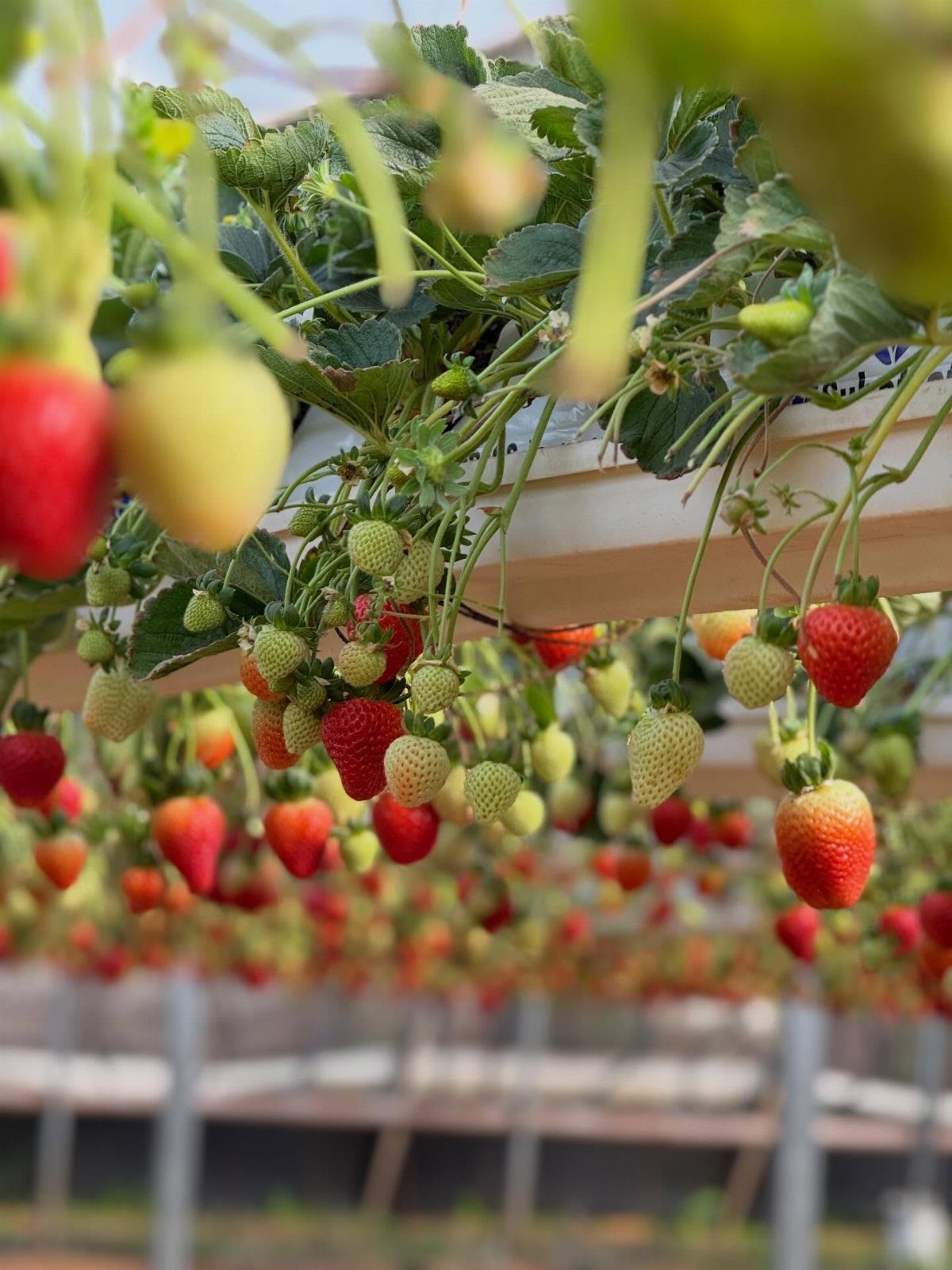
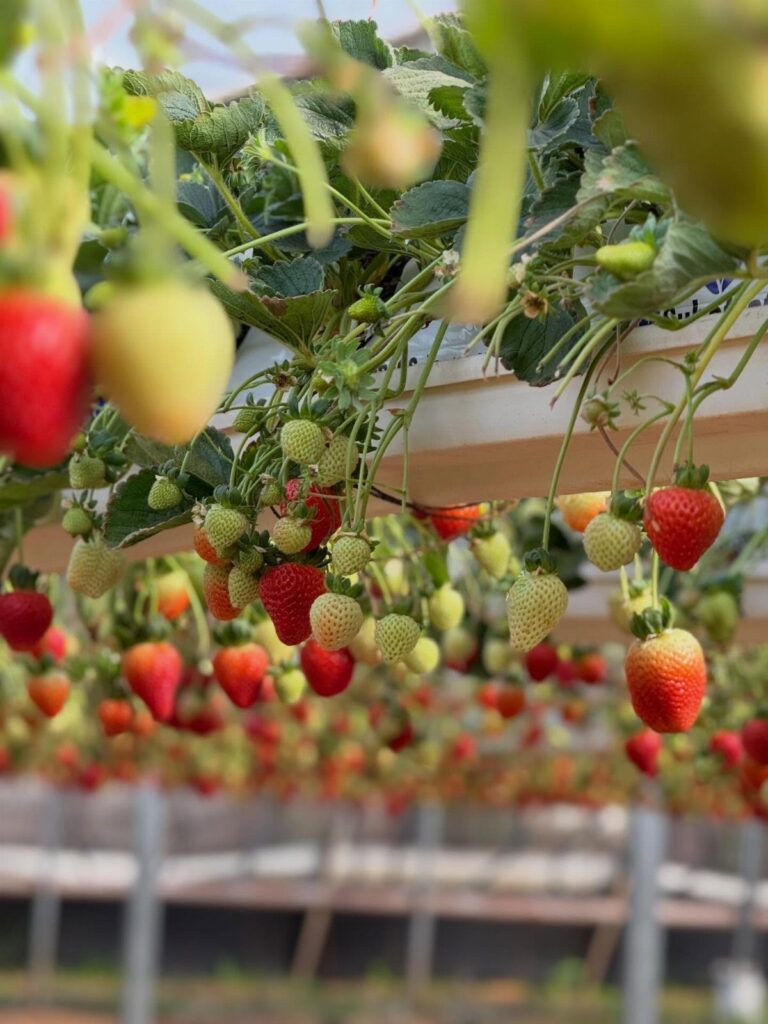
Strawberries suit a small greenhouse because they don’t need a deep bed.
Strawberries grow well in containers, hanging baskets or raised beds, but a gutter-style raised system is my pick because it holds the fruit up off the soil where you can spot ripe berries and pick them easily.
Hanging baskets are the fallback when floor space is tight, since they use air you aren’t using anyway, but the gutter-style raised system stays my pick. Pick berries when fully red.
4. Spinach
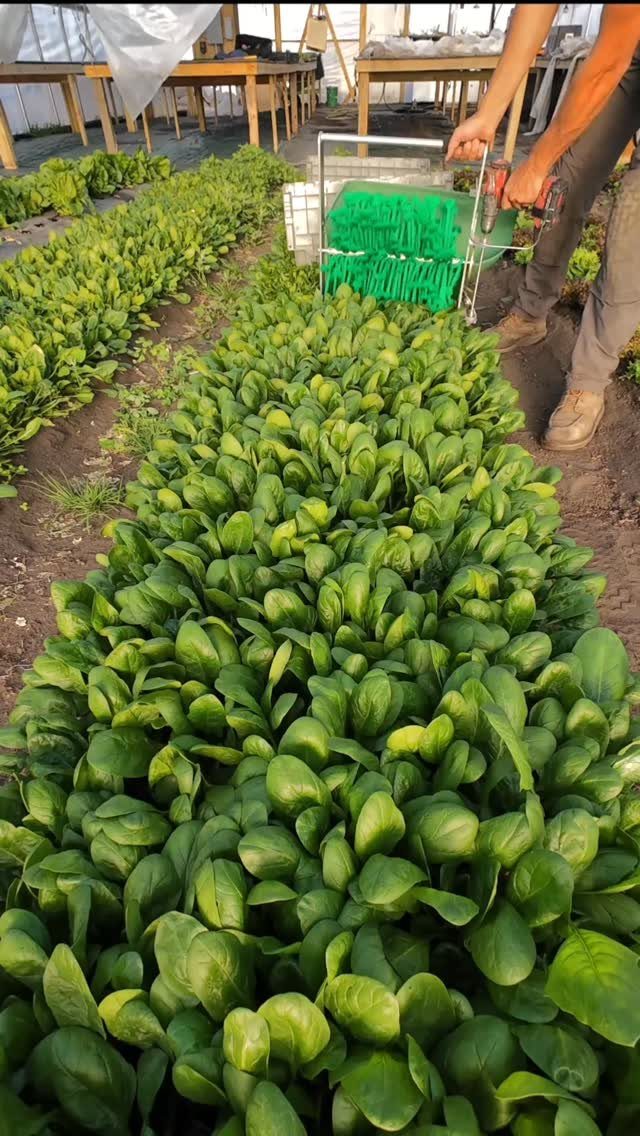
Spinach is the cool-weather pick, and it can keep your harvests going into winter when most greenhouse crops have stopped. Sow it in dense rows and cut leaves as you need them rather than pulling whole plants.
A sharp harvesting knife or snips makes quick work of a tight row.
Because it tolerates cool conditions, spinach fits the months when the heat-loving crops sit empty. For a beginner, it is one of the easiest ways to keep the greenhouse productive.
5. Carrots
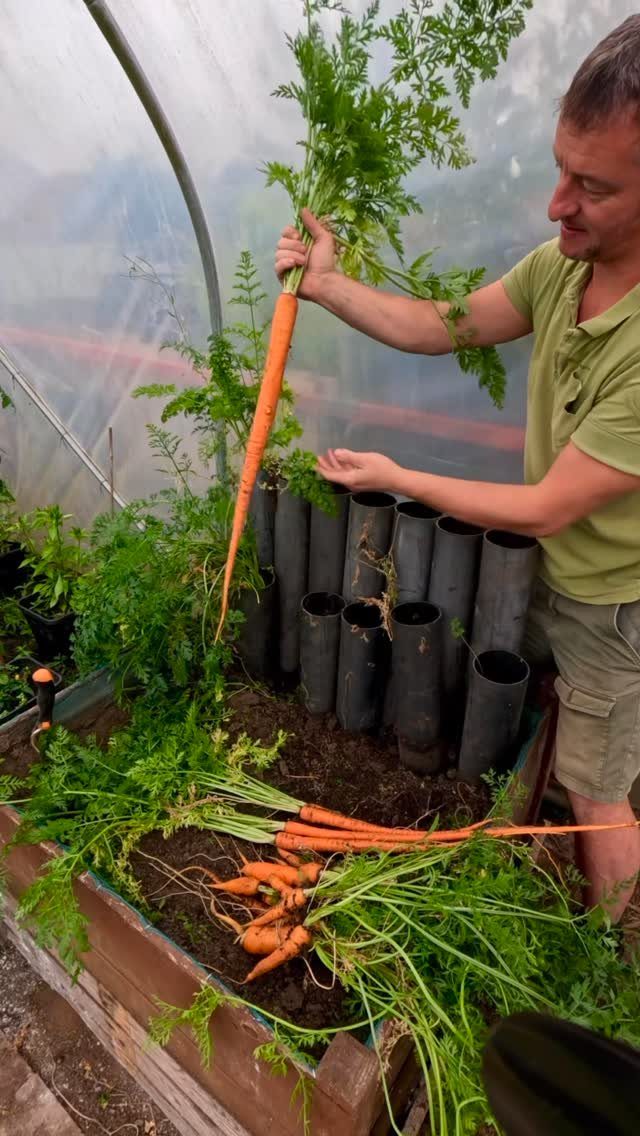
Carrots live or die by the soil. The roots need loose, deep ground to grow long and straight, so fill a raised bed with soil that crumbles in your hand and clear out any stones before sowing.
A raised bed gives you that depth under control, and it is the setup I would choose.
Compacted or rocky soil leads to short, forked roots. Pull one to check size before harvesting the whole row.
6. Zucchini
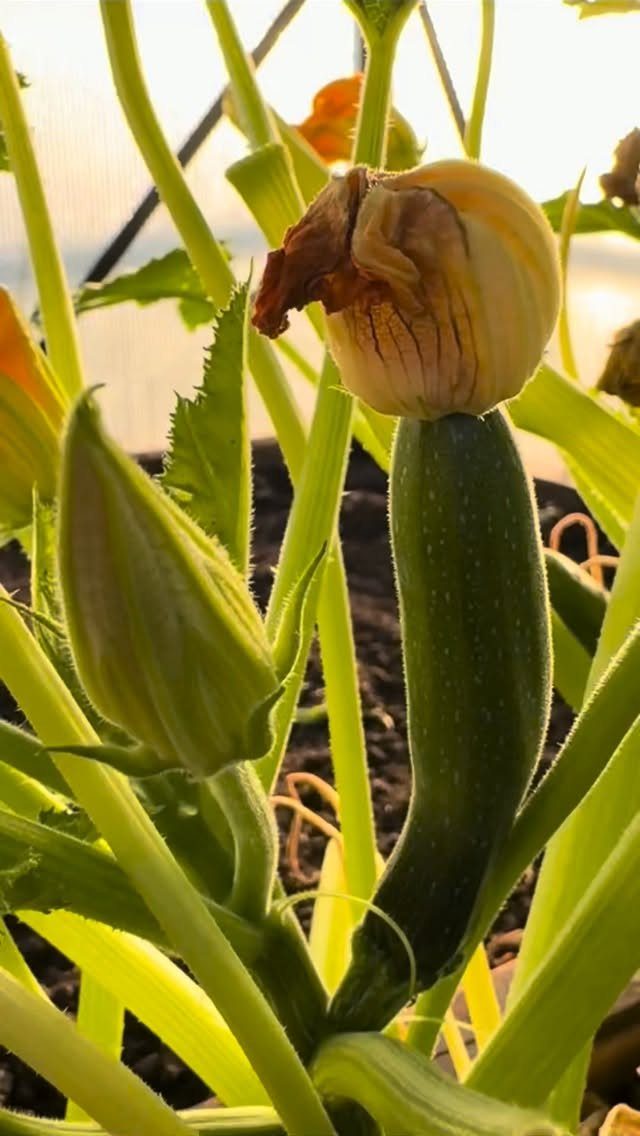
One or two zucchini plants will usually fill a greenhouse bed, so resist planting more. This warm-season crop produces fast and spreads wide, and it needs room to do both.
Zucchini wants steady moisture, so water on a regular schedule, because wild swings from bone dry to soggy are what cause split fruit and rot.
A yellow blossom still attached to the end of a young zucchini is normal, and a steady stream of new buds means more fruit is on the way. Harvest often so the plant keeps producing.
7. Squash
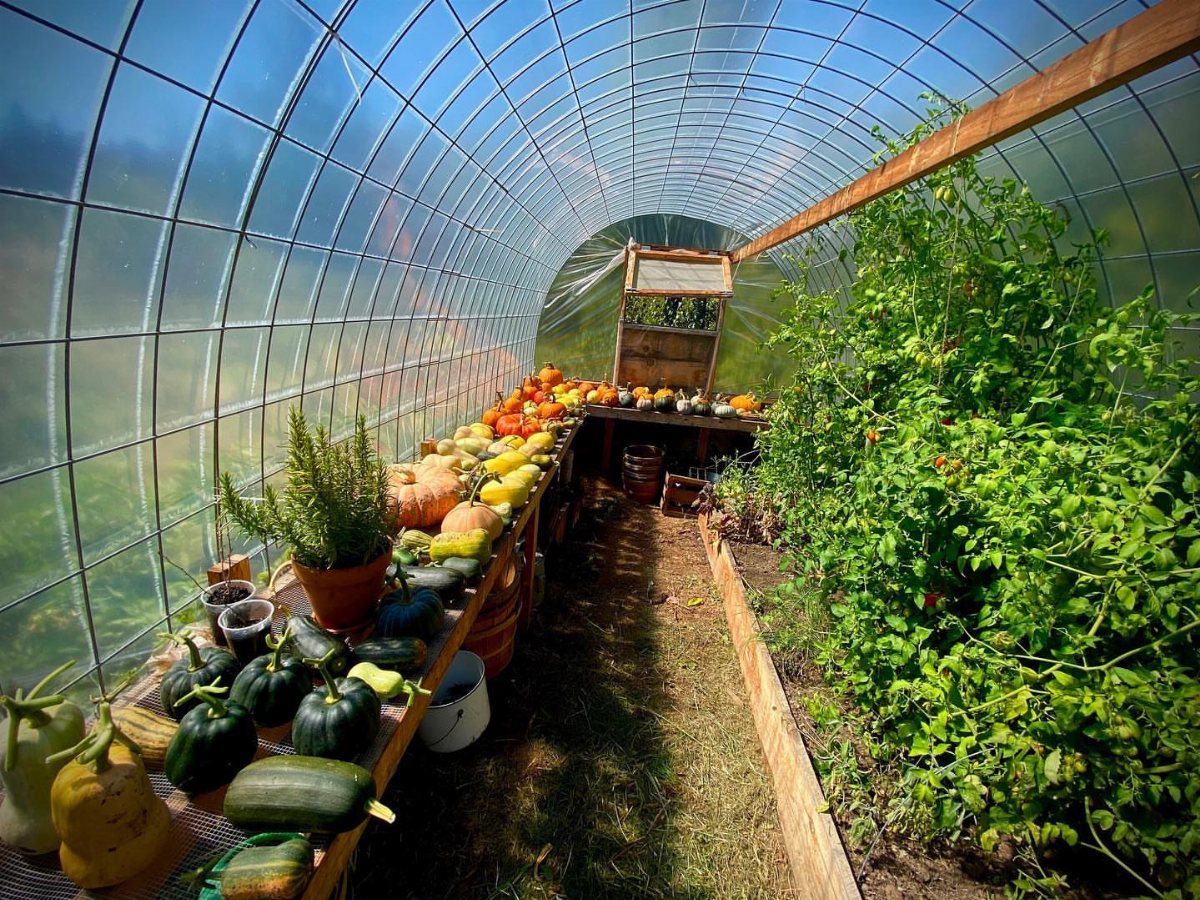
Squash and zucchini share a lot of habits, which makes squash an easy follow-up if zucchini worked for you. Winter types and pumpkins ripen late, so they hold a bed for most of the season.
Give each plant plenty of room, since vines spread. Let the fruit finish growing before you cut it, then store the harvest on a shelf or table where air can move around it.
8. Peppers
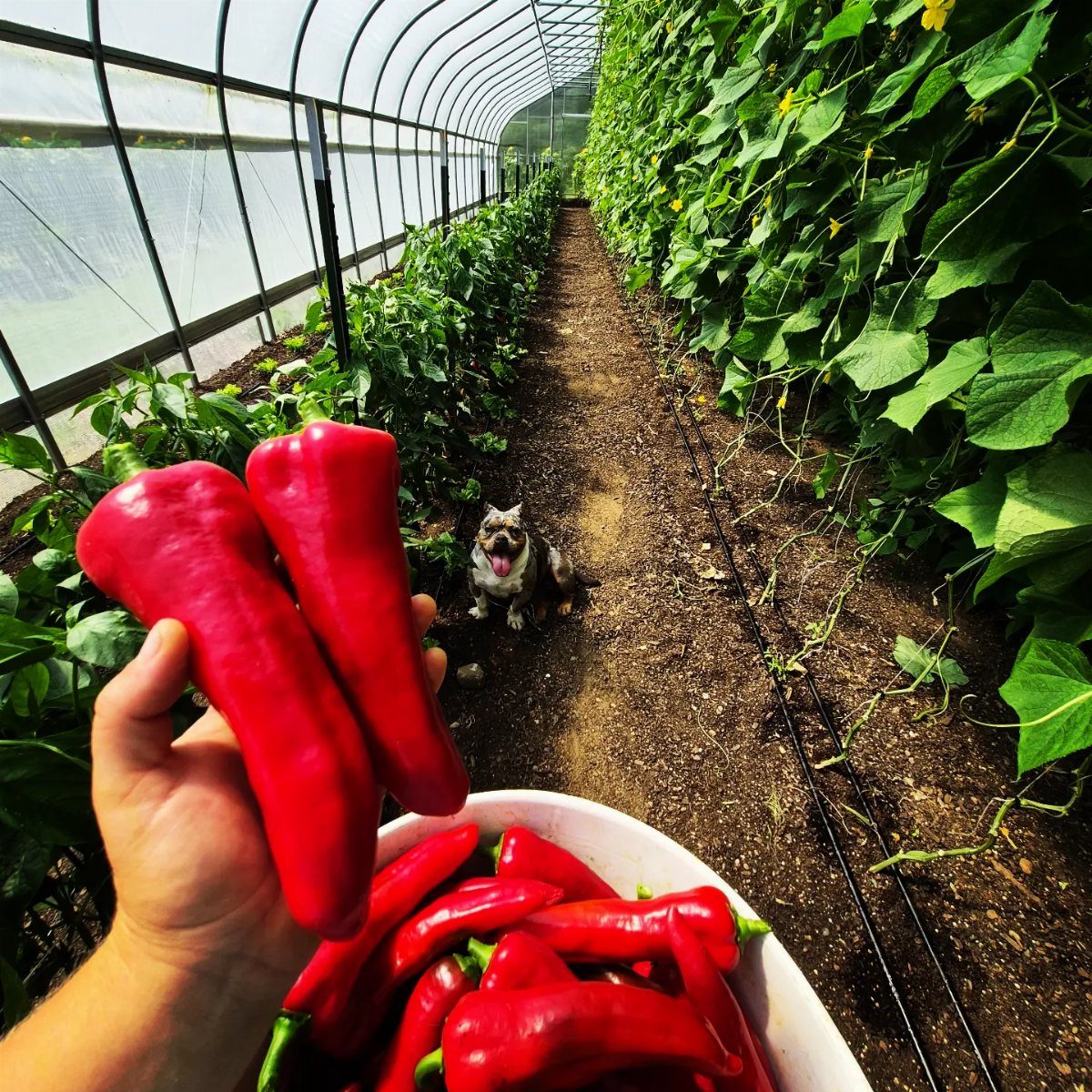
Red peppers ripen best where the air stays warm, and a greenhouse gives them that. Peppers grow fine in a ground bed or in 5-gallon pots, so pick whichever fits your floor space.
Containers let you shuffle plants around as the season changes, which is why I lean toward them in a small greenhouse.
Leave the fruit on the plant until it turns fully red, then pick by hand or with snips so branches don’t tear.
9. Eggplants
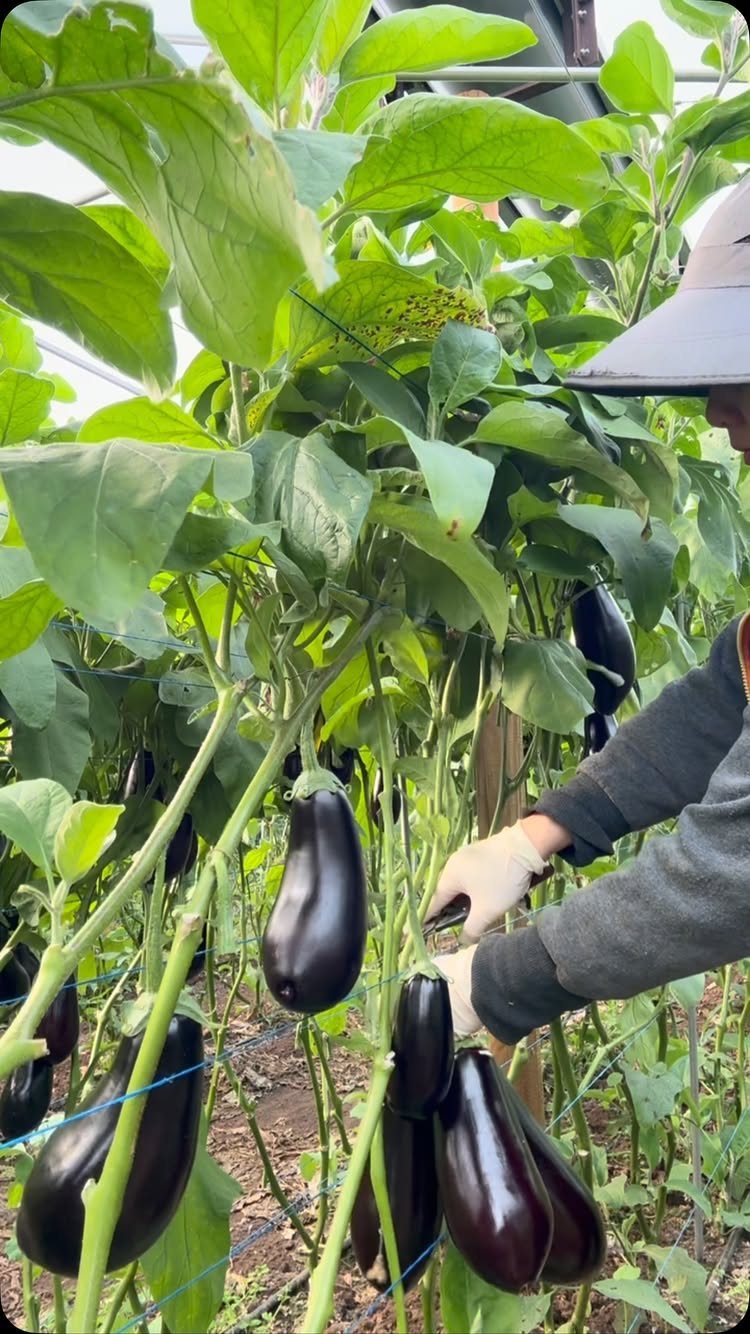
Eggplants reward a long, warm season, so they belong in a greenhouse where the heat starts early and lingers. Support the plants with strings, because heavy fruit pulls the branches down.
Pick when the skin is deep purple and glossy. Wear gloves and use snips or a knife, since the stems are tough and the caps can be prickly.
I would give eggplants a spot beside peppers, since both want the same conditions.
10. Mint
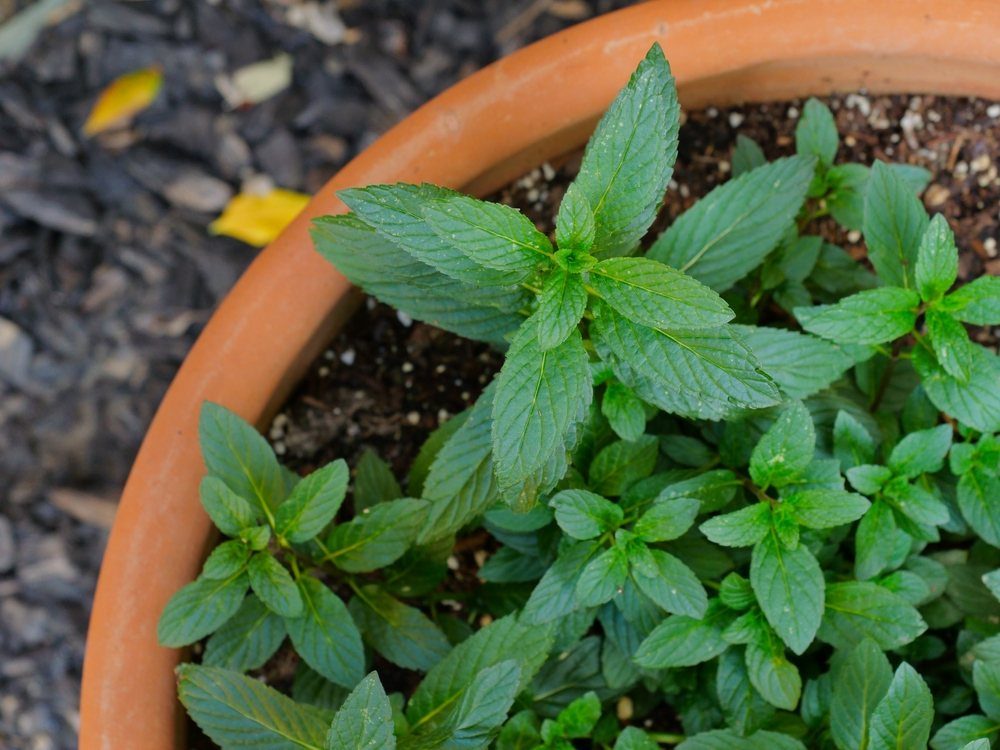
Mint spreads, and in a greenhouse bed it will take over everything near it. Keep it in its own pot, and a terracotta one works well.
Because mint is hardy, it doesn’t need a prime spot.
A shelf or corner is fine. Snip stems often to keep the plant bushy, and never plant it straight into the soil beside your other crops.
11. Turnips
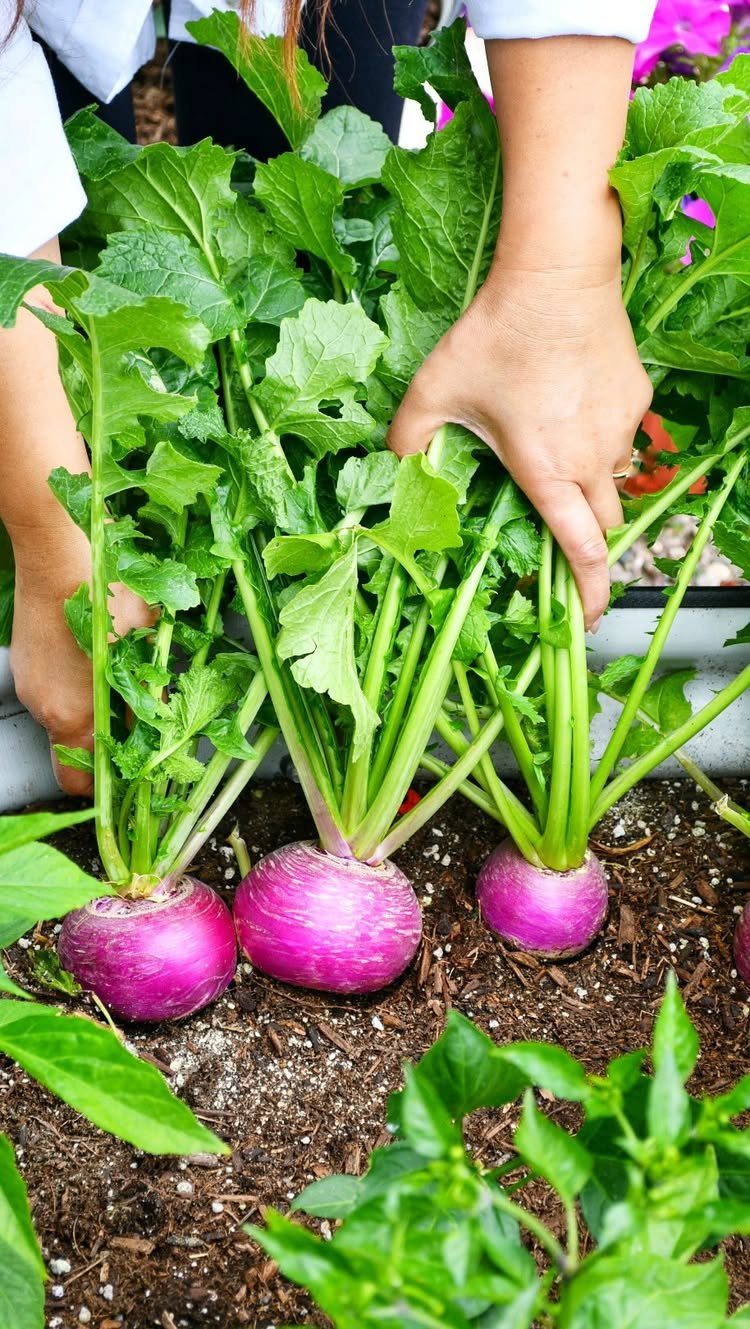
Turnips give you two crops from one sowing: the purple-topped roots and the leafy greens above them. Both are edible, so nothing gets wasted.
A raised bed works well because loose soil lets the roots swell evenly. Pull one to check size before you clear the row, and cook the greens the same week, since leaves wilt faster than roots.
12. Kale
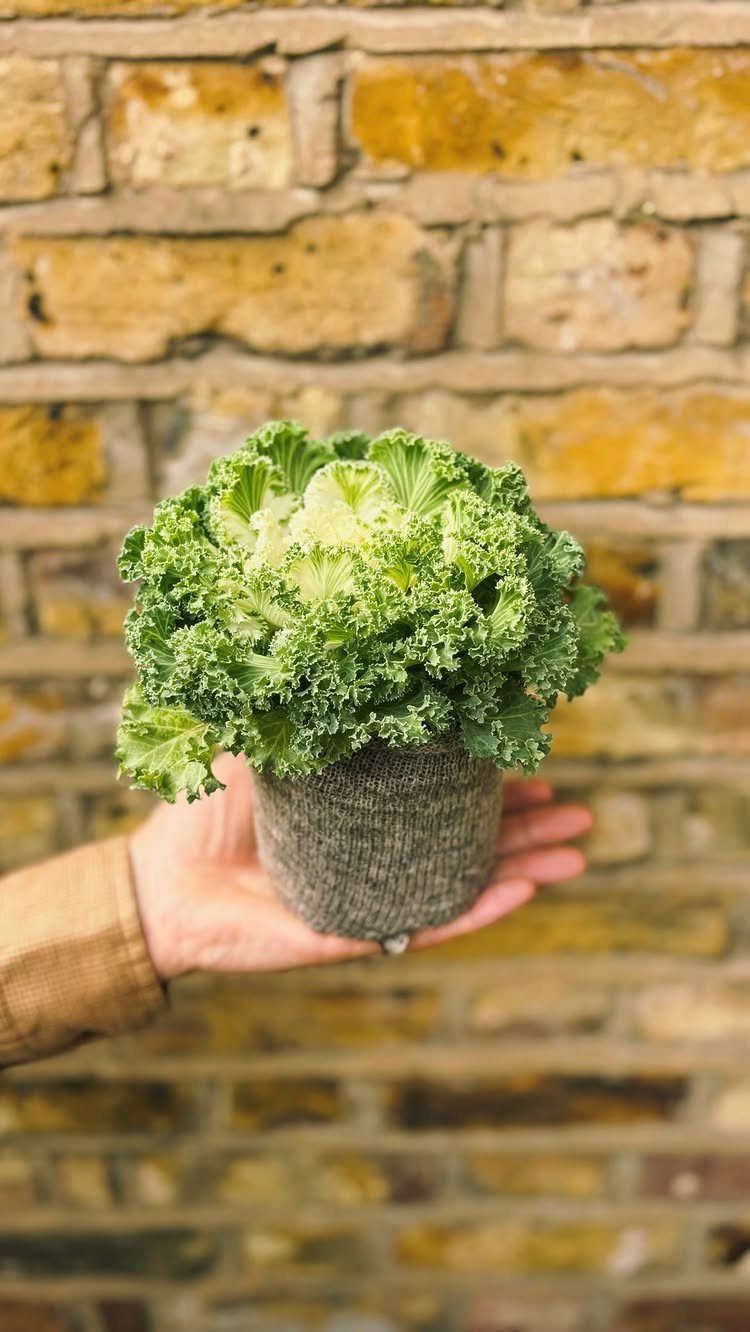
Kale is happy in a small pot, which makes it one of the simplest greenhouse crops to tuck into leftover space. A curly variety like this one gives a lot of leaf from a single plant.
Pick outer leaves as you need them and leave the center growing. That way one pot keeps feeding you instead of giving a single cutting.
13. Lettuce and Salad Greens
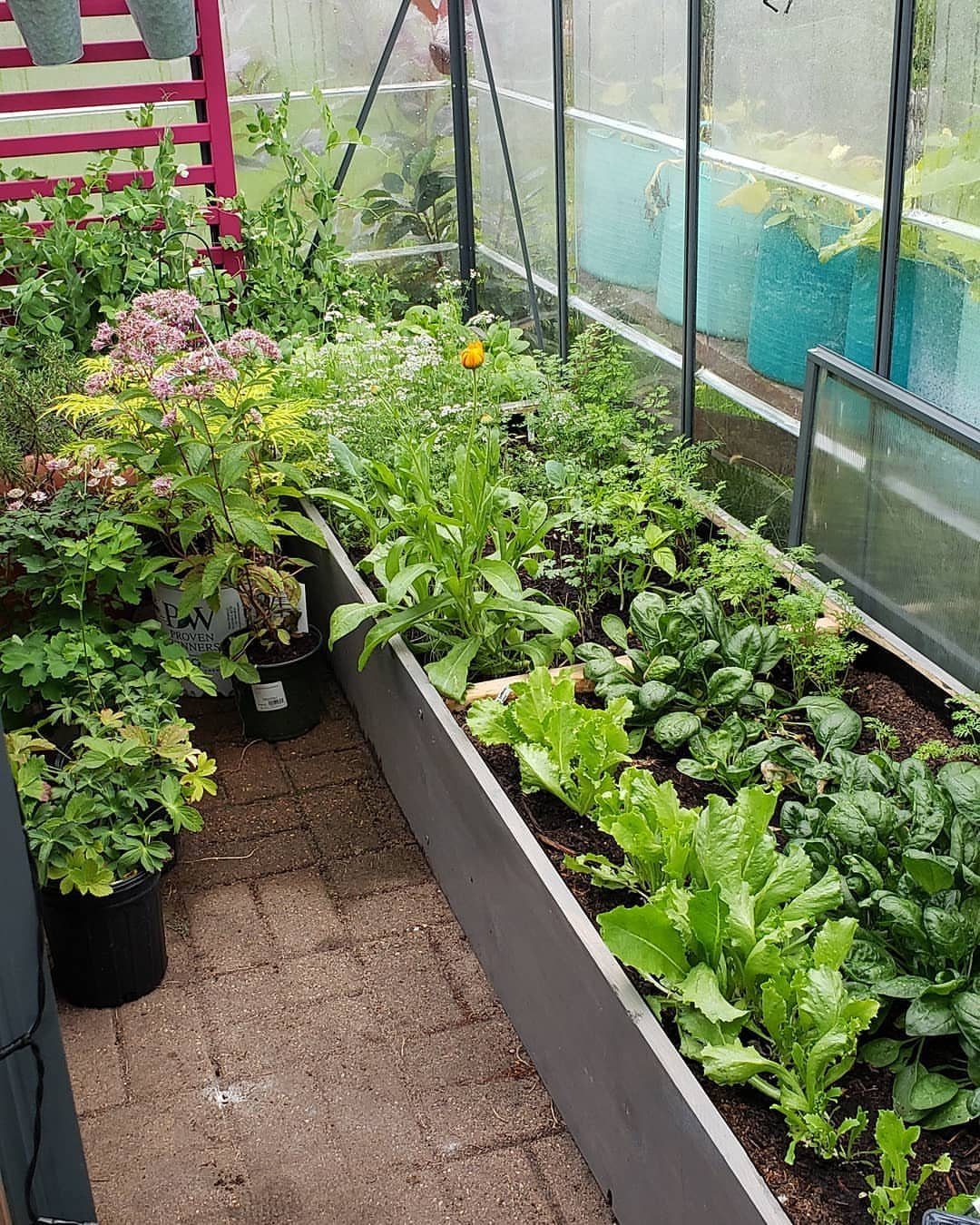
Lettuce and salad greens fit a raised bed better than almost anything else in the greenhouse.
Shallow roots mean a bed has plenty of depth, and a mix of leaf types in one bed gives you a salad bowl you can cut from.
Harvest from the outside of each plant and leave the center crown alone, and one lettuce will keep giving for weeks. A pot or two of flowering plants tucked among the greens adds color without costing much bed space.
I would sow a little at a time rather than the whole bed at once, so the harvest stays steady instead of arriving in one week.
14. Succulents and Agave

Succulents and agave are ornamental, not edible, but they earn greenhouse space because they shrug off the dry, hot spells that stress most vegetables.
Rounded succulents and a large agave suit a greenhouse that you want to look good as well as work.
Both are low-fuss plants, so they make sense for a grower who travels or forgets the watering can. Give them the sunniest spot you have.
If you want food crops too, I would keep these in their own corner, away from the thirsty vegetables, so no plant gets watered on the wrong schedule.
Pollination and Fruit Set
Fruit set is the step that surprises people under cover, because walls and glass keep out the insects that do the work outdoors. Once flowers open, plan to help them along.
Tapping tomato trusses, shaking pepper plants, and brushing eggplant flowers with a soft touch all move pollen around. Melons need hand-pollinating, and zucchini can be done with a small swab.
Plants that draw bees and butterflies, set nearby, give you backup on days when you forget. Prop the door open on warm mornings so those visitors can find their way in.
Greenhouse Crop Care
Tomatoes do well with a fertilizer that is high in potassium and phosphorus, applied every 2–3 weeks, which pushes steady growth and a heavier fruit set.
Watering matters as much as feeding. Uneven watering causes blossom-end rot and split fruit, so aim for steady moisture; drip irrigation or mulch helps hold it there.
Start tomato seed indoors 6–8 weeks before your last frost date. Move seedlings into larger containers once true leaves appear.
Air movement keeps fungal problems like blight in check, and it also prevents overheating. Ventilate daily, and give indeterminate varieties sturdy cages or a trellis so they grow upright.
Managing Summer Heat and Humidity
A greenhouse traps warmth by design, and in summer that works against most crops.
Vents and doors should be open by mid-morning at the latest, because a greenhouse that has already heated up is hard to cool, and plants wilt long before you notice.
Automatic vent openers are worth having if you can’t be home at midday. A layer of shade cloth over the roof or beds takes the edge off the midday sun and keeps the air inside noticeably cooler.
Morning is the best time to water, since the soil stays cooler around the roots through the hottest hours. Keep ventilating during and after watering so the extra moisture doesn’t hang in the air.
Space plants so air can move between them, and add a circulation fan if the air still feels stagnant. Most greenhouse crops grow best with relative humidity between 50% and 70%, though the exact number shifts with the plant.
Frequently Asked Questions
What do you grow in a greenhouse during the summer?
Heat-loving crops do best: tomatoes, cucumbers, peppers, eggplants and zucchini all like the warmth. Tomatoes and cucumbers can be trained up strings so the aisle stays clear.
Agave and other succulents like the dry heat of July, so they hold up on benches where tomatoes and lettuce would wilt. Open vents and doors by mid-morning so the crops don’t wilt.
What plants can be planted in the spring?
Start tomato seed indoors 6–8 weeks before your last frost date, then move seedlings into larger containers once true leaves appear.
Lettuce and salad greens, kale, turnips and carrots also suit a greenhouse bed. Plant a short row of lettuce every couple of weeks; that way you pick a salad’s worth at a time instead of facing 20 heads at once.
What is the ideal humidity for a greenhouse?
Humidity between 50% and 70% suits most greenhouse crops, though tomatoes sit near the low end and leafy greens or ferns like it higher.
A small circulation fan helps if the air feels heavy, and so does leaving a few inches between pots.
How to manage summer conditions inside a greenhouse?
Ventilate early, shade the roof or beds, and water in the morning. Open the vents and door by mid-morning, because once the house has built up heat, it takes hours to bring it back down.
Shade cloth keeps the air noticeably cooler, and automatic vent openers help if you’re away at midday. Wide plant spacing and a fan keep air moving and humidity in check.