The ideas here run from a mixed annual container and a pot of herbs to a full balcony garden and a rooftop of pots, and the right pick depends on how much floor and sun you have and whether the plants need to return each year.
A deck or balcony with room for one large pot suits a mixed annual or mixed perennial container; a small space with a sunny wall suits potted cacti and succulents, or spaced plants in planters.
Whichever you pick, drainage holes are non-negotiable, and the section on choosing pots and drainage covers why; a pot light enough to carry also lets you shift plants toward the sun as the season goes on.
1. Mixed Annual Container
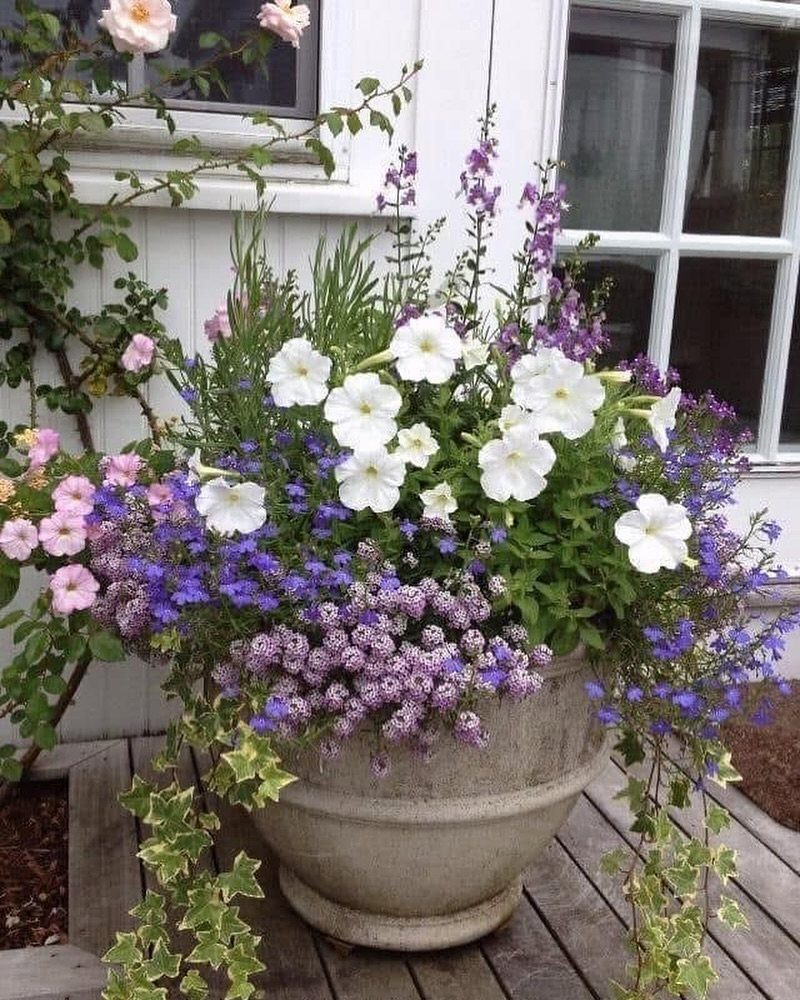
A single big pot can carry a whole deck when the mix is simple: white petunias for bulk, purple lobelia for contrast, ivy to spill over the rim.
Two flower colors plus one trailing green is easy to repeat across several pots.
Annuals bloom hard but only for one season, so plan on replanting each year. Pick a pot wide enough to hold all 3 plants without crowding, since petunias fill in fast.
2. Herb Container Garden
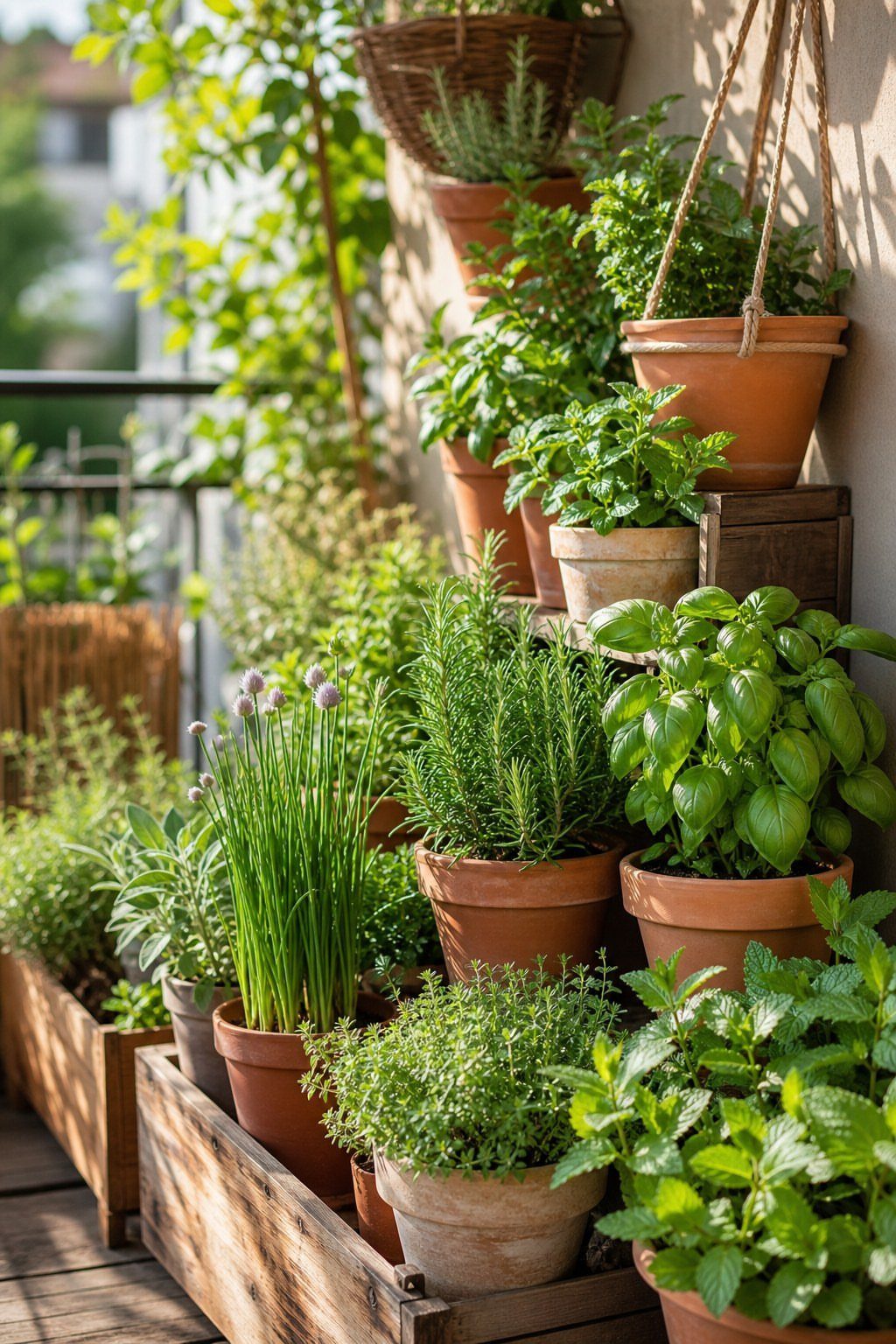
Herbs belong within arm’s reach of the kitchen door, and a balcony is ideal for that. Terracotta pots, wooden planters and a few hanging pots let basil and rosemary share a small footprint by growing upward instead of outward.
I like one herb per pot, so each plant gets its own soil and its own watering. Set the pots where the sun hits them, and snip a little whenever you cook.
3. Exotic Container Plants
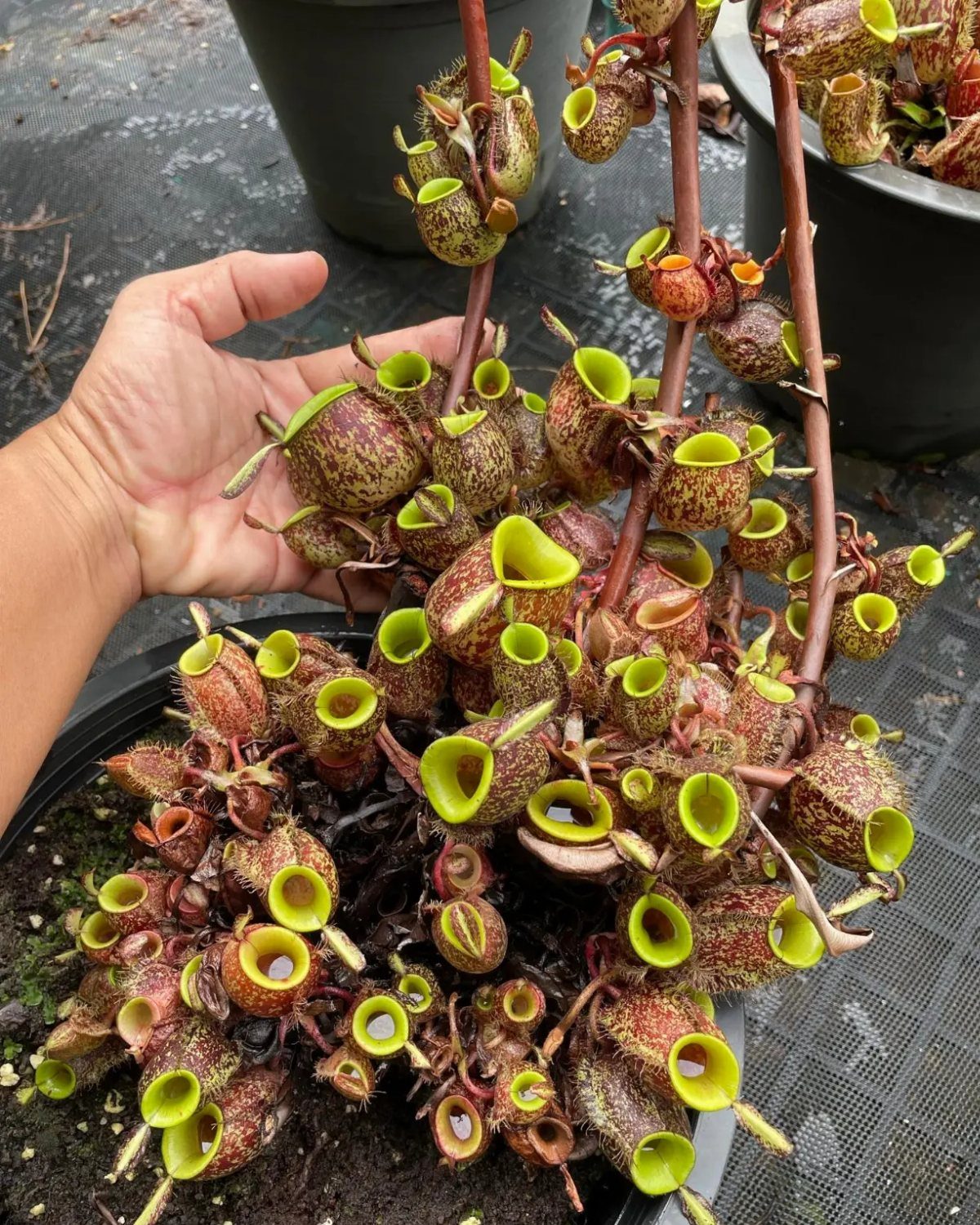
The pot is the garden, so you control where it sits.
Check what your chosen plant needs before buying, because a plant from a different climate will want conditions your yard may not offer. A pot you can carry gives you room to adjust.
4. Potted Cacti and Succulents
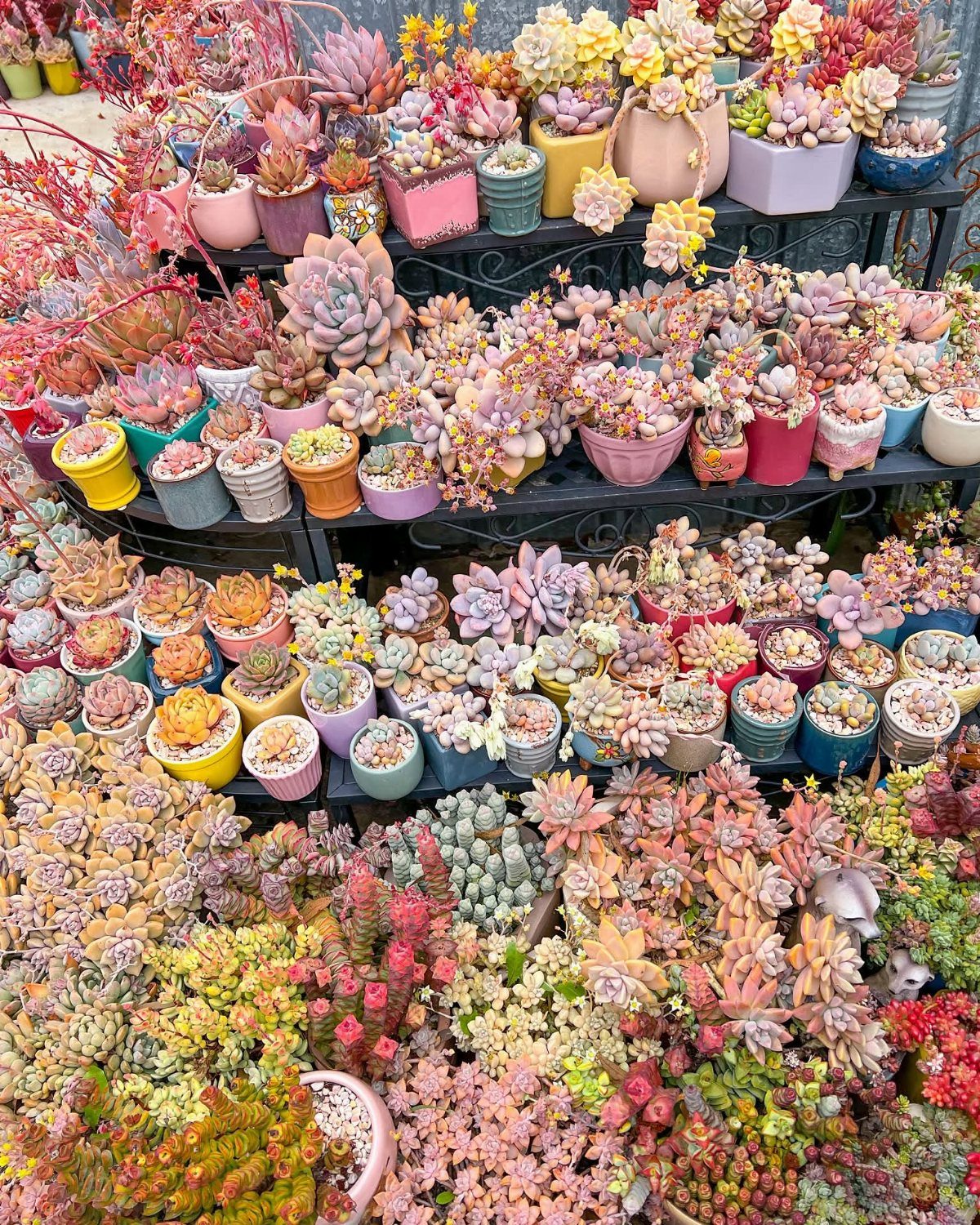
Cacti and succulents suit small pots better than almost anything else, and tiered shelving lets a dense collection fit against one wall. Mixing rosette shapes, spiky columns and colored leaves gives the shelf variety without a single flower.
Small ceramic pots keep each plant separate, so you can rearrange them freely. Choose pots with drainage holes; sitting in water is what these plants dislike most.
5. Instant Potted Garden
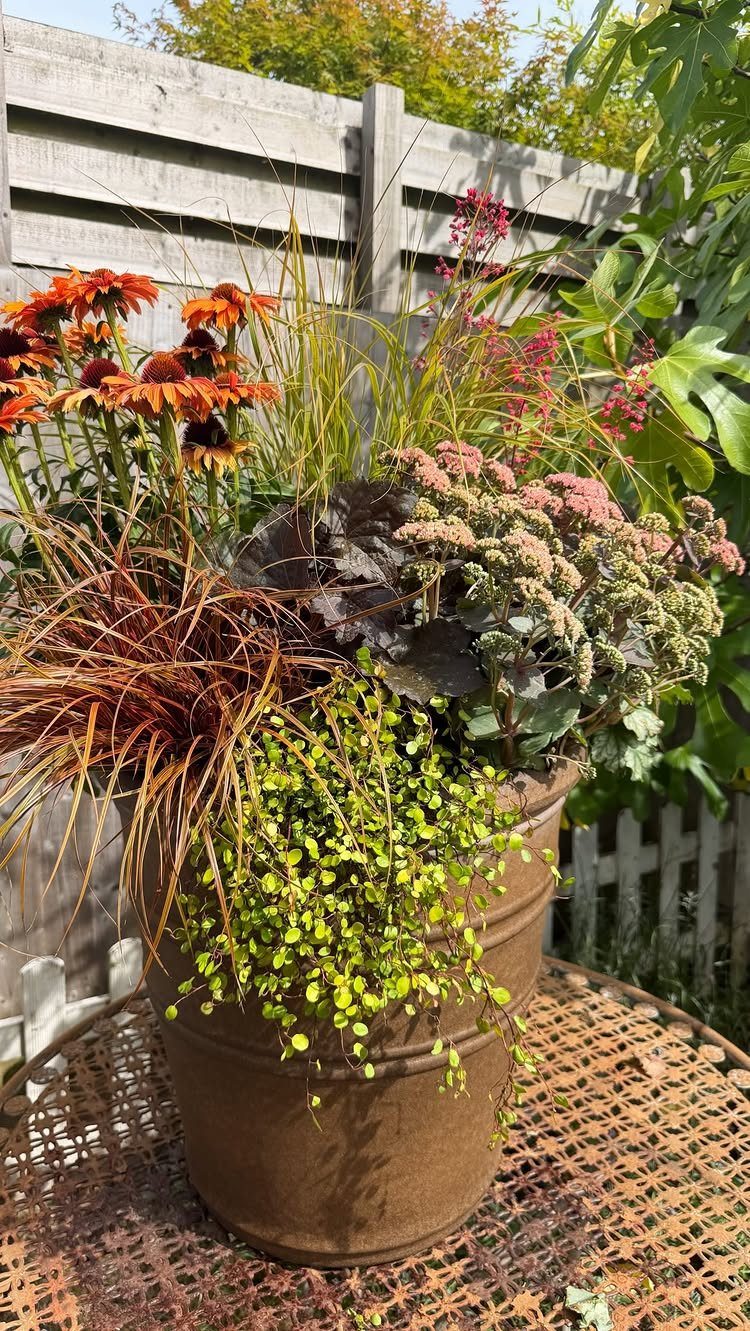
Buying full nursery plants and setting them straight into a new pot gives you a finished-looking garden the same afternoon, with no waiting for seedlings.
Coneflowers for height and a trailing vine for the edge is a combination I would copy.
A large pot works best, since it holds several plants at once and gives the roots room. Place the tallest plant toward the back or center, and let the vine hang over the rim.
6. Spaced Plants in Planters
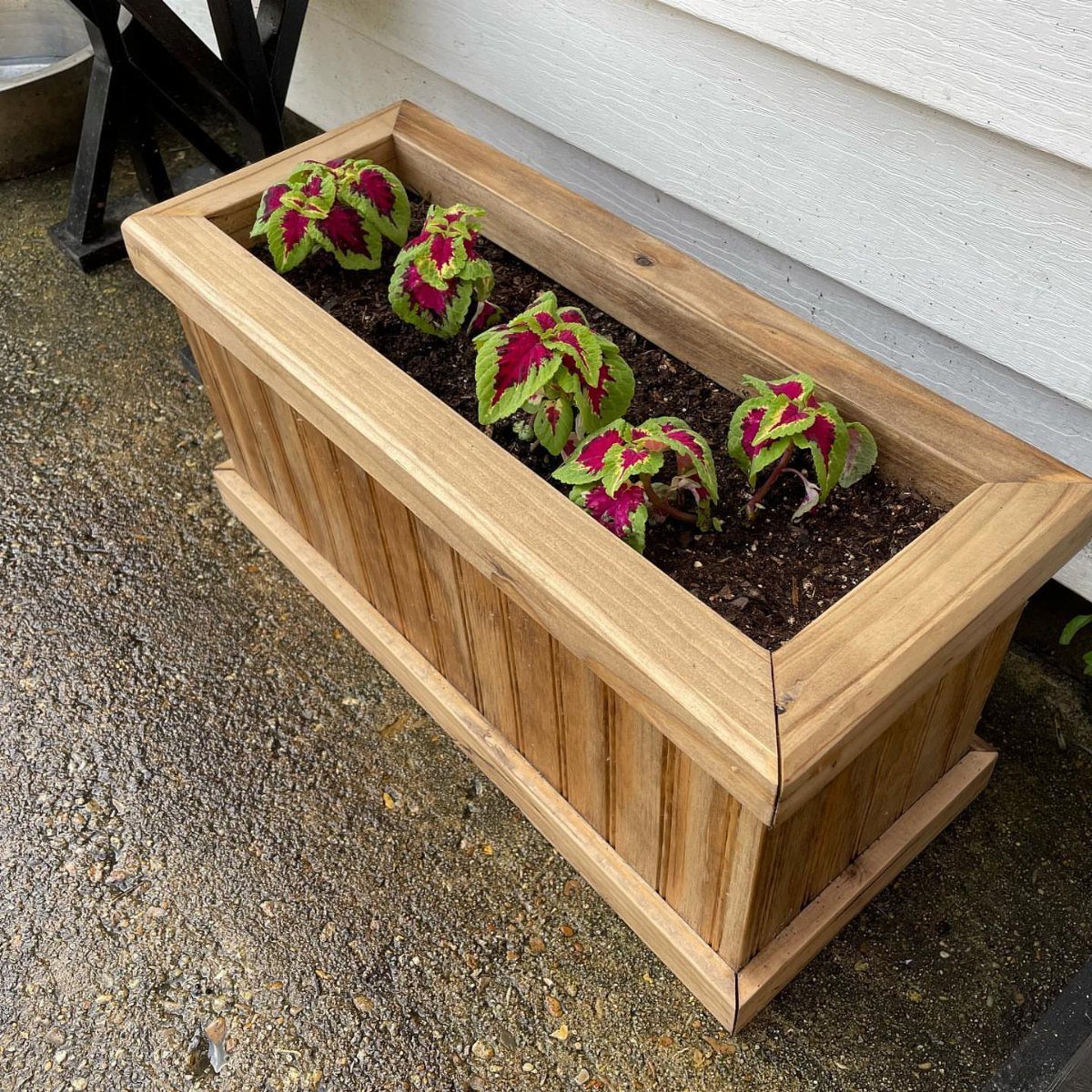
5 coleus in a long planter looks sparse on planting day, and that is deliberate. Leaving gaps lets each plant fill out over several weeks, so the box ends up full rather than choked.
Crowding at the start means plants compete for soil and light later. Resist the urge to add more; a little patience gets you a denser result with fewer plants to buy.
7. Mixed Perennial Container
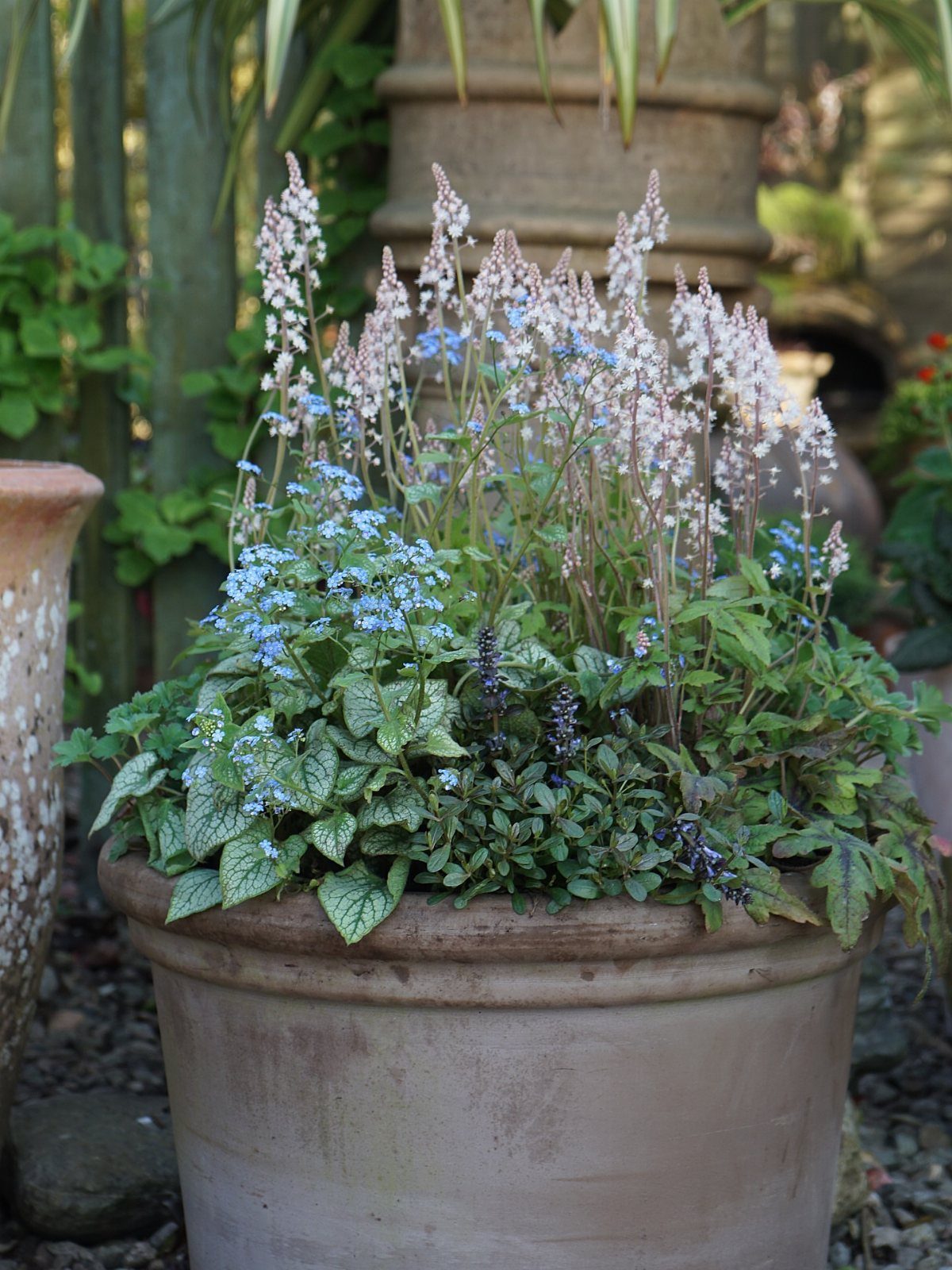
Blue and white is an easy palette to live with, and perennials make it a keeper: the same pot comes back each year instead of needing a new planting.
A terracotta pot suits those cool colors, since its warm tan sets off the flowers and green leaves.
Pick plants that bloom in the same 2 colors and let the foliage fill the gaps. Keep the mix to a few kinds so the pot reads as one arrangement.
8. Layered Plant Shapes
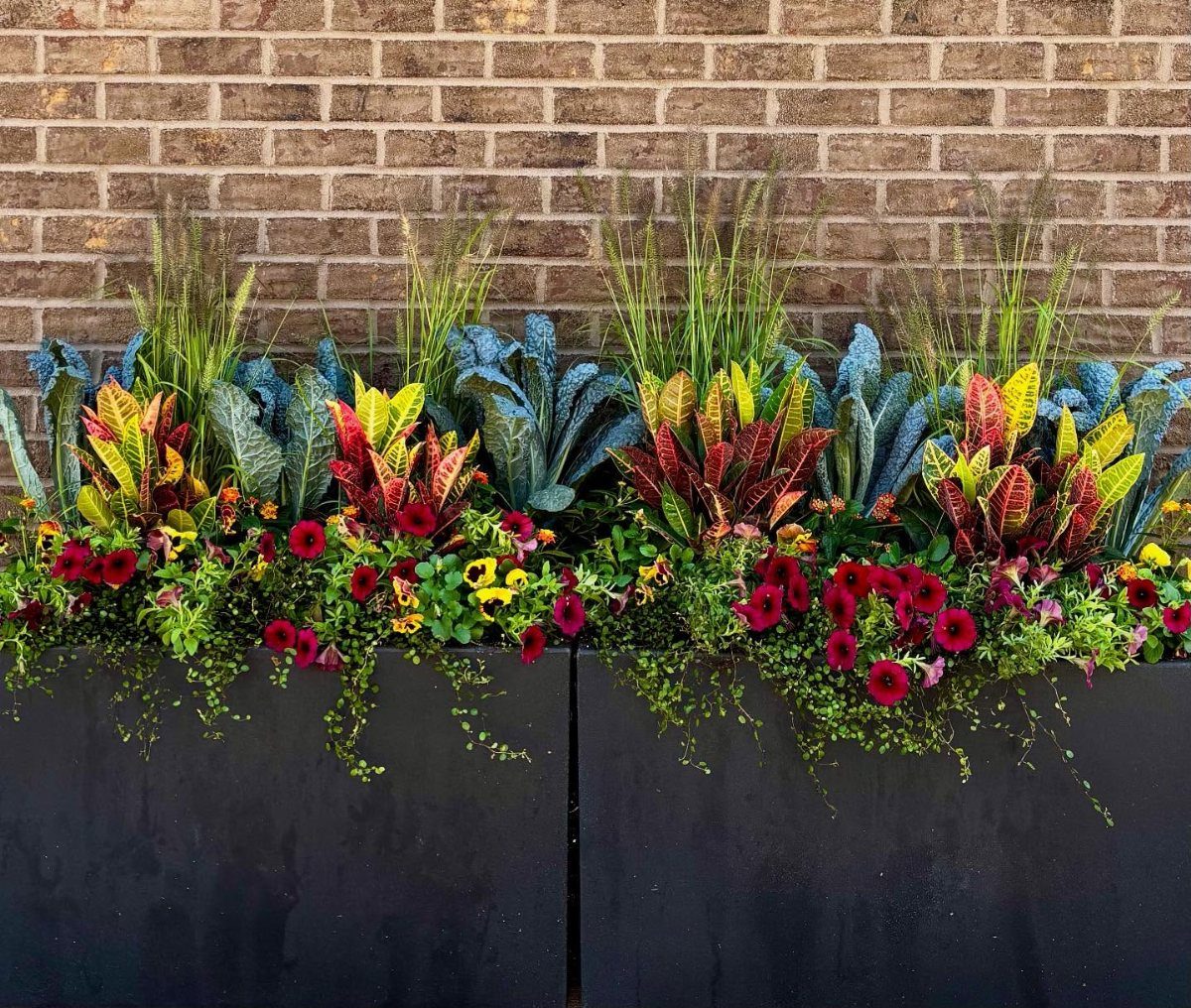
Tall grasses at the back, a trailing red bloomer at the front and bold crotons in between give one long planter three levels of interest.
Variety in height and habit is what makes a box look designed rather than just full.
A dark planter against brick lets the leaf colors carry the look. Place upright plants first, then fill the edges with something that spills over.
If the mix feels busy, cut a plant rather than add one.
9. Cheerful Flower Medley
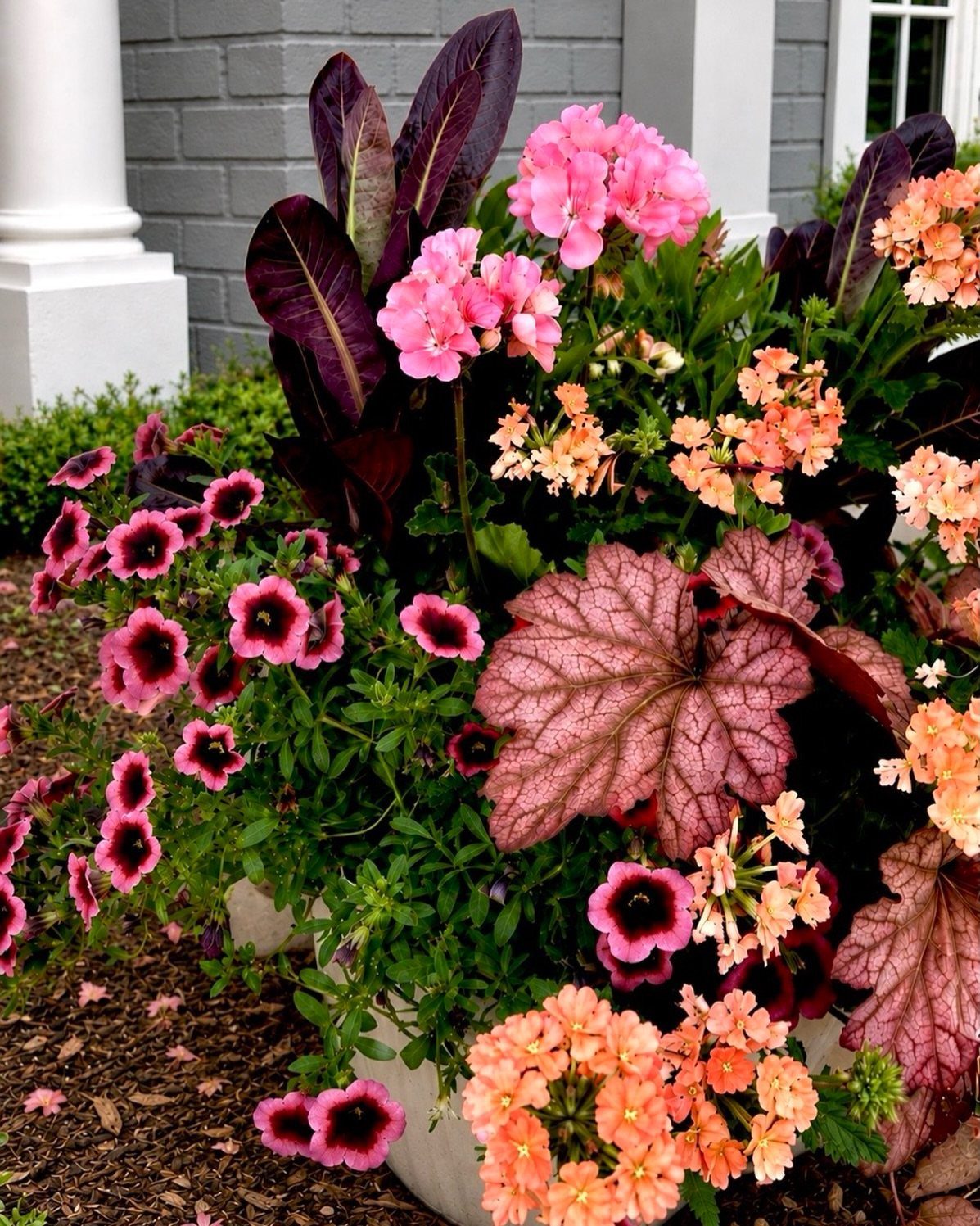
Pink geraniums and petunias look better when dark purple and reddish-brown leaves sit among them. The deep foliage makes the pinks and peaches read brighter, so the pot looks lively even against a plain grey wall.
I would choose the foliage first, then add flowers in two or three related shades. Too many unrelated colors turn a medley into noise, and one pot of this is plenty.
10. Balcony Container Garden
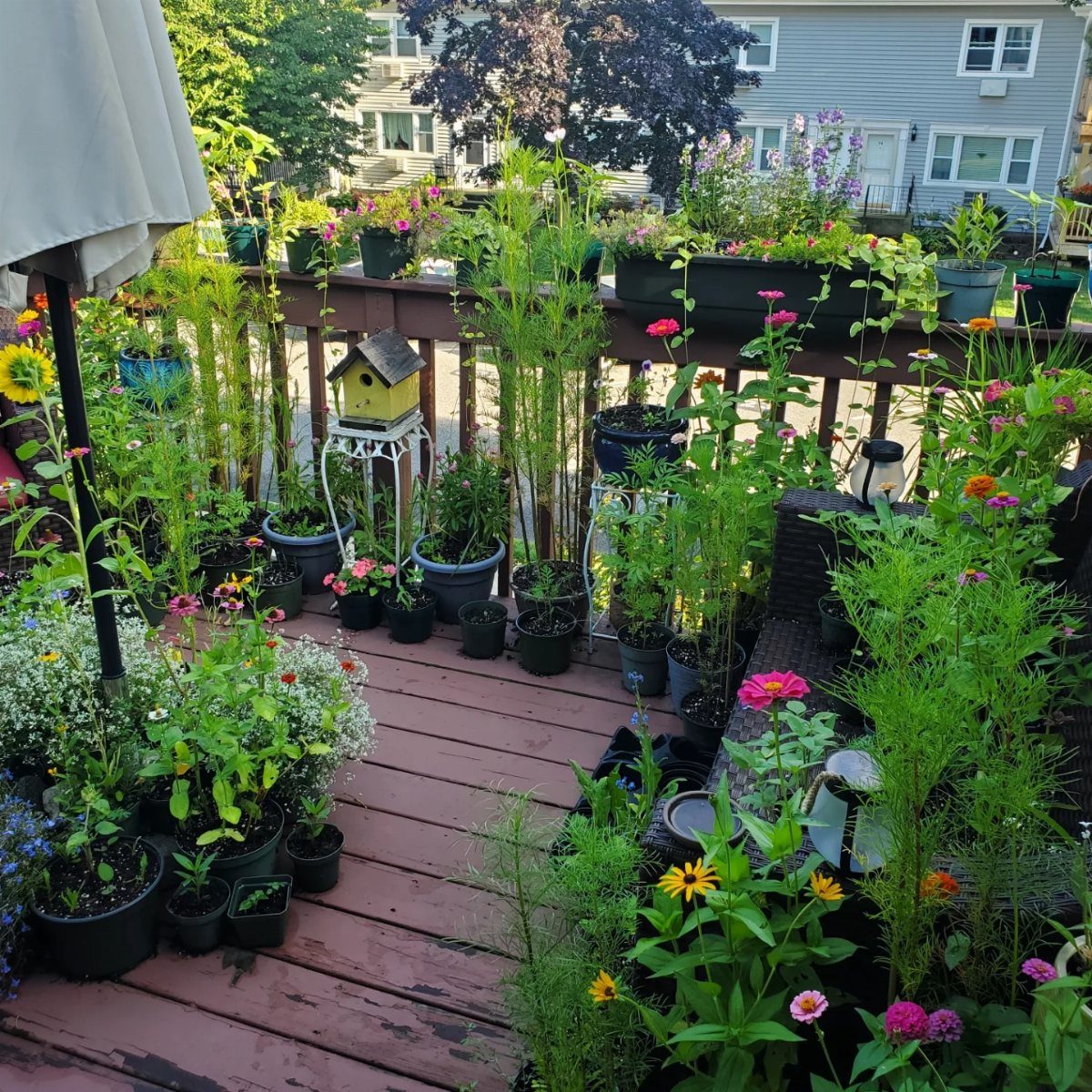
A balcony fills up fast with pots, and that is fine: many small containers let you build a garden around a table and chair instead of giving up the space.
Black plastic pots are a sensible, low-cost choice because they are light and easy to shuffle around.
Group flowering plants together for a bigger splash of color. A small birdhouse adds a nice touch without taking up floor space if you hang it.
One of the great things about gardening in containers is that you can put them anywhere.
11. Rooftop Pot Garden
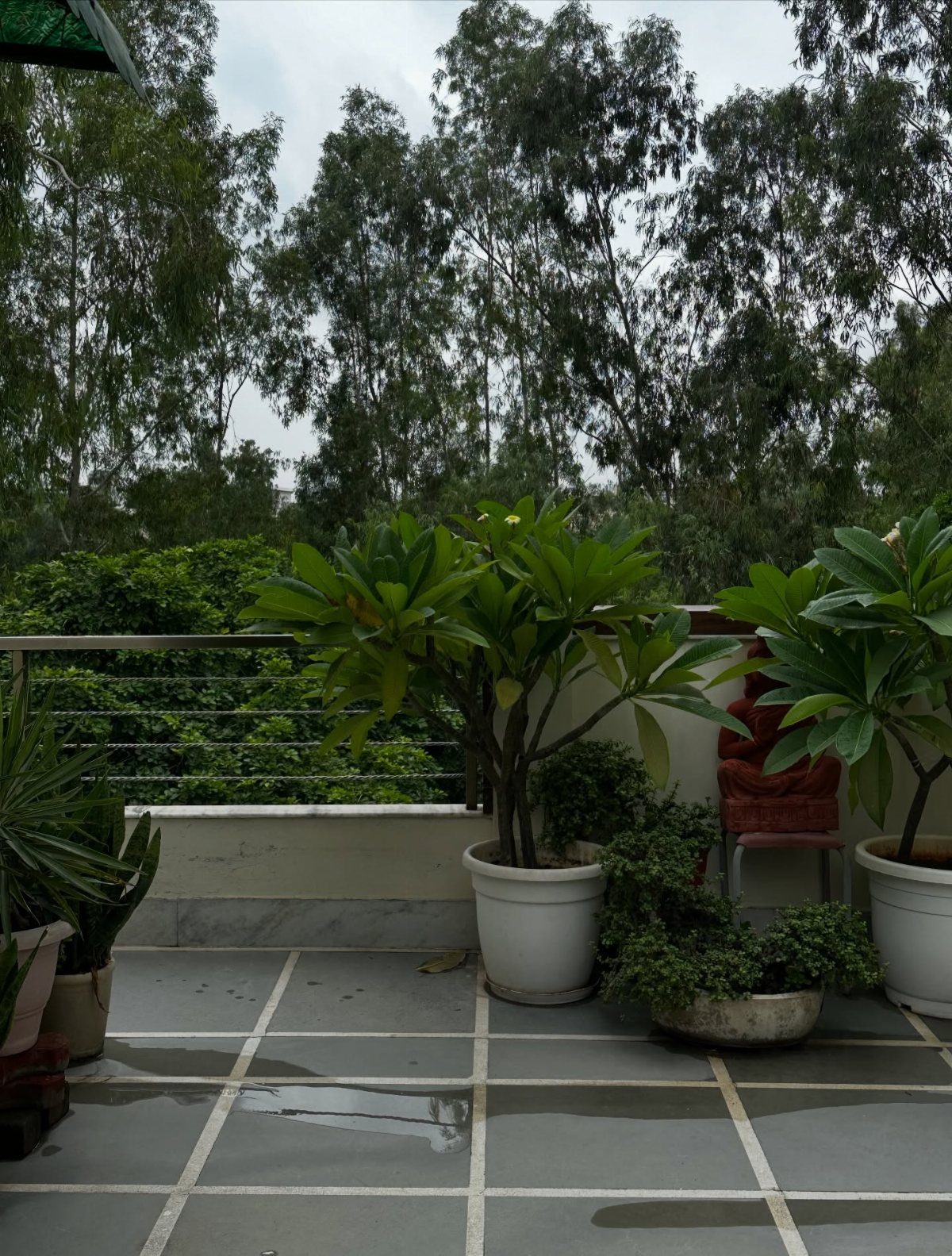
White pots on a grey tiled rooftop stand out cleanly, and green leafy plants look crisp against that plain backdrop. Lining the pots along the edge by the railing keeps the middle of the terrace open for walking and sitting.
Pick pots you can move, since a roof is exposed and you may want to rearrange. Stick to a single pot color and one or two leaf types for a tidy, calm look.
Choosing Pots and Drainage
Size the pot to the plant in front of you.
Step up only 1–2 inches in pot diameter when repotting, since a much bigger pot holds extra wet soil that keeps roots soggy. Tomatoes and other fast growers break that rule, and for them I’d pick the larger pot every time.
Drainage holes are non-negotiable. Without them, roots stay soggy.
Material changes how often you water.
Plastic is light, easy to move and holds moisture. Terracotta breathes, which plants like, but it dries faster.
Plastic, metal and fiberglass last longer outdoors with less upkeep. Untreated wood insulates roots well but will rot over time, while terracotta can crack when it freezes, so pick the material that suits your winters and your budget.
Lift pots off the ground on feet or risers so water can escape, and set a tray or pad under them to protect the deck or balcony floor.
Water, Sun, and Feeding
Check the soil daily by pushing a finger about 1 inch down.
Dry means water; damp means check again later. A moisture meter helps if you are new to this.
Water early in the day. Watering in the morning keeps plants supplied through the hottest hours, and the leaves dry out before dark, so disease has less chance to take hold.
Water deeply, until it runs out of the drainage holes, then let the top inch dry again. Shallow, frequent sprinkles only teach roots to stay near the surface, and they end up weak.
In midsummer heat, small or porous pots may need water once or even twice a day, and wind on a balcony dries them faster than you would expect.
Many vegetables want 6–8 hours of sun, so place them before you plant. A self-watering container can take much of the guesswork out of moisture.
Feed regularly. Watering flushes nutrients out of the pot, and even mixes with starter fertilizer need added food as the season goes on.
Potting Mix and Soil
Skip garden soil.
Garden dirt is dense, packs down in a container, drains slowly and gives roots little structure to grow into. Choose a bagged mix labeled for containers, one that is light, drains freely and has plenty of organic matter.
A good mix usually includes peat moss or coco coir to hold moisture, perlite or vermiculite for drainage, and compost to feed the plants.
Because you only get one shot at filling a pot, I would not cut corners on this bag.
Weight matters on balconies and roof terraces. Avoid heavy red clay soil there, and avoid peat-heavy composts too.
Some plants have their own needs. Gardenias and camellias want more acidic soil, so look for a mix made for them.
Frequently Asked Questions
What are good potted plants?
Herbs like basil, rosemary and mint are easy starters, and they stay handy when the pots sit near the kitchen door.
Cherry tomatoes, peppers and leafy greens also do well in containers. For color, petunias, marigolds, nasturtiums and geraniums fill a pot quickly, and cacti and succulents suit small pots better than almost anything.
How do I start a container garden?
Start with a pot that has drainage holes, add bagged potting mix made for containers, and match the plants to the hours of sun the spot actually gets.
After planting, soak the pot until water pours from the bottom, then keep up a feeding routine.
Every watering rinses some nutrients out the bottom, so even a mix that came with starter fertilizer runs low by midseason and needs a refill.
What is the most common mistake with container plants?
Watering is the one that trips people up, either too much or too little.
Small and unglazed pots lose moisture quickly in summer heat and wind, so poke a finger about 1 inch into the soil each day before deciding to water.
Missing drainage holes is a close second, because roots sitting in water turn soggy and fail.
How do I arrange potted plants on a patio?
Keep one pot color and one or two leaf types for a calm, tidy look.
Cluster the bloomers together and their color hits harder. Choose pots you can move, so you can rearrange as sun and weather change.
What is container gardening?
It means growing plants, often vegetables, herbs and fruits, in pots or planters instead of in the ground.
It suits patios, balconies and rooftops, and anyone with poor soil or little space. Because the pot is the garden, you control where it sits and what goes into it.
What is the best size for a garden container?
Match the pot to the plant, and make sure it is deep and wide enough for the roots. Fast growers like tomatoes are the exception and do better in the larger pot.
How important is drainage in a garden container?
It is non-negotiable. Without drainage holes, water collects, roots stay soggy and they can rot.
Does the style of the container matter?
Style comes second.
Get size, drainage and material right for the plant first, then pick a look you like. Terracotta flatters blue and white blooms, while a dark planter in front of brick makes foliage colors pop.
Does portability matter for garden containers?
Yes, especially on balconies and roofs where wind, sun and weight are concerns. A planted container can weigh over 80 pounds, so light materials like plastic or wheeled bases make rearranging far easier.
Where should I place my container garden?
Place it by the light each plant needs, and decide before you plant.
Most vegetables need 6–8 hours of direct sun, and 6 is the floor for the majority. Hold the pots indoors or under cover until the last frost date has gone by.