Ideas for the strip beside a sidewalk run from a mulch border and a few stepping stones to a retaining wall or a paver walk on a compacted gravel base, and the cost and weekend time climb with each step.
The rule that picks one is how much upkeep you will do every year: loose gravel and mulch are cheap to start but need raking, topping off and weeding, while pavers and stone cost more up front and then need little more than a sweep.
Pavers rest on a base about 4–6 inches deep, so that is the amount of digging a paved path asks of you.
1. Patterned Pavers
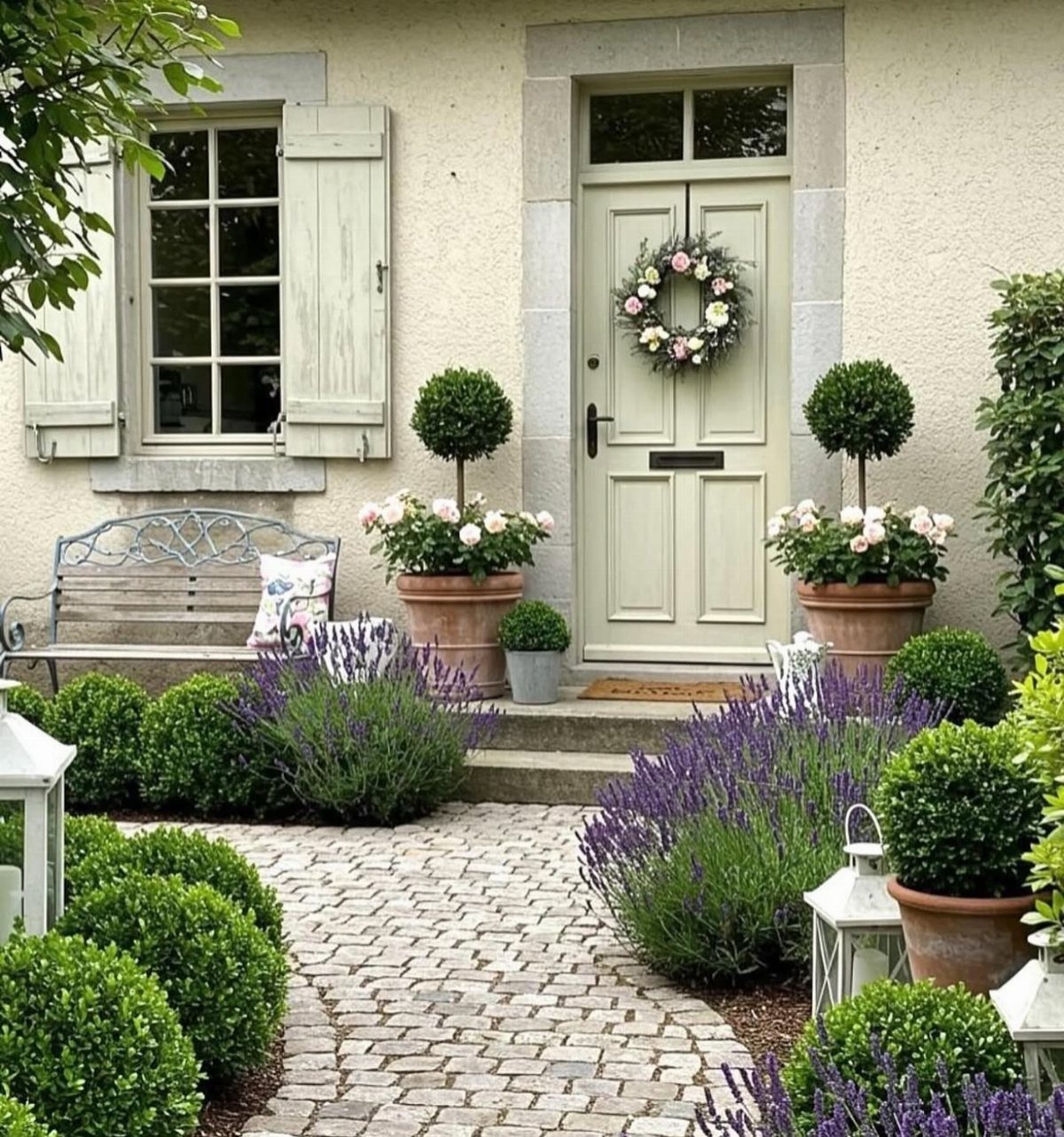
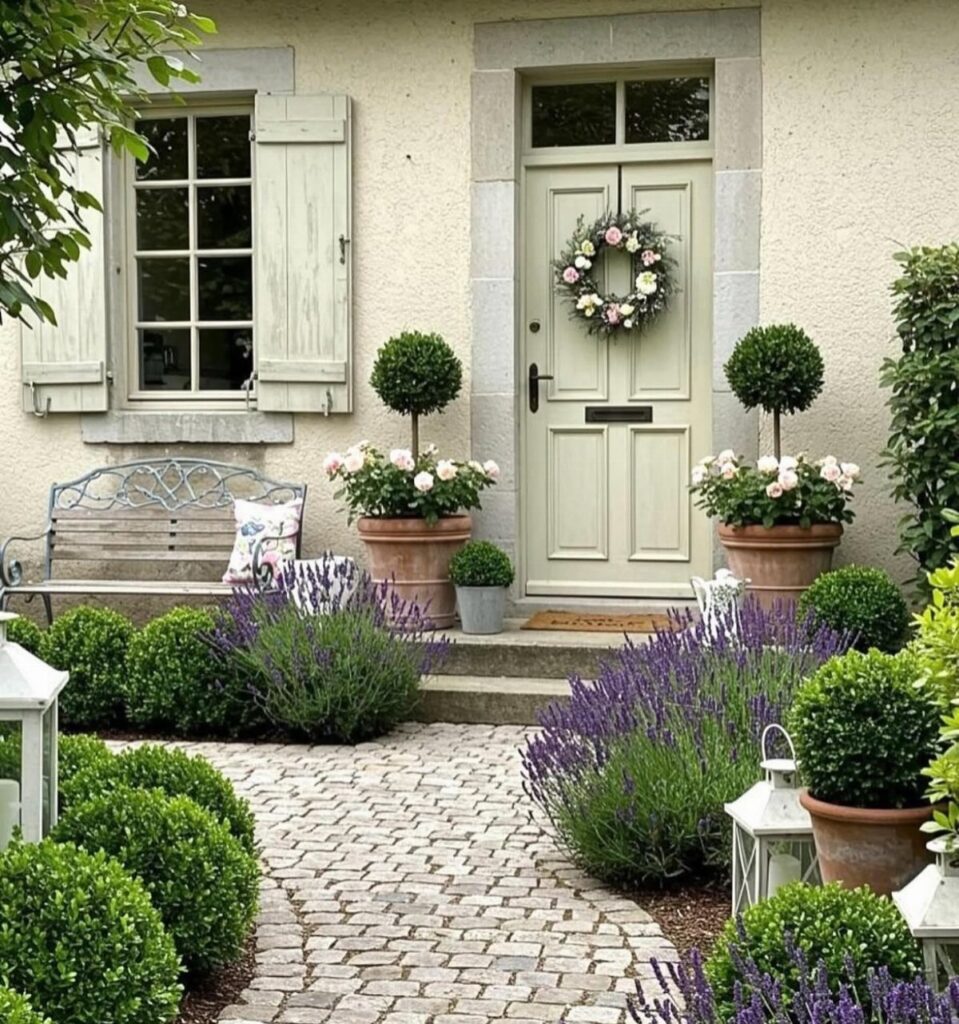
Cobblestone pavers give a front walk a worn, old-street look that suits a cottage-style planting. Lavender and clipped boxwood on either side keep the edges soft against all that hard texture.
Cobble patterns have many joints, so they look best when the beds stay neat. I’d keep the shrubs trimmed back from the stone so the pattern stays visible.
2. Recessed LED Fixtures
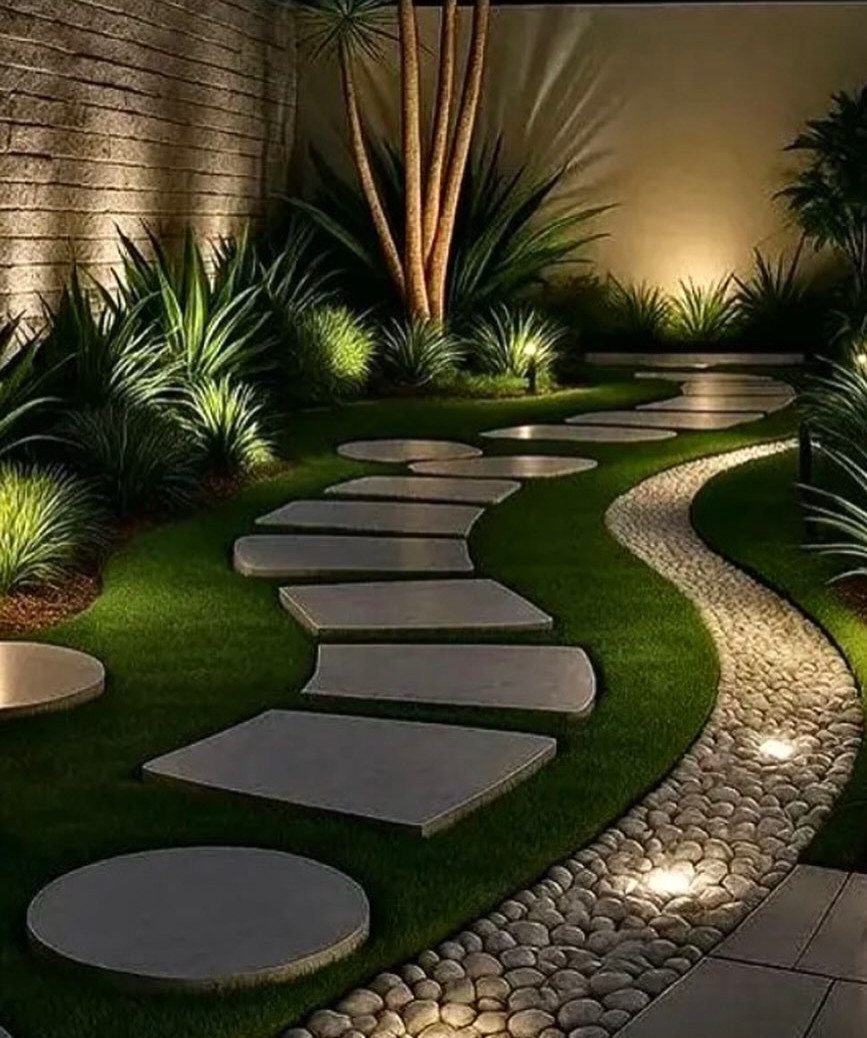
Lights set into a pebble border light the ground instead of the plants, which keeps a curved path readable after dark without fixtures sticking up into the bed.
Recessed fixtures need the border built around them, so plan their spots before the pebbles go down. I’d space them along the outer curve, where they trace the shape of the path best.
Wiring and local electrical rules vary, so check them before you dig.
3. Mulch Border
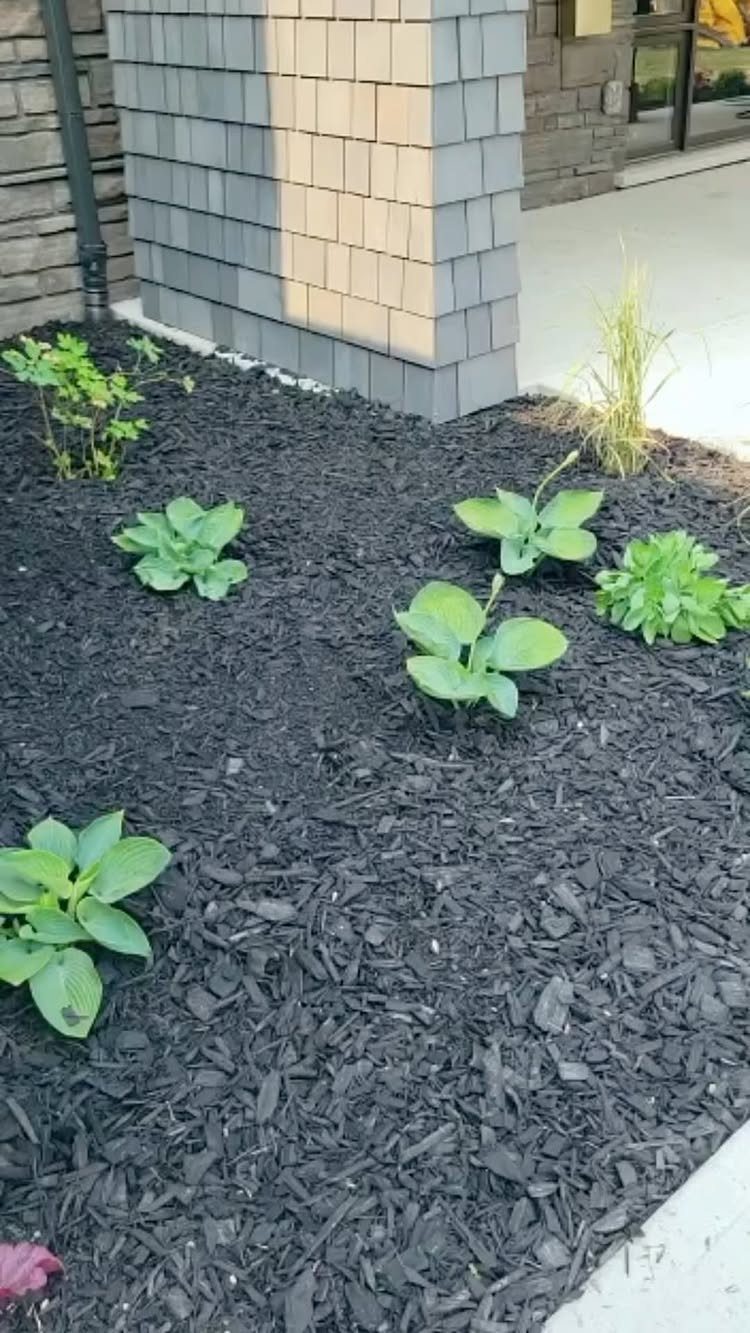
Black mulch makes a clean backdrop for hostas, and it shows off their green leaves against a concrete sidewalk. A bed like this is also one of the lowest-effort ways to finish a strip beside a walk.
Mulch holds the soil in place and cuts down on upkeep, so it earns its place in a narrow bed. Keep it even across the surface, and top it up when it thins.
4. Stepping Stones and Mulch
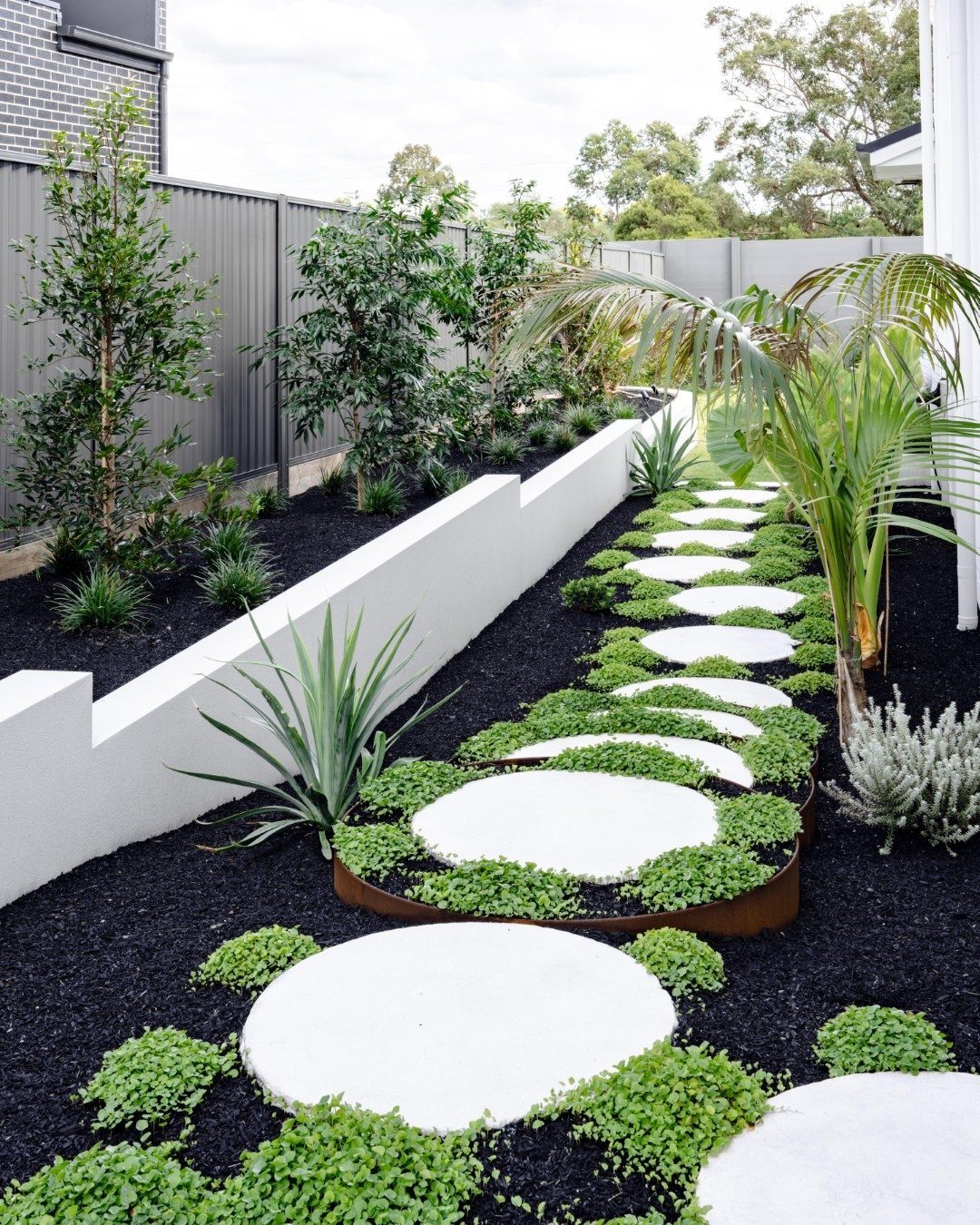
Round concrete stepping stones set in mulch make a casual path that still looks modern, especially when the stones are pale and the mulch is dark. The contrast does the design work for you.
Lay the stones out on top of the ground first and walk them before you commit. Space them to match your natural stride, then set each one level with the soil so nobody trips.
5. Stepping Stone Ribbons
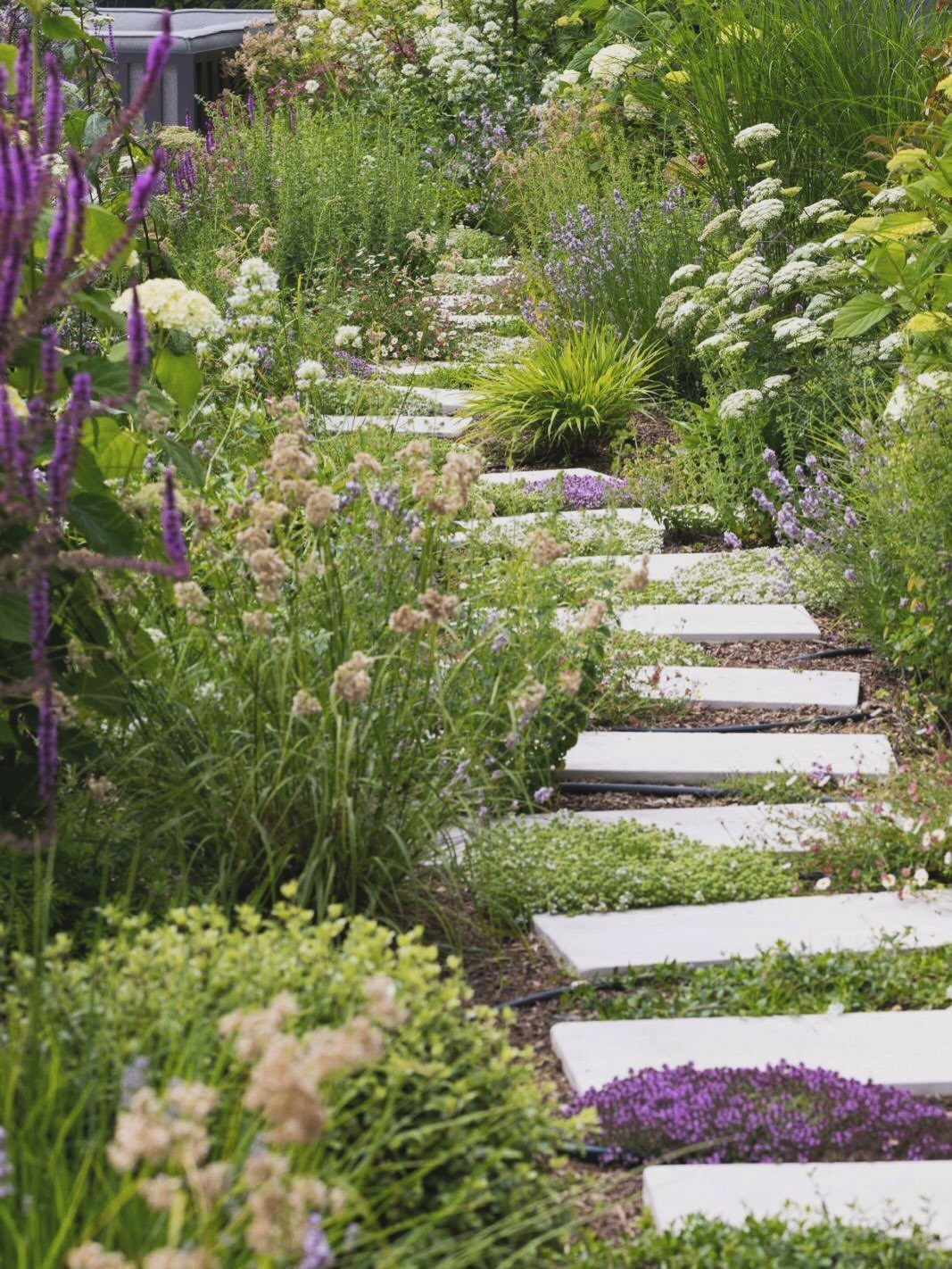
A ribbon of rectangular stepping stones tells people exactly where to walk, which is the best defense a sidewalk garden has against shortcuts. Cut through a bed often enough and the plants lose.
Run the stones along the line people already want to take, not the line you wish they would. Dense planting on both sides then fills in around the stones and softens the hard edges.
6. Flowers Along Walkway Edges
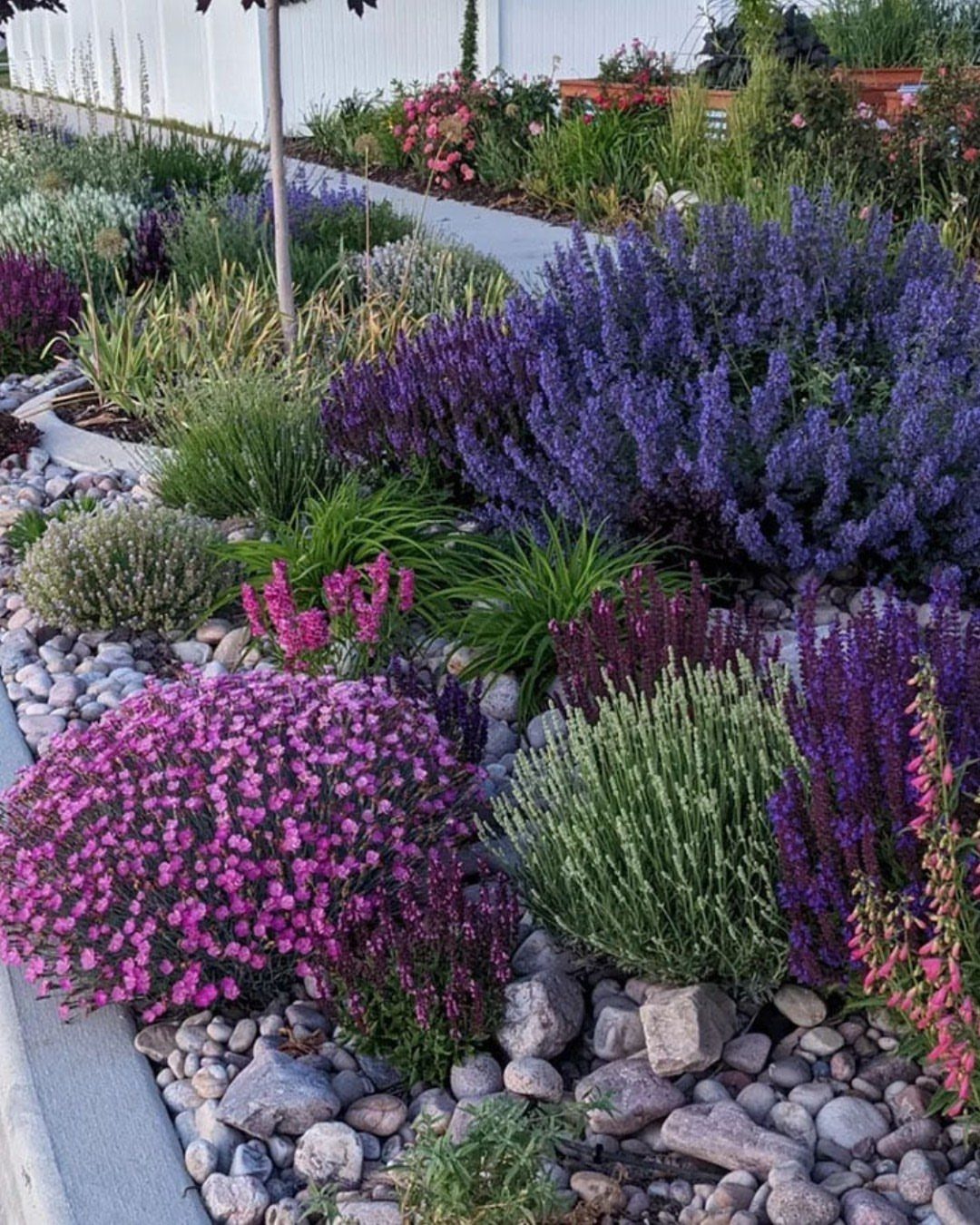
Rock also gives the bed a tidy edge where it meets the concrete.
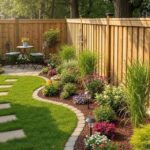
I’d pick a few plants and repeat them down the length instead of mixing a dozen. The result looks planned, and it’s easier to keep up.
7. Retaining Walls
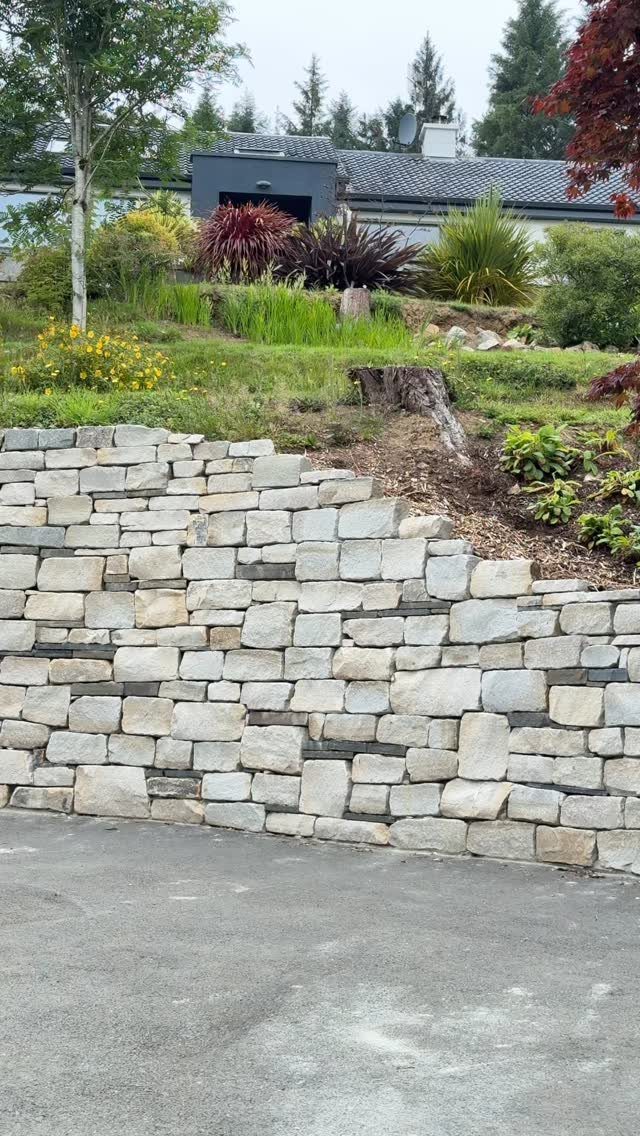
A low stone wall cut into a slope gives a sidewalk edge a firm line and keeps soil from sliding onto the pavement. Grass above it and shrubs in front keep all that stone from feeling stiff.
Walls like this add structure and help stop erosion, so they suit a yard where the ground tilts toward the walk.
I’d pick stone that matches the paving nearby, since a matching tone makes the wall look original to the house.
Tall walls and heavy slopes can fall under local rules, so check those first.
8. Wooden Benches Along Sidewalk
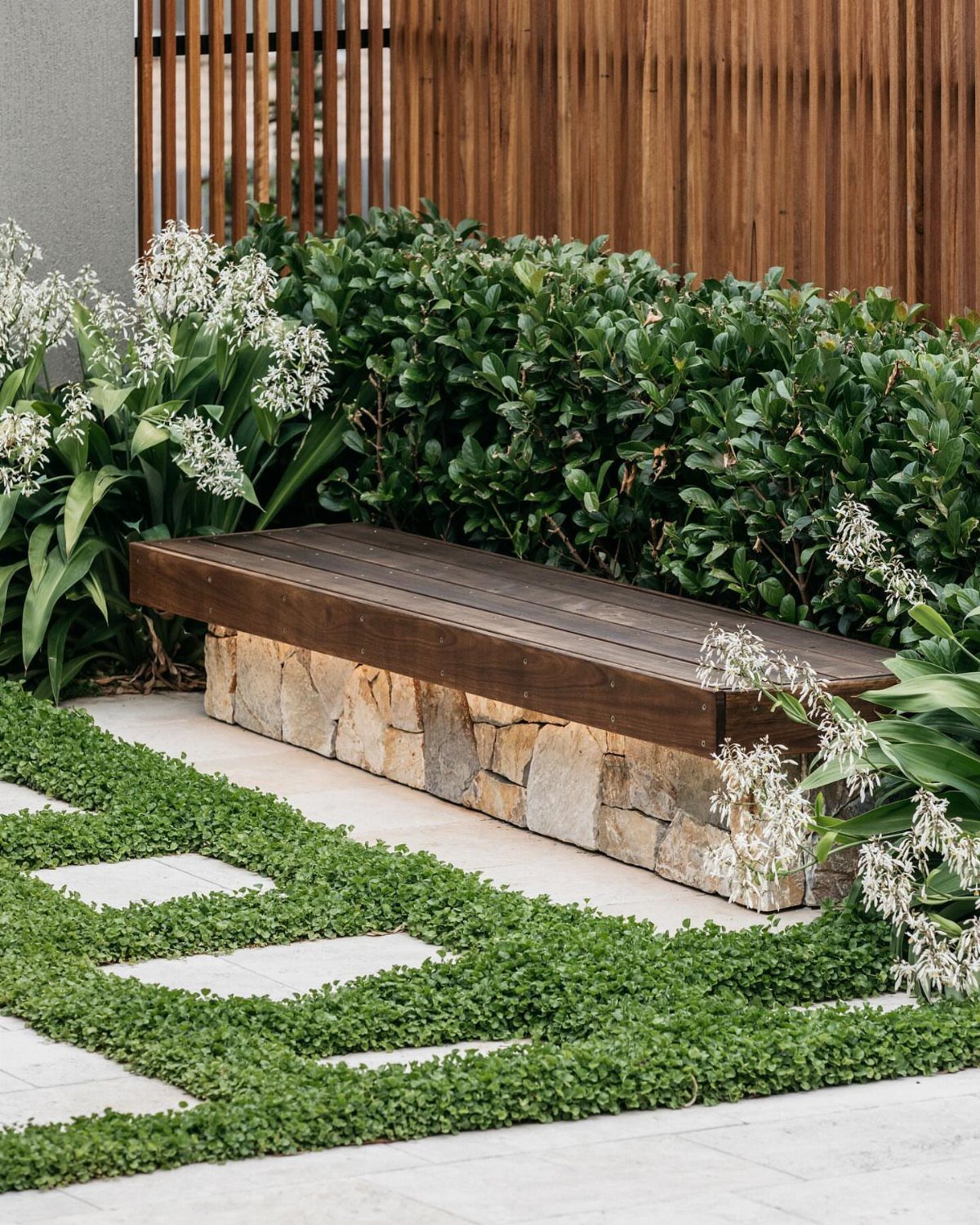
A dark wood bench on a stone base turns a stretch of path into a place to stop.
Backing a bench with a slat fence or a row of low evergreen plants makes it read as part of the garden instead of an add-on, and it gives sitters something to lean against.
I like the stone base because it keeps the wood off the ground and gives the bench some weight. Leave room between the seat and the walkway so people passing never have to step around knees.
Plants behind and beside the bench, kept low, soften it without blocking the seat.
9. Ornamental Grasses Along Walkway Edges
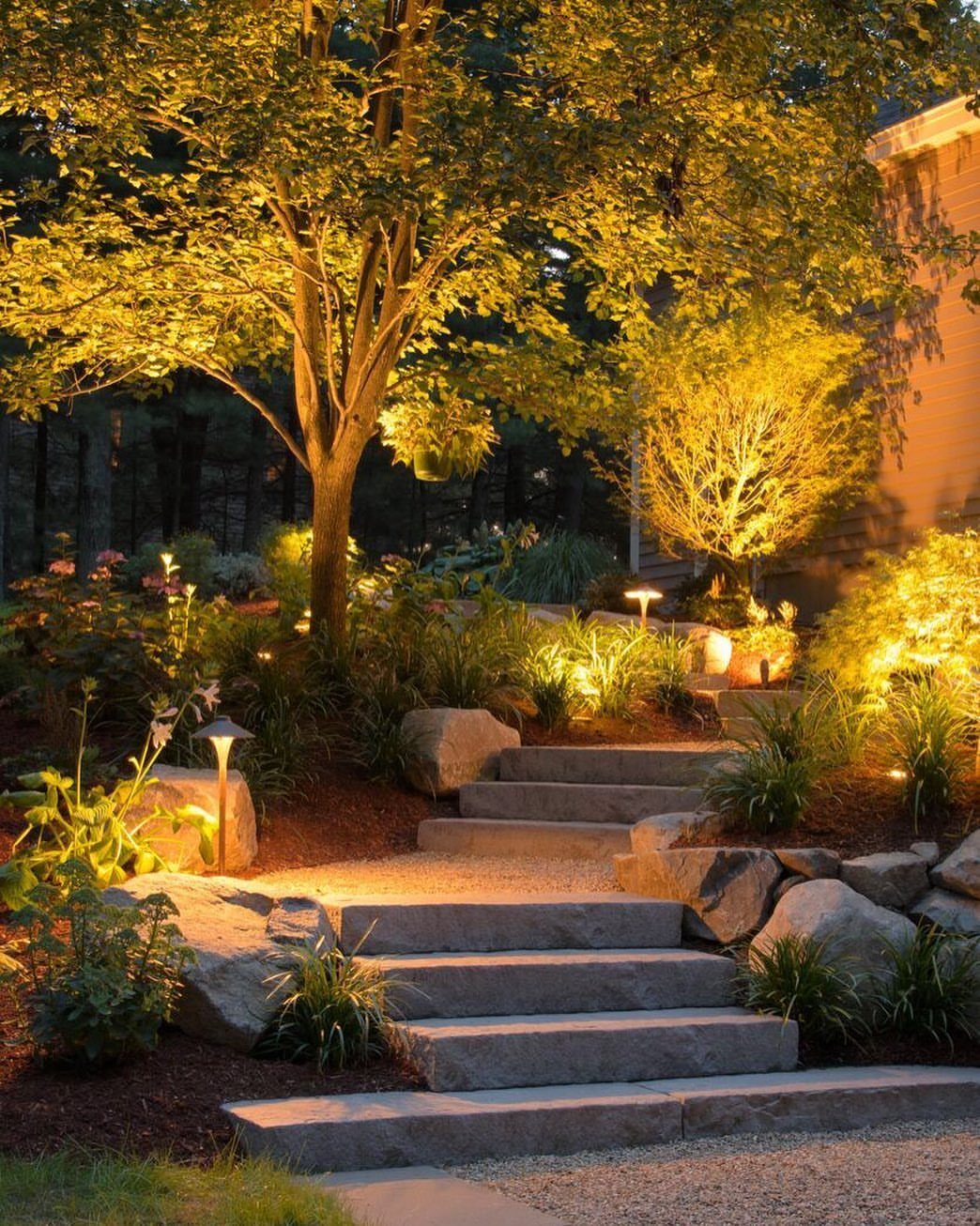
Ornamental grasses blur the hard line where steps or paving meet the bed. Their thin, arching blades spill toward the stone and break up its straight edges.
I’d set them in clumps beside large rocks, and give them room to arch without covering the treads.
Warm lights low in the bed make the blades glow after dark, which is a nice reason to add a fixture or two.
Cut back any blades that lean far enough to catch a foot.
10. Columnar Trees
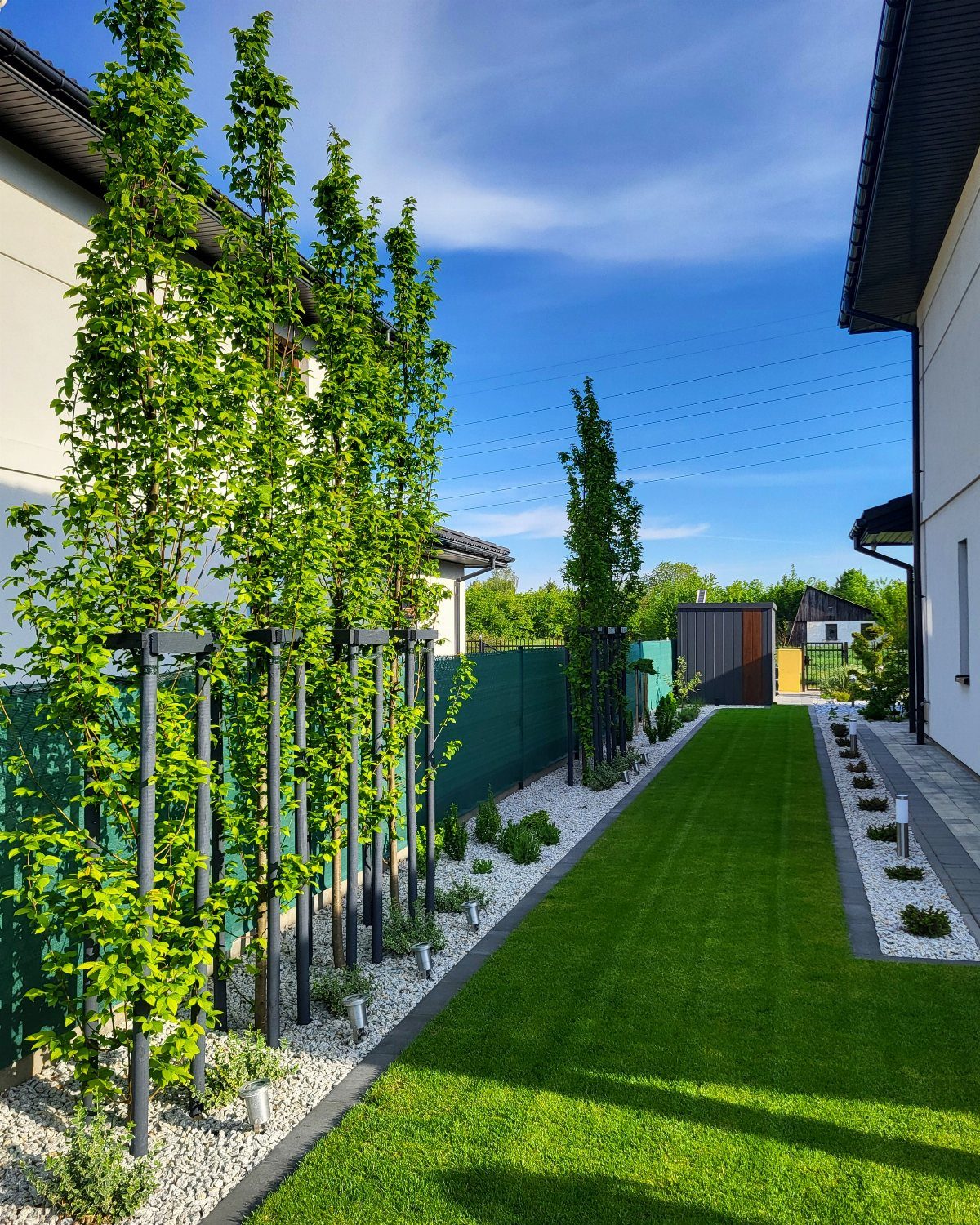
A row of tall, narrow trees gives a property line height without spreading into the walkway.
Tight-growing trees suit narrow strips because their branches stay close to the trunk, which helps keep sidewalk space clear and sight lines open. I’d space them evenly so the row reads as one line.
Gravel under them keeps the base tidy and cuts down on mowing near the trunks.
Planning and Local Permissions
Before picking a layout, walk the site and note 4 things: how much space you have, how many hours of sun it gets, what the soil is like, and what sits nearby, such as a driveway or a fence.
Then look at the style of the house, because a path that matches it will look planned instead of added.
Check local rules before you buy anything. Cities and homeowner associations can require permits for some landscape and hardscape work, and on a DIY job, staying within those rules is your responsibility.
A small fence is a good example: a homeowner who checked the city bylaws found that even a short one needed a permit.
Renters should get the landlord’s approval in writing first. A call to city hall or a look at the HOA guidelines costs nothing and can save you from tearing out finished work.
Walkway Cost and Maintenance
Budget sets the material, the size and how complicated the layout gets, so settle on a number first. Walkways can be built from crushed stone, brick, mulch, poured concrete, gravel or rubber pavers.
Loose gravel and mulch are the cheap way to start a walkway, but you pay for it later in raking, topping off and pulling weeds.
Pavers and natural stone take a bigger bite out of the budget on day one; after that they hold up for years and need little more than an occasional sweep.
I’d pick by how much weekend time you want to spend every year, not just by the price tag.
A simple gravel path or a run of stepping stones suits a DIY weekend. A longer path that needs drainage layers is a different job, and it may be worth paying a professional for that part.
Installation and Seasonal Care
Under a paver walkway I’d lay a compacted gravel base, then a thin bed of sand that the pavers settle into.
Most bases run about 4–6 inches deep. That base keeps the walk from shifting and helps water drain, so don’t skimp on it, and compact each layer before adding the next.
Once the path is in, upkeep is simple. Prune plants so they never crowd the walkway, fertilize at sensible intervals, and watch for pests before they spread.
A layer of mulch over the beds in winter keeps roots from swinging between freezing and thawing, and it keeps the soil from washing out. In summer, water consistently so the plants beside the path don’t dry out.
Frequently Asked Questions
What is the 3-5-7 rule in landscaping?
I can’t back that rule with anything solid, so I’d skip it. Along a sidewalk, I get better results from 3 or 4 plants repeated down the whole length than from a dozen different ones.
What to plant beside a walkway?
Ornamental grasses and a small set of repeated plants work well. Grasses have thin, arching blades that soften the hard line where paving meets the bed, so set them in clumps with room to arch.
Lavender and clipped boxwood suit a cottage look, and hostas do well in black mulch. Pick plants that stay upright, since a floppy stem across the edge of the walk will catch a shoe.
What are some creative ideas for a flower bed along my sidewalk?
Repeat a few flowering plants down the bed and finish the edge with rock, where the bed meets the concrete.
Another option is lavender and clipped boxwood on both sides of a cobblestone walk for a cottage feel. Black mulch under hostas gives a clean backdrop and takes little upkeep.
What is a budget-friendly way to do a walkway?
Loose gravel, mulch and simple stepping stones are the cheapest ways to start.
Mulch and loose fill are cheap on day one, but the raking, refilling and weeding add up over the years. Pavers and natural stone cost more up front and then need little beyond an occasional sweep.
What are some creative walkway ideas for small gardens?
A ribbon of rectangular stepping stones works well in a tight space, since it shows people where to walk and dense planting can fill in around it. Round pale stones set in dark mulch also give a casual, modern look.
Why should I work with an expert for my walkway design?
A professional is worth paying for the harder parts of the job.
A longer path that needs drainage layers is a different job than a simple gravel path or a run of stepping stones. Small, simple walks suit a DIY weekend.