The ideas here range from gravel paths under wisteria pergolas to formal reflecting ponds set flush with the lawn, and the scale of your property decides which one makes sense.
A grand tree-lined allée needs at least a quarter mile of straight approach to justify the formality, while a narrow walled grass walk or brick cottage path fits any rectangular garden with room for a mown strip and deep flower beds on one side.
1. Wisteria Pergola Walkway
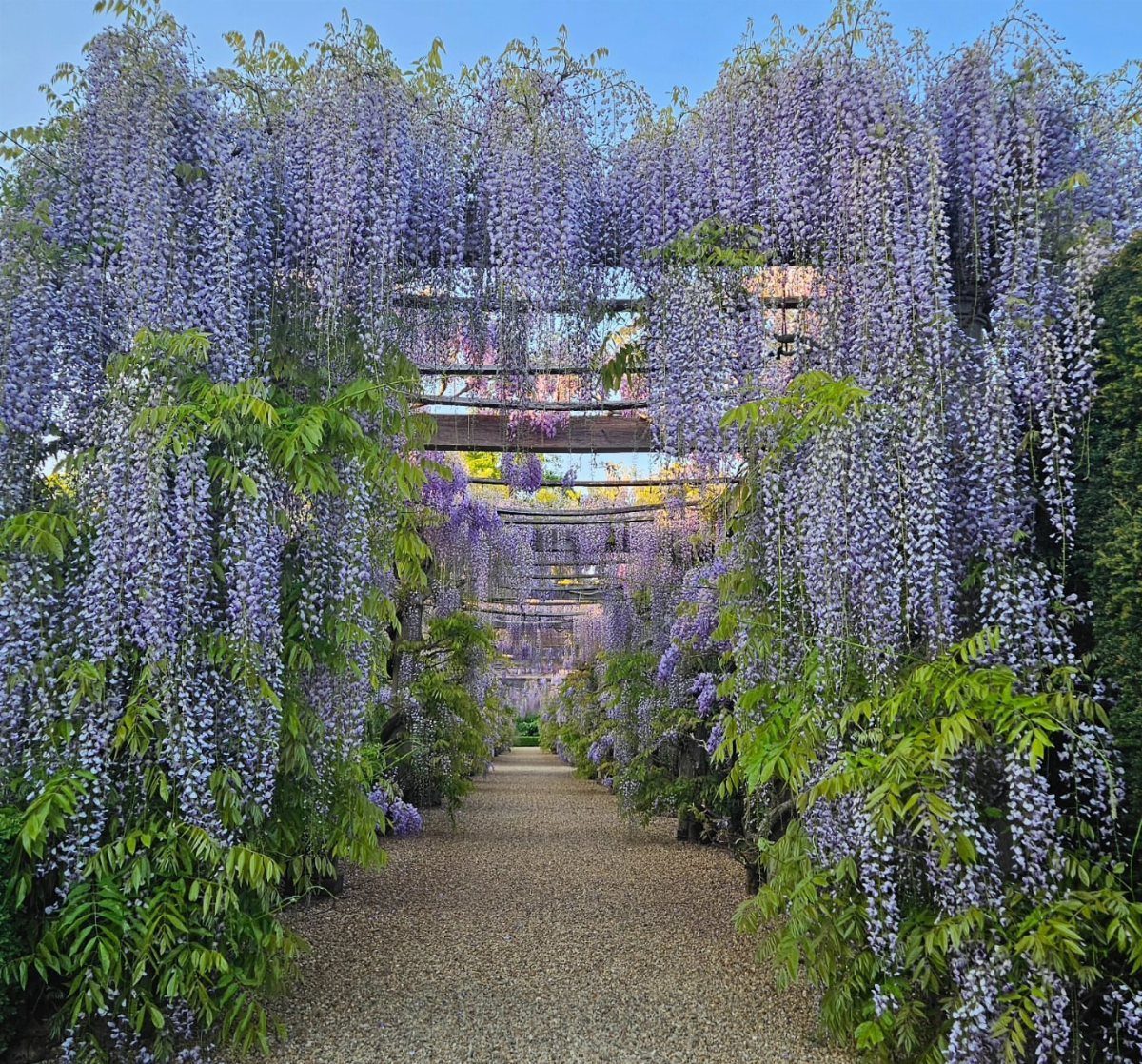
A gravel path sheltered by a pergola draped in cascading wisteria turns a straight walk into something you pause under.
The canopy overhead filters light through purple blooms and leaves, and the scent in late spring is worth planning a visit around.
Wisteria takes a few years to fill in and needs annual pruning to keep flowering heavy and the structure visible.
Most pergolas here are simple wooden posts and crossbeams, left natural or painted white. The gravel underfoot stays dry after rain and muffles footsteps.
Time the visit for mid to late May when most English wisteria hits peak bloom.
2. Manor Reflecting Lily Pond
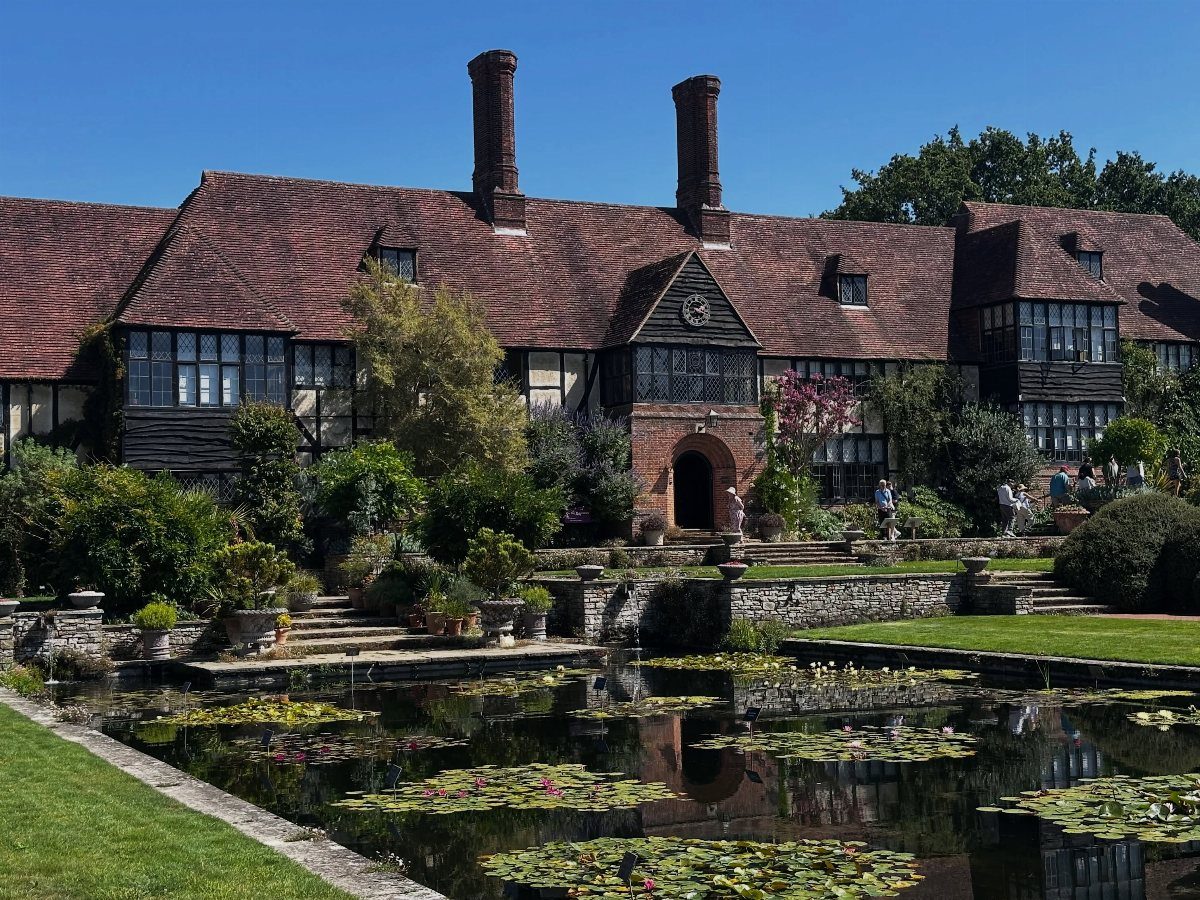
A formal rectangular pond set in front of the manor reflects the roofline and windows in still water, doubling the architecture without competing with it. Water lilies float across the surface and soften the geometry.
Stone or brick edges sit flush with the lawn so the water reads as a mirror dropped into the grass. The calm surface depends on minimal circulation, which means algae control matters more here than in a fountain or stream.
Best seen on overcast days when the light is even and the reflection sharpest.
3. Rose-Framed Stone Manor Garden
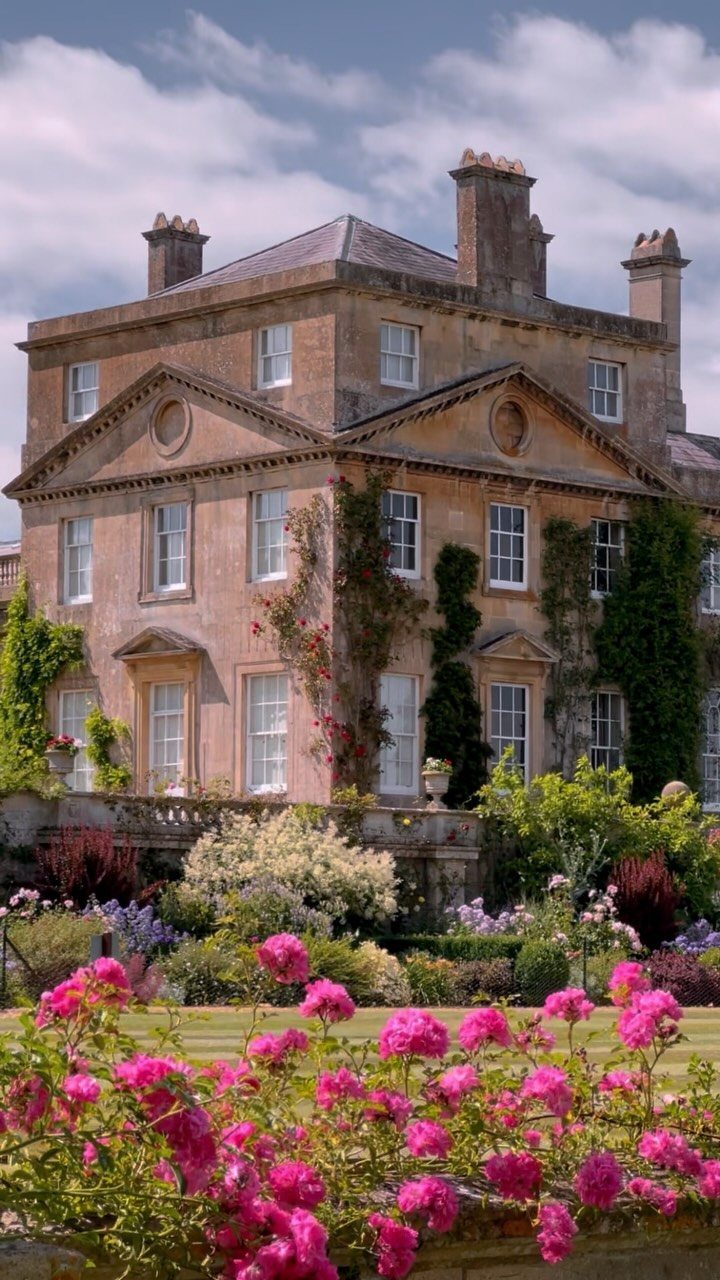
The pink tones here contrast with gray stone and pull the eye down to the garden before it travels up the facade.
English roses and old garden varieties are the usual choice for this kind of planting, selected for repeat bloom and a loose, informal shape. Beds are mulched and edged to keep the line between lawn and border sharp.
Plant in full sun with good air circulation to minimize black spot and mildew pressure.
4. Walled Border Grass Walk
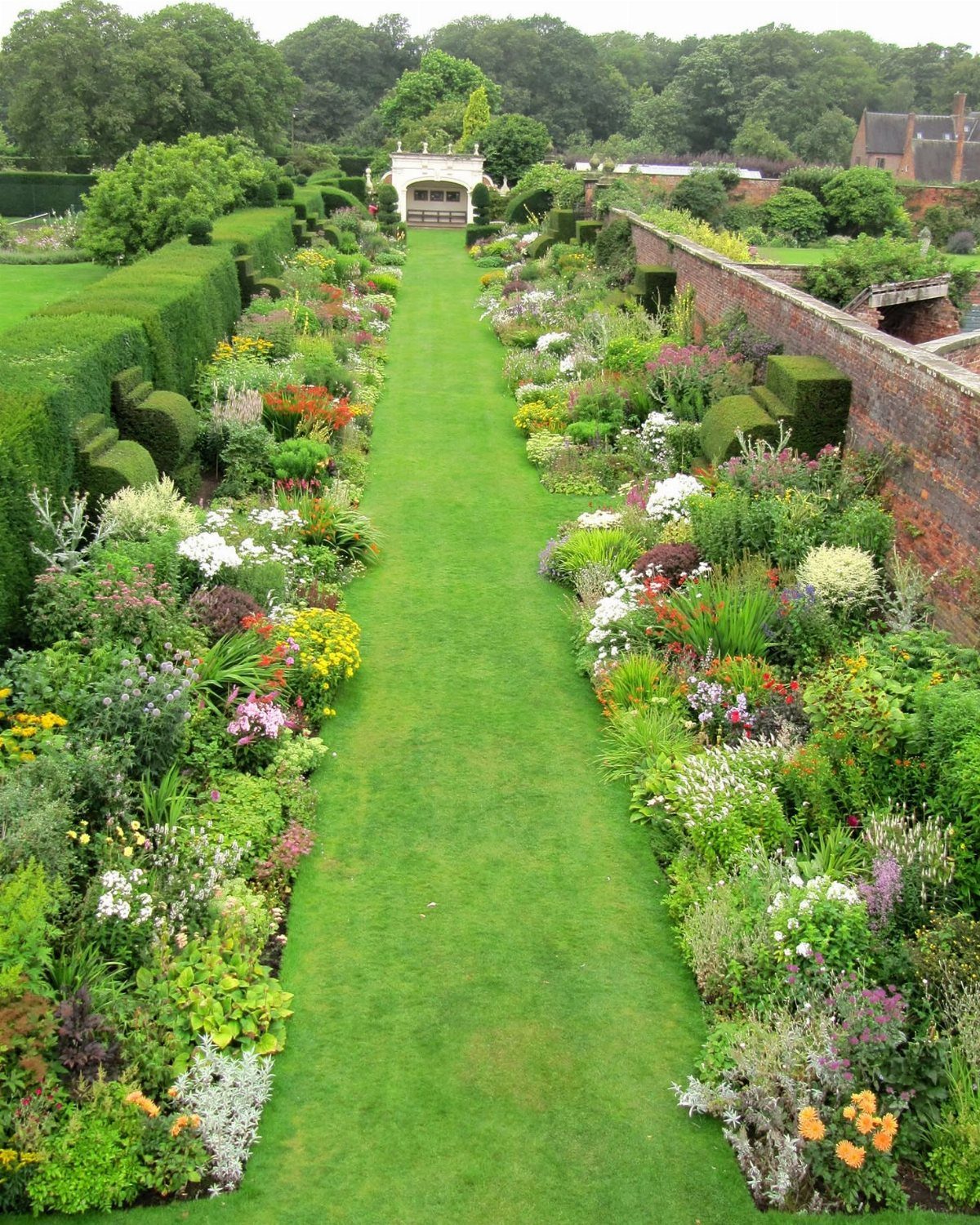
A mown grass path bordered by deep flower beds on one side and a tall brick wall on the other creates a corridor through the garden with a clear destination.
The width is narrow enough to feel enclosed but wide enough to walk two abreast.
The brick wall here is old estate walling, weathered and warm in tone, and it holds heat that extends the season for tender perennials planted against it.
The opposite border is layered front to back with perennials in overlapping bloom times, so color moves through the seasons.
Grass paths need frequent mowing and edge trimming to stay sharp against the borders.
5. Manicured Topiary Terrace Overlook
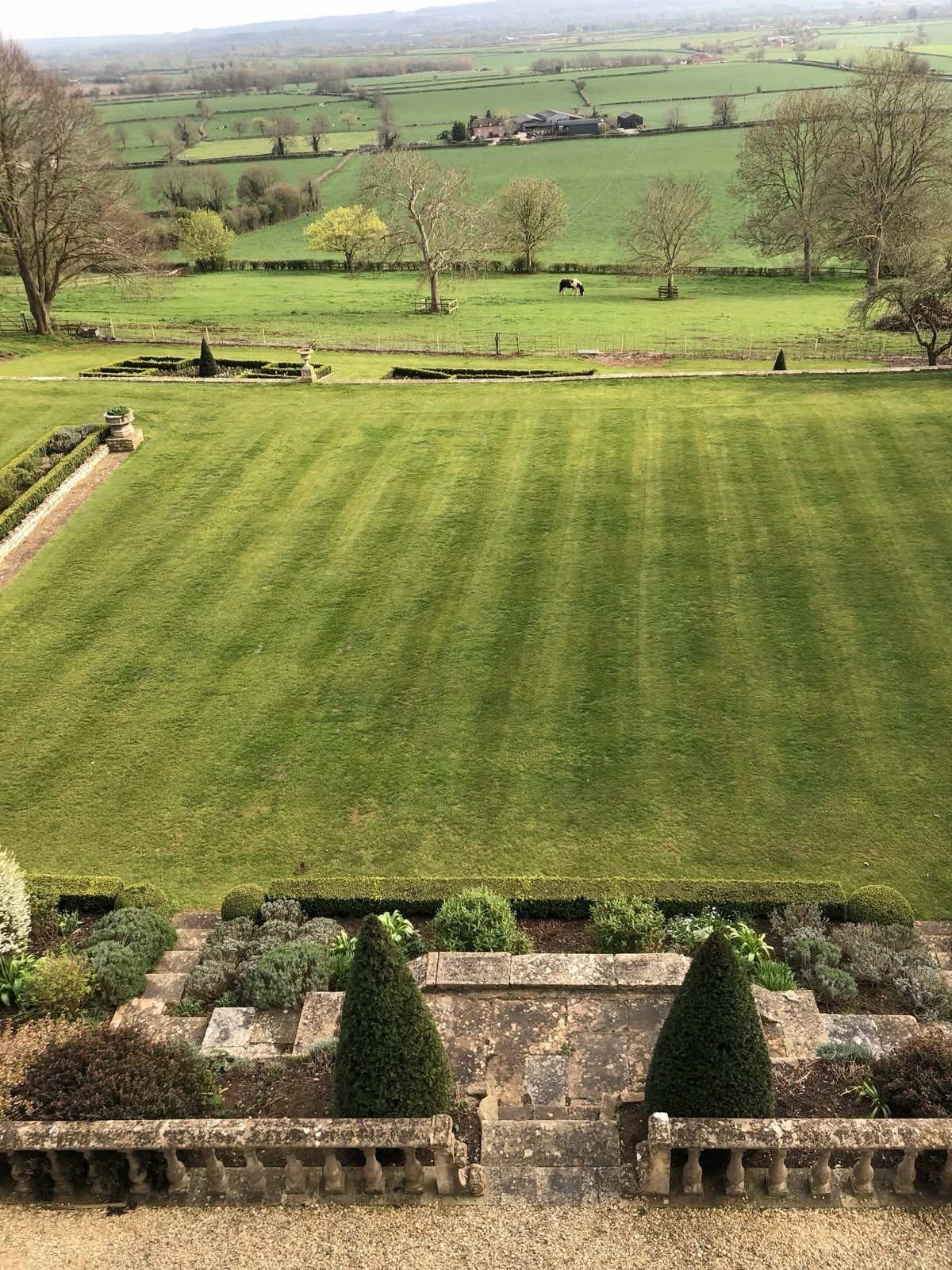
A striped lawn terrace edged with stone balustrades and clipped conical yews gives you a formal overlook of the countryside below.
The mowing pattern is tight here, alternating light and dark green stripes that emphasize the flatness of the terrace against the rolling fields beyond.
The topiary is clipped twice a year, once in late spring and again in late summer, to hold the cones tight and the tips sharp.
The balustrade marks the edge and gives you something to lean on while looking out over the estate parkland.
Best visited in summer when the stripes are freshest and the view is fully green.
6. Riverfront Estate Parkland

Framing the manor through a stone bridge arch layers three focal points in one view: the bridge structure, the calm river below, and the house beyond.
The composition works because the arch crops the scene and the water leads your eye straight to the building.
The bridges are old estate infrastructure, built wide enough for carriages and set low over slow-moving water that reflects rather than rushes. Walking across puts you at the right height to catch the view back toward the house.
Visit in early morning or late afternoon when the light is angled and the reflections strongest.
7. Stone Castle Garden Borders
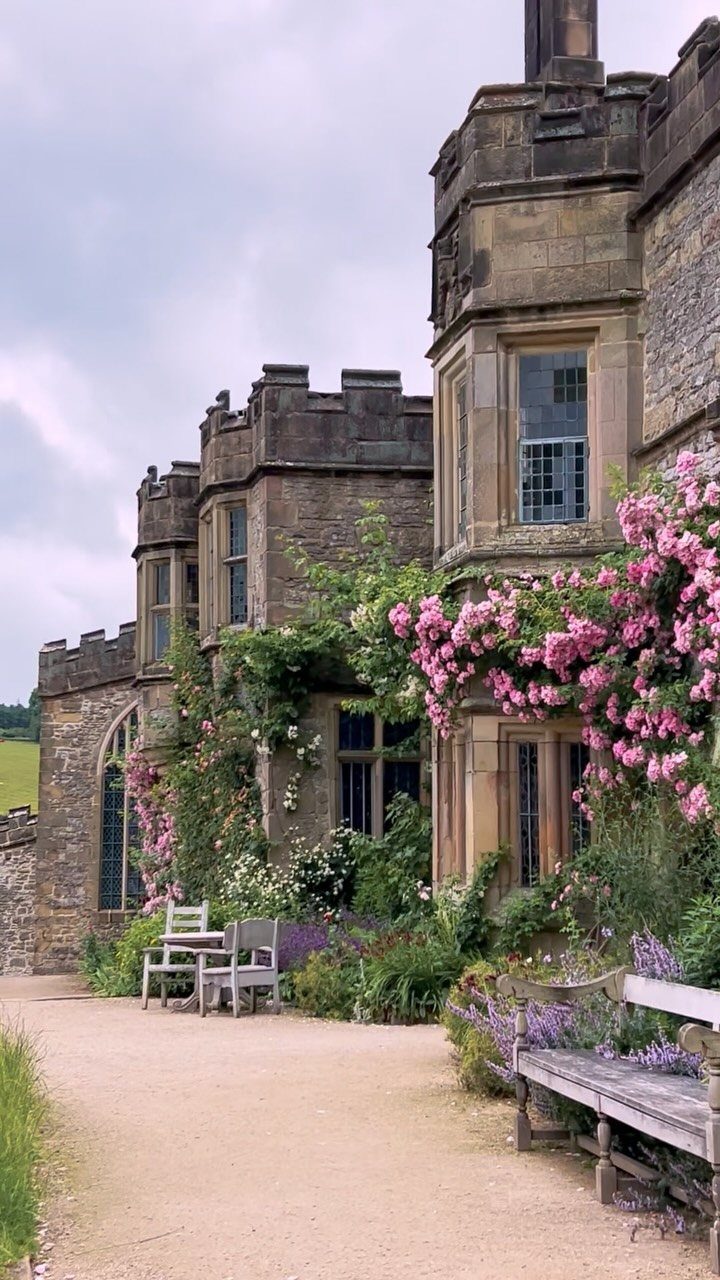
Climbing roses trained up castle walls soften fortress stone without hiding its weight or age. The pink blooms soften the gray stone and give the eye a reason to move from the building into the planted beds.
Gravel paths along the base keep feet dry and frame the planting beds where perennials fill in around the roses. Wooden benches sit where the path widens, positioned to face the beds rather than the wall.
Plant climbers far enough from the wall base that roots can reach rain instead of sitting in the dry strip where roof overhang blocks water.
8. Wisteria-Covered Manor Lawn
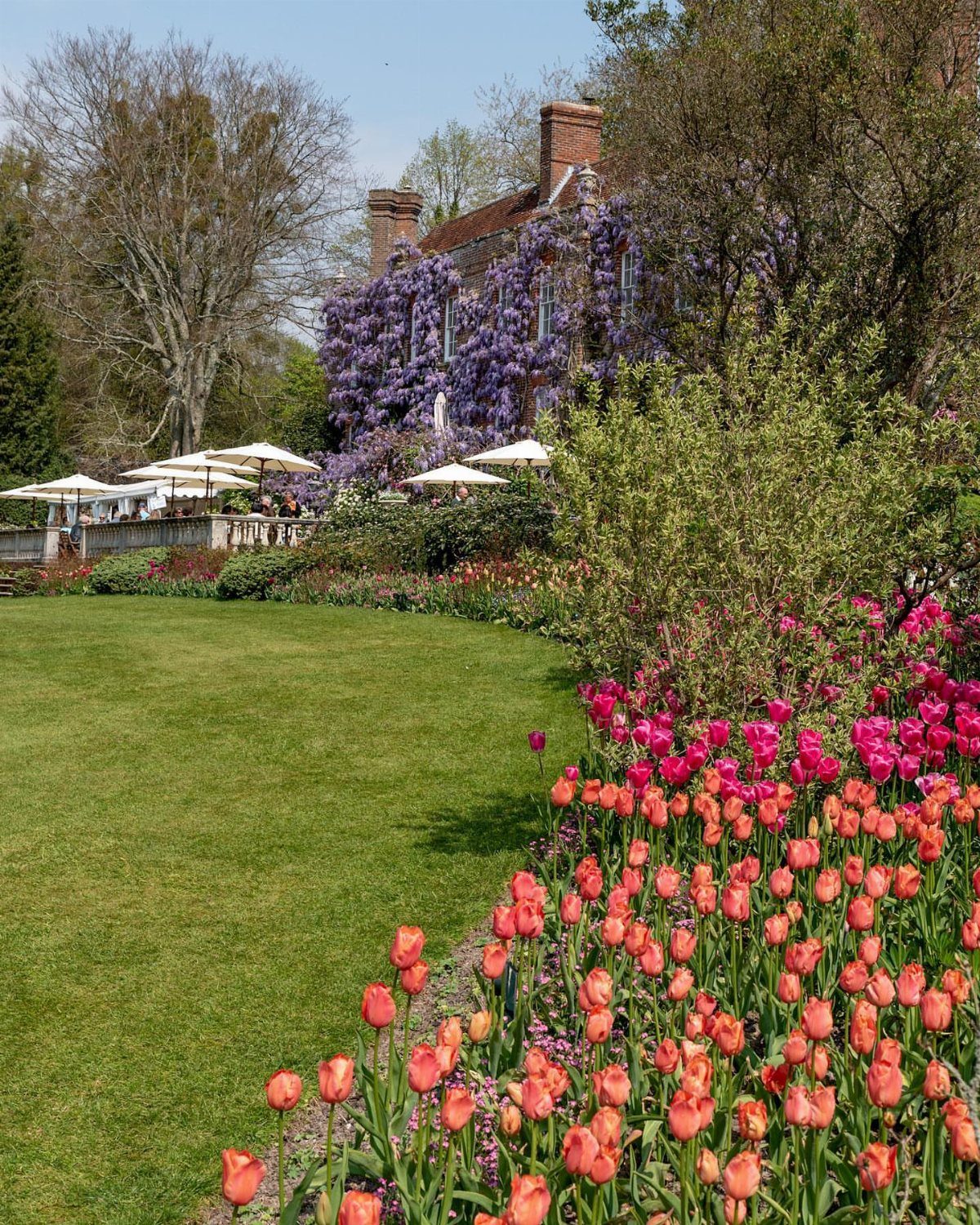
Purple wisteria trained across the entire facade of a brick manor creates a seasonal spectacle that changes the building’s color in late spring.
Tulip beds in red and pink repeat the bloom timing and draw the eye from the lawn up to the covered walls.
The lawn is kept broad and open so you can step back far enough to see the full canopy. Wisteria this mature requires annual hard pruning after bloom and again in late summer to keep flowering dense.
Plan to visit in mid-May when both the wisteria and spring bulbs peak together.
9. Winding Cottage Flower Border Path
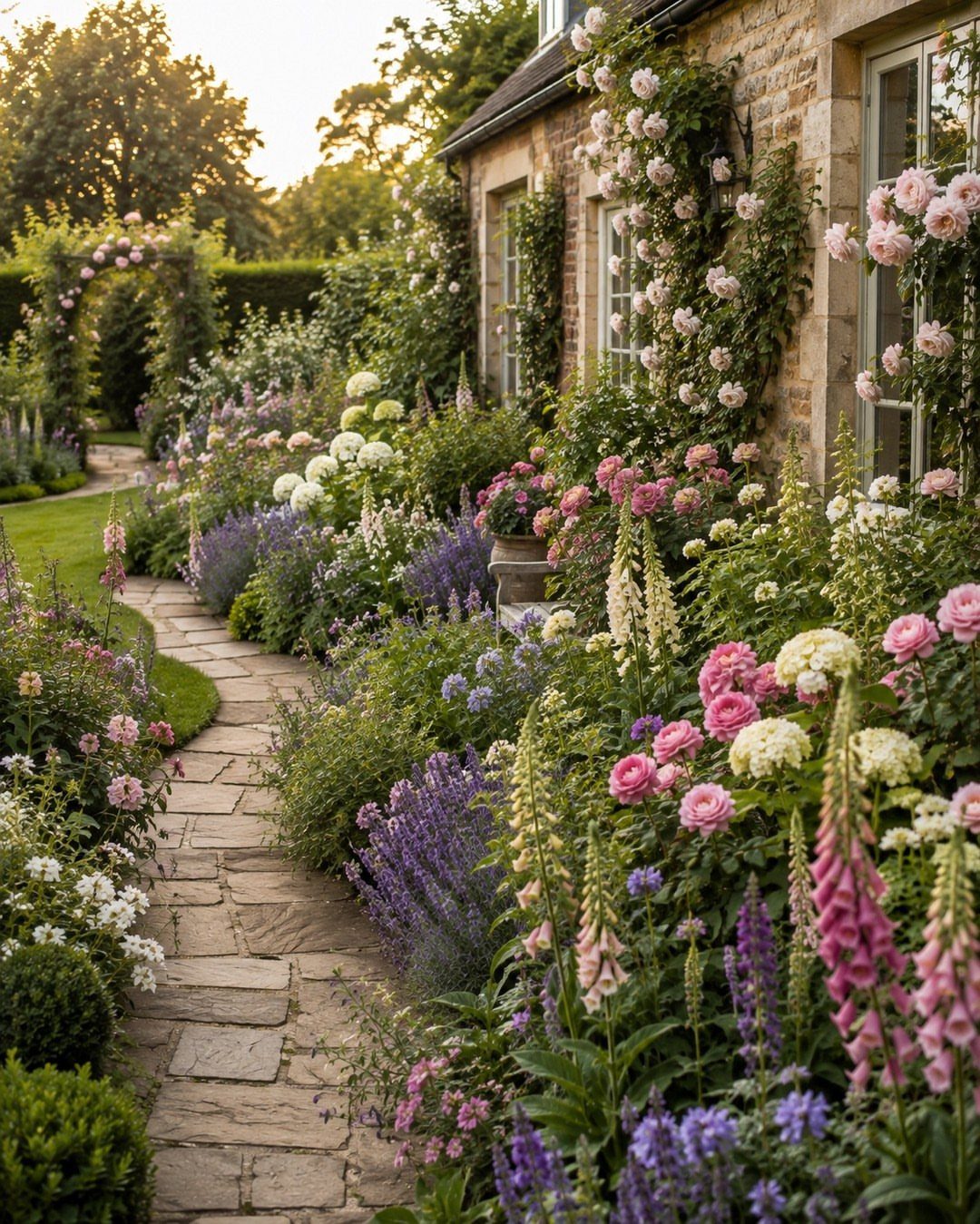
Curves in a stone path let the border planting spill over the edges and obscure the destination, so the walk feels longer than it is.
The path here is laid in irregular flagstone with gaps planted or left open for moss.
Perennials are layered by height, with low sprawlers like catmint and geraniums at the path edge and taller roses and delphiniums behind. The stone cottage anchors one end and gives the path a reason to curve around the planting.
Stone flags need a compacted gravel base to stay level and drain properly.
10. Sculptural Topiary Specimen Beds

Each topiary here is a different shape and set in its own bed, so the focus is on the sculpted form rather than a repeated pattern. Golden and green foliage varieties add contrast without needing flowers.
The shapes range from spirals to layered cakes, all clipped tight enough to read as solid geometry from a distance. Perennials in purple and yellow fill the beds around each specimen and bloom in succession through the season.
Topiary this tight needs frequent clipping during the growing season to hold the edges sharp.
11. Estate Tree-Lined Grand Allée

The straight paved path stretches long enough that the estate building at the end reads small in the distance, giving scale to the grounds. Trees planted in rows on either side frame the view and guide your eye forward.
The pavement is wide enough for walking side by side, and the lawn on both sides is mown tight to keep the geometry simple.
Mature trees here are evenly spaced and pruned to lift the canopy so you can see through to the parkland beyond.
Most allées were designed for carriage approach and make sense on properties with room to walk at least a quarter mile.
12. Ivy-Clad Manor Topiary Lawn
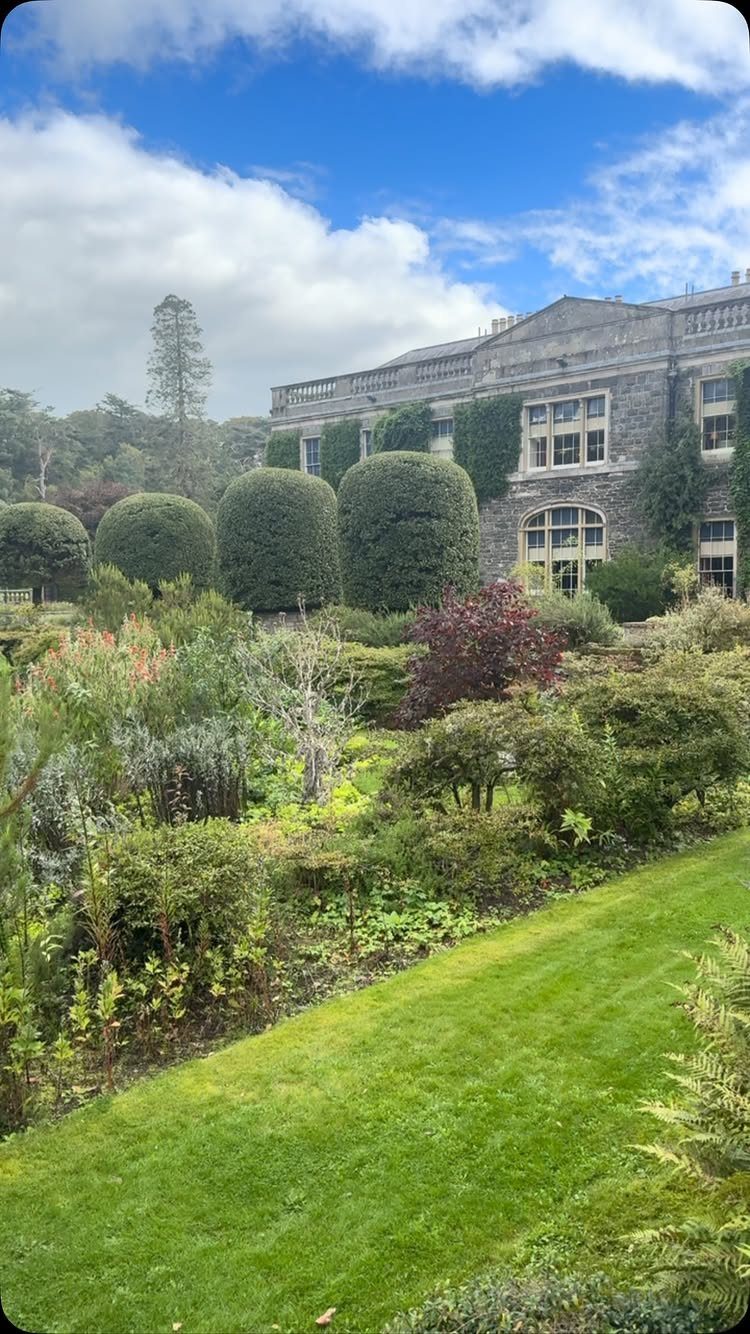
Rounded topiary balls scattered across a lawn create rhythm without lining up in rows, so the formality is softened by the irregular spacing. The ivy climbing the manor walls ties the green of the topiary to the building.
Mixed shrubs and perennials fill the gaps between the clipped balls and add seasonal color. The lawn is kept pristine and mown in stripes to contrast with the looser planting.
Ivy on old stone needs monitoring to keep it out of mortar joints and roof edges where it can cause damage over time.
13. Wrought Iron Estate Gateway
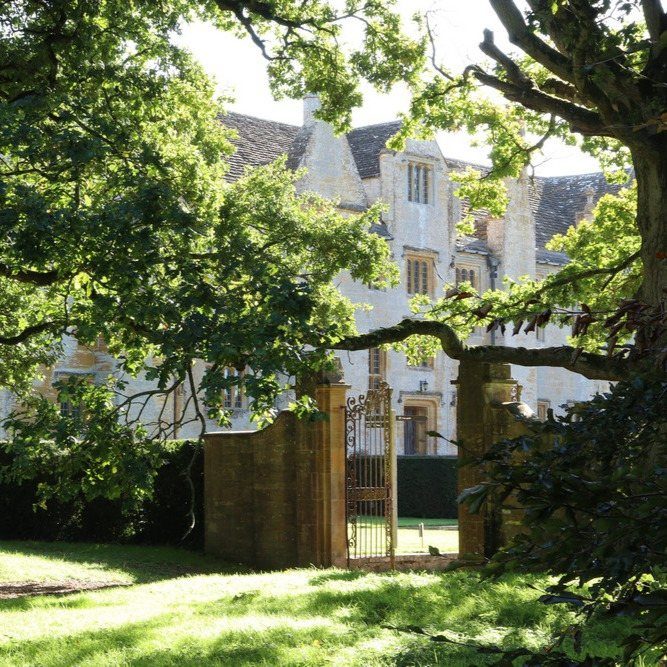
An open gate invites you into the estate without blocking the view of what lies beyond, so the approach feels less formal than a closed entrance.
The ironwork here is decorative but light enough to see through, and the stone piers anchor it without dominating.
Gates like this were designed to mark property boundaries while keeping sight lines open across parkland. The honey-colored stone warms the entrance and ties the gateway to the manor in the distance.
Most estate gates sit where the drive meets a public road or where formal grounds transition to open parkland.
14. Statuary-Lined Thatched Cottage Garden
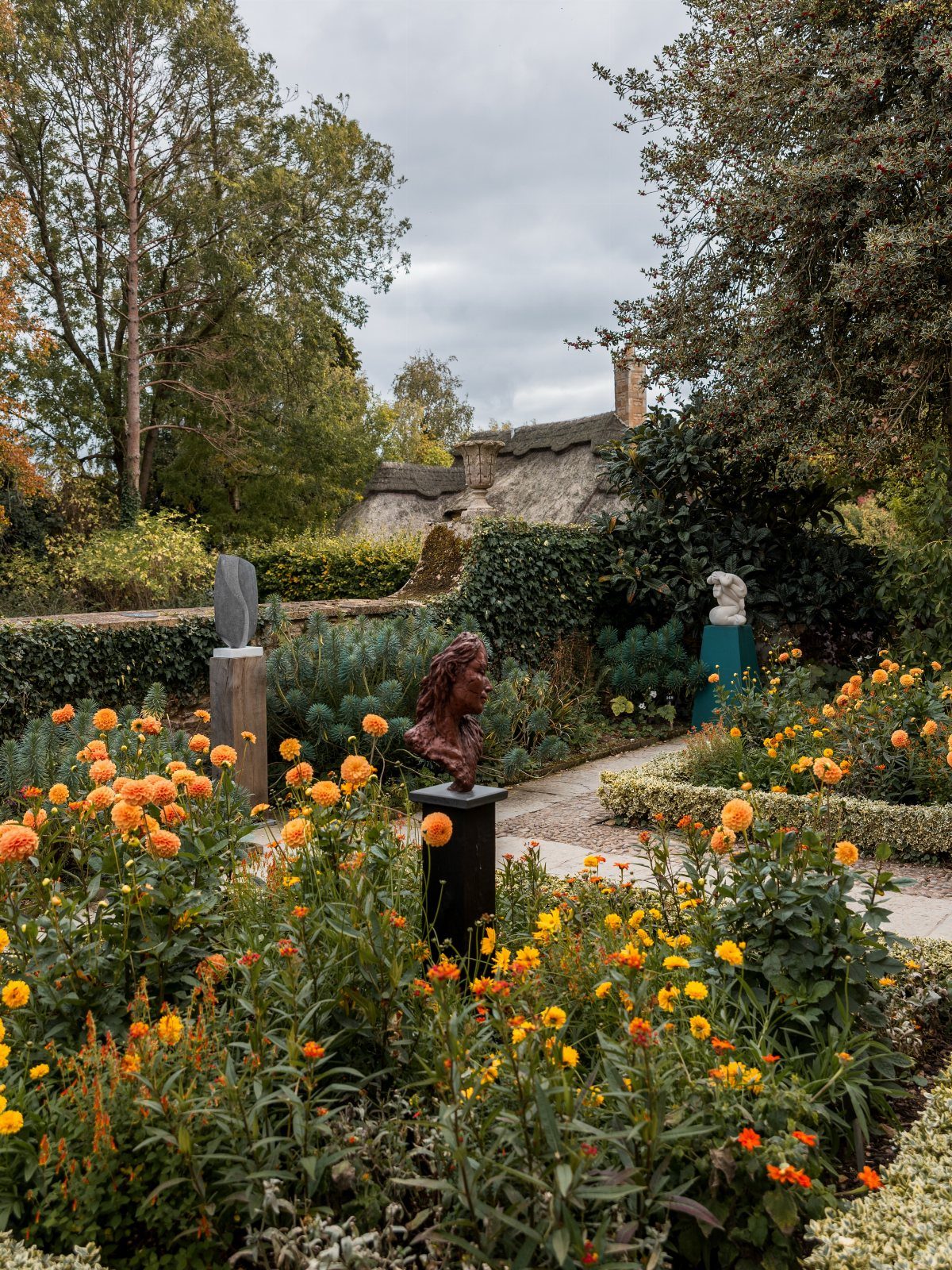
Stone plinths spaced along the path give the garden a gallery feel, turning the walk toward the cottage into something more deliberate than a straight approach.
The orange marigolds planted in wide beds add intensity without needing rare varieties or complicated care.
The sculptures sit at a height where you notice them from a distance but can examine them up close as you pass. Marigolds bloom from late spring through frost and tolerate clay soil better than most bedding annuals.
The thatched roof dates the cottage and sets the style for everything planted around it.
15. Boxwood-Edged Brick Cottage Walk
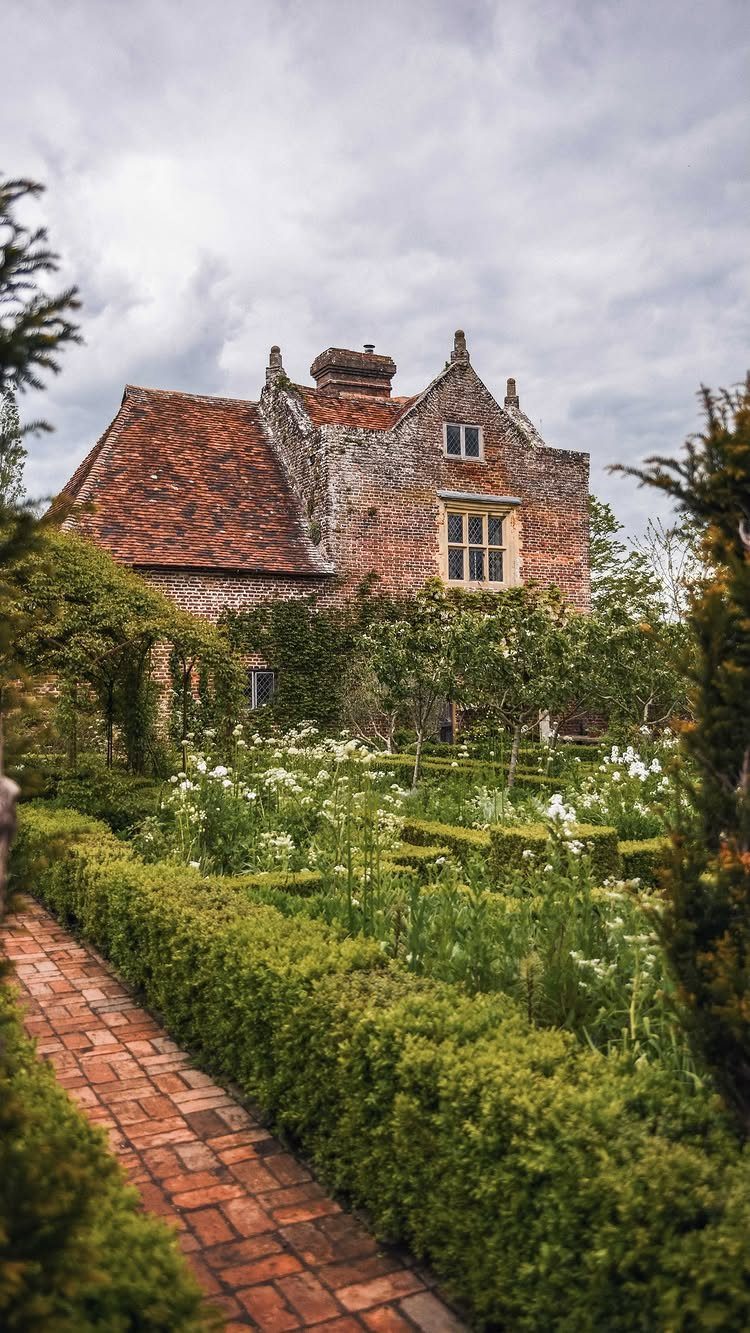
Brick underfoot and clipped boxwood on both sides give this path the kind of structure that holds up year-round, even when the white blooms finish. The box stays low enough to edge the path without narrowing it.
Brick laid in running bond drains better than solid pavers and weathers into the garden over time. The boxwood needs shearing twice a season to keep the hedge line tight and uniform.
White flowers here could be alyssum, candytuft, or white geraniums, all of which pair with box and repeat bloom through summer.
Frequently Asked Questions
What are English Landscape Gardens?
English landscape gardens emerged in the 1720s as a reaction against formal French garden geometry, prioritizing naturalistic compositions that looked like landscape paintings.
Designers like Capability Brown created parkland with rolling hills, tree groves, and lakes around country estates. The style traded clipped symmetry for carefully arranged views that felt informal even though every element was planned.
Why is it called a ha-ha?
The name supposedly comes from the surprised exclamation someone makes when they step close enough to notice the hidden drop.
A ha-ha is a recessed ditch with a stone or brick retaining wall on one side that keeps livestock out of the formal garden without blocking the view with a fence.
Charles Bridgeman invented the feature to let the eye travel uninterrupted from the house terrace out across the parkland.