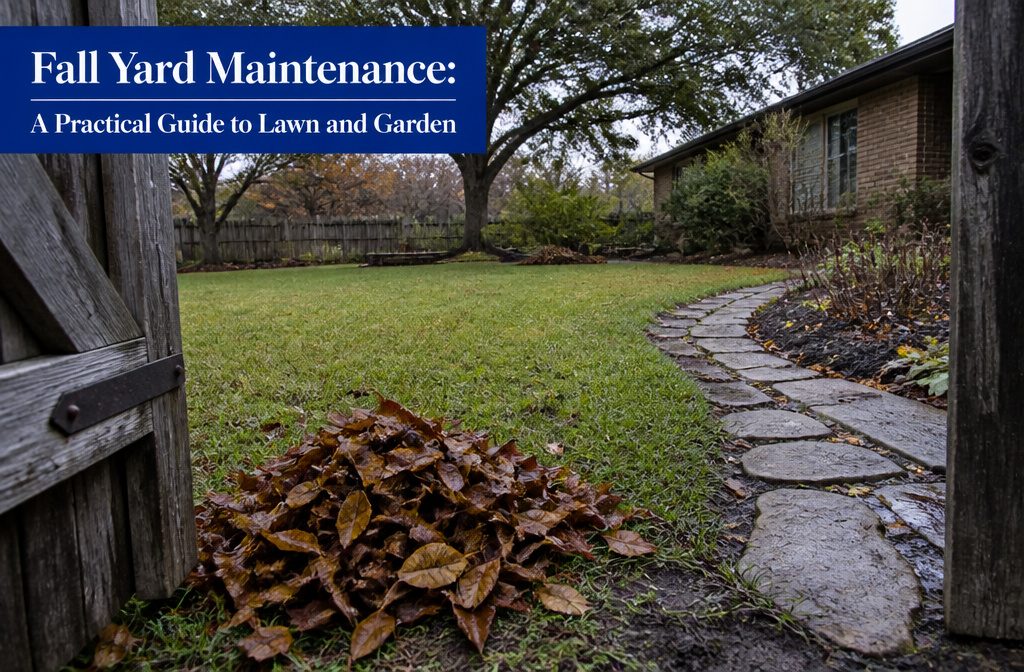
Fall yard maintenance is the cleanup, feeding, and repair work that gets a lawn and garden ready for winter and a stronger spring.
The right timing depends on your grass type and local first-frost date, not the calendar. Cool-season lawns get their main feeding around Labor Day, while warm-season lawns in Central Texas finish by Halloween.
Remove or Mulch Leaves
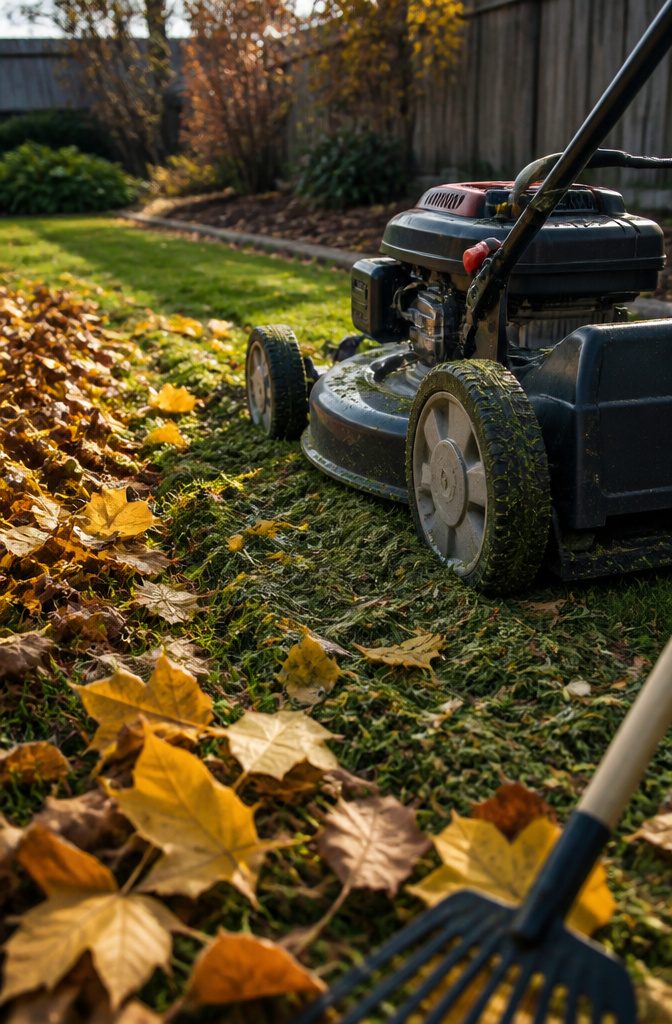
A thin scatter of leaves does no harm; it breaks down and feeds the soil.
A packed, wet layer is the problem, because it blocks sunlight and holds moisture against the grass crown, which is how fungal disease and dead patches get started. You often don’t see the damage until spring.
Rake or bag once leaves cover roughly half the lawn, rather than waiting for the last one to drop.
Below that, run a mulching mower over them. Chopped fine, the pieces sift down between the blades and return nutrients as a natural fertilizer.
I’d skip mulching when the layer is thick enough to hide the grass. The mower can’t shred that much at once, and what’s left stays matted, inviting mold.
Mow Through Fall
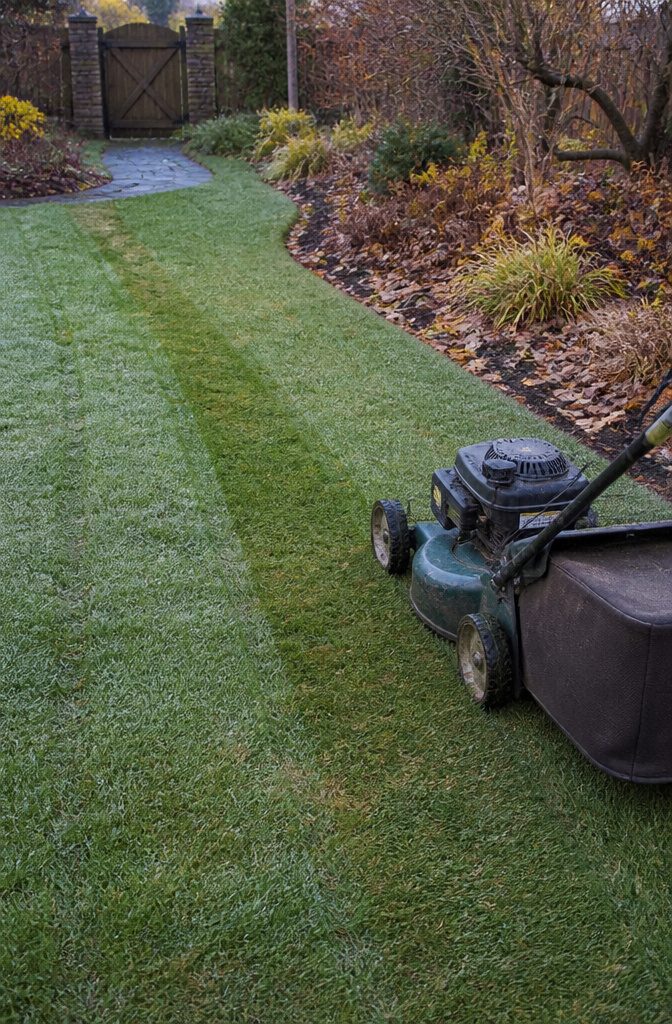
Grass keeps growing until the first hard frost, so the mower stays out until then.
Hold the cut at 2.5–3 inches for most cool-season lawns. Warm-season grass follows its own range: St. Augustine at 3–4 inches, Bermuda at 1.5–2.5 inches.
The last cut is where advice splits. Dropping to the lowest setting for the final two mows lets sun reach the crown and dries soil faster in spring.
Staying at your regular height avoids weed seed germinating in exposed soil. I side with a modest drop, to 2–2.5 inches, which is the Wisconsin final-cut range.
Be cautious not to cut too low, as grass produces most of its food in the upper blade.
Below 2 inches you limit stored food; above 3, the blades can mat. Stop once daytime temperatures stay under 50°F.
Fertilize
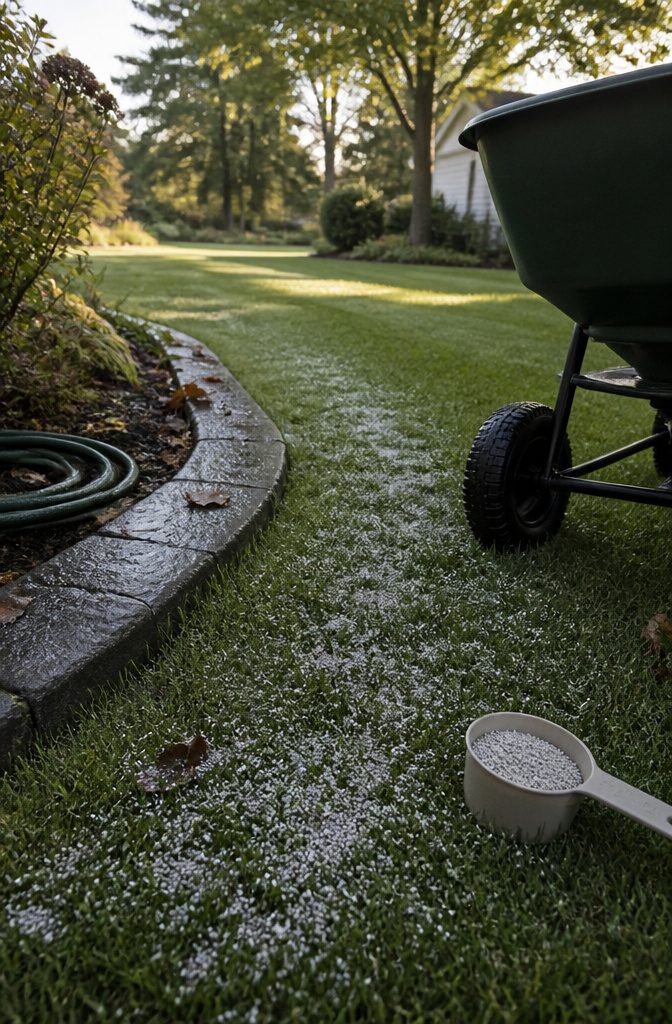
Fall feeding goes to the roots, and the roots pay it back in spring.
For cool-season lawns, the window runs September through November, and the Labor Day dose of ½–1 pound of nitrogen per 1,000 square feet does the most good. Over a full year, aim for 2–3 pounds of nitrogen per 1,000 square feet in total.
A late-season feeding around Halloween is where opinions split.
Some growers still add a final high-nitrogen dose in November for faster spring green-up; others skip it because dormant turf takes up little. I lean toward skipping it and putting the effort into September.
Warm-season lawns need to finish earlier. In Central Texas, use a potassium-heavy winterizer in early to mid-October and stop near Halloween.
Scotts Turf Builder works fine here; read the three-number ratio on the bag and match the pounds of nitrogen to your square footage. Above 85°F, water the product in after applying.
Aerate
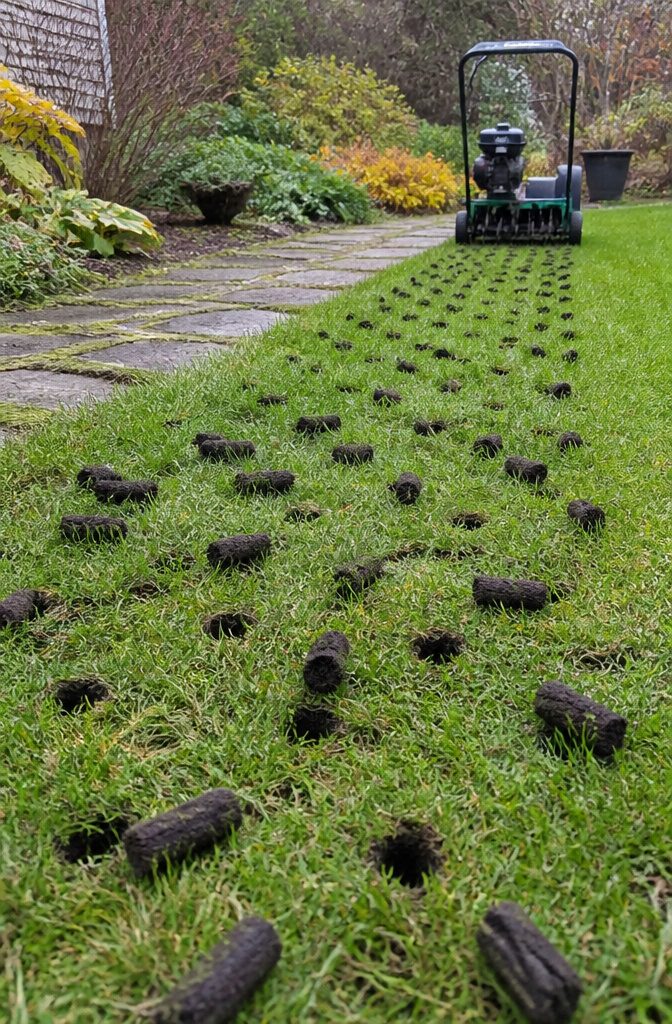
A lawn that has been walked, mowed and played on for years packs down until water runs off and roots starve.
Core aeration fixes that by pulling plugs out of the turf, and the plugs should be about 3 inches deep, spaced no more than 4 inches apart. A depth of 2–3 inches is acceptable, but shallower holes do little.
Once a year is enough for most yards. Twice makes sense for heavily compacted soil or a lawn that takes constant foot traffic.
Timing depends on grass type. Warm-season lawns in Texas do best when aerated from late spring to early summer, and September is the last reasonable date.
Lawns over 3 acres may justify hiring a landscaper, since a rental machine gets slow work out of that much ground.
Overseed Thin Areas
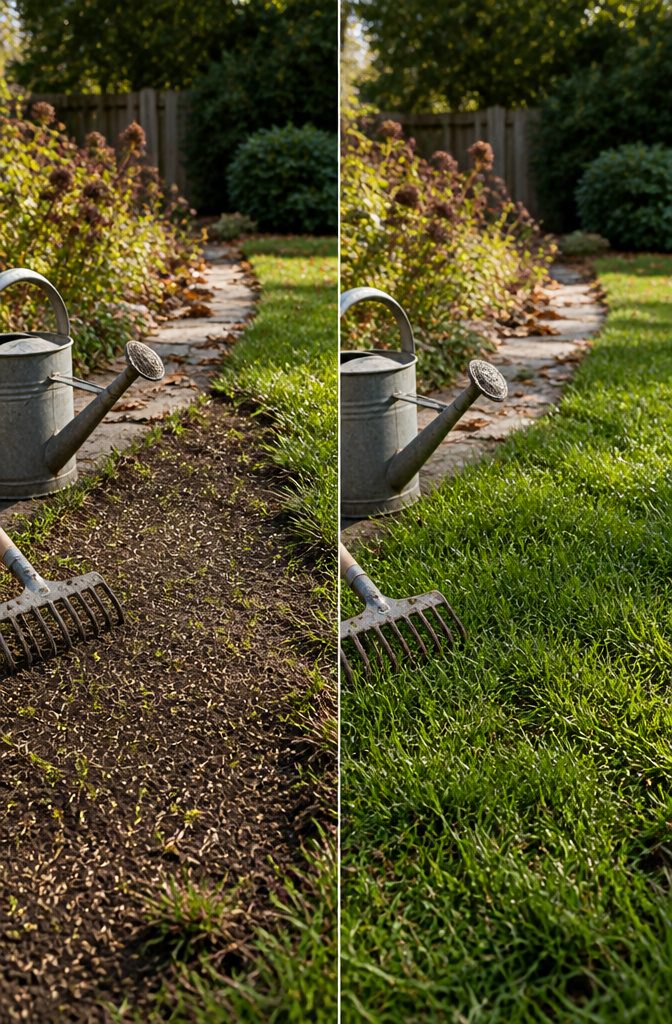
Summer heat leaves thin, bare patches, and fall is when you fix them.
Cool soil helps seed germinate, and the roots keep working through winter, so spring comes in thicker. Seed when the soil sits between 50–65°F, which usually lands six to eight weeks before the first frost.
For Wisconsin, the first half of September is ideal and early October is the latest I’d push it. Leave four to six weeks before snow so the seedlings can root.
Loosen each bare patch with a rake, then sow a mix suited to your sun or shade.
A blend of 80 percent bluegrass and 20 percent perennial rye works well. Germination takes 10–15 days, and the patch needs watering daily until then.
Water as Needed
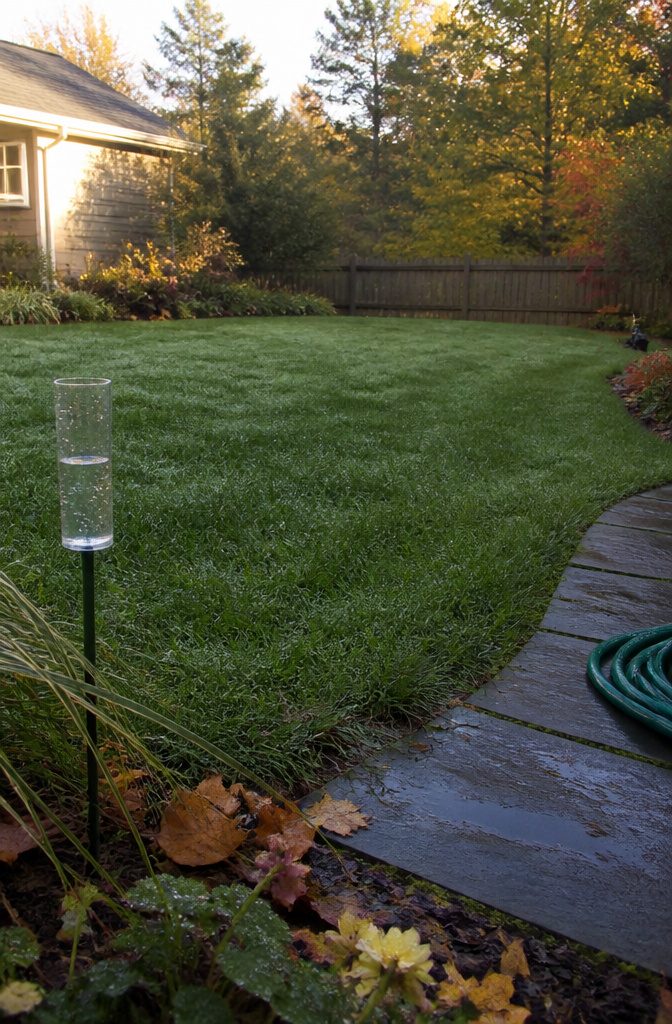
Lawns need about 1 inch of water per week in fall, enough to moisten the top 6 inches of soil.
Give it in one or two long soakings rather than daily sprinklings. Shallow watering keeps roots near the surface, where the first freeze can reach them, while deep soaking pulls them down.
Keep going through dry spells until the ground freezes, even when the air feels cool.
Roots are still growing, and a well-hydrated lawn heads into dormancy with a head start for spring. Water in the morning so moisture sinks in before the cooler evening, which also lowers the risk of fungus.
Skip a watering after a heavy rain.
Soggy soil can rot roots, and that does more harm than a dry week. In Austin, Stage 1 limits sprinkler days and bans watering from 10 a.m. to 7 p.m., so check your address first.
Control Weeds
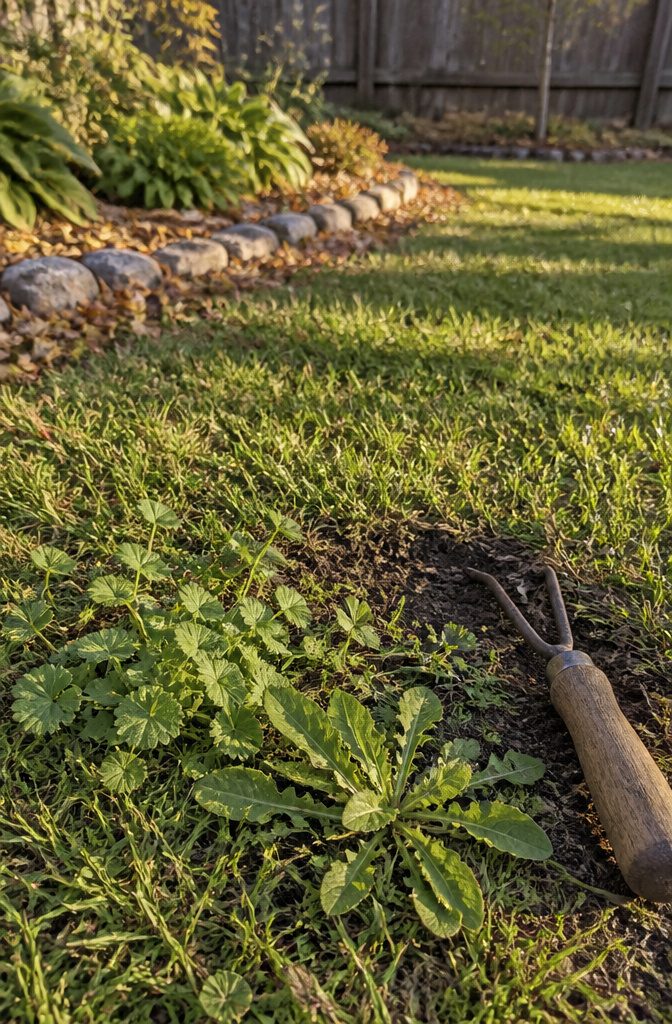
Annual weeds die at the end of one season and come back only from seed, so fall herbicide on them is a waste of money.
Perennials like creeping Charlie, clover, plantain and violet survive on underground storage, and in fall they pull sugars down to those roots, carrying a herbicide along.
That is why a three-way mix of 2,4-D, dicamba and MCPP works best after the first hard frost. For a small patch, pulling by hand is safe and effective.
Winter annuals like henbit and chickweed are a pre-emergent job.
Pendimethalin goes down when soil hits about 70°F, usually the first half of October in Central Texas. Apply it too early and it breaks down before the seeds sprout; too late and they’re already up.
Check for Lawn Disease
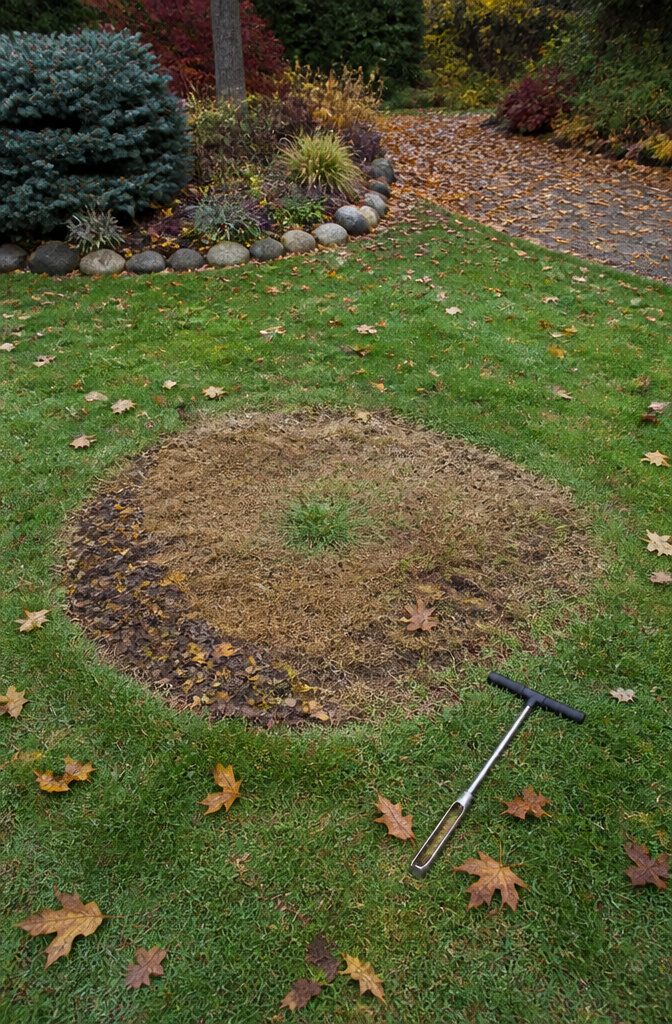
Brown patches have at least five common causes: fungus, drought, too much fertilizer, pests, or simply the season and your grass type.
Before you treat anything, look at the shape. Crescent or circular patches, sometimes with a green clump in the middle, point to ring spot or patch diseases that attack the roots.
Then check conditions.
A packed, wet layer of leaves blocks light and traps moisture against the grass crown, and that is how fungus gets going. Clear leaves once they cover about half the lawn.
A product like BioAdvanced Fungus Control for Lawns is one option once you’re fairly sure it’s fungus.
Still, no single test settles every case, and fixing watering, mowing, and soil usually matters more. Reseed dead areas afterward.
Mulch Around Plants
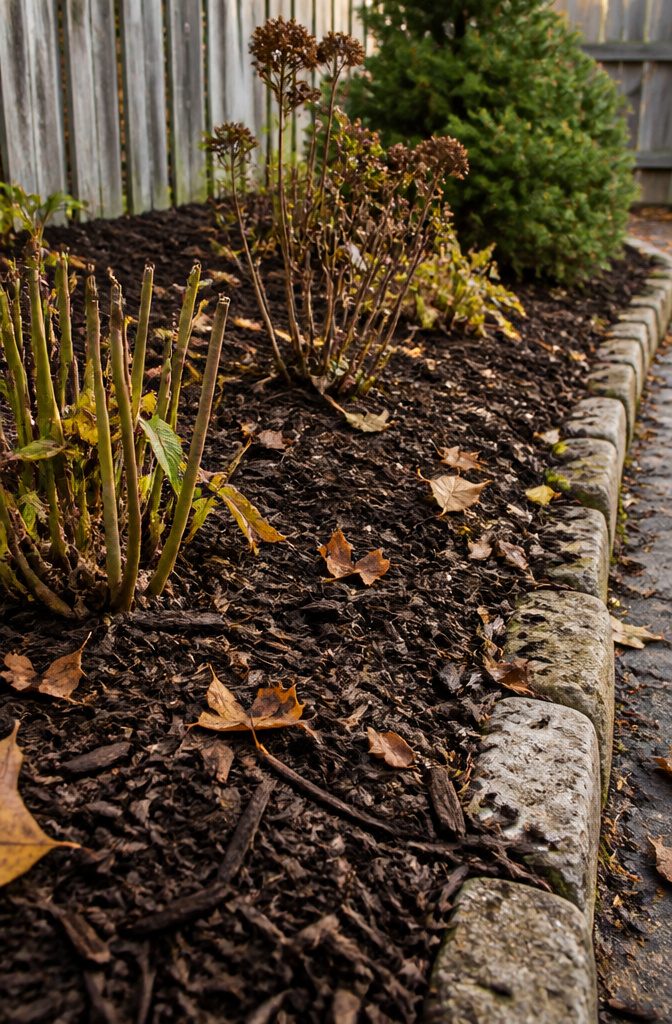
Spread organic mulch after a light frost but before the ground freezes, and the bed will hold steadier soil temperatures and moisture through winter.
Give perennials and cool-weather annuals 2–3 inches. Young plants get a bit more, 2–4 inches, since their roots are the least settled.
Pull the mulch back a couple of inches from trunks and stems.
Piled against bark, it holds moisture and invites rot and pests. If last year’s layer has broken down into a dense mat, till it into the soil before adding fresh.
Fallen leaves, pine needles, straw, grass clippings and wood chips all work, and several cost nothing. I’d choose free leaves or clippings over bagged mulch for a budget, since they feed the soil as they rot.
Prune and Cut Back
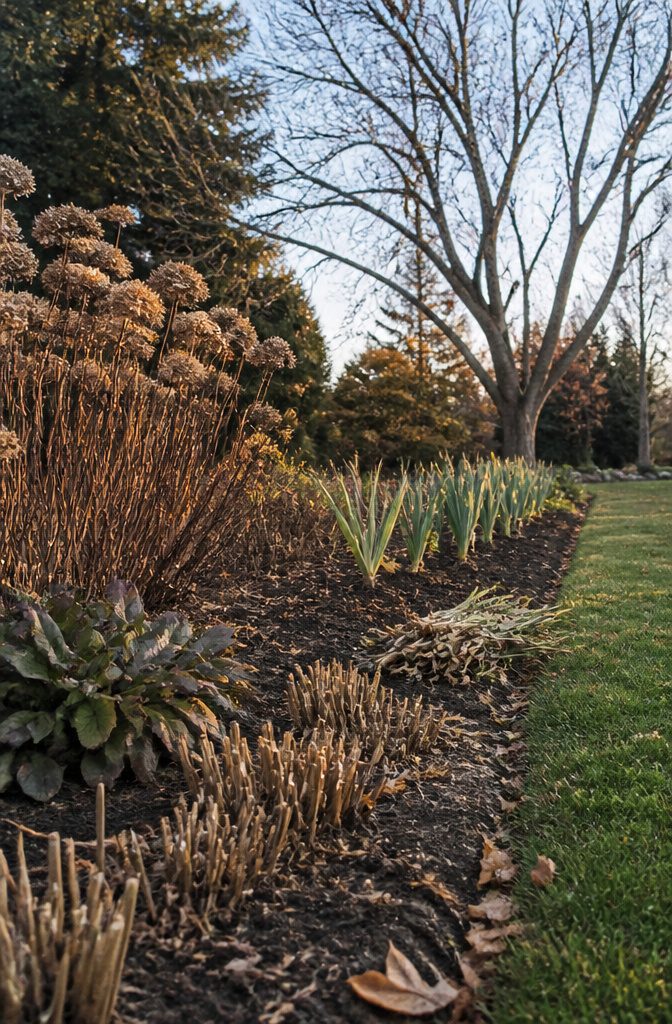
Cut spent perennial foliage down to the ground once it tires out.
The plant sends its energy to the roots, and the debris you remove can’t shelter the insects and diseases that overwinter in it. Pull tired annuals at the same time, since snails and slugs breed in them in fall.
Irises and daylilies need dividing every three years.
Lift the crowded clumps, split them, and replant the pieces with more room between them; thinner spacing usually means more flowers. The extras fill a new bed or go to a neighbor.
Trees follow the calendar. Wait until leaves drop in late fall or early winter, when branches are easier to see and handle.
Cut dead or cracked limbs close to the trunk but not flush, and leave the wound open. Hire a pro for big limbs.
Manage Grubs and Pests
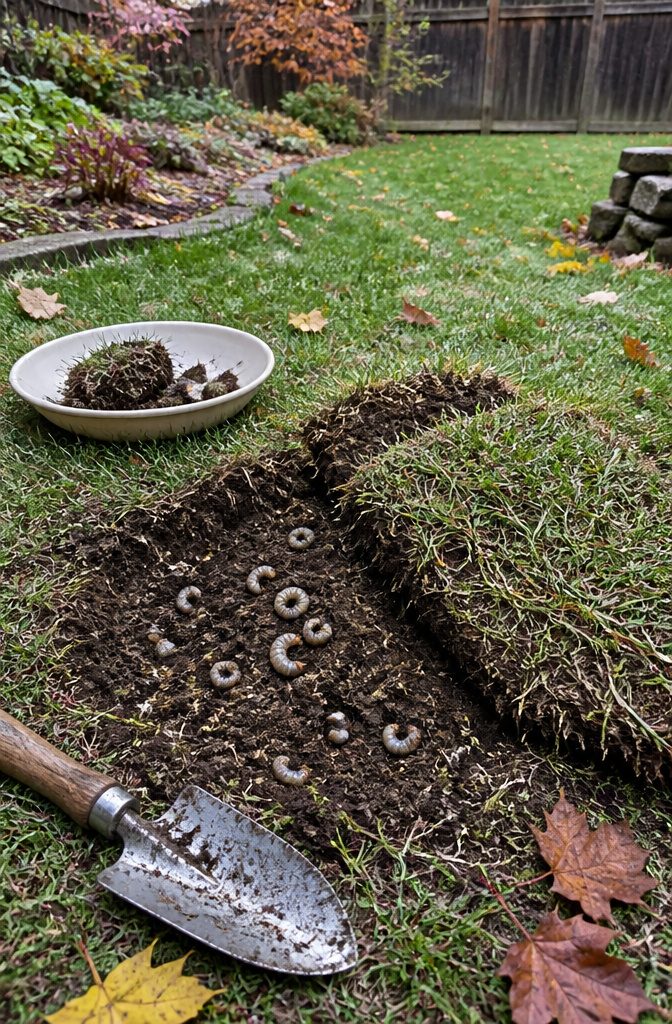
Brown patches that pull up like loose carpet are the sign to look for. Grubs feed on grass roots just before winter, so tug at a few suspect patches and check the soil underneath before you buy anything.
Treat only the spots where you find larvae. Blanket applications cost more and hit insects you never needed to kill.
For those spots, I like Triple Blend Beneficial Nematodes.
They are microscopic beneficial insects that kill pests in the soil. You mix them with water and water them into the lawn and beds, so there is no spreader to rent.
Fall works because larvae are active in the soil now, and breaking the cycle this season means fewer problems next spring.
Winterize Irrigation
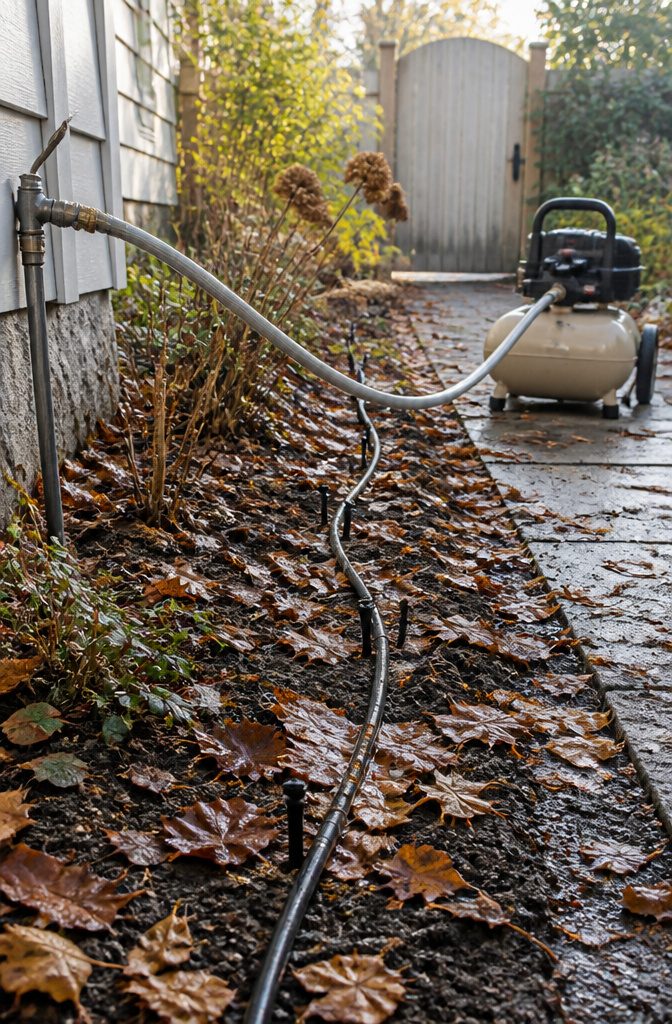
Water left in irrigation lines will freeze, expand, and crack the tubing, and you won’t find out until spring when the repair bill arrives.
Shut off the water supply to the system first, then blow the lines out with compressed air before the first hard freeze.
For a small drip system, unscrew the adapter at the tap and connect your air hose where the system normally attaches.
Set the compressor to high volume and low pressure; a gentle, steady flow pushes the water out without stressing the tubing. Keep the air running until the lines stop spitting water.
I favor blowing out over pulling up the system. It takes an afternoon rather than a weekend, and the lines stay where you put them.
Remove Dead Shrubs
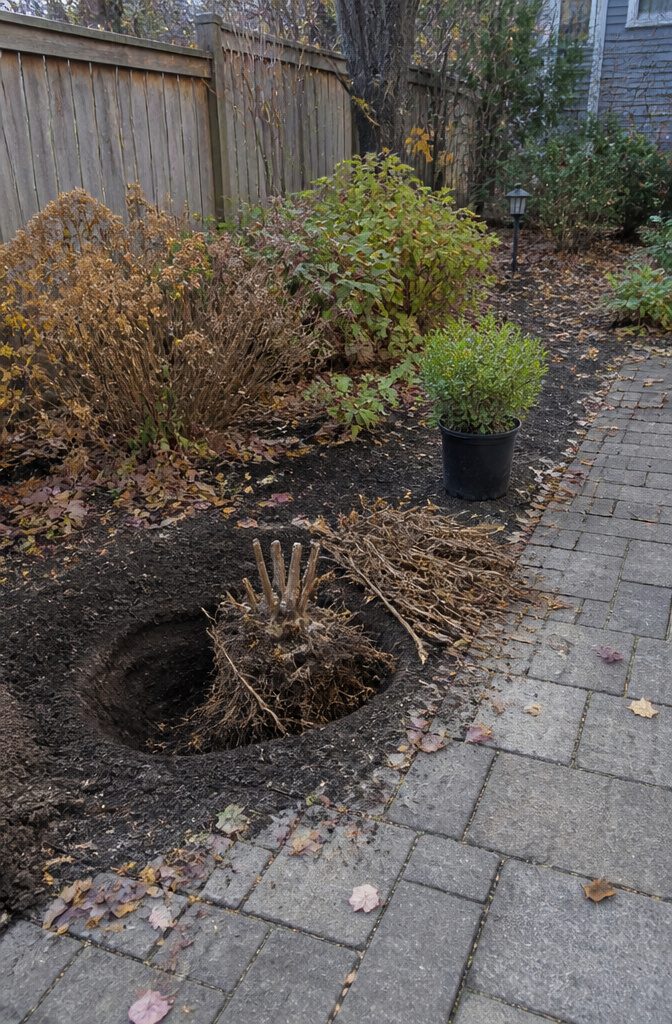
Scratch the bark at the base of a doubtful shrub with a thumbnail or knife tip. Green underneath means the plant is alive, even if it looks sorry for itself.
Brown and dry means it is probably dead. A shrub that stayed bare or stunted all summer is the one to test first.
If nothing green shows, cut it down and dig out the roots before the ground freezes. Frozen soil turns a 30-minute job into a fight with a pickaxe.
Fall is also a good time to replace what you removed, since cool, moist soil helps new roots settle before winter.
Dig the new hole twice as wide as the root ball and 2 inches shallower than its height, so the top of the root ball sits slightly above the surrounding grade.
Clean and Store Tools
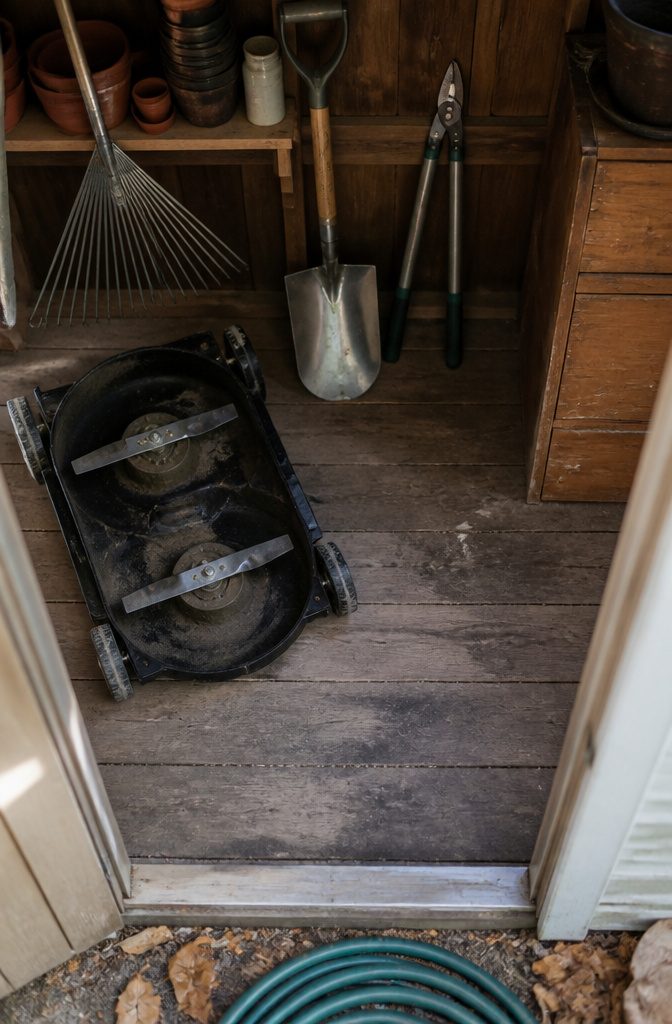
Dirty, dull, unoiled tools are the ones that fail in spring, so finish these before anything goes into the shed:
- Drain the mower’s gas tank, or add fuel stabilizer if you’d rather leave it full. Gasoline left in over winter can damage the engine.
- Scrape dirt and debris off the deck and clean the blades. Sharpen them now and you save yourself that job next season.
- Wipe rakes, shovels and pruning shears free of dirt and rust.
- Rub a light coat of oil on the metal parts. It keeps rust off.
- Store everything somewhere dry and sheltered. Snow, dampness and weather wear tools down faster than use does.
I’d do the mower first, since it’s the only item here that can cause real engine damage.
Test Your Soil First
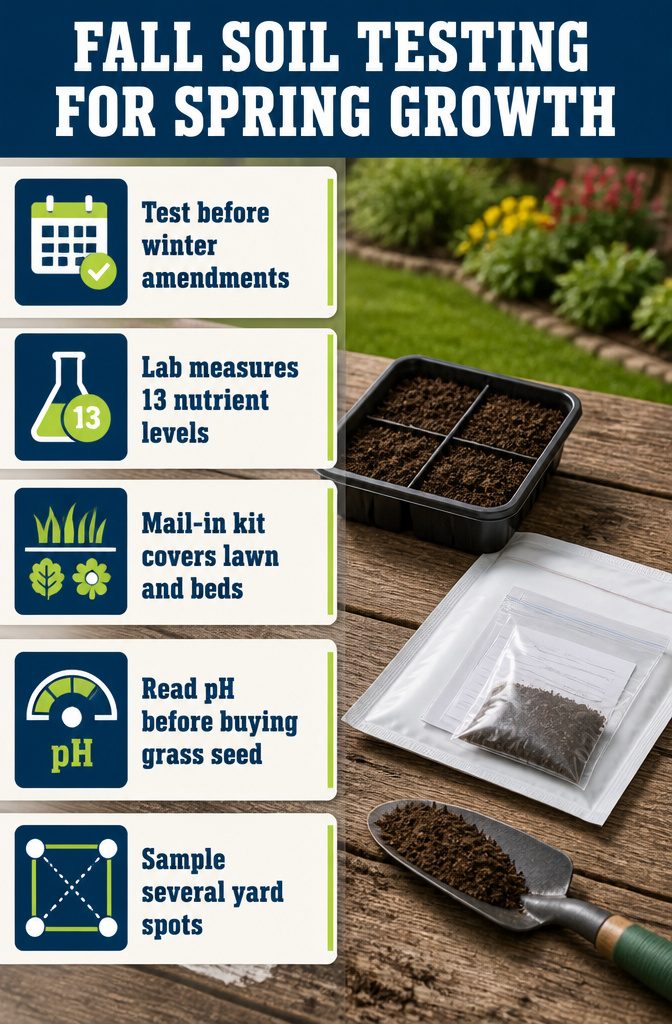
Fall is the right time to test because whatever the soil is missing can be corrected before winter and shows up as growth in spring.
A mail-in lab kit measures 13 plant-available nutrient levels, including nitrogen and pH, and it works on lawn, vegetable beds and flower borders alike.
Skip the cheap drugstore-style strips if you can. A lab analysis gives you actual levels, so you pick amendments by number instead of guessing at a bag of fertilizer.
Soil pH also decides which grass thrives in your yard, so read that number before you buy seed.
Test now, while you still have time to amend before winter. Pull samples from a few spots, since a shady corner and a sunny slope rarely match.
Compost Leaves and Cleanup
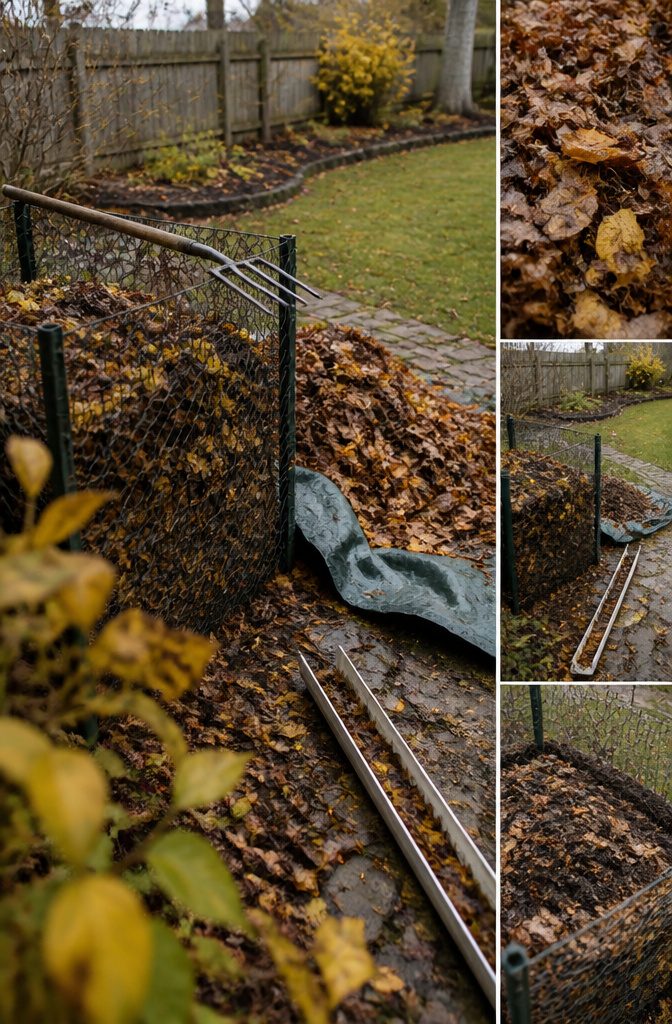
Leaves raked onto a tarp drag to the compost pile in one trip, and a simple chicken-wire pen is all the bin you need.
Add the leaves from your gutters too. Turn the pile weekly with a garden fork to aerate it, and by next year you have dark compost for lawn, flower beds and shrub borders.
Beyond the lawn, leaves and weeds left in piles give mice and groundhogs a place to settle, and heavy debris can hurt drainage once snow melts.
Wait until the leaves are actually down, often late November or early December, then clear gutters in one pass. Clogged gutters spill onto beds and foundations, and standing water in a hard freeze causes real trouble.
Pet waste, toys, hoses and planters left on grass all winter leave dead patches that take until early summer to fill in. Clear them before dormancy.
Adjust for Your Region
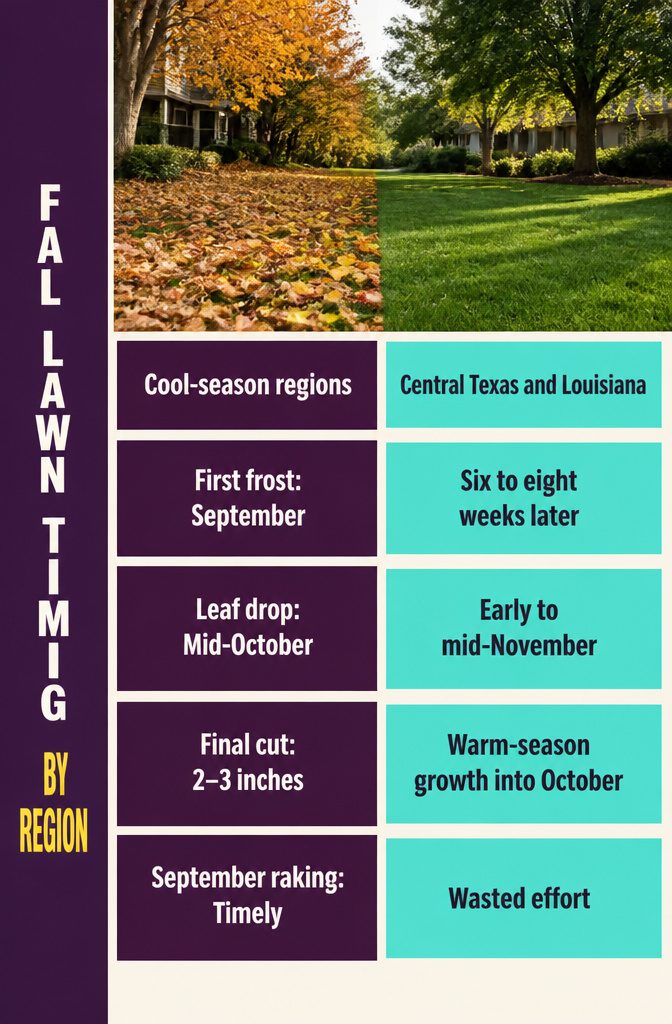
Fall advice contradicts itself because most of it is written for one grass type in one climate. In cool-season country like Wisconsin and Nebraska, the first frost can arrive in September and the leaves are down by mid-October.
Keep mowing until the first hard frost stops growth, and drop the final cut to roughly 2–3 inches. Wisconsin lawns that face early snow do best near the low end, since shorter grass mats less under it.
Central Texas and Louisiana run on a different clock, six to eight weeks behind. St. Augustine, Bermuda, and Zoysia keep growing well into October, and the real leaf drop waits until early to mid-November.
Raking in September there is wasted effort. Follow your grass type and your local first-frost date, not the calendar.
Frequently Asked Questions
Is October too late to overseed my lawn?
Not necessarily, but early October is the latest worth pushing it.
The first half of September is ideal, and seed sown in late October risks frost before it roots. Allow 4–6 weeks before snow so seedlings can establish.
When should I stop fertilizing my lawn in Central Texas?
Make the last application in early to mid-October with a potassium-heavy winterizer, and stop near Halloween. Feeding later pushes tender growth into freeze season.
Should I aerate in fall or spring in Texas?
For warm-season grass, late spring through early summer is best because the turf heals fast then. September is the last reasonable fall date; aerating after that tends to do more harm than good.
When do I apply fall pre-emergent in Central Texas?
Apply it when soil reaches about 70°F, usually the first half of October around Austin. Too early and it breaks down before weeds sprout; too late and they’re already up.
Do I have to remove every leaf from my lawn?
No.
A thin scatter breaks down and feeds the soil, and a light layer can be mulched with a mower. Rake or bag once leaves cover about half the lawn, since a thick wet mat invites fungus and mold.
Is it too late to do anything if I’m reading this in November?
No, though pre-emergent and the best feeding windows have passed. Cleanup, bed mulching, pruning, clearing gutters and removing dead shrubs before the ground freezes are all still worth doing.
How often should I aerate my lawn?
Once a year is enough for most yards. Aerate twice a year only if the soil is heavily compacted or the lawn gets constant foot traffic.
What is the best mowing height for Wisconsin lawns in the fall?
Cut the final mow to about 2–2.5 inches. Shorter grass mats less under snow, but going below 2 inches limits the food the grass stores for spring.
Do I need to hire a professional for fall yard cleanup?
No, most of it is doable yourself. A professional can be convenient for big jobs like large limbs or lawns over 3 acres, where a rental aerator works slowly.