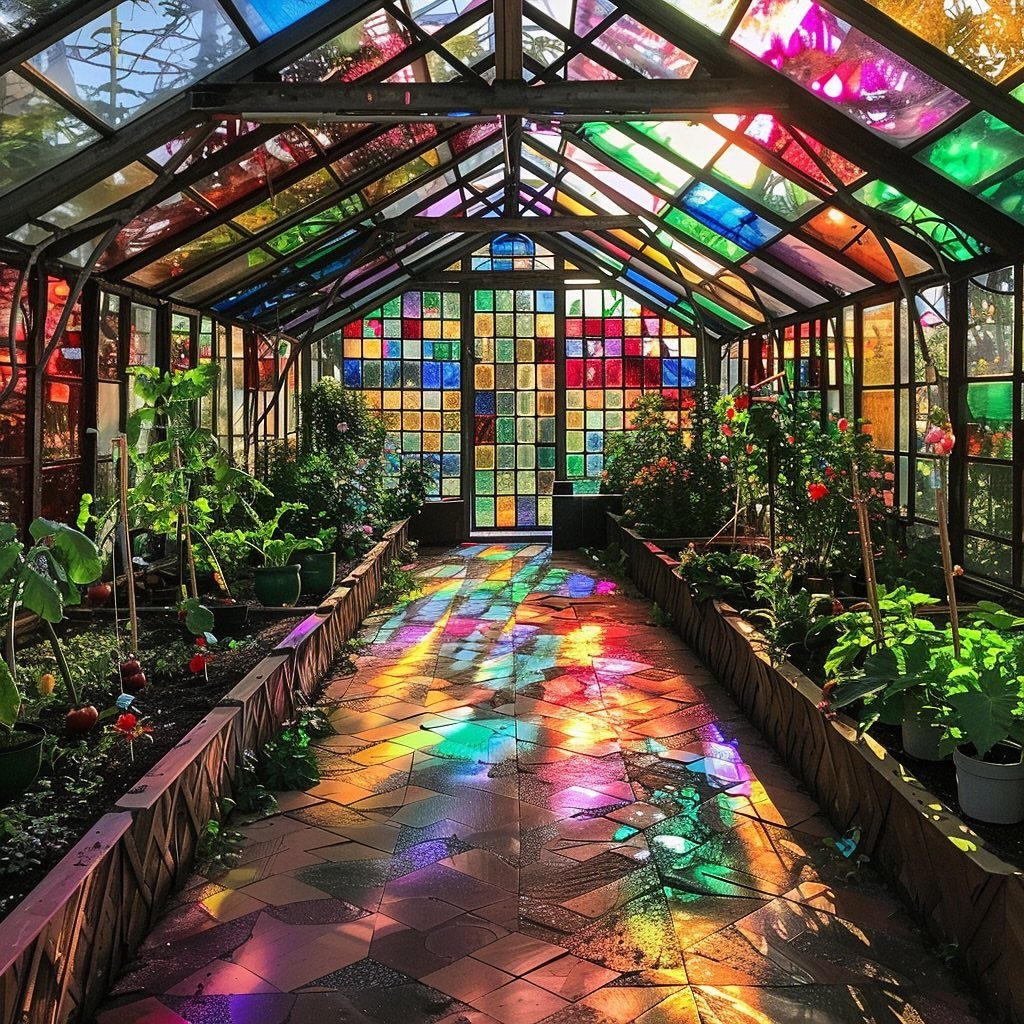
The ideas run from a hinged cold frame, a bottomless wooden box you can build in a weekend with no power or heating, to a Victorian-style glasshouse with a built-in brick planter that turns the space into a small conservatory.
What decides your pick is the site you already have: a sunny house or garden wall points to the lean-to, a narrow yard favors it, and a tight budget favors the cold frame or corrugated panels over glass.
Heating adds cost on top of any of them, so the structure you can afford to run matters as much as the one you can afford to build.
1. Create a Conversation Area
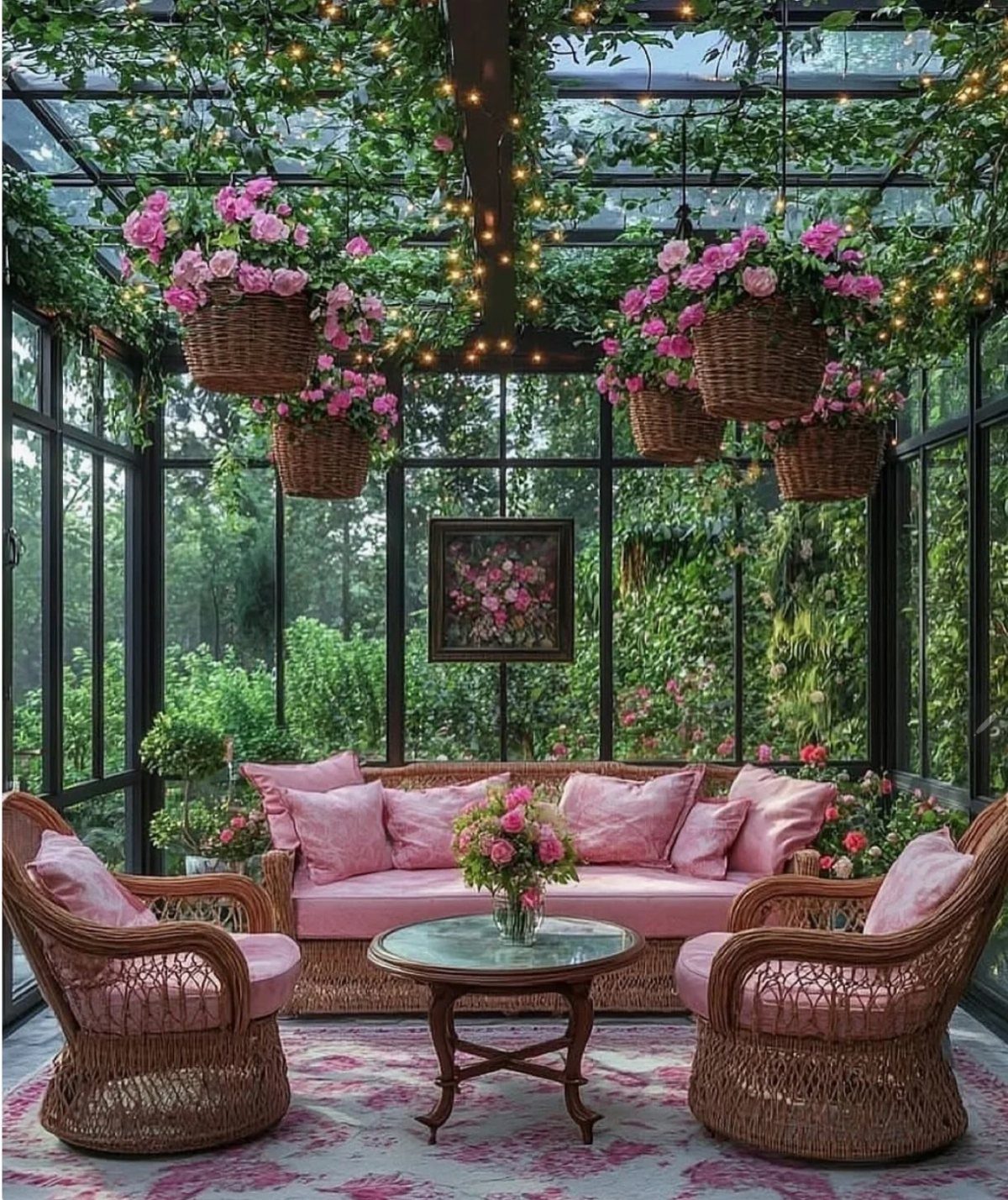
A glass greenhouse with room to spare can hold a seating nook as easily as a potting bench.
Pull a sofa and 2 chairs around a low glass table, and keep the plants at the edges and overhead so the seats get the open floor.
Wicker suits the humid air better than upholstery that soaks up moisture. Hanging baskets above the table add color without taking up a single inch of floor.
Choose a table you can wipe down, since watering splashes will reach it.
2. Use Vertical Space
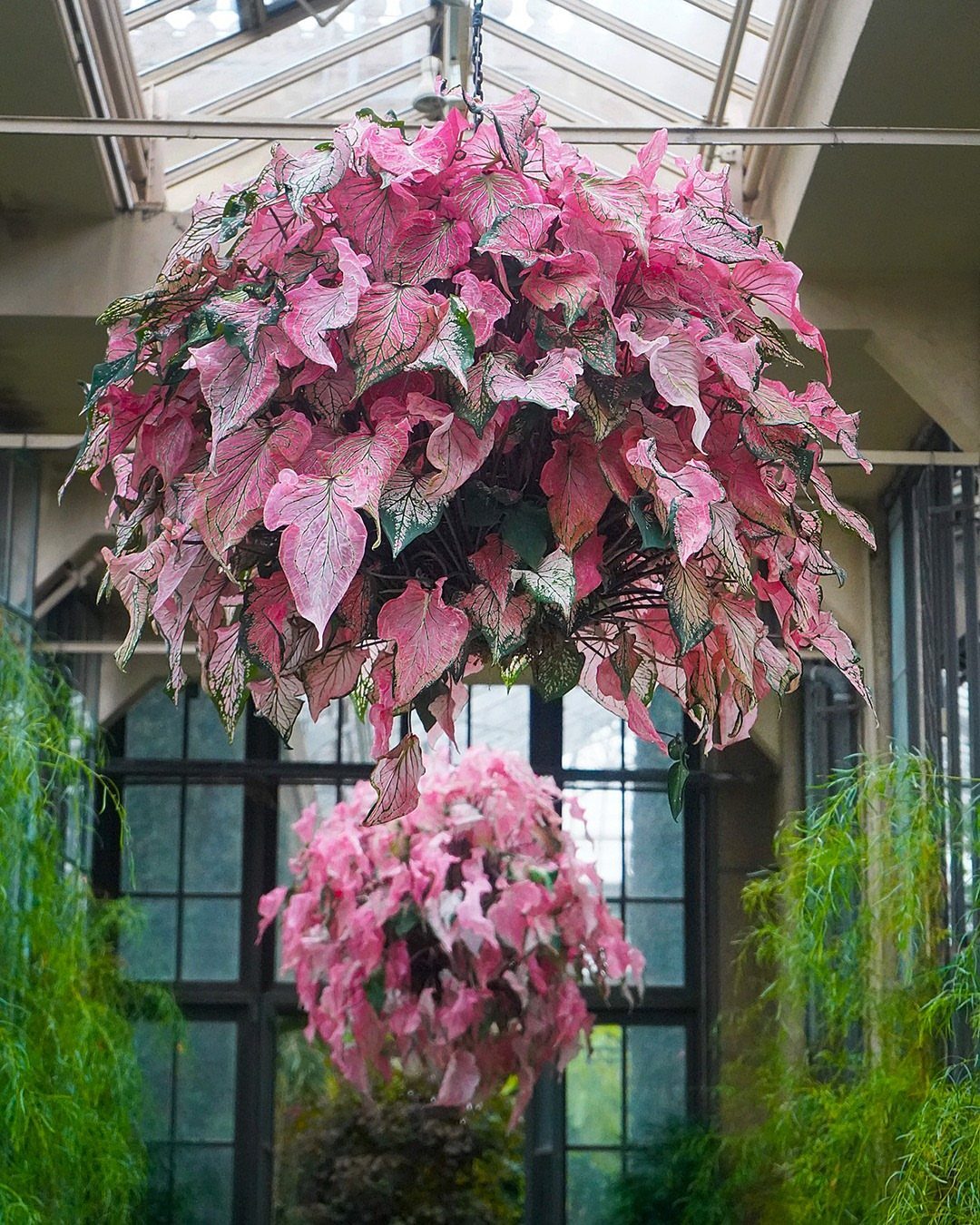
Ceiling space is the cheapest square footage a greenhouse has. Hanging baskets let you grow more without adding a single bench, and bold foliage like variegated pink leaves looks best when it sits level with your eyes or higher.
Space the baskets so each plant gets light and the walkway stays clear.
I would keep the benches below for seedlings and let the overhead rows carry the show.
3. Build a Greenhouse Retreat
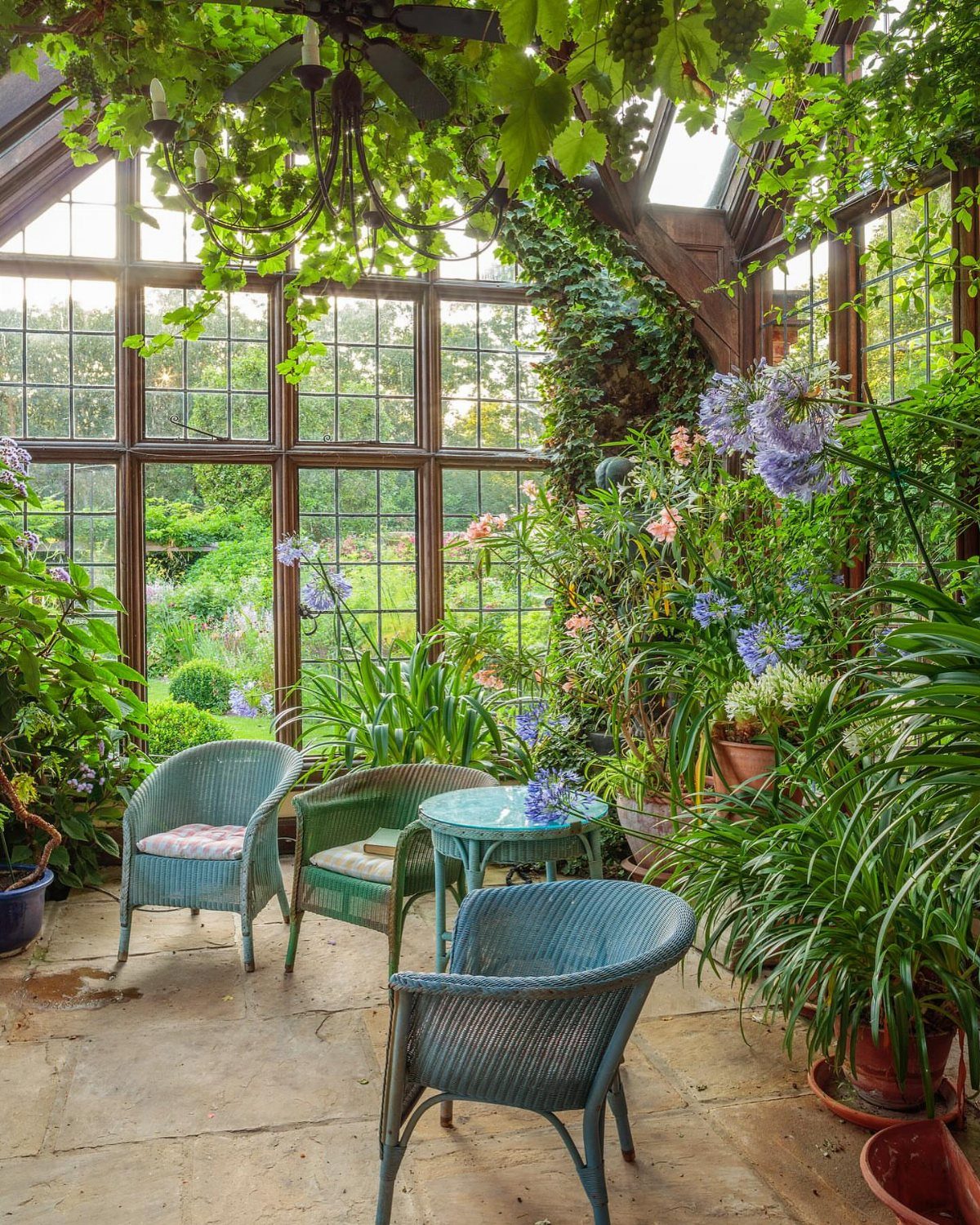
Even a small glass greenhouse can work as a retreat if you treat the floor as a room, not storage.
Stone is a smart floor choice because water and dropped soil don’t hurt it. Keep the chairs to a size that leaves a clear path to the door.
I would leave the walls bare glass.
4. Lean-To Greenhouse
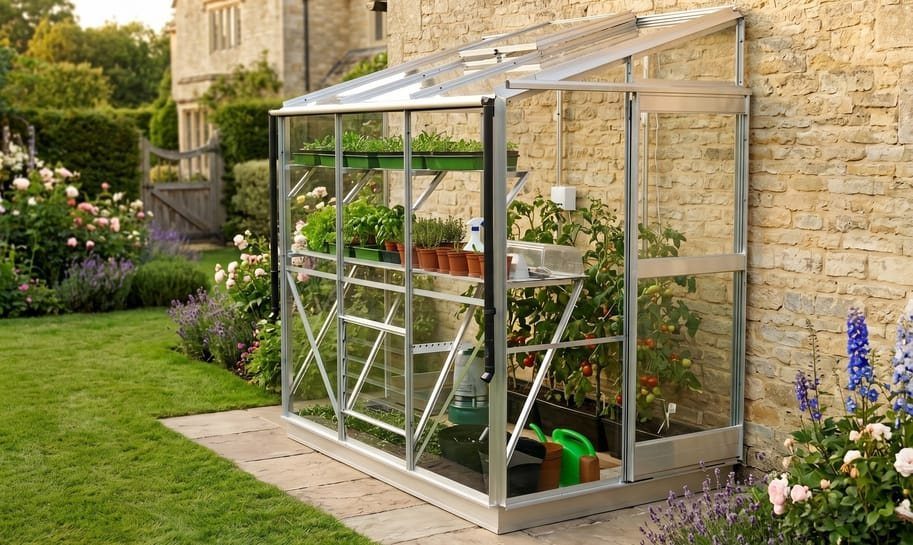
Leaning a greenhouse against a house or garden wall gives it one side already built. A stone wall also soaks up daytime heat and releases it slowly, which a freestanding glass box can’t do.
Aluminum framing with glass keeps the build light and low-maintenance. Pick the sunniest wall you have, and plan the door so it can swing fully open.
A lean-to suits narrow yards well, since it needs only the depth of its own frame and uses the wall as its back.
5. Hydroponics and Aeroponics Systems
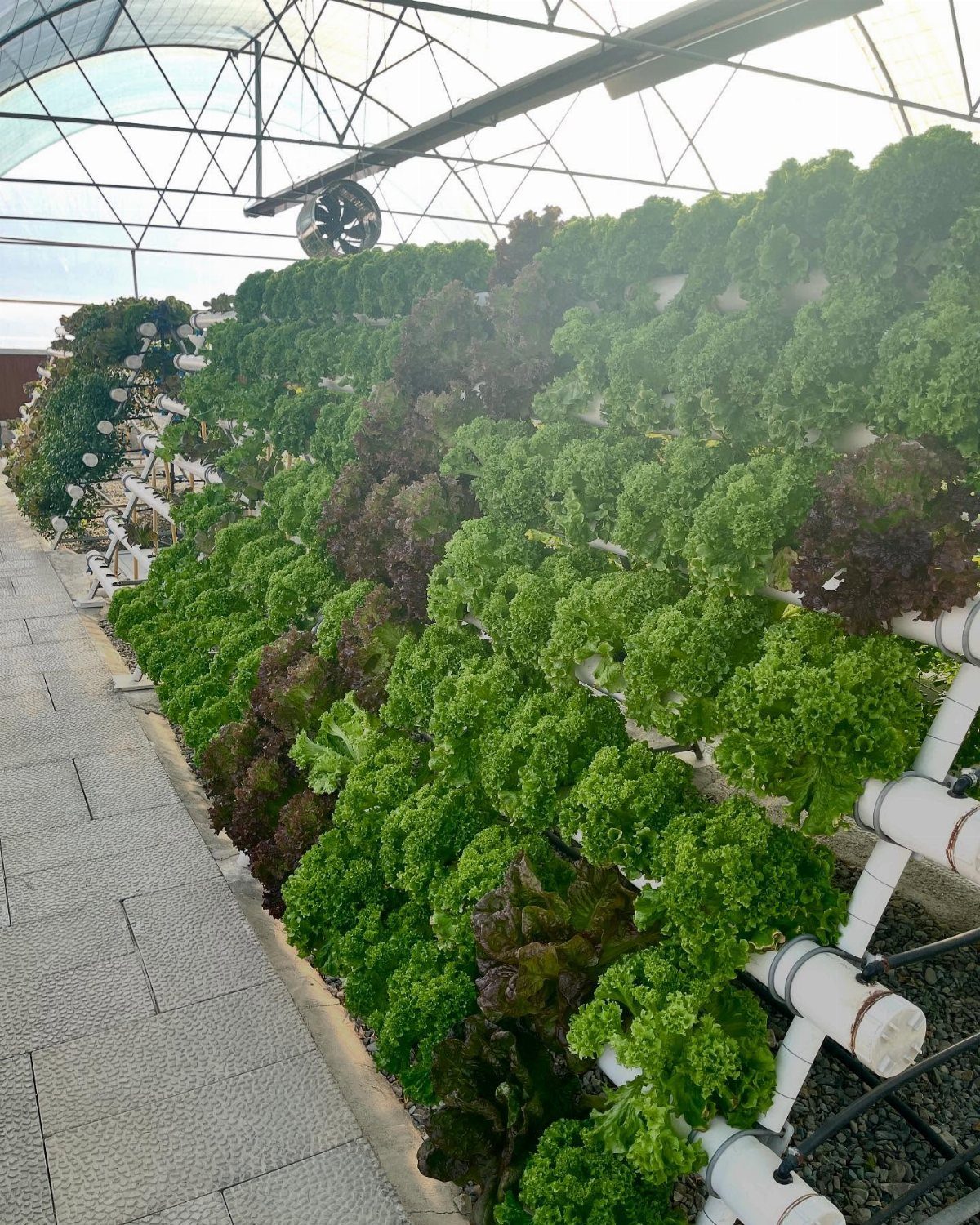
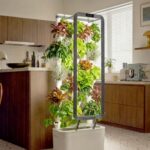
Stack the pipes vertically, and a single corner can hold dozens of plants, with green and purple varieties making the rows look good as well as productive.
A metal-frame greenhouse with a ceiling fan is a good host, since moving air helps keep leaves dry and healthy.
Hydroponics means a pump and a water reservoir, so factor in power and a regular check on the system. Start with leafy greens before anything fussier.
6. Hoop House Setup
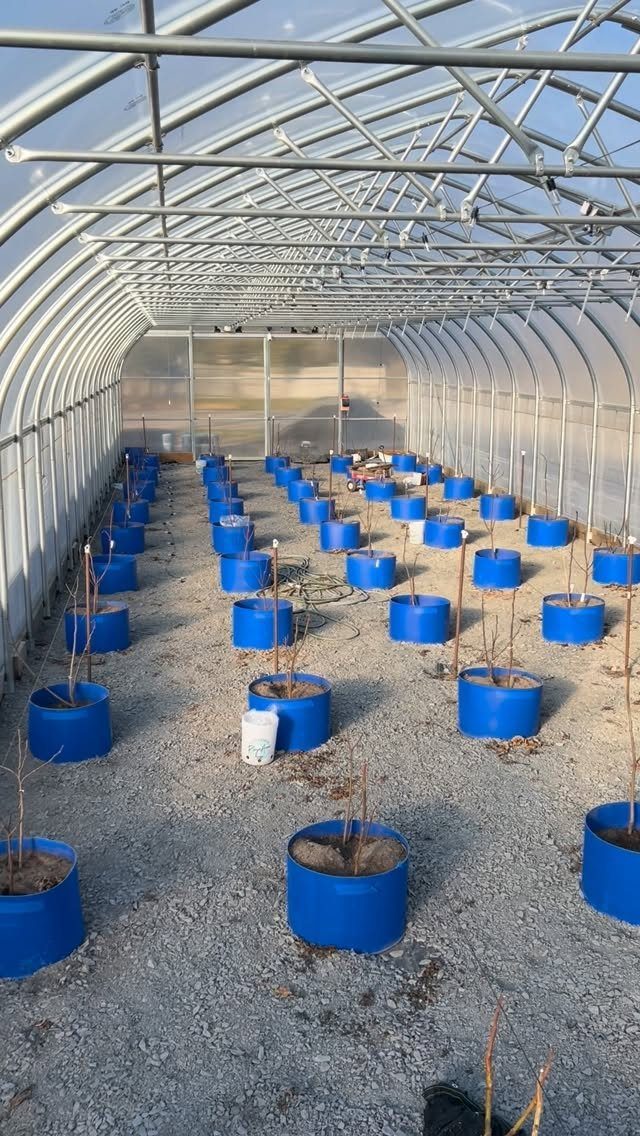
Curved metal hoops make one of the simplest greenhouse shapes to put up, and a gravel floor drains well and never turns to mud. Rows of blue plastic pots then sit in neat lines, ideal for starting seedlings.
Gravel beats bare soil here because you can walk in after rain without tracking dirt. Pots keep every plant movable, so you can shuffle them as they grow.
For a starter setup, I would add a low bench along one side.
7. Victorian-Style Glasshouse
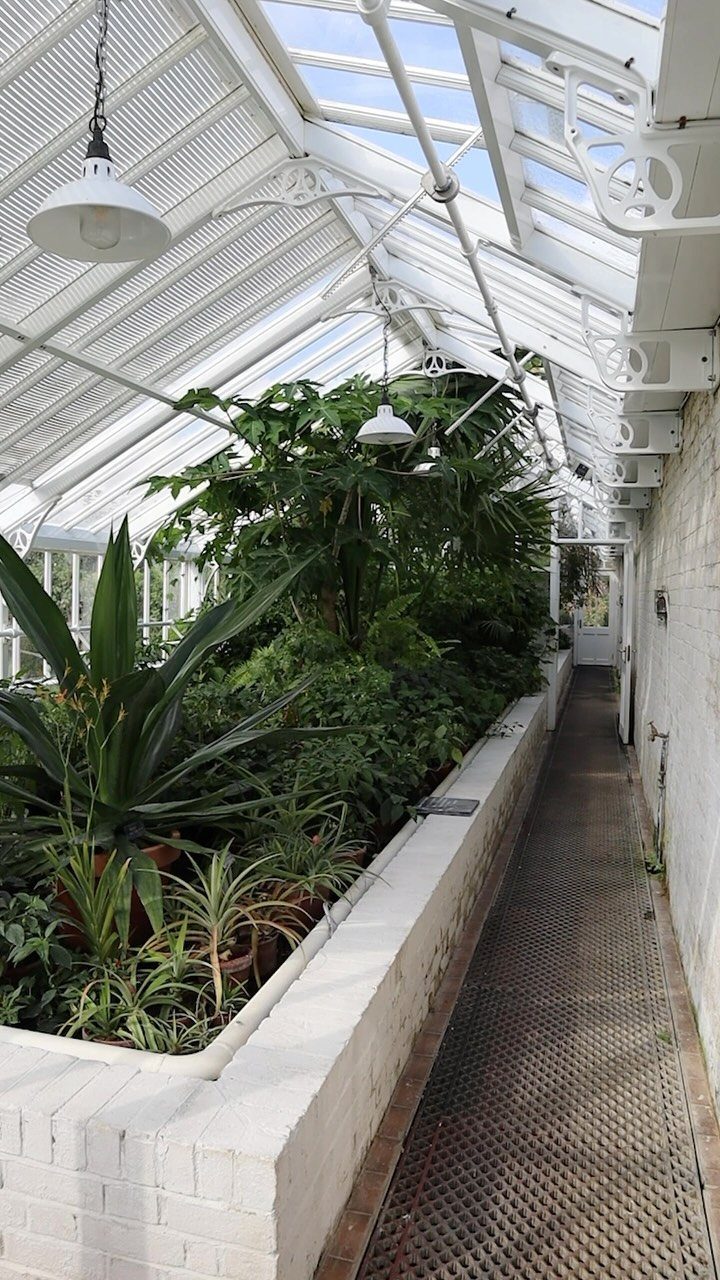
A built-in brick planter along a walkway turns a glass greenhouse into a small conservatory. Planting straight into a fixed bed, not pots, lets tropical foliage fill out and spill over the edge.
White paint on the brick and the frame keeps the space bright and lets the green stand out. I would keep the walkway narrow and the bed long, so most of the floor goes to growing.
A fixed bed is permanent, so settle the layout before the first brick goes down.
8. Ornate Metal Greenhouse
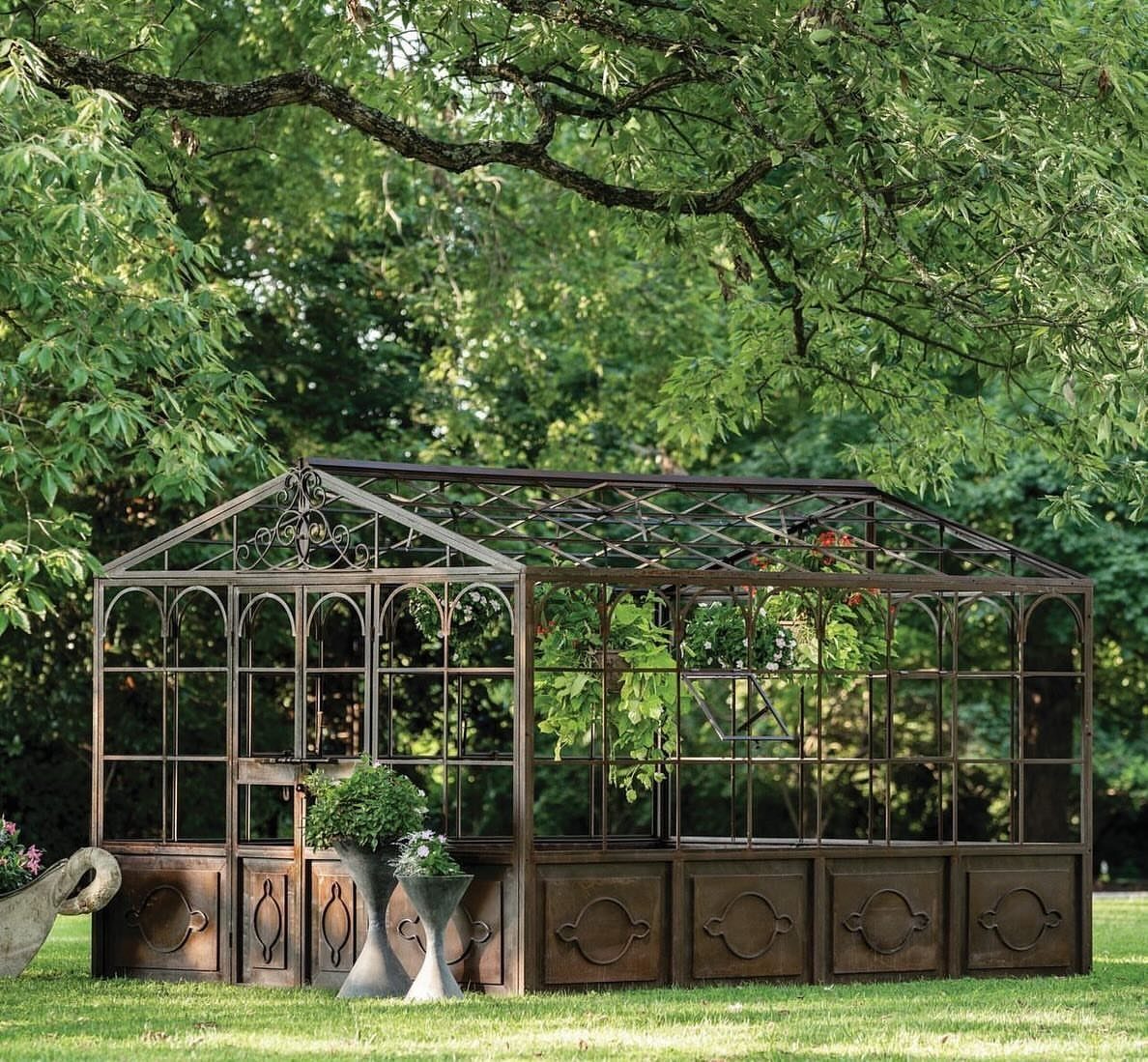
Dark metal framing with arched details gives a glass greenhouse the look of a garden ornament, and a lawn setting suits it well. Black or deep green trim reads sharper against grass than white would.
Shade from a large tree softens the look, but check how much light actually reaches the glass before you commit to a spot. Plants that need full sun will sulk under heavy leaves.
For this style, looks come first in my book, so plan on a lighter plant list.
9. Wooden Frame with Corrugated Panels
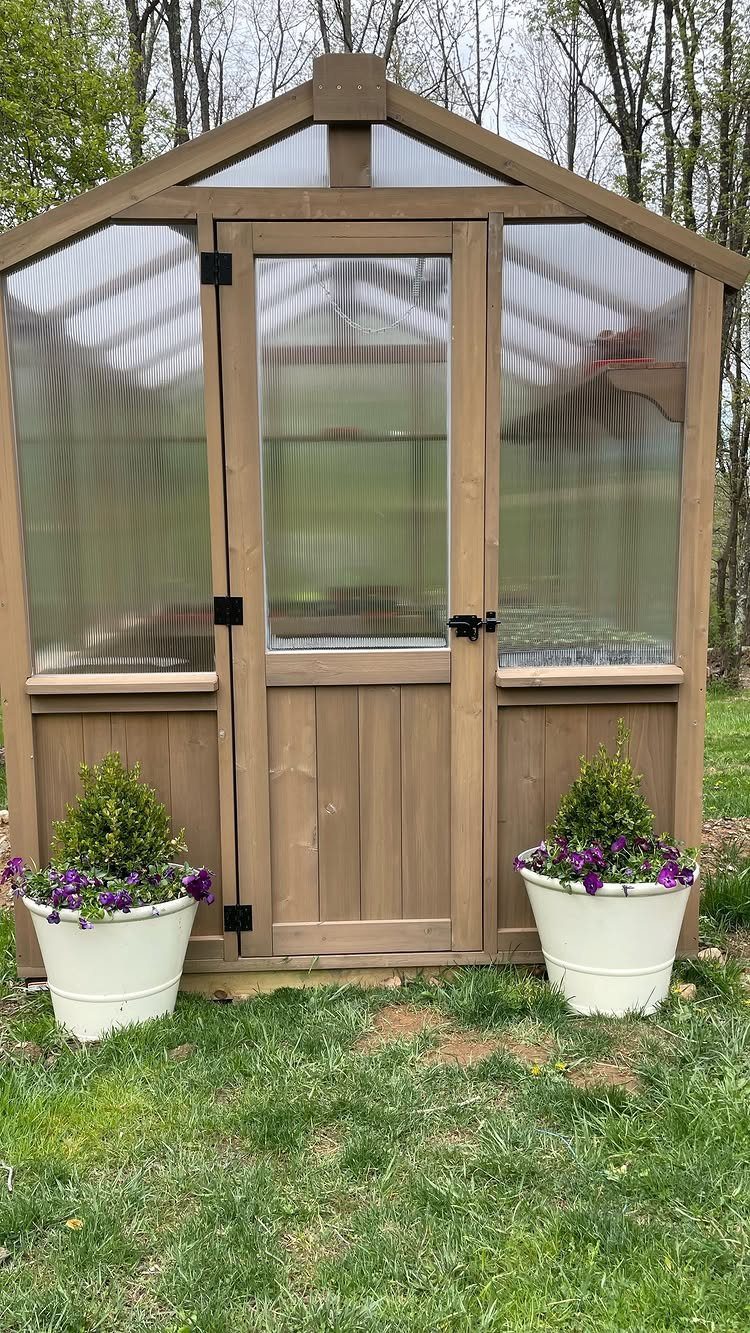
Wood framing with translucent corrugated panels is a budget-friendly way to build a greenhouse yourself. The panels are light, easy to cut and screw to a frame, and they let in soft, diffused light.
Paint or seal the wood so damp air doesn’t rot it. A solid wooden door keeps the build simple.
Flank the entrance with a pair of potted flowers, and the plain structure blends into the garden. Glass looks finer, but panels cost less and are less worry around kids.
10. Hinged Cold Frame
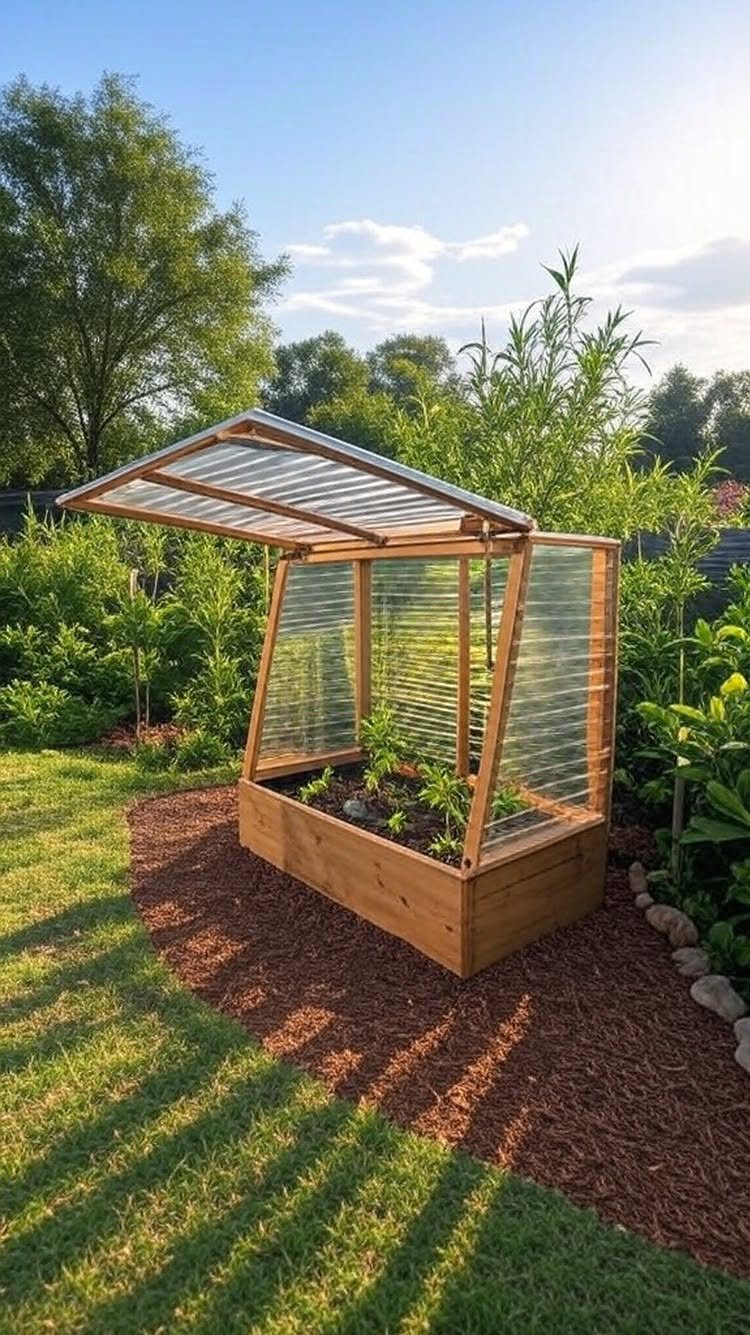
A cold frame is a bottomless wooden box with a hinged clear lid, and it is the smallest greenhouse you can build in a weekend.
Set it on the ground in a sunny spot and it shelters seedlings with no power or heating.
Prop the lid open on warm days so the plants don’t cook, and close it at night. Mulch around the box keeps the ground tidy.
For a first project on a tight budget, I would start here before buying a full kit.
11. Raised Beds
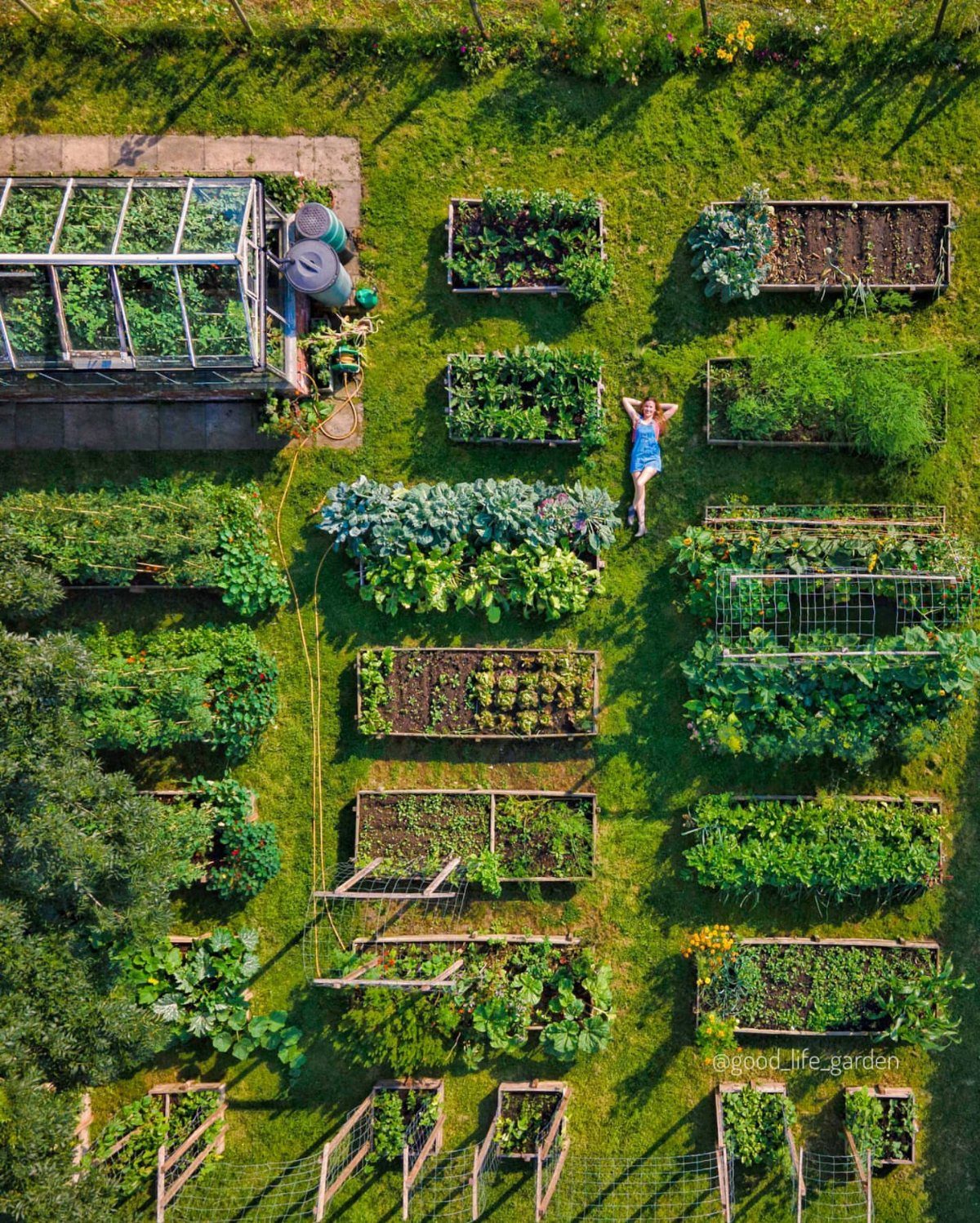
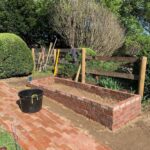
Raised beds beside a greenhouse split the work in two: seedlings start under glass, then move out to wooden beds once they’re ready. Wood is easy to build with and easy to rearrange.
Keep paths between beds wide enough for a wheelbarrow, and set the beds right by the greenhouse door so carrying trays stays short. Fill them with good soil, since the beds are only as productive as what’s inside.
I like leaving room to add another bed next year.
Greenhouse Growing Conditions
A greenhouse shields plants from the elements, which stretches the growing season at both ends.
Seeds can start earlier in spring, tender crops get a protected home, and sensitive plants can overwinter indoors instead of dying in the first hard cold.
Match the climate inside to the plant.
Tomatoes, cucumbers, eggplant, and basil like warmth, while lettuce, spinach, and carrots handle cooler conditions. A thermometer and a humidity gauge cost little and tell you when something needs to change.
A greenhouse gives you 3 planting options: dig into the native soil, build raised beds on the floor, or set containers on the floor and benches. Pots are the most flexible.
Ornamentals in pots can sit out the winter under glass, then move outside once the weather warms. That frees the space for heat-loving crops like tomatoes, eggplant, or chili peppers in summer.
Heat extends the calendar further, since a heated greenhouse can keep flowers going through the cold months. Heating adds cost, so I would try it only after a season of unheated growing shows what you actually want to grow.
With controlled air and protection from critters, greenhouses are a must for devoted gardeners.
Frequently Asked Questions
What veggies grow best in a greenhouse?
Tomatoes, cucumbers, eggplant, basil, and chili peppers love the heat that builds up under glass.
Lettuce, spinach, and carrots do better when the house stays cooler. A $10 thermometer with a humidity readout is enough to tell you when the house is running too hot or too damp for what you planted.
Hydroponic beginners get the best results from lettuce and other leafy greens, which forgive mistakes that fussier crops won’t.
What are the types of greenhouses?
The common types are the lean-to, the hoop house, the Victorian-style glasshouse, the ornate metal greenhouse, the wooden frame with corrugated panels, and the hinged cold frame.
A lean-to uses an existing wall as its back and suits narrow yards. A hoop house is curved metal hoops covered in plastic, one of the simplest to put up.
Do greenhouses stay warm year round?
Not on their own. Glass buys you a few extra weeks of growing at the start and end of the year, but without a heat source an unheated house will still freeze in a hard cold snap.
Add a heater and flowers can bloom all winter, though the energy bill goes up with them. I’d run one unheated for a season first to learn what you really want to grow.
How do you landscape around a greenhouse?
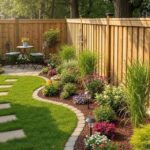
Choose low-upkeep plants that grow slowly, so they don’t shade the glass or eat the time you’d rather spend inside. Keep fast growers and tall structures like trellises or arbors away from the greenhouse for the same reason.
Plant blooms near the door to bring in bees, and tuck pungent herbs like lavender, mint, or rosemary around the edges, since rabbits, deer, and many insects tend to avoid them.