A tomato crop takes about 60–100 days from transplanting, a 5-gallon pot or a sunny bed, and steady watering. Most people go wrong at the watering stage.
Swings between dry and soaked split fruit and cause blossom end rot, and once the end blackens, that tomato is lost. Even moisture, plus 2–3 inches of mulch, prevents it.
1. Choose a Variety and Site
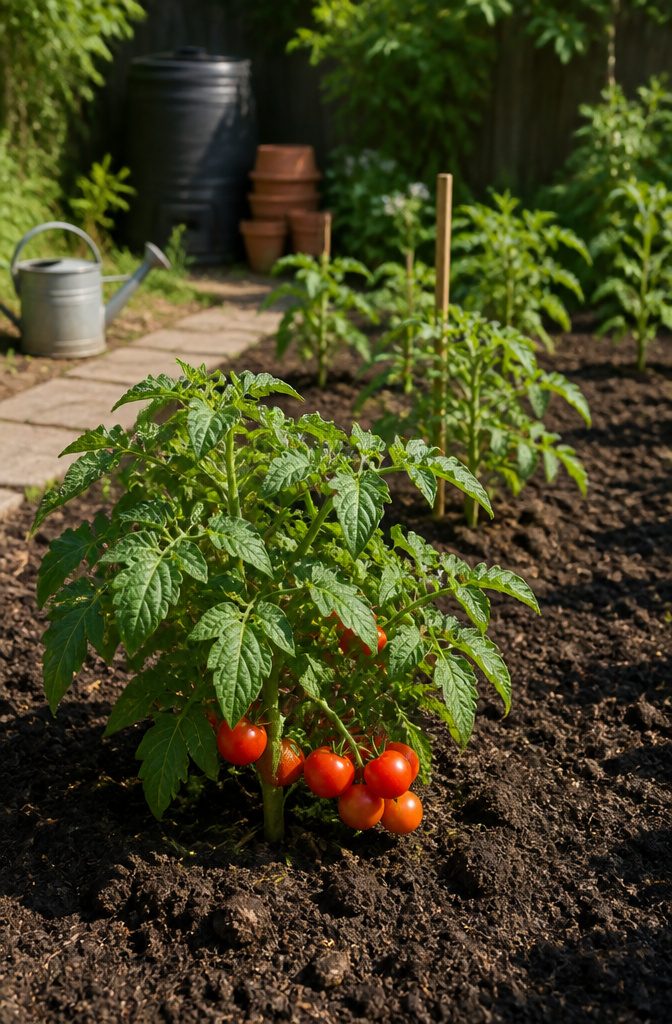
Determinate tomatoes stay compact and ripen most of their crop in a short burst, which suits pots, small beds and anyone who wants sauce in one batch.
Indeterminate plants keep climbing all season and need a stake plus regular pruning, so I’d only choose them if you have the vertical room and the patience.
Check days to harvest against your season.
First-earlies take 60 days or fewer from transplanting and suit cool northern summers, though the fruit is small and can sunburn in heat. Medium-early types (60–69 days) are where the real harvest begins, and most others run up to 100 days.
Of the 10,000-plus cultivars, ask neighbors what finishes locally. Pick for the plate too: Roma-type paste tomatoes for sauce, cherries for snacking.
Give plants 6–8 hours of direct sun in an open spot where air moves freely, which keeps leaf disease down.
2. Start Seeds or Buy Transplants
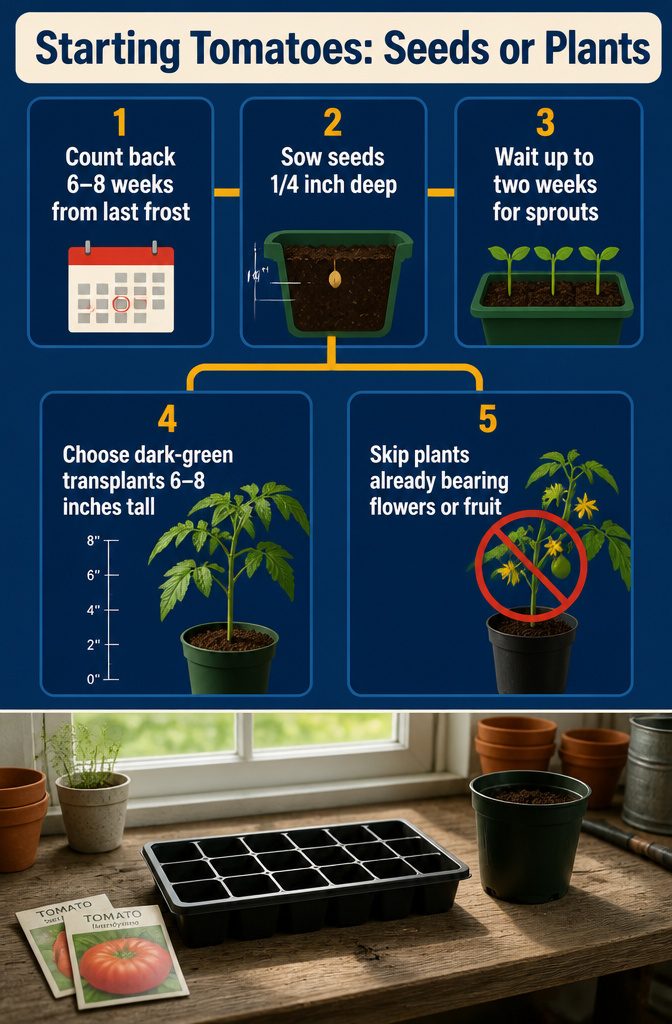
- Count back 6–8 weeks from your area’s last frost date, since tomato plants die in frost. That gives you the day to sow.
- Fill a tray or small pots with sterile seed-starting mix and sow each seed 1/4 inch deep. Keep the soil at 70–85°F, using a heat mat if the room runs cool.
- Expect sprouts in about a week. Some varieties take up to two weeks, so don’t toss the tray early.
- Or buy transplants. A good one is dark green and 6–8 inches tall, with 5–7 true leaves and a pencil-thick stem. Skip any with flowers or fruit already on them.
Seeds win on variety, and nursery plants win on convenience. Saved seed from hybrids may not grow true, while open-pollinated varieties will.
3. Prepare Soil, Pots, and Supports
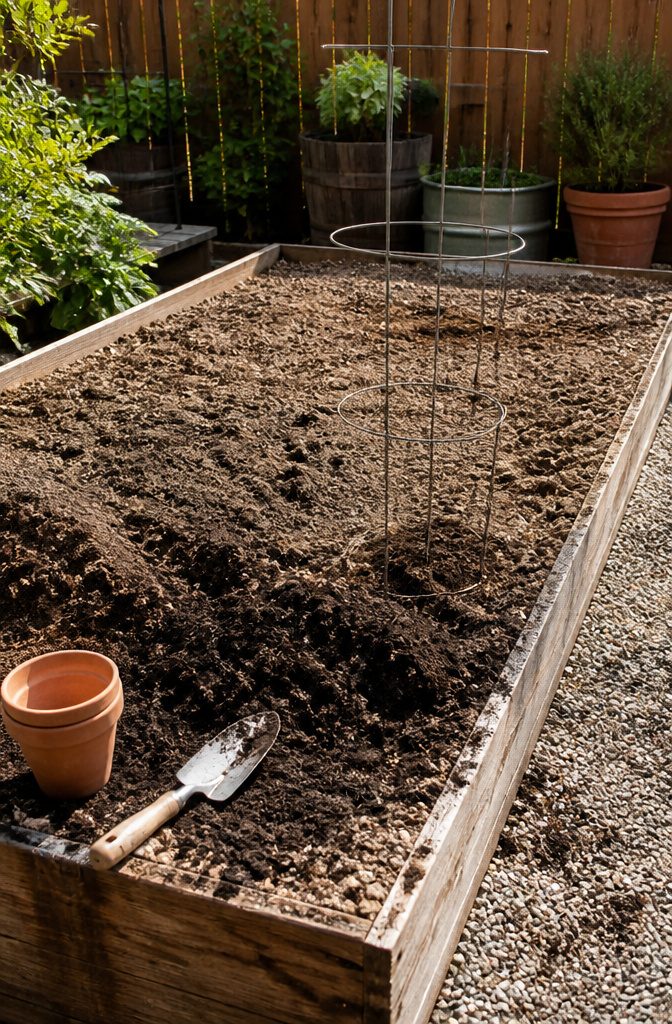
Tomatoes want soil that is fertile and drains well, with a pH between 6.0 and 7.0. Sandy loam warms early and drains fast, though it needs more water by midsummer than heavier ground does.
Work compost into the bed before planting: mix 3 inches of compost-enriched soil into the top 6 inches.
Go easy on fertilizer. If you use 10-10-10, stay at or under 1½ pounds per 100 square feet, because extra feed pushes leaves instead of fruit.
Put cages or stakes in at planting, or just before. Pushing them in later risks spearing roots that have already spread.
4. Harden Off and Plant
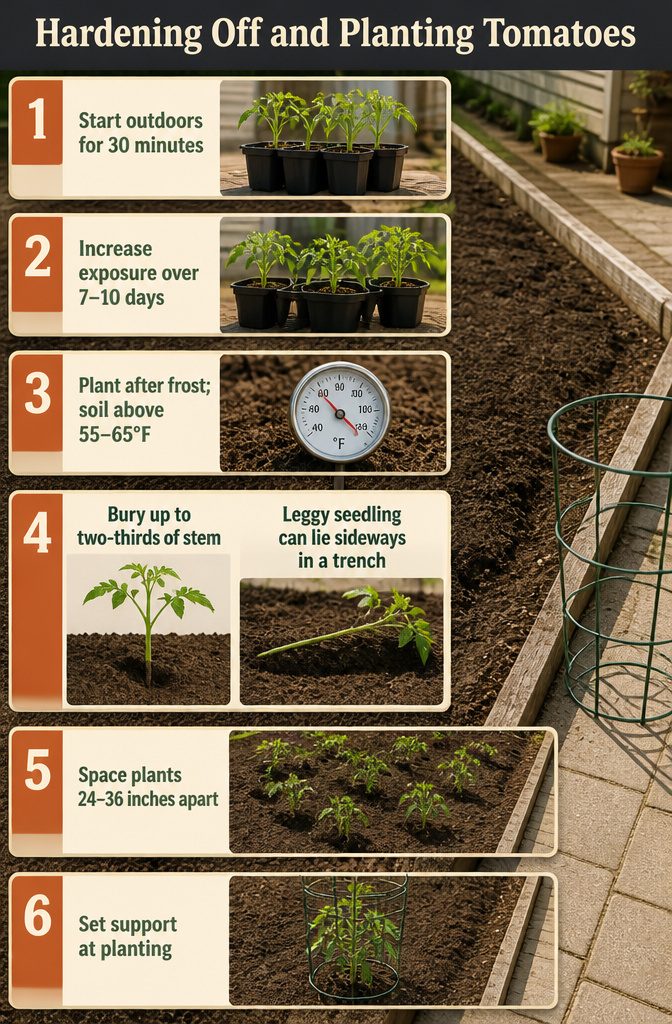
- Set seedlings outdoors for a half hour on day one, then add time each day over 7–10 days until they can handle a full day of sun.
- Wait until frost risk has passed, soil has warmed above 55–65°F, and nights hold near 50°F. Cold nights hurt tomatoes more than a late planting date does.
- Pinch off the lower leaves with scissors or pruners, then bury up to two-thirds of the stem. Roots form along the buried stem. A leggy seedling can lie sideways in a trench instead.
- Leave at least two sets of leaves above the soil. Backfill, handle the stem gently, and water well.
- Space plants 24–36 inches apart, wider for trellised or vigorous indeterminate types.
- Set the cage or stake at planting; adding one later risks snapping stems.
5. Water, Mulch, and Feed
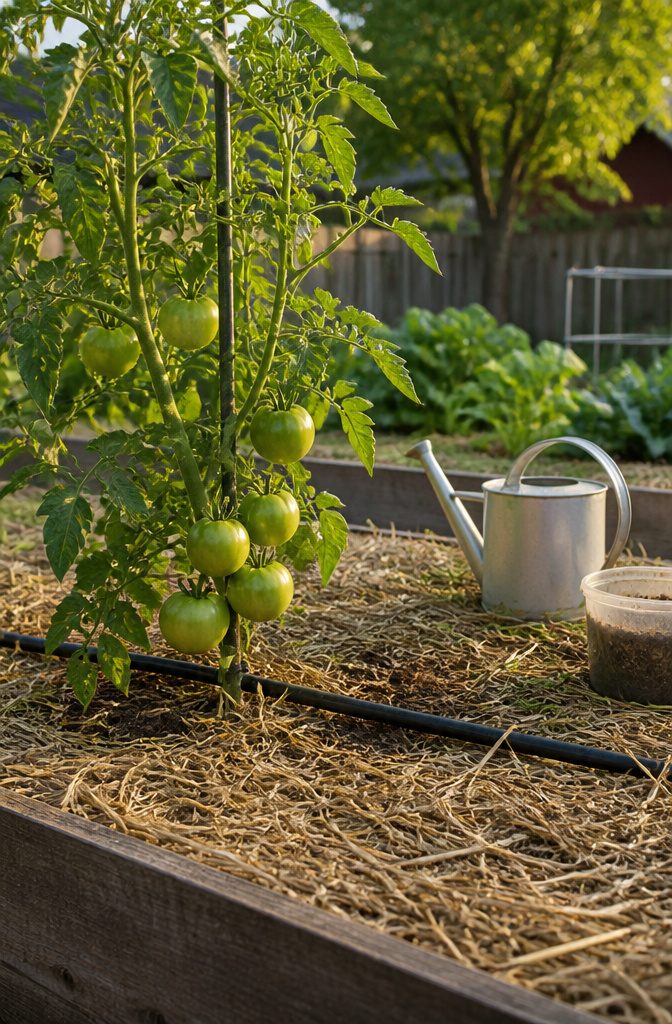
Tomatoes want about 1 inch of water a week, and up to 2 inches in peak summer heat. If rain falls short, make up the difference at ground level with a drip line or soaker hose, since wet leaves invite disease.
Watering to keep the soil evenly moist is particularly important once fruits start to form, because irregular watering is likely to cause fruit to split.
Swings between dry and soaked are what split fruit and cause blossom end rot, so steady beats generous.
Spread 2–3 inches of seed-free straw or bark chips to hold moisture. Black plastic mulch warms the soil and pushes the crop 2–3 weeks earlier.
Begin feeding about a month after planting, or when flowers appear. I’d choose a low-nitrogen tomato blend; too much nitrogen gives leaves instead of fruit.
6. Support, Train, and Prune
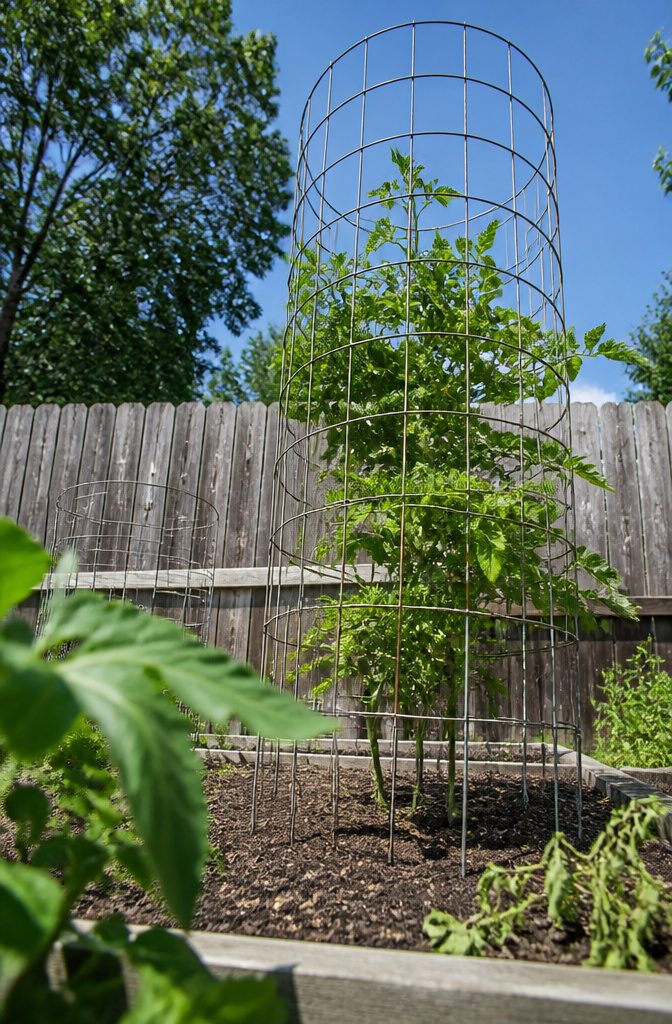
Cages win for me on a weekend budget, because a cage 2 feet across and 4–5 feet tall needs no tying and no pruning.
Most store-bought cages are too small for popular indeterminate varieties, so I’d make one from a 6½-foot length of concrete reinforcing mesh, cutting off the bottom ring of wire so the legs push into the soil.
When a branch pokes out, tuck it back in.
Stakes take more work.
Drive a 6-foot stake 12 inches deep, tie the stem as it climbs, and pinch off every side shoot, which means checking weekly. You get larger fruit and better airflow, but a somewhat smaller total yield.
Determinate plants need little pruning. For them, cut the mesh in half to make two cages 3 feet tall.
7. Watch for Pests and Disease
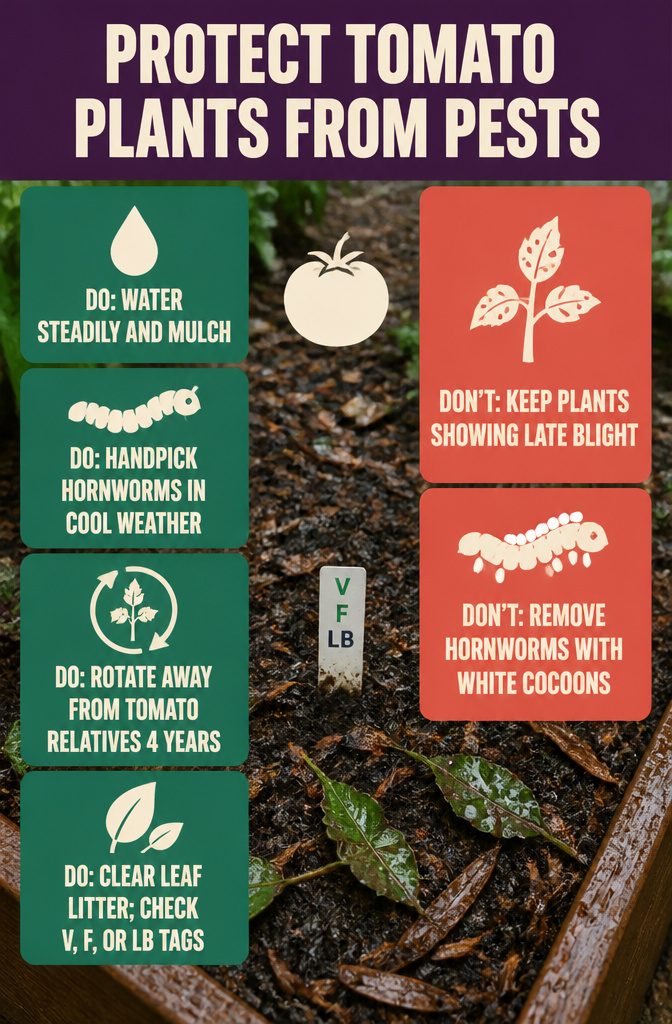
Late blight is the one to fear: it thrives in wet, 60–70°F weather, starts as pale green patches at leaf edges, and turns them brown and purple-black before leathery patches take over the fruit.
Pull the plant at the first sign. Early blight leaves rings inside tan spots, and the wilts yellow the leaves and kill the plant from the soil up.
Blossom-end rot is a watering problem, not a disease. Water on a steady schedule and mulch, because swings in soil moisture starve the fruit of calcium, and once the blackened end shows, that tomato is lost.
Hornworms reach 2–3 inches and hide in plain sight; handpick them in the cool of the day. Leave any wearing white cocoons.
For prevention, rotate away from tomato relatives for at least four years, clear leaf litter, and look for V, F, or LB on the plant tag.
8. Harvest Ripe and Green Fruit
Judge ripeness by color and a gentle squeeze: the fruit should be fully colored and firm, which usually happens 45–90 days after planting. Your seed packet lists the days to harvest for your variety.
In hot weather, pick every day or two. At 90°F or above, color development slows and fruit softens fast, so I’d take tomatoes once color starts and finish them indoors at 70–75°F.
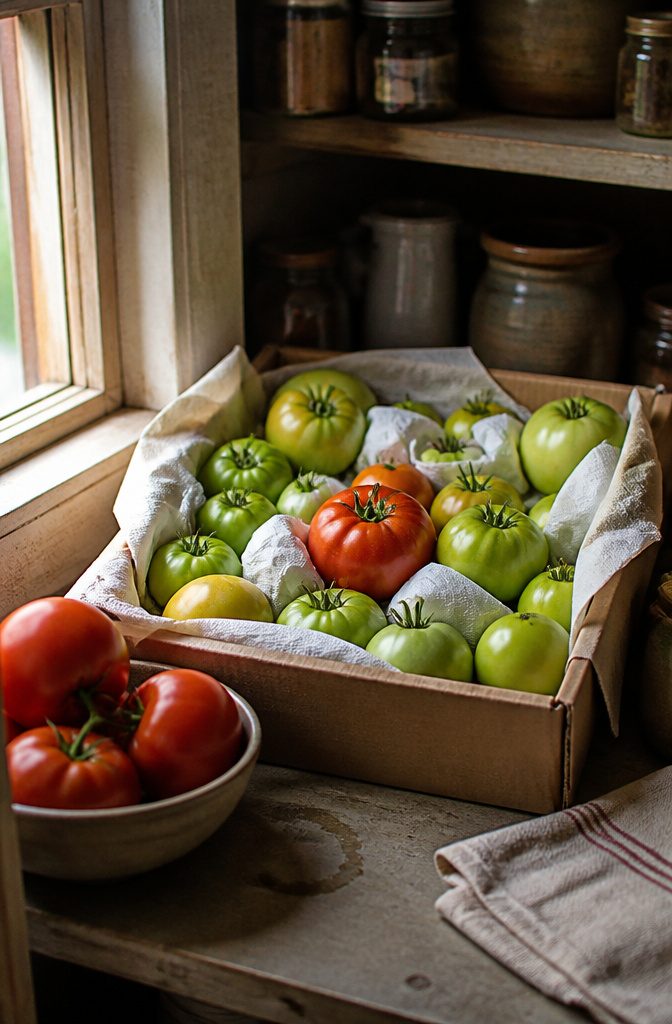
Before a killing frost, pick every green fruit you want to keep. Green tomatoes ripen in about two weeks at 65–70°F, and a ripe tomato in the same box speeds the others along.
Wrap them one by one in paper and store at 60–65°F. Keep them out of anything colder: flavor drops off below 54°F, and the fridge is too cold.
Growing in Containers
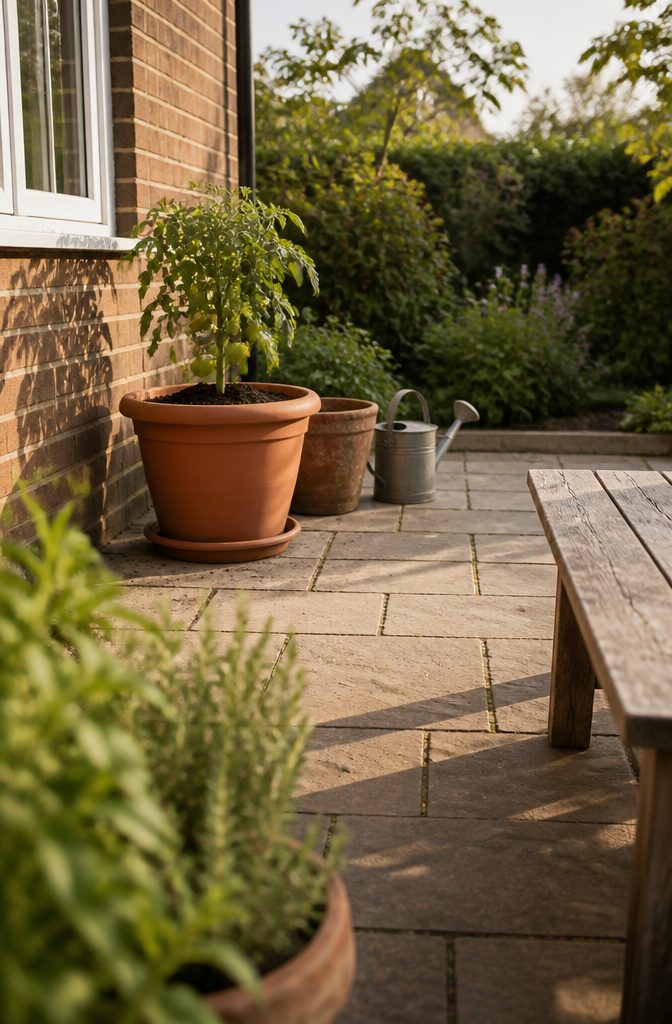
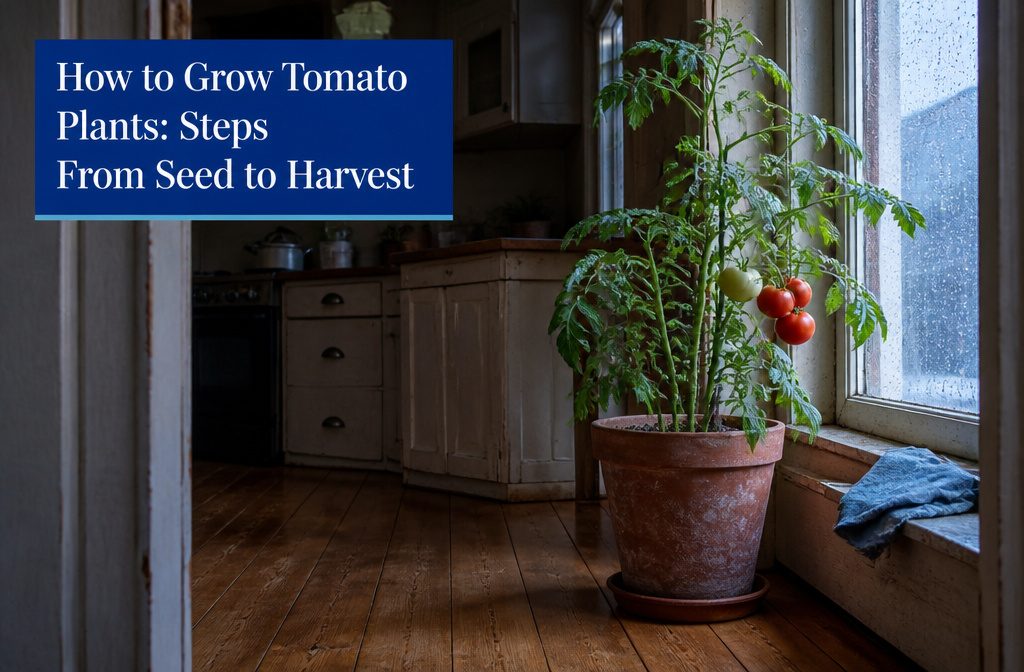
Pots work, but only if you set them up right. These are the rules I’d follow:
- Fill the container with potting mix, never soil dug from the yard. Garden soil packs down in a pot and drains poorly.
- Choose a pot that holds at least 5 gallons. A 10–15 gallon pot is better, since more soil holds moisture longer.
- If you shop by dimensions, look for a container at least 12 inches deep and 18–24 inches wide.
- Water again when the top 1–2 inches of mix feel dry. Push a finger in to check.
Tomatoes in the ground still yield more and taste better, assuming loose, nutrient-rich soil. For a renter with only a patio, that’s a fair price to pay.
Sunlight and Airflow
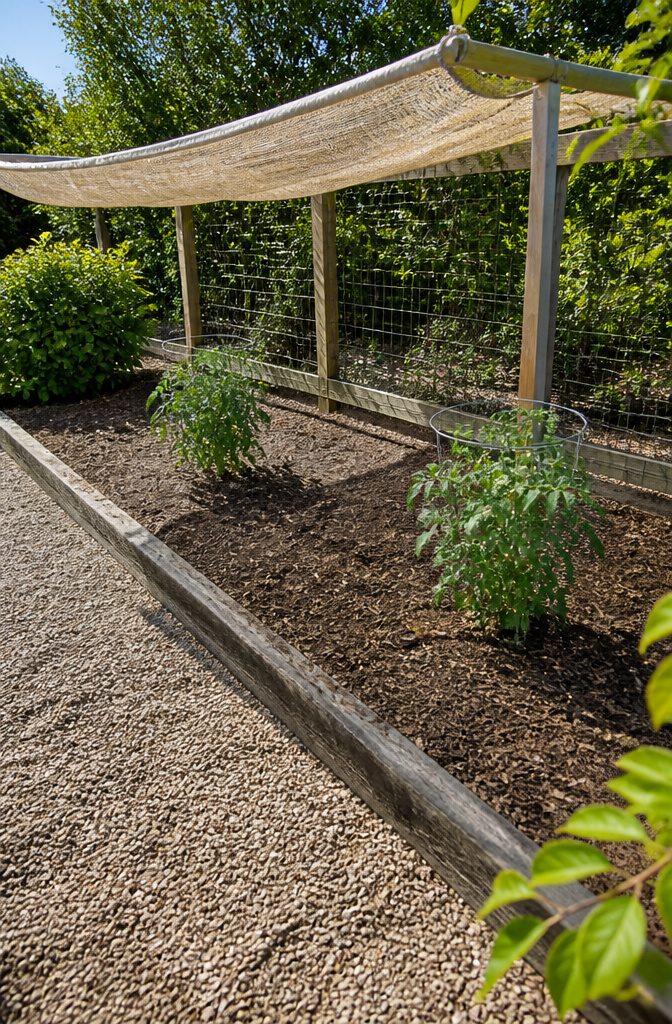
Tomatoes need 6–8 hours of direct sun a day, and a spot that gets less will give you leafy plants with few flowers. Too much nitrogen fertilizer causes the same problem, so check the light before you blame the feeding.
Airflow matters almost as much.
Space plants at least 24 inches apart, and give sprawling indeterminate types and trellised plants 24–36 inches. Crowded leaves stay wet and invite fungus, and thinning old, non-fruiting branches lets air and light reach the middle of the plant.
Temperature controls whether flowers become fruit.
Blossoms drop below 55°F at night or above 85°F in the day. In a heat wave, I’d hang 30% shade cloth over the plants rather than reach for blossom set spray, which does nothing in high heat.
Frequently Asked Questions
How much sun do tomato plants need?
Tomatoes need 6–8 hours of direct sun a day.
With less light you get leafy plants and few flowers, so check the light before blaming your feeding. An open spot with good airflow also helps keep leaf disease down.
Should you water tomato plants every day?
Not usually. Aim for about 1 inch of water a week, and up to 2 inches in peak summer heat, delivered at ground level.
Steady moisture matters more than volume, since swings between dry and soaked cause split fruit and blossom end rot. In pots, water again when the top 1–2 inches of mix feel dry.
Are tomatoes better in pots or grow bags?
Either works if the container is big and deep enough.
Choose a pot that holds at least 5 gallons (10–15 gallons is better) and is at least 12 inches deep, or use a large, deep grow bag. More soil holds moisture longer, which tomatoes need.
What should not be planted next to tomatoes?
Avoid tall or vigorous plants that compete for nutrients or shade the tomatoes, and keep potatoes away.
Both crops get late blight, so one can pass it to the other. Basil, other herbs and marigolds are the usual companions, since their strong scent may confuse pests.
How do you enrich soil for tomatoes?
Work compost into the bed before planting by mixing 3 inches of compost-enriched soil into the top 6 inches.
Tomatoes want fertile, well-draining soil with a pH between 6.0 and 7.0. Go easy on fertilizer, because extra feed pushes leaves instead of fruit.
Are eggshells good for tomato plants?
Gardeners add them for calcium, hoping to prevent blossom end rot. Water on a steady schedule and mulch, and don’t count on eggshells to fix it.
Do all tomato flowers turn into tomatoes?
No. Blossoms drop when nights fall below 55°F or days climb above 85°F. In a heat wave, hang 30% shade cloth over the plants; blossom set spray does nothing in high heat.