How easy a yard stays depends on its water and its sun, so the choice between these ideas starts with your own ground: where rain pools after a storm, how many hours of light a spot gets, and how fast the soil drains.
A shady strip, a soggy bed and a dry fence line each call for a different plant or material, which is why the list pairs ground covers, drought-tolerant plants and raised planters with a reminder to read your site first.
The list runs from a simple garden layout and a row of ornamental grasses to stone, mulched beds and wall-lined shrubs, and none of them is entirely hands-off.
1. Uncomplicated Garden Layout
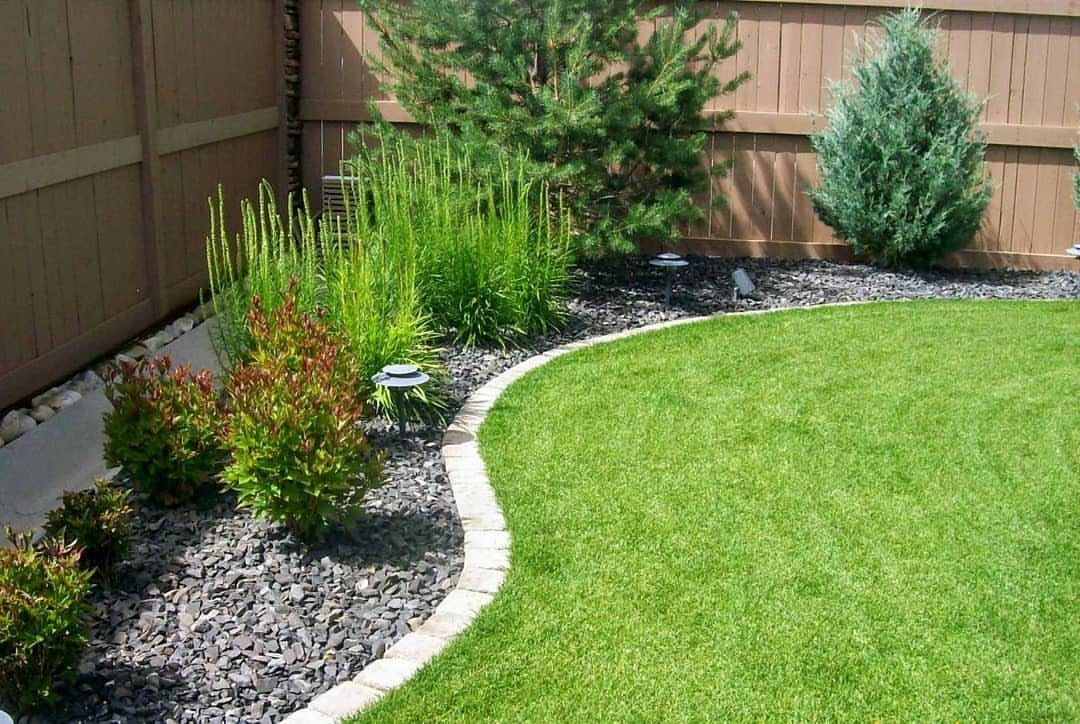
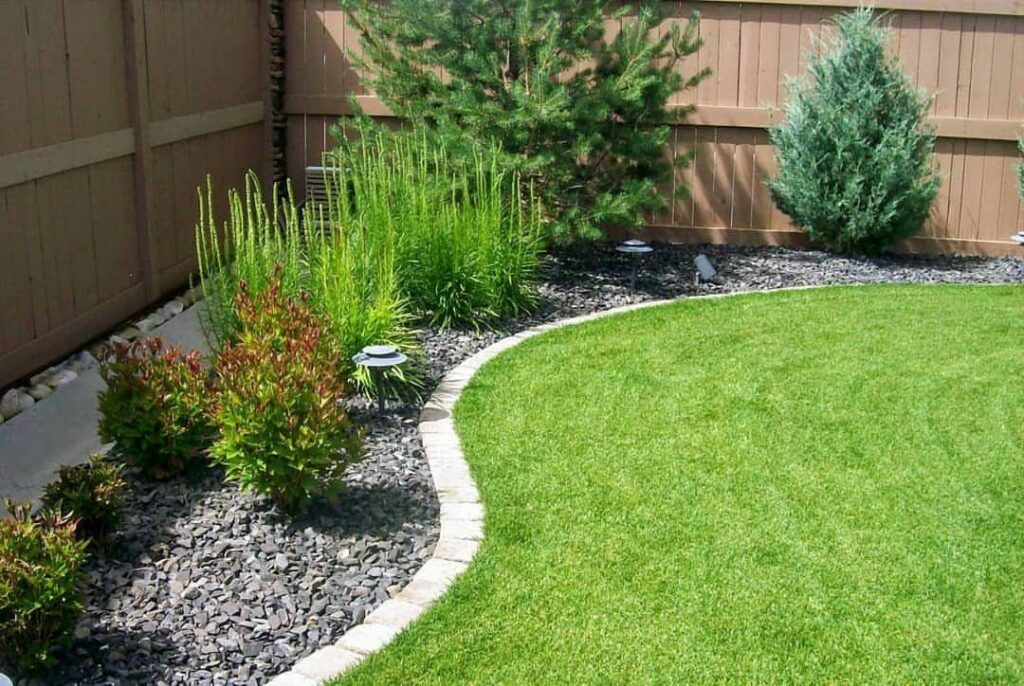
A curved lawn edge does more work than it looks like it should. One sweeping line separates grass from the planted bed, and the mower follows it without fuss.
Keep the plant list short: a few shrubs and evergreens against the fence, with gravel mulch around them, give you almost nothing to prune or weed.
Before you buy anything, decide what the yard is for, whether that’s play space, a place to sit, or just something nice to look at, and let each feature serve that use.
Anything that doesn’t earn its spot gets left out.
2. Raised Planters
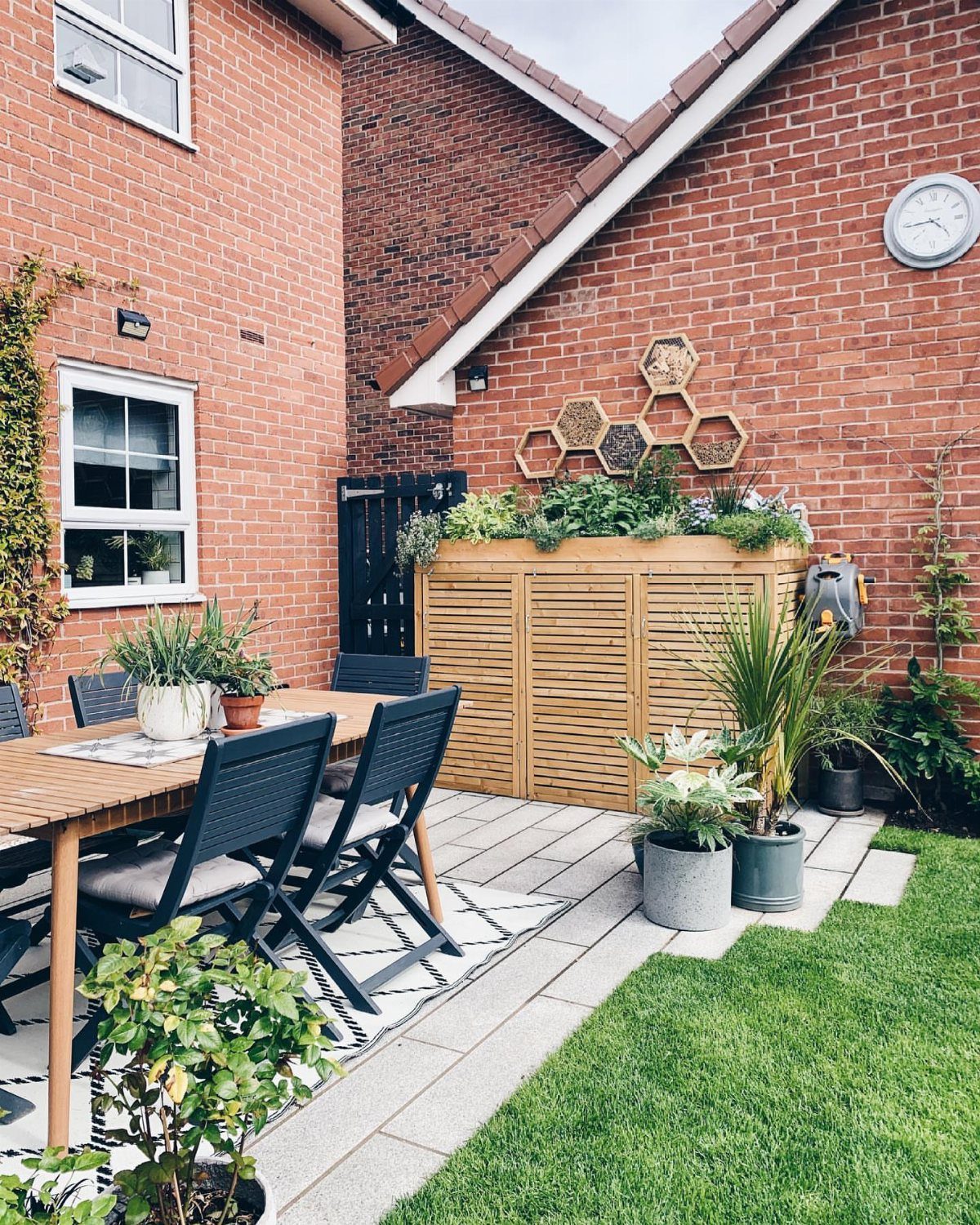
Where a patio is all brick and hard edges, raised planters give you somewhere to grow things without digging into the paving.
Wall-mounted hexagons add planting space without using any floor, which suits small patios and renters who can’t dig.
I like mixing the two: one large box for height and a cluster of small wall pieces for variety. Wood against brick looks warm and keeps the whole space from feeling like a slab.
3. Annual Flowers
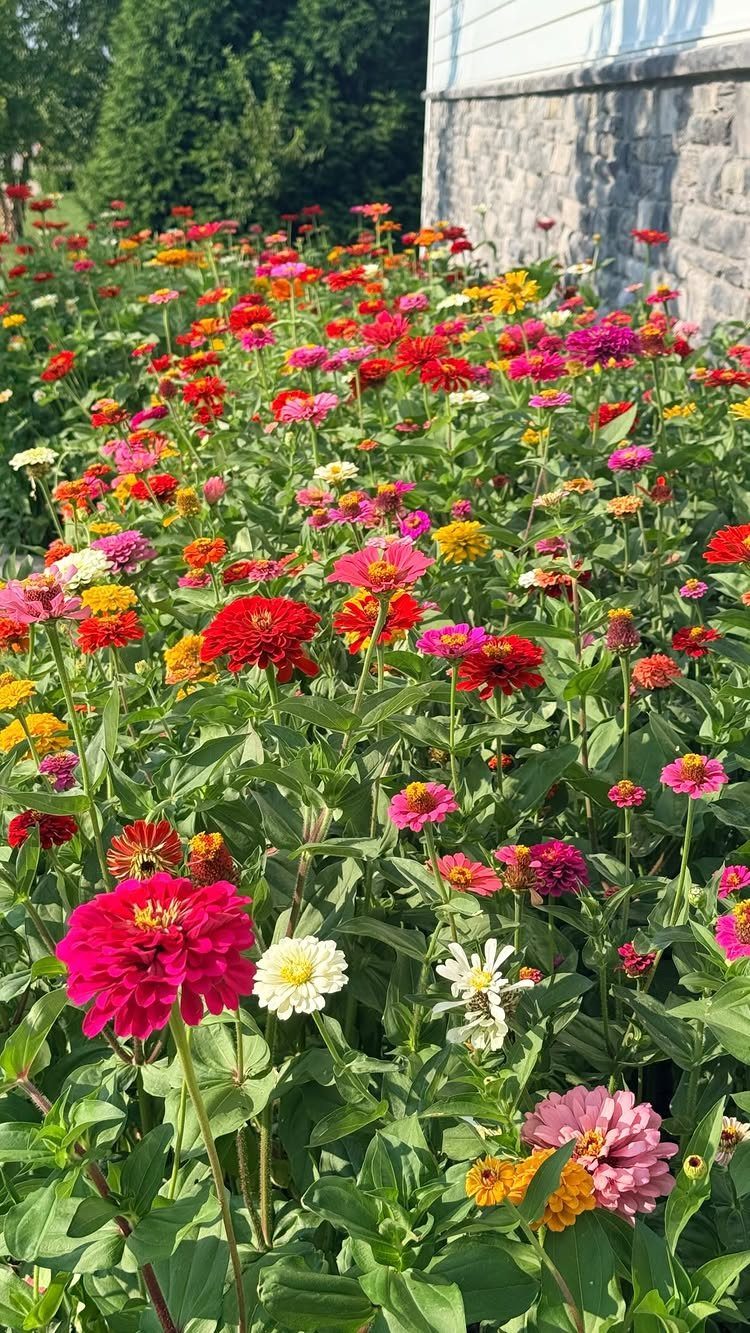
Zinnias packed into a bed give the kind of color that perennials rarely deliver in one season.
Annuals live one season, so budget for replanting every year. That means buying seed or starts again and clearing the bed each time.
I think it’s worth it for a spot you see daily, like a front bed or a patio edge. Keep the rest of the yard low-effort so this one area can carry the show.
4. Drought-tolerant Plants
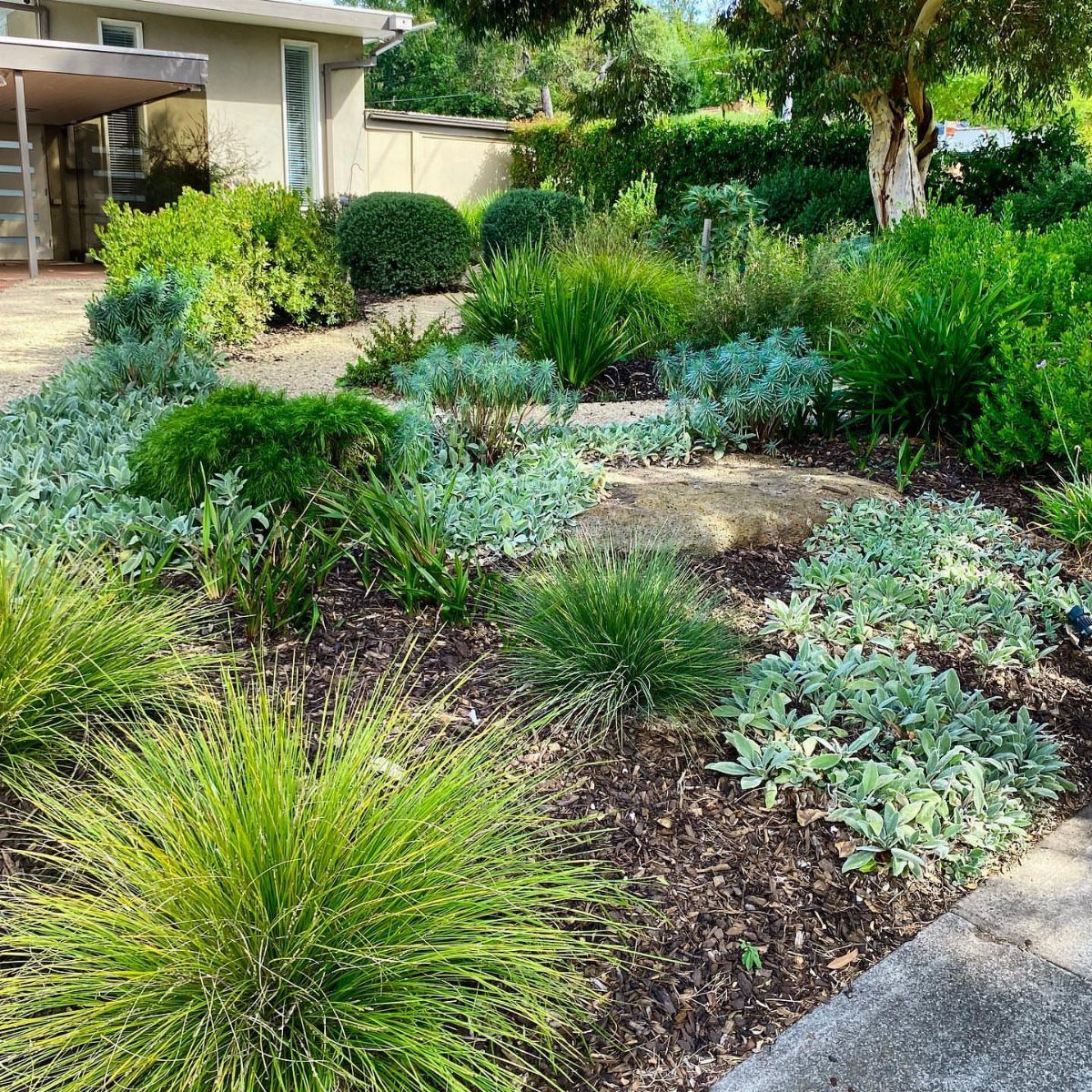
Silvery foliage and fine grasses are a good sign in a bed: they usually belong to plants that cope with dry spells. Once established, drought-tolerant plants need far less watering than a typical border, which cuts the hose work.
Water them regularly in their first season so roots can settle in. Then pull back.
Dark mulch around them stays neat and holds weeds down, and a mix of leaf shapes and grasses stops the bed from looking sparse. Beds beside a house and path, where a hose is a hassle, are ideal spots.
5. Ornamental Grasses
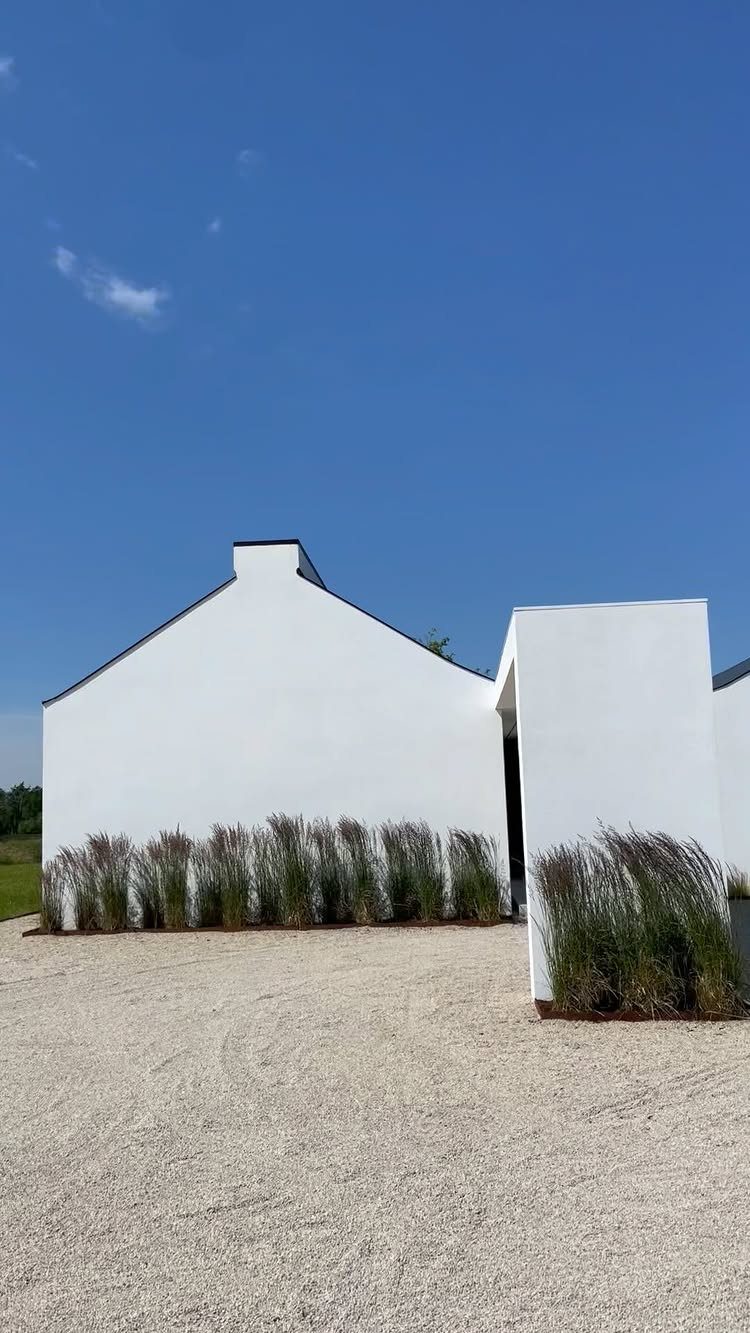
A single row of ornamental grasses along a building base is about as easy as planting gets. Against a white wall, their fine texture softens the hard line where the house meets the gravel.
Grasses give movement in a breeze and change through the seasons, so the bed never looks static. Upkeep stays limited, which is why I prefer them to fussy flowering shrubs near a driveway.
Set each plant the same distance from the next and repeat one variety down the row for a clean, modern look. Mixing several types works better in a wider bed.
6. Stone Landscaping
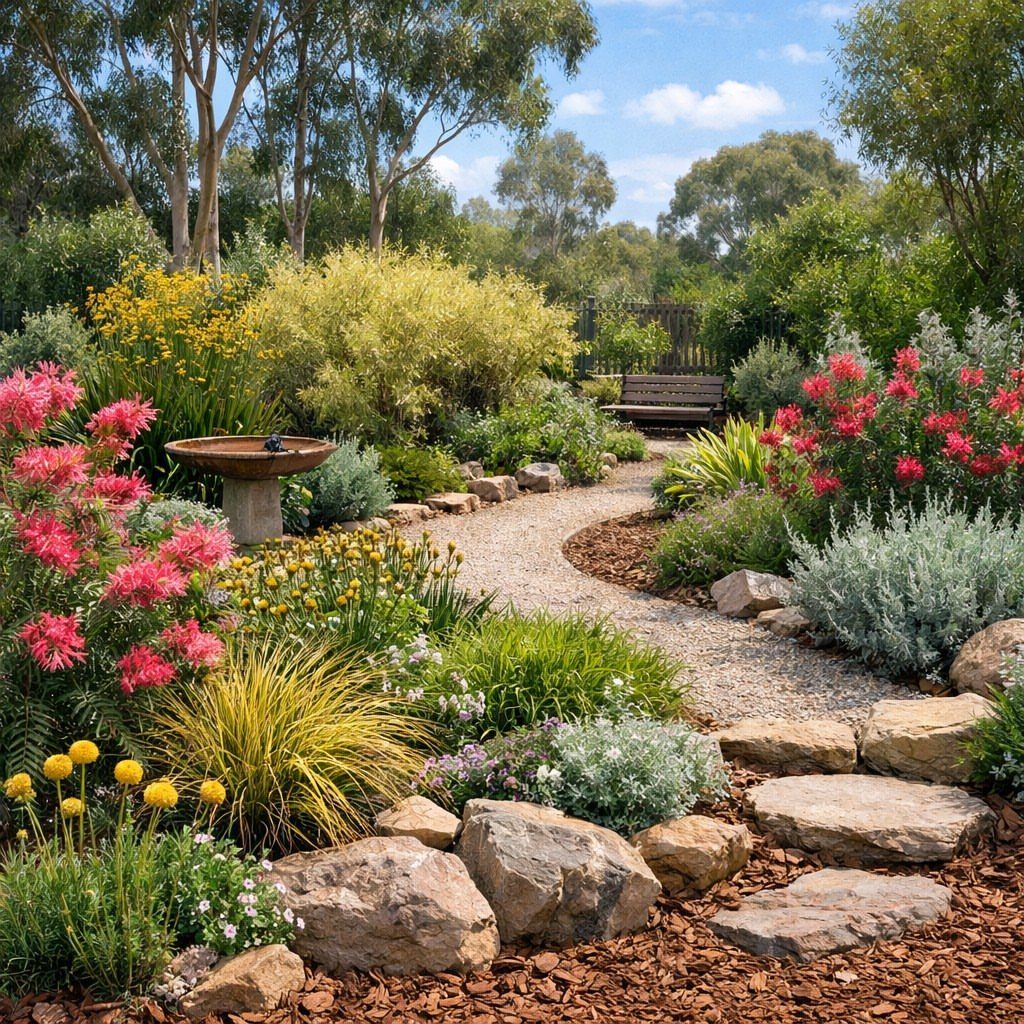
Large stone like flagstone and boulders rarely needs replacing, but loose stone is another story: gravel needs edging and a compacted base, and stray pieces get kicked into the lawn and beds, so expect to rake and top it up.
A gravel path and large boulders set among flowering plants give a garden bones that last through every season.
Every square foot you cover with path or stone is a square foot you don’t mow or water.
I’d keep the stone simple and let plants spill over the edges to soften it. A bench and a birdbath along a path give people a reason to walk out and stay a while, not just look from the window.
7. Perennial Flowers
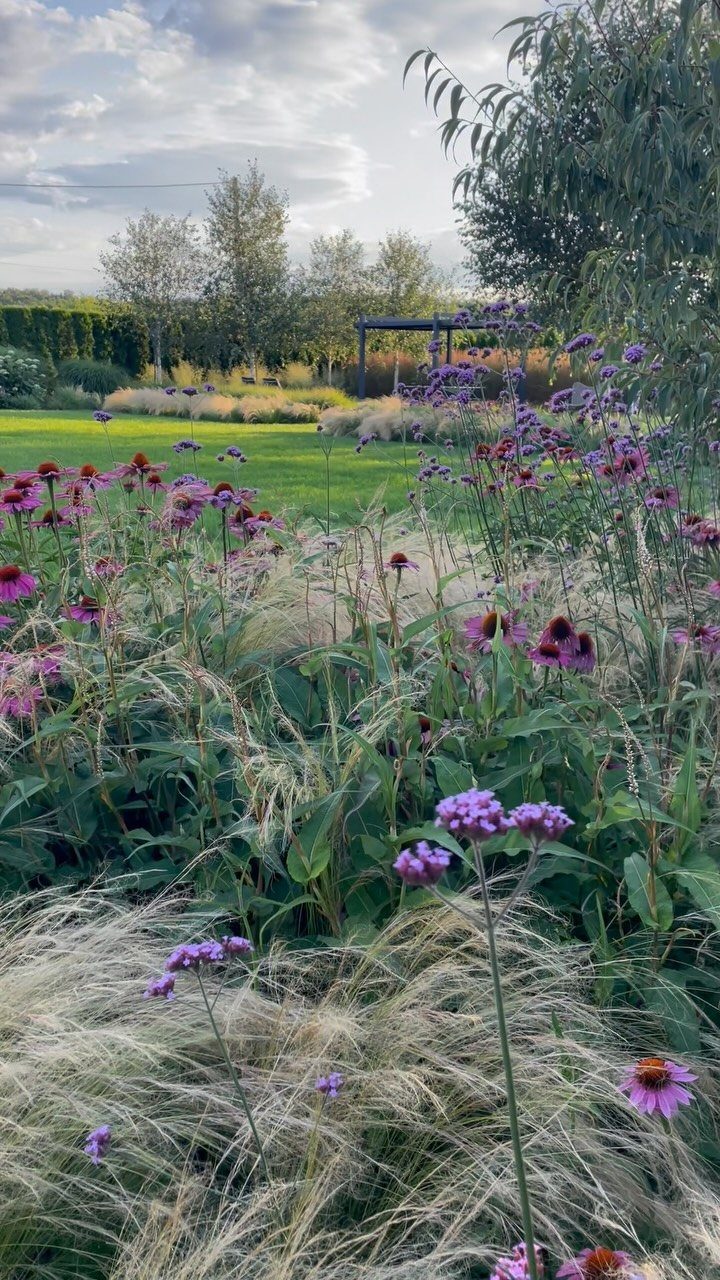
Coneflowers and ornamental grasses make a planting that comes back on its own, which is the whole appeal of perennials over annuals. Pay once, plant once, and the bed fills in without the yearly clearing and replanting that annuals demand.
I’d pair a bold flower like coneflower with an ornamental grass for texture, then repeat both across the bed so it looks deliberate and not like a handful of random plants.
Expect the first season to look thin, since young plants need time to spread. Give them room and be patient.
8. Ground Covers
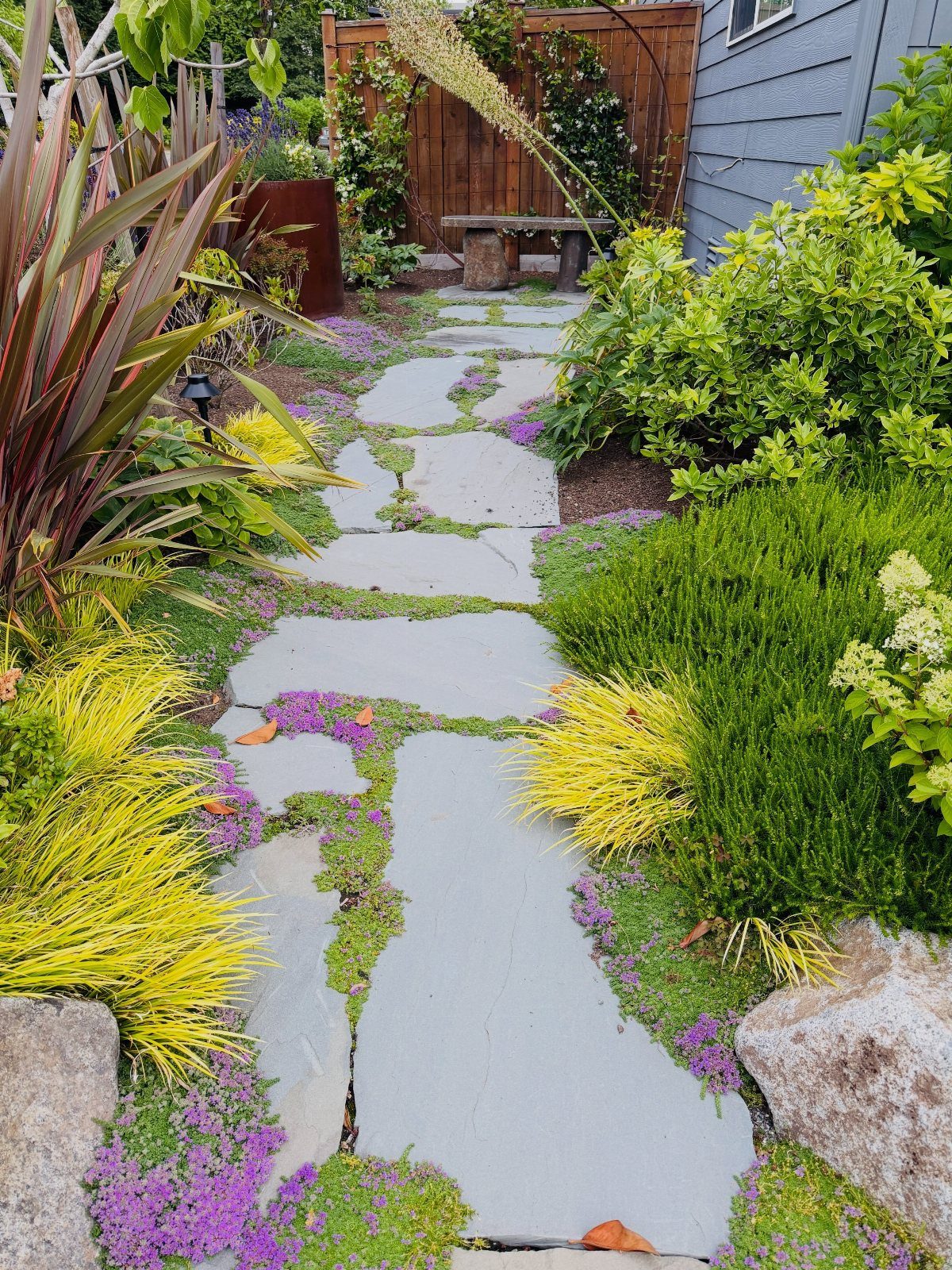
Ground cover tucked between flagstones and shrubs does the weeding for you. Dense, low plants shade the soil, so weeds have fewer bare spots to take hold.
Plant it in the gaps along a path and beside larger plants, and let it knit together over a season or two.
Until it fills in, you will still need to pull a few weeds by hand. I like a mix of purple and green foliage against grey stone, since the color holds up even when nothing is blooming.
9. Mulched Garden Beds
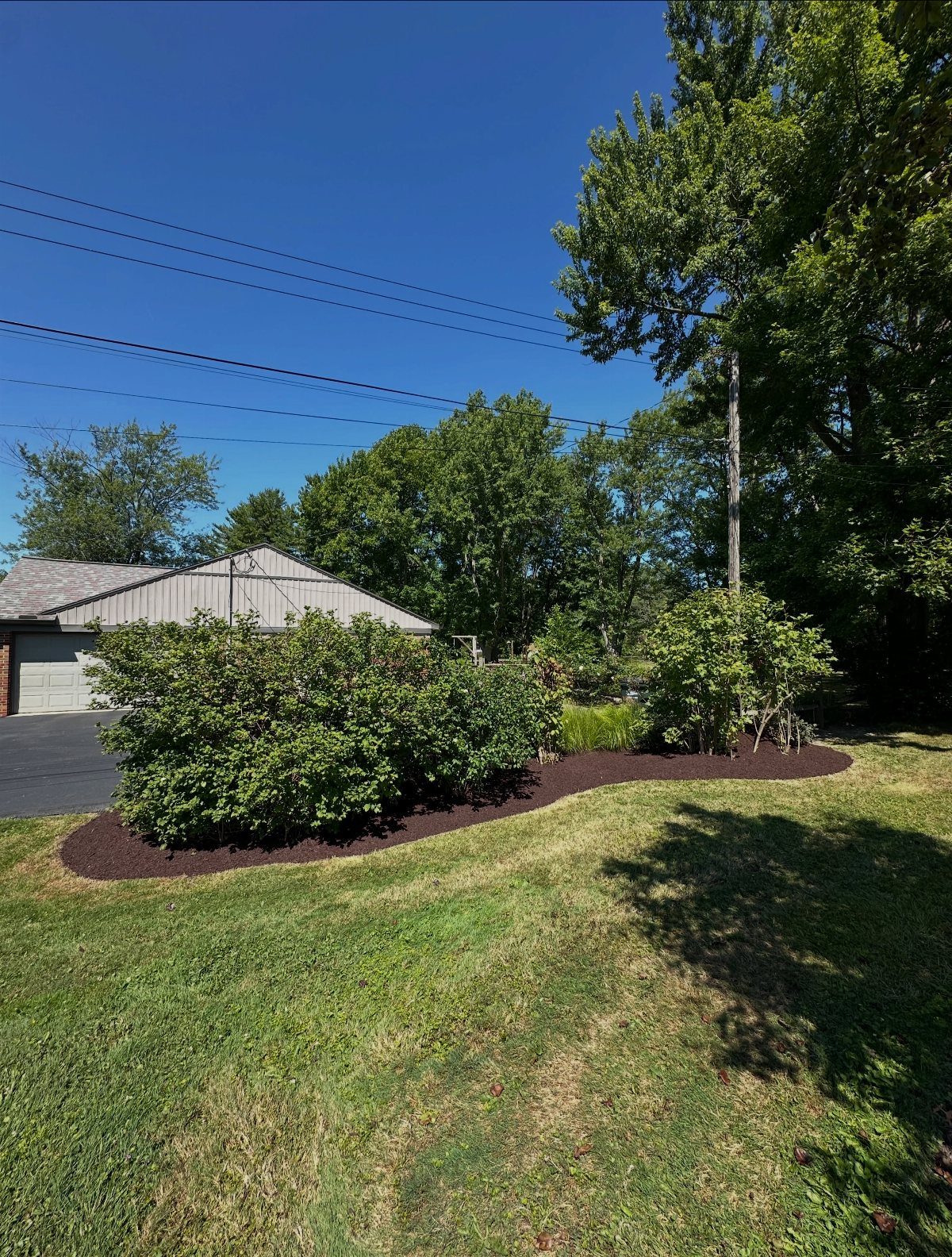
Dark brown mulch makes a clean frame around evergreen shrubs, and the contrast with a green lawn is what makes a yard look kept.
Spread it across the whole bed so no bare soil shows, since bare soil is where weeds start.
I’d keep the bed edge crisp and the shrub list short: a few evergreens give you almost no seasonal cleanup.
Mulch breaks down and thins out over time, so plan to top it up now and then. It is an inexpensive fix compared with most landscaping.
10. Wall-Lined Trees and Shrubs
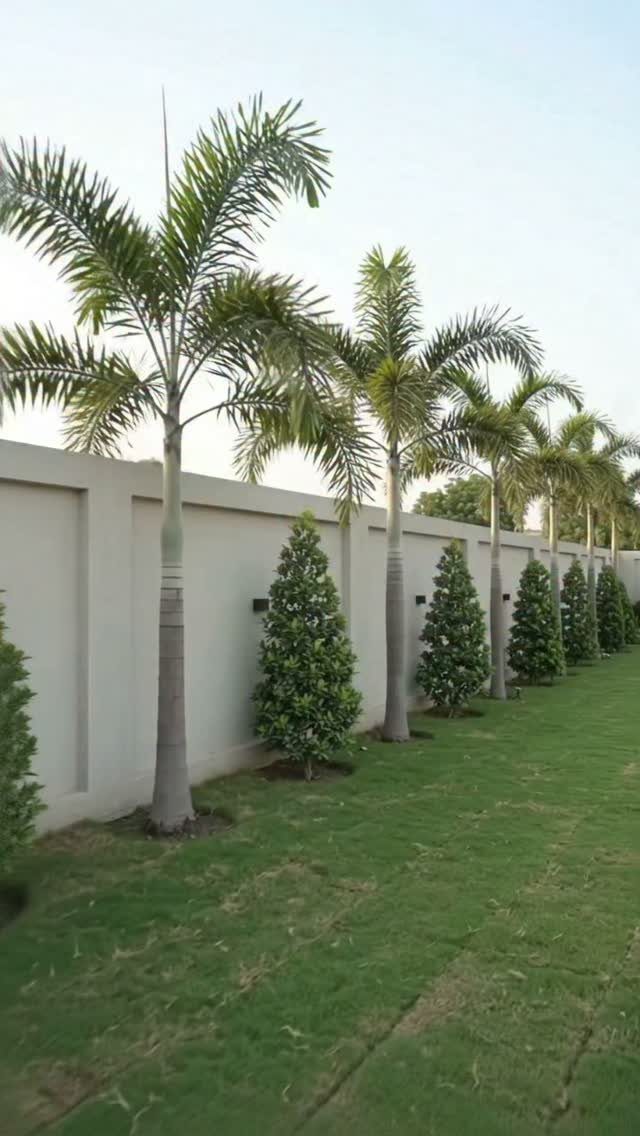
Planting along a boundary wall puts the wall to work. A plain white surface behind a row of palms and conical evergreens gives each plant a clean backdrop, so the shapes stand out.
Space the plants evenly and repeat the same pattern down the length of the wall; the regular rhythm is what makes it look designed.
Conical shrubs hold their form with little trimming, which suits anyone who wants structure without constant upkeep. Leave the lawn beside them open and simple.
Assess Site Conditions First
Water decides how easy a yard stays, so watch it before you spend anything.
Go outside during or right after a heavy rain and look for puddles that linger, soil washed out of place, beds that stay soggy, and runoff heading toward the foundation.
Before buying anything, I check how many hours of sun the spot gets, how fast water drains from the soil, how much open ground is left, and how the family actually uses the yard. Sketch them on paper first.
Water follows slope, so figure out where it will run before you lay a patio, a gravel bed, or a path.
Hard surfaces can push runoff toward the house, and fixing that after the fact costs far more than planning for it. In naturally wetter spots, choose plants that tolerate rain.
Gravel needs the same planning. Gravel with no edging spreads across the lawn, and gravel with no compacted base slowly sinks into the dirt.
Steel, stone, or concrete edging keeps it in place. Keep the stone colors to a narrow palette so the yard doesn’t look busy.
Maintenance Is Not Eliminated
No yard is truly hands-off, and I’d rather say so than promise otherwise. Good design prevents most of the work, but some always remains.
Leaves still pile up in gravel, weeds root in that litter, and stray stones get kicked into the lawn and beds.
Solid edging, a well-prepped base, good drainage, and the right stone size keep that upkeep down to a few minutes.
Synthetic turf skips the mowing, but dust and debris build up on it.
Turf also depends on the base: proper excavation, compacted aggregate, and drainage keep it smooth through freeze-thaw cycles. Hard edges of stone, steel, or concrete make it look intentional.
It makes the most sense for shady strips, dog runs, and highly visible entry lawns. You trade seasonal change and softness for consistency, and in a compact front yard I think that trade is often worth making.
Frequently Asked Questions
What is the most low maintenance landscaping?
Least work comes from a short plant list, mulched beds, and only a little lawn.
Evergreen shrubs under dark mulch rarely need pruning or weeding, and each square foot of path or stone is one less you ever mow or water.
Match the plants to your climate, soil, and sun, because that matters more than any single "maintenance-free" material.
What is the cheapest way to landscape?
Mulch is the cheapest fix, and it does a lot. Dark mulch spread over bare soil keeps weeds down and frames shrubs, and you only top it up now and then as it thins.
Replacing unused lawn with planting beds or ground covers also cuts the ongoing mowing and watering costs.
What are some good landscape ideas for beginners?
Start with a simple layout and a short plant list. A curved lawn edge, a row of ornamental grasses along the house, and a mulched bed with a few evergreens are all easy to plant.
How can I make my backyard easier to maintain?
Cut back the features that create repeat work, starting with lawn you don’t use.
Replace it with planting beds, ground covers, a patio, or edged gravel, and mulch any bare soil. Group plants that need similar water, and pick drought-tolerant ones, which need far less watering once established.
Can I still have color in a low maintenance garden?
Yes. For a spot you see every day, such as a front bed, annual zinnias give strong color, though you must replant them each year.
What can I replace grass with for a low-maintenance backyard?
Ground covers, mulch, gravel, planting beds, patios, and pavers all work. Match the replacement to how much foot traffic the area sees, how well it drains, how much sun it gets, and whether pets or kids play there.
Synthetic turf suits shady strips, dog runs, and visible entry lawns, but it needs a compacted base and hard edging, and it still collects dust and debris.