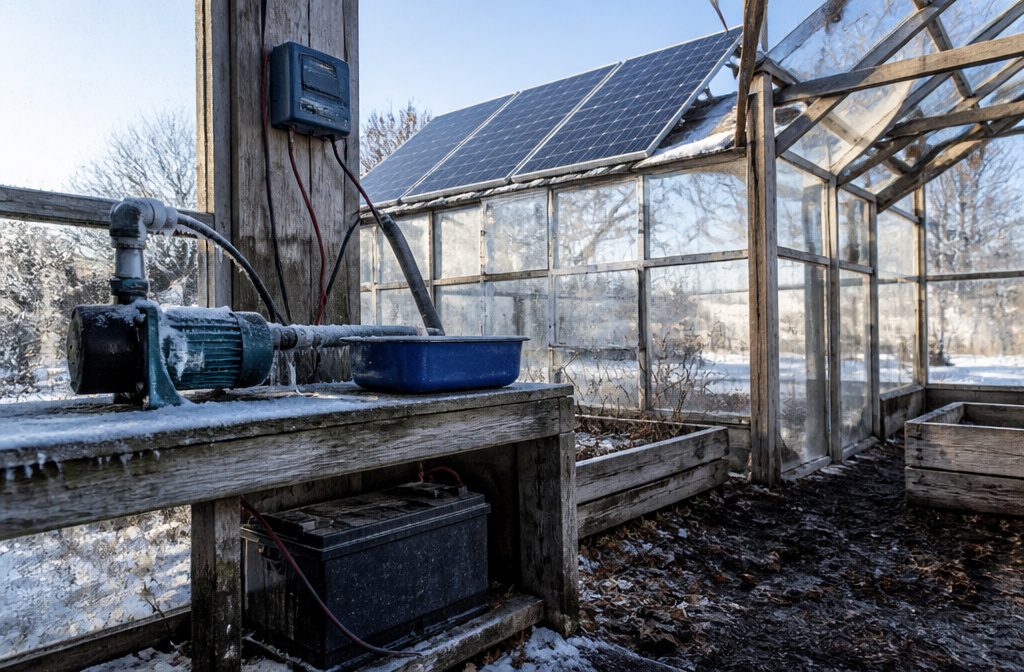
A solar setup for a greenhouse is a few panels, a charge controller and usually a battery that run fans, pumps, lights and sensors.
Heat is the exception: a 50 ft² greenhouse in Bangor, Maine needed about 100 kWh in January, which meant three 500 W panels, a battery and roughly $4,500.
What Solar Can Power
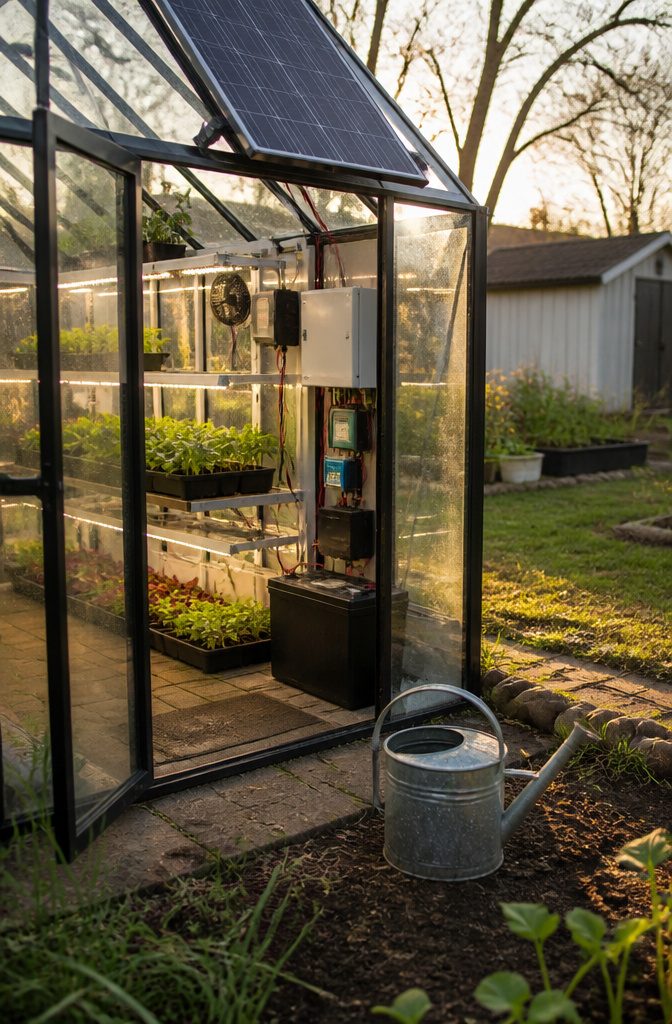
Solar handles the small, steady loads well: ventilation and circulation fans, small irrigation or misting pumps, LED grow lights, and the thermostats, timers and sensors that run them.
A solar panel for greenhouse work makes the most sense when the structure sits far from an outlet. Anything that must run after sunset needs a battery or a backup source.
Heating is a different animal. A homeowner in Charleston with a 100 square foot greenhouse wanted panels to run a space heater overnight, and the answer was blunt: it would cost tens of thousands of dollars.
An 8×10 greenhouse does fine on a thermostat-controlled 600-watt heater that only kicks on at 40°F, and I’d copy that on grid power. Skip PV heat; use the panels for fans and pumps.
Greenhouse and Site Conditions
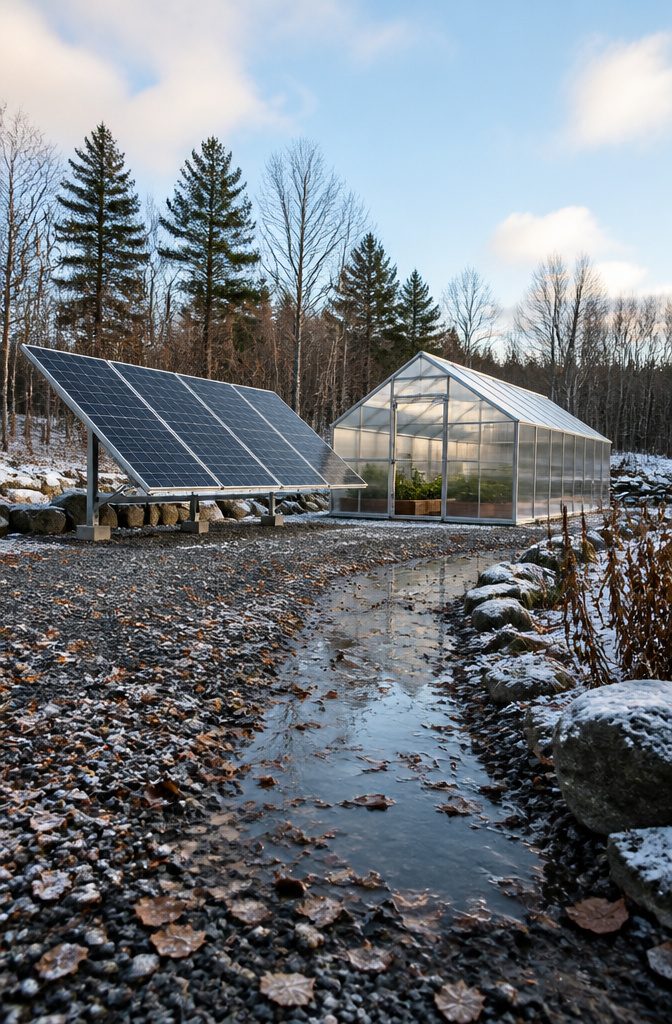
Four numbers set the size of a greenhouse solar system: floor area, wall material, the average outside low, and the temperature you want inside.
Take a 50-square-foot greenhouse in Bangor, Maine, where January lows average 7°F and plants want about 60°F. That 53-degree gap, with 5/8" polycarbonate walls, works out to roughly 100 kWh for the month.
Sunlight is the other half. Maine gets about 3.5 peak sun hours a day, so three 500 W panels yield a little over 5 kWh daily, enough for that load with room to spare.
Insulation shifts the math most cheaply. Twin-wall polycarbonate can save up to 50% of the energy compared with single-wall, and sealing gaps near the foundation costs almost nothing.
Panel Location and Type
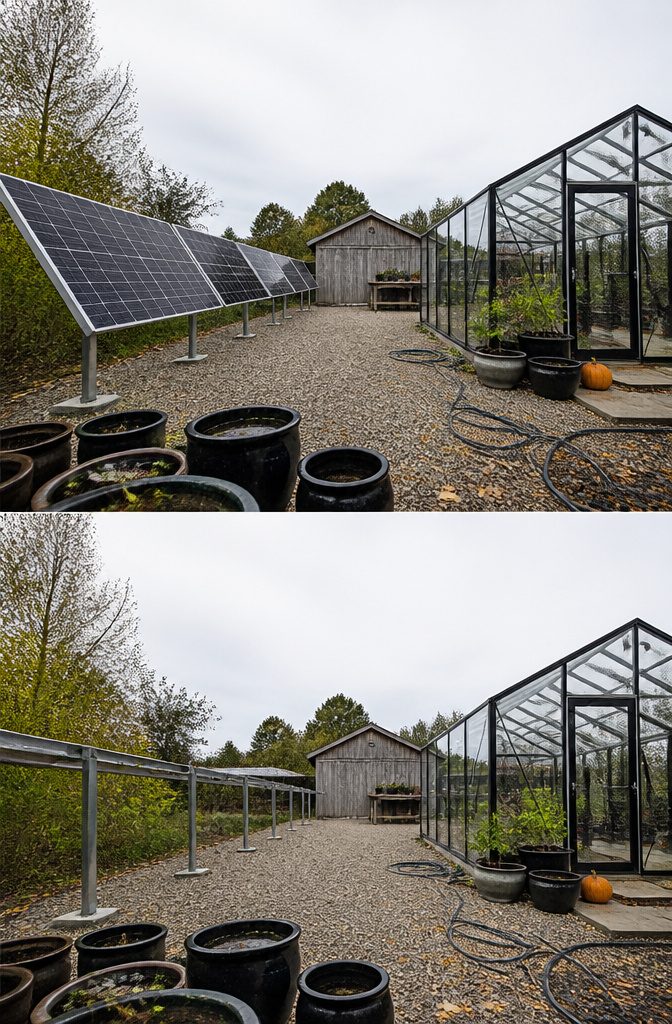
A separate ground rack beside the greenhouse is the setup I’d pick for most people.
It keeps shadows off the plants, and you can choose the tilt and direction without touching the structure. A nearby shed roof works too, and so does the house roof if it already runs on solar and has space.
Panels on the greenhouse itself only make sense if the frame can carry them, and they cut the natural light your plants get. If you go that way, light, flexible thin-film panels are the better fit.
A small greenhouse can run on foldable portable panels with a portable inverter, so you can carry them elsewhere when the heat isn’t needed.
Bifacial panels like the Aptos 440 W can yield up to 30% more energy by using both sides, but they should sit about 1 meter off the ground, which a rack makes easy. Photovoltaic glass passes useful light, but it’s rare and expensive.
Sizing Panels and Components
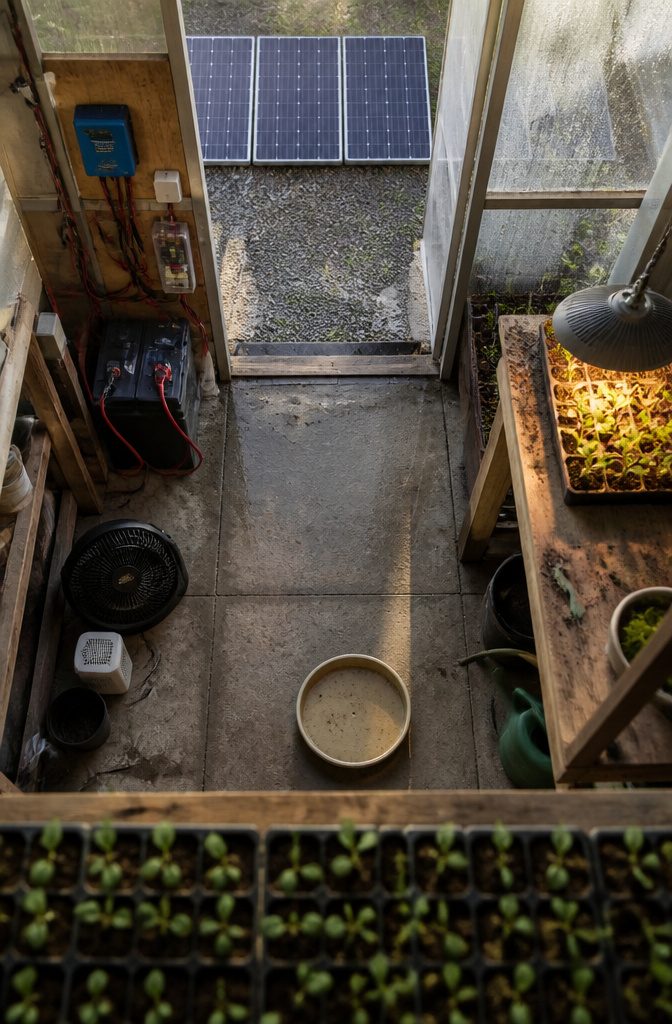
Daily watt-hours come from one multiplication: watts times hours of use.
A 150 W grow light running 6 hours uses 900 Wh, and 15 W of sensors running 8 hours adds 120 Wh. That makes 1,020 Wh, not the 1.3 kWh (1,295 Wh) some guides print for the same example, so check any total you copy.
Size the array from that number, then pad it for conversion losses, battery charging and cloudy stretches. Size for your darkest month, not July.
In Maine, three 500 W panels give a little over 5 kWh a day. For fans, pumps, lights and controls, 400 W may be enough.
The parts list: panels, charge controller, battery, wiring, fuses or breakers, and mounting. Add an inverter only if something runs on AC.
Storage, Controls and Safety
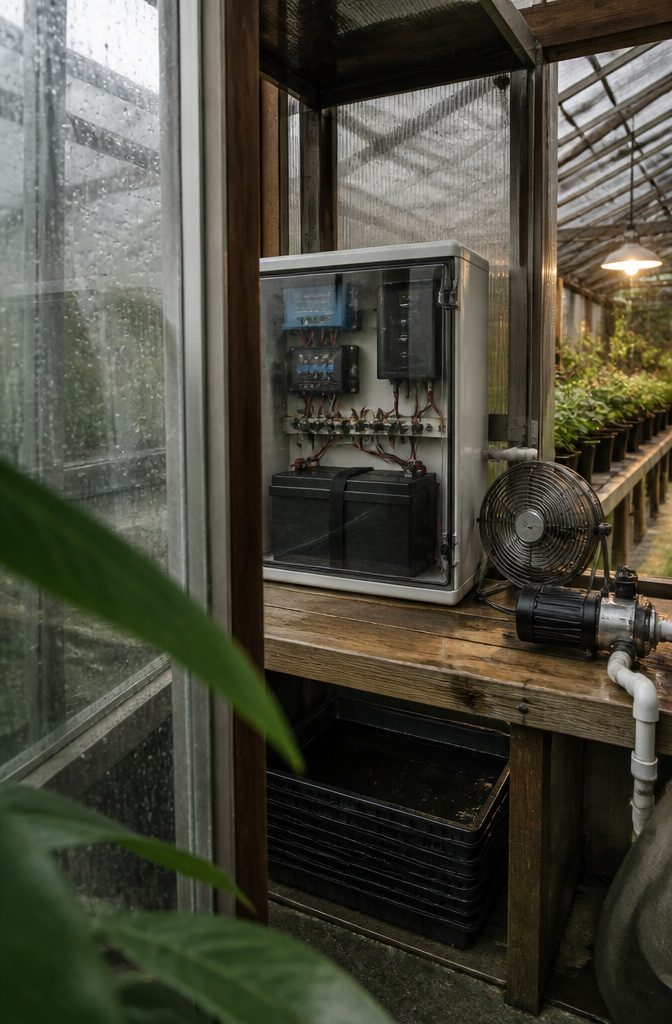
A battery only earns its place if something has to run after sunset or under heavy cloud.
A fan, pump or vent motor that works in daylight can run straight off the panel and controller, which saves the cost and the upkeep.
For night loads, start with daily watt-hours and the hours you need, then add a reserve.
Compare batteries by usable watt-hours, not amp-hours alone. The ECO-WORTHY 12 V 100 Ah LiFePO4 suits a mid-sized greenhouse, the Renogy 100 Ah AGM is the budget starter, and the KiloVault 3,600 Wh or BLUETTI AC300 at 3,072 Wh cover bigger loads.
Keep batteries, controllers and inverters out of drip lines and condensation, in a sealed enclosure.
Size cables for current, length and voltage drop, fuse each run, and use weather-rated connectors. Check local code and permits first; hire an electrician for AC wiring.
Heating and Heat Retention
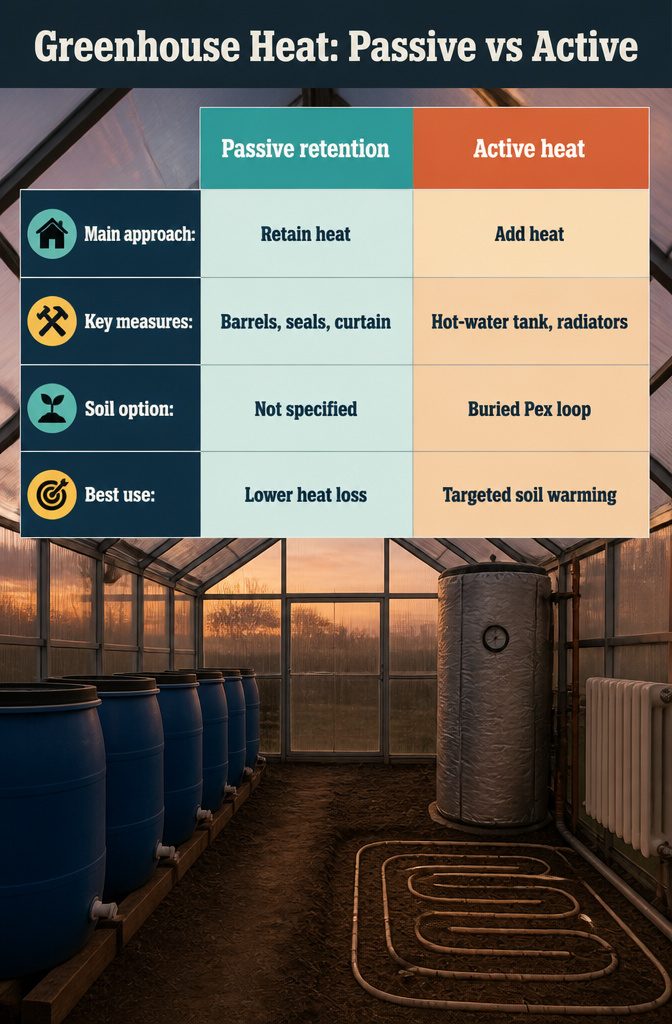
Electric heat is where a greenhouse solar system gets expensive fast.
A Maine setup with a 50 ft² greenhouse and 5/8" polycarbonate walls ran heating equipment drawing about 2,300 W and needed around 100 kWh in January, which took three 500 W panels and a battery, roughly $4,500 in all.
For most renters and first-time owners, PV heat is a poor deal.
Cut the load first.
Water barrels, sealing gaps and a night curtain over the walls and roof do more per dollar than any extra panel. Use mats for seedlings only.
If you want active heat, solar hot-water collectors feeding an insulated tank and radiators cost several thousand dollars. A loop or two of buried Pex can warm the soil by day.
Plant Light and Panel Placement
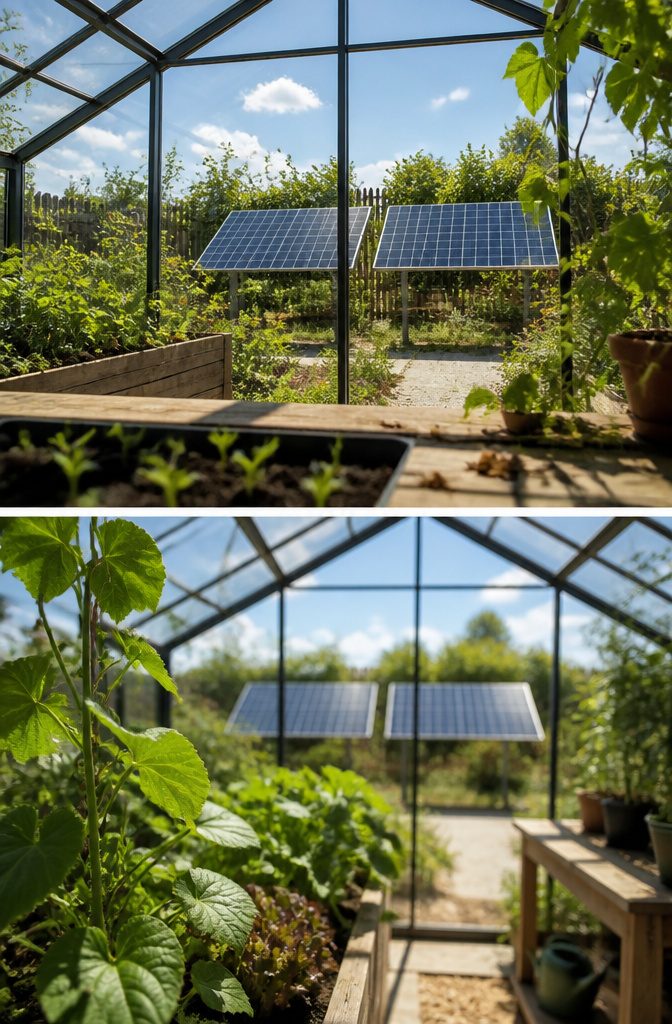
A solar panel for a greenhouse competes with the plants for the same thing: sunlight. Panels mounted on the roof cut the light reaching the crops, and thin-film panels, though light enough for a frame to carry, don’t fix that.
Semi-transparent panels let light through while still making power, but they cost more. Photovoltaic glass that passes the wavelengths plants use is still rare and expensive.
Production peaks May through August, which is also when plants want the most light, so a shaded roof costs you twice in the same months.
For a home greenhouse, I’d skip the roof.
Ground-mount the array beside the greenhouse and the glazing stays fully open to the sky. It also works when the frame can’t carry the weight or the house is too far away to tie in.
Running Without Sunlight
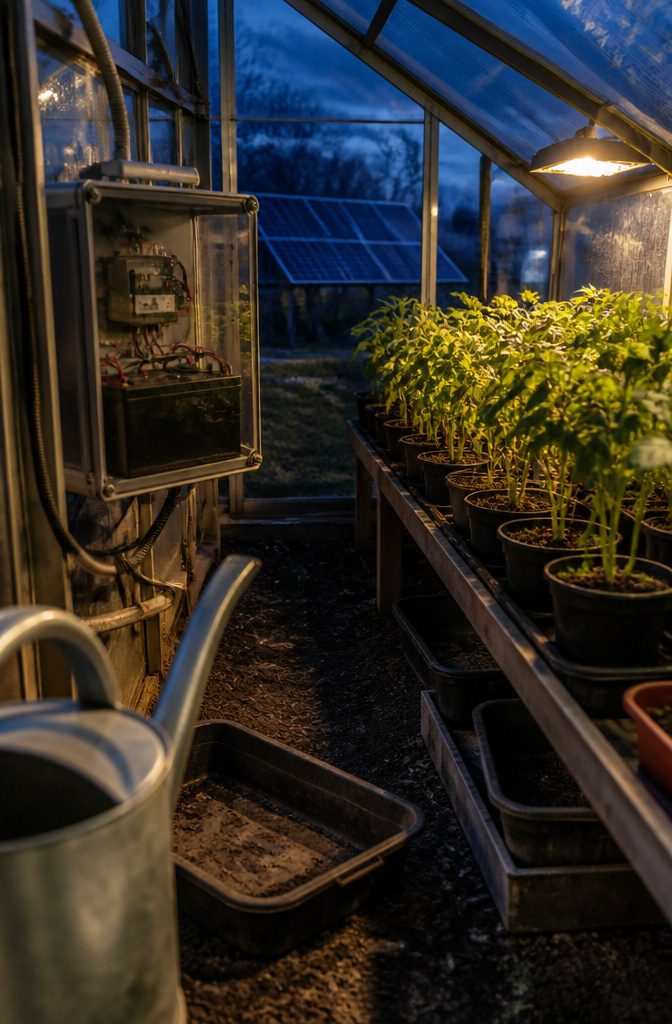
Panels make power only while the sun is up, so a greenhouse that needs heat or fans after dark has to bank daytime energy.
A battery is the usual answer: it carries a small circulation fan or a heater’s controls through the night and through a string of gray days.
In long winters or regions with frequent cloud, I would treat storage as part of the system rather than an add-on, because panels alone will leave you without power just when frost threatens.
Summer flips the problem.
Output is highest when the greenhouse runs hottest, so that surplus can run exhaust fans, vents and a sprinkling pump directly. Put cooling and watering on the panels first; they match the sun’s schedule and need the least storage.
Kits and Costs
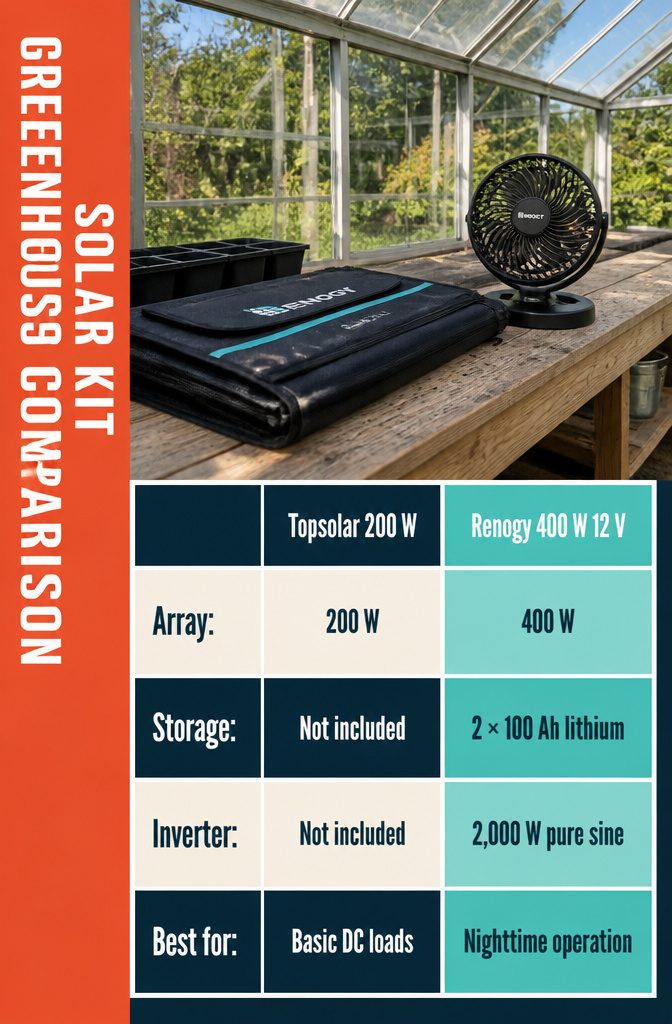
Three kits cover most small greenhouses, and the Renogy is the only one that runs after dark without extra purchases. Prices change by seller, so check the listing before you buy.
| Option | Array | Battery / inverter | Best for |
|---|---|---|---|
| Topsolar 200 W | 200 W | Not included | Fans, small pumps, basic DC loads |
| ECO-WORTHY 400 W 12 V MPPT | 400 W | Depends on configuration | Fans, pumps, lights, later expansion |
| Renogy 400 W 12 V | 400 W | 2 × 100 Ah lithium, 2,000 W pure sine inverter | Nighttime operation |
| Maine heating system | Aptos 440 W bifacial modules | 3,600 Wh KiloVault battery | Winter heat for 50 ft² |
| BLUETTI PV420 | 420 W, up to 23.4% conversion | Pairs with BLUETTI power stations | Portable, foldable panel |
The Maine setup cost about $4,500 and ran heating and lights on DC with no inverter.
That is the price of real winter heat, and upfront costs run high, so look into federal and state tax credits and utility rebates. For a fan and a pump, I’d buy the ECO-WORTHY and skip the rest.
Frequently Asked Questions
How many solar panels do I need for a greenhouse?
It depends on four numbers: floor area, wall material, the average outside low and the temperature you want inside.
For a 50 sq ft greenhouse in Bangor, Maine, three 500 W panels gave a little over 5 kWh a day, enough for that load.
For fans, pumps, lights and controls alone, 400 W may be enough. Size for your darkest month, not July.
How do I calculate how much solar power a greenhouse needs?
Multiply watts by hours of use for each device, then add the results to get daily watt-hours.
A 150 W grow light running 6 hours uses 900 Wh, and 15 W of sensors running 8 hours adds 120 Wh, for 1,020 Wh total. Pad that number for conversion losses, battery charging and cloudy stretches, then size the array for your location and season.
Is 400W of solar enough for a greenhouse?
It can be, for fans, pumps, lights and controls.
Panel wattage alone doesn’t settle it: daily energy use, local sunlight, battery charging and the season matter more. Heating is a different story and needs far more.
Can I power a greenhouse heater with solar?
Technically yes, but it gets expensive fast.
A 50 sq ft Maine greenhouse needed about 100 kWh in January, which took three 500 W panels and a battery, roughly $4,500. For most people, a thermostat-controlled heater on grid power is the better deal, with the panels saved for fans and pumps.
Cutting the heat load first with sealed gaps, water barrels and a night curtain helps more per dollar than extra panels.
Do I need a battery for a greenhouse solar system?
Only if something must run after sunset or under heavy cloud.
A fan, pump or vent motor that works in daylight can run straight off the panel and charge controller, which saves cost and upkeep. For night loads, compare batteries by usable watt-hours, not amp-hours alone.
Do I need an inverter for a greenhouse solar setup?
Only if something runs on AC power.
If your fans, lights, pumps and controls run on the system’s DC voltage, you can skip it. The Maine heating setup ran heat and lights on DC with no inverter.
Can a greenhouse solar system run at night?
Yes, with enough usable battery capacity or another backup power source.
Panels only produce while the sun is up, so the battery carries the load overnight and through gray days. In long winters or cloudy regions, treat storage as part of the system from the start.
What should I do with greenhouse solar panels in summer?
Put cooling and watering on them first.
Output peaks when the greenhouse runs hottest, so the surplus can run exhaust fans, vents and a sprinkling pump directly. These loads follow the sun’s schedule and need the least storage.
Do solar panels block light from greenhouse plants?
Panels on the roof do cut the light reaching your crops, and production peaks in the same months plants want the most light.
Semi-transparent panels let light through but cost more. For a home greenhouse, a ground-mounted array beside the structure keeps the glazing fully open to the sky.
Do I need a permit to put solar panels on a greenhouse?
Possibly.
Requirements vary by city and county, so check local code and permits before you build. Hire an electrician for any AC wiring.
Are solar panels worth the cost for a greenhouse?
For fans and a pump, yes, especially if the greenhouse is far from an outlet.
Upfront costs run high for anything bigger, such as winter heat at about $4,500 for the Maine system. Federal and state tax credits and utility rebates can offset some of it.
Do solar panels work in all climates for a greenhouse?
They work in most climates, though output varies with sunlight.
Even Bangor, Maine, with about 3.5 peak sun hours a day, can support a small system. In regions with long winters or frequent cloud cover, plan on battery storage.