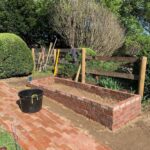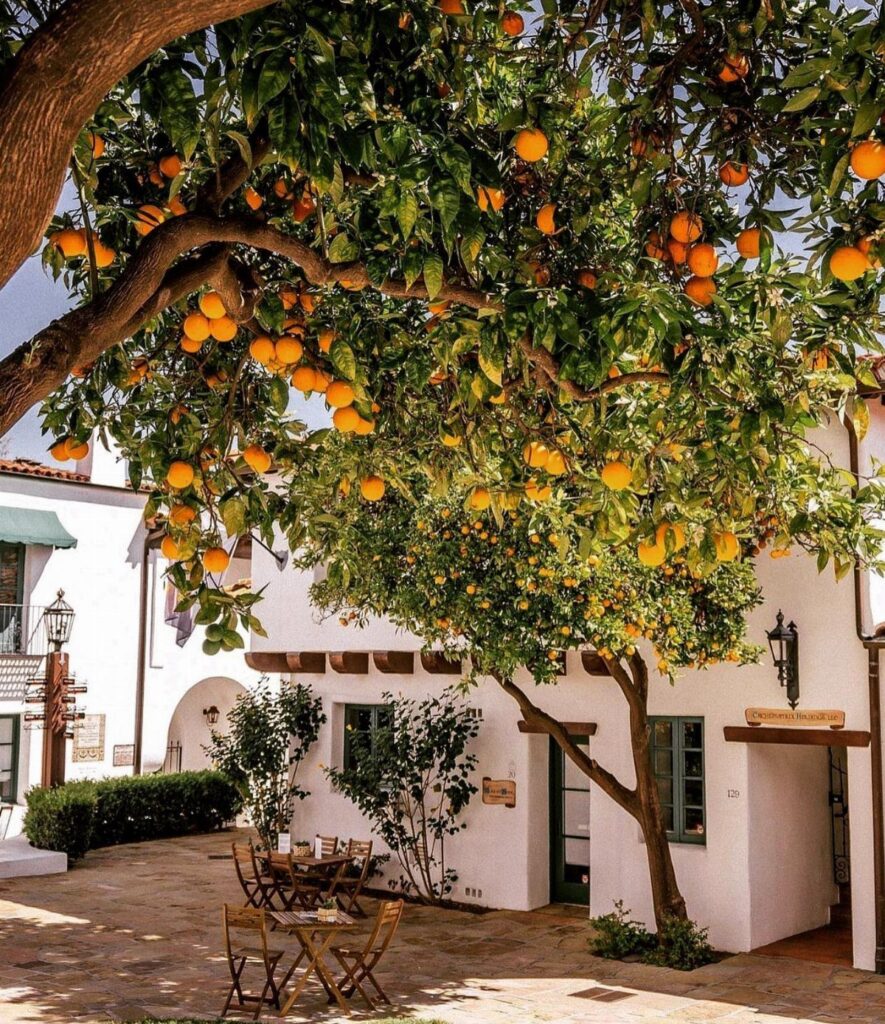
Fruit gardens range from a single container tree to rows of standard apples, trellised vines on wire, or berry bushes trained flat against a fence.
1. Edible Gardens
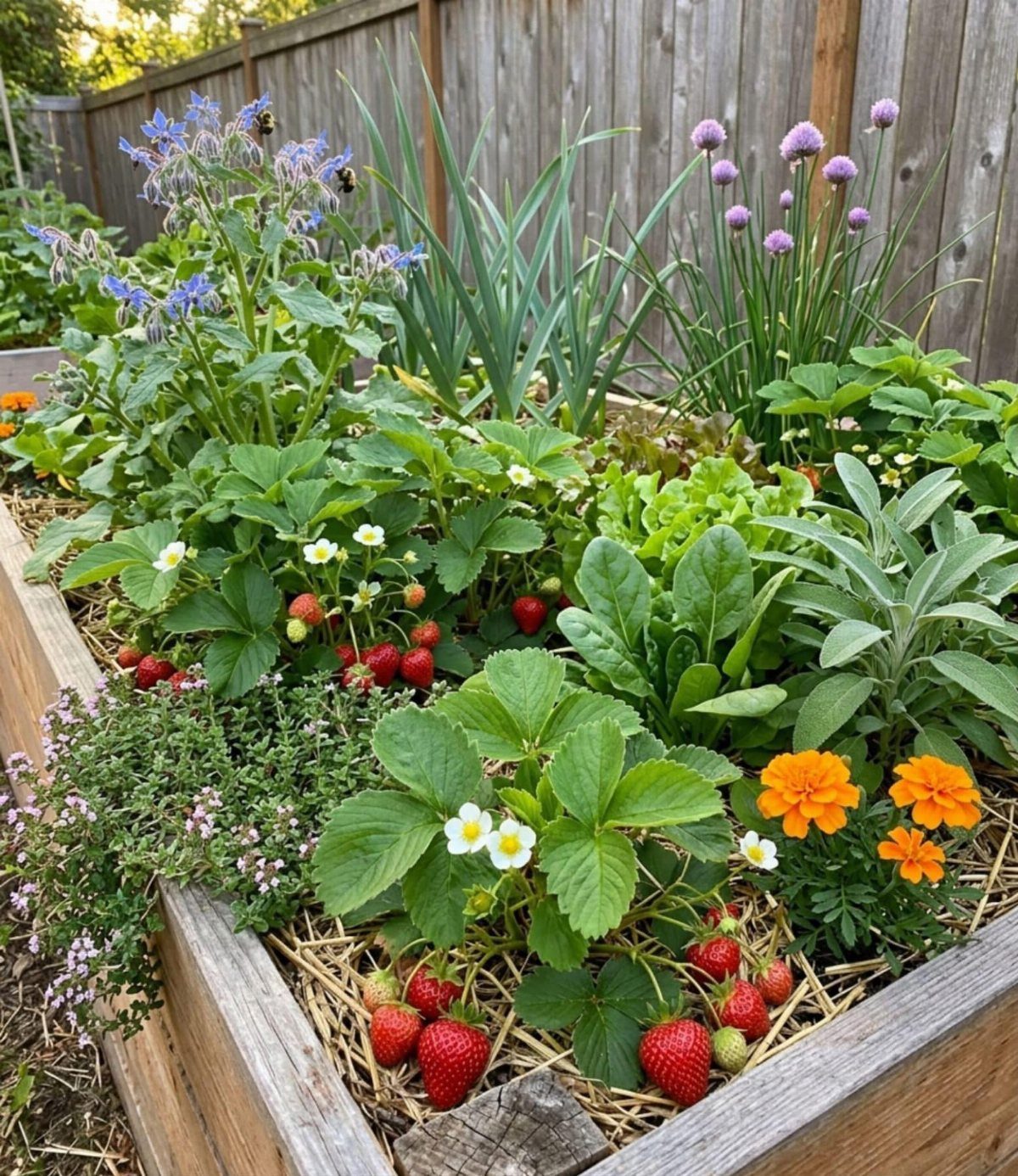
Ground-level fruit plants fill in beds or underplant trees without taking vertical space. Strawberries are the most common choice here; they spread to cover soil, produce for weeks in late spring, and need a full day of direct sun.
Plant them with enough room to spread in well-drained soil and they will fill the gaps by the second season.
Alpine strawberries stay more compact and fruit longer but yield less per plant. Both types pair well with herbs or flowers that share the same water needs, and the low habit keeps fruit within reach for picking and netting.
2. Rows of Fruit Trees
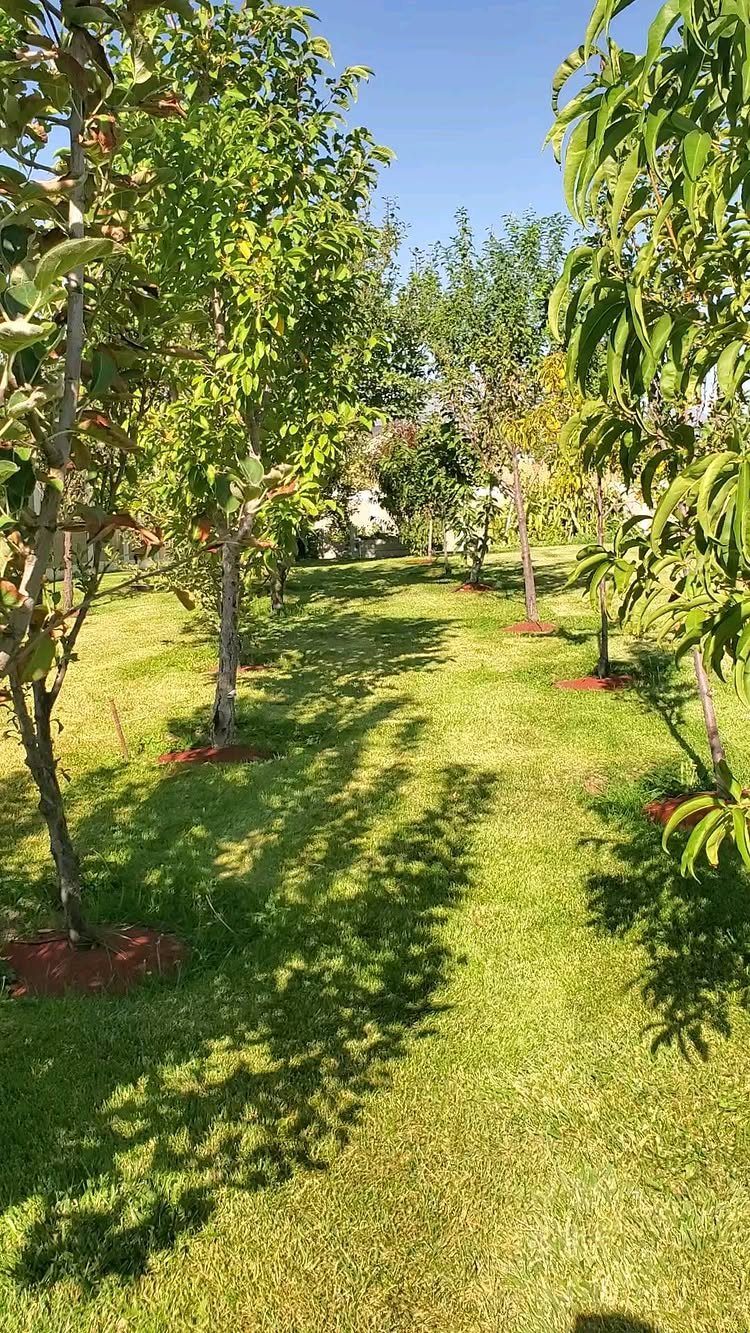
Planting fruit trees in straight rows turns the orchard into a design feature and keeps spacing consistent for mowing and access.
Standard trees need wider spacing between trunks; semi-dwarf varieties fit closer together. Mulch circles at the base hold moisture and mark each tree, and the repeated rhythm works as a screen or property line when the canopy fills in.
Choose one variety for a uniform look or mix stone fruit and apples to spread the harvest through summer and fall. Rows make it easier to run drip lines and prune from a consistent angle.
3. Trellised Fruit Vines
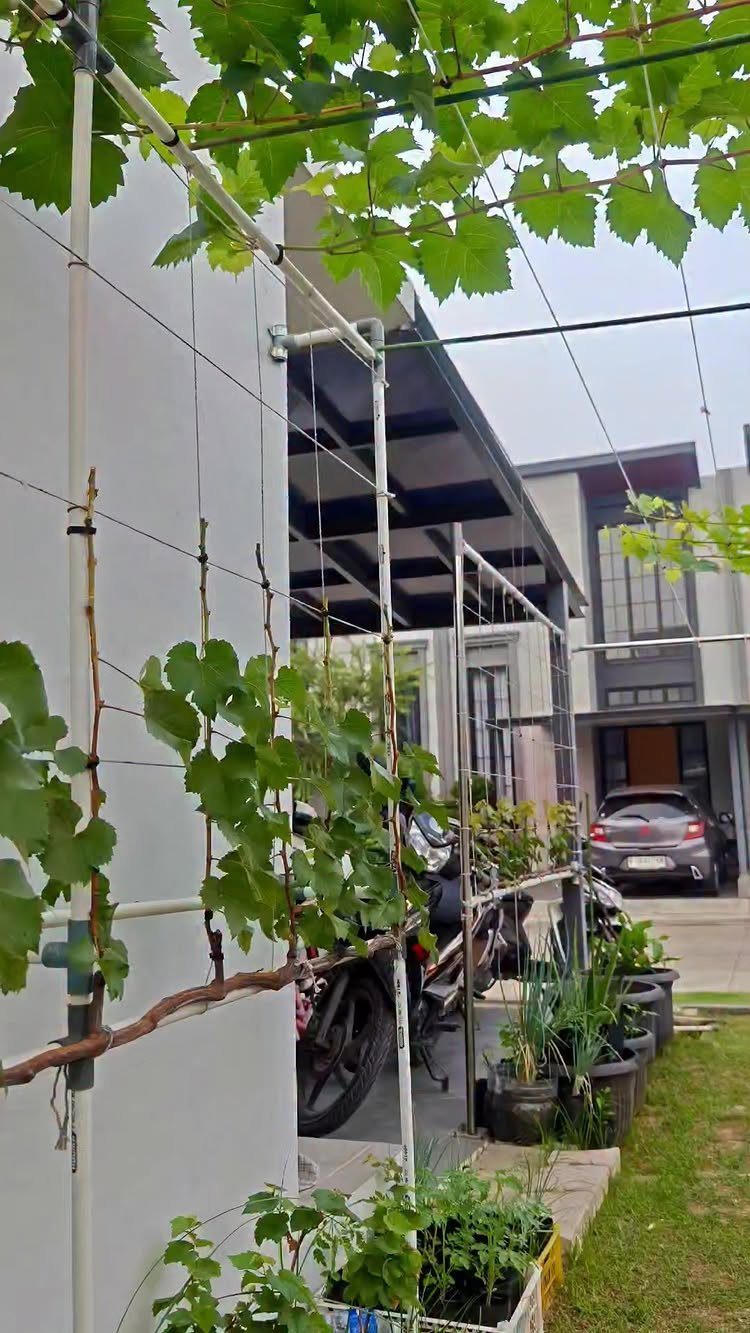
Vining fruit trained against a wall or fence doubles production in a narrow space. Grapes are the most forgiving option; they tolerate pruning mistakes and fruit on second-year wood, so a new vine yields in year three.
Set vertical wires or a rigid frame at regular intervals and tie canes horizontally as they grow. Kiwi and passionfruit work the same way but need more water and a longer season.
A trellis also warms the fruit by reflecting heat off the wall, which matters in cooler climates where late-season ripening decides whether the crop is worth it.
4. Protect Fruit from Wildlife
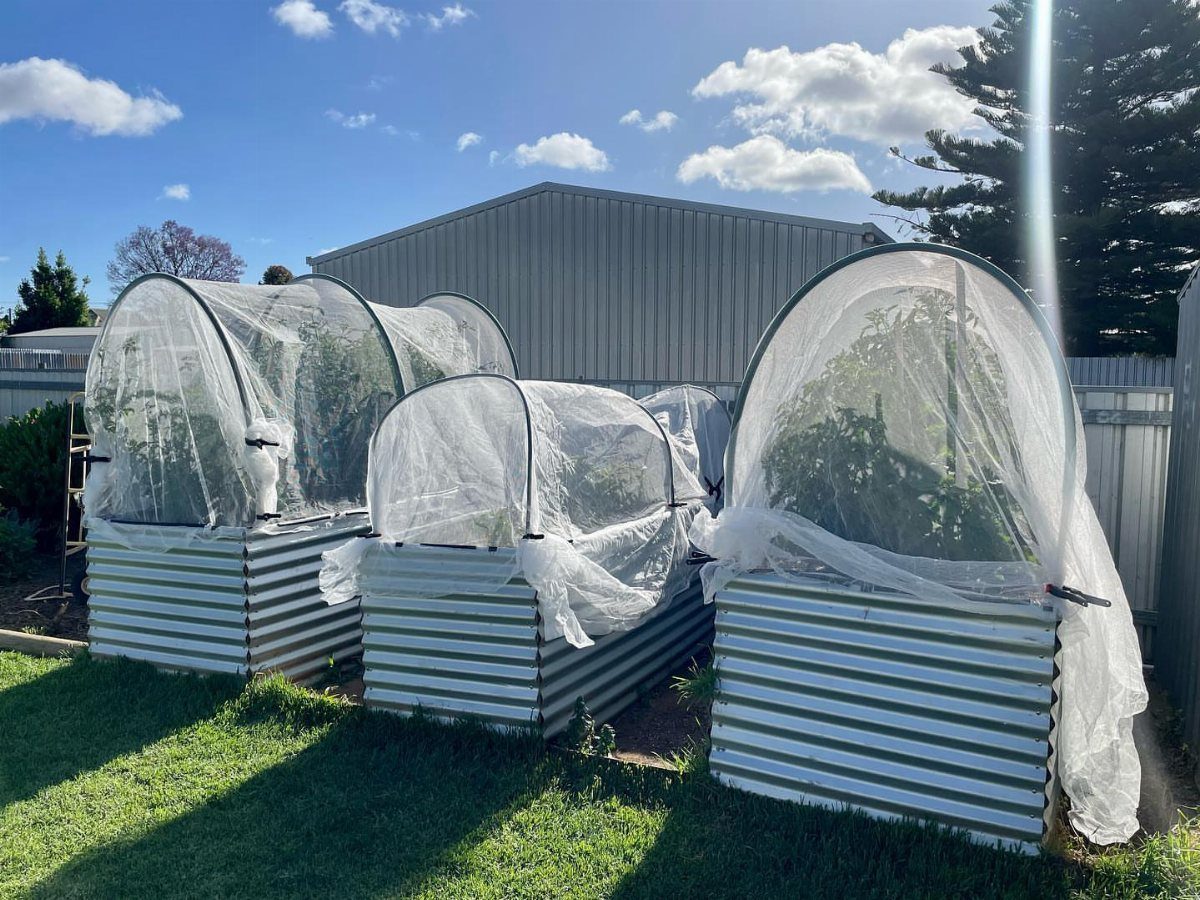
Netting over beds or individual plants keeps birds, squirrels and deer from taking the crop before you do.
The mesh needs to sit high enough that animals cannot reach through it to fruit below, and anchored at the edges so nothing slips underneath.
Hoops made from PVC or metal conduit hold the fabric off the plants and make it easier to lift one side for watering or harvest.
This setup works best for low-growing fruit like strawberries and blueberries. Tree fruit needs taller netting or individual bags over clusters, which takes more time but stops the same problem.
5. Organic Mulch Around Fruit Trees
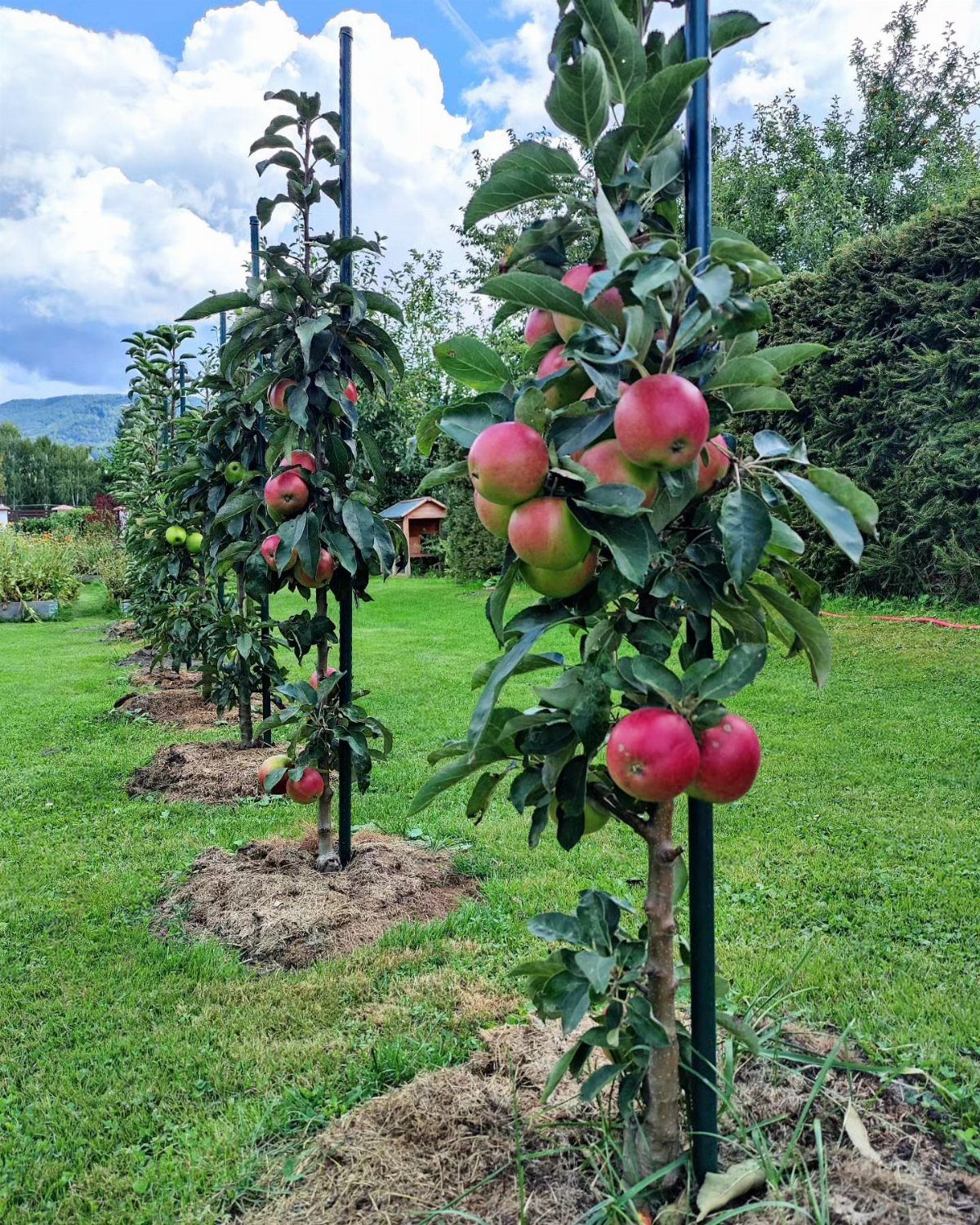
A thick layer of wood chips or shredded bark around the trunk holds soil moisture, cools roots in summer, and cuts down on weeding.
Keep the mulch back from the trunk itself to avoid rot and rodent nesting. Organic mulch breaks down over a year or two, so it needs topping up, but that breakdown feeds the soil and improves drainage in clay.
It also gives the planting a finished edge without permanent borders. Skip dyed mulch; the color fades fast and some dyes leach into soil where fruit trees will pull them up into the root zone.
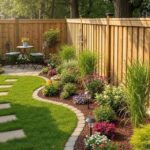
6. Design Mud-Free Paths
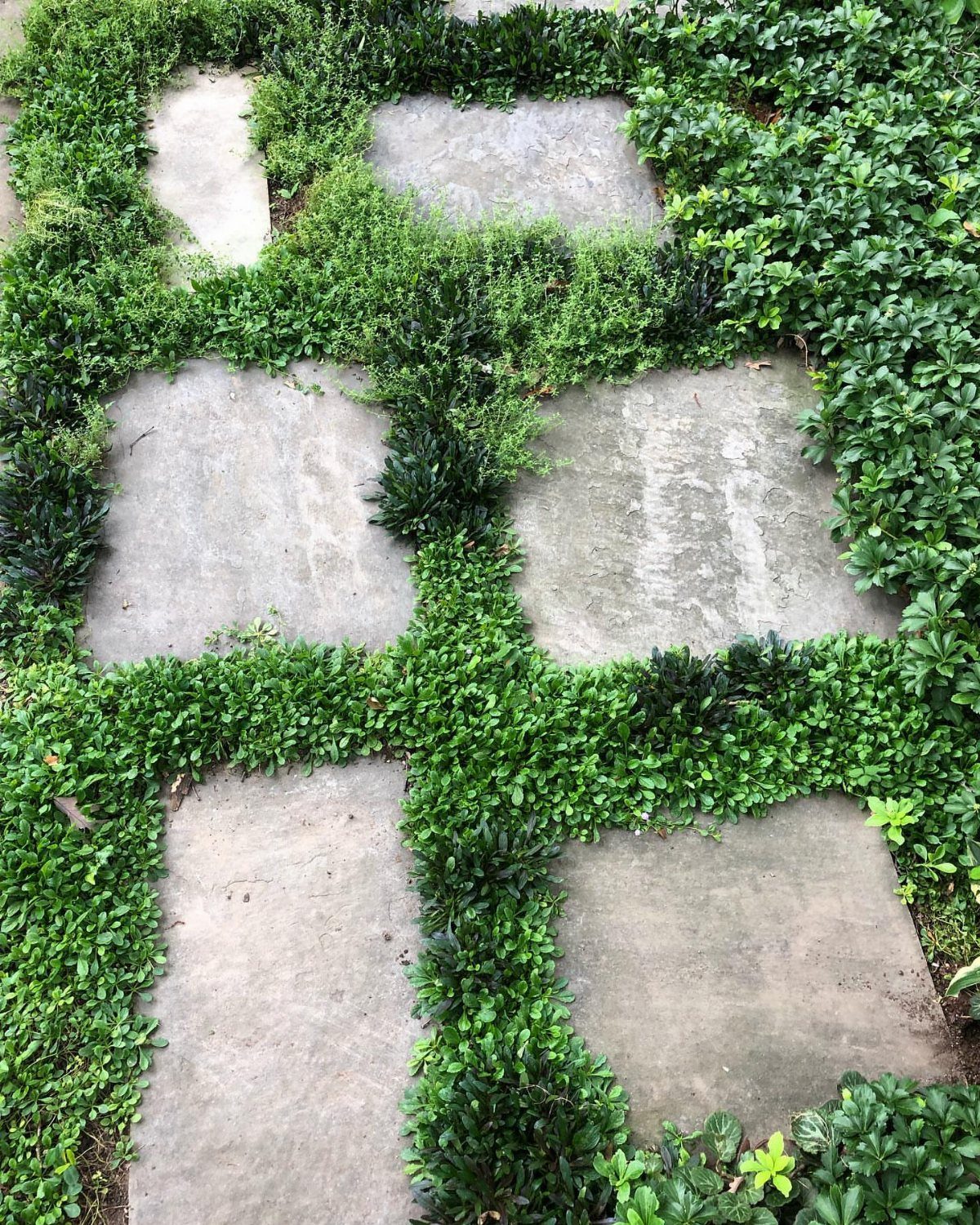
Pavers, gravel or stepping stones between beds keep feet dry and make it possible to harvest after rain without compacting wet soil.
Stone or concrete slabs can sit directly on leveled ground or rest in a sand base for stability. Gravel paths drain faster but need landscape fabric underneath to stop weeds from coming through.
Both options last years without maintenance and you can pull them up if the layout changes. Grass paths look softer but turn to mud in wet seasons and need mowing, which adds time when the fruit itself already demands attention.
7. Espalier Fruit Trees
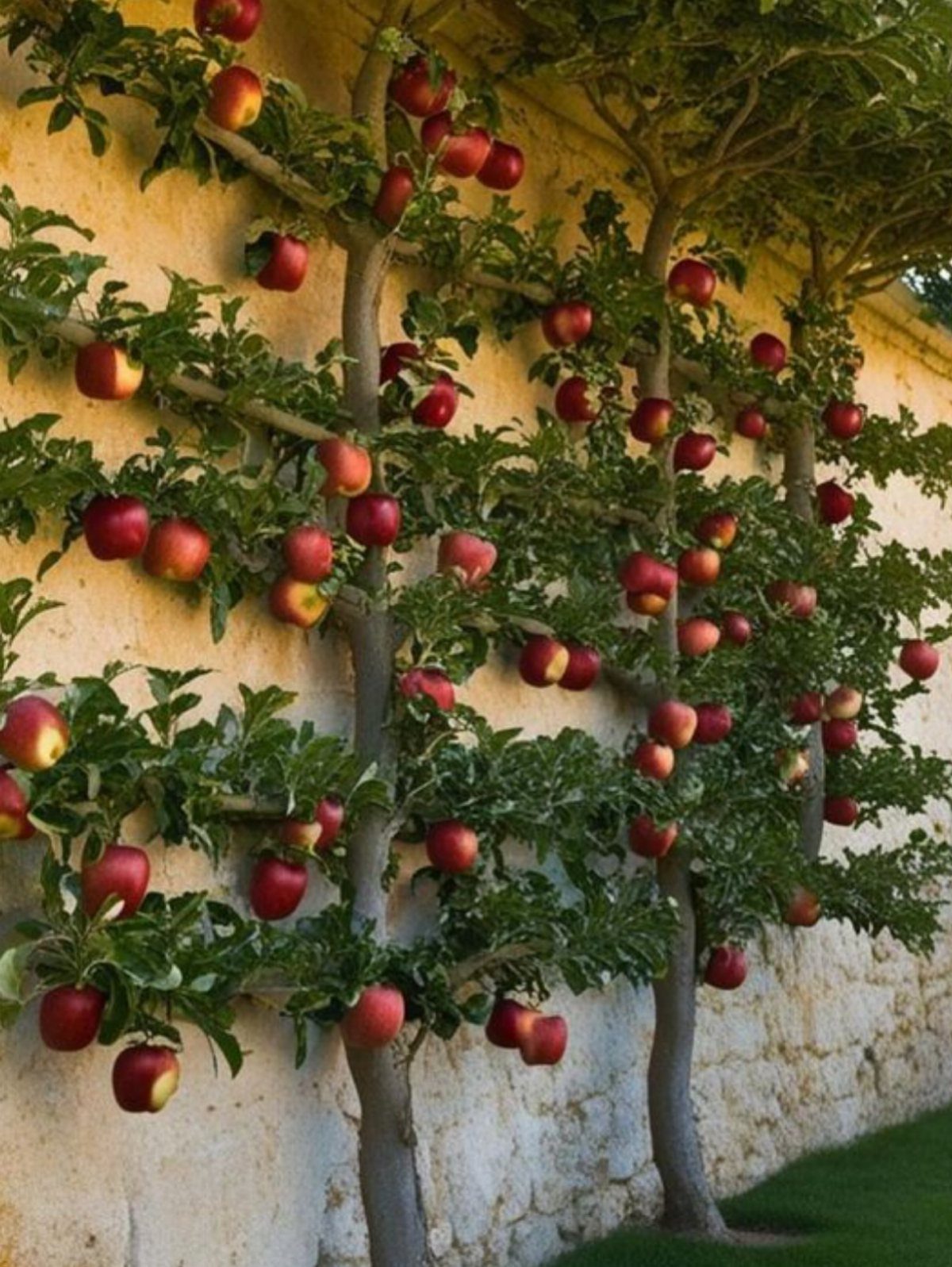
Branches trained flat against a wall or fence put fruit within easy reach and turn the tree into a living screen.
You tie new growth to horizontal wires or a fixed frame, pruning out anything that grows forward or back to keep the silhouette tight against the support.
This method works best with apples and pears, which fruit on short spurs that tolerate heavy pruning.
The flat shape captures heat from the wall and ripens fruit faster in climates where cool nights slow the season. It takes more pruning time than a free-standing tree but uses half the ground space and looks deliberate year-round.
8. Columnar Fruit Trees
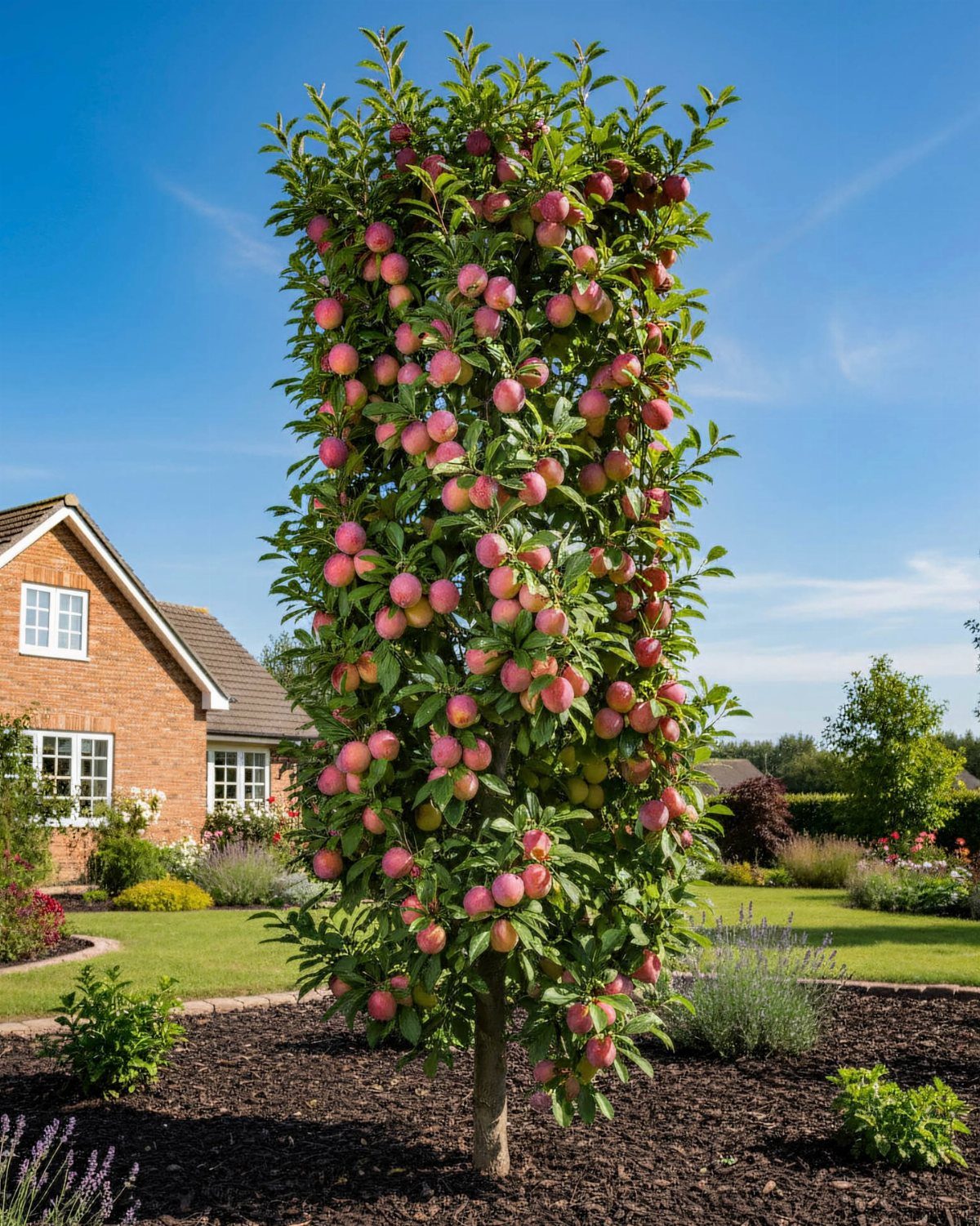
A columnar tree grows straight up on a single stem with short side branches, so it fits in narrow beds or along a path without spreading into walking space.
Apples are the most common columnar fruit; the trees stay narrow and upright at maturity. Plant them close together for a living hedge or use one alone as a vertical accent.
They fruit on spurs along the main trunk and need full sun but no staking once established. The narrow habit means less total yield per tree, but you can fit several in the space one standard tree would take.
9. Container Fruit Trees
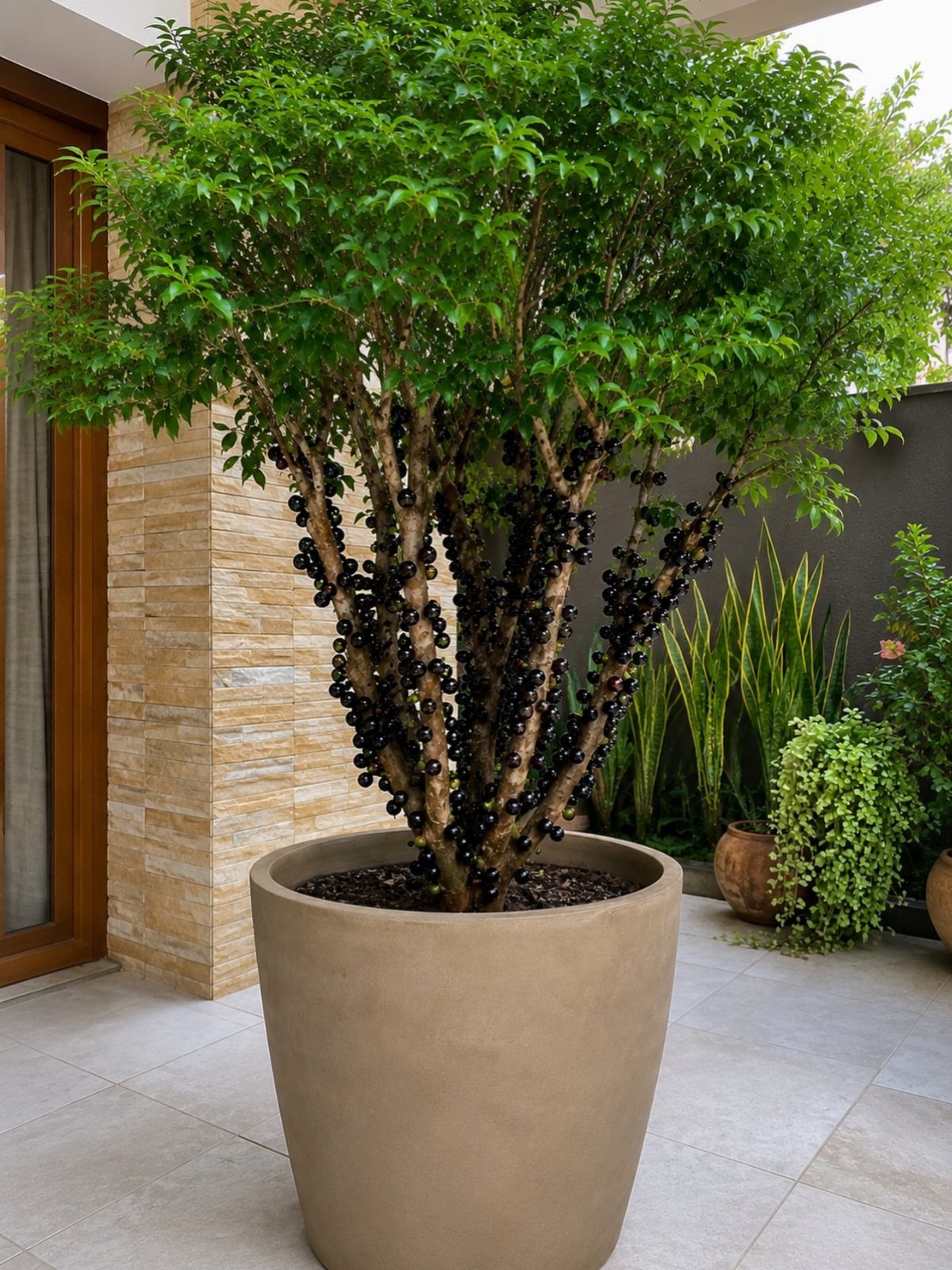
Dwarf fruit trees in large pots go where the sun is best and come inside if frost threatens the bloom.
The container needs to be large enough to support root growth and hold enough moisture between waterings. Citrus, figs and berries adapt well to pots; stone fruit and apples work but need annual root pruning to stay healthy.
Use a soil mix that drains fast and feed more often than you would in the ground, because water leaches nutrients through the bottom.
Containers give full control over soil type, which matters when the ground is heavy clay or the plant needs acid conditions.
10. Bordered Tree Wells in Lawn
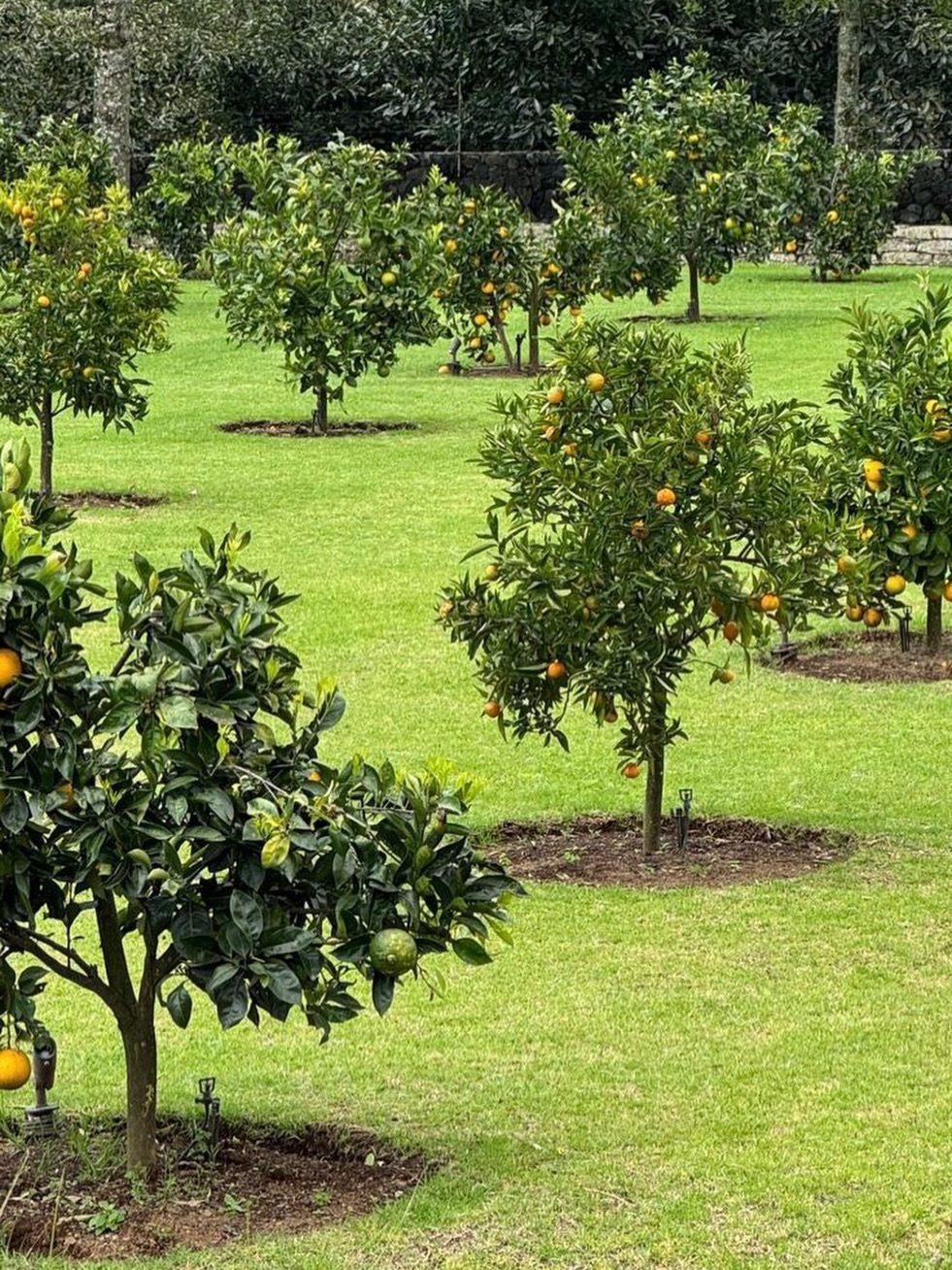
A raised ring of stone, brick or metal around the trunk keeps grass back from the root zone and gives each tree a defined mulch bed without breaking up the lawn.
The border holds organic mulch inside and stops mower blades from hitting the bark, which prevents wounds that invite disease.
Size the circle wide enough that the canopy will eventually shade most of it; a small ring looks odd under a mature tree.
This setup works best with citrus or other trees that fruit young and stay compact, so the lawn stays open while the fruit is within reach. The border also marks drip lines if you run irrigation.
11. Hanging Strawberry Planters
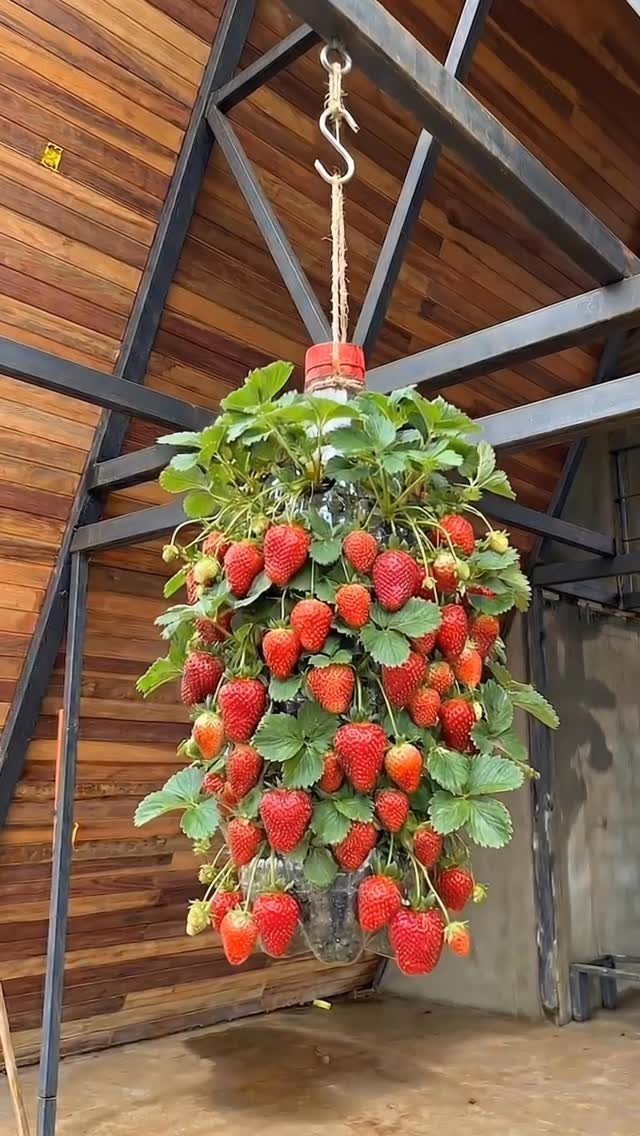
Suspending strawberries lifts the fruit off the ground and away from slugs, and the planter drains fast enough that roots stay healthy through frequent watering.
A hanging basket with drainage holes and a coconut coir or fabric liner works best; plastic alone traps too much moisture at the bottom.
Plant several crowns per basket in a light potting mix and hang it where it gets plenty of direct sun.
The height makes it easy to check ripeness and pick without bending. Water daily in hot weather; small containers dry out faster than ground beds, and strawberries stop fruiting when they get too dry.
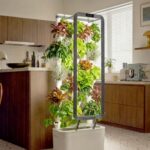
12. Vertical Shelving Fruit Display
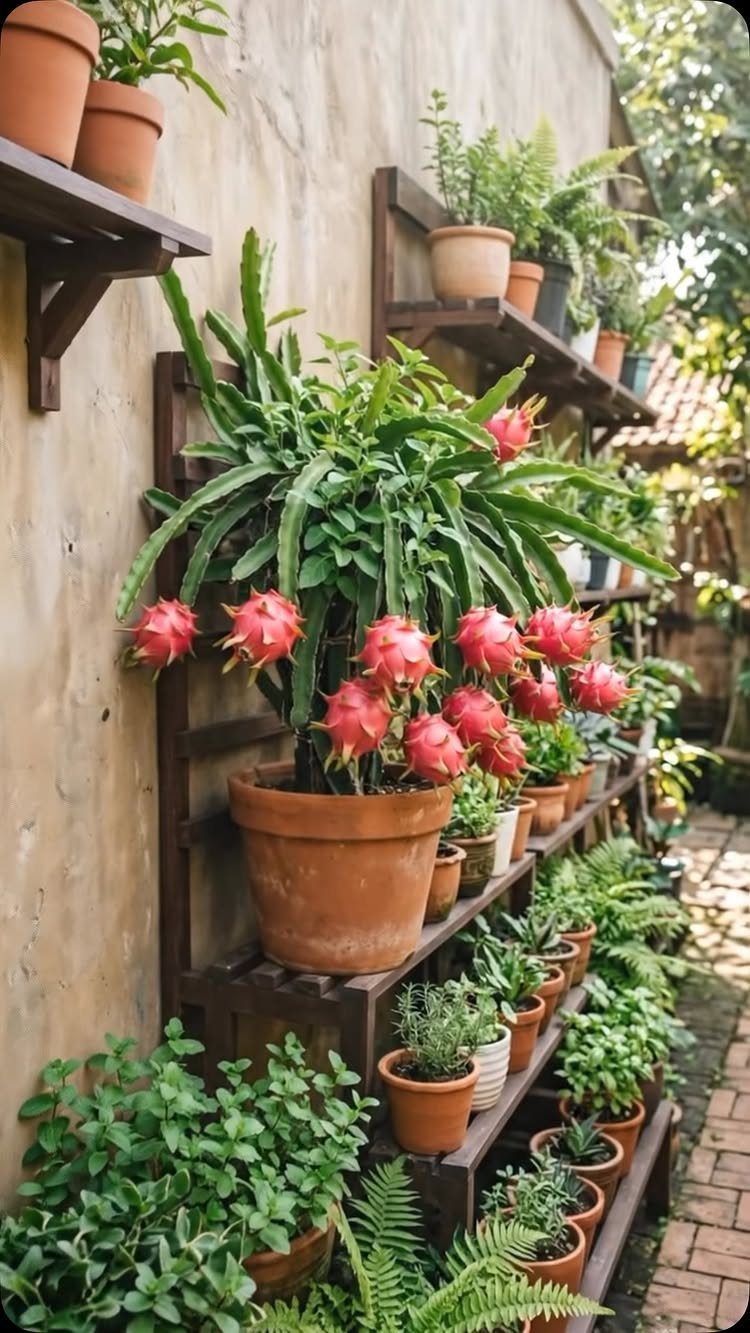
Stacked shelves hold multiple potted fruit plants in the footprint of one, and the open design lets each pot get light from the side.
Dragon fruit and climbing berries work well here because they grow upright and do not need width to spread.
Each shelf needs drainage so water does not collect and rot roots, and the top tier should sit below head height for easy access.
Use terracotta or fabric pots that breathe; plastic holds too much moisture when plants sit close together. This setup suits a sunny wall or patio corner where ground space is limited but vertical room is open.
13. Fruit Trees Along Patio Seating
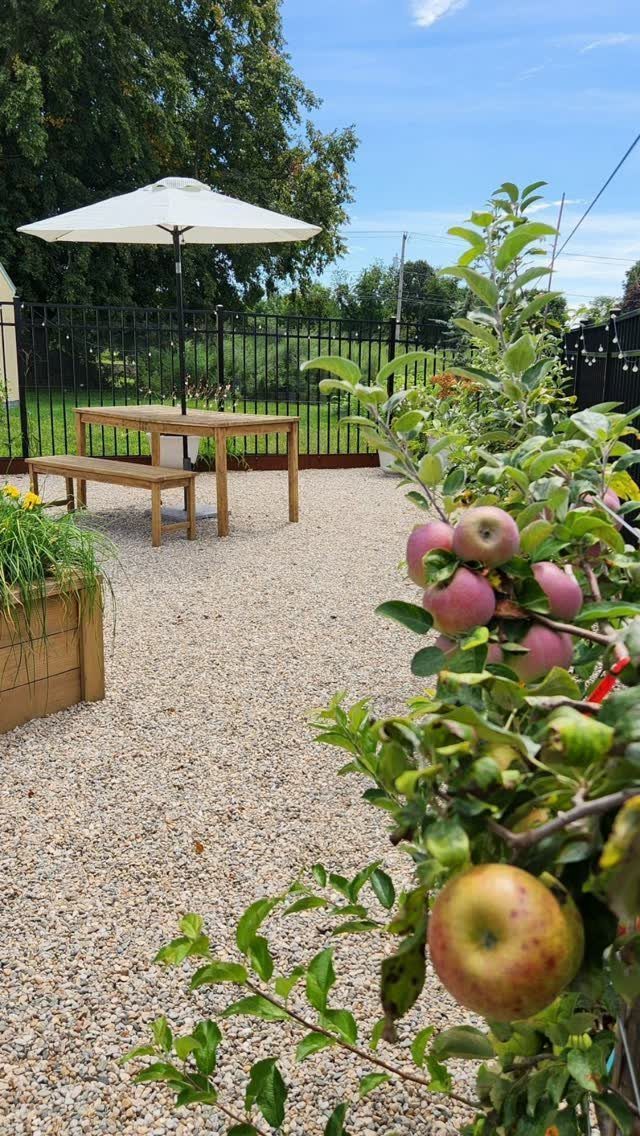
Placing a fruit tree beside the table puts shade, scent and something to look at within arm’s reach while you eat outside.
An apple or pear works well here because both tolerate pruning to keep branches from blocking the view or hitting the umbrella.
The tree needs full sun for most of the day, so position seating where the canopy will cast shade without cutting off light to the fruit itself.
Gravel underneath drains fast and stays level under chairs, and fallen fruit does not stain the surface the way it does on wood decking.
14. Circular Mandala Garden Layout
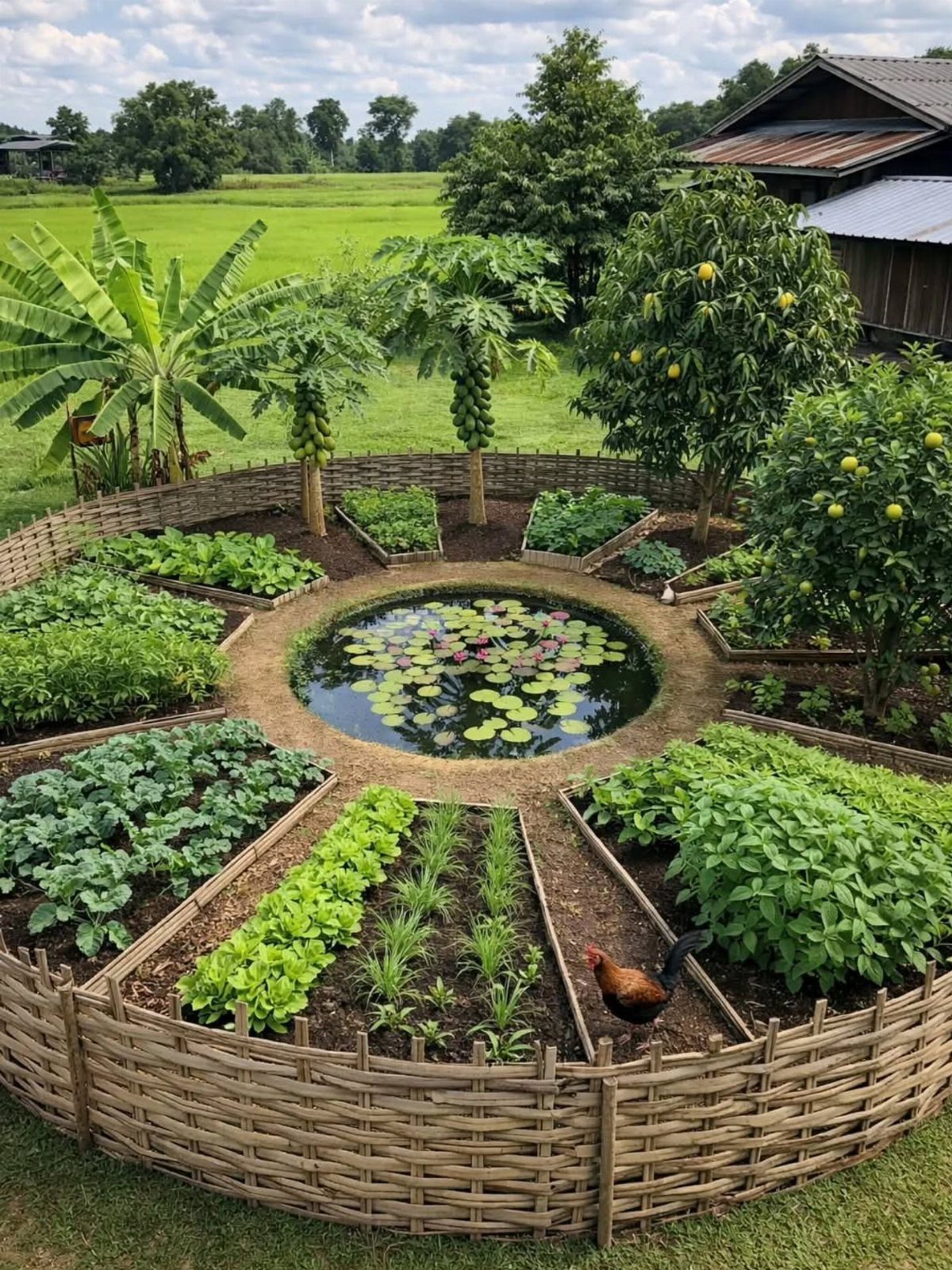
Curved beds radiating from a center point turn the garden into a pattern you can see from an upstairs window or the edge of the yard.
Fruit trees or berry bushes go in the outer ring where they get full sun, and lower plants fill the inner sections.
The layout holds more variety in the same square footage because each wedge can have different soil or water needs.
A central pond or bed gives a focal point and makes it easier to lay out the curves with a string and stake.
This design needs more time to weed and harvest because the beds do not line up with straight paths.
The design process tends to be cyclical, so as you play with your ideas, remember to go outside often, look around town to see what your neighbors are doing in their gardens, and stay open to new ideas.
15. Tropical Fruit Garden Bed
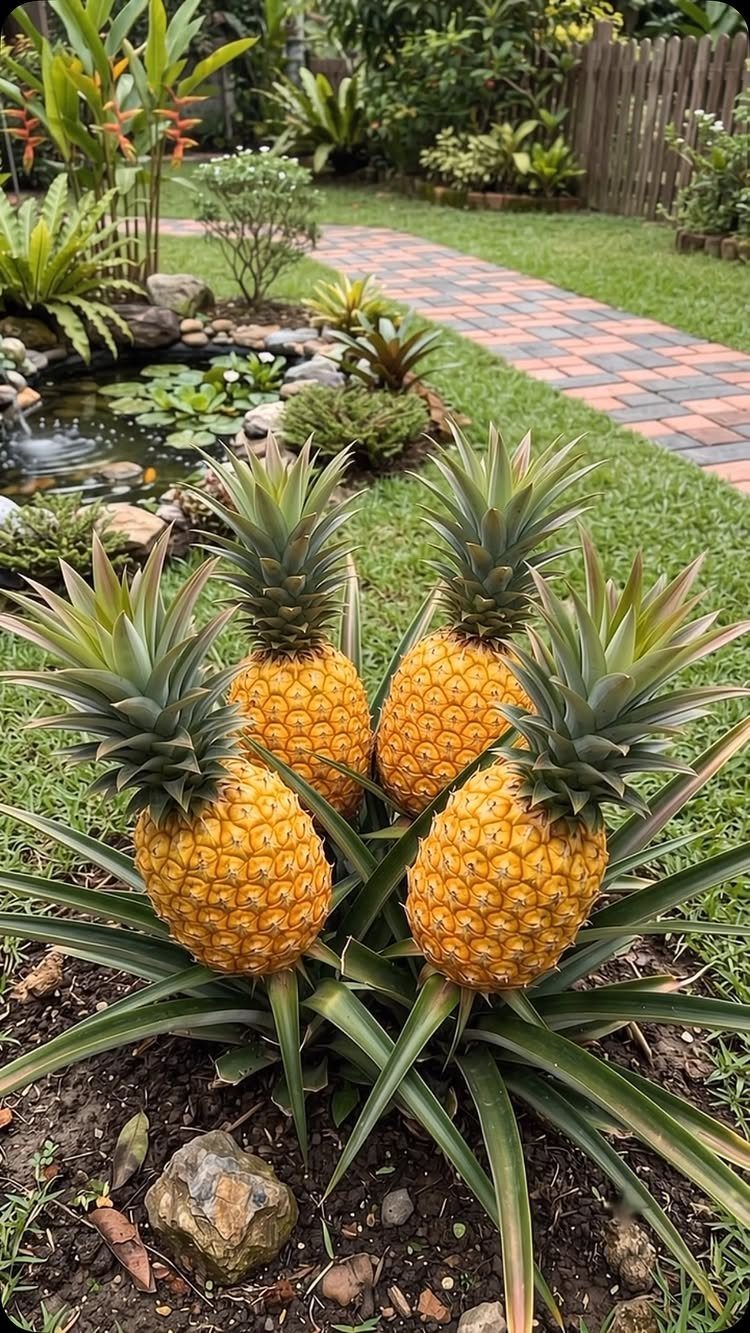
Pineapples grow low and wide, so they fit into a tropical bed as a textured border along a path or pond edge.
Each plant produces one fruit per cycle in warm climates. They need consistent moisture and full sun but tolerate sandy or rocky soil that other fruit plants reject.
The spiky foliage fills space year-round, and the fruit ripens in place without dropping. This setup only works in frost-free zones; a hard freeze kills the plant.
16. Drip Irrigation Orchard Lines
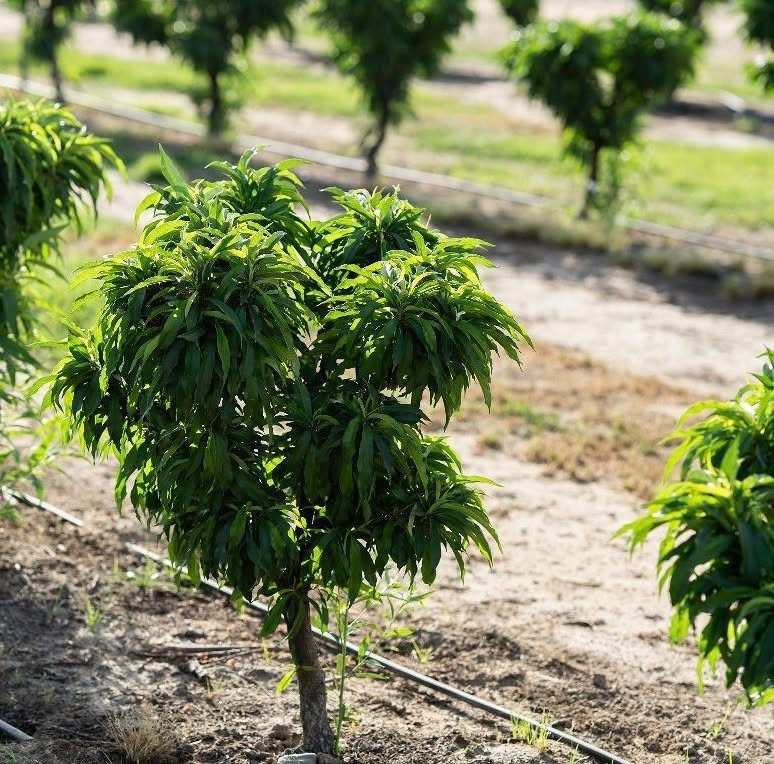
Running drip tubing along the base of each tree delivers water directly to the root zone and cuts moisture loss from evaporation.
The lines sit on bare soil or under mulch and connect to a timer so the orchard waters itself on a schedule.
This method uses less water than overhead sprinklers and keeps foliage dry, which reduces fungal disease on leaves and fruit.
Set emitters away from the trunk and adjust flow as the tree grows. Drip systems work best in climates with dry summers where hand watering cannot keep up with heat.
17. Stepover Dwarf Fruit Tree Border
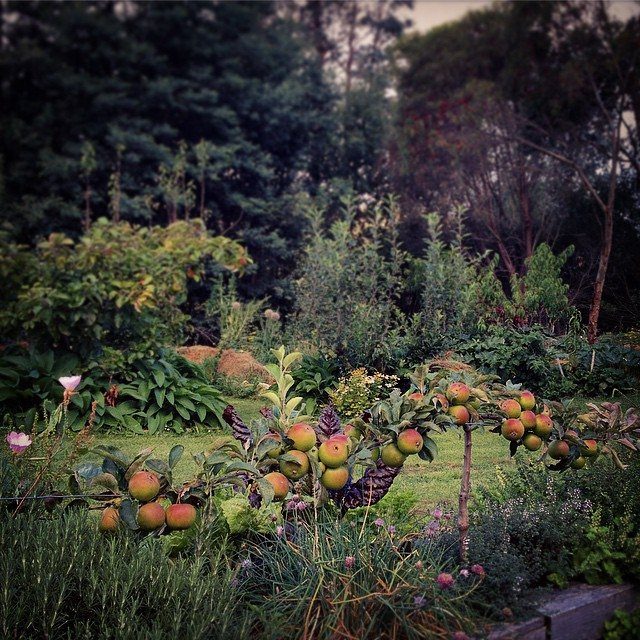
Training a dwarf apple tree to grow horizontally at knee height turns it into a living edge between lawn and border.
The branches are pruned and tied flat to a low wire or frame, and the tree fruits along the horizontal wood. This method, called a stepover, takes up almost no vertical space and lets you walk past without ducking.
It produces less fruit per tree than a standard form but fits in narrow spots where a taller tree would block light or crowd other plants. The low profile also makes it easy to net against birds without tall hoops.
18. Wire-Supported Berry Bushes
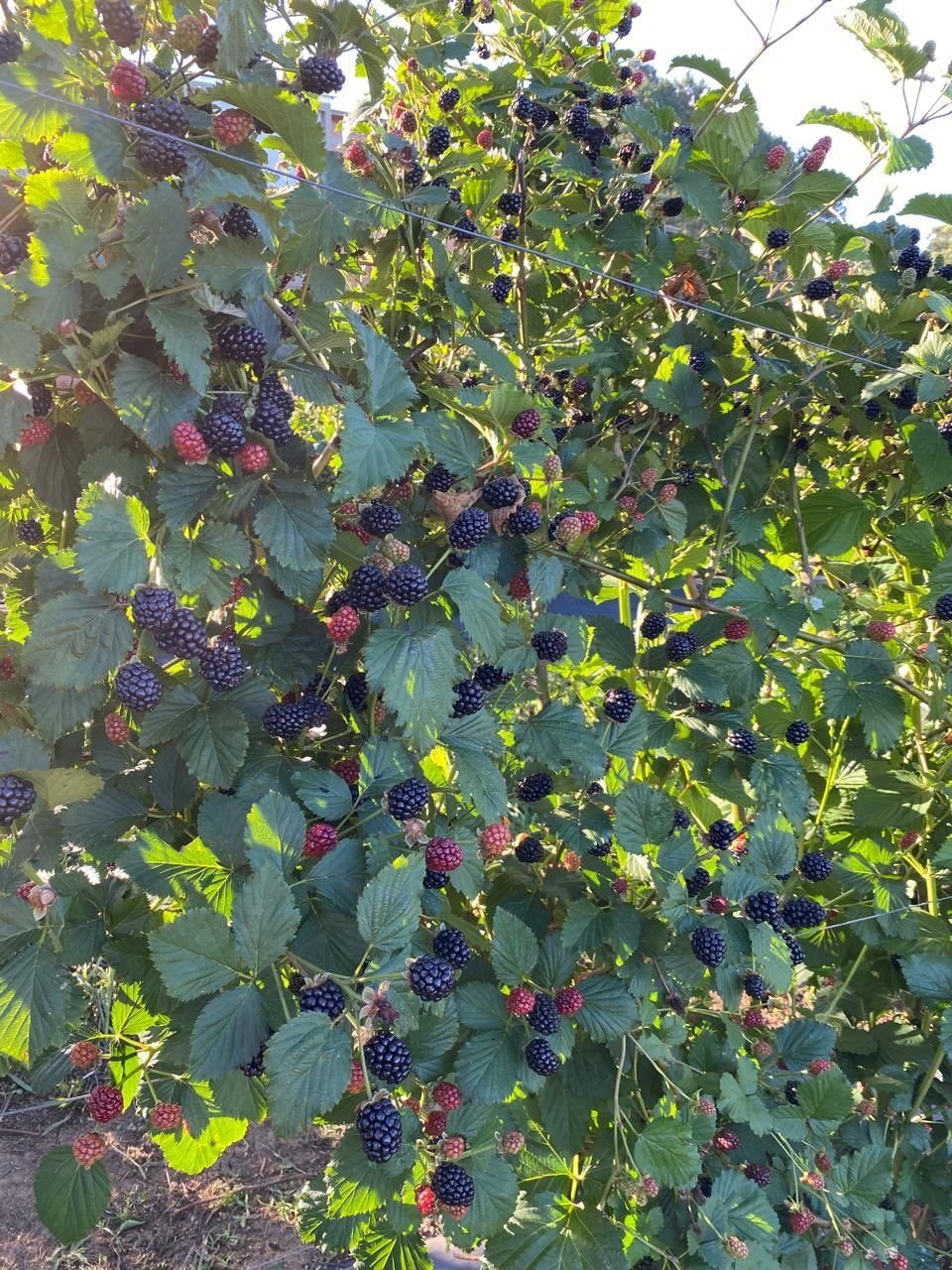
Blackberries and raspberries fruit heavily when canes are tied to horizontal wires that keep them off the ground and spread them for air and light.
Set two or three wires at waist and chest height on sturdy posts, and tie canes as they grow to fill the space between them.
This keeps fruit clean, makes thorny varieties easier to pick, and stops canes from sprawling into paths or neighboring beds.
Prune out old canes after harvest and tie new growth in their place. The wire also makes it easier to net the whole row if birds are a problem.
19. Grape Pergola Over Patio Seating
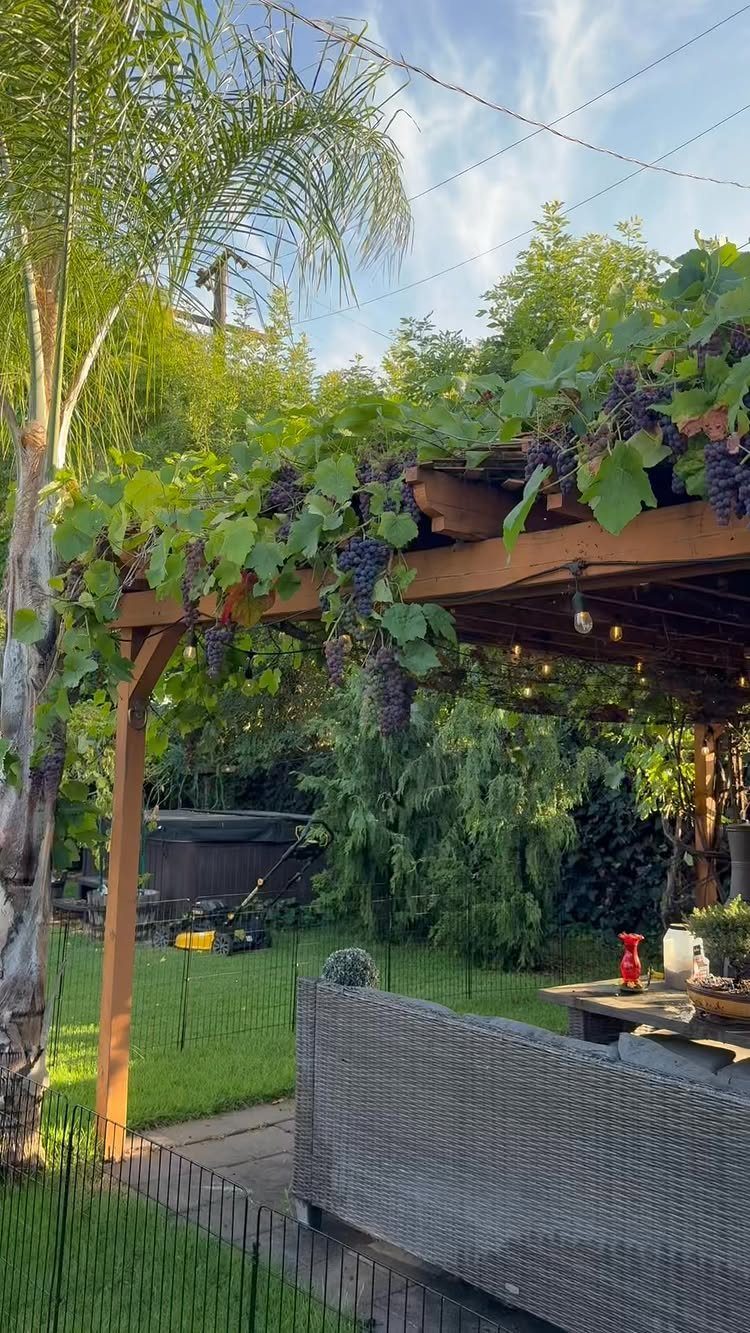
A grapevine trained over a pergola puts fruit directly overhead and casts dappled shade on seating below without blocking the sky.
The vine needs sturdy crossbeams to support the weight of mature canes and clusters, and it grows fast once established, covering the structure in two or three seasons.
Grapes ripen best in full sun, so site the pergola where the top gets unobstructed light most of the day. Pruning in late winter keeps canes from getting tangled and directs energy into fruit instead of leafy sprawl.
This setup turns the harvest into something you can pick while sitting down, and the canopy cools the patio by several degrees in summer without the static feel of a solid roof.
20. Metal Ring Tree Borders in Gravel
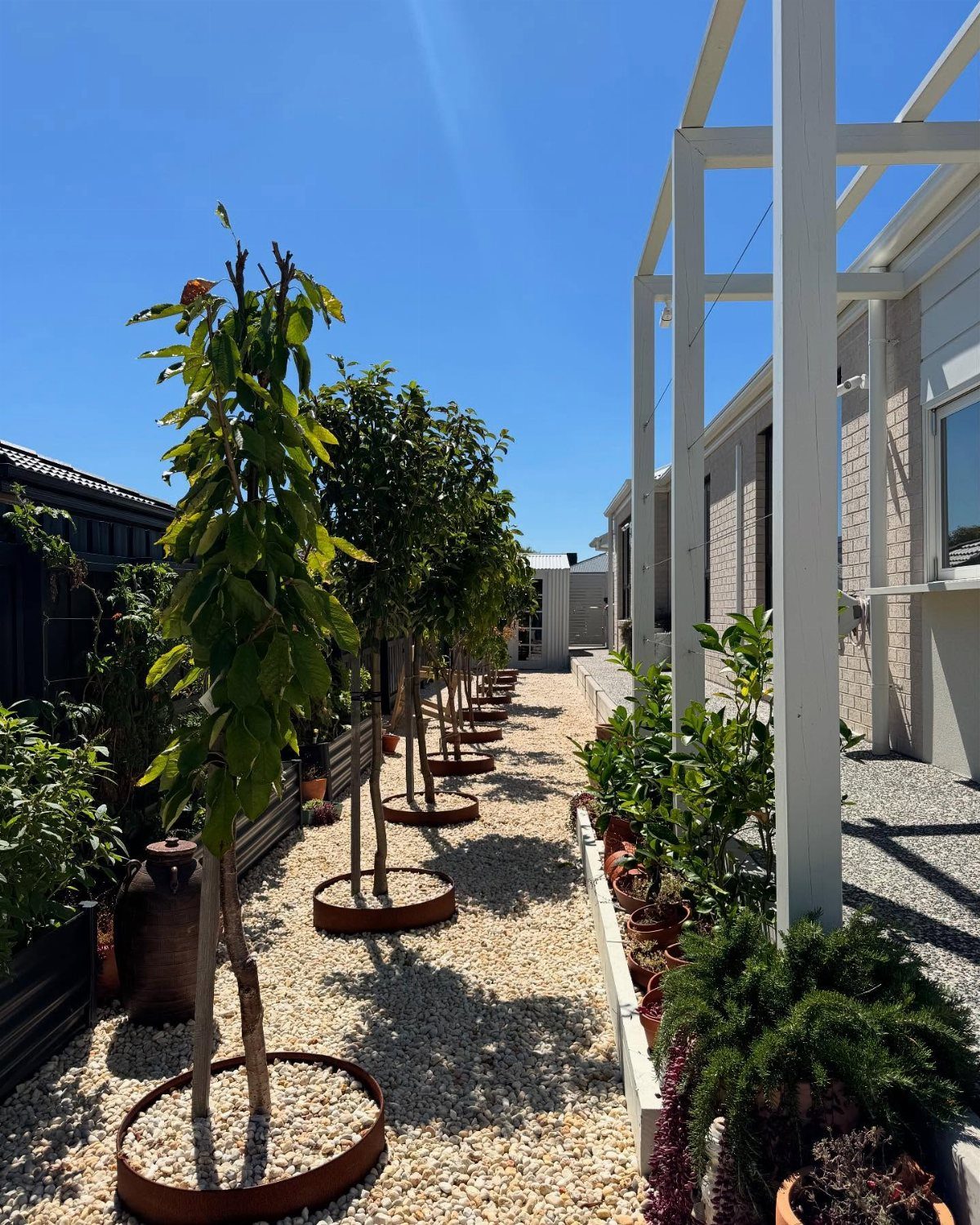
Metal rings set into gravel give each tree a defined root zone and hold mulch or soil in place without letting material spill onto the path.
The rings sit flush with the gravel surface or slightly raised, and they keep roots from spreading into the walkway where foot traffic would compact them.
Gravel drains faster than bare soil and stays level underfoot, so the path stays usable after rain.
Size the rings wide enough to give the roots room to spread as the tree matures; a tight circle stunts growth and forces frequent watering.
This layout works well along a fence or building where trees need to stay compact and the path needs to stay clean.
Plan for Fruiting Timelines
Soft fruits like strawberries and raspberries may produce the first season or the year after planting, giving you fruit within months.
Young fruit trees take longer: dwarf and semi-dwarf varieties often need 3 or 4 years before the first harvest, and standard trees can take 5 or 6 years to bear.
That timeline matters because fruit trees are permanent plantings.
Blueberries stay productive for 40 or 50 years. Planning a fruit garden means thinking ahead several years, not just one season, and choosing plants that match both the space you have and the wait you can accept.
Planting a mix of soft fruits and young trees spreads the harvest across years and gives you something to pick while the slower crops mature.
Maintain Fruit Tree Nutrition
Soil testing shows which nutrients the ground already has and which ones need adding before fruit trees can produce well. Slow-release organic fertilizers maintain nutrient levels over months without repeated feeding.
Too much fertilizer pushes leafy growth at the expense of fruit, so follow package rates and test the soil regularly to catch deficiencies before they show up in the crop.
Compost or organic mulch adds nutrients slowly and improves water retention at the same time.
Natural options like compost or aged manure keep soil healthy and provide long-lasting nutrients without the spike and drop of synthetic blends.