Kitchen gardens in this list run from a window box of ornamental kale to a glass greenhouse that costs well above any raised bed, and the thing that picks yours is how much ground and sun you actually control.
Renters with only a sill, porch or fence do best with containers, gutters and fabric bags, while open yard suits beds or plain rows.
Sun sets the crops: fruiting plants like tomatoes and peppers want 8 hours of full sun, so give them your brightest spot.
1. Raised Bed Garden
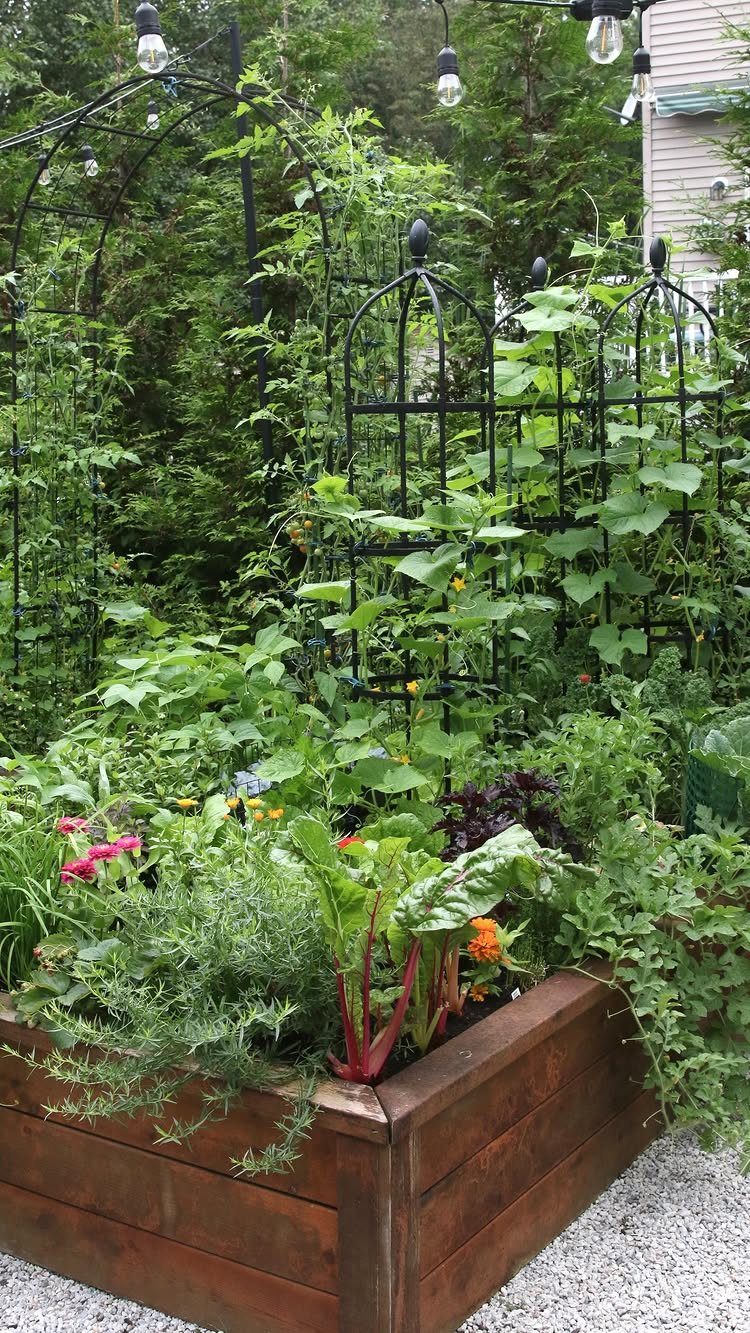
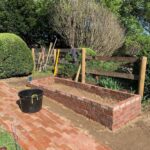
Defined beds make a vegetable garden easier to read and easier to run. Each bed holds one batch of crops, so soil work stays inside a boxed area instead of spreading across the whole yard.
A wooden frame paired with a tall trellis works well because climbers like pole beans and cucumbers use the height and leave the bed floor open for lower crops like lettuce or radishes.
Flowers tucked along the edges add color without taking much room.
Fill the bed with good soil rather than digging up native ground, and you skip most of the heavy prep.
The duo divided the 32′ x 56′ plot into a grid of 12 raised beds, defined by paths edged with marigolds (said to repel pests) and covered in pine straw—an affordable alternative to hardscaping that also gives veggies the acidity they crave.
2. Raised Bed Layout
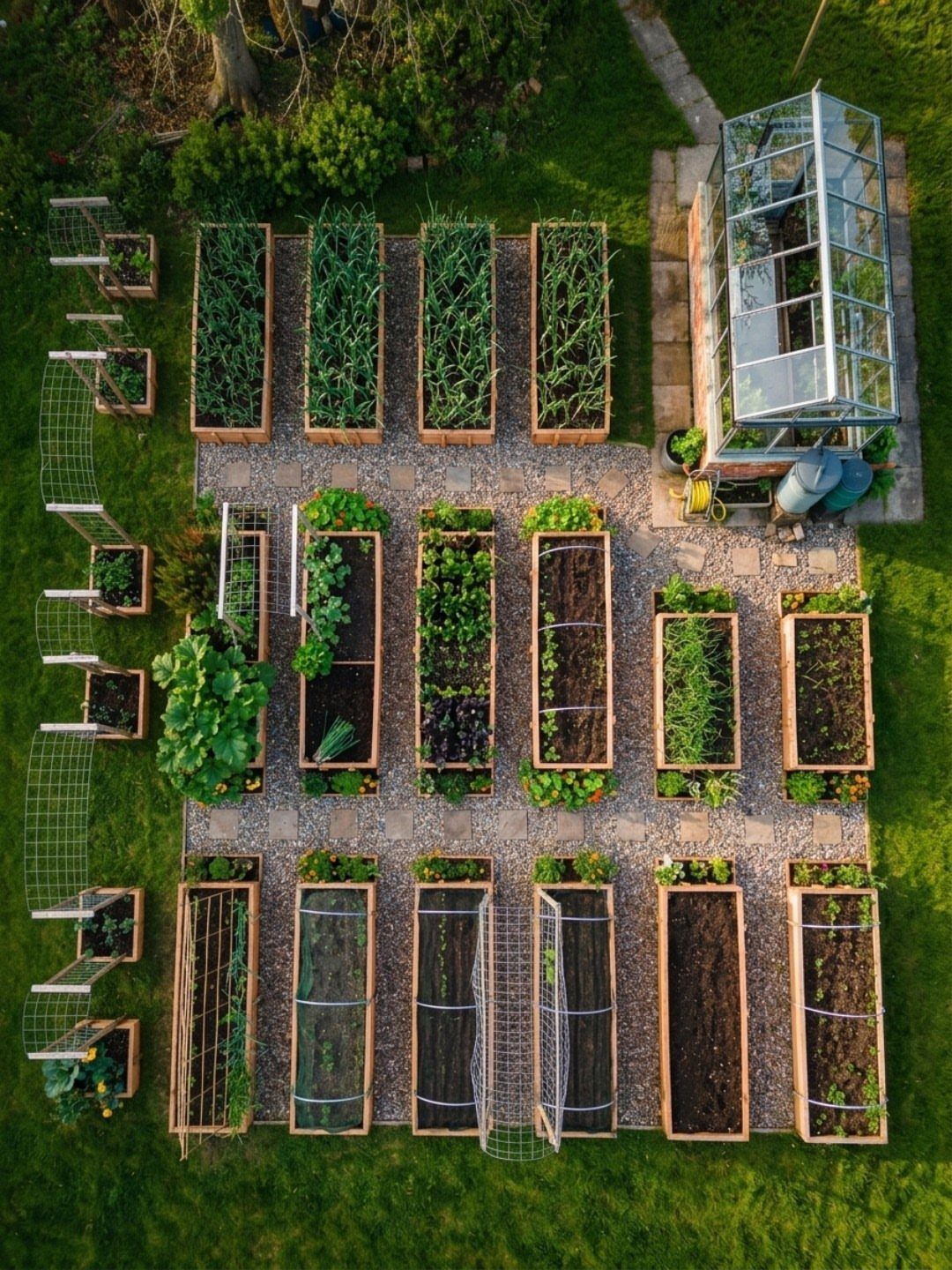
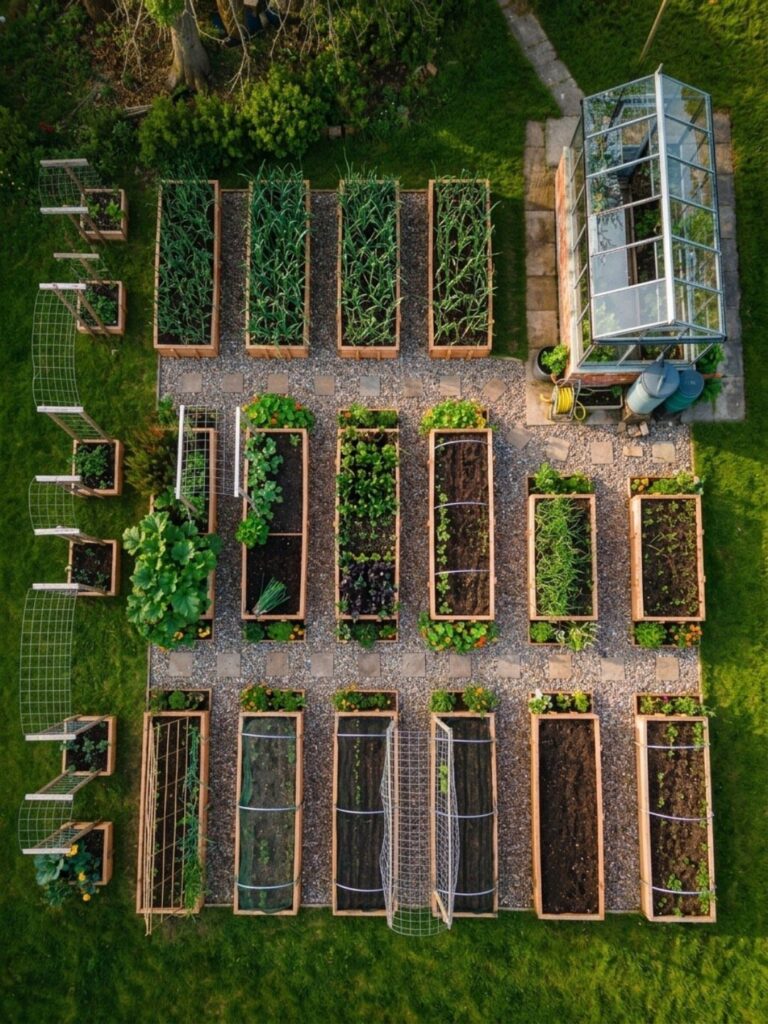
Paths matter as much as the beds themselves. A layout with several raised beds only works if you can reach every one without stepping on the soil.
Gravel is a budget-friendly path material, and it drains well between beds. Keep the gaps wide enough for a wheelbarrow, since hauling compost and carrying harvests are the jobs that test a layout.
If a greenhouse is on your wish list, plan its spot first and arrange the beds around it, since moving a built structure later costs far more than shifting a raised bed.
3. Minimalist Herb Beds
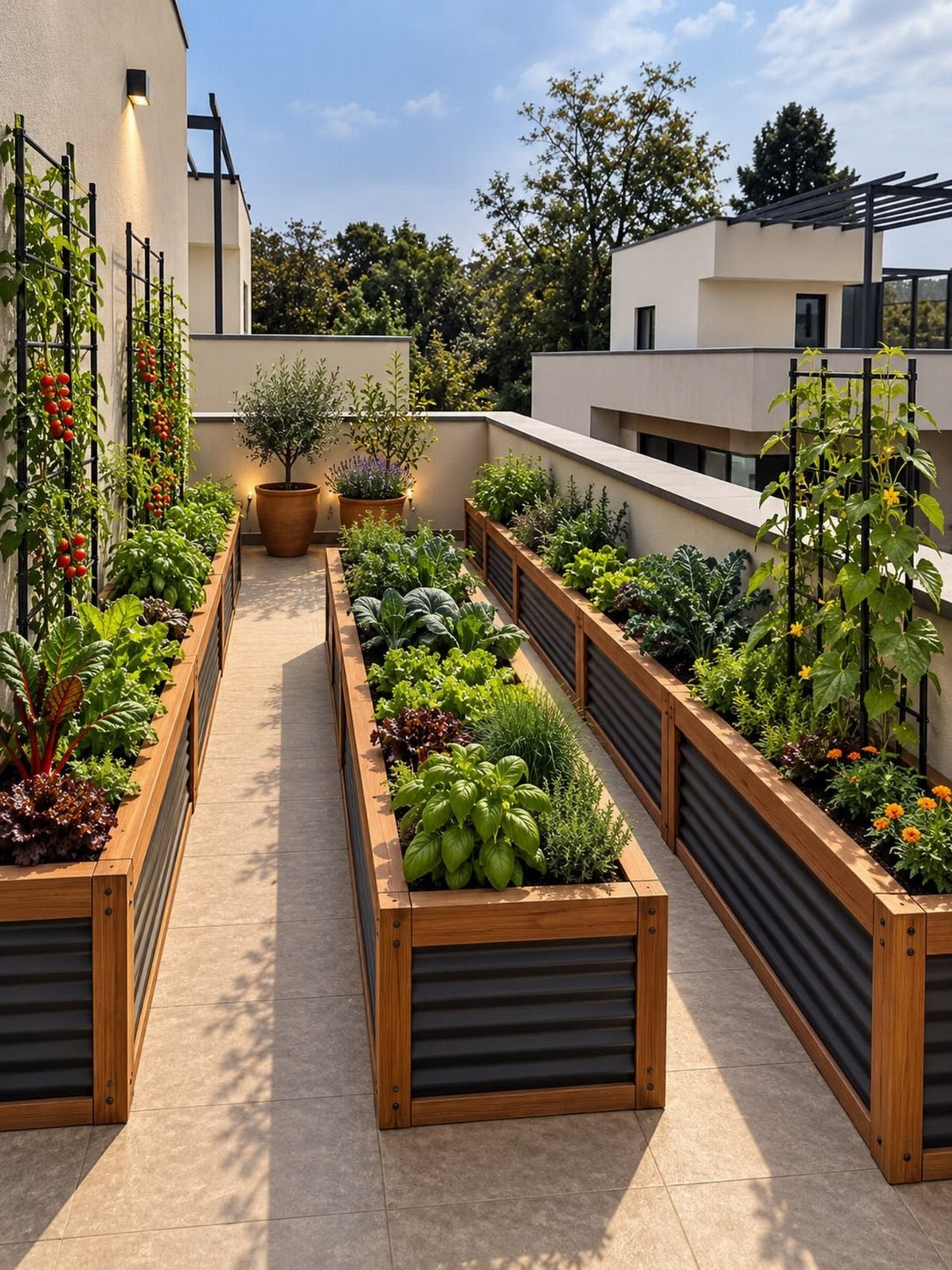
Herbs look best when they get a tidy, deliberate container. Long, narrow beds with clean wood and metal sides turn a patio or rooftop into a small herb garden that looks planned, not scattered.
I prefer a few long rectangles over many small boxes: fewer edges, simpler watering, and an easier look to keep neat. Group herbs with similar needs in the same bed.
Corrugated metal sides cost more than plain lumber, so plain wood is the cheaper route if budget is tight.
4. Raised Bed and Trellis
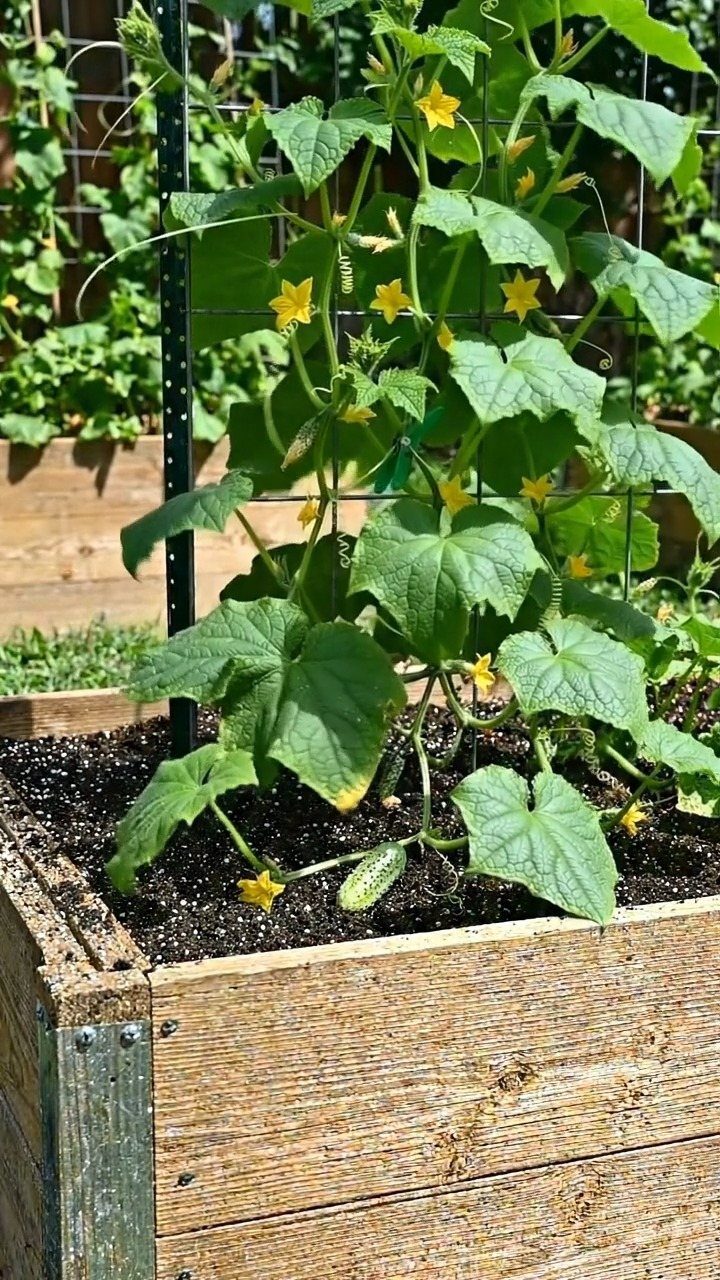
Cucumbers grow best when you send them up. A square raised bed with a panel trellis at the back gives the vines something to climb, and the fruit hangs straight and stays off the soil.
Set the panel in place before or right as you plant, so you never disturb the roots later. Then guide the young vines onto the metal as they grow.
One maker describes this as a simple trellis setup for growing crunchy cucumbers vertically in a raised bed. A single square bed can work this way.
5. Vegetables Interplanted with Flowers
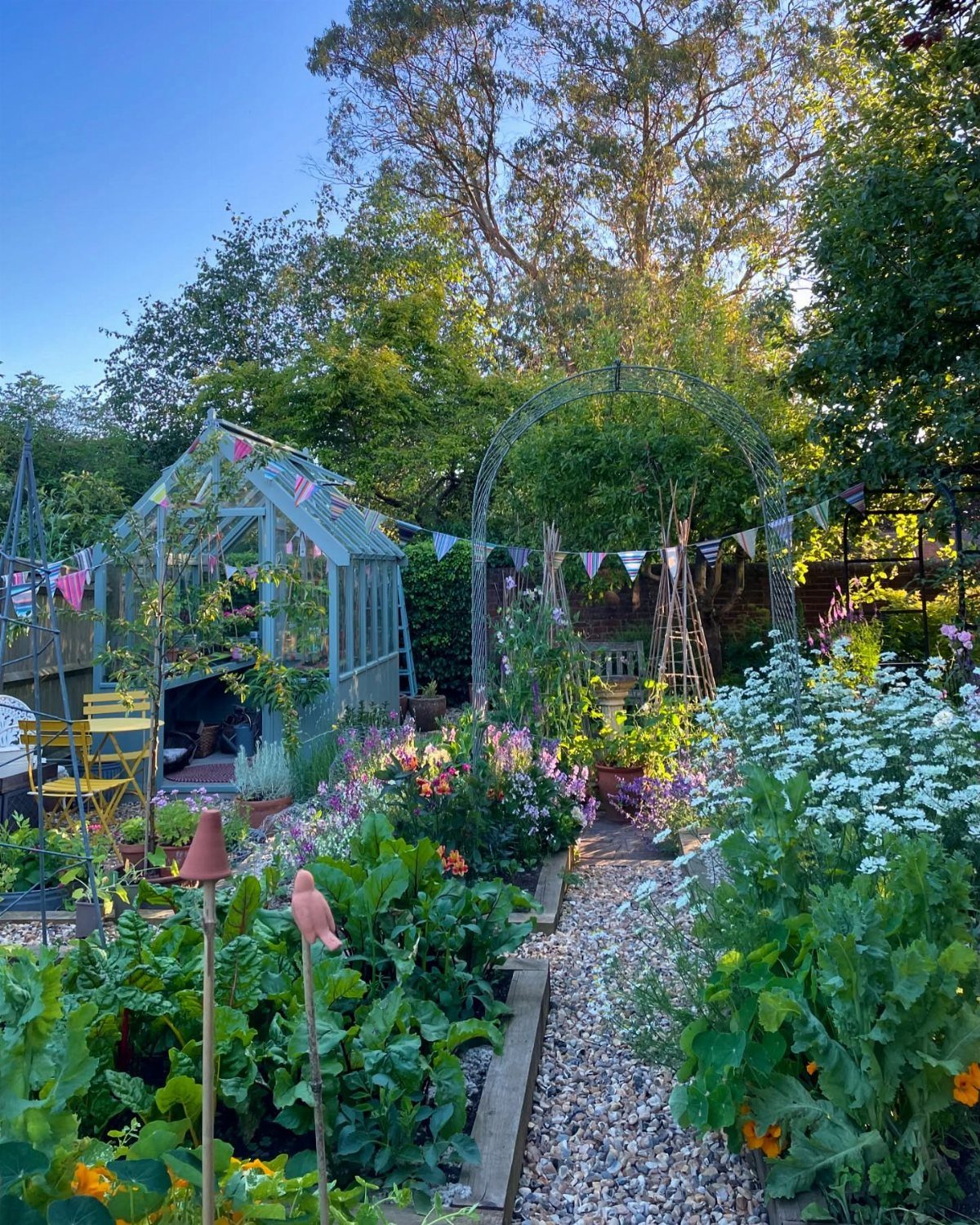
Vegetables do not have to be hidden in a back plot.
Mixing crops in with flowers lets a kitchen garden pass as an ornamental border, and a gravel path with an arch gives the whole planting structure and a clear place to walk.
Start by tucking edibles into gaps in an existing flower bed. Pick colorful or leafy crops so they hold their own next to the blooms.
My preference is repeating a few flowers throughout the beds, which keeps a mixed planting from looking messy.
6. Container Garden
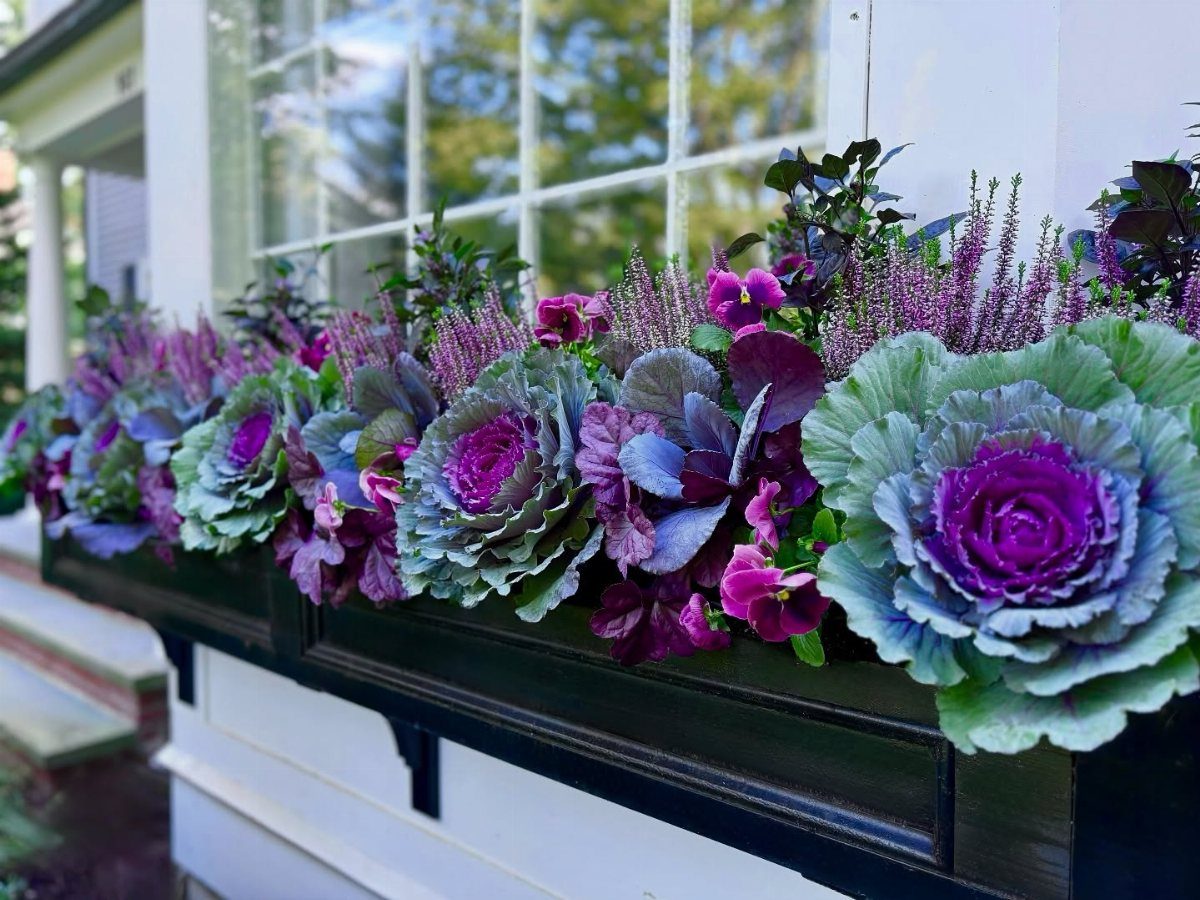
A window box is the smallest kitchen garden I would recommend. Ornamental kale is edible and looks good, so a renter with no yard still gets a pot that works as both decor and food.
Containers suit anyone without bed space: porches, balconies, and tight yards. Pick a box that fits your window and check that it has drainage holes.
Pots dry out faster than ground soil, so plan on regular watering. That is the main cost of the convenience.
7. Small Garden Layout
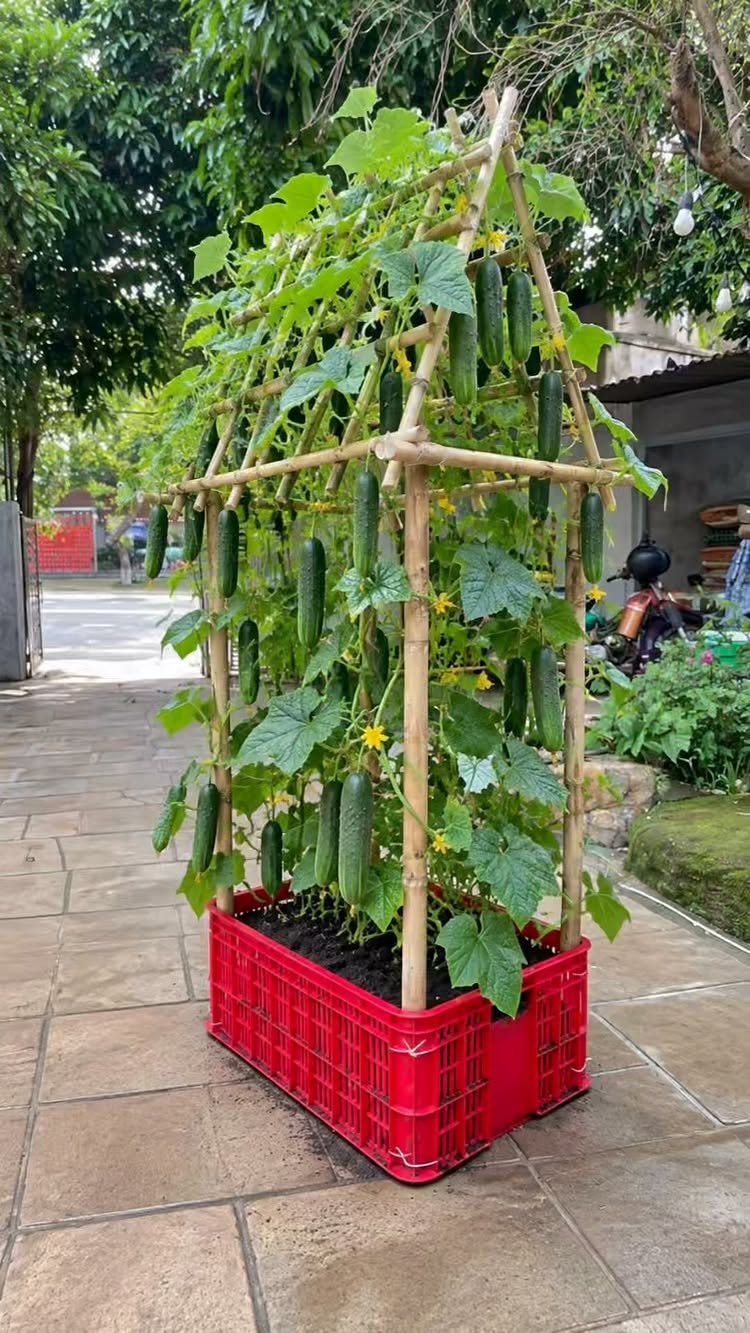
Training the vine upward means the plant uses air space and leaves the tile free for walking.
A bamboo trellis is cheap, and a plastic crate is a low-cost container if it has drainage holes. Put one climber per container and keep it where it can reach the sun.
Small spaces reward vertical thinking more than extra pots.
8. Garden Greenhouse
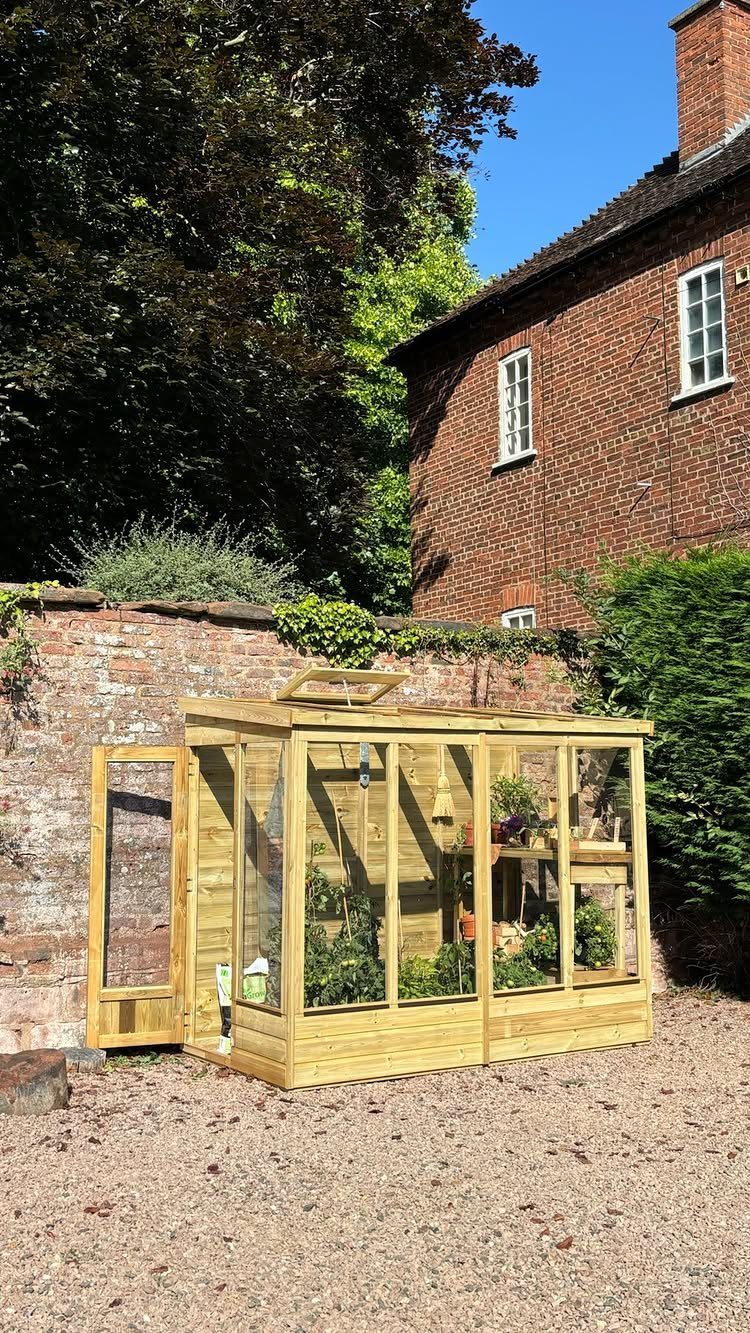
Glass panels hold warmth around plants, which is why a small wooden greenhouse can stretch a growing season at both ends. Starting seedlings inside it, then keeping tender crops under cover, is the job I would give it first.
A spot against a brick wall makes sense for a structure this size, and gravel underfoot keeps the floor simple. Leave the door able to open fully so you can carry pots in and out.
Expect the cost to run well above any raised bed.
9. Hanging Gutter Garden
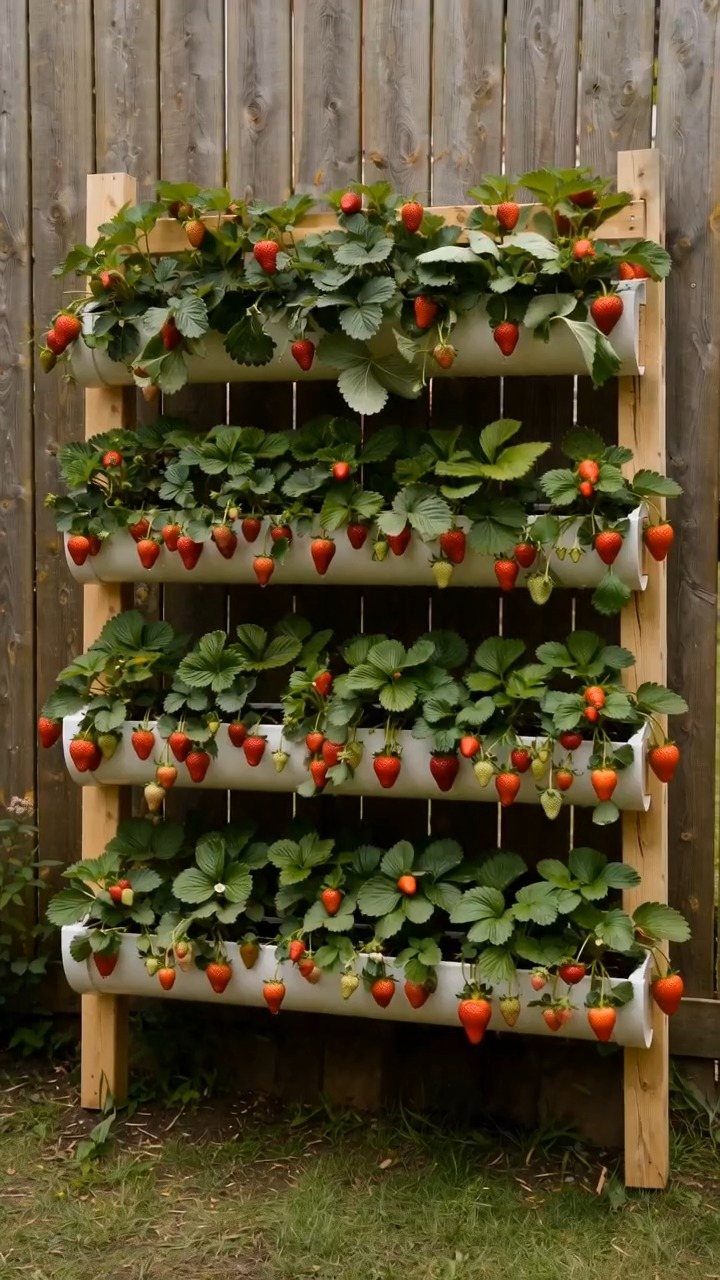
Strawberries and gutters suit each other. Shallow, narrow channels hold enough soil for the shallow roots, and hanging them keeps the fruit up off the ground.
Mount the gutters on a wooden frame or hang them from a porch rail or pergola, and stack several rows so the garden grows upward instead of outward.
Drill drainage holes along the bottom before you add soil, or the roots will sit wet.
I like this for renters, since the whole rig can come down when the lease ends.
10. Planter Wall
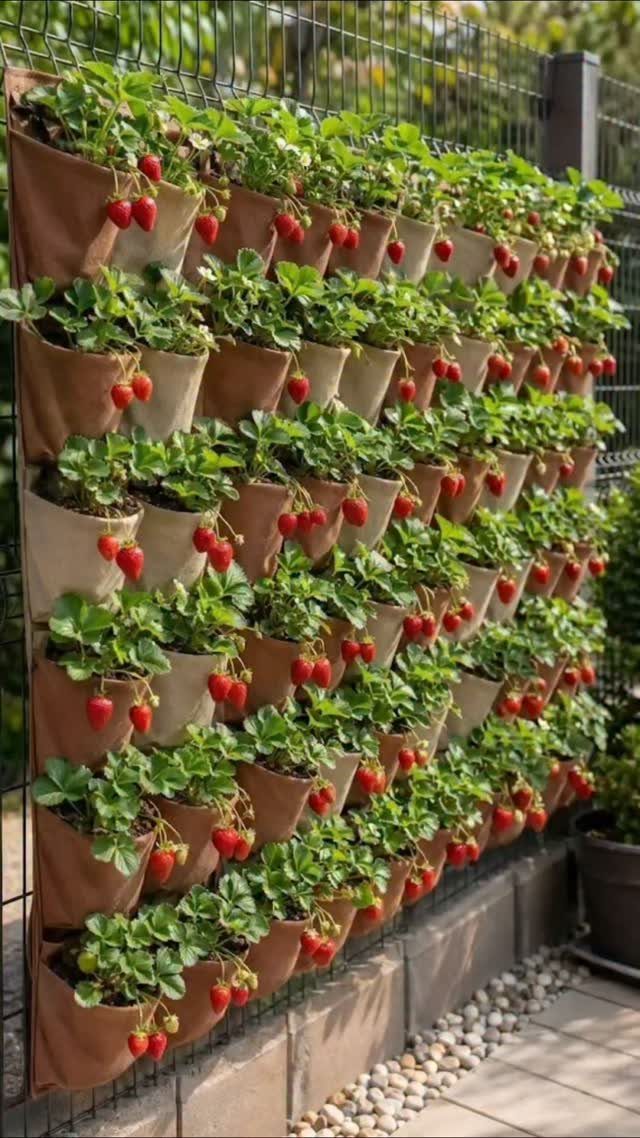
Fabric planting bags hung on a wire fence give you a strawberry patch with no bed at all. A bare fence becomes planting space, and the bags are light and inexpensive.
Fill each bag with potting mix, then hang it securely so the weight of wet soil does not pull it loose. Water more often than you would in the ground, since fabric breathes and dries quickly.
Grouping bags in a tight grid looks tidier than scattering them.
11. Herb Garden
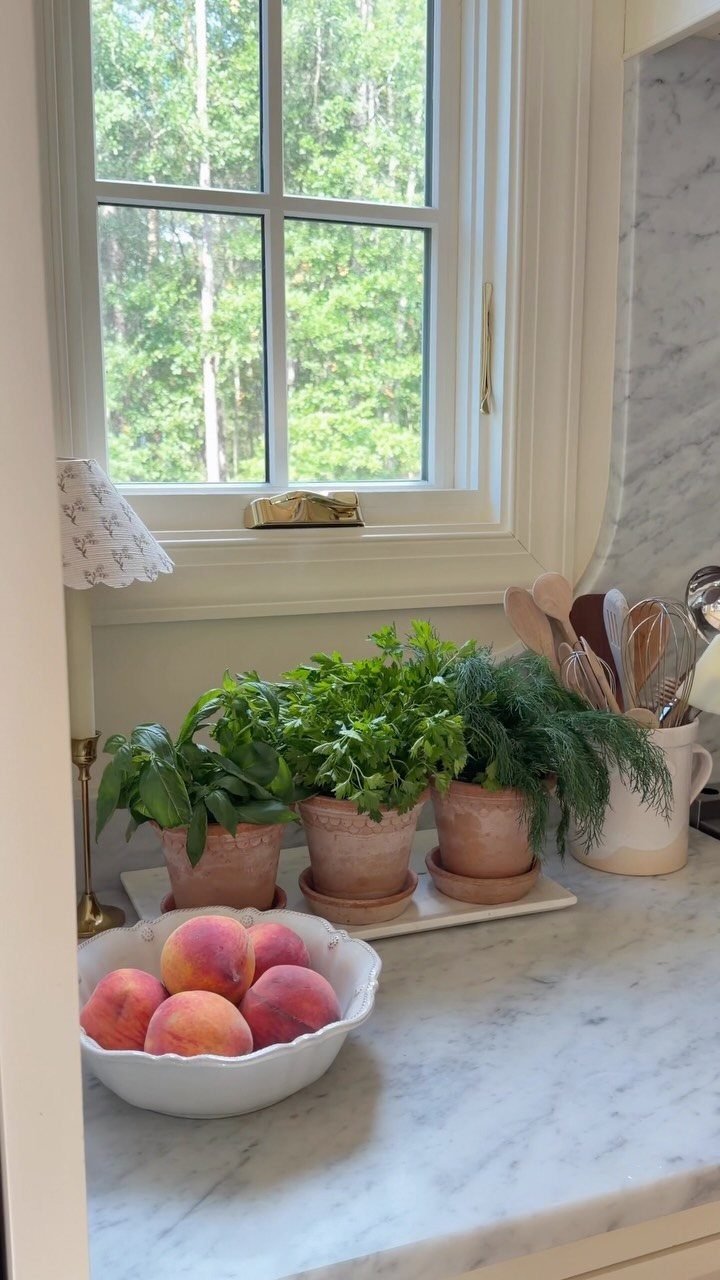
Herbs on a kitchen counter get used because they are within reach. 3 terracotta pots on a tray by a window cover the basics, and the tray catches drips from the drainage holes.
I would pick the herbs you cook with weekly and give each its own pot. Terracotta dries out faster than plastic, so check the soil before you water.
For an outdoor option, the same herbs can anchor an ornamental planting near the door.
12. Kitchen Garden Pathway
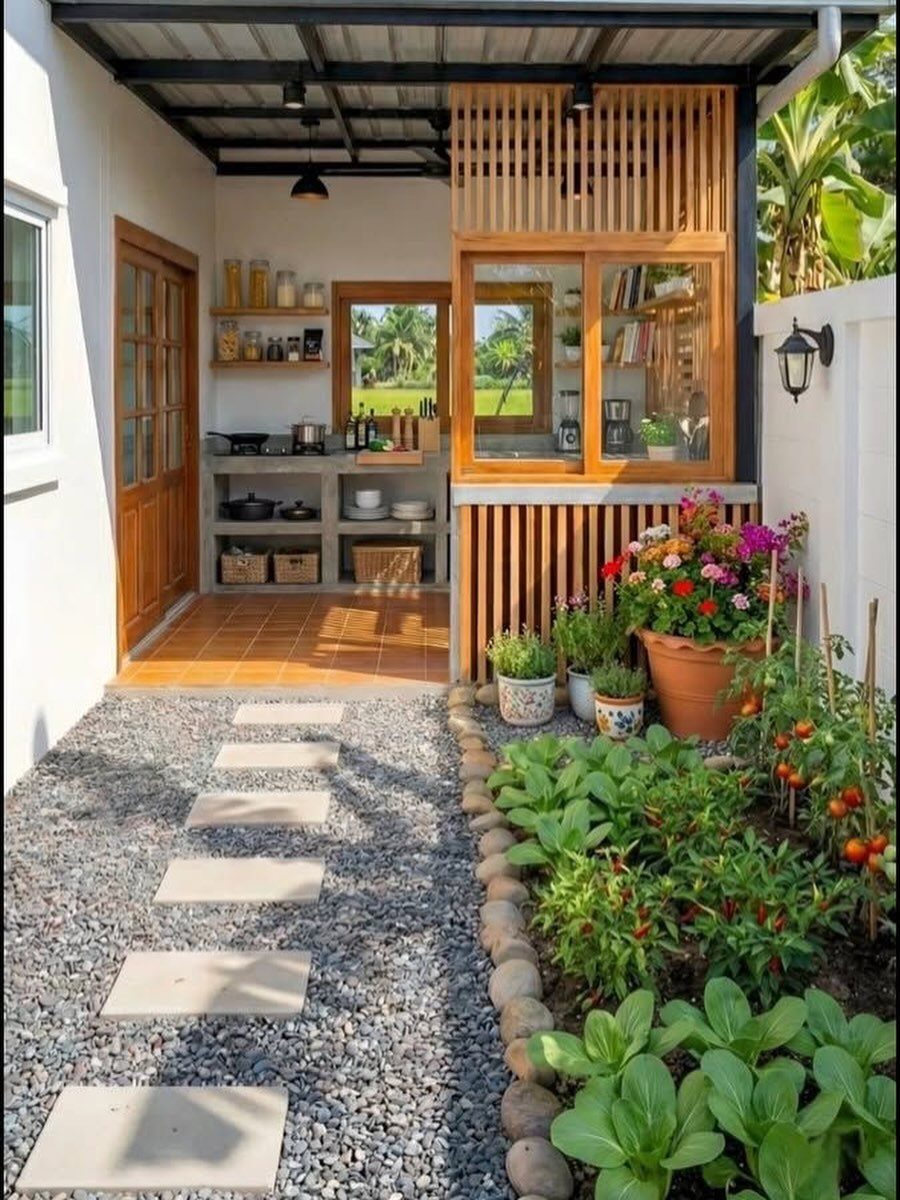
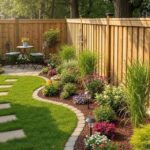
Stepping stones set into gravel do 2 jobs: they mark where to walk and keep boots off the beds. A path that leads straight to the cooking area also makes the garden feel designed.
Set the stones close enough for a natural stride, then fill around them with gravel, which drains well. Plan the path before you plant, since beds are easier to fit around a route than the reverse.
Wide gaps let you reach every bed without stepping on soil.
13. Front Yard Kitchen Garden
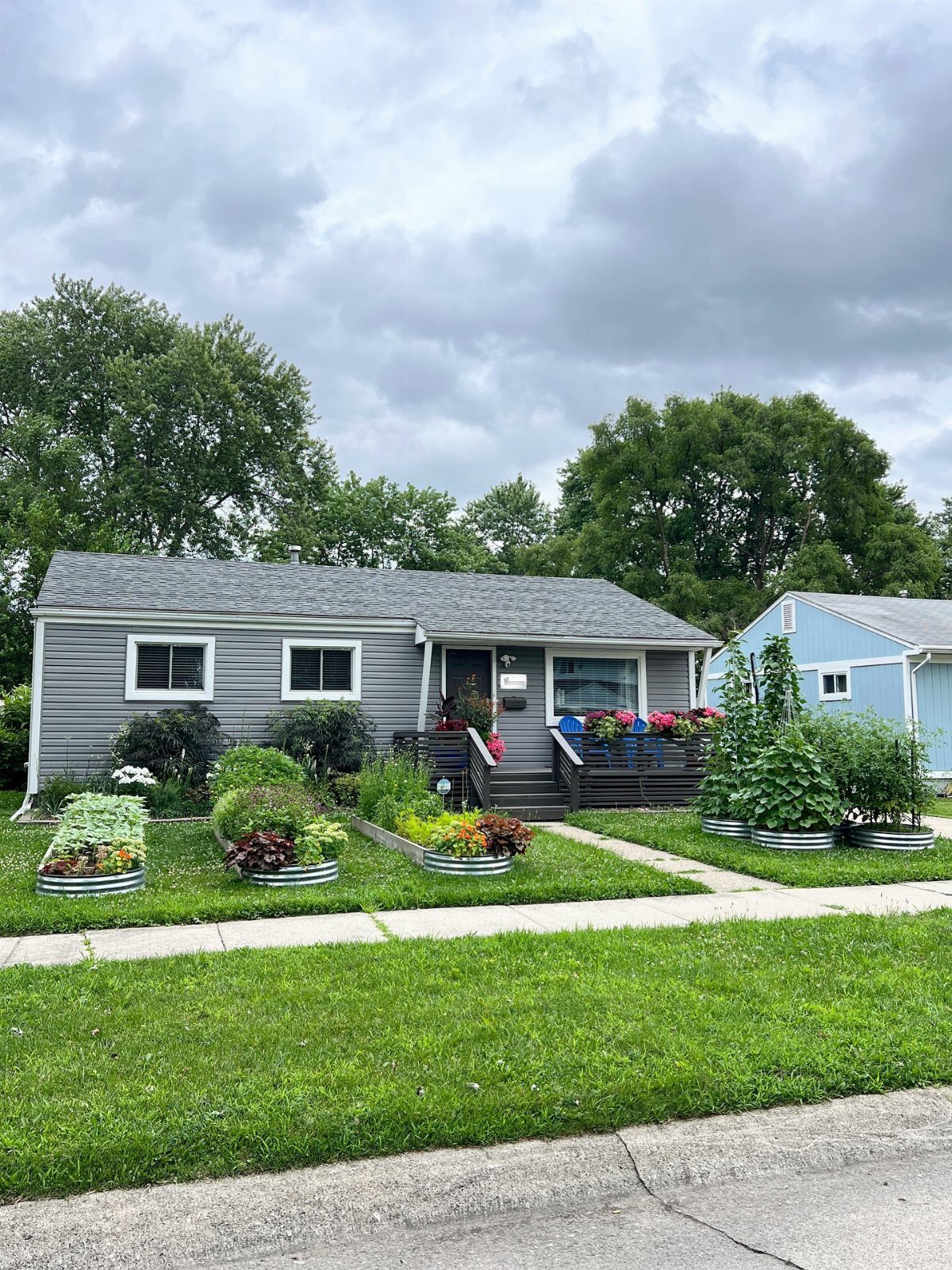
A front yard gets the most sun on many lots, and a row of galvanized metal beds turns that strip of lawn into a working garden. Vegetables and flowers sharing each bed keep it looking tidy from the street.
Matching beds in one material are what make this read as a design choice. Spacing them evenly with room to walk between them helps too, so you can reach every plant without stepping on soil.
Check any HOA rules or local yard guidelines before you build. Metal beds cost more than plain lumber, so wood is the cheaper way to get the same layout.
14. Traditional Row Garden
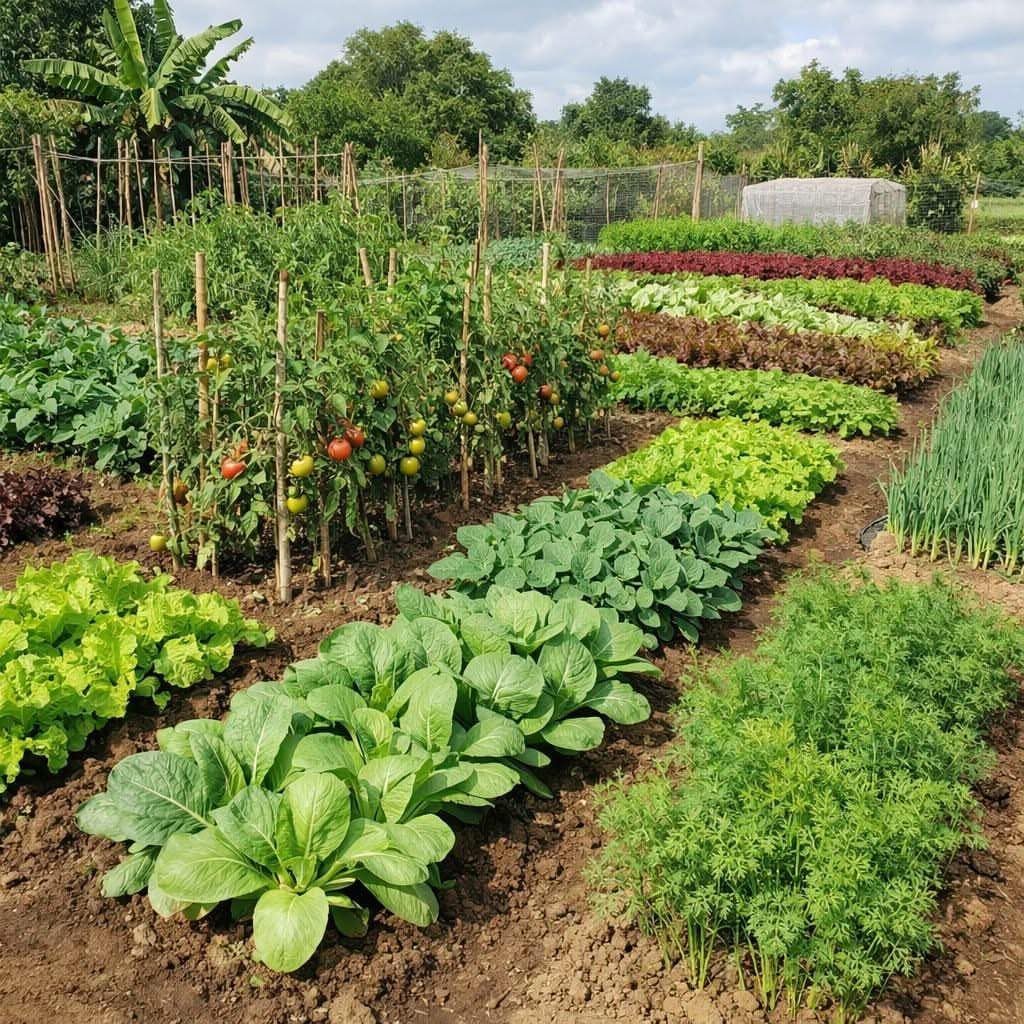
Rows are the oldest layout for a reason: each crop gets its own strip of soil, so you always know what is planted where.
Drive the stakes in when you transplant the tomatoes, so you do not spear the roots later. Keep the rows straight and leave a walking gap between them for weeding and picking.
Rows suit anyone with open ground and a tolerance for weeding. For raw harvest per dollar, plain rows beat fancier layouts, and that is why I still pick them when the aim is a lot of food.
Sunlight and Site Selection
Before you place a single plant, watch how light moves across the yard for a day.
Watch the plot for a full day, because the sun moves, and a wall, fence, or tree will cast shade or hold warmth in spots that suit some plants better than others.
Plan on 6–8 hours of direct sun for most vegetables. If you can only guarantee that range, expect decent growth; 8 hours of full sun is the safer target for fruiting crops like tomatoes, peppers, and cucumbers.
Put those in your brightest spot. Leafy greens tolerate gentler light, so a shadier corner is where I would send them.
A food garden can go in a front, side, or back yard, so pick the spot with the best light rather than the most convenient one. If full sun is hard to find, grow greens and skip the fruiting crops.
Seasonal Crop Planning
Plan the year before you buy seed. Cool spring weather suits lettuce, spinach, radishes, carrots, kale, and peas, so get those in the ground first.
Tomatoes, peppers, cucumbers, zucchini, squash, pumpkins, beans, and eggplant won’t ripen fruit without real summer heat, so hold them until the soil has warmed.
That split lets one plot do two jobs.
Harvest the cool crops in spring, then plant warm-season ones in the same space. I would sketch two simple charts on paper: one for the spring and fall layout, one for summer placement.
Warm-season plants get tall and wide, so save space for a trellis, arbor, or obelisk before you fill the bed.
Sow radishes, spinach, and other greens again every couple of weeks, and the harvest comes in steady batches instead of one glut.
Manageable Garden Care
Start small. Choose a handful of crops you actually eat, or ones that cost a lot at the store.
Mulch is the cheapest upkeep trick I know. Spread straw, compost, or shredded leaves over the soil to hold in moisture, even out soil temperature, and hold back weeds.
Basil and dill bring in helpful insects, and marigolds planted nearby may keep some pests away.
Leave paths and working room so you can reach everything for watering and picking. If a bed is hard to get into, it stops getting care.
Frequently Asked Questions
What is a kitchen garden?
A kitchen garden is a planned growing space close to the house that supplies vegetables, fruit, and herbs for cooking.
It can be raised beds in a yard, a window box, or pots on a porch. What sets it apart is that it is laid out to be used and harvested often.
What should I plant in a small garden?
Plant crops you eat often or that cost a lot at the store, such as herbs, leafy greens, radishes, and compact or climbing vegetables.
Train cucumbers and beans up a trellis so they use air space and leave the ground free for lower crops. Compact varieties like ‘Patio Snacker’ cucumber and ‘Tom Thumb’ peas suit pots especially well.
How do I design a good vegetable garden layout?
Start with sun and access: most vegetables need 6–8 hours of direct sun, and you should be able to reach every bed without stepping on soil. Beds 4 feet wide, such as 4×4 or 4×8, are easy to tend from the edges.
Tall crops like corn, pole beans and tomatoes belong at the north end of the bed, with low growers like lettuce and bush beans along the south edge, so nothing casts shade on its neighbors.
Plan paths before you plant, wide enough for a wheelbarrow.
How do I start a vegetable garden at home?
Pick the sunniest spot you have, then choose crops that fit your meals and your season.
Fill your beds or containers with soil, add trellises where vines will climb, sow seeds or set out seedlings, then keep the ground evenly damp for about 2 weeks until roots take hold.
Cool-season crops like lettuce and peas go in first, and warm-season ones like tomatoes wait until the soil warms.
What are some simple and cheap ways to grow vegetables?
Start from seed rather than buying transplants, and save seed from your own crops for next year. Seedling pots can be yogurt cups or egg cartons, and buckets work as large containers if they have drainage holes.
Plain lumber costs less than metal for raised beds, and free mulch like dry leaves or grass clippings holds moisture and cuts weeding.
How many vegetables can I plant in a vegetable garden?
It depends on how big each plant gets at maturity.
In a 10×10 foot garden, you can fit roughly 9 to 25 plants, with large crops like tomatoes at the low end and small ones at the high end. Climbing crops on trellises squeeze in more by using height.
How often should I water my vegetable garden?
Seeds and fresh transplants need water every 2–3 days until they sprout or settle in.
Rainfall, heat waves and soil type all change that number, and containers need extra water since pots and fabric grow bags lose moisture faster than garden soil.