Before picking anything, check 3 things about your yard: hours of direct sun in each spot, your USDA Hardiness Zone, and how much rain you usually get.
Put a sun lover in shade and it will sulk, however tough its name sounds on the plant tag.
1. Use Mulch
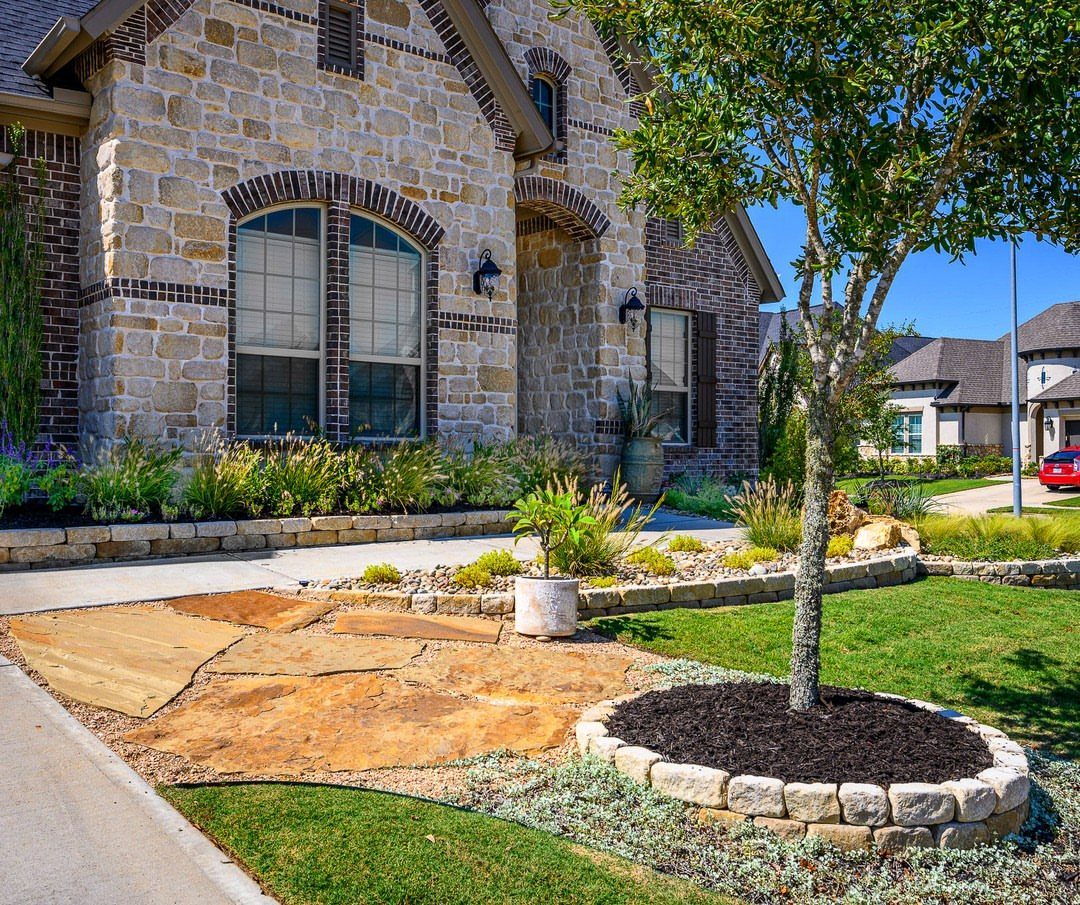
Bare soil is where weeds and thirsty afternoons do their damage, and a layer of dark mulch over planted ground cuts both.
A tree ring like this one is the easiest place to start, since the mulch sits in a defined edge and stays put.
Spread it across every bed you plant, not just around trunks. Once the soil is covered, weeding gets quicker and the ground holds moisture longer, so the hose comes out less often.
Mulch thins as it settles, so plan on topping it up now and then.
2. Low-water Plants
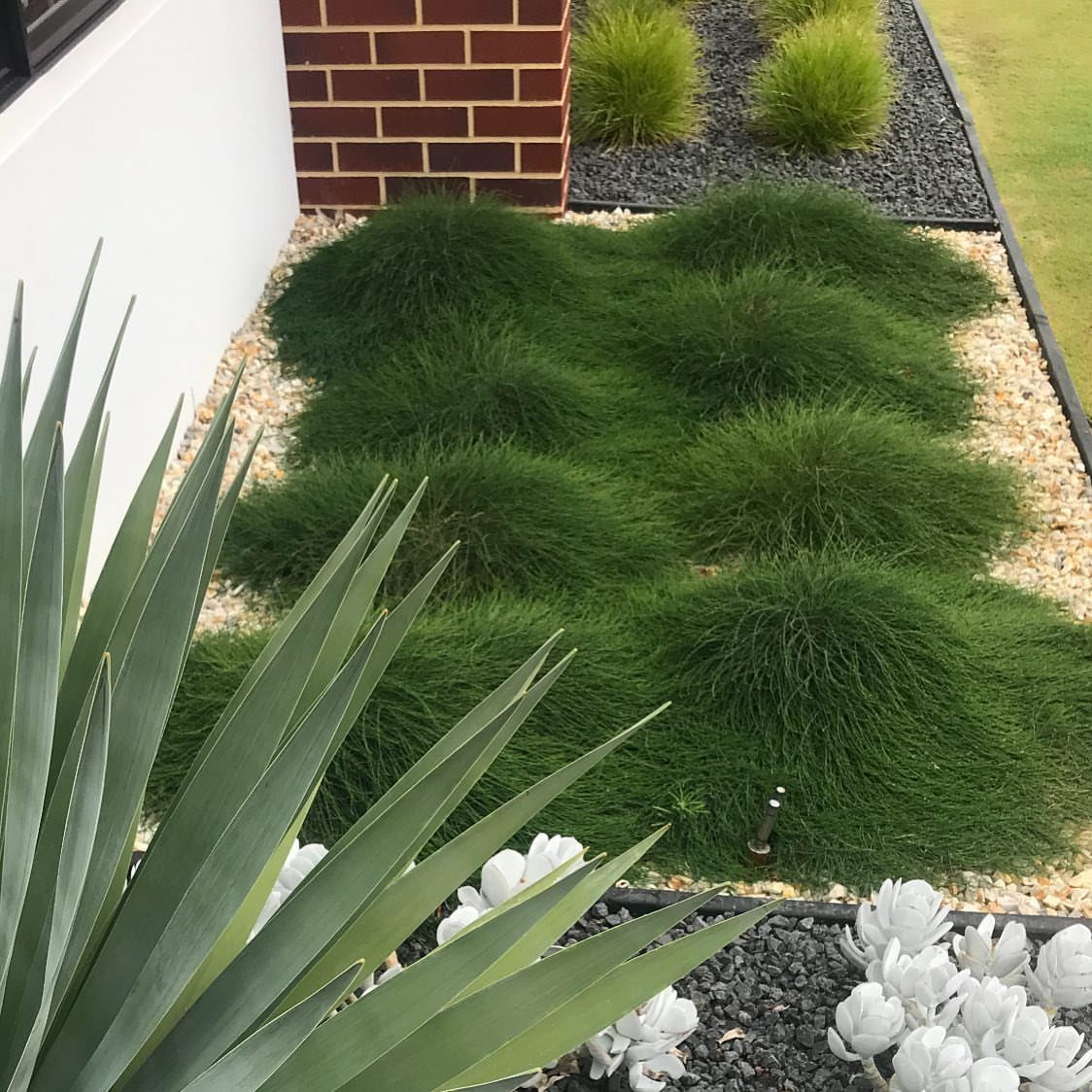
Choosing plants built for dry conditions is the biggest single cut to your watering. Mounding ornamental grass and a spiky agave are a good pairing: both look sculptural and neither asks for much.
I like setting them in gravel or mulch rather than open soil, because bare ground between plants invites weeds. Group them by thirst so you never water the whole bed for one plant.
Check what thrives in your region first; a local nursery can point you to the right ones.
3. Stone Paths
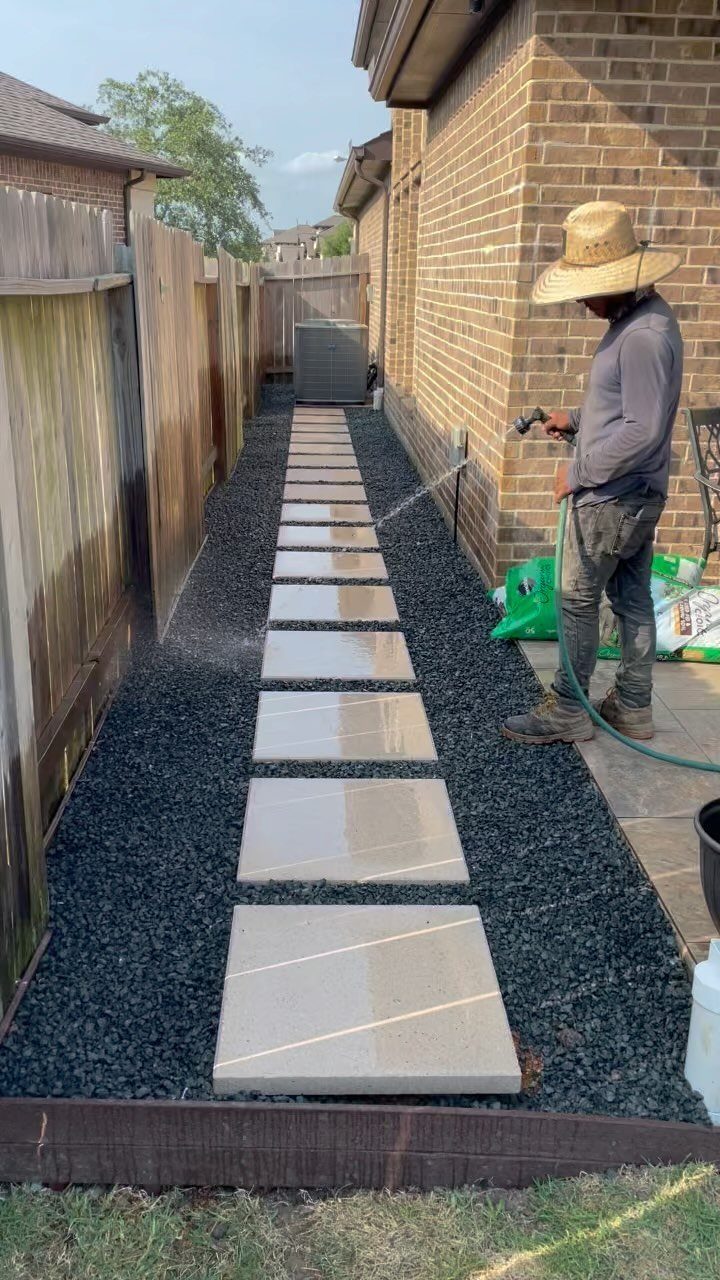
Square pavers set in dark gravel make a path that is simple to build and simple to live with. The gravel fills the gaps, so there is no grass to trim between stones and no mortar to crack.
Space the pavers for an easy stride and keep them level with each other so nobody trips. Rinse the surface with a hose when it gets dusty.
For a first-time builder, this is a gentle weekend project, and the cost depends mostly on which paver you pick.
4. Add a Water Feature
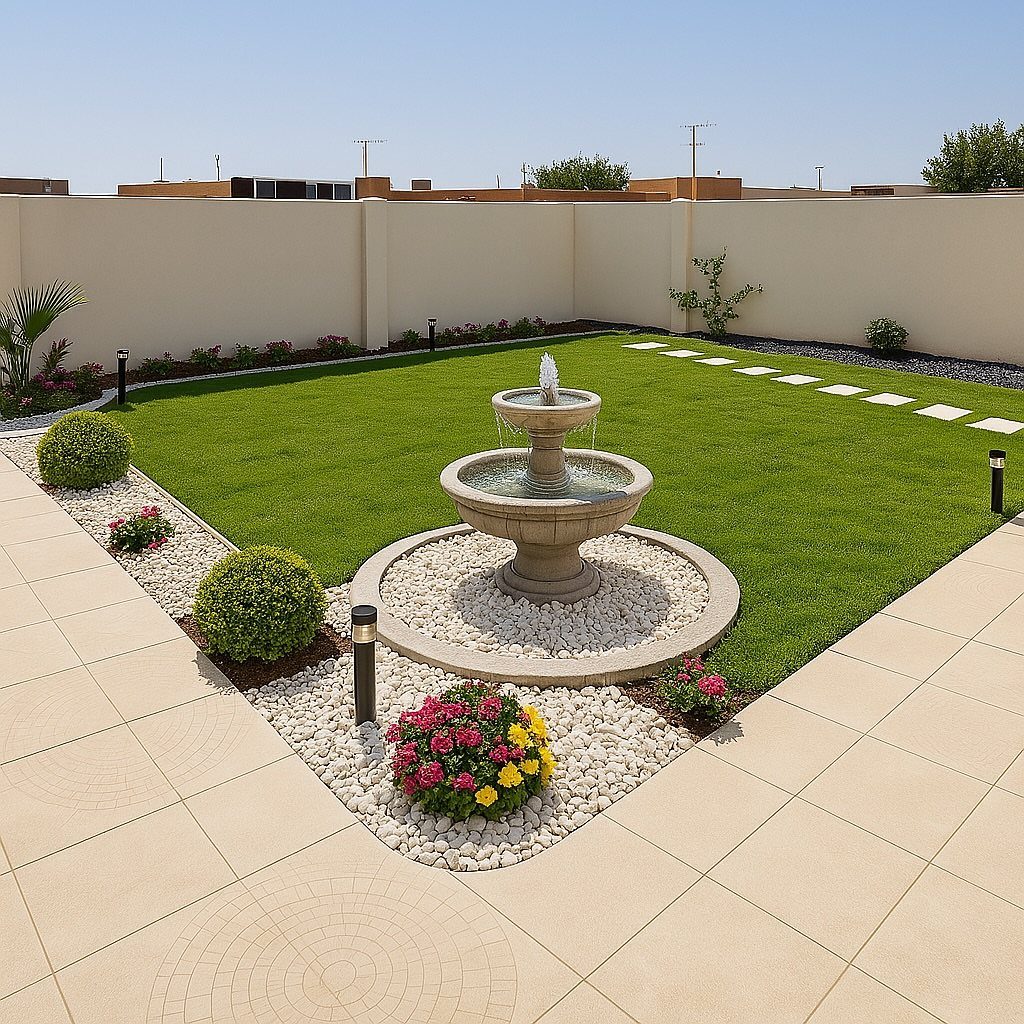
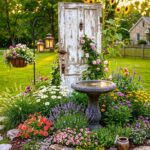
A tiered fountain gives you moving water and a focal point without the upkeep of a planted pond. Set it in a ring of pebbles, as here, and the lawn never has to be trimmed right up to its base.
I would choose a fountain over a pond if time is short. Place it where you can see it from a window or the patio, since that is where it earns its keep.
Plan on keeping the water topped up.
5. Weather-resistant Outdoor Furniture
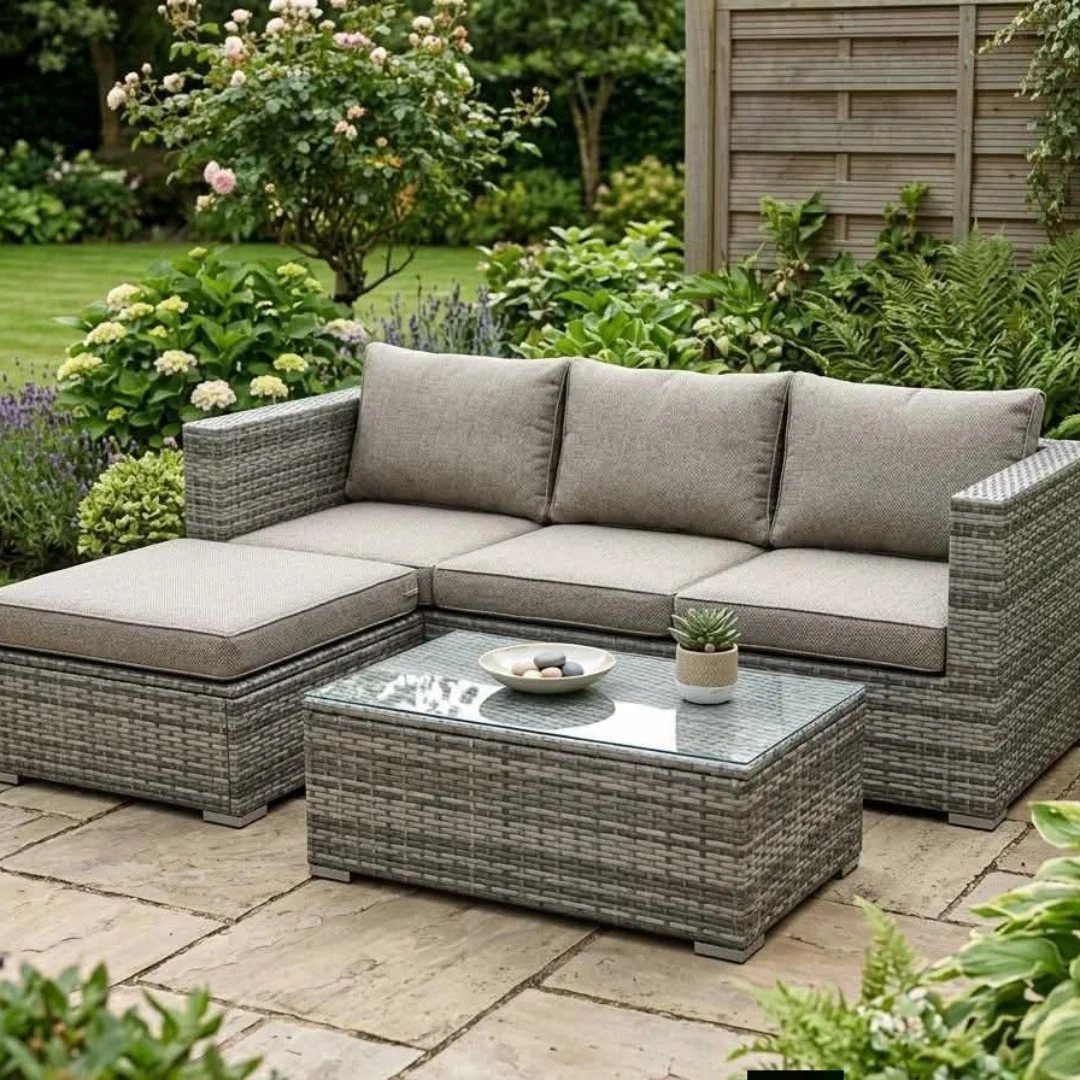
Furniture that stays outdoors all year should be made of materials that shrug off the weather, and wicker in a neutral grey is a sensible pick.
A sectional with a matching coffee table gives you a full seating area without constant sanding, staining, or repainting.
Make sure the frame and weave are rated for outdoor use, since indoor wicker will not last a season. Buying one durable set costs more up front than a cheap one, but replacing furniture every couple of seasons costs more.
6. Add Outdoor Rooms
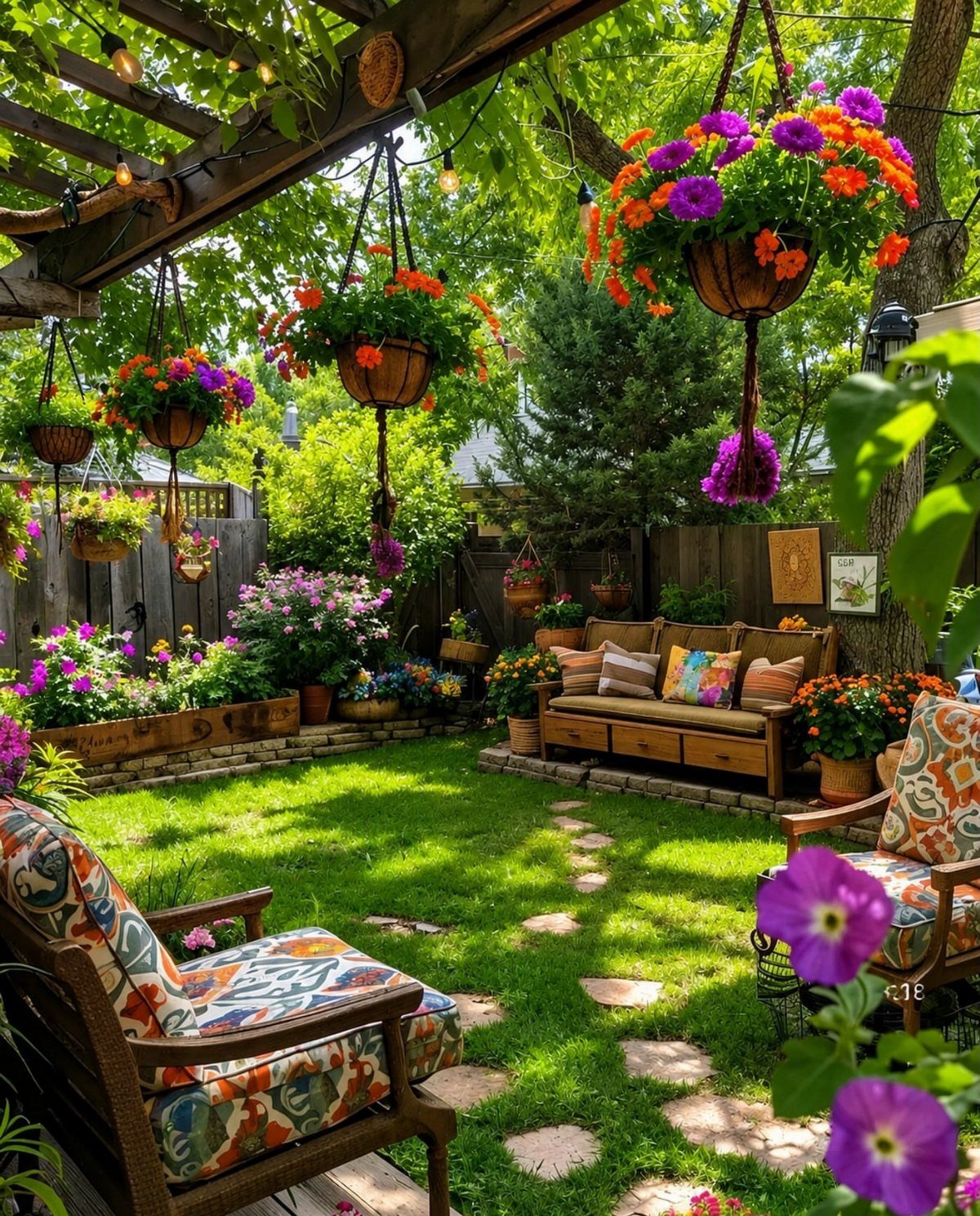
A pergola, a sofa, and a patch of stone underfoot turn a corner of the yard into a room you actually use. Every square foot you give to seating is a square foot of lawn you no longer mow.
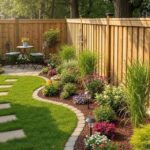
Start with a roofed or shaded structure, then add a path to reach it, as the stepping stones do here. Hanging baskets add color without taking up floor space.
I would keep the plantings simple and let the furniture and shade do the work.
7. Garden Seating
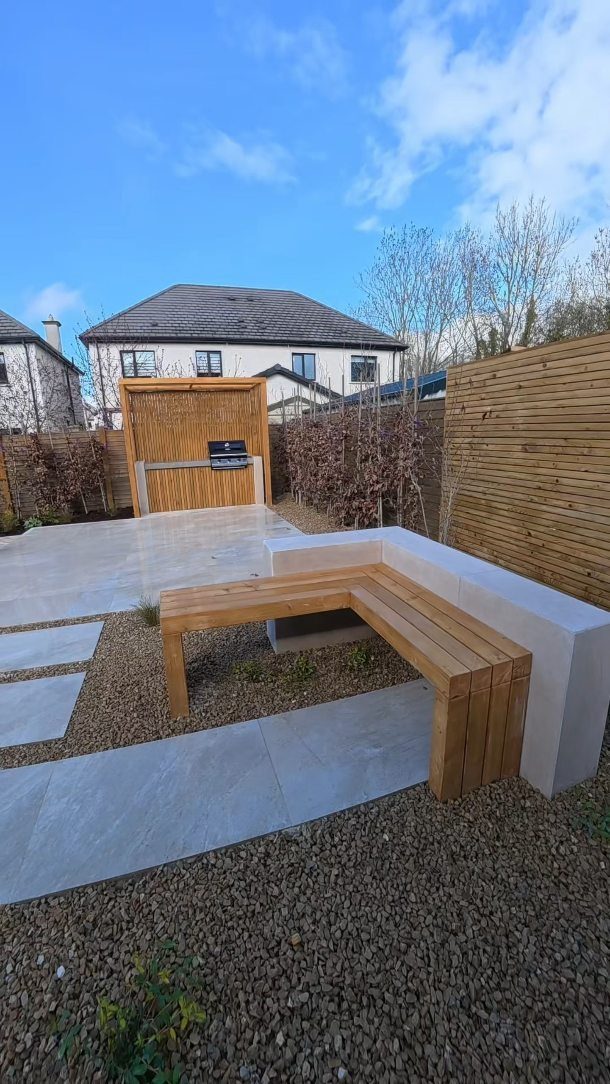
A built-in bench gives you a permanent place to sit with nothing to store for winter.
A built-in bench like this works best on a concrete base set into gravel, with a wood seat for comfort and a solid stone or masonry backrest that never needs paint or sealing.
An L shape suits a corner, since people can sit facing each other without a table between them. The gravel around it means no lawn to edge or mow beside the seat.
Wood is the part that asks for care, so I would pick a finish made for outdoor use.
8. Raised Planters
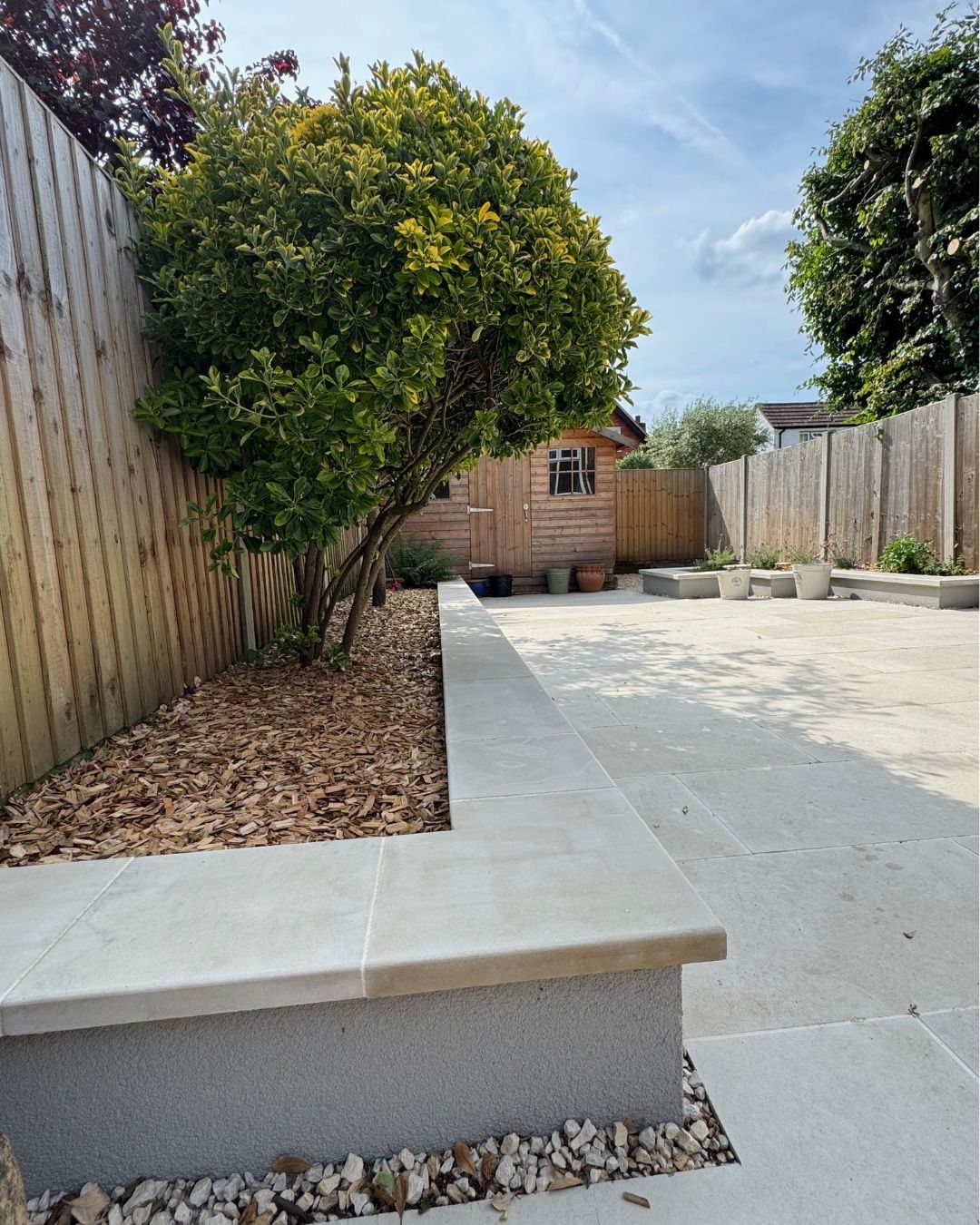
Low walls around a planting bed keep the whole thing tidy, and a single big shrub in one planter does more than a dozen small pots.
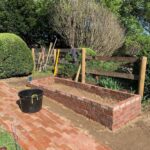
A rendered raised planter like this one holds the shrub and a layer of wood chips at a height where you can see the plant clearly.
Stone paving beside it means no lawn edge to trim. I would pick one large evergreen shrub over mixed plantings, since fewer plants means fewer jobs.
Keep the chips topped up as they break down.
9. Gravel Rivers
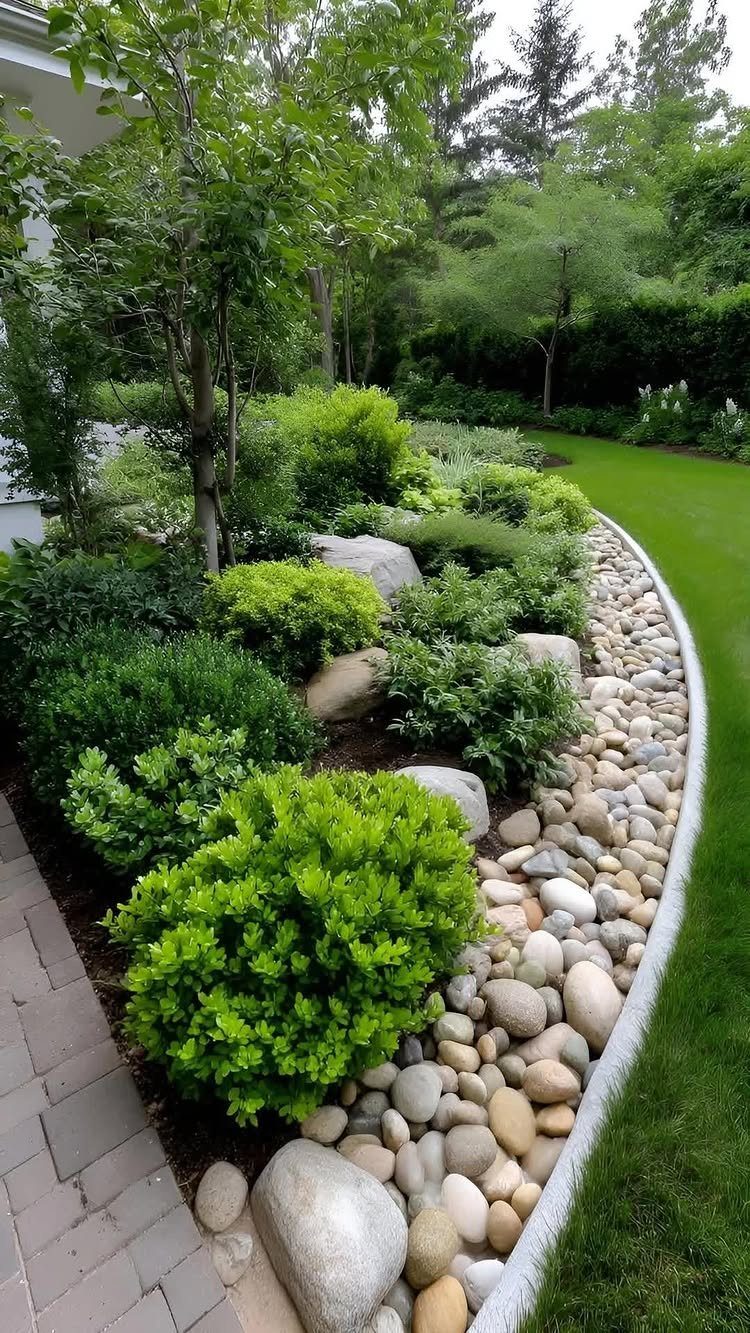
A curved band of smooth river stones reads like a stream running through the bed, and it replaces a strip of lawn or bare soil that would need mowing or weeding.
Against shrubs and trees, the pale pebbles also give the eye a line to follow.
Pick stones of a similar size, and lay the edge in a soft curve rather than a straight cut; curves look natural and are easier to mow beside. Lay landscape fabric underneath to slow weeds.
Loose stone shifts, so rake it level now and then.
10. Hardy Ornamental Grasses and Boulders
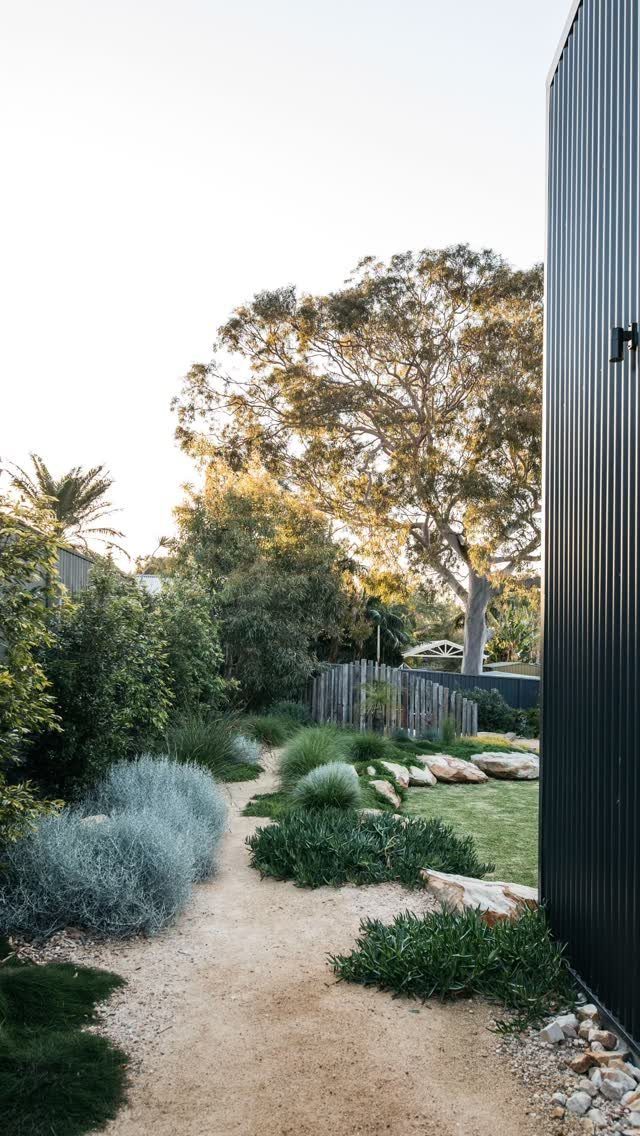
Silvery-blue shrubs, green grasses, and a few large boulders along a dirt path make a border that looks planted by nature. The rocks do the work of structure, so the plants can stay few and tough.
I like keeping the path itself as packed dirt and gravel: no edging to maintain and nothing to mow.
Set each boulder partly into the ground so it looks like it has always been there, and cluster plants in drifts of one or two kinds.
Pick grasses and shrubs that handle drought, so summer watering stays minimal.
Match Plants to Site Conditions
3 facts decide what will thrive in a bed: your USDA Hardiness Zone, your area’s typical rainfall, and how much direct light each spot gets.
Most flowering plants need 6 or more hours of direct light daily, so watch the spot from morning to evening before planting anything there.
Soil comes next.
Test it, and look at how well it drains after a heavy rain. If the results confuse you, your local County Extension Office can read them with you and suggest plants for your zone.
Natives are my usual first pick, because they already cope with the rainfall and soil in your region and need less coddling.
Even a tree or shrub that suits your climate can fail in the wrong spot.
A sun lover tucked into shade will struggle no matter how tough its reputation is, so match each plant to its exact planting spot, not just to your general region.
No Plant Is Maintenance-free
No plant is maintenance-free. Natives need less care than most, but they still benefit from occasional tending, and what that looks like varies by plant and by garden.
Read the plant’s care notes before buying, because a plant that is easy in one yard can be fussy in another.
Space junipers and other shrubs for the size they will reach at maturity, not the size of the nursery pot.
A tag that says 5 feet wide means that much clear ground, or you will be pruning every year to hold it back.
Some plants will need to come out. If one turns invasive, outgrows its space, or was simply placed badly, removing or replacing it early costs less effort than fighting it later.
Frequently Asked Questions
What is the most low-maintenance garden?
No garden is free of upkeep, so the lowest-maintenance one is the one built around your climate and the time you have.
Cover planted ground with mulch, use drought-tolerant plants, and replace lawn with gravel, pavers, or stone. Each swap removes a regular chore like mowing, edging, or hauling the hose.
How do I choose plants that are matched to my climate, soil, and sun conditions?
Before buying anything, I’d pin down your USDA zone, how much rain a typical year brings, and how many hours of direct light each bed gets.
Most flowering plants want 6 hours or more of full sun, so check the spot at morning, noon, and late afternoon before you trust a guess.
Digging a test hole and filling it with water after a hard rain shows you quickly whether the soil drains or holds standing puddles.
How much watering do low-maintenance plants actually need after they are established?
Once roots have settled in, usually after one full growing season, most perennials, shrubs, and trees get by on roughly 1 inch of water weekly, and natural rain often supplies all of it.
Hotter, drier areas in Zones 7–10 may need extra in summer. Water deeply and rarely, and check the soil 2–3 inches down before you do.
Where do you spend the most chore time in the garden, and which part is the most enjoyable?
Find the areas that take the most work, then change or remove those features. Lawn edges, bare soil that grows weeds, and thirsty plants are common culprits, and gravel, mulch, or pavers can replace them.
Keep the parts you enjoy, such as a seating spot or a fountain, and let the rest take care of itself.