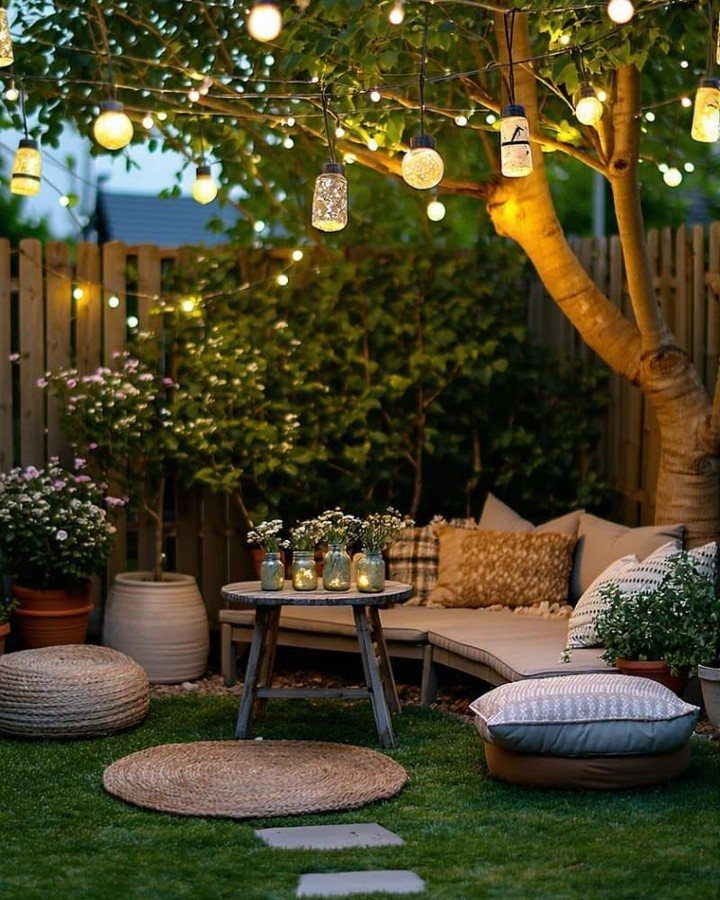
Whether the yard is rented or owned decides most of this list. String lights and outdoor pillows come down when you move, while a shed, a flower bed or a painted patio stays with the house.
The span runs from a free Saturday of mowing stripes to a secondhand shed, the most expensive item here, and in between sit cinder blocks, clover seed and a pump for a small rocky stream.
Pick the ideas that fit how long you will be there, then match the spend to your yard.
1. String Lights
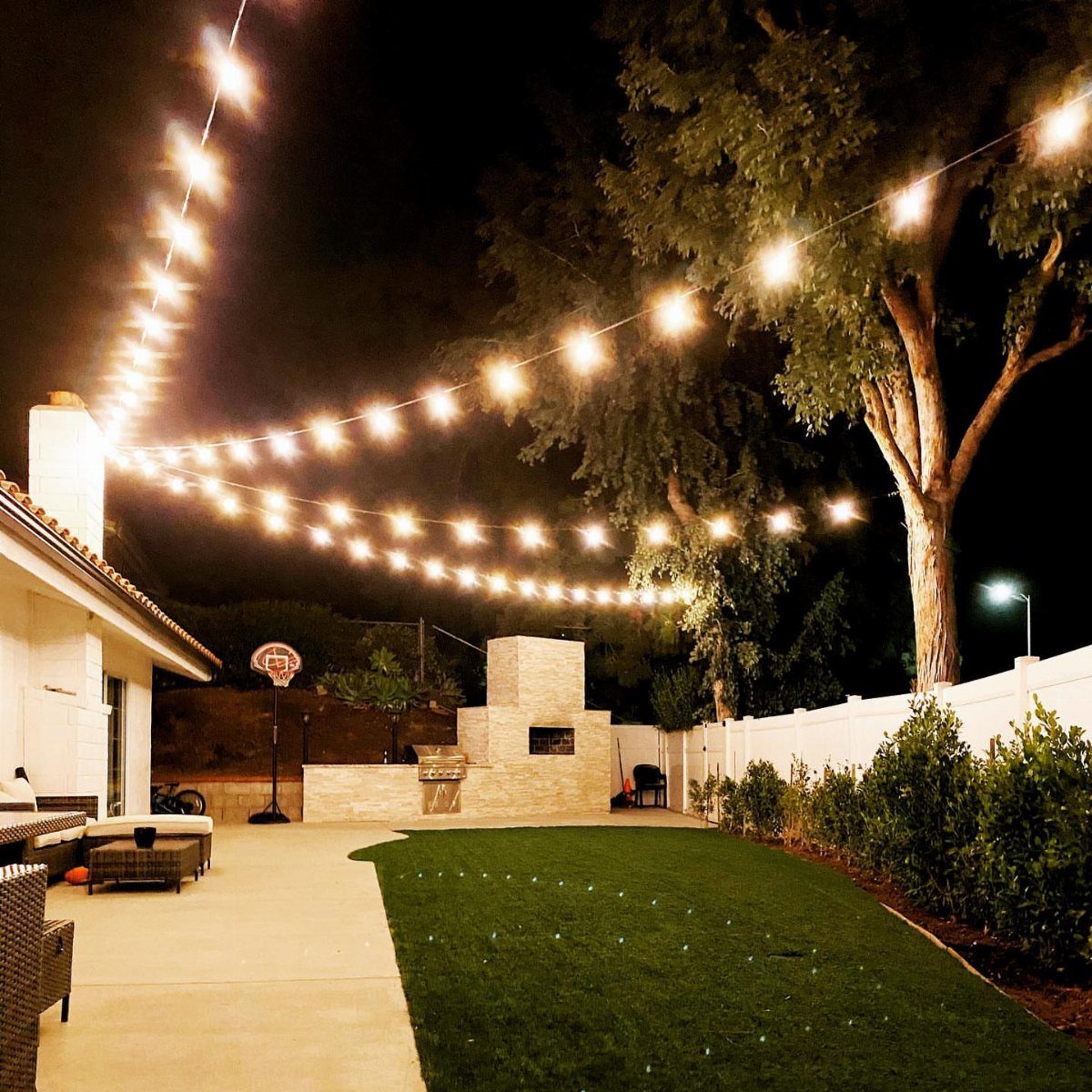
Soft light overhead does more for an evening seating area than any new furniture. Strings of bulbs crossing a patio turn a plain slab and lawn into a place people want to stay after dark.
Hang them in zigzag or parallel runs so the glow covers the whole seating area, not just one edge.
A tree, a fence post, and the house wall all make handy anchor points, so you may not need to buy any poles.
Warm-white bulbs look cozier than cool white. Pick a set made for outdoor use.
2. Water Features
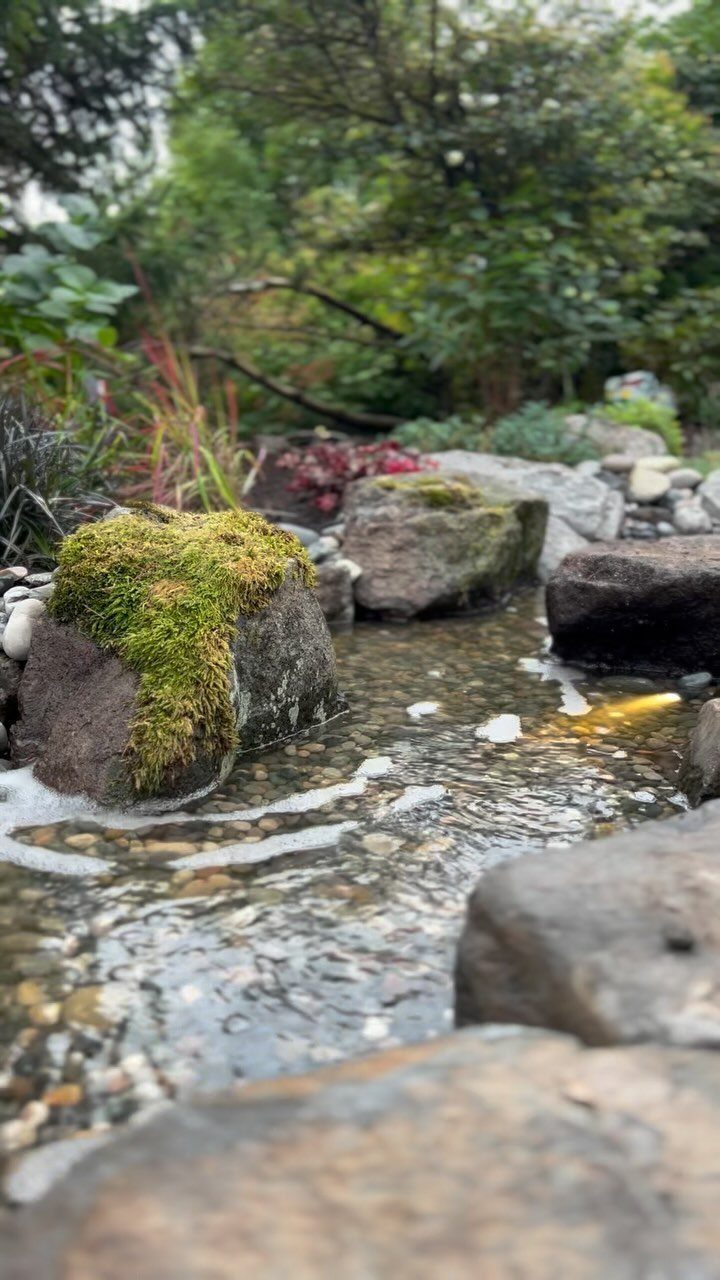
Moving water makes a yard sound calmer, and a small rocky stream is a cheap way to get there. Mossy stones, pebbles, and plants crowding the edges make it look like it has always been part of the garden.
Rounded stones in mixed sizes read most natural.
Set the largest ones first, then fill gaps with pebbles. A pump and a hidden reservoir keep the water circulating.
Expect the pump to be the main cost; the stones can often be found secondhand or gathered free.
3. Repurposed Planters
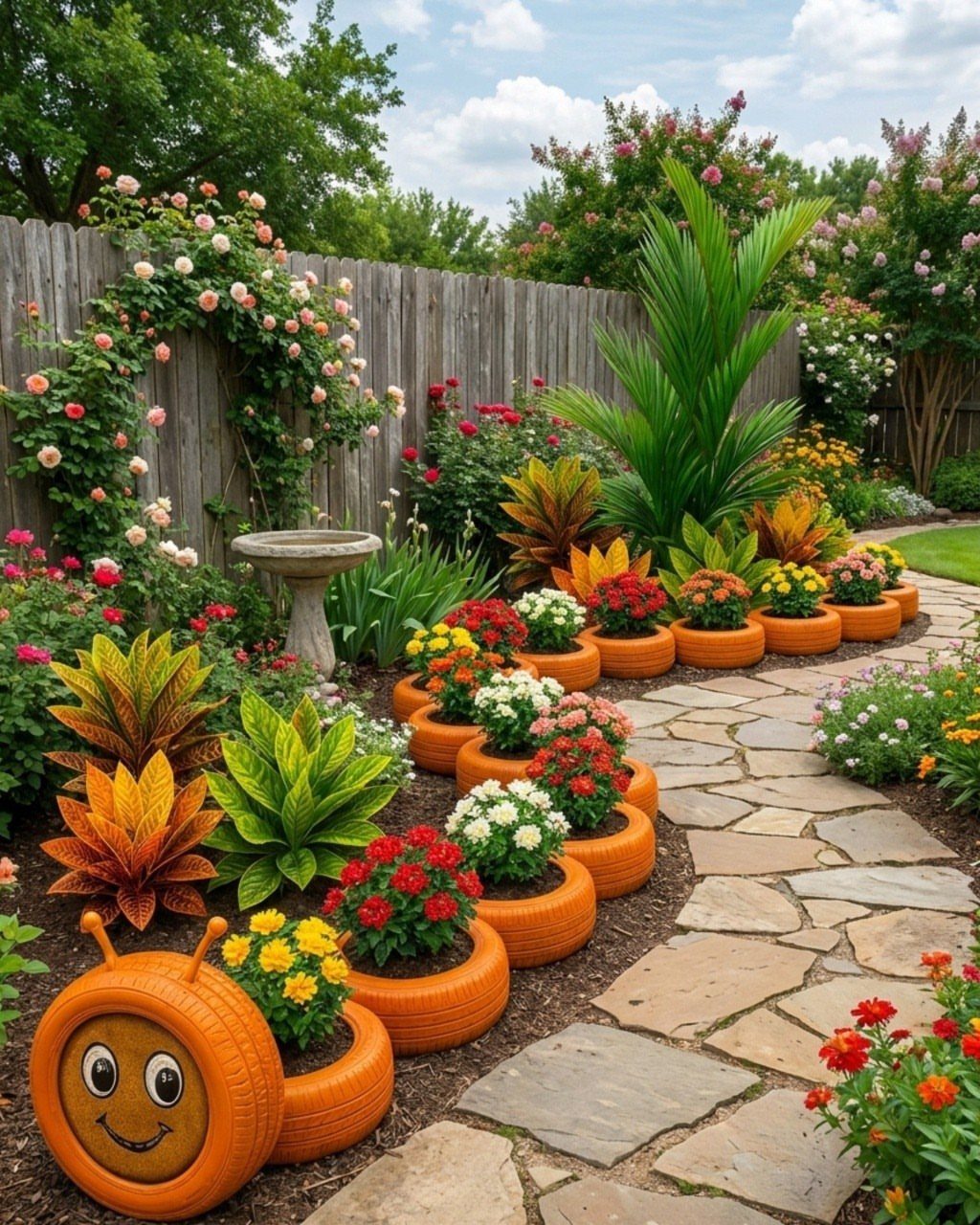
Old tires, painted a single bright color, make planters with more personality than anything from a garden center. Orange is a bold pick, and it holds up against green leaves and mixed blooms.
Scrub the tire, let it dry, then paint it.
Stack or cut shapes if you want something playful, like a bee. Fill with potting soil and plant.
Any rescued container works the same way: buckets, crates, teapots, boots. Poke drainage holes in the bottom first, or the roots will sit in water and rot.
4. Vertical Gardens
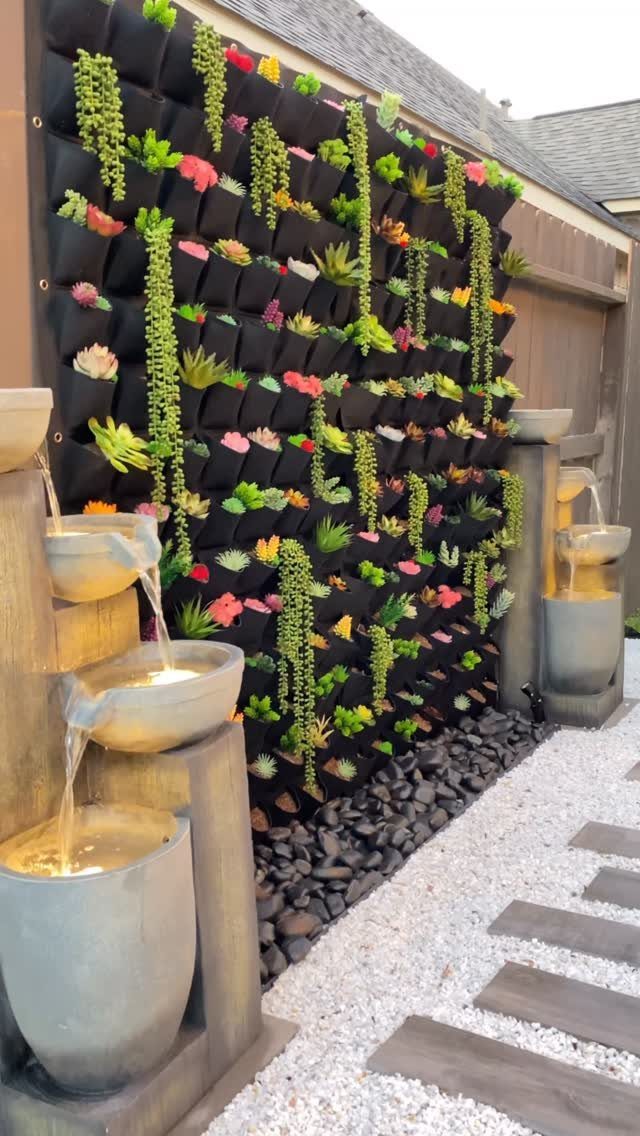
Felt pockets hung on a wall give you a garden with almost no ground space. Succulents suit them well, since they stay compact and don’t need much soil.
Mount the panel to a sturdy wall or fence, then fill each pocket with potting mix and plant snugly.
Black felt looks sharp and hides dirt. Water slowly so pockets don’t overflow.
Small pockets dry out faster than beds, so check them often. For a renter, this is the best option, because nothing gets dug up and it can come down when you move.
5. Rock Gardens
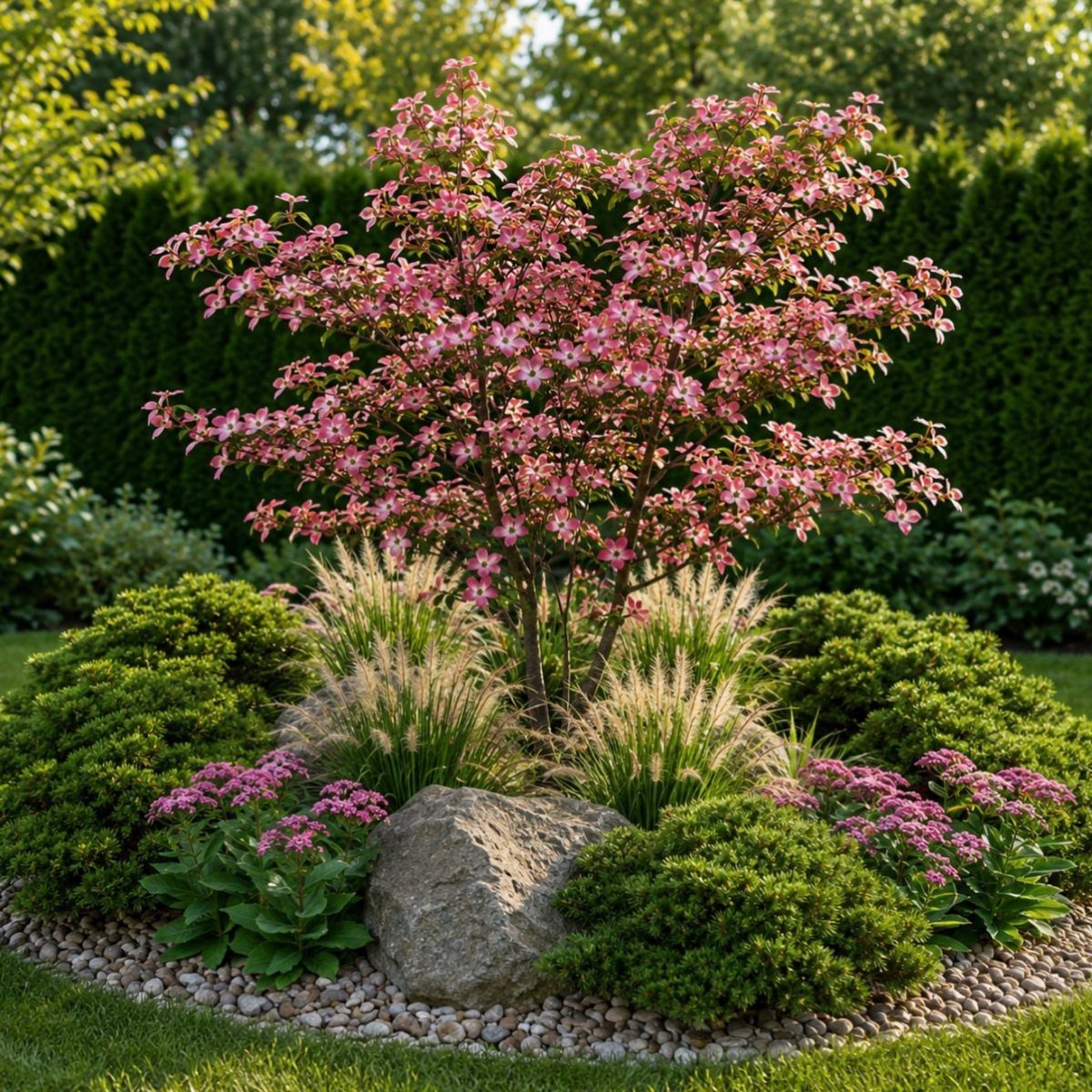
One large rock can anchor a whole bed.
Choose a rock with a flat, stable base so it sits partly buried and looks settled. Pebbles also keep the bed neat and cover bare soil, so it needs little upkeep.
Look for free or cheap stone from local sellers and neighbors, since rock is heavy and delivery adds up.
6. Utilize Mulch
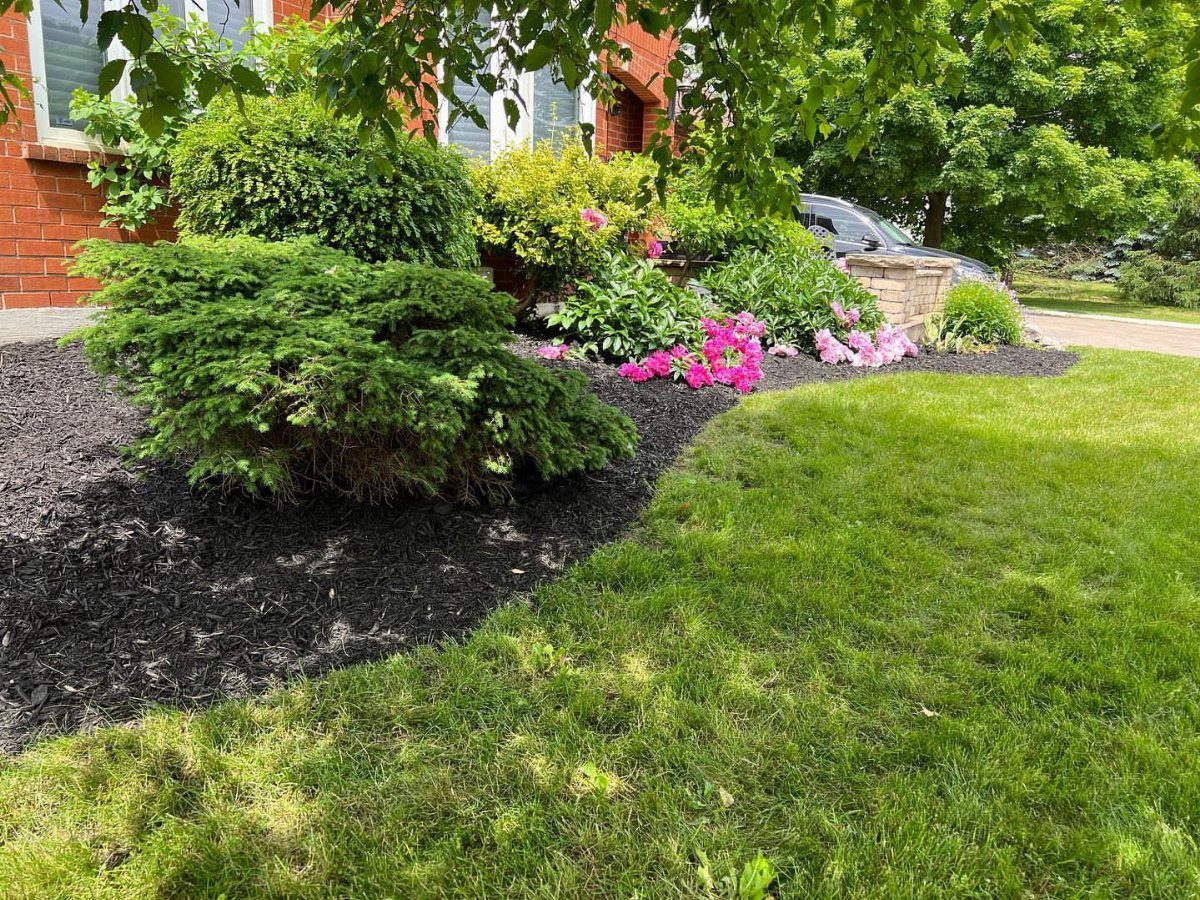
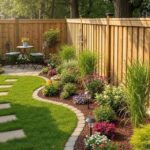
Fresh dark mulch is the cheapest finishing touch a bed can get. Spread over the soil around shrubs and flowers, it sharpens the line against the lawn and makes green foliage and pink blooms stand out.
Mulch also holds moisture in the soil and keeps weeds down, which means less watering and pulling. Spread it in an even layer, and keep it from piling against plant stems.
Cut a clean edge between bed and grass first. It takes an hour with a spade and makes the whole thing look deliberate.
7. Painted Fences
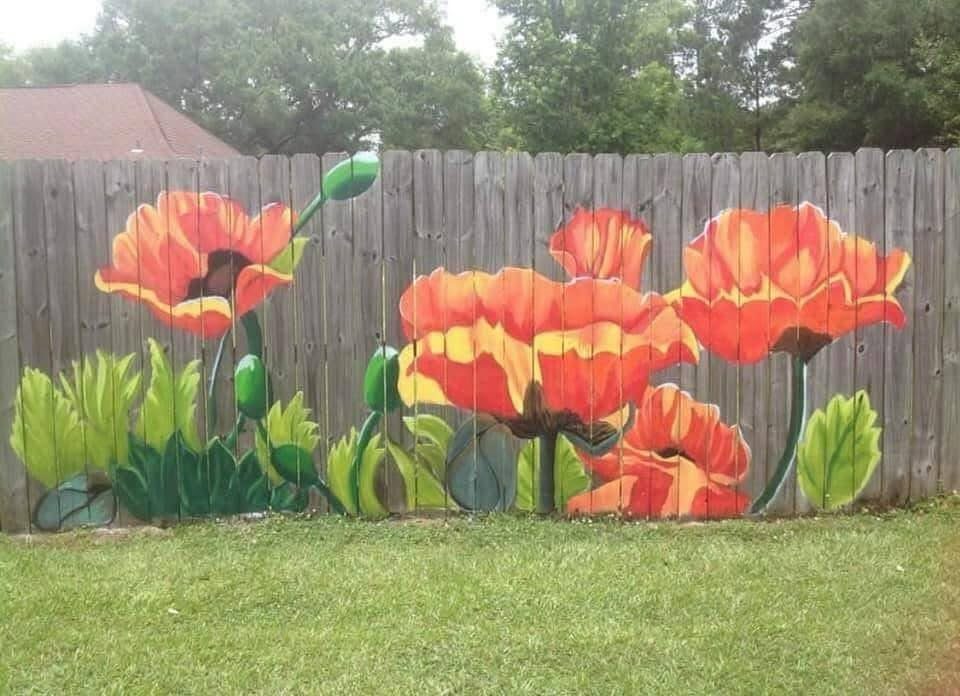
A fence you already own is a free canvas, and a coat of paint costs far less than new boards.
Clean the boards first and let them dry. Sketch big shapes in chalk, then fill them in with outdoor paint, working from the biggest areas down to the leaf details.
If painting flowers feels like too much, one solid color or a stain still revives tired wood.
8. Concrete Planters
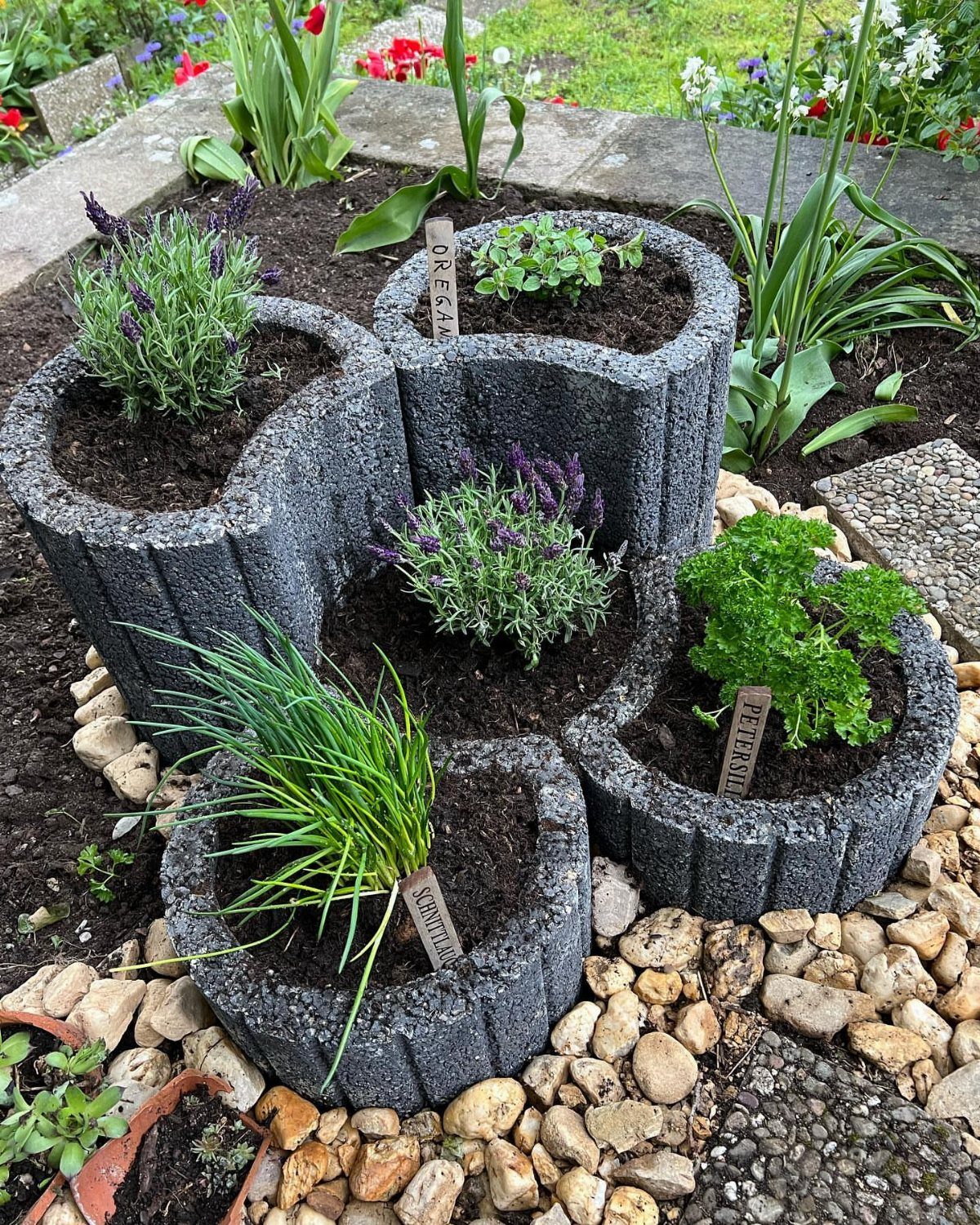
Gray concrete planters have a heavy, calm look that makes herbs and flowers look more intentional. Cast in a mold, they are sturdy, and a cluster in different heights looks better than a single pot.
Make the mold from a container you already have, and use 2 sizes if you want a nested shape for the cavity. Pour, let the concrete set, then unmold.
Set the planters on a bed of pebbles for drainage, and label the herbs with small stakes or painted tags if you like. Add drainage holes before the concrete hardens, since roots sitting in water rot.
9. Zen Gardens
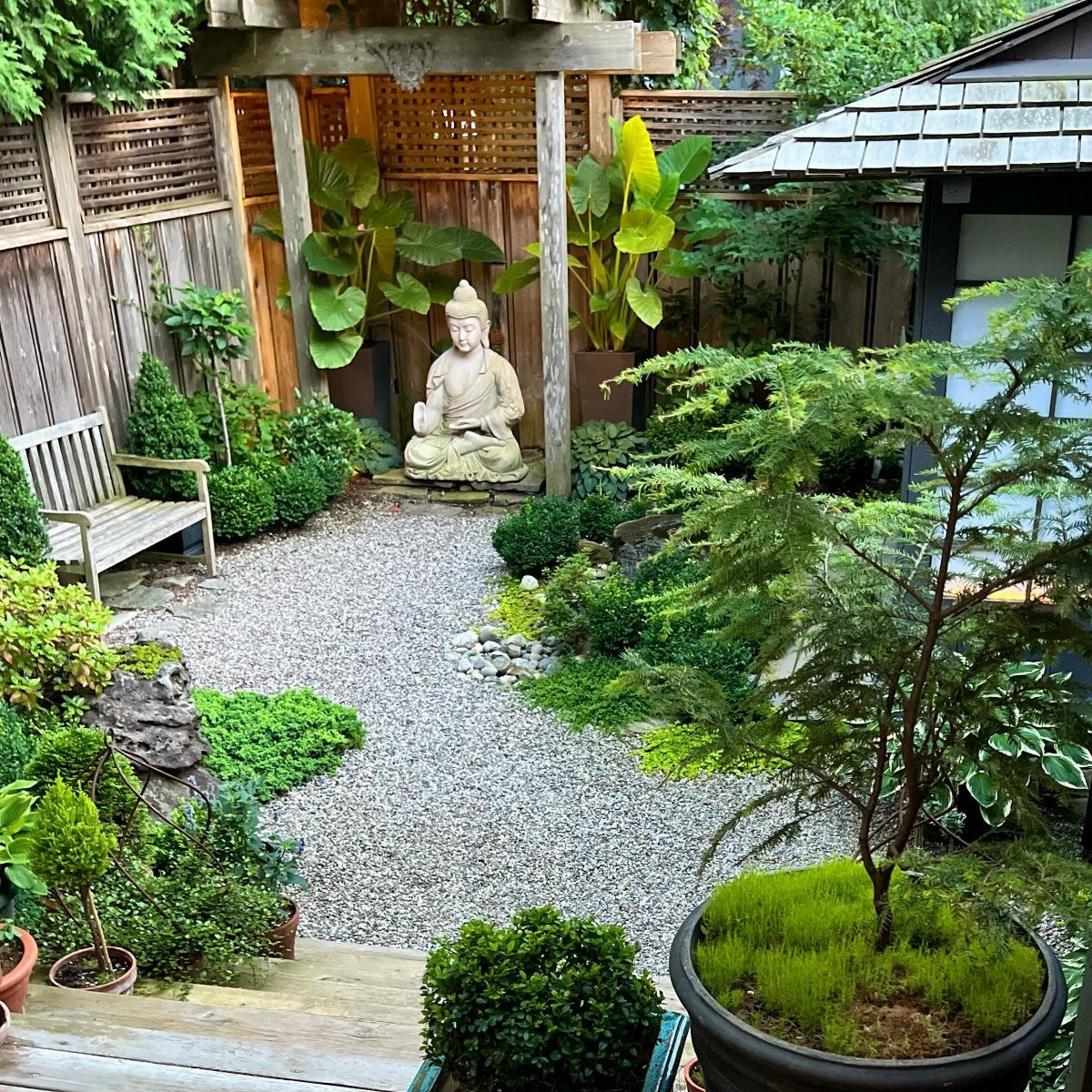
Gravel, a few stones, and one focal statue make a corner of the yard feel quiet.
Lay a gravel path to guide the eye through the space, and keep the plantings simple: a few shapes repeated look calmer than many varieties. Rock and sand cost little compared with most yard projects.
I like a small bench best here, because a spot meant for stillness should invite you to stop.
10. Backyard Storage
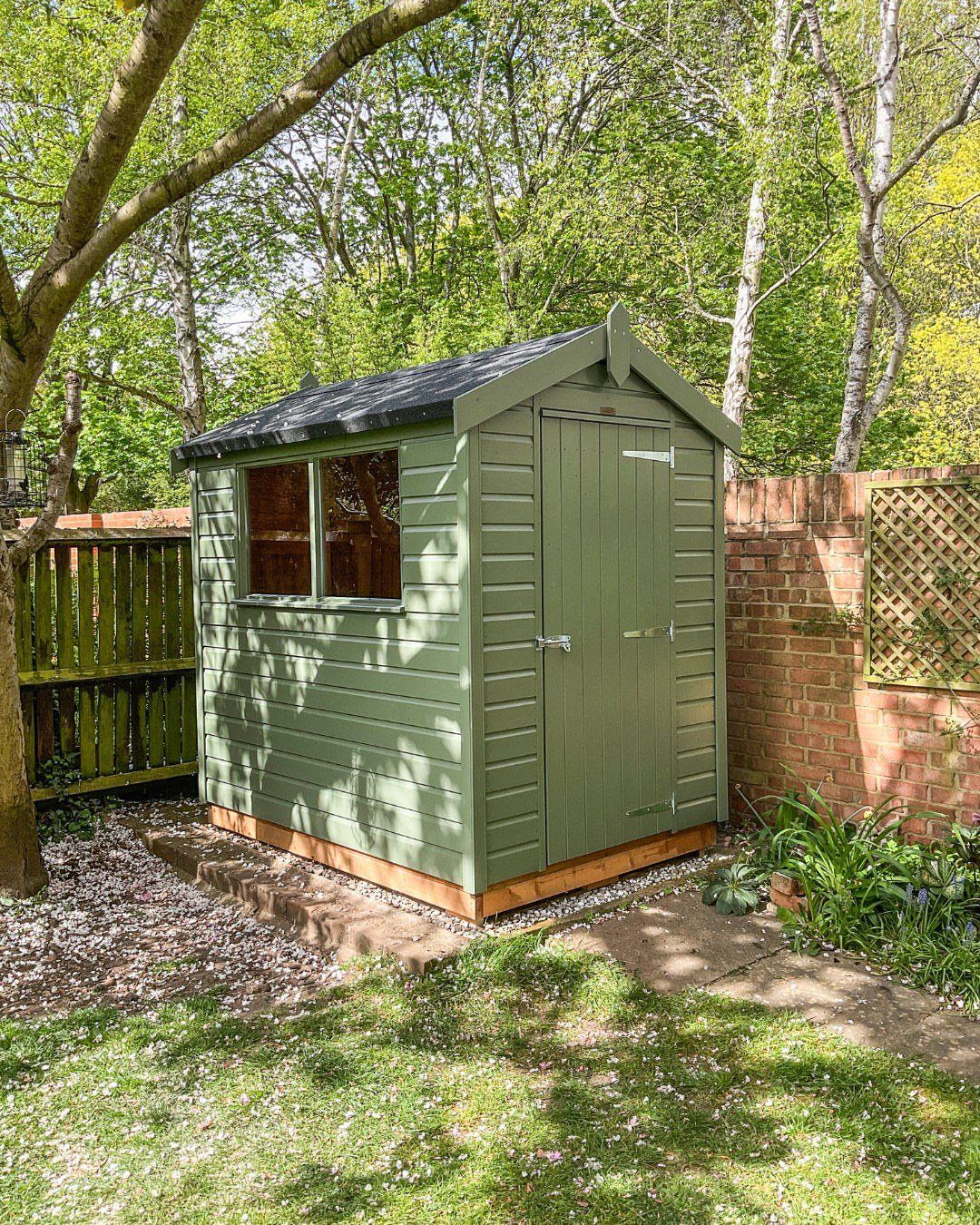
A basic wooden shed gets mower, tools, and cushions out of sight, and a coat of green paint helps it blend in with the trees and grass. A window brings in daylight, so you can find things inside.
Place it beside a fence or wall, as here, so it takes up less lawn and looks tucked away. Paint matters as much as size: pick a color from the yard and the shed fades into it.
A shed is the priciest storage option on this list, so a secondhand one is worth hunting for.
11. Garden Mirror
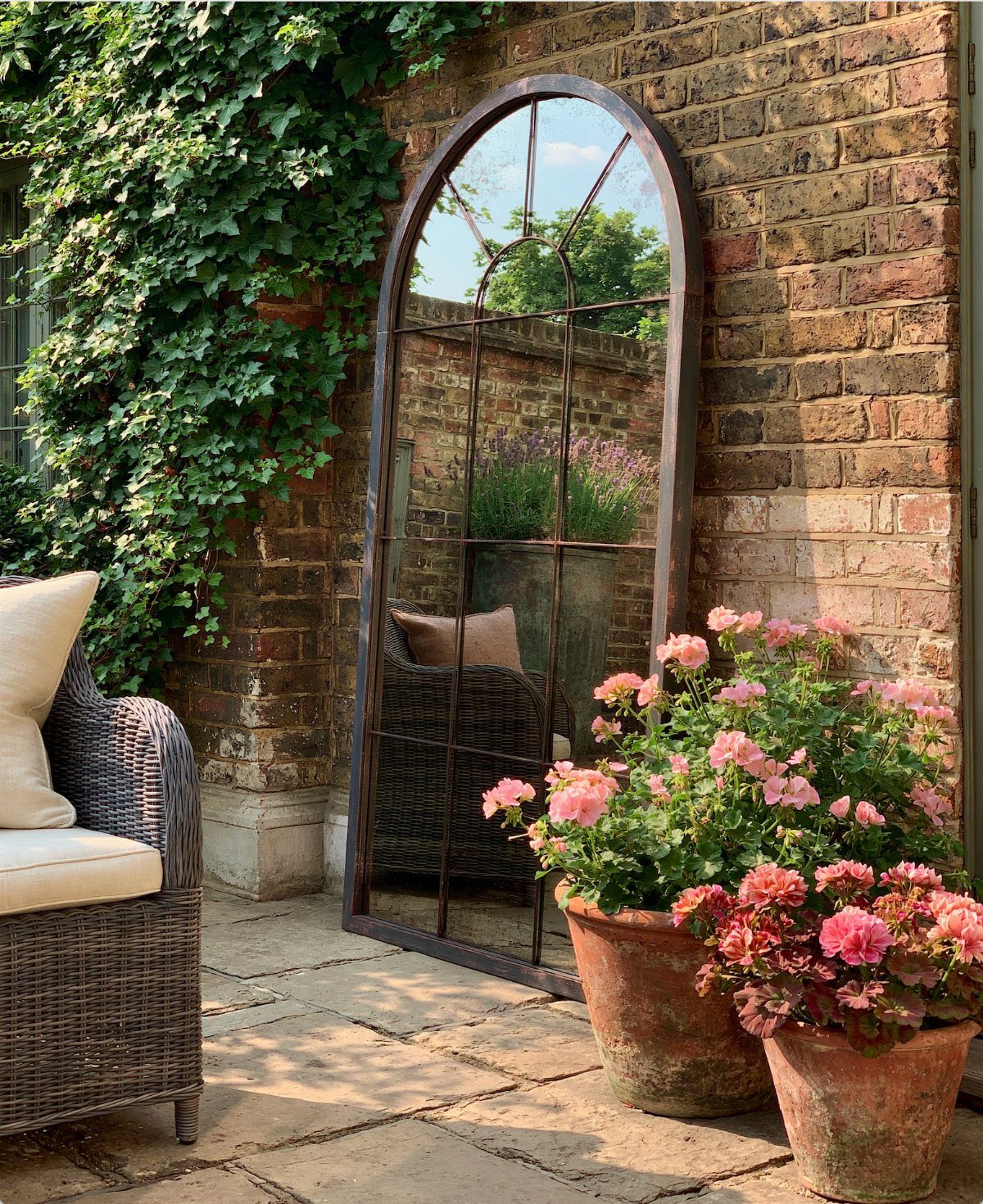
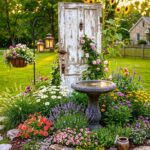
An arched mirror with window-pane divisions makes a patio wall look like a doorway to more garden. Leaned against brick, it bounces light and doubles the view of the plants in front of it.
Face it toward your best planting, since it repeats whatever it sees. Pink potted flowers and a little climbing ivy look good beside it.
Leaning is the easiest way to place it, but secure it so wind can’t tip it. Secondhand frames are the budget route.
12. Cinder-block Bench
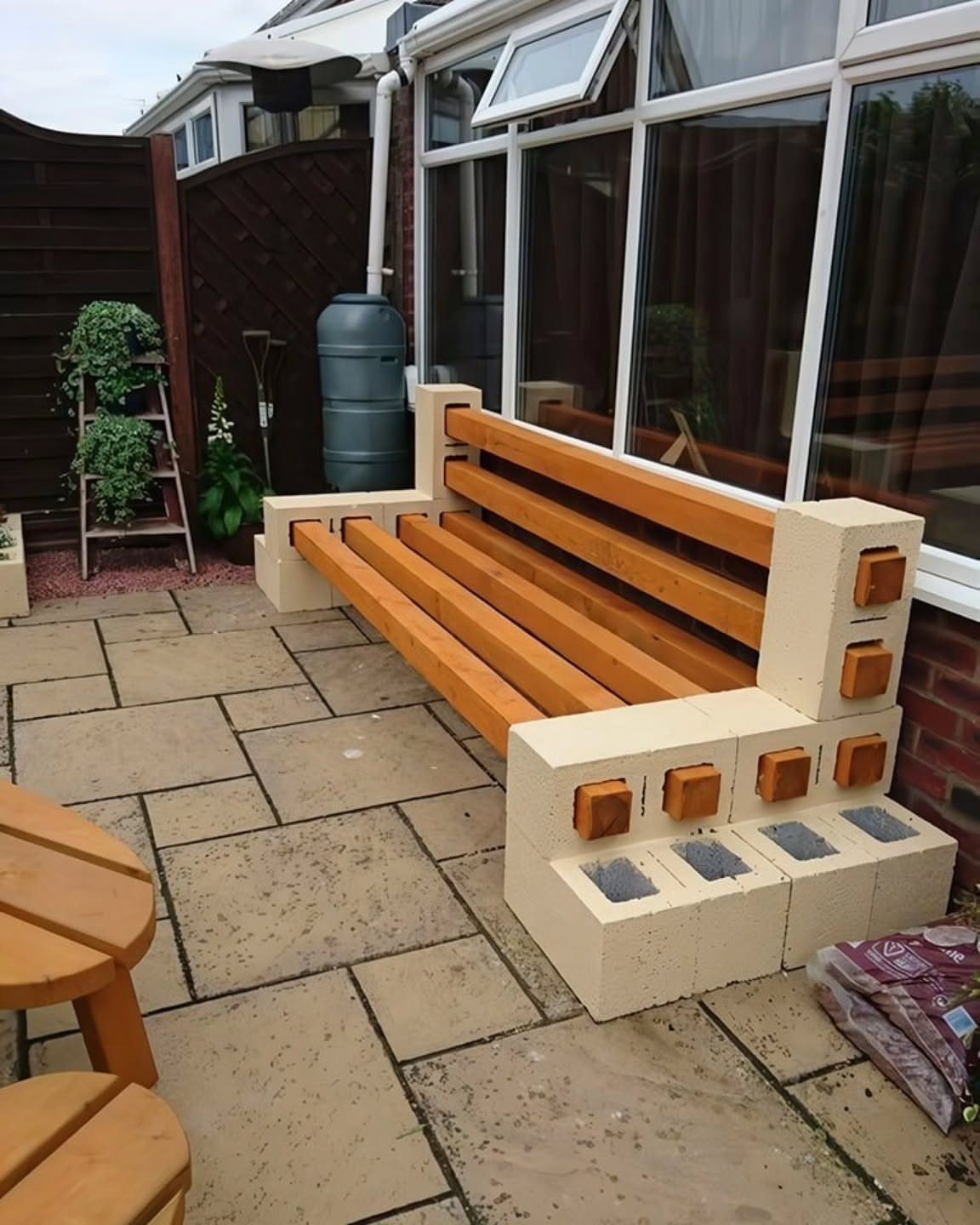
Stack cinder blocks, lay wooden slats across them, and you have a bench for the price of a few blocks and some boards.
Cream paint on the blocks keeps them from looking like a construction leftover, and it matches a light house trim.
Set the blocks on level ground, with the openings facing out for a neat line. Lay the slats across and check that they sit evenly.
13. Outdoor Pillows
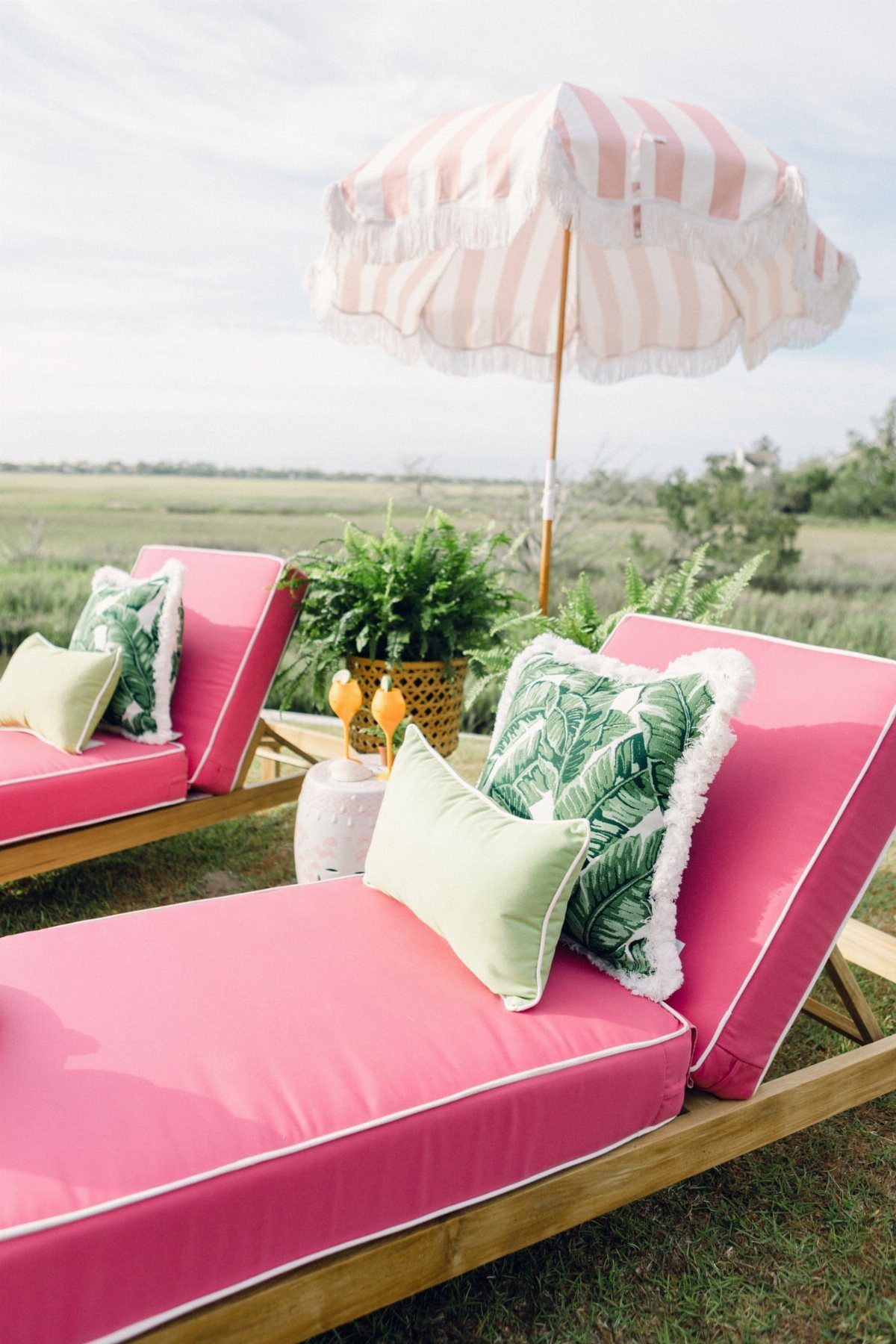
Outdoor pillows are the cheapest way to make a hard chair feel like a place to sit all afternoon.
Pick two or three patterns in one color family and repeat them across the seats, so the group looks planned. Choose covers labeled for outdoor use, since plain fabric fades and mildews fast.
Covers are easy to swap, so a small seasonal refresh beats buying new furniture.
14. Flower Beds
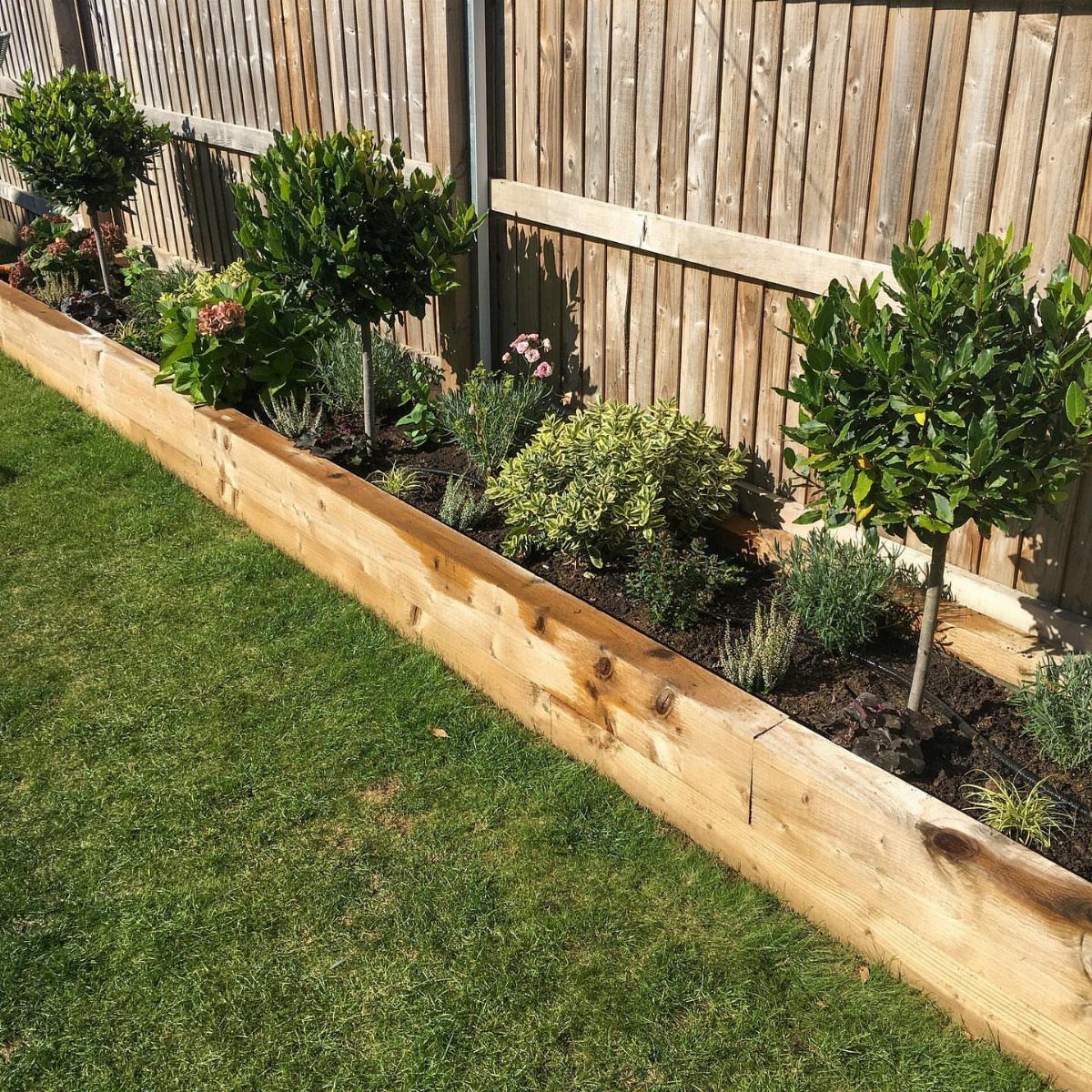
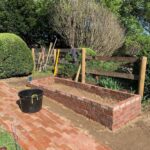
A raised wooden bed along a fence gives plants a defined home and gives the yard a layer between lawn and boards.
Small trees and shrubs at the back, with flowers in front, build height so the bed reads as full instead of flat.
Plant tall to short from the fence outward. That keeps every bloom visible.
A box also keeps soil contained and lets you fill it with good potting mix, which helps if your ground is poor. Lumber is the main cost.
15. Fire Pits
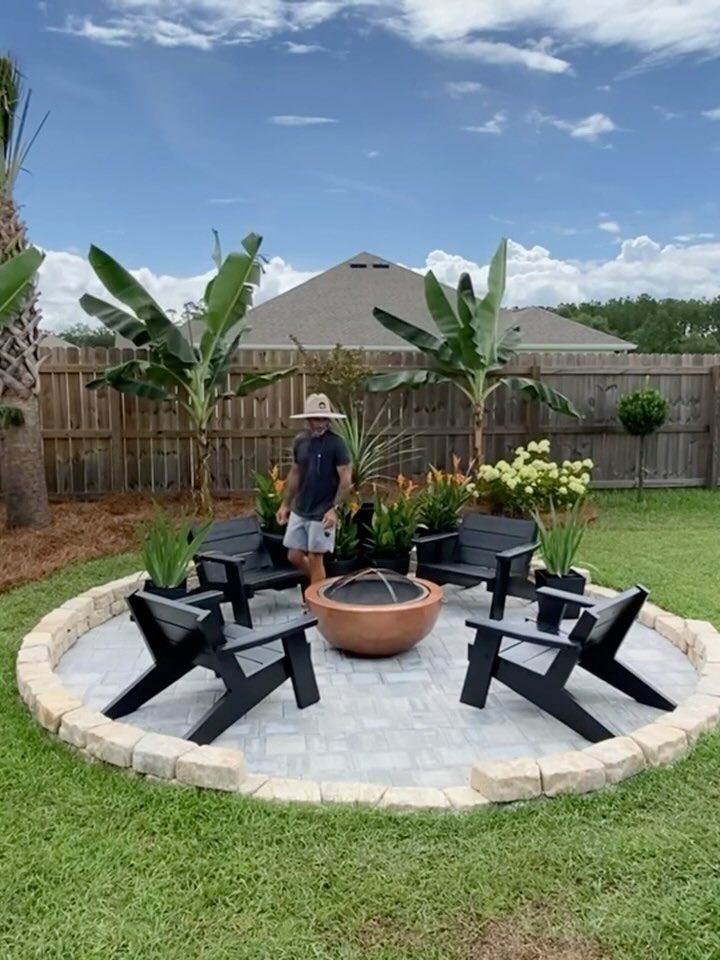
A copper bowl fire pit on a round paved patio gives the whole yard a center. Chairs placed in a ring around it pull people in, and the circle shape means nobody sits at the far end.
Keep the seating a comfortable distance back, and set the pit on stone or pavers, never on grass or a wooden deck. Check your local rules before you light anything, since some towns restrict open flames.
Tropical plants nearby soften the metal, though I would keep them well away from the flames.
16. Clover Lawn
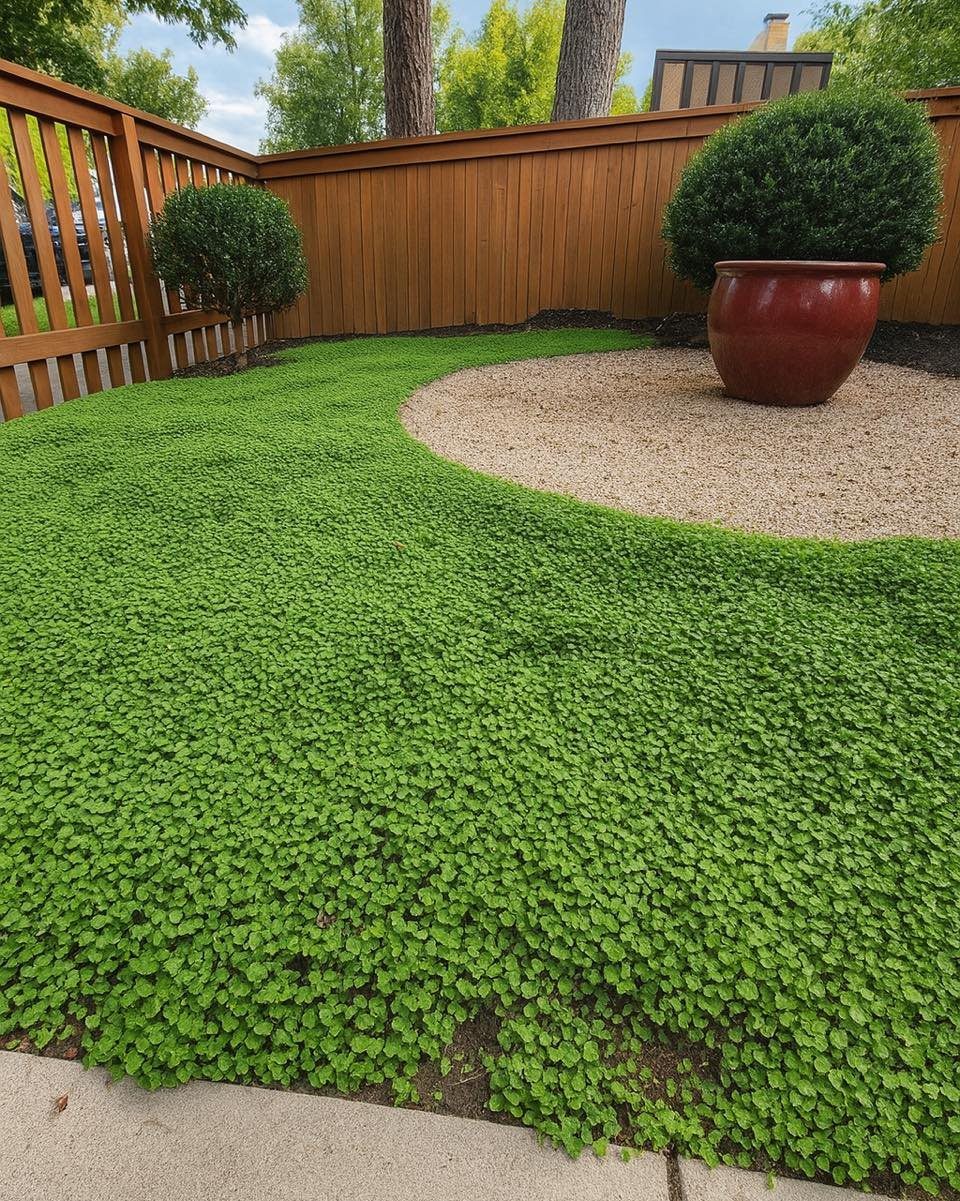
Clover makes a soft green lawn that stays full without much fuss. Clover mixes well with gravel and wood, which adds texture to a backyard for very little money.
You can overseed an existing lawn with clover or replace the turf outright; seed is the main cost. Mixing it in is the gentler start, and you can see how you like it before committing the whole yard.
Clover has a looser look than a tight, stripe-ready lawn, so decide which one you want first.
17. Painted Patio
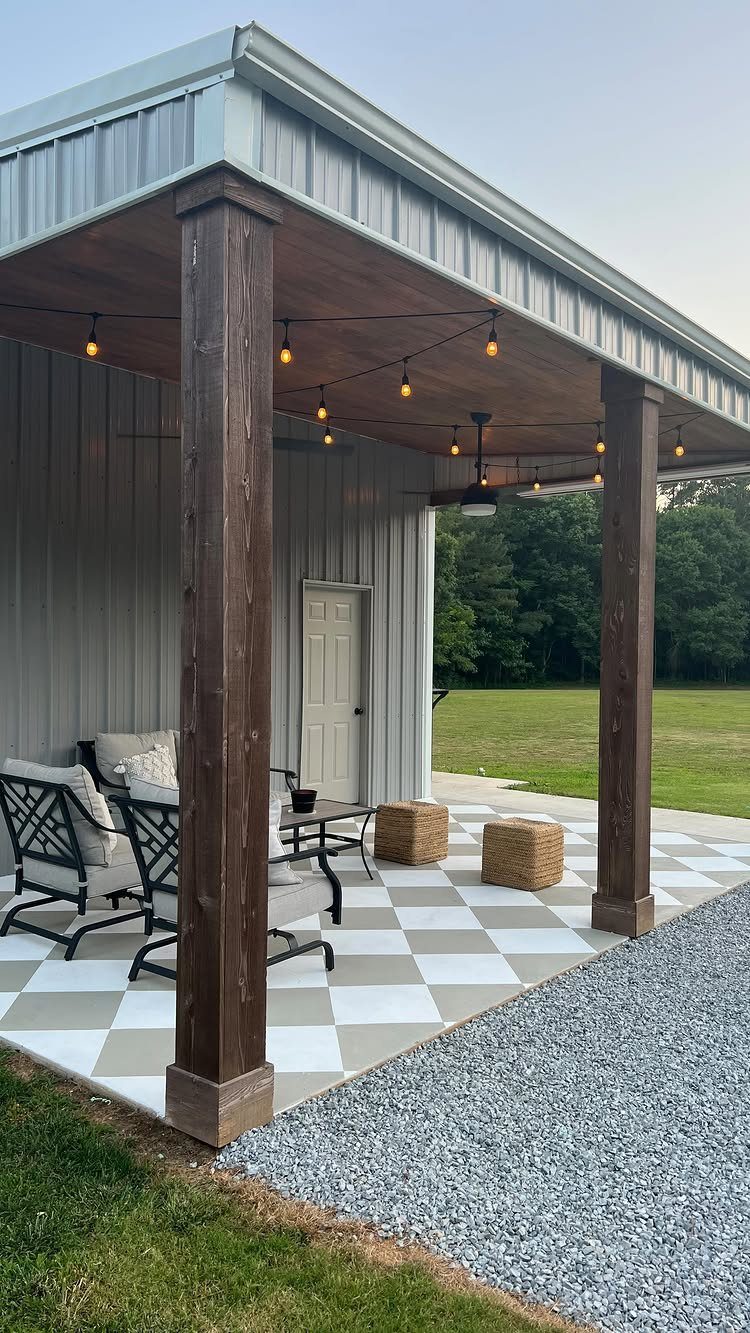
Paint turns a plain concrete floor into a checkerboard, and that one pattern makes a covered patio look planned. Beige and white squares stay quiet enough to sit under string lights and furniture.
Sweep and clean the slab, then let it dry.
Mark the grid with painter’s tape and a chalk line so the squares come out even. Use paint made for floors.
Painting every other square means half the work. Tape is the real time sink, so budget a weekend.
18. Mowed Lawn
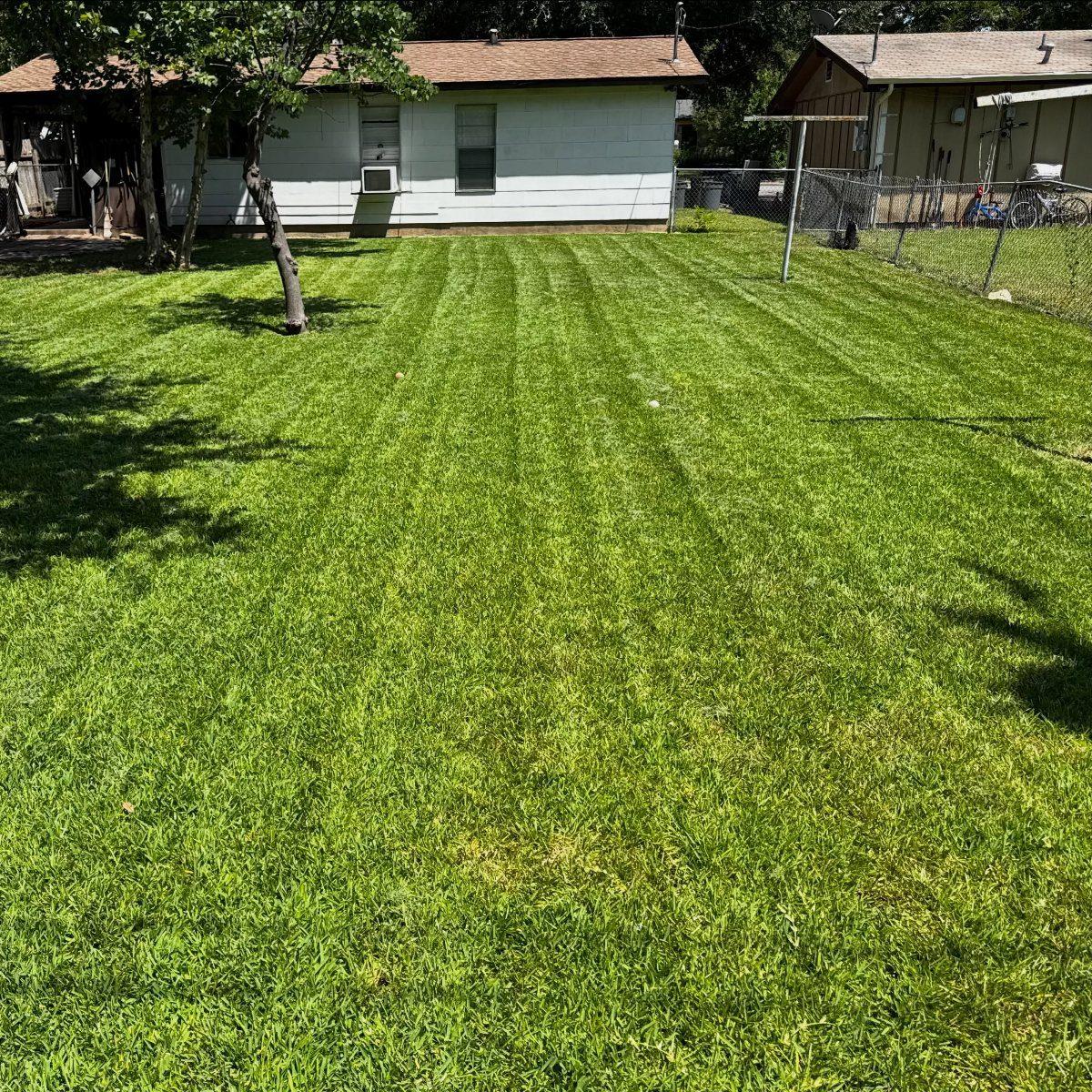
Mowing in stripes costs nothing if you already own a mower. A tidy lawn with visible bands makes the whole yard look cared for, even with no flowers at all.
Stripes come from mowing in alternating directions, so the grass bends one way and then the other. Run straight lines, overlap slightly, and keep the blades sharp.
For someone with no budget and a free Saturday morning, a fresh mow is the best fix there is.
Find Low-cost Materials
Search for leftover paint, turf, slabs, plant pots, and furniture, since people clearing out their own yards often give them away or sell them cheap.
Garage sales and neighborhood swap meets are worth a Saturday morning. Negotiate, and ask for a bundle price when a seller has several things you want.
Curbside giveaways, seasonal nursery sales, and plant swaps stretch the plant budget. Community gardening groups tend to share cuttings and extra seedlings.
Tools are where costs creep up, so borrow or rent anything you will use once. For mulch, call local tree-trimming crews or check whether your city runs a free program.
If the secondhand hunt comes up empty, the clearance aisle at a local hardware store usually beats paying full price.
Plan Before Spending
Walk the yard before buying anything. Note where the ground slopes, how many hours of sun each area gets, where shade falls and when, how the soil feels, and where water pools after rain.
Skipping this step is how people end up moving plants or redoing a bed.
Next, draw a rough layout on paper and label which spots get full sun and which stay shady. Choose plants and materials to fit those zones.
Set a spending limit and split it into 3 piles: plants, materials, and tools. Hold back a buffer for surprises, because something always costs more than planned.
Think about upkeep costs too.
Native plants are adapted to your climate and soil, so they need less watering and fertilizer. A rain barrel catches water for dry spells, and a compost pile made from kitchen scraps, yard trimmings, and shredded paper cuts fertilizer spending.
Ongoing Yard Maintenance
Cleanup pays for itself. Pull debris, trim dead growth, and refresh mulch each season, and weeds, pests, and plant disease get fewer chances to settle in.
Compost your yard waste instead of hauling it off. It turns into rich soil that cuts the fertilizer you buy.
Come fall, run the mower over your leaves to chop them up, then spread them as mulch or toss them in the compost bin. That beats bagging them and dragging them to the curb.
A worn-out yard that needs a bigger reset should start with pulling the overgrown plants, and only then do the new shrubs, flowers and trees go in.
Choose native plants where you can, since they need less upkeep. Planting it yourself saves real money, since a pro charges $50–$100 per hour or $25–$85 for each shrub.
Frequently Asked Questions
What is the most affordable way to remodel a backyard?
Before spending anything, put in the free labor: cut the grass, cut back anything overgrown, and haul off the junk piles.
After that, add cheap updates such as painting the fence, putting down an outdoor rug, or hanging string lights, which spread soft light over a seating area for very little money.
What is the least expensive way to landscape?
Cover the ground with cheap materials and skip the pricey features. A layer of dark mulch is the cheapest way to make a bed look finished, and pea gravel does the same job on paths and small patio areas.
Tree-trimming crews often drop wood chips for nothing if you call, and some cities give mulch away; neighbors and swap groups are good sources for used stone, pots, and plants.
How can I make my backyard beautiful on a low budget?
Cut a clean edge around your beds, spread fresh mulch, and mow in stripes; those three cost almost nothing and make a yard look deliberate.
Then add one or two small touches, like a painted fence, repurposed planters with drainage holes, or outdoor pillows in one color family. Walking the yard first and setting a spending limit keeps you from redoing work later.
What is the cheapest way to build a patio?
Packed gravel is the cheapest route. Gravel is the budget pick here at about $1 per square foot, which puts a 450 square foot DIY patio near $450, and you can lay it in half a day.
If you already have a concrete slab, painting it with floor paint in a checkerboard costs far less than laying anything new.