Sensory gardens layer texture, scent, sound, color and taste so visitors engage more than sight as they move through the space.
The right mix depends on who uses the garden: edibles and sand play suit families with kids, while fragrant herbs and seating work better for quiet reflection.
Lamb’s ear feels like velvet year-round, strawflowers hold their papery texture when dried, and celosia blooms range from velvety crests to feathery plumes that sway.
Paths that curve slow visitors down, raised beds lift plants to hand height, and a small fountain masks street noise with steady water sound.
1. Fragrant Plants
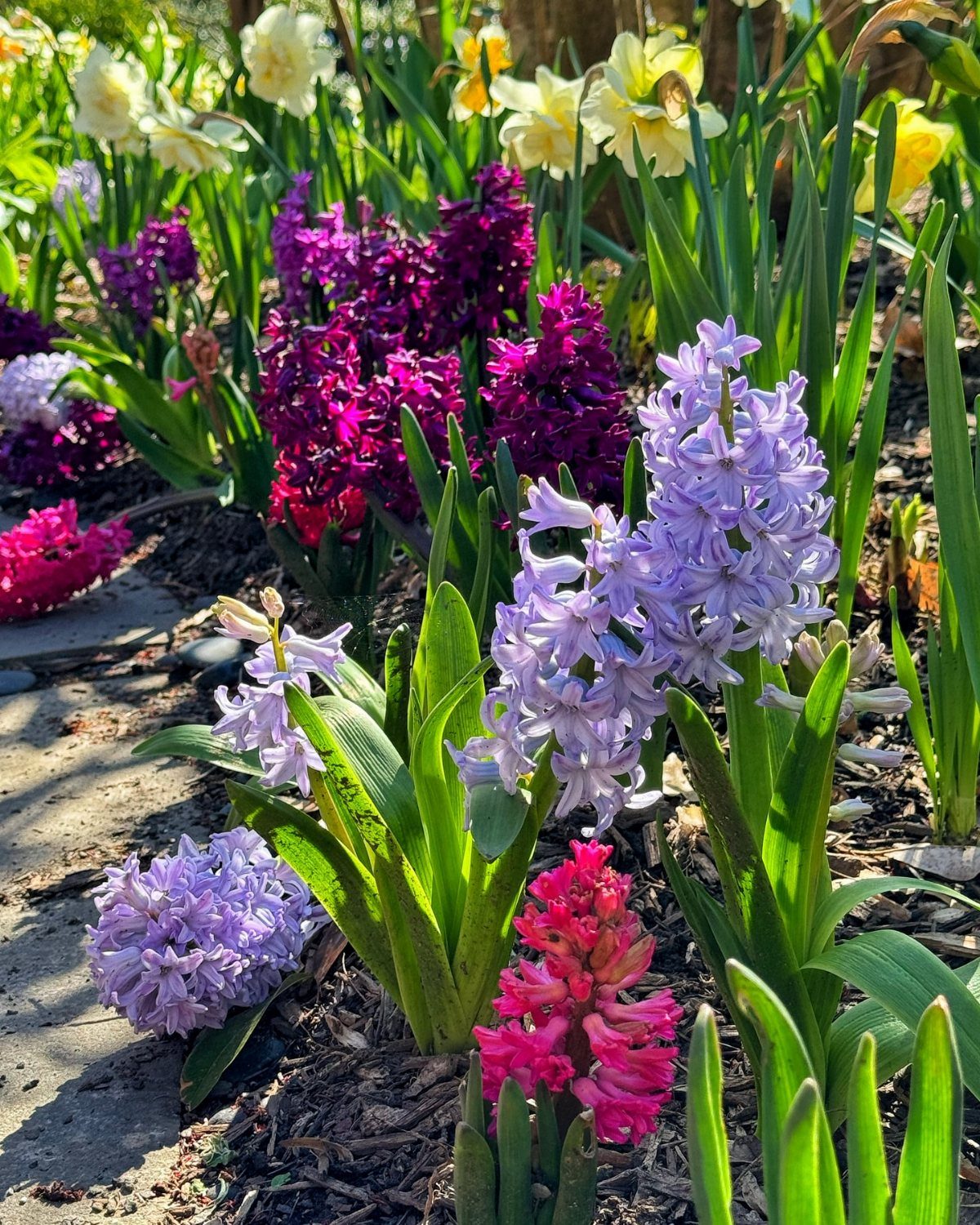
Fragrant plants anchor the garden in scent, giving visitors something to notice beyond what they see.
Hyacinths bloom early spring with a sweet, almost grape-like perfume that carries several feet. Daffodils add a lighter, green fragrance that reads more like fresh air than flower.
Plant bulbs in fall in a spot that gets at least half-day sun. Mulch after the ground freezes to keep roots stable through winter.
Mix scent types so the garden smells different as visitors move through it: herbal, citrus, sweet, spicy. That contrast makes each planting more noticeable.
2. Bright Reds, Yellows, and Oranges
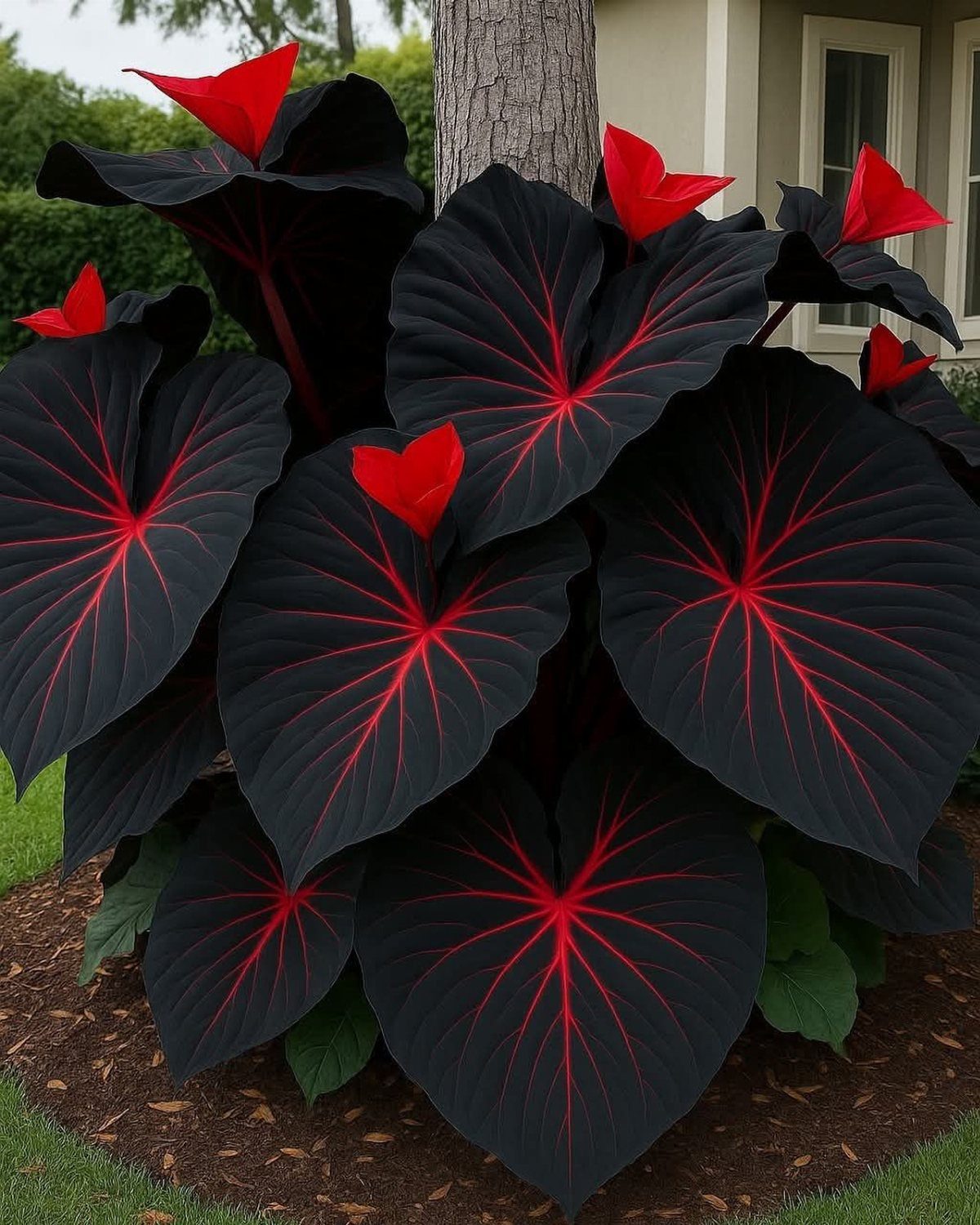
Hot colors catch the eye from across the yard and hold attention longer than pastels.
Black foliage frames red veins, so the warm tones pop even harder. Red flowers at the base extend the palette downward.
Caladiums tolerate shade better than most bright-leaved plants, which makes them useful under trees or along north walls where little else shows color. They die back after frost, so treat them as annuals or dig the tubers in fall.
Pair warm-toned blooms with dark or chartreuse foliage to double the visual punch without crowding the bed.
3. Textured Plants and Materials
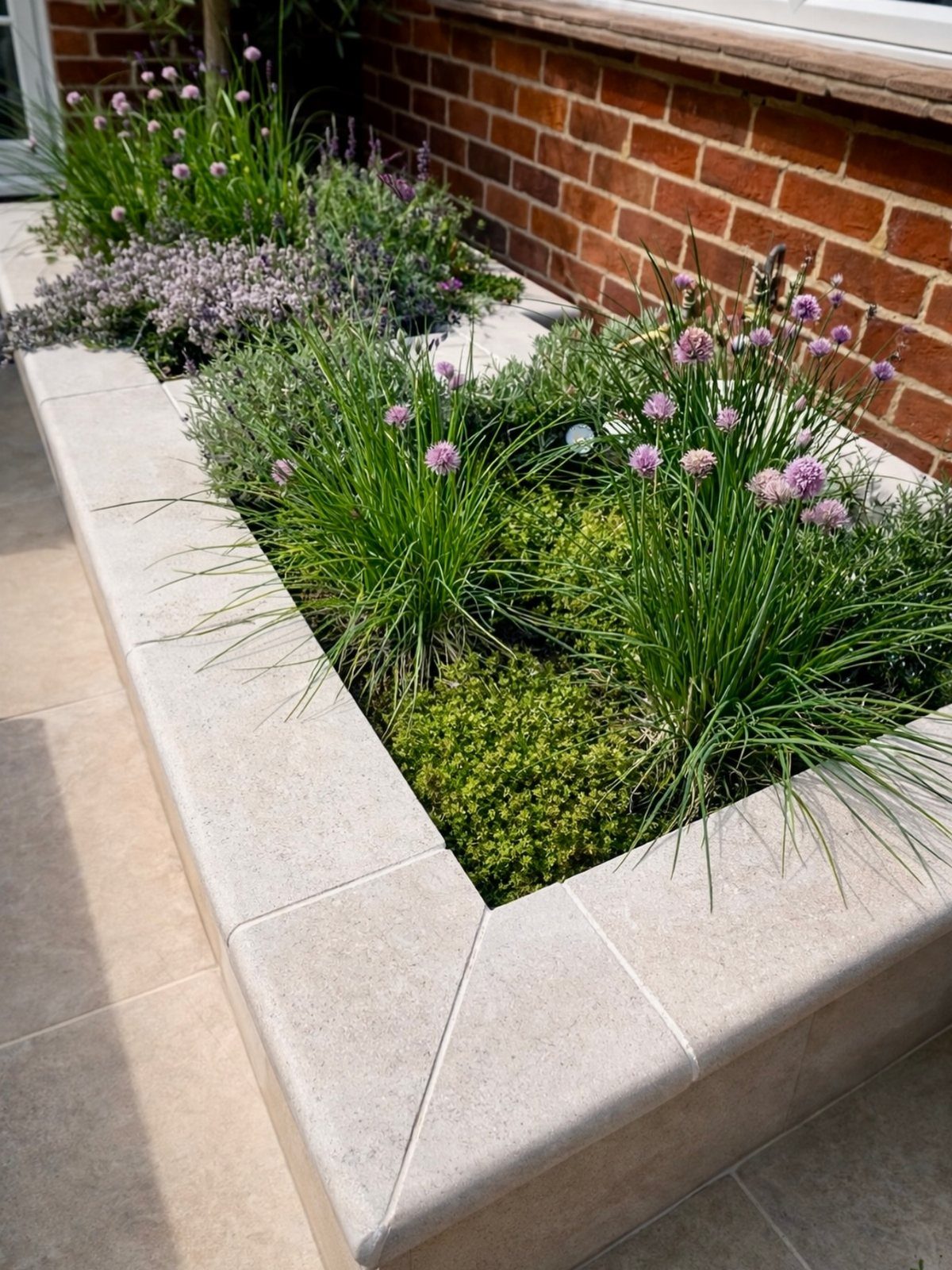
Texture gives the garden a reason to touch.
Pair soft groundcover with rough stone edges or brick, and visitors notice the contrast without being told. Purple alliums add a spiky, rigid form that contrasts with low, mounding lavender and creeping plants.
A raised bed lifts everything closer to hand height, which matters in a sensory garden where you want kids or seated visitors to reach the plants easily. Stone holds up to weather and touch better than wood.
Choose foliage with different surfaces: fuzzy, waxy, ribbed, smooth. The variety registers even when visitors brush past rather than deliberately reaching out.
4. Edible Herbs and Produce
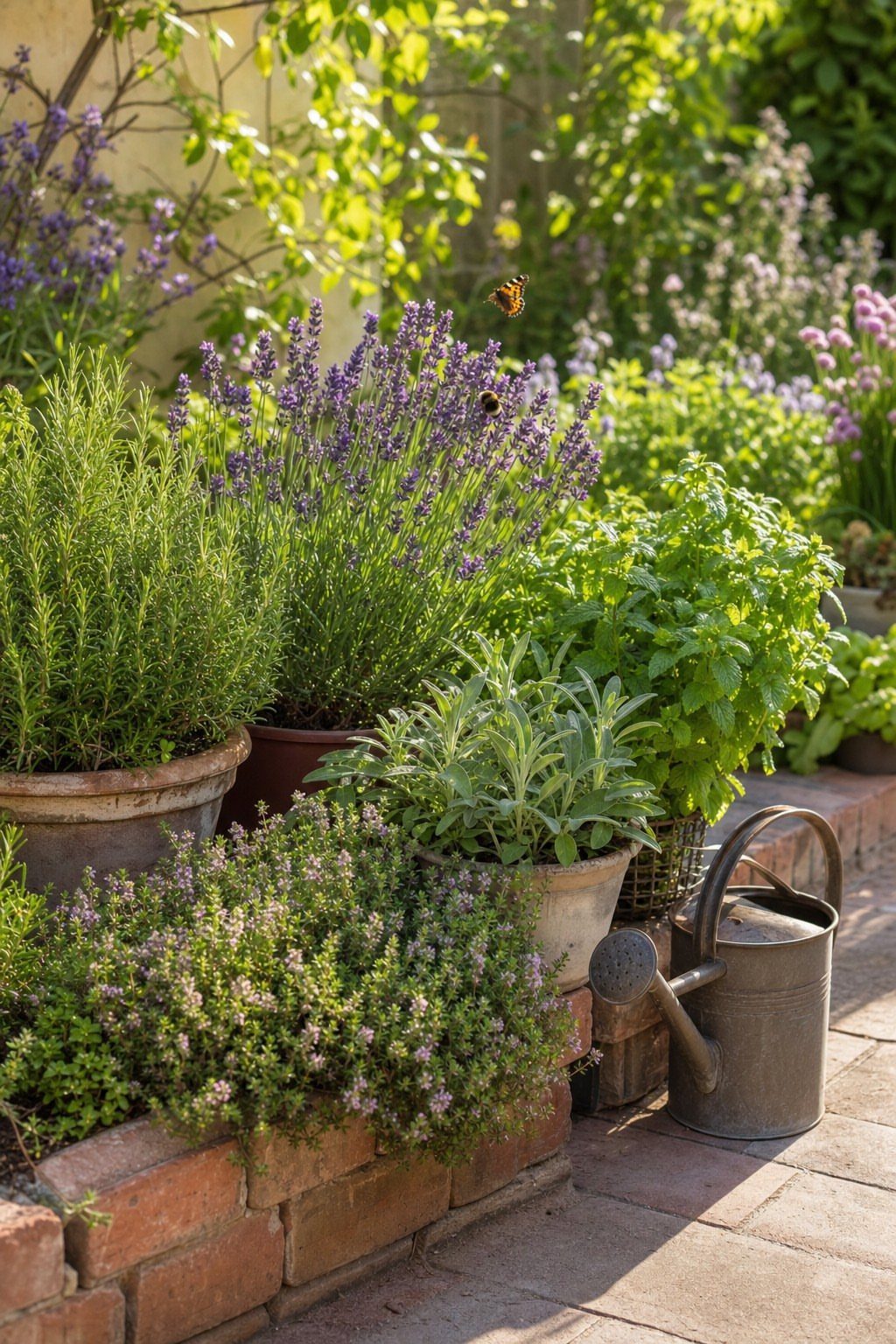
Edibles make taste part of the sensory experience and give visitors something to pick.
Lavender and rosemary both grow well in containers, tolerate dry spells, and smell strong when brushed or pinched. Rosemary stays evergreen in mild climates and keeps its needles year-round.
Pots let you move herbs to follow sun or bring them closer to paths where people walk. Use large enough containers so roots have room and soil stays moist longer between waterings.
Add basil, mint, or chives for variety in scent and flavor. Keep mint in its own pot or it will overtake the bed.
5. Small Fountain
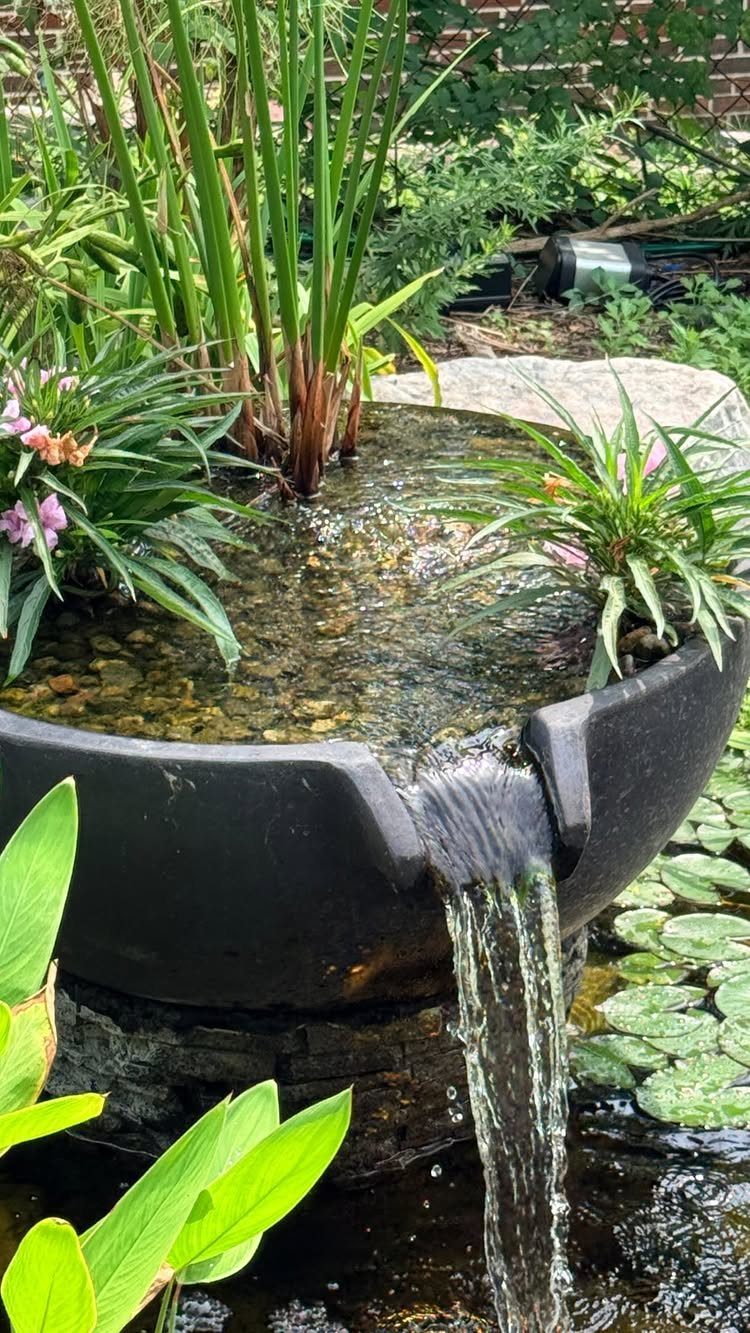
A fountain brings sound and movement into the garden, 2 senses that static plantings miss.
The bowl style visible here spills water over the edge into a basin below, which creates a steady, low hiss rather than a splash. That sound masks street noise and pulls attention inward.
Small fountains run on low-voltage pumps that plug into outdoor outlets.
Most draw about the same power as a laptop. Place the fountain where you sit or pass often so you actually hear it.
Aquatic plants soften the edges and keep algae down by shading the water.
6. Wildflowers for Pollinators
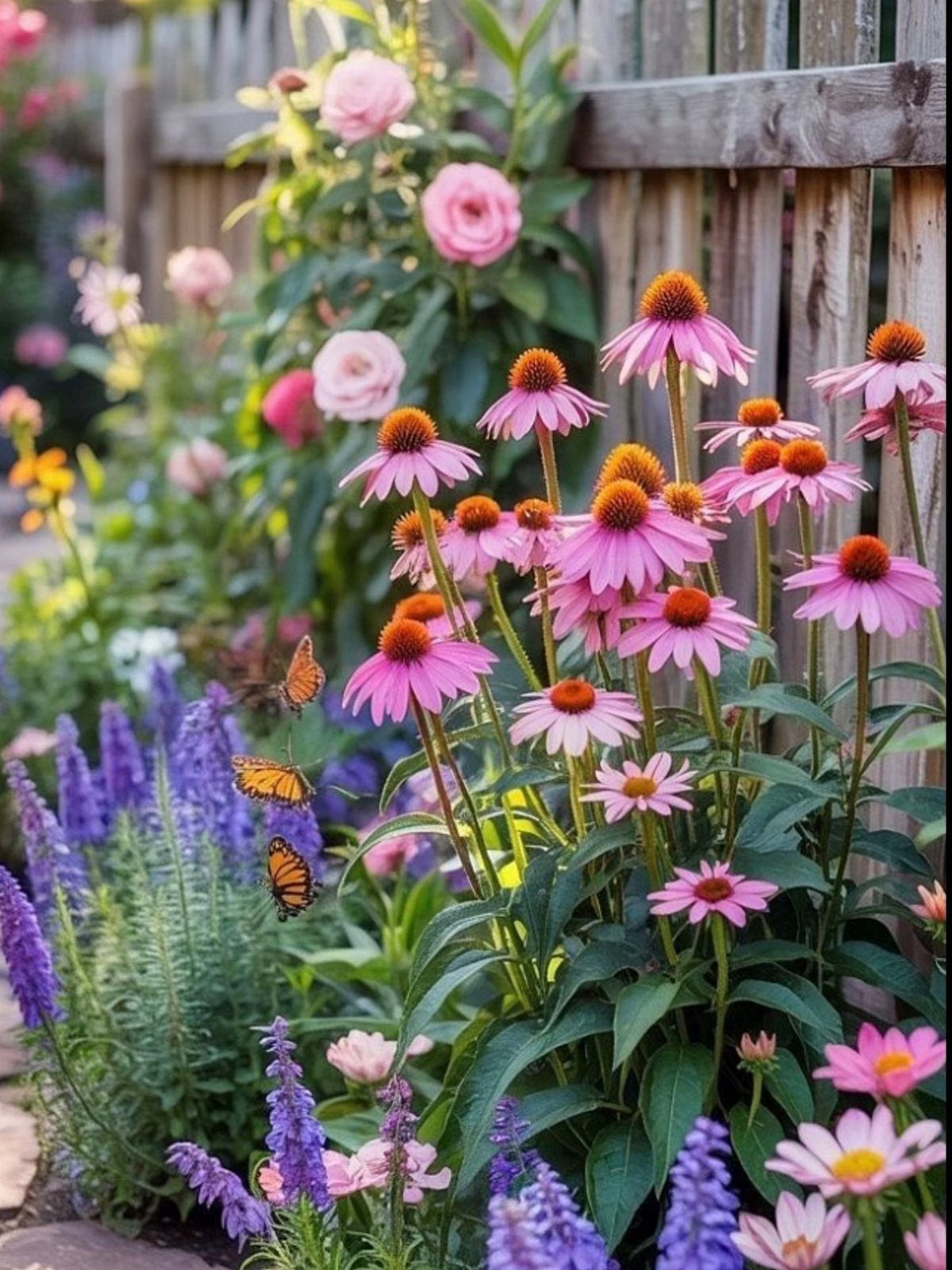
Pollinators add motion and close-up detail that plantings alone cannot.
Coneflowers, salvia, and roses all produce nectar that monarchs and bees work through summer and fall. The activity gives visitors something live to watch, and kids especially notice butterflies landing within arm’s reach.
Plant in clusters rather than single stems so pollinators find the flowers faster and stay longer.
Full sun and well-drained soil suit all three. Deadhead spent blooms on salvia to keep it flowering; coneflowers reseed if you leave a few seedheads into winter.
Skip pesticides, even organic ones, during bloom. They kill the insects you are trying to attract.
7. Layered Plants
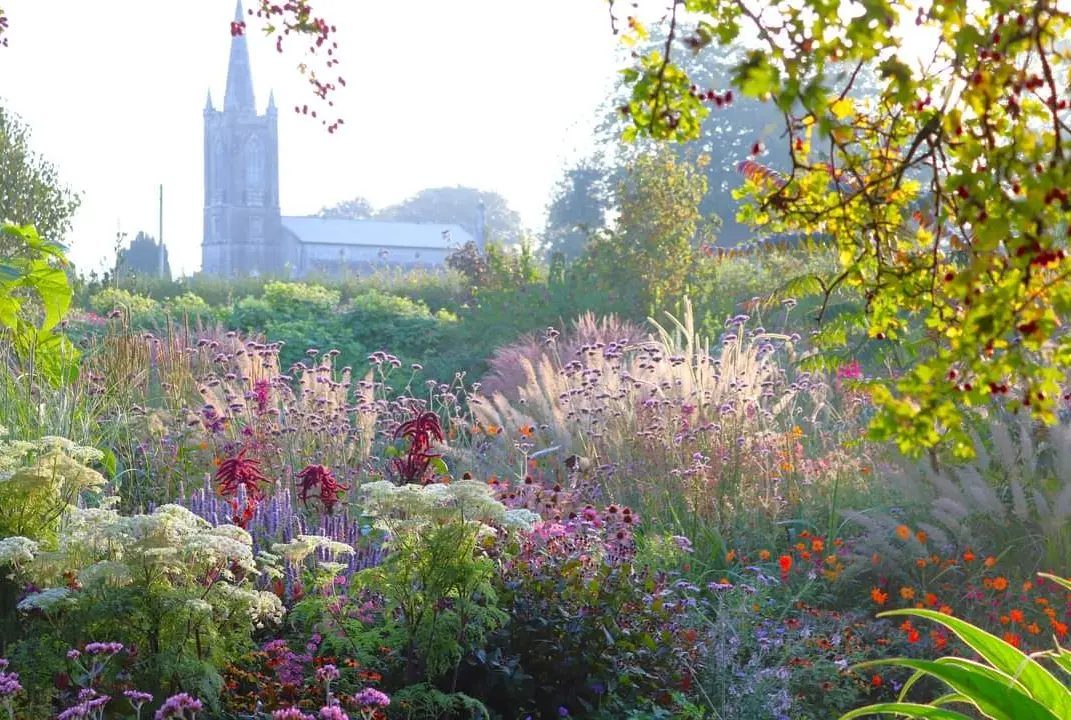
Plant tall grasses or spires in back, mid-height blooms in the middle, and low groundcovers up front so the bed reads in layers instead of one flat plane.
Different heights give visitors more to scan and create pockets of shadow and light that shift as they walk past.
Layering also spreads bloom time. Early bulbs come up low, summer perennials fill the middle, and late-season grasses hold the back row into fall.
Space plants so each layer stays visible from the path. Overlapping too much hides the shorter ones and flattens the effect you planted for.
8. Garden Seating
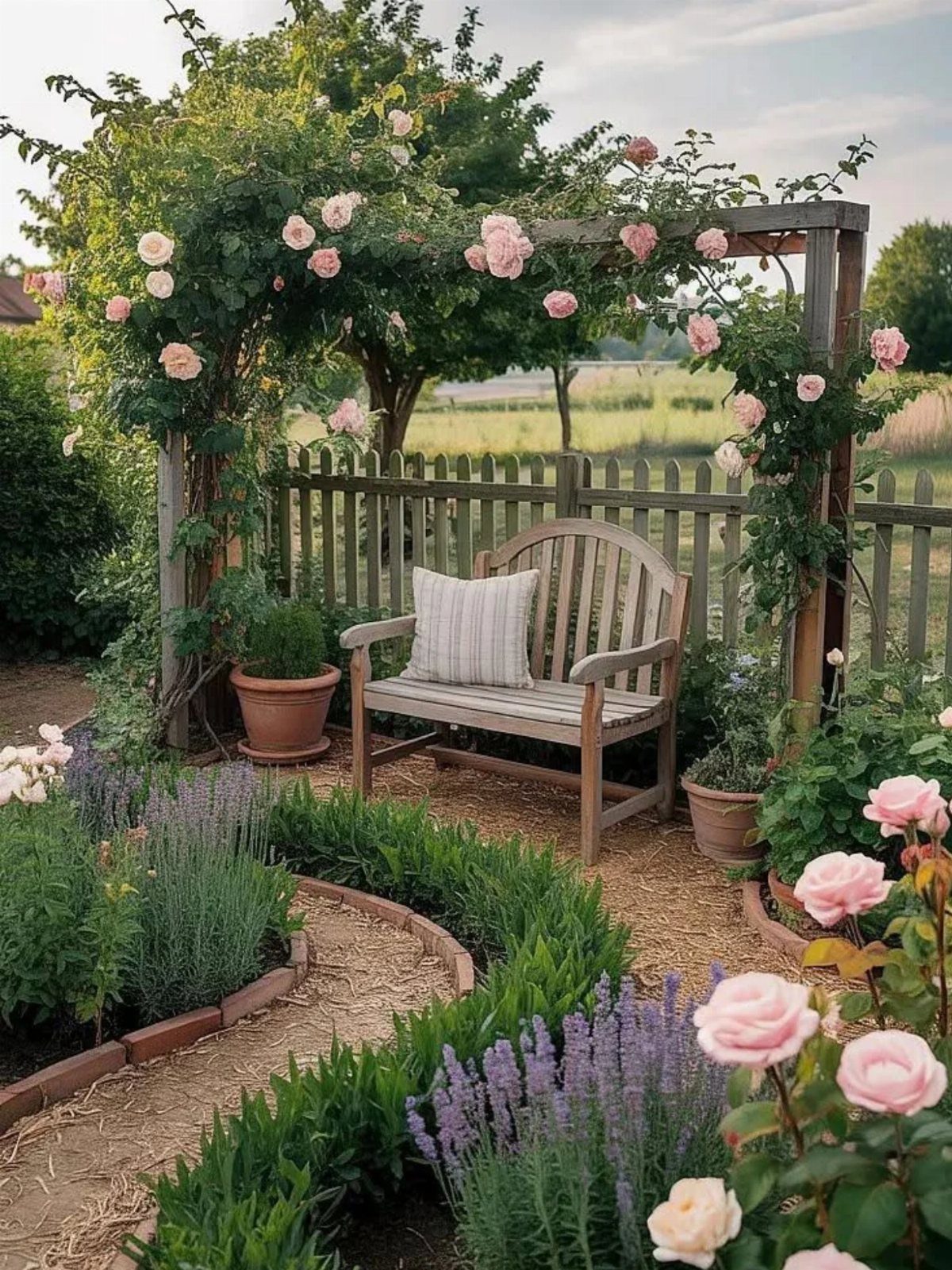
A bench turns the garden into a place to stay, not just walk through.
Seating lets visitors slow down and notice details they would miss in passing: the sound of rustling leaves, the scent of roses overhead, the texture of lavender at arm’s reach.
Position the bench where it faces plantings or a focal point, not a fence. A pergola or arbor overhead gives shade and frames the view.
Choose a material that holds up outdoors without constant upkeep. Wood weathers to gray unless sealed annually; metal and stone need less attention.
9. Raised Bed
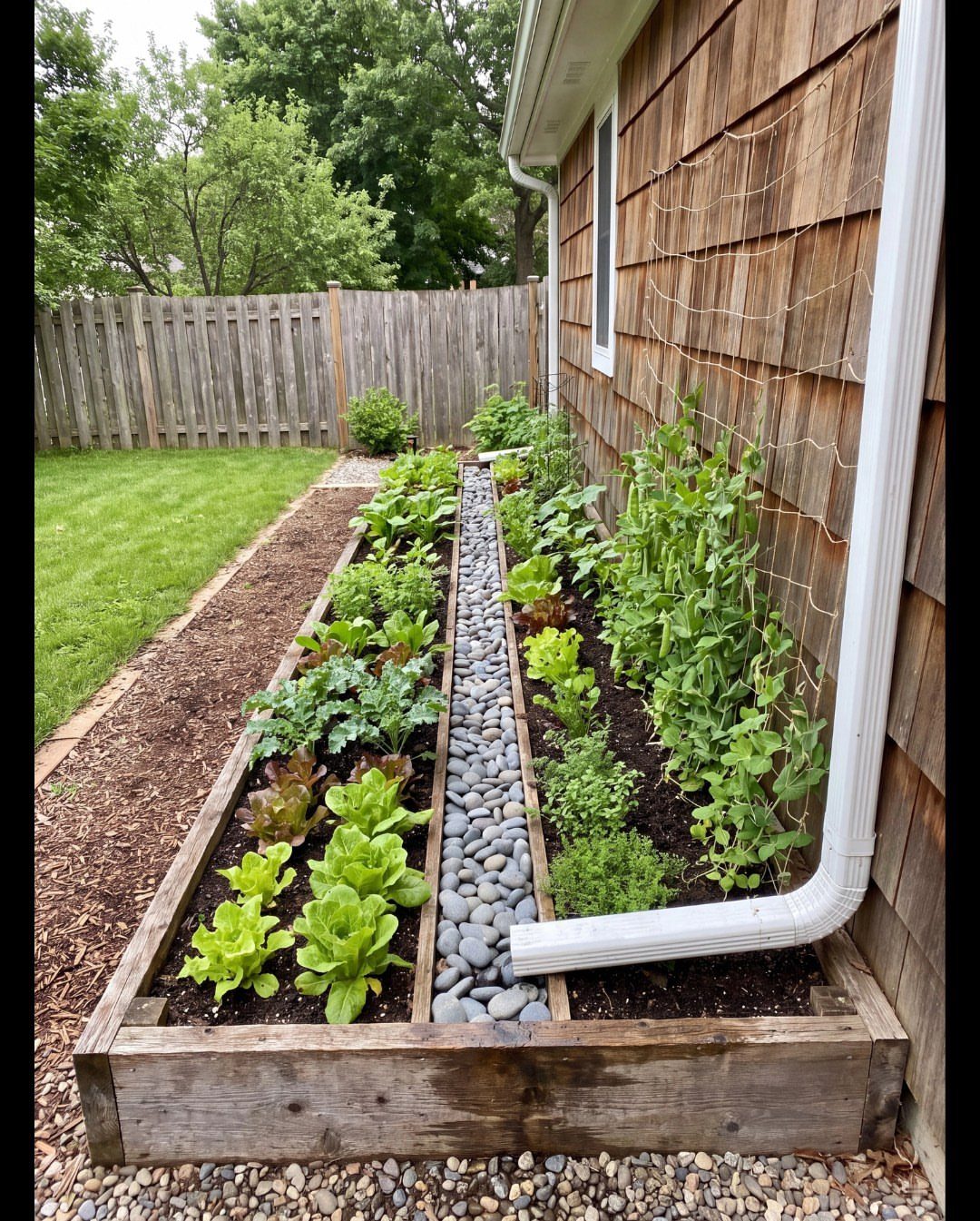
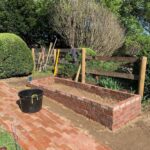
Raised beds lift soil closer to standing height, which makes planting, weeding, and harvesting easier on the back. The elevation also brings sensory details within reach for kids or visitors in wheelchairs.
Build with rot-resistant lumber or composite boards. Line the inside with landscape fabric to slow soil loss, and fill with a mix of compost and topsoil so drainage stays consistent.
A center path divides the bed into 2 planting zones and keeps feet off the soil, which prevents compaction.
10. Sunflower Planting
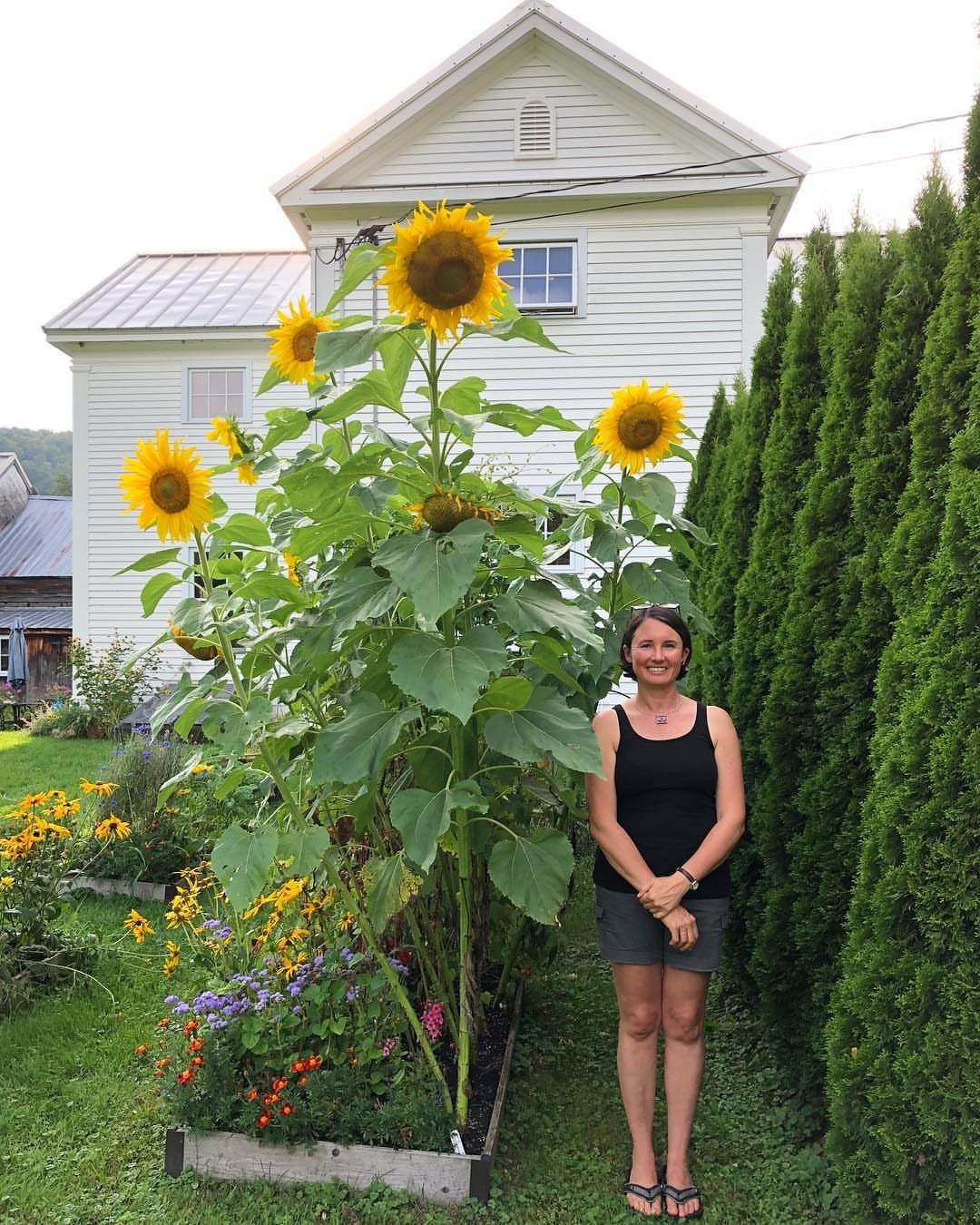
Sunflowers grow fast and tall, which makes them a good anchor for a sensory garden where height and color matter.
Kids especially like tracking their growth week by week. Most varieties grow tall enough to tower over the bed by midsummer.
Direct seed after the last frost in a spot that gets full sun.
Space seeds several inches apart and thin to one per spot once they sprout. Water during dry spells, but sunflowers tolerate lean soil better than most annuals.
Choose branching types for more blooms per plant, or single-stem varieties if you want one large flower head per stalk.
11. Zinnia Planting
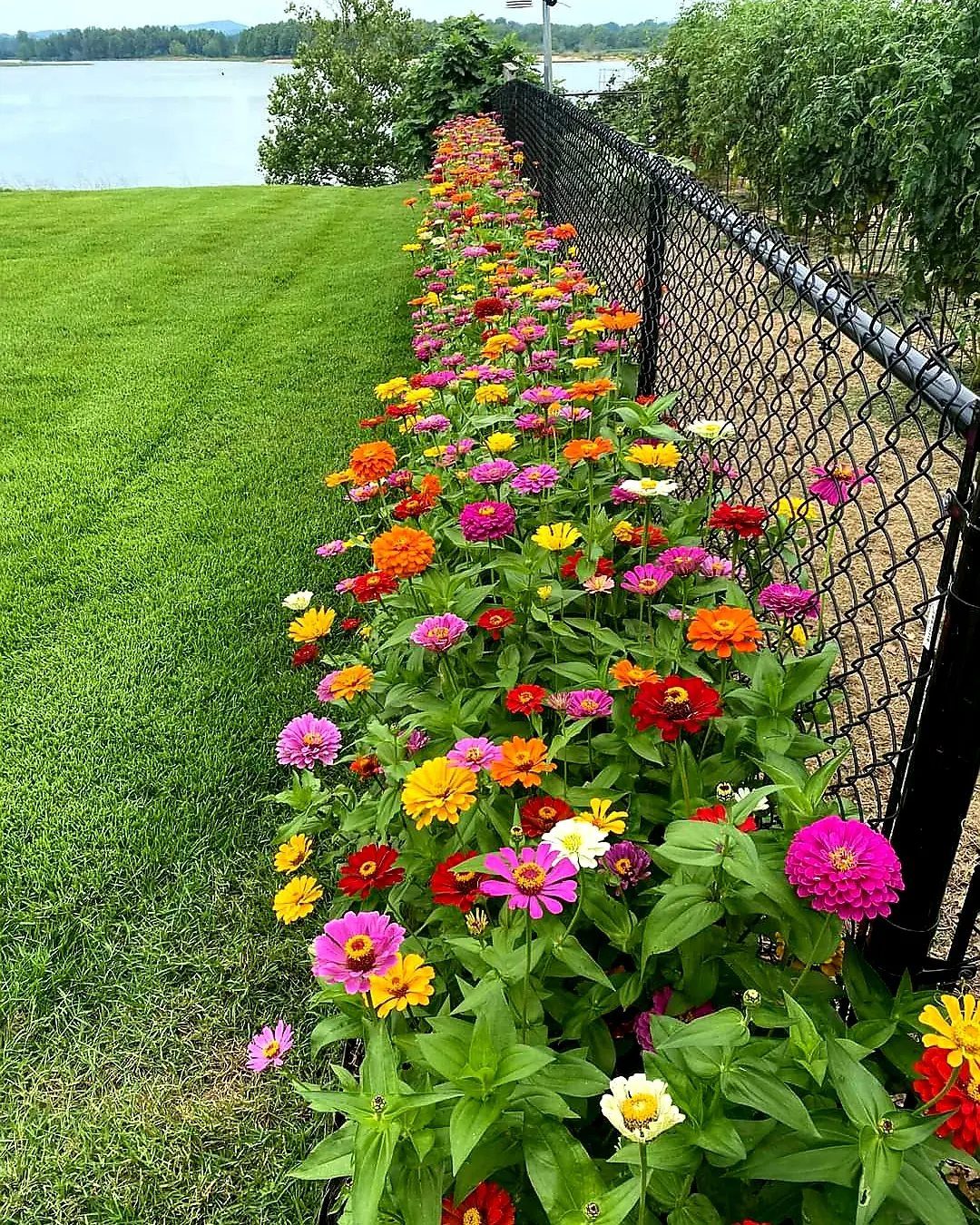
Zinnias bloom nonstop from early summer through frost and come in nearly every color except blue. They tolerate heat, bounce back after cutting, and attract butterflies, which adds motion to the bed.
Sow seeds directly in the ground after danger of frost, or start indoors a few weeks earlier.
Full sun and decent drainage are all they need. Deadhead spent flowers to keep new buds forming.
Plant along a fence line or at the back of a border so taller stems do not shade shorter plants. Most varieties grow knee to chest height.
12. Calendula Planting
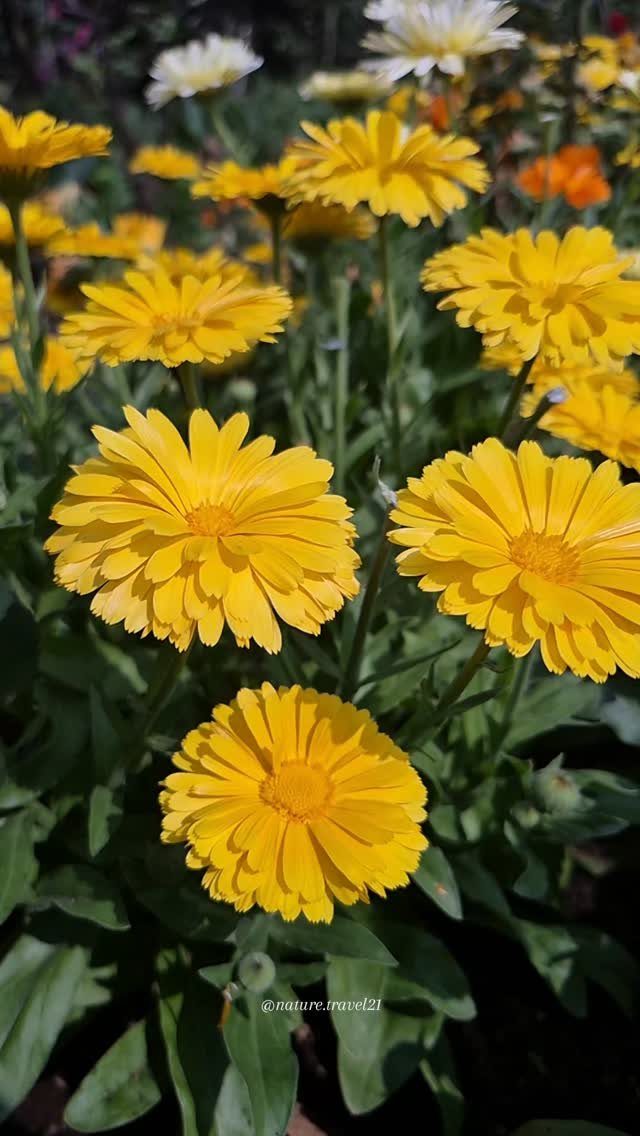
Calendula petals are edible and carry a mild, slightly peppery flavor.
The blooms open in bright yellow and orange, which makes them easy to spot in a mixed bed. Picking flowers for salads or tea becomes part of the sensory experience.
Sow seeds in early spring or fall in full sun to part shade.
Calendula reseeds readily, so one planting often returns the next year. Water regularly until established, then they tolerate some dryness.
Harvest petals in the morning after dew dries. Rinse before using and remove the bitter white base where the petal attaches.
13. Swiss Chard
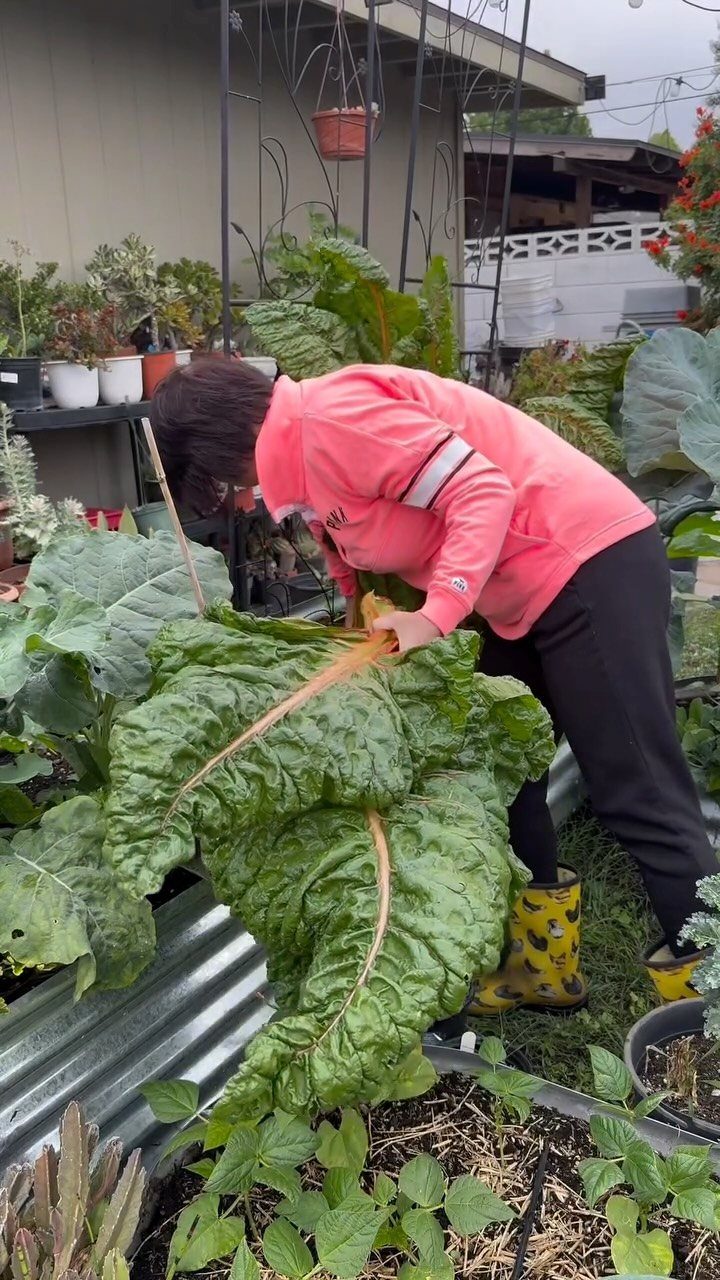
Swiss chard grows large, crinkled leaves that beg to be touched.
The texture is rough and deeply veined, which makes it stand out in a bed of smooth-leaved greens. Kids especially notice the size.
Spring and late summer both work, in sun or partial shade.
Chard tolerates more shade than most vegetables and keeps producing leaves through light frosts. Pick outer leaves as needed and the plant keeps growing from the center.
Red-stemmed varieties add color to the sensory mix. Yellow and white stems stay milder in flavor.
14. Celosia Planting
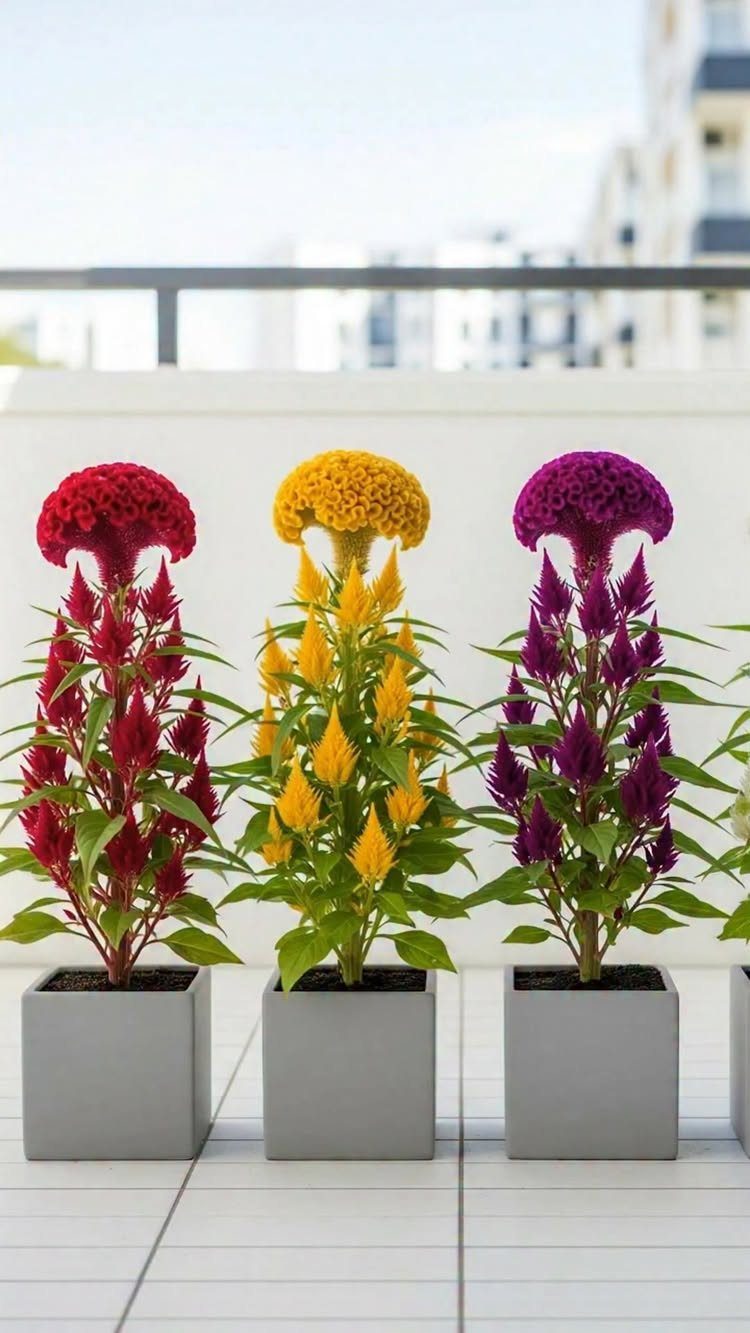
Celosia blooms come in forms that feel completely different from each other: brain-like crests that are dense and velvety, feathery plumes that sway in wind, and spiky forms that hold rigid.
Planting more than one type in a row gives visitors three textures to compare.
Sun and drainage matter most.
Celosia tolerates heat and dry spells once established. Deadheading is optional; the blooms last weeks without fading.
Containers let you move the plants closer to paths or seating where texture is easier to reach.
15. Strawflower Planting
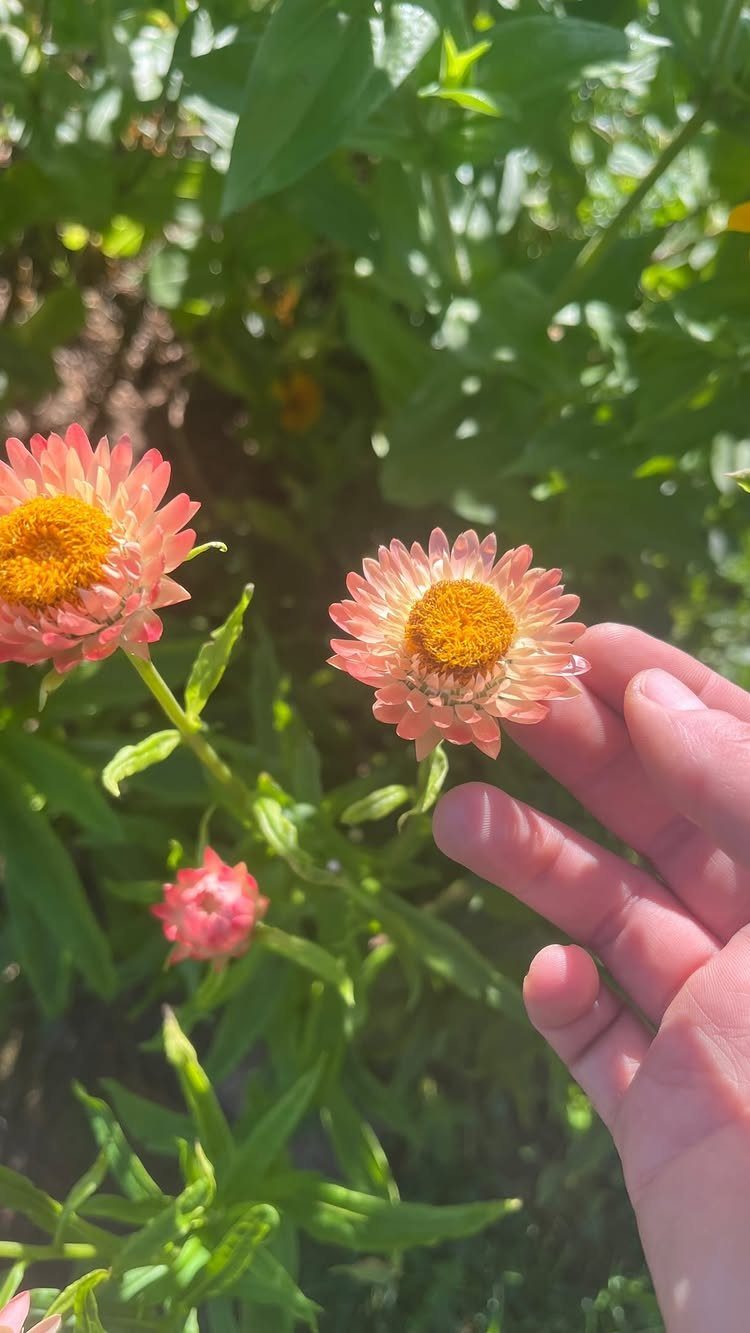
Strawflowers feel papery and stiff, nothing like the soft petals most flowers have. The blooms hold their shape and color when dried, which makes them useful for crafts or arrangements after the season ends.
Sow seeds in spring after frost danger passes. Strawflowers handle poor soil and drought better than most annuals.
Cut stems in the morning and hang upside down in a cool, dry spot to dry. They hold color for months.
16. Winding Paths
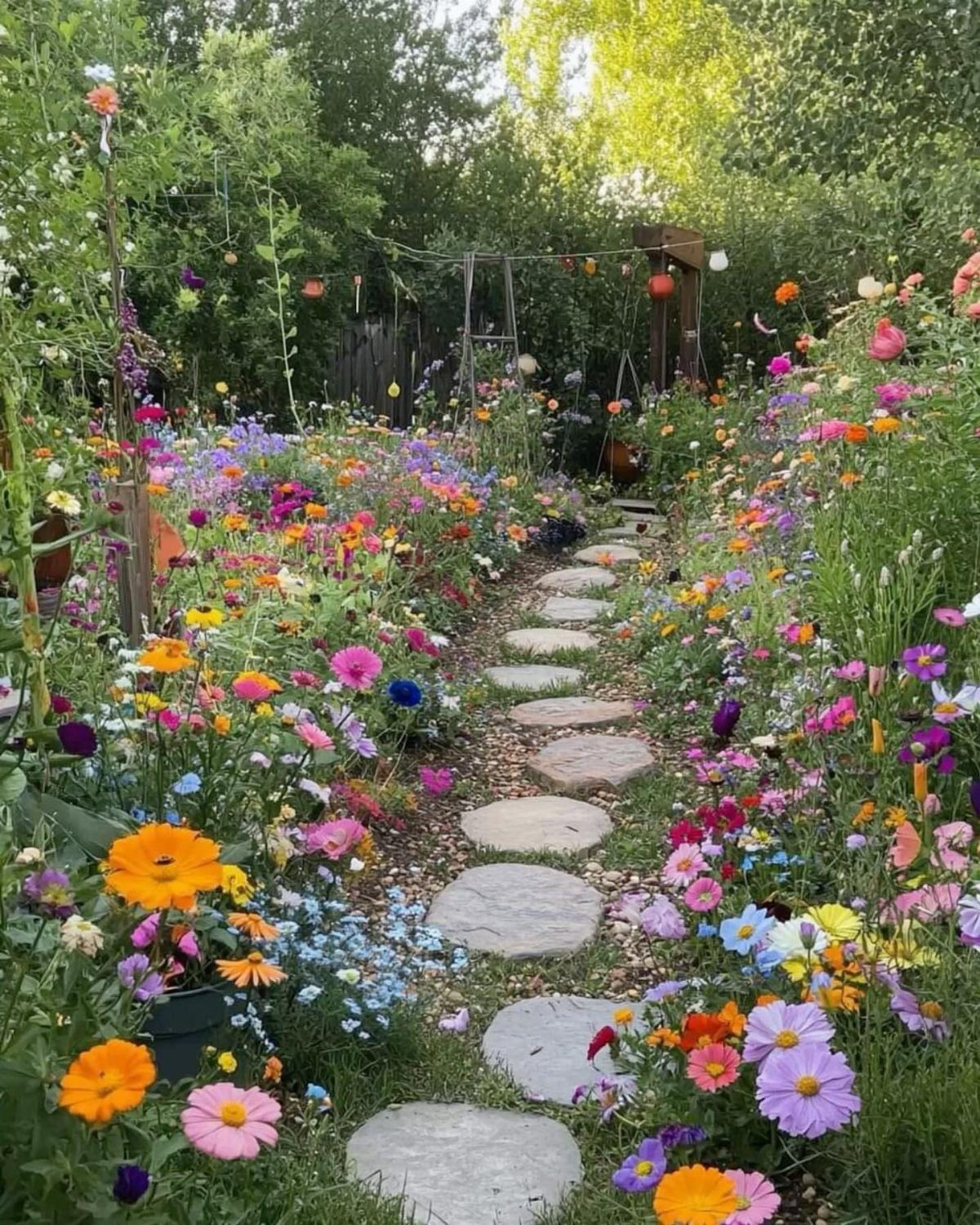
Paths that curve pull visitors forward to see what is around the bend.
The route becomes part of the experience rather than just a way to cross the garden. Stepping stones spaced at walking intervals slow the pace and make each footfall deliberate.
Lay stones on compacted soil or a thin sand base so they sit level and stable. Space them heel to toe for a comfortable stride.
Plant low groundcovers or flowers along the edges so blooms spill onto the stones without blocking the walk.
17. Flowering Vines Tunnel

Flowering vines trained over an arbor or hoop framework make a tunnel that visitors walk through, surrounded by scent and color. Roses and clematis both grow tall enough to arch overhead and dense enough to close the sides.
Build a simple frame from metal hoops or wooden posts with crossbars.
Space supports every few feet so vines have something to grip. Plant one vine per support and train stems along the frame as they grow.
Prune after bloom to keep the tunnel open and prevent tangling.
18. Pots at Sensory Height
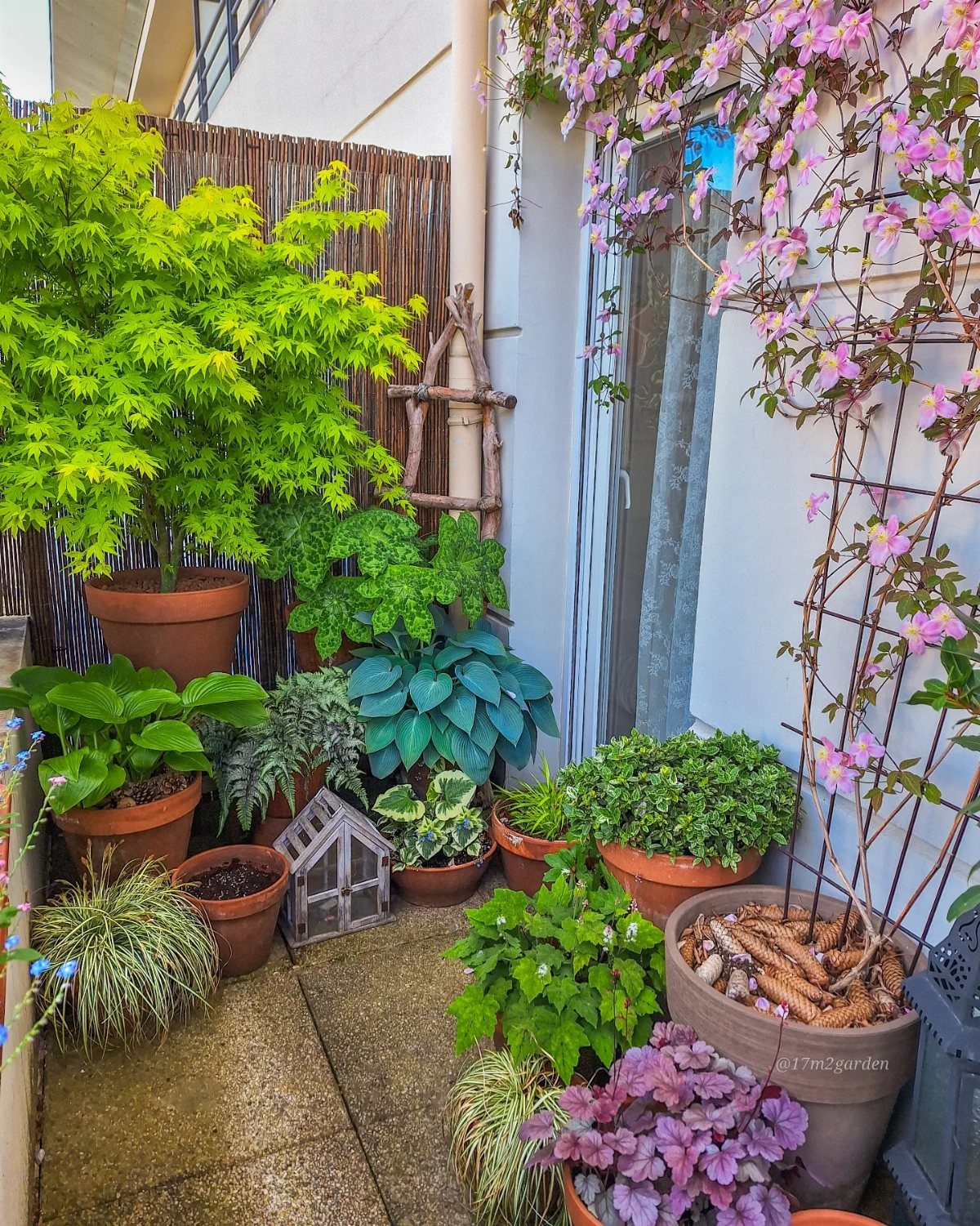
Containers on shelves or stands lift plants to nose and hand height, where you can smell herbs or touch fuzzy leaves. Staggering pot heights across multiple levels gives visitors a variety of textures and scents within arm’s reach without bending.
Use pots with drainage holes and fill with potting mix, not garden soil. Water more often than in-ground plantings since containers dry out faster.
Group plants by water needs so you are not overwatering some to keep others alive.
19. Patio Heater or Firepit
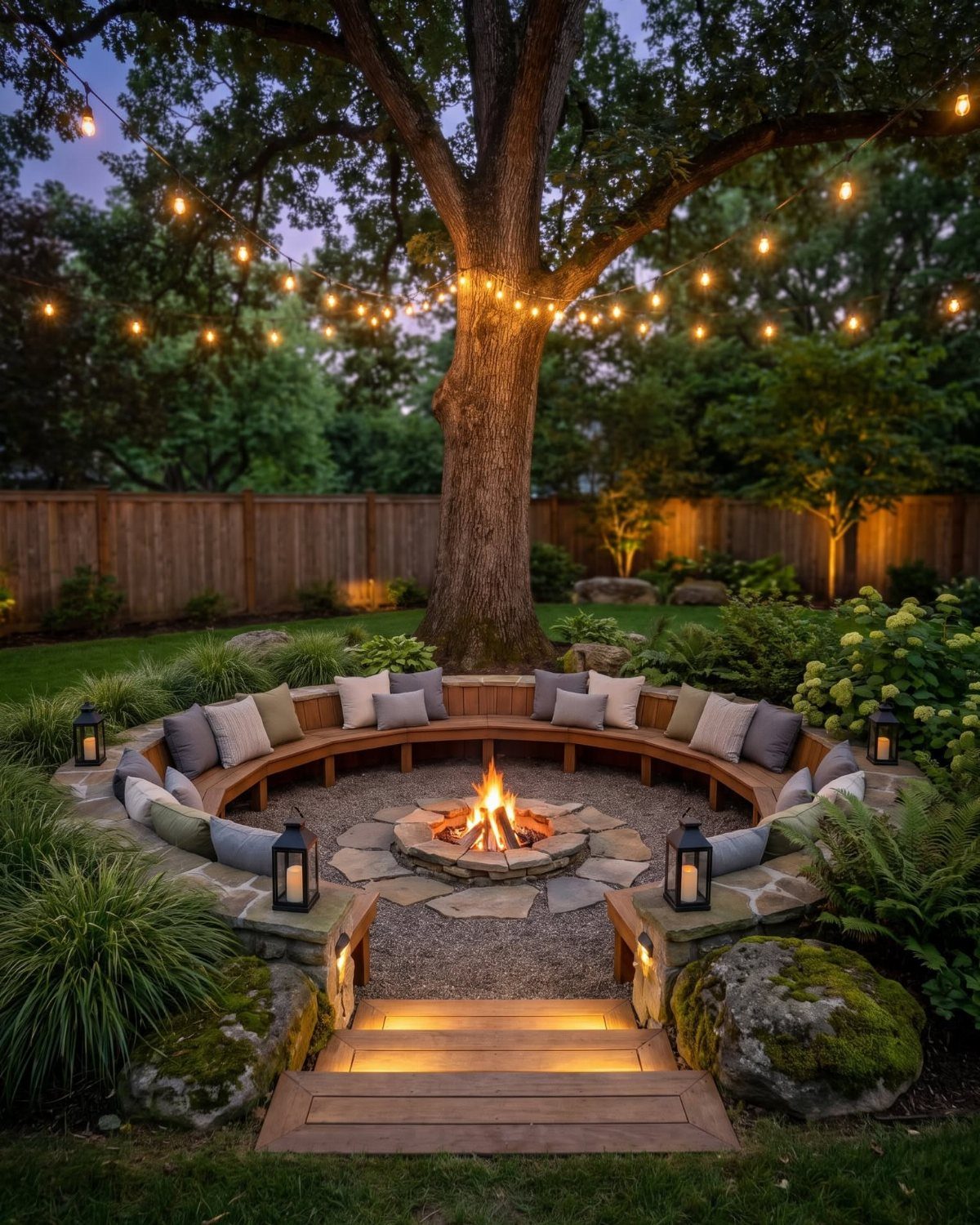
A firepit adds warmth that lets you use the garden after sunset and into fall, when evening air gets too cool for sitting out.
The glow gives sight, the radiant heat changes what touch feels like, and wood smoke brings its own scent.
Position seating in a ring around the pit so everyone faces the fire. Stone or gravel underneath prevents sparks from catching dry grass.
Check local codes before building. Some areas restrict open flames or require spark screens.
20. Sunflower House
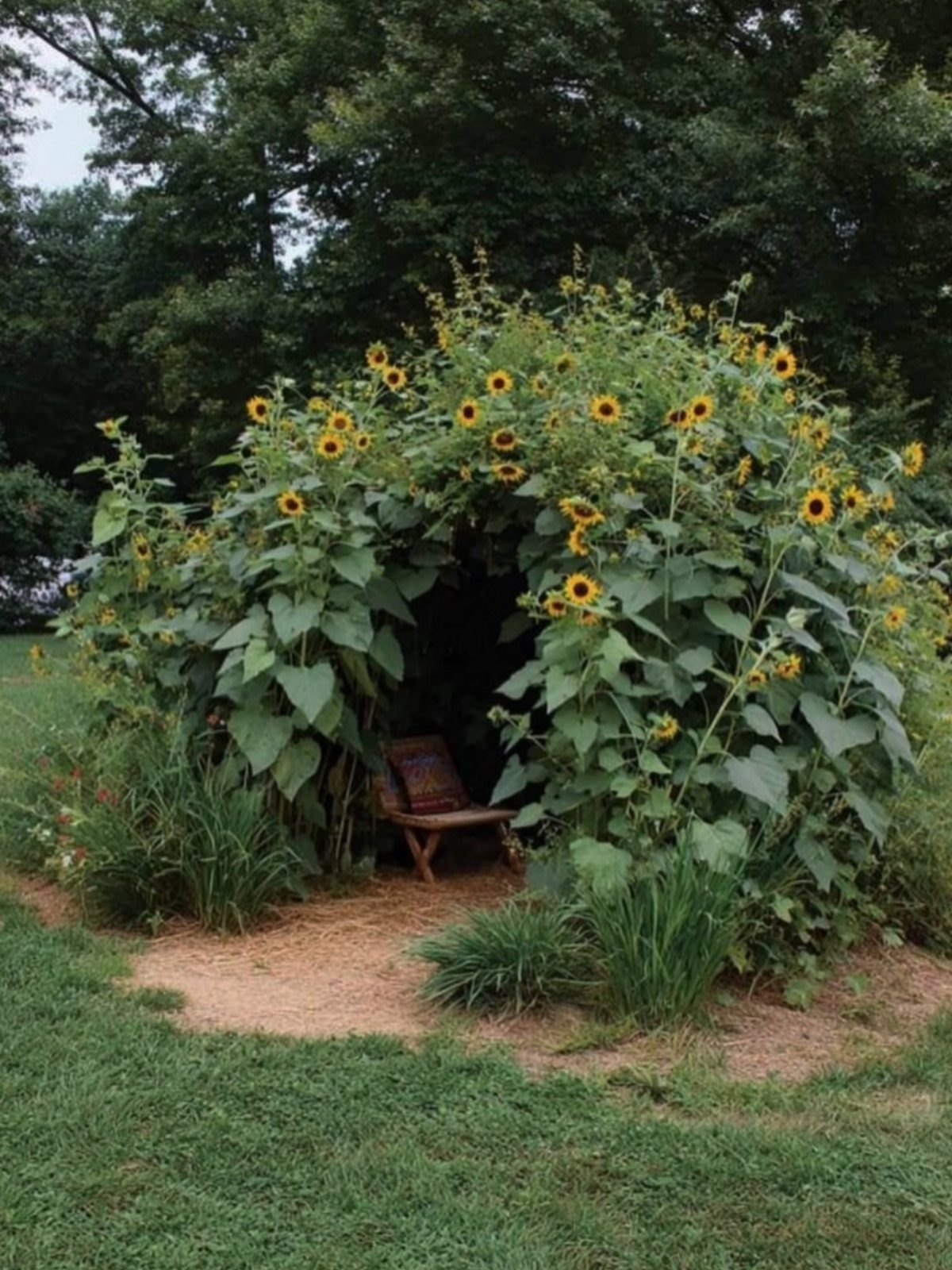
Plant sunflowers in a circle, leave an opening for the door, and you have a living fort that grows taller each week. Kids treat the enclosure as a hideaway, and the structure stays interesting long enough to matter during summer.
Space seeds around the perimeter after the last frost.
Water until they establish, then let them grow. Most varieties grow tall enough by midsummer to close the walls and feel enclosed.
A bench or stool inside turns it into a real room.
21. Lamb’s Ear
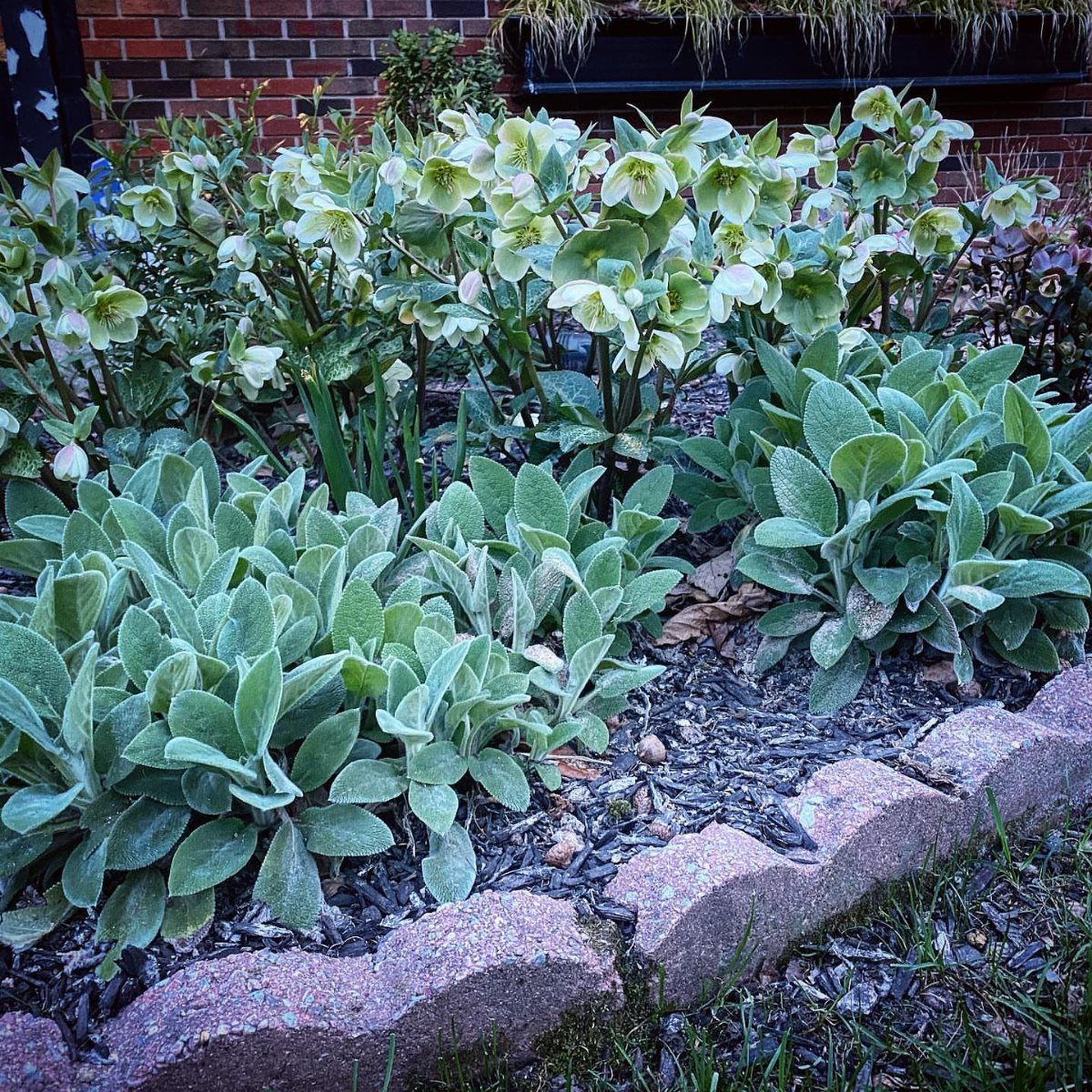
Lamb’s ear feels like velvet, which makes it the plant everyone reaches for in a sensory garden. The silvery leaves hold their soft texture year-round in mild climates and resprout each spring where winters freeze.
Lamb’s ear tolerates dry soil once established and spreads slowly to fill in gaps along a border. Remove flower stalks if you want the foliage to stay tidy, or leave them for vertical interest.
Place it where visitors pass close enough to touch without stepping off the path.
22. Chenille Plant
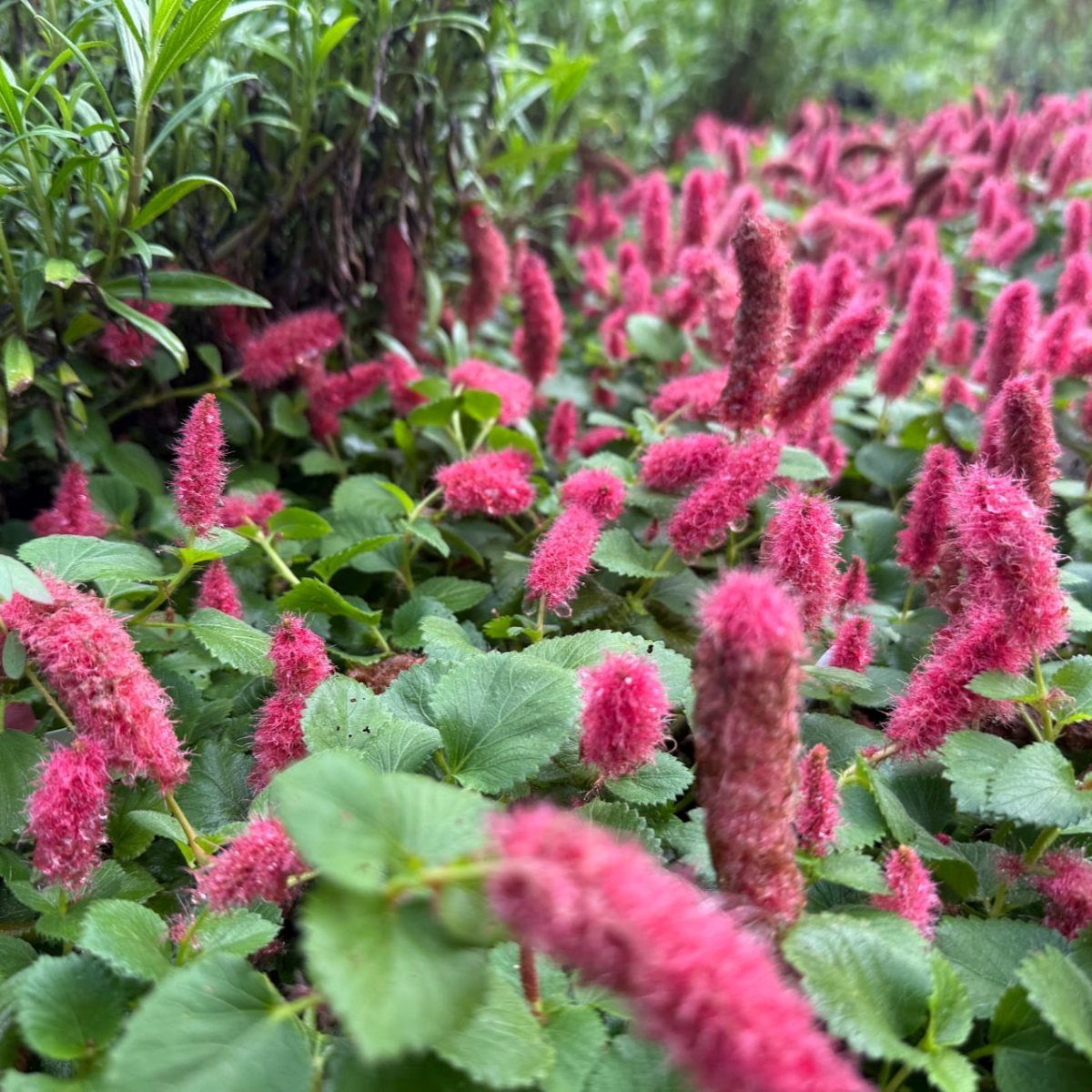
Chenille flowers hang in long, fuzzy tassels that feel soft when stroked.
The texture is completely different from flat petals, and kids especially notice. Most varieties bloom in red or pink and keep flowering through summer.
Chenille grows as a perennial in zones 10 and 11, or as an annual elsewhere.
It prefers full sun and consistent moisture. Bring it indoors before frost if you want to overwinter it.
23. Sand Play Area
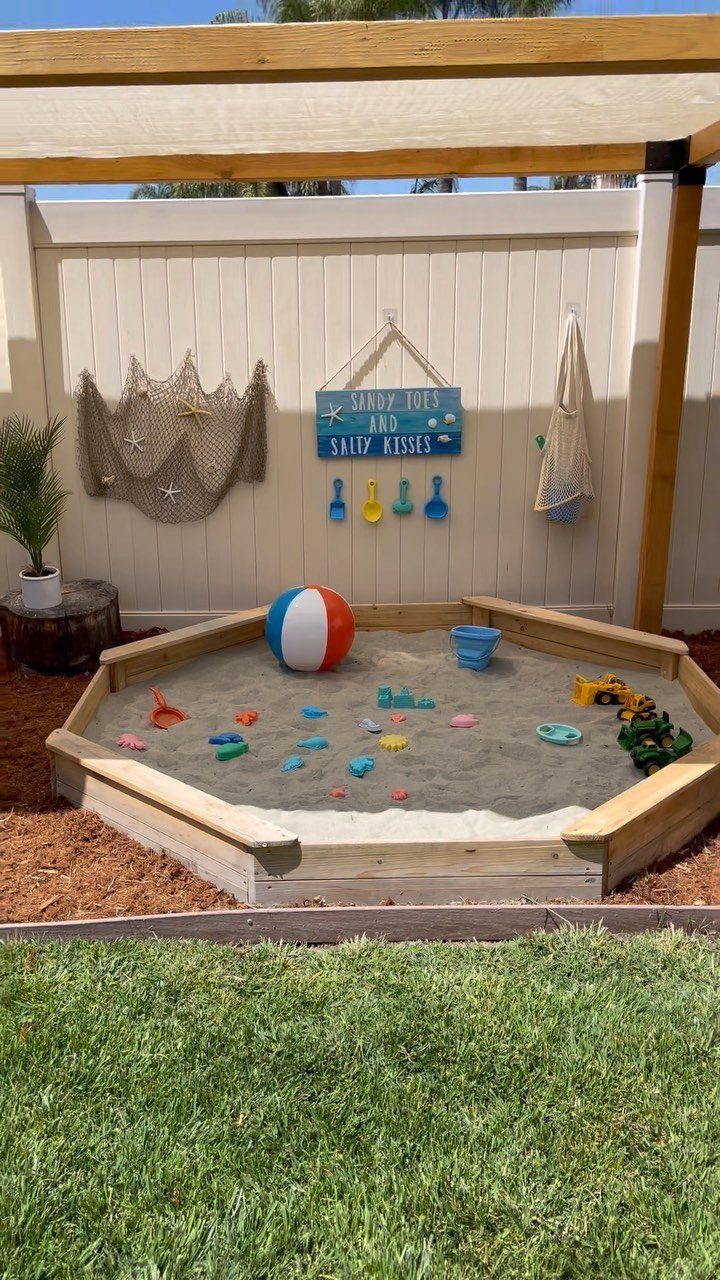
Sand gives kids something tactile to dig, pour, and shape, which makes it a sensory element on its own.
The octagonal frame keeps sand contained and gives the area a finished look that fits into a designed garden rather than reading as playground overflow.
Line the bottom with landscape fabric to block weeds, then fill with play sand, not construction sand, which is coarser and less comfortable.
A pergola overhead provides shade during midday heat.
24. Playful Sensory Garden Decor
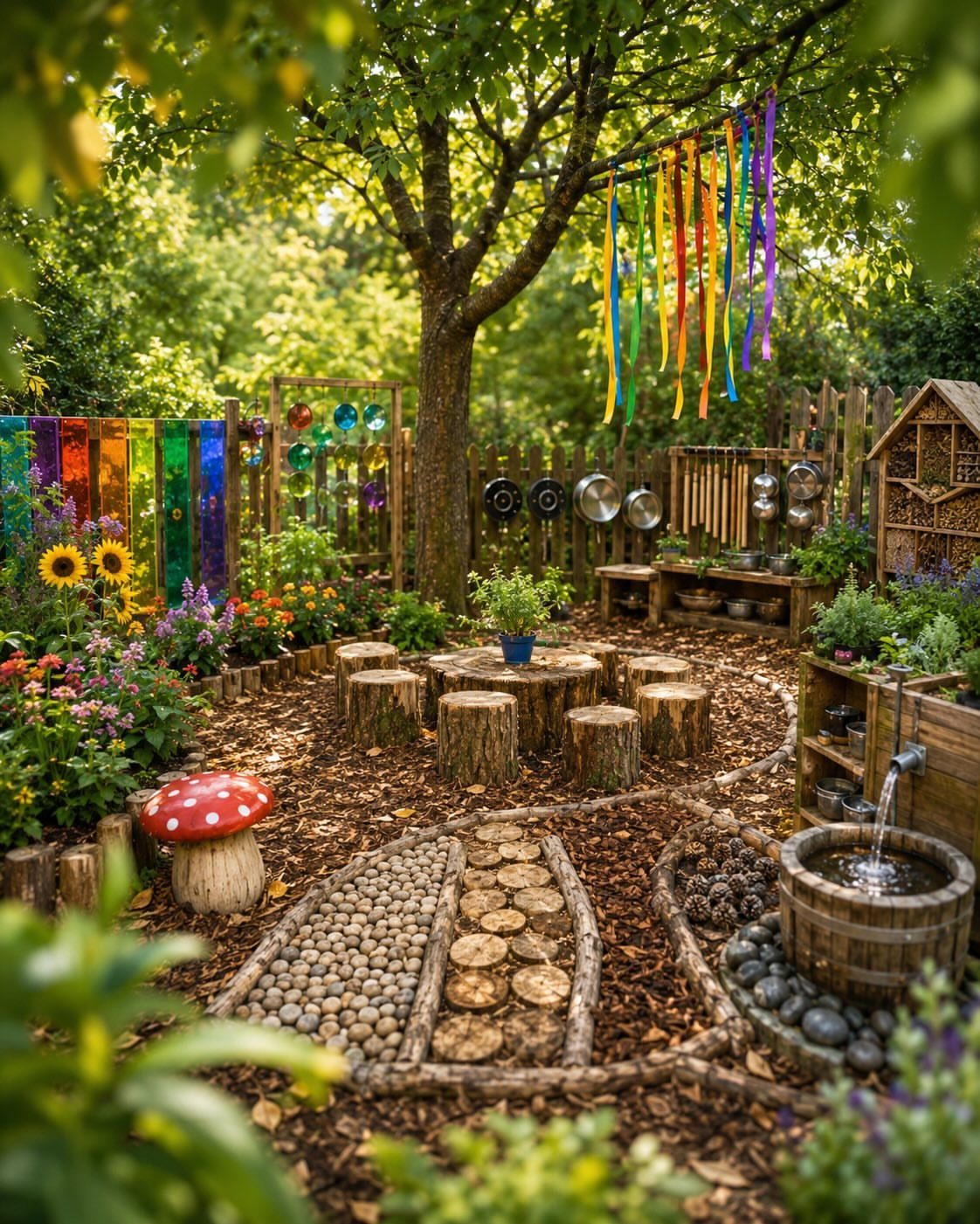
Ribbons overhead add color and motion that changes with every breeze.
The iridescent panels catch light and throw rainbow reflections across the ground, which gives visitors something shifting to watch. Mushroom sculptures and flower cutouts scattered through the bed turn the space into something playful rather than formal.
Hang ribbons from low branches or pergola beams where wind can move them. Use weather-resistant materials so they hold up through rain.
A small water feature adds sound, and the textured path gives bare feet something varied to walk on.
25. Colorful Pathway Entrance
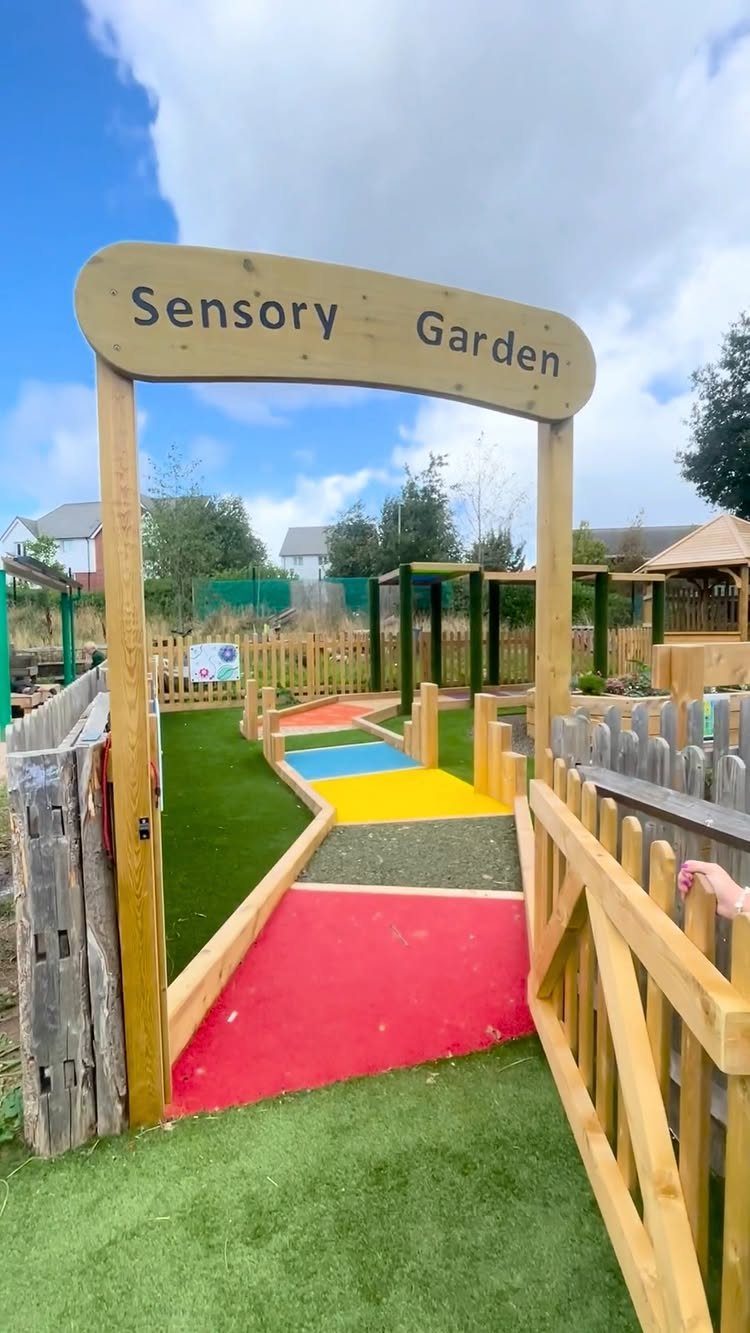
The archway frames the entrance and signals the transition from lawn to sensory space.
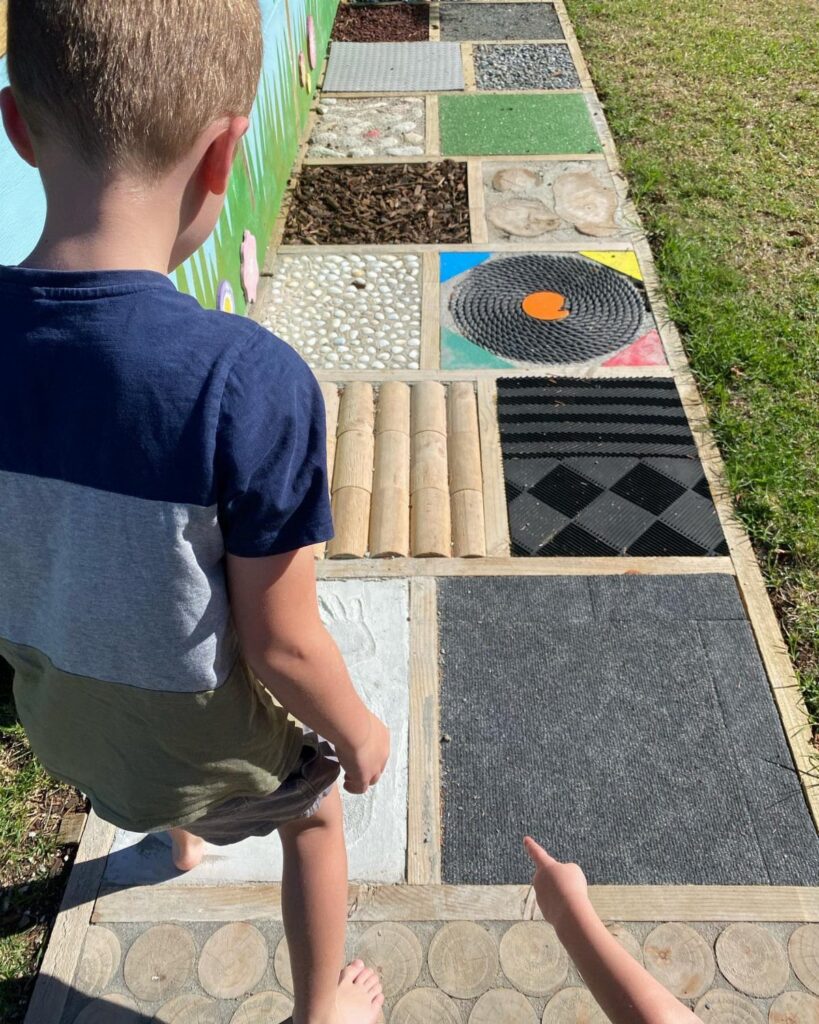
The path itself is divided into colored sections that give bare feet or shoes distinct surfaces to cross, each one slightly different in texture or warmth depending on the material.
Build the frame from rot-resistant lumber and anchor posts in concrete if wind is strong.
Pour or set colored gravel, rubber mulch, or painted concrete sections for the path segments. Keep edges defined with wooden borders so materials stay separated.
The sign names the space, which helps visitors know what kind of attention to bring.
26. Stone Walking Labyrinth

A labyrinth laid in stone gives visitors a path to follow slowly, with no wrong turns or dead ends.
The walking becomes meditative because the route is fixed and you can focus on the act of moving rather than deciding where to go next.
Mark the pattern on the ground with spray paint or stakes, then set stones along the lines.
Flat stones work best since they sit flush with grass and do not trip feet. Mow or trim grass inside the paths so the lines stay visible.
Labyrinths placed side by side allow separate paths for walking meditation.
27. Vibrant Foliage Coleus
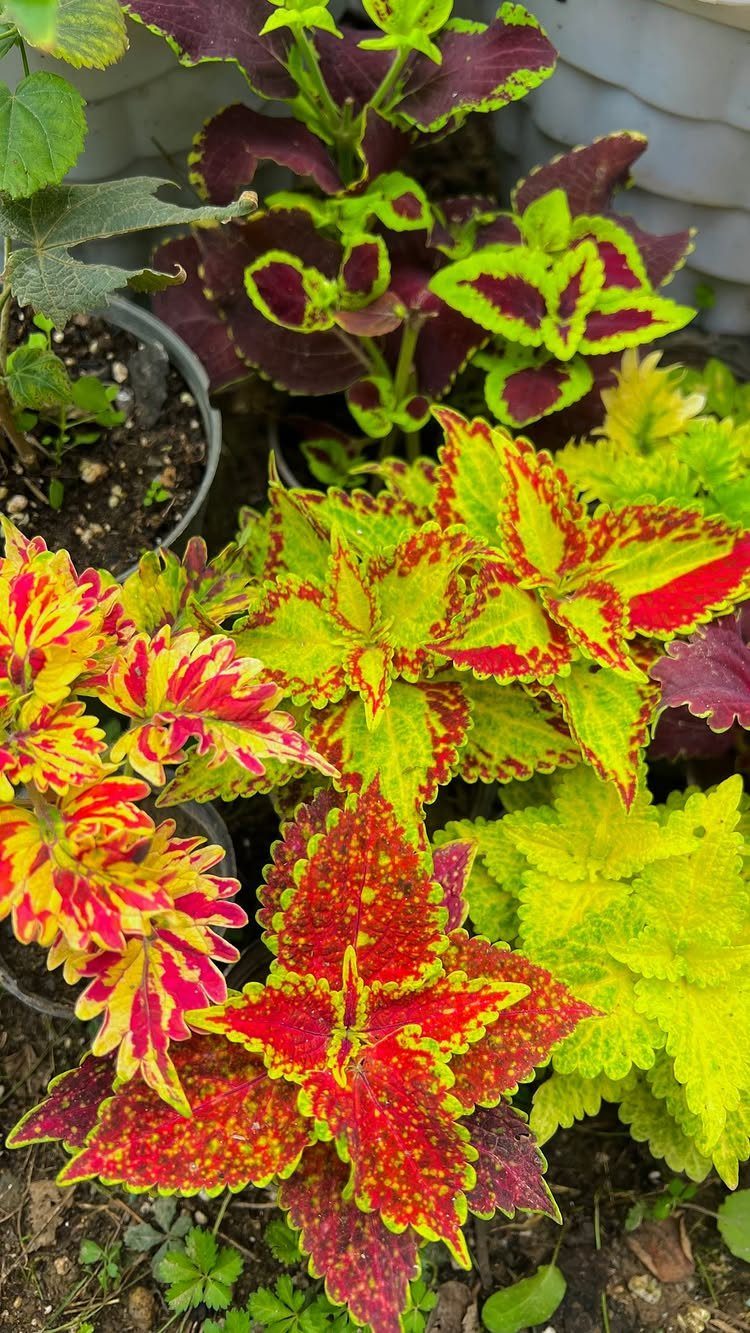
Coleus grows for its leaves, not its flowers, and the color comes in patterns that shift from leaf to leaf. The combination of red, yellow, and green in one plant gives the eye more to process than a solid-color annual.
Pinch back flower spikes to keep energy in the foliage. Water regularly since leaves wilt fast in dry soil.
28. Handmade Flower Sculptures
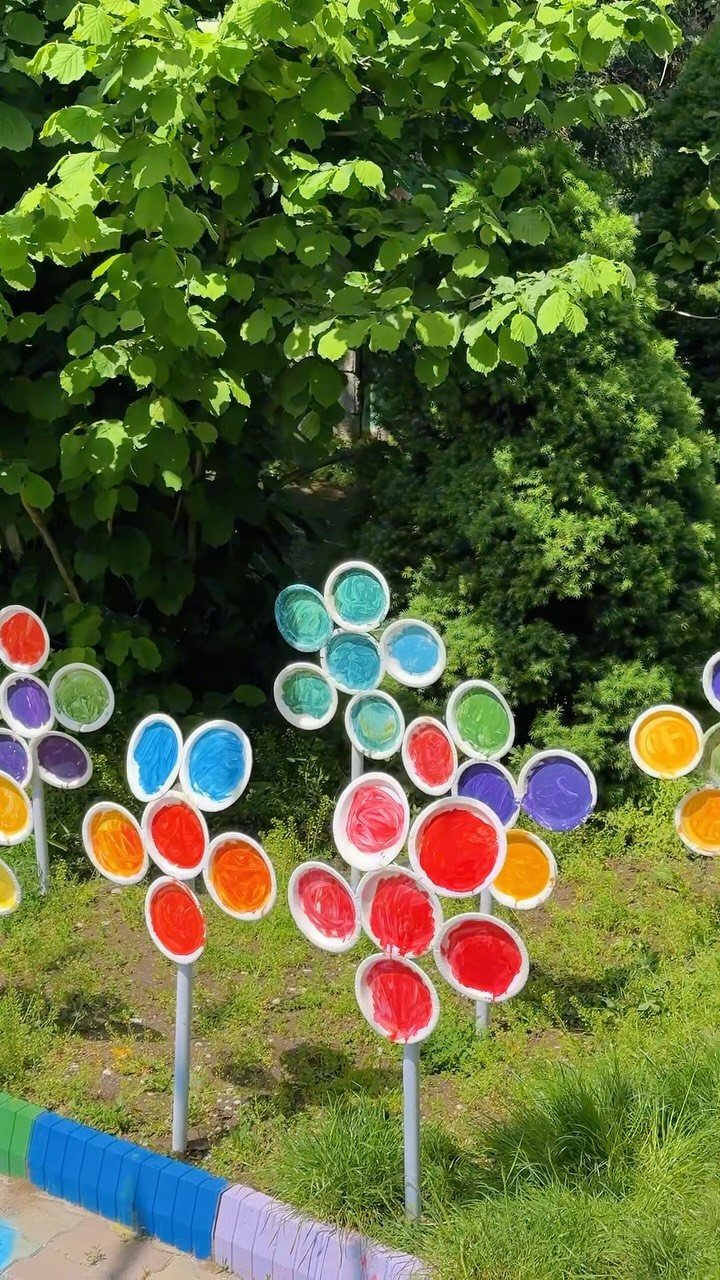
Painted wooden discs on stakes add color that holds steady through the season, unlike flowers that fade or stop blooming.
The bright hues pop against green foliage and give the garden a handmade, playful look that feels different from planted beds alone.
Cut circles from exterior plywood, sand the edges smooth, and paint with outdoor acrylic or spray paint.
Seal with polyurethane if you want the color to last more than one season. Attach to stakes with screws or bolts and push into the ground.
Space them at different heights so they read as a cluster rather than a fence line.
29. Globe Amaranth Planting
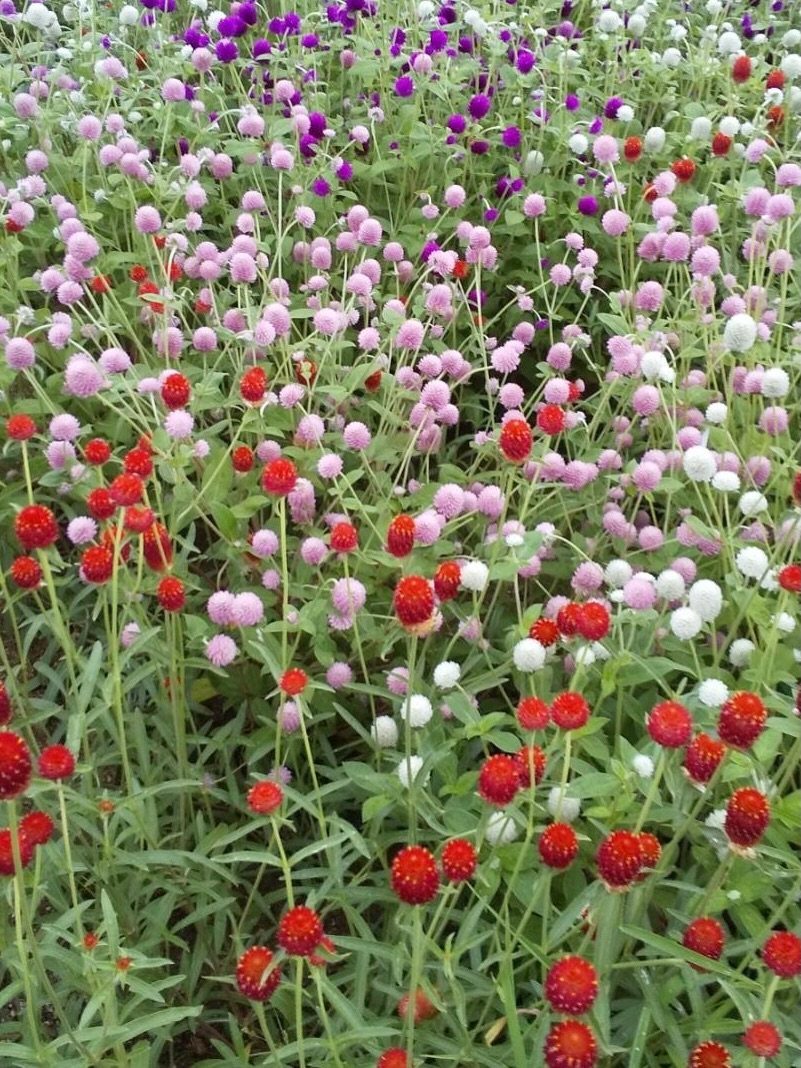
Globe amaranth blooms are small, round, and firm to the touch, more like a bead than a petal.
Deadheading is optional since the plant keeps blooming either way.
Plan for Safety and Plant Suitability
Not every plant that looks right for a sensory garden belongs in one.
Foxglove and datura are toxic if eaten, and even tomato leaves cause problems in large quantities. Label each plant by name so visitors know what they are touching, and keep the Poison Control number saved: 1-800-222-1222.
If someone swallows part of a plant they should not have, call with the plant name and how much was eaten.
Teach kids that only the edibles get tasted. A basil leaf is fine; everything else stays out of the mouth even if it smells good or feels soft.
Thorny plants like roses look appealing trained over an arbor, but they scratch bare arms and catch clothing. Plant them where visitors will not brush against them by accident, or choose thornless varieties for paths and seating areas.
Some plants irritate skin on contact. Signet marigold flowers can cause minor irritation after prolonged handling, so rinse hands after picking or deadheading.
However, not all plants are good choices for a sensory garden — some of the most beautiful are the most toxic, and some invite a closer look only to snag you with a thorn.
Frequently Asked Questions
What is a sensory garden?
A sensory garden is built around five senses instead of one: you add plants you can smell and touch, sounds from water or grasses, and herbs or fruit you can taste.
Each sense gets its own cue so the space holds attention longer than a bed meant only to look at.
Which non-toxic, child-safe plants work best for a sensory garden or children’s garden?
Sunflowers, zinnias, celosia, calendula, lamb’s ear, Swiss chard, and strawflowers all work and cover multiple senses.
Edible herbs like lavender, rosemary, basil, and mint add scent and taste. Avoid plants with thorns or toxic leaves, and place soft-textured options like lamb’s ear where kids will reach for them.
How much sun, shade, and open space does a children’s garden or sensory garden need to thrive?
Most sensory plants need at least half-day sun, though some like caladiums and chard tolerate partial shade.
The garden can start small in containers or a raised bed, or expand to include larger structures like arbors or sunflower circles. Match plant choices to the light your site receives rather than forcing plants into the wrong exposure.
Which fast-growing plants are most likely to hold a child’s attention from seed to harvest?
Sunflowers grow fast enough that kids can track height week by week, and zinnias bloom nonstop from early summer through frost.
Calendula reseeds readily and produces edible petals in weeks. Sow seed straight into the ground once frost is past and hand them a ruler.
Should I use raised beds or in-ground planting beds when building a children’s garden?
Raised beds lift soil to a height that makes planting and harvesting easier on backs and brings sensory details within reach for kids or seated visitors.
In-ground beds work fine if drainage is good and you are planting tall anchors like sunflower circles or vine tunnels. Mix both to match the plant and the purpose.
How can I make a children’s garden safer for toddlers around water features, garden tools, and plants with sharp edges?
Keep water features shallow and supervise closely, since even small fountains pose risk for toddlers.
Skip plants with thorns or sharp leaf edges along paths where kids walk, and choose soft-textured options like lamb’s ear or smooth-stemmed flowers instead. Store tools out of reach when not in use.
Which low-maintenance plants hold up well to curious kids while still looking attractive season after season?
Lamb’s ear tolerates repeated touching and resprouts each spring. Coneflowers, salvia, and roses handle dry spells once established and attract pollinators through summer.
How do I get children involved in planting and garden care in ways that match their age and ability?
Let kids direct seed large-seeded plants like sunflowers or calendula, water with a small can, and harvest herbs or edible flowers they recognize.
Older kids can deadhead spent blooms, track growth on a chart, or train vines along arbor frames. Ownership of plant choices matters more than task complexity for keeping them engaged.
Which vegetables, herbs, and fruits are easiest for kids to grow, tend, and harvest on their own?
Swiss chard produces leaves all season if you pick outer ones and leave the center growing.
Calendula and strawflowers go from seed to harvest in weeks. Lavender, rosemary, basil, and mint all tolerate some neglect and give kids something to pinch, smell, and taste as they pass through the garden.