The ideas here run from a single indoor tree in a black spherical pot to a row of long troughs that works as a movable privacy fence, and what you can plant depends on where the pot will sit: light, wind and weight limits settle the choice before style does.
On a balcony, weight decides how you fill a large pot, so I put a light filler in the bottom third and save the potting mix for the top, which the section on preparing and filling large pots walks through.
Decide where the planter will sit first, whether that’s a porch, a walkway, a balcony or a corner indoors, then pick the pot.
1. Thriller, Filler, Spiller Planter
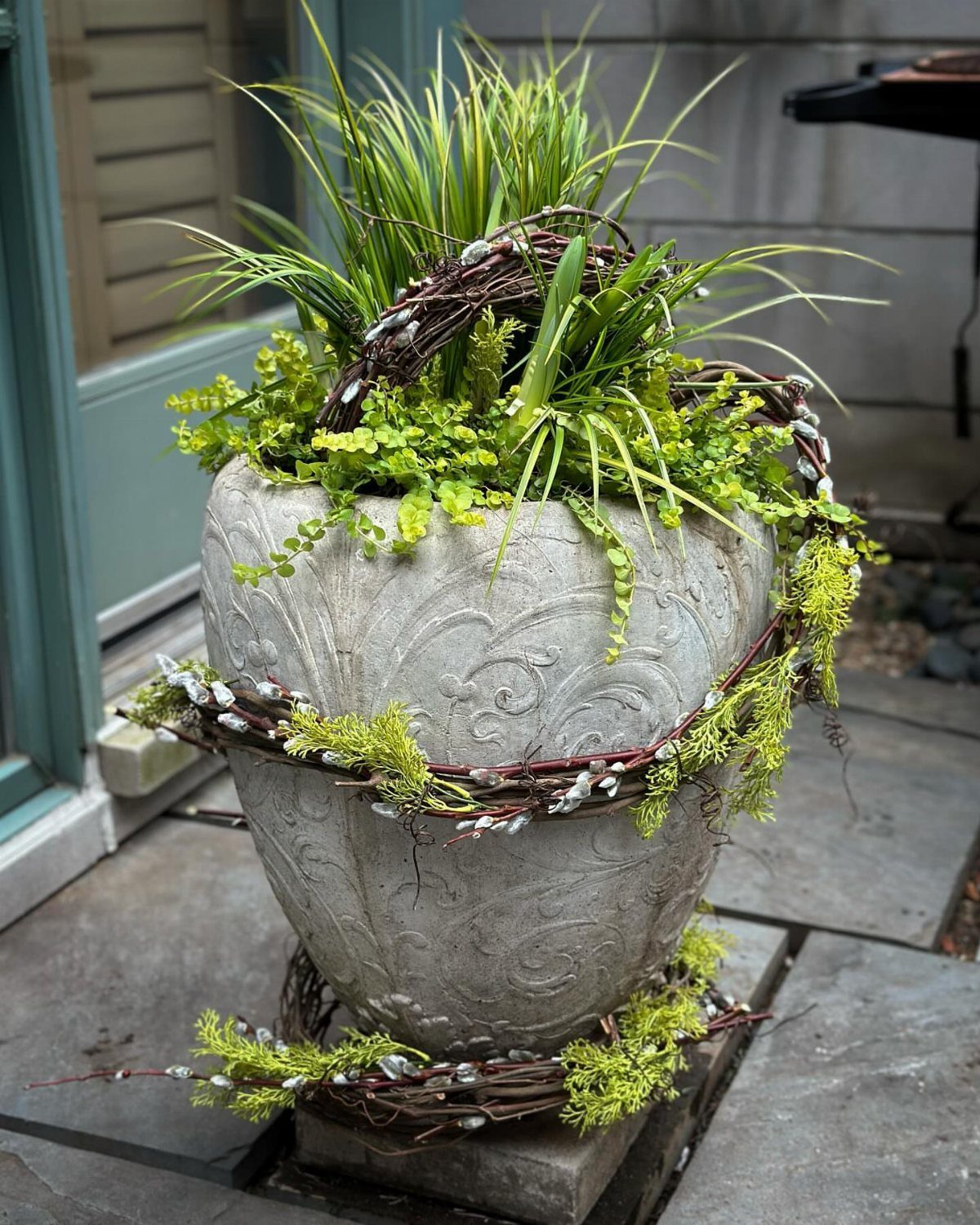
A planter this size can carry all 3 layers at once: a tall grass for height, low green foliage in the middle, and a trailing plant to soften the rim.
That is the whole formula, and an ornate stone urn gives it a frame that suits it.
Keep the three in proportion. The tallest plant should rise roughly 1.5 times the height of the pot, so the container still reads as part of the display.
Twigs or pussy willow tucked around the edge, as here, add a seasonal layer without another purchase.
In containers placed out in the open, put the tallest plants in the center and surround them with fillers and spillers to create a balanced, 360-degree display.
2. Privacy Hedge Planters
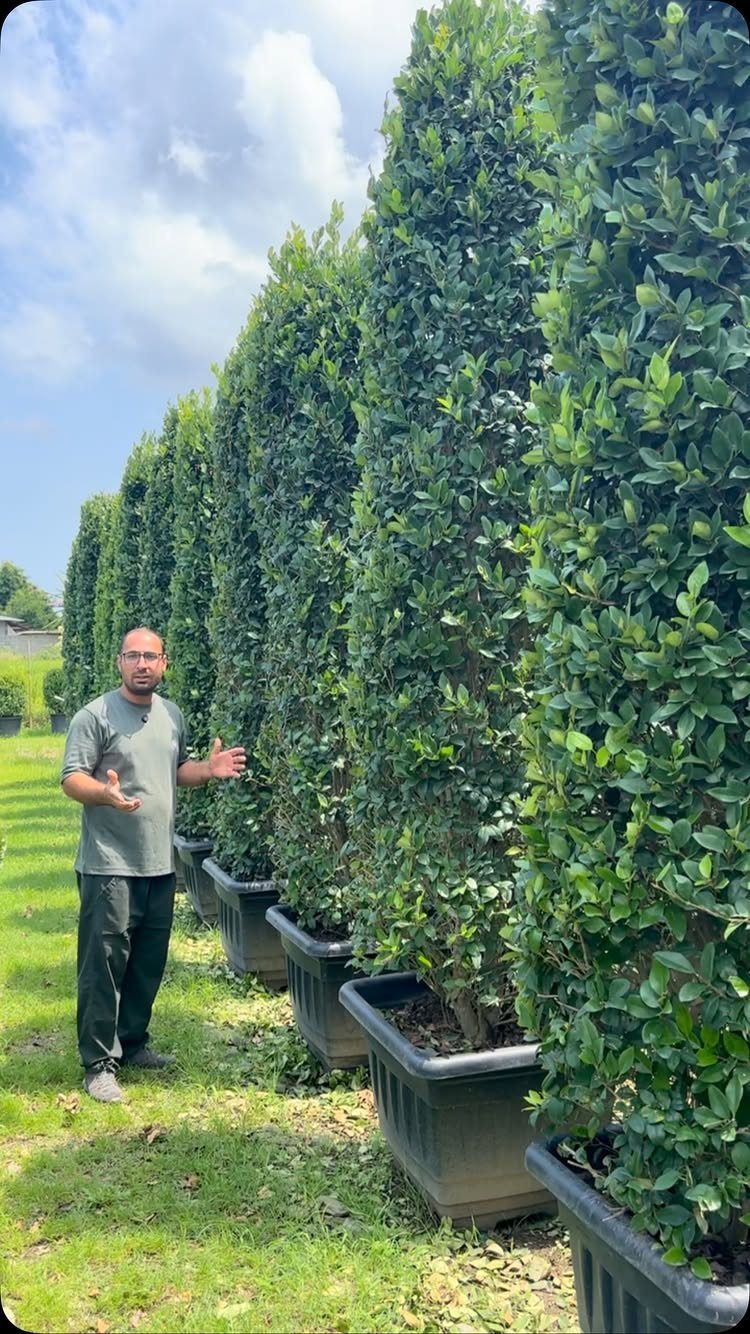
A row of long, rectangular planters turns hedging plants into a movable fence. Black troughs keep the line crisp, and the tall green plants behind them do the screening.
I like this for renters, since nothing gets dug into the ground and the whole screen can move with you.
Choose evergreen hedging if you want cover all year, and set the planters end to end so there are no gaps.
Check the plants’ mature height before buying. A screen only works if it grows taller than the sightline you want to block.
3. Tree Planters
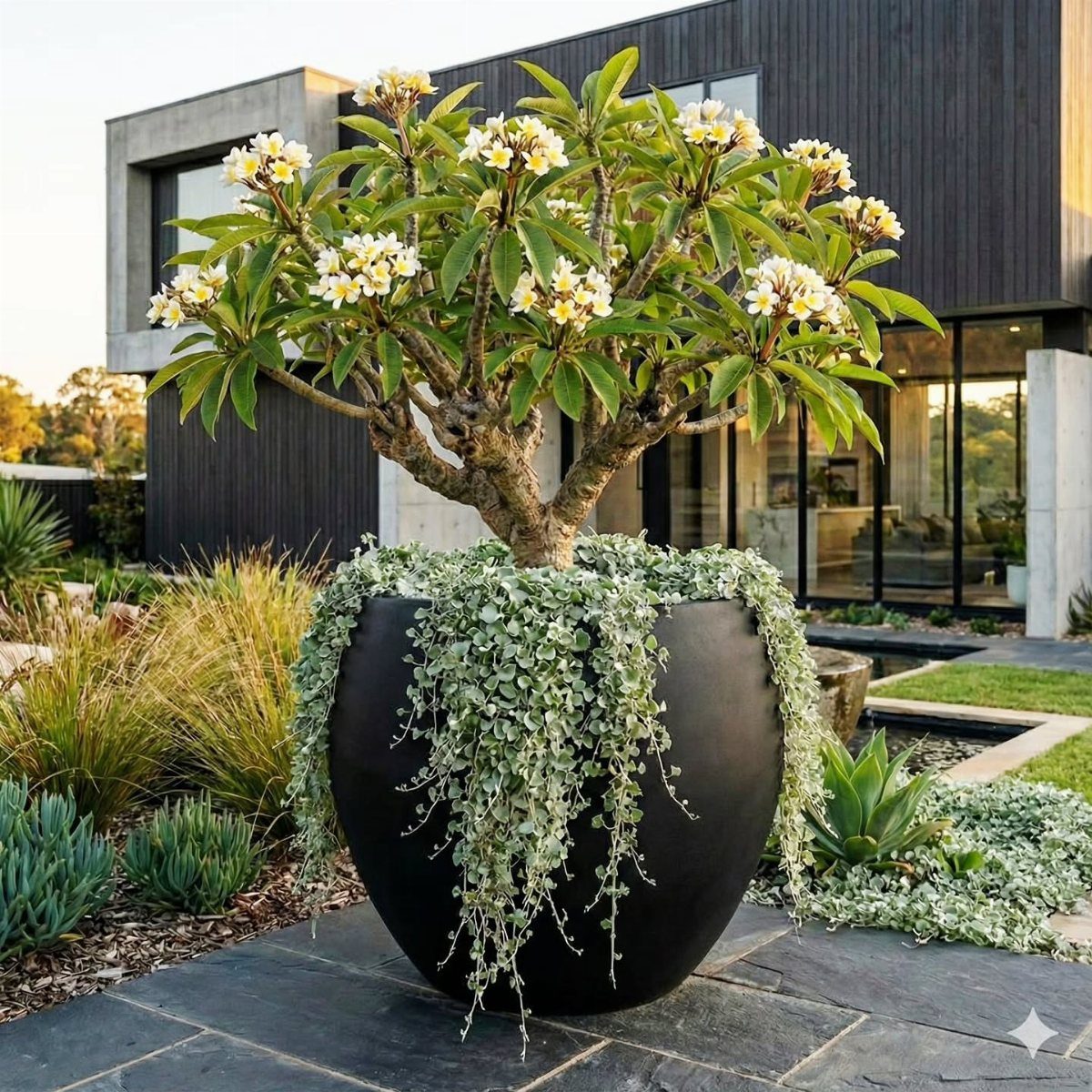
A single plumeria in a wide black round planter can anchor a whole patio, since the dark, broad container balances the tree’s open branching and keeps it from tipping.
The tree supplies height and flowers, and a trailing silver plant at the base hides the soil line.
Extra-large containers matter here because a tree needs room for its roots, and a bigger pot is also harder to tip. Pick the planter first, then choose a tree that suits its size.
A dark, simple pot keeps attention on the blooms. Cheaper plastic versions in black look similar from a few feet away.
4. Planter Groupings on a Balcony
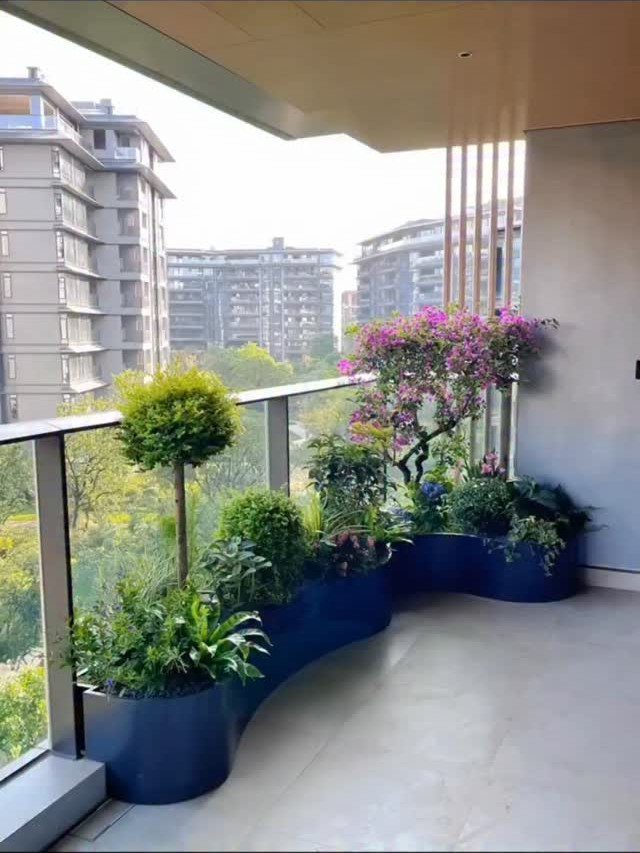
On a balcony, one long curved planter beats a scatter of small pots. Built-in or fitted along the edge, it uses the rail line and leaves the floor open for a chair.
Mix plant types so the bed looks full: some bushy greens, something upright, and one flowering plant such as pink bougainvillea for a pop of color.
A deep navy planter makes green foliage and pink blooms stand out, so it’s worth picking a container color that contrasts with what’s growing in it.
If you cannot build in a planter, line up several identical pots along the rail for a similar effect.
5. Shade Planters
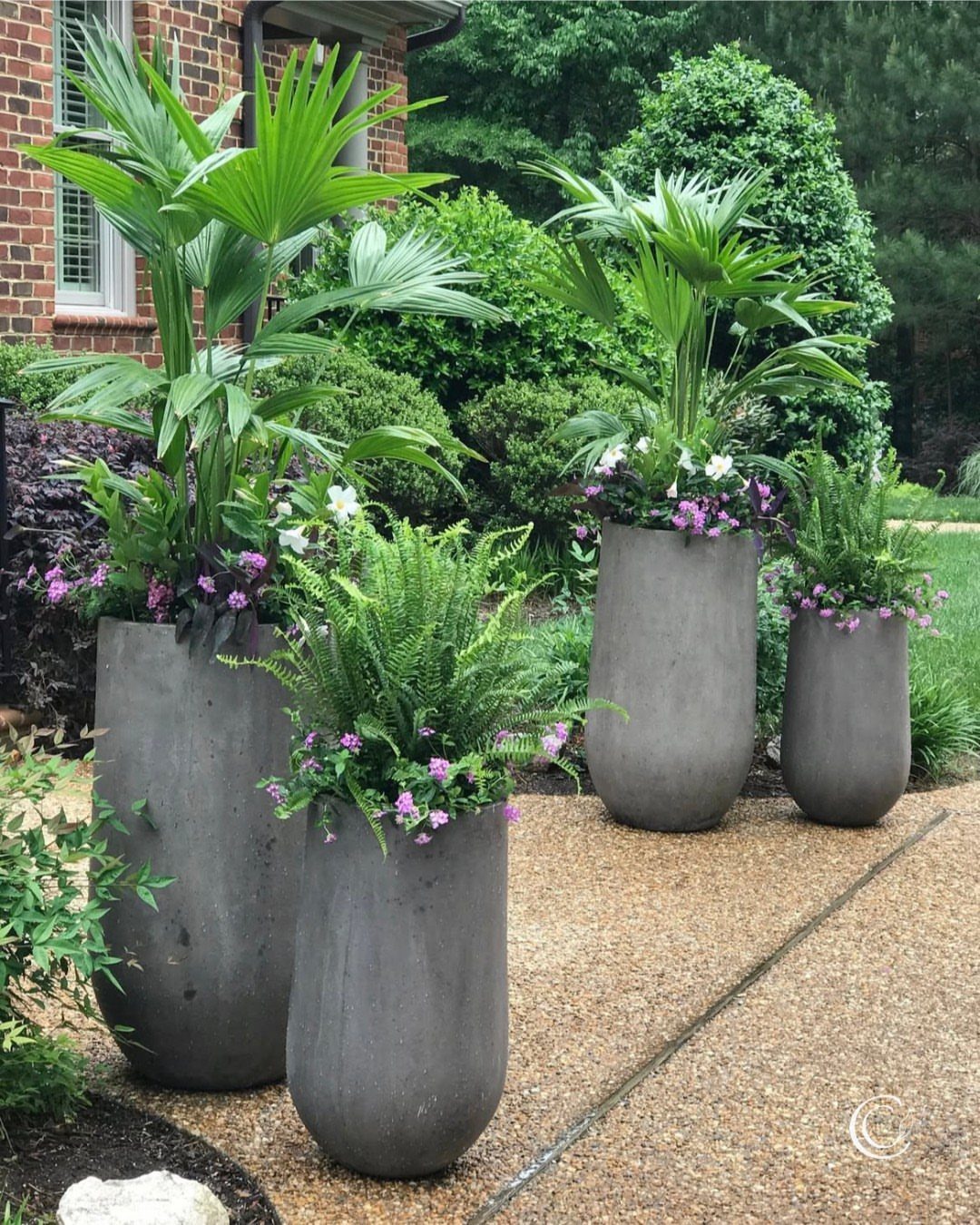
Low light does not have to mean dull.
Matching tall cylinders, like these grey concrete ones, make a shady spot look planned. Line up 4 along a path and the repetition carries the display.
Check your light before buying: plants labeled for shade handle it, while sun lovers will stretch and fade. Concrete is heavy, so place each pot where you want it before filling.
6. Foliage-focused Planters
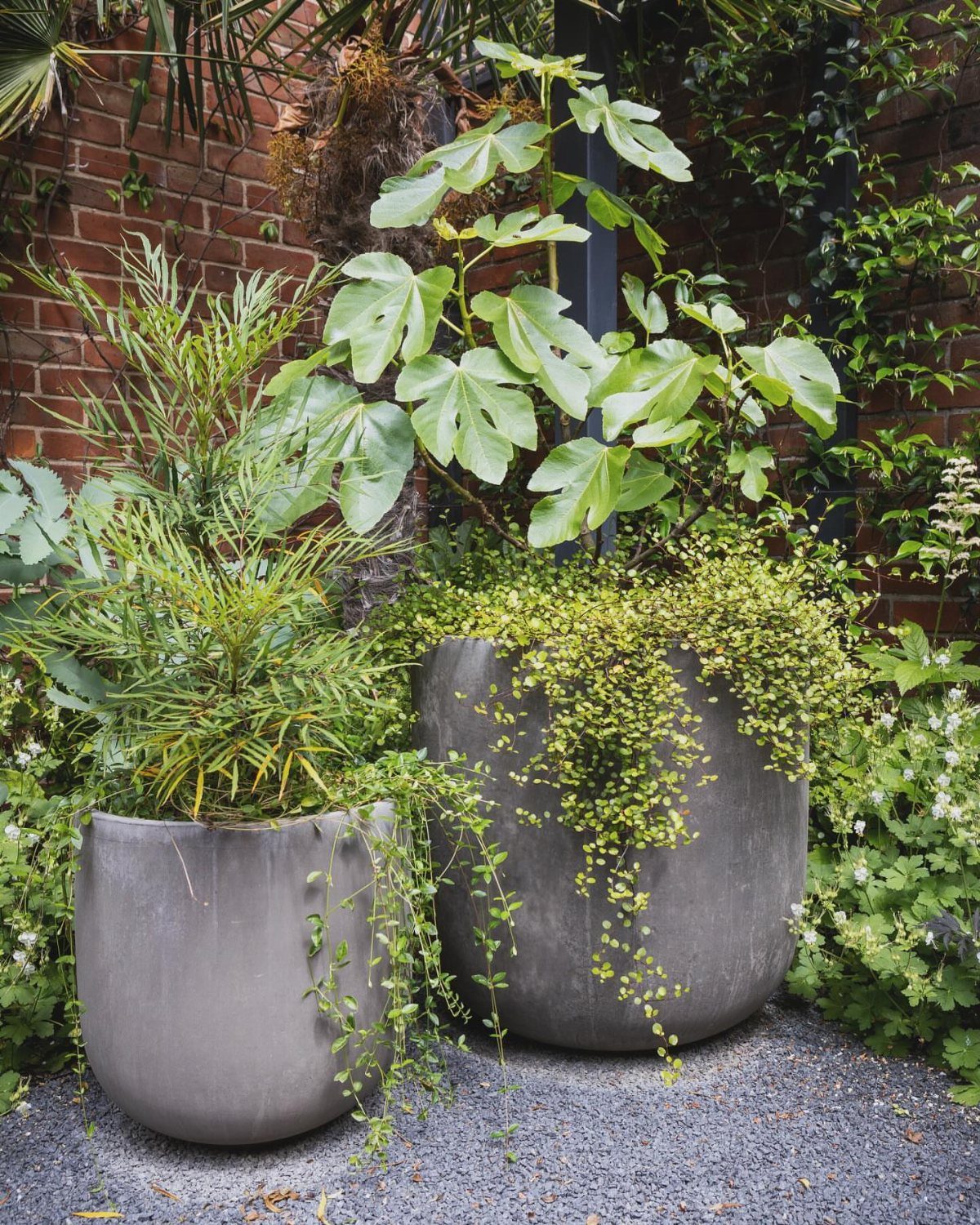
Leaves can do the work flowers usually get credit for. Mix different shapes, sizes and textures in one pot, such as spiky next to broad, or glossy next to feathery, and the contrast reads as color.
2 big planters of the same grey concrete let the plants take over. A brick wall behind them adds warmth without competing.
I would pick plants with clearly different leaf outlines rather than different greens. Shape shows from a distance; slight shade changes do not.
7. Pots by Walkways
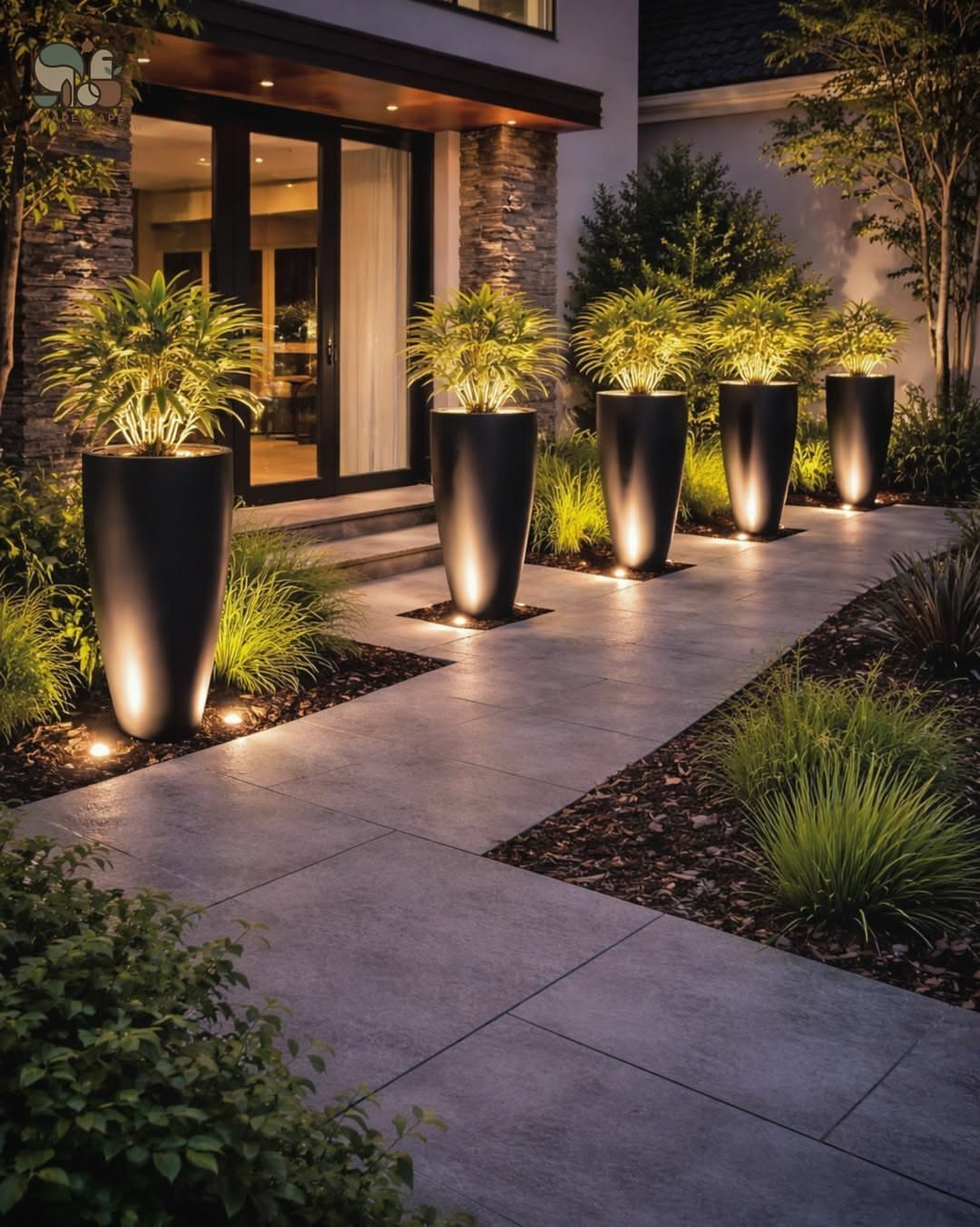
Tall, tapered black planters set at even intervals make a walkway read as a deliberate approach. With lighting built into the pots, as here, the row also guides people to the door after dark.
Space them evenly and keep every pot the same height and finish. Repetition does the work, so use one green plant throughout instead of mixing several.
Leave enough clear width on the path itself that nobody has to brush the leaves on the way in.
8. Summer Container Arrangements
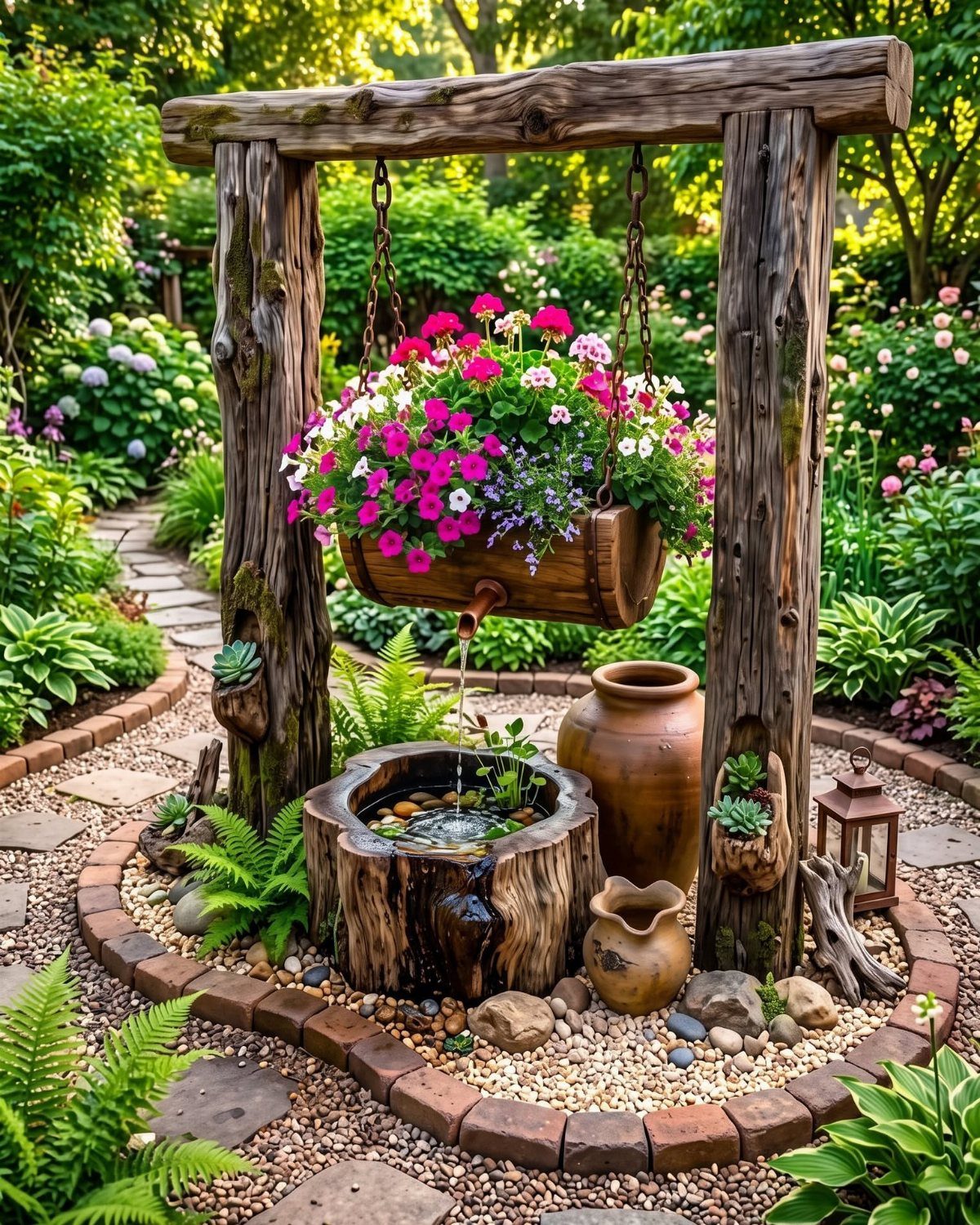
A hanging trough turns a summer display upward and frees the ground for other things. Bright annuals in pink and white spill over the edge, and foliage underneath fills the gaps between blooms.
Pick plants for the spot you have: sun-lovers for an open site, shade-tolerant ones under cover. Annuals bloom hard but only for a season, so budget for replanting each year.
A rustic wood frame suits cottage-style flowers like these. Add a pot or two of green foliage nearby so the display feels layered.
9. Containers as Focal Points
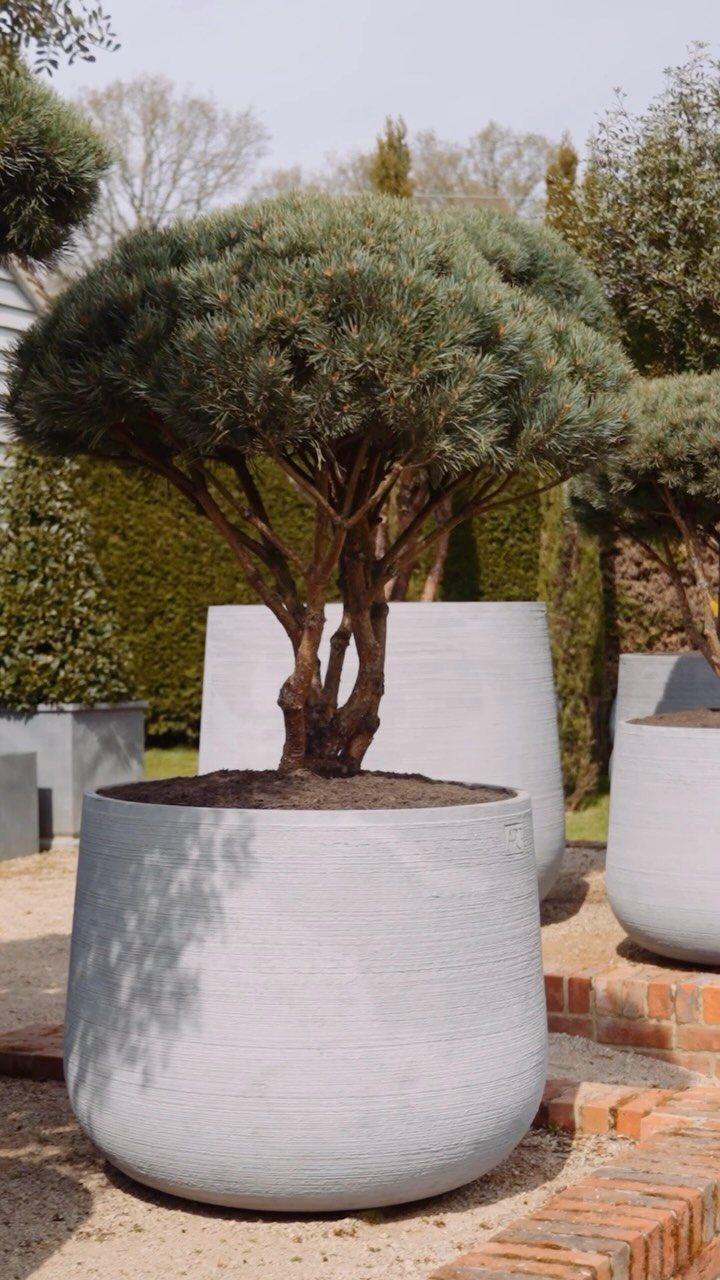
One oversized planter holding a single sculpted tree gives a garden somewhere for the eye to land. A light grey textured round pot, set on gravel, looks calm and lets the clipped pine carry the shape.
Repeating the same planter a few times along the path, as in this setup, turns a focal point into a rhythm. Still, I would keep one pot clearly dominant and let the others play backup.
Choose a container much wider than the trunk so the tree looks anchored.
10. Large Planters Along a Front Porch
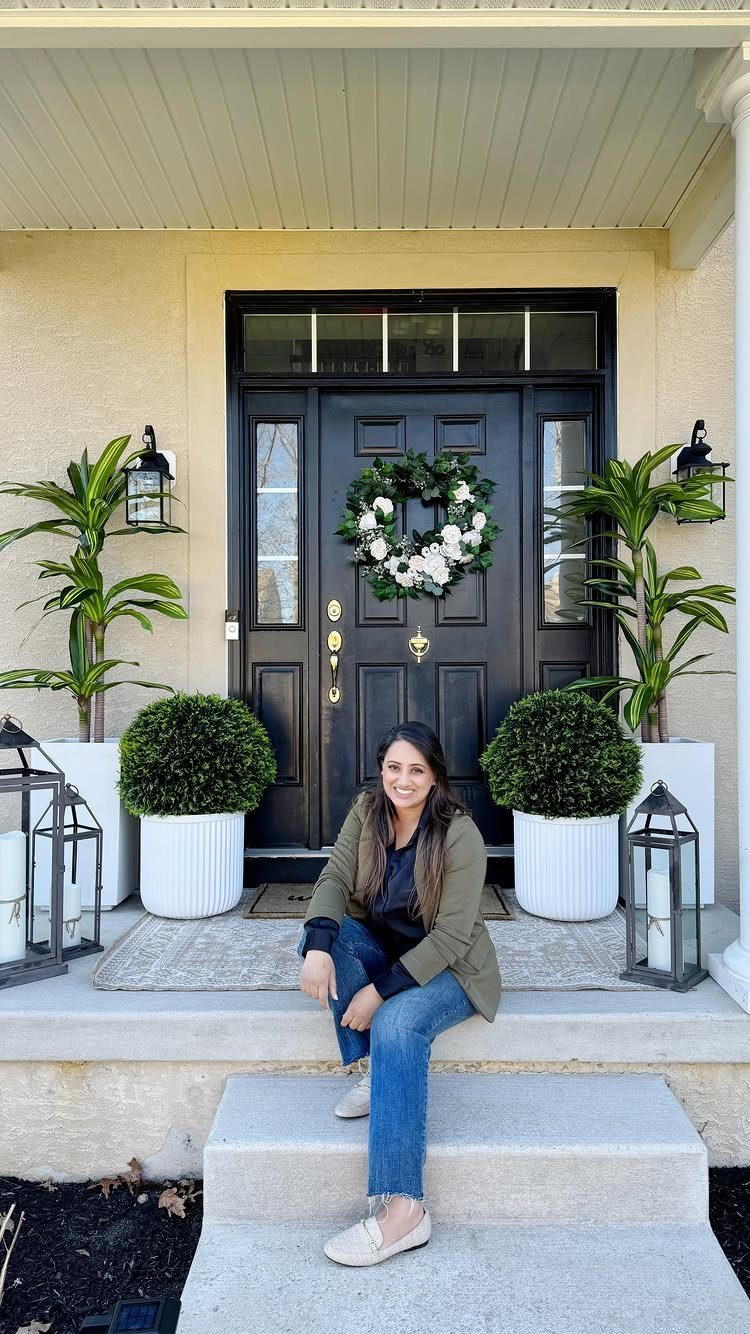
Four large white planters on a porch can look like plenty, so place them sparingly.
I would pair them symmetrically, two on each side, and skip extra small pots that clutter the steps. White against a dark door gives strong contrast without any flowers at all.
Fill them with one or two foliage plants each, and add a seasonal bloom only if you want a change.
11. Large Round Planters Beside Entrances
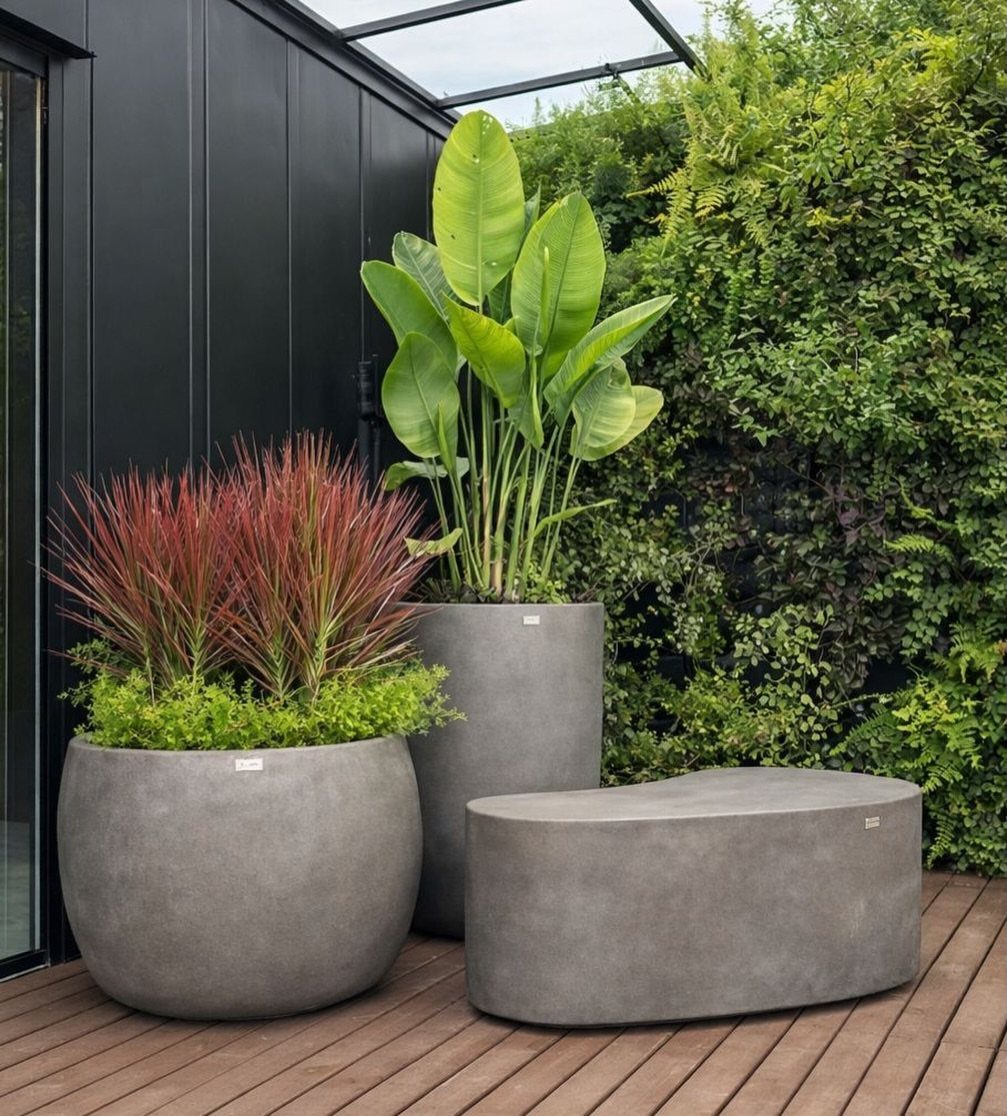
A large round concrete planter works as furniture as much as a plant holder.
Round planters soften the hard lines of a deck or a black wall, and a matched pair in the same grey as nearby furniture makes the corner look planned.
Match the planter finish to nearby pieces, as the grey bench does here. Foliage plants suit this look, since they stay full without constant deadheading.
Place the pots before filling them, because concrete this size is very hard to shift once it holds soil.
12. Monochromatic Pink Planter
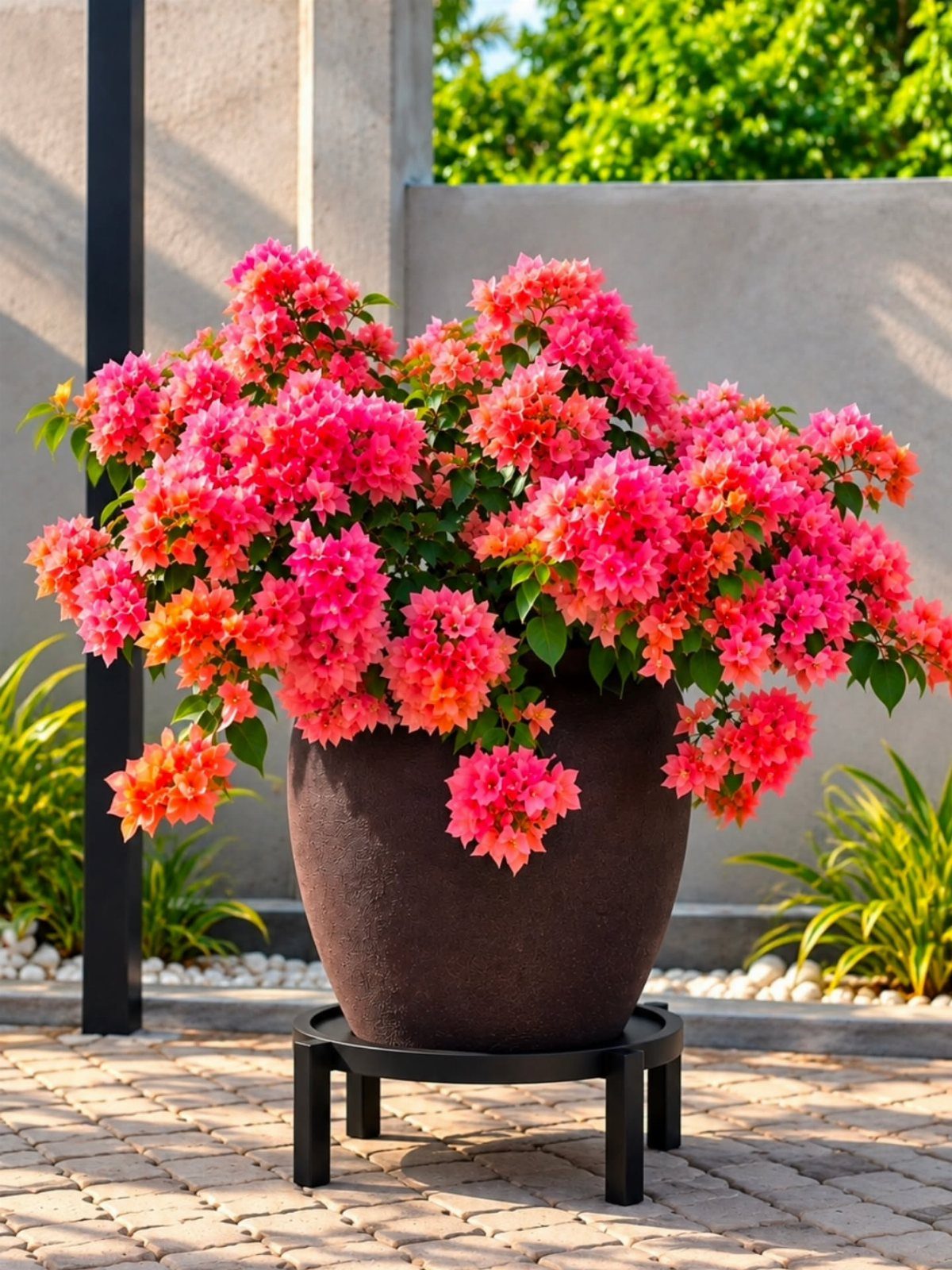
Stay with one color family and a single pink bloom can fill a whole pot.
Raise the pot on a stand, as here, so the flowers sit at eye level and the trailing growth has room to hang.
For a fuller arrangement, add companions in other pink shades instead of switching colors.
13. Winter Holiday Containers
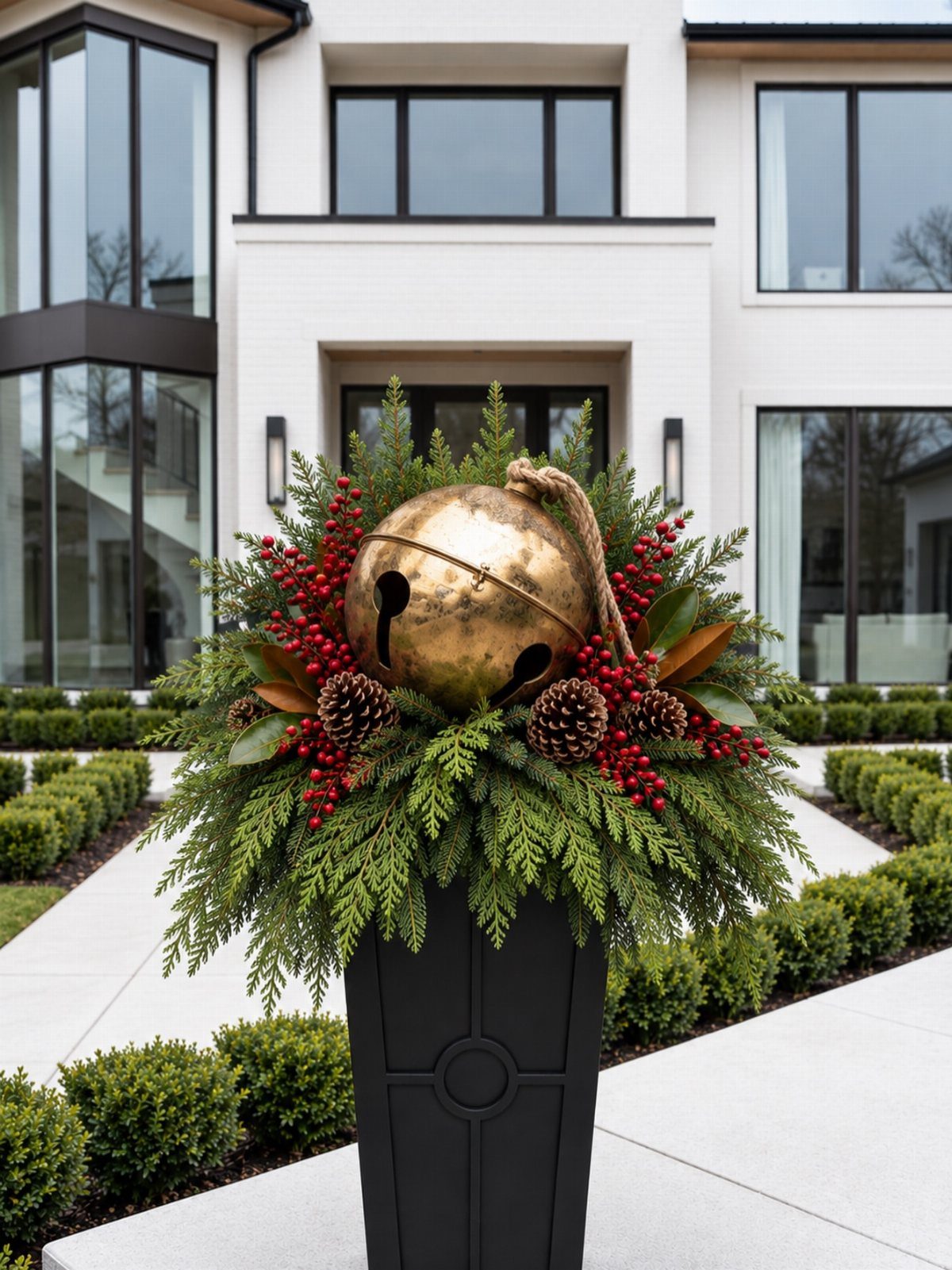
Evergreen branches packed into a large black planter hold their color through the cold months, and red berries and pinecones add the holiday note without a single flower.
One oversized gold bell works better than a handful of small ornaments, since it reads from the street.
Push the branches in at different heights, tallest at the center, so the arrangement looks full from the front. A dark pot against a white house gives the greens and red strong contrast.
Keep the decorations simple: 3 elements are plenty.
14. Statement Indoor Planter
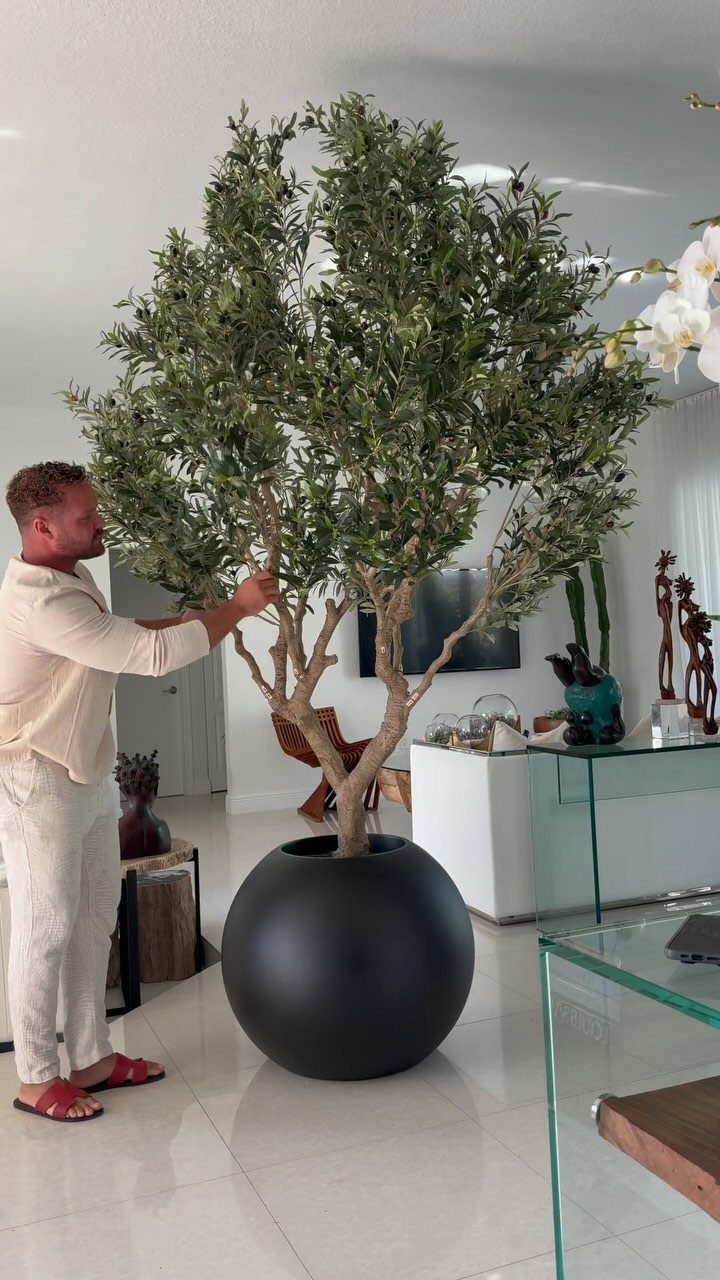
A big spherical black planter holding one tall tree can be the main piece in a white living room, the way a sculpture would be.
The round shape softens the straight lines of the walls and furniture, and the dark finish makes the green leaves stand out.
I would give it floor space of its own and keep nearby decor quiet. Pick the planter first, then a tree tall enough to balance the pot’s width.
A round base can roll, so check that it sits level before you fill it.
15. Characterful Indoor Planter
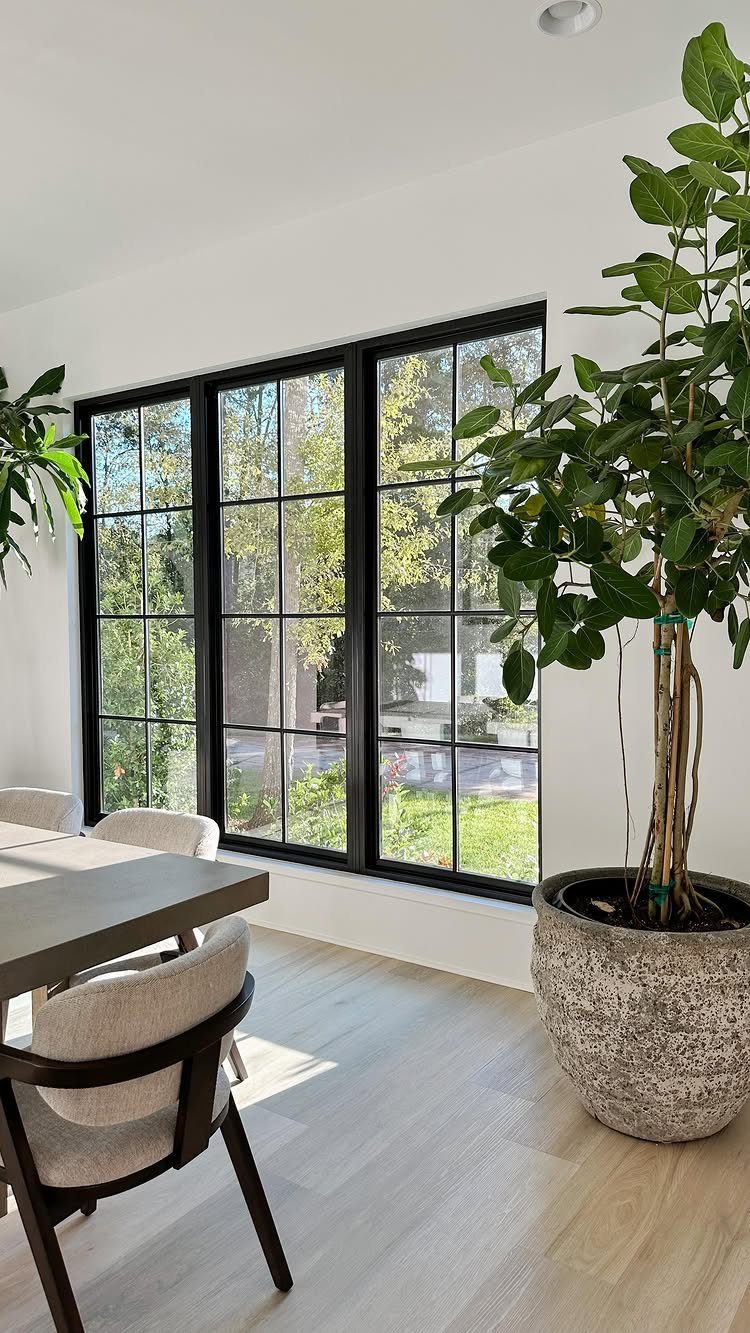
A textured, stone-look planter brings character on its own, so the plant can stay simple. Set a tall green plant in a grey one beside black-framed windows, and the rough surface adds some warmth to the clean lines.
Put it near the light, such as by a window or a dining area, where it gets seen every day. Choose a plant that suits the brightness of that spot.
I prefer a muted grey over a bold color here, since it fits most furniture.
16. Tiered Indoor Arrangement
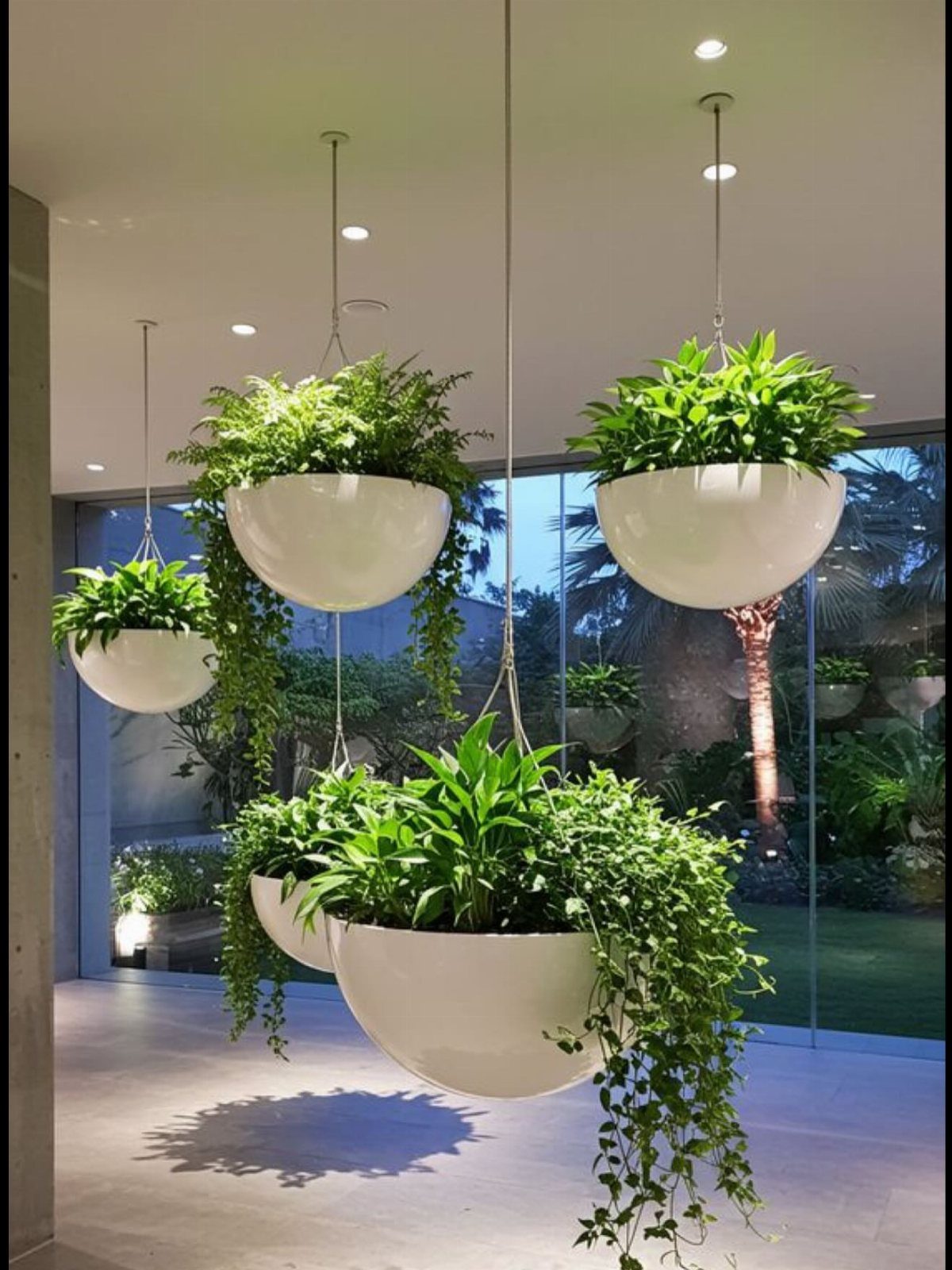
Hanging white bowl planters at different heights gives a room a layered display without using any floor or shelf space. Staggering the drops lets each plant be seen, and white bowls keep the focus on the greens.
Vary the lengths by several inches so the bowls do not line up. Hang them near a large window where the plants get light.
Anchor each one to a ceiling point that can hold the weight of wet soil, which is heavier than it looks.
Drainage and Watering
Every large planter needs a drainage hole.
Without one, water pools and the soil turns into a breeding ground for mold and root rot. If a pot you love has no hole, drill one, and make it a generous size so excess water escapes quickly.
Big pots hold a lot of soil, and that soil stays wet longer than you’d expect. Overwatering is the common mistake with tall containers.
Push a finger into the soil up to the second knuckle; if the lower layer feels dry, water. If it’s damp, wait.
Cool weather slows evaporation, so cut back when temperatures drop.
Hot weather flips this.
Containers dry out faster than garden beds, sometimes needing water daily. A long-spout can or a watering wand lets me pour right at the soil line, which keeps water off the leaves and cuts down on mildew.
A soil moisture meter takes the guesswork out, and a drip system covers you during vacations.
Preparing and Filling Large Pots
Most plants don’t need a pot’s full depth of soil. In a tall planter the roots never reach the bottom, and filling it all the way costs money and makes the pot heavy and hard to move.
Fill the bottom third with a light, non-toxic filler instead.
Screw-cap bottles, jugs, aluminum cans and packing peanuts all work. A layer of landscape fabric over the filler, with a few holes poked through it, lets water drain while keeping the soil from sifting down into the gaps.
Leave enough soil on top for the roots to spread.
Wind is a different problem. Large-leaved plants act like sails and can topple a pot.
On an exposed site, put heavy rocks, bricks, gravel or concrete chunks in the bottom to anchor it. Choose the filler to match the site: light for balconies and rooftops, heavy for wind.
Container Planting and Care
Start with the plants. Group those with the same light and water needs, and check each one’s mature height and spread so nothing crowds the others in a season.
Fill the pot with bagged potting mix; garden soil packs down hard in a container and drains poorly.
Garden soil packs down in a container and drains poorly. As you fill, press the mix gently around the roots to close air pockets, and leave room at the top for watering and growth.
Feed on the schedule the fertilizer label gives, and don’t add extra. Snip off faded flowers as they appear and cut back any long, floppy stems, and the plant will branch out and stay full.
A large planter’s soil can’t be swapped out easily each year. Instead, scoop out the top few inches annually and replace them with fresh mix.
Frequently Asked Questions
What are good plants to put in a large planter?
Trees, hedging plants, tall grasses, trailing plants and mixed annuals all suit a large pot, and so do foliage plants, herbs and big vegetables like tomatoes.
Match every plant to the light and water the spot offers, because sun lovers stretch and fade in shade.
A big pot has room for several plants of different heights, so a tall one, a mid-height green and a trailing one can share it.
What size container do I need?
Most flowers and vegetables need a pot at least 12 inches wide so the roots have room and the soil holds moisture.
Bigger pots dry out more slowly, which makes them more forgiving. Choose the planter before the tree, since a tree’s roots need a big pot and the pot’s size caps how large the tree can get.
How often should I water container plants?
Check the soil before you water instead of following a fixed schedule.
Midsummer heat can dry a big pot out daily, but in cool weather the soil stays damp longer, so water less often. Large pots hold wet soil longer than you’d expect, and overwatering is the common mistake.
How do you keep tall planters from blowing over?
A few inches of bricks, gravel or broken concrete in the bottom adds ballast and keeps a tall planter upright in the wind.
You can also tether the pot to something solid, like a porch pillar, with cable ties. Large-leaved plants catch wind like sails, so exposed sites need the extra weight.
Do I need to fertilize container plants?
Yes. Every watering flushes some nutrients out through the drainage hole, so potting mix runs low fast and plants in pots depend on you to refill it.
How do you arrange large planters?
Repetition works best. Line up matching planters at even intervals along a path, or pair them symmetrically on each side of a porch or door.
Set a heavy concrete pot in its final spot while it’s empty, because once it’s full of soil you won’t be sliding it anywhere.