Cost and effort swing wide across these ideas, from a few plant markers or a string of lights to a small pond with a pump.
What sorts them is how much ground you actually have and how much sun it gets, which is why the last 2 entries cover watching the yard and ranking what you want from it.
Sun decides the plan: a corner with 6 or more hours of direct light can handle container vegetables and raised beds, and a shady strip is better used for evergreen shrubs, a garden screen or a corner bench.
1. Container Gardening
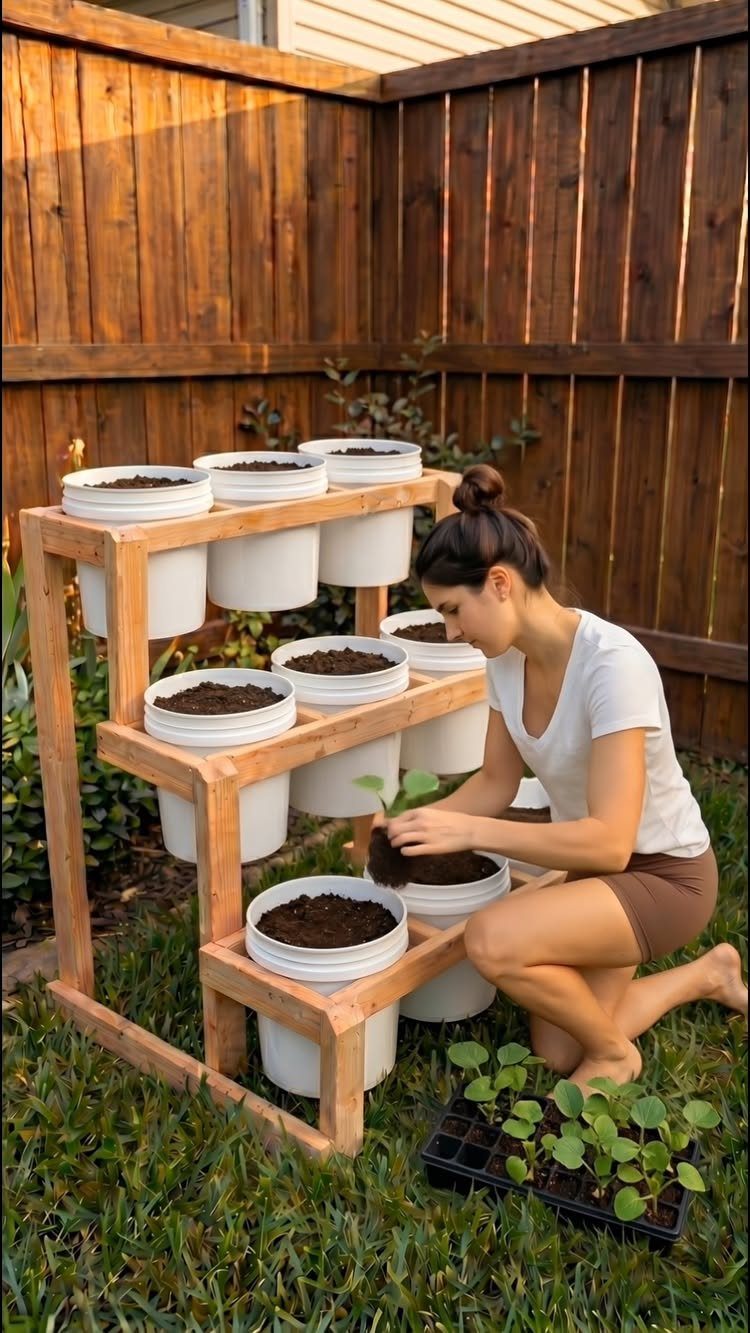
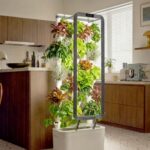
Stepping them up the stand puts every plant within reach of the light and fits more pots into a few square feet of yard.
Drill drainage holes in the bottom of each bucket before planting, or the roots will sit in water. Keep flowers, herbs or vegetables in separate tiers so each gets the watering it needs.
2. Vertical Gardening
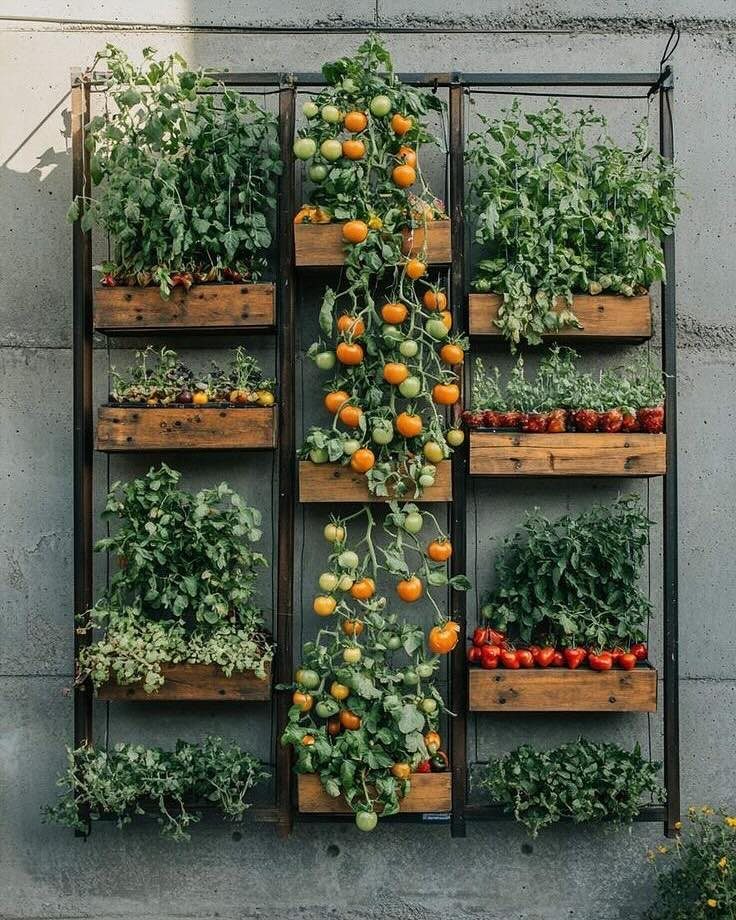
Tomatoes are a smart pick for a wall, because the vines climb and the fruit hangs where you can see when it ripens.
Stacking wooden planter boxes up a concrete wall uses height instead of ground, so a patio can stay clear for a chair.
Fasten the boxes to the wall so they stay put once they are heavy with soil and fruit. Water the top boxes first and let it run down.
3. Raised Beds
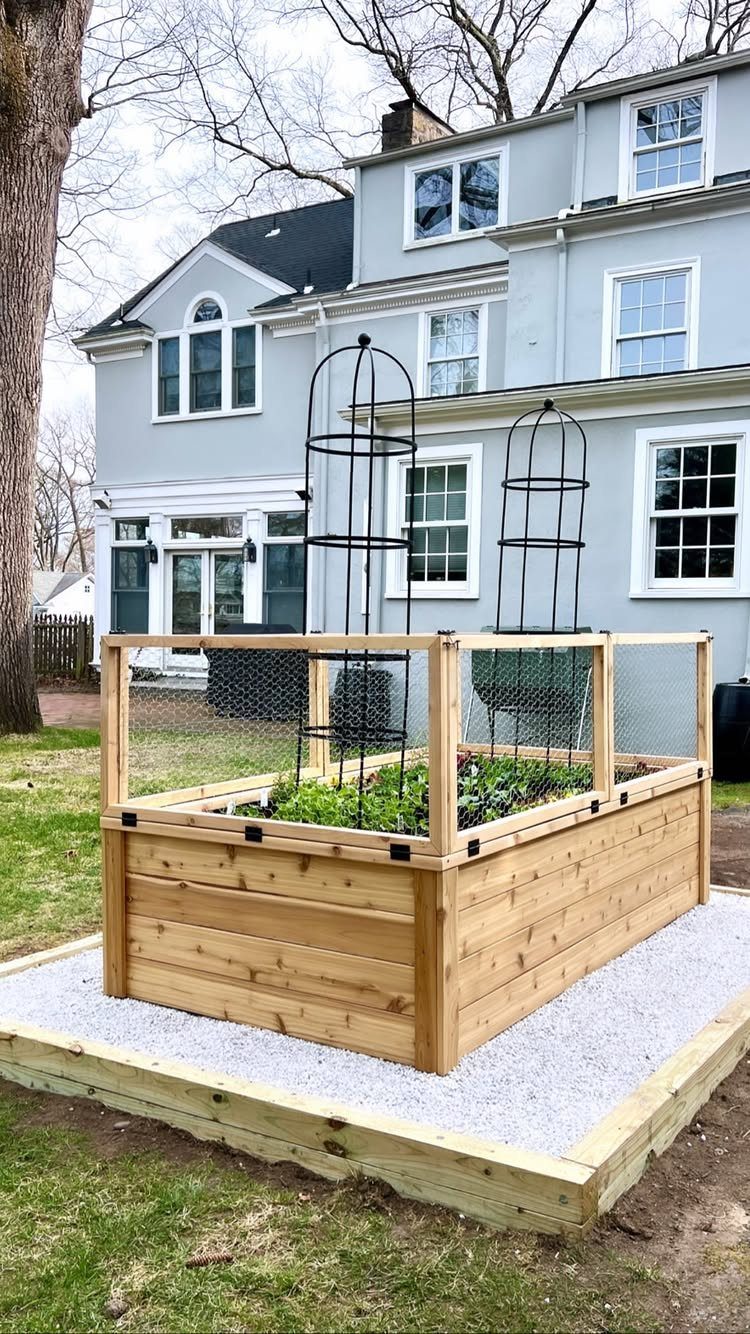
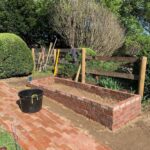
A wooden bed set on white gravel keeps the growing area neatly defined and the surrounding ground tidy. I like the wire fencing around this one, since it works as a border and a barrier in the same build.
Set tomato cages in at planting time rather than later, when roots are already spreading. Wood is cheap and easy to cut, which suits a weekend project on a small budget.
4. String Lights
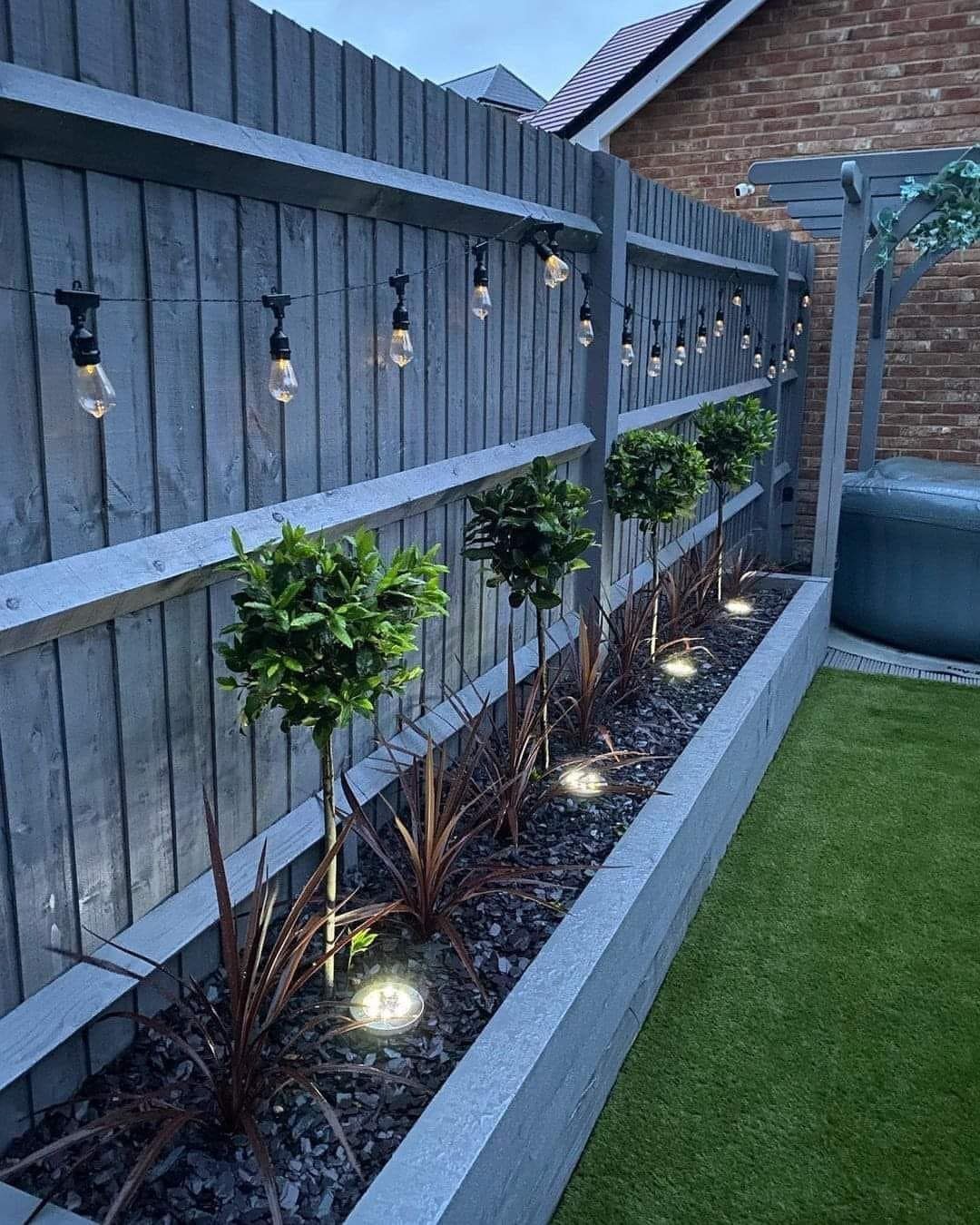
Strings of lights across a fence turn a narrow strip into a place you want to sit after dark. Hanging them along the fence line keeps the lawn and gravel bed clear and puts the glow at eye level.
Pick warm white bulbs for a soft, cozy look. Run them in loose swags rather than pulling them tight, and plug them into an outdoor-rated outlet or extension cord.
5. Garden Screens
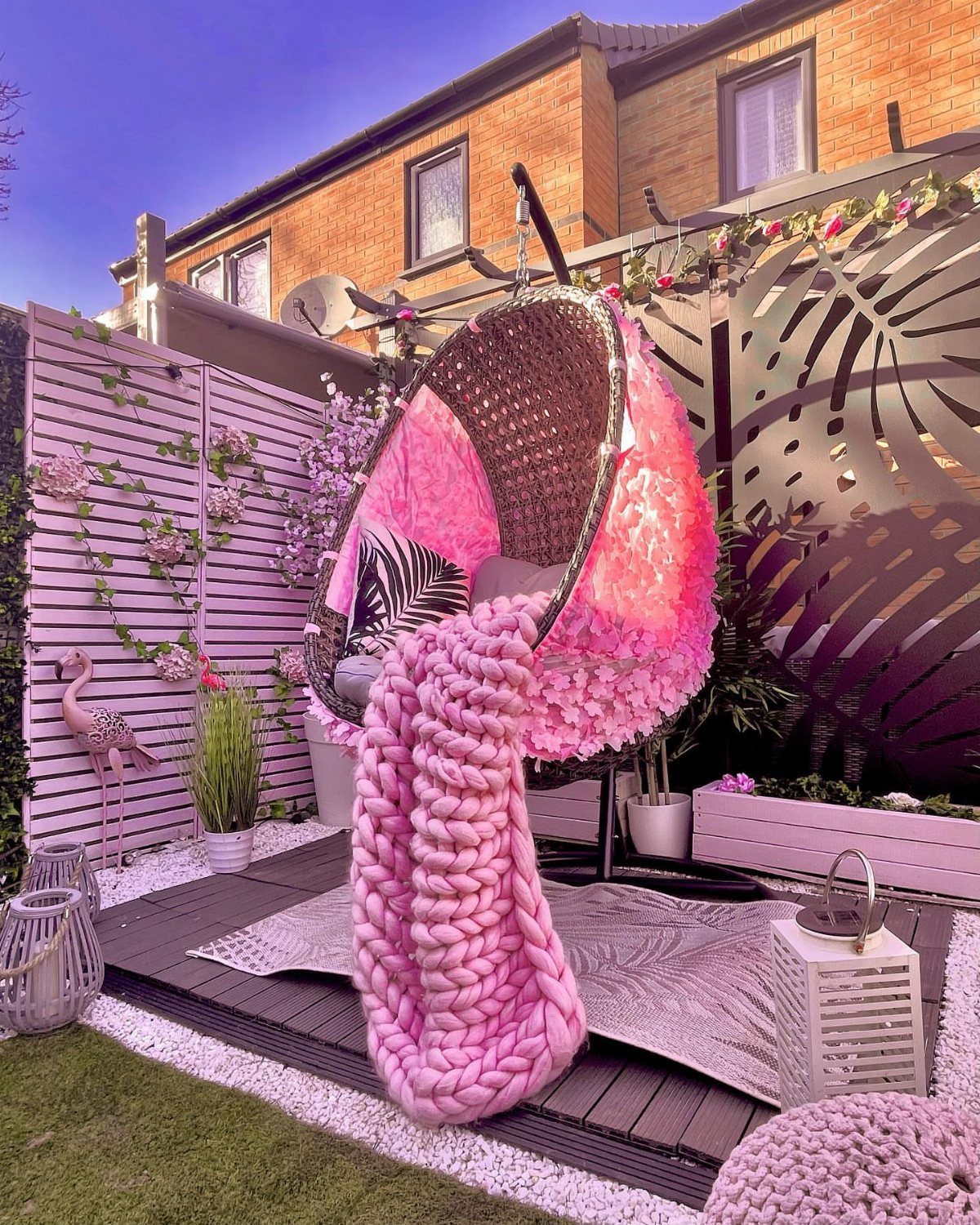
Laser-cut screens with leaf patterns and slats give a patio privacy without the weight of a solid wall. Light still passes through, so a small space feels enclosed but not boxed in.
Place them on the side facing your neighbors or the street, right behind a seat like an egg chair. Slatted panels and cut-out patterns also cast shadows across the ground, which adds interest for free.
6. Outdoor Rugs
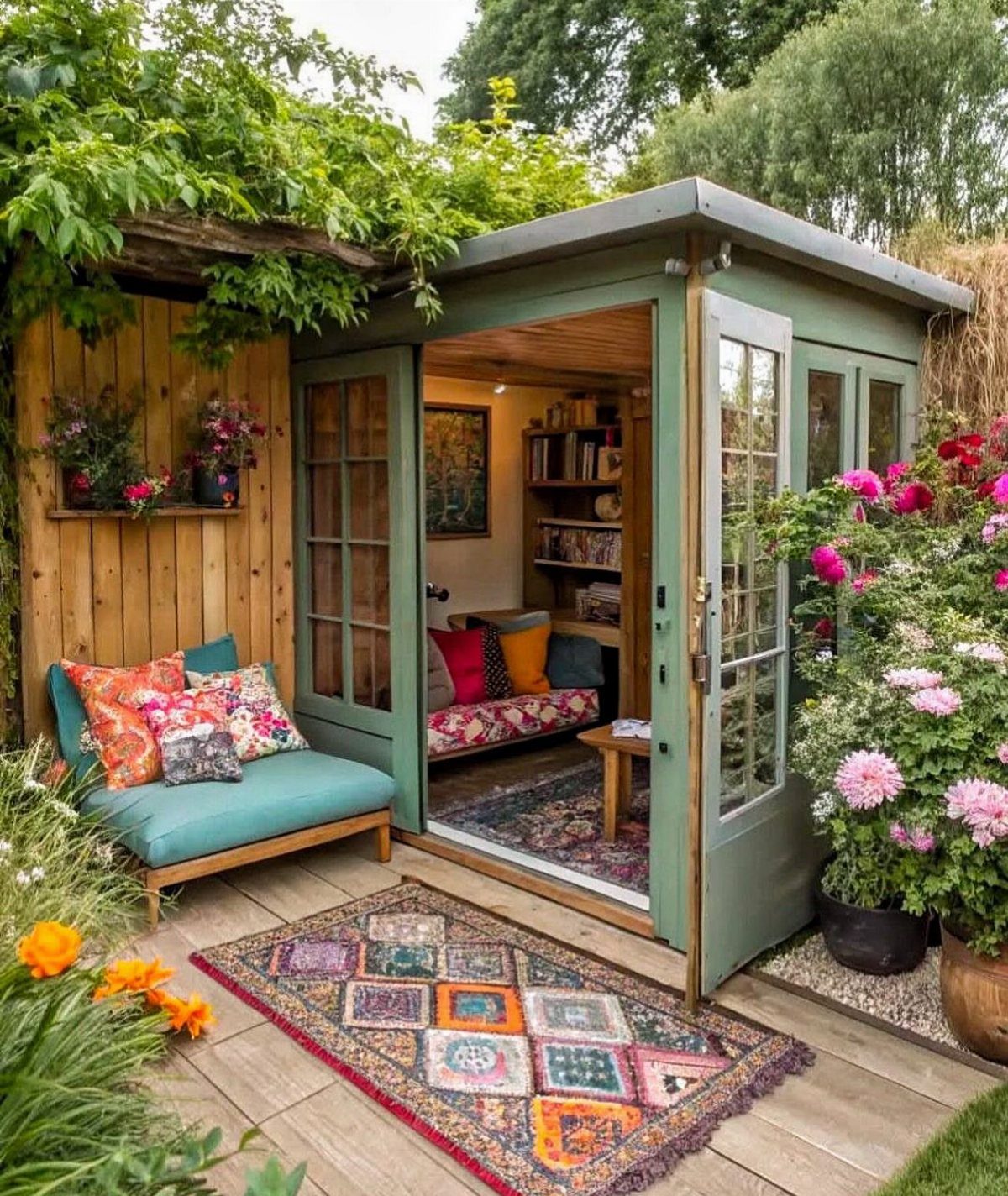
On a wooden deck, a patterned outdoor rug marks out a seating area and adds color where boards alone look bare. 2 rugs, as on this deck, can split a long, narrow space into zones.
Choose a rug made for outdoor use, and size it so the front legs of the furniture sit on it. Lift it now and then so the boards underneath can dry.
7. Gravel Landscaping
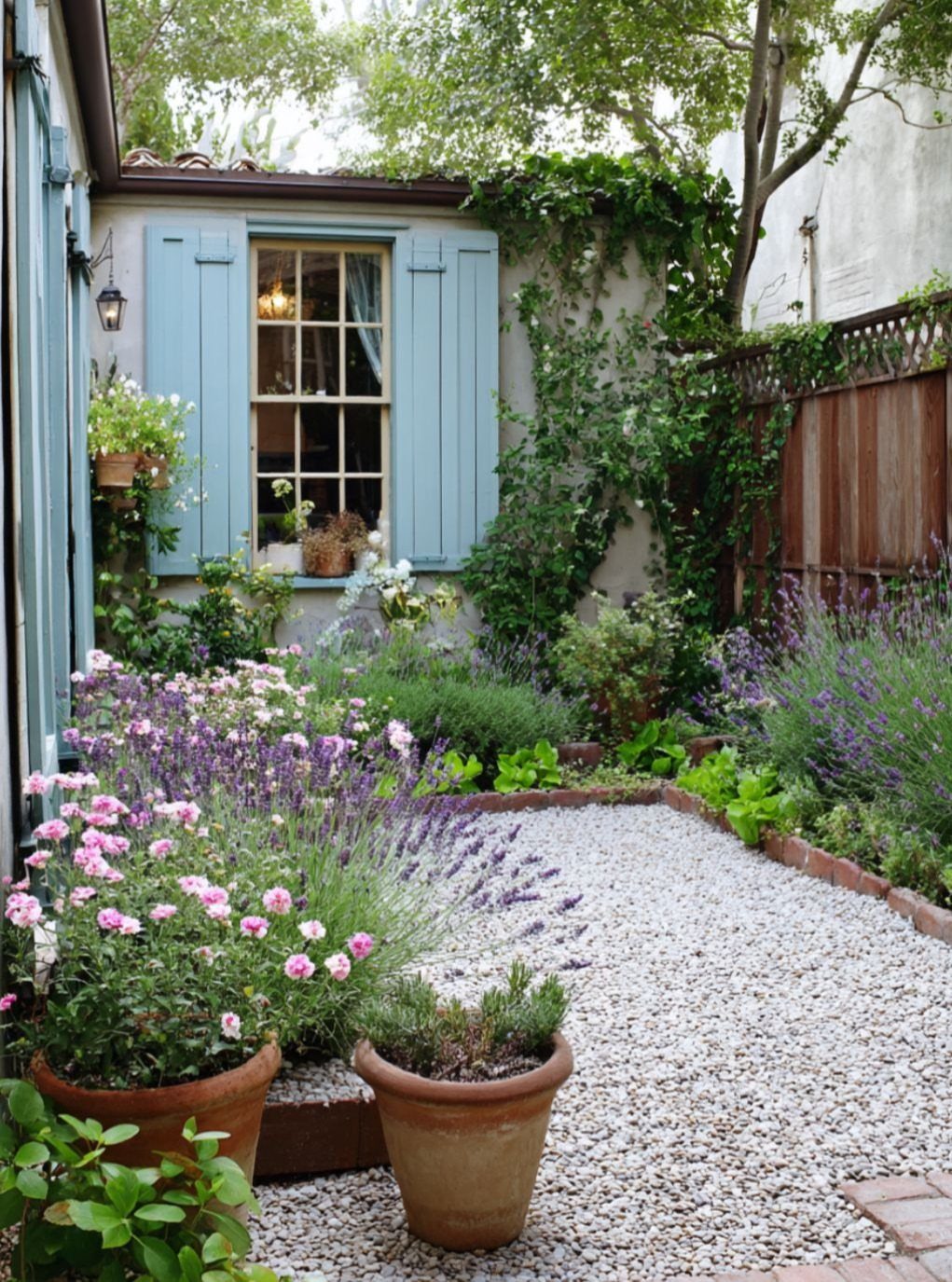
Gravel costs far less than paving stones or a lawn, and it asks for no mowing or watering.
A loose-surfaced path like this one lets lavender and potted plants spill over the edges, which softens the line against the house wall.
Spread it over a firm, level base so it doesn’t wander into the beds. Edging along each side keeps the stones where you put them.
8. Corner Bench with Storage
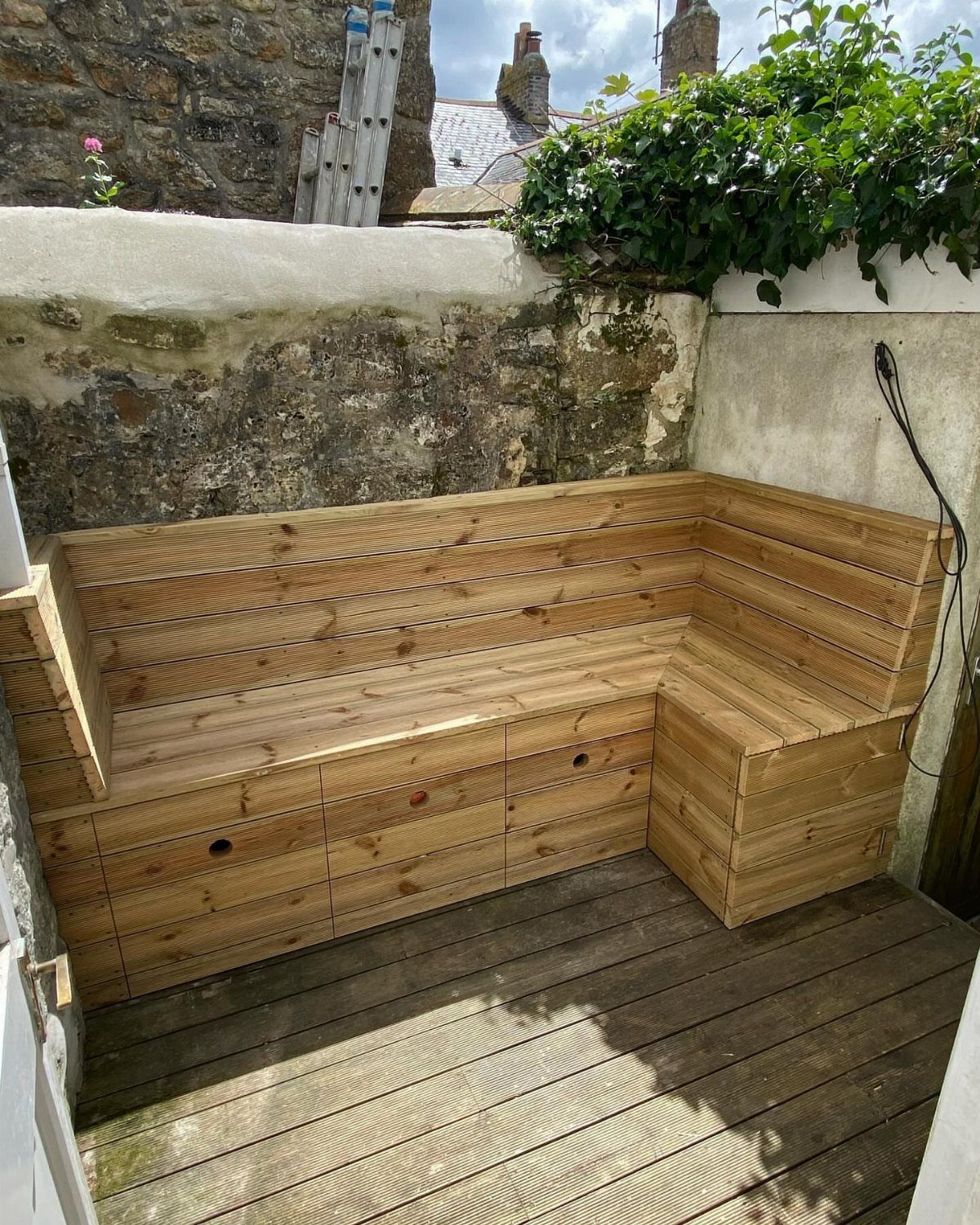
Built-in seating along a boundary wall claims no floor space in the middle of a small deck.
An L-shaped corner bench makes the most of the angle, and the drawers underneath hold cushions, tools or toys, so the clutter stays out of sight.
A light wood finish keeps the corner from feeling heavy against stone and white paint. I would pick drawers over a lift-up lid, since nothing needs unstacking to reach what is at the bottom.
9. Deeper Planting Borders
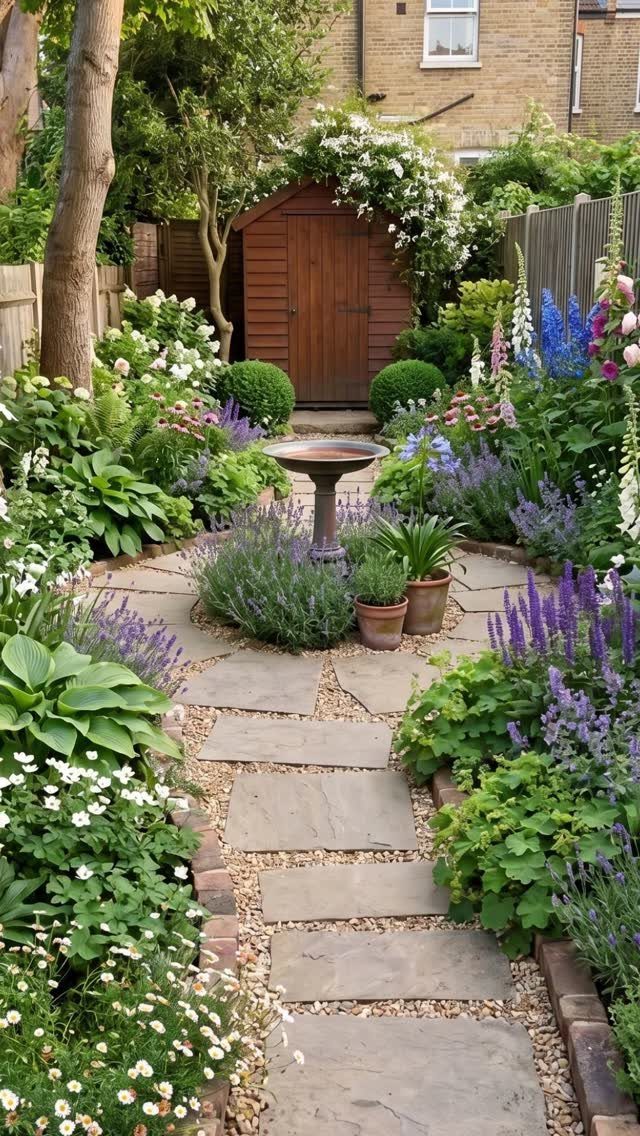
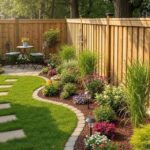
Wider beds give planting real depth, so a small garden reads as lush instead of a thin strip of flowers along a path.
Taking a foot or two of space from bare ground costs little and makes the borders the main feature.
Plant tall flowers at the back and shorter ones in front, so every layer shows. Deep beds also leave room for a birdbath or a shed to sit among the plants.
10. Evergreen Shrubs
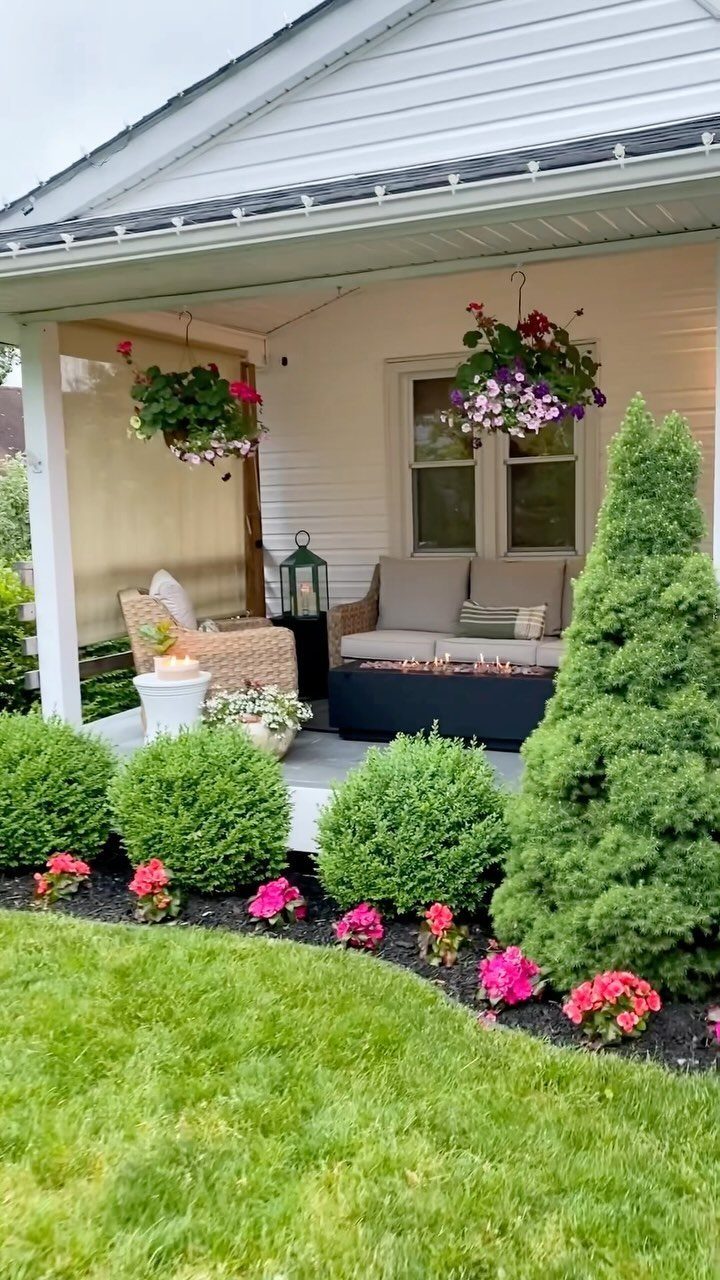
Evergreen shrubs hold their shape and color through every season, so a porch never looks bare in winter.
Mixing rounded and conical evergreens adds rhythm to a mulch bed before the flowers arrive, so pair a boxwood or globe arborvitae with an upright juniper or dwarf Alberta spruce.
Plant them first and fill around them with seasonal color, like pink blooms. I like this order because the shrubs do the lasting work and the flowers are the easy part to swap out each year.
11. Simplicity & Structure
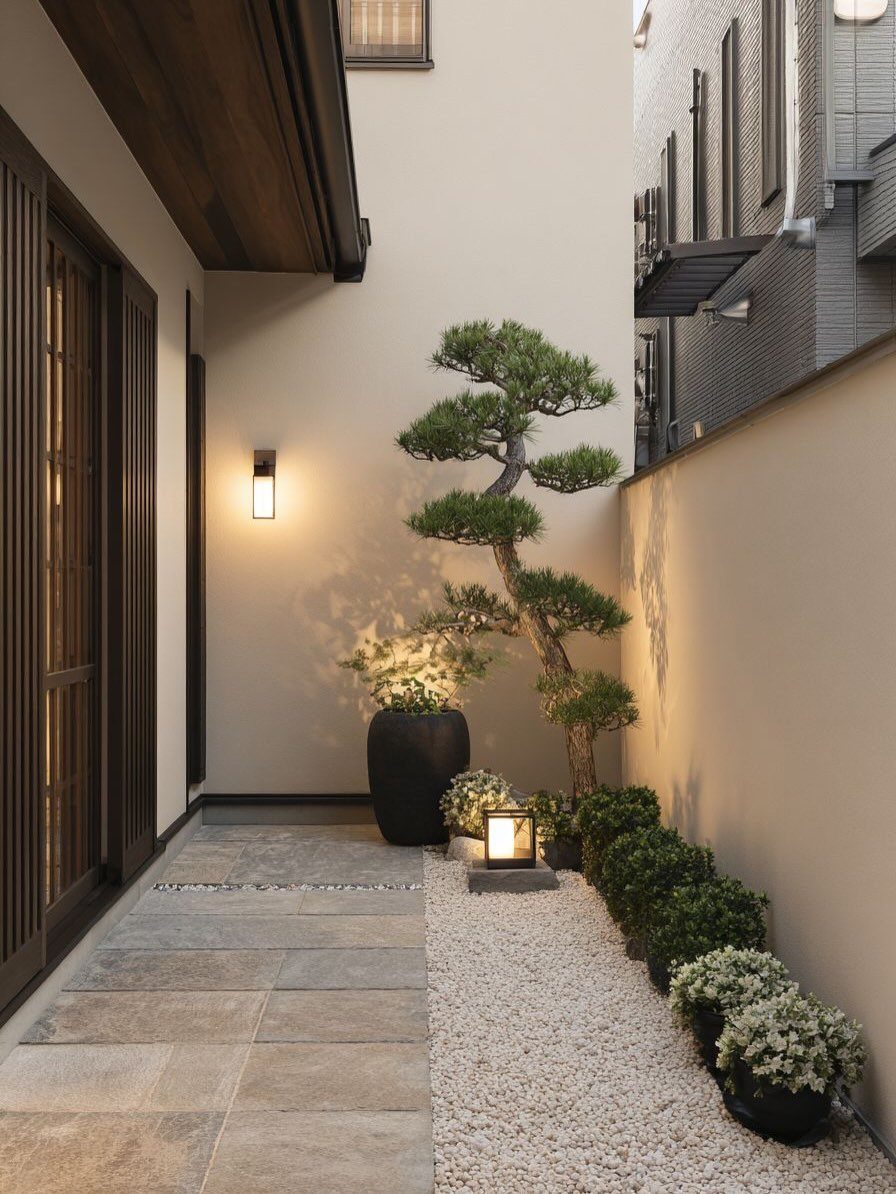
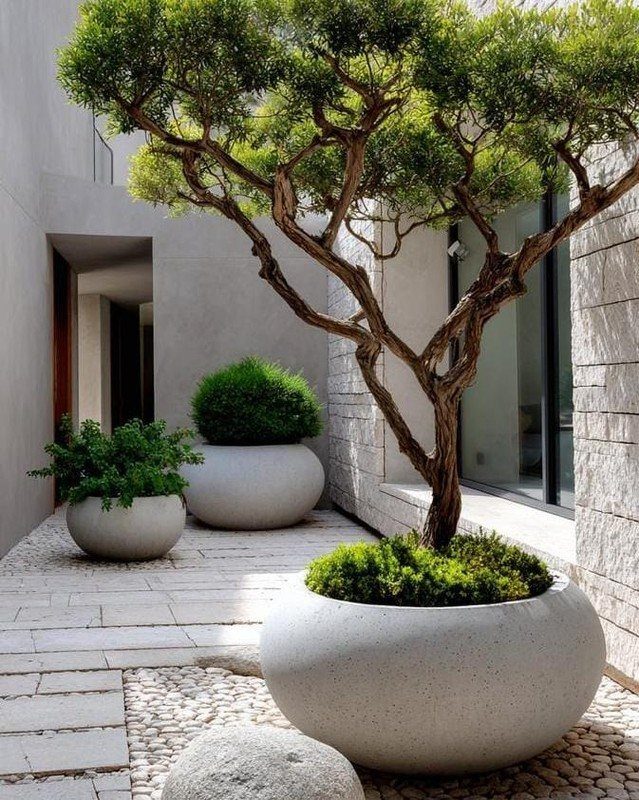
Limit the palette to a few materials and one standout plant, and a narrow courtyard feels wider. A single sculpted pine in a black pot, white gravel and stone pavers is enough, with nothing competing for attention.
Repeat the same two or three finishes throughout. Warm lighting against neutral walls adds mood without clutter, and with so few plants, upkeep stays light, which suits a beginner.
12. Small Water Feature
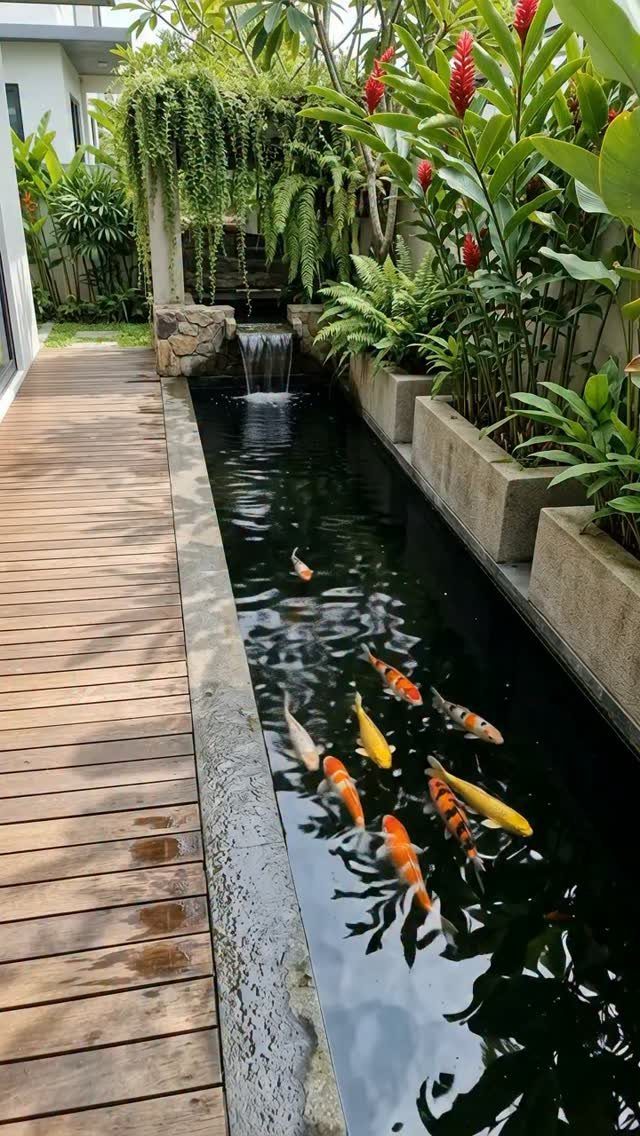
A narrow pond with a small waterfall gives a tight yard a focal point and a soft sound that covers street noise. Running it along the edge of a deck keeps the water close enough to enjoy from a chair.
Tropical foliage around the rim hides the edges and makes the pond look established. Plan for a pump to move the water, and expect this to cost more and take more work than a planter would.
13. Small Bistro Table
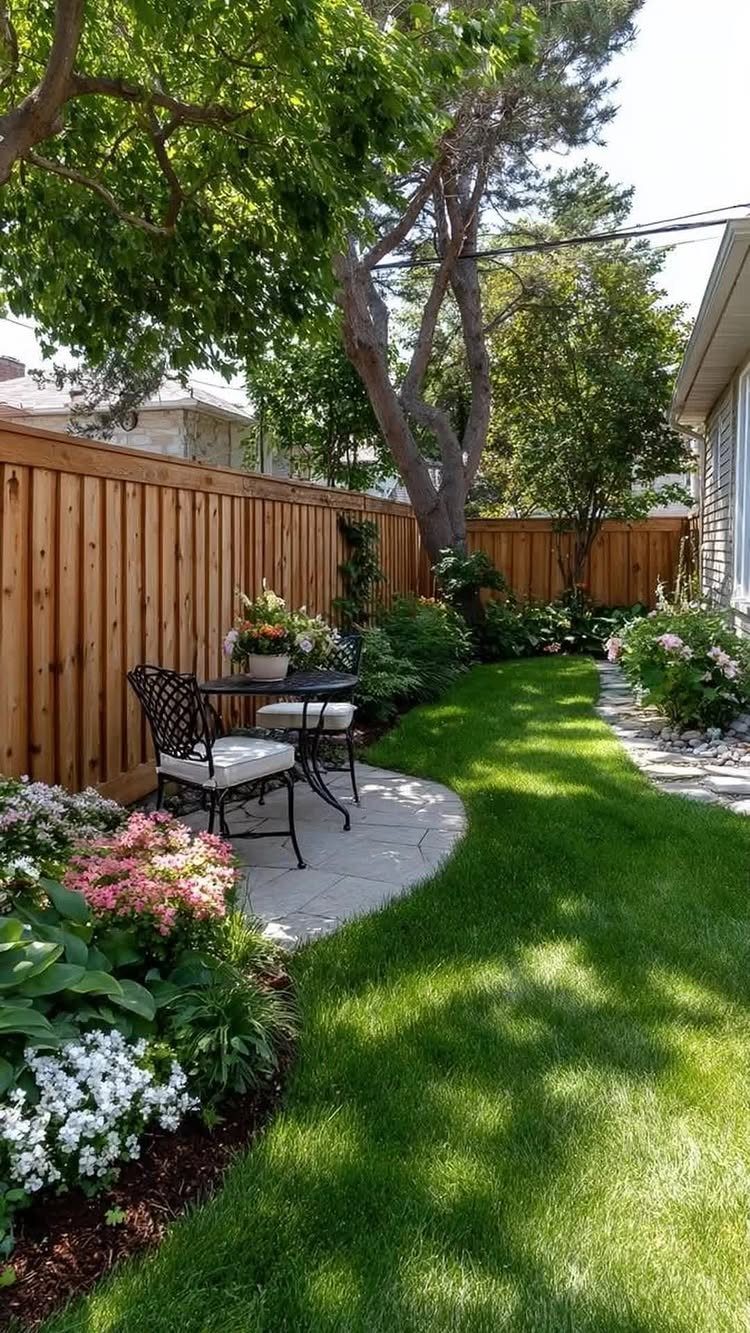
A two-chair bistro set fits a patio corner where a full dining table never could. Slim black metal frames keep a bistro set visually light, so it won’t crowd a small patch of lawn or the plants around it.
I would keep the table to coffee and breakfast duty and leave dinner parties for another spot. Folding chairs are a handy variation, since they tuck away when the patio needs the room.
14. Hanging Planters
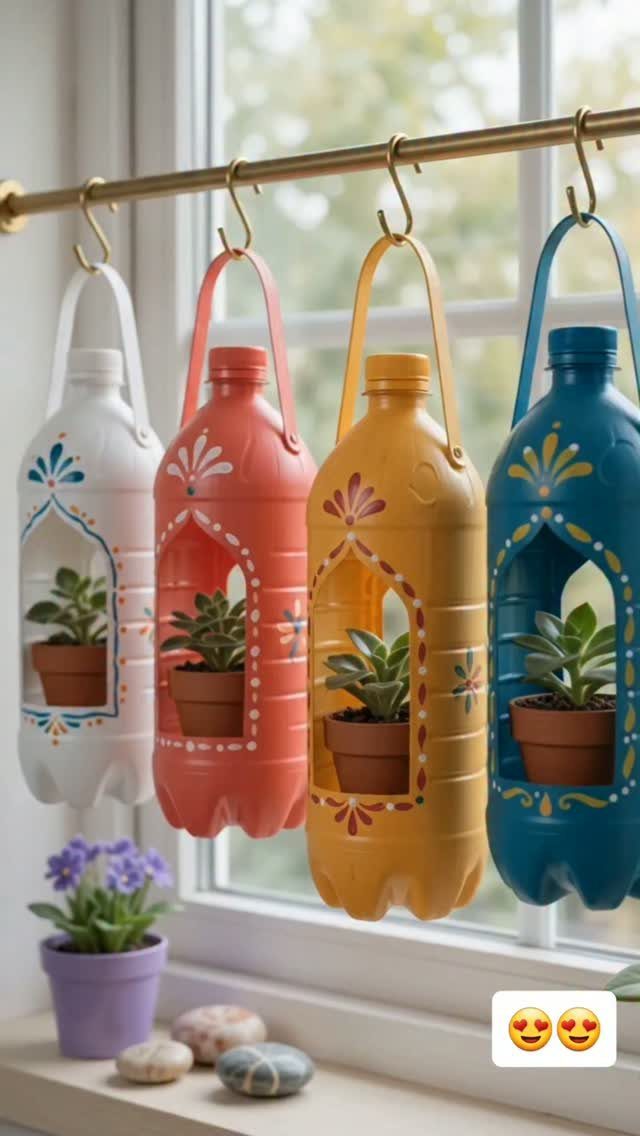
Plastic bottles painted in bright colors and hung from a rod turn a window into a small garden with no floor space used at all.
Each bottle holds one small plant, so four on a rod looks full without crowding the glass.
Poke drainage holes in the bottoms, and keep the plants light, since a bottle and wet soil add weight to a rod. Free materials make this a good renter project.
15. Small Pond
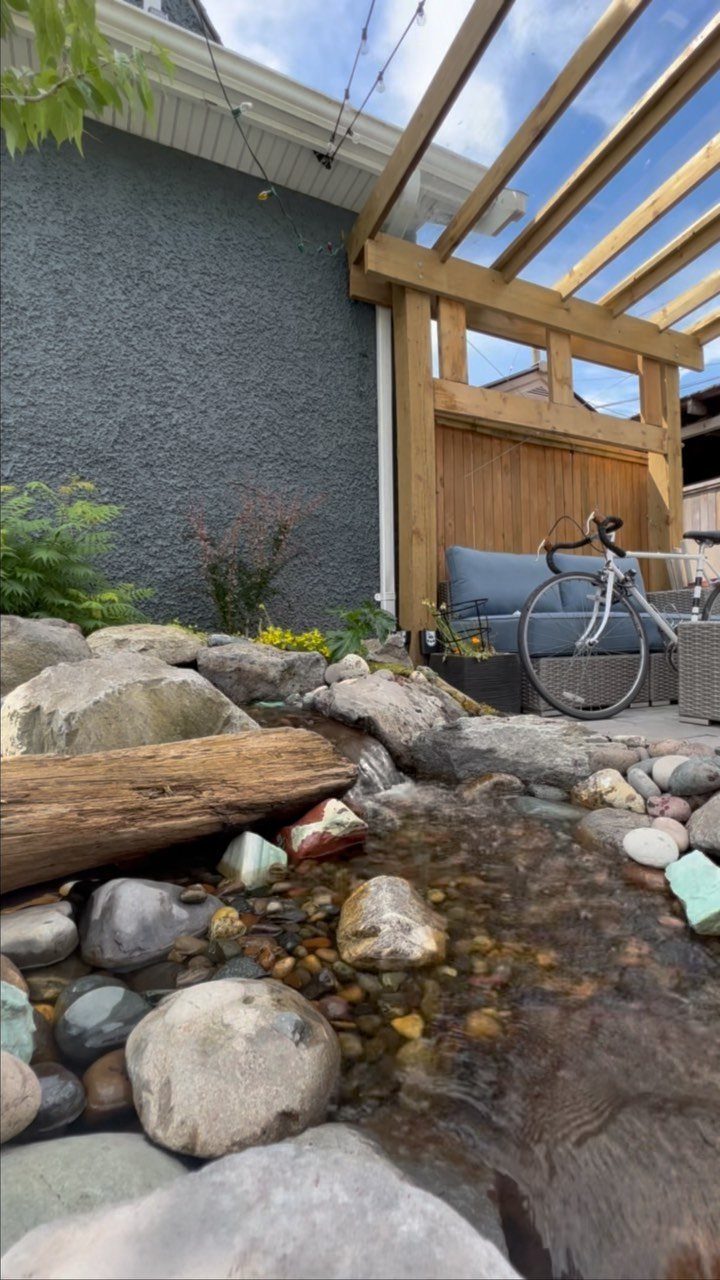
River rocks and a half-buried log around the edge make a small pond look natural, and the same trick softens a hard wall or a pergola nearby.
Rocks and wood hide the liner edge and give birds and insects a place to perch.
Plan for planting around the rim and paving close by, so the water feels part of the yard instead of a hole in it. A pond this size costs less and demands less than the waterfall version in entry 12.
16. Succulent Bird Bath
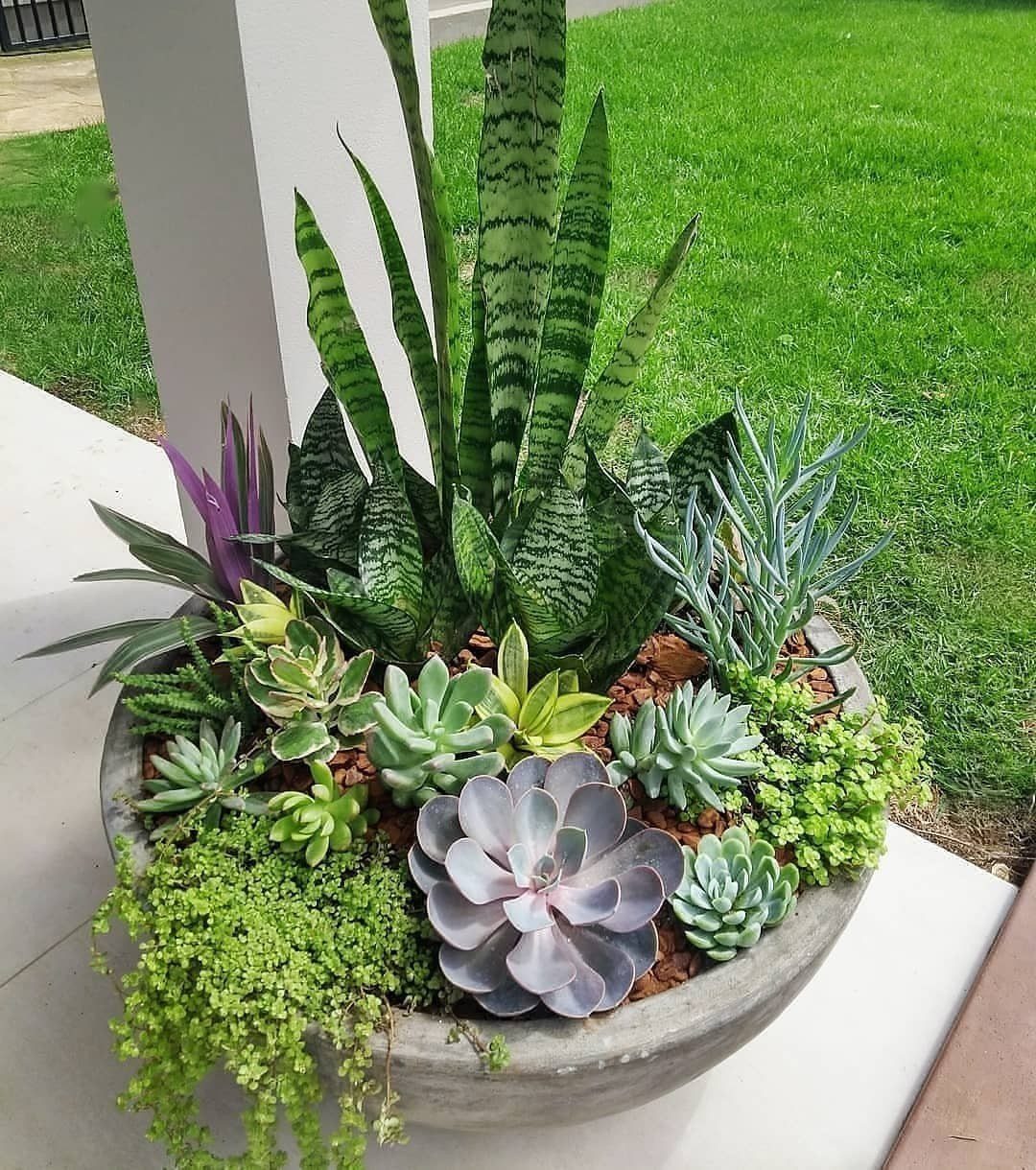
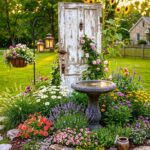
Shallow bowls suit succulents because their roots stay near the surface.
Check that the bowl has a drainage hole, or drill one, because standing water is the quickest way to lose these plants. Set it on a ledge at eye level where the mix of shapes can be seen.
17. Arched Trellis
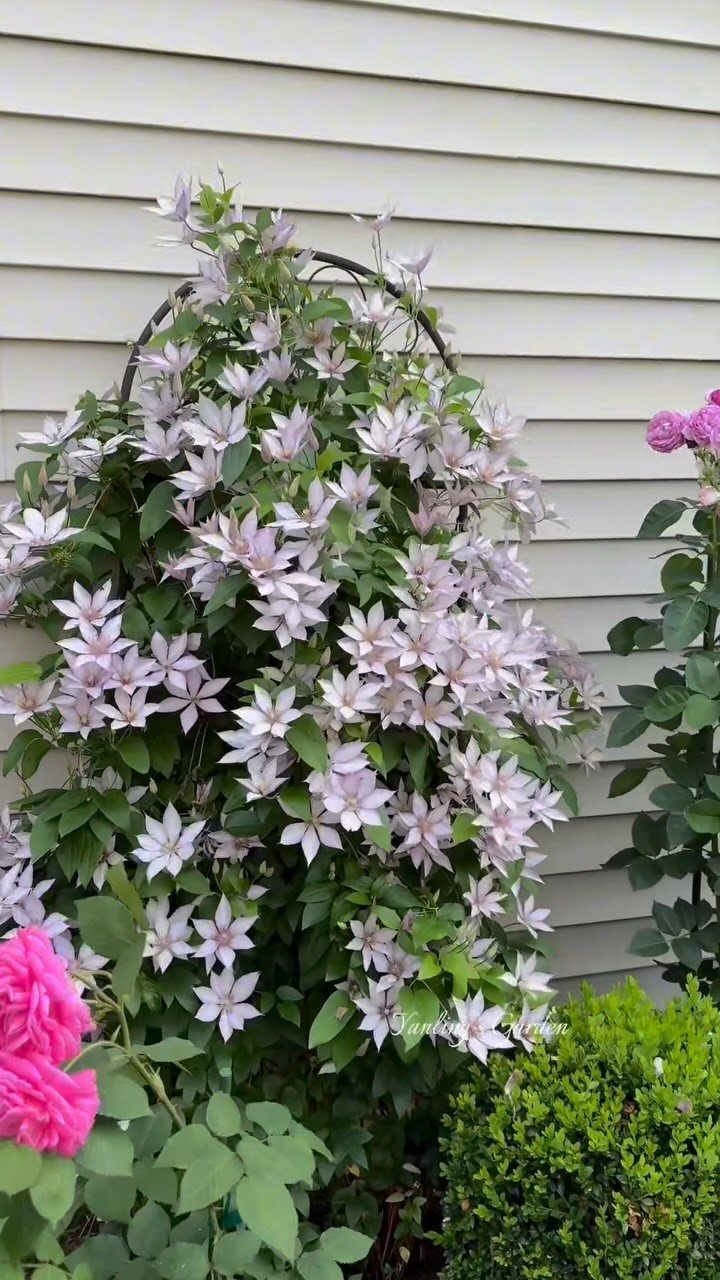
An arched trellis gives climbers a place to go and gives a plain wall a focal point.
An arch frames mixed flowers well: clematis climbing the legs, with roses and a low shrub at the base, gives you layers from the ground up.
Anchor the trellis firmly, since a plant in full growth catches wind and weighs a lot. Set the clematis at the base and tie the first stems in loosely to start them upward.
18. Garden Sun Catcher
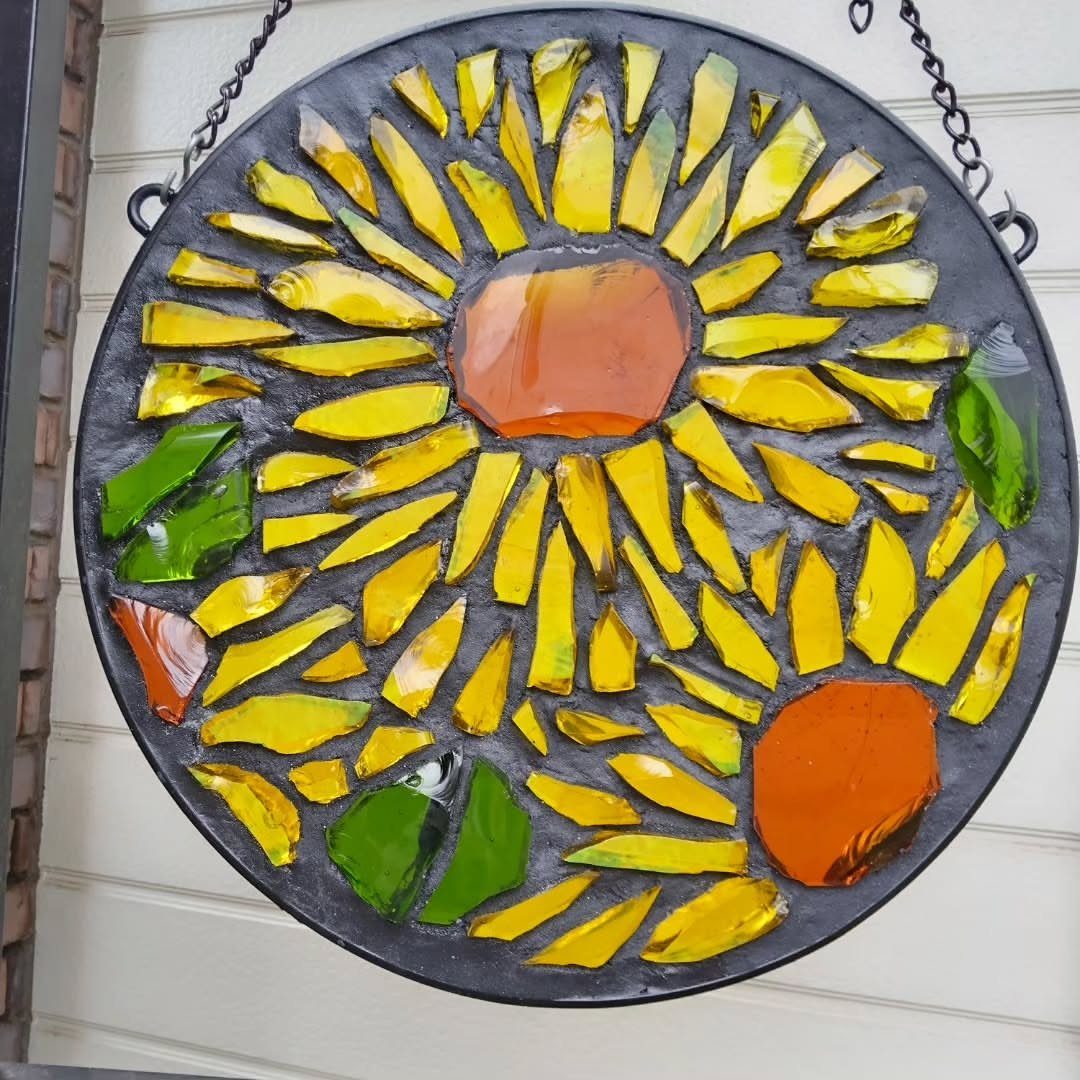
Hung by chains, it moves a little and throws light as the sun shifts.
Choose a wall that gets direct sun, because the glass does nothing in shade. It is a good project to make with leftover glass pieces, and the dark frame keeps the colors sharp.
19. Plant Markers
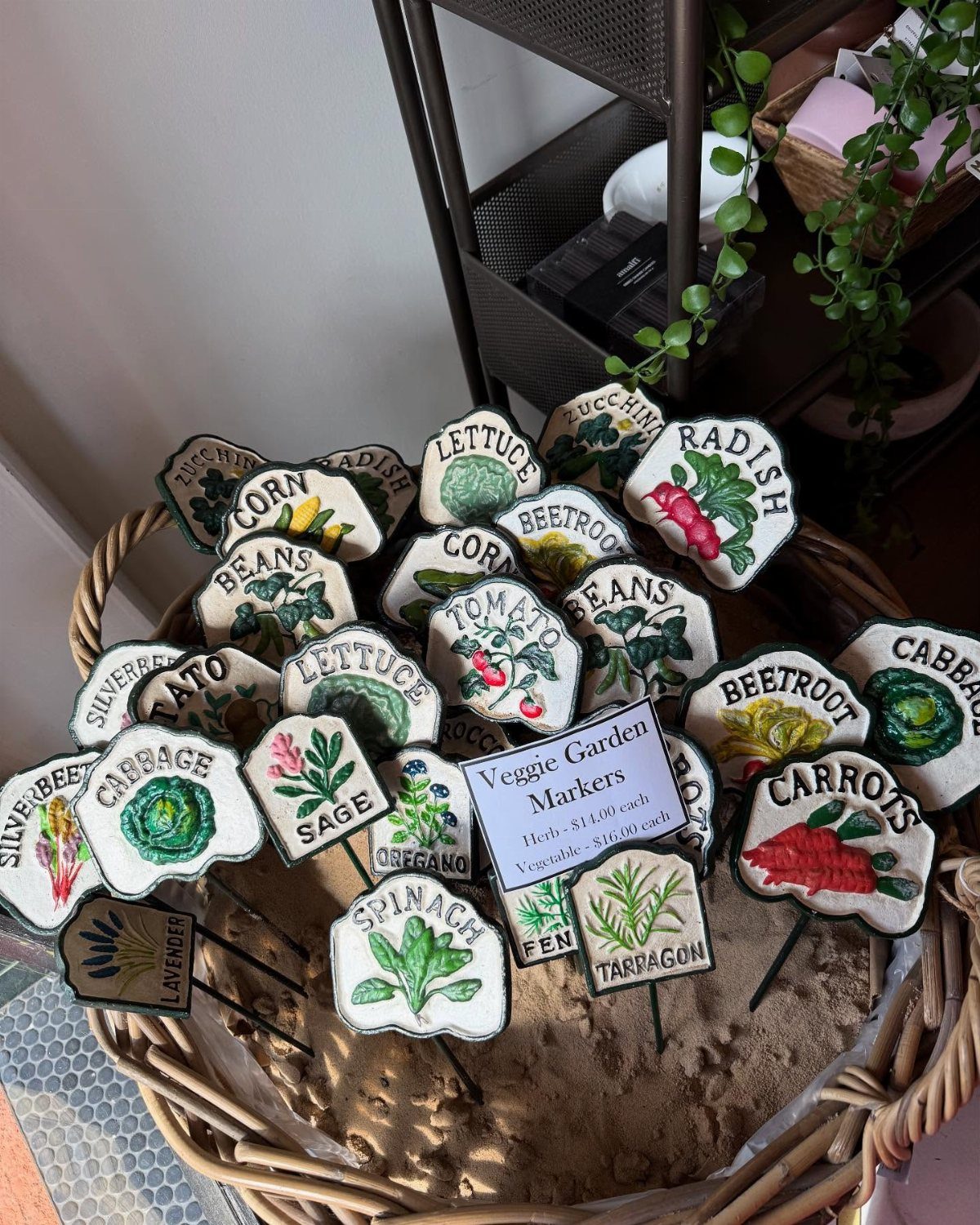
Ceramic markers with a painted vegetable and its name solve 2 problems at once: you can tell the rows apart before anything sprouts, and the garden gets a bit of color.
A hand-painted tomato or carrot beside each row reads faster than a printed tag, and it helps anyone who doesn’t know a seedling by sight.
Push each marker in at planting time, right beside the seedling or seed row, so the label never drifts from the plant.
Ceramic is heavier than plastic and can chip if knocked, so I would pick it for a small bed you tend closely.
Plan Around Site Conditions
Sunlight decides more than any other factor, so watch the yard for a full day before buying anything.
Note which spots get at least 6 hours of direct sun and which sit in the shade of a fence, a tree or the house.
Stand in the yard around 4 or 5 p.m. as well, because west-facing walls and paving hold heat and can turn a nice seat into one you avoid.
Look at drainage, wind and privacy the same way. Then stand at the kitchen window and see what you look at all day.
If your yard looks out on nothing much, build some structure first with a fence, trellis or hedge; if walls crowd you in, layer plants at different heights so the edges blur.
Pick one main use and let it lead: dining, lounging, growing food or a pollinator border.
Then be honest about upkeep and watering. A hose-free garden suits a busy schedule better than a plan you will drop by July.
Choose plants that match the style of the space, such as ornamental grasses along a modern walkway or rock plantings in a dry climate. Leave room for each plant’s mature size.
Prioritize Space Functions
Ground space fills fast, so write down everything you want from the yard and rank it.
A wish list that starts with a fire pit, raised beds and a dining set rarely fits in a small backyard, and the lowest-ranked items are the ones to drop.
Count the people next. A table for 2 and a table for 6 take very different amounts of floor, and the answer tells you how much is left for planting.
If you want to grow food, decide which crops earn their spot.
Herbs and tomatoes are worth the space because fresh ones cost a lot at the store. Cheap staples that take up a lot of ground may be better bought seasonally.
Trying to give every wish equal room usually leaves each one cramped.
Frequently Asked Questions
What is the best layout for a small garden?
A small garden works best when one purpose drives the layout, whether that’s dining, lounging, growing vegetables or a pollinator border. Splitting the space evenly among all of them leaves each one too tight to use.
What are the golden rules for designing a garden?
3 rules cover most of it: create movement with paths that curve instead of running straight, bring plants into the middle of the space rather than only around the edges, and give the garden a destination such as a seat at the far end.
Do you love to entertain family and friends?
Count how many people you actually host before you buy furniture.
Seating for 2 uses far less floor than seating for 6, so decide your usual guest count first and plant in whatever space remains. If entertaining is rare, a two-chair bistro set or folding chairs that tuck away are enough.
What do you want to grow?
Spend your growing space on produce that is pricey at the store, like fresh herbs and tomatoes.
Skip the cheap, sprawling crops and buy them in season instead. If food isn’t the goal, a flower border or a few evergreen shrubs suits a small yard well.
Is in-ground planting space limited?
Grow up and in containers instead. Stepped stands, stacked wooden planter boxes fastened to a wall and bottles hung from a rod all use height and leave the ground clear.
Where do you need privacy most?
Begin on the side that faces neighbors or the street, and place the screen directly behind your seat. A fence, trellis or hedge works too if the view is bare.
Do you need dining, lounging, or both?
Choose one to lead, since a small space rarely holds both well. For lounging, an L-shaped corner bench with drawers underneath saves floor space and hides cushions and clutter.
How much upkeep are you realistically willing to do?
Plan for the care you will actually give, not the care you hope to give. If you know you’ll quit watering by July, choose plants that get by without a hose.
Gravel needs no mowing or watering, and evergreen shrubs hold their shape all year, while a pond with a pump takes more work than a planter.
Do you want flowers, foliage, edible plants, wildlife value, or a mix?
A mix works if you give each part a job. Plant evergreen shrubs first for lasting structure, then fill around them with flowers you can swap out each year.