Light decides which of these ideas belongs under your tree: deep shade near the trunk calls for hostas, ferns or groundcover, while a brighter outer edge can hold white roses and purple flowers.
The list runs from a brick ring you can lay in a single afternoon to a deck wrapped around the trunk, and every one of them works only if the roots stay undisturbed.
Start any raised bed 1–2 feet from the trunk, then pick the idea that fits the shade you actually have.
1. Flowers Under Trees
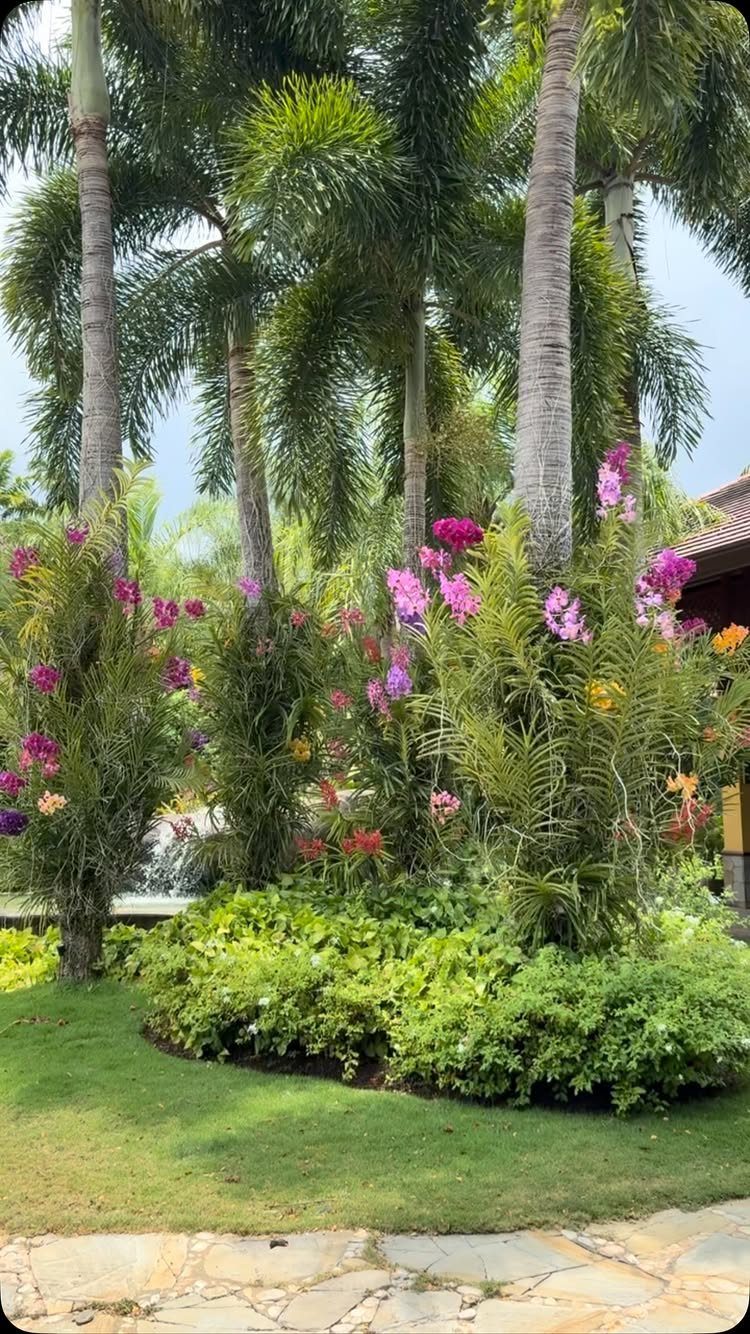
A tree stops being a lone trunk in the lawn once flowers circle its base.
Pick blooms in a color that repeats something nearby, like the pink and purple orchids here against green groundcover, and the tree reads as the center of a planned bed.
Cut the bed edge in a generous curve, which looks more natural than a tight ring. Keep the planting low and dense so the tree stays the tallest feature.
2. Cherry Trees and Moss Phlox
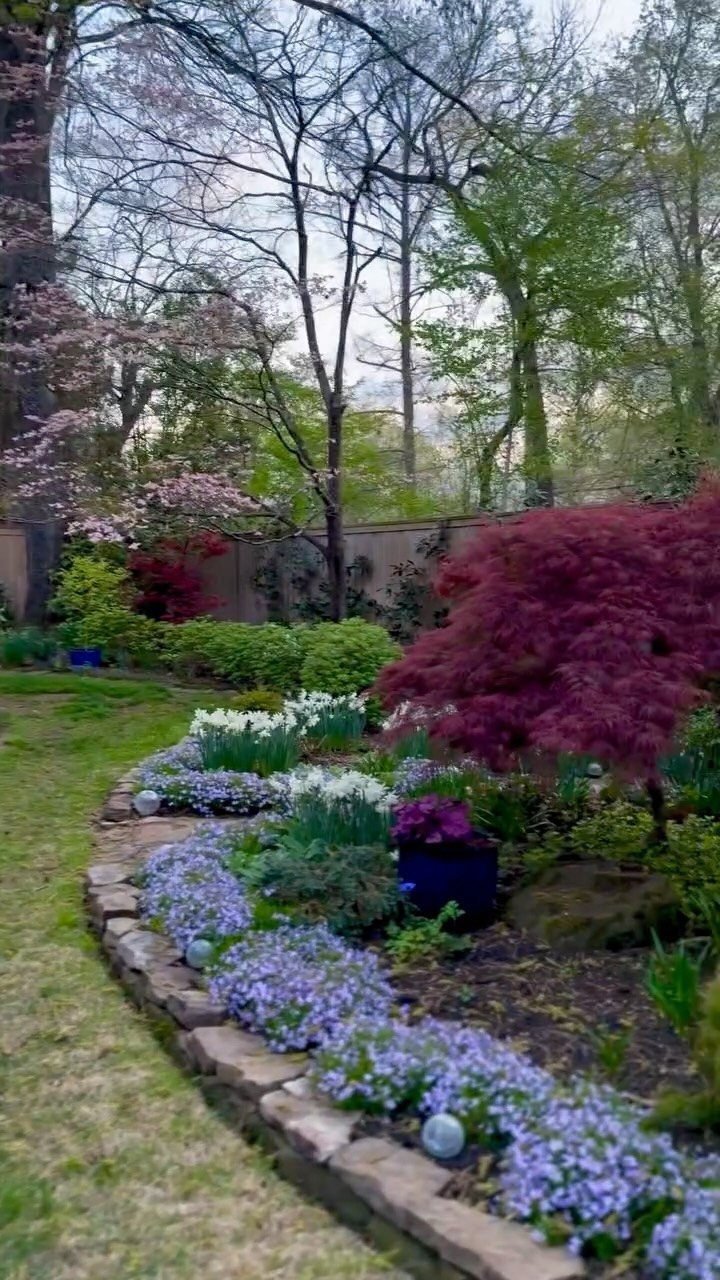
Spring color works in layers: purple moss phlox spreads at ground level while blossoms and a red Japanese maple hold the middle and upper heights. A curved stone edge keeps that low carpet tidy against the lawn.
I like how the phlox fills the open ground without crowding the trunks.
Repeat one low flower across the whole bed and add a few white blooms for contrast. A small maple gives the bed a second focal point after the petals fade.
3. Raised Bed
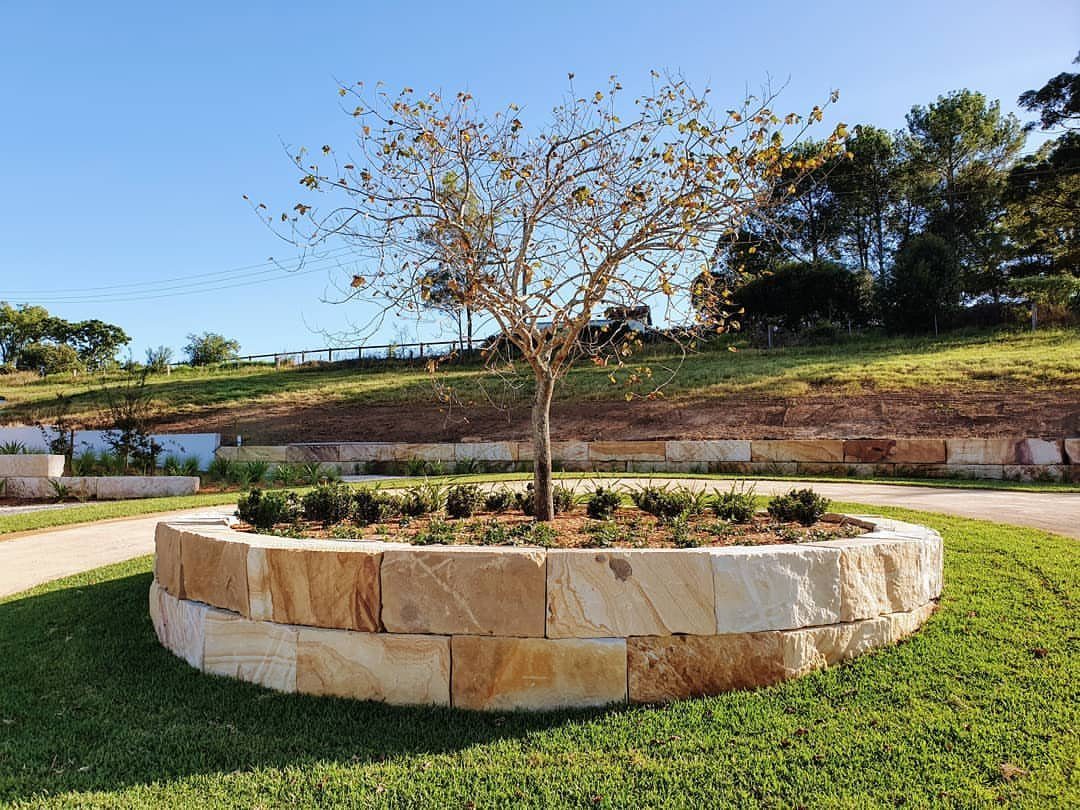
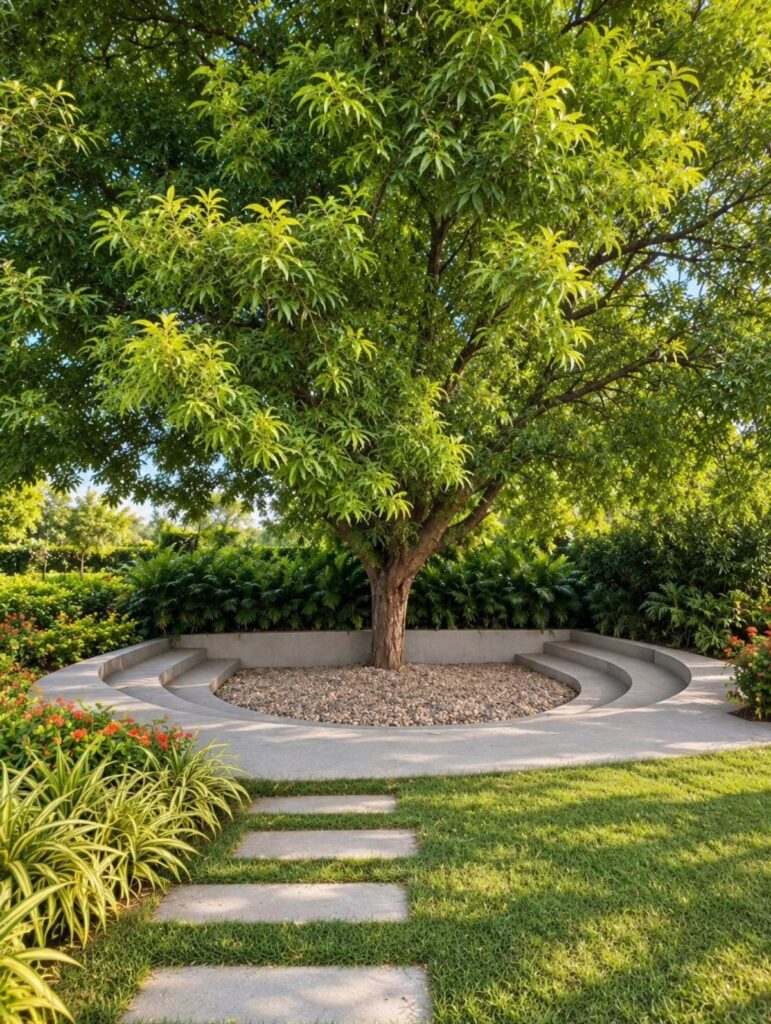
Stone blocks stacked into a circle give a small tree its own planted island, and the lawn stops right at the wall so mowers never touch the trunk.
Light-colored block, like pale limestone or tan retaining wall stone, brightens a green yard and makes the bed read as a deliberate feature instead of a mound around the trunk.
Keep the bed shallow, since the plants need only a thin layer of soil.
Choose a few well-matched plants rather than a crowded mix, so the tree stays the star. A round bed also suits a tree set in the middle of open grass.
4. Hostas and Ferns Beneath the Tree
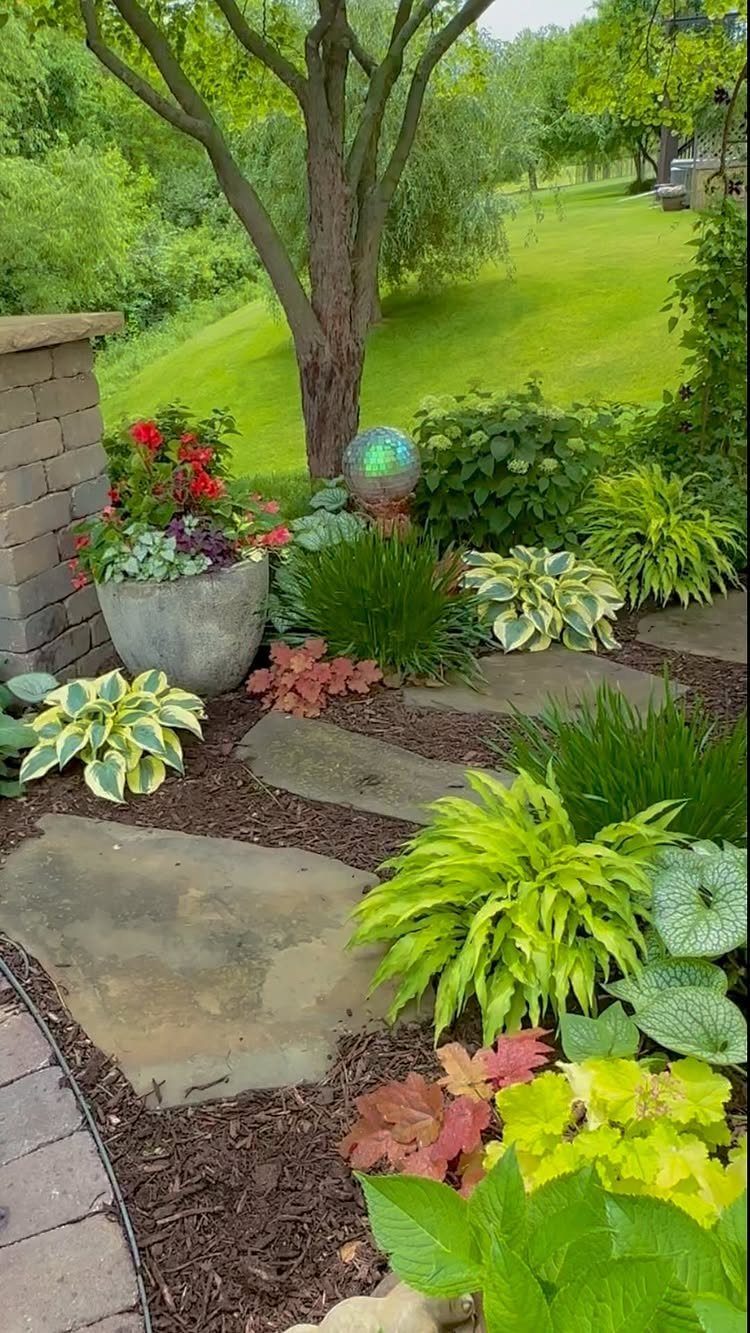
Hostas and ferns are the dependable pair for the shade under a tree, and their broad and feathery leaves contrast well.
Fill the ground with hostas and ferns out to a few inches from the trunk, leaving a ring of bare bark-side soil, then tuck in a few red flowers for a spot of color.
Mulch the bare gaps between plants so the bed looks finished from day one. Set stone pavers through the bed as stepping stones; they let you reach in for weeding without trampling roots or leaves.
5. Deck or Patio Around Tree
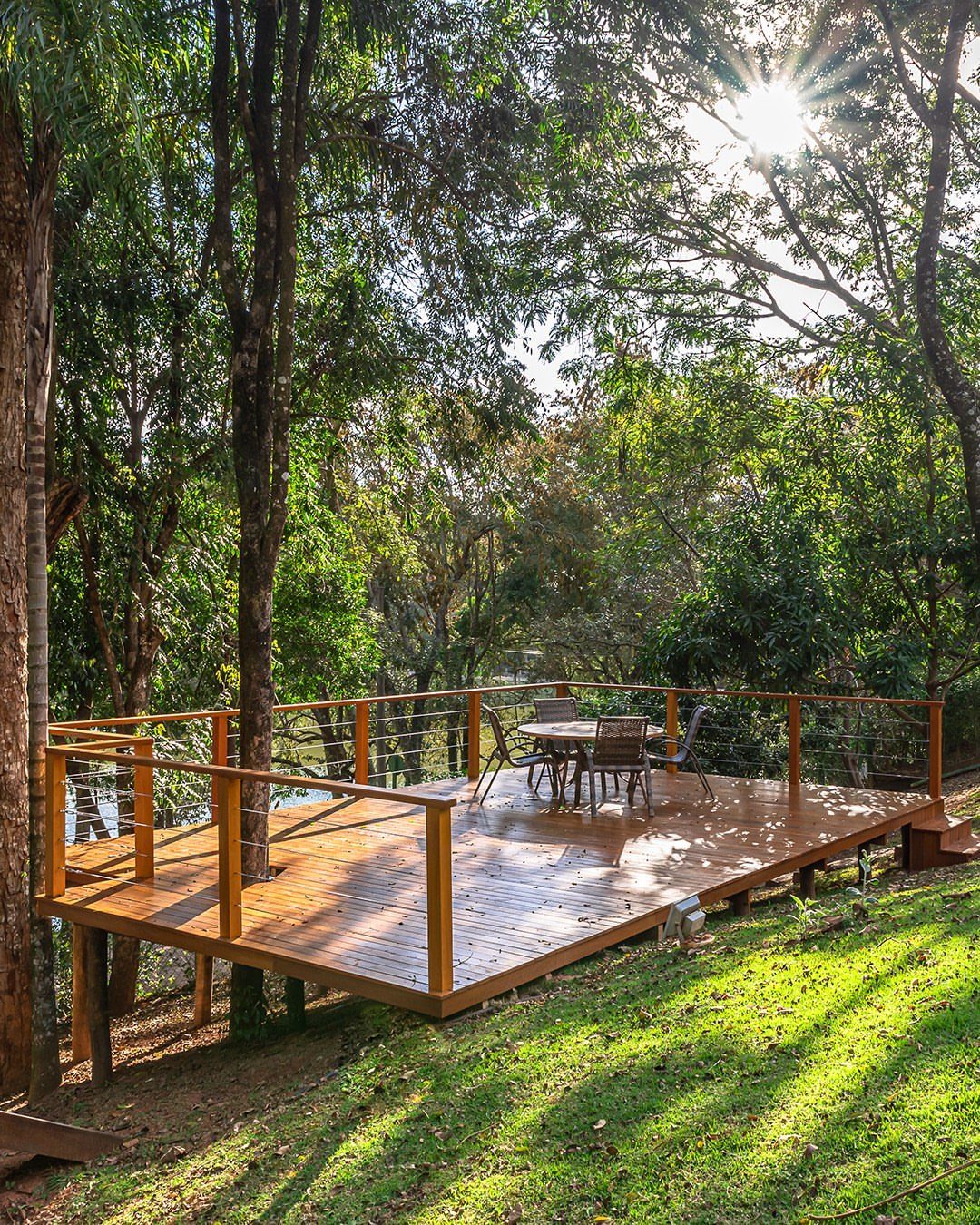
A deck wrapped around a trunk gives you a dining spot under a moving canopy of leaves. Dappled shade makes a table and chairs far more comfortable than an open slab in full sun.
Cut the opening larger than the trunk, because the tree keeps growing and a snug hole will pinch it.
Wood suits a woodland setting best. Before building, plan the layout so furniture sits clear of the trunk.
6. Brick Tree Edging
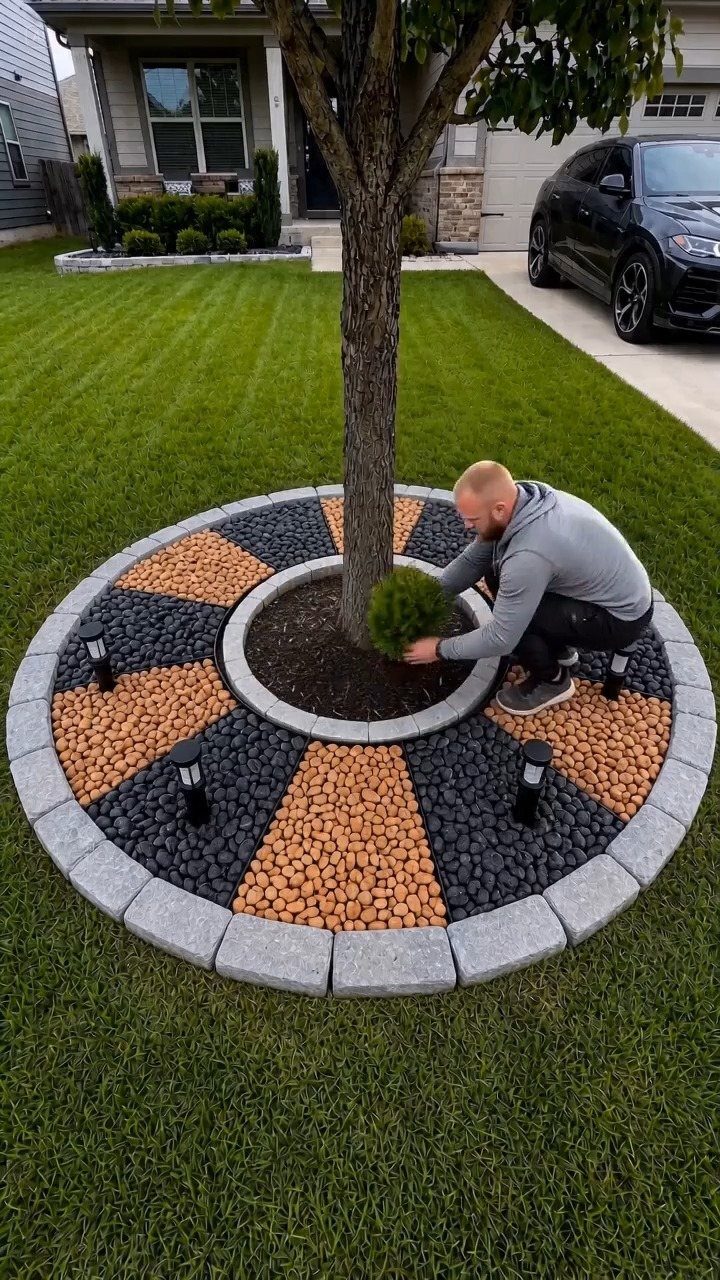
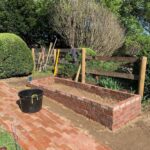
A ring of brick is the cheapest way to give a tree a clean, finished edge. The circle holds back lawn and gives you a crisp line to mow against.
Lay the brick on a level, tamped edge so the circle stays even. This is a good first project for a single afternoon.
7. Garden Path
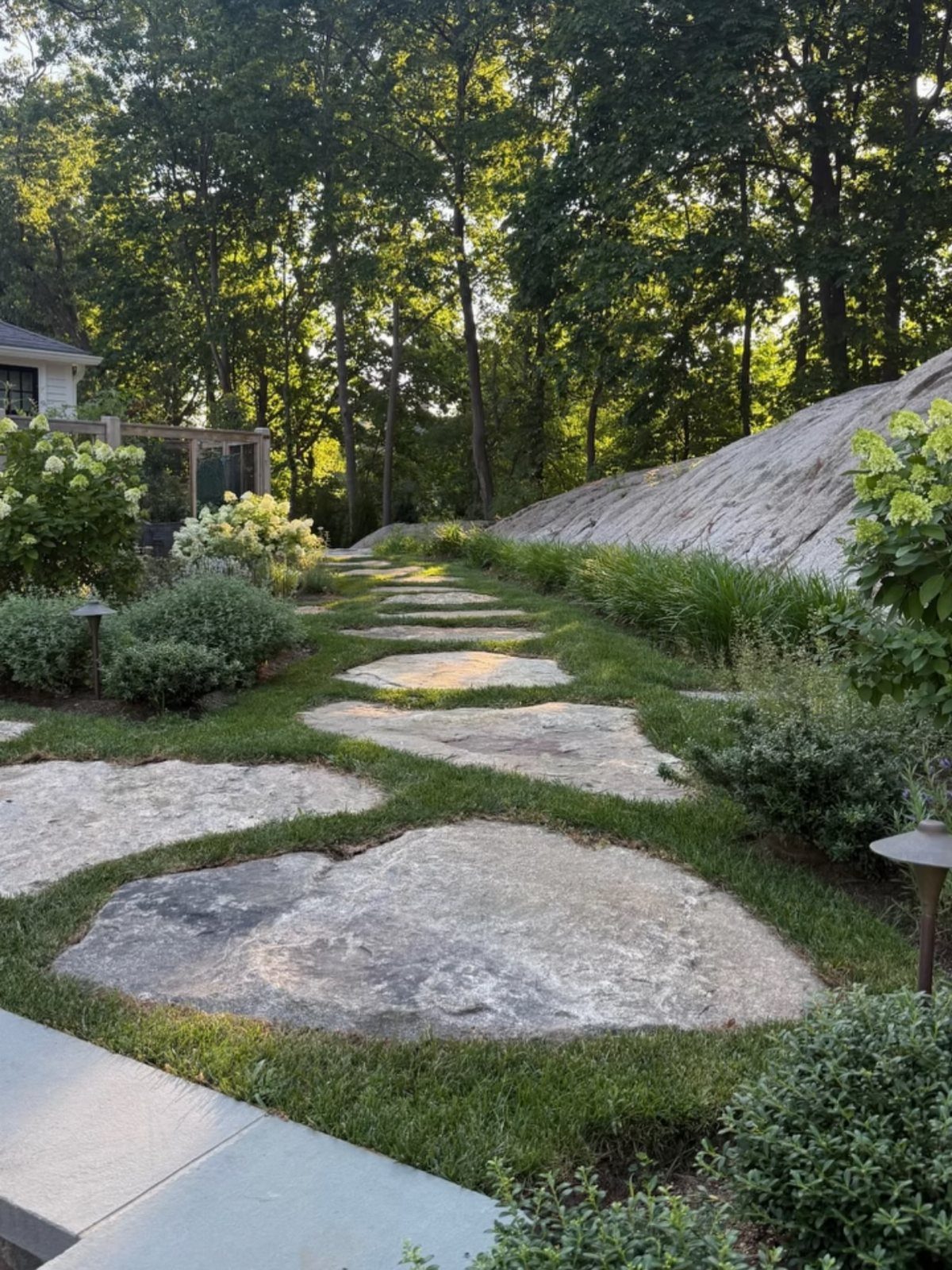
Large, flat stepping stones set into grass make the easiest path through a tree garden. They cost little compared with poured or paved walkways, and they let you walk in without compacting soil around the roots.
Space the stones so one comfortable stride lands on the next, and let the line curve around trunks and rocks instead of running straight. A winding route also makes a small yard feel bigger.
8. Groundcover Planting
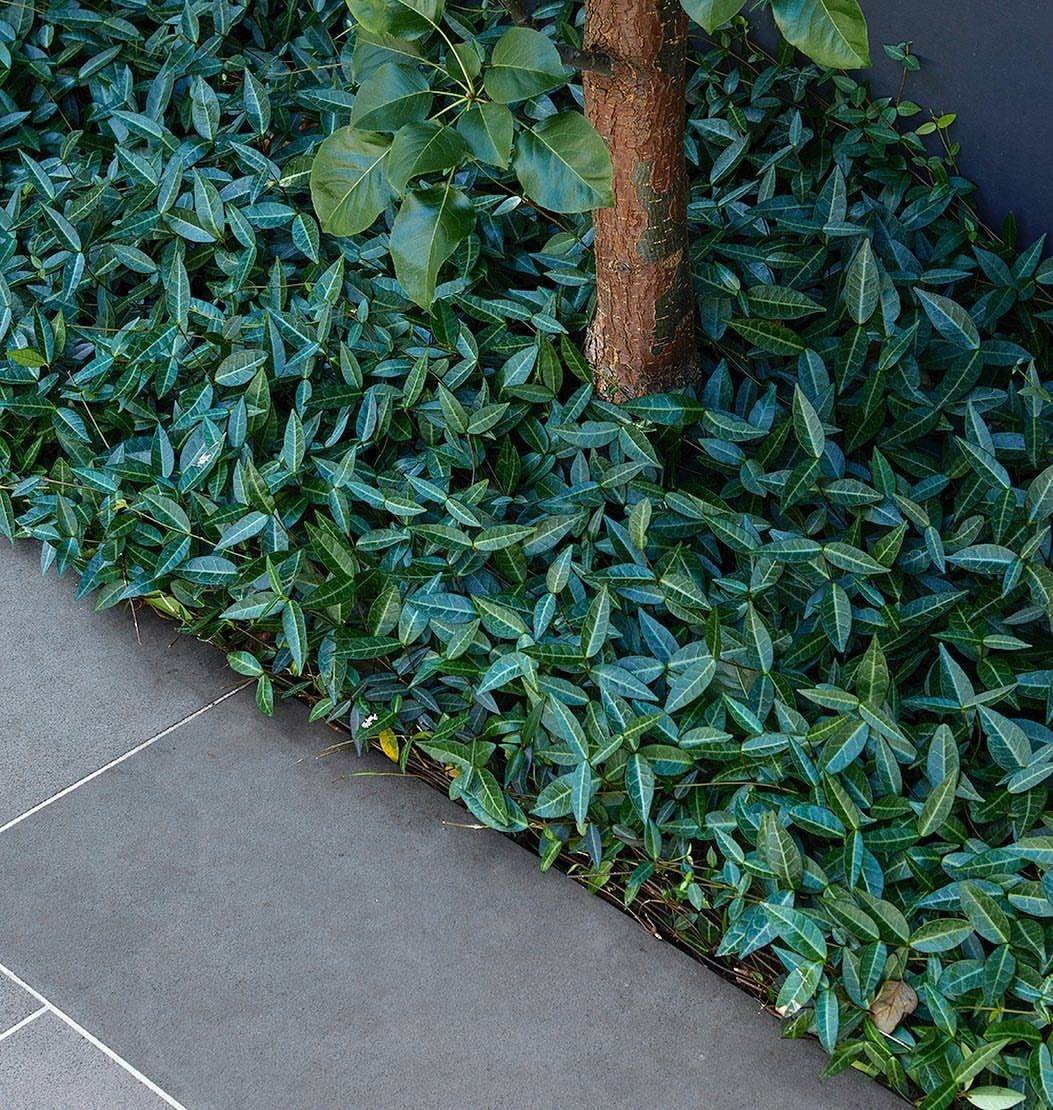
Bare soil or a layer of mulch looks unfinished next to a trunk, while a dense mat of low groundcover fills the gap with green.
Against a gray tiled patio, dark green foliage makes a soft border where hard paving would otherwise meet bark.
Choose a low, spreading plant and plant it close enough that it knits together.
Until it fills in, mulch the gaps between plants. I prefer one groundcover over a mix, since a single texture looks calm and deliberate.
9. Shade-Lovers Closer and Sun-Lovers Farther Out
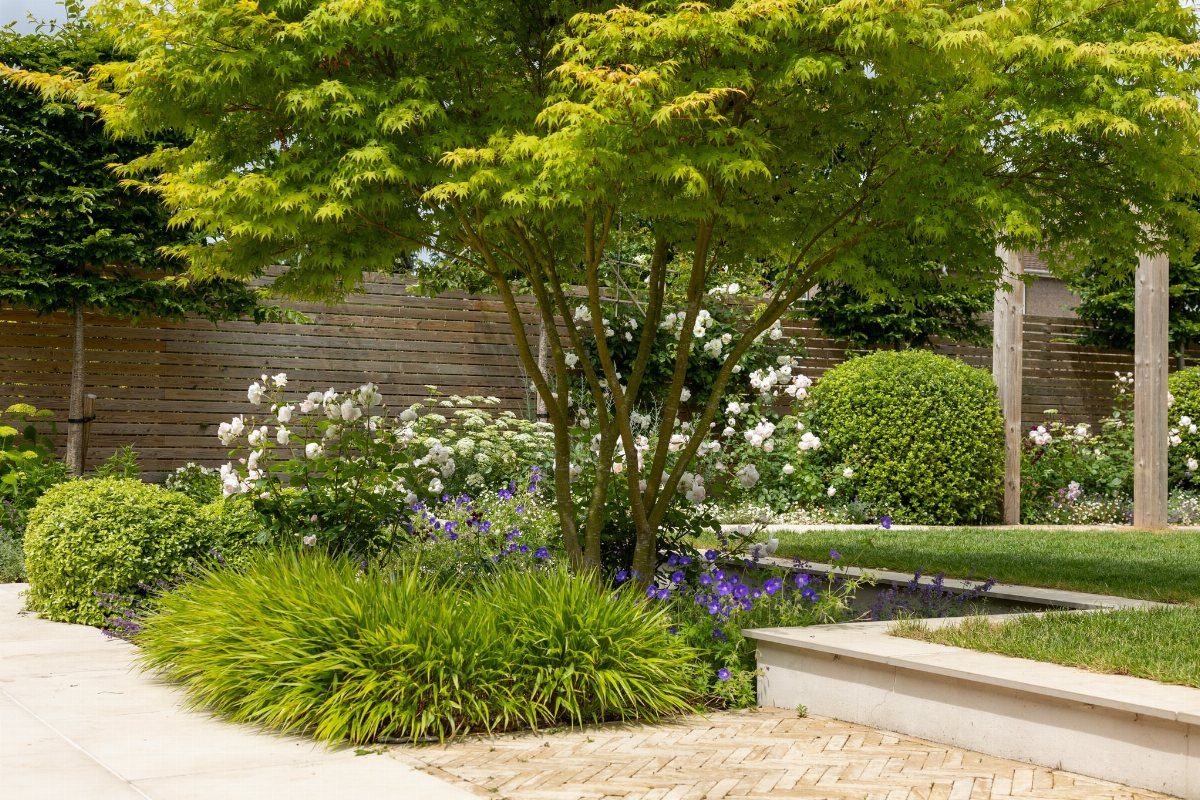
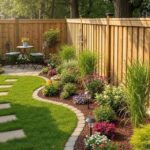
Sun reaches a tree bed unevenly: the ground close to the trunk sits in the deepest shade, and the outer edge catches more light.
Plant to match, with grasses and shade-tolerant foliage near the base and white roses and purple flowers toward the brighter outer edge.
Walk the bed at midday and note where the shadow falls before buying anything.
Plants set in the wrong light sulk, and that wastes a weekend’s budget. Layering shorter plants in front of taller ones gives the bed depth, as it does under a Japanese maple.
10. Garden Lighting
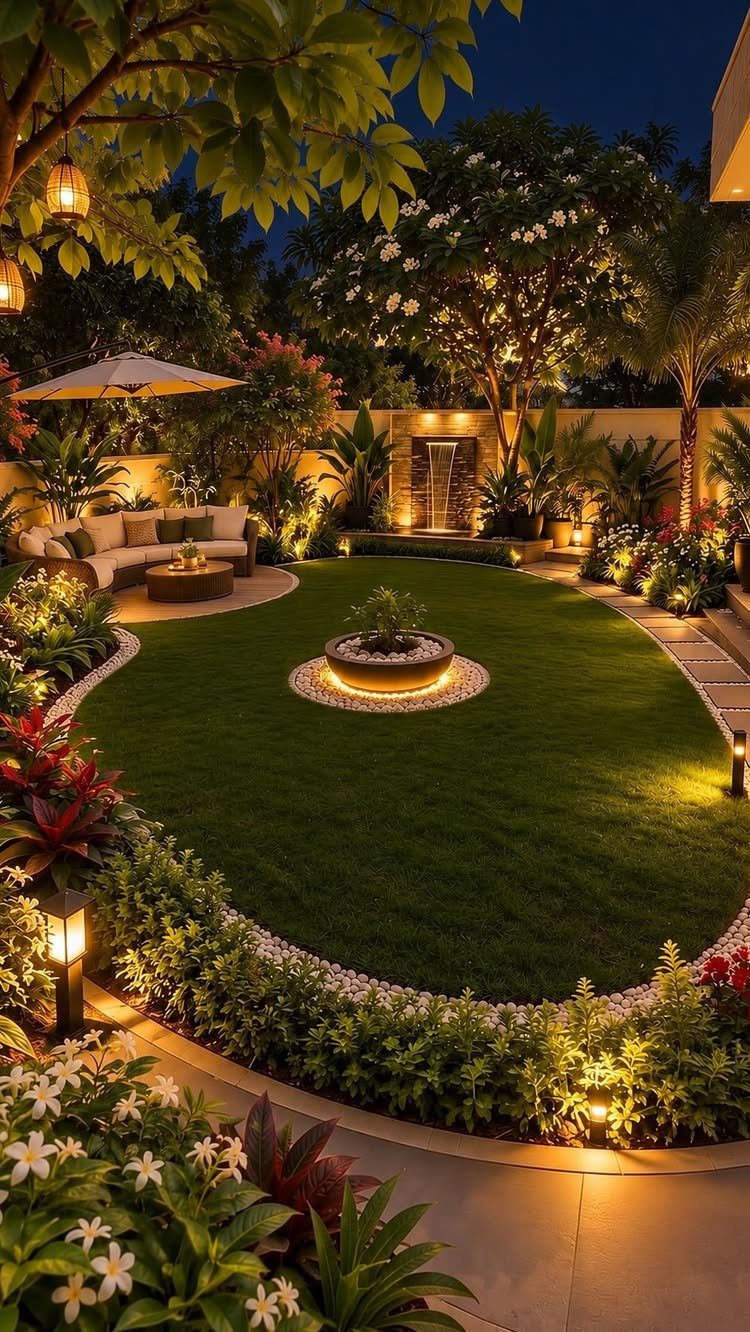
Warm landscape lighting turns a backyard into a second living room after dark, and trees are the best thing to light.
Aim a fixture up into the canopy from the ground, or tuck small lights low among shrubs so the glow stays soft.
Warm white bulbs flatter green leaves better than cool white ones.
Light a few focal points, such as a tree, a water feature and a seating area, rather than the whole yard. Leaving some corners dark makes the lit spots stand out.
Protect Tree Roots and Trunk
Most tree roots sit close to the surface and reach well past the edge of the canopy, so the soil under a tree is not the place for a shovel.
Plant in shallow holes, and stop digging the moment you hit a root; move the hole instead of cutting through.
Grade around the trunk stays as it is, so don’t add or remove soil there. Soil or mulch heaped against the bark holds moisture on it, and that invites rot, fungus and boring insects.
For a raised bed, I’d start the inner edge 1–2 feet away from the trunk, which leaves the base clear and able to breathe.
Skip heavy equipment on the root zone too. Wheeled loads and machines compact the soil and stress the roots.
One caveat: Plant sporadically and let the hostas fill in over time. Too much digging around an established tree can be hazardous, because most of the feeder roots are within the top 18 inches of soil and they would be disturbed.
Match Planting to Site Conditions
Wrong plant, wrong light is the most common way a tree bed fails. Sun-loving flowers and shrubs planted under a canopy struggle or die, so watch how much shade the spot gets before you shop.
Your climate and planting zone narrow the list further. Check the plant tag against both.
Look at root depth as well. Shrubs and flowers with deep roots compete with the tree, while shallow-rooted ones get along with it.
Azaleas and hostas are small plants that handle shade, and Asiatic jasmine and spreading yew work as groundcovers. Lily of the valley and wild ginger are other options.
Expect to water new plants more than usual, since the tree’s roots take a share of the water and nutrients. A deciduous tree means a fall or winter raking job, so build that into the plan before you plant.
Ongoing Tree-bed Maintenance
Refresh the mulch once a year to keep the bed looking finished and the soil protected. Pull it back from the trunk as you spread it.
Walk the bed regularly, and weekly is better in year one, since young plants need consistent watering until their roots take hold.
Look over the tree and the bed for trouble: boring insects, leaf spots or root rot.
Should any of those signs show up, a certified arborist can tell you what is wrong and how to treat it, which beats trial and error.
Frequently Asked Questions
What is the best thing to put around trees?
For most trees, a low groundcover or a mulched bed with a curved edge works best. Shade-tolerant plants like hostas, ferns, Asiatic jasmine and spreading yew fill the ground without competing hard with the roots.
Mulch handles the bare gaps, and mulch also insulates the soil and holds moisture. Match every plant to the light the spot actually gets.
What are some good options for landscaping borders around trees?
Brick costs less than most edging and leaves a hard, straight line for the mower wheel to ride along. A low hedge of box or privet also frames the tree and hides the seam between lawn and bed.
Set each brick on a flat, compacted base of sand or gravel, and the ring won’t wobble or sink out of round after a season of rain.
How much mulch should be around a tree?
Spread an even layer 2–3 inches deep, and never more than 3 inches, since too much can harm the tree. Extending the layer out to the drip line, where water falls from the canopy edge, is a good minimum.
Are exposed roots bad for my tree?
They can be. Mowers can slice exposed roots, and those wounds leave the tree open to disease.
Roots that rise above the soil trip people, shade out turf so nothing grows there, and over time they can push up a walkway or a step.
How can I landscape around a tree with exposed roots?
Cover the roots with a mulch ring instead of piling on soil. Extra soil can suffocate the roots, which need oxygen, and the ring also removes the need to mow there.
Another option is to edge the area and fill it with small rocks, leaving the roots visible among them. A path around the roots makes walking there safer.
Can you put landscape fabric around trees?
You can, and some gardeners like it because trees need no digging, so the fabric stays undisturbed.
Fabric keeps weeds from coming through, and it stops a layer of gravel or river rock from working its way down into the dirt.
The downsides are that decomposing debris gradually clogs its drainage pores and it adds no organic material. For healthier soil, organic mulch like wood chips or shredded bark is the better pick.
When should you call a landscaping professional?
Call one when you worry about the tree’s health or want a layout checked before you build. Many landscape pros offer a free first consultation, and a visit costs less than damaging a tree with a bad plan.